Police handled more than 12,000 public protests during the 2012/2013 financial year, Police Minister Nathi Mthethwa said on Thursday.
“Over the past four years, a total of 46,180 incidents were attended to and all were successfully stabilised, with 14,843 arrests effected,” he said at the release of the 2012/2013 crime statistics in Pretoria.
These were made up of 41,104 peaceful and 5076 violent protests by the SA Municipal Workers Union, the SA Commercial, Catering and Allied Workers Union, protests in De Doorns in the Western Cape, Marikana in the North West, and Zamdela in the Free State.
“During 2012/13 alone, police managed 12,399 public incidents. Of these 10,517 were peaceful and 1882 were violent public protests with a total of 693 various criminal cases reported,” Mthethwa said.
“Most of the cases were reported in the Western Cape and North West provinces. Currently, stability has been restored.” – Sapa
The number of aggravated robberies increased by 1.2 percent over the past financial year, Police Minister Nathi Mthethwa said on Thursday.
However, there were still 29.7 percent fewer of these crimes than nine years ago and 18.7 percent less than four years ago, Mthethwa said at the release of the 2012/13 crime statistics in Pretoria.
Residential burglaries increased by 3.3 percent in the past financial year, and non-residential burglaries by 1.7 percent.
He said common robbery decreased by 2.2 percent over the reporting period.
“The role of the community in supplying the necessary information and the patrols of the streets has drastically reduced possibilities of this crime,” he said.
“This is corroborated by swift arrests that have been affected.”
Mthethwa said shoplifting had decreased by 3.9 percent over the same period.
There were also decreases in robberies at non-residential premises, by 0.6 percent, in cash-in-transit robberies, by 20.3 percent, and bank robberies, by 80 percent.
In the 2012/2013 financial year:
— theft out of motor vehicles increased by 3.6 percent;
— commercial crimes increased by 0.6 percent;
— car hijacking increased by 5.4 percent;
— robbery at residential premises increased by 3.6 percent;
— truck hijacking increased by 14.9 percent;
— drug-related crime increased by 13.5 percent; and
— cases of drunk driving, or driving under the influence of drugs, increased by 1.5 percent.
Mthethwa said there was an 18 percent decrease in ATM bombings, from 261 cases in 2011/12 to 214 in 2012/13.
Arson decreased by 8.7 percent over the reporting period.
“Advancement in technology on individual dwellings, the improvement of the infrastructure to reduce informal housing, as well as electricity roll-outs have also assisted in reducing this crime,” Mthethwa said.
There was a 4.1 percent decrease in malicious damage to property and a 4.4 percent decrease in the theft of motor vehicles and motorcycles. – Sapa
“Robberies at residential homes, as the crime most feared by South Africans, increased by 3,6% according to the latest crime statistics. Burglaries at residential homes increased by 3,3% (253 633 incidents) and car hijackings by 5,4%. It is precisely at one’s home and on the way to work where people want to feel safe. The public therefore has reason to feel unsafe and is experiencing crime to be increasing,” Dr. Pieter Groenewald, the Freedom Front Plus’ chief spokesperson on Police said.
“What is also worrying is that of the 1 833 775 serious crimes which had been reported, there had only been 352 513 successful prosecutions. It is only a 19% successful prosecution rate. This means that the criminal justice system in South Africa has serious defects and is failing the public,” Groenewald said.
“Murder has increased by 0,6% but the fact that 16 259 people are murdered, means that there is a five times more likely chance for a person to be murdered in South Africa than anywhere else in the world where the average is 6 for every 100 000 people. Attempted murder has increased by 6,5% (16 363) which means that South Africa still remains a dangerous country,” Groenewald says.
The Freedom Front Plus welcomes the decline in crime against women and children and in crimes such as assault.
The number of murders in South Africa increased by 0.6 percent over the past financial year, Police Minister Nathi Mthethwa said on Thursday.
Speaking at the release of the 2012/13 crime statistics in Pretoria, he said the murder rate had previously decreased by 16.6 percent over the past four years, and by 27.2 percent over the past nine years.
“Since 1994, we have been making steady progress in the fight against crime.
“We will work double hard to ensure this slight increase is re-routed to the downward trends that we experienced over the past nine years,” he said.
There was also a 6.5 percent increase in attempted murder in the financial year under review.
This was in contrast to the decrease in attempted murder by 16.8 percent over the past four years and 51.7 percent over the past nine years.
Mthethwa highlighted the causes for the increases by province.
These included cases of domestic violence and alcohol-related arguments near taverns in the Eastern Cape and labour unrest in the mining sector in the North West. – Sapa
Responding to the release today (19 September 2013) of the SA Police Service crime statistics for 2012/13, Institute for Security Studies’ analyst Gareth Newham said the following:
“Serious and violent crime is increasing in South Africa. This shows that government’s approach to crime is not working.”
“After a long period of decreases in serious and violent crime, these are the worst figures we have seen in ten years.”
“Reducing crime is not only a police responsibility. There is also an important role for other government departments such as health, education and social development.”
“Violence remains unacceptably high and should be treated as a serious crisis which stands in the way of South Africa’s social and economic development.”
“We have seen increases in murder, attempted murder, car hijacking, street robbery and house robbery. These are some of the crimes South Africans are most afraid of.”
We understand that the police work under very difficult circumstances, and we applaud the many officers who work tirelessly to combat crime and to protect people and communities in South Africa.”
Gareth Newham is director of the Governance, Crime and Justice programme at the Institute for Security Studies.
Johannesburg’s central business district where the shooting took place
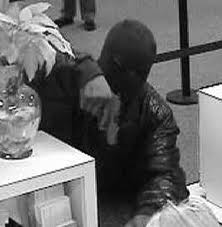
Two people were injured when a group fleeing from security guards opened fire in the Johannesburg central business district on Wednesday afternoon, police said.
“An Audi Q7 was chasing a blue BMW M1 when the occupants of the BMW started shooting at the Audi Q7 which was driven by security guards at the corner of Anderson and Sauer streets,” said spokesman Warrant Officer Xoli Mbhele on Thursday.
“The security guards then returned fire and shot the BMW’s tyre,” he said.
Mbhele said the five got out of their car and fled on foot while they were shooting at the security guards, hitting two passengers in a stationary Quantum taxi at the corner of Broad and Loveday Streets.
“The group then hijacked a white Nissan Tiida and sped off from the scene,” Mbhele said.
The car was later recovered at Turffontein.
“The injured, a man and a woman, were treated at the scene but the woman was taken to hospital with a wound in the neck,” Mbhele said.
The security guards gave chase to the group’s car when it failed to stop as it was driving towards on-coming traffic, Mbhele said.
He said the police were searching for the criminals. – Sapa
German Chancellor Angela Merkel, an unflappable pastor’s daughter, is closing in on a third term in Sunday’s general election, cementing her title as the world’s most powerful woman.
So strong is Merkel’s position that she has often seemed to transcend politics during what may be the last of her juggernaut campaigns, simply ignoring her opponent along the way.
This month a giant billboard went up at Berlin’s main train station featuring only a picture of the chancellor’s hands folded in her trademark diamond-shape gesture.
Quite simply, the mighty Merkel is the message.
After eight years at the helm of the top European economy, and three as the go-to leader in the eurozone crisis, Merkel looks set to sail to another term at the helm for steering the country unscathed through the turmoil.
But abroad, angry protesters have marched through the streets of Athens, Lisbon and Madrid blaming her for national budget cuts they say are choking off desperately needed economic growth, some even brandishing caricatures of Merkel in Nazi garb.
“I am determined to see Europe emerge stronger from the crisis,” she intones regularly. “Germany can only be strong with a strong Europe.”
During a widely criticised campaign virtually devoid of real substance, observers complain that Merkel has lulled the prosperous country into a false sense of security 23 years after its joyful reunification.
“Merkel perfectly embodies the sensibilities of the Germans in the early 21st century,” the publisher of the influential weekly Die Zeit, Josef Joffe, wrote last month.
“You don’t have to expect any threatening new tacks from her, no tough decisions for or against. She is perfectly predictable in her flexibility and the risk-averse electorate loves it. Merkel is us, and we are Merkel.”
Her late biographer Gerd Langguth found a “sphinx-like quality” in her, allowing Merkel to quietly triumph in the most unlikely circumstances.
Merkel dispensed with rivals in her conservative Christian Democratic Union (CDU) despite being a misfit in a party of mainly Roman Catholic family men from the wealthy southwest.
A twice-married childless Protestant raised in communist East Germany, she has become the unchallenged conservative leader of her generation.
The girl born Angela Kasner in 1954 left Hamburg in then West Germany a few weeks after her birth when her Protestant preacher father decided to tend to the flock in the East.
Locals remember her fierce intellect and discretion as a Christian in a totalitarian state.
She earned a physics doctorate, married and divorced fellow student Ulrich Merkel, and stayed out of politics until the Berlin Wall fell in 1989.
In 1990 she joined the CDU and won her first parliamentary seat.
Then chancellor Helmut Kohl made her minister for women’s issues and later environmental affairs, and bestowed on her the fond but patronising nickname “the girl”.
But in 2000, the frumpy newcomer rose to the head of the CDU when she alone had the courage to tell Kohl to quit as party chairman over a slush fund scandal.
In 2005 she unseated Social Democratic (SPD) chancellor Gerhard Schroeder after seven years in power, becoming Germany’s first female chancellor as well as its youngest.
She is also the only woman to lead a major European power since Margaret Thatcher of Britain.
During her first term, Merkel presided over a loveless “grand coalition” between the conservatives and their traditional rivals, the SPD.
Her decisive victory in the 2009 vote allowed her to drop the SPD in favour of the smaller, pro-business Free Democrats, in theory giving her more scope to set her own course.
But polls indicate they may have trouble renewing their tie-up and Merkel may again have to revert to a grand coalition.
Forbes magazine has named her the world’s most powerful woman for seven out of the last eight years, and she insists despite the friction that hers is the “most successful government since reunification” in 1990.
Critics say her own science background leads her to scrutinise the minutiae and at times dither, which in the euro crisis has left ailing European partners to twist in the wind. Rivals also find her chameleon-like qualities exasperating.
Merkel was a staunch defender of nuclear power until Japan’s Fukushima disaster in 2011, prompting a dizzying about-face that has seen her pledge to phase out all of Germany’s nuclear power reactors by 2022.
Angela Merkel
A lover of German opera, French red wine and walking holidays in the Italian mountains, Merkel has repeatedly pointed to the iconic Swabian housewife — a paragon of thrift and self-control — as her model.
Indeed she shuns the trappings of power, wearing boxy trouser suits, spending precious free weekends in her spartan dacha north of Berlin, and doing her own shopping at a discount supermarket.
Meanwhile her husband since 1998, chemistry professor Joachim Sauer, is so publicity-shy he opted not to attend Merkel’s inauguration in 2005. – AFP
The ANC retained control of two of the three wards in the Tlokwe (Potchefstroom) by-elections in the North West on Wednesday.
The party’s candidate Oupa Mogoshane lost Ward 26 with 900 votes to independent candidate Batiki “Stone” Mahlabe’s 1425 votes, according to the IEC’s results report.
The United Christian Democratic Party candidate Moeketsi Phakedi received 10 votes.
A total of 5677 people were registered to vote in the ward of which only 2374 cast their ballot. There were 39 spoilt votes.
Mahlabe, who was a former African National Congress councillor in the area for 12 years, registered as an independent candidate after he was expelled along with 13 others from the party in July for participating in a motion of no confidence against Tlokwe mayor Maphetle Maphetle.
Maphetle was replaced by Democratic Alliance councillor Annette Combrink.
However, the ANC’s national disciplinary committee overturned the expulsions but Mahlabe decided not to return to the party.
In the 2011 local government elections, the African National Congress won Ward 26 with 3403 of the 3580 valid votes cast, which gave them an overwhelming majority of 95.06 percent of the votes.
The ANC won the by-elections in Ward six and 18 on Wednesday.
In Ward 18 the ANC faced off with another former party member and provincial chief whip David Kham, who registered as an independent candidate.
Kham, like Mahlabe, was one of the 14 councillors expelled from the party.
ANC candidate Thapelo Skozana won with 884 to Kham’s 520 votes.
The Azanian People’s Organisation’s Matladi Mofokeng received 11 votes and the UCDP’s Molebatsi Lehloo 10 votes.
A total of 3251 people were registered to vote in Ward 18 but only 1452 votes were cast and 27 of those were spoilt.
In 2011, the ANC won the ward with 1859 of the 2009 votes cast which resulted in a 94.37 percent victory.
In Ward six the ANC’s Japhta Monaisa won 882 of the 1386 valid votes cast. The Democratic Alliance’s Johann Coetzee came in second with 493 votes.
Azapo’s Lesego Malepe received six votes and UCDP’S Mawela Dinko received five votes.
A total of 4254 people were registered to vote in Ward six but only 1408 came to the polls. There were 22 spoilt votes.
In 2011, the ANC received 1352 (64.26 percent) of the 2104 valid votes and the DA received 720 (34.22 percent) of the votes. – Sapa
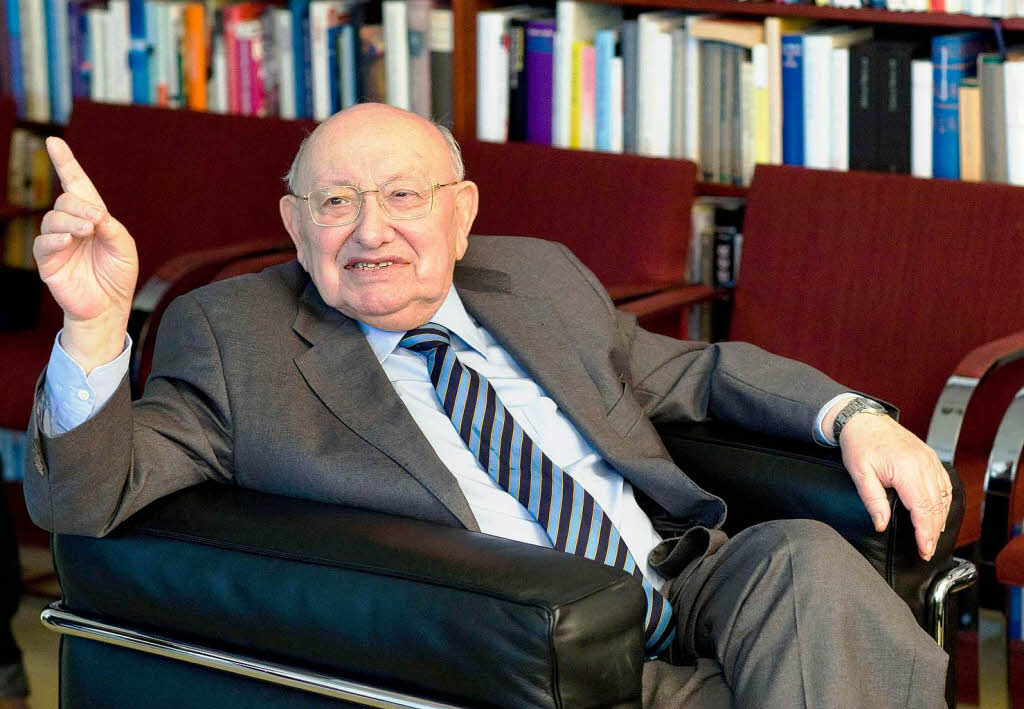
Marcel Reich-Ranicki, who grew up in Poland and Nazi Germany, survived the Warsaw Ghetto and went on to become post-war Germany’s best-known literary critic, has died at age 93.
The sharp-tongued Reich-Ranicki established himself as West Germany’s premier arbiter of literary taste after arriving with no money in 1958 from communist Poland, where he had served as a diplomat and intelligence agent in the late 1940s.
The Frankfurter Allgemeine Zeitung newspaper said Reich-Ranicki died in Frankfurt on Wednesday. It didn’t give further details.
Reich-Ranicki didn’t shy away from hard-biting criticism of authors, saying once that “clarity is the politeness of the critic; directness is his obligation and his job.” In his 1999 memoirs, “My Life,” he conceded that he had a reputation as “a man of literary executions.”
Initially part of the left-leaning literary circle known as Group of 47, along with Nobel laureate Guenter Grass, Reich-Ranicki wrote for the weekly Die Zeit, then led the literature section of the conservative-minded Frankfurter Allgemeine Zeitung daily from 1973 to 1988. After that, he became the star of ZDF public television’s “Literary Quartet,” a popular book program.
Reich-Ranicki said he recommended German novelist Heinrich Boell for the Nobel Prize for literature. Boell won in 1972.
Reich-Ranicki was by turns supportive and critical of Grass – with whom he fell out for a time after describing one of Grass’ books as “a complete failure.”
Reich-Ranicki was born into a Jewish family in Wloclawek, Poland, on June 2, 1920. When he was 9, his family moved to Berlin following the bankruptcy of his father’s construction company.
He recalled his elementary school teacher saying to him as he left: “You are going, my son, to the land of culture.” In Berlin, Reich-Ranicki went to high school but by the time he wanted to attend university to study German literature in 1938, the Nazis had come to power and he was denied entry because he was Jewish. He was then deported to Poland.
After Nazi Germany’s invasion of Poland in 1939, Reich-Ranicki, like other Jews, was soon forced to live in the Warsaw Ghetto. There he worked as an interpreter for the ghetto’s Jewish administrative council.
Speaking to the German Parliament in 2012, he recalled the day in July 1942 when the Nazi SS informed the Jewish council of plans for the inhabitants’ “resettlement” to the east – a Nazi euphemism for deportation to the death camps, and the beginning of the end of the ghetto.
Reich-Ranicki, who took minutes of the meeting, recalled that a “deathly silence” was followed by uproar. He said those present “seemed to sense what had happened: that the sentence had been pronounced for the biggest Jewish city in Europe. The death sentence.”
Discovering that, as an employee of the Jewish council, he was among those exempted from immediate deportation along with their wives, Reich-Ranicki hurriedly married his girlfriend Teofila, whom he called Tosia.
In February 1943, the couple escaped the Warsaw ghetto. A typesetter and his wife on the outskirts of Warsaw hid them in the basement or attic of their house during the day. At night, they made cigarettes, which the typesetter then sold. This continued until the Red Army arrived the following year.
Reich-Ranicki’s parents and brother were killed in the Holocaust. His sister, Gerda, and her husband escaped to England from Germany shortly before the war.
Having survived the war, Reich-Ranicki joined Poland’s communist party. He said he and his wife credited their survival to the Red Army and that communist ideas appeared “very attractive” at the time. But, after returning from his stint as the Polish consul in London and as an agent with Poland’s fledgling intelligence service, he was briefly detained and kicked out of the party amid the increasingly repressive atmosphere of the late 1940s.
He was still able to publish literary criticism in 1950s Poland and even had his expulsion from the communist party revoked – although he said he was never officially informed. But, disillusioned in part by an upturn in anti-Semitism, he decided not to return in 1958 from a study trip to West Germany; his wife and son, who had already flown to London, joined him there.
Born Marcel Reich, he took the name Ranicki when he worked for the Polish government in London after the war. He shifted to the double-barreled Reich-Ranicki when he launched his career as a critic in West Germany.
Reich-Ranicki never denied having been a member of Poland’s communist party, but became embroiled in an argument about his past in 1994 when, following a German television report, he had to acknowledge having worked for the Polish intelligence. He had previously criticized some East German intellectuals for not coming clean about alleged ties to their country’s secret police.
“I regret nothing that I did then, and I see not the slightest reason to justify myself,” Reich-Ranicki said.
His wife died in 2011 and he is survived by their son, Andrew. – AP
A man accused of murder, rape and robbery has been given three life sentences by the North West High Court, police said on Wednesday.
Matthews Koko Mooketsi,30, was sentenced on Tuesday for raping an elderly woman, murdering her husband and robbing them in Pampierstad, said Lieutenant Sergio Kock.
He was given a life sentence for each crime.
Mooketsi stormed into the elderly couple’s home in Itireleng Village on New Year’s Eve in 2011.
He raped and assaulted the 62-year-old woman and assaulted her 85-year-old husband, who was blind, said Kock.
He then robbed them of clothes and household appliances.
The couple was taken to Taung hospital, where the husband later died.
Mooketsi was caught three months later in Bloemfontein. – Sapa
Former President says country continues to present an anomalous picture to the world
SPEECH BY FORMER PRESIDENT FW DE KLERK FOXHILLS RESORT, ENGLAND, September 13 2013
SOUTH AFRICA: PAST, PRESENT AND FUTURE
I should like to talk about South Africa: our past, our present and our future -‐ about
where we have come from since the 1980s;
where we now find ourselves; and
where we are going.
It is especially appropriate to do so now -‐ because I can recall no time since 1994 when so many South Africans have been so despondent.
We should remember 1994 -‐ not only because it was the birth of our new society -‐ but because it provides an important reminder that we South Africans have the ability to solve even the most intractable problems.
It is easy to forget now how desperate our situation was in the mid-1980s:
Our efforts to reform apartheid -‐ including the scrapping of more than 100 apartheid laws and the introductions of the tricameral parliament had simply redoubled demands for “one-‐man, one vote”;
We were beset with internal unrest and increasingly violent protests;
Scenes of chaos and insurrection in our streets dominated TV screens throughout the world;
After the Rubicon speech the rand had plummeted through the floor;
Unsure of the government’s ability to control the situation, international banks had pulled the plug on us by refusing to roll over our short-‐term debt;
Demands for comprehensive economic sanctions were reaching crescendo pitch;
Our armed forces were confronting increasing attacks on our borders and the borders of Namibia -‐ attacks that were supported by 50 000 Cuban troops.
There were no signs of light on the dark and stormy horizon.
And yet -‐ by 1990 -‐ we had clawed our way back from the precipice.
The victory of our forces at the battle of the Lomba River in September 1987 had finally convinced the Soviets, the Cubans and the Angolans that there was no prospect of a military victory.
The following year we began negotiations on the withdrawal of Cuban forces from Angola and the parallel implementation of the UN independence process in Namibia;
Also by 1987 the ANC had accepted that there would not be a revolutionary outcome in South Africa and that the only path to the future lay through negotiations;
The successful independence process in Namibia in 1989 showed that it was possible to negotiate successful outcomes with enemies;
Finally, the collapse of the Soviet Union -‐ symbolized by the fall of the Berlin Wall in November, 1989 -‐ signaled the arrival of an entirely new global paradigm.
By the beginning of 1990 these events had opened a historic window of opportunity for a peaceful and negotiated settlement. We did not hesitate. We jumped through -‐ and after almost four years of roller-‐coaster negotiations we were able to reach a national accord on our future.
It was our proudest moment.
Our 1993 and 1996 constitutions were the outcome of the genuine give and take process inherent in all negotiations. The final agreement was at least as close to original negotiating positions of the non-‐ANC parties as it was to that of the ANC.
It contains all the basic rights that we need to maintain a free and prosperous society.
It articulates the values of human dignity, equality, fundamental rights and non-‐ discrimination on which the new South Africa has been established.
It acknowledges the supremacy of the Constitution and the rule of law.
It makes provision for all the institutions and mechanisms that are necessary for multiparty democracy based on accountability, openness and responsiveness.
It has served us well for the past 19 years. Which brings me to the present.
It is important to remember the many, many successes that we have achieved since 1994 -‐ many of them as a result of government action:
We have experienced 19 years of economic growth -‐ interrupted only briefly by the global economic crisis of 2008.
The regulation of our security exchanges and our reporting standards are the best in the world;
Our banks are the second soundest in the world and our corporate boards are the second most efficacious. Our financial services and protection of minority shareholders are third best in the world and our ability to finance local equity is the fourth best internationally.
We are one of the primary gateways to Africa -‐ and are now the fifth largest investor in the continent.
We have also made significant social progress:
The percentage of the population living in absolute poverty has declined to less than 20% -‐ largely because of social grants.
More than three million housing units have been built -‐ enough to house almost a quarter of the population -‐ with another million units in the pipeline;
More than three quarters of the population now have access to electricity, drinkable water and sanitation
We have experienced moments -‐ like the 2010 Soccer World Cup -‐ when we have lived up to Archbishop Tutu’s characterization of us as the Rainbow Nation of God;
We have seen the rapid growth of new and self-‐confident black middle class. Whites now comprise less than 40% of the top decile of income earners.
At the same time we are beset by serious problems. One can hardly disagree with the diagnosis of the National Planning Commission regarding the nature of these challenges. They include:
High unemployment -‐ closer to 40% than the official figure of 25,6%;
Poor education -‐ especially for black South Africans -‐ who fare badly in comparative tests with children from the poorest African countries;
Poor public service delivery -‐ which has led to virtually daily protests throughout the country;
rising levels of corruption; and
the fact that South Africa is still a divided society.
Another growing problem is the increasingly destructive role that is being played by our militant trade unions. It is one of the main causes of unemployment and of our failure to attract the foreign investment that we need for sustained economic growth:
South Africa has the worst labour relations in the world. According to the World Economic Forum’s Global Competitiveness Report it is the worst of 144 countries assessed in terms of co-‐operation in labour-‐employer relations;
COSATU has continuously raised labour costs without commensurate productivity increases -‐ which has inevitably resulted in job losses. South Africa’s flexibility of wage determination is the fourth worst in the world.
Our labour legislation is amongst the most onerous anywhere. South Africa’s hiring and firing practices are the second worst in the world.
COSATU’s campaign to abolish labour brokers would lead to the loss of more than half a million jobs.
COSATU has steadfastly opposed proposals to open labour markets to the unemployed.
It is destroying jobs by alienating foreign and domestic investors through its confrontational stance and open support for nationalisation.
On top of all this came the Marikana massacre of 16 August last year; the subsequent wave of violent and uncontrolled wildcat strikes and hopelessly unrealistic wage demands. All this has been compounded by the precipitate fall of the rand against the US dollar.
So South Africa continues to present an anomalous picture to the world:
on the one hand a picture of failing governance; out of control trade unions; rising corruption and daily service delivery protests -‐ and
on the other hand, a picture of economic dynamism, enormous opportunities and a counter-‐intuitive sense of optimism -‐ particularly in bustling Johannesburg.
But what of the future?
Predicting the future is one of the most risky of all endeavours -‐ since we live in such rapidly changing times. Nevertheless one can identify some of the salient factors that will undoubtedly influence the course of events:
Whatever happens in South Africa will take place within the framework of macro-‐ developments on the global stage -‐ just as they have always done in the past;
Secondly, current developments within the ANC’s ruling alliance will play a key role. The question is whether the leadership will be able to hold together an alliance which now encompasses the whole spectrum
from Stalinism to social democracy;
from exclusive black nationalism to inclusive non-‐racialism;
from genuine commitment to sound governance to pervasive crony capitalism and entrenched kleptocracy?
Will the ANC be able to continue to plaster over these increasing obvious cracks -‐ or will it split?
Thirdly, will it be possible to moderate the behavior of our rampant and wildly irresponsible trade unions?
Fourthly, will the government break away from its race-‐based ideology and accept the idea that the skills of all South Africans must be used to enable the country to address its problems and achieve its potential?
Finally, a critical factor will be our ability to maintain the excellent Constitution that we South Africans negotiated between 1990 and 1996 and the institutions that it mandates including
free and impartial courts;
an independent National Prosecuting Authority; and
government that is accountable, transparent and responsive.
So, these are the factors that will play significant roles in determining our future:
What will happen on the global stage?
What will happen within the ANC Alliance?
Will we be able to control the trade unions?
Will we be able to liberate ourselves from race-‐based ideologies? And,
Will we be able to uphold our Constitution and achieve the vision that it articulates?
Personally, I remain an optimist -‐ and believe that we shall be able to surmount the challenges that confront us now -‐ just as we were able to overcome the much greater problems that we faced 25 years ago.
Issued by the FW de Klerk Foundation, September 16 2013
The police must stop the violence between South Africans and Somalians living in Port Elizabeth, the ANC in the Eastern Cape said on Monday.
“Any type of violence, including looting of shops owned by Somali nationals is illegal, wrong and has no place in South Africa,” African National Congress provincial secretary Oscar Mabuyane said in a statement.
“The SA Police Service members are the first and last line of defence for our communities, and we call on them to use the law and public order policing techniques to stop this wave of violence.”
Eastern Cape police said seven men had been arrested at the weekend for looting and burning Somali-owned shops in Port Elizabeth.
At least 10 shops in KwaZakhele and New Brighton were attacked.
Brigadier Miranda Mills said two shops were looted and burnt in Ntintili street, and a car parked outside was set alight.
Several other shops were targeted on Sunday following the arrest of a Somali man accused of shooting dead a man outside a shop on Saturday evening.
Police had since moved some foreigners out of the area.
Mabuyane said the ANC in the province was calling on residents in the Nelson Mandela Bay Metro to refrain from taking the law into their own hands.
“Somali nationals must also stop using violence to resolve challenges they face but must put their trust in the police to deal with any challenge.
“Violence will not help us deal with any situation but will make matters worse for our people,” he said. – Sapa
Police have arrested two people following the murder of a 71-year-old retired headmaster, who was shot and killed during a robbery at his Zeerust home over the weekend, Beeld reported on Tuesday.
Sollie Botha and his wife Elsa were attacked in their home on Saturday night, after they had returned home from a local wedding.
Their adult daughter came home much later and realised something was wrong when she saw lights on in the house.
She fetched two male friends, who returned to the house with her, where they discovered the body of her father, who had been shot in the head.
Elsa Botha had been tied up and left on her bed after she had been raped.
She later told police that they had woken up when they heard a noise in the house shortly before midnight.
Sollie Botha went to investigate, and stumbled across two robbers in his home.
They shot him in the face and then held a gun to his wife’s head and ordered her to empty a safe.
The two men later fled with a number of household possessions.
This website uses cookies to improve your experience. We'll assume you're ok with this, but you can opt-out if you wish. Cookie settingsACCEPT
Privacy & Cookies Policy
Privacy Overview
This website uses cookies to improve your experience while you navigate through the website. Out of these cookies, the cookies that are categorized as necessary are stored on your browser as they are essential for the working of basic functionalities of the website. We also use third-party cookies that help us analyze and understand how you use this website. These cookies will be stored in your browser only with your consent. You also have the option to opt-out of these cookies. But opting out of some of these cookies may have an effect on your browsing experience.
Necessary cookies are absolutely essential for the website to function properly. This category only includes cookies that ensures basic functionalities and security features of the website. These cookies do not store any personal information.
Any cookies that may not be particularly necessary for the website to function and is used specifically to collect user personal data via analytics, ads, other embedded contents are termed as non-necessary cookies. It is mandatory to procure user consent prior to running these cookies on your website.


 Police handled more than 12,000 public protests during the 2012/2013 financial year, Police Minister Nathi Mthethwa said on Thursday.