Amazon buys Washington

amazonAmazon.com Inc. (AMZN), whose founder Jeff Bezos is purchasing the Washington Post (WPO), ranks among the biggest spenders among high-technology companies seeking to influence the work of the federal government.

Former U.S. Senators Trent Lott, a Mississippi Republican, and John Breaux, a Louisiana Democrat, are among those working for Seattle-based Amazon, which spent $1.7 million on lobbying from January through June, ninth highest among high-tech companies, according to the Center for Responsive Politics, a Washington-based research group that tracks lobbying.

The company weighed in on issues with Congress, the Commerce Department and the Federal Trade Commission on matters such as Internet sales taxes and privacy, patent laws, cybersecurity and online wine sales, Senate filings show.

“They have a huge number of issues before the federal government and now he’s bought the hometown paper for covering those politicians,” said Bill Allison, editorial director for the Sunlight Foundation, a Washington-based watchdog group. “There’s always a concern you’re going to have a conflict when you have wealthy publisher. Given all of Amazon’s issues, it’s hard to see where Bezos won’t have a conflict.”

Ethics specialist Bob Steele agrees.

“There are certainly competing loyalties,” said Steele, director of the Janet Prindle Institute for Ethics at DePauw University in Greencastle, Indiana. “If he handles it very well, it’s possible to manage those competing loyalties, but it’s also possible for competing loyalties to turn into conflicts of interest that could erode the integrity of his journalistic obligations.”

Like other high-tech companies, Amazon has increased its lobbying spending. The company’s 2013 totals for the first six months of the year are 31 percent higher than the $1.3 million spent during the same period a year earlier. In 2000, when the company first reported it was lobbying the federal government, it spent $246,000 during the first six months.

Amazon’s team of lobbyists also includes former Assistant Treasury Secretary Jonathan Talisman, who served in the Clinton administration; Elizabeth Frazee, former aide to House Judiciary Committee Chairman Bob Goodlatte, a Virginia Republican; and Holly Fechner, former counsel to the Senate Health, Education, Labor and Pensions Committee.

Bezos, chief executive officer of Amazon, is purchasing the Post on his own, paying $250 million to the Washington Post Co., for a newspaper which has been held by the family of Post CEO Donald Graham since 1933.

Bezos must consider the reputation of the Post going forward as he acquires a newspaper at the heart of reporting on and editorializing about Washington’s issues. Kelly McBride, an ethics specialist at the Poynter Institute, a St. Petersburg, Florida-based journalism training organization, says Bezos would undercut the value of his purchase if he used the Post to advocate for his business interests.

“He will have to create — and I have no doubt that he will — a standard of independence and transparency in his newsroom,” McBride said. “It doesn’t make any business sense for it to become a mouthpiece. It makes business sense to do the right thing.” – Bloomberg
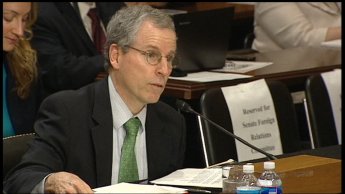
Egypt outraged by likely US ambassador

Robert Ford
Robert Ford

US media reports that Robert Ford, former top US envoy to Syria, will be Washington’s next ambassador to Egypt has sparked a vitriolic Twitter campaign over a Canadian conspiracy website’s claims that he once ran “death squads” in Iraq.

A little over two years ago, on July 8 2011, a convoy carrying the then US Ambassador to Syria Robert Ford made its way through army checkpoints to the besieged city of Hama, then the centre of protests against the rule of the Assad regime.

The surprise visit was seen as the first concrete sign of US support for the Syrian opposition. It sparked a furious response from the government.

The veteran US diplomat is now being showered with invective and diatribe on Twitter.

The latest social media campaign against Ford was sparked by media reports over the weekend that US Secretary of State John Kerry had recommended the former envoy to Syria as the next US ambassador to Egypt.

But a number of Egyptians on Twitter were having none of it.

Within hours, hashtags such as #NoToRobertFord in English and in Arabic, “We refuse the American ambassador to Egypt,” appeared on the microblogging site.

“The new sponsor of terrorism in Egypt,” tweeted one user, referring to the US career diplomat. Another warned, “Watch out Ford, if you come to Cairo .. You won’t be an ambassador .. You will b a target”.

The Twitter campaign followed the publication of a post on a Canadian conspiracy website, accusing Ford of running “death squads” in Iraq, where he was political counsellor to the US embassy in Baghdad between 2004 and 2006.

The website in question, run by the Centre for Research on Globalisation, is known among other things for its scepticism of the official explanation of the September 11 terrorist attacks.

The Egyptian daily, al-Masry al-Youm, reported the allegations, but could not establish their veracity.

The backlash could not come at a worse time for Washington. Anti-US sentiments are running high in the world’s most populous Arab nation and recipient of an annual $1.5 billion in US aid.

Muslim Brotherhood supporters accuse Washington of backing the Tamarod movement, which campaigned for democratically elected Egyptian president Mohamed Morsi’s ouster earlier this year.

On the other hand, Morsi’ opponents are convinced the US is supporting the Brotherhood, while current US Ambassador to Egypt Anne Patterson has turned into a reviled figure in the country.

In this milieu of mutual suspicions and rising tempers, Ford’s extensive diplomatic experience in the region has turned into a disadvantage instead of an asset.

A fluent Arabic speaker, Ford has also served in Bahrain and Algeria, leading some critics to draw parallels between the US diplomat and civil unrest in the countries he has been posted.

“When Robert Ford enters a country, he brings the shayatin (devils) in,” tweeted one user in Arabic, while another called the US envoy “the architect of fitna” – or upheaval.

Ford has been billed to take over the ambassadorship in Egypt after Patterson was nominated for a senior State Department post last week.

Patterson was appointed ambassador to Egypt in 2011, the year Ford was appointed top US envoy in Damascus. He was withdrawn from Syria in February 2012, after the security situation seriously deteriorated in the war-torn country.

While the New York Times cited unnamed US officials as saying Kerry had recommended Ford for the post, US State Department officials have not officially confirmed the report.

Ford’s appointment would require a recommendation by US President Barack Obama, followed by a Senate approval.

But for critics of the seasoned US diplomat, it’s never too early to express their opprobrium – on Twitter. – France24

Al Qaida takes crucial airport in Syria

Rebel wearing an Al Qaida shirt
Wearing an al Qaida shirt

Syrian rebels spearheaded by al Qaida in Iraq took control Tuesday of a crucial military airport in northern Syria, opening a vital supply line between the rebel-held north and Turkey.

The end of the siege that had clamped down the airport since last October began Monday, when two non-Syrian nationals drove an armored personnel carrier, loaded with explosives, into a position manned by defenders of the regime of President Bashar Assad. The explosion devastated the Assad troops and allowed rebels to overrun the Mannagh Air Base in Idlib province.

Those rebels included multiple units affiliated with the Syrian Military Council, an umbrella group with U.S. backing. That poses an uncomfortable pairing of a group supported by U.S. resources with Islamist organizations Washington has labeled as terrorist.

The Syrian Opposition Coalition, the political component of the SMC, announced that the airbase had been “liberated’ by a mixture of nine rebel groups. They included the al Qaida-affiliated Islamic State of Iraq and Greater Syria, or ISIS, and its Syrian sister organization, the Nusra Front.

Taking the airbase was critical because the facility had been used by Assad’s forces to target rebel supply lines and positions with artillery and air strikes.

In a series of unverifiable but credible videos released online by several rebel groups, the base appeared to hold significant amounts of military equipment. That will be welcomed by the supply-poor rebels.

Along with opening a new supply line from Turkey, the fall of the base helps the rebels in a potentially more significant way.

“This frees up some of the best rebel fighters from the Jihadist elements to help push offensives in Aleppo and Latakia,” said a European military attaché closely following the fight from neighboring Lebanon who spoke only under the condition of anonymity. “They now have the luxury to push men out to either help take the airport (in Aleppo) or help push down the coast (in Latakia.) Or both.”

Charles Lister, who has been closely monitoring the fight for the London-based military analysis group IHS Janes, agreed that the rebel seizure of the airbase could prove in the fighting to come.

“(The) capture will undoubtedly allow participating groups to re-distribute their forces further south in Aleppo to two main battlefronts: the ongoing siege of Aleppo International Airport and the governorate capital itself,” he said in a statement. “The ongoing militant Islamist-led offensive on the Alawite heartland of Latakia could also benefit.”

Within hours of the announcement, photos began appearing across social media sites often used by jihadist groups that showed the flag of ISIS flying over the airbase.

Those images highlighted the Islamist nature of the final assault.

Several sites praised the role of Jaish al Muhajireen, or the Army of the Immigrants, an offshoot of al Qaida. It’s composed of mostly foreign fighters recruited to fight alongside the primarily Iraqi Islamic State and the mostly Syrian Nusra Front.

The group is apparently led by Abu Omar al-Shishani, who appears to be either Chechen or Georgian.

Lister points to the expanded role for both Jais al Muhajireen and the Islamic State as a sign of the effectiveness of the more radical Islamist groups – both in the siege and in the overall fighting in Idlib Province.

“The victory again underlines the leading strategic impact being played by militant Islamists, particularly in northern Syria,” Lister said. “Every major offensive in northern Syria this year has been announced, led, and coordinated by Islamists.” – McClatchy

Read more here: http://www.mcclatchydc.com/2013/08/06/198675/al-qaida-groups-lead-syrian-rebels.html#storylink=cpy

US men accused of illegally lobbying for Mugabe

moegabe
It’s a headache

Federal prosecutors announced charges Tuesday against two Chicago men who they accuse of illegally lobbying US lawmakers to lift sanctions against longtime Zimbabwe President Robert Mugabe and members of his regime in exchange for a promise of $3.4-million.

Prince Asiel Ben Israel, 72, and C. Gregory Turner, 71, tried to persuade unnamed US state and federal lawmakers, including four from Illinois, to oppose the sanctions against the leaders of the southern African nation, according to the charges unsealed Tuesday in US District Court in Chicago.

The complaint says the men met with Mugabe, Reserve Bank of Zimbabwe Gov. Gideon Gono and other officials “multiple times” in the US and Africa, and allegedly agreed to lobby US federal and state officials on Zimbabwe’s behalf in exchange for the promised payments, which the defendants apparently weren’t able to collect in full.

No lawmakers have been accused of wrongdoing, although the investigation is ongoing, the US Attorney’s Office in Chicago said in a news release. It’s not illegal for public officials to meet with sanctioned Zimbabweans, but individuals cannot provide lobbying services to those subjected to US sanctions, prosecutors said.

Mugabe’s government has been under sanctions since 2003 for alleged democratic violations.

Ben Israel appeared in a federal courtroom in Chicago Tuesday, where the terms of his bond were changed to require him to remain in contact with the court’s pretrial services department. His wife, Hattie Brown, also appeared in court, promising US Magistrate Judge Arlander Keys that she would turn in her husband if he attempts to flee.

The complaint alleges that the defendants violated the International Emergency Economic Powers Act. The violation carries a maximum penalty of 20 years in prison and a $1-million fine.

Ben Israel’s attorney, Viviana Ramirez, said Tuesday that it’s too early to address the merits of the case. Turner, a Chicagoan, is believed to be currently living in Israel. A warrant has been issued for his arrest.

According to the complaint, Ben Israel and Turner began talking with Mugabe and other Zimbabwe leaders in early November 2008 regarding the influence they could exert to lift the sanctions originally imposed by President George W. Bush.

The defendants allegedly discussed with Mugabe, Gono and others their ties to several public officials who supposedly had close connections to then-President-elect Barack Obama.

The complaint states that Ben Israel and Turner engaged in public relations, political consulting and lobbying efforts and had a Nov. 26, 2008, “Consulting Agreement” that called for an initial payment of $90,000 and three subsequent equal installments of $1,105,000.

The defendants allegedly arranged for Ben Israel to travel to South Africa with two Illinois lawmakers – referred to as “Illinois State Senator A” and “Illinois State Representative A” in the complaint – in early December 2008. Travel records show the two lawmakers traveled to Israel, but did not return as scheduled and extended their overseas stay, the complaint states.

Three days after the lawmakers’ return in mid-December, a scheduler for President-elect Obama’s transition team sent an email to another transition team member stating that State Representative A “wants a phone call from (transition team officials) regarding a meeting he had last week in Zimbabwe. I am not sure who to pass this on to but it’s the second time they have called.”

The transition team forwarded the email to the FBI based on its concerns that the state representative may have violated sanctions by traveling to Zimbabwe, according to the complaint.

Obama has decided each year of his presidency to keep the Zimbabwe sanctions in place, most recently in March.

Mugabe, 89, has been president of Zimbabwe for 33 years. He was re-elected by a wide margin last week, although his political opponents say voting wasn’t free or fair and was marred by widespread irregularities. – Sapa

Germany: US snooping poses risk of data theft, industrial espionage

germanindustryGerman companies believe the US now poses almost as big a risk as China when it comes to industrial espionage and data theft, a survey has revealed.

The startling finding of a survey of 400 companies conducted in mid-July underscores the shift in German public and business opinion caused by revelations about US surveillance activities.

Some 26 per cent of German managers, IT and security professionals described the US as a high-risk place for industrial espionage and data theft, according to the survey commissioned by EY, the consultancy.

This was second only to the 28 per cent of respondents who view China as a particularly high-risk country for industrial espionage. Russia was ranked third, with 12 per cent saying it posed a significant risk.

When they were asked the same question two years ago only 6 per cent of German companies described the US as a high-risk centre for industrial espionage and data theft.

“Until now [German companies] mostly identified China and Russia as the location of [potential] attackers. Now companies realise that western intelligence agencies also employ very comprehensive surveillance measures,” Bodo Meseke, executive director of fraud investigation and dispute services at EY, said.

US surveillance has become a core issue in Germany’s election campaign following disclosures about Prism, the US data mining programme, and reports in Der Spiegel, the German magazine, that the US has spied on EU offices and is obtaining around 500m pieces of metadata a month from Germany.

Opposition parties have pressed ministers to obtain answers from the US on the extent of any spying on German soil, and the Federation of German Industry has described media reports about US surveillance as “concerning”.

Following meetings in Washington last month, Hans-Peter Friedrich, Germany’s interior minister, assured German industry that the US National Security Agency had not engaged in industrial espionage in Germany.
The US says its cyber activities are focused on combating terrorism and do not target companies, in contrast to China, which Washington accuses of cyber snooping to obtain corporate secrets.

These assurances do not appear to have convinced a significant portion of Germany’s business community.

Germany’s dependence on high-tech exports means the protection of patents and intellectual property are of perennial concern. Modern Germany’s tolerance of mass surveillance is also far lower than in other countries because of their experience of Nazism and East Germany’s Stasi secret police.

German companies continue to view business competitors in foreign countries as a bigger espionage threat than state intelligence agencies, according to the EY survey.

There are signs that disclosures made by Edward Snowden, the former NSA official turned whistleblower, are affecting the cloud computing industry, which involves storage of data and software on huge external servers rather than local hard drives.

A separate survey carried out last month by the Cloud Security Alliance, a trade body, found that 10 per cent of non-US members had cancelled plans to use a US-based cloud provider. Some 56 per cent said they would be less likely to use a US cloud company in future. – FT

US global terror warning inconsistent with weak al Qaida

waronterrorThe Obama administration’s sweeping response to an alleged al Qaida plot – closing diplomatic posts in parts of Africa, the Middle East and Asia – suggests a terrorist organization that’s capable of striking virtually anywhere, not the one U.S. officials have depicted as a group that’s near defeat.

Counterterrorism analysts said Monday that the U.S. government’s global response to a threat emanating from Yemen, home to al Qaida’s most active affiliate, was at odds with how dismissive President Barack Obama was in a speech in May, when he said that “not every collection of thugs that labels themselves as al Qaida will pose a credible threat to the United States.”

That was only one of a series of public statements by Obama and his Cabinet members that played down the capabilities of al Qaida-linked groups. For at least the past two years, the administration has sought to reassure Americans that al Qaida is “on the run,” while counterterrorism experts were warning about the semiautonomous affiliates that have wreaked havoc in North Africa, Yemen, Iraq and Syria.

“The actions the administration is taking now are deeply inconsistent with the portrait of al Qaida strength the administration has been painting,” said Daveed Gartenstein-Ross, a counterterrorism specialist at the Foundation for Defense of Democracies, a Washington research institute.

U.S. officials have been secretive about what precise information led to the worldwide travel advisory and embassy closings, but a Yemeni official told McClatchy on Sunday that authorities had intercepted “clear orders” from al Qaida leader Ayman Zawahiri to Nasir al Wuhayshi, the head of the affiliate in Yemen, to carry out an attack.

On the campaign trail last fall, Obama touted the killing of Osama bin Laden during a covert U.S. raid in 2011 as a sign that, while the U.S. would have to maintain vigilance, “the truth, though, is that al Qaida is much weaker than it was when I came into office.” In his State of the Union address last February, the president called al Qaida “a shadow of its former self” and said the threat posed by its affiliates wouldn’t require large-scale U.S. military deployment.

In July 2011, Obama’s then newly appointed defense secretary, Leon Panetta, said he was “convinced in this capacity that we’re within reach of strategically defeating al Qaida.” – mcclatchydc.com

Dem candidate darkens his skin

Fred DuVal
Fred DuVal

Phoenix businessowner Fred DuVal is not Hispanic. But he apparently has been coloring his skin darker in his commercials for his gubernatorial candidacy in order to appear Hispanic.

DuVal says the whole situation is just a big joke, since his Republican opposition calls him “The World’s Most Uninteresting Man;” he says he was trying to make himself look like the actor from the Dos Equis commercials.

According to the Arizona Daily Independent, “Duval digitally morphed himself to resemble the person pictured here, put the doctored image out on Twitter and hand-delivered a printed copy to the AZGOP.

“Painful attempts at humor, especially with racial overtones, usually backfire on candidates.” – Breitbart

US seeks ‘seamless’ AGOA renewal

agoaThe US Trade Representative that oversees the country’s trade policy with the rest of the world says the current United States administration wants a seamless renewal of the Africa Growth and Opportunities Act (AGOA).

Ambassador Michael Froman was speaking at the Washington-based think-tank, The Brookings Institution, which has just released a report suggesting certain recommendations for policymakers, including extending AGOA beyond 2015 when it’s due to expire.

The Brookings report is an empirical analysis of the possibilities post-2015 and calls AGOA one of the defining characteristics of the trade and commercial relationship between Africa and the United States.

Critically it argues that without an extension, there will be declines in African exports, economic diversification and employment for many eligible countries. Trade Representative, Michael Froman, was speaking ahead of his departure to the AGOA forum in Addis Ababa next week: “We want to see the seamless renewal of AGOA and we know how important that is to people making investment decisions to know in advance whether they’ll still benefit from those preferences and preferential access to the US market, plays a key role in whether they maintain their investments and add to them so we want to make sure there’s a seamless renewal.”

He says they’ve already started working with certain interested members of congress, who will ultimately have to renew the legislation once the White House is ready to resubmit it. But much needs to happen before that: “We have a little over two years now before AGOA expires, we want to use this period to really look at the successes of AGOA but also ways it can be improved, also look at the changes on the continent, the changing economic relationships and trade relationships that have developed between Africa and other economic partners around the world and see what kind of changes we want to make to AGOA before working with Congress and obviously Congress plays the critical role here in figuring what kind of AGOA we want to renew.”

The Brookings report back an assessment by Froman who described the current trade relationship with Africa as good but one that could be much more substantial, sighting a lack of greater regional and custom’s integration that makes trading with Africa that much more difficult. He also welcomed interest from other countries in the continent, including China: “The question for Africa is what kind of trade and investment relationships do they want to have, it’s up to them, with outside partners and ensuring that it works for them. And we’re very much confidence because as we travel around Africa as I did last year to a number of countries and back again this year, as much as the Chinese are there, they want Americans to be there as well. Because they know that our companies bring technology, management training. That they hire locally, that they like to build local capacity.”

Governance will also continue to be a factor as to which countries in sub Saharan Africa are eligible for the programme moving forward. This years AGOA forum in Ethiopia, will look at Sustainable Transformation through Trade and Technology. – SABC

Bill Clinton on SA visit

Chelsea and Bill
Chelsea and Bill

Former US president Bill Clinton and daughter Chelsea will on Tuesday visit the Ubuntu Education Centre in Zwide in Port Elizabeth, one of the Clinton Global Initiative commitment sites.

The centre was opened in 2010 as part of the initiative. It is the culmination of the efforts of the Ubuntu Education Fund, which has become one of South Africa’s largest Non-Governmental Organisations (NGO) since it was founded in 1999.

The fund reaches 40 000 children and has fund-raising offices in New York and London.

South Africa is the last stop of an African tour by the former president and his daughter to four countries where Clinton Foundation projects are located.

Bill Clinton is visited former President Nelson Mandela at his home at Qunu in the Eastern Cape last year. The two former presidents  met on the eve of Madiba’s 94th birthday.

Clinton was trying to get more support for a charity he helped start that provides training for impoverished South African school children in the hope that they can carve out a better future for themselves.

Amazon to buy Washington Post

Jeff Bezos
Jeff Bezos

Amazon founder Jeff Bezos will buy the Washington Post newspaper for $250-million in a surprise deal that ends an 80-year ownership of the paper by the Graham family and hands one of the United States’s most influential publications to the businessman whose internet company has transformed retailing.

Bezos, hailed by many as technology visionary, called his acquisition a personal endeavor and reassured employees and readers of the 135-year-old newspaper that he will preserve its journalistic tradition, while driving innovation.

The acquisition, the latest in a flurry of deals for print publications, including the New York Times Company’s sale of the Boston Globe for $70-million, is a another sign of the unprecedented challenges newspapers face as advertising revenue and readership decline.

Shares of the Washington Post Company climbed more than 5% to $599.85 after the announcement – their highest level in almost five years.

Chairperson and chief executive of the Washington Post Company, Donald Graham, said in an interview that he and his niece Katharine Weymouth, Washington Post publisher, made the decision to put the newspaper up for sale earlier this year after looking at its financial forecasts.

“For the first time in either of our lives we said to each other: is ownership by the Washington Post Company the best thing for the newspaper? We could keep it alive, that wasn’t the issue. The issue was could we make it strong?”

The Amazon chief executive took his message directly to employees in a letter posted on the newspaper’s website.

“I understand the critical role the Post plays in Washington, DC and our nation, and the Post‘s values will not change,” Bezos wrote in the letter.

“There will of course be change at the Post over the coming years. That’s essential and would have happened with or without new ownership,” Bezos added. “We will need to invent, which means we will need to experiment.”

In addition to the newspaper, Bezos gets other publishing businesses, including the Express newspaper, The Gazette Newspapers, Southern Maryland Newspapers, Fairfax County Times, El Tiempo Latino and Greater Washington Publishing.

The real estate, including the paper’s headquarters business and online news sites such as Slate, will remain with the Washington Post Company, and the paper’s operations will be kept separate from Amazon.com, according to the Washington Post.

The Washington Post is the seventh largest daily in the US.

While its legend and status loom large, the Washington Post represents only a fraction of the company which has expanded into a stable of holdings, including education and healthcare services and, most recently, industrial supplies.

And yet, the Washington Post suffers from the same hurdles besieging big city newspapers across the US. The company’s newspaper division reported an operating loss of $49.3-million for the six months ending June, compared to a loss of $33.2-million during the same period last year.

Weymouth, who will continue to serve as the paper’s chief executive and publisher after the sale, said she did not think there was a “magic bullet” to resolving the paper’s problems, but that the resources Bezos brought to the table were a plus.

“He’s smart and innovative and has access to a lot of smart people,” she said.

Bezos, who has built Seattle-based Amazon.com into a shopping and online technology force over the last two decades, made a small foray into media earlier this year with an investment in internet news site Business Insider.

Bezos is the world’s 19th richest person with a fortune of $25.2-billion, according to Forbes. His investment vehicle, Bezos Expeditions, is invested in a number of companies including Twitter and Business Insider.

His major personal project is called Blue Origin, which aims to be one of the first non-government funded ventures to send people and cargo into space, potentially winning lucrative contracts that were once fulfilled by NASA.

Bezos has already spent millions of dollars on this project, with millions more in the pipeline.

He did not elaborate in great detail on his motivations behind his latest deal, which caught many industry watchers by surprise. He does not play a prominent role in politics but has been described by friends as holding libertarian views. He and his wife did make public a $2.5-million contribution to a Washington state campaign to legalize same-sex marriage last year.

The deal comes on the heels of near-unprecedented media deal activity this year, with the Globe transaction announced just over the weekend, News Corp spinning out its newspapers, and the Tribune Company hiving off its publishing business like the Los Angeles Times and Chicago Tribune from its broadcasting division.

“It will be interesting to see, is this the first step in the transformation of the business?” said John Miller, senior vice president at Chicago’s Ariel Investments, a top-10 investor in the Washington Post. “The board is making the right decision. They obviously felt like it was a good deal. It will be interesting to see how they allocate capital going forward.” – Reuters

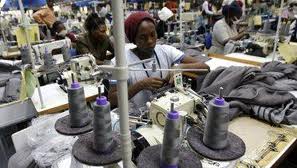
US unlikely to lift Zim sanctions

Ban Ki Moon, John Kerry

The United States (US) has reiterated its long held position that any easing or lifting of sanctions against Zimbabwe would happen only in the context of a credible election.

At the weekend, Secretary of State John Kerry issued a statement that in light of substantial irregularities they did not consider the election to be a credible expression of the will of Zimbabweans.

While at the United Nations (UN) in New York, there were no words of congratulations, only to say they are watching developments closely. There has been no ringing endorsement of President Robert Mugabe’s electoral victory, not from the US or UN.

UN Secretary General Ban Ki-moon’s spokesperson, Martin Nesirky says: “Obviously the SG continues to follow this closely and as we said at the time and it still holds true, and concerns that have been raised about certain aspects of the electoral process should be pursued through established channels and these concerns should then be considered transparently and fairly.”

The US State Department hinted that lifting of sanctions were unlikely. Spokesperson Marie Harf says: “We do not believe the results announced represent a credible expression of the will of the Zimbabwean people in light of the substantive electoral irregularities reported by domestic and regional observers.”

She says voter rolls had some irregularities in them that were not credible as stated by preliminary reports from the African Union and Southern African Development Community. Harf says: “Domestic observer missions also noted some serious concerns, so we’ve been clear that any easing of sanctions will only occur in the context of credible, transparent and peaceful elections.”

“So I don’t want to get ahead of the process here but the Secretary made clear that we do not believe that these were a credible expression of the will of the Zimbabwean people,” she says.

While the UN is waiting and watching to see how opposition concerns are handled by the ‘established channels’, the US has been absolutely frank that it does not accept the poll results placing it at odds with President Jacob Zuma who endorsed the process and has long held that sanctions be lifted against Zimbabwe, something that now seems increasingly unlikely.

Benghazi: CIA sent missiles to jihadis

US compound after attack

Despite evidence showing the Benghazi attack was staged by a State Department hired jihadist security outfit in connection with an arms transfer to al-Qaeda mercenaries in Syria, the US MSM is pretending it does not know what happened in Libya on September 11, 2012.

The corporate media has yet to point out that the Obama administration attempted to cover-up the real reason for the murder of ambassador Stevens – U.N. Ambassador Susan Rice and the State Department initially pointing to a lame anti-Muslim video – and has consistently downplayed the incident and characterized it as a non-event not requiring congressional investigation and the impeachment of President Obama.

A number of guests appearing on the Alex Jones Show following the attack have built an indisputable case that the CIA was shipping arms from U.S.-controlled facilities located at the U.S. mission in Benghazi to its mercenaries in Syria and the murder of ambassador Stevens was carried out by an al-Qaeda affiliated group as part of a turf war between the CIA and elements in the Pentagon.

In May, former government insider Steve Pieczenik explained how a Pentagon effort to derail a CIA operation may have occurred.

All the evidence points to the Pentagon doing nothing to stop the attack on the compound. Martin Dempsey, chairman of Joint Chiefs of Staff, admitted during a Senate hearing in June that highly trained Special Forces were stationed a few hours away from Benghazi on the night of the attacks but were not deployed.

This contradicts comments made by Gregory Hicks, the former top U.S. diplomat in Benghazi, who told Congress in May that officials from Special Operations Command-Africa ordered the units to stand down.

In May, Infowars.com posted an article reporting the fact the Benghazi attack and the murder of ambassador Stevens had nothing to do with an absurd anti-Islam video, as the establishment media and the Obama administration insisted, but was directly connected to the shipment of arms from Libya to the mercenaries in Syria.

Lt. Col. Tony Shaffer, appearing on the same show, alleged that Turkey partnered with the CIA to take down Bashar al-Assad in Syria and, hours before the compound was attacked and Stevens and others lost their lives, the Turkish Consul General Ali Sait Akin met with the U.S. ambassador.

According to Egyptian security officials, Stevens was instrumental in recruiting jihadists for the CIA’s war in Syria and “served as a key contact with the Saudis to coordinate the recruitment by Saudi Arabia of Islamic fighters from North Africa and Libya. The jihadists were sent to Syria via Turkey to attack Assad’s forces,” writes Aaron Klein.

It has been widely reported that the Syrian mercenaries belong to the al-Nusra Front, an al-Qaeda affiliate.

It was learned after the attack that the February 17th Martyrs Brigade was paid by the State Department to protect the U.S. diplomatic mission in Benghazi. The group had “clear al-Qaida sympathies, and had prominently displayed the al-Qaida flag on a Facebook page for months before the deadly attack,” Max Rosenthal reported for Newsmax in May. The February 17th Martyrs Brigade, it was latter learned during a House Oversight and Government Reform Committee hearing, are in league with Ansar al-Sharia, said to be linked to al-Qaeda in the Islamic Maghreb.

Part of the operation involving Stevens included sending surface-to-air missiles to al-Qaeda in Syria. “Speculation on Capitol Hill has included the possibility the U.S. agencies operating in Benghazi were secretly helping to move surface-to-air missiles out of Libya, through Turkey, and into the hands of Syrian rebels,” CNN also reported late last week.

The Obama administration announced in late September that “it planned to expand a program to secure and destroy Libya’s huge stockpile of dangerous surface-to-air missiles” and that “the U.S. State Department has one official on the ground in Libya, as well as five contractors who specialize in ‘explosive ordinance disposal,’ all working with the rebel Transitional National Council to find the looted missiles,” ABC News reported.

In fact, the State Department, under the guidance of ambassador Stevens, was moving to round up the missiles and send them to al-Qaeda in Syria. Prior to this, in December, 2011, the U.S. claimed to have secured 5,000 surface-to-air missiles and destroyed them outside of the village of Sidi Bin Nur in Libya. Doubtless, instead, they became part of the CIA’s cache destined for Syria.

Children banned from discussing fracking in their lifetime


frackingwater
Frack gag: No discussion about water contamination

The 7- and 10-year-old children of a Pennsylvania couple that reached a settlement following a lawsuit involving health issues brought on by fracking have been barred from discussing details of the case for the rest of their lives.

Though a gag order is not unusual in itself when large corporations reach a settlement with plaintiffs in court, the August 2011 case of a family that went to court with Range Resources Corporation, Williams Gas/Laurel Mountain Midstream, and Markwest Energy due to the environmental and health impact caused by gas fracking operations has raised eyebrows for its inclusion of the couple’s young children.

The Pennsylvania family reached a $750,000 settlement with the gas companies, and have used the award to relocate. In exchange, however, Chris and Stephanie Hallowich agreed that no member of their family could comment on the case “in any fashion whatsoever.”

Details of the case only emerged recently when the Pittsburgh Post-Gazette managed to get court transcripts released. The paper’s reporters were originally barred from attending the settlement hearing, and had to wait until a three-judge panel of the Pennsylvania Superior Court ruled that a lower court had erred in blocking the unsealing of the records.

Court records, which should have included details of the settlement but did not, paint a confusing picture for Chris and Stephanie Hallowich as they tackled the significance of their gag order.

“We know we’re signing for silence forever, but how is this taking away our children’s rights being minors?” Stephanie Hallowich asked the judge.

“I mean, my daughter is turning 7 today, my son is 10.”

According to the transcripts, Judge Polonsky, who oversaw the case, was unable to clarify. The family’s attorney, Peter Villari, questioned whether the order would be enforceable.

“I, frankly, your Honor, as an attorney, to be honest with you, I don’t know if that’s possible that you can give up the First Amendment rights of a child,” stated Villari.

Along with the gas companies, the Hallowich family also sued the state’s Department of Environmental Protection. In its ruling to unseal court records, the superior court also noted that the August 2011 hearing during which the record was sealed was held three days prior to schedule, without an official notification of the change of date, reports the New York Times.

According to Bruce Baizel, Energy Program Director at Earthworks, which focuses on mineral and energy development, the motives behind restrictive gag orders post-settlements is to conceal any evidence of adverse environmental impact from hydraulic fracturing, or fracking.

“The refrain in the industry is, this is a safe process. There’s no record of contamination. That whole claim would be undermined if these things were public,” Baizel told ClimateProgress.

Moreover, attempts to measure the number of settlements with non-disclosure agreements have failed.

“They don’t have to be registered, they don’t have to be filed. It’s kind of a black hole,” says Baizel.

Prior to the settlement the Hallowichs said that nearby gas drilling had caused “burning eyes, sore throats, headaches and earaches, and contaminated their water supply.”

Once the settlement was reached and the gag order enacted, however, a spokesman for Range Resources stated that the family had “never produced evidence of any health impacts,” and that the Hallowichs primary motive for moving was instead due to “an unusual amount of activity around them.” – RT

‘Racism is everywhere’: Minneapolis police chief

The scene in Green Bay where police officers Brian Thole and Shawn Powell used the 'N word'
The scene in Green Bay where police officers Brian Thole and Shawn Powell used the ‘N word’

The Minneapolis Police Department has been under the microscope after two separate incidences of officer-involved altercations laced with racial slurs came to light. Now, the former police chief is speaking out.

The videos out of Green Bay, Wis., and Apple Valley, Minn., have rocked the department and city leaders. In both, off-duty officers can be seen and heard as they fight and use racial epithets in heated altercations.

“It makes the department look bad,” said Tim Dolan, former police chief for the Minneapolis Police Department. “It makes the profession look bad.”

Dolan found the behavior so troubling, he penned a letter to the editor of the Star Tribune over the weekend. In it, he wrote, “As I often told officers in the past, there will be days when you will be less proud of putting on the uniform of the Minneapolis Police Department.”

“The recent incidents reported should embarrass and concern anyone who has worn a uniform,” he continued.

Dolan led the department for six years. Last year, he retired and passed the baton to Janee Harteau.

“I used to say the job was easy except for personnel issues,” Dolan recalled. “Personnel issues are the toughest to deal with, especially with race involved.”

When asked whether there is a problem with racism within the department, Dolan replied: “Racism is everywhere.”

“People say there isn’t racism,” he said. “They are not living in reality.”

The cases have sparked outrage in every corner of the city, particularly in neighborhoods where the majority of residents are African American.

“As a member of the community — the last couple years, I began trusting police here,” Darrel Young told FOX 9 News. “To see that… it was a hard to swallow.”

While Harteau cannot comment on specific individuals and punishments, she made it clear she was “appalled” by what she saw in the videos appearing on the local news. She has insisted that there is no place for racism or discrimination in the department and has vowed to reach out to cultural and faith leaders in the community, including Bishop Richard Howell, in an effort to rebuild trust.

“I think the time for conversation is now,” Howell said. “Let’s not let this thing get out of hand.”

On Sunday, the Minneapolis Police Federation also signaled its interest in being a part of the solution, with the union president releasing a statement that echoed Harteau’s sentiments after illustrated a desire to be included in discussions with community leaders.

“On behalf of our 850 members, we agree 100% with Chief Janee Harteau that each and every officer in MPD has taken an oath of office and is required to live by the Law Enforcement Code of Ethics. We take that oath and the code very seriously,” Lt. John Delmonico wrote. “The overwhelming majority of MPD officers work hard every day to earn the public’s respect and trust. We must impartially enforce the law without discriminating against any citizen based on their race, sexual orientation, religion or national origin. There is no place in MPD for racist and bigoted officers.”

Dolan said while it is tough to weed out the “bad apples,” he believes union cooperation will be crucial going forward.

“The union can make some concessions which might help in terms of how far you can control off-duty behavior,” Dolan said. “They do play an important role.” – KMSP-TV