US funding for Egypt key to Israel-Egypt peace

egyptisraelIsrael’s peaceful relationship with its neighbors in Egypt comes at a high price: the deal obliges the US to provide massive amounts of unconditional military aid to Egypt.

And that’s where things get dicey. A military coup normally obliges the US to suspend military aid, which is why the US is avoiding calling this coup a “coup” in so many words, hoping to gloss over that fact.

But Egypt is a big deal, and a coup there is a little hard for the US to just write off as no big deal, which has Israeli officials fretting the prospect that the US might eventually be obliged to revoke aid to the new junta and “violating” the Egypt-Israel treaty in doing so.

Not that this means a serious risk of war, as both nations have been be getting billions from the US for decades and are both armed to the teeth. The US money buys Israel a lot of influence however, like the right under the treaty to dictate Egypt’s military policy in Sinai.

Israel is also expressing concern that jihadists will use the “power vacuum” to carry out attacks along the border, though Egypt has heavily deployed its military along the Gaza frontier, so this also seems unlikely.

In the end, the first impact the coup may have for Israel is weakening Hamas and strengthening Fatah, as Hamas had close ideological ties with President Morsi and was even in the process of ditching its long-standing alliance with Syria and Iran in favor of Egypt.

The Syrian government, which has long sought to portray its repression of the revolt against its rule as a crusade against Islamists, is relishing the Brotherhood’s humiliation in Egypt. Assad, in comments to be published in the state-run newspaper al-Thawra on Thursday, declared that “what is happening in Egypt is the fall of so-called political Islam.”

The president urged the country’s military to “return full authority” to “a democratically elected” government.

“Will the Brotherhood see the reality of events — and they rarely see any reality other than the visions in their own minds — and step down under the pressure of tens of millions of Egyptians? Or will the country be pushed into a civil war?” asked the announcer who read Wednesday afternoon’s news broadcast on state television, ahead of the daily digest of army victories against “terrorists” opposing the government.

Meanwhile, in rebel-held portions of Syria, people are starting to chafe at the behavior of the Islamist groups.

The execution on the streets last month of a 14-year-old boy for making a blasphemous comment and a rule issued this week by the city’s self-appointed Sharia court banning women from wearing makeup have stirred anger in the northern city of Aleppo. Citizens in the northeastern city of Raqqah have staged small-scale demonstrations against the Islamists who hold sway there.Some in Raqqah have watched with eager interest as the unrest unfolds in Cairo, said a resident who spoke via Skype on the condition that he not be identified because of the sensitivity of the subject. “The time will come when people realize that these groups don’t represent Islam, and they will kick them out,” he said.

Further afield, the recent mass demonstrations in Turkey, hailed as a model for emerging Arab democracies, were sparked by plans to chop down trees in a central Istanbul park but quickly grew into a wider expression of unease with Prime Minister Recep Tayyip Erdogan’s authoritarian style and his policies of Islamicization.

In Tunisia, the ruling Ennahda party, a Brotherhood affiliate, has held the middle ground between the radical Salafis who have threatened to use force to impose Islamic law and secularist activists, in another reflection of the splits opening up across the region that could shape a new round of turmoil.

“There is a fundamental divide in the Arab world over big issues such as the role of religion in government . . . and the identity of the state,” Hamid said. “It is a real, fundamental divide, and there is a lot at stake.” antiwar.com

Oliver Stone, Iceland support for Snowden

oliverstone‘It’s a disgrace that (President) Obama is more concerned with hunting down Snowden than reforming these George Bush-style eavesdropping techniques,’ the outspoken director said Thursday at a Czech film festival. Snowden is reportedly holed up in a Moscow airport waiting for a country to grant him asylum.

Controversial filmmaker Oliver Stone is looking to get in on the fracas surrounding Edward Snowden, calling the fugitive secret-leaker a “hero.”

Stone, no stranger to making contentious statements, was appearing at a July Fourth appearance at the Karlovy Vary International Film Festival in the Czech Republic, where he was scheduled to show two episodes of his new TV series, “The Untold History of the United States.”

Stone went on to encourage foreign countries to offer asylum to Snowden, who is reportedly holed up in Moscow’s Sheremetyevo Airport after fleeing Hong Kong following his disclosure of confidential cellphone and Internet usage data surveillance programs run by the National Security Agency.

Edward Snowden, a former analyst with a U.S. defense contractor, withdrew his application for asylum in Russia on Monday after President Vladimir Putin said he would have to stop leaking NSA documents.

“To me, Snowden is a hero, because he revealed secrets that we should all know, that the United States has repeatedly violated the Fourth Amendment,” Stone said.

“He should be welcomed, and offered asylum, but he has no place to hide because every country is intimidated by the United States,” he added.

Snowden has applied for asylum in 21 countries and has been rejected by at least 12 of them, including Austria, Brazil, Ecuador, Finland, Germany, Iceland, India, Ireland, Norway, Poland, Spain and Switzerland.

Bolivia and Venezuela remain possible landing places for the fugitive 30-year-old, who faces espionage charges in the U.S.

Member of Iceland’s parliament Ögmundur Jónasson made a proposition to receive Snowden on Thursday morning, the last day before the 63-member legislative body begins their summer leave.

Granting citizenship to Snowden, who admits to revealing key details of U.S. surveillance activities would circumvent the rule that he must be on Icelandic soil to apply for asylum there.

The same tactic helped get eccentric chess master Bobby Fischer to Iceland from Japan in 2005 to escape U.S. prosecution for breaking sanctions imposed on the former Yugoslavia, according to 21st Century Wire.

Ogmundur Jonasson, whose liberal Left-Green Party is backing the proposal along with the Pirate Party and Brighter Future Party, put the issue before the Judicial Affairs Committee, but the idea received minimal support.

‘We wanted to do this earlier,’ wrote Pirate Party politician Helgi Hrafn Gunnarsson on his Facebook page. ‘But citizenship is an extremely delicate issue when it’s granted by parliament instead of granted through ordinary legal processes.’

Iceland’s parliament, known as Althing, saw three Pirate Party members elected in 2013. NPR billed the party as an ‘international online freedom movement.’

Jonasson argued to parliament on Thursday that Snowden ‘is now being chased and has nowhere to go,’ according to Icelandic media.

Snowden also has a friend in former Icelandic presidential candidate Asthor Magnusson, who is collecting signatures from Icelanders as part of a petition to make his a citizen.

‘I appeal to the oldest parliament in the world, the Althing in Iceland to grant a citizenship to Edward Joseph Snowden and issue him with travel documents for safe passage to Reykjavik,’ Magnusson wrote in an appeal to Parliament, according to RT News. ‘As matters have developed, I think that Icelanders should say ‘This is enough’: We support open society and human rights. It’s a basic human right to grant this man asylum in Iceland.’

The ruling Conservative and Moderate parties could halt the bill. And some have speculated that the country’s president, Ólafur Ragnar Grímsson, could succumb to pressure purportedly being placed on international leaders by the U.S. government and veto the legislation. – Daily News/Daily Mail

America’s image plunges

obamasmirkIn a recent BBC World Service Country Rating Poll in 12 countries in which the survey has been conducted since 2005, the long-term trend line shows a net negative rating for the United States. The rating is calculated as the percentage of people with “mainly positive” views of the United States minus the percentage of people with “mainly negative” views.

The rating had bottomed out in 2007 at a net negative 30, climbed above zero after Obama was elected and then began to fall in 2012 – although it is still far higher than in 2007. That 12-nation survey included China, India, and Russia.

In a larger survey conducted between December 2012 and April 2013 of more than 26,000 people in 21 countries, 45 percent had a mostly positive view of the United States while 34 percent had a mainly negative view of the United States.

“Views in China have worsened (since last year): only one in five Chinese respondents (20%) hold positive views (down nine points). With 57 per cent holding negative views (up nine points), China has the third-most negative attitude towards the USA, after Pakistan (stable at 64%) and Turkey,” the report from the BBC World Service said.

A Gallup survey of public opinion in 130 countries published in March reached similar findings. It showed a decline in foreign views of U.S. leadership from 49 percent approval in 2009 to 41 percent last year. The sharpest falloff in the Gallup survey came in European countries, where 47 percent approved of U.S. leadership in 2009, but only 36 percent approved last year.

Not surprisingly regard for the United States is lowest in places where U.S. drone strikes have occurred, such as Yemen, where 59 percent disapprove of U.S. policies and Pakistan where 79 percent disapprove. On Wednesday, at least seventeen people, believed to be militants, were killed in a U.S drone attack in the North Waziristan tribal region in northwest Pakistan near the Afghan border.

In Egypt which is heavily depended on U.S. foreign aid and military sales, 62 percent of Egyptians disapprove of the United States.

But the Gallup survey also found that some of those who have benefited from U.S. support and liberation have a very positive view of America: nearly 90 percent of those surveyed in Kosovo approved of the United States. It was partly due to policies of Presidents Bill Clinton and George W. Bush that Kosovo became an independent nation in 2008.

The wide data collection efforts of the National Security Agency and Obama’s use of drones to kill terrorists in Yemen and other nations seem to be tarnishing the American image among Europeans.

Reacting to report in the German magazine Der Spiegel that the NSA conducted surveillance of European diplomats, French President Francois Hollande said Monday, “We cannot accept this kind of behavior from partners and allies.” In an apparent signal of its displeasure, the French government moved Wednesday to suspend trade negotiations between the United States and the European Union for two weeks.

Without confirming or denying the Der Spiegel report, Obama said Monday intelligence gathering was simply a part of real world politics: “I guarantee you that in European capitals, there are people who are interested in, if not what I had for breakfast, at least what my talking points might be should I end up meeting with their leaders.” – NBC News

‘Mandela is not in a vegetative state’

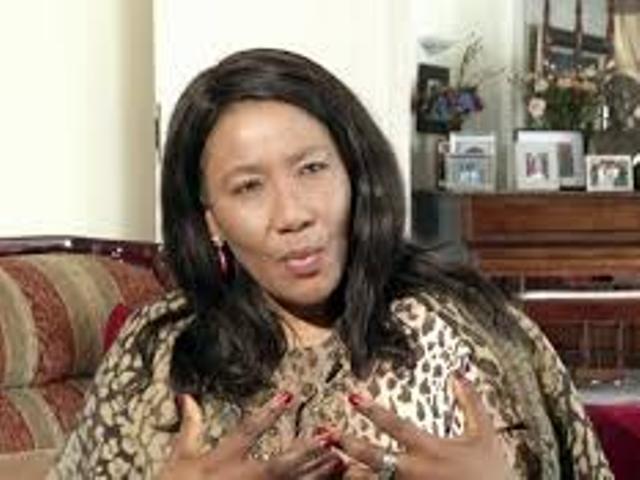
The American educated Makaziwe Mandela
The American educated Makaziwe Mandela says her grandfather is in a vegetative state

Doctors treating former president Nelson Mandela have denied that he is in a vegetative state, the Presidency said on Thursday.

“We confirm our earlier statement released this afternoon after President Jacob Zuma visited Madiba in hospital that Madiba remains in a critical, but stable condition,” spokesman Mac Maharaj said in a statement.

He said Mandela was under the care of a “multi-disciplinary” panel of medical experts drawn from the South African Military Health Services, the public and private sector, and universities.

“Under this panel, a team of doctors, nurses, paramedics and other health professionals attend to Madiba on a 24-hour basis.”

The statement from the Presidency came after court documents surfaced stating that Mandela was in a “permanent vegetative state” and that his family had been advised to turn off his life-support machine.

The certificate of urgency dated June 27 and submitted to the Eastern Cape High Court was widely reported by local and international media. A copy was obtained by Sapa.

In it, an advocate for the American educated Makaziwe Mandela said he had been advised by his instructing attorney that Mandela’s condition had “taken a turn for the worst (sic)” and that the “Mandela family” – ie Makaziwe and her supporters – have “been advised by the medical practitioners that his life-support machines should be switched off”.

“Rather than prolonging his suffering, the Mandela family is exploring this option as a very real probability.”

The document was attributed to David Smith, an advocate representing 15 members of the “Mandela family” in a court case against Mandela’s grandson, Mandla Mandela.

In the document, Smith described Mandela’s health as perilous, and said he was in a permanent vegetative state and was being assisted in breathing by a life-support machine.

“Affidavits will be provided, at the hearing of this application, from his treating physicians that he is in a permanent vegetative state and is assisted in breathing by a life-support machine,” he said.

“The anticipation of his impending death is based on real and substantial grounds.”

A later version of the document filed in the court omitted the paragraphs referring to Mandela’s “vegetative state” and the advice by physicians to take Mandela off life support.

A lawyer for the Mandela family later said the original certificate of urgency was “merely a submission outside of court”.

“To the extent there is speculation, a certificate of urgency was filed in terms of the practice of our court,” said Wesley Hayes, who represented the family in the dispute with Mandla Mandela about the graves of his father and his grandfather’s other two children.

“The certificate is not evidence, but merely submissions on why a matter should be heard outside ordinary court sittings.”

Hayes said the ruling on the urgency of the matter had been made “in camera” and that this “would extend to the contents of the certificate of urgency”.

“Further than that we have no comment,” he said.

On Wednesday, the Eastern Cape High Court ordered Mandla Mandela to return the remains of his grandfather’s three children to Qunu from Mvezo, where he moved them two years ago.

The remains were those of Mandela’s eldest son Madiba Thembekile, who died in a car accident in 1969; Mandla Mandela’s father Makgatho Mandela, who died in 2005; and Mandela’s first daughter Makaziwe Mandela, who died as an infant in 1948.

The bones were re-buried at a ceremony at a gravesite at Nelson Mandela’s home in Qunu on Thursday afternoon. – Sapa

Rapper 50 Cent denies kicking ex-girlfriend

50 Cent
50 Cent

Rapper 50 Cent denies allegations he attacked his ex-girlfriend and trashed her condo.

The “In da Club” singer’s lawyer says there’s no warrant outstanding on the domestic violence and vandalism charges against 50 Cent, whose real name is Curtis Jackson.

If convicted, he faces up to five years in jail and $46,000 in fines.

The woman told police that during a June 23 argument, Jackson began destroying property at her condo before she locked herself into a bedroom. She says Jackson kicked open the bedroom door and kicked her, causing injury.

Police estimated about $7,100 in damage to the home.

The woman told police she had been in a three-year relationship and has a baby with Jackson.

His arraignment is July 22. – AP

Racial violence feared in Zimmerman verdict

obamahoodieSanford Police Chief Cecil Smith and other city officials are worried that the outcome of the George Zimmerman trial could spark “violence” and have crafted a “secret law enforcement” plan to deal with potential social disorder.

Zimmerman is accused of killing a black teenager, Trayvon Martin. President Obama has already sided with the Martins in saying that “if he had a son, he would look like Trayvon”.

A CNN report shows Sanford police going door to door in an attempt to calm residents about possible racial unrest in response to the Zimmerman verdict.

“Our worst fear is that we will have people from outside of the community coming in and stirring up….violence in the community,” Smith told CNN’s David Mattingly.

Sanford Mayor Jeff Triplett echoes Smith’s concerns, warning that just one person intent on violence could spark wider disorder and “a provocation of violence”.

City Manager Norton Bonaparte is similarly on edge, fearing a Rodney King-style riot if Zimmerman is found not guilty.

“I’m saying that’s a scenario that’s certainly a possibility,” said Bonaparte, adding that plans had been made through law enforcement but that he would not go into detail on the nature of what they were.

Police Chief Cecil Smith was similarly evasive when asked if SWAT teams or “special personnel” were on standby to respond to disorder.

“As far as the particulars of the plans, we’re not releasing that,” Smith told CNN.

Authorities have also enlisted the help of local pastors who are acting as “observers” in the Zimmerman trial and will then report back to their congregation.

Scores of Twitter users have threatened to riot and loot if George Zimmerman is acquitted.

Other prominent voices have also warned of potential civil unrest, including former Chicago police officer Paul Huebl, who said that he fully expects “organized race rioting to begin in every major city to dwarf the Rodney King and the Martin Luther King riots of past decades” if Zimmerman walks.

With police already going door to door to calm Sanford residents in anticipation of unrest, some are worried that social disorder could be used as a pretext for gun confiscation in a similar vein to how Hurricane Katrina was used as a justification to disarm residents of New Orleans. – prisonplanet.com

Americans consider blacks to be more racist than whites

blackVictimhoodAmericans consider blacks more likely to be racist than whites and Hispanics in the US.

Thirty-seven percent (37%) of American Adults think most black Americans are racist, according to a new Rasmussen Reports national telephone survey. Just 15% consider most white Americans racist, while 18% say the same of most Hispanic Americans. (To see survey question wording, click here.)

There is a huge ideological difference on this topic. Among conservative Americans, 49% consider most blacks racist, and only 12% see most whites that way. Among liberal voters, 27% see most white Americans as racist, and 21% say the same about black Americans.

From a partisan perspective, 49% of Republicans see most black Americans as racist, along with 36% of unaffiliated adults and 29% of Democrats.

Among black Americans, 31% think most blacks are racist, while 24% consider most whites racist and 15% view most Hispanics that way.

Among white adults, 10% think most white Americans are racist; 38% believe most blacks are racist, and 17% say most Hispanics are racist.

Overall, just 30% of all Americans now rate race relations in the United States as good or excellent. Fourteen percent (14%) describe them as poor. Twenty-nine percent (29%) think race relations are getting better, while 32% believe they are getting worse. Thirty-five percent (35%) feel they are staying about the same.

These figures reflect more pessimism than was found in April when 42% gave race relations positive marks and 39% said race relations were improving.  However, the April number reflected all-time highs while the current numbers are more consistent with the general attitudes of recent years.

(Want a free daily e-mail update? If it’s in the news, it’s in our polls). Rasmussen Reports updates are also available on Twitter or Facebook.

The survey of 1,000 Adults was conducted on July 1-2, 2013 by Rasmussen Reports. The margin of sampling error is +/- 3 percentage points with a 95% level of confidence. Field work for all Rasmussen Reports surveys is conducted by Pulse Opinion Research, LLC. See methodology.

The U.S. Supreme Court recently killed a key portion of the Voting Rights Act as unconstitutional and sent a lawsuit challenging the University of Texas’ use of race as a factor in admissions back to the appellate court level for further review. Most Americans believe affirmative action admissions policies discriminate against whites, as the lawsuit argues, and think it’s better for colleges and universities to accept the most qualified students.

This is consistent with public resistance to all special preferences. Only 30% think it’s fair for colleges and universities to give preferences to children of large donors.  Just 38% think it is fair for the children of previous students to have a special advantage in the admissions process.

Following those decisions and a big ruling on same-sex marriage, public approval of the U.S. Supreme Court has fallen to the lowest level ever recorded in more than nine years of polling.

Blacks are slightly more optimistic about the current state of race relations in American than whites and Hispanics are. But 37% of blacks and 38% of Hispanics believe those relations are getting worse, compared to 29% of whites.

Liberals are more confident than conservatives that race relations are getting better.

Forty-five percent (45%) of voters believe the U.S. justice system is fair to most Americans, but just 34% think it is fair to poor Americans. Forty-five percent (45%) consider the justice system fair to black and Hispanic Americans.

Most voters continue to believe the U.S. economy is fair to women, blacks and Hispanics but are now evenly divided when asked if it’s fair to lower-income Americans. However, they still think all four groups are treated better than the middle class. – Rasmussen

Morsi’s support for intervention in Syria was the straw that broke the camel’s back

obamaegyptterrorThe protests in Egypt against president Mohammed Morsi were – according to the BBC – the largest in history.

The Irish Times reports:

Army concern about the way President Mohamed Morsi was governing Egypt reached tipping point when the head of state attended a rally packed with hardline fellow Islamists calling for holy war in Syria, military sources have said.

Mr Morsi himself called for foreign intervention in Syria against Mr Assad, leading to a veiled rebuke from the army, which issued an apparently bland but sharp-edged statement the next day stressing that its only role was guarding Egypt’s borders.

“The armed forces were very alarmed by the Syrian conference at a time the state was going through a major political crisis,” said one officer, whose comments reflected remarks made privately by other army staff. He was speaking on condition of anonymity because he was not permitted to talk to the media.

For the army, the Syria rally had crossed “a national security red line” by encouraging Egyptians to fight abroad, risking creating a new generation of jihadists, said Yasser El-Shimy, analyst with the International Crisis Group.

At the heart of the military’s concern is the history of militant Islam in Egypt, homeland of al-Qaeda leader Ayman al-Zawahri. The military source condemned recent remarks made by “retired terrorists” allied to Mr Morsi, who has deepened his ties with the once-armed group al-Gamaa al-Islamiya.

Obama had recently sent American troops to prop up Morsi, and the protesters were furious at the U.S. for backing Islamic radicals.

(The U.S. backed Egypt’s previous dictator, as well).

Support of Western intervention in Syria was also one of the main causes of the recent enormous protests in Turkey … which came close to toppling the Turkish leadership.

Indeed, the American government has been providing arms, money and logistical support to Al Qaeda in Syria, Libya, Mali, Bosnia and other countries – and related Muslim terrorists in Chechnya, Iran, and many other countries.  So moderate Arabs all over the Middle East and North Africa are becoming furious at U.S. interventionist policies.

Note:  The coup is a set-back for the U.S., because Egypt – unlike Iraq, Libya, Syria, and Iran – isn’t on the 20-year-old list of countries targeted for regime change. – Zero Hedge

US orders Americans to leave Egypt as anti-American sentiment soars

obamaegyptA U.S. official says the State Department is ordering nonessential U.S. diplomats and the families of all American Embassy personnel to leave Egypt after the Egyptian military removed Morsi and in anticipation of potential violence.

The official, speaking on condition of anonymity because the official wasn’t authorized to discuss it publicly, said the State Department had placed the U.S. Embassy in Cairo on “ordered departure” status for nonemergency staff and dependents all employees. That means that those covered by the order are required to leave the country. It was not immediately clear if an evacuation operation would be mounted or if those departing would use commercial airlines or passenger ships to leave.

When a coup is not a coup, and democracy not about elections

EgyptObamaThe Egyptian military’s overthrow of elected President Mohamed Morsi left United States President Barack Obama grappling with a difficult question of diplomacy and language in dealing with the Arab world’s most populous nation: was it a coup?

At stake as Obama and his aides wrestle with that question in the coming days is the $1.5-billion in aid the US sends to Cairo each year – almost all of it for the military – as well as the president’s views on how best to promote Arab democracy.

If the United States formally declares Morsi’s ousting a coup, US law mandates that most aid for its longtime ally must stop. And that could weaken the Egyptian military, one of the country’s most stable institutions with long-standing ties to US authorities.

Further complicating Obama’s calculus is the fact that millions of Egyptians rallied in favour of Morsi’s departure, and that the military announced a road map for return to civilian rule that was blessed by Egypt’s Muslim and Christian religious leaders.

But Morsi and his Muslim Brotherhood retain backing from a broad swath of Egyptian society, even as he alienated many of his countrymen.

Obama, after meeting top advisors at the White House, said in a statement that he was “deeply concerned” by the army’s actions and had directed the relevant US agencies to review the implications for US assistance to Egypt.

But he did not use the word “coup” and stopped well short of advocating for Morsi’s reinstatement, suggesting Washington might be willing to accept the military’s move as a way to end a political crisis in a nation of 83 million people struggling with severe economic difficulties.

Recent history suggests Obama might take his time on deciding the future of US aid to Egypt, and by extension, Washington’s relations with the country.

US law bars “any assistance to the government of any country whose duly elected head of government is deposed by military coup d’etat or decree”.

When Honduran President Manuel Zelaya was ousted in June 2009, Washington temporarily suspended aid, but did not cut about $30-million in assistance until more than two months later.

Even then, Secretary of State Hillary Clinton did not determine as a matter of law that a coup had taken place.

Eric Trager, an expert on Egyptian politics at the Washington Institute for Near East Policy, said Obama should not label Morsi’s ouster a coup, nor cut off US aid.

“The Obama administration should recognise that as undemocratic as a coup is, it was the result of the basic fact that President Morsi had completely lost control of the Egyptian state,” Trager said by telephone from Egypt.

“Democracy was not the primary thing at stake in Egypt these last few months,” but rather Morsi’s mismanagement and fears of collapse of the Egyptian state, he said.

In announcing Morsi had been deposed and the Egyptian constitution suspended, Egypt’s army commander promised a quick political transition. The military laid out plans for elections and a constitutional review.

The US chairman of the joint chiefs of staff, General Martin Dempsey, warned Egyptian military leaders of consequences if Morsi’s overthrow were viewed as a coup.

“At the end of the day it’s their country and they will find their way, but there will be consequences if it is badly handled,” Dempsey told CNN.

Obama also warned against further violence, indicating that Washington’s ultimate decision on aid to Egypt will depend on how Egypt’s armed forces handle the transition in coming weeks.

Morsi, in power for a year, was widely blamed for presiding over a steady decline in Egypt’s economy and for failing to form a broad-based government that included other groups that had joined in the 2011 revolution that overthrew President Hosni Mubarak.

US lawmakers also welcomed Morsi’s departure but called for a quick transition back to democratic rule – with a close look at the aid budget.

Democratic Senator Patrick Leahy, who heads the Senate subcommittee that oversees foreign aid, on Wednesday promised a review of the $1.3-billion in military aid and $250-million in economic aid sent to Cairo each year.

Washington has cut off aid following military coups several times before. In April 2012, the United States suspended at least $13-million of its $140-million in annual aid to Mali following a coup in the West African nation.

Programmes that did not go directly through government ministries were not affected.

Any Obama support for Egypt’s new government is unlikely to face opposition from Republicans in Congress, who had been sceptical of Morsi’s Islamist government.

“Morsi was an obstacle to the constitutional democracy most Egyptians wanted,” said Republican Representative Ed Royce, the chairman of the House of Representatives Foreign Affairs Committee.

Republicans also voiced strong support for Egypt’s military, whose close ties to Washington stretch back to the 1979 Israeli-Egypt peace accords.

“The Egyptian military has long been a key partner of the United States and a stabilising force in the region, and is perhaps the only trusted national institution in Egypt today,” said US Representative Eric Cantor, the No. 2 Republican in the House.

“Democracy is about more than elections,” he said. – Reuters

‘Kidnapped by imperialism’

Morales in Russia
Morales in Russia

Bolivia has accused Austria of “kidnapping” its president, Evo Morales.

After a 12-hour interruption during which the president’s plane was stopped and searched by Austrian authorities for US fugitive Edward Snowden, Morales was allowed to fly home. Bolivia’s vice-president, Alvaro Garcia Linera, described Morales as being “kidnapped by imperialism” in Europe. Authorities had suspected Morales was taking Snowden to Latin America.

The unusual treatment of the Bolivian leader touched a sensitive nerve in the region, which has a history of US-backed coups, and presidents rallied in support of Morales.

“Definitively, they’re all crazy,” Argentine President Cristina Fernandez tweeted after a phone call to Morales. Fernandez described Morales as defiant.

” ‘I’m not a thief’,” she quoted him as saying.

Nicaraguan and Cuban officials also decried the incident.

A senior Bolivian diplomat said the Austrians had acted at the bidding of the US, which has been trying to get its hands on Snowden since he revealed details of its secret surveillance programmes.

“We’re talking about the president on an official trip after an official summit being kidnapped,” Bolivia’s ambassador to the UN, Sacha Llorenti Soliz, said.

The plane, which was taking Morales home from an energy conference in Moscow, was stranded at Vienna airport after Portugal and France refused to allow it to fly through their airspace.

The search found that Snowden was not on board.

Bolivia has filed a complaint at the United Nations on Wednesday over what it called the kidnapping of its president.

The country’s ambassador to the UN, Sacha Llorenti, said the enforced rerouting to Austria was an act of aggression and a violation of international law. The US admitted that it had been in contact with other nations over potential flights by Snowden.

“We will demand appropriate explanations from those countries that submitted to North American imperialism and briefly put President Morales in such a helpless situation,” Llorenti told the state radio Patria Nueva. Bolivia’s vice-president, Alvaro García Linera, said Morales was “kidnapped by imperialism”.

South American nations accused the United States of being behind the extraordinary manoeuvring, furious at what they regarded as the humiliation of Morales. In Washington, the state department would not comment on the Morales flight but conceded that it discussed the issue of flights by Snowden with other nations.

“We have been in contact with a range of countries that had a chance of having Snowden land or travel through their country but I am not going to outline what those countries were or when this [contact] happened,” said spokeswoman Jan Psaki.

The diplomatic crisis may have been set off by a remark by Morales during a television interview in Russia, where he had been attending an energy conference. Morales said that he sympathised with Snowden, who is believed to be holed up in the transit area of Sheremetyevo airport, and hinted that Bolivia might accept an asylum petition. “If there were a request, of course we would be willing to debate and consider the idea,” Morales told RT Actualidad, the Spanish-language service of the Russian broadcaster RT.

Later that day, soon after Morales was bound for La Paz, Spain, Italy, France and Portugal refused to allow the presidential jet to fly through their airspace over suspicions that Snowden was on board, according to the Bolivian government’s account.

The Bolivian foreign minister, David Choquehuanca, said France and Portugal were the first to cancel air permits. “They say it was due to technical issues, but after getting explanations from some authorities we found that there appeared to be some unfounded suspicions that Mr Snowden was on the plane. We don’t know who invented this lie. We want to denounce to the international community this injustice with the plane of Evo Morales,” Choquehuanca said.

Diverted from their planned route, pilots feared they would not be able to complete their journey. The plane was eventually cleared to land in Vienna, where Morales was forced to spend 13 hours in humiliating limbo while officials worked to resolve the dispute.

It later took off after Austrian officials said Snowden was not on board. But it was unclear whether any officials in Vienna had searched the plane. Austria’s deputy chancellor, Michael Spindelegger, said Morales “agreed to a voluntary inspection”. But the Bolivian defence minister, Ruben Saavedra, later said Morales had refused entry to the inspectors, and that they had only got as far as the door of the aircraft.

In Bolivia, the treatment of the president stirred up patriotic and anti-imperialist sentiment. Several labour and indigenous organisations planned a welcome rally for the president on his arrival in La Paz on Wednesday evening.

The Argentinian president, Cristina Fernández de Kirchner, attacked the “vestiges of colonialism” in a speech in Buenos Aires. “We believe this constitutes not only the humiliation of a sister nation but of all South America,” she said. An emergency meeting of the Union of South American Nations was expected to be convened on Thursday.

It was widely assumed in South America that Washington was responsible for the presidential plane being refused air permissions. Earlier in the week, the state department said it hoped Snowden would be returned to the US to face charges of espionage and theft after a string of other countries said they would not accept his applications for asylum.

Speaking before the developments in Vienna, the state department rejected claims made by Snowden on Monday that the US had bullied other potential hosts, such as Ecuador, into withdrawing their offer of asylum. The US says it has only impressed upon possible host countries the seriousness of the crimes with which Snowden had been charged. – Reuters/The Guardian

US teacher accused of having student’s baby

cute_babyPolice have arrested a Southern California high school teacher two weeks after she allegedly gave birth to a student’s baby.

Redlands police spokesman Carl Baker says 28-year-old Laura Elizabeth Whitehurst was arrested Monday night for allegedly having unlawful sex with a 16-year-old.

Officials at Citrus Valley High School in Redlands contacted police on Monday, acting on a tip from the boy’s mother.

Police say the sexual relationship began last summer and continued for nearly a year. The boy is now 17.

Whitehurst gave birth to a child June 18.

A telephone message left at the Whitehurst home was not immediately returned. – AP

Austria not worried about passenger Snowden

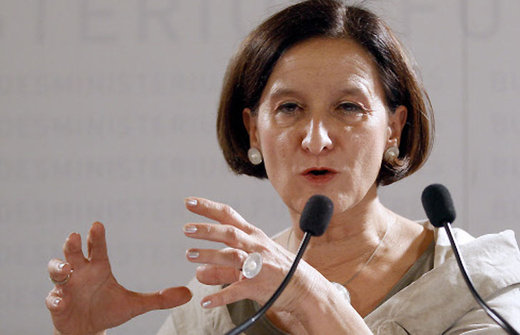
Mikl-Leitner
Mikl-Leitner

Austria allowed Bolivian President Evo Morales’ plane to land because it did not share other countries’ worries that former U.S. spy agency contractor Edward Snowden might be on board, Interior Minister Johanna Mikl-Leitner said on Wednesday.

France and Portugal abruptly canceled air permits for Morales’ plane en route from Moscow, forcing the unscheduled stopover in Vienna late on Tuesday.

An Austrian Foreign Ministry spokesman said rumours that Snowden was on the plane were untrue.

“Austria did not close its airspace and the plane could of course land although many other countries apparently feared that Snowden was on board too,” the minister told ORF radio. “Austria did not do that, which means there is no fear here.”

Wanted by Washington for espionage after divulging classified details of U.S. phone and Internet surveillance, Snowden apparently remains in the transit area of Moscow’s Sheremetyevo airport.

He applied for asylum in Austria – and several other countries – via the country’s Moscow embassy on Monday, which the government said was insufficient to grant him refuge.

Mikl-Leitner said it would be up to Austrian asylum authorities to decide what to do in the unlikely case that Snowden arrived there.

She defended Austria’s position that Snowden would have to apply in person for asylum, saying this was clearly spelled out in the law.

“This is in the hands of the authorities and independent courts. The important thing here is that this would be judged individually, as in every other case,” she said. – Reuters

Bolivian leader’s plane ‘skyjacked’ on Snowden fear

Evo Morales
Evo Morales

The plane carrying Bolivian President Evo Morales was forced to land in Austria after various European countries refused to let it cross their airspace because of suspicions that NSA leaker Edward Snowden was on board, Bolivian officials said Tuesday.

Officials in both Austria and Bolivia said that Snowden was not on the plane, which was taking Morales home from a summit in Russia, where he had suggested that his government would be willing to consider granting asylum to the American.

A furious Bolivian Foreign Minister David Choquehuanca said France and Portugal would have to explain why they canceled authorization for the plane, claiming that the decision had put the president’s life at risk.

“We don’t know who invented this lie” that Snowden was traveling with Morales, Choquehuanca said in La Paz. “We want to denounce to the international community this injustice with the plane of President Evo Morales.”

In a midnight press conference, Bolivian Vice President Alvaro Garcia said that not only France and Portugal, but also Italy and Spain were denying the plane permission to fly through their airspace.

He described Morales as being “kidnapped by imperialism” in Europe.

“The ambassador for Spain in Austria has just informed us that there is no authorization to fly over Spanish territory and that at 9 a.m. Wednesday they would be in contact with us again,” said Defense Minister Ruben Saavedra, adding that the Spanish government had put as a condition for passage the “revision of the presidential plane.”

Earlier, Choquehuanca said that Spain’s government allowed Morales’ plane to refuel in its territory before flying on to Vienna.

French government officials reached overnight said they could not confirm whether Morales’ plane was denied permission to fly over France. Officials at Portugal’s Foreign Ministry and National Civil Aviation Authority could not be reached to comment.

Austrian Foreign Ministry spokesman Alexander Schallenberg told The Associated Press that Snowden was not with Morales.

Leaks by Snowden, a former NSA systems analyst, have revealed the NSA’s sweeping data collection of U.S. phone records and some Internet traffic, though U.S. intelligence officials have said the programs are aimed at targeting foreigners and terrorist suspects mostly overseas.

He is believed to be in a Moscow airport transit area, seeking asylum from one of more than a dozen countries.

While Bolivia’s foreign minister had earlier said officials did not know who was behind the “lie” that Snowden was on Morales’ plane, the country’s defense minister later expressed no doubt.

“We want to declare very firmly that it was an American story that Edward Snowden was on this flight,” said Saavedra at the VIP terminal of Vienna’s airport. “This is a plot by the U.S. government to destroy president Morales’ image. We say this simply is a lie. And we will confirm this.”

Morales himself was present during the improvised press conference but chose not to speak to reporters. Morales will remain at the airport until his plane has been cleared for takeoff.

In Washington, the State Department would not comment directly when asked to speak to the matter and referred the AP to statements on Snowden made at the department’s daily briefing. Earlier Tuesday, department spokesman Patrick Ventrell would not discuss how the Obama administration might respond if Snowden left the Moscow airport. “We’re not there yet,” he said.

Snowden has applied for asylum in Venezuela, Bolivia and 18 other countries, according to WikiLeaks, a secret spilling website that has been advising him. Many European countries on the list — including Austria, Finland, Ireland, the Netherlands, Norway, Spain and Switzerland — said he would have to make his request on their soil.

One of Snowden’s best chances of finding refuge outside the United States may hinge on Venezuelan President Nicolas Maduro, who was also in Russia on Tuesday.

Maduro told Russian reporters that his country has not received an application for asylum from Snowden and dodged the question of whether he would take him with him when he left.

But Maduro also defended the former National Security Agency systems analyst.

“Who must protect Snowden? This is the question. This young man of 29 was brave enough to say that we need to protect the world from the American imperial elite, so who should protect him?” Maduro said in response to a question from journalists covering a ceremony to rename a Moscow street after Chavez. “All of mankind, people all over the world must protect him.”

Maduro was scheduled to spend Wednesday in neighboring Belarus before returning to Venezuela.

In Venezuela, Foreign Minister Elias Jaua said that changing the flight’s route without checking on how much fuel it had endangered Morales’ life.

“All the countries that have denied permission for the flight of our brother president, Evo Morales, must be held responsible for his life and his dignity as president.”

Another possible landing spot for Snowden is Ecuador, where Wikileaks founder and publisher Julian Assange has been seeking asylum.

“We are willing to analyze Mr. Snowden’s request for asylum and this position has not changed,” said Ecuadorean Foreign Minister Ricardo Patino on Tuesday. “What we have said is that we will be able to analyze the request when Mr. Snowden is in Ecuadorean territory or in an Ecuadorean mission.”

Patino added that two weeks ago a hidden microphone was found in Ecuador’s embassy in London, where Assange is holed up. “We want to find out with precision what the origin of the apparatus is.”

Snowden, who recently turned 30, withdrew a bid for asylum in Russia when he learned the terms Moscow had set out, according to Putin’s spokesman Dmitry Peskov. Putin said on Monday that Russia was ready to shelter Snowden as long as he stopped leaking U.S. secrets.

At the same time, Putin said he had no plans to turn over Snowden to the United States.

Rebuffed by Russia’s president, the Obama administration has recently toned down demands Snowden be expelled from the Moscow airport in a sign that the U.S. believes he is not worth scuttling diplomatic relations between the former Cold War enemies.

On Monday, WikiLeaks posted a statement attributed to Snowden on its website, in which he slams Obama for “using citizenship as a weapon.”

“Although I am convicted of nothing, (the United States) has unilaterally revoked my passport, leaving me a stateless person,” Snowden says in the statement. “Without any judicial order, the administration now seeks to stop me exercising a basic right. A right that belongs to everybody. The right to seek asylum.

“Their purpose is to frighten, not me, but those who would come after me.” – AP