Nearly 10 percent of Malawi’s 13 million people face hunger due of low yields of the main staple maize, prolonged dry spells and flooding, a report said.
“The total number of people who will not be able to meet their annual food requirement during the 2013/14 consumption period is 1,461,940, representing 9.5 percent of national total population,” the Malawi Vulnerability Assessment Committee said.
The grouping of several government departments, the United Nations, embassies and humanitarian agencies said those affected will need assistance for a period of between two to five months.
The shortages will affect poor households in 21 districts of the southern African country.
Food shortage in this impoverished southern African country is often caused by drought and economic difficulties as wellas backward farming practices.
One in two Malawians lives on less than a dollar a day.
Malawi had a good food security record in recent years after late president Bingu wa Mutharika implemented a subsidy programme giving poor villagers access to fertilisers and inputs. – Sapa
Two US fighter jets dropped four unarmed bombs in Australia’s Great Barrier Reef Marine Park after a training exercise went wrong.
The two AV-8B Harrier jets were launched from aircraft carrier USS Bonhomme Richard.
Each jettisoned an inert bomb and an unarmed explosive bomb in the World Heritage-listed marine park, off the coast of Queensland, on Tuesday last week, the US 7th Fleet said at the weekend. There were no explosions.
The four bombs were dropped in more than 50m of water away from coral to minimise the possibility of damage to the reef, the navy said on Saturday.
AV-8B Harrier jets
The jets – from the 31st Marine Expeditionary Unit – had intended to drop their ordnance on the Townshend Island bombing range.
But the mission was aborted when controllers reported the area was not clear of hazards.
The pilots had to jettison the bombs because they were low on fuel and could not land while carrying them, the navy said.
About 28000 US and Australian military personnel are taking part in a biennial joint training exercise, Talisman Saber, which lasts for three weeks.
The US Navy and the Marine Corps are working with Australian authorities to identify all the factors that contributed to the incident, the navy said.- Sapa/AP
A day seldom goes by without a visit to Google for millions of people.
And what a treat when the Google logo on the home page is altered to celebrate anything from ice-cream sundaes to Rembrandt van Rijn’s 407th birthday.
The modified logos are referred to as Google doodles.
The UN General Assembly in 2009 designated July 18 as Nelson Mandela International Day.
As the world celebrated South Africa’s most famous statesman’s birthday last week, the day, surprisingly, was not marked by the creation of a doodle.
The latest South African doodle was designed for Freedom Day this year and Miriam Makeba’s 81st birthday was celebrated in March.
Madiba might not have had a doodle but last year Google contributed R8.6-million to the Nelson Mandela Centre for Memory to digitise “thousands of archival documents, photographs and videos” dealing with Mandela.
According to Google, there is a team of illustrators and engineers that designs its doodles.
International demand has led to an increase in the amount of artwork generated- 1000 have been created for Google’s home page.
Not every occasion is doodled. A lot depends on demand: a group of Googlers might come together to suggest a doodle or the idea can come from the general public. – timeslive.co.za
Apple and other smartphone manufacturers are facing co-ordinated pressure from officials in London, New York and San Francisco to tackle the rise in phone theft that is increasingly blighting cities even as other crimes plummet.
While the US and Britain have both seen a dramatic decrease in crime over the past three decades – with UK data this week showing crime at its lowest since records began – “theft from the person”, or mugging, is surging.
Scotland Yard estimates these types of offences have increased by 15 per cent in the past year, and about 10,000 phone handsets a month are stolen in London. In New York, police say so-called “Apple-picking” is the fastest-growing street crime, with 113 devices snatched or lost every minute across the whole of the US.
Boris Johnson, London mayor, is hoping to join forces with New York and San Francisco to push for an industry-standard “kill switch” that would immediately disable handsets when stolen and so diminish their attractiveness to thieves. City Hall officials met their counterparts in New York this week to try to broker cross-Atlantic collaboration on the issue.
Mr Johnson has also written to the UK heads of Apple, Nokia, Samsung, Google’s Motorola, HTC, Microsoft, BlackBerry and Sony demanding action. One of his key concerns is that Apple and other retail stores are too lax in exchanging broken smartphones that could have been stolen for fresh models. Police say one individual was found to have exchanged more than 170 stolen devices for new ones in a single London store over the course of a year. Meanwhile, theft victims who are not insured often end up buying replacement handsets.
“Customers and shareholders surely deserve to know that business cannot and must not benefit directly from smartphone theft through sales of replacement devices,” Mr Johnson’s letter reads.
US federal and state security experts this week took part in a demonstration of new theft deterrent measures on Apple and Samsung devices, as part of a “Secure Our Smartphones” campaign led by New York and San Francisco.
New York’s attorney-general Eric Schneiderman and San Francisco district attorney George Gascón said that while they were “appreciative” of the efforts made by Apple and Samsung to improve security, they were “not going to take them at their word” and would interrogate the new systems against tactics commonly employed by thieves.
Stephanie Ong Stillman of the San Francisco district attorney’s office said public pressure forced Apple and Samsung to co-ordinate with them, which they hope will accelerate the development of a kill switch across the industry.
“The question is no longer if the technology can be implemented, but when,” she said. “We hope the progress made by Apple and Samsung spurs Microsoft and Google to get in the game.”
Apple said in a statement that it had “led the industry in helping customers protect their lost or stolen devices”, since launching its Find My iPhone app in 2009.
BlackBerry and Microsoft, which also received Mr Johnson’s letter, declined to comment. – FT.com
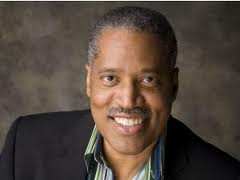
Following an appearance on CNN, during which he called out host Piers Morgan for race baiting, radio talk show black host Larry Elder has been bombarded with racist remarks on Twitter from other black Americans.
Morgan admitted that he had booked Elder to appear because he had been critical of Morgan’s assertion that the key witness in the failed prosecution of George Zimmerman is a “smart cookie.”
While Morgan attempted to railroad Elder into calling Rachel Jeantel “stupid”, Elder instead focused on how he believes the media is engaging in outright race baiting over the Trayvon Martin case, stirring up division and promoting hatred.
Elder’s performance was lauded by many commentators as he slammed Morgan for treating “black people like children” and told him he should be “ashamed” of himself.
“I’m just bothered by how you are handling all this,” he said. “You think you are doing something for black people but you’re not. You’re making black people feel as if they are under siege and it’s not true, it’s an outrage!” Elder said.
Elder hit Morgan with cold hard facts, noting that there were 7,000 murders last year of black people, almost all of which were committed by other black people. Elder also highlighted the fact that there have been 480 black people murdered in Chicago alone this year, and 75 percent of the cases are yet to be solved.
“Where are the cameras, where are the shows?” Elder asked Morgan. “It’s outrageous to act as if black America should fear some non-black guy stalking some black kid at night. The likelihood of a black person being killed by a non-black person is extremely remote, which is why this became a big national issue in the first place.” he stated.
“Half of the murders in this country are committed by black people, even though black people are 12 percent of the population,” Elder urged. “This is why commonsensical people profile.”
“As if [the Zimmerman case] somehow is some sort of indictment of America and black people should look over their shoulders every night and act as if a white guy is going to jump out of a bush and get them. It’s outrageous,” he said. “Hard work wins. Get an education, don’t pay attention to negative people, stay focused and you’ll be OK in America. That’s why most of the people in the world want to come here, that’s why you want to come here, Piers.”
In response to Elder’s interview, he has received a torrent of racist abuse on social media sites from other black Americans. Below are numerous examples.
Warning: the following tweets directed at Elder contain extremely vulgar and racist language.
Look at this coon ass house nigger on CNN. Nigga so brainwashed.
— Trilla Bella きょあく (@RaeiaTheVillain) July 18, 2013
YOU ARE A PATHETIC PIECE OF SHIT YOU FUCKING HOUSE NIGGER @larryelder
— Trilla Bella きょあく (@RaeiaTheVillain) July 18, 2013
Larry Elder is the quintessential white man’s nigger. #PiersMorganLive
— Lindani Mazibuko (@Queer123Lindani) July 18, 2013
KEEP GETTIN ON CNN MAKING THOSE DUMBASS STATEMENTS AND SOME NIGGAS GONNA LEAVE YOUR ASS WET UP @larryelder #300
— Trilla Bella きょあく (@RaeiaTheVillain) July 18, 2013
I HOPE YOU HAVE A MASSIVE HEART ATTACK AND DROP DEAD YOU MONKEY MOUTH SELF HATING UNCLE TOM @larryelder
— Trilla Bella きょあく (@RaeiaTheVillain) July 18, 2013
Damn man, @larryelder is a house nigger blaming Blacks for their own problems and calling Rachel stupid
— Adam Rage (@abdirmo) July 18, 2013
The Rev. Jesse Jackson has called to boycott the “apartheid state” of Florida if the Department of Justice does not lodge a civil rights case against George Zimmerman.
“Trayvon is a symbol of a deeper malady,” the reverend said in a CNN interview Thursday.
“No doubt, the inclination is to boycott Florida, stop conventions, to isolate Florida as a kind of apartheid state” if the DOJ does not act, Jackson said.
Jackson charged that homicides against blacks have tripled since stand your ground laws were put in place in Florida. The Daily Caller reported Tuesday that the law actually benefits blacks in the state disproportionately, saying blacks made about a third of Florida’s total stand your ground claims in homicide cases, a rate nearly double the black percentage of the state’s population.
“The majority of those claims have been successful, a success rate that exceeds that for Florida whites,” the Daily Caller said.
Martin Luther King III said at a recent NAACP convention that if supporters of Trayvon Martin really want to put their money where their mouths are, they can boycott the Florida orange juice industry.
“The true way generally when people don’t understand your plight is when you decide to exercise your buying power elsewhere,” he said at the Orlando, Fla., convention, CBS reported.
He made the comments in the context of condemning “stand your ground” laws. He’s not the first to raise the idea of boycotting Florida’s citrus growers and sellers in the days since George Zimmerman was acquitted of the murder of 17-year-old Trayvon Martin — but he is one of the highest-profile figures to do so.
Hundreds of protesters at Philadelphia’s Love Park called for the same action on Sunday, just hours after learning of the acquittal. – The Washington Times
The Mandela family feud ostensibly about graves, continued unabated on Friday.
Lawyers for former president Nelson Mandela’s grandson Mandla Mandela returned to the High Court in Mthatha on Thursday to seek the return of the remains of three family members to Mvezo.
“We brought an application on July 3 to rescind a court decision and the matter was set down for today 1/8Thursday 3/8,” said his lawyer Gary Jansen.
The court had ordered Mandla Mandela to move the remains from Mvezo back to Qunu.
Lawyers for other members of the Mandela family filed a notice opposing this application. They had 14 days to file opposing papers.
On July 3 the court ordered him to return the remains of his grandfather’s three children to Qunu from Mvezo, where he moved them two years ago. It then dismissed his application to rescind its decision as frivolous.
The remains are those of Mandela’s eldest son Madiba Thembekile, who died in a car accident in 1969; Mandla Mandela’s father Makgatho Mandela, who died in 2005; and Mandela’s first daughter Makaziwe Mandela, who died as an infant in 1948.
Wesley Hayes, for Makaziwe Mandela and 14 other Mandela relatives, confirmed the matter was in court on Thursday.
“I can confirm that the matter was erroneously placed on the roll by the respondent’s (Mandla Mandela’s) attorneys,” he said.
“Today saw the removal of the matter. The next step for us would be to file the opposing affidavit in due course.”
On July 6, Jansen said a complaint would be lodged against the Mandela family’s lawyers for misleading the courts on the condition of former president Nelson Mandela’s health.
The complaint relates to an affidavit submitted by the 15 members of the Mandela family in an application to exhume the remains of the three.
Jansen said the Mandela family’s lawyers had used the affidavit to mislead the court. – Sapa
It was Dr Hook that best encapsulated the kudos of getting front-page treatment in the world’s best-known music magazine. “The thrill we’ve never known,” went the lyric, “is the thrill that’ll get ya, when you get your picture, on the cover of the Rolling Stone.”
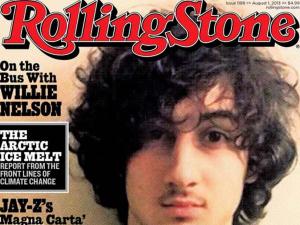
But cover star status on the rock ‘n’ roll bible is a more dubious honour after the decision this week to confer the distinction on Dzokhar Tsarnaev, currently accused of killing three people and injuring more than 200 others in the Boston Marathon terror attack. The likeness to a previous issue featuring Jim Morrison of The Doors was so striking that some readers may have been under the impression that “The Bomber”, as the tousle-haired and goatee-bearded Tsarnaev was tagged in the magazine’s cover line, was a new rock star. And if they didn’t think that, many who went on the magazine’s Facebook page to complain of an “unAmerican” piece of publishing, were convinced that they were the objects of a ghastly betrayal. “I am so disappointed with Rolling Stone magazine,” said one. “I will no longer buy/read the mag. You have just made him a ‘rock star’. How could you?”
Several suggested that the magazine should have given cover star status to the victims of the bombing, such as Jeff Bauman, who lost both legs. “I hope not a single person from Boston or New England ever buys your magazine again,” stormed another commenter. “Want to see true terrorism? Look to the media.”
The episode showed how, even in an age where digital media has reduced the importance of the news-stand, a magazine cover image can still have enormous impact.
That is especially so in America, where star billing by household name titles is widely regarded as an endorsement – something to be framed and put on the wall.
But Rolling Stone has a long history of serious journalism and the current cover story is the result of a two-month investigation that introduced new insights into the bombing suspect, including details of how he surrendered to the FBI after being persuaded to talk to his former wrestling coach. It would not seem unreasonable for the magazine to illustrate its article with the best-known image of the subject, a self-portrait. The very same picture was used on the front page of the New York Times in May. Time magazine – considered one of the most prestigious covers of all – gave the front page to Oklahoma City bomber Timothy McVeigh in 1995.
The picture of McVeigh in profile was balanced with a smaller image of a fire fighter nursing a child – but Time was promoting an interview with the terrorist.
Rolling Stone itself put mass killer Charles Manson on its cover in 1970, with the salacious strap: “The incredible story of the most dangerous man alive.”
Even Dr Hook, with a long record of musical crimes, managed to blag their way into the hallowed spot in 1973 by recording “The Cover of Rolling Stone” (see lyric above). Weeks later, the magazine granted their wish, with a lurid cartoon of the band and the caption “What’s-Their-Names make the cover.”
What makes the choice so controversial is that many believe that the brothers were set up and used as tools to manipulate public opinion. The phrase “false flag” trended on social media after the explosions in Boston. – The Independen/prisonplanet.com
“People see what they think they want to see,” explains a director, who has been creating her famous faux celebrity shoots for 15 years, after a scrumage in a London park to see the “royal baby”.
“There is a wall of myth around royals and A-list celebrities . We see them on magazine covers so often that we think we know them intimately, and we want to learn more. I like to burst that bubble a little.”
We are rabbits in the headlights, a gold strike in the Klondike, the centre of a British Lions scrum. Paparazzo-style cameras zoom in from everywhere, mobile phones are held aloft, mobs of screaming tourists in bikinis descend, doting abaya-ed mummies prove unable to resist a peek, even large Swedish males with plaster casts rush towards the pram.
We circle it and prepare to make a stand.
“Does this happen often?” I ask the duchess, who seems more embarrassed than distressed. “Well, you never know how people are going to react,” she says, with a surprising Essex twang.
And with that the couple trot off, rolling the pram and smiling at the shrieking crowd, as a German TV crew documents their every step and a slender, elegant woman in black calls out instructions.
The wave of royal mania recedes as sharply as a turning spring tide (though the giggles intensify), the 100-plus fans suddenly realising their eyes have deceived them. “Lookalike!” the cries go up. These lucky few have just been subject to a walking, talking Madame Tussauds show: an Alison Jackson photoshoot.
How we have managed to fool strangers into believing the royal baby has not only been born, but that the royal couple would potter outside Kensington Palace without so much as a bodyguard, is staggering – but not to Jackson.
And she succeeds in making us suspend our disbelief at apparent shots of George Bush struggling with a Rubik’s cube in the Oval Office or the queen on the loo – and actively enjoy our voyeurism. – The Daily Telegraph
The Central Intelligence Agency is funding a scientific study that will investigate whether humans could use geoengineering to alter Earth’s environment and stop climate change. The National Academy of Sciences (NAS) will run the 21-month project, which is the first NAS geoengineering study financially supported by an intelligence agency. With the spooks’ money, scientists will study how humans might influence weather patterns, assess the potential dangers of messing with the climate, and investigate possible national security implications of geoengineering attempts.
The total cost of the project is $630,000, which NAS is splitting with the CIA, the National Oceanic and Atmospheric Administration, and NASA. The NAS website says that “the US intelligence community” is funding the project, and William Kearney, a spokesman for NAS, told Mother Jones that phrase refers to the CIA. Edward Price, a spokesman for the CIA, refused to confirm the agency’s role in the study, but said, “It’s natural that on a subject like climate change the Agency would work with scientists to better understand the phenomenon and its implications on national security.” The CIA reportedly closed its research center on climate change and national security last year, after GOP members of Congress argued that the CIA shouldn’t be looking at climate change.
The goal of the CIA-backed NAS study is to conduct a “technical evaluation of a limited number of proposed geoengineering techniques,” according to the NAS website. Scientists will attempt to determine which geoengineering techniques are feasible and try to evaluate the impacts and risks of each (including “national security concerns”). One proposed geoengineering method the study will look at is solar radiation management—a fancy term for pumping particles into the stratosphere to reflect incoming sunlight away from the planet. In theory, solar radiation management could lead to a global cooling trend that might reverse, or at least slow down, global warming. The study will also investigate proposals for removing carbon dioxide from the atmosphere.
The National Academies has held two previous workshops on geoengineering, but neither was funded by the intelligence community, says Edward Dunlea, the study director for the latest project. The CIA would not say why it had decided to fund the project at this time, but the US government’s apparent interest in altering the climate isn’t new. The first big use of weather modification as a military tactic came during the Vietnam War, when the Air Force engaged in a cloud seeding program to try to create rainfall and turn the Ho Chi Minh Trail into muck, and thereby gain tactical advantage. Between 1962 and 1983, other would-be weather engineers tried to change the behavior of hurricanes using silver iodide. That effort, dubbed Project Stormfury, was spearheaded by the Navy and the Commerce Department. China’s “Weather Modification Office” also controversially seeded clouds in advance of the 2008 Beijing Olympics, hoping to ensure rain would fall in the Beijing suburbs instead of over the Olympic stadiums.
Although previous efforts to manipulate weather and climate have often been met with mockery, many geoengineering proposals “are fundamentally doable, relatively cheap, and do appear to be able to reduce climate risk significantly, but with risks,” explains David Keith, a Harvard researcher and top geoengineering proponent.
But if geoengineering is cheap and “fundamentally doable,” as Keith claims, that suggests foreign countries, or even wealthy individuals, could mess with the climate to advance their own ends. “This whole issue of lone actors: Do we need to be concerned about China acting unilaterally? Is that just idle chatter, or is that something the US government should prepare for?” asks Ken Caldeira, a geoengineering researcher at the Carnegie Institution’s Department of Global Ecology and a member of the current National Academy of Sciences panel.
At least one individual has already tried modifying the climate. Russ George, the former head of Planktos, a company that works to develop technology to deal with global warming, seeded the Pacific Ocean off western Canada with iron to generate a plankton bloom that, in turn, was supposed to suck up carbon dioxide from the air. George’s effort was widely condemned, but at present there’s little to stop other individuals or countries from trying it or something similar. That’s part of what has the US intelligence community interested.
The CIA’s decision to fund scientific work on geoengineering will no doubt excite conspiracy theorists. The last time the government tried to do cutting-edge research related to the atmosphere—with the High Frequency Active Auroral Research Program (HAARP), which aimed to protect satellites from nuclear blasts—people speculated that it might be a death ray, a mind control weapon, or, worst of all…a way to control the weather. – Mother Jones
When the Obama administration discusses matters of sensitive diplomacy, it isn’t always a model of clarity.
But this week reporters have struggled to get a direct answer to what would seem to be a simple question: Is President Barack Obama still planning to attend a summit meeting with Russian President Vladimir Putin in Moscow in early September?
What’s become increasingly evident is the planned summit meeting is now entangled in the delicate negotiations between Messrs. Obama and Putin over the fate of former NSA contractor Edward Snowden.
Let’s back up to mid-June.
Mr. Obama was in Northern Ireland, meeting with various counterparts, including Mr. Putin. The two men held a private session, at which they agreed to take part in a summit meeting in Moscow prior to a separate Group of Twenty meeting in St. Petersburg, Russia.
Ben Rhodes, deputy national security adviser for strategic communications, said in a press briefing at the time: “So we’ll be going to Moscow before we go to St. Petersburg for the G-20.”
But the following week, Mr. Snowden left his hiding place in Hong Kong and showed up in Russia. Since then, the Obama administration has been imploring Russia to return Mr. Snowden to the U.S. to face criminal charges. So far, Mr. Putin hasn’t complied.
Now the summit may be a casualty of the Snowden negotiations.
In his daily briefings this week, White House Press Secretary Jay Carney has been giving careful answers to questions about whether the Obama-Putin summit is still on.
On Wednesday, he was asked if Russia’s handling of the Snowden case has any bearing on Mr. Obama’s decision to attend the scheduled summit meeting with Mr. Putin.
Mr. Carney replied that “the president intends to travel to Russia for the G20 Summit. And I have no further announcements to make beyond what we’ve said in the past about the President’s travel to Russia in the fall.”
Can he definitively say whether Mr. Obama will go to Moscow?
“I can say that the president intends to travel to Russia for the G20 Summit. I don’t have anything to add to what we’ve said in the past about that trip,” Mr. Carney said.
Later in the briefing, another reporter asked him to clarify that answer.
Mr. Carney replied that he “might have been deliberately vague, so I’m not sure I can clarify.”
He went on to say that “I have no further announcements on our travel to Russia. The President intends to go to Russia in September.”
“But you won’t say Moscow?” the reporter said.
“I just have nothing else to say on it,” Mr. Carney said.
All this seems to leave open the possibility that Mr. Obama might call off the summit. In any case, the White House statements may be a signal to Moscow that Mr. Snowden’s status and the summit’s future are now linked, one foreign policy expert said.
“I do think it is a signal,” said Heather Conley, director of the Europe Program at the Center for Strategic & International Studies.
The White House, she said, is “having to rethink [the Moscow summit] right now. This is going to be a very fluid situation.” – WSJ
Russia is in the midst of its biggest war games since Soviet times, with 160,000 troops, 130 planes, 70 ships and thousands of tanks and armored vehicles participating in the country’s Far East, according to media reports.
Russian President Vladimir Putin ordered the drills last Friday and they began that night, according to reports from the RIA Novosti news agency. Putin flew to Sakhalin island off the eastern coast to oversee the games on Tuesday, Russia’s presidential press service reported.
“The main purpose of the activities is to check the readiness of the military units to perform assigned tasks and evaluate of the level of personnel’s training and technical preparation as well as the level of equipment of units with arms and military equipment,” the Russian Defense Ministry said in a statement reported by Russian Television.
“The Sakhalin part of the maneuvers was intended to simulate a response to a hypothetical attack by Japanese and U.S. forces,” Konstantin Sivkov, who is retired from the Russian military’s General Staff, told the Nezavisimaya Gazeta newspaper, according to a report from the BBC.
But Russia’s deputy defense minister, Anatoly Antonov, said the games were designed to “enhance the army’s combat readiness” and were not directed against any specific nations, the BBC reported.
Some of the units involved in the exercises moved more than 3,000 kilometers (1,800 miles) from their bases to participate, according to the Russian media reports.
The current drills, which are expected to last through the week, are the latest in a series of snap exercises conducted by the Russian military this year, Russian Television reported. Similar drills have been conducted in the country’s west, south and central military districts, the report said. – CNN
Nelson Mandela has made “dramatic progress,” and may be going home “anytime soon,” said his daughter Zindzi on the eve of his 95th birthday.
“I visited him yesterday and he was watching television with headphones,” said Zindzi Mandela in an interview with Britain’s Sky TV. “He gave us a huge smile and raised his hand … He responds with his eyes and his hands.”
Mandela is gaining “energy and strength,” said his daughter. “I should think he will be going home anytime soon.”
The latest description by Zindzi – who is one of Mandela’s daughters by his second wife, Winnie Madikizela-Mandela – is a significant improvement from court documents filed by the family earlier this month which said he was on life support and near death.
Mandela has been in a Pretoria hospital since June 8 and officials say his condition is critical but stable.
The news of the improvement in Mandela’s health will boost his supporters in South Africa and around the world who are preparing to celebrate his 95th birthday on Thursday, a day declared by the United Nations as a way to recognize the Nobel Prize winner’s contribution to reconciliation.
Interest in Nelson Mandela International Day has ignited as a result of the former South African president’s hospitalization in Pretoria and people find ways to honor his ideals.
A Johannesburg-based foundation named after Mandela and numerous other groups have asked people to volunteer 67 minutes to charity to match what they say are the 67 years that Mandela served his community. Mandela led South Africa through a tense transition from apartheid to democracy and became president in the country’s first all-race elections in 1994.
President Jacob Zuma will mark the birthday by overseeing the donation of houses to poor white families in the Pretoria area, in line with his Cabinet’s theme to commemorate Mandela’s birthday this year by focusing on food security, shelter and literacy.
In Cape Town, labor activists are holding an event at St. George’s Cathedral on Thursday, in remembrance of Mandela’s years of service and to encourage people to donate food to charity while leaving messages of support for the former leader’s family.
Mandela, who is in critical but stable condition, has been hospitalized since June 8, and hundreds of well-wishers have left prayers and messages of hope at his Johannesburg home and at the hospital where he is being treated. Legal documents have said Mandela’s breathing is machine-assisted.
The anti-apartheid leader has also inspired artists and graphic designers who celebrate his life through paintings and posters.
A group of young South African designers created a poster project to offer a global perspective of Mandela with submissions from around the world. The group whittled down 700 posters submitted by designers from more than 70 countries, to 95 for each day of Mandela’s life.
The posters will be unveiled Wednesday and a single special edition auctioned off to raise money for a proposed children’s hospital that will be named after Mandela, the group said.
“He carries across this concept of humanity and selflessness,” said Mohammed Jogie, co-founder of the project.
South African artists John Adams and Paul Blomkamp have painted two of the largest Mandela paintings to honor the man who spent 27 years imprisoned during the system of white minority rule known as apartheid.
Blomkamp said his painting was inspired by Mandela’s energy, which he described as exceptional. Blomkamp said an image of his painting will be featured in a display in New York’s Times Square Thursday in honor of Mandela’s birthday. SAPA/AP
Attorneys for the Electronic Frontier Foundation (EFF, not to be confused with Julius Malema’s Economic Freedom Fighters) have sued the Obama administration and are demanding the White House stop the dragnet surveillance programs operated by the National Security Agency.
Both the White House and Congress have weighed in on the case of Edward Snowden and the revelations he’s made by leaking National Security Agency documents. Now the courts are having their turn to opine, and with opportunities aplenty.
Day by day, new lawsuits waged against the United States government are being filed in federal court, and with the same regularity President Barack Obama and the preceding administration are being charged with vast constitutional violations alleged to have occurred through the NSA spy programs exposed by Mr. Snowden.
The recent disclosures made by Snowden have generated commotion in Congress and the White House alike. The Department of Justice has asked for the 30-year-old former Booz Allen Hamilton worker to be extradited to the US to face charges of espionage, and members of both the House and Senate have already held their share of emergency hearings in the wake of Snowden’s series of disclosures detailing the vast surveillance programs waged by the US in utmost secrecy. But with the executive and legislative branches left worrying about how to handle the source of the leaks — and if the policies publicized should have existed in the first place — the courts could soon settle some disputes that stand to shape the way the US conducts surveillance of its own citizens.
Both longstanding arguments and just-filed claims have garnered the attention of the judicial branch in the weeks since the Guardian newspaper first began publishing leaked NSA documents attributed to Snowden on June 6. But while the courts have relied previously on stalling or stifling cases that challenge Uncle Sam’s spy efforts, civil liberties experts say the time may be near for some highly anticipated arguments to finally be heard. Now on the heels of lawsuits filed by the likes of the American Civil Liberties Union and the Electronic Privacy Information Center, groups are coming out of the woodwork to wage a legal battle against the White House.
The most recent example came this week when a coalition of various organizations filed suit together against the Obama administration by challenging “an illegal and unconstitutional program of dragnet electronic surveillance, specifically the bulk acquisition, collection, storage, retention and searching of telephone communications information.” Represented by attorneys from the EFF and others, the plaintiffs in the latest case filed Tuesday in San Francisco federal court include an array of groups, such as: First Unitarian Church of Los Angeles; Bill of Rights Defense Committee; Calguns Foundation; California Association of Federal Firearms Licensees; Council on Islamic Relations; Franklin Armory; Free Press; Free Software Foundation; Greenpeace; Human Rights Watch; Media Alliance; National Organization for the Reform of Marijuana Laws; Open Technology Institute; People for the American Way, Public Knowledge; Students for Sensible Drug Policy; TechFreedom; and Unitarian Universalist Service Committee.
Cindy Cohn, the legal director of the EFF, told the Washington Post that the NSA leaks credited to Snowden have been a “tremendous boon” to the plaintiffs in recently filed court cases challenging the surveillance state. The courts are currently pondering at least five important cases, Cohn told the Post, which could for once and for all bring some other issues up for discussion.
Since June 6, the American Civil Liberties Union, a Verizon Wireless customer and the founder of conservative group Judicial Watch have all filed federal lawsuits against the government’s collection of telephony metadata, a practice that puts basic call records into the government’s hands without a specific warrant ever required and reported to the media by Mr. Snowden. Larry Klayman of Judicial Watch has also sued over another revelation made by Snowden — the PRISM Internet eavesdropping program — and the Electronic Privacy Information Center, or EPIC, has asked the Supreme Court to vacate the order compelling Verizon Business Network Services to send metadata to the feds.
Perhaps most important, however, is a California federal court’s recent decision to shutdown the government’s request to stop the case of Jewel vs. NSA from proceeding. That debate first began in 2008 when Jewel, a former AT&T customer, challenged the government’s “illegal and unconstitutional program of dragnet communications surveillance” as exposed by a whistleblower at the telecom company. That case has seen roadblock after roadblock during the last five years, but all that changed earlier this month. The government long argued that Jewel v. NSA can’t go up for discussion because the issues at hand are privileged as ‘state secrets’ and can’t be brought into the public realm.
“[T]he disclosure of sensitive intelligence sources and methods . . . reasonably could be expected to cause exceptionally grave harm to national security,” the government wrote in one earlier filing. “The very purpose of these cases is to put at issue whether the NSA undertook certain alleged activities under presidential authorization after 9/11, and whether those activities continue today. At every stage, from standing to the merits, highly classified and properly privileged intelligence sources and methods are at risk of disclosure. The law is clear, however, that where litigation risks or requires the disclosure of information that reasonably could be expected to harm national security, dismissal is required.”
Following Snowden’s recent disclosures, though, Judge Jeffrey White of the Northern District of California ruled on July 8 that there’s a way for those cases to still be heard.
“The court rightly found that the traditional legal system can determine the legality of the mass, dragnet surveillance of innocent Americans and rejected the government’s invocation of the state secrets privilege to have the case dismissed,” the EFF’s Cohn, who is working on the case, said in a statement issued at the time of the ruling. “Over the last month, we came face-to-face with new details of mass, untargeted collection of phone and Internet records, substantially confirmed by the Director of National Intelligence. Today’s decision sets the stage for finally getting a ruling that can stop the dragnet surveillance and restore Americans’ constitutional rights.”
Weighing in weeks later to the Post, Cohn said that outcome could have more of an impact than many might imagine. “It’s tremendous, because anything that allows these cases to proceed is important,” she said.
Speaking to the New York Times this week, American Civil Liberties Union attorney Jameel Jaffer said that until now the government has operated a “shell game” to shield it’s surveillance programs from litigation. “[T]he statute has been shielded from judicial review, and controversial and far-reaching surveillance authorities have been placed beyond the reach of the Constitution,” he said.
Should Cohn’s prediction come true, though, the courts could decide to weigh in and reshape the way the government currently conducts surveillance.
According to University of Pittsburgh law professor Jules Lobel, a victory there could come in more than one way. “There is a broader function to these lawsuits than simply winning in court,” he told the Post. “The government has to respond, and forcing them to go before a court might make them want to change aspects of the programs.”
“The government does things to avoid embarrassment,’’ he added, “and lawsuits are a key pressure point.’’
Interviews to the Post and the Times come just days after Sen. Ron Wyden (D-Oregon), a long-time member of the Senate Intelligence Committee, said he thought the revelations made by Snowden may influence the White House to reconsider their surveillance practices before the courts can even have their chance.
“I have a feeling that the administration is getting concerned about the bulk phone records collection, and that they are thinking about whether to move administratively to stop it,” Sen. Wyden told the Times.
“I think we are making a comeback,” he said. – RT
This website uses cookies to improve your experience. We'll assume you're ok with this, but you can opt-out if you wish. Cookie settingsACCEPT
Privacy & Cookies Policy
Privacy Overview
This website uses cookies to improve your experience while you navigate through the website. Out of these cookies, the cookies that are categorized as necessary are stored on your browser as they are essential for the working of basic functionalities of the website. We also use third-party cookies that help us analyze and understand how you use this website. These cookies will be stored in your browser only with your consent. You also have the option to opt-out of these cookies. But opting out of some of these cookies may have an effect on your browsing experience.
Necessary cookies are absolutely essential for the website to function properly. This category only includes cookies that ensures basic functionalities and security features of the website. These cookies do not store any personal information.
Any cookies that may not be particularly necessary for the website to function and is used specifically to collect user personal data via analytics, ads, other embedded contents are termed as non-necessary cookies. It is mandatory to procure user consent prior to running these cookies on your website.


 Nearly 10 percent of Malawi’s 13 million people face hunger due of low yields of the main staple maize, prolonged dry spells and flooding, a report said.