European Union leaders Herman Van Rompuy and Jose Manuel Barroso warned Egypt’s army and interim government Sunday the bloc would review its ties with the country unless the violence ended.
Further escalation could have “unpredictable consequences” for Egypt and its neighbours, the presidents of the European Council and European Commission said.
“This path will not succeed. It is crucial that violence ends immediately,” they said.
The 28-nation bloc would continue efforts to promote an end to violence, resumption of political dialogue, and return to a democratic process, the statement added.
“To this effect, together with its member states, the EU will urgently review in the coming days its relations with Egypt and adopt measures aimed at pursuing these goals.”
Senior diplomats from the 28 EU nations will Monday hold emergency talks on Egypt in Brussels in which they are expected to call for a snap meeting of foreign ministers within the next days.
The EU has pledged nearly five billion euros in loans and grants for Egypt for 2012-2013 and said shortly after the July 3 ouster of president Mohamed Morsi that aid provisions would be “under constant review” as the situation evolved.
“While all should exert maximum restraint, we underline the particular responsibility of the interim authorities and of the army in bringing clashes to a halt,” Van Rompuy and Barroso said.
“The calls for democracy and fundamental freedoms from the Egyptian population cannot be disregarded, much less washed away in blood.”
They regretted that international efforts and proposals for building bridges were set aside and confrontation chosen instead, and said there was no alternative to dialogue.
“All the Egyptian political forces must recommit to the country’s democratic future and engage in a political process leading to the early holding of elections and the establishment of a civilian government,” they said.
“The violence and the killings of these last days cannot be justified nor condoned. Human rights must be respected and upheld. Political prisoners should be released.”
The leaders of Germany and France, President Francois Hollande and Chancellor Angela Merkel, last week raised the spectre of the EU rethinking its cooperation with Egyptian authorities and called for a swift meeting of the bloc’s foreign ministers.
The next scheduled meeting of EU foreign ministers is in the Lithuanian capital, Vilnius, on September 6 and 7. – AFP
Europe must fight right-wing ideas and movements to protect its democracy, German Chancellor Angela Merkel said Saturday as she prepared to visit a Nazi concentration camp next week.
“We must never accept that such lines of thought have a place in our democratic Europe,” she said in her weekly video podcast.
Merkel plans Tuesday to visit the Dachau concentration camp outside Munich. She described herself as moved that a survivor of the camp, Max Mannheimer, the chairman of the committee of former Dachau prisoners, had invited her.
She is travelling there with a “feeling of shame and shock,” she said, “because what happened in the concentration camps is and remains unfathomable.”
“We know that today we live in a democracy, but we also know that this democracy is always at risk,” she warned.
She called it “mortifying,” for example, that Jewish establishments in Germany must stay under police watch “because otherwise we must always worry that they will be desecrated.”
The government and large parts of society take the danger posed by right-wing extremism seriously, Merkel said.
Germany has established clear punishments through its legal system as well as programmes for those who want to leave right-wing movements, she said. All people are also urged to be aware that the rewriting of history and bogus slogans have no room in German society, she said.
“Civil courage is also part of society here, so that such ideas have absolutely no chance of spreading,” she said. – dpa
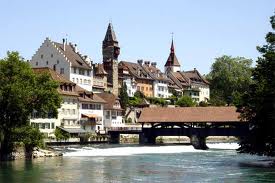
A town in Switzerland is being likened to apartheid-era South Africa, after the local mayor drew up plans to ban asylum-seekers from some public places.
A new centre to house migrants has been opened in Bremgarten, 20 kilometres west of Zurich.
The proposals would see the newcomers kept away from a sports centre, the swimming pool and areas around schools, in order to preserve the peace in the town of 6,500 residents, according to the mayor, Raymond Tellenbach.
“We wanted these restrictions in order to prevent tension with residents, especially with students. It’s for their security. We want to be sure that they are not molested,” said Tellenbach.
The idea of keeping the 150 asylum-seekers living at the centre away from certain areas has drawn criticism from politicians from a wide range of parties.
“This reminds me of apartheid. This leads to two classes of citizens – those who can go everywhere and those who cannot, only because of their residence status,” said Socialist MP Silvia Schenker
Switzerland is in the racial spotlight after Oprah Winfrey accused a shop assistant in Zurich of being racist. The black American TV-star apologised later for het rant.
The American media icon, who is one of the world’s richest women, claims the shop assistant refused to show her a handbag which cost more than 26,000 euros.
The shop-owner says the incident was a misunderstanding. euronews.com
Russian President Vladimir Putin has created an anti-CNN for Western audiences with the international satellite news network Russia Today. With its recipe of smart propaganda, sex appeal and unlimited cash, it is outperforming its peers worldwide.
Russia Today uses the source material America supplies to its rivals untiringly and with relish. Even Washington’s relatively minor peccadilloes don’t escape notice. For instance, the show also includes a story about Gabonese dictator Ali Bongo Ondimba, whom US President Barack Obama supports.
Many in the West are also interested in seeing critical coverage of the self-proclaimed top world power. Russia Today is already more successful than all other foreign broadcast stations available in major US cities, such as San Francisco, Chicago and New York. In Washington, 13 times as many people watch the Russian program as those that tune into Deutsche Welle, Germany’s public international broadcaster.
Two million Britons watch the Kremlin channel regularly. Its online presence is also more successful than those of all its competitors. What’s more, in June, Russia Today broke a YouTube record by being the first TV station to get a billion views of its videos.
The station was even more triumphant when it signed Larry King, a legend of American radio and TV journalism who began working for Russia Today this summer. “America’s best known TV interviewer is defecting to the Russians,” wrote the London-based Times in May.
King and his new colleagues have a simple assignment: They are to “break the monopoly of the Anglo-Saxon mass media,” President Vladimir Putin said during a studio visit a few weeks ago. The Russians’ recipe for success has three ingredients: sex appeal, which has been atypical for most news channel; a rigidly anti-American stance; and a never-ending flow of money from the Kremlin.
The Ministry of Media Defense
Since 2005, the Russian government has increased the channel’s annual budget more than tenfold, from $30 million (€22.6 million) to over $300 million. Russia Today’s budget covers the salaries of 2,500 employees and contractors worldwide, 100 in Washington alone. And the channel has no budget cuts to fear now that Putin has issued a decree forbidding his finance minister from taking any such steps.
The Moscow leadership views the funds going to the channel as money “well invested,” says Natalya Timakova, the press attaché to Prime Minister Dmitry Medvedev. “In addition, Russia Today is — and I hope the Germans will forgive me for this remark — significantly more modern than Deutsche Welle, for example, and it also has more money.”
The government has also spent a lot of money on the new broadcasting center in northeast Moscow, which Russia Today moved into in May. The station, citing confidentiality requirements, isn’t willing to quote an exact price tag. On the grounds of a former Soviet tea factory, the broadcaster is now creating programming in Arabic, English and Spanish. In 2009, it rebranded its English- and Spanish speaking divisions as simply “RT.” The evening news is currently focused on the euro crisis, social protests in Portugal and the NSA surveillance scandal.
Margarita Simonyan
Margarita Simonyan is the woman who shaped Russia Today into Russia’s most effective weapon in the battle for influencing the opinions of the global public. In her office on the eighth floor of its headquarters in Moscow, the editor-in-chief has Orthodox icons on her desk and a dozen flickering screens around it. Putin made Simonyan the head of the new station in 2005. At the time, she was only 25 and derided as an unknown reporter from the crowd of journalists that accompany the president at meetings.
Simonyan’s mission is to prevent Russia from ever losing a war of images.
CNN showed images of destroyed buildings, allegedly taken after a Russian bomb strike on the Georgian provincial city of Gori. According to Russia Today, however, they were actually shots of the South Ossetian capital of Tskhinvali after a Georgian attack. “There is no objectivity,” Simonyan says today, “only approximations of the truth by as many different voices as possible.”
Mistrust of the domestic media is also greater than ever in the United States. CNN, for example, is struggling to cope with a massive loss of viewers. – Der Spiegel
Russia’s State Nuclear Power Corporation, Rosatom, which is busy positioning itself in case South Africa decides to build new nuclear power plants, has signed an agreement with North West University that will see it getting involved in training nuclear industry specialists for the country.
Rusatom Overseas, a Rosatom branch that specialises in the promotion of the corporation’s projects abroad, last week signed a memorandum of cooperation with North West University, the only institution in South Africa that offers postgraduate degrees in nuclear engineering.
The memorandum envisions the development of collaboration programmes in research, exchanges of experts, joint seminars and the writing of textbooks. A joint working group is to draw up a list of projects for collaboration.
“We are pleased to announce the signing of the MoU with our Russian colleagues,” said Professor Herman van Schalkwyk, rector of the Potchefstroom Campus of North West University. “We recognise that nuclear energy remains an important option for South Africa.
“The intention is to explore the potential for future collaboration, ranging from education to specific technical projects in nuclear engineering, hydrogen technologies, energy, etc.”
Jomart Aliyev, director-general of Rusatom Overseas, said the memorandum would promote the development of technical education in South Africa, while giving local researchers and scientists the opportunity to find out more about modern Russian technologies.
Joint research and scientific developments, he said, would “provide a solid foundation for the development of Rosatom’s business relations in South Africa”.
Russian President Vladimir Putin said after a meeting with South African President Jacob Zuma in Sochi in May that Russia was ready to assist South Africa in building up a comprehensive nuclear power engineering industry.
South Africa’s Koeberg nuclear plant is the only nuclear power-generating facility on the African continent.
South Africa’s Integrated Resources Plan (IRP) for 2010 to 2030, a 20-year projection on the country’s electricity supply and demand, envisages 9 600 MW of additional nuclear capacity by 2030. The plan is due to be reviewed soon.
Speaking at the Africa Energy Indaba in Johannesburg in February, Energy Minister Dipuo Peters said South Africa planned to expand its use of nuclear power in a safe and secure way as a key part of the country’s move towards a diversified, low-carbon energy mix.
“If we are serious about diversification towards a low carbon economy, we cannot belittle the role that natural gas and nuclear power can play in the realisation of that 2030 low-carbon energy vision,” Peters said.
Rosatom is ranked fourth in the world for nuclear electricity generation, accounting for 17% of the world nuclear fuel market. It conducts 45% of the world’s uranium enrichment services, and is ranked the second in the world for uranium reserves and fourth for uranium production.
The company last year opened a marketing office in Johannesburg, only its third such office after Ukraine and Singapore, and sent a high-level delegation to Durban to take part in the 5th BRICS (Brazil, Russia, India, China and South Africa) summit in March-April. – gov.za-Itar-Tass, with additional reporting by SAinfo
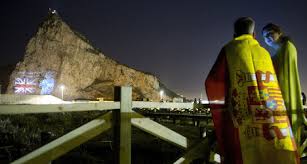
A British war ship set sail for the Mediterranean on Tuesday amid diplomatic tensions between Britain and Spain over the contested British overseas territory of Gibraltar. The HMS Westminster frigate will dock in Gibraltar as part of a Royal Naval deployment of ten vessels to the Mediterranean and Gulf.
The departure of the ship from Portsmouth, played down by the British and Spanish governments as part of a long planned, routine exercise, has underscored heightened tensions over the territory.
A helicopter carrier also left Portsmouth for Gibraltar on Monday.
Britain has warned Spain it might take legal action to try to force Madrid to abandon tighter controls at the border with Gibraltar in what it called an “unprecedented” step against a European ally.
A spokesman for British Prime Minister David Cameron said the Spanish border checks, imposed after Gibraltar created an artificial reef which Spain said blocked its fishing vessels, were “disproportionate” and “politically motivated”.
Tensions over the rocky outpost at the mouth of the Mediterranean, to which Spain lays claim, have turned into one of the worst rows in years between the two European Union states.
Opposition politicians in Spain have accused Prime Minister Mariano Rajoy of using the situation to distract Spaniards from the country’s severe recession and a corruption scandal.
Spain has said it will not back down over the border controls, which it says are a legal and proportionate step to prevent money laundering and the smuggling of tobacco and other products.
If Britain chooses to test whether those restrictions breach EU law on freedom of movement, the case is likely to end up in the European Court of Justice. Judgments there can take years, although special cases can be fast-tracked. – SABC
Prince Friso of the Netherlands will be buried Friday in the municipality of Baarn, the royal house said Tuesday in the Hague.
The younger brother of King Willem-Alexander died Monday at the age of 44, one and a half years after he was buried by an avalanche in Austria and fell into a coma.
Friso’s mother, Princess Beatrix, was born at Soestdijk Palace in Baarn, and Friso went to school in the small town near Utrecht.
The Dutch royal family gathered at the Huis ten Bosch palace in the Hague, where Friso lay.
There were broadcast images of Beatrix, Willem-Alexander and Queen Maxima in front of the palace. Friso’s widow, Princess Mabel, and her daughters Luana, 8, and Zaria, 7 were seen in the palace gardens.
Dutch citizens came to the palace to leave flowers, and thousands also posted messages of condolence online.
“It is a small token of compassion,” a young man said as he handed over a bouquet of lilies to a palace official.
An elderly lady said about Friso’s death: “We all had expected this, of course. But it still came suddenly.”
The prince died of complications following the severe brain damage he suffered in February 2012, when he was buried under an avalanche while skiing in Lech, the Austrian resort where the Dutch royals traditionally spend their winter holidays.
The town of Lech announced that it would honour Friso in its annual mass on the Catholic Assumption holiday on Thursday, an event that takes place on an Alpine mountain pasture. – Sapa-dpa
Germany’s three biggest email providers announced Friday a partnership to bolster the security of messages sent between them in the wake of revelations of US online surveillance.
Telecommunications giant Deutsche Telekom as well as GMX and Web.de, both subsidiaries of Germany’s United Internet, will automatically encrypt their email traffic from now on.
Email content as well as the identity of the sender and recipient and attachments will be encrypted, Deutsche Telekom and United Internet told reporters, presenting the “Email Made in Germany” initiative.
The email services of t-online.de, web.de and gmx.de represent two-thirds of private email accounts used in Germany, or more than 50 million email addresses, according to the companies.
Deutsche Telekom chief executive Rene Obermann said the leak, which detailed the US National Security Agency’s gathering of vast amounts of phone call logs and Internet data, had “deeply unsettled” users.
He said talks with other email providers aimed at widening the alliance have already taken place. – AFP
Switzerland is a glamorous playground of the rich and famous, filled with glitterati from princes to movie stars. It’s also a land with a sometimes uneasy relationship with foreigners – especially when they aren’t white.
Billionaire media mogul Oprah Winfrey says she ran into Swiss racism when a clerk at Trois Pommes, a pricey Zurich boutique, refused to show her a $38,000 handbag, telling one of the world’s richest women that she wouldn’t be able to afford it. Winfrey earned $77 million in the year ending in June, according to Forbes magazine.
“She said: ‘No, no, no, you don’t want to see that one. You want to see this one. Because that one will cost too much; you will not be able to afford that,'” Winfrey, appearing on the U.S. television program “Entertainment Tonight,” quoted the clerk as saying. “And I said, ‘Well, I did really want to see that one.’ And she refused to get it.”
She brought up the incident during an interview about her new movie, “Lee Daniels’ The Butler,” which opens next week and focuses on civil rights and race relations in the U.S. She was asked to open up about her own experiences with discrimination.
Swiss tourism officials and the boutique owner were quick to offer apologies Friday.
“We are very sorry for what happened to her, of course, because we think all of our guests and clients should be treated respectfully, in a professional way,” Daniela Baer, a spokeswoman for the Swiss tourism office, told The Associated Press.
The tourism office also posted an apology on Twitter, saying, “This person acted terribly wrong.”
The newspaper Blick described the bag as a crocodile-leather Tom Ford design named for actress Jennifer Aniston, a fan of the American designer. It quoted Goetz as saying the bag was priced at 35,000 Swiss francs.
Boutique owner Trudie Goetz told Swiss public broadcaster SRF that she believed the incident was a misunderstanding when the store clerk, who is mainly an Italian speaker, explained how expensive the bag was.
“I’m very sorry about this incident,” Goetz said. “And this can only happen because of a communication problem and a misunderstanding.
“The shop assistant apparently asked her (Oprah) if she would like to see the bag, but she apparently said ‘No, I just want to look’. And then she (Oprah) asked how much the bag costs and she (the employee) told her how much the bag was.”
Goetz added that “I believe she rather said something like ‘we have some less expensive’ – ‘we also have some less expensive bags’ and not ‘it’s too expensive for you.’ “
Winfrey was in Switzerland to attend the wedding of her longtime friend Tina Turner, who has lived in Zurich for many years and has been quoted saying how much she enjoys living among the Swiss. Turner was granted a passport earlier this year, a process that typically takes years.
Goetz, who was photographed at Turner’s wedding, stressed that the Oprah incident “has nothing to do with racism – really. Tina Turner is one of my best friends and it’s out of the question (that this has anything to do with racism).”
About 23 percent of Switzerland’s 8 million residents are non-Swiss, and the country earned more than $39 billion from tourism in 2011.
Last year, though, a government-appointed commission reported that immigrants, tourists, asylum-seekers and “people of a different skin color” can encounter “xenophobia and racism in certain areas of life.”
The nationalistic Swiss People’s Party, which has the largest number of seats in the federal parliament, has won support through claims that immigrants can bring crime and social problems to a country that has been an oasis of stability even in Europe’s darkest days.
In recent years, the People’s Party has successfully campaigned to ban the construction of minarets in a country that has about 400,000 Muslims, and to tighten the nation’s asylum law. Swiss lawmakers also narrowly rejected a proposal to ban veils worn by some Muslim women in public.
And this week, a row broke out over plans to bar asylum-seekers living in the small town of Bremgarten from visiting public swimming pools and attending schools.
Human Rights Watch said the agreement by the Swiss migration office to let the town impose “house rules” to limit access to schools and sports facilities violates international law.
It wasn’t the first time Winfrey has taken issue with treatment at a ritzy European boutique. In 2005, she was turned away from a Hermes shop in Paris 15 minutes after closing time. The store said it was closed for a private event.
A Hermes executive appeared on Winfrey’s talk show to apologize for the “rigid and rude” behavior of the employee. Winfrey complimented Hermes on its response – including sensitivity training for employees – and urged viewers to buy the company’s products.
In “The Butler,” Winfrey plays the wife of a butler who is a witness to history, from the cotton fields of Georgia to the White House. It is based loosely on the career of Eugene Allen, a black man who served as a White House butler from the Eisenhower through Reagan administrations.
During the TV interview, Winfrey said that “true racism is about being able to have power over somebody else,” and that she sometimes encounters it along with sexism in boardrooms. Then she recounted the incident in Zurich while she went shopping alone.
Oprah sans make-up
“Obviously, ‘The Oprah Winfrey Show’ is not shown in Zurich. So this doesn’t happen to me unless somebody obviously doesn’t know that it’s me,” she said.
A spokesman for Zurich’s tourist office, Christian Trottmann, called the incident “very regrettable” and said it obviously hurts the image of a friendly, world-class city accustomed to different cultures.
“We are inviting her to come back to Zurich and have fun here,” he said, “so she can see how open-minded this city really is.” – AP
US President Barack Obama has canceled a meeting with President Vladimir Putin in Moscow which was scheduled for September. The move comes after Russia’s recent decision to grant temporary asylum to NSA leaker Edward Snowden.
The US decision is seemingly a diplomatic snub to Russia amid heightened tensions between the two countries over recent issues listed by the White House as “missile defense and arms control, trade and commercial relations, global security issues, and human rights and civil society in the last 12 months.”
“Russia’s disappointing decision to grant Edward Snowden temporary asylum was also a factor that we considered in assessing the current state of our bilateral relationship,” Washington said in a statement.
Citing lack of progress on this and other agenda items, the White House said the president deemed it more “constructive” to postpone the summit.
Instead of visiting Putin in Moscow, Obama will add a stop in Sweden to his early September travel itinerary.
Moreover, the US president will not be meeting alone his Russian counterpart while he stops over in St. Petersburg for the G20 summit, diplomats said.
Russia responded by saying it is “disappointed” by the move, with Putin’s aide Yury Ushakov adding that the situation showed the US “is still not ready to build relations with Russia on an equal footing.” It is “clear” that the decision is related to Snowden, he said, reminding that the US for its part has repeatedly refused Russia’s past extradition requests.
The cancelation comes just after President Obama expressed his “disappointment” on Snowden’s asylum – and talked of Moscow slipping into “Cold War” mode despite his calls for negotiations.
“There have been times where they slip back into Cold-War thinking and a Cold-War mentality,” Obama told to Tonight Show host Jay Leno Tuesday night. “And what I consistently say to them, and what I say to President Putin, is that’s the past and we’ve got to think about the future, and there’s no reason why we shouldn’t be able to cooperate.”
Edward Snowden, whose US passport has been revoked, was granted one year’s temporary asylum in Russia last Thursday, finally leaving the confines of the Moscow airport where he had been holed up since June 23. His new residence permit allows the former CIA employee to work and freely travel all across Russia.
The former CIA employee is wanted in the US on espionage charges after revealing secret NSA surveillance programs to the public.
Among other issues, Russia and the US have considerable differences over the situation in Syria, with the US government determined to see President Bashar Assad ousted from his position. The House and Senate Intelligence Committees gave a green light to arm Syrian rebels at the end of July.
Obama has also voiced antipathy towards Russian legislation against gay rights activism, saying on the Tonight Show that he has “no patience for countries that try to treat gays and lesbians and transgendered persons in ways that intimidate them or are harmful to them.”
The last time the two leaders met was in June at the G8 Summit in Ireland.
The G20 summit will be held on September 5-6, with the US deeming it sensible to still attend, as the annual gathering brings together the world’s largest economies. Obama said that it makes sense for the US to have high-level representation at the event. – RT
Syrian rebels spearheaded by al Qaida in Iraq took control Tuesday of a crucial military airport in northern Syria, opening a vital supply line between the rebel-held north and Turkey.
The end of the siege that had clamped down the airport since last October began Monday, when two non-Syrian nationals drove an armored personnel carrier, loaded with explosives, into a position manned by defenders of the regime of President Bashar Assad. The explosion devastated the Assad troops and allowed rebels to overrun the Mannagh Air Base in Idlib province.
Those rebels included multiple units affiliated with the Syrian Military Council, an umbrella group with U.S. backing. That poses an uncomfortable pairing of a group supported by U.S. resources with Islamist organizations Washington has labeled as terrorist.
The Syrian Opposition Coalition, the political component of the SMC, announced that the airbase had been “liberated’ by a mixture of nine rebel groups. They included the al Qaida-affiliated Islamic State of Iraq and Greater Syria, or ISIS, and its Syrian sister organization, the Nusra Front.
Taking the airbase was critical because the facility had been used by Assad’s forces to target rebel supply lines and positions with artillery and air strikes.
In a series of unverifiable but credible videos released online by several rebel groups, the base appeared to hold significant amounts of military equipment. That will be welcomed by the supply-poor rebels.
Along with opening a new supply line from Turkey, the fall of the base helps the rebels in a potentially more significant way.
“This frees up some of the best rebel fighters from the Jihadist elements to help push offensives in Aleppo and Latakia,” said a European military attaché closely following the fight from neighboring Lebanon who spoke only under the condition of anonymity. “They now have the luxury to push men out to either help take the airport (in Aleppo) or help push down the coast (in Latakia.) Or both.”
Charles Lister, who has been closely monitoring the fight for the London-based military analysis group IHS Janes, agreed that the rebel seizure of the airbase could prove in the fighting to come.
“(The) capture will undoubtedly allow participating groups to re-distribute their forces further south in Aleppo to two main battlefronts: the ongoing siege of Aleppo International Airport and the governorate capital itself,” he said in a statement. “The ongoing militant Islamist-led offensive on the Alawite heartland of Latakia could also benefit.”
Within hours of the announcement, photos began appearing across social media sites often used by jihadist groups that showed the flag of ISIS flying over the airbase.
Those images highlighted the Islamist nature of the final assault.
Several sites praised the role of Jaish al Muhajireen, or the Army of the Immigrants, an offshoot of al Qaida. It’s composed of mostly foreign fighters recruited to fight alongside the primarily Iraqi Islamic State and the mostly Syrian Nusra Front.
The group is apparently led by Abu Omar al-Shishani, who appears to be either Chechen or Georgian.
Lister points to the expanded role for both Jais al Muhajireen and the Islamic State as a sign of the effectiveness of the more radical Islamist groups – both in the siege and in the overall fighting in Idlib Province.
“The victory again underlines the leading strategic impact being played by militant Islamists, particularly in northern Syria,” Lister said. “Every major offensive in northern Syria this year has been announced, led, and coordinated by Islamists.” – McClatchy
Read more here: http://www.mcclatchydc.com/2013/08/06/198675/al-qaida-groups-lead-syrian-rebels.html#storylink=cpy
German companies believe the US now poses almost as big a risk as China when it comes to industrial espionage and data theft, a survey has revealed.
The startling finding of a survey of 400 companies conducted in mid-July underscores the shift in German public and business opinion caused by revelations about US surveillance activities.
Some 26 per cent of German managers, IT and security professionals described the US as a high-risk place for industrial espionage and data theft, according to the survey commissioned by EY, the consultancy.
This was second only to the 28 per cent of respondents who view China as a particularly high-risk country for industrial espionage. Russia was ranked third, with 12 per cent saying it posed a significant risk.
When they were asked the same question two years ago only 6 per cent of German companies described the US as a high-risk centre for industrial espionage and data theft.
“Until now [German companies] mostly identified China and Russia as the location of [potential] attackers. Now companies realise that western intelligence agencies also employ very comprehensive surveillance measures,” Bodo Meseke, executive director of fraud investigation and dispute services at EY, said.
US surveillance has become a core issue in Germany’s election campaign following disclosures about Prism, the US data mining programme, and reports in Der Spiegel, the German magazine, that the US has spied on EU offices and is obtaining around 500m pieces of metadata a month from Germany.
Opposition parties have pressed ministers to obtain answers from the US on the extent of any spying on German soil, and the Federation of German Industry has described media reports about US surveillance as “concerning”.
Following meetings in Washington last month, Hans-Peter Friedrich, Germany’s interior minister, assured German industry that the US National Security Agency had not engaged in industrial espionage in Germany.
The US says its cyber activities are focused on combating terrorism and do not target companies, in contrast to China, which Washington accuses of cyber snooping to obtain corporate secrets.
These assurances do not appear to have convinced a significant portion of Germany’s business community.
Germany’s dependence on high-tech exports means the protection of patents and intellectual property are of perennial concern. Modern Germany’s tolerance of mass surveillance is also far lower than in other countries because of their experience of Nazism and East Germany’s Stasi secret police.
German companies continue to view business competitors in foreign countries as a bigger espionage threat than state intelligence agencies, according to the EY survey.
There are signs that disclosures made by Edward Snowden, the former NSA official turned whistleblower, are affecting the cloud computing industry, which involves storage of data and software on huge external servers rather than local hard drives.
A separate survey carried out last month by the Cloud Security Alliance, a trade body, found that 10 per cent of non-US members had cancelled plans to use a US-based cloud provider. Some 56 per cent said they would be less likely to use a US cloud company in future. – FT
Spain is acting like North Korea and “sabre rattling” the chief minister of Gibraltar has warned in a further escalation of the row over the British territory.
Fabian Picardo accused the Spanish government of behaving like they did during Franco’s regime and vowed that ‘hell will freeze over’ before the authorities in Gibraltar remove a disputed artificial reef created to bar Spanish fishing boats.
Mr Picardo said Spanish foreign minister Jose Garcia-Margallo was being belligerent when he suggested that a 50 euro (£43.40) fee could be imposed on every vehicle entering or leaving the British Mediterranean outpost through its border with Spain.
Today the Foreign Office moved to calm tensions over the British territory by saying the row would be resolved by political means not “disproportionate” measures.
The statement follows the move by Spanish authorities to increase border checks causing delays last weekend and the statement yesterday that a vehicle fee and closing Spanish airspace to Gibraltar flights was being considered.
In an interview with Spanish newspaper ABC published yesterday Foreign Minister Jose Manuel Garcia-Margallo had suggested that :
Spanish tax authorities could investigate the properties owned by 6,000 Gibraltarians in neighbouring parts of Spain.
– Spanish airspace could be closed to flights en route to Gibraltar.
– Stop concrete and materials used to build an artificial reef being brought over the border.
– Changing the law so online gaming companies in Gibraltar have to use Spanish servers and thus pay tax to Spain.
The suggestions in the article prompted an immediate response from the Foreign Office yesterday who said they were “concerned” by the comments and would “not compromise on our sovereignty over Gibraltar, nor our commitment to its people. We continue to use all necessary measures to safeguard British sovereignty.”
A spokesman made clear that the UK expects Madrid to live up to the commitments it made in the 2006 Cordoba Agreement, which included deals on issues like border crossings and access for flights, as well as establishing a tripartite forum for regular dialogue between Britain, Spain and Gibraltar.
Speaking on the BBC Radio 4 Today programme the chief minister of Gibraltar, Fabian Picardo said: “What we have seen this weekend is sabre-rattling of the sort that we haven’t seen for some time.
“The things that Mr Garcia-Margallo has said are more reminiscent of the type of statement you’d hear from North Korea than from an EU partner.
“We’ve seen it before during Franco’s time during the 1960s but I think all of us hoped that those politics were never going to come back and that the much more enlightened politics of Mr Moratinos (Miguel Angel Moratinos), who was the previous but one foreign minister of Spain, would prevail, which talked about people working together and creating economic benefits for the citizens on both sides of the frontier rather than the belligerence we are seeing now.”
Spain claims sovereignty over the Rock, which stands on the southernmost tip of the Iberian peninsula but has been a British Overseas Territory since the Treaty of Utrecht in 1713.
But the UK Government has made clear that it will not negotiate over sovereignty as long as Gibraltar’s people want to remain British.
Foreign Secretary William Hague last month phoned Mr Garcia-Margallo to complain about Spain ramping up border checks, which forced drivers to wait for up to seven hours in searing heat.
The Foreign Office yesterday summoned the Spanish ambassador to demand assurances that there would be no repeat of the excessive checks.
David Cameron is “seriously concerned” about events at the Spanish border but proposals for fees or airspace restrictions have not been raised with the UK by the authorities in Madrid, the Prime Minister’s spokesman said.
“Clearly, we remain seriously concerned by the events at the Spain/Gibraltar border,” he said.
“Specifically on this issue of border fees, the Spanish have not raised the prospect of introducing border fees with us. We are seeking an explanation from them regarding reports that they might target Gibraltar with further measures.”
The Government is in “close contact” with the Spanish about the issue, but the spokesman refused to give further details about what the next steps might be.
The Prime Minister last spoke to his counterpart, Mariano Rajoy, about the issue at a European Council in June, before the latest escalation of tensions at the border. – Press Association
Mass killer Anders Breivik is to be moved to Skien prison, which has one of Norway’s most liberal regimes, local media reported.
Breivik has long requested a transfer back to Skien, where he stayed while his quarters at Oslo’s Ila prison were under construction.
He complained that his isolation at Ila amounted to torture.
Prison authorities said the decision was taken in June and had nothing to do with Breivik’s petitioning.
Jan Erik Sandlie, deputy director of Norway’s probation service, said prisoners are sometimes “moved between different institutions.”
It is not clear when Breivik will be moved. – RT
This website uses cookies to improve your experience. We'll assume you're ok with this, but you can opt-out if you wish. Cookie settingsACCEPT
Privacy & Cookies Policy
Privacy Overview
This website uses cookies to improve your experience while you navigate through the website. Out of these cookies, the cookies that are categorized as necessary are stored on your browser as they are essential for the working of basic functionalities of the website. We also use third-party cookies that help us analyze and understand how you use this website. These cookies will be stored in your browser only with your consent. You also have the option to opt-out of these cookies. But opting out of some of these cookies may have an effect on your browsing experience.
Necessary cookies are absolutely essential for the website to function properly. This category only includes cookies that ensures basic functionalities and security features of the website. These cookies do not store any personal information.
Any cookies that may not be particularly necessary for the website to function and is used specifically to collect user personal data via analytics, ads, other embedded contents are termed as non-necessary cookies. It is mandatory to procure user consent prior to running these cookies on your website.


 European Union leaders Herman Van Rompuy and Jose Manuel Barroso warned Egypt’s army and interim government Sunday the bloc would review its ties with the country unless the violence ended.