German military, Austrian drones to Ukraine on OSCE mission

German Defense Ministry sent a team of 14 German military men to Ukraine to observe, in cooperation with French experts, the use of Austrian drones in the eastern part of the country. It goes about the use of unarmed drones for intelligence purposes. The team will also analyze collected information, The Local said.

The team is a mission of OSCE observers to monitor the implementation of the cease-fire agreement.

Reconnaissance drones Luna can fly at altitudes of up to 5,000 meters for six hours non-stop. The UAVs will track the movement of troops in the south-eastern region of Ukraine and receive information on the implementation of the ceasefire agreement by the militia.

“Emphasis will be put on airborne surveillance resources,” a German military man said.

The German mission to establish facts of maintenance of truce will be located in an uncontested area near the People’s Republic of Luhansk, some 30 kilometers far from the border with Russia, for three to five days. The unarmed team will wear OSCE uniforms.

After six hours of nighttime talks on Friday in the Belarussian capital Minsk the Contact Group on Ukraine has signed a memorandum on measures to implement the ceasefire agreement, concluded in principle on September 5.

As Ukraine’s former president, Leonid Kuchma, said after the talks the memorandum implied “the termination of the use of weapons is considered comprehensive.”

Also, he said that under the document the conflicting parties’ forces should be left at their positions they were holding as at September 19, and a ban on the use of all weapons and offensive operations effected within 24 hours.

“The memorandum also requires the pullout of all weapons with a calibre of more than 100 millimeters to a distance of no less than 15 kilometres on each side,” Kuchma said.

The memorandum also imposes a ban on planting mines, flights by combat aviation and drones except for OSCE aircraft.

Meanwhile the Ukrainian military carried out an attack on a military plant in Donetsk. Smoke hangs over the 107th military factory and explosions are still heard. The locals said that there were ammunition supplies stored in the factory.

The Ukrainian forces conducted a round of shelling on Donetsk early on Saturday. The Ukrainian Army is said to be carrying out attacks from the village of Khanzhonkovo. According to several witness reports, many residential buildings were destroyed.

Good luck to the little people fighting for NATO

Demonizing Russian President Vladimir Putin, an Anglo-American pastime, seems even more childish when one considers that any president of the Russian Federation would act in exactly the same manner to protect the interests of his country in the face of NATO aggression.

When Putin attended the Bucharest summit in 2008 to sign an agreement that there would be no invitations extended by NATO to Ukraine and Georgia to join the alliance, little did he know that promises signed in English do not mean much.

The former Danish Prime Minister Anders Fogh Rasmussen, NATO’s salesman for neo-conservative invasions and occupations of Iraq and Afghanistan, finds no task set by his Atlanticist masters too daunting. Implementing a scorched earth policy in both countries, Rasmussen has now scrapped the Bucharest agreement to create tension in Eastern Europe, inflaming the region with hostile rhetoric and permanent military bases.

As NATO expands eastward in order to surround Russia on all borders, Rasmussen has come across yet another obstacle that might be worth his while to ignore: Article 10 of the NATO Charter.

Article 10 stipulates that NATO membership is only open to European States: “The Parties [NATO Treaty signatories] may, by unanimous agreement, invite any other European State in a position to further the principles of this Treaty and to contribute to the security of the North Atlantic area to accede to this treaty. Any State so invited may become a Party to the Treaty by depositing its instrument of accession with the Government of the United States of America.”

The US does not consider the Russian Federation as “European”. Kiev, Tbilisi, Sofia certainly qualified as “North Atlantic” back in the Cold War era as little as they qualify today. Calls for NATO to ignore Article 10 and expand far beyond the North Atlantic and Europe, are abundant however.

NATO meanwhile has invented new ways of getting around this obstacle. “Membership Action Plan” and “Intensified Dialogue” are NATO-speak for fast-track membership into the military alliance.

One of the first moves in Georgia after the Soros-initiated Rose Revolution of 2003, was to sign up for NATO’s Membership Action Plan (MAP). However, Georgia claims ownership of two independent republics, Abkhazia and South Ossetia. Fearful of the latest attempt by NATO to absorb Georgia, Abkhazia and South Ossetia recently announced the creation of a “Unified Defense Space” to counter Georgia’s and NATO’s total onslaught.

Similarly, after President Viktor Yushchenko and his Soros and American allies prevented the elected president of Ukraine, Viktor Yanukovych from being sworn in as president after the so-called “Orange Revolution” of 2004, one of Yushchenko’s first actions as president was to sign Ukraine up for NATO’s “Intensified Dialogue” program.

After Yanukovych was ousted in the so-called “Euromaidan” revolution earlier this year, the new Kiev coalition of World Bank technocrats and neo-fascists called for fast track membership for Ukraine in NATO.

The wounded Kiev regime is fumbling along towards NATO membership even though a 2009 poll revealed that 57 percent of Ukrainians opposed NATO membership for their country. In Russian-speaking eastern Ukraine, which has declared independence from Kiev, a poll showed 74 percent opposed to NATO membership.

Yet NATO seems reluctant to accept a very existential problem with regards to its expansionist strategy. NATO planners, working with neocon clones in Sweden, Finland, Austria, Ireland, Switzerland, and Malta remain deaf to sound warnings of their constituents. And while these countries are all “European”, their voters are not interested in membership of the War Club.

President Obama said in Estonia that NATO is an alliance of “democracies” even though most of these “democracies” are opposed to joining the alliance. Obama clearly believes that his definition of democracy does not include abiding by the wishes expressed by majorities.

Recent polls show 50 percent of Swedes opposed to NATO membership. Although Finland and NATO signed a Memorandum of Understanding in April 2014 that many believe permit NATO pre-positioning of military equipment near the Russian border, polls show 52 percent of Finns also opposed to NATO membership.

Former Finnish Presidents Tarja Halonen and Mauno Koivisto have warned that Finnish membership in NATO would irrevocably harm Finland’s relations with Russia. Switzerland, where opposition to NATO runs high in the historically neutral nation, former Swiss President Adolf Ogi has called for Switzerland’s membership of NATO.

NATO has also been trying to wean Ireland away from its traditional neutrality. Many observers believe that NATO has a secret agreement with Ireland to use Shannon Airport as a cargo and personnel transit hub. An Irish Defense Policy Green Paper released by Ireland’s Defense Minister Alan Shatter, released earlier this year however, calls for Ireland to pursue NATO membership.

NATO’s gambit has been to use the terrorist threat to lure Ireland into the alliance, warning that Ireland would be “safer from terrorism” inside NATO. David Cameron, British premier, has just tried the the same trick to stem the yes-tide in Scotland’s up-coming referendum on independence.

In May of this year, Austria inched closer to NATO membership when it became the first non-NATO country to join NATO’s Cooperative Cyber Defense Center of Excellence in Estonia, while polls clearly show a majority of Austrians being opposed to NATO membership.

Malta renewed its membership in NATO’s Partnership for Peace (PfP) program in 2008 without parliamentary approval, and in contravention of the neutrality article in Malta’s constitution.

A confidential NATO paper recently leaked to Der Spiegel calls for enhanced “interoperability” of the military forces of Armenia and Azerbaijan, as well as Moldova, with NATO, and proposes “smart defense” operations between the three nations and NATO. Moldova’s constitution prohibits the country from joining any military alliance, but that inconvenient fact has not deterred Moldovan Defense Minister Vitalie Marinuţa, another Soros clone, from calling for Moldova to join NATO.

NATO’s Long March east is a far cry from the agreement made between the George H W Bush administration and Soviet President Mikhail Gorbachev that in exchange for Moscow’s agreement on German reunification, NATO would not inch any further east. That agreement was scrapped by Bill Clinton’s Secretary of State Madeleine Albright, who eagerly welcomed her native Czech Republic, as well as Poland and Hungary as NATO members in 1997. Albright’s promises that NATO would not further expand came to naught.

Estonia, Latvia, and Lithuania joined NATO in 2004 after membership negotiations began under Albright’s tutelage in 2000. Bulgaria, Slovakia, Slovenia, and Romania also joined NATO in 2004. Croatia and Albania followed in 2009.

Recent statements by NATO and the Obama administration represent an immense escalation of US and NATO military threats against Russia. Without any public discussion, and entirely over the heads of the little people in all these countries, the Obama administration has committed them to a war with the second largest nuclear power in the world.

“Article 5 is crystal clear. An attack on one is an attack on all. So if, in such a moment, you ever ask again, ‘who will come to help,’ you’ll know the answer — the NATO Alliance, including the Armed Forces of the United States of America, ‘right here, present, now!’ We’ll be here for Estonia. We will be here for Latvia. We will be here for Lithuania… Here in the Baltics… it would mean more US forces—including American boots on the ground continuously rotating through Estonia and Latvia and Lithuania,” Obama boomed.

The signatories will be sad fodder for the War Club. The willful recklessness of American foreign policy is obvious, as there will not be enough American “boots on the ground”. The dying will have to be done by the parties who signed on with NATO. Good luck to them.

International spy capital Vienna

According to a survey compiled by specialists in spying activities, Vienna, Austria, is home to more than 7,000 secret agents and spies, a number greater than any other city.

“Vienna is a stock exchange of information. We have the most liberal laws governing this activity in the world,” Gert Rene Polli, the former chief of BVT, the country’s counter-terrorism agency, said.

“It is also a nice place for spies to live and bring their families, with good education and health services after difficult postings in Serbia, Iraq or Afghanistan,” Polli added.

Embassies there are overcrowded with personnel, many of whom are secret agents serving as links to their home countries. Although Vienna hosts spies from a large number of countries, US and Russian spies dominate the numbers.

It was recently revealed that a US spy working for German foreign intelligence (BND) met at least two CIA agents working at the US Embassy in Vienna since 2012. In 2010, Vienna’s airport hosted the biggest “spy swap” in history, where 14 US and Russian spies were exchanged in broad daylight.

“All the services that worked here during the Cold War have a presence in Vienna today,” Siegfried Beer, historian and head of the Austrian Center for Intelligence, Propaganda and Security Studies (ACIPSS), said. “Between the two world wars, Vienna definitely became the center of European espionage,” he added.

Following World War II, Vienna became a battlefield for intelligence operations, competing for influence and information. At the forefront were CIA and KGB agents. After 1955, Vienna became neutral territory, but allied countries left their agents behind. Foreign intelligence agents can rest easy for now since according to law, Austria’s state police can only punish spying aimed at Austria.

As long as Vienna’s laws continue to only punish espionage against Austria, agents will continue to flock to the historically spy-friendly city.

Source: RIA Novosti

Berlin fingers NATO for ATC blackouts

The German government has indicated that NATO electronic warfare (EW) training exercises were responsible for civilian ATC radar display blackouts in central Europe on 5 June and 10 June 2014.

IHS Jane’s has obtained the government’s answer to a parliamentary question on 17 July, in which it noted that: “In the relevant time period two separate exercises by NATO forces with EW assets were conducted, in the first case by the Hungarian Air Force and in the second by the Italian Army and [undisclosed] partners.”

Both exercises involved ground-based air defence radar assets and were held under the NATO Electronic Warfare Integration Period programme. The German government statement said this is “especially dedicated to test and train EW in the airspace. Further details at the moment cannot be given, as investigations by EASA and NATO are ongoing”.

Informed by IHS Jane’s about the German information, an Austrian Air Force official would not disclose if Austria was informed about NATO EW activities in its airspace. The official emphasised that during the June incidents, the Air Force retained full coverage of Austrian airspace with its Kreidfeuer situational awareness picture, which is provided by three fixed Selex ES RAT-31L primary radars.

Source: IHS Jane’s

Ukraine’s leverage evaporates

Vladimir Putin has scored a massive political victory in the heart of the Eurozone, after Austria openly defied NATO and sided with Russia.

Russia has an alternative pathway for its gas, one which bypasses Ukraine entirely and as the current South Stream framework is set up, crosses the Black Sea and enters Bulgaria before passing Serbia and Hungary on the way to the Central European energy hub located in Baumgarten, Austria.

The latest development comes only one short month after Putin concluded a game-changing deal with Beijing.

As Itar-Tass reports, citing Gazprom CEO Alexei Miller, “Russia’s gas giant Gazprom does not rule out gas transit via Ukraine may be stopped completely.”

“What happened once is a tendency, nothing happens incidentally. In 2009, gas supplies were stopped completely — so, we know precedents,” Miller told a briefing on Friday.

Clearly, this is bad news for Ukraine: Gazprom is no longer interested in participation in Ukraine’s gas transportation system (GTS).

“That train has departed”, the CEO said.

“It seems it departed yesterday,” Miller said. “It belongs to no one. The GTS has no owner,” he said. “The GTS of Ukraine does not belong to Naftogaz but to the Ukrainian government. Before discussing things with someone regarding modernization and cooperation, it should appear on the balance sheet of this or that economic entity.”

“Property and legal issues should be resolved first,” Miller said.

In fact, the civil war torn country may soon lose all leverage it had with both Europe and Russia as a transit hub for natural gas, which also means that it is quite likely that Ukraine is about to be abandoned by its western allies who will no longer have any practical use for it.

The Gazprom chief added that “a dozen Ukrainian laws need to be changed to be able to do something with the GTS.”

Confirming that Ukraine’s leverage at least with Russia is now effectively zero, Gazprom’s CEO also said that “As for the continuation of negotiations with Ukraine, today there is no subject for talks. First, they must repay their debts.”

“The gas price for Ukraine is fair – this price is fixed in the contract,” he stressed.

There have been no requests on the part of Ukraine’s national oil and gas company Naftogaz Ukrainy on a change of the transit deal with Russia, Alexei Miller said.

NATO will now turn its attention to the countries which the South Stream pipeline passes through.

Bulgaria, has just suffered its worst bank run in 17 years, and one which has paved the way to early elections.

This may provide the US with a government which will be more focused on their interests, instead of the current regime, whose allegiance to the Kremlin is said to take precedence.

The South Stream countries – starting with Bulgaria, and going through Serbia, Hungary,  Slovenia, Italy and of course, Austria – will suffer scrutiny.

Finally, and perhaps most notably, is last week’s announcement by Gazprom CEO Miller that Gazprom is interested in discussing buying a stake in the Baumgarten gas hub.

“They do everything to disrupt this contract. There is nothing unusual here. This is an ordinary competitive struggle. In the course of this competition, political tools are also being used,” the Russian president said after holding talks with his Austrian counterpart, President Heinz Fischer, in Vienna.

Fischer defended the South Stream project, saying: “No one can explain to me – and I can’t explain to the Austrian people – why a pipeline that crosses EU and NATO countries can’t go 50 km into Austria.”

The mood turned jovial during Putin’s recent visit when the head of Austria’s chamber of commerce reminded Putin that part of Ukraine had belonged to Austria in 1914.

“What is that supposed to mean? What are you proposing?” Putin quipped, eliciting laughter from the business elite.

The one place which now matters most for Europe’s energy future is Austria.

Gazprom chief Alexei Miller said earlier he was in weekly if not daily contact with European Energy Commissioner Guenther Oettinger about winning approval for the South Stream project.

Gazprom, Austria sign gas agreement

Russia’s Gazprom and Austria’s OMV oil and gas companies on Tuesday signed an agreement on the creation of a joint-stock company, South Stream Austria, outlining the principles for the construction and exploitation of the Austrian stretch of the South Stream gas pipeline.

The agreement was signed during Russian President Vladimir Putin’s visit to Vienna.

Gazprom and OMV will own a 50 percent stake each in the joint venture.

The agreement specifies the duties and responsibilities of the shareholders as well as the funding and profit-sharing principles.

In April, the sides sealed a memorandum on the construction of South Stream in Austria with annual gas supplies to that country through the future pipeline estimated at 32 billion cubic meters. Construction permit is expected to be issued in 2015 and the first supplies were initially set for 2017. The pipeline is due to reach its full operational capacity by 2018.

However, OMV hopes that Austria may get its first gas through South Stream earlier than planned – in late 2016.

Austria’s FM voices support for South Stream gas pipeline project
The pipeline with a total annual capacity of 63 billion cbm will connect the Russian port of Novorossiisk and the Bulgarian coast through the Black Sea and branch out towards Austria’s Baumgarten via Serbia and Hungary.

The agreement defines their specific rights and obligations and lays out the principles for financing and distribution of earnings among the shareholders.

The agreement signing was accompanied by approval of the final investment decision on construction of the Austrian segment of the pipeline under the previously agreed criteria, Gazprom said in a statement.

Source: Voice of Russia

‘Kidnapped by imperialism’

Morales in Russia
Morales in Russia

Bolivia has accused Austria of “kidnapping” its president, Evo Morales.

After a 12-hour interruption during which the president’s plane was stopped and searched by Austrian authorities for US fugitive Edward Snowden, Morales was allowed to fly home. Bolivia’s vice-president, Alvaro Garcia Linera, described Morales as being “kidnapped by imperialism” in Europe. Authorities had suspected Morales was taking Snowden to Latin America.

The unusual treatment of the Bolivian leader touched a sensitive nerve in the region, which has a history of US-backed coups, and presidents rallied in support of Morales.

“Definitively, they’re all crazy,” Argentine President Cristina Fernandez tweeted after a phone call to Morales. Fernandez described Morales as defiant.

” ‘I’m not a thief’,” she quoted him as saying.

Nicaraguan and Cuban officials also decried the incident.

A senior Bolivian diplomat said the Austrians had acted at the bidding of the US, which has been trying to get its hands on Snowden since he revealed details of its secret surveillance programmes.

“We’re talking about the president on an official trip after an official summit being kidnapped,” Bolivia’s ambassador to the UN, Sacha Llorenti Soliz, said.

The plane, which was taking Morales home from an energy conference in Moscow, was stranded at Vienna airport after Portugal and France refused to allow it to fly through their airspace.

The search found that Snowden was not on board.

Bolivia has filed a complaint at the United Nations on Wednesday over what it called the kidnapping of its president.

The country’s ambassador to the UN, Sacha Llorenti, said the enforced rerouting to Austria was an act of aggression and a violation of international law. The US admitted that it had been in contact with other nations over potential flights by Snowden.

“We will demand appropriate explanations from those countries that submitted to North American imperialism and briefly put President Morales in such a helpless situation,” Llorenti told the state radio Patria Nueva. Bolivia’s vice-president, Alvaro García Linera, said Morales was “kidnapped by imperialism”.

South American nations accused the United States of being behind the extraordinary manoeuvring, furious at what they regarded as the humiliation of Morales. In Washington, the state department would not comment on the Morales flight but conceded that it discussed the issue of flights by Snowden with other nations.

“We have been in contact with a range of countries that had a chance of having Snowden land or travel through their country but I am not going to outline what those countries were or when this [contact] happened,” said spokeswoman Jan Psaki.

The diplomatic crisis may have been set off by a remark by Morales during a television interview in Russia, where he had been attending an energy conference. Morales said that he sympathised with Snowden, who is believed to be holed up in the transit area of Sheremetyevo airport, and hinted that Bolivia might accept an asylum petition. “If there were a request, of course we would be willing to debate and consider the idea,” Morales told RT Actualidad, the Spanish-language service of the Russian broadcaster RT.

Later that day, soon after Morales was bound for La Paz, Spain, Italy, France and Portugal refused to allow the presidential jet to fly through their airspace over suspicions that Snowden was on board, according to the Bolivian government’s account.

The Bolivian foreign minister, David Choquehuanca, said France and Portugal were the first to cancel air permits. “They say it was due to technical issues, but after getting explanations from some authorities we found that there appeared to be some unfounded suspicions that Mr Snowden was on the plane. We don’t know who invented this lie. We want to denounce to the international community this injustice with the plane of Evo Morales,” Choquehuanca said.

Diverted from their planned route, pilots feared they would not be able to complete their journey. The plane was eventually cleared to land in Vienna, where Morales was forced to spend 13 hours in humiliating limbo while officials worked to resolve the dispute.

It later took off after Austrian officials said Snowden was not on board. But it was unclear whether any officials in Vienna had searched the plane. Austria’s deputy chancellor, Michael Spindelegger, said Morales “agreed to a voluntary inspection”. But the Bolivian defence minister, Ruben Saavedra, later said Morales had refused entry to the inspectors, and that they had only got as far as the door of the aircraft.

In Bolivia, the treatment of the president stirred up patriotic and anti-imperialist sentiment. Several labour and indigenous organisations planned a welcome rally for the president on his arrival in La Paz on Wednesday evening.

The Argentinian president, Cristina Fernández de Kirchner, attacked the “vestiges of colonialism” in a speech in Buenos Aires. “We believe this constitutes not only the humiliation of a sister nation but of all South America,” she said. An emergency meeting of the Union of South American Nations was expected to be convened on Thursday.

It was widely assumed in South America that Washington was responsible for the presidential plane being refused air permissions. Earlier in the week, the state department said it hoped Snowden would be returned to the US to face charges of espionage and theft after a string of other countries said they would not accept his applications for asylum.

Speaking before the developments in Vienna, the state department rejected claims made by Snowden on Monday that the US had bullied other potential hosts, such as Ecuador, into withdrawing their offer of asylum. The US says it has only impressed upon possible host countries the seriousness of the crimes with which Snowden had been charged. – Reuters/The Guardian

Austria not worried about passenger Snowden

Mikl-Leitner
Mikl-Leitner

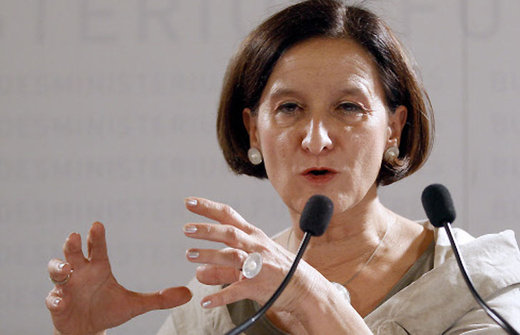
Austria allowed Bolivian President Evo Morales’ plane to land because it did not share other countries’ worries that former U.S. spy agency contractor Edward Snowden might be on board, Interior Minister Johanna Mikl-Leitner said on Wednesday.

France and Portugal abruptly canceled air permits for Morales’ plane en route from Moscow, forcing the unscheduled stopover in Vienna late on Tuesday.

An Austrian Foreign Ministry spokesman said rumours that Snowden was on the plane were untrue.

“Austria did not close its airspace and the plane could of course land although many other countries apparently feared that Snowden was on board too,” the minister told ORF radio. “Austria did not do that, which means there is no fear here.”

Wanted by Washington for espionage after divulging classified details of U.S. phone and Internet surveillance, Snowden apparently remains in the transit area of Moscow’s Sheremetyevo airport.

He applied for asylum in Austria – and several other countries – via the country’s Moscow embassy on Monday, which the government said was insufficient to grant him refuge.

Mikl-Leitner said it would be up to Austrian asylum authorities to decide what to do in the unlikely case that Snowden arrived there.

She defended Austria’s position that Snowden would have to apply in person for asylum, saying this was clearly spelled out in the law.

“This is in the hands of the authorities and independent courts. The important thing here is that this would be judged individually, as in every other case,” she said. – Reuters