A teenage boy was shot during a protest in Bolobedu at the weekend — the sixth person to be killed by police this year, a spokesman said on Monday.
Saturday’s shooting comes after the body of a woman was found about 8km away in Mandlakazi, Brigadier Hangwani Mulaudzi said.
The woman was found on Friday with her hands cut off, and her cellphone and keys placed inside her open stomach. Two men were taken in for questioning on Saturday.
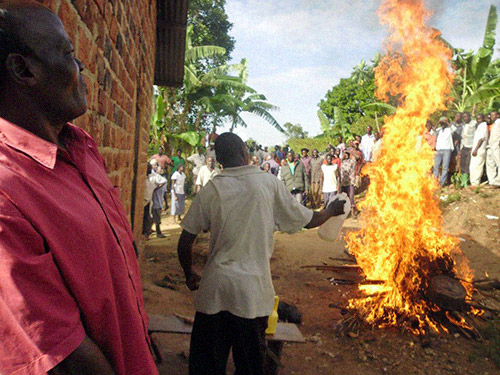
“While we were busy with the questioning, the community mobilised and went and started to burn the houses of those two men, including one house that belonged to the boyfriend of the deceased woman,” he said.
“During that time, police went in to try and stop them from burning those houses. It is alleged that during that moment, one of our members [officers] shot at the protesting villagers, which led to the death of a 15-year-old boy.”
Mulaudzi said police also received information that villagers were planning to mobilise and burn down a police satellite station on Sunday because of the shooting.
“But that did not happen because police intervened.”
Provincial police had since instructed that all police officers who were at the shooting scene on Saturday hand in their firearms.
Ballistic tests would be carried out to determine who shot the boy.
“We are still waiting for the results from the ballistic test. No officer has been suspended or arrested yet,” he said.
No villagers had been arrested for the mob justice, but a case of arson had been opened.
Mulaudzi said the two men who were questioned were later released as they could not be linked to the murder of the woman.
Police were presently searching for the woman’s boyfriend for questioning.
“We don’t know where he is at this point”.
The Independent Police Investigative Directorate was investigating the matter.
Since January, at least five others have been killed by police officers.
On January 13, a photographer and protester were killed in clashes with police in Brits during a protest for running water.
A third man died the following day from injuries sustained when jumping off a moving Nyala, according to police.
Police said a fourth person died on January 19 of injuries sustained in the clashes. Residents claim the 36-year-old man was shot in the head.
On January 23, a 28-year-old man was shot dead by a police officer during a protest in Durban Deep, Roodepoort, over housing.
Motswedi police near Zeerust have arrested twelve suspects on charges of Public Violence and Malicious damage to property on 13 December 2013 at Lobatla village.
It is alleged that the community members went to Lobatla Tribal office and complained about a man whom they alleged to have bewitched another community member who died a week ago. After the alleged death of the community member no case was registered with the police. Police were also invited to the meeting to address the community.
It is alleged that after the police had left, the community went to the victim’s house and burnt it to ashes. According to the information, the victim and his family were not at their house at the time of the incident, and estimated costs to the damaged property could be not be established. The suspects will appear in the Lehurutshe Magistrate’s Court on Tuesday, 17 December 2013.
The North West Provincial Commissioner, Lieutenant General Zukiswa Mbombo has condemned the unruly behaviour of some members involved in the crime committed. “There is no way in which the police will allow people to take the law into their own hands. People must always report incidents to the police and leave the law to take its cause” said the General Mbombo.
In a recent article in the Sunday Independent, Gillian Schutte mistakenly blames so-called “white conservative narratives” for the appalling sexual violence that is sweeping South Africa at present. As rape is notoriously underreported, most estimates put the number of such crimes at more than a million per year or approximately three thousand per day.
The macabre forms of dehumanising torture during farm murders provide another clue to the societal breakdown that is occurring in our country. Even calling it “our country” might be a malapropism in that Afrikaners like myself are no longer considered full citizens in an Afro-Saxon state that is slouching towards some incarnation of Mugabe’s Zimbabwe or, better still, Charles Taylor’s Liberia. This week, Taylor’s conviction as a war criminal was confirmed by an international court, the first head of state to be jailed for such crimes committed in Sierra Leone while he was in office.
South Africa has become a sadists’ apocalypse. No amount of “reframing”, circumlocution or leftist pseudo-intellectualism can disguise it any longer. Nor can the seemingly desperate massaging of the crime statistics. In the age of social media, people communicate their horror and despair at being captives in this, our “paradise of cruelty”. Policing our language as in the cowardly attack upon Louise Mabille is a poor substitute for the lack of policing elsewhere.
As the twentieth century has shown, utopias are always dangerous, be they fascist or communist. Every utopia has turned into its mirror image, a dystopia replete with genocide. South Africa’s pursuit of a racial biopolitics known as “transformation”, as well as extreme forms of cultural relativism, have unleashed hitherto unknown social consequences. In the domain of sexual violence at least, the country has earned the dubious title of “rape capital of the world” and it regularly tops international murder tables too.
Understanding the causes of this immense violence, unknown in peacetime, represents a rare analytical challenge. None of the usual explanations actually fit. The same people denouncing “colonialism” are the most accomplished colonialists in their slavish subordination to US or British racial discourse and political correctness.
However, neither Britain nor America has absorbed any significant African cultural influence so it is of no use applying the sociology of New York or London to an outbreak of sadistic violence in Limpopo province. It is risible to see ostensibly educated people constantly blaming either “apartheid” or “poverty” for the horrors and cruelties afflicting this society.
The retreat of Afrikaner power in South Africa has been coterminous with the resurgence of African belief systems, including witchcraft and ritual murders. In the early nineties South Africa experienced hundreds of killings associated with witchcraft and occult beliefs, leading to the Commission of Inquiry into Witchcraft Violence and Ritual Murders. We still do not understand the role that occult beliefs played during the revolution, especially in establishing hegemonic black politics and racial nationalism. The necklace, that symbol of revolution, is pregnant with ethnographic and cultural meaning. There is also evidence that young “comrades” intimidated traditional healers to extract money from clients and that the accusation of being a witch was used to eliminate political opponents.
Mrs. Winnie Madikizala-Mandela, that international heroine and former wife of Nelson Mandela, subscribed to the Maoist doctrine – ‘kill one, scare a thousand’ – that support is gained through terror and horror. She notoriously stated in 1986:
…with our boxes of matches and our necklaces we shall liberate this country.
A necklace killing whereby a tyre is placed around the victim’s neck, filled with petrol and then set alight
Child and even baby rape is another ghastly phenomenon indicating that South Africa has navigated to a new, alien moral code. Stating that white men sometimes do it in some other country too, hardly mitigates the particular horror that it has assumed here.
The British Guardian ran an article on 12 March 2009 entitled, “Raped and killed for being a lesbian: South Africa ignores ‘corrective’ attacks“. The Guardian’s website contains an accompanying video interview with lesbian rape victims, as well as young black men who are outspoken in their support of “corrective rape”. One of them says:
Me, I have no time to rape them, but if there are some of the other guys who want to teach them the way, they must rape them, they must rock them.
But perhaps white conservatives are a bigger problem: they might go to church or caution their children against drugs and sexual promiscuity, which would undermine the libertine morals that so many have advocated for so long in South Africa. In Hillbrow, as recounted to me by a former policeman, young white female drug addicts are employed as prostitutes by Nigerian gangsters. When they are no longer useful to their pimps, they simply get injected with heroine and pushed off highrise buildings in what gets officially recorded by the police as “suicides”. In South Africa, the crime reality show is so much better than the fiction.
The country’s academics are all but ignoring the scourge of rape, including infant rape, judging from the paucity of published articles in the field. To some extent they have acculturated to the witch-hunting culture in persecuting dissidents in their own ranks. Otherwise they engage in repetitive denunciations of “patriarchy” as if there were still a father left somewhere that has not been killed.
South Africa’s “transformed” universities have been turned into the “armed brothels” Erik von Kuehnelt-Leddihn spoke about when he said:
Rousseau is the grandfather of the concentration camps and also of those armed brothels that we continue to call universities. We have with us on one hand the Old Left, a finished product of L’éducation sentimentale, with its bent for social engineering and its tendency to identify its own plans and policies with the volonté générale; on the other the New Left which has taken up the slogan Retournons à la nature! exemplified in the rabble of unwashed, unkempt, debauched, unbridled ignoble savages who look to the Third World of the underdeveloped for inspiration. Its heroes are Chairman Mao with his Little Red Book, Ché Guevara, Ho Chi Minh, Holden Roberto, the Harlem criminals and the pistol-packing priests.*
That is why leftist university intellectuals find any form of criticism of traditional African culture to be inherently “racist” and eschew references to practices such as ukuthwala(the kidnapping and forced marriage of young maidens). Recent legislation has placed about 18 million black South Africans under so-called customary law in which such practices are legal.
Everybody in South Africa, whether white or black, fears a witch-hunt in some or other form. Especially the kind of witch-hunt whereby you are called a “racist”, lose your tenured university job and spend the rest of your life in ignominy. Therefore white academics are completely silent on ukuthwalaor the so-called “virgin cleansing myth” if the professors do not actually deny in writing that such phenomena exist!
Here and there information filters through the iron curtain of political correctness. The only academic article worth reading on the “virgin cleansing myth” is that by Suzanne Leclerc-Madlala which appeared in The African Journal of AIDS Research in 2002 under the title, “On The Virgin Cleansing Myth: Gendered Bodies, AIDS and Ethnomedicine“. It provides a fascinating glimpse into the psycho-sexual paradigm in which, as she puts it, “virgin cleansing is believed to have both a therapeutic and a prophylactic effect” (against HIV-AIDS). Raping a child or a disabled person is therefore seen as a form of AIDS prevention or cure.
But even the virgin cleansing myth obliquely alluded to by Dr. Mabille in her critique of insipid Western feminism does not go far enough in explaining South Africa’s journey upriver into the heart of darkness. We really lack the concepts to understand the enormity of what we are faced with.
Much of what passes for analysis of sex and culture in South Africa consists of rehashed hippie or New Left thinking from 1960s America. Get liberated, man, is more or less the gist of it. Call it Marcuse on Durban Poison. Repression or any form of “holding back” is invariably seen as “bad”. But sometimes repression might be desirable, even imperative. Freud was old-fashioned enough to advocate a balance between the pleasure principle and the reality principle.
The old Afrikaner government, while encouraging African ethnic identities, saw fit to suppress witchcraft and ritual murder by making it a criminal offence. Prior to becoming the first president of a united South African republic, Charles Robberts Swart introduced the Suppression of Witchcraft Act 3 of 1957. To the principled cultural relativist, the act – which is still on the statute books – is an affront and he would probably agree with the Marquis de Sade that “morality is just geography misapplied”, meaning that a crime in one culture is a harmless pastime in another.
One could even argue that the very structure of the South African political system is tending towards sado-masochism. Last Sunday the new CEO of the liberal Institute of Race Relations, Dr Frans Cronjé, argued in Rapport that whites should assume a far more submissive role in South Africa, lest they expose themselves to some form of collective revenge during a Second Revolution. According to Cronjé, such a revolution will be
…a violent, racist and destructive transition from a reconciling democratic state to a hostile, black nationalist state… After the Second Revolution, white South Africans will lose their homes, their jobs and their businesses.
Apart from exhortations to submissiveness, white guilt and even “vows of silence” à la Samantha Vice of Rhodes University, South Africa’s academic sycophants contribute little to our grasp of contemporary violence. In this respect, French literature is more instructive. Sade’s amoral theory of nature, of course. But also his notion of the sovereignty of sexual instincts that should not be tamed by any man-made law or religious scruple.
The Marquis de Sade had a disciple in the surrealist author Georges Bataille who espoused a theory of “transgression”. He took an interest in violence, punishment and eroticism. Bataille also collected photographs of Chinese executions which included horrific torture.
South Africa’s army of sadists regularly commit acts that shock a weaker Eurocentric sensibility. At the same time they are creating a world without limits, revelling in a new-found innocence that to them must represent the perfect freedom, the sovereignty of Sade’s libertine who pursues excess in celebration of pristine nature, a nature that punishes the weak and rewards the strong. To impose one’s will on a woman is also a gift of nature to all men. As Sade writes in Philosophy in the Bedroom:
If then it becomes incontestable that we have received from Nature the right indiscriminately to express our wishes to all women, it likewise becomes incontestable that we have the right to compel their submission, not exclusively, for I should then be contradicting myself, but temporarily. It cannot be denied that we have the right to decree laws that compel woman to yield to the flames of him who would have her; violence itself being one of that right’s effects, we can employ it lawfully. Indeed! has Nature not proven that we have that right, by bestowing upon us the strength to bend women to our will?**
Human rights or even a puritanical code such as feminism is not incompatible with sadism. As Bataille would argue, morality is needed for transgression to take place.
Sylvia Plath wrote in her poem “Daddy” that “Every woman adores a Fascist”. She was wrong. Every woman adores a sadist. Especially if she happens to be a feminist.
* Erik van Kuehnelt-Leddihn. “The Western Dilemma: Calvin or Rousseau?” in Modern Age, Winter 1971, p. 55.
** The Marquis de Sade. The complete Justine, Philosophy in the Bedroom and other writings, transl. RIchard Seaver and Austryn Wainhouse. New York: Grove Press, 1965, p. 319.
Mass hysteria among hundreds of young students participating in the National Rural Youth Service Corps (Narysec) saw them fleeing the 3SAI Army Base and seeking refuge at the Roodepan police station.
Only days after they arrived for their four-month character-building programme at the military base, the students swopped their beds at the “spooky military base” for the open space outside the Roodepan police station where they slept on Monday night.
“Hundreds of us have seen and experienced supernatural events taking place at the military base. Some have seen a snake that keeps on terrorising us, while others have lost consciousness for unexplained reasons. We have told officials about the events but they have done nothing to allay our fears.
“Even the chaplain at the base has been called to pray for us but when we told him about these supernatural events he laughed,” the terrified students said.
When the DFA arrived at the police station on Tuesday morning, close to 200 students were gathered in the station premises. Some were also walking from the military base to the station.
“There is about 700 of us who are involved in this programme, but only a few want to remain at the base. We have been told that more students are coming from the base to join us,” some of the students said.
They also pointed out that they had boycotted the meals at the base on Sunday morning after one of the students, who apparently uses witchcraft, had told them that she and six other students she was working with had poisoned the food.
“This student told us that one of us would die if we ate breakfast on Sunday morning. As a result we have stopped eating at the base. This particular student confessed to senior officials that she and six other people were practising witchcraft but the officials did not believe her,” the students claimed.
Some of the students added that the student, who confessed to being a witch, had prophesied the death of a Narysec student at a facility in the Eastern Cape.
“We woke up today (on Tuesday) to reports that a Narysec student, who was supposed to travel from a facility in the Eastern Cape to 3SAI, had died. We know that people may not believe us or may think that we are not sane, but how can close to 700 of us be mad?
“There is something supernatural going on at that military base and the officials know about the ghosts there,” the students said.
They also raised complaints that, although they had gone to 3SAI Military Base for a character-building (non-military training) programme, they were in fact subjected to rigorous military training.
“Most of us have had to be transported to the sick bay to see a doctor after being taken through the stringent military training. We have a student who almost died at the hands of the instructors in charge of this training,” the students said.
Later on Tuesday, chaos erupted at the Roodepan police station when officials from the national Department of Rural Development and Land Reform, which is responsible for the Narysec programme, demanded that students who wanted to go home hand back the departmental clothing issued to them.
“This is madness… you (referring to the department officials) can go ahead and open cases against us but we will not leave the clothes that we are wearing,” the students said.
They said that the officials had instructed them to give back the department’s tracksuits, bags and toiletries if they wanted to drop out of the Narysec programme.
“These officials told us that if we leave the military base, we are effectively dropping out of the Narysec programme. But the officials have forced us out of the programme because we proposed that we be moved to a different venue or facility because of the supernatural things that are happening at the base.
“They refused to listen to us and, instead, have threatened to open cases of theft against us if we fail to return the items given to us,” the students said.
They pointed out that although they had not eaten for two days and had slept outside the police station, the officials of the department had not organised food for them or any alternative accommodation.
“We understand that the officials are forcing us out of the Narysec programme but they should have had the decency to organise food and alternative accommodation while we are waiting to be transported back to our homes. They know that we are not from around here and this attitude shows that they do not care,” the students added.
The students also complained about eating stale food at the military base.
They said that they came from across the country, including kwaZulu-Natal, the Western Cape, Eastern Cape, Mpumalanga and Limpopo, to attend the four-month programme.
“We arrived at the base on Friday. Some of the students from kwaZulu-Natal and Mpumalanga have already left Kimberley and are hitch-hiking back to their provinces,” they said.
The 2013 Narysec students added that the department had also not paid them their stipends.
By on Tuesday afternoon, students were still leaving the military base, some joining their counterparts at the police station while others were seen walking in groups along the Barkly West road, making their way to various hitch-hiking spots along the main roads out of the city.
Although the students said that the police had committed to arranging food and accommodation for them on Tuesday, Northern Cape police spokesman, Lieutenant Donald Mdlhuli, said that they could not comment on the matter and referred the DFA to the department and to the management of 3SAI military base.
Spokeswoman for the base, Melidie Tidbury, referred the media to the head of the base, Colonel Sipho Nziweni.
Nziweni denied claims of witchcraft at the military base.
“I do not know how the students, who believe in witchcraft, have experienced it but I have no knowledge of witchcraft at the base. But it is interesting that 105 of the 380 students who wanted to leave the base have come back,” Nziweni said.
He pointed out that only a fraction of the Narysec students wanted to leave the base.
“More than 500 students have remained and we now have this 105 that have came back,” he said.
He denied that the students were being given military training and that they were eating stale food.
“In fact this is not the first Narysec programme we have had at the base. The food they are eating is the food that our members are eating and it is not stale,” Nziweni added.
Although the Department of Rural Development and Land Reform promised to respond to media questions, it failed to do so at the time of going to press on Tuesday night.
Two nursing sisters at a rural health clinic in KwaZulu-Natal allegedly referred a sick 5-month-old baby to a sangoma, a health official said on Friday.
The two nurses at the clinic near Dundee were being investigated, said Dundee provincial hospital spokespersonn Mbali Ntshingila.
She confirmed that a complaint had been received from a local white commercial farmer, but declined to elaborate.
“We are still investigating and cannot disclose anything. The investigation is at an early stage.”
The two sisters were still working, and it was not standard procedure to refer patients to sangomas, she said.
It was not known whether both nursing sisters had been involved in the referral.
The farmer, Paul Theunissen, said one of his employees last week told him of the baby being referred to a sangoma.
He said he had been told that the woman was informed by one of the nursing sisters that she had to take the baby to a sangoma because “the ancestors were cross with her”.
“We went out to collect the baby – who was covered in some kind of muti and was sicker than before – but the sangoma was reluctant to let her go,” he said.
“Eventually we managed to take the baby to a private doctor, who diagnosed bronchitis,” said Theunissen.
Theunissen said he lodged a complaint with the hospital. – Sapa
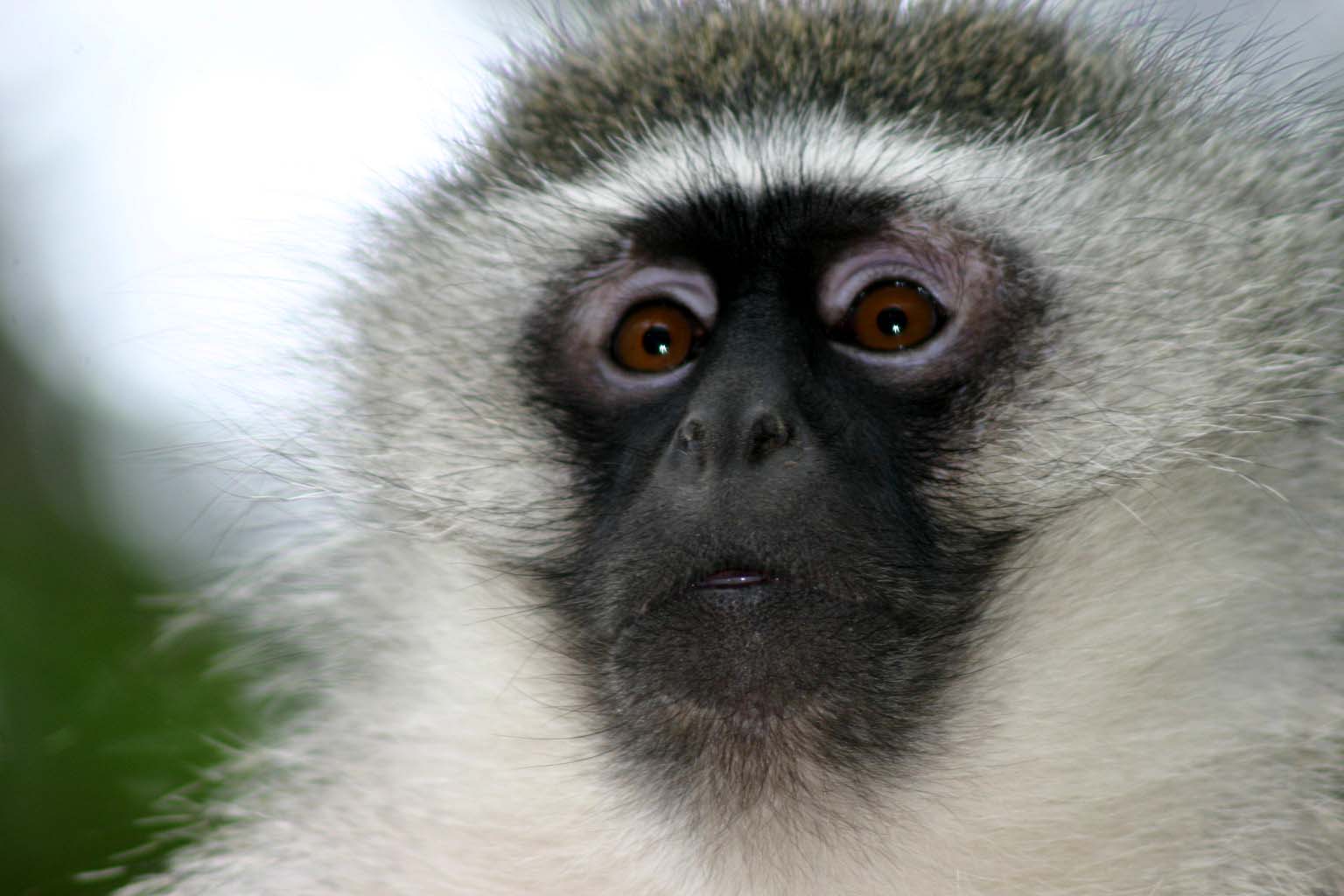
Hundreds of community members in Mamelodi East Section 14, Pretoria, watched as the monkey burnt to ashes.
A vervet monkey was stoned to death and later set alight by residents of Mamelodi East Section 14, who accused the animal of witchcraft last week Sunday afternoon.
The community believed that the monkeys were used to bewitch one another and they could place a curse on a person or bring bad luck.
The community members spotted the monkey hanging on a tree and thought it was busy placing a curse on them. They started chasing the monkey using stones and sticks.
They finally cornered the monkey in a house where they stoned it to death before dragging it to the street for the whole community to see.
Later, they set the monkey on fire by using a burning tyre.
Speaking to one of the community members who wanted to remain anonymous, Looklocal was told that the monkeys were used as muti to place a curse, either to ensure that the person does not succeed in life or to bring bad spirit between friends and family members.
“If we find another monkey, we will burn it to hell, we want to live in peace and not hating each other because of muti,” he said.
Hecke Marais from Tshwane Nature Conservation said the community members were not used to wildlife and when they see monkeys roaming around the community, they think that the monkey has brought bad spirits to the community.
“The monkeys are no danger to the society and the only time they can become dangerous to the community is when they are threatened.
“We have tried to convince the community members that the monkeys are not bad spirits. Most of the community members, however, grew up being taught to believe that the monkeys are used for muti,” said Marais. – looklocal.co.za
A young initiate admitted that he had been promised R5 000 by four sangomas should he succeed in killing the other initiates in an attempt to close the initiation school by ruining its reputation.
An alleged dubious and bizarre attempt to kill all the young men at a Mamelodi initiation school by means of witchcraft was thwarted when a 16-year-old initiate was caught urinating on the shoes of his co-initiates.
After questioning, the young initiate admitted that he had been promised R5 000 by four sangomas should he succeed in killing the other initiates in an attempt to close the initiation school by ruining its reputation.
The boy seemed confused and was acting strange, Looklocal was told.
The principal of the initiation school, Ndando Tshivhula, said that he caught the youngster urinating on the shoes of other initiates.
“When first questioned about why he had urinated on the shoes, the teenager tried to put the blame on other initiates. But he finally came out with the truth after a long interrogation by the principal of the initiation school and admitted that he had been sent to destroy the school by killing other initiates,” said Tshivhula.
“By killing all the initiates, he would cause the initiation school to be closed forever.”
According to Tshivhula, the teenager claimed that he was going to be rewarded with R5 000 if he did the job well.
Tshivhula said that the youngster told him that it all started in April when Tshivhula announced to the public that on 10 May he was going to open a new initiation school and that all young boys who wanted to become men, were welcome to apply to his school for the initiation programme.
“Shortly after my announcement, the four sangomas and a senior citizen called the boy to a meeting, asking him if he also wanted to become a man,” the teenager admitted to Tshivhula.
“One sangoma performed a ritual on me and gave me rope to tie to my left hand and leg,” said the teenager, adding that the sangoma had said that the ropes would ensure that principal Tshivhula would be blamed for the death of the initiates.
The rope on the leg was covered with different types of muti and had to be hung on a tree to make the young initiates lose hope and go home or go to another school,” the teenager allegedly claimed.
The second rope – tied to his arm – was supposed to chase away those who were at the initiation school teaching the initiates poems.
The teenager confessed that the sangomas had also given him other muti, wrapped in bundles of cloth, that was supposed to kill the initiates when the teenager stabbed the muti bundles with a special pin while saying the name of the initiate.
This, the young man claimed, would have killed the initiate whose name he spoke.
Tshivhula said that the muti bundles that had been found equalled the exact number of initiates at the school.
They boy however refused to disclose who had sent him to commit such an evil deed at the school.
Tshivhula said he believed that those involved wanted to destroy him because this school had succeeded for the past four years with no deaths.
He was confident that the 11 initiates would graduate alive this Saturday.
Tshivhula has reported the matter to the Council of Traditional Leaders. – looklocal.co.za
Apparently Barack Obama has signed an executive order authorising $10 million to be spent on stopping the poaching of wildlife in Africa, including rhinoceri that are being decimated at an alarming rate.
But, as the bumper sticker forlornly states: “Forget the rhino, save the white ou (guy).” Obama or any of his liberal entourage in America would never donate funds to stop the horrific farm murders taking place in South Africa. Because, as we know, the life of a white person is worth far less to a liberal than that of an animal. Especially a wild animal.
The liberal media in South Africa – the MSM as they are called – hardly ever record farm murders or other killings of whites. However, the Afrikaans dailies Beeld and Volksblad have some court reporters that normally expose us to the truly blood-curdling horrors of our liberal utopia. Just last week Beeld reported on a Witchdoctor who cooked farmer’s testicles declared a mental patient.
Normally South African liberals do not read much Afrikaans. In fact they have utter contempt for Afrikaans as a “parochial and tribal white language”. But this story was relayed via the newswire Sapa and so appeared on the radar screen of BDLive’s columnist, Gareth van Onselen. He relates the details of this muti (medicine) murder and then launches into a plea for balancing the constitutiion with “the more horrendous aspects of cultural belief”. After which he comes to the thunderous conclusion:
“In many respects, that is the fundamental challenge facing South Africa.”
Within the clichés of liberal discourse, there is always “one more challenge facing South Africa” before we taste the sweet fruits of paradise. In many small towns it is a challenge just to keep municipal services going and to supply potable water to the inhabitants, something which the previous, so-called “apartheid system” managed with surprising ease. But then in those days the services of town planners and engineers were not considered superfluous instances of racist employment practices. It was also before municipal government managed to evolve into permanent conferences and planning sessions held in luxury hotels where the hapless local taxpayer’s money gets spent by VIPs transported in luxury automobiles, living it up with an enviable air of insouciance.
I judged Van Onselen by his cover, or rather his Twitter profile where he describes himself as a “liberal” and a “humanist”. He sounded like the hordes of sub-intelligent sheeple churned out by the ANC’s universities where conforming to a mixture of petty hatred and PC dogma is usually enough to earn a postgraduate qualification in the social sciences. Or journalism, for that matter.
Van Onselen has really been elevated a few millimetres in my esteem. For there exists a tremendous taboo on just mentioning the race or ethnic background of any murderer in South Africa, let alone tying it to “cultural belief”. He has transgressed that taboo and cited some statistics from parliament to prove that muti murders are on the rise in South Africa. From 1994 to 2004 such murder cases increased by almost 6 000 percent!
However, before we rush to applaud a self-confessed liberal like Gareth van Onselen for showing an insight that most of us had already acquired on our tenth birthday, it would not be amiss to ask why these murders are indeed in the ascendant.
It is easy to blame “cultural belief”, more precisely tradtional African culture, as Van Onselen does. If I were a hypocritical, imbecilic liberal, I would immediately have let loose the pack dogs of the Inquisition myself and accused him of “racism”. All contemporary liberal thinking – as opposed to the forgotten nineteenth-century creed of tolerance going by that name – is predicated upon “racism”. Being a liberal is tantamount to having an obsessive disorder of which the most recognisable symptom is frequent shrieks of “racist!” of “burn him at the stake, pronto!”
In fact, formally, there is absolutely no difference between an African-style “witch-hunt”, which Van Onselen seems to be opposed to, and liberalism. Astonishingly, Van Onselen cites a piece of “apartheid legislation”, seemingly approvingly:
“…we do have longstanding witchcraft legislation in the country. The Witchcraft Suppression Act of 1957 makes it illegal for anyone to identify another person as a witch (as this inevitably leads to death or torture) or to instigate what is a called a ‘witch-sniffing ceremony’ (in which someone is called into a community to identify a witch).”
I myself was subjected to a liberal witch-hunt in 2005 upon being invited to be interviewed on my Afrikaans novel Moltrein at the arts festival known as the Woordfees in Stellenbosch. At least 15 professors and lecturers of Stellenbosch University, including the head of the English department (a left-liberal feminist) and journalist Max du Preez, subequently threatened me with banishment and even violence as they were going to get gangsters from surrounding black and Coloured areas to come and attack me. My crime was that I had precisely done what I am doing here, inquiring into the causes of South Africa’s sadistic violence, of which we see examples every day. I was declared a dissident, or a witch, which to anyone with even a smattering of anthropological knowlede, amounts to the same thing. Therefore I was hunted by sundry academics, journalists and self-styled guardians of good morals, foaming at the mouth, pointing shivering fingers at me as a “danger to society”.
As we can see from the statistics cited in parliament, witchcraft was under control under the previous government. I do not want to enter into another controversy on so-called apartheid, but the Afrikaner governments of the past practised sound epistemological principles in keeping the paradigms separate. Western science was one thing, or one set of beliefs, and traditional healing or witchcraft, invoking the ancestors and related practices, were another.
Along came liberalism and decreed, not only that “we are all the same”, but also: “all beliefs are the same”. South African liberalism is fundamentally irrational in not recognising differences between conceptual systems such as Western science and various tribal forms of witchcraft.
Liberalism is also anti-science. It fears science or any form of neutral, objective enquiry. Its obsessive principle, “racism”, is a kind of law of the universe against which everything must be measured. It follows that any attempt to regulate witchcraft or temper its more odious and murderous aspects, could equally be construed as “racism”.
Prior to the reign of liberalism, African culture never posed a problem to us in South Africa. I daresay we used to celebrate it as the healthy expression of the identity and age-old customs of the various peoples that inhabit this land. The study of African languages, as well as traditional dancing and so on, were encouraged. However, in 1970 the liberal English Academy of South Africa started agitating against African languages, in favour of English and an anglicisation policy. As we know all too well, in 1976 blacks rioted against, not only Afrikaans, but also against being taught in their own languages!
Without going into all the complexities of tribal culture in South Africa and without denying that this kind of murderous, sadistic witchcraft exist traditionally, the real cause of the explosion of muti murders, farm murders and general mayhem must be laid at the door of liberalism. In their quest for hegemony and domination, South African liberals have literally awakened all the demons. In vilifying Afrikaner, Western and white culture as “fascist, oppressive and racist”, and by putting “traditional healing” and Western medical science on the same footing, they have given the so-called sangomas immense power and prestige.
The anti-white propaganda and hatred sown by the liberals have also bolstered the dark side of black culture. Hence the macabre, occult murder rituals and cannibalism that are so much in resurgence at present.
While people in Europe complain about Islamic fundamentalism that represents a threat to them, including terrorist incidents, we must remember that South African liberals have always condoned and even encouraged terrorism against us. The liberal understands the “powers of horror” as well as the muti murderer. Engaging in witch-hunts is also second nature to him.
The combination of a fundamentalist political ideology, liberalism, and a set of occult beliefs espoused by the more radical sangomas, is a dangerous cocktail that is not just a “challenge” to South Africa. It threatens to further erode the very foundations of civilised society in our country.
A murder trial began in a Nelspruit court this week that resembles the script of a horror movie. Four men appeared in the Nelspruit Circuit High Court for the muti murder of Mr Clarance Brown (25) on Monday.
Family and community members wore T-shirts branded with Brown’s photo to court. Businessman Mr Floyd Mokoena (63), his son Mr Sydney Toto Mokoena (38) and two of Sydney’s friends, Mr Justice Ndubane (33) and Mr Simon Nkosi (37) face charges of murder.
Brown’ s body was exhumed from his grave in Oakley Trust near Bushbuckridge in 2008, three weeks after the police had received a tip-off that he was murdered for muti purposes.
Two of the accused were related to the deceased.
Floyd allegedly asked his son to help him hunt down a relative so they could remove his body parts and use them to strengthen his businesses.
Sydney apparently persuaded his two friends to ambush his cousin, Brown, on the night of February 23, 2008, after returning from a night out.
Mpumalanga police spokes-man Col Leonard Hlathi said the accused allegedly offered Brown a lift home.
“But they apparently attacked him on the way by cutting off his right testicle, removing his brain and certain bones from his body while he was still alive.”
He said they then supposedly ran over Brown with a Venture and left him to die on the road where he bled profusely.
“This was meant to make it look like he had been a victim of a hit-and-run accident but their dirty tricks backfired nearly six months after the victim’s funeral hence we were forced to exhume the body,” Hlathi said.
The trial continues this week. – looklocal.co.za
This website uses cookies to improve your experience. We'll assume you're ok with this, but you can opt-out if you wish. Cookie settingsACCEPT
Privacy & Cookies Policy
Privacy Overview
This website uses cookies to improve your experience while you navigate through the website. Out of these cookies, the cookies that are categorized as necessary are stored on your browser as they are essential for the working of basic functionalities of the website. We also use third-party cookies that help us analyze and understand how you use this website. These cookies will be stored in your browser only with your consent. You also have the option to opt-out of these cookies. But opting out of some of these cookies may have an effect on your browsing experience.
Necessary cookies are absolutely essential for the website to function properly. This category only includes cookies that ensures basic functionalities and security features of the website. These cookies do not store any personal information.
Any cookies that may not be particularly necessary for the website to function and is used specifically to collect user personal data via analytics, ads, other embedded contents are termed as non-necessary cookies. It is mandatory to procure user consent prior to running these cookies on your website.

 A teenage boy was shot during a protest in Bolobedu at the weekend — the sixth person to be killed by police this year, a spokesman said on Monday.