Americans travel to Robben Island ‘with 5 black plastic containers’

SH-60 Seahawks
SH-60 Seahawks

US officials have been working flat out for the past month to secure Robben Island for Barack and Michelle Obama on Sunday.

Fields were cleared for five helicopters to land, US security personnel installed new telephone lines and the museum’s VW sedan emblem was covered for the visit.

Robben Island Museum tourism manager Thulani Mabaso, a former political prisoner, said he didn’t know how many US security officials had been deployed.

On Thursday, he helped two men in civilian clothes with American accents board the ferry to the island.

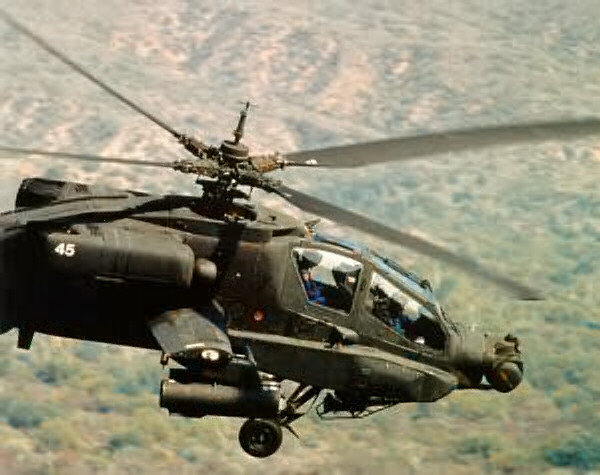
Helicopters, believed to be part of a security detail that included three CH-46 Sea Knights and two SH-60 Seahawks, landed at the Union Buildings in an exercise in preparation for the official visit of Obama.

The two men didn’t talk to each other or other passengers on the way to the island. They were more concerned about a trolley loaded with five black plastic containers they brought with them.

Mabaso later mentioned to the Cape Times that the men were working for the US government. “The Americans are creating their own communication line between the island and Cape Town,” he said.

Obama’s administration has organised for five helicopters to land on the day, while two will circle the island. Obama will travel in a Volkswagen sedan vehicle, owned by the museum, but Mabaso said they were ordered to cover the car’s emblem. The other officials would travel in mini-buses that also belonged to the museum.

“When president (Bill) Clinton came here the Americans wanted to bring their own two buses, but when they airlifted it with a helicopter from Cape Town the one chain broke and the bus fell in the ocean.”

Mabaso said the SANDF had offered to bring a fire engine and medical equipment to the island. Only 27 of the 280 museum staff would be on the island when the Obamas visited. “We are here to support, but the US handles all the security,” said Mabaso.

The Washington Post reported the US is to use its own aircraft carrier, complete with medical trauma centre, stationed offshore on the Obama visit.

Military cargo planes will bring 56 support vehicles, including 14 limousines, to the country. cobus.coetzee@inl.co.za

Obama due to land in SA

Obama in Senegal
Obama in Senegal

Obama called Mandela, South Africa’s first black president, a “personal hero” during a visit to Senegal this week at the start of his three-country whistle-stop tour through Africa.

US officials says they will comply with the Mandela family’s wishes with regard to Obama visiting the ailing 94-year-old icon or meeting his relatives.

“If and when he passes from this place, one thing I think we’ll all know is that his legacy is one that will linger on throughout the ages,” said Obama, who is due to land in the evening.

Makaziwe Mandela, the former president’s eldest daughter, told SABC television that her father was “waning” but is still responding to his children’s voice and touch.

“When you touch him he still responds, and for us as his progeny as long as tata (father) is still responding when we talk to him and touch him, I think that gives us hope,” she said.

South Africans have been laying wreaths of flowers outside the Pretoria clinic where Mandela is hospitalized and also near his home in Johannesburg.

Candles burned late into the night as people, often emotional, held vigils at the gate to the Pretoria clinic.

Mandela family members have thanked the public repeatedly for their prayers and well-wishes, saying it is giving them strength during a difficult time.

Mandela was hospitalized on June 8 for a recurring lung infection. His situation turned critical on Sunday. He has been hospitalized several times in recent years.

President Jacob Zuma on Thursday said Mandela’s condition was “critical but is now stable.”

A steady stream of family members and relatives have visited Mandela in hospital this week. – SAPA

Obama to ‘celebrate Mandela’s legacy’

Barack Obama on Air Force One

US President Barack Obama flies to South Africa Friday hoping to pay homage to the legacy of his critically ill hero Nelson Mandela, who is fighting for his life in hospital.

Mandela’s ill health means the two men, who shattered racial boundaries on either side of the Atlantic, are not expected to have a long-anticipated meeting for the cameras.

Still, reflections on Mandela’s extraordinary journey from prisoner to president are likely to permeate Obama’s three-day stay.

Mandela, who turns 95 next month, was rushed to hospital three weeks ago with a recurrent lung disease and has since appeared close to death.

On the eve of the visit, South Africa’s first black president was said to be in a critical condition, but had stabilised since a scare forced his successor Jacob Zuma to cancel a trip to neighbouring Mozambique.

“He is much better today,” said Zuma after seeing Mandela on Thursday for the second time in less than 24 hours.

Yet South Africans, including Mandela’s family, remain braced for the worst.

“I won’t lie. It doesn’t look good,” daughter Makaziwe Mandela said. But “if we speak to him he responds and tries to open his eyes — he’s still there.”

“Anything is imminent, but I want to emphasise again that it is only God who knows when the time to go is,” she told local radio.

Meanwhile Obama, the United States’s first black president, led a chorus of support for the man he dubbed a “hero for the world.”

Mandela’s plight has lent a deeply poignant tone to the visit, around which Obama has built a three-nation Africa tour, and his plans could yet be upended by sudden developments in the ex-president’s condition.

“The president will be speaking to the legacy of Nelson Mandela and that will be a significant part of our time in South Africa,” said deputy national security advisor Ben Rhodes.

“The president will treasure any opportunity he has to celebrate that legacy.”

The White House says it is in the hands of the Mandela family and the South African authorities on any aspect of the visit.

“We will obviously be very deferential to the developments that take place and the wishes of the family and the South African government,” Rhodes said.

A visit by Obama to Mandela’s former jail cell on Robben Island, off Cape Town on Sunday would now take on extra “profundity”, he added.

Speaking in Senegal on the first leg of his long-awaited African trip, Obama described Mandela as “a personal hero.”

“I think he is a hero for the world, and if and when he passes from this place, one thing I think we all know is that his legacy is one that will linger on throughout the ages.”

The US president recalled how Mandela had inspired him to take up political activity, when he campaigned for the anti-apartheid movement as a student in the late 1970s.

South Africans have also been marking the life of a man who led their country out of centuries of white rule.

Outside Mandela’s hospital a wall of messages and flowers has become the focal point for a nation saying a long goodbye to one of the greatest figures of the 20th century.

“There is no sadness here. There is celebration. He is a giant,” said Nomhlahla Donry, 57, whose husband served time with the revered leader.

Mandela has been hospitalised four times since December, mostly for a stubborn lung infection.

The man once branded a terrorist by the United States and Britain walked free from prison near Cape Town in 1990.

He went on to negotiate an end to white minority rule and won South Africa’s first fully democratic elections in 1994.

He forged a path of racial reconciliation during his single term as president, before taking up a new role as a roving elder statesman and leading AIDS campaigner.

He stepped back from public life in 2004 and has not been seen in public since the football World Cup finals in South Africa in 2010.

But Mandela still draws vast global interest, interest which now appears to be wearing on his family.

Mandela’s oldest daughter Makaziwe on Thursday slammed the “crass” media frenzy around her critically ill father, likening the press to vultures.

“They violate all boundaries,” she said accusing the foreign press of “a racist element” by crossing cultural boundaries.

“It’s like truly vultures waiting when a lion has devoured a buffalo, waiting there you know for the last carcasses.”

With his health now fading, Mandela’s supporters are starting to show signs of resignation — while preparing to celebrate his legacy.

In the rural village of Qunu where he grew up amid cattle and mud-walled huts, 93-year-old Keqane Keledwane said she was not ready to say goodbye to her neighbour.

“I want him to get well. I don’t want to be the only one left behind,” said Keledwane, who lives across the road from Mandela’s house. “I wish him a long life, my old friend.” – AFP

Obama clashes with African host over gays

uganda_gayPresident Barack Obama on Thursday praised the Supreme Court’s ruling on same-sex marriage as a “victory for American democracy” but clashed with his African host over gay rights in a sign of how far the movement has to go internationally.

Obama said recognition of gay unions in the United States should cross state lines and that equal rights should be recognized universally. It was his first chance to expand on his thoughts about the ruling, which was issued Wednesday as he flew to Senegal, one of many African countries that outlaw homosexuality.

Senegalese President Macky Sall rebuffed Obama’s call for Africans to give gays equal rights under the law.

“We are still not ready to decriminalize homosexuality,” Sall said, while insisting that the country is “very tolerant” and needs more time to digest the issue without pressure. “This does not mean we are homophobic.”

Obama said gay rights didn’t come up in their private meeting at the presidential palace, a mansion that looks somewhat similar to the White House. But Obama said he wants to send a message to Africans that while he respects differing personal and religious views on the matter, it’s important to have nondiscrimination under the law.

“People should be treated equally, and that’s a principle that I think applies universally,” he said.

A report released Monday by Amnesty International says 38 African countries criminalize homosexuality. In four of those – Mauritania, northern Nigeria, southern Somalia and Sudan – the punishment is death. These laws appear to have broad public support. A June 4 Pew Research Center survey found at least nine of 10 respondents in Senegal, Kenya, Ghana, Uganda and Nigeria believe homosexuality should not be accepted by society.

“Senegal is one of the most stable democracies in Africa and one of the strongest partners that we have in the region,” Obama said. “It’s moving in the right direction with reforms to deepen democratic institutions.”

But such people-powered democratic transitions are not always the story of the African experience. Fighting and human rights abuses limited Obama’s options for stops in his first major tour of sub-Saharan Africa since he took office more than four years ago. Obama is avoiding his father’s homeland, Kenya, whose president has been charged with war crimes, and Nigeria, the country with the continent’s most dominant economy. Nigeria is enveloped in a bloody struggle and military crackdown. – AP


‘Gays are the next Jews’

Rahm Emanuel
Rahm Emanuel

By Timothy P. Carney

While raising money for Bill Clinton (who signed the Defense of Marriage Act) in 1992, Rahm Emanuel proclaimed “Gays are the next Jews of fundraising.”


I’m not 100 percent sure what he meant by that, but Democrats have certainly grabbed onto gay issues as a fundraising lever. Democrats today are using the gay marriage ruling as a way to raise money, Paul Bedard writes.


Obama’s core network of fundraisers included many gay men and women who were also gay-marriage activists. I wrote on this after Obama spurred a fundraising boom by announcing his support for gay marriage.

“About 20 percent of Obama’s bundlers — volunteer fundraisers — are gay, according to media reports, with many of them being gay rights activists. For example, Sally Susman has raised at least $500,000 for Obama’s re-election.

Millionaire banking mogul Eugene Sepulveda is another gay half-million-dollar Obama bundler. Rufus Gifford is the finance director for Obama’s re-election campaign, and Andrew Tobias is treasurer of the Democratic National Committee — and both are gay.” – The Washington Examiner


US top court green lights gay marriage

gayokThe US Supreme Court on Wednesday struck down a central portion of a federal law that restricted the definition of marriage to opposite-sex couples in a major victory for the gay rights movement.

The ruling, on a 5-4 vote, means that legally married gay men and women are entitled to claim the same federal benefits that are available to opposite-sex married couples.

It sidestepped a broad ruling that would affect the whole country, however, by saying it could not decide a closely watched case on the constitutionality of a California law that restricts marriage to opposite-sex couples.

By finding that supporters of the ban on gay marriage did not have standing to defend the law, the court effectively gave the green light for at least some gay weddings to proceed in California because a federal judge’s original ruling that struck down the law, known as Proposition 8, will remain intact.

Justice Anthony Kennedy wrote in the majority opinion that the Defence of Marriage Act violated the US constitution’s guarantee of equal protection.

“The federal statute is invalid, for no legitimate purpose overcomes the purpose and effect to disparage and to injure those whom the state, by its marriage laws, sought to protect in personhood and dignity,” he wrote.

Justice Kennedy, often the court’s swing vote in close decisions, also said the law imposed “a stigma upon all who enter into same-sex marriages made lawful by the unquestioned authority of the states”.

Chief Justice John Roberts and Justice Antonin Scalia both wrote dissenting opinions.

In his dissent, Justice Roberts wrote that the court in the coming Proposition 8 case would not reach the issue of constitutionality of state laws that limited the definition of marriage.

By striking down section 3 of the law, the court clears the way to more than 1,100 federal benefits, rights and burdens linked to marriage status.

As a result of Wednesday’s ruling, Edith Windsor of New York, who was married to a woman and sued the government to get the federal estate tax deduction available to heterosexuals when their spouses die, will be able to claim a $363,000 tax refund. – Reuters

Obama’s ‘power trip’ to Africa

pylonsMr Obama is arriving in Africa this time with a few tricks up his sleeve. He will announce the creation of a new fund, Power Africa, to support the development of electricity infrastructure with a mix of state and private investment as well as initiatives to promote trade. His trip coincides with talks in Addis Ababa on renewing the Clinton era African Growth and Opportunity Act, which gave thousands of African products duty-free access to the US.

Nearly 600 million Africans face energy poverty, the in­ability to cook with modern cooking fuels and a lack of mini­mum lighting for productive activities at sunset.  This energy gap impacts a variety of health, education and economic outcomes:  Vaccines cannot be properly refrigerated, girls are pulled out of school to collect firewood, and small businesses cannot expand because of energy limitations.

As the Obama team considers a policy legacy for Africa during its second term starting in 2013, advisors believe a strong U.S. commitment to close the energy poverty gap in Africa can benefit the global economy.

With strategic interventions, the U.S. could address this energy poverty gap while at the same time create markets and increase investments for American businesses.  If the White House leverages private investment by rationalizing U.S. government tools, such as the Overseas Private Investment Corporation, and engages proactively with African environmental powers, the U.S. could make a significant contribution to accomplishing this achievable goal.

For the past couple of decades, U.S. companies have piled into Asia to reach new consumers. Now companies such as General Electric Co., General Motors Co. and Procter & Gamble Co. are expanding in the long-neglected frontier market of Africa.

GE on Friday signed an agreement to build a 400-megawatt gas-fired power plant in Tanzania. The East African country, where U.S. President Barack Obama plans to visit next week, is one of many on the continent that is seeking more electricity to meet growing demand from businesses and consumers.

Meanwhile, P&G is investing more than $150 million in its South African factories to expand the supply of its diapers and other products in southern and eastern Africa. And GM in October plans to start selling newly licensed Isuzu trucks in Kenya, Nigeria and Angola.

Until recently, most U.S. companies concentrated investment in the continent’s biggest economies, such as South Africa and Nigeria, or those with mineral wealth, like Angola. But as they seek new consumers, U.S. companies are branching out across the continent.

“People are finding that there are opportunities beyond the biggest markets in Africa, and part of it is because year-after-year growth in Africa has been stronger than on almost any other continent,” says Clay Lowery, a vice president at Rock Creek Global Advisors, an economic-policy consulting firm in Washington.

By 2018, five of the world’s fastest-growing economies will be in sub-Saharan Africa, according to the International Monetary Fund. U.S. companies invested $48.5 billion in Africa in the decade through 2011, according to the United Nations Conference on Trade and Development, more than companies from any other nation did. But China and India are catching up, pumping billions of dollars into Africa in each of the past few years.

President Obama’s visit to Senegal, South Africa and Tanzania beginning Wednesday is expected to bolster efforts to burrow into the continent’s smaller, more fragmented markets.

U.S. officials for years have urged American corporations to pursue opportunities in Africa to keep pace with the Chinese, Indian and Brazilian companies already here. On a trip to Senegal last August, then-Secretary of State Hillary Clinton touted U.S. businesses’ “sustainable partnerships in Africa that add value rather than extract it,” a thinly veiled reference to Chinese companies, which largely are focused on resource-related investments to support China’s economy.

U.S. corporations aren’t strangers to Africa. Companies including Coca-Cola Co. and Exxon Mobil Corp. have long invested on the continent and have been expanding. Since 2000, the U.S. African Growth and Opportunity Act has boosted African manufacturers, allowing them to export clothing to the U.S. duty free.

But many U.S. companies are only now waking up to Africa’s new consumer class, a byproduct of steady growth and more stable governments.

Stronger commercial relationships, some analysts say, could strengthen diplomatic ties with many African countries, as happened in China, India and elsewhere in Asia.

“We were never focused on Africa in any way,” says Witney Schneidman, a former U.S. diplomat and now a senior adviser for Africa for law firm Covington & Burling LLP. “Are corporates the agents of change?”

Africa is far from being the next Asia, however. The continent has a sixth of the world’s population but fuels less than 3% of the global economy. Africa also received less than 3% of global foreign direct investment in 2011, according to the U.N.

But the continent is growing fast from its low base. The IMF projects that sub-Saharan Africa’s economy will expand 5.6% this year, compared with 3.6% world-wide. The African Development Bank estimates that the continent’s emerging middle class may already be 300 million strong. – FT/WSJ/Brookings


Obama plans to ‘highlight racial atrocities’ on African visit

Goree island
Goree island

The hopeful story President Barack Obama wants to tell about Africa is represented in the first stop of his weeklong trip to re-engage the continent, in a country where democracy recently overcame an impending electoral crisis.

During his visit to Senegal on Thursday, Obama also will reflect on the ties many African-Americans share with the continent as he takes a tour of Goree Island, Africa’s westernmost point. By some accounts, millions of Africans were shipped off into slavery across the Atlantic Ocean through the island’s “Door of No Return.”

It’s the first of two island visits Obama planned to highlight racial atrocities of the past. The second was scheduled for Sunday at South Africa’s Robben Island, where anti-apartheid leader Nelson Mandela was imprisoned for 18 years.

But Mandela’s condition could affect Obama’s plans. The former South African president is gravely ill, and Obama foreign policy adviser Ben Rhodes said it would be left to the Mandela family to decide whether he is up for a visit from Obama this weekend.

Mandela’s legacy hangs over the entire trip, with Senegal among many African countries that have benefited from his example of a peaceful transition to power. “So much of the democratic progress that we see across the continent I think can be tied in some way to the inspiration that Nelson Mandela set,” Rhodes said.

Obama’s focus in Senegal will be on the modern-day achievements of the former French colony after half a century of independence. He planned to meet with Senegalese President Macky Sall, who ousted an incumbent president who attempted to change the constitution to make it easier for him to be re-elected and pave the way for his son to succeed him. The power grab sparked protests, fueled by hip-hop music and social media, that led to Sall’s election.

But such people-powered democratic transitions are not always the story of the African experience. Fighting and human rights abuses limited Obama’s options for stops in his first major tour of sub-Saharan Africa since he took office more than four years ago. Obama is avoiding his father’s homeland, Kenya, whose president has been charged with war crimes, and Nigeria, the country with the continent’s most dominant economy. Nigeria is enveloped in an Islamist insurgency and military crackdown.

Obama’s itinerary in Senegal was designed to send a message, purposefully delivered in a French-speaking, Muslim-majority nation, to other Africans in countries that have not made the strides toward democracy that Senegal has. Obama plans to meet with civil society leaders at the Goree Institute and visit the Supreme Court to speak about the importance of an independent judiciary and the rule of law in Africa’s development.

“It’s not enough to have elections, it’s not enough to have democratically elected leaders,” Rhodes said. “You need to have independent judiciaries. You need to have confidence in the rule of law. You need to have efforts to combat corruption. Because, frankly, not only is that good for democracy and respect for human rights, but it’s critical to Africa’s economic growth, because where you have clear rules of the road and efforts to combat corruption, businesses will invest, and jobs will be created and growth will take off. And that’s what we want to see.” – AP

Obama heads to Africa for week-long tour

GTY 158441009 A CLJ POL USA CTUS President Barack Obama and his family were headed to Senegal on Wednesday, where they will start A week-long stay in Africa.

During the trip, Obama will meet with Senegal’s President Macky Sall on Thursday, South African President Jacob Zuma on Friday and Tanzania’s President Jakaya Kikwete on Monday.

On Friday, Obama will arrive in South Africa, where the continued hospitalization of anti-apartheid icon Nelson Mandela has drawn the nation into a mood of worry and well-wishing for the 94-year-old former leader.

“We simply hope that he recovers,” White House spokesman Jay Carney told reporters on board Air Force One. “We continue to pray for him and his family, and obviously all of the South African people to whom he means so much as well as his admirers around the world.”

Carney was also asked about Wednesday’s decision by the US Supreme Court that handed victory to supporters of same-sex marriage, and whether the topic would come up in Obama’s official meetings in Senegal, where homosexuality is a criminal act.

“Well, I wouldn’t rule it out,” Carney said. “You can assume that that’s something that is both a concern to the president and the administration, and that would be something that we would discuss.”

Highlights of Obama’s trip will include a visit to Senegal’s Goree Island, the so-called “Door of No Return” for many African slaves; Robben Island off of Cape Town, where Mandela spent much of his 27 years in jail under the apartheid regime; and the memorial to the victims of the 1998 US embassy bombing in Dar es Salaam.

Obama will on Saturday host a town hall meeting at the University of Johannesburg in Soweto, part of his Young African Leaders Initiative. On Sunday, he is to deliver a major speech on his Africa policy in Cape Town.

On Tuesday, the final day of the journey, first lady Michelle Obama and former first lady Laura Bush will participate in an African First Ladies’ Summit in Dar es Salaam.

A driving interest underlying Obama’s journey – only his second to Africa since taking office in 2009 – is Africa’s economic boom and the investment competition coming from other parts of the world, including China. Obama will travel with a large economic and trade team.

Carney noted that the “intense focus on the Middle East” in the first decade of the century had “an unintended consequence that resulted in us not being as engaged in Africa … as President Obama believes we need to be.”

But he denied that the United States was “too late” and pointed out Washington’s ongoing engagement with Africa.Author: Pat Reber, dpa

Senegalese go into hiding for Obama visit

africaobamaOrdinary Senegalese are drawing lessons from the past and leaving nothing to chance so that they avoid “foreseeable” embarrassing circumstances during President Barack Obama’s visit, which commences on June 26.

Enduring long hours in traffic jams while waiting for high profile visitors to pass through, being unable to hawk their wares freely in the streets and being virtually “held prisoner in one’s house” are some of the embarrassments they recall from the 1998 visit of former American president Bill Clinton.

Many businesses particularly in downtown Dakar and its peripheral districts have already started recording low sales due to this anticipation. “We’ve virtually been closed for a week now,” says Doudou Keita, a garment seller in Guelle Tapé, a few kilometres from the city centre.

Mbaye Ndiaye, an economist formerly employed by the Trade ministry, says the visit will cause losses of several million dollars, especially to the informal sector “who will take months to recover”.

“While the Americans are capable of making our country a better place, Obama is also capable of making our small businesses in Dakar poorer,” argues Ndeye Diop, a doughnut and coffee seller in a conversation with her colleague.

Assuredly, Ndeye’s colleague Bintou Diagne retorted in English with a native accent “Yessi, e can!” It was a play on Obama’s 2008 campaign slogan: ‘Yes we can.’

These “unforeseeable” embarrassments have led thousands of Dakar city dwellers whose neighbourhoods are being “bunkered” to return to their villages until Obama – nicknamed “the big cat” – goes away.

Barack (which means ‘shack’ in Wolof) “should have lodged in a shack to show solidarity with the majority shack dwellers here”, leading comedian “Kutia” insistently jokes on television about Obama, who he calls the “White House rent payer”.

Pickpockets and prostitutes

Since the announcement of the date of his arrival, the thousands of street beggars in Dakar have visibly disappeared and gone underground.

The same thing has happened to the noisy hawkers on the streets of the capital, most of whom were mistakenly picked up by police during a clean-up against pickpockets classified by security agents as “persons with the propensity to cause embarrassment”.

This category also includes both licensed and unlicensed prostitutes who made good profits during visits by less high profile statesmen whose delegations frantically sought out their services.

But for Obama’s visit, they are among those bearing the heaviest brunt of the tour, which has been extended from 48 to 72 hours beginning this Wednesday.

“No matter…some of us can still harvest from Obama’s field”, says Aisha Konaté, a sex worker with nearly two decades of experience and who boasts of having contacts capable of roping in “high profile” clients to her private abode

For a week now, the national television “RTS” has been clocking Obama’s upcoming visit with the Senegalese and American flags displayed on the top left corner of TV screens, and the inscription “D-Day 3 days to go,” or whichever days are pending.

The youthful face of Obama has for two weeks been very visible on a billboard on one of the tallest buildings along the Place de l’independence main square in Dakar.

And elsewhere, especially at the heavily secured Leopold Sedar Senghor International airport, several giant Senegelase and American flags are flapping high in the sky around photographs of the two heads of state. – africareview.com

Obama’s security takes over SA

usmilheliHundreds of secret agents, three truckloads ofbulletproof glass sheets, 56 support vehicles – and fighter jets.

These will all be part of the security deployed this weekend to ensure US President Barack Obama’s safety during his visit to South Africa.

Referring to a US government internal planning document for the visit, the Washington Post reported that US Secret Service agents would be posted in secure facilities. An aircraft carrier with a fully equipped medical trauma centre will be part of the security arrangements.


According to the newspaper, support vehicles, which include 14 limousines, will be airlifted in by US military cargo planes.


US military helicopters were reportedly spotted yesterday flying over Pretoria and Johannesburg’s northern suburbs.


National police spokesman Sally de Beer confirmed the US aircraft fly-overs, saying they were part of an exercise in conjunction with the US government to ensureeverything ran smoothly when Obama arrived.


“There is nothing out of the ordinary. No outside country is operating independently [and] there is no one taking over our country,” she said.


Three Sea Knight helicopters and two Black Hawks were spotted flying over Illovo and Sandton.


ANC alliance partners Cosatu and the SACP have vowed to protest against the visit.


International Relations and Cooperation Minister Maite Nkoana-Mashabane said Obama would be warmly welcomed on Friday, as would any other “friendly” head of state.


She said Obama’s “historic visit” followed an invitation by President Jacob Zuma.


Obama will hold talks with Zuma in Pretoria on Saturday.


“The two leaders will discuss the status of relations between South Africa and the US.


“The talks will range from trade, health and education cooperation, development assistance to peace, security, development and cooperation in Africa,” she said.


Obama will arrive on Friday and will preside over a Young African Leaders Initiative meeting at the Soweto campus of the University of Johannesburg.


He will visit Robben Island and a US-funded Desmond Tutu Centre in Noordhoek. He will speak at the University of Cape Town on Sunday. – timeslive.co.za

Streets in Pretoria being cordoned off for Obama visit

Several streets in the Pretoria were closed off on Tuesday in preparation for the visit of US President Barack Obama, the Tshwane metro police said.

Spokesman Superintendent, Isaac Mahamba said several streets in central Pretoria were currently closed off as a dry run for security measures for the coming visit by president Barack Obama.

Mahamba was unable to confirm which streets would be affected by the security drill due to security reasons, but according to reports Pretorius and Beatrix Streets were currently closed off. Motorists were advised to use alternative routes on Tuesday.

President Barack Obama is reportedly due to arrive in South Africa with his family on 28 June for his first substantive visit to Africa since he took office.

It is currently still unknown if President Barack Obama will make a visit to the ailing former president Nelson Mandela that is being treated at the Medi-clinic Heart Hospital.

Reports indicated that the Obama family are due to meet with President Jacob Zuma in Pretoria on 29 June before travelling to Soweto and then to Cape Town on Sunday. – looklocal


Libya, Syria, Lies, Perfidies and Tony Blair

blairwarcriminal

by Felicity Arbuthnot

Having learned nothing from the catastrophes of Afghanistan, Iraq, Libya, it seems President Obama, the equally clueless UK Prime Minister Cameron and his culturally challenged Foreign Secretary William Hague are cheerleading another bloodbath in formerly peaceful, secular, outward looking Syria.

Having covertly provided arms and equipment to insurgents from numerous different countries for over two years, they have now moved to the overt stage, a move over which even arch hawks such as former National Security Advisor Zbigniew Brzezinski, and former Republican Senator Richard Luger, six term leader of the Senate Foreign Relations Committee urged caution.

Luger said such action would boost extremists, with Brzezinski dismissing Obama’s talk of “red lines” as thoughtless and risking “a large-scale disaster for the United States.”

During Brzezinski’s time as National Security Advisor to President Jimmy Carter the decision was made to finance the Mujahideen in Afghanistan in response to Soviet deployment there. He’s had a bit of time to reflect on blowback and perhaps the 2,243 wasted US lives in that “graveyard of empires” – so far.

It seems, however, the Washington and Whitehall regimes remain increasingly disconnected from reality. In spite of the plethora of gruesome images circulating on the internet of grinning terrorists holding up severed heads, cannibalising body organs and summarily executing, they are to provide further arms to insurgency’s Hannibal Lecters. This, also regardless of the fact that Riad al-Assad, founder of the so-called “Free Syrian Army” is quoted as saying that suicide bombing is “an integral part of revolutionary action, of Free Syrian Army action.”

Meanwhile, less than a month after the murder of a soldier in London’s Woolwich by wanna be jihadists (with reported relationship to hard drugs) Britain’s increasingly rudderless ship of state allows entry to a controversial Saudi preacher, Muhamed Al Arefe, alleged to have made anti-Shia and anti-Semitic exhortations and who argues that a husband “may use beatings to discipline his wife” as long as he beats her “lightly.”

Informed friends from the Middle East charge bluntly that he recruits jihadists, as last week in visits Riyadh and Cairo. One added:

David Cameron may as well stand at the gate (of the Mosque) and hand out arms for the ‘good freedom fighters’ who will be heading to Syria after hearing Arefe’s sickening lies, sectarian incitement and calls for jihad against the ‘infidel regime’.

This was not a low key occasion. Arefe spoke at the London Central Mosque and Islamic Cultural Centre, built on land donated by King George V1 to the Muslim Community of Britain. The Cultural Centre was officially opened by the King in 1944. The Mosque, completed in 1978, which can hold over five thousand worshippers in the main hall alone, was designed by renowned architect Sir Frederick Gibberd. Quite a platform for any recruiter.

However, Obama and Cameron hardly need to arm terrorists.  They are seemingly doing fine, via the US-UK-NATO last mega screw up: Libya.

This week it was reported  that weapons are flooding in to Syria from a Libya awash with weapons, “with spy chiefs saying” that the country has become a supermarket “of the world’s illegal arms trade.”

“Up to 3,000 surface-to-air missiles (SAMs) have gone missing since the conflict” with more than “one million tonnes of weapons belonging to Colonel Quaddaffi” looted after his terrible death at the hands of NATO’s “allies”.

Potentially that is enough SAMs to down 3,000 airliners.

The Daily Mail understands that, unsecured “ … there are now more weapons in Libya than in the entire arsenal of the British Army” according to MI6 estimates.

One internet video showed a stockpile of SAMs, which can hit an aircraft flying at 11,000 feet, in the hands of the Syrian insurgents. Used from airport perimeters anywhere, the result could be tragedy.

However, Akhbar Alaan TV reports  Benghazi has been supplying weapons to the Syrian terrorists for “over a year.” With pictures they “show the shipments from Libya, via Turkey to the Syrian opposition.”

The TV station’s reporter states:

Their own Libyan revolution was supported by NATO … But these former Libyan rebels say the world is abandoning the Syrian opposition. And because of that Benghazi decided to act …

Further:

All these weapons are donated by former rebel units in eastern Libya … According to the Libyan organizer they also have shipped around 120 SAM 7 surface to air-missiles to Syria.

Rebel units were, of course, aided by US Ambassador to Libya, Christopher Stevens, who arrived in a cargo ship loaded with arms (news, websites) and was murdered with colleagues in Benghazi on 11 September 2012.

According to the New York Times, Qatari C-17 cargo planes, capable of carrying a payload of over 70 tonnes, have picked up a weapons shipment at least three times this year, which were then delivered to the Turkish-Syrian border to be handed on to the “rebels”.

British-Libyan arms dealer Abdul Basit Haroun – who was a property developer in Manchester, UK for twenty years, until 2011 – has told Reuters that weapons are reaching Syria not alone by numerous flights, but on ships, concealed amongst humanitarian aid. Haroun has claimed that the authorities know about the shipment, “everybody knows”.

Further, Libyan Assembly Member Tawfiq Shehabi has said he supports the activitites of people like Haroun, who was a brigade commander during the Libyan uprising: “After the end of the (uprising) he became involved in supporting the Syrian revolution … he does a good job of supporting the Syrian revolution.”

Claims are that permission for shipments is sought from, and sanctioned by, Turkey. The UN has criticized Libya for proliferating weapons at an “alarming rate” and for “enriching the arsenals of a range of non-State actors, including terrorist groups.”

Reuters interviewed Haroun and a reporter was taken to a container of weapons being prepared for delivery to Syria “… stacked with boxes of ammunition, rocket launchers and various types of light and medium weapons.”

Arms are flown in to “neighbouring countries on chartered flights”, several to Jordan as well as Turkey, “weapons were then transferred over the border.”

In Libya, the versatile Mr Haroun “helps the government with state security, according to interior ministry spokesman Majdi al-Ourfi.”

Quite an own goal, NATO.

But no lessons have been learned. On Saturday (22 June) the ridiculously named, eleven nation “Friends of Syria”, meeting in Qatar, agreed to supply “all the necessary material” to the insurgents. Britain, with the US, is, of course, cheerleading.

This in spite of warnings from such as Charles Lister, analyst at HIS – Jane’s Terrorist and Insurgency Centre – of the danger that weapons “almost invariably end up in the hands of”  terrorists and extremists, and possibly even back in Britain.

General Sir Richard Dannatt, the former head of the army, said last week he was “very much in the camp of those who would not wish to be involved and intervene in any shape or form”, with Major General Julian Thompson, who commanded British forces in the Falklands War in 1982, saying it was “absolutely ridiculous” to contemplate another intervention …and getting involved with something else” whilst still mired in Afghanistan after nearly twelve years.

“Our information from Doha says that five countries have decided to start arming us immediately, and four other countries will give us logistical and technical support and, at a later stage, arm the Free Syrian Army,” a spokesman for the opposition fighters, Loay Al Mikdad, said in an interview with Qatar’s Al-Jazeera TV.

Incredibly, with not a glance towards legality, the Doha plotters “repeated their call for the establishment of a transitional governing body to which full executive powers would be transferred … Bashar Assad has no role in the transitional governing body or thereafter.”

However, Syria is a founding Member of the UN, one of the fifty one countries who signed to the Charter on 26 June 1945. Member States of the United Nations are bound by the UN Charter.

Article 2 (4) states:

All Members shall refrain in their international relations from the threat or use of force against the territorial integrity or political independence of any state, or in any other manner inconsistent with the Purposes of the United Nations.

Article 2 (1) The Organization is based on the principle of the sovereign      equality of all its Members.

Article 2 (2) All Members shall settle their international disputes by peaceful  means in such a manner that international peace and security, and justice, are not endangered.

Further:

The UN’s 1970 Declaration on Principles of International Law Concerning Friendly Relations and Cooperation among States directs:

No state or group of states has the right to intervene, directly or indirectly, for any reason whatever, in the internal or external affairs of any other state.

Consequently, armed intervention and all other forms of interference or attempted threats against the personality of the state or against its political economic and cultural elements are in violation of international law.

Recalling the duty of States to refrain in their international relations from military, political, economic or any other form of coercion aimed against the political independence or territorial integrity of any State,

Considering it essential that all States shall refrain in their international relations from the threat or use of force against the territorial integrity or political independence of any State, or in any other manner inconsistent with the purposes of the United Nations,

In accordance with the purposes and principles of the United Nations, States have the duty to refrain from propaganda for wars of aggression.

Every State has the duty to refrain from organizing or encouraging the organization of irregular forces or armed bands including mercenaries, for incursion into the territory of another State.

Every State has the duty to refrain from organizing, instigating, assisting or participating in acts of civil strife or terrorist acts in another State or acquiescing in organized activities within its territory directed towards the commission of such acts, when the acts referred to in the present paragraph involve a threat or use of force.

End note. That Middle East “Peace Envoy” Tony Blair who lied his way into the destruction of Iraq, kissed his welcoming host Colonel Gaddafi then betrayed him worthy of any Judas, has entertained President Assad.

In 2002, when Bashir al Assad visited Britain, met the Queen, the Prince of Wales, and dined with Blair at Downing Street, it was considered bestowing an honour on the President.

According to documents, on November 14, 2002, a desk officer covering Syria and Lebanon at the Foreign and Commonwealth office wrote:

You should be aware that President Bashar of Syria will visit the U.K. as a guest of government … This will include an audience with the queen. I have been advised that we need to consider whether the queen should bestow an honor on him.

Blair is, of course, cheer leading for Syria’s destruction: “A spokesperson for Tony Blair defended the actions of the government under the former PM, stating, “Engagement with Syria and Assad in 2002 was absolutely right …  Mr. Blair has said many times since that the situation has changed and Assad now has to go.”

Felicity Arbuthnot is a journalist with special knowledge of Iraq. Author, with Nikki van der Gaag, of Baghdad in the Great City series for World Almanac books

First-Strike nuclear war as U.S. policy

nuclearI have now had the chance to read Obama’s Report on Nuclear Employment Strategy of the United States, that just came out on Friday, June 21, 2013.  The critical passage can be found on page 5:

“The 2010 Nuclear Posture Review established the Administration’s goal to set conditions that would allow the United States to safely adopt a policy of making deterrence of nuclear attack the sole purpose of U.S. nuclear weapons. Although we cannot  adopt such a policy today, the new guidance re-iterates the intention to work towards that goal over time.”

In other words, “nuclear deterrence” is not now and has not been the policy of the Obama administration going back to and including  their 2010 Nuclear Posture Review as well.  Since “nuclear deterrence” is not now and has never been the Obama administration’s nuclear weapons  policy from the get-go, then by default this means that offensive first-strike  strategic  nuclear war  fighting is now and has always been the Obama administration’s nuclear weapons policy. This policy will also be pursued and augmented by means of  “integrated non-nuclear strike options.” Id.

Therefore the entire 2013 NPR and Obama’s recent nuclear arms “reduction”  proposals must be understood within this context of the United States pursuing an offensive, strategic first-strike  nuclear war-fighting capability as augmented by non-nuclear strike forces:

“After a comprehensive review of our nuclear forces, the President has determined that we can ensure the security of the United States and our Allies and partners and maintain a strong and credible strategic deterrent while safely pursuing a one-third reduction in deployed nuclear  weapons from the level established  in the New START Treaty.” Id. at 6.

And we know now for sure that all the Ballistic Missile Defense (BMD)  systems that Obama is currently in the process of deploying in Europe, Asia, and the United States, on land, at  sea and perhaps in Outer Space are designed to provide the United States with a  strategic,  offensive, first strike nuclear war fighting capability against Russia and China and Iran and North Korea and Syria  for starters. The latter three because the United States has taken the position that they are not in compliance with their obligations under the Nuclear  Non-Proliferation Treaty: “…the United States has relied increasingly on non-nuclear elements to strengthen regional security architectures, including a forward U.S. conventional  presence and effective theater ballistic missile defenses…” Id. at 9.

So  the United States government  is currently preparing to launch, wage and win an offensive,  first-strike strategic nuclear war against Russia, China, Iran, North Korea and Syria. All the rest is just palaver. Including by our Dissembler-in-Chief. An “honors”  graduate of Harvard Law School.

Francis A. Boyle is a graduate of the University of Chicago and Harvard Law School. He has advised numerous international bodies in the areas of human rights, war crimes, genocide, nuclear policy, and bio warfare. He received a PHD in political science from Harvard University.