Blair could have stopped Iraq war

Tony Blair

Former British prime minister Tony Blair was the only person capable of turning George W Bush against the 2003 Iraq invasion, ex-United Nations chief Kofi Annan claimed in an interview published on Saturday.

Annan argued in an interview published in the Times newspaper that Blair could have changed Bush’s mind because of the special relationship between the two nations and the two leaders.

Annan said he often had contemplated what might have happened if “Blair had said ‘George, this is where we part company. You’re on your own’,” following the failure to secure a second UN resolution.

“I really think it could have stopped the war,” added the Nobel peace laureate.

Annan was UN secretary general at the time of the crisis.

A first Security Council resolution, which offered Iraq a final opportunity to comply with its disarmament obligations passed unanimously in November 2002.

But a second resolution proposed by the US, Britain, and Spain in 2003 that called for action to be taken against Saddam Hussain’s regime was withdrawn when it became clear it would be vetoed.

The US decided that the resolution was not needed before military action could lawfully take place, and the invasion commenced on March 20.

The invasion triggered eight years of sectarian conflict in Iraq, resulting in more than 100 000 civilian deaths.

Annan rejected suggestions that his resignation, or that of then US secretary of state Colin Powell, would have altered the course of history.

And he dismissed Archbishop Desmond Tutu’s call for Bush and Blair to be put on trial at the International Criminal Court. Both had been democratically elected, he said, and were only acting in their national interests.

[ad 1]

Annan was the UN Arab League envoy to Syria from February until August, but resigned after his peace plan failed to prevent further fighting between rebels and forces loyal to President Bashar Assad.

The diplomat told the Times that Assad had to go, arguing that the leader had lost all legitimacy.

Annan gave the interview to mark the launch of his memoirs: Interventions – a Life in War and Peace. – Sapa

Ecuador wants to take Assange to Sweden under its protection

Julian Assange in Ecuador embassy
Julian Assange speaks to the media from the Ecuadorian embassy in London

Ecuador has suggested that it take WikiLeaks founder Julian Assange to Sweden for questioning under its protection, in the latest move in the diplomatic spat between the two countries.

Assange took shelter in the Ecuadorian embassy in London in June, in an effort to avoid extradition to Sweden, where he is wanted for questioning in relation to allegations of rape and sexual assault.

Ecuador has granted the Australian asylum inside the embassy but Britain says it will not allow him to leave the building for the South American country.

Ecuadorian Foreign Minister Richard Patino said late Friday that he would discuss the proposal with his British counterpart William Hague on the sidelines of the UN General Assembly meeting in New York on Thursday.

Patino said the meeting would be aimed at “finding a diplomatic solution framed within international law to the case of the refugee Julian Assange.”

Assange says he fears that once extradited to Sweden he could be extradited to the United States. There he could face charges related to the release by WikiLeaks of US diplomatic cables, under which he could face the death penalty. – DPA

Act now… or say goodbye to the Britain we know

By Frank Field and Nicholas Soames, Daily Mail (London), September 7, 2012

The public are fed up with mass immigration. That was the message of the public petition on the Downing Street website launched last autumn.

Only 11 of the 36,000 petitions on that site have reached the 100,000 signatures required to trigger a House of Commons debate.

This petition reached that 100,000 within a week, with the resulting debate in the House of Commons today taking place.  We will at last be giving voice to the widespread public concern.

The fact is that the public do not believe the claims of the immigration lobby and they are right. Nor do they think that enough attention has been paid to the impact of such huge numbers on the lives of ordinary people – particularly not by the BBC.

The reality is that we are experiencing by far the largest wave of immigration for nearly 1,000 years.

Certainly, there has been some limited immigration over the centuries and many immigrants and their children have made a positive contribution to this country. But mass immigration is entirely new.

This really is the last chance saloon. If the Government were to lose its nerve and fail to press on with reform we would be saying goodbye to the country we inherited.

The Office for National Statistics recently published the immigration figures back to 1964. It is very interesting to see that, until the early 1980s, more people left Britain than came here. From then until the mid 1990s net migration was never more than about 50,000 a year, and often much less. It took off in 1998 and by 2010 had risen to 250,000 a year – five times higher than in 1997.

There has never been a declared government policy. Nor any planning. And certainly no public support – quite the opposite. By 2008, about three quarters of us wanted to see immigration reduced; half the public wanted it reduced ‘by a lot’.

Their wishes are yet to be met.

The impact of these numbers is already being felt throughout the country and the big cuts to public expenditure are still to come.

Maternity units are struggling. Primary schools are running out  of places. And pressure on housing is getting worse, especially given that housing construction has plummeted.

This pressure on services is nothing when compared to what we will face if the government does  not succeed in reducing future net immigration.

For the last ten years net immigration has averaged about 200,000 a year.

If that is allowed to continue our population will climb from 62.3 million to 70 million in just 15 years time. About 2.5 million of that will be natural increase – more births than deaths. The other five million will be down to new immigrants and their children.

What that means in practice is that we will have to build the equivalent of our eight major cities outside the capital – that is to say a Birmingham plus a Leeds, a Glasgow, a Sheffield, a Bradford, a Manchester, a Liverpool and a Bristol.

All this in just 15 years! Where will the money come from when the Government is already borrowing £1 for every £4 that it spends?

This is obviously unsustainable. That is why the petition, launched by MigrationWatch UK, an independent think-tank, called for the Government to take all necessary measures to stabilise our population, below 70million.

Can they do it? They have promised to get the net immigration figure down to the tens of thousands by 2015. In later years they will need to get it down further to about 50,000 to stabilise our population.

It is proving slow going.

The latest figures, published last week, show a reduction from 252,000 in 2010 to 216,000 in 2011.

These numbers are not precise but they do show the scale of the challenge to the Government.

They will have to hold their nerve in the face of pressure from the immigration lobby.

Foreign students will be a test case. Of course they are valuable if they are genuine in the first place and don’t overstay their visas. But we are currently admitting a quarter of a million every year with no checks on their departure.

The Government must press on with face-to-face interviews before they come and creating some means of recording their departure. Otherwise the student route will remain a back door to Britain and the reputation of our colleges and universities will be dragged through the mud.

To be fair to the Government, they have taken up the proposals by the Cross Party Group on  Balanced Migration, and these are now policy.

With a new Immigration Minister, these policies must be vigorously implemented. We intend to see that they are.

Dan Roodt: Britain’s hatred of Afrikaners

Following on the Marikana massacre where 36 black miners were killed yesterday, shot by the ANC’s police service, the usual nauseating comments about apartheid and Afrikaner racism are being made by the BBC and other British media. As if we have any control over the behaviour of mine workers at, in this instance, a British-owned corporation Lonmin. Not to mention the ANC regime’s corrupt and often incompetent police force.

A few years ago, the BBC broke into a hysterical fit when an Afrikaner rugby player, Geo Cronjé, moved to share a hotel room with a friend rather than with another player who happened to be “of colour”. The bearded Cronjé was immediately accused of being an odious “racist”. That prompted me to tweet today: “Wonder whether British Lonmin management will share a hotel room with a black miner? BBC please investigate.”

However, on Facebook I was immediately accused of  “dividing South African whites”. I do believe that South Africa’s increasingly oppressed and marginalised white population, who even get blamed when the mostly black police fire upon some very violent and aggressive miners, should find some common ground. But not at the expense of the truth that Britain has always posed a real threat to us. Once again her media are exploiting a tragic incident to cast us in a bad light.

Historically, all the poison against South Africa and Afrikaners was spread by the BBC, The Observer, The Guardian, as well as of course the local English newspapers who, according to Communst Party leader Bram Fischer, “were doing a splendid job”. The caricature of us as khaki-clad Nazis who were barely literate was broadcast all over the world.

Then the English are always going on about anti-Semitism and Nazi propaganda, but their propaganda has actually played a big role in reducing us to a threatened minority in our own country. If blacks today feel justified in torturing and killing us, it is due to the venom and hate pouring out of London, as well as the pens and minds of London’s local sycophants. No wonder Napoleon spoke of “perfidious Albion”.

The problem is, our people have been so damaged by anglicisation that they see the world through Anglo-Saxon eyes and prefer emigraton to other Commonwealth countries where they try to asimilate, ashamed of themselves, hiding from John Bull’s hate. Many Afrikaners disdain the French, the Germans, the Russians, the “dumb Dutch” (Holland actually has the highest average IQ of any white country) and even the Americans as if they were part of the infernal Empire themselves.

In Afrikaans literature, especially in the Cape, there is a nauseating obession with British literature, as if no books had ever been written in other great European languages. There are some exceptions, such as Jan Rabie who married a Scotswoman in Paris, but refused to speak English to her. To her death she spoke Afrikaans with a kind of Scottish drawl.

The blacks around us are Englishmen gone wrong. Only an Englishman can be so megalomaniac as to think he could completely anglicise an African and make him into something which he is not. The English churces in South Africa, especially the Anglican Church, have been in the forefront of inciting South African blacks against the indigenous whites, bearing a large share of the responsibility for the black-on-white  atrocities currently taking place in South Africa.

Our only hope is that Germany might colonise the European Union to such an extent that Britain becomes finally marginalised. There is a rumour that the US wants to “move the City” to New York and so take away 25% of British GDP. We can only hope.

In a recent edition of Die Afrikaner newspaper there was an article on how the infiltrated SA Foreign Ministry prevented immigrants from the Netherlands from coming to SA in the 1960’s but threw open our doors to Britons, fleeing Harold Wilson’s socialist Britain. The author argues that those British immigrants, many of whom still have dual passports, tilted South African politics in favour of the British view of capitulation to the ANC. Although conservative, their children were often radicalised by the local English universities with their neo-Marxist leanings and so became converts to South Africa’s left-wing, anti-Western revolution.

They also voted overwhelmingly “yes” for black rule in the fateful 1992 referendum.

But the tide is turning against the island of hate, in France, in Germany, Russia, South America and even parts of the USA. Once our story gets out into the world, we will again enjoy the sympathy of the whole world, with people volunteering to come and join us in our struggle for liberation here.

While I was indulging in these thoughts of casting off the British yoke – the ANC is largely a creation of the British Left and the Anglican Church – my wife reminded me of how the English had messed up our indigenous Cape Dutch archicture when they first started buying up such properties in the nineteenth century.

The English have always been ranting against us for having owned slaves during the early Cape period. Of course, they forget that Britain was heavily involved in the transatlantic slave trade. A recent book by Marthinus van Bart shows that they even traded slaves in Cape Town.

Not all Afrikaners at the Cape owned slaves in the seventeenth and eighteenth centuries, however. But the Dutch East India Company’s representatives in the Cape normally did.

My wife comes from a family that owned one of the magnificent Cape Dutch houses, Rhone, which is today a tourist attraction. It had no slave bell, indicating that there were probably no slaves.

However, the English were keen to pass themselves off as “landed gentry” and therefore preferred the official residences of former Company officials, having slave bells, such as Vergelegen.

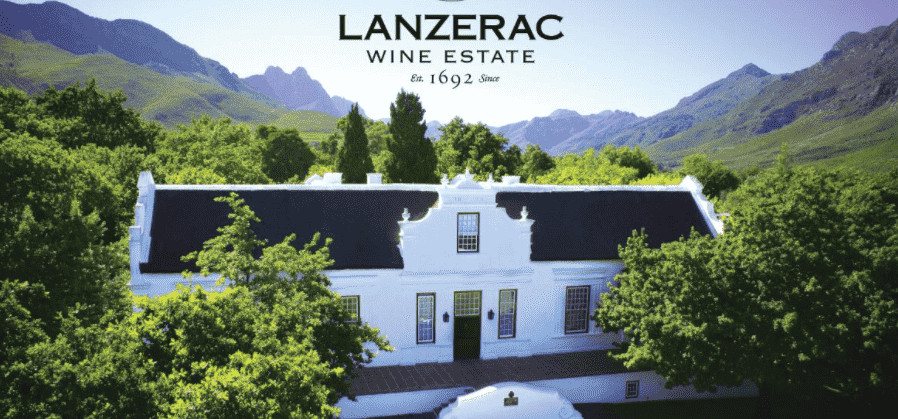
Lacking our sober, Germanic taste, they erected horrible kitsch copies of Cape Dutch houses such as Groote Schuur or destroyed the original architecture as at Lanzerac to add servants quarters. Otherwise, they removed those stately gables.

Today the ANC regime is continuing the proud tradition of name changes, first brought by the British. They invented “classy” French-sounding names like Lanzerac, replacing the poetic Schoongezicht, meaning “fair countenance”.

The Arts and Crafts movement in Britain further added to the aesthetic degeneration of the Cape in the nineteenth century. Since the ANC came to power and with Afrikaner influence on the wane, we have had a similar explosion of ugly, Tuscan-style buildings on the Transvaal Highveld as another British fashion got imported to South Africa.

A black man in an ugly, quasi-Italian house, speaking English and watching soccer on TV; that is about the contempory definition of British civilisation, as can be seen in South Africa.

‘We are the country that invented the concentration camp’ – Jeremy Clarkson

Jeremy Clarkson

 “Britain is a nation of 62 million complete and utter bastards”, according to Jeremy Clarkson. The Mirror reports that he does not have a high opinion of his countrymen, the British.

The Top Gear presenter also says that Brits invented torture and slavery and sent the White Russians to be slaughtered by Stalin.

Jeremy Clarkson has branded the whole country “complete and utter bastards” after Twitter trolls mocked him over the death of his dog.

During the outspoken presenter’s astonishing rant in Top Gear magazine, Clarkson said that Brits invented torture and slavery and sent the White Russians to be slaughtered by Stalin.

He wrote: “A few moments ago , my dog died, and, as an experiment, I announced the fact on Twitter.

“Now, everyone must have known that when a family pet is put down, the family in question is bound to be upset.

“So you’d expect a bit of sympathy. And, in America, that’s what you’d get.

“Not in Britain, though. Moments after I posted my Tweet, a man called Ryan Paisey asked: “How does she smell?”

Clarkson’s latest outburst comes after he revealed he suffered a ‘tirade of abuse’ within minutes of Tweeting about the death of his black Labrador Whoopi.

He added: “Britain is a nation of 62 million complete and utter bastards. We are the country that invented the concentration camp, and international slavery.

“Hanging, drawing, quartering: that was us too. And who was it that sent the White Russians home to be slaughtered by Stalin? Yup. Us.

“Outwardly, we hated communist Russia; inwardly, it’s what 95 per cent of the country wants .

“Bankers, Estate Agents, Politicians, Journalists. Anyone in a suit is basically evil and must, after they’ve been sacked, go to prison.

“Anyone in a donkey jacket? They’re basically good and must have a plasma television immediately.”

Clarkson is known for being outspoken.

In November 30 last year, on the evening of Britain’s biggest public sector strikes for 30 years, Clarkson said that he would take the striking workers outside and “execute them in front of their families”.

Clarkson was forced to apologise and the regulator launched an investigation after his remark, made on The One Show, sparked around 31,700 complaints and led to condemnation from union leaders and politicians, with Prime Minister David Cameron branding the TV star’s statement “silly”.

However, Ofcom later ruled that his comments did not breach broadcasting rules.

British police ‘shackled by racism charges’, so Asians may rape girls

Jon Gower Davies

A new book being published in Britain, Mind-forg’d Manacles: Murder, Macpherson and the (Metropolitan) Police by Jon Gower Davies, is set to explode some of the myths around white racism in that country.

The pending publication of the book has already led to newspaper artilcles, notably in the Daily Mail, exposing how police have failed to act against gangs of Asians raping British girls.

According to the London Daily Mail, “This year a gang from Rochdale were jailed for plying teenage girls with alcohol before raping them.

“All but one gang member was of an Asian Pakistani background.

The court heard up to 47 vulnerable girls were passed around the group and forced to have sex several times a week, but two years before action was finally taken, police missed an opportunity to stop the gang when a 15-year-old girl told them she had been raped.

A former Labour MP, Ann Cryer, said the police failed to investigate properly because they were ‘petrified’ of being branded racist.

Former MP Ann Cryer, said police failed in their investigation of the Rochdale sex gang because they were too afraid of being branded racist

Mr Davies, a former Labour councillor, describes the lack of investigation into sex crimes as a case of ‘reverse’ institutional racism in which the views of victims, vulnerable white girls, were not taken seriously.”

The publisher of Mind-forg’d Manacles: Murder, Macpherson and the (Metropolitan) Police, Waterstones has the following to say about the coming book:

The Macpherson Report into the handling of the murder of Stephen Lawrence became a defining moment in British political history. It accused the Metropolitan Police of ‘institutional racism’, an ambiguous phrase that has been regularly confused with overt racism. The concept was used not only to condemn the Metropolitan Police, but also to condemn all British police forces. For many commentators, it condemned Britain as a whole as a racist society.

In Mind Forg’d Manacles, Jon Gower Davies argues that the charge of institutional racism was ill-founded and that reforms designed to address it have introduced negative and unintended consequences for British policing. It has bogged down the police with unnecessary and counter-productive bureaucratic demands. It has paralysed the investigation of some crimes that involve ethnic minority suspects, frequently exposing vulnerable victims to greater harms. Davies presents an alternative, optimistic perspective on British society. Racism is, in fact, a rarity and its occasional appearance rightly condemned. The police are generally respected and trusted by British people of all ethnic origins.

Imputing institutional racism to a whole society unfairly smears the majority of fair-minded people while removing moral responsibility from the minority of people who fail to measure up to British standards of equality. Davies concludes: ‘Macpherson – not only obviated the need to make a realistic if less flamboyant analysis of the limitations of the policing of the murder of Stephen Lawrence, but also led an over-anxious police leadership to make a fool of itself by adopting policies which are neither operationally nor socially nor ethically sound and proper.’

Exiled Rwandan general shot in South Africa

Days before an exiled Rwandan army general was shot and wounded in South Africa, two of the men charged in the shooting were plotting another attempt on his life, a witness testified Wednesday.

The Rwandan witness, a former roommate of one of suspects, was testifying in the trial of three Rwandans and three Tanzanians accused of attempted murder, conspiracy to commit murder and weapons charges in the June 2010 shooting of Lt. Gen. Faustin Kayumba Nyamwasa.

Rwandan authorities deny allegations of involvement that have been made by Rwandan President Paul Kagame’s opponents.

South African prosecutors won’t say whether they believe Kagame’s government was behind plots against Nyamwasa, who was once Rwanda’s military chief and has been in exile in South Africa since 2010.

Last year, Nyamwasa was among four men, all former top Kagame aides now in exile in South Africa and the United States, convicted in absentia by a Rwandan military court of disturbing public order, threatening state security, sectarianism and criminal conspiracy. The four have accused Kagame of crushing dissent and democracy after helping to end the 1994 genocide that left more than 500,000 people dead in Rwanda.

South African prosecutors have said key witnesses are under police protection in South Africa because they fear Rwanda’s government.

The possibility Kagame’s government has pursued his opponents abroad has been raised elsewhere.

In Sweden earlier this month, a person close to the Swedish government told The Associated Press a Rwandan diplomat had been expelled because he had engaged in “refugee espionage.” The person spoke on condition of anonymity because it was a sensitive diplomatic matter. Sweden is home to a small community of Rwandans, some of whom run blogs and online newspapers that are critical of Kagame.

Last year, police in Britain warned some Rwandans living there that their lives were in danger after the men criticized the government of the east African nation.

Testimony in the South African trial has hinted that shadowy figures were determined to kill Nyamwasa, trying more than once and offering large amounts of cash to draw in conspirators.

After Nyamwasa survived the shooting, prosecutors say the people pursuing him plotted to kill him in his South African hospital bed. But that case, which had been tried separately, was dropped earlier this month after a key witness changed his story and accused police of forcing him to make earlier statements.

Wednesday, Adriani Kamali testified in the shooting trial that he came to South Africa from Rwanda in 2002, when he met one of the suspects in Nyamwasa’s shooting, Amani Uriwani, another Rwandan. The two were roommates at the time of the shooting.

Kamali said that about two weeks before the shooting, Uriwani and another suspect, Hassan Mohamedi Nduli, introduced him to another Rwandan identified only as Vincent. Kamali said Vincent at first said he was recruiting a gang to break into the Johannesburg home of a man he said had taken money from his brother. Vincent at first said he only wanted the money back, but several days later said he wanted someone to attack the man.

“They wanted him dead,” Kamali said. Kamali said he backed out when he realized he was being asked to commit murder, but by then was deeply enough involved to have been paid several thousand rand (more than $1,000), shown the intended victim’s house and given a key to one of its security gates.

Vincent persisted, offering as much as 100,000 rand more (about $13,000), Kamali said. Kamali continued to refuse.

Kamali said he only realized the identity of the intended victim and that a new plot had been hatched without him when he saw news reports about Nyamwasa’s shooting. Kamali said he recognized the general’s home when he saw it on TV.

Prosecutor Shaun Abrahams refused to say Wednesday whether investigators knew more about Vincent’s identity. Abrahams said Vincent was no longer in South Africa, but would not say where he was believed to be. – Sapa