‘Mandela is not in a vegetative state’

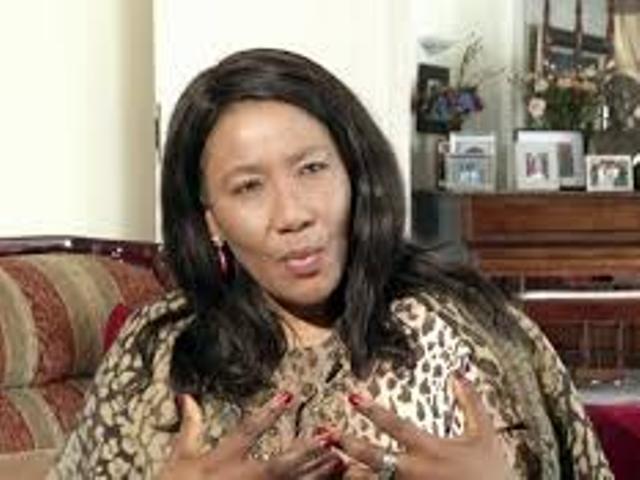
The American educated Makaziwe Mandela
The American educated Makaziwe Mandela says her grandfather is in a vegetative state

Doctors treating former president Nelson Mandela have denied that he is in a vegetative state, the Presidency said on Thursday.

“We confirm our earlier statement released this afternoon after President Jacob Zuma visited Madiba in hospital that Madiba remains in a critical, but stable condition,” spokesman Mac Maharaj said in a statement.

He said Mandela was under the care of a “multi-disciplinary” panel of medical experts drawn from the South African Military Health Services, the public and private sector, and universities.

“Under this panel, a team of doctors, nurses, paramedics and other health professionals attend to Madiba on a 24-hour basis.”

The statement from the Presidency came after court documents surfaced stating that Mandela was in a “permanent vegetative state” and that his family had been advised to turn off his life-support machine.

The certificate of urgency dated June 27 and submitted to the Eastern Cape High Court was widely reported by local and international media. A copy was obtained by Sapa.

In it, an advocate for the American educated Makaziwe Mandela said he had been advised by his instructing attorney that Mandela’s condition had “taken a turn for the worst (sic)” and that the “Mandela family” – ie Makaziwe and her supporters – have “been advised by the medical practitioners that his life-support machines should be switched off”.

“Rather than prolonging his suffering, the Mandela family is exploring this option as a very real probability.”

The document was attributed to David Smith, an advocate representing 15 members of the “Mandela family” in a court case against Mandela’s grandson, Mandla Mandela.

In the document, Smith described Mandela’s health as perilous, and said he was in a permanent vegetative state and was being assisted in breathing by a life-support machine.

“Affidavits will be provided, at the hearing of this application, from his treating physicians that he is in a permanent vegetative state and is assisted in breathing by a life-support machine,” he said.

“The anticipation of his impending death is based on real and substantial grounds.”

A later version of the document filed in the court omitted the paragraphs referring to Mandela’s “vegetative state” and the advice by physicians to take Mandela off life support.

A lawyer for the Mandela family later said the original certificate of urgency was “merely a submission outside of court”.

“To the extent there is speculation, a certificate of urgency was filed in terms of the practice of our court,” said Wesley Hayes, who represented the family in the dispute with Mandla Mandela about the graves of his father and his grandfather’s other two children.

“The certificate is not evidence, but merely submissions on why a matter should be heard outside ordinary court sittings.”

Hayes said the ruling on the urgency of the matter had been made “in camera” and that this “would extend to the contents of the certificate of urgency”.

“Further than that we have no comment,” he said.

On Wednesday, the Eastern Cape High Court ordered Mandla Mandela to return the remains of his grandfather’s three children to Qunu from Mvezo, where he moved them two years ago.

The remains were those of Mandela’s eldest son Madiba Thembekile, who died in a car accident in 1969; Mandla Mandela’s father Makgatho Mandela, who died in 2005; and Mandela’s first daughter Makaziwe Mandela, who died as an infant in 1948.

The bones were re-buried at a ceremony at a gravesite at Nelson Mandela’s home in Qunu on Thursday afternoon. – Sapa

11-year old Soweto rape victim recovering

rape_girls_feetAn 11-year-old Soweto girl who was raped and stabbed is recovering in hospital, Gauteng police said on Thursday.

“She is no longer in ICU,” Warrant Officer Kay Makhubela said.

The girl and her little brother were asleep in a house in Bram Fischerville when she was attacked on Wednesday morning. She was raped and stabbed three times in the upper body. No arrests had been made.

Gauteng premier Nomvula Mokonyane on Thursday condemned the rape and appealed to police to bring the perpetrator to book.

“We are calling on the police to leave no stone unturned in finding the perpetrator who did this to an innocent child,” she said in a statement.

She said rape and abuse against women and children could not be allowed to rear its ugly head.

“Our thoughts and prayers are with this little girl and her family.”

Mokonyane said rape was a hideous crime that contravened the basic human rights of women and girls.

“We cannot allow such horrific incidents to go unchallenged in our communities.” – Sapa

Rapper 50 Cent denies kicking ex-girlfriend

50 Cent
50 Cent

Rapper 50 Cent denies allegations he attacked his ex-girlfriend and trashed her condo.

The “In da Club” singer’s lawyer says there’s no warrant outstanding on the domestic violence and vandalism charges against 50 Cent, whose real name is Curtis Jackson.

If convicted, he faces up to five years in jail and $46,000 in fines.

The woman told police that during a June 23 argument, Jackson began destroying property at her condo before she locked herself into a bedroom. She says Jackson kicked open the bedroom door and kicked her, causing injury.

Police estimated about $7,100 in damage to the home.

The woman told police she had been in a three-year relationship and has a baby with Jackson.

His arraignment is July 22. – AP

Mandela feud intensifies

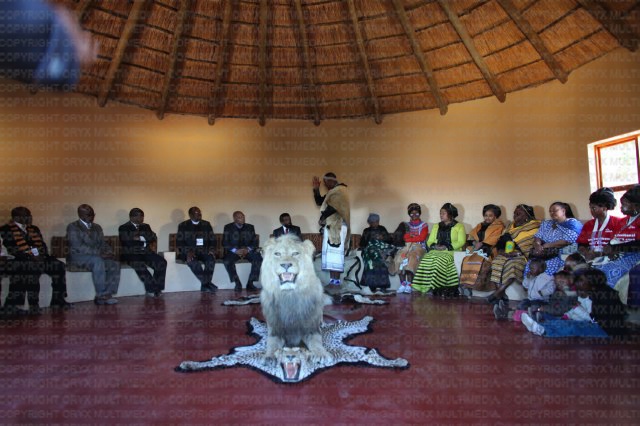
makimandlaThe battle of the Mandelas seems far from over with Nelson Mandela’s grandson Mandla insisting that Madiba had himself asked to be buried in Mvezo, next to his parents.

Madiba’s burial site is right at the core of the family feud that has pitted Mandla against his brothers and aunts. Makaziwe and 15 others told the high court they believed Mandla wanted to “force” the elderly statesman’s place of burial away from Qunu, to Mvezo.


The family feud also intensified on Thursday, with Mandla – whose full title and name is Nkosi Zwelivelile Mandla Mandela – airing the family’s “dirty linen” in public and attacking members of his family from his aunt to his two brothers.


“The applicants, as custodians of the last will and testament of Nelson Mandela will have duties to ensure his last wishes are carried out in the event of his demise,” said Makaziwe and others.


On Madiba’s will, Mandla said “it remains a secret and remains with the people he has appointed to administer that”.


The family also held a ceremony on Thursday, when the remains of Madiba’s three children were returned to Qunu as per Wednesday’s court decision.


Before the ceremony Mandla said at a press conference that the topic of Madiba’s burial site came up once while sitting in Qunu with a crew from the BBC that was shooting a “30 days with Madiba” documentary.


“While in Qunu the subject came up. (Madiba) said I should usher the crew to the gravesite to show them where his mother and father are.


“Then they asked him the question ‘where would you like to be buried’ and he immediately, without hesitation, said ‘I want to be laid right here next to my father’.


“And that is all that I know about my grandfather’s wishes,” said Mandla.


He said the ailing Madiba would also be disappointed at recent events that had played out in public and in court. He also questioned the legitimacy of some of the 15 family members who took him to court, saying they could not claim to be part of the Mandela family.


He went on to accuse his aunt Makaziwe Mandela, who was the main applicant in the court case, of trying to get her hands on the global icon’s money by trying to have George Bizos, Human Settlements Minister Tokyo Sexwale and Bally Chuene removed as trustees in Madiba’s trusts.


During Thursday’s briefing Mandla focused his attention mainly on Makaziwe and two brothers Mbuso and Ndaba.


Flanked by his mother Nolusapho, the young chief said he had been the subject of “attacks from all sorts of individuals wanting a few minutes of fame and media attention at my expense” over the past few days.


“In the first instance, I want to express my disappointment at the decision taken at the Mthatha High Court on Thursday. I remain convinced that the decision of the court was erroneous as the court granted a final order in my absence so I was effectively denied the right to be heard. I will, however, not challenge this further because it will serve no purpose,” said Mandla.


Turning his attention to members of his family, he said he had to address a few matters “that have been circulating in the media”.


“Having stood against my family in the case that was put forward by my grandfather’s children, that of aunt Makaziwe and aunt Zenani, supported by a number of grandchildren and other members of the family, to try and remove George Bizos, as well as the minister Tokyo and Bally Chuene as trustees: I made it clear that I want no part in it. The family saw fit that having clearly disappointed many South Africans and the public on the stance they took, they look to seeking revenge, targeting a soft target like myself,” said Mandla.


He said certain people had been parading as family members in the “day-to-day decisions “ of the Mandela family.


“Individuals have abandoned their own families and heritage and decided to jump on the Mandela wagon,” said Mandla.


He said Makaziwe was married to Camagu Balfour and had two children, Tukwini and Dumani, before divorcing and marrying Isaac Amuah, with whom she had a son called Kweku Amuah.


“She is in actual fact a Mrs Amuah and ought to be focusing on the Amuah family issues,” said Mandla.


His brother Ndaba was also not spared. “As for Ndaba I’m highly disappointed. He claims in the media reports that I was born out of wedlock. I wish he would say that in the presence of my father. I do not want to hang out our dirty linen as a family in public. But he knows very well that my father impregnated a married woman… he is a result of that act.


“So, he should be very careful when he wants to throw insults, particularly to my mother who still sits by my side, nurtures and ensures that I am able to wake up every day to serve my community,” said Mandla.


His other brother Mbuso “impregnated my wife and the matter was never discussed by the family”.


“For two years I have sent bishops to go and appeal particularly to Ndaba to come and reconcile these matters between me and Mbuso,” said Mandla.


He added that his grandfather was in a stable condition.


In court papers, Makaziwe and others said it was clear that Mandla wanted Madiba buried in Mvezo for “self-serving interests”.


“He knows that it has always been the wish of Mr Nelson Mandela to be buried alongside his children. By controlling the area in which these descendents’ remains are buried, he expects that the remains of (Madiba) will soon follow” – IOL

Mob justice in Motholo, South Africa

A mob justice scene in South Africa

A mob assaulted a man after he allegedly robbed a shop owned by a Somali national in Motholo on Friday, Limpopo police said.

Constable Moses Molepo said the 29-year-old man and two other men broke into the shop, assaulted and robbed the owner of an undisclosed amount of money and stock in the early hours of the morning.

“The one suspect was severely assaulted by members of the community and the other two fled the scene,” said Molepo.

The man was in a critical condition under police guard at the Mankweng Hospital.

He would appear in court when he had recovered.

Cuba to be paid R6 billion to manage South African ground water

Raul Castro in the Cuban national assembly

The government has completed a groundwater strategy aimed at addressing water shortages across the country, Water Affairs Minister Edna Molewa said on Thursday.

“[O]ur next step is to implement support mechanisms to help municipalities with technical expertise required to manage groundwater,” she told a service delivery summit in Rustenburg, according to a copy of her speech.

Molewa had met Cuban prime minister Raul Castro in her attempt to source the skills required to implement the strategy.

“We have agreed in principle that an agreement that will formalise this exchange of expertise will be signed before the end of the year.”

The department was aware of the water quality problems some municipalities faced, and would continue helping them to improve their standards.

Remediation programmes had to be undertaken to improve the water quality in the Hartbeespoort and Roodeplaat dams.

Efforts were underway to train water management experts, such as mechanical and civil engineers, scientists, and process control technicians.

Molewa said more than R734 million was needed to address the water infrastructure backlog in the North West.

The Bojanala Platinum district municipality had the highest backlog requirement of R404.8m. Ngaka Modiri Molema was second with a backlog of R273.8m.

Molewa said the water infrastructure grants were intended for areas without any safe drinking water.

“The intention is to provide interim services to these communities while they are waiting for services that are in line with our RDP standards.”

An amount of R6.2 billion over the next three years had been allocated to address problems in water infrastructure.

The money would be spent on the 23 district municipalities identified by the president and Cabinet as needing help.

North West was allocated a total of R122m over the medium-term expenditure framework period.

Molewa said another problem affecting supply was the illegal use of water through abstraction and illegal connections. – Sapa

Racial violence feared in Zimmerman verdict

obamahoodieSanford Police Chief Cecil Smith and other city officials are worried that the outcome of the George Zimmerman trial could spark “violence” and have crafted a “secret law enforcement” plan to deal with potential social disorder.

Zimmerman is accused of killing a black teenager, Trayvon Martin. President Obama has already sided with the Martins in saying that “if he had a son, he would look like Trayvon”.

A CNN report shows Sanford police going door to door in an attempt to calm residents about possible racial unrest in response to the Zimmerman verdict.

“Our worst fear is that we will have people from outside of the community coming in and stirring up….violence in the community,” Smith told CNN’s David Mattingly.

Sanford Mayor Jeff Triplett echoes Smith’s concerns, warning that just one person intent on violence could spark wider disorder and “a provocation of violence”.

City Manager Norton Bonaparte is similarly on edge, fearing a Rodney King-style riot if Zimmerman is found not guilty.

“I’m saying that’s a scenario that’s certainly a possibility,” said Bonaparte, adding that plans had been made through law enforcement but that he would not go into detail on the nature of what they were.

Police Chief Cecil Smith was similarly evasive when asked if SWAT teams or “special personnel” were on standby to respond to disorder.

“As far as the particulars of the plans, we’re not releasing that,” Smith told CNN.

Authorities have also enlisted the help of local pastors who are acting as “observers” in the Zimmerman trial and will then report back to their congregation.

Scores of Twitter users have threatened to riot and loot if George Zimmerman is acquitted.

Other prominent voices have also warned of potential civil unrest, including former Chicago police officer Paul Huebl, who said that he fully expects “organized race rioting to begin in every major city to dwarf the Rodney King and the Martin Luther King riots of past decades” if Zimmerman walks.

With police already going door to door to calm Sanford residents in anticipation of unrest, some are worried that social disorder could be used as a pretext for gun confiscation in a similar vein to how Hurricane Katrina was used as a justification to disarm residents of New Orleans. – prisonplanet.com

Americans consider blacks to be more racist than whites

blackVictimhoodAmericans consider blacks more likely to be racist than whites and Hispanics in the US.

Thirty-seven percent (37%) of American Adults think most black Americans are racist, according to a new Rasmussen Reports national telephone survey. Just 15% consider most white Americans racist, while 18% say the same of most Hispanic Americans. (To see survey question wording, click here.)

There is a huge ideological difference on this topic. Among conservative Americans, 49% consider most blacks racist, and only 12% see most whites that way. Among liberal voters, 27% see most white Americans as racist, and 21% say the same about black Americans.

From a partisan perspective, 49% of Republicans see most black Americans as racist, along with 36% of unaffiliated adults and 29% of Democrats.

Among black Americans, 31% think most blacks are racist, while 24% consider most whites racist and 15% view most Hispanics that way.

Among white adults, 10% think most white Americans are racist; 38% believe most blacks are racist, and 17% say most Hispanics are racist.

Overall, just 30% of all Americans now rate race relations in the United States as good or excellent. Fourteen percent (14%) describe them as poor. Twenty-nine percent (29%) think race relations are getting better, while 32% believe they are getting worse. Thirty-five percent (35%) feel they are staying about the same.

These figures reflect more pessimism than was found in April when 42% gave race relations positive marks and 39% said race relations were improving.  However, the April number reflected all-time highs while the current numbers are more consistent with the general attitudes of recent years.

(Want a free daily e-mail update? If it’s in the news, it’s in our polls). Rasmussen Reports updates are also available on Twitter or Facebook.

The survey of 1,000 Adults was conducted on July 1-2, 2013 by Rasmussen Reports. The margin of sampling error is +/- 3 percentage points with a 95% level of confidence. Field work for all Rasmussen Reports surveys is conducted by Pulse Opinion Research, LLC. See methodology.

The U.S. Supreme Court recently killed a key portion of the Voting Rights Act as unconstitutional and sent a lawsuit challenging the University of Texas’ use of race as a factor in admissions back to the appellate court level for further review. Most Americans believe affirmative action admissions policies discriminate against whites, as the lawsuit argues, and think it’s better for colleges and universities to accept the most qualified students.

This is consistent with public resistance to all special preferences. Only 30% think it’s fair for colleges and universities to give preferences to children of large donors.  Just 38% think it is fair for the children of previous students to have a special advantage in the admissions process.

Following those decisions and a big ruling on same-sex marriage, public approval of the U.S. Supreme Court has fallen to the lowest level ever recorded in more than nine years of polling.

Blacks are slightly more optimistic about the current state of race relations in American than whites and Hispanics are. But 37% of blacks and 38% of Hispanics believe those relations are getting worse, compared to 29% of whites.

Liberals are more confident than conservatives that race relations are getting better.

Forty-five percent (45%) of voters believe the U.S. justice system is fair to most Americans, but just 34% think it is fair to poor Americans. Forty-five percent (45%) consider the justice system fair to black and Hispanic Americans.

Most voters continue to believe the U.S. economy is fair to women, blacks and Hispanics but are now evenly divided when asked if it’s fair to lower-income Americans. However, they still think all four groups are treated better than the middle class. – Rasmussen

Morsi’s support for intervention in Syria was the straw that broke the camel’s back

obamaegyptterrorThe protests in Egypt against president Mohammed Morsi were – according to the BBC – the largest in history.

The Irish Times reports:

Army concern about the way President Mohamed Morsi was governing Egypt reached tipping point when the head of state attended a rally packed with hardline fellow Islamists calling for holy war in Syria, military sources have said.

Mr Morsi himself called for foreign intervention in Syria against Mr Assad, leading to a veiled rebuke from the army, which issued an apparently bland but sharp-edged statement the next day stressing that its only role was guarding Egypt’s borders.

“The armed forces were very alarmed by the Syrian conference at a time the state was going through a major political crisis,” said one officer, whose comments reflected remarks made privately by other army staff. He was speaking on condition of anonymity because he was not permitted to talk to the media.

For the army, the Syria rally had crossed “a national security red line” by encouraging Egyptians to fight abroad, risking creating a new generation of jihadists, said Yasser El-Shimy, analyst with the International Crisis Group.

At the heart of the military’s concern is the history of militant Islam in Egypt, homeland of al-Qaeda leader Ayman al-Zawahri. The military source condemned recent remarks made by “retired terrorists” allied to Mr Morsi, who has deepened his ties with the once-armed group al-Gamaa al-Islamiya.

Obama had recently sent American troops to prop up Morsi, and the protesters were furious at the U.S. for backing Islamic radicals.

(The U.S. backed Egypt’s previous dictator, as well).

Support of Western intervention in Syria was also one of the main causes of the recent enormous protests in Turkey … which came close to toppling the Turkish leadership.

Indeed, the American government has been providing arms, money and logistical support to Al Qaeda in Syria, Libya, Mali, Bosnia and other countries – and related Muslim terrorists in Chechnya, Iran, and many other countries.  So moderate Arabs all over the Middle East and North Africa are becoming furious at U.S. interventionist policies.

Note:  The coup is a set-back for the U.S., because Egypt – unlike Iraq, Libya, Syria, and Iran – isn’t on the 20-year-old list of countries targeted for regime change. – Zero Hedge

US orders Americans to leave Egypt as anti-American sentiment soars

obamaegyptA U.S. official says the State Department is ordering nonessential U.S. diplomats and the families of all American Embassy personnel to leave Egypt after the Egyptian military removed Morsi and in anticipation of potential violence.

The official, speaking on condition of anonymity because the official wasn’t authorized to discuss it publicly, said the State Department had placed the U.S. Embassy in Cairo on “ordered departure” status for nonemergency staff and dependents all employees. That means that those covered by the order are required to leave the country. It was not immediately clear if an evacuation operation would be mounted or if those departing would use commercial airlines or passenger ships to leave.

Mandela’s grave, the money-spinner

In 2010 Mvezo was still the Holy Grail

Nelson Mandela’s grandson, Mandla Mandela, has prepared part of his homestead – the multimillion-rand Mvezo Great Place – as a place of pilgrimage for people keen to see the ailing statesman’s grave.

This was the argument in an affidavit signed by 16 Mandela relatives, including his eldest daughter, Makaziwe, his wife Graça Machel and his ex-wife Winnie Madikizela Mandela, in an application to the Eastern Cape High Court in Mthatha.

 Mandla “constructed buildings” at Mvezo Great Place, hoping Nelson Mandela would be buried at Mvezo and not in Qunu.

“The first respondent (Mandla) wants to force the burial of Mr Nelson Mandela, when the time should come, at a place of the first respondent’s choosing. By securing the remains of Mr Mandela’s family, the first respondent hopes to secure the remains as to Mandela himself,” the family’s affidavit read.

Mandla established their remains in Mvezo, knowing Nelson Mandela wanted to be buried close to these remains, the family said.

That would enable Mandla to make money from Nelson Mandela’s death and benefit from his “illegal removal” of the graves.

He planned to derive income generated by visitors to Nelson Mandela’s gravesite, the affidavit said.

The attempt to have Mandela buried at Mveza would have “undermined” his wishes.

It was likely that the place of his burial would be a much-visited heritage site, and it was “conceivable that such a heritage site has a high potential to generate monetary gain”.

“Indeed, there is evidence to suggest the first respondent (Mandla) has already begun preparations at The Great Place, Mvezo, inclusive of the construction of buildings in furtherance of such gain.”

The family urged the court not to allow Mandla to “profit from his unlawful activity”.

“The remains of the three deceased in question must be returned in all haste to their lawful resting place.”

It has been reported by various newspapers during the past week that Mvezo Great Place has been upgraded to the tune of millions of rands.

In 2010, however all roads led to Mvezo, birthplace of Nelson Mandela, on July 18, where President Jacob Zuma and Madiba’s grandson, Chief Zwelivelile Mandela, led scores of people in the official national celebration of Nelson Mandela Day, on the great man’s 92nd birthday. Madiba, himself, spent the day in Johannesburg with family.

While several thousand local residents of surrounding villages made the trek to Mvezo on foot, reminiscent of a fan walk during the recently concluded Fifa 2010 World Cup, the gleaming cars of dignitaries – 1000 VIPs were expected – snaked along the pitted dirt road that leads from the N2 Highway, about 40 kilometres south of Mthatha.

Those present included Minister of Arts and Culture, Lulu Xingwana, AbaThembu King Buyelekhaya Dalindyebo, ANC Chief Whip, Mathole Motshekga, head of the UDM, Bantu Holomisa, DA parliamentary leader, Athol Trollip. the President’s wife, Thobeka Madiba, and Chief Mandela’s wife, Anais Grimaud. – Oryxmedia/Cape Argus


When a coup is not a coup, and democracy not about elections

EgyptObamaThe Egyptian military’s overthrow of elected President Mohamed Morsi left United States President Barack Obama grappling with a difficult question of diplomacy and language in dealing with the Arab world’s most populous nation: was it a coup?

At stake as Obama and his aides wrestle with that question in the coming days is the $1.5-billion in aid the US sends to Cairo each year – almost all of it for the military – as well as the president’s views on how best to promote Arab democracy.

If the United States formally declares Morsi’s ousting a coup, US law mandates that most aid for its longtime ally must stop. And that could weaken the Egyptian military, one of the country’s most stable institutions with long-standing ties to US authorities.

Further complicating Obama’s calculus is the fact that millions of Egyptians rallied in favour of Morsi’s departure, and that the military announced a road map for return to civilian rule that was blessed by Egypt’s Muslim and Christian religious leaders.

But Morsi and his Muslim Brotherhood retain backing from a broad swath of Egyptian society, even as he alienated many of his countrymen.

Obama, after meeting top advisors at the White House, said in a statement that he was “deeply concerned” by the army’s actions and had directed the relevant US agencies to review the implications for US assistance to Egypt.

But he did not use the word “coup” and stopped well short of advocating for Morsi’s reinstatement, suggesting Washington might be willing to accept the military’s move as a way to end a political crisis in a nation of 83 million people struggling with severe economic difficulties.

Recent history suggests Obama might take his time on deciding the future of US aid to Egypt, and by extension, Washington’s relations with the country.

US law bars “any assistance to the government of any country whose duly elected head of government is deposed by military coup d’etat or decree”.

When Honduran President Manuel Zelaya was ousted in June 2009, Washington temporarily suspended aid, but did not cut about $30-million in assistance until more than two months later.

Even then, Secretary of State Hillary Clinton did not determine as a matter of law that a coup had taken place.

Eric Trager, an expert on Egyptian politics at the Washington Institute for Near East Policy, said Obama should not label Morsi’s ouster a coup, nor cut off US aid.

“The Obama administration should recognise that as undemocratic as a coup is, it was the result of the basic fact that President Morsi had completely lost control of the Egyptian state,” Trager said by telephone from Egypt.

“Democracy was not the primary thing at stake in Egypt these last few months,” but rather Morsi’s mismanagement and fears of collapse of the Egyptian state, he said.

In announcing Morsi had been deposed and the Egyptian constitution suspended, Egypt’s army commander promised a quick political transition. The military laid out plans for elections and a constitutional review.

The US chairman of the joint chiefs of staff, General Martin Dempsey, warned Egyptian military leaders of consequences if Morsi’s overthrow were viewed as a coup.

“At the end of the day it’s their country and they will find their way, but there will be consequences if it is badly handled,” Dempsey told CNN.

Obama also warned against further violence, indicating that Washington’s ultimate decision on aid to Egypt will depend on how Egypt’s armed forces handle the transition in coming weeks.

Morsi, in power for a year, was widely blamed for presiding over a steady decline in Egypt’s economy and for failing to form a broad-based government that included other groups that had joined in the 2011 revolution that overthrew President Hosni Mubarak.

US lawmakers also welcomed Morsi’s departure but called for a quick transition back to democratic rule – with a close look at the aid budget.

Democratic Senator Patrick Leahy, who heads the Senate subcommittee that oversees foreign aid, on Wednesday promised a review of the $1.3-billion in military aid and $250-million in economic aid sent to Cairo each year.

Washington has cut off aid following military coups several times before. In April 2012, the United States suspended at least $13-million of its $140-million in annual aid to Mali following a coup in the West African nation.

Programmes that did not go directly through government ministries were not affected.

Any Obama support for Egypt’s new government is unlikely to face opposition from Republicans in Congress, who had been sceptical of Morsi’s Islamist government.

“Morsi was an obstacle to the constitutional democracy most Egyptians wanted,” said Republican Representative Ed Royce, the chairman of the House of Representatives Foreign Affairs Committee.

Republicans also voiced strong support for Egypt’s military, whose close ties to Washington stretch back to the 1979 Israeli-Egypt peace accords.

“The Egyptian military has long been a key partner of the United States and a stabilising force in the region, and is perhaps the only trusted national institution in Egypt today,” said US Representative Eric Cantor, the No. 2 Republican in the House.

“Democracy is about more than elections,” he said. – Reuters

When will Mandela’s life support be switched off?

Doctors have advised Nelson Mandela’s family that his life support should be switched off – and they are considering this to avoid prolonging his suffering.

But the statesman will not die a dignified death unless he is buried near the remains of two of his sons and a granddaughter in Qunu.

This emerged in the Mthatha High Court on Wednesday, where Judge Lusindiso Pakade ordered that the remains be exhumed from Mveza and returned to Qunu.

In an affidavit handed to the court, Mandela’s eldest daughter Makaziwe Mandela said: “Mr Nelson Mandela’s health is perilous. He is… assisted in breathing by a life-support machine.

“The family has been advised by the medical practitioners that his life support machine should be switched off. Rather than prolonging his suffering, the Mandela family is exploring this option as a very real probability.

“Mr Mandela is incapacitated and unable to approach the court in his own name.”

However, she said, Mandela would not die a dignified death unless he was buried alongside the remains of two sons and a granddaughter at the family homestead in Qunu.

They were named in court papers as sons Makgatho Mandela, Mandla Mandela’s father, who died in 2005; Madiba Thembekile Mandela, who died in 1969, while Mandela was still on Robben Island; and his granddaughter Makaziwe Mandela.

It had earlier been reported that Makaziwe was Mandela’s infant daughter, who died in 1948.

The affidavit said: “The applicants do not want a situation to be created in which Mr Nelson Mandela’s remains are committed to lie in a burial site, entirely alone and forlorn and absent from those remains of his children and grandchild.”

“It has always been the desire of Mr Nelson Mandela for his remains to be buried at his family’s homestead in Qunu near Mthatha, Eastern Cape.

“The applicants are desirous of burying their father and committing him to the earth in which his descendant’s remains lie. It’s incontestable that these are the wishes of Mr Nelson Mandela. But because Mandela’s grandson, Mandla, had removed the remains of the three relatives and reburied them at his homestead in Mvezo, Mandela could not be laid to rest with them, she said.

Mandla had been refusing to return their remains to the gravesite in Qunu, which is being prepared for Mandela’s burial, she said.

She accused Mandla of trying to gain from Mandela’s death.

She said he had dug up the remains of three relatives in a moment of anger towards the rest of the Mandela family. The relationship between Mandla and the rest of the Mandela family had become “strained in recent times”.

Breaking open the gates to the graves

Mandla felt “alienated” from the family and had secretly removed the remains in the dead of the night, her affidavit read.

She said Mandla had hoped that, because he had reburied the relatives’ remains at his homestead in Mvezo, Nelson Mandela would also be buried at Mvezo. “It would appear that the first respondent (Mandla) desires that Mr Nelson Mandela be interred in his land, at The Great Place, Mvezo, for self-serving interests. By controlling the area in which these descendants remains are buried, he expects that the remains of Nelson Mandela will soon follow.”

Makaziwe also spoke of how the family was preparing for the day of Madiba’s death.

“The anticipation of his impending death is based on real and substantial grounds,” said Makaziwe. – Cape Argus

‘Kidnapped by imperialism’

Morales in Russia
Morales in Russia

Bolivia has accused Austria of “kidnapping” its president, Evo Morales.

After a 12-hour interruption during which the president’s plane was stopped and searched by Austrian authorities for US fugitive Edward Snowden, Morales was allowed to fly home. Bolivia’s vice-president, Alvaro Garcia Linera, described Morales as being “kidnapped by imperialism” in Europe. Authorities had suspected Morales was taking Snowden to Latin America.

The unusual treatment of the Bolivian leader touched a sensitive nerve in the region, which has a history of US-backed coups, and presidents rallied in support of Morales.

“Definitively, they’re all crazy,” Argentine President Cristina Fernandez tweeted after a phone call to Morales. Fernandez described Morales as defiant.

” ‘I’m not a thief’,” she quoted him as saying.

Nicaraguan and Cuban officials also decried the incident.

A senior Bolivian diplomat said the Austrians had acted at the bidding of the US, which has been trying to get its hands on Snowden since he revealed details of its secret surveillance programmes.

“We’re talking about the president on an official trip after an official summit being kidnapped,” Bolivia’s ambassador to the UN, Sacha Llorenti Soliz, said.

The plane, which was taking Morales home from an energy conference in Moscow, was stranded at Vienna airport after Portugal and France refused to allow it to fly through their airspace.

The search found that Snowden was not on board.

Bolivia has filed a complaint at the United Nations on Wednesday over what it called the kidnapping of its president.

The country’s ambassador to the UN, Sacha Llorenti, said the enforced rerouting to Austria was an act of aggression and a violation of international law. The US admitted that it had been in contact with other nations over potential flights by Snowden.

“We will demand appropriate explanations from those countries that submitted to North American imperialism and briefly put President Morales in such a helpless situation,” Llorenti told the state radio Patria Nueva. Bolivia’s vice-president, Alvaro García Linera, said Morales was “kidnapped by imperialism”.

South American nations accused the United States of being behind the extraordinary manoeuvring, furious at what they regarded as the humiliation of Morales. In Washington, the state department would not comment on the Morales flight but conceded that it discussed the issue of flights by Snowden with other nations.

“We have been in contact with a range of countries that had a chance of having Snowden land or travel through their country but I am not going to outline what those countries were or when this [contact] happened,” said spokeswoman Jan Psaki.

The diplomatic crisis may have been set off by a remark by Morales during a television interview in Russia, where he had been attending an energy conference. Morales said that he sympathised with Snowden, who is believed to be holed up in the transit area of Sheremetyevo airport, and hinted that Bolivia might accept an asylum petition. “If there were a request, of course we would be willing to debate and consider the idea,” Morales told RT Actualidad, the Spanish-language service of the Russian broadcaster RT.

Later that day, soon after Morales was bound for La Paz, Spain, Italy, France and Portugal refused to allow the presidential jet to fly through their airspace over suspicions that Snowden was on board, according to the Bolivian government’s account.

The Bolivian foreign minister, David Choquehuanca, said France and Portugal were the first to cancel air permits. “They say it was due to technical issues, but after getting explanations from some authorities we found that there appeared to be some unfounded suspicions that Mr Snowden was on the plane. We don’t know who invented this lie. We want to denounce to the international community this injustice with the plane of Evo Morales,” Choquehuanca said.

Diverted from their planned route, pilots feared they would not be able to complete their journey. The plane was eventually cleared to land in Vienna, where Morales was forced to spend 13 hours in humiliating limbo while officials worked to resolve the dispute.

It later took off after Austrian officials said Snowden was not on board. But it was unclear whether any officials in Vienna had searched the plane. Austria’s deputy chancellor, Michael Spindelegger, said Morales “agreed to a voluntary inspection”. But the Bolivian defence minister, Ruben Saavedra, later said Morales had refused entry to the inspectors, and that they had only got as far as the door of the aircraft.

In Bolivia, the treatment of the president stirred up patriotic and anti-imperialist sentiment. Several labour and indigenous organisations planned a welcome rally for the president on his arrival in La Paz on Wednesday evening.

The Argentinian president, Cristina Fernández de Kirchner, attacked the “vestiges of colonialism” in a speech in Buenos Aires. “We believe this constitutes not only the humiliation of a sister nation but of all South America,” she said. An emergency meeting of the Union of South American Nations was expected to be convened on Thursday.

It was widely assumed in South America that Washington was responsible for the presidential plane being refused air permissions. Earlier in the week, the state department said it hoped Snowden would be returned to the US to face charges of espionage and theft after a string of other countries said they would not accept his applications for asylum.

Speaking before the developments in Vienna, the state department rejected claims made by Snowden on Monday that the US had bullied other potential hosts, such as Ecuador, into withdrawing their offer of asylum. The US says it has only impressed upon possible host countries the seriousness of the crimes with which Snowden had been charged. – Reuters/The Guardian