Reports that Britain spied on G20 delegates, including South Africa, during meetings in London in 2009, should be investigated, the international relations and co-operation department said on Monday.
Spokesman Clayson Monyela said the government had noted with concern the reports published by the UK’s Guardian newspaper.
“We do not yet have the full benefit of details reported on, but in principle we would condemn the abuse of privacy and basic human rights particularly if it emanates from those who claim to be democrats,” he said.
“We have solid, strong and cordial relations with the United Kingdom and would call on their government to investigate this matter fully with a view to take strong and visible action against any perpetrators.”
The newspaper reported that Britain had used “ground-breaking intelligence capabilities” to monitor communications between officials at two meetings in April and September of 2009.
According to the report, British agents repeatedly hacked into foreign diplomats’ phones and e-mails.
Speaking at the G8 summit on Monday, British Prime Minister David Cameron declined to address the issue, the French news agency Agence France-Presse reported.
“We never comment on security or intelligence issues and I am not about to start now,” he said.
“I don’t make comments on security or intelligence issues. That would be breaking something that no government has previously done.” – Sapa
Former French Foreign Minister Roland Dumas said that Britain had been preparing gunmen to invade Syria two years before the crisis there flared up in 2011
During a TV show, Dumas said ”I was in Britain two years ago, and I met British officials, some my friends…they admitted that they were up to something in Syria.”
”They even asked me to join them in my capacity as a foreign minister, but I declined,” he added.
He indicated that the plan of striking Syria had been prepared in advance long before the 2011 events, adding that the goal was to overthrow the Syrian government that considers Israel an enemy.
The TV show was dedicated to discussing the war in Syria.
French magazine: ‘Jihadists’ involvement in Syria much bigger than Afghanistan
The French magazine “Le Nouvel Observateur” quoted a senior French official as saying that the participation of French Jihadists in Syria is bigger that their involvement in Afghanistan war.
The French magazine said that the French intelligence verified the identities of 270 French nationals who are fighting in Syria, indicating that their return has become a major concern for the French interior ministry.
The magazine said that the number of European ‘Jihadists’ fighting in Syria ranges between 1,500 and 2,000, in addition to hundreds of Tunisians. – SANA
A DA councillor in the Eastern Cape has been suspended for circulating a racist email, The New Age reported on Monday.
Stanford Slabbert had reportedly sent an email saying President Jacob Zuma had more wives than brain cells.
The email also slammed the African National Congress for producing “dumb idiots who wait for handouts”, according to the report.
The email said Zuma had led a country where a quarter of schoolgirls were HIV-positive because South Africans had “spread the disease more than anyone else in the world”.
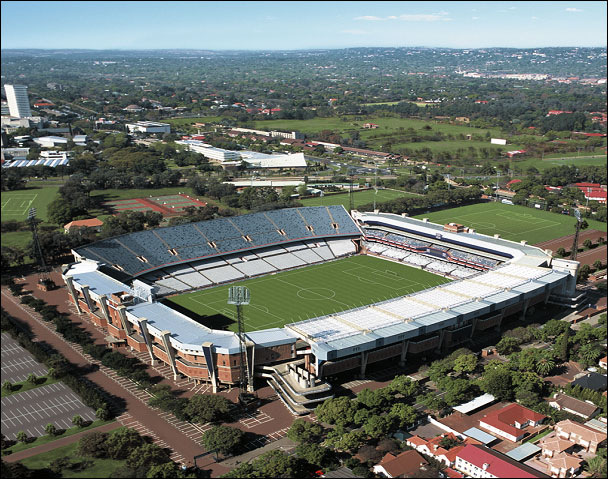
The Blue Bulls Company has reduced ticket prices for the final round of the four-nation Incoming Series rugby contest, Beeld reported on Monday.
Tickets for the upper east pavilion and restricted viewing seats in the south pavilion had been reduced by R100 to attract a larger crowd to Loftus Versfeld where the Springboks face Samoa and Italy meet Scotland, on Saturday.
A disappointing 23,663 spectators witnessed the first double-header in Durban, while 30,018 spectators were present in the 41 ,000-capacity Mbombela Stadium in Nelspruit on Saturday. – Sapa
Hong Kong’s football authority announced a slew of measures to punish and prevent racist behaviour at games, after Philippine football chiefs complained to FIFA about racist abuse of its players and fans.
The moves could see home and away supporters being segregated and will impose bans on abusive fans.
Hong Kong supporters hurled rubbish and insults at rival players and fans during a June 4 friendly won by the visiting Philippine team, according to the Philippine Sports Commission.
Sections of the home crowd called the Philippines a “slave nation” during the game and booed the Philippines national anthem when it was played, media reports from the southern Chinese city and the Philippines said.
The Hong Kong Football Association said late Friday that it will ban fans who are being racist and discriminatory for two years in accordance with FIFA Statutes and will consider formal segregation of seating for opposing spectators on a match-by-match basis.
The association also said it will make public announcements to warn fans of the consequences of using racist language and will work with the police in apprehending “spectators engaged in racist activity”.
“The allegation of disrespectful and discriminatory behaviour by home fans is the first incident of this nature at a football match in Hong Kong,” the association said, adding the accusations were levelled against “a small minority of people”.
“No amount of political tension or provocation or frustration can justify any incidence of racist or discriminatory behaviour,” it added.
Tensions between the Philippines and Hong Kong, which employs tens of thousands of Filipina maids, have simmered since a bungled rescue attempt by Filipino police of Hong Kong tourists taken hostage by a rogue police officer in 2010.
The fiasco left eight Hong Kong tourists and the hostage-taker dead.
The city’s administration has maintained a black “outbound travel alert” for the Philippines since the incident, telling residents to “avoid all travel” to the island nation. The only other country listed in the category is Syria. – AFP
Pan Africanist Youth Congress of Azania spokesman Sello Tladi said former president Nelson Mandela was a sell-out, The Citizen reported on Monday..
“He betrayed us by rubber-stamping the 1913 Land Act through the adoption of [the] Freedom Charter,” Tladi was quoted as saying.
“The problem with the Freedom Charter is that it made African people to be landless.”
Tladi was reportedly addressing Pan Africanist Congress, Azanian People’s Organisation and Socialist Party of Azania supporters who had gathered at the Regina Mundi church in Soweto to commemorate Youth Day on Sunday.
Tladi said Mandela was greedy.
“… We have the majority of poor people dying of various diseases because they have no access to the expensive medication that Mandela is receiving.
“What is special with Mandela that is not special with the ordinary man in the street on Soweto,” Tladi said.
Mandela was admitted to a Pretoria hospital on June 8 due to a recurring lung infection. On Monday, he was spending his tenth day in hospital.
The African National Congress spokesman Keith Khoza hit back saying the comments were simply the view of an individual.
ANC Youth League national task team convenor Mzwandile Masina said the comments were unfortunate, insensitive and politically immature. – Sapa
Documents leaked by US former spy Edward Snowden appeared to show Britain spied on G20 delegates during meetings in London back in 2009, Britain’s Guardian newspaper reported Monday.
Among the officials targetted were delegates from NATO ally Turkey and from South Africa.
Britain used “ground-breaking intelligence capabilities” to monitor communications between officials at the two meetings in April and September of 2009, the paper reported.
The revelations are likely to be an embarrassment to Britain, which is hosting the two-day G8 summit in Northern Ireland from Monday.
The paper cited documents it had seen concerning the work of Britain’s Government Communications Headquarters (GCHQ), which handles signals intelligence.
According to the files, British spies tricked delegates into using specially prepared Internet cafes. Those cafes allowed the spies to intercept communications and monitor email messages and phone calls through delegates’ BlackBerry devices.
GCHQ was also able to track when delegates were contacting each other and the agency targeted certain officials, including the Turkish finance minister, according documents shown to the newspaper.
They also singled out South African computers for special attention, according to one document.
The paper also said that GCHQ received reports from a US National Security Agency attempt to listen in as then Russian president, Dmitry Medvedev, made a call via satellite to Moscow.
The documents suggest that orders to gather intelligence on delegates came from a senior level within the government of then prime minister, Labour’s Gordon Brown, said The Guardian.
Two documents explicitly mention information being passed on to ministers.
Snowden is hiding in Hong Kong and the United States has launched a criminal investigation after the former CIA technical assistant blew the lid on the NSA’s vast electronic surveillance operation.
Leaders from the G8 nations meet in Lough Erne, Northern Ireland, on Monday for two days of talks on issues including the Syrian crisis, tax collection and free trade. – AFP
Andrea Pirlo celebrates scoring the opening goal for Italy against Mexico yesterday
Italy coach Cesare Prandelli tore a strip off tearaway striker Mario Balotelli despite the controversial star grabbing the winner in the 2-1 Confederations Cup victory over Mexico at the Maracana.
Balotelli sealed the win 12 minutes from time with a fine, muscular finish, but Prandelli was furious after the Milan striker was booked for stripping off his shirt in celebration.
“Mario needs to stop taking his shirt off after scoring a goal. Picking up silly bookings is not a good idea in a tournament as difficult as this one,” said Prandelli, having already castigated Balotelli for his sending off in the recent World Cup qualifier against the Czech Republic.
But as regards the performance, sparked by a sumptuous opening free-kick goal from evergreen cap centurion Andrea Pirlo, Prandelli pronounced himself satisfied with the Italians having shrugged off a limp warm-up draw against Haiti.
“It was a very tactical match but we dominated it for the most part. Mexico were trying to get into it on the counter-attack when we made mistakes. But we stopped them from finding their game and dictating the place. That’s what we tried to do and we managed it,” said Prandelli.
“Mexico came up against a very solid Italian team.”
Italy now head for Recife in the north to meet a Japan side beaten by Brazil in their opening game and coached by fellow Italian Alberto Zaccheroni as they look to keep pace with the Brazilians before their final pool showdown.
“He (Zaccheroni) knows us well and how we do things,” said Prandelli. “I know Alberto and we will have to be alert to anything. We are already concentrating on that next match.”
Mexico coach Jose Manuel de la Torre said Italy had to thank their “individual” moments of brilliance for their win.
“That was what made the difference,” said de la Torre in noting the majestic showing and free-kick finish of Pirlo.
“We came up against a very well-organised team with very good players, but it was their individual brilliance which proved the difference between us.
“We have a few things we need to work on and now we will focus on the next match against Brazil,” in Fortaleza, de la Torre concluded. – AFP
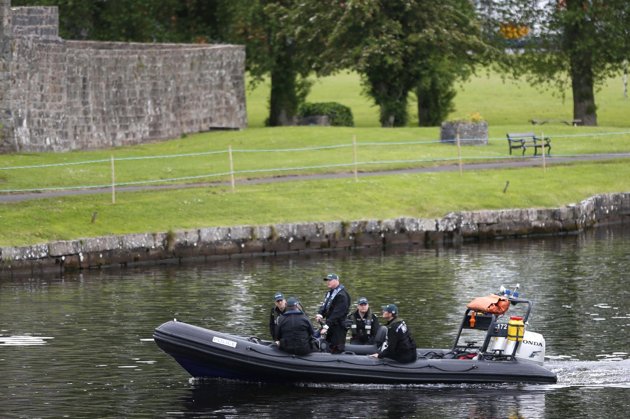
Police patrol the water around Enniskillen in Northern Ireland where the G8 summit is being held
British Prime Minister David Cameron says leaders gathering Monday for the G-8 summit in Northern Ireland should reach speedy agreement on trade and tax reforms, and draw inspiration from the host country’s ability to resolve its own stubborn conflict.
Speaking hours ahead of the summit’s official opening at a lakeside golf resort, Cameron said he expects formal agreement to launch negotiations on a European-American free trade agreement. He said a pact to slash tariffs on exports would boost employment and growth on both sides of the Atlantic.
“This will be a summit that will drive growth and prosperity all over the world,” Cameron declared as he arrived at the summit venue ahead of leaders from the United States, Canada, Russia, Germany, France, Italy and Japan as well as the 27-nation European Union.
Referring to Northern Ireland’s ability to leave behind a four-decade conflict that claimed 3,700 lives, he said leaders of the Group of Eight wealthy nations should be inspired by the setting – the lush lakelands of County Fermanagh – to deliver their own economic breakthrough.
“Ten or 20 years ago, a G-8 in Fermanagh would have been unimaginable. But today Northern Ireland is a very different place … a symbol of hope to the world,” Cameron said.
Obama, seizing on that theme, was beginning his trip in the Northern Ireland capital of Belfast, where he’s delivering a speech on sustaining Catholic-Protestant reconciliation 15 years on from the U.S.-brokered Good Friday peace accord.
The U.S. leader was scheduled to speak inside Belfast’s Waterfront Hall, a glass-fronted building that would never have been built during the city’s long era of car bombs that ended with a 1997 Irish Republican Army cease-fire.
But with IRA splinter groups still active today, Northern Ireland’s police appear to be leaving little to chance in ensuring security around the Lough Erne resort west of Enniskillen.
More than 3,500 officers from Britain have been imported to double the security detail, and British Army engineers have helped to erect a daunting perimeter of steel fences and coiled razor wire for miles (kilometers) around the resort’s lone road entrance.
Air space over much of Northern Ireland is being restricted to summit traffic for the duration of the summit, which concludes Tuesday. And the water around the resort’s peninsula has been similarly closed to civilians, with police patrolling by boat, although the public is still free to fish from shore.
And Northern Ireland’s riot-savvy police have been deployed in armored vehicles and flame-retardant suits. They’re keeping massive mobile water-cannon vehicles in reserve, lest hard-left protesters make any serious bid to breach the security fence.
However the police commander of G-8 security, Assistant Chief Constable Alistair Finlay, says he expects peace to reign when socialist and anti-globalization protesters march Monday night from central Enniskillen to the fence.
Finlay said while officers had trained to manage crowds of more than 10,000 protesters, this was unlikely to materialize Monday, with just 2,000 expected and few anti-G-8 activists traveling from continental Europe for the occasion.
As the protesters march, G-8 leaders are due to hold a working dinner where foreign policy issues – especially the increasingly opposed positions of the United States and Russia over Syria’s civil war – will be on the menu.
Obama was expected to hold a bilateral meeting with Russian President Vladimir Putin before that dinner. Obama last week announced that the United States would begin arming rebel groups trying to oust the Russian-backed government of Bashar al-Assad.
Cameron said he also hoped to achieve agreement that no G-8 member should pay ransoms to secure the release of hostages in North Africa, where western and Asian workers are top targets for kidnappers. – AP
Clandestine immigrants on their way to Italy in a rubber dinghy
Seven immigrants drowned on Sunday during an attempted crossing to Italy by gripping on to a large tuna fishing cage towed by a trawler, according to witnesses from among the 95 people rescued by the coast guard.
Italy’s coast guard rescued the migrants off the shores of Sicily after reports came in of dozens of people clinging desperately to the tuna cage out at sea.
Survivors later told rescue workers that seven people with them had drowned after they had tried to scramble on board the trawler when the crew cut the line linking the boat with the cage.
Witnesses said the victims had been pushed back into the sea, Italian media said.
Rescuers pulled more than 250 people in several boats to safety on Sunday, as the number of people who landed in Italy over the weekend rose to over 900.
More than 100 men from Eritrea were taken to Lampedusa island off the Sicilian coast on Sunday, along with a further 55 people from a different boat, some of whom had jumped into the water at the sight of the coast guard.
On Saturday, some 690 immigrants were rescued from boats with engine trouble or dinghies that had begun taking on water, including a baby girl born during the crossing from Turkey.
Good weather has raised fears of increased numbers of migrants trying to reach Italy by sea. – AFP
Spain’s Pedro Rodriguez in a happy mood after Spain took the lead yesterday
World champions Spain got their Confederations Cup campaign off to a winning start on Sunday with a 2-1 win over South American champions Uruguay in the northern Brazilian city of Recife.
The Spaniards dominated throughout but after Pedro Rodriguez’s deflected opener had cause to be grateful to Roberto Soldado’s 32nd-minute clincher as Luis Suarez netted a late freekick for the Uruguayans.
Although the Uruguayans came closer to pinching a point than they deserved, Spain coach Vicente Del Bosque was exultant afterwards as his side laid the foundation for reaching the last four from a group also containing Uruguay and minnows Tahiti.
“These are three magnificent points which stand us in great stead when it comes to reaching the semi-finals,” said Del Bosque.
“It was a great match played out in conditions which sapped the players’ strength,” he added, referring to the warm, humid weather.
“We dominated almost the whole match but the margin was a slim one in the event. At 2-0 we thought we had it won already and we stepped off the gas a little.”
Uruguay counterpart Oscar Tabarez said: “Spain were superior and they deserved to win – we lacked a bit of discipline. In the second half it was a little more balanced as we dug deep to play for our pride.”
Cesc Fabregas came within the width of a post from giving Spain the lead in the 10th minute with a low strike before the favourites made the breakthrough after just 20 minutes — Lady Luck smiling on them as Diego Lugano deflected home Pedro’s shot to bamboozle keeper Fernando Muslera.
As is their habit, Spain were giving the Uruguayans almost no chance to touch the ball in the opening quarter and Xavi almost made it two when he sent a freekick whizzing just off target after 26 minutes.
Without the ball, Uruguay grew frustrated and resorted to some strong-arm tactics as first Edinson Cavani earned a booking for clattering into Sergio Ramos as they challenged for a header.
Ramos responded by shoving Gaston Ramirez before Uruguayan Cristian Rodriguez caught Jordi Alba with his elbow.
Suarez, in the news for intimating he would be partial to a move from Liverpool to Real Madrid, tried to rally the Celeste, who qualified for this event by winning the 2011 Copa America in Argentina, finding Cavani with a freekick, but the latter’s header was too close to Iker Casillas.
Del Bosque elected to keep faith with his veteran keeper despite Casillas missing a chunk of the second half of the season with a hand injury –once he had recovered the then Real coach Jose Mourinho left him on the bench.
After 32 minutes it was 2-0 courtesy of beautiful vision from Fabregas, who shimmied away from two defenders, then played in Soldado, who took one touch before drilling the ball into the roof of the net.
Uruguay made a change at the break with Ramirez giving way to Alvaro Gonzalez but Spain were still on fire as Xavi and Iniesta interlinked brilliantly before Xavi’s flick fed Pedro and his cross just eluded the diving Soldado.
Pedro then mishit an effort wide after a neat Fabregas through ball sent Alba into space.
With 20 minutes left Uruguay sent on veteran striker Diego Forlan for Diego Perez.
That sparked a revival of sorts for the South Americans and Suarez drove home a curling freekick with two minutes remaining to give the scoreline a more respectable look and also join Forlan as his country’s joint all-time scorer on 33 goals.
Spain came to the event having already become the only team in history to win three major events on the bounce – the 2010 World Cup sandwiched by Euro 2008 and 2012.
A win in this dress rehearsal for next year’s World Cup finals in Brazil would see the Spanish join Argentina and France as the only countries to win the trio of World Cup, the Olympics and the Confederations Cup. – AFP
France’s socialist government suffered the indignity of a first-round exit in a parliamentary by-election to replace a disgrace minister forced out over a tax-dodging scandal.
Former budget minister Jerome Cahuzac, who is facing charges of tax fraud, stepped down from his parliamentary seat in April.
In Sunday’s by-election for his seat in Lot-et-Garonne, southwest France, the socialist candidate was pushed into third place — and thus eliminated.
The second-round run-off on June 23 will be fought between a candidate from the centre-right UMP party of former president Nicolas Sarkozy; and a member of the far-right National Front (FN).
The vote was marked by a turn-out significantly lower than in the 2012 general election: only 46 percent of the 75,000 voters eligible to have their say bothered to do so.
President Francois Hollande acknowledged that the result was fall-out from the scandal around Cahuzac, whose ministerial portfolio had included the fight against tax evasion.
For UMP president Jean-Francois Cope, the result was another “scathing repudiation of Francois Hollande and his policies”.
Socialist party leader Harlem Desir called on voters to ensure the FN candidate did not win the second-round run-off vote.
Sunday’s result was another slap in the face for the ruling Socialists after defeats last weekend in two other by-elections.
The party now has 292 deputies in the National Assembly: just three seats more than the 289 seats that ensures an absolute majority.
Through to the second round are the UMP’s Jean-Louis Costes, who came first with 28.7 percent of the vote; and the FN candidate, 23-year-old Etienne Bousquet-Cassagne, who polled 26 percent.
Socialist candidate Bernard Barral came third with 23.7 percent. – AFP
An 11-year-old New Zealand boy was reported Saturday to have fathered a child with the 36-year-old mother of a school friend, raising questions on why women cannot be charged with rape in the country.
Counsellors working in the area of child sexual abuse said the case highlighted a lack of attention to women as potential offenders, according to the New Zealand Herald, which reported the story.
The case has also prompted an examination of the law, under which the crime of rape applies only to men.
Justice Minister Judith Collins said she would investigate, the paper reported.
“This case raises an important point. I will seek advice from officials on whether or not a law change is required,” Collins said.
The woman and boy, whose names were not released, live in the main North Island district of Auckland.
The boy’s school principal told the New Zealand Herald that he was shocked when the child told him what was happening.
“You won’t be very happy with me,” he recalled the boy saying late last year. He said he had been having sex with his friend’s mother “and it needs to stop”.
The organisation Male Survivors of Sexual Abuse said if the case is proved then the woman should be held accountable.
Under New Zealand law, the crime of rape applies only to men and carries a maximum jail sentence of 20 years.
Women who force a male to have sex face a charge of sexual violation which carries a maximum 14-year sentence.
According to the newspaper, government welfare officials — who took the baby into care about two months ago — confirmed they were dealing with a case at the boy’s school and that it was before the courts, but refused to comment further. The police also refused to comment.
The Herald reported that the young father, who has now turned 12, was also understood to have been taken into care.- AFP
Gauteng province, or the PWV (Pretoria=Witwatersrand-Vereeniging
South Africa’s two main political parties are setting out their stalls for the 2014 election, with the country’s key province Gauteng shaping up to be a key battleground.
In recent days the African National Congress (ANC), in power for 19 years, and main opposition the Democratic Alliance (DA) have held town hall discussions and rallies in the region, which encompasses Johannesburg and Pretoria.
The country’s smallest and most populated province, it holds the seat of government and the economic heartland of Africa’s largest economy.
President Jacob Zuma, on the hunt for a second term in office, on Friday visited the suburb where Nelson Mandela used to live in the iconic Johannesburg township Soweto.
“Get well, Mandela, get well!” was a popular chant as he spoke to cheering students and schoolchildren, the day the global peace icon marked a week in hospital for a recurring lung infection.
Meanwhile DA leader Helen Zille was clear on her party’s target for parliamentary and presidential polls.
“The DA is marching towards victory in Gauteng next year,” she told a sea of supporters dressed in the party’s blue at a rally in Johannesburg on Saturday.
“South Africa stands or falls on Gauteng’s success because of its economic might. If South Africa is to succeed, Gauteng must succeed.”
This will be a key fight in upcoming polls, agreed political analyst Cherell Africa.
“Gauteng is a very strategic province. It is a very important province economically,” she told AFP.
“It is strategic in terms of if they want to damage the ANC,” said Africa, who heads the politics department at the University of the Western Cape.
The ANC won 2009 polls with 65.9 percent nationally, against the DA’s 16.7 percent.
But the opposition’s representation in Gauteng shot to over 33 percent in a municipal vote two years later.
Though the ANC still firmly controls the province, protests over poor electricity, water and sanitation services have increased.
A massive municipal mishap in the provincial capital Johannesburg provoked scandal as residents received erroneous utility bills amounting to thousands of rand (dollars, euros).
The DA, smelling blood, has thrown its weight and funds behind a mass civil society court battle against planned tolling on Gauteng’s main highway.
The party said it wanted to win another key province after taking the Western Cape — which includes Cape Town — in the previous elections.
Zuma has defended his track record, slamming critics such as the DA who point out sluggish economic growth and 25 percent unemployment as well as massive labour unrest in the mining sector during his four years in office.
“They’ve forgotten that this government is trying to fix problems that have been there for centuries,” he told students at the University of Johannesburg’s Soweto campus on Friday.
The ANC has drawn a lot of mileage from the DA’s image as a party for whites. Black DA supporters are “un-African”, the ANC has said.
Zuma launched a charm offensive in mixed-race communities in Gauteng, focusing on an anti-drug campaign.
Many commentators saw this as an attempt to lure them away from the DA, their likely voting choice.
Both parties promise a better future, but ironically the apartheid past is prominent in the debate.
Slogans in support of 94-year-old Mandela, the country’s first black president, are an open reminder of the ANC’s past as liberation movement.
It keeps referring to that history to appeal to voters.
But the DA has hit back with a campaign showing its own leaders’ role in fighting against the white-minority regime.
A big advertisement in Soweto recalls how Zille exposed the apartheid police killing of activist Steve Biko in 1977 when she was a young journalist.
But the DA stronghold the Western Cape is the only province where blacks are a minority.
Gauteng is majority black, and in a country where race-based politics is an important factor in votes, the party has a battle on its hands.
“I don’t see it will be likely the DA wins Gauteng,” said Africa.
“The trend has been that where people are dissatisfied with the ANC they tend to opt out of voting. It’s not that they would move to the DA.” – AFP
This website uses cookies to improve your experience. We'll assume you're ok with this, but you can opt-out if you wish. Cookie settingsACCEPT
Privacy & Cookies Policy
Privacy Overview
This website uses cookies to improve your experience while you navigate through the website. Out of these cookies, the cookies that are categorized as necessary are stored on your browser as they are essential for the working of basic functionalities of the website. We also use third-party cookies that help us analyze and understand how you use this website. These cookies will be stored in your browser only with your consent. You also have the option to opt-out of these cookies. But opting out of some of these cookies may have an effect on your browsing experience.
Necessary cookies are absolutely essential for the website to function properly. This category only includes cookies that ensures basic functionalities and security features of the website. These cookies do not store any personal information.
Any cookies that may not be particularly necessary for the website to function and is used specifically to collect user personal data via analytics, ads, other embedded contents are termed as non-necessary cookies. It is mandatory to procure user consent prior to running these cookies on your website.


 Reports that Britain spied on G20 delegates, including South Africa, during meetings in London in 2009, should be investigated, the international relations and co-operation department said on Monday.