Obama re-election greeted with racial unrest

A protest at the University of Mississippi against the re-election of President Barack Obama grew into crowd of about 400 people with shouted racial slurs as rumors of a riot spread on social media. Two people were arrested on minor charges.

The university said in a statement Wednesday that the gathering at the student union began late Tuesday night with about 30 to 40 students, but grew within 20 minutes as word spread. Some students chanted political slogans while others used derogatory racial statements and profanity, the statement said.

The incident comes just after the 50th anniversary of violent rioting that greeted the forced integration of Ole Miss with the enrollment of its first black student, James Meredith.

Ole Miss Chancellor Dan Jones promised an investigation and said “all of us are ashamed of the few students who have negatively affected the reputations of each of us and of our university.”

On Wednesday night, about 700 people held up candles and called for racial harmony outside the administrative building at the university in Oxford, countering Tuesday’s protest over Obama’s re-election.

Police were initially alerted to Tuesday’s uproar by people who saw Twitter posts about it. The students were told to leave, but about 100 came back later. One person was charged with public intoxication and another with failure to comply with police orders. There were no reports of injuries or property damage.

Rumors about the situation were fueled on Twitter after the university’s student journalists posted a video referring to the gathering as “riots.” The student newspaper posted a video of the crowd, but much of what the students said in it is unintelligible other than the “Hotty Toddy” cheer, which is common at football games and other school gatherings.

One picture that spread rapidly on social media shows people burning an Obama campaign sign, but the university hasn’t confirmed that the picture was taken on campus. The chancellor said some photos shared on social media showed things that were not seen by police on campus, but the reports of uncivil language and racial slurs appeared to be accurate.

Some students and teachers used social media to condemn the conflict.

Ellen Meacham, an Ole Miss journalism instructor, posted on Facebook that “anyone who calls that a riot has never read or heard anything about 1962.”

She was referring to when Meredith became the first black student to enroll at the university on Oct. 1, 1962. Federal authorities deployed more than 3,000 soldiers and more than 500 law enforcement officers to Oxford during the integration. An angry mob started an uprising that killed two white men. More than 200 people were injured. Ole Miss sponsored lectures and other events this year to commemorate the 50th anniversary.

“Now, 50 years later, about 2 percent of the overall student body goes out to protest when their guy doesn’t win the presidency and a portion of that small percentage displays the ugly strain that still infects too many in our student body,” Meacham wrote.

In a state with a 37 percent African-American population, Ole Miss now has a black enrollment of about 16.6 percent. The current student body president, Kim Dandridge, is the fourth black person elected to the post.

Jones said the campus was back to normal Wednesday.

The university was planning an event for Wednesday evening called the “We are One Mississippi Candlelight Walk” to condemn the protest, according to Thomas J. “Sparky” Reardon, vice chancellor for student affairs. – AP

Man arrested with genitals in his wallet

An Eastern Cape man caught with his teenage nephew’s private parts in his wallet has been arrested, police say.

The 18-year-old went missing in Thebe Locality, Nqobo, on Sunday, said Colonel Mzukisi Fatyela.

“… On Wednesday the community found his private parts in his uncle’s wallet. Police were then called,” he said.

Fatyela said the 42-year-old man took the police to Malande Forest where they found the youth’s mutilated body.

His head, arms and legs had been chopped off and were found not far from his torso.

The man would appear on a murder charge in the Nqobo Magistrate’s Court on Thursday, said Fatyela. – Sapa

Why Canada is richer than the US

On July 1, Canada Day, this year, Canadians awoke to a startling, if pleasant, piece of news: For the first time in recent history, the average Canadian is richer than the average American.

According to data from Environics Analytics WealthScapes published in the Globe and Mail, the net worth of the average Canadian household in 2011 was $363,202, while the average American household’s net worth was $319,970.

A few days later, Canada and the U.S. both released the latest job figures. Canada’s unemployment rate fell, again, to 7.2 percent, and America’s was a stagnant 8.2 percent. Canada continues to thrive while the U.S. struggles to find its way out of an intractable economic crisis and a political sine curve of hope and despair.

The difference grows starker by the month: The Canadian system is working; the American system is not. And it’s not just Canadians who are noticing. As Iceland considers switching to a currency other than the krona, its leaders’ primary focus of interest is the loonie — the Canadian dollar.

As a study recently published in the New York University Law Review pointed out, national constitutions based on the American model are quickly disappearing. Justice Ruth Bader Ginsburg, in an interview on Egyptian television, admitted, “I would not look to the United States Constitution if I were drafting a constitution in the year 2012.” The natural replacement? The Canadian Charter of Rights and Freedoms, achieving the status of legal superstar as it reaches its 30th birthday.

Good politics do not account entirely for recent economic triumphs. Luck has played a major part. The Alberta tar sands — an environmental catastrophe in waiting — are the third-largest oil reserves in the world, and if America is too squeamish to buy our filthy energy, there’s always China. We also have softwood lumber, potash and other natural resources in abundance.

Policy has played a significant part as well, though. Both liberals and conservatives in the U.S. have tried to use the Canadian example to promote their arguments: The left says Canada shows the rewards of financial regulation and socialism, while the right likes to vaunt the brutal cuts made to Canadian social programs in the 1990s, which set the stage for economic recovery.

The truth is that both sides are right. Since the 1990s, Canada has pursued a hardheaded (even ruthless), fiscally conservative form of socialism. Its originator was Paul Martin, who was finance minister for most of the ’90s, and served a stint as prime minister from 2003 to 2006. Alone among finance ministers in the Group of Eight nations, he “resisted the siren call of deregulation,” in his words, and insisted that the banks tighten their loan-loss and reserve requirements. He also made a courageous decision not to allow Canadian banks to merge, even though their chief executives claimed they would never be globally competitive unless they did. The stability of Canadian banks and the concomitant stability in the housing market provide the clearest explanation for why Canadians are richer than Americans today.

Martin also slashed funding to social programs. He foresaw that crippling deficits imperiled Canada’s education and health- care systems, which even his Conservative predecessor, Brian Mulroney, described as a “sacred trust.” He cut corporate taxes, too. Growth is required to pay for social programs, and social programs that increase opportunity and social integration are the best way to ensure growth over the long term. Social programs and robust capitalism are not, as so many would have you believe, inherently opposed propositions. Both are required for meaningful national prosperity.

Martin’s balanced policies emerged organically out of Canadian culture, which is fair-minded and rule-following to a fault. The Canadian obsession with order can make for strange politics, at least in an American context. For example, of all the world’s societies, Canada’s is one of the most open to immigrants, as anyone who has been to Toronto or Vancouver will have seen. Yet Canada also imposes a mandatory one-year prison sentence on illegal immigrants, and the majority of Canadians favor deportation. Canadians insist that their compassion be orderly, too.

This immigration policy is neither “liberal” nor “conservative” in the American political sense. It just works. You could say exactly the same thing about Canada’s economic policies.

Canada has been, and always will be, overshadowed by its neighbor, by America’s vastness and its incredible versatility and capacity for reinvention. But occasionally, at key moments, the northern wasteland can surprise. Two hundred years ago last month, the War of 1812 began. Thomas Jefferson declared, “The acquisition of Canada, this year, as far as the neighborhood of Quebec, will be a mere matter of marching.” The U.S. was comparatively enormous — with almost 8 million people, compared with Canada’s 300,000. The Canadians nonetheless turned back the assault.

Through good luck, excellent policy and even some heroism, Canada survived the war. But it has taken 200 years for Canada to become winners.

(Stephen Marche is a novelist and columnist for Esquire Magazine. His most recent book is “How Shakespeare Changed Everything.” The opinions expressed are his own.)

Whites’ ‘waning influence’ among US electorate

President Barack Obama’s election victory exposed tectonic demographic shifts in American society that are reordering the U.S. political landscape.

The 2012 presidential election likely will be remembered as marking the end of long-standing coalitions, as voters regroup in cultural, ethnic and economic patterns that challenge both parties—but especially Republicans.

Older voters and white working-class voters, once core elements of the Democratic Party, have drifted into the Republican column. Rural and small-town voters, whose grandparents backed the New Deal, now fill the swath of the U.S. that leans reliably GOP.

But in cities and dynamic suburbs, a rapidly growing force of Latinos, Asian-Americans, African-Americans and higher-income whites emerged this week as the strength of Mr. Obama’s winning Democratic coalition.

“The Democrats now own a coalition of emerging metro areas where the whites and minorities live together, and where they vote Democratic,” said Robert Lang, a demographer who directs the Brookings Mountain West, a research center at the University of Nevada, Las Vegas.

In northern Virginia’s Fairfax County, for example, Democratic Rep. Gerry Connolly represents a district where 20 years ago, he said, 3% of residents were born outside the U.S. Now, it is nearly 30%, with the majority Asian immigrants.

What County-by-County Results Tell Us About the Election

The most detailed results from the 2012 election show the voting patterns for each county in the country. Changes from the previous election give us an idea of what geographic and demographic trends are impacting national politics.

Mr. Obama won big there Tuesday, helping him to tally the once reliably Republican state of Virginia for the second straight general election.

Similar shifts throughout the U.S. help explain how Mr. Obama was returned to the White House on support from young people, minorities, women and upscale whites, a coalition virtually identical to the one that carried him to victory four years ago.

Some political analysts thought that coalition came together only because of the historic nature of Mr. Obama’s 2008 victory and wouldn’t prove durable. That belief didn’t hold up this week.

The question now is whether Mr. Obama and other members of his party can solidify this coalition into a foundation of the Democratic Party.

Republicans said their party won a smashing victory in congressional elections just two years ago, when they took control of the House of Representatives, illustrating that there is no clear claim for either party.

Decision Day in America

Voters headed to the polls Tuesday in a presidential contest defined by its intensity and razor-thin margins.

The 2010 election, they said, shows that even with modest inroads among Latino and Asian-American voters, the GOP can build a solid majority on the foundation of its strong white support. Republicans enjoy historically high levels of control over governorships and state legislatures, which they say shows the party’s potential if it can improve its message to minorities.

In any case, both Democrats and Republicans see new contours of a split electorate.

Twenty years after supporting former President Bill Clinton, a majority of white voters have returned to where they were during the Reagan administration, firmly planted in the Republican camp. Nearly six in 10 white voters told exit pollsters Tuesday that they sided with Republicans, up from 40% during Mr. Clinton’s 1992 presidential victory.

More striking is the GOP’s loose grip on minority voters: just 29% of Latinos, 25% of Asians and 8% of African-Americans said Tuesday they identified with the Republican Party.

The trend has strengthened the Democrats’ hold in cities and extended a new reach into once-white suburbs now filling with successful Asian and South Asian immigrants, as well as Hispanics.

Mr. Obama scored a big win, for example, in Denver’s Arapahoe County, a bedroom community of family farms and high-tech firms. The county, in turn, helped propel Mr. Obama to victory for the second time in Colorado, formerly a Republican-leaning state.

The presidential election also cast a spotlight on a generational shift under way.

Senior citizens, who swung to the Democrats during the Medicare and Social Security fights of the 1990s, have swerved to Republicans. Close to six in 10 seniors backed Republican presidential candidate Mitt Romney, according to exit polls Tuesday, up from the 51% of the group siding with Sen. John McCain in 2008.

The split by age reached even deeper: A majority of voters age 40 and older sided with Mr. Romney. The majority of every younger age group voted for Mr. Obama, according to exit polls.

When former President George H.W. Bush, Mr. Reagan and Mr. Clinton won their respective elections, they won among all ages. But no Republican presidential candidate has won a majority of voters under age 30 since Mr. Bush in 1988.

Polls earlier this year showed cooling interest among young voters in the Obama re-election campaign. But turnout among voters ages 18 to 29, in fact, eclipsed the 2008 election, with nearly 60% siding with the president.

The robust turnout by younger voters boosted Democrats nearly as much as the strong showing among Latinos.

image

Concerns grew Wednesday among some Republicans that the party’s base will be hobbled in national elections if it becomes too old, too rural and too white. “What worries me is that the GOP is about to become the WOP—the White Old Party,” said Norm Coleman, a former Minnesota senator.

Nothing casts more fear in the GOP than estrangement with the swelling U.S. Hispanic population, which now accounts for 10% of the electorate.

During the 1970s and 1980s, Republican presidential candidates routinely received a third or more of the Latino vote. Former President George W. Bush garnered just over 40% in 2004. That share has since plummeted amid sometimes harsh debate over legislation to deal with millions of illegal immigrants, mostly from Mexico, living in the U.S.

Mr. Romney got 29% of the Hispanic vote Tuesday, the lowest share since Sen. Bob Dole ran for president in 1996.

“The party has hit a new floor,” said Al Cardenas, the head of the American Conservative Union and former chairman of the Florida Republican Party. “The reality is we face a very big, very important shifting demographic in the country, and we saw how it played out in Colorado, Florida, Nevada and Virginia.”

Mr. Obama beat Mr. Romney among Latinos by 58% to 40% in Florida; 87% to 10% in Colorado; 80% to 17% in Nevada; and 66% to 31% in Virginia, according to an ImpreMedia/Latino Decisions poll.

“Texas probably has a huge potential to trend Democratic if the Democratic Party engages the electorate there,” said Matt Barreto, co-founder of the Latino Decisions polling firm.

The Romney campaign devoted attention to Asian voters, particularly in northern Virginia. Exit polls showed the Asian vote expanding to 3% of the total U.S. electorate—an all-time high—with 75% of those votes cast for Mr. Obama. – WSJ

Drugs sold to primary school children

Children as young as 12 are being sold drugs around school premises, Gauteng police commissioner Lt-Gen Mzwandile Petros said on Wednesday.

“I have met with primary school principals in some of our clusters regarding the drug problem. The situation is severe… some have indicated that they are helpless,” he told reporters in Johannesburg.

“If consumption of drugs happens at schools, then it means the sale of these substances is around school premises.”

Petros was giving an overview of Gauteng crime statistics for 2011/2012.

Some school children were working with the police to thwart the drug trade on school grounds, he said.

“This project has been done successfully in areas such as Klerksdorp: we are rolling it out in schools across the province.”

Serious crime such as murder, armed robbery, rape and hijacking had decreased in Gauteng compared with the previous financial year.

However, crimes such as theft out of vehicles, illegal possession of firearms and ammunition, drug possession, dealing in drugs, and driving under the influence of alcohol or drugs were on the increase.

Police were working hard to make Gauteng citizens feel safe, said Petros.

Rural safety campaigns had been introduced in areas such as Muldersdrift and Midrand. – Sapa

BEE charities: Segregation is back

Charities could face ruin over a government proposal that firms could lose black economic empowerment (BEE) points if they donate to charities that do not have 100 percent black beneficiaries.

Some charities believe the proposal means that any firm that donates to a charity that helps a white, coloured or Indian person may not be able to claim points for its BEE scorecard.

It could also mean that if just one white child or person is among a group of black people the charity is helping, the firm that donates to it could lose it points.

A BEE scorecard is used by the government to measure a company’s BEE compliance. Those that comply do business more easily with other companies also wanting to increase their scorecard and are favoured by the government in all aspects relating to business.

Despite repeated attempts since Monday for a response and clarity from the Department of Trade and Industry, all it would say was: “All stakeholders who have concerns and objections are requested to make use of the 60-day period to make their submission… We will not be in a position to comment/respond to the questions as we do not want to pre-empt the process.”

The amended changes to the BEE Codes of Good Practice are on the department’s website and up for public comment until December 2.

Legislation that is in place allows for charities to assist all races, but lower points are scored when companies assist organisations where less than 75 percent of the recipients are black.

Bridget Brun, a Durban BEE agency head, said she hoped the proposed amendment was an error.

“I don’t think they [the department] have realised what they have done. Think of organisations such as Girls’ and Boys’ Town or Childline,” she said.

“This amendment will have a huge effect. It means if the charity benefits any Indian, white, coloured or even a Mozambican or Zimbabwean child, companies will not be able to claim points on their BEE scorecard. We are now going to have segregated facilities.

“Charities will not help white children if the companies which support them withdraw support because they can’t claim the points.”

Erika Petersen-Holmes, a partner in the commercial and corporate law department at Shepstone and Wylie in Durban, agreed, saying: “Almost all charities have at least one white beneficiary.

“This could result in those charities receiving no corporate donor funding, or those charities rejecting white beneficiaries.”

Karen Hatton-Jones, of retail giant Spar, which gives many charities, orphanages and NGOs large cash and food donations every year, said she was “distressed and disgusted” by the proposed change.

“It’s not going to change what we do. Since when do we put a colour to those in need?” she asked.

Childline head Joan van Niekerk said BEE laws were going from difficult to ridiculous.

“We don’t know the race of the child who phones us. It’s inappropriate to ask, ‘Are you black, and how black are you?’ This is a different kind of apartheid. It’s extremely distressing,” she said.

Van Niekerk said charities were pragmatic about funding.

“There is no such thing as a free lunch. We have to be practical and realistic about funding now. This corporate social responsibility money is something companies are obligated to give and we know the rules up front. If this goes through it will now be far more difficult to deal with.”

Jackie Branfield, of child crisis organisation BobbiBear, said it was the first that she had heard of it.

“Yes, 99 percent of the children we help are black, but we are certainly not going to turn away that 1 percent who could be a white or Indian child. Where’s our democracy, where is our new South Africa?”

Durban Chamber of Commerce CEO Andrew Layman said worthwhile social upliftment projects would suffer. “The implications could be severe,” he said. IOL

The smell of danger

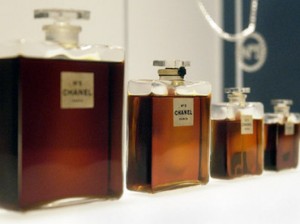
Scientists have found that some of the ingredients in Chanel’s iconic No. 5 scent and a number of other perfumes can cause allergic reactions. EU health officials are considering banning the perfumes from sale.

European scientists unveiled a list of 100 ingredients thought to be hazardous to human health, adding 74 more substances to a previous, similar list. Among these is tree moss, traces of which are featured in the iconic Chanel scent, which has been in production for nearly a century. The list of potentially harmful perfumes also includes Guerlain’s Shalimar and one from Thierry Mugler, The Daily Mail reports.

The European Commission is now considering whether perfumes containing these substances, even in small amounts, should be banned from sale. Such a decision would strongly affect the manufacturers.

Perfumers found the initiative ridiculous, saying the whole industry could be devastated. “Chanel No. 5 has never done any harm to anyone,” Sylvie Jourdet of the French perfumers’ society is quoted by The Daily Mail as saying.

The whole idea remains dubious, considering the fact that different people have different allergies. “Lemon, jasmine and bergamot all contain allergenics,” Jourdet said. “It is the death of perfume if this continues. The more you use natural ingredients, the more there is a risk of allergies.”

Scientists have called for a ban on some of the ingredients on the list, while they say the use of others should be limited. They’ve suggested that 12 substances – including such popular components of perfumes as lemon citral, coumarin, found in tonka beans and eugenol, found in rose oil – be limited to 0.01 per cent of the product.

“It would be the end of beautiful perfumes if we could not use these ingredients,”
Françoise Montenay of Chanel says.

The ingredients used in perfumes are not regulated by law as are other products despite the profound sensory influence it may exert. The perfume industry has made significant inroads recently on secret “mood changing” diffusers in public spaces.

Some critics even say it’s the scent of “death.”

The environmental group Greenpeace said Monday that at least 36 well-known perfume brands contain chemicals that are hazardous to health and the environment.

At a press briefing at the Chicken Bacolod Restaurant in Quezon City, Francis de la Cruz, Greenpeace Southeast Asia toxics campaigner, said that phthalate esters and synthetic musks-two toxic man-made to chemicals-are contained in several perfumes.

“These chemicals are known to be persistent and they intensify once they enter the body by inhaling or through the skin,” he said.

“It’s not acute poisoning but it’s chronic, it stays in our system and accumulates in the fatty tissues of living organisms,” he added.

De la Cruz said phthalate has been found to have bad effects on the DNA, evil sperm and restricts lung function in men. Synthetic musks can attack living tissues, he said.

These perfumes containing toxic agents, he said, and they are Terre by Hermes, CK One, Eternity for Men and Eternity for Women of Calvin Klein, Boss in Motion of Hugo Boss; Envy Me of Gucci, Blue Pole of Ralph Lauren, True Star of Tommy Hilfiger, She of Armani, No.5 of Chanel, Floral Dream of Adidas, Cinema of Yves Saint Laurent and Sunset of Naomi Campbell.

Randomly selected brands of perfume was sent for to quantitative analysis for phthalates and synthetic musks at the Netherlands laboratory, TNO Environment and Geosciences, which conducted the study from 2003 to 2004.

The complete list includes Floral Dream by Adidas, In Leather by Aigner, Natural Aqua, Bulgarian Emporio Armani by Armani, White Musk, Eau de Parfum by The Body Shop and High Speed by Bogner, BLV Night by, CK One for Men, Eternity for Men and Eternity for Women by Calvin Klein, the Baiser Du Dragon by Cartier, Chance Not. 5 by Chanel, Poison and Also Poison by Christian Dior, Him by FCUK, Fiorucci Loves You, Envy Me by Gucci, Boss by Hugo Boss, Manifest My by Isabella Rosellini, Classique and Badly by the Jean Paul Gaultier, Nightlife by Joop! , Iris Blue by Melvita, Waterlove by Mexx, Sunset by Naomi Campbell, XS Pour Homme by Paco Rabanne, and Jamaica Man and Jamaica Woman by Puma.

Ken Cook, President of the watchdog organization Environmental Working Group (EWG), is alerting consumers to the risks they’re taking each time they reach to sprits a wrist or neck. It’s one thing to know that the US does a generally abysmal job of regulating personal care product ingredients – another thing entirely to know that EWG found 38 “secret” (unlisted) ingredients in the 17 popular perfumes they recently tested.

Here’s what’s even worse: 66% of those unlisted ingredients in those 17 perfumes have not been assessed by the FDA for safety, and 19% of listed ingredients haven’t been vetted for safety, either. No problem, right? I’m not ingesting my perfume, right? Wrong. Your skin is your largest organ, and it drinks up most of what you put on it, chemicals and all. Would you drink a bottle of juice with 38 “secret” ingredients in it? Probably not.

From EWG’s email alert:

“We found 38 unlisted chemicals in our testing. The average fragrance tested contained 14 secret chemicals. Among them are chemicals associated with hormone disruption and allergic reactions, and many substances that have not been assessed for safety in personal care products by the US Food and Drug Administration (FDA) or the industry’s own safety panel.”

Companies are getting away with this secretive, smelly nonsense because the 1973 Fair Packaging and Labeling Act doesn’t regulate “fragrance” ingredients. So when you see “fragrance” listed on a product label, that’s a red flag – it’s likely there to cover all manner of evils.

According to EWG: “The vague term ‘fragrance’ covers chemicals that can be linked to reproductive damage, hormone disruption, and can trigger allergic reactions.”

If South Korean voters think they can smell victory when they go to the ballot box, they are absolutely right.

A team of supporters of presidential candidate Lee Myung-bak secretly sprayed a perfume called “Great Korea” at his rallies.

Volunteers were sent to voting booths in 2007 to ensure the same scent is drifting through the air.

“It will remind people of the identity of Lee Myung-bak. The concept of the perfume is hope, victory and passion,” said Oh Chi-woo of the conservative Grand National Party’s culture and arts team.

“They’ll just smell it today. But when they cast their votes, they’ll remember,” he said in the central town of Jecheon, standing by an open vegetable market where any smell from mounds of garlic and onions was drowned out by the slightly cloying scent of “Great Korea.”

The “fragrance of the president” offensive had been carried out on the quiet since the start of Lee’s campaign, he said.

One party volunteer, Kwon Hae-jin, said voters had responded well, noting some smokers who had complimented her on the pleasant scent.

“People will probably realise this is Lee’s smell,” she said, spraying bursts of the perfume into a gathering of supporters.

Latest opinion polls suggest she may not need to bother. Lee’s popularity rating is about 30 points ahead of his nearest rival.

An independent Puerto Rico? No thanks!

For many voters this Election Day, it’s not a matter of who will be the next president that’s a pressing issue: in Puerto Rico, people are hitting the polls to decide if the US territory should petition Congress for statehood.

The Atlantic Ocean island of Puerto Rico is home to around 4 million people, but some say their relationship with the United States isn’t what it should be, even more than a century into a longstanding relationship. Currently, the US Commonwealth of Puerto Rico is subject to American jurisdiction and sovereignty, as well the rule of whatever president is elected by the rest of the country — voters on the island, however, can’t have a say in that contest.

Pending the results of a vote on Election Day, though, that could change. Puerto Ricans going to the polls on November 6 aren’t opting for a president, but rather whether or not they should ask to join the union as the fifty-first state. This year, voters are being asked to weigh in on a two-part referendum that has them answering if they want to change their relationship with the US, and to what.

When Puerto Ricans go to the polls this year, they have the option of answering if they want to stop being a commonwealth of the US and, if so, what would they prefer: statehood, independence or sovereign free association.

This is the fourth time voters in Puerto Rico have been asked such a question in just 45 years, but the outcome this election season might bring a surprise: as of this week, a poll conducted by Asisa Research Group suspects that 47.9 percent of voters will want statehood, as opposed to independence or sovereignty.

In the past, a majority of voters have always agreed to stay subject to US laws without the representation allowed in the 50 other united states. Some say citizens might be more obliged to vote differently this year, though, as the benefits from becoming a state could save the island from some of the worst crimes it’s experienced in ages. In 2011, Puerto Rico reported 1,117 killings on an island barely 3,000 square miles, and currently they’re seeing unemployment at above 13 percent — double what some counties in the mainland have in terms of jobless rates.

Should Puerto Ricans vote for statehood, the island will be allowed roughly $20 billion in additional federal funding from Washington, as well as representation in Congress that could help bring in even more money down the road. In an environment where that sort of investment could easily turn things around, some say it’s a no-brainer.

“Puerto Rico has to be a state. There is no other option,” 25-year-old Jerome Lefebre tells the Associated Press on his way to the polls on Tuesday. “We’re doing OK, but we could do better. We would receive more benefits, a lot more financial help.”

Fernando Martin, the executive president of the Puerto Rican Independence Party (PIP), tells BBC that right now things are fair for fellow residents nestled roughly 1,000 miles off the mainland. “In our case, the government of another country makes decisions every day without the participation of Puerto Ricans,” he notes.

Under American rule without equal representation, some say they have been practically colonized by American leaders who limit what say residents have on their own. That stripping of culture and heritage is evident in many, like another man interviewed by the AP: 42-year-old Ramon Lopez de Azua.

“Puerto Rico’s problem is not its political status,” he said. “I think that the United States is the best country in the world, but I am Puerto Rican first.”

“We don’t want to continue being a colony. We want the full rights that we’re entitled to as American citizens,” Thomas Rivera Schatz, president of the territory’s local Senate, adds to the Chicago Tribune. “Because we’re a colony, we have the misfortune of being first (in line) for federal cuts and last in line for handouts.”

Others, however, have come to the consensus that statehood could be all too inevitable.

“I believe the country should become a 51st State because the US has influenced our country completely and we are 100% Americanised,” one young woman tells the BBC.

On Election Day, voters in Puerto Rico will elect a governor, but no president. The Asisa Research Group has Gov. Luis Fortuño as the likely opponent this year over challenger Sen. Alejandro Garcia Padilla.

Fernando Martin, the executive president of the Puerto Rican Independence Party (PIP), tells BBC that right now things are fair for fellow residents nestled roughly 1,000 miles off the mainland. “In our case, the government of another country makes decisions every day without the participation of Puerto Ricans,” he notes.

Under American rule without equal representation, some say they have been practically colonized by American leaders who limit what say residents have on their own. That stripping of culture and heritage is evident in many, like another man interviewed by the AP: 42-year-old Ramon Lopez de Azua.

“Puerto Rico’s problem is not its political status,” he said. “I think that the United States is the best country in the world, but I am Puerto Rican first.”

“We don’t want to continue being a colony. We want the full rights that we’re entitled to as American citizens,” Thomas Rivera Schatz, president of the territory’s local Senate, adds to the Chicago Tribune. “Because we’re a colony, we have the misfortune of being first (in line) for federal cuts and last in line for handouts.”

Others, however, have come to the consensus that statehood could be all too inevitable.

“I believe the country should become a 51st State because the US has influenced our country completely and we are 100% Americanised,” one young woman tells the BBC.

On Election Day, voters in Puerto Rico will elect a governor, but no president. The Asisa Research Group has Gov. Luis Fortuño as the likely opponent this year over challenger Sen. Alejandro Garcia Padilla. – RT

Me.ga suspended

Controlling the net, Blaise Louemba

Kim Dotcom, the founder of MegaUpload, has accused Washington of a “witch hunt” after the government of Gabon announced the suspension of his new site, which was due to be launched in January.

­Last week, Dotcom unveiled plans to re-launch his file-sharing site in January 2013, using the Gabonese domain me.ga, with the message “this button will change the world.“

But the authorities of the African state thought otherwise.

“I have instructed my departments… to immediately suspend the site www.me.ga,” announced Communication Minister Blaise Louembe, saying, “Gabon cannot serve as a platform or screen for committing acts aimed at violating copyrights, nor be used by unscrupulous people.”

Minister Louembe said the domain name was originally registered to someone in France who then transferred it to Dotcom.

Furthermore, Gabon’s communications ministry alleges that the website was set up to redirect traffic to another site hosted in France, which would provide access to shared files.

Dotcom immediately replied to the move by blaming Washington. “Don’t worry. We have an alternative domain. This just demonstrates the bad faith witch hunt the US government is on,” he tweeted.

The 38-year-old German national is free on bail in New Zealand ahead of an extradition hearing to the US in March.

The FBI and US Justice Department allege MegaUpload made  $175 million in profits by offering pirated copies of movies, TV shows and other content, resulting in over  $500 million damages to the industry.

Washington wants him on money laundering, racketeering, fraud and online copyright theft charges, and seeks a 20-year jail sentence.

Dotcom insists he is innocent and free to start a new file-sharing venture which will incorporate state-of-the-art encryption methods resulting in user-only knowledge of the uploaded material. – RT

Obama, pot win in Colorado, Washington

Colorado and Washington became the first US states to legalise the possession and sale of marijuana for recreational use on Tuesday in defiance of federal law.

Amendment 64 supporters were ecstatic at their gathering in Denver Tuesday night when news came down.

“Marijuana prohibition has failed in Colorado and it has failed in all sorts of other places,” Amendment 64 advocacy director Betty Aldworth told CBS4. “I’m so proud and so honored to have worked with this team of people and to live in a state where people recognize marijuana prohibition is a failure and we can do better.”

The amendment allows adults over 21 to possess as much as an ounce of pot. It also allows people to grow as many as six pot plants in secure, private areas.

Supporters believe legalization will generate tens of millions of dollars in tax revenue for Colorado.

The approval of the amendment puts Colorado in defiance of federal drug law.

“It’s still against federal law,” Gov. John Hickenlooper told CBS News anchor Scott Pelley about an hour later. “I’m not sure we can make it as legal as the voters would like us to do. But clearly the will of the voters spoke.”

Hickenlooper, who opposed the measure, said it’s “not immediately apparent” how the amendment will hold up against the national law.

Jeff Dorschner, spokesman for the U.S. Attorney’s office released a statement after the measure’s passage, saying the “Department of Justice’s enforcement of the Controlled Substances Act remains unchanged.”

“In enacting the Controlled Substances Act, Congress determined that marijuana is a Schedule I controlled substance. We are reviewing the ballot initiative and have no additional comment at this time,” Dorschner said.

State voters rejected recreational pot in 2006, but Aldworth said this measure comes at a time when voters have a different mindset, thanks in part to the burgeoning medical marijuana industry in several areas of the state.

“Amendment 64 is quite different from Amendment 44 in 2006 in that it envisions the regulated model for marijuana sales whereas Amendment 44 only decriminalized for adult use,” she said. “What we know is that Colorado voters have accepted the idea that we can regulate marijuana like alcohol successfully and we can make a safer, healthier and more just Colorado by doing so.”

The measure had the backing of the NAACP, the ACLU and the state public defender’s office, but most major state leaders came out in opposition.

Roger Sherman, the No on 64 campaign director, released a statement just after 9 p.m. on Election Day conceding the race:

“We knew all along this was an uphill battle against a well-funded national movement. We appreciate the efforts of Governor John Hickenlooper, former Governors Bill Owens and Bill Ritter, Attorney General John Suthers, Mayors Michael Hancock and Steve Hogan and countless other sheriffs, county commissioners, district attorneys and local elected officials who joined with the business community and citizens of Colorado to oppose this ill-conceived amendment.

“We can only hope that our concerns and fears about amending the Constitution to make Colorado the first state to legalize the recreational use of marijuana do not come true.”

The states of Oregon and Washington also had pot legalization amendments on the ballot, and at least one of those states — Washington — also approved their measure.

Colorado is already one of 17 states that allow marijuana use by people with certain medical conditions.

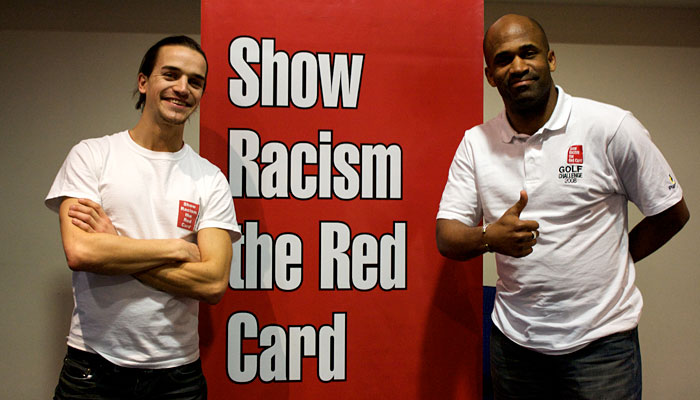
Britain will be going after racists

This season, the stench of racism emanating from English football has been contagious. Barely a weekend has gone by in which the game has not been overshadowed by a distressing tangle of accusations, handshake snubs, T-shirt boycotts and monkey-chants. Players, referees, and fans alike have become sullied by its toxic stink.

The ugliness of these incidents may yet conceal a societal truth. While each occurrence has been grating to witness, their collective effect may ultimately prove positive.

As Piara Powar, executive director of the London-based Football Against Racism in Europe Network, explains, “What we are watching is progress,” he said. “This is not a dive back to the bad old days when racism occurred on a mass scale. [If this were] a few years ago, the Luis Suarez and Patrice Evra incident would have simply been swept under the carpet and there certainly would have been no investigation into John Terry’s abuse of Anton Ferdinand. These two incidents have established a standard that sparked off all the events that followed because English society now sees this behavior as wrong. It has decided there is a clear line that people cannot cross.”

Hard to believe? Just ask anyone who entered an English football stadium in the 1980s and ’90s. Back then, the sight of a black player setting foot on a professional sports field could cause hundreds of grown men to grunt monkey sounds with abandon, an occurrence so common, the media did not consider it newsworthy. Last week, when a single Chelsea fan, Gavin Kirkham, was accused of abusing Manchester United’s Danny Welbeck, the offender was named and shamed across the backpages in howling coverage, replete with photos of the wrongdoer in a “Borat mankini.”

When I started watching English football in the 1970s, there was only one black player in the top flight, Clyde Best, a forceful Bermuda-born striker who played for West Ham (and ended up in NASL with the Portland Timbers.)

The intelligent defender Viv Anderson became the first black player to represent the senior England team in November 1978, playing before English travelling support that had been infiltrated by far-right factions that routinely chanted, “Ain’t no black in the Union Jack.” Then England-coach Ron Greenwood offered the debutant an ill-advised yet well-intentioned vote of confidence, “Yellow, purple or black,” he said, “if they’re good enough, I’ll pick them.”

Anderson had grown up in Nottingham, the son of a hospital porter father and nurse mother who had immigrated from Jamaica in 1954. When making his debut for local club Nottingham Forest in 1974, fans had welcomed him with a barrage of fruit. A traumatized Anderson sought refuge in the team dugout, only to have his own coach, the iconic Brian Clough, command him to “Get your f****** arse back out there then and fetch me two pears and a banana!

In 1978, the year of Rio Ferdinand’s birth, a fluent West Bromwich Albion side made history by becoming the first team to field three black players. Dominant striker Cyrille Regis, artful defender Brendon Batson and deft winger Laurie Cunningham were talent-soaked footballers who inadvertently became game-changing pioneers. At the time, bawdy manager Ron Atkinson belittled their achievement, naming his charges “The Three Degrees” after a Philadelphian female soul trio. (Atkinson would later be forced to resign as a broadcaster in 2004 when his racially abusive language toward Chelsea’s Marcel Desailly was picked up live on a mic.)

For all the abuse black players received from teammates, opponents and fans alike, they lacked any obvious form of redress. Welsh striker Nathan Blake withdrew from the national squad in 1997 after racially abusive comments from then-coach Bobby Gould. The player complained to the South Wales Echo: “We’re in international football. I’m an established striker and I should not have to listen to it [racism] from my own people, especially a manager I play for.”

Gould scoffed in response, “Perhaps Nathan Blake has finer feelings than other people. In future I will take that on board.”

Arsenal’s talented midfielder Paul Davis quite literally took matters into his own hands in 1988, when he responded to on-field abuse from Southampton’s Glenn Cockerill by shattering his opponent’s jaw with a right hook. Davis, who received a nine-match ban, and was never able to shake the resultant “bad boy” stigma during his career. But he was moved by Luis Suarez’s 2011 eight-match suspension for racially abusing Patrice Evra to the point that he wrote, “25 years ago … a player would not have been banned, because a black player wouldn’t have been brave enough to make the accusation.”

Liverpool’s English international John Barnes, who once told the BBC, “there wasn’t a game in the ‘80s when you didn’t get racial abuse as a black player,” took another route. When recording Liverpool’s infamous 1988 Hip Hop parody, “Anfield Rap,” the wondrous winger made light of his shocking experiences, famously half-rhyming, “I come from Jamaica, my name is John Barnes, When I do my thing the crowd go bananas.”

There was little that could be considered funny about the punishment Barnes received from Everton fans in which the England player was showered with enough bananas to stock a greengrocers. Worse, perhaps, was the collective chant, “EFC are white, EFC are white, Hello, Hello, EFC are white,” which would occasionally tumble from the terraces when one of Everton’s black opponents had the temerity to score.

As late as 2001, a report commissioned by the Premier League, grappled with the cause of such seething, open hatred. The FA Premier League National Fan Survey 2001 still makes for fascinating reading. It revealed that 97.3% of Premier League fans were white. Only 0.8% were black or Asian. Racism aimed at players was reported by a colossal 27% of supporters, a side-effect perhaps of the 64% who thought it was possible to “let off steam at football matches.”

“Letting off steam” appears to have been a euphemism for the racial antagonism that began to plague the United Kingdom after the Second World War. In 1945, England’s minority population numbered in the low thousands. By 1970, it had exploded to 1.45 million as immigrants decamped from across the British Empire’s colonies.

As British comedian, novelist and television presenter David Baddiel explained, football became an outlet for this tension. “This is not football’s problem, it’s a wider problem facing English society,” he said. “Football remains one of the last uninhibited spaces in our culture which is a good thing. People need to get out the shouting and swearing but it makes it hard to police.”

The recent controversies surrounding John Terry, Mark Clattenburg, and the monkey-chanting Gavin Kirkham have allowed Stamford Bridge to become perceived as the epicenter of contemporary racism, but in the Premier League era, even Chelsea are a team transformed. Thirty years ago, Paul Canoville became the first black footballer to play for Chelsea. As he entered the game to his own fans screaming racial epitaphs. Last season, six of the Chelsea starting 11 who kicked off the Champions League final were black.

Baddiel is a Chelsea season ticket holder, who attended his first game in 1975. “You cannot overestimate how bad it was when Paul Canoville was playing,” he said. “When people say John Terry is bad, they need to understand the racism that occurs now is isolated and the situation is not as doom and gloom as the newspapers are making it seem.”

Baddiel reveals he moved his season ticket from the raucous Matthew Harding Stand after Marcel Desailly became team captain and was barraged by the N word from his own fans. “I could not stand to watch the game amongst unreconstructed racists,” he said. But the well-known football fan has become a noted anti-racism advocate, enlisting the support of players like Frank Lampard, in a campaign to stamp out anti-semitic chanting during games.

“There is a line and it needs to be the same for everyone,” Baddiel said. “We have been putting up with it for 20 years. The only reason we did not act before was because the mechanisms were not in place to do anything about it. The big difference now is that there is ‘zero tolerance.’ When someone is racist, people no longer shrug. You can do something about it.” – ESPN

Swiss Ecopop group forces immigration referendum

A group of Swiss environmentalists has collected enough signatures to force a national referendum on immigration.

The Ecopop group says natural resources are under increasing pressure from overpopulation.

It wants annual population growth through immigration capped at 0.2% and a tenth of foreign aid to be used for birth control measures abroad.

Switzerland now has a population of eight million people – almost a quarter of them foreigners.

Ecopop gathered a petition with 120,700 certified signatures – easily passing the 100,000 threshold needed for a referendum on the proposed new law.

“The pressure on land, nature and the countryside is considerable, and quality of life is continuously deteriorating due to a lack of living space,” said Ecopop member Philippe Roch, a former director of the Swiss environment department.

The group insists it is opposed to all forms of xenophobia and racism but says Switzerland must limit immigration to avoid urbanisation and to preserve agricultural land.

Under the Swiss system of direct democracy, referenda take place up to four times a year.

Correspondents say the initiative reflects growing concern in Switzerland about overcrowding. The population has risen by some 15% since 1990.

In April, the Swiss government agreed to re-impose immigration quotas on workers from central and eastern EU countries – a decision criticised by EU officials.

Until 2011, Switzerland had a quota of 2,000 residency permits per year for citizens of the so-called “A8″ nations, which joined the EU in 2004.

The right-wing Swiss People’s Party (SVP), which blames rising rents and crowded transport on immigration, has also gathered enough signatures to force a referendum on tougher immigration quotas. – BBC

Anthrax outbreak kill 30 hippo

Vets examine dead hippo

Thirty hippos have been killed by a bacterial virus in the Kruger National Park (KNP), the SA National Parks (SANParks) said on Monday.

SANParks said an anthrax outbreak was identified in late August and post mortem results confirmed that most of the dead hippo were infected.

The carcasses were discovered along the Letaba and Olifants rivers.

Spokesman for SANParks, Reynold Thakhuli, explained that anthrax was a highly infectious disease in animals caused by the bacterium, bacillus anthracis.

He said the outbreaks were a natural occurrence in the northern parts of the KNP and were experienced more or less every ten years.

“It is thought that the disease is spread mainly through vultures and blowflies. Vultures are immune against it and they spread the disease by consuming contaminated meat from affected carcasses and then defecating in water bodies where they regularly drink or bath.

“The toxins released by the bacteria when it sporulates are also fatal to some species, ” said Thakhuli.

“It is also closely linked to population density – when certain species like kudu and hippo reach high densities then anthrax spreads more rapidly.”

Park rangers were monitoring the rivers to check whether any more animals had died.

In a previous outbreak, around 2000 animals were killed. – Sapa

Crime scene tampering at Marikana: Commissioner knew

National police commissioner Riah Phiyega knew there was evidence to suggest that one of the crime scenes where 34 protesters were shot dead by police on August 16 had been tampered with, the Farlam Commission of Inquiry heard on Monday.

Ismael Semenya for the police said: “The national commissioner has instituted an investigation.”

He said the matter came to Phiyega’s attention two weeks ago and that she immediately launched a probe to establish what had happenened.

Semenya said this after it became apparent that photographs taken on the night of August 16 showed more traditional weapons around the bodies of the slain miners than photographs taken earlier that day.

Evidence leader Mbuyisela Madlanga was cross-examining crime scene expert Captain Apollo Mohlaki when it became clear that scene two, in the vicinity of a koppie near Lonmin’s Marikana mine in Rustenburg, had been altered between the times when the pictures were taken.

Madlanga showed Mohlaki three photographs of each of three bodies.

Two were taken in daylight and one by electric light after dark. Mohlaki took the night pictures and admitted his photographs showed more weapons around the bodies than those taken earlier.

Referring to the night-time photograph of the corpse of Henry Mvuyisi Pato, Madlanga asked whether Mohlaki could see a butcher’s knife and an iron rod.

“That weapon is underneath the hand or arm of the deceased?”

Drawing attention to the photographs of the same body taken in daylight, Madlanga asked: “Quite plainly, that butcher’s knife is not there?”.

“It is not appearing, I don’t see it,” Mohlaki replied.

George Bizos, for the Legal Resource Centre, asked: “Who were the people who had the opportunity to really insult the administration of justice in our country?…This came as a big surprise to us.”

Commission chairman, retired judge Ian Farlam, said it came as a surprise “to all of us”.

Last week Semenya said the integrity of the crime scene could have been compromised by the presence of paramedics.

“No blame on your team, but your scene was corrupt?” he asked Mohlaki.

“We will hear evidence that paramedics asked that weapons be removed so they could do their work,” said Semenya.

Also on Monday, Dali Mpofu, the attorney for injured and arrested Lonmin miners, claimed some of the shot miners seemed to be handcuffed in a video entered as evidence.

He asked Mohlaki whether he had seen any protesters — whether dead, injured or arrested — with their hands bound behind their backs.

Mohlaki said he had not, but conceded that on a video shown to the commission it appeared to be the case.

“At the crime scene I never observed that…. I never went to individual bodies to see which one was handcuffed, which one was injured…

“If I am looking at the video there is a person, handcuffed possibly, but on the day I did not observe that.”

The video showed the dead bodies of the miners lying at unnatural angles among large rocks.

Towards the end of the video, loud laughter could be heard, but the group laughing was not visible.

Asked what police might have found so amusing at the scene of so many violent deaths, Mohlaki said: “I have no idea.”

During the afternoon session, the parties debated the usefulness of separating elements of the inquiry into phases.

Semenya objected to the fisrt phase being dominated by the policeºs conduct on August 16.

“From our perspective, it is an open secret that SAPS has been found guilty in the court of public opinion,” he said.

Semenya argued that the contributions of the National Union of Mineworkers, the Association of Mineworkers and Construction Union, Lonmin, the actions of angry crowds, and preceding events needed to be taken into account to contextualise the August 16 shootings. – citizen.co.za