Swiss soccer player investigated for Twitter ‘racism’

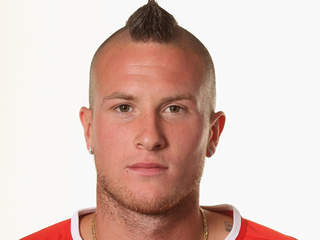
Michel Morganella

Switzerland’s Michel Morganella is being investigated for sending an allegedly racist message on Twitter after their defeat in the men’s Olympic football by South Korea, a Swiss team official said on Monday.

“We are investigating this case and we will hold a news conference at 5pm today,” said Christof Kaufmann.

The alleged tweet has since been deleted from the player’s account but pictures of it appeared in the Swiss media. The 23-year-old Swiss international, who plays for Palermo, could face expulsion from the Games. He has played the full 90 minutes in both of Switzerland’s matches and was booked against South Korea.

Last week the Greek triple jumper Paraskevi Papachristou was thrown off the Olympic team following a racist comment on her account regarding Africans living in Greece. – Reuters

Despite radical affirmative action, racial income gap remains in South Africa

Inequalities in South Africa are threatening economic growth, with children born into poor families unlikely ever to escape poverty or reap the rewards of living in Africa’s largest economy.

The World Bank’s sobering assessment released last week found that a child’s gender and ethnicity at birth, combined with a lack of education, largely determine that person’s chances of success in life — even 18 years after the end of apartheid.

“South Africa, the continent’s largest economy by far and its only G-20 member, displays strikingly high and persistent inequality and marginalization for an upper middle-income country,” said the report.

Although South Africa has made great strides in transforming the economy, which has produced one of the continent’s fastest-growing black middle classes, poverty levels and unemployment remain high outside urban centres.

South Africa is often compared to Brazil, which also has a huge income gap, but while the Latin American country has narrowed the divide over the last decade, here the chasm is as deep as ever, the World Bank said.

The richest 10 percent of South Africans account for 58 percent of the nation’s income, while the bottom 10 percent accounts for 0.5 percent, the Bank said. The bottom half earns less than eight percent of the nation’s income.

The country will struggle to grow the economy until its riches are spread more evenly, the Bank said.

Sharp economic and social inequalities were especially visible along racial lines, said the report, with whites largely shielded from economic hardships thanks to privileges inherited from the fallen apartheid regime.

“Peering past the first-world living conditions of urban South Africa, it is not too hard to see the downcast situation of townships, informal settlements, and former homelands,” said Sandeep Mahajan, who headed the report.

“Our results show that a South African child not only has to work harder to overcome the disadvantages at birth due to circumstances, but having done so, finds that these reemerge when seeking employment as an adult,” he said.

The report said residents of these areas were usually unemployed or lacked the means to look for jobs, as they were disconnected from the job market.

Unemployment in the first quarter of 2012 rose to 25.2 percent, up from 23.9 percent in the previous quarter, and black people form the bulk of the jobless.

Modest economic growth, which averaged 3.2 percent since 1995, had proved “insufficient to absorb the wave of new entrants to the labour market from dismantling apartheid’s barriers”, the report said.

Labour analyst Andrew Levy said challenges of inequality were “deep rooted and not unique to South Africa”.

“History has shown that societies that have emerged from any kind of unjust system of governance struggle with inequality,” said Levy. But he added that the new government “could have done better”.

Much of the blame is laid on the education system.

The World Bank found that black children from rural areas with parents who did not finish school were most likely not to finish school or have access to health care.

Children in some parts of the country are forced to learn in open spaces or under trees, even though education is the government’s single biggest expenditure.

This year education campaigners took the government to court after schools across the poor northern province of Limpopo were left without textbooks, months into the academic year. More than one month after a court order, government has not delivered books to all the schools.

“The only way to reverse the trend of inequality is to invest in education,” said economist Azar Jammine. – Sapa

Also read Education under white rule was better – black South African activist-academic

Education under white rule was better – black South African activist-academic

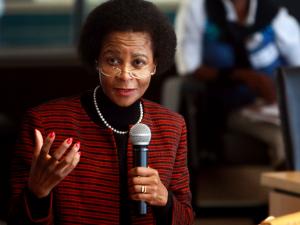
Mamphela Ramphele
Mamphela Ramphele, former partner of black consciousness activist Steve Biko. She has also held senior positions at the World Bank and the University of Cape Town

Mamphela Ramphele says the education crisis is not Hendrik Verwoerd’s fault but that of the current government, The Star reported on Monday.

The anti-apartheid activist was responding to a statement by President Jacob Zuma in which he said Verwoerd was responsible for the current mess in schools.

Ramphele said children were better taught under apartheid’s “gutter” education system than they were today.

“By jove, at least the kids could write and read. And many of them understood history and understood geography,” she said.

Ramphele also criticised the government for its handling of the textbook crisis.

“There’s no excuse why any child anywhere should not have textbooks, let alone thousands upon thousands of children whose futures are being destroyed on our watch,” Mamphela Ramphele said at a speech at the Educational Management Association conference at the University of KwaZulu-Natal.

Ramphele added that she could not understand why no one had been fired over the textbook crisis or why more ordinary citizens were not protesting against the poor education of students.

She argued that some of South Africa’s leaders did not have the credentials to be in government.

Ramphele compared the country unfavourably to Asian nations who she said appointed experts as ministers.

“Look at us. Give me a profile of our Cabinet and tell me whether or not the capacity to intervene and direct is there. You can’t even deliver textbooks,” Ramphele said.  – SAPA

Threats to independence of SA judiciary will be ‘confronted’ – Chief Justice

Anybody who went beyond talk or criticism to actually threaten the judiciary’s independence would definitely be confronted, Chief Justice Mogoeng Mogoeng told a meeting of editors in Durban on Saturday.

“Every South African who is aggrieved about something has the right to say what he wants ..that’s also politicians… but I will not hesitate to confront anybody who actually does something that poses a threat to the independence of the judiciary,” he said.

Mogoeng was addressing a council meeting of the SA Editors’ Forum.

He was asked if, given statements by some politicians that the judiciary was being used to undermine the government, he felt there were any threats, now or potentially, to the independence of judges.

“I will not respond every time somebody says something… but if that person does something, I’ll rise up to confront him.”

The Chief Justice said he did not at the moment see any threats to the independence of South Africa’s judiciary.

“But if we ever get to the point where our judges are pressured never to go a particular way in decisions for fear of threats, or death threats, or cartoons, whatever… Then the judiciary is under threat.”

The duty of judicial officers was to dispense and uphold justice in accordance with the requirements of the constitution and their oath required them to do so without fear or favour.

Earlier, the Chief Justice, whose appointment last September was strongly criticised by commentators in the media, said he would be “forever grateful” to the media for the extent of the criticism of him.

It had shown him something he did not believe he had the capacity for -to thrive under pressure and “to stay focused on what I have been privileged to have been appointed to do.

“Keep on writing, .. it is good. People must have the space to express themselves as strongly as they wish to.

“I have the capacity to absorb just about anything, but spare the magistrates and the judges … We do not need judicial officers that decide cases based on what they have seen happen to colleagues in terms of media criticism,” Mogoeng said, adding that it was critical the media take care it got the facts correct. – Sapa

Why no scholarships for white people?

by Alex Urbina Favela

Why is it that there are no scholarships that specifically target white people?

I mean, there are plenty of scholarships out there that are designed for people of certain ethnicities, such as the Hispanic Scholarship Fund, the Asian and Pacific Islander American Scholarship Fund, and the Thurgood Marshall College Fund, but it is hard (or maybe impossible) to find one that specifically caters to Caucasians. I mention this in order to point out a double standard in our society.

Although it does not directly address scholarships, affirmative action upholds a similar double standard in our country.

The Supreme Court has recently decided to review a case that is tied to affirmative action, and it seems the chances for upholding racial quotas are weaker than ever.

The case in question is Fisher v. the University of Texas. Abigail Fisher has alleged that UT denied her admission due to her race.

Since the last time it ruled in favor of an affirmative action plan in 2003, the Supreme Court has become decisively more conservative.

Justice Samuel Alito has subsequently replaced the moderate Justice Sandra Day O’Connor after her retirement in 2006, marking a shift away from a liberal majority. This leaves the Supreme Court with five conservative justices out of a total of nine.

In addition to that, Supreme Court Justice Elena Kagan, who most likely would have voted for use of race quotas in admissions, has recused herself from the upcoming review due to her involvement in the case as Solicitor General. No, things do not look well for affirmative action at all.

But we must ask ourselves if affirmative action is something we think truly represents the American spirit.

Consider this: what if you were told that you could not receive admission into a university or receive a scholarship because of the color of your skin? It would be devastating and blatantly outrageous, correct? Well, this argument used to only apply to ethnic minorities’ rights to education, but I think the same can now be said of those with a Caucasian background.

Now, don’t get me wrong; I am of Mexican descent and as swarthy as they come. But I just cannot help but call out this obvious hypocrisy in our culture.

We are all so quick to preach equality and fair opportunities for everyone regardless of race, but at the heart of the issue is a general notion to combat the idea of whites getting everything.

Accordingly, we establish that it is okay to grant scholarships and college admission to some and not to others. Is this not racism in and of itself? Is this not what the previous generations tried so hard to eliminate?

It is my opinion that affirmative action should be discontinued. It is nothing more than racial balancing with a catchy title. It purposely gives a select few an advantage while denying that same advantage to others. Racial balancing is racist and we all know it.

However, I will give our racism in this matter some credit: it does increase classroom diversity. Proponents of affirmative action could say that this increase in diversity leads to better classroom discussion and an increase in overall learning.

But I would argue that the link between classroom diversity and classroom learning is not as strong as one would think. It, of course, plays a role in greater multi-cultural understanding but we must not fool ourselves into thinking of classroom diversity as a cure-all solution for learning.

I propose that instead of continuing to discriminate based on race, college admissions should be based solely on merit.

This way, race would not even be taken into consideration and everyone would have an equal chance at gaining admission to the college of their choice. This is only fair.

Whatever the solution is, race needs to be kept out of the acceptance process. Until things like this are dealt with, racism will be hard at work in the U.S. as double standards continue to exist.

Slumdog Olympics

A celebration of free healthcare, the trade union struggle, the battle for women’s rights and a fleeting lesbian kiss: the Olympics opening ceremony Friday did not shy away from weighty social issues.

Unsurprisingly, the show devised by Oscar-winning British director Danny Boyle drew accusations from the British political right that it had strayed into “leftie” issues.

Aidan Burley, a lawmaker from Prime Minister David Cameron’s ruling Conservative party, tweeted: “The most leftie opening ceremony I have ever seen — more than Beijing, the capital of a communist state! Welfare tribute next?”

He followed that with: “Thank God the athletes have arrived! Now we can move on from leftie multi-cultural crap.”

Several people tweeted their support for his comments.

Alastair Campbell, former British Labour prime minister Tony Blair’s communications chief, retorted on Twitter: “Brilliant that we got a socialist to do the opening ceremony.”

Cameron’s Downing Street office distanced itself from Burley’s comments, tweeting a message from the premier reading: “The opening ceremony has been a great showcase for this country. It’s more proof Britain can deliver.”

Burley was removed from his job as aide to the transport minister last month after attending a Nazi-themed stag party in a French ski resort.

Ahead of the show, Boyle — whose film “Slumdog Millionaire” won eight Oscars in 2009 — denied he was pushing a political agenda.

“The sensibility of the show is very personal,” he said.

“A group of us have created it, but we had no agenda other than… values that we feel are true.

“Not everybody will love that but people will be able to recognise as being honest and truthful really. I felt that very strongly. There is no b(expletive) in it, and there is no point-making either.”

The show bringing the curtain up on the London Olympics began with sections showing idyllic rural Britain being overtaken by the Industrial Revolution, before moving on to a 10-minute sequence celebrating the state-run National Health Service (NHS).

Britain’s first televised lesbian kiss — from a 1993 episode of soap opera “Brookside” — was shown in a fast-moving montage of flim and TV clips.

South African Communist Party calls FW de Klerk an ‘apartheid dinosaur’

Iafrica.com reports that SACP general secretary Blade Nzimande lashed out at FW de Klerk on Thursday, branding the former president an “apartheid political dinosaur”.

On Wednesday, De Klerk spoke at a briefing discussing the outcomes of the ANC’s policy conference. De Klerk said the spirit of inclusiveness and reconciliation embodied by former president Nelson Mandela was no longer prevalent in the country.

He warned against the ruling party’s national democratic revolution.

“The NDR as a concept is dangerous. A revolution against who? Who is the enemy?”

De Klerk added that the SACP was one of the driving forces behind what he called radical ANC policies.

Nzimande has since hit back, calling De Klerk “a politician who has long reached his sell-by date”.

“All what De Klerk is saying about the SACP is nothing but an attempt at resuscitating the classical, but failed, apartheid ‘rooi gevaar’ tactic which was used by his now extinct National Party and its criminal apartheid regime not only to persecute communists but as part of the whole armoury to fight against the liberation movement,” Nzimande said.

“De Klerk’s latest anti-communist burst is nothing more than rehashing this nonsense, and in fact exposing that the likes of him no longer have any relevance in today’s South Africa, if they ever did at all. Not so long ago he let the cat out of the bag by clearly stating he still firmly believes that the bantustan policies were the correct ones for South Africa.”

Praag.org previously reported that in his concluding remarks on Wedenesday, “De Klerk urged South Africans to be active and engage the ruling party on its policies, because they would shape the country’s future”.

FW de Klerk attacked for ‘defending the white man’

A black South African columnist has just published the following article in the London Guardian, blaming whites for blacks’ continuing poverty under a black government.

FW de Klerk: defender of the white man

South Africa is trying to move on from apartheid. It’s a shame its former president is not

by Justice Malala

The last undemocratically elected president of South Africa, the Nobel Peace laureate FW de Klerk, has in recent months been holding forth on the state of the nation. It’s a familiar view: that South Africa is becoming yet another post-colonial country destined to fall into maladministration, corruption, famine and finally war because the white man has lost political power.

In his utterances, it seems, the only thing that can save the nation from this preordained state of affairs is continued protection of white minority privileges and rights. All attempts to discuss a South Africa that is not riven by the terrible inequalities wrought by apartheid are seen, by him, as a threat to these privileges.

We heard elements of this narrative again this week. “The Mandela and Mbeki era of reconciliation is over,” de Klerk warned darkly. “White males are quite unjustly blamed for the continuing triple crisis of unemployment, inequality and poverty.”

He did not ask South Africans to come together and find solutions to these problems. Instead, he asked them to “get [on to the] playing field and become politically active”. The message is clear: they must fight and stop the ruling ANC’s talk of speeding up measures to stem unemployment and poverty.

These utterances come in the wake of De Klerk’s interview on CNN in May when he claimed that black people under apartheid “were not disenfranchised, they voted”. In this he was defending the heinous homeland system, under which Africans were “cleaned out” from “white South Africa” and confined to impoverished “black reserves”.

It increasingly seems that De Klerk cannot change from the person an angry Nelson Mandela identified during the democracy negotiations in 1991: “His weakness is to look at matters from the point of view of the National party and the white minority in this country, not from the point of view of the population of South Africa.”

Though De Klerk chooses to appoint himself defender of the country’s white males, they need very little defending. Almost all of the 20 best-paid directors in Johannesburg Stock Exchange-listed companies are white men. This is not to vilify them, but it is a reminder that all of us South Africans need to do something, urgently, about inequality and poverty. After all, just this week the World Bank said South Africa is one of the most unequal countries in the world, with the top 10% of the population accounting for 58% of its income and the bottom half less than 8%. “Circumstances at birth are important drivers of inequality in South Africa,” said the bank’s report.

South Africa faces massive problems of unemployment and poverty. The ruling ANC has spectacularly failed the poor after 18 years in power. Under President Zuma things are getting worse: the challenges of poverty, unemployment and inequality need a new vision and new leaders. But the De Klerk soundtrack, that South Africa is on the verge of collapse because the white man is allegedly under threat, is tiring and depressing. It does nothing to solve these urgent and collective problems.

De Klerk still believes he is the leader of a threatened white minority. He should learn to think of not just the white males whose survival he so energetically claims to defend, but also of the poor and marginalised who every day stand on our street corners and beg for alms.

That is the complex narrative of a country that has defied stereotypes and had three democratically elected presidents in 18 years; which has avoided racial conflagration; which has given more electricity to more people in the shortest space of time than any other in the world. It is not the narrative of a country whose sole obsession is the survival of a white minority’s privileges.

Original article.

Life sentences for black farm murderer

A KwaZulu-Natal man was given three life sentences on Friday 27 July for killing a Mooi River farmer’s wife, a helper, and a gardener.

The Pietermaritzburg High Court earlier convicted Mzwandile Magubane, 21, a gang member who started a fire in July 2010 to draw people from a farmhouse.

Acting Judge Muzi Thom Ncube said Magubane’s conduct was so aggravating that it overrode any mitigating factors, such as his relative youth and that he was a first time offender.

“You deprived three defenceless people of their right to life,” Ncube said.

Attacks on innocent people, particularly in the farming community, would not be tolerated, he said.

Magubane was found guilty of murdering Lorraine Karg, Hilda Linyane and Shayi Mhlongo.

They were murdered while Karg’s husband Neville and his staff were dousing the fire.

The gang cut Karg and Mhlongo’s throats. Linyane was shot. – SAPA

No extradition of murderers from South Africa unless assurances on death penalty

A Botswana national wanted for murder may not be extradited unless that country gives assurances he would not face the death penalty, the Constitutional Court ruled on Friday.

Justice Edwin Cameron said it would be a breach of the statutory values of the South African Constitution to hand him over to Botswana without this guarantee.

He dismissed the appeal by South Africa’s ministers of home affairs and justice, re-affirming a previous judgment which set a precedent in this regard.

The precedent-setting judgment related to Khalfan Mohamed, who was wanted by the United States of America in connection with the bombing of its embassy in Tanzania in 1998.

The Constitutional Court ruled previously that even if there was an extradition agreement between South Africa and the US, he could not be handed over without an agreement that he would not face the death penalty.

Friday’s ruling related to Botswana citizens Emmanuel Tsebe and Jerry Phale, who entered South Africa, allegedly after murdering family members in separate cases. Tsebe has since died.

Phale’s attorney Jacob van Garderen said it was important to affirm that there would not be an extradition to a country where people faced the death penalty, without such an agreement.

“The court again emphasised that the imposition of the death penalty is unconstitutional, in line with the judgment of Mohamed.”

Van Garderen said Friday’s judgment meant Phale no longer faced the immediate risk of being extradited.

“But nothing stops the (Botswana) government from making a new request.”

Bongumusa Sibiya, attorney for a respondent in the case, the Society for the Abolition of the Death Penalty, said the society was pleased with the ruling.

“It confirms the legal position in South Africa,” he said.

“It also means that the country continues to uphold people’s right to life, and that it won’t be taken lightly.”

The death penalty is not allowed in South Africa.

Sibiya said a solution to this “conundrum” was for South Africa to enact legislation enabling it to try people wanted for crimes elsewhere.

According to papers submitted to the court, the entry to and departure from South Africa of wanted individuals was the responsibility of the department of home affairs.

Getting their warrants of arrest and any subsequent prosecution for illegal entry were the responsibility of the departments of home affairs, safety and security, correctional services and justice.

Requests for extradition were directed at the department of international relations, and the decision on whether to extradite vested in the minister of justice.

Murder is an extraditable offence in terms of the relevant extradition treaty which exists between the republics of Botswana and South Africa.

Extradition may be refused if the offence is punishable by death. The treaty makes no provision for either a request for, or provision of the undertaking that was required in Mohamed’s case.

During the course of the case, South African authorities had to consider several other possible developments: that Phale may apply for asylum and therefore be immune to prosecution, and also that trying to deport him for being in the country might look like a “disguised extradition”.

The State had argued that the case had created a situation where fugitives could obtain residence in South Africa, immunity from prosecution, and relative freedom.

It had argued that the South African government had a duty to allow its citizens to be free of fear and its inhabitants to be secure.

At the same time, it did not have jurisdiction to try foreign nationals for offences they committed elsewhere so, as a matter of policy, would seek to return them to their country. – SAPA

South African police helicopters ‘grounded’

Nearly half of the SA Police Service’s fleet of 37 helicopters are grounded, awaiting “routine” inspection, the DA said on Tuesday.

“The Democratic Alliance is receiving reports that helicopters belonging to the SA Police Service [SAPS] Air Wing have been grounded for months,” DA MP Dianne Kohler-Barnard said in a statement.

She said 15 of the air wing’s 37 helicopters were on the ground awaiting “routine” inspection, while three more were in a hangar in Cape Town awaiting repairs.

“This now brings the total of grounded SAPS helicopters, which we know of, to 18 out of 37. This is nearly half of the entire air wing,” said Kohler-Barnard.

Contacted for comment, police ministry spokesman Zweli Mnisi accused Kohler-Barnard of politicising police operational matters.

“Since when is Kohler-Barnard a technical expert on air wings? Does she even know when and under [what] conditions the helicopters must be airborne, or go for maintenance? We do not think so.”

Mnisi said the ministry had emphasised the principle of cost effectiveness across the department to SAPS management. This included the maintenance and control of aircraft.

“These [helicopters] are instruments of [our] trade, which enable police to fight crime; as such, they cannot be [in the] air for the fun of it.

“We therefore support our management when they properly manage the fleet and, further, encourage them to do so; they must ignore prophets of doom, who are attempting to politicise even operational matters.”

He suggested the DA was trying to use the SAPS for political purposes.

“They have failed before, and they will still fail in their endeavours to utilise SAPS as a political tool to project their own interests.”

In her statement, Kohler-Barnard said “various sources” claimed maintenance of the helicopters had not been carried out “because SAPS has yet to decide who should be awarded the service contract”.

The grounded helicopters had cost between R15 million and R20m each.

“This means that nearly R300m worth of crime-fighting equipment is not currently being used to keep our citizens safe.”

In addition, the Robinson R44 helicopters, which the SAPS bought ahead of the 2010 World Cup, “are apparently yet to be used”.

The Robinson helicopters — the SAPS was thought to have bought four –were fitted with specialised crime-fighting equipment, such as searchlights and infra-red technology.

Kohler-Barnard said she would be submitting parliamentary questions to try and establish what was happening with the air wing’s helicopters.

“These helicopters should not be sitting around in the hangars, waiting for the SAPS to decide who should be given a contract to maintain them. They need to be in the sky, tracking down the criminals who terrorise our communities,” she said.

De Klerk, Russian professor on ANC’s revolutionary doctrine

Former president FW de Klerk said on Wednesday he would have fired Basic Education Minister Angie Motshekga if he had found wrongdoing on her part in the Limpopo textbook saga.

“If I was president, I would have asked the minister of education to fully investigate and brief me,” he told reporters in Johannesburg.

“And if I had come to a conclusion that the minister of education… failed in a material way, yes, I would have fired her.”

De Klerk said the failure to deliver textbooks was purely a management issue.

“The textbooks were printed… but not delivered. That is tremendously bad management.”

De Klerk was speaking at a press briefing after a conference hosted by his foundation on Wednesday. The conference discussed the outcomes of the ANC’s policy conference.

De Klerk said the spirit of inclusiveness and reconciliation embodied by former president Nelson Mandela was no longer prevalent in the country. He warned against the ruling party’s national democratic revolution.

“The NDR as a concept is dangerous. A revolution against who? Who is the enemy?”

He said the ANC wanted to lead the country using policies which had failed elsewhere in the world.

Earlier, Irina Filatova, former head of African studies at Moscow State University, echoed De Klerk’s view on the NDR.

“The ANC cannot implement this policy. But there will be one aspect it can do, and it can destroy this country. There could be partial land reform, partial nationalisation of mines.”

Filatova said the ANC “obviously believes in this ideology” as it spoke of the unique nature of its developmental state.

“I think that the ANC is a bit lost about the second stage of the revolution. In the 1980s it was so obvious what would happen.”

She said the more the economy failed, the deeper the ANC was going to dig in its heels.

“The more failure[s] there are, the more they will try to use various means, both constitutional and unconstitutional, to keep their following,” Filatova said.

Leon Louw, executive director of the Free Market Foundation, warned that recent laws passed by the government made the South African economy less free.

Growth had been restricted by the National Credit Act, Consumer Protection Act, and exchange controls.

Louw said the country had changed the economic path it embarked on in 1994.

“Things changed after 2006 and the economy started becoming less free again. If your economy becomes more free you will grow, and if it becomes less free, you will stagnate and contract.”

The economy was stagnating because of the government’s interference in the labour market, making it expensive and difficult to employ people.

In his concluding remarks, De Klerk urged South Africans to be active and engage the ruling party on its policies, because they would shape the country’s future. – Sapa

How far will Egypt’s Muslim Brotherhood go in imposing Islamic law?

In decades of furtive meetings in tea houses, mosques and universities, members of Egypt’s underground Muslim Brotherhood spoke ardently of a country governed by Islamic law. Now that their debates take place in parliament and the presidential palace, they must decide how far to go in bringing it about.

Elections held since the fall of Hosni Mubarak have turned the once-banned Brotherhood and its allies into the dominant political force in the Arab world’s most populous country.

That success has left the Brotherhood facing competing pressures – on the one hand, to satisfy the conservative Islamists who supported them at the polling station, while on the other hand to avoid conflict with secular-minded Egyptians and a potent military establishment that opposes radical change.

For now, the outcome appears to be a compromise, satisfying neither side entirely but avoiding major confrontation, with the aim of giving the Brotherhood the leeway to meet the needs of running a modern state.

“Everything is a subject of compromise and negotiation for the Brotherhood,” said Khalil al-Anani, an expert on Islamist movements based at Durham University in England.

“It realizes that limiting personal freedoms will endanger their political gains,” he said. “At the same time, they will have to satisfy conservative sections of society.”

The Brotherhood’s move into public life frightens secular-minded Egyptians, who fear Islamist curbs could lead to dress codes, kill off music and cinema or force men and women to segregate in public. Christians, a tenth of Egyptians, are particularly worried, despite Mursi’s attempts at outreach.

Businesses fear for the impact on a tourism industry that creates one in eight jobs.

A call put out on Facebook for a march in defense of beer – first produced in Egypt in pharaonic times – captured a mood of defiance among some after the Brotherhood’s Mohamed Mursi won the presidency.

While Mursi has promised to protect freedoms, his campaign was also peppered with promises to implement sharia, the Islamic law code.

“The fear is of destroying the civil state in which citizens are equal… The reassurance message is valueless, because we are seeing what they are doing in reality,” said Refaat el-Saeed, head of Tagammu leftist Party.

Some Egyptians worry that even without direction from the state, zealots emboldened by the Islamists’ ballot box success could seek to impose their will in the street. Those fears appeared to be manifested in the days following Mursi’s election, when a group of three men stabbed a young man to death for going out with his fiancée in the city of Suez.

Ahmed Eid was killed by three young men who have been charged with forming an illegal vigilante group to “fight vice and promote virtue”.

The Brotherhood denies that it is behind such attacks and has accused agents loyal to Mubarak’s old order of trying to tar it with the same brush by sending youths masquerading as Brotherhood members to threaten hair salons.

There are limits to how far the Brotherhood can go in transforming Egyptian society.

Founded in 1928 by urban intellectuals and run by engineers, teachers and doctors, the Brotherhood says it does not want a theocracy – something which in any case the military council has signaled it will not allow to come about.

“I don’t think anyone, even if he has a 40-year term rather than a four-year term, will have the ability to change society, such that the sharia is implemented with all its comprehensive aspects,” said Ahmad Ahmad, an associate professor of religious studies at Harvard University in the United States.

JUDGED ON ECONOMY

The Brotherhood is keenly aware that Egyptians will judge it first and foremost by its ability to resolve their deep economic problems and alleviate poverty. That provides a strong incentive to avoid measures that frighten off tourists or hurt commerce.

Rather than emphasize the ancient proscriptions of Islamic law, Brotherhood members describe sharia as a pragmatic moral code that can be used by a modern society to promote reform.

“Wherever you find benefit for society, then that is God’s law,” said Sheikh Abdul Rahman al-Barr, a cleric who sits on the Brotherhood’s executive board.

He said Mursi would be applying sharia by ending corruption and cronyism in government, ending police abuses such as torture and eavesdropping, and enforcing traffic laws.

There would be no imposition of dress codes, he said, pointing to the growth in the numbers of Egyptian women voluntarily wearing headscarves as proof that coercion was unnecessary. Tourists need not fear for their beach wear, as resorts would be treated as places with a “special context”.

The Brotherhood has been similarly pragmatic on the imposition of bank interest, which many scholars say is forbidden in Islam but will not be abolished in Egypt.

Even the more hardline Islamist groups, or Salafi movements, that have moved into public life in the last year have started to strike a similarly pragmatic tone.

Al-Gama’a al-Islamiya, a Salafi group that took up arms against the state as recently as the 1990s, now speaks of a sharia that brings justice, fights corruption and prevents torture and unlawful detention.

“These are the priorities of the sharia as I see them today,” said Tareq El-Zumor, who spent 30 years in jail for involvement in the killing of former president Anwar Sadat.

ISSUES OF “PRIDE”

Kamal Habib, a former al-Gama’a al-Islamiya member and an expert on Islamist groups, said Salafi views had evolved as they moved into mainstream politics during parliamentary elections that began in November last year.

“When the Salafis were campaigning in the election, they spoke of sharia as an immediate step, but as they came closer to power they modified their position as they found a lot of serious complications in society.”

Still, Islamists are trying to make substantial changes, especially in areas that are seen as a matter of pride for their conservative followers.

In the first few months of the parliament’s work, newly-elected Salafi lawmakers pressed for an end to a woman’s right to seek divorce, to adjust custody laws in favor of men and to toughen the punishment for insulting religion.

All of those proposals were raised independently of any party and none made it into law.

Barr, the Brotherhood cleric, forecast legislation that would eventually ban Muslims from trading or producing alcohol, while permitting its production and sale to non-Muslims.

The role of Islamic law in Egypt’s new constitution has become a defining issue.

“I am afraid of leaving the constitution in the hands of people who think in this way,” said Shahata Mohamed Shahata, a lawyer fiercely opposed to Brotherhood rule who filed a lawsuit demanding the dissolution of the body writing the document.

One proposal would add language making God the source of sovereignty. Another would give Al-Azhar, a religious school founded in Cairo more than 1,000 years ago, an official role as the body that would interpret Islamic law.

“It’s a big step – to put Al-Azhar in the constitution that is supposed to last for generations,” said Anani of Durham University. “What if Al-Azhar’s interpretation is regressive and not in favour of democracy?”

But he forecast more compromise ahead by the Brotherhood: “The Brotherhood will do everything for the sake of power. So they might cross the ideological red lines for political gains.” – Reuters

Two blacks drowned white child in boiling water

The 3 accused in the Walkerville massacre and torture. Mbele is on the left and Radebe on the right. Photo: Jorge Henrique Martins, VOZ PORTUGUESA

Two young black males gagged a crying 12-year old white boy and afterwards drowned him in a bath filled with boiling water. The accused yesterday admitted guilt to the murder with smiles as they appeared in the Vereeniging regional court, reports the Johannesburg Afrikaans daily, Beeld.

In a typical South African black-on-white atrocity, the boy and his entire family were massacred on 1 October 2011 in Walkerville, south of Johannesburg. Amaro Jose Viana, of Portuguese descent, his mother Geraldine (42) and father Tony (53) were killed in an attack by the family’s gardener Petrus Radebe (24), Sipho Mbele (21) and Sphiwe David Motaung (20). A fourth black person, a minor whose name was not published and appartently the son of Petrus Radebe, also participated in the attack. All four admitted their guilt on all charges against them.

According to the accused, “we mutually raped Geraldine Viana”. Sipho Mbele raped her first while Petrus Radebe helped to restrain her by standing on her face. Afterwards Radebe raped her too.

Beeld reports that Charmaine Castleman, an attorney appearing for the accused, read a statement in court explaining that the three men burgled the Viana residence to rob them of their possessions and “to get Geraldine Viana back” for the way she had treated them.

The white family’s dog apparently barked tremendously during the burglary. The animal was killed by disembowelling him.

According to Beeld’s court reporter, 12-year-old Amaro’s dad Tony Viana first arrived at the burgled home. The three black men attacked him from behind with a machete and a golf club, after which he was forced to unlock the family safe. He was then tied up.

The boy and his mother arrived later and were tied up in separate rooms. Then the raping started. When Radebe and Mbele had finished raping Geraldine, Mbele placed a cushion over her face to muffle her screams and shot her with a pistol obtained from her husband.

The accused stated: “Afterwards Sipho took the gun and shot Tony in the head.” Mbele and Radebe then went to Amaro’s room and realised that the boy would be able to recognise them.

The Viana family in happier times: From left, Geraldine Viana, Amaro, Gabriela Correia, Tony's daughter from a previous marriaga, and Tony Viana. Photo: Facebook

“We went to the bathroom and turned on the tap. We went to fetch him and gagged him because he was crying. We forced him into the bath face down, knowing that he would drown.”

From forensic evidence tendered in court, it was clear that the boy was held down in boiling water. The exact cause of his death has however not yet been determined by state pathologists. The boy’s hands and feet were tied.

According to Beeld, “Mbele and Radebe admitted guilt on charges of burglary with the intent to steal, robbery with aggravating circumstances, the possession of an unlicensed firearm, the illegal possession of ammunition and intentional damage to goods.”

The accused will be sentenced on 6 September. As the death penalty was abolished in South Africa, they will probably get lengthy prison sentences but could be out on parole within five to ten years.

The vast majority of South Africans, black and white, support the reinstatement of the death penalty, but the liberal Constitutional Court has stated that it would be unconstitutional. The ruling ANC and liberal opposition DA are also opposed to the death penalty.

A search of South African newswires in English for this story has returned an empty result. Until now, only Beeld has reported on the court appearance of the three murderers – in Afrikaans, which is only spoken in South Africa, although easily comprehensible to Dutch-speakers.