Propaganda rules the news: Russia never invaded Ukraine

pcrGerald Celente calls the Western media “presstitutes,” an ingenuous term that I often use. Presstitutes sell themselves to Washington for access and government sources and to keep their jobs. Ever since the corrupt Clinton regime permitted the concentration of the US media, there has been no journalistic independence in the United States except for some Internet sites.

Glenn Greenwald points out the independence that RT, a Russian media organization, permits Abby Martin who denounced Russia’s alleged invasion of Ukraine, compared to the fates of Phil Donahue (MSNBC) and Peter Arnett (NBC), both of whom were fired for expressing opposition to the Bush regime’s illegal attack on Iraq. The fact that Donahue had NBC’s highest rated program did not give him journalistic independence. Anyone who speaks the truth in the American print or TV media or on NPR is immediately fired.

Russia’s RT seems actually to believe and observe the values that Americans profess but do not honor.

I agree with Greenwald. Greenwald is entirely admirable. He has intelligence, integrity, and courage. He is one of the brave to whom my just published book, How America Was Lost, is dedicated. As for RT’s Abby Martin, I admire her and have been a guest on her program a number of times.

My criticism of Greenwald and Martin has nothing to do with their integrity or their character. I doubt the claims that Abby Martin grandstanded on “Russia’s invasion of Ukraine” in order to boost her chances of moving into the more lucrative “mainstream media.” My point is quite different. Even Abby Martin and Greenwald, both of whom bring us much light, cannot fully escape Western propaganda.

For example, Martin’s denunciation of Russia for “invading” Ukraine is based on Western propaganda that Russia sent 16,000 troops to occupy Crimea. The fact of the matter is that those 16,000 Russian troops have been in Crimea since the 1990s. Under the Russian-Ukrainian agreement, Russia has the right to base 25,000 troops in Crimea.

Apparently, neither Abby Martin nor Glenn Greenwald, two intelligent and aware people, knew this fact. Washington’s propaganda is so pervasive that two of our best reporters were victimized by it.

As I have written several times in my columns, Washington organized the coup in Ukraine in order to promote its world hegemony by capturing Ukraine for NATO and putting US missile bases on Russia’s border in order to degrade Russia’s nuclear deterrent and force Russia to accept Washington’s hegemony.

Russia has done nothing but respond in a very low-key way to a major strategic threat orchestrated by Washington.

It is not only Martin and Greenwald who have fallen under Washington’s propaganda. They are joined by Patrick J. Buchanan. Pat’s column calling on readers to “resist the war party on Crimea” opens with Washington’s propagandistic claim: “With Vladimir Putin’s dispatch of Russian Troops into Crimea”.

No such dispatch has occurred. Putin has been granted authority by the Russian Duma to send troops to Ukraine, but Putin has stated publicly that sending troops would be a last resort to protect Crimean Russians from invasions by the ultra-nationalist neo-nazis who stole Washington’s coup and established themselves as the power in Kiev and western Ukraine.

So, here we have three of the smartest and most independent journalists of our time, and all three are under the impression created by Western propaganda that Russia has invaded Ukraine.

It appears that the power of Washington’s propaganda is so great that not even the best and most independent journalists can escape its influence.

What chance does truth have when Abby Martin gets kudos from Glenn Greenwald for denouncing Russia for an alleged “invasion” that has not taken place, and when independent Pat Buchanan opens his column dissenting from the blame-Russia-crowd by accepting that an invasion has taken place?

The entire story that the presstitutes have told about the Ukraine is a propaganda production. The presstitutes told us that the deposed president, Viktor Yanukovych, ordered snipers to shoot protesters. On the basis of these false reports, Washington’s stooges, who comprise the existing non-government in Kiev, have issued arrest orders for Yanukovych and intend for him to be tried in an international court. In an intercepted telephone call between EU foreign affairs minister Catherine Ashton and Estonian foreign affairs minister Urmas Paet who had just returned from Kiev, Paet reports: “There is now stronger and stronger understanding that behind the snipers, it was not Yanukovych, but it was somebody from the new coalition.” Paet goes on to report that “all the evidence shows that the people who were killed by snipers from both sides, among policemen and then people from the streets, that they were the same snipers killing people from both sides . . . and it’s really disturbing that now the new coalition, that they don’t want to investigate what exactly happened.” Ashton, absorbed with EU plans to guide reforms in Ukraine and to prepare the way for the IMF to gain control over economic policy, was not particularly pleased to hear Paet’s report that the killings were an orchestrated provocation.

What has happened in Ukraine is that Washington plotted against and overthrew an elected legitimate government and then lost control to neo-nazis who are threatening the large Russian population in southern and eastern Ukraine, provinces that formerly were part of Russia. These threatened Russians have appealed for Russia’s help, and just like the Russians in South Ossetia, they will receive Russia’s help.

The Obama regime and its presstitutes will continue to lie about everything.

Paul Craig Roberts was Assistant Secretary of the Treasury for Economic Policy and associate editor of the Wall Street Journal. He was columnist for Business Week, Scripps Howard News Service, and Creators Syndicate. He has had many university appointments. His internet columns have attracted a worldwide following. His latest books are, The Failure of Laissez Faire Capitalism and How America Was Lost. 
Racist diatribe to hide black hate crime is a “thoughtleader”

Sandile Memela
Sandile Memela

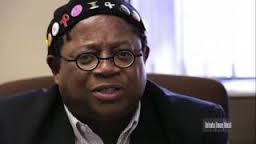
Sandile Memela, a journalist, writer, cultural critic, columnist and civil servant, is perpetuating the myth that blacks are victims of white crime, even though mountains of evidence to the contrary are available.

Whites are the victims of black hate crimes and mindless violence in South Africa. This raging ethnocide is becoming a headache for the current regime because awareness about the scourge is growing despite Anglo-American efforts to stifle news and reports about Mandela’s “great legacy to humankind”.

Here is Memela’s sad, racist diatribe, published in a wannabe British ultra left-wing rag, the M&G, as a “thoughtleader”, while white farmers are being slaughtered like cattle almost daily:

Would Oscar Pistorius be on trial for murder if Reeva Steenkamp had turned out to be a black man?

Had he killed a black man, would it be an issue?

You see, when some whites buy and collect guns, it is to kill two things: animals and black people. In fact, as far as some gun-toting white males are concerned, sometimes there is no distinction between the two. There are more than a few instances where white males have shot and killed black men and children thinking they were shooting at animals.

I think there wouldn’t be a trial if he had shot and killed a black man of any age. Instead, he may have been hailed as a hero and even given an award that would have read: “Here is a man who did good by shooting to kill a black thief!” Everyone would have understood and accepted that crime has reached intolerable levels in our society. The perpetrators are often black men who are unemployed and poverty-stricken. And they deserve to be shot down in cold blood for disturbing the peace of suburban life?

Many white South Africans live in fear of being attacked by black male criminals. Much as they may build sky high walls, they must double that with high-calibre guns in case black security men at the gate allow them to slip through. You cannot trust a black man. This is what white paranoia has driven some white men to do: shoot first and ask questions later. We all know and accept it is mostly black men who are robbers and thieves who prey on hard-working white families. This is the story of our lives.

We know that Pistorius made a terrible mistake. As a white male, you do not kill a white woman, especially the one you professed to love. Your role and responsibility is to protect and defend her against thugs. But if you happen to have killed her, for whatever reason, you must pin the blame on an intruder. Nobody will raise questions. It is expected for white men to shoot and kill black men to protect their property and beloved families.

I am not sure if the court will even consider the possibility of what would have happened if Pistorius had killed a black man. Will that issue even feature as an agenda item?

For those of us who are black men, it is painful to see how our lives have become cheap. We get killed for our cellphones and for driving expensive cars. Above all, we are condemned for being the source of white insecurity and fear in this beautiful land. It is okay if a white man buys and collects guns to — when allegedly provoked or threatened — shoot to kill. The black man is always a suspect, a target. And for the rest of the world, it is understandable and acceptable if a white man shoots to kill to defend his land, property and family.

When black men commit crimes, it is not because they are criminal by nature. Sometimes they are forced by economic circumstances — inequality, poverty, unemployment and envy for what white people have. Sometimes it is a deep-seated desire for revenge for stolen land and the monopolisation of mineral resources and wealth.

As Alan Paton said in his Cry, the Beloved Country, “it is fear that rules the country”, especially in the mind of some white man. They will carry guns to protect themselves and their families against black thugs? If not, they will lock themselves up behind high walls with electrical fences. And if they kill black men who try to steal, it is understandable. They could walk free to … continue killing black men!

Russia surprised at EU refusal to comment on new leak

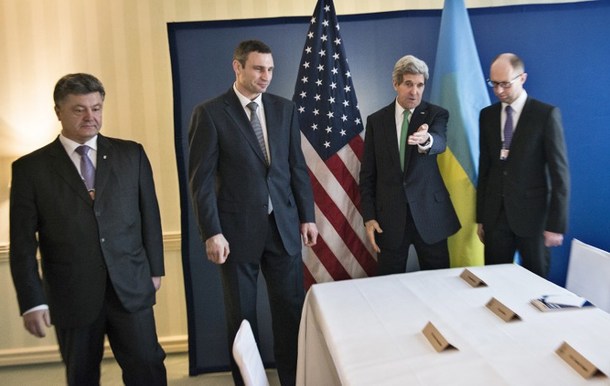
Kerry directing the script with Poroshenko, Klitch and Yats

Russian Foreign Ministry has expressed its surprise at the EU refusal to comment on the leaked phone conversation between the EU Foreign Policy Chief Catherine Ashton and Estonian Foreign Minister Urmas Paet. Earlier the Estonian Foreign Ministry confirmed the authenticity of the recording that suggested the snipers who shot at protesters and police in the Ukrainian capital Kiev were allegedly hired by the new coalition, and not ousted President Yanukovich. The Voice of Russia’s political analyst Dmitriy Babich expressed his opinion.

How can you comment on this conversation?
I think it is just astounding what Mr. Paet had to say because basically the Western press has been saying for all these days that the file only came from the government side and it was taken as an axiom by most of the media in the West. And now we find out from Mr. Paet who talked to some opposition activists of the civil society actually. So they acknowledged that the bullets and the weapons used to kill on both sides were basically the same and that the main suspicion is not actually with Yanukovych but with what Mr. Paet called ‘the opposition coalition’. But I would like to remind you that part of this opposition is the neo-Nazis party called ‘Svoboda’. Until 2004 it was called National Social Party of Ukraine. If you read its program, they suggest that people should identify their ethnic origin in their passports, that what the call Ukrainophobia should be punished, should be seen as the criminal offence and they make quite a few other suggestions which remind one of the Nazi Germany.

So the opposition is actually responsible for the killings?
Well, I think basically that the main problem is the bias of the Western media because just if you watch television, if you watch the television images of these three months, you can see that these so-called peaceful protesters attacked police much more often than the police attacked them. The most typical situation is the police standing on the street blocking the path to the Presidential administration, hiding behind their shields, and the “peaceful protesters” in the Western understanding of this word, first they throw at them stones and Molotov cocktails, and then they attack them with metal chains, metal sticks and this is all just civil society on protest against the corrupt government. I am afraid this lead conversation will not be investigated for the very simple reason. The new prosecutor general of Ukraine Mr. Makhnitskiy, he is a member of the Svoboda party. So for more than a decade he believed that people should be checked for their loyalty for the Ukraine state on the lie detector, that people who lied about having a double citizenship, most likely Russian citizenship should be deprived of their property. So you can imagine what this kind of person will do with this recorded conversation. He is not going to investigate it.

Is there any chance that Maidan, which is still a force in Ukraine will somehow press the authorities, force the authorities to start the investigation?
I think that what you call Maidan is just a crowd, which can be manipulated like any crowd. And crowds are incapable of investigations. Crowds are moved by hate or love, they are moved by primitive emotions. And the crowd that we have seen in the center of Kiev for these three months was an evil crowd. Even its supporters agree that about 50% was moved because of hatred for corruption and 50% moved by hatred for Russia and Russians. I think that ethnic hate is a lot worse than corruption and certainly these people are not going to push for a fair investigation and they are not going to accept the results of a fair investigation because in their hearts they have already blamed their enemies from everything.

Let’s get back to this tape. If we listen to it carefully, to what Mr. Paet and Catherine Ashton were talking about and to what they said, they actually never said that these facts should be concealed. So probably, is there a chance that international community, the so-called international community would somehow, especially now when it is leaked, press the authorities to still investigate it?
No, I don’t believe in it because the international community had every evening lots of television images before its eyes and it continues to pronounce the same lies. They have seen the Molotov cocktails, they have seen the policemen killed and mutilated, and they continued calling these people peaceful protesters for three months. So do you think that after this huge lie they are going to investigate just one small lie that conspired in the recorded phone conversation? No, the EU and the US engaged themselves 100% on the side of the opposition. They failed to guarantee the Agreement on division of power, which was signed between Yanukovych and the opposition on the 21st of February. Their attitude is not compromised in the investigation. Their attitude is media on slot and victory. And victory under the slogan “the winner takes all”. That’s their attitude, it is extremely destructive.

If we talk about situation in Ukraine. The two politicians are actually talking about credibility of Ukrainian politicians and they also say that the only one who is more or less popular both in so-called civil society and among Maidan and also in eastern Ukraine is Mr. Poroshenko. Do you think that actually reflects the state of affairs in Ukraine that no one is popular there except for one or two people?
The problem is that all their conversation is extremely amateurish. These are the people who have very superficial knowledge of Ukrainian politics. But they feel themselves empowered to discuss and decide who is going to be the next government and their attitude is based on hear-see things like “I liked this Olga, I think she should be the next Minister of Health”. Poroshenko is sympathetic to me; I think he should be a member of the new government. That reminds me of Victoria Nuland’s conversation that was also recorded how she says to the American Ambassador in Kiev “Okay, Yatzenuk, she calls him Yatz, he started with economics, so he probably should be in the next government”. You know, Klitch, this is the way she calls Klitchko “I don’t like him. He shouldn’t be in that government”. She probably doesn’t like him because he is a boxer and that doesn’t reflect well on her image of a member of government. So this talk is just laughable, it is extremely amateurish. And I think it is tragic that these kinds of people actually decide the fate of the country that has a population of 46 million. And this people lecture Russia and they lecture Ukrainians on how they should live, how bad we all are, and this is just pathetic. This is the only word I can find for it. Pathetic.

Source: Voice of Russia

Russia, Switzerland mark 200 years of diplomatic ties

ruskiswissRussia and Switzerland on Thursday mark the 200th anniversary of the establishment of diplomatic relations. On this occasion, the two countries’ foreign ministers exchanged congratulatory messages, where they reiterated their commitment to further development of bilateral cooperation in various areas and further political contacts, including top-level contacts.

“The jubilee is a good occasion to look back at the path our countries have travelled, to recall the common historic past and try to analyze its lessons, to draw intermediate results of cooperation and outline plans for the future,” Dmitry Lyubinsky, director of the Russian Foreign Ministry’s Third European Department, told Itar-Tass. “It is important that both we and our partners are looking at the future of the Russian-Swiss relations with optimism.”

On February 22 (March 6), 1814, Russian diplomat Count Ivan Antonovich Kapodistria presented his credentials as the Russian Ambassador to Switzerland. A year after that, the Vienna congress proclaimed the Russian Empire as one of the guarantee powers for permanent Swiss neutrality. Thus, Russia made its contribution to the structure of Switzerland’s political system, thanks to which Switzerland avoided disastrous wars of the 19th and 20th centuries.

“I cannot say that everything was always smooth in our relations,” Lyubinsky went on. “The murder of Russian diplomat Vorovsky in Lausanne in 1923 and subsequent acquittal of the killer by the jury lead to the severance of diplomatic relations, which were resumed only in March 1946. Ever since, bilateral cooperation has only been growing and now we have reliable and promising partners in Switzerland in all areas of cooperation.”

Moscow is set for constructive cooperation with Bern over the period of the latter’s presidency in the Organization for Security and Cooperation in Europe (OSCE) in 2014. Strengthening of the OSCE’s role and enhancing its authority in international affairs meets the interests of both countries. Increased attention should be focused on problems stemming from transnational threats, on protection of the interests on national minorities, on counteracting extremism, and on OSCE reforms. It is important to exert more effort to promote the Helsinki Plus 40 process in order to draft a conceptual strategic document on principles of cooperation and security in Europe by the anniversary of the Helsinki Final Act in 2015.

The Russian-Swiss relations have reached a qualitatively new level in the recent years. A milestone event in bilateral relations was the first-ever visit by the Russian president to Switzerland in September 2009. The visit gave an extra impetus to closer cooperation in all areas, including the sphere of high technologies and innovation. Close contacts are maintained by the foreign ministries of the two countries. In 2007, they signed a joint memorandum on closer cooperation. The documents provides for consultations on a wide range of international and bilateral issues. In 2013 alone, the two countries’ foreign ministers and top-ranking foreign ministry officials had more than 20 such rounds. Russian and Swiss foreign ministers have annual meetings, including on the sidelines of various international events. Russian-Swiss summit meetings have become a regular practice in the recent years.

Source: TASS

New leak: Current Ukranian leaders hired snipers

Anglo-American terrorists in Kiev

Details of a leaked phone call between EU foreign affairs chief Catherine Ashton and Estonian foreign affairs minister Urmas Paet presented evidence that the US-backed opposition was responsible for hiring snipers who gunned down protesters in Kiev and not the deposed government of Viktor Yanukovich, as the media widely claimed.

More than 90 people were killed and another 900 injured during the standoff between police and protesters at Maidan Saquare in Kiev last month.

During the phone call, Paet tells Ashton that evidence presented to him by a doctor, Olga Bogomolets, who treated victims of the sniper attacks clearly indicates both police and protesters were being shot at by the same people. She has also just turned down the position of Vice Prime Minister of Ukraine for Humanitarian Affairs offered by the coup-appointed regime.

“There is now stronger and stronger understanding that behind the snipers, it was not Yanukovich, but it was somebody from the new coalition,” said Paet during the phone call.

The Estonian FM has described the whole sniper issue as “disturbing” and added, “it already discredits from the very beginning” the new Ukrainian power.

His overall impressions of what he saw during his one-day trip to Kiev are “sad,” Paet said during the conversation.

He stressed that the Ukrainian people don’t trust the Maidan leaders, with all the opposition politicians slated to join the new government “having dirty past.”

The file was reportedly uploaded to the web by officers of Security Service of Ukraine (SBU) loyal to ousted President Viktor Yanukovich who hacked Paet’s and Ashton’s phones.

“And second, what was quite disturbing, this same Olga [Bogomolets] told as well that all the evidence shows that the people who were killed by snipers from both sides, among policemen and then people from the streets, that they were the same snipers killing people from both sides,” the Estonian FM added.

Ashton reacted to the information by saying: “Well, yeah…that’s, that’s terrible.”

The true narrative therefore suggests that forces within the opposition hired the snipers in order to kill protesters and then blame the deaths on Yanukovich’s administration, thereby delegitimizing his bid to hold onto power.

This is a classic example of the kind “false flag” attack that NATO, which has vehemently sided with the opposition, perfected in Europe with Operation Gladio.

“I think we do want to investigate. I mean, I didn’t pick that up, that’s interesting. Gosh,” Ashton said in response to Paet.

A secretive British “forensic team” who refused to tell the BBC who they were working for, concluded that the Yanukovich government was responsible for the “bloodbath” before any formal results were published. There is strong reason to believe they were quickly sent in to clean up the crime scenes and destroy evidence.

Paet indicated that the newly installed government had since launched a cover-up of the sniper attacks, remarking, “They don’t want to investigate what exactly happened.”

The phone call was conducted after Paet visited Kiev on February 25 at the height of the clashes between police and protesters.


British child-porn advisor arrested for child abuse imagery

Patrick Rock
Patrick Rock

Patrick Rock who served as special advisor to UK Prime Minister David Cameron and played an influential role in the Prime Minister’s national Internet censorship plan, has been arrested for possession of images depicting the sexual abuse of children. The National Crime Agency is conducting forensic analysis of the computer networks at the Prime Minister’s office/residence, Number 10 Downing Street.

The Prime Minister brought him into Downing Street in 2011 to work in the Number 10 policy unit. He took responsibility for home affairs issues and was among officials who were involved in drawing up controls against internet images of child abuse.

A Downing Street spokesman said: “On the evening of February 12, Downing Street was first made aware of a potential offence relating to child abuse imagery. It was immediately referred to the National Crime Agency.

‘The Prime Minister was immediately informed and kept updated throughout. Patrick Rock was arrested at his home in the early hours of February 13, a few hours after Downing Street had reported the matter.

‘Subsequently, we arranged for officers to come into No 10 and have access to all IT systems and offices they considered relevant.

Source: Boing Boing

Three arrested for ‘robbery’ after gruesome farm murders

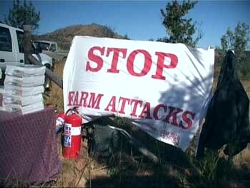
stopfarmattacksIn a joint operation between Richmond SAPS, Crime Intelligence, K9 Unit, HAWKS and Magma Security and Investigations three black suspects were arrested for the murder of three members of a Richmond family.

The suspects were arrested at 04:00 this morning in the Soetwater and Elandskop area. Police recovered three firearms as well as cellphones belonging to the deceased. The three suspects are between 19 and 20 years of age.

The German couple, Eckard (76) and Elizabeth Schutte and their son Lutz (33) were so badly mutilated that the police could not initially say how they had been murdered.

The horrific triple-murder of the German couple and their son was accompanied by gruesome violence which included them being torched.

Mr. Schutte’s neck and chest was carved open, Mrs. Schutte’s head was crushed with a heavy object and all three had been set alight. The victims also had stabwounds. The murders were clearly racial hate-crimes.

One of the suspects is an employee of the deceased. The motive for the murder was “robbery” the police said.

On Sunday 2 March the bodies of were discovered on Springfield Farm in Richmond by a family member who had come to visit them.

A neighbour of the deceased said the son Lutz had just arrived in South Africa from Germany to surprise his father for his 77th birthday.

His mother had fetched him at the airport on the weekend. The murderers were already in the house when they arrived, awaiting them. Mr. Schutte had presumably already been murdered by that time.

Their corpses were discovered shortly after twelve on the same day when another son, Stefan, had arrived at the farm for the birthday party.

There was no forced entry into the premises. The family’s vehicle, firearms and cellphones were taken by the suspects. The vehicle which is alleged to have been burnt in an isolated area could not be recovered due the inclement weather and terrain.

KwaZulu-Natal Provincial Commissioner, Lieutenant General Mmamonnye Ngobeni congratulated all role-players for the breakthrough. “Although we are saddened by the brutal attack and unnecessary loss of life we are glad that those responsible for this barbaric act of violence are behind bars where they belong,” she said.

She did not elaborate on the role the private security company played in the arrest.

Facebook plans drones for Africa

facebookFacebook is in negotiations to buy a drone manufacturer with the aim of using high-altitude autonomous aircraft to beam internet connections to isolated communities in Africa.

The social networking company is one of the main backers of the internet.org project, which aims to connect the large parts of the world that remain offline.

Only 2.7billion people – just over one-third of the world’s population – have access to the internet, according to Facebook. Other project backers include Ericsson, MediaTek, Nokia, Opera, Qualcomm and Samsung.

TechCrunch reports that Facebook intends to buy the maker of advanced solar-powered drones that can remain in the air for up to five years at a time.

Titan Aerospace’s drones fly at up to 20000m, effectively operating as satellites, with far lower operating costs, which the company calls “atmospheric parking”. The Solara models can carry up to 100kg of equipment.

TechCrunch says Facebook plans 11000 drones for blanket internet coverage to places with patchy or nonexistent connections.

Neither Facebook nor Titan Aerospace would comment.

The project would be in direct competition with Google’s Project Loon, which envisages 30 balloons in the stratosphere using varying wind currents at different altitudes to remain in a geostationary position.

Source: Daily Telegraph

Ukraine fever sweeps the Balkans

balkansAs the world watches the Ukrainians in their effort to defend themselves from Russia and become a fully European nation, close attention to the situation in Kiev and the crisis in Crimea is notable in the Balkan Muslim countries—Kosovo, Albania, Bosnia-Herzegovina—and in two with significant Muslim minorities, Montenegro and Macedonia.

In the Balkans, the threat of Serbian aggression has receded, but in a parallel with Ukraine, Russian influence is perceived behind intrigues from Belgrade. The events in Ukraine are seen in a context of the struggle against corruption and the phenomenon of the post-Communist “mafia state.”

In the first week of February, a wave of protest began in the Bosnian city of Tuzla, which is known for its tradition of multiethnic harmony among Bosnian Muslims, Croats, and Serbs. An old industrial redoubt now plagued with unemployment ranging between 40 and 60 percent, Tuzla boiled over quickly, as reported by BBC News, with attacks on official buildings.

Solidarity demonstrations spread to other Bosnian cities with economic problems, including Mostar in Herzegovina, which is divided between Muslims and Croats and has an aluminum industry, Zenica in central Bosnia, where a steel complex has been owned by ArcelorMittal since 1998, and then to Sarajevo, the capital. There, on February 7, demonstrators set fire to government buildings and fought police.

Local and foreign media, international observers, and politicians assigned blame for the Bosnian upheaval in all directions. Resentment of the excessively convoluted bureaucracy foisted by the 1995 Dayton Accords on Bosnia, which is partitioned between a so-called “Republic of Serbs” and the “Federation of Bosnia-Herzegovina,” grouping Muslims and Croats, is one issue. “Federation Bosnia” comprises 10 cantons, each with its own autonomous political and educational authorities, plus a special zone at Brcko in the northern part of the territory, all reporting—barely—to the supposed central government in Sarajevo. It has more varieties of statist delirium above and below the cantonal level: legislatures, ministries, municipalities, in a seemingly endless and redundant supply.

Economic opportunities mostly involve political malfeasance, financed by the European Union through the Office of the High Representative (OHR), the real government, with American support. The current high representative is an Austrian of Slovene background, Valentin Inzko. Bosnia-Herzegovina is therefore a place of profound despair, afflicted by brain drain. Its traditional Central European system of education, which produces well-trained graduates, sees them leave for other countries as soon as they can. A serious upheaval in Bosnia was, to anybody watching the country, obviously on the way—a matter of when, rather than why.

Also at the end of the first week of February, Kosovo saw turmoil as Ibrahim Gashi, rector of the University of Pristina, in the capital of that Balkan republic, was forced to resign after he was exposed as a falsifier of his academic work. Clashes between police and students left 29 officers hurt and 30 students arrested. Gashi’s departure from the university was followed by that of several of his colleagues.

In Podgorica, the capital of Montenegro, on February 18, hundreds of people gathered, throwing rocks at state offices, and injuring nine policemen. The Montenegrins called for “revolution.” Unemployed workers in Macedonia assembled in front of government buildings in that country’s capital, Skopje, on February 18. The next day, in Albania, after an informal strike by minivan drivers, in a country lacking a reliable public transportation system, a full one-day transport shutdown took place, with a rally in Tirana, the capital.The idiom of social rebellion is common in Balkan culture, which has undergone numerous such movements over the centuries, and where communism in the former Yugoslavia, under the charismatic dictator Joseph Broz Tito (1892-1980) kept memories of it alive in a civic myth that imposed much less conformity and silence than in other Communist lands. Lately, public acclaim for a “Balkan spring” gave way rapidly to visions of a “Bosnian-Ukrainian model.”

But in Bosnia-Herzegovina and Albania, entrenched elites quickly sought to profit from social conflict. The Bosnian politician Fahrudin Radoncic, leader of a party titled the Union for a Better Future, which holds four out of 28 seats in the weird, ineffectual House of Representatives crafted for the Muslim-Croat Federation, has been accused of organizing the assault on the government buildings in Sarajevo in an attempted coup d’etat. Radoncic, once a respected dissident, is now seen as a patron of shady deals with Serbian extremists—likewise an old motif in the Balkans. Dnevni Avaz (Daily Voice), a down-market tabloid owned by Radoncic, last week featured a column headed “Ukraine Is All of Us”—rhetoric viewed as cynical by many Bosnians.

Similarly, former Albanian prime minister Sali Berisha, an ex-Communist and leader of his country’s entrenched Democratic party, stirred the striking minivan drivers against the Socialist (i.e., neo-Communist) administration of Edi Rama, who took power last year.

As in Ukraine, allegations that discredited leaders are manipulating mass protests in Bosnia-Herzegovina and Albania to regain influence are widespread. But in the Balkan lands, they are more convincing than they appear to be in Kiev. On February 28, Zeljko Komsic, an ex-Communist and politically independent member of the three-person presidency of Bosnia-Herzegovina, declared “I am not with fascists, chauvinists, thieves, or racketeers.” Epitomizing the complexity of post-Dayton Bosnian governance, Komsic is the Croat representative in the presidency, which comprises a Bosnian Muslim, a Serbian, and a Croatian.

A legal complaint brought at the European Court of Human Rights in Strasbourg by Dervo Sejdic, a Bosnian Roma (Gypsy) representative, and Jakob Finci, president of the Bosnian Jewish Community, alleged discrimination in that, under Dayton, members of minorities are excluded from the Bosnian presidency. The Court found for the plaintiffs in the case, Sejdic and Finci v. Bosnia and Hercegovina, but a reform of the ethno-political structure has yet to be adopted.

Since the cathartic arson at government facilities in Sarajevo, protests have continued but with much-diminished participation, typically bringing together a few hundred elderly folk aggrieved mainly by the loss of pensions. Observing one such gathering on Saturday, March 1, which was Bosnian Independence Day, I noticed the prominent display of a portrait of Tito. Nostalgia for communism is an important motive for elderly Bosnians to take to the streets.

Leaflets for the March 1 assembly, taped up throughout Sarajevo, demanded “social justice for all.” Bosnia’s Muslim religious leadership, under moderate direction since the replacement of the Wahhabi-line chief cleric Mustafa Ceric by Husein Kavazovic last year, supports the call for social justice. But the Islamic approach to Bosnian problems is conservative.

At Friday prayers in Sarajevo’s exquisite and intimate 16th-century Cobanija mosque, the day before the March 1 protest, the elderly preacher, known as a khatib and different from the imam, who leads the service, pronounced blessings and immediately commenced an eloquent denunciation of violent demonstrations. With his voice repeatedly breaking, he said to stay away from barricades such as were seen in the recent uproar. He referred to violence as “Satan’s path” and called on the assembled Bosnian Muslims to be thankful for the existence of a state with a territory and constitution which they should protect and obey. He said he was a pensioner himself and that his wife had not worked for years. But he repeated, “do not go to the barricades. Do not be tempted to Satan’s path. Remember that we have a state, territory, political structures and freedom. Do not waste them or abuse them.”

Meanwhile, those who remain indignant about corruption, rulership from afar, joblessness, lack of pensions, and the other misfortunes of Dayton besetting Bosnians have been meeting in “plenums” for democratic debate and proposal of solutions.

Thus, its Balkan disarray notwithstanding, Bosnia may find a secure way to European standards of entrepreneurship, accountability, and popular sovereignty. In a land where rebellion seems deeply embedded in the culture, hope is not exhausted.

Source: www.weeklystandard.com

‘War with Russia the only solution’

General Robert Scales

The United States needs to “write Crimea off” after the invasion of Russian troops following last month’s Ukrainian uprising, retired Maj. Gen. Bob Scales said.

“They are now part of Russia. Paint them red. They have been reintegrated into the Russian republic. And there is absolutely nothing that we can do about it,” Scales, a retired Army major general, told Fox News’ “America’s Newsroom” on Tuesday, referring to the peninsula in Ukraine.

The important thing at this point was to anticipate what Russian President Vladimir Putin will do next, Scales said.

“From a military perspective, what’s important is what happens next, because of what’s at risk now. You have Russian minorities in Eastern Ukraine. You’ve got Russian minorities in Moldova, in Estonia. And all of those central European leaders are nervous,” he said.

There are numerous options for the United States from a military perspective, but Scales said he did not think President Barack Obama had plans to use forces in the conflict.

“The essence of any type of military activity in this region is to have a viable contingency plan, to have it worked out with your NATO allies. And frankly, that simply hasn’t happened,” Scales said.

Speaking on the crisis in Ukraine, Scales argued that “there should be a military option on the table.”

“Everyone I’ve seen on the news media this whole last few days talks about, ‘well, the first thing we are going to do is we’re gonna take the military option off the table,’” Scales, a former commandant of the U.S. Army War College, said: ”Oh, really? That’s our greatest advantage right now. [Russian President Vladimir] Putin doesn’t care about economic sanctions. He doesn’t care about what the E.U. thinks. The only thing he respects is power and he knows that America still is more powerful than he is.”

“I think we can commit as a demonstration,” Scales elaborated. “For example, let’s start that AMB initiative with the Czech Republic and Poland tomorrow. We have a perfect right to put ships in the Black Sea. Let’s put some ships in the Black Sea. Poland is one of the best maneuver areas in Central Europe. The U.S. military, the U.S. Army, maybe even the Marine Corps, ought to move into Poland to do maneuvers, perhaps stay awhile. We should move tier 1 and tier 2 Special Forces into the Ukraine — if the Ukraine asks for our support — so we can train their troops. Remember October ’73 when we kept Israel from collapsing by flying in high tech gear and high tech weapons? We could do that in the Ukraine.”

Source: Daily Caller/Newsmax

Largest oil refinery in Europe on fire

oilfireAmazingly, no one was injured when Europe’s largest oil refinery burned with the force of a thousand suns yesterday. And obviously it’s in Russia.

The refinery is OJSC TANECO, formerly known as the Nizhnekamsk refinery, in Tartarstan. If you get into your Lada and drive due East from Moscow, you’ll get there in about 14 hours.

Reuters reports that the fire was put out the same evening it started and there were no injuries. It will take a few months to get production back up.

It churns out 140,000 barrels of gas and diesel a day, and that production all goes to Russia.

This picture is on English Russia and gives you a sense of scale of the blaze.

China backs Russia on Ukraine

russekrim

The Russian Foreign Minister Sergey Lavrov, justified the military incursion into Ukraine on Monday and said it was necessary in order to protect his country’s citizens living there. “This is a question of defending our citizens and compatriots, ensuring human rights, especially the right to life,” he said.

Panama was invaded in 1989 over the exact same pre-text by the US. US nationals were ‘in danger’ and the US military needed to protect them, analysts pionted out. Panama was considered in the US ‘sphere of influence’ which was the reason given by the Bush senior administration to invade a sovereign nation.

Earlier on Monday, as Russia sought to draw support from the international community, Mr Lavrov said that he had discussed Ukraine with his Chinese counterpart and that the two veto-wielding UN Security Council members had “broadly coinciding points of view” and would stay in close contact on the issue.

President Vladimir Putin has defended Russia’s actions, blaming “ultra-nationalist forces” for seizing power in Kiev. A Kremlin statement posted online said Putin told the German Chancellor, Angela Merkel, on Sunday that measures taken by Russia so far were “fully adequate” and in response to the unrelenting threat of violence” to “Russian citizens and the whole Russian-speaking population”.

Russia has told Ukrainian forces surrender its control of the strategic Crimean region by 3am on Tuesday or face military assault.

Relations with the US and Britain continued to plummet as the Russian Government continued to ignore calls from their leaders to leave the Ukrainian area.

It followed claims from the Ukrainian Defence Ministry that Russian fighter jets had “violated” the country’s airspace over the Black Sea overnight and that Russian forces were now in control of the port city of Sevastopol, where the Black Sea fleet is based.

The takeover of the ferry terminal on the eastern tip of Crimea by Russian troops has exacerbated fears that Moscow is planning to bring even more troops into the strategic Black Sea region. There was no immediate comment from the Russian Defence Ministry.

During a visit to Kiev today, the Foreign Secretary William Hague described the situation as “certainly the biggest crisis in Europe in the 21st century”, adding that there was “no justification” for the actions in Crimea, where Russia had “in effect taken control”.

Echoing US President Obama’s speech on Friday, the Foreign Secretary said Moscow should be in no doubt that it faced “significant costs” for its move into the Ukrainian region.

Yesterday, Ukraine’s country’s acting Prime Minister said that his country was “on the brink of disaster”, fanning fears that his position might be in danger too.

Emerging from a closed session of parliament in Kiev, Mr Yatsenyuk described President Putin’s decision to send in troops as a “declaration of war”, and said “there was no reason for the Russian Federation to invade Ukraine.

The Nato Secretary-General, Anders Fogh Rasmussen, called on Russia to “stop its military activities and its threats” after convening an emergency meeting. “What Russia is doing now in Ukraine violates the principles of the United Nations Charter,” he said. “It threatens peace and security in Europe.”

The G7 group of major industrialised nations condemned Russia’s intrusion into Ukraine on Sunday. It has also cancelled preparations for the G8 summit that was to include Russia, scheduled for Sochi in June, the White House confirmed.

The group said in a statement: “We, the leaders of Canada, France, Germany, Italy, Japan, the United Kingdom and the United States and the President of the European Council and President of the European Commission, join together today to condemn the Russian Federation’s clear violation of the sovereignty and territorial integrity of Ukraine.

“We have decided for the time being to suspend our participation in activities associated with the preparation of the scheduled G8 Summit in Sochi in June,” it added.

The G7 also urged Russia to hold talks with Ukraine directly to address any human rights or security concerns it has.

The group expressed its support for Ukraine’s bid to secure financial help from the International Monetary Fund and to make reforms to its economy.

Source: The Independent


Crimea cannot be denied right to hold self-determination referendum

Sevastopol airport
Sevastopol airport calm

The legitimacy of the Ukrainian parliament, the Verkhovna Rada decision, which removed President Viktor Yanukovych from office, is highly doubtful, the Russian State Duma International Affairs Committee Chairman Alexei Pushkov said. “As far as I understand, the process of Yanukovych’s deposing was rather confused and its legitimacy causes qualms,” Pushkov told reporters.

The opposition leaders who struck the deal with Yanukovych on February 21 on guarantee of EU representatives agreed that he would stay in office until the presidential election.

“It seems the sole purpose of the [February] 21 agreement guaranteed by the European Union was to remove Yanukovych from office. But that agreement said he would be the president until the elections were held. This is why Yanukovych says he remains the legitimate president of Ukraine,” the parliamentarian continued.

This is a formal agreement and no one has explained why “it was suddenly disavowed,” Pushkov said, describing the situation as a serious collision.

Crimea cannot be denied the right to hold a referendum on self-determination, head of the State Duma international affairs committee Alexei Pushkov told reporters on Friday.

“If Crimea holds a referendum, this will be an absolutely legislative and legally binding base for changing its status, if the majority of the population votes for this,” he said.

Pushkov said such a referendum would be a more legal form for changing Crimea’s status than “spontaneous Maidan” in Kiev.

“If we are told that the Maidan could be a source of power, well, this is the will of the people. But why then can’t the will of the people be the source of power and self-determination for Crimea. I think it cannot be denied this right,” the parliamentarian said.

On Thursday, the parliament of the Autonomous Republic of Crimea announced it would hold a referendum of the autonomy’s status and expansion of its powers.

The Russian and Ukrainian governments continue to maintain “working” contacts following the change of power in Kiev, Russian Deputy Prime Minister Arkady Dvorkovich said.

“These contacts continue at the working level,” he told Interfax after being asked whether negotiations could be held with the Ukrainian government any time soon.

Dvorkovich declined to comment on the prospects for holding official negotiations with the Ukrainian side.

Ukraine’s interior minister claims Russian forces have now taken control of two airports in Crimea.

Shortly afterwards a military airport near the port of Sevastopol was seized. There are no reports of any bloodshed or clashes near where the Russian Black Sea fleet has a base.

Ukraine’s Interior Minister Arsen Avakov has described the raid as an armed invasion in violation of international accords.

Source: Voice of Russia, TASS, Interfax

How to join the New World Order

nwo2Investigative reporter Greg Palast has documented a method that is part of a tried and tested formula that the IMF has used time and time again to absorb nations into the new world order.

In April 2001, Palast obtained leaked World Bank documents that outlined a four step process on how to loot nations of their wealth and infrastructure, placing control of resources into the hands of the banking elite.

One of the final steps of the process, the “IMF riot,” detailed how the elite would plan for mass civil unrest ahead of time that would have the effect of scaring off investors and causing government bankruptcies.

“This economic arson has its bright side – for foreigners, who can then pick off remaining assets at fire sale prices,” writes Palast, adding, “A pattern emerges. There are lots of losers but the clear winners seem to be the western banks and US Treasury.”

In other words, the banking elite creates the very economic environment – soaring interest rates, spiraling food prices, poverty, lower standards of living – that precipitates civil unrest – and then like a vulture swoops down to devour what remains of the country’s assets on the cheap.

Just as the US State Department foresaw the Arab Spring, with some of the same people involved in the Euromaidan movement training future Arab Spring leaders how to effectively use Twitter and Facebook years before the protests began, the Ukraine uprising was also entirely predictable.

The elite is so successful at hijacking supposedly grass roots revolts and turning them into managed acts of regime change because mass civil unrest is mathematically predictable.

As Dilip D’Souza explains, “There’s mathematical research that suggests a link between food prices and the occurrence of riots. And this research has pretty accurately predicted the unrest we’ve seen in so many corners of the globe.”

Research has confirmed that when the UN’s Food and Agriculture Organization’s food price index (FPI) rises above 210, unrest quickly follows in the areas of the world most affected. The most recent three countries to suffer food price hikes? Thailand, Venezuela and Ukraine.

Armed with this foresight, this is how global bodies like the IMF, the US State Department and the menagerie of western NGOs that fuel or hijack uprisings around the globe are able to seize control of the outcome.
With the IMF set to sink its teeth into yet another sovereign nation, even as Russia attempts to stir up a counter-revolution, Euromaidan protesters would do well to read up on the history of nations who sell their soul to globalist debt sharks and end up paying a heavier price than anyone could imagine.

Source: prisonplanet.com