Bashing the black city

L. Brooks Patterson
L. Brooks Patterson

The often outspoken Oakland County Executive is once again in hot water over comments he made about Detroit in a recent interview with “New Yorker” magazine.

L. Brooks Patterson is quoted in an article titled “Drop Dead, Detroit!” as saying he only has negative things to say about the Motor City. He made the controversial comments while giving reporter Paige Williams an extended tour of Oakland County last September.

“Anytime I talk about Detroit, it will not be positive. Therefore, I’m called a Detroit basher,” he said. ”The truth hurts, you know? Tough s***.”

The 75-year-old Republican went on to say he warned his children never to travel to Detroit.

“I used to say to my kids, ‘First of all, there’s no reason for you to go to Detroit. We’ve got restaurants out here.’ They don’t even have movie theatres in Detroit — not one,” he said.

Patterson said the one thing Detroit offers that the suburbs can’t is live sports – and even then a trip to the city is quite risky.

“For that, fine — get in and get out,” he said. “But park right next to the venue — spend the extra 20 or 30 bucks. And, before you go to Detroit, you get your gas out here. You do not, do not, under any circumstances, stop in Detroit at a gas station! That’s just a call for a carjacking.”

He’s also quoted as saying a prediction he made has come to pass. He said, “What we’re going to do is turn Detroit into an Indian reservation, where we herd all the Indians into the city, build a fence around it, and then throw in the blankets and corn.”

A statement from Patterson’s office said the seven-page article casts the executive in a false light, but didn’t dispute the quotes or apologize for his actions.

The National Action Network, an organization founded by the Reverend Al Sharpton, is calling for a public apology from Patterson. The group is holding a news conference at 11 a.m. Tuesday to request the apology.

In a statement, Rev. Charles Williams II, the National Action Network’s Michigan chapter president, said Patterson’s remarks were “repulsive” — not just because Detroit is mostly a black city, but “because it is also a direct slight to the American Indians who occupied the land before Detroit was Detroit, and Oakland County.”

Source: CBS Detroit

Protest funded by Soros in Ukraine turns violent

kiev2Theprotests in Ukraine organized by USAID, National Endowment for Democracy (NED), Freedom House, George Soros’ Open Society Institute and a host of public-private NGOs have turned violent.

Intense street battles raged in the Ukrainian capital, Kiev, on Monday following protests over the weekend against newly enacted laws curtailing public assembly. The law bans and imposes strict penalties for the use of stages and tents in public spaces. It also outlaws helmets and balaclavas.

The fighting began on a side street near the Ukrainian Parliament, the Verkhovnaya Rada, near Independence Square on Sunday.

US warships deploy for Sochi Olympics

uswarshipsThe United States will deploy at least two warships into the Black Sea off the coast of Sochi, Russia, to respond to a potential terror attack during the upcoming Olympics, top officials said on Monday.

The positioning of the ships would also enable the rapid evacuation of Americans in the event of an attack, CNN reported. The State Department would take the lead if evacuations became necessary.

The ships will have helicopters that could fly Americans out of the country if needed. There are also aircraft on standby in Germany that could be at Sochi in about two hours if needed.

Concerns about terrorism at the Olympics have heightened after a video released online Sunday promised a “present” for tourists at the Olympics as revenge for Muslims killed around the world, according to CNN.

Source: Washington Times

Brazilian Apartheid

brazil2One of the leaders of Brazil’s flashmob movement that is sweeping across shopping centres, sparking violent clashes with police, is a soft-spoken 55-year-old piano teacher that has never organised a protest in his life.

Around 1,000 people are expected to turn up at São Paulo’s upmarket JK shopping centre on Saturday for a gathering – known as a ‘rolezinho’ – which he has organised over Facebook.

He was motivated by a crackdown on other flashmobs, which began last month as parties but have become more political. “I couldn’t bear to see the criminalisation of poor, black kids,” he says.

Similar protest-cum-rampages are planned in at least eight other states across Brazil this weekend, with more than 8,000 expected at one shopping centre in Rio de Janeiro. Popular among poor, largely black, Brazilians, the flashmobs have begun to snowball into a nationwide movement against racism and inequality, threatening the government with further violent mass protests just as the country prepares to host the football World Cup, academics say.

In June the biggest protests in 20 years spread across Brazil following complaints over a bus fare increase, bringing businesses in Latin America’s biggest economy to a standstill and prompting a plunge, albeit temporary, in President Dilma Rousseff’s popularity.

Rousseff called an emergency meeting, worried that the protests might spiral out of control, local media reported.

Many say the government has good reason to be worried, pointing to a similarity with the London riots of 2011.

São Paulo’s first major rolezinho took place at the beginning of last month, when about 6,000 teenagers occupied Shopping Itaquera in the city’s poor eastern suburbs.

Similar gatherings followed across the city but muggings and robberies prompted a tough response from the police. Last Saturday, military police used rubber bullets and tear gas to break up the crowds and were caught on camera beating teenagers with truncheons.

Messages of outrage spread quickly over social media in Brazil, which has the second biggest Facebook community in the world, turning the mass parties into a nationwide political movement.

At least four shopping centres across the city secured court orders to ban suspicious teenagers from entering, leading to accusations this week of racial segregation and even a “Brazilian apartheid”.

In spite of Brazil’s image as a harmonious melting pot of races, racial tensions run deep. The country still suffers from one of the most acute income divides. “Although Brazil has progressed in reducing poverty, we note that there’s still a great contrast between the situation of black Brazilians and the country’s rapid economic growth,” the UN concluded in a report last month on racism.

Income growth has inspired a sense of social ascension, leading to demands for greater equality, as well as allowing people to buy their first mobile phones, giving them access to social media.

The movement might also be the symptom of a disenchanted youth that is facing a slowing economy and a shrinking job market.

While Brazil’s unemployment rate remains at a record low of about 5 per cent, research by Ipea, a government agency, has shown many young people in poorer regions are dropping out of the workforce and are not going into higher education either.

Source: FT

Meet the new middle class

Flashmobs sweep Brazil

When a million people swarmed on to the streets of Brazil last June there was consensus that the protest was a phenomenon of the “new middle class” – squeezed by corruption and failing infrastructure. As the Thai protests continue, these too are labelled middle class: office workers staging flashmobs in their neat, pressed shirts.

But what does middle class mean in the developing world? About 3 billion people earn less than two dollars a day, but figures for the rest are hazy. Now, fresh research by the International Labour Organisation (ILO) economists shows in detail what’s been happening to the workforce of the global south during 25 years of globalisation: it is becoming more stratified – with the rapid growth of what they term “the developing middle class” – a group on between $4 and $13 a day. This group has grown from 600 million to 1.4 billion; if you include around 300 million on above $13 a day, that’s now 41% of the workforce, and on target to be over 50% by 2017. But in world terms they’re not really middle class at all. That $13 a day upper limit corresponds roughly to the poverty line in the US in 2005. So what’s going on?

The ILO researchers mined data from 61 household surveys across the world to come up with these figures. In the process they adopted a rough definition of the lifestyle of the sub-$13 group. The key markers were: families had access to savings and insurance, were likely to have a TV in the home and to live in smaller households (four people).

They would typically spend 2% of their income on entertainment – plus they would have better access to water, sanitation and electricity. These, then, are the “winners” from globalisation: an expanding group for whom global growth has meant a serious rise in real income, year after year, compared with the recent near stagnation of incomes for working and lower-middle-class families in parts of the developed world.

Source: The Guardian

National black soccer team ‘unbearable bunch of useless losers’

mbalula
Fikile Mbalula

Sports Minister Fikile Mbalula said het would neither withdraw nor apologise for his scathing comments about the national black soccer team.

Bafana Bafana are a “bunch of losers” and “unbearable, useless individuals”, he said earlier.

Mbalula said the whole country has had enough of the national soccer team’s string of poor performances.

There are no white players in the team, despite South African laws that force too white sports teams to be racially diverse.

At a press briefing on Monday, Mbalula slammed Bafana, the hosts, for being knocked out of the 2014 African Nations Championship (Chan).

He singled out goalkeeper Moeneeb Josephs as the reason for the team’s embarrassing 3-1 defeat by African champions Nigeria.

“What I saw there was not a problem of coaching, it was a bunch of losers, who don’t have any respect for this country and don’t have any respect for anybody,” said Mbalula.

“The second goal … the goalkeeper commits a penalty, alone, single-handedly, and without being assisted by anybody.

Mbalula said the “mediocre” display that was seen on the pitch at Cape Town Stadium shocked him and South African Football Association president Danny Jordaan. It was also a sign that Bafana were in a crisis.

Danny Jordaan
Danny Jordaan

The coloured Jordaan hinted that their woes came as result of having a white coach, Gordon Isegund, and that he should resign.

Mbalula’s comments triggered outrage on Twitter, with some users calling on him to retract his statement and apologise, while others supported and agreed with him.

Asked to comment on calls for Mbalula to withdraw his remarks, the minister’s spokesman, Paena Galane, said “there is nothing to withdraw”.

“The country has also had enough of Bafana Bafana’s performance. The country keeps hosting these events with the hope of improving,” said Galane.

He said football authorities would be meeting with the team to discuss performance.

Gordon Isegund
Gordon Isegund

Land invasions at Bekkersdal

After the service delivery riot

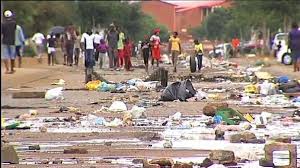
Black residents from Bekkersdal on the West Rand have invaded nearby land owned by mining companies.

The residents have accused the Westonaria local municipality of corruption in the Bekkersdal urban renewal project.

The land invasions began at the weekend after negotiations between the community and the Department of Cooperative Governance and Traditional Affairs hit a wall. By yesterday morning, more than 500 residents had put their names on a list one of them had begun to compile, and had laid claim to stands in an open stretch of land adjacent to the township.

Some of the residents stayed away from work to take advantage of “the opportunity of a lifetime”.

“I am taking my stand. I do not know whether this is going to work out or not. If it does, I don’t want to be left behind,” said one resident.

Community spokesman Thabang Wesi said the community are reclaiming what is rightfully theirs.

“This is our land.”

Gauteng department of human settlements spokesman Motsamai Motlhaolwa said the land was privately owned.

“The owner of the land has the responsibility to go to court to get an order evicting the people from his land,” he said.

Gold One spokesman Grant Stuart said one of the three properties being invaded belonged to the company but was being transferred to another owner. The two other properties belong to Rand Uranium.

Source: timeslive

Obama blames his failing popularity on race

racecardPresident Barack Obama said that racial tensions may have softened his popularity among white voters within the last two years, according to a story posted on the New Yorker magazine’s website today.

“There’s no doubt that there’s some folks who just really dislike me because they don’t like the idea of a black president,” Obama said in the article by David Remnick.

Obama said this in his most direct comment on how race has affected his political standing since he’s been in office. His wife Michelle has spoken openly about race before.

Obama’s second term has been marked by controversies including a partial government shutdown in October, revelations that the National Security Agency has gathered personal mobile phone data and the troubled rollout of health-insurance expansion.

Obama’s approval rating among all voters is 39 percent and his disapproval rating is 53 percent, according to a Gallup Poll conducted Jan. 14-16. In the 2012 presidential election, Republican candidate Mitt Romney won 59 percent of the white vote, compared with Obama’s 39 percent, according to exit polling by a consortium of major news outlets. Obama won 43 percent of the white vote in 2008 against 55 percent for opponent John McCain, a Republican senator from Arizona.

Source: Bloomberg

North West premier hopes race-baiting will save her

thandi2
Thandi Modise

A white farmer who allegedly had a water valve closed was to blame for problems with the water supply in Swartruggens and the Borolelo township on Sunday, said North West Premier Thandi Modise.

“It is alleged that the farmer, accompanied by a police officer, instructed the operator on site not to pump water to allow water to reach his animals downstream.”

Modise made these outlandish race-baiting claims while still awaiting a report on the incident.

According to maintenance staff however, the municipality never had the waterpumps serviced which led to the breakdown.

“We appeal to our communities not to be provoked to anger by this supposed act of sabotage and racism that need to be thoroughly investigated.”

The water shortage in Mothotlung, near Brits, sparked protests which turned deadly this week.

Two protesters were shot dead, allegedly by police, on Monday during a service-delivery protest.

Another man died after he allegedly fell out of a moving Nyala police vehicle in a bid to escape. His family says he was pushed from the moving vehicle after he was badly beaten.

Residents of Mothotlung had apparently been without water for about two weeks. The premier promised service delivery earlier but never delivered.

Meanwhile, Agang SA reported on Sunday that the Jericho community in the Madibeng municipality had been without water since last year. Madibeng is 40km from Mothotlung.


Mandela’s daughter shares property with vandals, squatters, rats

Grandaughter Zoleka and daughter Zindzi

The late Nelson Mandela’s daughter, Zindzi, who owns a R2 million house in Houghton, shares her property with vandals, squatters and rats.

Mandela’s family has been at war, bickering between themselves over his many millions. It is feared that his surviving family will be plunged in to deep rifts over who stands to gain his fortune.

Mandela was married three times and fathered six children – only three of whom, his daughters Makaziwe, Zenani and Zindzi, are still alive.

Neighbours in the upmarket Joburg suburb are complaining bitterly that the house is drawing bad elements and crime into the area and that it is devaluing their own properties.

The complainants did not want to be named, but said the pavement outside Mandela’s house is filled with rubbish and “rats are running wild in the thick undergrowth”. People urinate and throw rubbish onto the pavement.

“We have complained, but nothing gets done because an influential family owns it,” said one neighbour.

The house, in Fifth Street, has been badly vandalised and has only a few walls and some roofing left. It has been stripped of all electrical fittings and plumbing pipes.

So desperate are the neighbours that they are now asking for permission to tear down the standing walls themselves in an effort to make sure that squatters can no longer live on the property.

“This property, worth a couple of million rand, belongs to a person who last year asked for legal aid in a case involving a burial dispute,” said another neighbour.

Title deeds for the property, seen by The Star, show the registered owner as the Zindzi Mandela Family Trust, and that it was bought for R2m.

The same address is given by Zindzi as her residential address on other legal documents.

Following complaints by neighbours, city councillor Marcelle Ravid called in the City of Joburg’s environmental health inspectors.

After an inspection was conducted on December 19, a notice was issued to the owners – again listed as the Zindzi Mandela Family Trust – instructing them to clean up the property.

Zindzi was given 21 days to clean up the property. However, the deadline has since expired, nothing has been done and the house remains in the same derelict condition.

Source: IOL

Pastor and father arrested for rape in separate incidents

zulusaunaA 70-year-old man, a Pastor in one of the local churches in Siyabuswa, was arrested today, 17 January 2014, for allegedly raping a 17-year-old girl.

Information at police disposal revealed that the girl was taken to the pastor by his brother for prayers as she was not feeling well yesterday. The pastor asked her brother to leave her and collect her later. The suspect instructed the girl to undress so she could get into a “sauna” (isifutho). In the process, the suspect began to touch her and told the girl that anything that happens within the premises must not be told to anyone. The suspect then forcefully raped the girl.

The incident was reported to the police and the suspect was nabbed facing a charge of rape.

On a separate incident, a 55-year-old man from Embalenhle has been arrested yesterday for allegedly raping his biological daughter, who is now 32-years-old, on several occasions during 1997 and 1999.

The incident occurred in January 1997 while the victim was 16-years-old at the time, and residing at Bushbuckridge with her granny. It is alleged that the suspect went into the woman’s (his daughter) room while she was asleep during the night, covered her mouth, forcefully undressed and raped her. He continued to rape her until in 1999 when she became pregnant.

News broke out after they (woman and the father) had a quarrel recently and her mother discovered that her daughter had been abused, she then reported the matter to the police. The suspect was apprehended yesterday and escorted to Bushbuckridge where the incident took place for further investigation.

The suspects, on both incidents, will appear before the Mdutjane in Siyabuswa and Bushbuckridge Magistrates’ Courts respectively, on Monday, 20 January 2014.

The Provincial Commissioner of Mpumalanga has described the two incidents as very unfortunate and immoral as the suspects are supposed to be the guardian of these victims, instead they opted to be something else.

Heavy sentences demanded for murder trio

ruralagedThe South African Police Service in Limpopo on Monday will be demanding heavy sentences for a black couple and an associate on trial for 53 charges, which include murder, attempted murder, robbery, fraud, theft, racketeering and possession of drugs.

The call comes after the end of a marathon trial which commenced in February 2012 at the Polokwane High Court against Thomas Mothwa (43), his wife Refilwe Mothwa (41) and their associate Jan Mohlala (58). The trio is accused of playing a leading role in targeting elderly people in the rural areas of Limpopo and North West accosting them at or near the banks after they had withdrawn money.

The couple would approach victims under the pretext of knowing them, offering them a lift in their motor vehicle. The unsuspecting victims will then be offered a spiked soft drink and upon losing consciousness, they would steal their bank cards and banking details, identity documents and any other valuables. The victims would then be dumped along the road or thrown from a bridge or into a river and left for dead.

The couple would then enlist Mohlala and other unknown suspects to make withdrawals inside banks by replacing the photograph in the victims’ ID books with that of their associates or other accomplices, allowing them to misrepresent bank officials that they are the rightful owners and make withdrawals at various banks and ATM’S.

Their evil deeds started in 2000 and were finally halted by the police in 2007 leaving four victims dead, while two other victims James Molomo and George Moshoana bodies are yet to be accounted for and many others defrauded of their hard earned money. Both Molomo and Moshoana are presumed dead.

Beijing watches sun rise… digitally

Watching sunrise on a screen

You know it’s bad when…The smog has become so thick in Beijing that the city’s natural light-starved masses have begun flocking to huge digital commercial television screens across the city to observe virtual sunrises.

Following this week’s practical shutdown of the city of “beyond index” levels of pollution, as The Mail Online reports, residents donned air masks and left their homes to watch the only place where the sun would hail over the horizon that morning…

It’s grim…

The futuristic screens installed in the Chinese capital usually advertise tourist destinations, but as the season’s first wave of extremely dangerous smog hit, ths happened…

The air took on an acrid odor, and many of the city’s commuters wore industrial strength face masks as they hurried to work.

‘I couldn’t see the tall buildings across the street this morning,’ said a traffic coordinator at a busy Beijing intersection who gave only his surname, Zhang. ‘The smog has gotten worse in the last two to three years. I often cough, and my nose is always irritated. But what can you do? I drink more water to help my body discharge the toxins.’

The density of PM2.5 was about 350 to 500 micrograms Thursday midmorning, though the air started to clear in the afternoon. It had reached as high as 671 at 4 a.m. at a monitoring post at the U.S. Embassy in Beijing.

That is about 26 times as high as the 25 micrograms considered safe by the World Health Organization, and was the highest reading since January 2013.

In the far northeastern city of Harbin, some monitoring sites reported PM 2.5 rates of up to 1,000micrograms in October, when the winter heating season kicked off.

Beijing reported 58 days of serious pollution last year, or one every six to seven days on average, Xinhua quoted Zhang Dawei, director of the Beijing Municipal Environmental Monitoring Center, as saying.

China has drawn up dozens of laws and guidelines to improve the environment but has struggled to enforce them in the face of powerful enterprises.

On Wednesday, China’s commercial capital, Shanghai, introduced emergency measures, allowing it to shut schools and order cars off the road in case of severe smog.

Former ambassador to Brazil murdered

saps5A former South African ambassador to Brazil was shot dead at his home in De Deur, south of Johannesburg, in the early hours of Friday, police said.

No one has been arrested. Police urged anyone with information about the crime to contact them.

The 63-year-old was killed after two armed men broke into his house around 2am the police said.

Tthe man’s name would only be released after police were sure that all of his next of kin had been told of his death.

The robbers stole cellphones from the former ambassador’s brother and demanded to be taken to all the bedrooms. They took R950, a watch, an iPad and four cellphones.

The former ambassador threw a stone at the robbers as they were leaving.

“One of them turned around and shot him once in the chest. He died on the scene.”