The Americans lied

bndLast summer, German Chancellor Angela Merkel promised her citizens a pact which would prohibit U.S. spying on German citizens. But since then, Washington has shown little interest in pursuing such a treaty. Now, officials in Germany fear the deal is dead.

Failed talks? Hardly. The negotiations “are continuing,” says Germany’s foreign intelligence service, the Bundesnachrichtendienst (BND). “We are still talking,” says the German government. In other words, nothing has yet been decided. The No-Spy deal is still alive.

But the statements coming out of Berlin and Pullach, where the BND is headquartered, reek of forced optimism. Nobody wants it to look as though efforts have been abandoned toward a deal which would see the U.S. agree to swear off spying operations in Germany.

Yet despite the assertions, most of those involved are slowly coming to the realization that a surveillance deal between Washington and Berlin isn’t likely to become reality. The U.S. government is still digging in its heels.

On Tuesday, the German daily Süddeutsche Zeitung quoted one source who is familiar with the talks as saying “we won’t get anything.” The paper also reported that the US is refusing to promise that it won’t monitor members of the German government and other politicians in the future.

No surprises here.

Source: Der Spiegel

Coming ‘oil glut’ may push global economy into deflation

oilglutOne piece of the jigsaw puzzle is missing to complete the deflation landscape across the West: a slide in oil prices. This is becoming more likely each month.

Turmoil across the Middle East and parts of Africa has choked supply over the past two years, keeping Brent crude near $110 a barrel despite a broader commodity slump. Cotton and corn prices have halved, as has the UBS index of industrial metals. Such anomalies rarely last.

“We estimate that crude oil is now the mostly richly priced commodity in the world,” says Deutsche Bank in a fresh report.

Michael Lewis, the bank’s commodity strategist, said markets face an “new oil supply glut” as three forces combine. US shale will add 1m barrels a day (b/d) to global supply for the third year running; Libya will crank up shipments after a near collapse in 2013; and Iran will come out of hibernation. “This will push OPEC spare capacity to levels last seen in the depths of the financial crisis in 2009,” he said.

Source: The Telegraph

China tests hypersonic missile defense buster

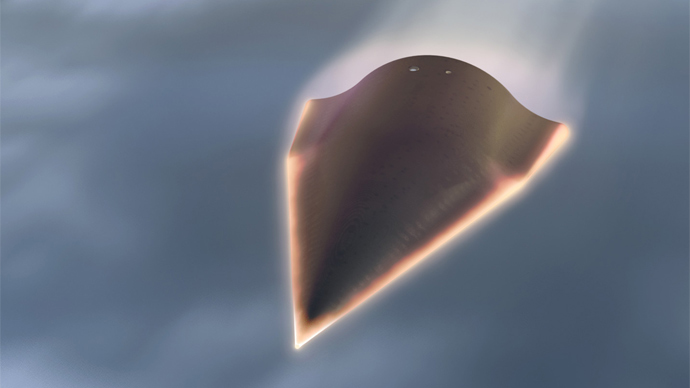
chinaglideChina has successfully tested its first hypersonic missile delivery vehicle capable of penetrating US missile defense system and delivering nuclear warheads with record breaking speeds, Pentagon officials have confirmed.

The new hypersonic glide vehicle (HGV), dubbed the WU-14 was allegedly spotted flying at record-breaking speeds during a flight test over China on January 9, an anonymous Pentagon official told the Washington Free Beacon.

The new weapon delivery system is reportedly designed to be launched as the final stage of China’s intercontinental ballistic missile, which would approach its target at a velocity of up to 10 times the speed of sound. Hypersonic speed range lies between Mach 5 and Mach 10, or 3,840 to 7,680 miles per hour.

A Pentagon spokesman confirmed the Chinese test launch but declined to provide details.

“We routinely monitor foreign defense activities and we are aware of this test,” Lt. Col. Jeffrey Pool, a Marine Corps spokesman, told the Washington Free Beacon.

“However, we don’t comment on our intelligence or assessments of foreign weapon systems,” Pool said in a statement. “We encourage greater transparency regarding their defense investments and objectives to avoid miscalculation,” he added.

Hypersonic vehicles, which are also being designed by the US, India and Russia, are developed for precise targeting, rapid delivery of weapons, and are being tested to outmaneuver hostile missiles and space defenses.

“A boost glide missile theoretically would be intended to counter existing mid-course missile defenses,” Mark Stokes, a former US Air Force officer told the Washington Free Beacon.

Strokes explained that China is developing two hypersonic flight vehicle programs – one believed to be of a post-boost vehicle designed to be deployed from a missile that pursues its target from near space, or some 62 miles from earth. Basing his hypothesis on emerging reports from China, Stokes believes that hypersonic glide vehicles could reach Mach 12 speeds of up to 9,127 miles per hour, potentially compromising a US missile defense.

“The beauty of the HGV is that it can perform hypersonic precision strikes while maintaining a relatively low altitude and flat trajectory, making it far less vulnerable to missile defenses,” Rick Fisher, an analyst at the International Assessment and Strategy Center, told the Washington Free Beacon.

“With the integration of strategic analysis and planning into technical research, China’s pursuit of hypersonic and high-precision weaponry promises to be faster and more focused than that associated with its previous [anti-satellite] and [ballistic missile defense] related research and programs,” Lora Saalman, a specialist on Chinese strategic systems with the Carnegie Endowment Saalman said in an email to the publication. “This recent test is a manifestation of this trend.”

The Chinese are “actively seeking global military power to challenge the United States, and it is not yet in any mood to talk, or engage in arms control, about it,” Fisher said.

In May, the Pentagon’s assessment of Chinese capabilities suggested that China built the world’s largest shockwave hypersonic wind tunnel capable of generating test flying conditions of up to Mach 9 speeds. – RT

War for its own sake

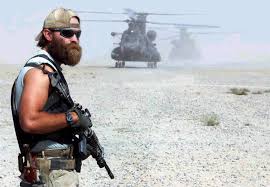
sopsSince September 11, 2001, U.S. Special Operations forces have grown in every conceivable way, from their numbers to their budget.

Most telling, however, has been the exponential rise in special ops deployments globally. This presence — now, in nearly 70% of the world’s nations — provides new evidence of the size and scope of a secret war.

In the waning days of the Bush presidency, Special Operations forces were reportedly deployed in about 60 countries around the world. By 2010, that number had swelled to 75, according to Karen DeYoung and Greg Jaffe of the Washington Post. In 2011, Special Operations Command (SOCOM) spokesman Colonel Tim Nye told TomDispatch that the total would reach 120. Today, that figure has risen higher still.

In 2013, elite U.S. forces were deployed in 134 countries around the globe, according to Major Matthew Robert Bockholt of SOCOM Public Affairs. This 123% increase during the Obama years demonstrates how, in addition to conventional wars and a CIA drone campaign, public diplomacy and extensive electronic spying, the U.S. has engaged in still another significant and growing form of overseas power projection. Conducted largely in the shadows by America’s most elite troops, the vast majority of these missions take place far from prying eyes, media scrutiny, or any type of outside oversight, increasing the chances of unforeseen blowback and catastrophic consequences.

Formally established in 1987, Special Operations Command has grown steadily in the post-9/11 era. SOCOM is reportedly on track to reach 72,000 personnel in 2014, up from 33,000 in 2001. Funding for the command has also jumped exponentially as its baseline budget, $2.3 billion in 2001, hit $6.9 billion in 2013 ($10.4 billion, if you add in supplemental funding). Personnel deployments abroad have skyrocketed, too, from 4,900 “man-years” in 2001 to 11,500 in 2013.

According to SOCOM: “SOF [Special Operations forces] were deployed to 134 countries” during fiscal year 2013.”

Last year, Special Operations Command chief Admiral William McRaven explained his vision for special ops globalization. In a statement to the House Armed Services Committee, he said:

“USSOCOM is enhancing its global network of SOF to support our interagency and international partners in order to gain expanded situational awareness of emerging threats and opportunities. The network enables small, persistent presence in critical locations, and facilitates engagement where necessary or appropriate…”

While that “presence” may be small, the reach and influence of those Special Operations forces are another matter. The 12% jump in national deployments — from 120 to 134 — during McRaven’s tenure reflects his desire to put boots on the ground just about everywhere on Earth. SOCOM will not name the nations involved, citing host nation sensitivities and the safety of American personnel, but the deployments we do know about shed at least some light on the full range of missions being carried out by America’s secret military.

Last April and May, for instance, Special Ops personnel took part in training exercises in Djibouti, Malawi, and the Seychelles Islands in the Indian Ocean. In June, U.S. Navy SEALs joined Iraqi, Jordanian, Lebanese, and other allied Mideast forces for irregular warfare simulations in Aqaba, Jordan. The next month, Green Berets traveled to Trinidad and Tobago to carry out small unit tactical exercises with local forces. In August, Green Berets conducted explosives training with Honduran sailors. In September, according to media reports, U.S. Special Operations forces joined elite troops from the 10 member countries of the Association of Southeast Asian Nations — Indonesia, Malaysia, the Philippines, Singapore, Thailand, Brunei, Vietnam, Laos, Myanmar (Burma), and Cambodia — as well as their counterparts from Australia, New Zealand, Japan, South Korea, China, India, and Russia for a US-Indonesian joint-funded coun­terterrorism exercise held at a training center in Sentul, West Java.

And today South Sudan — a nation the U.S. shepherded into being, has supported economically and militarily (despite its reliance on child soldiers), and has used as a hush-hush base for Special Operations forces — is being torn apart by violence and sliding toward civil war.

As retired Army Colonel Andrew Bacevich, professor of history and international relations at Boston University, has noted, the utilization of Special Operations forces during the Obama years has decreased military accountability, strengthened the “imperial presidency,” and set the stage for a war without end. “In short, handing war to the special operators severs an already too tenuous link between war and politics; it becomes war for its own sake.”

In his blueprint for the future, SOCOM 2020, Admiral McRaven has touted the globalization of U.S. special ops as a means to “project power, promote stability, and prevent conflict.” Last year, SOCOM may have done just the opposite in 134 places.

Source: TomDispatch

Dozens wounded in Thai bomb attack

Suthep Thaugsuban
Suthep Thaugsuban

A bomb attack wounded dozens of people at an opposition protest march in Thailand’s capital on Friday, sending tensions soaring following weeks of mass rallies aimed at overthrowing the government.

“The bomb went off about 30m from popular opposition figure Suthep and then his bodyguards escorted him back to a rally stage,” spokesman Akanat Promphan told AFP news agency.

The kingdom has been periodically rocked by political bloodshed since former prime minister Thaksin Shinawatra was overthrown by royalist generals in a coup seven years ago.

His sister, Prime Minister Yingluck Shinawatra, has faced more than two months of street demonstrations aimed at forcing her government from office and installing an unelected “people’s council”.

The authorities and the demonstrators both blamed each other for the blast, which was apparently caused by a grenade-type device thrown from a nearby building.

The protesters have been demonstrating in Bangkok since Monday, blocking key intersections in what they are calling a shutdown of the city.

They say they will remain in place until the government resigns.

On Wednesday Ms Yingluck offered to discuss postponing the polls, but Mr Suthep boycotted the meeting.

On Thursday, the country’s anti-corruption commission said it was investigating Ms Yingluck in connection with a controversial government rice subsidy scheme.

The scheme guarantees Thai rice farmers – key supporters of Ms Yingluck’s government – a much higher price than on the global market, but critics say it is too expensive and vulnerable to corruption.

British war crimes presented to ICC

iccA devastating 250-page dossier, detailing allegations of beatings, electrocution, mock executions and sexual assault, has been presented to the International Criminal Court, and could result in some of Britain’s leading defence figures facing prosecution for “systematic” war crimes.

General Sir Peter Wall, the head of the British Army; former defence secretary Geoff Hoon; and former defence minister Adam Ingram are among those named in the report, entitled “The Responsibility of UK Officials for War Crimes Involving Systematic Detainee Abuse in Iraq from 2003-2008”.

The damning dossier draws on cases of more than 400 Iraqis, representing “thousands of allegations of mistreatment amounting to war crimes of torture or cruel, inhuman or degrading treatment”.

They range from “hooding” prisoners to burning, electric shocks, threats to kill and “cultural and religious humiliation”. Other forms of alleged abuse include sexual assault, mock executions, threats of rape, death, and torture.

The formal complaint to the ICC, lodged yesterday, is the cumulation of several years’ work by Public Interest Lawyers (PIL) and the European Centre for Constitutional and Human Rights (ECCHR). It calls for an investigation into the alleged war crimes, under Article 15 of the Rome Statute.

The dossier, seen by The Independent on Sunday, is the most detailed ever submitted to the ICC’s Office of the Prosecutor on war crimes allegedly committed by British forces in Iraq. The court has already acknowledged that there was little doubt that war crimes were committed.

In 2006, it concluded: “There was a reasonable basis to believe that crimes within the jurisdiction of the court had been committed, namely wilful killing and inhuman treatment.” At that time, prosecutors cited the low number of cases – fewer than 20 – as a reason for not mounting an investigation. But, since then, hundreds of other claims have come to light – prompting consideration of the complaint now. It is the start of a process which could result in British politicians and generals being put in the dock on war-crimes charges. Tony Blair meeting troops in Iraq in 2003 Tony Blair meets troops in Iraq in 2003. A dossier alleging “systematic” war crimes by British forces – sent to Iraq by the former Prime Minister – has been presented to the International Criminal Court (PA)

The sheer scale and seriousness of the allegations passes the “gravity” threshold to justify an investigation, according to the complaint. It continues “those who bear the greatest responsibility” for alleged war crimes “include individuals at the highest levels” of the British Army and political system. It concludes the evidence “justifies further investigation” into the criminal responsibility “of senior individuals within the UK military and government”. It adds British military commanders “knew or should have known” that forces under their control “were committing or about to commit war crimes”. And “civilian superiors knew or consciously disregarded information at their disposal, which clearly indicated that UK services personnel were committing war crimes in Iraq”.

The complaint argues that “the pattern of abusive treatment by UK services personnel in Iraq continued over almost six years of military operations”.

A number of top British officials face serious scrutiny, according to Phil Shiner of PIL. He said: “I think we easily meet the threshold for these issues to be looked at, I would be gobsmacked and bitterly disappointed if they don’t look at this.”

Only a handful of courts martial relating to the conduct of British forces in Iraq have been held to date. Just one has resulted in a conviction – Corporal Donald Payne was jailed for a year in 2007 for the inhuman treatment of Iraqi civilians. This one conviction aside, “Nobody has been found guilty of anything of any seriousness at all,” said Mr Shiner.

The complaint being considered by the ICC presents evidence of the “systematic use of brutal violence, that at times resulted in the death of detainees, while in the custody of UK Services Personnel”. And it claims “there is evidence of brutality combined with cruelty and forms of sadism, including sexual abuse, and sexual and religious humiliation”. It points to the widespread use of “hooding”, forcing people to remain in painful “stress positions”, sleep deprivation, noise bombardment and deprivation of food and water. These interrogation techniques were used by British soldiers in Northern Ireland before being banned in 1972. There are “clear patterns” of the banned techniques being used “in a variety of different UK facilities [in Iraq] … from 2003 to 2008,” says the complaint. And evidence “suggests that failures to follow-up on or ensure accountability for ending such practices became a cause of further abuse. The obvious conclusion is that such mistreatment was systematic.”

The report will be publicly released at the Law Society, London, on Tuesday. It comes as the ICC is under mounting pressure to demonstrate a willingness to act against war crimes committed by Western countries – and not solely focus on African nations. Last October, the ICC was criticised by the Ethiopian foreign minister, Tedros Adhanom, who accused it of being “a political instrument targeting Africa and Africans”.

Professor William Schabas, a renowned expert on human rights law, based at Middlesex University, said: “What this application does is throw down the challenge to the court to show there are no double standards.” He added: “There is definitely a case for an investigation by the ICC,” and claimed “there’s no doubt” that war crimes were perpetrated by British forces in Iraq. “People should be worried,” he added.

The complaint amounts to “a prima facie investigation mapped out for the prosecutor”, and is “supported by sophisticated legal argument which adheres to the requirements of the [ICC],” according to Professor Andrew Williams, a law expert at the University of Warwick and author of A Very British Killing: the Death of Baha Mousa. Geoff Hoon at the Basra base camp, Iraq in December 2004 Geoff Hoon at the Basra base camp, Iraq in December 2004. The former Defence Secretary has been named in a dossier alleging widespread abuse of Iraqi prisoners by British soldiers which could see some of Britain’s leading defence figures facing prosecution for “systematic” war crimes (Reuters)

In a statement, an MoD spokesperson said: “These matters are either under thorough investigation or have been dealt with … further action through the ICC is unnecessary when the issues and allegations are already known to the UK Government, action is in hand and the UK courts have already issued judgments.”

The spokesperson added: “We reject the suggestion the UK’s Armed Forces – who operate in line with domestic and international law – have systematically tortured detainees.”

Echoing this today, Foreign Secretary William Hague said there was no need for the ICC to investigate the allegations.

“These allegations are either under investigation already or have been dealt with already in a variety of ways, through the historic abuses system that has been established, through public inquiries, through the UK courts or the European courts,” Mr Hague told Sky News.

“There have been some cases of abuse that have been acknowledged and apologies and compensation have been paid appropriately. But the government has always been clear and the armed forces have been clear that they absolutely reject allegations of systematic abuses by the British armed forces.”

Wolfgang Kaleck, ECCHR secretary general, said: “With the current communication to the ICC we want to move forward the criminal prosecution against those political and military leaders in the UK who bear the most responsibility for systematic torture in Iraq.” He added: “The International Criminal Court in The Hague is the last resort for victims of torture and mistreatment to achieve justice. Double standards in international criminal justice must end. War crimes and other severe violations of human rights must be investigated and prosecuted, regardless of whether they are committed by the most powerful.”

General Sir Peter Wall, Geoff Hoon and Adam Ingram did not respond to requests for comment.

Allegations of torture

Testimonies of hundreds of Iraqis who say they were tortured by British soldiers are being considered by the International Criminal Court in The Hague. Here are a few of the accounts submitted (all names have been withheld).

A man who was beaten in front of his family said: “They made me sit in a kneeling position with my head pushed downwards and then they started to beat me. They beat me on my face, back and stomach.”

Another, who suffered more than 60 punches to his head, stated: “There were many soldiers pushing and throwing me… As each soldier caught me they would punch me.” He described how his son was also abused: “A soldier brought my eight-year-old son into the room. The officer started slapping my son round his face and shouting at him… I was on the floor in a terrible condition and couldn’t move.”

Another man who was hooded stated: “Sand kept coming into the hood. It was extremely uncomfortable and difficult to breathe… We were left to kneel in the sun for hours. If I moved position and bent my head forward at all, a soldier would come and kick me hard.”

A young detainee recalled: “The soldier put his boot on my chest and pulled my trousers down…. I was shouting and was curled up against the wall. Then the soldier pulled me by my legs away from the wall. He turned me over on my stomach. He started rubbing his penis on my back, while the other soldiers watched. Then I felt him ejaculate on my back. I was trying to move away but another soldier came and pressed his foot on my legs.”

Another man said: “Interrogators spent a lot of time insulting my sister and other family members. They threatened to rape my sister and force me to watch and said they would also arrest my old mother and father.”

And an individual held in solitary confinement said: “I was beaten regularly, and was not allowed to go to the toilet or to shower. The psychological suffering during this period is indescribable.”

Rights violations

March 2003 US and British forces invade Iraq.

September Baha Mousa dies in British Army custody in Basra. Inquiry finds death was caused by factors including lack of food and water and stress positions used by British troops.

April 2004 US forces launch assault on the city of Fallujah. It later emerges napalm and depleted uranium were used in the attack. Human rights abuses, including the sexual abuse, rape and killing of prisoners by US forces at Abu Ghraib prison are made public.

May In aftermath of the Battle of Danny Boy in Basra, British troops allegedly abused the human rights of a number of Iraqi nationals – allegations being examined by the Al-Sweady inquiry. British troops deny they murdered any prisoners after they were captured.

September 2007 Seventeen Iraqi civilians killed and 20 injured in Baghdad by troops from the private security firm Blackwater Security Consulting.

2013 Iraq experiences its deadliest year since 2008.

Source: The Independent

‘Obama has no sense of what he wants to do in the world’

obamaohSir Hew Strachan, an expert on the history of war, says that the US president’s strategic failures in Afghanistan and Syria have crippled America’s position in the world.

President Obama is “chronically incapable” of military strategy and falls far short of his predecessor George W. Bush, according to one of Britain’s most senior military advisors.

Sir Hew Strachan, an advisor to the Chief of the Defense Staff, told The Daily Beast that the United States and Britain were guilty of total strategic failure in Iraq and Afghanistan, and Obama’s attempts to intervene on behalf of the Syrian rebels “has left them in a far worse position than they were before.”

The extraordinary critique by a leading advisor to the United States’ closest military ally comes days after Obama was undermined by the former Defense Secretary Robert Gates, who questioned the President’s foreign policy decisions and claimed he was deeply suspicious of the military.

Strachan, a current member of the Chief of the Defense Staff’s Strategic Advisory Panel, cited the “crazy” handling of the Syrian crisis as the most egregious example of a fundamental collapse in military planning that began in the aftermath of 9/11. “If anything it’s gone backwards instead of forwards, Obama seems to be almost chronically incapable of doing this. Bush may have had totally fanciful political objectives in terms of trying to fight a global War on Terror, which was inherently astrategic, but at least he had a clear sense of what he wanted to do in the world. Obama has no sense of what he wants to do in the world,” he said.

Strachan’s book The Direction of War, which will be published next month, examines the failure of modern political leaders to use strategy to predict and account for the implications of military action. Oxford University’s Professor of the History of War says the lessons learned at the end of the 20th century proved to be damaging at the start of the next. “Using war did deliver. The wars were pretty short, the Falklands, First Gulf War, Kosovo, so people lulled themselves into an expectation that war was simply a continuation of policy and that it was successful. But it hasn’t been since 9/11,” he said.

Five attacks on white farmers in one week

farmmurdersThis week has seen at least five farm attacks on white farmers in South Africa.

In the latest incident, a farmer and his wife were attacked by two armed men on their farm outside Barkly-East.

The white farmer, Sarel Pretorius from the farm Rooipoort, was shot dead. His wife was locked in the bathroom.

Farm watch groups were mobilised to find the attackers, who had fled in the direction of Elliot.

The attackers stole a white Toyota Hilux bakkie and firearms.

The community of Barkly East is still traumatised by the brutal murder of David (87) and Rallie de Villiers (86) in October of 2013.

The other four farm attacks are as follows:

11 January – Bloemspruit. Dr Jacob Swart and his wife Elise were attacked on their farm with knives and steel pipes by two men. The attackers fled with a .22 revolver, a rifle, two cell phones and an undisclosed amount of cash.

12 January – Wallmansthal area. An R5 attack rifle, allegedly issued only to the SAPS, was used in an attack on two victims in their sixties. The farmer was wounded and electrical appliances were stolen.

14 January – Waterval area near Pretoria. The farmer was lured outside and attacked with a machete.

14 January – Wallmansthal area. A farmer was held hostage and attacked.

The next banking crisis

bankcrisisMany senior banking executives today still view IT as a superfluous cost. As such, a number of banks still use technology that date back decades, with minor upgrades and maintenance over the years. The IT systems that hold up our every financial move are a disaster waiting to happen.

A KPMG report warned last year that the next systemic shock to UK banking could come from an as yet unforeseen event, such as a massive payment outage or a cyber attack. Since the IT systems in most banks are complex and some essential parts of these systems are very old, a system outage is almost inevitable. The IT systems that hold up our every financial move are a disaster waiting to happen.

A Few Days To Disaster

In the summer of 2012, a routine software update in India caused an IT meltdown at the Royal Bank of Scotland. As a result, 17 million customers were locked out of their accounts for days. This was followed by a hardware failure in March 2013 that prevented millions of customers from accessing online services and ATMs for hours. While the bank is still under investigation by the Financial Conduct Authority over these incidents, it suffered a third embarrassing system outage on the busiest online shopping day before Christmas last year, followed by yet another IT failure a few days later

Catastrophic IT failures such as these can lead to financial chaos, create financial hardship for both businesses and families and, if not quickly addressed, may even lead to social breakdowns. If employers are unable to pay employees and people are unable to pay their rents, buy their groceries and medicine or pay for their transport, utilities and credit card bills, social unrest may ensue.

Due to the enormous number of transactions that take place every day in the financial sector, a major bank only has a matter of days to recover after suffering a catastrophic IT failure. If it fails, the backlog of financial transactions would simply become unmanageable, and the bank would be overwhelmed. This is of course an Armageddon scenario, but it is highly probable given that some of the core IT systems used by all UK banks were developed in the 1960s and 70s. We should be prepared for more problems like this to strike in the coming years. – economywatch.com

Danish tourist gang-raped in New Delhi after asking the way

Western tourists in New Delhi

A Danish woman has alleged that she was gang-raped in the Indian capital of New Delhi – the latest high-profile case of sexual assault against women in the country.

Reports say the 51-year-old woman was in New Delhi for a week and had been visiting touristy sites in Agra and later the National Museum in the capital.

She had lost her way on Tuesday evening on the way to her hotel in Paharganj, a crowded locality in New Delhi where many foreigners stay in affordable lodgings. She was later accosted by a group of men who then assaulted her.

Police said the rapists were “vagabonds” and the tourist was assaulted and robbed of cash and valuables on her person. Her iPad, Euros were taken and she was also beaten. The police have registered a case of rape and robbery.

She had been taken to the Danish embassy in Delhi and she had expressed her wish to return home after a medical examination.

The Delhi police, according to news reports, have detained six suspects based on the complaint made by the woman.

The Danish woman left India on Wednesday morning, according to Delhi police.

Alarming assaults

Frequent news reports of rapes have given cause for alarm at the rate of violence against women in Indian metros.

In December 2012, the brutal gang-rape of a 23-year-old medical student in Delhi had angry citizens protesting across the streets for stringent rape laws and fast track courts to punish the perpetrators.

Political parties such as the Aam Aadmi Party have assured on public platforms to make safety for women a priority. – aljazeera.com

Limpopo province has text books but some roofs are missing

Semaneng Secondary School in Limpopo has a damaged roof

Both pupils and and teachers in rural Limpopo say they are preparing for another year of so-called tree schools, pit toilets, overcrowding in classrooms without roofs and even snake bites, reports Eyewitness News.

The Limpopo province has the highest percentage blacks of all South African provinces, with whites making up less than 1% of the population.

After two years of textbook delays in the troubled province, pupils say they are grateful to have been given their learning material on the first day.

But they admit this is cold comfort without a roof over their heads.

On Wednesday, hundreds of boys queued outside a small concrete barrier housing two tiny holes in the ground, hoping to relieve themselves before their break ended

It was at one of these makeshift toilets at Tsogang Primary School that a young boy was bitten by a venomous snake late last year.

The boy’s teacher says he was lucky to survive, but will no longer go near the pit toilets.

During a similar queuing procession at the Motsipa Secondary School in Bolobedu, a grade 9 pupil told Eyewitness News he often wishes he was born in another province.

“I feel like I can cry…Eish Limpopo”.

The child’s visibly concerned maths teacher later looked up at the cloudy sky and said he was worried about having to cancel lessons, should the rain come down.

“We have no roof and no chance.”

Just a few metres away, his colleague placed a few bent chairs under a tree, where Grade 8s would be given their English lesson.

How Putin conquered South Africa

yellowcakeBy Marin Katusa via Casey Research.

In the global war for energy supremacy, Russia has won another victory over the United States.

This time, the battleground has been South Africa, where Russia’s state-owned nuclear power company, Rosatom, has just signed an agreement to build eight new reactors. Once all of them are operational, South Africa’s nuclear capacity will increase more than sixfold – from 1.8 gigawatts (GW) to 11.4 GW over the next 15 years.

This means that Russia will help develop the entirety of South Africa’s nuclear energy sector, including financing and training.

And just as importantly, South Africa will be using Russia’s nuclear fuel.

Rosatom has been busy signing these types of deals with other foreign countries as well—Finland, Turkey, Ukraine, even the United Kingdom—which guarantees that Russia will be able to keep a stranglehold on these countries’ nuclear industries.

The strategy is clear: Rosatom is aiming to become the world’s largest supplier of uranium in the coming years.

Remember what we said about the ongoing “Putinization” of Europe’s oil and gas; how Russia is planning to leverage its control over Europe’s energy to gain political and economic benefits?

The same thing is happening in uranium, except the stakes are even higher—because Putin is now looking to dominate the global nuclear market.

Russia and the former Soviet nations (colloquially called “the -stans”) already control nearly half of the world’s uranium supply:

Note that the United States only controls 3% of global uranium supply—and less than 15% of the enrichment capacity, despite the fact that it’s the largest consumer of uranium in the world.

While nuclear energy powers one out of every five homes in America, the US currently imports more than 90% of the uranium required for its nuclear reactors.

So what happens when one day Rosatom says “Nyet” to the American utilities? You can be sure that they’ll be scrambling to find any source of uranium they can get their hands on.

And they’ll pay far more than the current spot price of US$34.50/lb. You should know that the price of uranium accounts for just 3% of the total costs of a nuclear power plant, so whether the utilities pay $100 or even $200 per pound of yellowcake is irrelevant, as long as they can keep the reactors running and the lights on in America.

As the US and other countries scramble to get out from under Putin’s heavy thumb, for the right uranium producers outside of Russia’s sphere of influence, this will be a bonanza for the history books.

Obama daughters listed as ‘senior staff’ for African vacation

seniorstaffers
Obama daughters listed as “senior staffers”

Judicial Watch, the organization that investigates and fights government corruption, announced today that it has obtained mission expense records and passenger manifests from the United States Air Force related to the June 21-27, 2011, trip taken by First Lady Michelle Obama, her family and her staff to South Africa and Botswana.

Judicial Watch obtained the documents pursuant to an August 19, 2011, Freedom of Information Act (FOIA) lawsuit (Judicial Watch v. U.S. Air Force (No. 11-1496)). Judicial Watch is investigating the purpose and itinerary of the trip as well as a breakdown of the costs to taxpayers.

On June 28, 2011, Judicial Watch filed a FOIA request seeking the mission taskings, transportation records, and passenger manifests for Michelle Obama’s Africa trip. Documents were only provided after Judicial Watch filed suit:

According to U.S. Department of Defense’s published hourly rates for the C-32A aircraft used for the trip, Judicial Watch calculated the total cost to American taxpayers was $424,142 for use of the aircraft (34.8 flight hours x $12,188 per hour). (The C-32 is a specially configured military version of the Boeing 757.) Other expenses – meals (off the plane), transportation, security, various services, etc. – have yet to be disclosed.

The passenger manifests confirm the presence of Obama’s daughter’s, Malia and Sasha on the trip. The two girls are listed as “Senior Staff.” The manifests also list Mrs. Obama’s mother, Marian Robinson, and niece and nephew, Leslie and Avery Robinson, as well Mrs. Obama’s makeup and hairstylist (Carl Ray and Johnny Wright).

The expense records also show $928.44 was spent for “bulk food” purchases on flight. Overall, during the trip, 192 meals were served for the 21 passengers on board.

The professed purpose of Michelle Obama’s trip to South Africa and Botswana was to encourage young people living in the two growing democracies to become involved in national affairs. Her scheduled stops were in Pretoria and Cape Town, and in Gaborone, the capital of Botswana.

The trip also included such tourist events as visits to historical landmarks and museums, plus a nonworking chance to send time with Nelson Mandela, a meeting that Mrs. Obama described as “surreal.”

The trip ended with a private family safari at a South African game reserve before the group returned to Washington on June 27.“This trip was as much an opportunity for the Obama family to go on a safari as it was a trip to conduct government business,” said Judicial Watch President Tom Fitton.

“This junket wasted tax dollars and the resources of our overextended military. No wonder we had to sue to pry loose this information.”

Refining the Matrix: We are all the same

matrixResearch on simulating the human brain is marching forward. Corporations are attempting to build devices that talk to their users in a “realistic” fashion.

These computers would continuously update profiles of their owners, seeking to read their emotional states and preferences and respond to them.

The old phrase, “the machine age,” takes on new meaning. Sellers are betting that consumers want machines that understand them. This bet has a corollary: human to human interaction is just too complicated and unpredictable.

Instead, machines can be programmed to reflect their users. Narcissism wins.

“I’m your machine. I’m not here to criticize you or challenge you. I’m here to be like you and serve your needs. I’m here to talk to you in ways you understand and appreciate.”

This is a far cry from the robotic telephone operator who puts you on hold for 20 minutes. This is friendship. This is happiness.

There’s one major stumbling block. The emotional range of an alive and alert human is too wide, too subtle, and too varied to embed in a machine that is supposed to stand in as a friend and companion.

The response to that problem is: reduce the range of the human user.

This campaign has been underway for some time. Watch movies, watch television shows and video games, listen to popular music, listen to politicians. It’s all about reduction. Simplification. Lowest common denominators.

Observe the slogans of social movements. If you have the stomach for it, go into a public school and watch what teachers are doing to your children.

Check out New Age-type spiritual movements. Notice how they tend to sell oversimplified slogans and encourage focusing on empty generalizations.

You see, the individual is too complex for this new machine age. His range of feeling and thought must be diminished.

Eventually, he’ll interact with a sophisticated talking computer and feel right at home. He’ll believe his emotions are being mirrored and appreciated.

Reduction. Never proliferation.

This is perfectly in line with the codes of the culture. Ads, quick-hitter seminars, headlines, two-sentence summaries, ratings for products, news with no context. Stripped-down.

Source: Jon Rappoport, nomorefakenews.com