Mayor of Paris, minister call for ban on French comedian Dieudonne

dieudonne
Poster of Dieudonne’s Le Mur at the entrance of the theatre

The mayor of Paris is also calling for comedian Dieudonne M’bala M’bala, known for his anti-Jewish humour, to be banned from performing in public.

France’s interior minister, Manuel Valls, voiced his displeasure first in wanting Dieudonne, as he is known, banned from the stage.

The well-known comedian, started out years ago with a Jewish partner in sketches that mocked racism.

But in 1997, he fell out with Elie Semoun over money owed to him.

He has now joined the political right and alienated some fans with anti-Jewish comments. Dieudonne maintains that most people find joking about blacks in order, but not humour about Jews.

His latest joke about gas chambers has irked Paris mayor Bertrand Delanoe, who likened Dieudonne to a criminal who “defends crimes against humanity”.

“We must ban the performances” he said, echoing recent comments made by interior minister Valls. Valls himself has been accused of discrimination after he said in September that Roma did not want to integrate.

Dieudonne has already been fined a couple of times for defamation, insults, hate speech and racial discrimination, and over his salute, called the “quenelle”.

The “quenelle” has been used by several personalities since, including footballer Nicolas Anelka, who recently used it to celebrate a goal.

But the 47-year-old comedian says the Holocaust gets too much attention to the exclusion of other crimes.

Valls, meanwhile, has said he wants to ban performances by Dieudonne on his nationwide tour this month, after the comedian joked about Jewish radio presenter Patrick Cohen.

“When I hear Patrick Cohen speak, I tell myself, you know, the gas chambers… A shame,” joked Dieudonne.

Despite the criticism, the comedian has scores of die-hard fans who feel he is unjustly being hounded by the media and politicians.

Dieudonne’s official page has 466,000 likes.

He won fans by exposing a well-known Jewish author’s denials of ethnic focus as flimsy and insincere.

The French-born son of a Cameroonian father and a white mother, Dieudonne M’Bala M’Bala shot to fame in the 1990s in a double-act with his childhood friend Semoun.

He stood for EU-wide elections in 2009 on an anti-Zionist platform, describing Holocaust commemorations as “memorial pornography”.

But his shows at a small theatre in Paris that he manages attract packed audiences.

At his show on Thursday, the comedian joked about “kippa city” and “the banking slave master” to general hilarity.

Man arrested for firing shots at protest

kagisoA man has been arrested after firing shots during a protest  in Kagiso, Krugersdorp, Gauteng police said.

He is accused of discharging a firearm and was taken into custody on Saturday after a protest erupted in the area, said Brigadier Sipho Ngubane.

Kagiso residents took to the streets over the weekend, demanding that mining activities in the area be stopped immediately.

“They were complaining that the mining activities in the area were damaging their houses.”

Most of the roads were still blocked with stones and burnt tyres, although Ngubane said the situation was calm on Monday morning.

He said on Sunday police fired rubber bullets to disperse protesters who were throwing stones.

“A municipal and a police vehicle were badly damaged by stones thrown by protesters.”

No one was arrested on Sunday.

Police would be deployed until the situation returned to normal, said Ngubane.

A meeting between the department of mineral resources and the mining company is scheduled for Tuesday.

Media totally ignores that ice-locked ship was on global warming mission

Akademic Shokalskiy
Akademic Shokalskiy

A group of climate change scientists were rescued by helicopter Jan. 2, after being stranded in the ice since Christmas morning. But the majority of the broadcast networks’ reports about the ice-locked climate researchers never mentioned climate change.

The Russian ship, Akademic Shokalskiy, was stranded in the ice while on a climate change research expedition, yet nearly 98 percent of network news reports about the stranded researchers failed to mention their mission at all. Forty out of 41 stories (97.5 percent) on the network morning and evening news shows since Dec. 25 failed to mention climate change had anything to do with the expedition.

In fact, rather than point out the mission was to find evidence of climate change, the networks often referred to the stranded people as “passengers,” “trackers” and even “tourists,” without a word about climate change or global warming.

Chris Turney, the expedition’s leader, is a professor of climate change at the University of South Wales. According to Turney’s personal website, the purpose of the expedition is to “discover and communicate the environmental changes taking place in the south.”

Twenty-two crew members stayed with the ship for the time being, as the scientists and researchers were rescued. According to CNN, the ship has enough supplies for “a very long time.”

Three rescue attempts had been thwarted by growing levels of sea ice and weather conditions.

“Outside, blizzard conditions packing an abnormal amount of ice in to the area for this time of the year, summer in the Antarctic,” ABC News Correspondent Gio Benitez reported on “Good Morning America” Dec. 31.

On Jan. 2, all 52 passengers were airlifted to a nearby Australian icebreaker ship which had tried, and failed, to plow through the ice and free the Akademic Shokalskiy, on Dec. 30. “Good Morning America” said on Dec. 30, that “the ice could be as thick as 13 feet.”

According to Fox News, Turney admitted “we’re stuck in our own experiment.” They reported on Dec. 30, that a statement from the Australasian Antarctic Expedition said, “Sea ice is disappearing due to climate change, but here ice is building up.”

There was only one news story out of 41 that mentioned climate change. That was CBS “This Morning” Dec. 30. “Despite being frozen at a standstill, the team’s research on climate change and Antarctic wildlife is moving forward,” CBS News Correspondent Don Dahler said. That night, all three evening news programs still failed to make any mention of the group’s climate change research.

The MRC’s Business and Media Institute was unable to view a copy of CBS “Sunday Morning” for Dec. 29, so that broadcast had to be excluded from the tally.

Before their ship got stuck in ice, the researchers were following the trail of the explorer Douglas Mawson, who was stranded in Antarctica for more than a year, beginning in December 1912, according to the website about the expedition. – http://newsbusters.org

Fifteen injured in Joburg train accident

metrorailFifteen people were injured when a train travelling from Pretoria to Johannesburg derailed, Ekhurhuleni emergency services said on Friday.

“Two of the people have been seriously injured. The other 13 have minor injuries,” said spokesperson William Ntladi.

He said a locomotive and passenger carriage detailed just after 7am on Friday morning.

All the injured, including the driver and his assistant, were taken to various hospitals.

The cause of the derailment was not yet known, said Ntladi.

Line fishermen left jobless without permits

linefishAn emergency meeting is scheduled on Friday to address the problem faced by hundreds of angry South African Line Fishermen who were left jobless after the Fisheries Department failed to renew their fishing permits.

The association says its members are facing major job losses because of the failure by government to allocate sufficient rights to them, the SABC reported.

“This caught us totally by surprise. Emotions are running high. My aim is to try to keep the emotions objective. I am asking the guys to act responsibly. We will fight for them and find a way forward,” says Association Chair, Wally Croome.

The fishermen are expected to decide whether to approach the Western Cape High Court for an urgent interdict against the Agriculture Department’s decision to deny them fishing rights.

The Commercial Linefish Association has accused government of excluding the majority of commercial line fishermen in the awarding of traditional Line Fish Rights.

The last rights allocations were made in 2005. Of the nearly 3500 applications received last year, only around 600 were successful.

Agriculture, Forestry and Fisheries started issuing the rights just a few days ago after old permit rights expired on New Year’s Eve. It says 115 of the 303 active permits have been retained from the previous holders.

A further 100 new entrants have been added to the list. Agriculture, Forestry and Fisheries started issuing the rights just a few days ago.

Fisherman, Rudi Pullen, says: “Look I am blind, so I do not know where I am going to get work in the future. I have to pay for my home and I only know how to fish.”

Chairperson of PE Handline Fishing Forum, Alwyn Kotze, says: “We would like the department to review the whole landline application forms and to explain to us what has happened because they have taken away hundreds of permits from existing right holders and they have given 100 new entrants permits.”

He says that they have invested and that they have gotten permission from the department to build new boats. “I have invested half a million rand in a new boat.”

The Pursuit of Racial Amity

negroeschoolBy Fred Reed.

“One of the nice things about reality is that it is what it is, no matter what anybody says it is.”—the eminent philosopher James Morris

Pondering the smoking ruins of American racial policy, I wonder whether it isn’t time to say publicly what many, if not most, of both races know: It isn’t working. It isn’t going to work. If it were, it would have. If it were working, we would not need the unending laws to force the races together when they don’t want to be together. If people wanted diversity, it would happen without compulsion..

The hope that black and white would mingle amicably if only segregation were dismantled relied on a peculiarly American inattention to life and history, and on a belief that people will behave as we want them to, instead of how they observably do behave. Human nature remains human nature, no matter how hard one holds one’s breath and turns blue.

It is not an easy thing that we try to do. Frequently, far smaller disparities than those between black and white lead to bloody conflict. Catholics and Protestants, Shia and Sunni, Jew and Christian are often virtually indistinguishable, yet share a history of internecine butchery of each other. Is there anywhere an example of two groups so large and utterly different as blacks and whites successfully merging?

Despite our best imaginings, race is far more than skin deep. The races differ wildly in culture, appearance, attitudes, views of each other, language, musical taste, dress, attitudes toward law, education, family, and the role of government.

Much of what blacks believe about whites is almost psychotic. Exceptions and degrees, yes, but the centerline remains.

Over and over one hears blacks asserting that that we whites invented AIDS to kill off blacks, that we put substances in soft drinks to make black men impotent (“Honest, Latanya, them damn white folks put something in my Gatorade.”), and that we flood the ghetto with drugs to destroy black society. We are, blacks repeatedly insist, incorrigible racists determined to hold blacks down. Discrimination, “racial profiling,” police brutality, and “institutional racism” are, they say, the irremediable bedrock of the white soul. The Trayvon Martin case, blacks say, shows that it is open season for whites to kill young black males. Black after black says the only solution is to kill whites.

By contrast, to many whites the last sixty years have seen a desperate attempt to find something, anything, that would raise blacks to the intellectual, cultural, and economic standards of the First World. Nine white men passed Brown vs. the School Board, white federal marshals and white troops enforced the decision, an overwhelmingly white congress enacted the civil-rights acts of the Sixties, and still supports the endless welfare programs on which so many blacks depend. We censor ourselves savagely to avoid offending blaqcks. Even mild criticism of racial behavior is a firing offense.

Nothing is enough. We change the color of Santa, remove the Confederate flag, admit blacks to historically white schools for which they are not remotely qualified, and pay untold millions to settle suits over discrimination based on the inability of blacks to meet the standards applied to whites. It doesn’t work. The complaints never end.

We have tried desegregation, integration, mixed classrooms, Section Eight, AFDC, Head Start, affirmative action, quotas, Black History Day (or is it month?), laws against “hate crimes” by whites, outlawing of IQ tests by employers, on and on. It hasn’t worked. Nothing suggests that it will. The chasm appears intractable.

What if it isn’t working because it can’t? What do we do?

Note that our racial policy is in a sense anti-black: aimed at making blacks into dark-skinned whites who study, talk, act, and think like us—to get them to speak white English, wear suits, and adopt the cultural norms of whites.

Yet there is little evidence that blacks want to turn white. In fact they do much that is intended to maintain, or at any rate has the effect of maintaining, their separateness. Thus Keyshawn and Latoya instead of Robert and Carol. Thus Ebonics: Blacks could learn normal English if they chose, if only by imitating whites on television, but that would make them almost white. (In France and Mexico, for example, blacks speak the national language normally.) Black high-schoolers accuse their fellows who study of “acting white.” Blacks speak contemptuously of “oreos” and Uncle Toms.

Whites have no more desire to be black than blacks do to be white. This attachment of each race to its culture impossibilizes assimilation.

Things can seem to be working better than they are. Most whites see only bleached blacks, those in business clothes speaking perfect English on television. Few see the huge black urban ghettoes, hermetically isolated from the rest of the country. You can spend eight hours in these regions in a police car—I have, many times—and never see a Caucasian face. The ghettoes amount to a different country, a different civilization, in distributed enclaves. Assimilation before the heat death of the sun isn’t going to happen.

If you look at what people do instead of what they say, you will note that the races do not want to associate, and indeed don’t much like each other. For example in Washington, where I lived for many years, the races coexisted in compulsory amity at work but then went to separate neighborhoods, bars, and restaurants. When blacks wearied of the (black, actually) violence of the city, they moved to Prince Georges County in Maryland, heavily black; whites went to Fairfax Country, Virginia, almost all white. Black kids in white universities want black-only fraternities and living quarters. When whites threaten by gentrification to become a majority in black regions, like Washington itself, blacks hate it.
And now we have the Knockout Game of explicitly racial attacks by gangs of blacks, often leaving the victims crippled or dead. The media hide the occurrence of these assaults, the police (who know better) deny that they are racial, and the federal goverrnment deliberately does nothing. This is a dangerous game. It is interesting that a sober, conservative, black intellectual like Thomas Sowell sees a race war—his words, and worth reading, looming. See also Walter Williams.
Maybe a little less togetherness would better preserve the peace. The Supreme Court once said irrationally that “separate is inherently unequal.” Why? Men and women have separate public bathrooms. Is this unequal? We have sports teams separate by sex. Inherently unequal? Should we force sexual integration of sports? Jews and Catholics have schools intended to preserve theilr cultures, and it doesn’t seem to have brought the Republic down.
So then, why do we keep trying to compel a togetherheid that no one seems to want? Why not let the races manage their own affairs as they see fit? For instance, we might organize the schools by culture instead of race. As a white man, I want my children to go to a culturally white school, meaning one that stresses real academics, requires good English and what I regard as civilized dress, and demands good comportment. No social promotion, affirmative action, or toleration of seriously bad behavior. Such blacks students as chose to meet these standards would be welcome–but they woulod have to meet them.
This would result in something close to de facto segregation by race. So what? It would also end complaints by blacks of discrimination in grades, discipline, and so on, since they would be running their own schools, and whites would no longer complain of the dumbing down of courses and the inability to maintain their standards of language and behavior. If by law all schools received the same funding, none would be at a disadvantage.

It is worth a thought, methinks: comity at arms length.. What we are doing isn’t working. Violence grows. Sooner or later there will be an explosion.and, perhaps, a conflict from which the country will never recover.

Fracking hot: Tap water set on fire

flamingtapwaterA video made by a man from North Dakota shows him cautiously holding a lighter up against the stream of water coming out of his tap, prompting large flames to rise up into the faucet. North Dakota has been home to a fracking boom over the past few years.

“First time I did it, it was a huge fireball [that] took up the entire sink – so that’s why I’m a little jumpy doing it. I don’t want to blow up the bathroom here,” he laughed during the demonstration. A huge flame shot up as the running water appeared to catch alight.

“Really weird, right?” he questioned as he switched the camera off. The video has had over 400,000 views. It was only uploaded within the last three weeks, garnering attention on a global scale. The video prompted one commenter to note sarcastically that there was “nothing like a refreshing glass of fire.”

His stunt with the tap water seems reminiscent of notorious 2010 documentary film ‘Gasland’ when a Colorado resident conducts a similar feat.

The scene in particular has been thrown into question by investigative journalist, Phelim McAleer, who postulated that residents in the man’s neighborhood had been able to light tap water on fire since around the 1930s because of naturally occurring methane. The filmmaker later said that his findings were irrelevant.
However, Haughney’s video has sparked speculation that the North Dakota fracking boom and nearby oil drilling and hydraulic fracturing is responsible for the apparently flammable tap water.

A Louisiana family noted a similar incident at the beginning of December, and they blamed a gas company for nearby drilling. The fire “blew up and caught the fringe of the curtains,” according to the daughter Sarah Evans, who spoke to local station, KSLA12

The highly controversial process of injecting water, sand and various chemicals into layers of rock in hopes of releasing oil and gas deep underground has drawn harsh criticism from environmentalists.

While supporters say fracking brings jobs and opportunities for energy independence, detractors have pointed to exaggerated employment claims – not to mention the health risks related to chemicals used in the practice.

And experts say the flammable water could be caused by a high concentration of methane in the line, which occasionally occurs naturally.

In October, researchers found high levels of radioactivity, salts, and metals in water and sediment located downstream from a treatment facility which processes fracking wastewater from oil and gas production sites in Pennsylvania’s Marcellus shale formation.

At the end of November, northern Texas towns experienced some 16 earthquakes over a period of three weeks, while in December, opponents of the practice experienced a rare victory when the Pennsylvania Supreme Court that a 2012 law allowing gas companies to drill anywhere in the state unconstitutional.

North Dakota is the second largest oil-producing state in the US, reaping more than 911,000 barrels of shale gas on a daily basis. – RT

Killing with impunity: US covert targeted deaths

yemenThe Council on Foreign Relations has released its estimates on the year’s covert targeted killings in Yemen and Pakistan, carried out primarily by drones. The numbers are based on reports from The Bureau of Investigative Journalism, The Long War Journal, and The New America Foundation. Each source provides slightly different numbers, but the Long War Journal figures estimate a total of 54 strikes and 253 casualties, of whom 31 were civilians. The Council estimates a total of 3,520 casualties since the drone strike program began in 2004, of whom 457 have been civilians.

The numbers are only estimates, as data on civilian casualties is notoriously unreliable, but CFR is straightforward about its goals in releasing the report. “The current trajectory of US drone strike policies is unsustainable,” author Micah Zenko wrote in his initial report last year, to which these new numbers are an update. “Without reform from within, drones risk becoming an unregulated, unaccountable vehicle for states to deploy lethal force with impunity.”

Palestinian ambassador to Prague killed in explosion

praguepalestineJamal al-Jamal, the Palestinian ambassador to the Czech Republic, died Wednesday after an explosion went off in his Prague residence.

“There has been a detonation of a so far unidentified explosive mixture,” a police spokeswoman said. “The ambassador was … taken to hospital with serious injuries.”

Al-Jamal died shortly after arriving at the hospital. Dr Daniel Langer, who works there, told public television that al-Jamal had suffered serious abdominal injuries, as well as injuries to his chest and head.

The cause of the explosion is not yet known and Czech officials said it may have been the result of an accident.

Czech police said the ambassador died of his injuries in hospital after the explosion on the morning of New Year’s Day in the two-storey suburban residence. No one else was injured, police said, although Jamal’s family was at home at the time.

The safe was recently moved from the old embassy building, but it had come from a building that used to house the Palestinian Liberation Organisation’s offices in the 1980s.

Malki told The Associated Press news agency: “The ambassador wanted to know what is in the safe. He opened it and asked his wife to bring a paper and a pen to write down the contents of the safe. She left him to bring (the) pen and paper. During that time, she heard the sound of an explosion.”

Palestinian Foreign Ministry said it would send a delegation to Prague “to help with the investigation”.

Al-Jamal was born in 1957, in Beirut’s Sabra and Shatilla refugee camp. His family is originally from Jaffa in what is now Israel.

He joined Fatah in 1975 and was appointed deputy ambassador in Bulgaria in 1979.

Starting in 1984, he served as a diplomat in Prague, eventually as acting ambassador. From 2005-2013, he served as consul general in Alexandria, Egypt. In October 2013, he was appointed ambassador in Prague.

Battle for Hong Kong intensifies as thousands take to the streets

Leading the pack against Beijing,
Leading the pack against Beijing

Thousands protested in Hong Kong on Wednesday pressing China to allow full democracy in the city as a battle intensifies over Beijing’s attempts to control the outcome of a planned direct election for the city’s leader in 2017.

Beijing had promised direct elections in the former British colony as the goal for 2017, but the devil is in the details of the rules governing who can run.

Pressure has been building between democratic forces in the financial hub, which returned to Chinese rule in 1997, and China’s stability-obsessed Communist Party leaders who fear a rival democrat being voted into office.

Protesters at the annual New Year’s Day democracy rally shouted slogans demanding full democracy in 2017, with a key condition being the open nominations of candidates so that anyone, including China critics, can run for office.

In March 2013 organisers of the “Occupy Central” movement, Benny Tai, Reverend Chu Yiu-ming and Chinese University’s Sociology professor Chan Kin-man officially announced at a news conference that they will start promoting the protest in 2014 if the government’s proposals for universal suffrage fail to meet international standards

But Chinese officials and leftist newspapers have rejected that, citing the city’s mini-constitution that states all nominees must be endorsed by a 1,200-strong election committee, which is stacked with Beijing loyalists. – Reuters

The case of platinum

platinumOver the last few years, the rare earth market has taught investors about the dangers (and rewards) of geographically concentrated metals.

One nation — China — produces 86 percent of the planet’s rare earths. This dominance caused a panic in the market when Chinese exports were disrupted by government policies aimed at keeping rare earths in the country for domestic use.

Fear of a massive supply disruption subsequently drove prices of the metals higher, also lifting share prices of producing and exploration companies to dizzying heights.

A similar story unfolded recently in the graphite market. The top three graphite-producing nations control some 88 percent of global output. Again, this monopoly has raised fears of a supply crunch.

Which metal is next?

New data released by the United States Geological Survey (USGS) last month provides some clues.

The USGS information shows the breakdown of global production for over 80 metals and other mineral commodities, revealing which markets are the most geographically concentrated — and thus the most primed for supply crises due to political, social or geological problems in the biggest producing nations.

Rare earths and associated elements like yttrium and niobium dominate the list, along with small-market commodities like bismuth, helium and mercury.

But the data reveals that several other metals — with larger global markets — are at risk because of their extremely restricted geographic output.

Like tungsten. China produces 85 percent of the world’s tungsten supply. That’s a market that produces 73,000 metric tonnes (MT) per year — comparable in size to the rare earth market, where production totals 110,000 MT yearly.

China produces 62,000 MT of tungsten a year. The next-largest producer, Russia, puts out just 3,500 MT. As with rare earths, what happens in China moves this market.

Recently, China has been making moves to cut its tungsten exports by imposing export taxes and implementing policies that favor value-added, in-country processing of tungsten ores.

Options for additional global tungsten supply are limited. Substantial reserves are found in both Russia and Kazakhstan — neither of which are seeing much development.

Canada is one of the few nations seeing some ramp up in tungsten output. Canada produced 2,000 MT in 2012. Producers like North American Tungsten (TSXV:NTC) have contributed much of this output.

With its substantial known reserves and past production, the United States could also be an alternative tungsten supplier. EMC Metals’ (TSXV:EMC) Springer Mine in Nevada and Galway Metals’ (TSXV:GWM) Victorio project in New Mexico are two of the most advanced projects in the US.

South Korea could also become a tungsten player, with Woulfe Mining (TSXV:WOF) trying to bring the historic Sangdong tungsten mine back into production. Woulfe attracted investor interest last year when IMC, a subsidiary of Warren Buffett’s firm, Berkshire Hathaway (NYSE:BRK.A), agreed to pay $35 million for a 25-percent stake in the project. Woulfe plans to start production at Sangdong — once the world’s biggest tungsten mine — by the fourth quarter of this year.

Other companies with tungsten projects on the move include: Almonty Industries (TSXV:AII), which has a past-producing tungsten mine in Western Spain; Blackheath Resources (TSXV:BHR), which is exploring for tungsten in Portugal; Happy Creek Minerals (TSXV:HPY), which has a tungsten-molybdenum property in British Columbia, Canada; Playfair Mining (TSXV:PLY), which is developing a portfolio of tungsten projects across Canada; Tungsten Mining (ASX:TGN), which has an advanced tungsten play in Western Australia; and Wolf Minerals (ASX:WLF), an emerging tungsten producer focused on the Hemerdon Ball tungsten and tin mine in Devon, England.

The new strategic metals

Tungsten is probably the most familiar of the at-risk metals. But a number of other names could soon become well known to investors.

The antimony market is another that swings with China. Chinese production accounts for 83 percent of the 180,000 MT of antimony produced globally each year.

Several new antimony projects are being evaluated in Canada, Turkey, Italy, Russia and Australia, among others. Production is being hampered, however, by the metal’s toxicity and environmental risks.

Strontium and wollastonite are two other less-known metals with potential supply problems.

China, Spain and Mexico produce 96 percent of the world’s 380,000-MT-per-year supply of strontium, a metal whose anchor use is in glass and ceramics. Iran is noted as one of the few nations that could increase strontium supply.

Wollastonite — used to manufacture plastics, rubber and paints — comes in near-entirety from China, India and Mexico.

A more familiar name making the at-risk list is vanadium. While top-producing nation China controls only 37 percent of global output, the top three countries — China, South Africa and Russia — together account for 97 percent of the market.

Vanadium may be particularly vulnerable to disruption given recent labor unrest in South Africa. The metal also has few substitutes in high-end aerospace alloy applications.

Largo Resources (TSXV:LGO) holds one of the nearest-term sources of alternate supply in its Maracas project in Brazil, now under construction. American Vanadium (TSXV:AVC) is in permitting with its Gibellini project in Nevada.

And PacificOre Mining (TSXV:PC), formerly Apella Resources, started pre-drilling last year on what the company states is one of the largest undeveloped vanadium deposits in the world: the Lac Dore vanadium-titanium project is near Chibougamau, Quebec.

Other vanadium explorers include Energizer Resources (TSX:EGZ), which is bringing forward a graphite and vanadium deposit in Madagascar, and West Melville Metals (TSXV:WMM), which is working to advance its Isortoq iron-titanium-vanadium project in Greenland.

A precious metal in peril

One of the most interesting findings is that platinum is an at-risk metal, with 72 percent of global platinum output coming from top producer South Africa, a place that — as noted above — is facing significant issues, including labor unrest, higher power costs and aging mines.

Potential new sources of platinum are rare, especially in investment-friendly jurisdictions. The other significant producing nations are Russia and Zimbabwe.

Canada produces 3.5 percent of the world’s platinum as by-product from nickel in Sudbury, Ontario. Companies like Prophecy Platinum (TSXV:NKL,OTCQX:PNIKF) are looking for similar nickel-platinum deposits.

One potential new source of by-product production could be Colossus Minerals’ (TSX:CSI,OTCQX:COLUF) Serra Pelada platinum-gold project in Brazil, currently under construction. Other companies looking to develop platinum properties include Nortec Minerals (TSXV:NVT), which has a polymetallic deposit that includes platinum in Finland, and Rockland Minerals (TSXV:RL), which has a copper-nickel-platinum-palladium asset in Quebec, Canada.

Platinum stands in stark contrast to gold, which took the honors from our survey as the least geographically concentrated metal on the planet. Top producer China put out just 14 percent of the world’s gold in 2012. The top three producers — China, Australia and the United States — managed just 31 percent of world production. – resourceinvestingnews.com

The modern economy depends on 60+ obscure metals

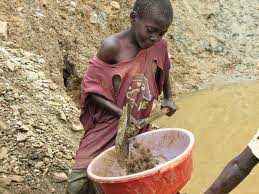
Mining coltan
Mining coltan

Over half a century ago, the global economy largely depended on just ten or so different materials. Most important products were made out of wood, brick, iron, copper, gold, silver or a few plastics — and that was about it.

Things are wildly different today. A huge chunk of modern-day technology, from hybrid cars to iPhones to flat-screen TVs to radiation screens, use dozens of different metals and alloys. A computer chip typically involves more than 60 different elements that are specifically selected to optimize performance, like europium or dysprosium.

And that’s long raised a concern: What would happen if we run short of any of these valuable metals? Say there’s a war. Or unrest in a crucial mining region. Or China decides to lock up its strontium deposits. Could we easily come up with substitutes? Or is modern society vulnerable to a materials shortage?

Here’s the case for vulnerability: A fascinating recent paper in The Proceedings of the National Academies of Science looks at 62 different metals that are widely used in modern-day industry. For a dozen metals, potential substitutes are either inadequate or flat-out unavailable. And there are no “excellent” substitutes for any of the 62 metals. A shortage of any of them could do some damage.

Read more.

Geek oil or peak oil?

geekoilA new scientific discovery that takes algae and turns it into crude oil in minutes rather than millions of years could be the end of constant worries over “peak oil.”

Engineers at the Department of Energy’s Pacific Northwest National Laboratory (PNNL) announced that they have created a process that takes an enriched stew of algae and turns it into crude oil which, in turn, can be made into a usable bio-fuel. The development was announced in a recent issue of the journal Algal Research.

Genifuel Corp., a biofuels company from Utah, has licensed the technology and is attempting to utilize the process on a larger, industrial scale.

In a press release, PNNL described, “In the PNNL process, a slurry of wet algae is pumped into the front end of a chemical reactor. Once the system is up and running, out comes crude oil in less than an hour, along with water and a byproduct stream of material containing phosphorus that can be recycled to grow more algae.”

The press release also noted that “conventional refining” is then capable of taking the man-made crude oil and turning it into usable biofuels. PNNL notes that the man-made crude can be made into “aviation fuel, gasoline, or diesel fuel.”

PNNL also feels that its process has eliminated the high cost of other algae-based biofuels processes.

“Cost is the big roadblock for algae-based fuel,” said Douglas Elliott, leader of the PNNL research team. “We believe that the process we’ve created will help make algae biofuels much more economical.”

The biggest cost-saving aspect of the new process is that the PNNL team figured out how to use wet algae, whereas most other formulas require the algae to be in a dry form.

“Not having to dry the algae is a big win in this process; that cuts the cost a great deal. Then there are bonuses, like being able to extract usable gas from the water and then recycle the remaining water and nutrients to help grow more algae, which further reduces costs,” Elliot said.

Another exciting development in this new process is that the system works continuously. Other attempts created biofuels in single batches, but this new process works more like an assembly line in a continuously moving and producing system.

The new process also dispenses with the use of toxic chemicals and solvents to separate the energy-rich oils from the algae. The process uses high heat and pressure instead.

“It’s a bit like using a pressure cooker, only the pressures and temperatures we use are much higher,” Elliott said. “In a sense, we are duplicating the process in the Earth that converted algae into oil over the course of millions of years. We’re just doing it much, much faster.”

Perhaps it won’t be long before humanity manufacturing its own oil eliminates the question of whether to drill the earth for it. – breitbart.com

Mandela tribute mistakes Morgan Freeman for dead ‘icon’

Morgan Freeman posing as Mandela

American actor Morgan Freeman is known for his portrayal of South African leader Nelson Mandela in the Clint Eastwood drama Invictus.

Perhaps Freeman’s performance in the 2009 was too good as it lead to some confusion for an Indian-based billboard artist.

An owner of a billboard dedicated to Nelson Mandela was red-faced on Thursday after the discovery that a photo of actor Morgan Freeman was used instead of one of the anti-apartheid hero.

The billboard was erected on the side of a road in Coimbatore as part of memorials across India and the world to Mandela, who died on December 5.