A policewoman accused of shoplifting two tubes of mascara has been granted R500 bail by the Potchefstroom Magistrate’s Court, North West police said on Tuesday.
Lt-Col Kenaleone Aggy Motloung, of the crime intelligence unit, appeared in court on Monday, Brigadier Thulani Ngubane said.
Ngubane said she was arrested at Clicks at the Mooiriver Mall on Friday.
North West police commissioner Lt-Gen Zukiswa Mbombo said Motloung would also face internal disciplinary processes.
Ngubane said Motloung would appear in court again on August 22.
Earlier, Sergeant Kelebogile Moiloa said the policewoman was off duty at the time of her arrest. – Sapa
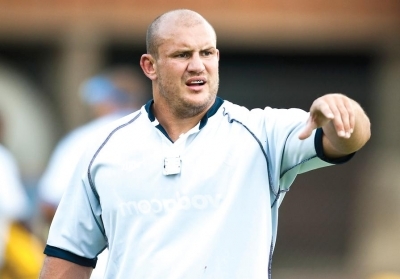
Bees Roux will soon join the Golden Lions rugby team, while the family of the black metro policeman he had killed in Pretoria, Johannes Nshimane Mogale, had “forgiven him unconditionally”.
In 2010 the rugby player beat the 38-year old sergeant to death in Hatfield and the following year he received a suspended sentence of 5 years in prison. Among the conditions of his plea bargain was as payment of R750 000 in compensation to the Mogale family.
Lions coach Johann Ackermann confirmed on Monday that Roux (31) would most likely be included as prop in the team during the coming Currie Cup season. According to Manie Booysen, the chief executive of the Golden Lions Rugby Union (GLRU), there was “technically no impediment to choosing Bees. It will be a pity if people saw his involvement in the wrong light. The chap has shown remorse.”
“We are selecting him for rugby and no other reason. He is a prop that is available coming back from abroad,” Ackermann said.
“We are in a tight spot as there are no other players that are not under contract, so we’ll pull him into the group and see how he goes.”
The Lions coach said letters in which the Mogale family offered their forgiveness to Roux had made the decision easier to look at the player.
“We have two letters dating to 2011 and 2013 where the parents and the family personally give their blessing to him to play rugby and they even want him to play for South Africa,” Ackermann said.
“This gave us somewhat of a positive outlook because they (the family) are willing to forgive and forget and to give him a second chance in life.”
A month after he pleaded guilty the Blue Bulls Rugby Union sacked Roux for breach of contract and he later took up a contract with French club the Bordeaux Eagles.
In 2012 he joined Italian team Treviso until the end of the European season this year, while he also featured in the South African Barbarians team in a match against Saracens in May.
Fresh off securing their place in the 2014 Super Rugby competition through a superior points difference to the Southern Kings in their two leg promotion-relegation matches, the Lions are facing a crisis at prop.
Captain JC Janse van Rensburg, who was the main anchor in the front row for the Lions has left the team for Bayonne in France, while Julian Redelinghuys suffered a long-term injury over the weekend.
“We are looking to borrow another prop from somewhere as we actually only have three fit props in Ruan Dreyer, Jacques van Rooyen and CJ van der Linde,” Ackermann said. – Sapa and praag
The war between former Vice President Al Gore and his critics over global warming is about to hit the boiling point with a new claim that Sun-influenced climate change is shifting into reverse, with the Earth poised to head into a period of cooling that will end the rise of the oceans.
A global warming critic on Monday announced plans to release new data showing that the threat of rising global sea levels has peaked and that the Sun is entering a “hibernation” period that could bring colder weather.
“Like most major climate events, the past sea level rise was caused by the Sun and had little or nothing to do with mankind’s industrial greenhouse gas emissions,” said John Casey, a former White House and NASA advisor and climate author. “Now that the Sun has entered a state of ‘solar hibernation’ and is cutting back on the energy by which it warms the Earth, a new and potentially dangerous decades-long drop in global temperatures has begun,” he warned.
Casey is the president of the Space and Science Research Corporation and author “Cold Sun,” which predicts the coming cooling period. Because his predictions go against the mainstream, he has been ridiculed by supporters of global warming. Media Matters called him a “scam artist.”
German companies believe the US now poses almost as big a risk as China when it comes to industrial espionage and data theft, a survey has revealed.
The startling finding of a survey of 400 companies conducted in mid-July underscores the shift in German public and business opinion caused by revelations about US surveillance activities.
Some 26 per cent of German managers, IT and security professionals described the US as a high-risk place for industrial espionage and data theft, according to the survey commissioned by EY, the consultancy.
This was second only to the 28 per cent of respondents who view China as a particularly high-risk country for industrial espionage. Russia was ranked third, with 12 per cent saying it posed a significant risk.
When they were asked the same question two years ago only 6 per cent of German companies described the US as a high-risk centre for industrial espionage and data theft.
“Until now [German companies] mostly identified China and Russia as the location of [potential] attackers. Now companies realise that western intelligence agencies also employ very comprehensive surveillance measures,” Bodo Meseke, executive director of fraud investigation and dispute services at EY, said.
US surveillance has become a core issue in Germany’s election campaign following disclosures about Prism, the US data mining programme, and reports in Der Spiegel, the German magazine, that the US has spied on EU offices and is obtaining around 500m pieces of metadata a month from Germany.
Opposition parties have pressed ministers to obtain answers from the US on the extent of any spying on German soil, and the Federation of German Industry has described media reports about US surveillance as “concerning”.
Following meetings in Washington last month, Hans-Peter Friedrich, Germany’s interior minister, assured German industry that the US National Security Agency had not engaged in industrial espionage in Germany.
The US says its cyber activities are focused on combating terrorism and do not target companies, in contrast to China, which Washington accuses of cyber snooping to obtain corporate secrets.
These assurances do not appear to have convinced a significant portion of Germany’s business community.
Germany’s dependence on high-tech exports means the protection of patents and intellectual property are of perennial concern. Modern Germany’s tolerance of mass surveillance is also far lower than in other countries because of their experience of Nazism and East Germany’s Stasi secret police.
German companies continue to view business competitors in foreign countries as a bigger espionage threat than state intelligence agencies, according to the EY survey.
There are signs that disclosures made by Edward Snowden, the former NSA official turned whistleblower, are affecting the cloud computing industry, which involves storage of data and software on huge external servers rather than local hard drives.
A separate survey carried out last month by the Cloud Security Alliance, a trade body, found that 10 per cent of non-US members had cancelled plans to use a US-based cloud provider. Some 56 per cent said they would be less likely to use a US cloud company in future. – FT
The Obama administration’s sweeping response to an alleged al Qaida plot – closing diplomatic posts in parts of Africa, the Middle East and Asia – suggests a terrorist organization that’s capable of striking virtually anywhere, not the one U.S. officials have depicted as a group that’s near defeat.
Counterterrorism analysts said Monday that the U.S. government’s global response to a threat emanating from Yemen, home to al Qaida’s most active affiliate, was at odds with how dismissive President Barack Obama was in a speech in May, when he said that “not every collection of thugs that labels themselves as al Qaida will pose a credible threat to the United States.”
That was only one of a series of public statements by Obama and his Cabinet members that played down the capabilities of al Qaida-linked groups. For at least the past two years, the administration has sought to reassure Americans that al Qaida is “on the run,” while counterterrorism experts were warning about the semiautonomous affiliates that have wreaked havoc in North Africa, Yemen, Iraq and Syria.
“The actions the administration is taking now are deeply inconsistent with the portrait of al Qaida strength the administration has been painting,” said Daveed Gartenstein-Ross, a counterterrorism specialist at the Foundation for Defense of Democracies, a Washington research institute.
U.S. officials have been secretive about what precise information led to the worldwide travel advisory and embassy closings, but a Yemeni official told McClatchy on Sunday that authorities had intercepted “clear orders” from al Qaida leader Ayman Zawahiri to Nasir al Wuhayshi, the head of the affiliate in Yemen, to carry out an attack.
On the campaign trail last fall, Obama touted the killing of Osama bin Laden during a covert U.S. raid in 2011 as a sign that, while the U.S. would have to maintain vigilance, “the truth, though, is that al Qaida is much weaker than it was when I came into office.” In his State of the Union address last February, the president called al Qaida “a shadow of its former self” and said the threat posed by its affiliates wouldn’t require large-scale U.S. military deployment.
In July 2011, Obama’s then newly appointed defense secretary, Leon Panetta, said he was “convinced in this capacity that we’re within reach of strategically defeating al Qaida.” – mcclatchydc.com
Phoenix businessowner Fred DuVal is not Hispanic. But he apparently has been coloring his skin darker in his commercials for his gubernatorial candidacy in order to appear Hispanic.
DuVal says the whole situation is just a big joke, since his Republican opposition calls him “The World’s Most Uninteresting Man;” he says he was trying to make himself look like the actor from the Dos Equis commercials.
According to the Arizona Daily Independent, “Duval digitally morphed himself to resemble the person pictured here, put the doctored image out on Twitter and hand-delivered a printed copy to the AZGOP.
“Painful attempts at humor, especially with racial overtones, usually backfire on candidates.” – Breitbart
President Jacob Zuma has decided not to replace Justice Francis Legodi who resigned from the Arms Procurement Commission last week.
The President has reconstituted the Commission and it is now composed of Justice Willie Seriti as its Chairperson and Justice Thekiso Musi as a member.
He remains confident that the Commission will successfully complete its work, presidential spokesman Mac Maharaj said in a statement.
On October 2011, President Jacob Zuma appointed a Commission of Inquiry into the allegations of Fraud, Corruption, Impropriety or Irregularity in the Strategic Defence Procurement Package, or the Arms Procurement Commission.
The Commission was composed of the Honourable Mr Justice Willie Seriti, Judge of the Supreme Court of Appeal as its Chairperson and the Honourable Mr Justice Hendrik Thekiso Musi, Judge President of the Free State High Court as well as the Honourable Mr Justice Malesela Francis Legodi, Judge of the North Gauteng High Court as its members.
Last week, Justice Legodi, tendered his resignation, citing confidential personal reasons.
Thirteen police officers were feared dead after their boat was attacked by armed men in the oil-rich Niger Delta, local media reported on Sunday.
The officers were en route late on Friday to a funeral ceremony in which they were to provide security when their boat was attacked in a mangrove swamp in southern Bayelsa state, Nigerian newspaper Vanguard reported.
The officers are assumed to have drowned after their boat was sunk by the assailants, the paper reported.
Three policemen reportedly survived the attack.
No group has claimed responsibility. However, the focus has turned to the Emancipation of the Niger Delta (MEND), which recently threatened to launch attacks in response to the sentencing of its former leader, Henry Okah, by a South African court to 24 years in jail for a 2010 bombing.
MEND rejected the sentence on its leader, Okah, by Justice Neels Claaseen of the South Gauteng High Court.
He was found guilty of several charges of terrorism in the Independence Day bombings in Abuja in 2010 and sentenced to 24 years in jail.
In a statement signed by “Comrade Azizi,” purportedly on behalf of MEND, the group said, “Boko Haram has killed more innocent Nigerians than any other militancy groups in the country and yet their spokesperson was handed a three year sentence, this is the height of injustice to our region and people which will be resisted by all means necessary.”
The statement said that consultations were ongoing with some stakeholders and elders of the region and that its position will be made known thereafter.
“The gate of hell has just been let loss, (sic),” the statement declared. – Sapa
Agriculture employs 5.2% of the workforce but only accounts for 2.5% of annual gross domestic product (GDP), statistician general Pali Lehohla said on Monday.
“Agriculture contributes 2.5% of GDP, but in terms of employment agriculture punches above its weight with 5.2%,” he told reporters in Pretoria on Monday.
Lehohla was releasing figures obtained on farming in South Africa during the last population count in 2011. He said a more expansive study would be conducted on agriculture in particular.
The census showed that 2.8-million households were involved in agriculture in some form or another. It contained three questions related to agriculture but did not make a clear distinction between commercial and subsistence farming. A more nuanced picture was needed, Lehohla said.
The provinces with the highest number of households practising agriculture were KwaZulu-Natal with 24.9%, Eastern Cape with 20.7%, and Limpopo with 16.3%. The Northern Cape had the highest proportion of households that reported livestock ownership.
Lehohla said the census data would allow for a follow-up study because government had now identified the households that would be canvassed.
“The purpose was, in part, to give us a frame so that when we go for a fully-fledged agricultural census we know where to go. When we do the agriculture census we will go to those 2.8-million.”
Government planned to use the information obtained to strengthen agriculture in a bid to see the sector provide jobs to more people, he said.
Lehohla said the census showed families involved in agriculture in general had poor access to facilities, but the explanation for this might lie more in their location than in any government policy.
“We also know that agriculture is practised in rural areas where the provision of facilities is very difficult. When you look at the Eastern Cape and the altitude, when it comes to things like the provision of water, then it becomes very expensive to provide water.” – Sapa
The US Trade Representative that oversees the country’s trade policy with the rest of the world says the current United States administration wants a seamless renewal of the Africa Growth and Opportunities Act (AGOA).
Ambassador Michael Froman was speaking at the Washington-based think-tank, The Brookings Institution, which has just released a report suggesting certain recommendations for policymakers, including extending AGOA beyond 2015 when it’s due to expire.
The Brookings report is an empirical analysis of the possibilities post-2015 and calls AGOA one of the defining characteristics of the trade and commercial relationship between Africa and the United States.
Critically it argues that without an extension, there will be declines in African exports, economic diversification and employment for many eligible countries. Trade Representative, Michael Froman, was speaking ahead of his departure to the AGOA forum in Addis Ababa next week: “We want to see the seamless renewal of AGOA and we know how important that is to people making investment decisions to know in advance whether they’ll still benefit from those preferences and preferential access to the US market, plays a key role in whether they maintain their investments and add to them so we want to make sure there’s a seamless renewal.”
He says they’ve already started working with certain interested members of congress, who will ultimately have to renew the legislation once the White House is ready to resubmit it. But much needs to happen before that: “We have a little over two years now before AGOA expires, we want to use this period to really look at the successes of AGOA but also ways it can be improved, also look at the changes on the continent, the changing economic relationships and trade relationships that have developed between Africa and other economic partners around the world and see what kind of changes we want to make to AGOA before working with Congress and obviously Congress plays the critical role here in figuring what kind of AGOA we want to renew.”
The Brookings report back an assessment by Froman who described the current trade relationship with Africa as good but one that could be much more substantial, sighting a lack of greater regional and custom’s integration that makes trading with Africa that much more difficult. He also welcomed interest from other countries in the continent, including China: “The question for Africa is what kind of trade and investment relationships do they want to have, it’s up to them, with outside partners and ensuring that it works for them. And we’re very much confidence because as we travel around Africa as I did last year to a number of countries and back again this year, as much as the Chinese are there, they want Americans to be there as well. Because they know that our companies bring technology, management training. That they hire locally, that they like to build local capacity.”
Governance will also continue to be a factor as to which countries in sub Saharan Africa are eligible for the programme moving forward. This years AGOA forum in Ethiopia, will look at Sustainable Transformation through Trade and Technology. – SABC
The Springboks gathered on Monday for a training camp ahead of the Rugby Championship.
Coach Heyneke Meyer’s squad of 30 players are preparing for their opening game against Argentina at FNB Stadium next Saturday.
The squad includes a number of overseas-based players with Fourie du Preez the surprise selection.
Meyer explained that he has no hard and fast policy on selecting overseas-based players.
SARU has given the Bok coach the go-ahead to pick them, and so this group of 30 includes players from France, Japan as well as Great Britain and Ireland.
Besides for the surprise inclusion of Du Preez and perhaps Gurthro Steenkamp, the bulk of the squad has remained unchanged from the June internationals.
Meyer is looking to build on the small gains made during the June Tests.
The Boks were far from convincing against Italy, Scotland and Samoa so there is plenty to work on during this training camp.
New Zealand, Australia and their first opponents in the Rugby Championship, Argentina, will be far tougher opponents. – eNCA
Former US president Bill Clinton and daughter Chelsea will on Tuesday visit the Ubuntu Education Centre in Zwide in Port Elizabeth, one of the Clinton Global Initiative commitment sites.
The centre was opened in 2010 as part of the initiative. It is the culmination of the efforts of the Ubuntu Education Fund, which has become one of South Africa’s largest Non-Governmental Organisations (NGO) since it was founded in 1999.
The fund reaches 40 000 children and has fund-raising offices in New York and London.
South Africa is the last stop of an African tour by the former president and his daughter to four countries where Clinton Foundation projects are located.
Bill Clinton is visited former President Nelson Mandela at his home at Qunu in the Eastern Cape last year. The two former presidents met on the eve of Madiba’s 94th birthday.
Clinton was trying to get more support for a charity he helped start that provides training for impoverished South African school children in the hope that they can carve out a better future for themselves.
Zimbabwe’s Zanu-PF party has defended the fairness of its victory in last week’s elections. The latest challenge to the polls comes from Botswana, which says it will urge regional body Southern African Development Community (SADC) to audit the vote in its neighbouring state.
Botswana Foreign Affairs Minister, Phandu Skelemani, addressing journalists in Gaborone on Monday, said they are concerned that the vote failed to measure up to SADC guidelines.
Western countries have also questioned the polls, while Zimbabwe’s opposition MDC has slammed the polls as fraudulent and plans to challenge them in court.
Zanu-PF spokesperson Rugare Gumbo dismisses all the complaints saying that it is nonsense to talk of rigging because all sorts of structures were set up to ensure that voting was tight and water-proof.
Gumbo says: “The reality on the ground was that everything was done transparently, people voted in peace and tranquillity, the elections were free and fair, and quite credible as far as we are concerned.”
Amazon founder Jeff Bezos will buy the Washington Post newspaper for $250-million in a surprise deal that ends an 80-year ownership of the paper by the Graham family and hands one of the United States’s most influential publications to the businessman whose internet company has transformed retailing.
Bezos, hailed by many as technology visionary, called his acquisition a personal endeavor and reassured employees and readers of the 135-year-old newspaper that he will preserve its journalistic tradition, while driving innovation.
The acquisition, the latest in a flurry of deals for print publications, including the New York Times Company’s sale of the Boston Globe for $70-million, is a another sign of the unprecedented challenges newspapers face as advertising revenue and readership decline.
Shares of the Washington Post Company climbed more than 5% to $599.85 after the announcement – their highest level in almost five years.
Chairperson and chief executive of the Washington Post Company, Donald Graham, said in an interview that he and his niece Katharine Weymouth, Washington Post publisher, made the decision to put the newspaper up for sale earlier this year after looking at its financial forecasts.
“For the first time in either of our lives we said to each other: is ownership by the Washington Post Company the best thing for the newspaper? We could keep it alive, that wasn’t the issue. The issue was could we make it strong?”
The Amazon chief executive took his message directly to employees in a letter posted on the newspaper’s website.
“I understand the critical role the Post plays in Washington, DC and our nation, and the Post‘s values will not change,” Bezos wrote in the letter.
“There will of course be change at the Post over the coming years. That’s essential and would have happened with or without new ownership,” Bezos added. “We will need to invent, which means we will need to experiment.”
In addition to the newspaper, Bezos gets other publishing businesses, including the Express newspaper, The Gazette Newspapers, Southern Maryland Newspapers, Fairfax County Times, El Tiempo Latino and Greater Washington Publishing.
The real estate, including the paper’s headquarters business and online news sites such as Slate, will remain with the Washington Post Company, and the paper’s operations will be kept separate from Amazon.com, according to the Washington Post.
The Washington Post is the seventh largest daily in the US.
While its legend and status loom large, the Washington Post represents only a fraction of the company which has expanded into a stable of holdings, including education and healthcare services and, most recently, industrial supplies.
And yet, the Washington Post suffers from the same hurdles besieging big city newspapers across the US. The company’s newspaper division reported an operating loss of $49.3-million for the six months ending June, compared to a loss of $33.2-million during the same period last year.
Weymouth, who will continue to serve as the paper’s chief executive and publisher after the sale, said she did not think there was a “magic bullet” to resolving the paper’s problems, but that the resources Bezos brought to the table were a plus.
“He’s smart and innovative and has access to a lot of smart people,” she said.
Bezos, who has built Seattle-based Amazon.com into a shopping and online technology force over the last two decades, made a small foray into media earlier this year with an investment in internet news site Business Insider.
Bezos is the world’s 19th richest person with a fortune of $25.2-billion, according to Forbes. His investment vehicle, Bezos Expeditions, is invested in a number of companies including Twitter and Business Insider.
His major personal project is called Blue Origin, which aims to be one of the first non-government funded ventures to send people and cargo into space, potentially winning lucrative contracts that were once fulfilled by NASA.
Bezos has already spent millions of dollars on this project, with millions more in the pipeline.
He did not elaborate in great detail on his motivations behind his latest deal, which caught many industry watchers by surprise. He does not play a prominent role in politics but has been described by friends as holding libertarian views. He and his wife did make public a $2.5-million contribution to a Washington state campaign to legalize same-sex marriage last year.
The deal comes on the heels of near-unprecedented media deal activity this year, with the Globe transaction announced just over the weekend, News Corp spinning out its newspapers, and the Tribune Company hiving off its publishing business like the Los Angeles Times and Chicago Tribune from its broadcasting division.
“It will be interesting to see, is this the first step in the transformation of the business?” said John Miller, senior vice president at Chicago’s Ariel Investments, a top-10 investor in the Washington Post. “The board is making the right decision. They obviously felt like it was a good deal. It will be interesting to see how they allocate capital going forward.” – Reuters
This website uses cookies to improve your experience. We'll assume you're ok with this, but you can opt-out if you wish. Cookie settingsACCEPT
Privacy & Cookies Policy
Privacy Overview
This website uses cookies to improve your experience while you navigate through the website. Out of these cookies, the cookies that are categorized as necessary are stored on your browser as they are essential for the working of basic functionalities of the website. We also use third-party cookies that help us analyze and understand how you use this website. These cookies will be stored in your browser only with your consent. You also have the option to opt-out of these cookies. But opting out of some of these cookies may have an effect on your browsing experience.
Necessary cookies are absolutely essential for the website to function properly. This category only includes cookies that ensures basic functionalities and security features of the website. These cookies do not store any personal information.
Any cookies that may not be particularly necessary for the website to function and is used specifically to collect user personal data via analytics, ads, other embedded contents are termed as non-necessary cookies. It is mandatory to procure user consent prior to running these cookies on your website.


 A policewoman accused of shoplifting two tubes of mascara has been granted R500 bail by the Potchefstroom Magistrate’s Court, North West police said on Tuesday.