Russia reopens Arctic military base

arctic2Russia is reopening a Soviet-era military base in the Arctic, President Vladimir Putin said on Monday, part of a drive to make the northern coast a global shipping route and secure the region’s vast energy resources.

Two decades after abandoning it, Russia has sent 10 warships behind four nuclear-powered ice breakers to the base on the Novosibirsk Islands, a show of force as it resumes a permanent naval presence in the thawing region.

The flotilla was led by Russia’s flagship nuclear-powered cruiser, Peter the Great, along the Northern Sea Route, which connects Europe to Asia across Russian waters from the Kara Gate to the Bering Strait.

“Our troops left there in 1993, and yet it is a very important location in the Arctic Ocean, a new stage in the development of the Northern Sea Route,” Putin told a meeting of Russian defense officials.

“We will not only reopen the military base but restore the airfield to working order and make it possible for the emergency services, hydrologists and climate specialists to work together to ensure the security and effective work of the Northern Sea Route.”

Russia has staked future growth on mining the Arctic’s vast energy resources, and reviving the Soviet-era shipping route is an integral part of that plan.

Warmer summers have thawed more of the frozen waterways, rendering it navigable for longer periods and raising hopes the maritime passage could become a shorter alternative to southern routes.

But industry analysts and mariners say poor infrastructure, ice floes, narrow straits, shallow waters, and stormy winters remain as obstacles to safe and profitable shipping. – Reuters

Western powers poised to pressure Syria

William Hague
Everything is ‘abundantly clear’ to William Hague

Western powers were poised Tuesday to press their efforts for a UN resolution to rid Syria of chemical weapons, one day after a report by the world body describing a “chilling” sarin gas attack there.

United Nations experts, without assigning blame, said they had gathered “clear and convincing evidence” that surface-to-surface rockets took sarin gas into the opposition-held Damascus suburb of Ghouta on August 21.

The United States had threatened a military strike on Syria over the attack, which it said killed more than 1,400 people.

Washington said responsibility for the attack rests squarely with the regime of President Bashar al-Assad.

“The technical details of the UN report make clear that only the regime could have carried out this large-scale chemical weapons attack,” said Washington’s UN ambassador Samantha Power. “It defies logic to think that the opposition would have infiltrated the regime-controlled area to fire on opposition-controlled areas.”

French Foreign Minister Laurent Fabius said there was “no doubt” that government forces were to blame, while British Foreign Secretary William Hague said the report made “abundantly clear” that the Syrian regime was behind the attack.

France and Britain will soon send a draft resolution to other Security Council members demanding a threat of sanctions if Assad does not keep to a disarmament plan and for the chemical attacks to be referred to the International Criminal Court, diplomats said.

The council, meanwhile, is expected to start negotiations this week.

UN chief Ban Ki-moon condemned the use of chemical weapons in Syria as “a war crime” as the country’s conflict again spilled into neighboring nations, with Turkey saying it had shot down a Syrian military helicopter.

Ban said the report prepared by the experts “makes for chilling reading.”

He added that the use of sarin had been proved “unequivocally and objectively” and that the Ghouta attack was “the most signficant” with chemical weapons since Saddam Hussein unleashed poison gas in Halabja, Iraq, in 1988, killing thousands.

“The environmental, chemical and medical samples we have collected provide clear and convincing evidence that surface-to-surface rockets containing the nerve agent sarin were used” in Ghouta, said the report by UN inspectors who were in Syria when the attack was staged.

The experts concluded that “chemical weapons have been used in the ongoing conflict between the parties in the Syrian Arab Republic, also against civilians including children on a relatively large scale.”

A separate UN-mandated independent human rights inquiry announced separately on Monday that it was investigating 14 alleged chemical weapons attacks in Syria.

Ban would not say on Monday who had carried out the attack.

“We may all have our own thoughts on this, but I would simply say that this was a grave crime and those responsible must be brought to justice as soon as possible,” Ban told reporters.

On Friday, he said Assad had “committed many crimes against humanity.”

While the United States, Britain and France all insist that the findings show Assad’s forces had used the weapons, Russia’s UN envoy Vitaly Churkin said after a Security Council meeting on the report that there should be more investigation into who was responsible.

Moscow has sided with Assad in blaming opposition rebels for the chemical assault.

The UN experts’ report will now become a key weapon in a Security Council battle over how much of a threat must be made against Assad to make him disarm.

The French, US and British foreign ministers called for a “strong” resolution after a meeting in Paris.

US Secretary of State John Kerry said: “If Assad fails to comply with the terms of this framework, make no mistake we are all agreed, and that includes Russia, that there will be consequences.”

Kerry and Russian Foreign Minister Sergei Lavrov agreed a plan on Saturday under which Syria’s chemical weapons would be eliminated by mid-2014.

Russia has agreed the plans must be backed by a Security Council resolution but rejects any move to include the threat of force into a UN text.

Lavrov said such threats could kill off hopes of a peace conference on the 30-month-old conflict in which more than 110,000 people, according to activists.

Kerry was due to meet Thursday to discuss the issue with his counterpart from China, which has welcomed the agreement but has sided with Russia in its resolve to veto any UN Security Council resolution against Syria.

Fighting has worsened in Syria as the diplomatic wrangling goes on and Turkey said it shot down a Syrian military helicopter on Monday after it entered Turkish airspace.

The Syrian MI-17 helicopter was detected two kilometers (1.2 miles) inside Turkish airspace and shot down by two F-16 jets five minutes later after failing to heed warnings, Deputy Prime Minister Bulent Arinc told reporters.

“It was continuously warned by our air defense,” Arinc said, adding there was no information about the fate of its crew because the helicopter fell on Syrian soil.

Arinc said Turkey has changed its military rules of engagement in response to repeated gunfire from the Syrian side. – Sapa/AFP

At least 12 die in US Navy Yard shooting

navyshootingAt least one gunman opened fire inside a building at the Washington Navy Yard on Monday morning.

Police were looking for two other potential gunmen wearing military-style uniforms, including one who had on a beret, chief Cathy Lanier said.

DC Mayor Vincent Gray said at least 12 people were killed in the Navy Yard rampage and one shooter killed at the scene. Authorities are looking for two other men who may also have been involved in the attack.

Authorities have identified the dead shooter as a Navy employee whose work status had been changed earlier this year, a federal government official told the Associated Press on condition of anonymity because he wasn’t authorized to speak on the record.

While that may suggest the motive was job related, authorities haven’t ruled out anything, including terrorism, the official said.

A senior federal law enforcement official said authorities were investigating whether the main shooter, a black male, was motivated by a dispute with employees at the Navy Yard.

Authorities were still clearing the building early Monday afternoon but expected the death toll could reach as high as eight people, including the shooter, said the official, who spoke only on condition of anonymity.

The two at large suspects were dressed in military garb but are not believed to be US service personnel, Lanier said.

One was a young white man in a khaki like uniform and the other was a black man in his 50s with a long rifle in an olive colored garb, she said.

Lanier said there were multiple fatalities at the scene but exact numbers were not immediately.

A Navy spokesman said early Monday that four people were killed and eight wounded in shooting at the Washington Navy Yard — though the death toll is expected to climb.

Mayor Vincent Gray said officials are still working to determine the number of fatalities during a press conference at noon.

All the injuries occurred in the Building 197, which is home to the Naval Sea Systems Command.

Navy officials had reported three shots were fired at 8:20 a.m. at the headquarters of the Naval Sea Systems Command in Southeast Washington.

DC police quickly deployed an “active shooter team” within seven minutes of reports of shots fired, Ms. Lanier said.

Two of the shooting victims are DC police officers.

Omar Grant, a civilian worker at the Navy Yard said he was on the first floor of the five-story atrium when he heard the first shot. “At first I didn’t know if someone dropped something,” Mr Grant said. “It echoes in an atrium.”

Then he heard the other shots, Mr. Grant said.

“It was unmistakable,” he said. “Nobody had dropped anything. Those were shots.”

The Navy has issued a shelter-in-place order for personnel, Pentagon Press Secretary George Little said.

“We believe there has been loss of life and several injuries,” Little said. “We continue to monitor this ongoing situation.”

George Washington University Hospital has confirmed that a 60-year-old male was killed in the Navy Yard shooting Monday morning.

A spokesman said the man, whose name was not given, was dead on arrival to the hospital at around 9 a.m, about 40 minutes after the shooting.

The spokesman said the man was shot in the left temple and the wound was “not survivable by any stretch.”

The hospital said it was told to be prepared to take more victims of the shooting.

A spokeswoman for Medstar Washington Hospital Center said the hospital has already received three people wounded in Monday’s shooting at the Navy Yard and “we’ve been told to expect more.”

The rampage plunged DC into chaos during the morning commute.

The 11th Street Bridge was shut down, and people were routed away from the area, the police spokesman said.

Flights departing from Ronald Reagan Washington National Airport were stopped, the FAA said, and incoming flights are being held at their origin. Flights resumed shortly after 11 a.m.

At least six DC public schools in the area went into lockdown.

Also, people in the neighborhood around Fort Myer could hear a “shelter in place” order being issued over the loudspeakers about the time of the shooting.

About 3,000 people work at the headquarters of the Sea Systems Command, which is responsible for engineering, building, buying and maintaining ships, submarines and combat systems for the Navy.

The Washington Navy Yard is an administrative center for the Navy, housing the headquarters for several commands including Commander, Naval Installations Command, and Naval Sea Systems Command, which is located in Building 197 and is responsible for procurement and maintenance on the Navy’s fleet of ships and submarines.

The National Museum of the U.S. Navy and the Naval History and Heritage Command are also located on base. It also serves as the location for court martials, or military trials, for the Washington area, including Annapolis.

It is the Navy’s oldest shore command, according to Naval History and Heritage Command’s website, and has been in operation since the beginning of the 19th century, first as a shipbuilding site before being designated as the manufacturing plant for all Navy ordnance after the Civil War.

It is now used for ceremonial and administrative functions, like change of command ceremonies for Navy leaders like the Master Chief Petty Officer of the Navy or the Chief of Naval Personnel. – Washington Times

Al-Qaeda attacking minorities in Syria

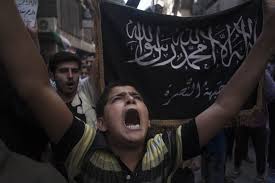
syriajihadOpposition forces battling Bashar al-Assad’s regime in Syria now number around 100,000 fighters, but after more than two years of fighting they are fragmented into as many as 1,000 bands.

The new study by IHS Jane’s, a defence consultancy, estimates that more than half the rebels fighting in Syria for powerful factions are linked to al-Qaeda.

Rebels now number around 100,000 fighters, but after more than two years of fighting they are fragmented into as many as 1,000 bands.

There are around 10,000 international jihadists, who would include foreign fighters.


Another 30,000 to 35,000 are hardline Islamists who share much of the outlook of the jihadists, but are focused purely on the Syrian war rather than a wider international struggle.

There are also at least a further 30,000 moderates belonging to groups that have an Islamic character, meaning only a small minority of the rebels are linked to secular or purely nationalist groups.

Jihadists have been the most active portion of the rebellion, attacking ethnic Kurds and religious minorities nationwide, including three more Alawite villages sacked today in Homs Province.

The stark assessment, to be published later this week, accords with the view of Western diplomats estimate that less than one third of the opposition forces are “palatable” to Britain, while American envoys put the figure even lower.

Fears that the rebellion against the Assad regime is being increasingly dominated by extremists has fuelled concerns in the West over supplying weaponry that will fall into hostile hands. These fears contributed to unease in the US and elsewhere over military intervention in Syria. – The Telegraph


US military confirms rebels had sarin

toxicobamaAs part of the Obama administration’s repeated insistence – though without offering proof – that the recent sarin gas attack near Damascus was the work of the Assad regime, the administration has downplayed or denied the possibility that al-Qaida-linked Syrian rebels could produce deadly chemical weapons.

However, in a classified document just obtained by WND, the U.S. military confirms that sarin was confiscated earlier this year from members of the Jabhat al-Nusra Front, the most influential of the rebel Islamists fighting in Syria.

The document says sarin from al-Qaida in Iraq made its way into Turkey and that while some was seized, more could have been used in an attack last March on civilians and Syrian military soldiers in Aleppo.

The document, classified Secret/Noforn – “Not for foreign distribution” – came from the U.S. intelligence community’s National Ground Intelligence Center, or NGIC, and was made available to WND Tuesday.

It revealed that AQI had produced a “bench-scale” form of sarin in Iraq and then transferred it to Turkey.

A U.S. military source said there were a number of interrogations as well as some clan reports as part of what the document said were “50 general indicators to monitor progress and characterize the state of the ANF/AQI-associated Sarin chemical warfare agent developing effort.”

“This (document) depicts our assessment of the status of effort at its peak – primarily research and procurement activities – when disrupted in late May 2013 with the arrest of several key individuals in Iraq and Turkey,” the document said.

“Future reporting of indicators not previously observed would suggest that the effort continues to advance despite the arrests,” the NGIC document said.

The May 2013 seizure occurred when Turkish security forces discovered a two-kilogram cylinder with sarin gas while searching homes of Syrian militants from the al-Qaida-linked Jabhat al-Nusra Front following their initial detention.

The sarin gas was found in the homes of suspected Syrian Islamic radicals detained in the southern provinces of Adana and Mersia.

Some 12 suspected members of the al-Nusra Front were arrested. At the time, they were described by Turkish special anti-terror forces as the “most aggressive and successful arm” of the Syrian rebels.

In the seizure, Turkish anti-terror police also found a cache of weapons, documents and digital data.

At the time of the arrest, the Russians called for a thorough investigation of the detained Syrian militants found in possession of sarin gas.

This seizure followed a chemical weapons attack in March on the Khan al-Assal area of rural Aleppo, Syria. In that attack, some 26 people and Syrian government forces were killed by what was determined to be sarin gas, delivered by a rocket attack.

The Syrian government called for an investigation by the United Nations. Damascus claimed al-Qaida fighters were behind the attack, also alleging that Turkey was involved.

“The rocket came from a place controlled by the terrorists and which is located close to the Turkish territory,” according to a statement from Damascus. “One can assume that the weapon came from Turkey.”

The report of the U.S. intelligence community’s NGIC reinforces a preliminary U.N. investigation of the attack in Aleppo which said the evidence pointed to Syrian rebels.

It also appears to bolster allegations in a 100-page report on an investigation turned over to the U.N. by Russia. The report concluded the Syrian rebels – not the Syrian government – had used the nerve agent sarin in the March chemical weapons attack in Aleppo.

While the contents of the report have yet to be released, sources tell WND the documentation indicates that deadly sarin poison gas was manufactured in a Sunni-controlled region of Iraq and then transported to Turkey for use by the Syrian opposition, whose ranks have swelled with members of al-Qaida and affiliated groups.

The NGIC depiction of the variety of sarin as “bench-scale” reinforces an analysis by terrorism experts that the recent findings on the chemical weapons attack of Aug. 21 on the outskirts of Damascus, Syria, was “indeed a self-inflicted attack” by the Syrian opposition to provoke U.S. and military intervention in Syria.

A former director of the U.S. Congressional Task Force on Terrorism and Unconventional Warfare, said a preliminary analysis of the sarin showed that it was of a “kitchen” variety and not military grade.

He questioned that the sarin was of a military variety, which accumulates around victims’ hair and loose clothing.

Because these molecules become detached and released with any movement, Bodansky said, “they would have thus killed or injured the first responders who touched the victims’ bodies without protective clothes … and masks.”

Various videos of the incident clearly show first responders going from patient to patient without protective clothing administering first aid to the victims. There were no reports of casualties among the first responders.

Meanwhile, an  Italian former journalist and a Belgian researcher who were recently freed from their al-Nusra captives say they overheard their captors talking about their involvement in a deadly chemical attack “last month,” which would have been the Aug. 21 chemical weapons attack.

The Italian, Domenico Quirico, and Belgian researcher Pierre Piccinin were released Monday after five months of captivity.

“The government of Bashar al-Assad did not use Sarin gas or other types of gas in the outskirts of Damascus,” Piccinin said.

He added that the militants said the rebels carried out the attack as a provocation to force the West to intervene militarily to oust the Assad regime.

Both men told a news conference they had no access to the outside world while they were held captive and knew nothing about the use of chemical weapons until they heard the discussion on Skype.

Now, a former analyst for the Central Intelligence Agency, Ray McGovern, similarly backs the claim that the Syrian rebels perpetrated the poison gas attack on Aug. 21

McGovern was one of a number of veteran intelligence professionals who recently signed a letter to Obama saying that Damascus wasn’t behind the Aug. 21 chemical attack.

The analysts, in an open letter to Obama, referred to a meeting a week before the Aug. 21 incident in which opposition military commanders ordered preparations for an “imminent escalation” due to a “war-changing development” that would be followed by the U.S.-led bombing of Syria. They said the growing body of evidence came mostly from sources affiliated with the Syrian opposition and its supporters.

Those reports, they said, revealed that canisters containing chemical agents were brought into a suburb of Damascus, where they were then opened. – WND


One dead, 21 injured in US consulate attack in Afghanistan

US consulate building in Herat, a former hotel

Taliban militants attacked a US consulate in western Afghanistan Friday, killing an Afghan guard and injuring 21 people including 16 civilians, police said.

“Two attackers detonated their explosives-laden truck at the first entrance of the US consulate at 5:30 am (0100 GMT) in Herat city, injuring four guards of a private security company and two policemen,” said Rahmatullah Safi, police chief of Herat province.

“Following the explosion, three others who were in another vehicle opened fire on the guards,” Safi told dpa.

“One of the injured guards died due to bleeding,” he said.

The three remaining assailants were killed when the police returned fire, he said.

At least 16 civilians were injured by flying glass, according to police.

“The people were sleeping in their houses around the consulate compound and were injured when the strong explosion broke their windows,” said Abdul Raouf Ahmadi, a spokesman for Herat province police.

US Ambassador to Kabul James B Cunningham condemned the attack.

“We are grateful for the quick response of the Afghan and ISAF security forces, who secured the facility and kept our personnel safe,” Cunningham was quoted by a statement, referring to the International Security Assistance Force or ISAF.

He also said that “many Afghan civilians were killed in the attack,” while police said that only one guard was killed.

“The ISAF helicopters were flying over the area to help security forces if needed,” Ahmadi said.

Another police officer said consulate staff were evacuated by helicopter, but Safi denied this, saying the diplomats were safe inside the compound.

Earlier news reports said three security personnel were killed.

The US State Department confirmed the attack, but not the casualties.

“There are no American casualties,” the department’s deputy spokeswoman Marie Harf said. “At this point there may be one wounded contract security member, and there are likely wounded Afghan police, though numbers are unknown.”

The Taliban claimed responsibility for the attack.

“A group of martyrdom-seeking mujahideen attacked the US consulate this morning, in which a large number of US troops and local security personnel were killed and parts of the consulate buildings were damaged,” the group’s spokesman Qari Yousuf Ahmad said. -dpa

Kerry talks tough in Syria meeting with Russia

John Kerry
John Kerry

by Matthew Lee and Nancy Benac

Striking a tough tone, U.S. Secretary of State John Kerry opened swiftly convened talks with Russia on Syria’s chemical weapons Thursday by bluntly rejecting a Syrian pledge to begin a “standard process” by turning over information rather than weapons – and nothing immediately.

That won’t do, Kerry declared at an opening news conference, a stone-faced Russian Foreign Minister Sergey Lavrov at his side. “The words of the Syrian regime in our judgment are simply not enough.”

“This is not a game,” Kerry said of the latest developments in a series that has rapidly gone from deadly chemical attacks to threats of retaliatory U.S. air strikes to Syrian agreement with a Russian plan to turn over the weapons and, finally, to the crucial matter of working out the difficult details.

“We believe there is nothing standard about this process at this moment because of the way the regime has behaved,” Kerry declared. And he kept alive the threat of U.S. military action, saying the turnover of weapons must be complete, verifiable and timely – “and finally, there ought to consequences if it doesn’t take place.”

Adding to the drama, Russian President Vladimir Putin weighed in from afar, raising eyebrows with an opinion piece in The New York Times that chided Americans for seeing themselves as “exceptional.” That was an apparent reference to a comment President Barack Obama made in his Syria speech Tuesday night, explaining why he felt the U.S. needed to take action. Congress has shown little inclination to authorize military action, and a vote on that has been put off.

Putin also warned that a U.S. strike against Syria because of chemical weapons use could unleash new terrorist attacks. And he still maintained there is “every reason to believe” the weapons were used by rebels and not by Assad’s military. In Washington, Obama’s spokesman said Russia was “isolated and alone” in that view.

Obama, for his part, said simply that he was hoping for “a concrete result” from the talks.

The back-and-forth was a stark indication of the challenging work ahead as Kerry, Lavrov and their teams of chemical weapons experts plunge into talks aimed at finding agreement on how to dismantle the chemical weapons amid the confusion and danger of Syria’s civil war.

Lavrov seemed to contradict Kerry’s negative view of Syrian President Bashar Assad’s offer to provide details on his country’s chemical arsenal beginning 30 days after it signs an international convention banning such weapons. Syria’s ambassador to the United Nations said that as of Thursday his country had become a full member of the treaty, which requires destruction of all chemical weapons. However, the United Nations said it will take at least another 30 days.

The Russian said the initiative must proceed “in strict compliance with the rules that are established by the Organization for the Prohibition of Chemical Weapons.” That suggests Russia does not agree with the U.S. that this is an exceptional case and that Syria should face tougher standards than other countries.

“We proceed from the fact that the solution to this problem will make unnecessary any strike on the Syrian Arab Republic, and I am convinced that our American colleagues, as President Obama stated, are firmly convinced that we should follow a peaceful way of resolution to the conflict in Syria.” Lavrov said.

The distrust in U.S.-Russia relations was on display even in an off-hand parting exchange at the news conference.

Just before it ended, Kerry asked the Russian translator to repeat part of Lavrov’s concluding remarks.

When it was clear that Kerry wasn’t going to get an immediate re-translation, Lavrov apparently tried to assure him that he hadn’t said anything controversial. “It was OK, John, don’t worry,” he said.

“You want me to take your word for it?” Kerry asked Lavrov. “It’s a little early for that.”

They were smiling at that point.

Shortly after making their opening statements, the two went into a private dinner. Talks were to resume Friday.

The meetings in Geneva got underway as Assad, in an interview with Russia’s Rossiya-24 TV, said his government would start submitting data on its chemical weapons stockpile a month after signing the convention. He also said the Russian proposal for securing the weapons could work only if the U.S. halted threats of military action.

But Kerry, who met earlier Thursday with Lakhdar Brahimi, the U.N.-Arab League envoy for Syria, made clear the threat remains.

“President Obama has been clear that should diplomacy fail, force might be necessary to deter and degrade Assad’s capacity to deliver these weapons,” he said. “It won’t get rid of them, but it could change his willingness to use them.”

Even as diplomacy took center stage, word surfaced that the CIA has been delivering light machine guns and other small arms to Syrian rebels for several weeks, following Obama’s statement in June that he would provide lethal aid to the rebels.

The U.S. is hoping that an acceptable agreement with the Russians can be part of a binding new U.N. Security Council resolution being negotiated that demands that Syria’s chemical weapons be put under international control and dismantled and condemns the Aug. 21 attack that led to the current crisis. Russia has long opposed U.N. action on Syria, has vetoed three earlier resolutions and has not indicated it is willing to go along with one now.

As for arming the Syrian rebels, White House National Security Council spokeswoman Bernadette Meehan said the administration could not “detail every single type of support that we are providing to the opposition or discuss timelines for delivery, but it’s important to note that both the political and the military opposition are and will be receiving this assistance.”

Current and former U.S. intelligence officials said the CIA has arranged for the Syrian opposition to receive anti-tank weaponry such as rocket-propelled grenades through a third party, presumably one of the Gulf countries that have been arming the rebels. They spoke on condition of anonymity because they were not authorized to discuss the classified program publicly.

Loay al-Mikdad, a spokesman for the Free Syrian Army, told The Associated Press that his group expected to receive weapons in the near future.

“We are cooperating with the American administration and have been receiving some logistical and technical assistance and there are commitments by the administration to arm us but until now we have not received any weapons,” al-Mikdad said by telephone.

The U.S. officials said the aid has been arriving for more than a month.

The U.S. team with Kerry in Geneva includes officials who worked on inspection and removal of unconventional weapons from Libya after 2003 and in Iraq after the first Gulf War. Officials with Kerry said the teams that eventually go into Syria would have to be an international mix.

The meetings are taking place in the same hotel where former Secretary of State Hillary Clinton in 2009 gave Lavrov a symbolic “reset button” as a goodwill gesture and a reminder of the Obama administration’s efforts to improve U.S.-Russian relations. – AP

US shares raw intel with Israel

snowden3The NSA regularly shares raw US intelligence data with Israel without even removing information about American citizens, according to the latest revelation published by the Guardian. The report is based on a document leaked by Edward Snowden.

On Tuesday, September 11, the Guardian published a previously undisclosed document which revealed top-secret policies in place since 2009 that are used to share personal phone and Internet data pertaining to United States citizens with American ally Israel.

The document, a five-page memorandum authorized by the National Security Agency near the beginning of US President Barack Obama’s first administration, outlines a deal between the NSA and Israel’s SIGINT National Unit, or ISNU.

“This agreement,” the memo begins, “prescribes procedures and responsibilities for ensuring” privacy safeguards are implemented to protect the Fourth Amendment rights of US citizens with regards to the direct sharing of raw intelligence collected by the NSA with its Israeli counterpart.

That data, the document later explains, includes raw traffic picked up by the American spy office such as “unevaluated and unminimized transcripts, gists, facsimiles, telex, voice and Digital Network Intelligence (DNI) metadata and content” which is never necessarily scrutinized by US officials before sent to Israeli agents.

“Seems the only info actually being ‘minimized’ is the info #NSA shares with the American public,” American Civil Liberties Union Deputy Legal Director Jameel Jaffer tweeted following publication of the Guardian piece. “NSA is really good at minimizing that.”

But while the contents of emails and phone calls involving most US persons are fair game to be collected by Israeli intelligence, a select group of Americans are sparred from international surveillance: elected officials. The memo mandates that the Israelis must “destroy upon recognition” any communication “that is either to or from an official of the US government.” That pool of exempt persons is defined as “officials of the executive branch (including the White House, cabinet departments, and independent agencies), the US House of Representatives and Senate (member and staff) and the US federal court system (including, but not limited to, the Supreme Court).”

The Guardian notes, however, that other leaked documents uncovered as of late indicate that the US intelligence community may have reservations nonetheless with sharing info with even an ally as tried and true as Israel.

“On the one hand, the Israelis are extraordinarily good Sigint partners for us, but on the other, they target us to learn our positions on Middle East problems,” a senior NSA official says in a 2008 NSA document seen by the Guardian but not published in Wednesday’s piece. “A NIE [National Intelligence Estimate] ranked them as the third most aggressive intelligence service against the US.”

“One of NSA’s biggest threats is actually from friendly intelligence services, like Israel. There are parameters on what NSA shares with them, but the exchange is so robust, we sometimes share more than we intended,” the Guardian quotes from the ’08 document.

According to Guardian journalists Glenn Greenwald, Laura Poitras and Ewen MacAskill, a NSA spokesperson pressed for comment wouldn’t deny the validity of the leaked document’s contents, but assured the British newspaper that “Any US person information that is acquired as a result of NSA’s surveillance activities is handled under procedures that are designed to protect privacy rights.”

The latest leak comes on the 12-year anniversary of the September 11, 2001 terrorist attacks that many high-ranking US officials have used to justify the surveillance measures enacted in the decade-plus since. It also marks just more than three months since the Guardian first began published leaked NSA documents attributed to Snowden, a 30-year-old former intelligence contractor who has since relocated to Russia where he was granted asylum while avoiding espionage charges in the US. – RT

US weapons streaming into Syria

syria5The CIA has begun delivering weapons to rebels in Syria, ending months of delay in lethal aid that had been promised by the Obama administration, according to U.S. officials and Syrian figures. The shipments began streaming into the country over the past two weeks, along with separate deliveries by the State Department of vehicles and other gear — a flow of material that marks a major escalation of the U.S. role in Syria’s civil war.

The arms shipments, which are limited to light weapons and other munitions that can be tracked, began arriving in Syria at a moment of heightened tensions over threats by President Obama to order missile strikes to punish the regime of Bashar al-Assad for his alleged use of chemical weapons in a deadly attack near Damascus last month.

The arms are being delivered as the United States is also shipping new types of nonlethal gear to rebels. That aid includes vehicles, sophisticated communications equipment and advanced combat medical kits.

U.S. officials hope that, taken together, the weapons and gear will boost the profile and prowess of rebel fighters in a conflict that started about two and a half years ago.

Although the Obama administration signaled months ago that it would increase aid to Syrian rebels, the efforts have lagged because of the logistical challenges involved in delivering equipment in a war zone and officials’ fears that any assistance could wind up in the hands of jihadists. Secretary of State John F. Kerry had promised in April that the nonlethal aid would start flowing “in a matter of weeks.”

The delays prompted several senior U.S. lawmakers to chide the Obama administration for not moving more quickly to aid the Syrian opposition after promising lethal assistance in June. The criticism has grown louder amid the debate over whether Washington should use military force against the Syrian regime, with some lawmakers withholding support until the administration committed to providing the rebels with more assistance.

Sen. Bob Corker (R-Tenn.), who has pressed the Obama administration to do more to help the rebels, said he felt embarrassed when he met with Syrians along the Turkish border three weeks ago.

“It was humiliating,” he said in an interview Wednesday night. “The president had announced that we would be providing lethal aid, and not a drop of it had begun. They were very short on ammunition, and the weapons had not begun to flow.”

The latest effort to provide aid is aimed at supporting rebel fighters who are under the command of Gen. Salim Idriss, according to officials, some of whom spoke on the condition of anonymity because part of the initiative is covert. Idriss is the commander of the Supreme Military Council, a faction of the disjointed armed opposition.

U.S. officials, speaking about the provision of nonlethal aid, said they are determined to increase the cohesion and structure of the rebel fighting units.

“This doesn’t only lead to a more effective force, but it increases its ability to hold coalition groups together,” said Mark S. Ward, the State Department’s senior adviser on assistance to Syria, who coordinates nonlethal aid to rebels from southern Turkey. “They see their leadership is having some impact.”

The CIA shipments are to flow through a network of clandestine bases in Turkey and Jordan that were expanded over the past year as the agency sought to help Middle Eastern allies, including Saudi Arabia and Qatar, direct weapons to moderate Syrian rebel forces.

The CIA declined to comment. – Washington Post


German heli conducts surveillance of US Consulate

usfrankfurtUnder orders from Germany’s domestic intelligence agency, a federal police helicopter conducted a flyover of the US Consulate in Frankfurt, the government in Berlin has confirmed. Officials were apparently searching for surveillance equipment.

The German government on Monday confirmed that a previously reported operation targeting potential American eavesdropping facilities located on German soil took place at the end of August. Both a spokesperson for Chancellor Angela Merkel and the Interior Ministry admitted on Monday that a Federal Police helicopter had conducted a low-altitude flyover of the United States Consulate in Frankfurt in order to take high-resolution photographs. The apparent aim of the mission was to identify suspected listening posts on the roof of the consulate.

According to the newsmagazine Focus, the Eurocopter circled over the US representation at an altitude of just 60 meters (200 feet). The magazine quoted an unnamed government official stating that Germany wanted to send a message to the Americans that it would not tolerate eavesdropping technologies on German soil. “The message to the American friends was meant to be: Stop. Germany strikes back!” The flyover was first reported last week by the Frankfurter Allgemeine Zeitung newspaper.

On Monday, the government in Berlin sought to play down the incident. The Interior Ministry said merely that the Office for the Protection of the Constitution, which had ordered the helicopter flyover, is responsible for the security of foreign installations in Germany, but also for defending the country from the spying activities of foreign countries. The spokeswoman refused to answer dozens of follow-up questions on whether the surveillance flight over the consulate had been a routine operation or whether it was a targeted search for hidden antennas. “I neither can nor want to provide any response,” the spokeswoman said.

But it doesn’t appear there was anything routine about the Eurocopter mission — if there had been, police would have almost surely notified the Americans beforehand. Instead, security personnel at the consulate appear to have been surprised by the flyover. They even took pictures as it happened during the morning of August 28. A short time afterwards, the deputy US ambassador telephoned with the German Foreign Ministry to discuss the issue. But what the ministry is now describing as an “information exchange,” was apparently a complaint.

The flight appears to be connected to the revelations of vast US surveillance made by former intelligence service contractor Edward Snowden. According to the American whistleblower, the National Security Agency’s (NSA) surveillance service has established secret eavesdropping posts at 80 US embassies and consulates around the world. In the internal documents exposed by Snowden, these are referred to as the “Special Collection Service”. The papers also state that the bugging units should be kept secret from partner countries. If it were leaked, a document reads, this would “cause serious harm to relations between the US and a foreign government.”

The response by domestic intelligence would seem to belie German government attempts to play down the surveillance affair. The report in Focus claims that the Frankfurt operation was ordered by Ronald Pofalla, Merkel’s chief of staff and the German government point man for intelligence services. The politician, a member of Merkel’s conservative CDU party, has made extensive public comments suggesting that the NSA affair has passed. But the report suggested he was furious at reports of spying technology at US diplomatic outposts in Germany.

The German government left open on Monday the question of whether the flyover had provided any clarity about the suspected eavesdropping technology. The spokesperson said that only relevant committees in the national parliament would be informed. Still, experts believe the move was intended more as a symbolic gesture that as a serious effort to try to find surveillance equipment. They believe that the Germans just want to show that if push comes to shove, they can also get more aggressive. One official spoke of a symbolic “shot across the bow.” – Der Spiegel


Israelis suspected in ‘Nigerian scam’ can be extradited to US

nigerianscamThe seven Israelis suspected of scamming tens of millions of dollars from U.S. pensioners in a so-called “Nigerian scam” can be extradited to the United States to face trial there, the Jerusalem District Court ruled on Wednesday.

The seven, arrested by Tel Aviv police in July 2009, have been charged by American prosecutors for a serious of legal violations, including conspiracy to commit fraud. Some of the defendants also face money laundering charges.

The defendants are suspected of building a sophisticated crime network to defraud elderly American pensioners. Over four years, the network netted tens of millions of dollars in ill-gotten gains.

The defendants, all in their 20s and 30s, allegedly phoned American pensioners, told them they had won the lottery and asked them for a fee of several thousand dollars for the transfer of the prize money, which in fact never existed.

The investigation that uncovered the network was conducted in conjunction between Israeli and U.S. law enforcement agencies.- Haaretz

Scraping the bottom of the barrel on Syria

Right behind the US on Syria
Albanians right behind the US on Syria

It’s not likely to ease Americans’ concerns about going to war, but the White House announced Monday that Albania is on board with the Obama administration’s plans to punish Syria.

Tiny Estonia, too, has agreed that Syria must be held accountable for using chemical weapons. The Coalition of the willing on Syria includes such superpowers as Albania, Estonia, Honduras.

Croatia, Denmark, Germany, Honduras, Hungary, Kosovo, Latvia, Lithuania and Morocco are the willing nations. And let’s not leave out Qatar, Romania and the United Arab Emirates.

They are the latest countries to sign on to a statement condemning the Syrian regime and calling for a “strong international response,” although not necessarily the missile strikes proposed by President Obama. A total of 25 nations support the statement, including the U.S. and Great Britain. – Washington Times

Off-teleprompter blunder buys Syria time

A very big pumpkin
A very big pumpkin with John Kerry

In what looks like blunder, Secretary of State John Kerry might have accidentally given Russian President Vladmir Putin the opportunity to muddy the international diplomatic waters and buy his friends in Syria some time.

During a press briefing on Monday, Kerry said that Assad could avoid American air strikes by giving up all his chemical weapons within a week. Within hours, the State Department was forced to walk Kerry’s new red line back with the claim that he was making a “rhetorical argument about the impossibility and unlikelihood of Assad turning over chemical weapons he has denied he used.”

It seems, then, reasonable to conclude that Kerry spoke out of turn. Kerry was not authorized to offer Syria an “out” or a new ultimatum. But Kerry’s hypothetical hyperbole appears to have already backfired.

In an obvious desire to make Kerry pay for his flub and throw a wrench in Obama’s determination to go to war with Syria, Putin has seized upon Kerry’s hypothetical and called on Syria to accept Kerry’s offer and turn over all of its chemical weapons. No one believes Assad would ever willingly give up his chemical weapons, but should he agree to an offer the Obama administration did not mean to make, it could stall American action for weeks and even months.

Syria is already warming to the idea.

This complication could be a major blow to all of the Obama administration’s prepared plans to punish Assad for using the weapons and to change the balance of power in the ongoing Syrian civil war.  Public opposition to Obama’s war is already surging. Weeks or months from now, after the torturous international diplomatic process that no one believes would end with Assad giving up the chemical weapons that keep him in power winds down, it is doubtful Congress or the American public would be ready to stomach a renewed push for war.

But now that Putin has suggested Syria say “yes” to an offer Kerry was sure no one would accept, the Associated Press is reporting that the State Department will take a “hard look” at Russia’s proposal.

Just like Obama’s unscripted “red line” comment that started this debacle, it looks as though another off-teleprompter administration blunder has shoved America’s foreign policy into a corner. – breitbart.com

‘I hate white people’ beating victim dies

unionsqA 62-year-old man who was brutally attacked in Union Square in New York last week died Monday.

On Wednesday, a man shouting that he “hated white people” punched victim Jeffrey Babbitt — who is white — in the face, witnesses said, causing him to fall and strike his head on the ground.

Lashawn Marten, 31, who is black, “made statements to the effect that I’m going to punch the first white man that I see,” said NYPD Commissioner Ray Kelly.

Brooklyn resident Jeffrey Babbitt died at Bellevue Hospital after a seemingly unprovoked attack at Union Square.

After punching Babbitt, Marten allegedly attacked two other men who came to Babbitt’s aid, police said.  Police were investigating the incident as a possible hate crime.

Paramedics took Babbitt to Bellevue Hospital, where he lapsed into a coma and was pronounced brain-dead by doctors.

Babbitt was a longtime resident of the Sheepshead Bay section of Brooklyn, where neighbors and friends were shocked by news of the assault.  “Everybody’s broken up about this,” neighbor Audrey Feifer, 75, told Newsday. “If you had to go to the doctor or anywhere, he would take you.”

Babbitt reportedly lived with his 94-year-old mother Lucille, and was described by those who knew him as being ‘obsessed’ with trains and comic books.

Marten has been charged with second- and third-degree assault and will go before a grand jury Tuesday, the Manhattan D.A.’s office told PIX11 Monday.

Marten’s charges may be upgraded at that time. – pixII.com