‘Whites only group discriminated against legally in US’

Pat Buchanan
Pat Buchanan

Syndicated columnist Pat Buchanan made a statement Friday guaranteed to make liberal media members’ heads spin.

During a discussion about Affirmative Action on PBS’s McLaughlin Group, Buchanan said, “Whites are the only group that you can discriminate against legally in America now”

JOHN MCLAUGHLIN, HOST: Are you saying college admissions should be based on diversity?

ELEANOR CLIFT, NEWSWEEK/DAILY BEAST: Yeah, I mean, I think lots of factors go into diversity. I think race can be one of them, and I think the Supreme Court so far agrees with that.

MCLAUGHLIN: 67 percent opposed it, 28, you’re in the minority. Only 28 percent are in favor of it.

PAT BUCHANAN: It should be based on excellence, John.

CLIFT: As long as the Supreme Court agrees with me, I’m fine.

BUCHANAN: It should be like the NFL: whoever’s the best player plays, and whoever does best academically should be advanced. What is wrong with that?

MICHELLE BERNARD: Here’s a question I have. One of the things I always say because I think you can measure diversity in a lot of ways, but I think there’s an argument to be said that the greatest Affirmative Action program that there is in the country is being born white. There is a natural assumption when you are applying to institutions of higher education that you are excellent or you are more superb than others.

BUCHANAN: With due respect, whites are the only group that you can discriminate against legally in America now. – newsbusters.com

Americans strongly oppose US intervention in Syria

syriaAmericans strongly oppose U.S. intervention in Syria’s civil war and believe Washington should stay out of the conflict even if reports that Syria’s government used deadly chemicals to attack civilians are confirmed, a Reuters/Ipsos poll says.

About 60 percent of Americans surveyed said the United States should not intervene in Syria’s civil war, while just 9 percent thought President Barack Obama should act.

More Americans would back intervention if it is established that chemical weapons have been used, but even that support has dipped in recent days – just as Syria’s civil war has escalated and the images of hundreds of civilians allegedly killed by chemicals appeared on television screens and the Internet.

The Reuters/Ipsos poll, taken August 19-23, found that 25 percent of Americans would support U.S. intervention if Syrian President Bashar al-Assad’s forces used chemicals to attack civilians, while 46 percent would oppose it. That represented a decline in backing for U.S. action since August 13, when Reuters/Ipsos tracking polls found that 30.2 percent of Americans supported intervention in Syria if chemicals had been used, while 41.6 percent did not.

Taken together, the polls suggest that so far, the growing crisis in Syria, and the emotionally wrenching pictures from an alleged chemical attack in a Damascus suburb this week, may actually be hardening many Americans’ resolve not to get involved in another conflict in the Middle East.

The results – and Reuters/Ipsos polling on the use-of-chemicals question since early June – suggest that if Obama decides to undertake military action against Assad’s regime, he will do so in the face of steady opposition from an American public wary after more than a decade of war in Iraq and Afghanistan.

Some foreign and U.S. officials – notably Republican Senator John McCain, whom Obama defeated for the presidency in 2008 – have called Obama too hesitant in deciding whether to act in Syria. But several Americans surveyed in this week’s poll, including Charles Kohls, 68, a former U.S. military officer from Maryland, praised Obama’s caution.

“The United States has become too much of the world’s policeman and we have become involved in too many places that should be a United Nations realm, not ours,” Kohls said in an interview. “I don’t think we ought to” intervene in Syria.

Kohls said the possibility of a chemical attack did not alter his belief that the United States should stay out of Syria, or any war for that matter.

CROSSING THE ‘RED LINE’

Obama has called the suspected chemical attack near Damascus on Wednesday “an event of great concern” and directed U.S. intelligence agencies to investigate the allegations of chemical use as he weighs potential responses.

The president met with his national security advisers on Saturday but U.S. officials said he has not decided whether to intervene.

U.S. defense officials, meanwhile, have repositioned naval forces in the Mediterranean to give Obama the option for a missile strike on Assad’s regime, which has been backed by Russia and China.

Obama has been reluctant to intervene in the Syria war, where rebel forces opposed to Assad are made up of dozens of militant factions, some not friendly to the United States.

The president warned Syria’s government last year that any attempt to deploy or use chemical or biological weapons would cross a “red line.”

The White House said that Assad’s military appeared to cross such a threshold in June, and responded to reports of Syrian troops using chemical weapons by agreeing to offer military aid to vetted groups of Syrian rebels.

It does not appear that any U.S. weapons have been delivered to rebels so far. As the war has escalated, Obama’s administration has come under increasing pressure from various governments, including those in France and Israel, to respond more forcefully to what many have called an unfolding humanitarian and political crisis.

LIKE OBAMA, AMERICANS CAUTIOUS

However, Obama does not appear to be feeling much pressure over Syria from the American people.

In this week’s Reuters/Ipsos survey of 1,448 people, just 27 percent said they supported his decision to send arms to some Syrian rebels; 47 percent were opposed. The poll has a margin of error of plus or minus 2.9 percentage points for each number.

About 11 percent said Obama should do more to intervene in Syria than sending arms to the rebels, while 89 percent said he should not help the rebels.

Obama is considering a range of options. The most popular option among Americans: not intervening in Syria at all. That option is backed by 37 percent of Americans, according to the poll.

Less popular options include air strikes to help the rebels (supported by 12 percent of Americans); imposing a “no-fly” zone over Syria that would ground Assad’s air force (11 percent); funding a multi-national invasion of Syria (9 percent), and invading Syria with U.S. troops (4 percent).

Deborah Powell, 58, of California, said she initially opposed any involvement by the United States but now supports arming the rebels.

“I was against any involvement after watching a (television) program that said if we give (rebels) the weapons they could turn them against us, but I think now we need to give them the weapons,” Powell said.

Asked what changed her mind, she said: “What’s going on over there is terrible.” However, Powell praised Obama’s wariness toward getting the United States involved in another war.

Some Americans believe the use of chemical weapons has changed the game in Syria, and that the United States should get involved as long as other countries did, too.

Jonathan Adams, 56, of California, said that he was “happy that we didn’t get involved from the start and I’m glad Obama was cautious. But I think we have gotten past the point of where we should’ve been involved in some way.”

He said reports of chemical weapons use “went way past the line.” – Reuters

US bugged UN HQ

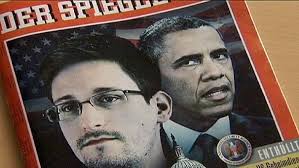
usspsyingThe U.S. National Security Agency has bugged the United Nations’ New York headquarters, Germany’s Der Spiegel weekly said on Sunday in a report on U.S. spying that could further strain relations between Washington and its allies.

Citing secret U.S. documents obtained by fugitive former intelligence contractor Edward Snowden, Der Spiegel said the files showed how the United States systematically spied on other states and institutions.

Der Spiegel said the European Union and the U.N.’s Vienna-based nuclear watchdog, the International Atomic Energy Agency (IAEA), were among those targeted by U.S. intelligence agents.

In the summer of 2012, NSA experts succeeded in getting into the U.N. video conferencing system and cracking its coding system, according one of the documents cited by Der Spiegel.

“The data traffic gives us internal video teleconferences of the United Nations (yay!),” Der Spiegel quoted one document as saying, adding that within three weeks the number of decoded communications rose to 458 from 12.

Internal files also show the NSA spied on the EU legation in New York after it moved to new rooms in autumn 2012. Among the documents copied by Snowden from NSA computers are plans of the EU mission, its IT infrastructure and servers.

According to the documents, the NSA runs a bugging program in more than 80 embassies and consulates worldwide called “Special Collection Service”. “The surveillance is intensive and well organized and has little or nothing to do with warding off terrorists,” wrote Der Spiegel.

OPEN LETTER

Snowden’s leaks have embarrassed the United States by exposing the global extent of its surveillance programs. Washington has said its spies operate within the law and that the leaks have damaged national security.

A week ago Britain, a staunch U.S. ally in the intelligence field, detained the partner of a Brazil-based journalist working for London’s Guardian newspaper who has led coverage of Snowden’s leaks. British police said documents seized from David Miranda were “highly sensitive” and could put lives at risk if disclosed.

The Guardian last week destroyed computer equipment containing Snowden files after it was threatened with possible legal action by senior British government advisers.

In an open letter to British Prime Minister David Cameron published on Sunday, editors of leading Nordic newspapers said Miranda’s detention and moves against the Guardian were “undermining the position of the free press throughout the world”.

“(We are) deeply concerned that a stout defender of democracy and free debate such as the United Kingdom uses anti-terror legislation in order to legalize what amounts to harassment of both the paper and individuals associated with it,” said the letter from Sweden’s Dagens Nyheter, Finland’s Helsingin Sanomat, Denmark’s Politiken and Norway’s Aftenposten.

Earlier this month, U.S. President Barack Obama announced plans to limit U.S. government surveillance programs, saying the United States could and should be more transparent.

The issue has also become a hot topic in Germany before an election next month. Some reports have suggested that German intelligence agents have cooperated with U.S. spies.

There could be a voter backlash if it emerges that Chancellor Angela Merkel, tipped to win a third term, knew more about such cooperation than she has so far acknowledged. – Reuters

Bob threatens US, British firms

robertmugabeZimbabwean President Robert Mugabe on Sunday threatened “tit-for-tat” actions against Western countries that have imposed sanctions on his rule, suggesting US and British firms could be targeted.

“They should not continue to harass us,” said the 89-year-old veteran leader whose re-election last month drew Western doubts over the credibility of the polls.

“We have British and American companies here and we are treating them well. There will come a time when we will lose our patience.”

The United States and European Union imposed sanctions including travel bans and asset freezes on Mugabe and members of his inner circle and several companies following 2002 elections which western observers said were rigged.

“They have companies here and we have not imposed controls or sanctions against them but time will come when we will say tit-for-tat. You hit me, I hit you. You impose this on me, I impose this on you,” Mugabe said.

“Our attitude is not going to continue as it was in the past — passive. We have had enough and enough is enough.”

Mugabe won an extension to his 33-year rule in general elections on 31 July, which were slammed as “a farce” by his rival Morgan Tsvangirai and prompted serious concerns from Western nations.

Local observers said the elections were fraught with irregularities but observers from the African Union and the regional Southern African Development Community (SADC) bloc were less critical.

Mugabe was sworn in last week after the constitutional court declared the elections “free, fair and credible”.

He has vowed to forge ahead with his controversial equity drive to force foreign companies to cede majority shares to local investors.

So far mining companies including Zimplats, a subsidiary of the South African-based Impala Platinum, and Anglo American Corporation’s Unki mines have been forced to sell their majority stake to locals.

Companies in the retail sector are set to follow.

The EU earlier this year retained an asset freeze and travel ban on Mugabe but eased most of its decade-old restrictions on Zimbabwe.

The majority of those on the US sanctions list still remain, including a travel ban and asset freeze on individuals and entities with links to Mugabe.

Mugabe was addressing mourners at the burial of Mike Karakadzai, a retired air commodore and hero of the 1970s liberation war, who died aged 56 on Tuesday.

In his first public speech since Thursday’s swearing-in, he targeted Tsvangirai, his former partner in a shaky powersharing government, as “an ignoramus” and “a lone stray locust”.

This was in reaction to Tsvangirai’s attempt to seek a court’s help to overturn the polls and his calls to rid the security forces of officers allied to Mugabe and his Zanu-PF party.

“I hope our people will never repeat the same mistake and choose an ignoramus when you have bright children who went to university. I wonder what you admire in him,” he said.

On security reforms that were meant to precede the polls, he also hit out at Tsvangirai.

“What sector reform can you a lone stray locust implement? When has the frog aspired to be the crocodile?” he said.

“You are better off with an ignorant person who is conscious of his ignorance. It becomes a problem when you assume your ignorance is wisdom and lead people into trouble.”

The vote ended the pair’s regionally brokered compromise government forced by chaotic 2008 polls.

This time round the electoral commission declared Mugabe the winner with 61 percent of the vote, against 34 percent for Tsvangirai. – AFP

White House ‘not familiar with Chris Lane murder’

trayvonobamaJosh Earnest, principal deputy White House press secretary, said he was not familiar with the murder of Australian jogger Chris Lane during Wednesday’s White House briefing.

When asked by Fox News chief White House correspondent Ed Henry about the Chris Lane case, Earnest responded, “I’m not familiar with it, actually.”

Henry explained the case in brief to Earnest looking for reaction to the Oklahoma shooting death of Lane at the hands of “bored” African-American teens who thought it would be “fun” to kill somebody.

“This sounds like a pretty tragic case. I wouldn’t want to get ahead of the legal process here and it’s clear that law enforcement officials are involved and are investigating,” Earnest said. “But any act of violence is something that — the president I think himself has spoken pretty eloquently about violence in our communities and he stood at this podium a few weeks ago where he talked about his concern about the impact that violence is having on, in particular, young people in this country.”

Henry pressed Earnest, noting that the President spoke about slain teen Trayvon Martin in the Rose Garden and in the briefing room.

“Why hasn’t [the president] spoken out about this? In this case, you said there was a judicial proceeding. There was one in the Trayvon Martin case. He spoke out extensively on that one,” Henry said.

“There are some people in this room I don’t thing who would agree with you that the president spoke out extensively on it,” Earnest responded.

Henry reiterated his point explaining that the President did speak about the Martin case in response to a question prior to the trial and then spoke about it after the trial in the briefing room.

“He expressed his concerns about the impact of violence on communities across the country and he talked about a number of things that the government can do, but also a number of things that we can do in our communities, whether it’s parents, churches, and communities can do to try to address the impact of violence and whether there is more we can do to try to protect our children,” Earnest said. – Daily Caller


The culture that killed Chris Lane

thugsIn a testament to the depravity of black thug culture, an Australian collegiate baseball player attending school in America was killed by three teenagers looking for fun, police reported. Christopher Lane, who was out for a jog in the town of Duncan, Oklahoma where his girlfriend and her family live, was targeted at random after he passed a home where the boys were staying. ”They saw Christopher go by, and one of them said: ‘There’s our target,’” said Police Chief Danny Ford. ”The boy who has talked to us said, ‘We were bored and didn’t have anything to do, so we decided to kill somebody.’”

James Edwards, 15, Chancey Luna, 16, and Michael Jones, 17, have all been charged as adults in Lane’s death. Edwards and Luna, both black Americans, have been charged with first degree murder, and will be tried as adults per Oklahoma law. Jones, who is white, was charged with using a vehicle in the discharge of a weapon and with accessory to first-degree murder after the fact. He will also be tried in adult court, but is still considered a youthful offender. If convicted, Edwards and Luna face life in prison without parole. Jones, who wept in court as he tried to talk about the crime before being cut off by the judge, faces anywhere from two years to life in prison. Edwards and Luna are being held without bond. Jones’s bond is set at $1 million.

Police noted that Lane was jogging through an affluent section of Duncan around 3 p.m. local time when a car carrying the three teenagers pulled up behind him. In court, prosecutor Jason Hicks alleged that Luna was in the back seat, Edwards was in the passenger seat and Jones was driving the vehicle. Luna allegedly shot Lane in the back with a .22 caliber revolver that has yet to be recovered. ”We were bored,” Luna reportedly admitted to authorities.

Hicks, who called the boys “thugs,” noted that Edwards found the slaying amusing. “I believe this man is a threat to the community and should not be let out,” Hicks said during the bail hearing. “He thinks it’s all a joke.” Edwards, who has had earlier run-ins with the law, had also been in court on Friday, apparently after the crime had been committed, to sign papers related to his juvenile probation.

James Johnson, who called police to tell them the trio was hiding in the carpark of the Immanuel Baptist Church about 5pm on Friday, described them in all-too-familiar terms. He called them “troublemakers” and “bullies” with no parental supervision, and said that Edwards had threatened to kill his own son using Facebook. ”They threatened to kill my son because they are in a gang, the Crips, and were trying to get my son in it and I wouldn’t let him do it.,” Johnson explained. “I told him he couldn’t run with those boys. He’s a little terrified.” Police Chief Ford believes that the teens’ wanted “to make a name for themselves” on the streets.

Indeed, a dark picture emerges as one peruses the social media sites teens like these invariably use to brag about themselves and their exploits. Before it was removed, Chauncy Luna’s Facebook page revealed he goes by the alias Baby Drake. It showed photos of him posing with friends, including Edwards, and flashing gang signs. Two pictures on James “Lilbuggy” Edwards’ Facebook page are also quite revealing. One shows a handgun, and several others show staggeringly large sums of cash. Both may be explained by another photo containing hashtags suggesting he was a member of the Crips. There is also a photo of him posing with a shotgun. ”Bitch we up them poles,” Edwards says in the clip, “F— ‘em.” (A dismantled shotgun with the serial numbers ground off was found in the car, but it is not currently known if it is the same weapon).

Tweets on Edwards’ Twitter account suggest he is racist. On April 29, he tweeted “90% of white ppl are nasty. #HATE THEM.” On July 15, shortly after George Zimmerman was acquitted, Edwards tweeted “Ayeee I knocced out 5 woods since Zimmerman court!:) lol shit ima keep sleepin shit! #ayeeee.” “Woods” is a term used to denigrate white people. Yet Chief Ford, who has yet to see Edwards’ social media, told the Daily Caller a hate crime charge is not likely. “I’m not discounting the stuff that’s on there, but they do that for shock and effect,” he contended.

The real shock and effect evidenced by this case so far is the deafening silence of the racial grievance industry along with their media and celebrity enablers who apparently see no way to exploit this tragedy. Jesse Jackson is the lone exception, if one considers a single tweet much of an effort. “Praying for the family of Chris Lane,” Jackson said Wednesday on Twitter. “This senseless violence is frowned upon and the justice system must prevail.” Not a word, however from people like Al Sharpton, Attorney General Eric Holder, or President Obama, all of whom were willing to weigh in on the Trayvon Martin case on numerous occasions.

Former Congressman Allen West directly addressed the reticence of what he characterized as the “race industry crew.” On Twitter, he castigated Obama. “‘We were bored & decided to kill somebody.’ 3 black teens shoot white jogger.Who will POTUS identify w/this time?” West tweeted Tuesday afternoon. West’s Facebook posting was equally caustic. “[S]hall we hear anything from the race industry crew, Hollywood elites, or maybe Oprah Winfrey? The issue is not about proliferation of guns in America. This is about a failing black community and the fact that its young men are desensitized to violence because a gangsta culture promotes it,” West wrote.

The apologists for the status quo invariably point to America’s long and tattered track record of racism, going all the way back to the days of slavery, to explain the cultural dysfunction behind such heinous crimes. Yet as black conservatives such as Thomas Sowell and Walter Williams have pointed out on numerous occasions, black Americans were making steady progress in times that were far more racist (and poorer) than today. Yet today, in a time of vastly more racial equality and wealth redistribution, black men between the ages of 14 and 24 commit homicides at a rate 10 times that of young white and Hispanic males combined, according to a study by Northeastern University.

The key factors observers like Sowell and Williams frequently point to are the destruction of the nuclear family and the widespread glorification of social dysfunction. Though they affect all racial groups to varying degrees (after all, one conspirator in the Lane killing was white) no one can dispute their devastating effects on the black community. Rather than address this, many politicians, businessmen and entertainers hypocritically glamorize, enrich themselves and further their careers by promoting this culture of destruction. Thus, as Barack Obama wonders aloud how America “can bolster and reinforce our African-American boys,” he pals around with rapper Jay-Z, who has become a multi-millionaire rapping about guns, dope, misogyny and gratuitous violence. Amazon.com is selling a line of Trayvon Martin hoodies, while Ebony magazine has published several covers with celebrities dressed in the same thug-symbolizing attire. A director at the Smithsonian Institute expressed an interest in displaying Martin’s hoodie there, before the idea was ultimately rejected.

Yet when violence occurs, “civil rights” leaders like Jesse Jackson call it “senseless” and carefully avoid drawing attention to the real problem. The same goes for all the celebrities who have lined up to turn Trayvon Martin into a cause célèbre, but are currently nowhere to be found or heard on the Lane case. And despite wall-to-wall media coverage of this atrocity, principal deputy White House press secretary Josh Earnest professed ignorance about the case, before claiming he “wouldn’t want to get ahead of the legal process here.” When Fox News chief White House correspondent Ed Henry noted President Obama was more than willing to get ahead of the legal process with regard to Trayvon Martin, Earnest offered up a generic response about the president’s “concerns” regarding the “impact of violence and whether there is more we can do to try to protect our children.”

We can’t protect our children from a thug culture when those who know better can’t be bothered to acknowledge its existence because it doesn’t accrue to their political advantage. And while the social dysfunction proliferates, blessed by the liberal and cultural elite, the racial divide widens. That is the real reason why the usual suspects have nothing to say about the killing of Christopher Lane. They know they, too, are part of the problem. – frontpagemag.com

Oz baseball player killed in US because he was white

Christopher Lane
Christopher Lane

One of the teens charged with first-degree murder in the shooting death of Australian baseball player Christopher Lane in Duncan, Okla. in the US, previously posted anti-white statements on his Twitter feed.

James Edwards, 15, Chancey Luna, 16, and Michael Jones, 17, have all been charged as adults in Lane’s death. Lane, a 22 year-old student from Melbourne, was out for a jog last Friday evening when the three teens began following him in a car and shot him “just for the fun of it,” according to Duncan officials.

Edwards and Luna are charged with first-degree murder while Jones is accused of using a vehicle in the discharge of a weapon and as an accessory to first-degree murder after the fact. Edwards and Luna are held without bond; Jones’ bond has been set at $1 million.

Edwards’ social media activities are still on stark display and show the teen glorifying hip-hop, violence and sex. Pictures on Facebook also show Edwards and Luna wearing gang colors and flashing gang signs.

A couple of Tweets also suggest that Edwards wasn’t fond of white people.

On April 29, he tweeted, “90% of white ppl are nasty. #HATE THEM.” – Daily Caller

Court halts US lawsuits against apartheid crime

tortA federal appeals court on Wednesday ruled that three major companies cannot be held liable in the United States for crimes South Africa’s former apartheid government committed, saying a recent US Supreme Court decision “plainly bars” such lawsuits.

The plaintiffs brought their suits under the Alien Tort Statute (ATS), a law passed in 1789 that allowed non-US citizens to bring cases in US federal courts for violations of international law, such as piracy. In recent decades it took on renewed importance, employed to allow non-US citizens to sue for alleged human rights violations abroad.

But a recent Supreme Court decision found that “federal courts may not, under the ATS, recognize common-law causes of action for conduct occurring in the territory of another sovereign,” Circuit Judge Jose Cabranes wrote in the unanimous decision.

In April, the Supreme Court unanimously ruled that a federal court in New York could not hear claims by 12 Nigerians who accused Anglo-Dutch oil company Royal Dutch Shell Plc of complicity in a violent crackdown on protestors in Nigeria from 1992 to 1995. The case, Kiobel v. Royal Dutch Petroleum Co, was seen as a major victory for multinational corporations.

The appeals court ruling on Wednesday could mark the end for plaintiffs in the long-running case, who accused Daimler AG , Ford Motor Company and International Business Machines Corp of facilitating decades of race-based crimes such as torture and extrajudicial killings because their South African subsidiaries sold products to it.

The automakers knew their vehicles were being used by South African forces to violently suppress protesters, while IBM knew its computers were being used to help strip black citizens of their rights, plaintiffs said.

The defendant companies can now request that the case be dismissed in district court, the ruling said. Attorneys for the plaintiffs and representatives of the defendant companies were not immediately available. Apartheid ended in 1994 when South Africa held its first all-race elections, bringing Nelson Mandela and the African National Congress to power.

More than 50 major corporations were initially sued in 2002, but the complaints were later amended to target fewer companies. Supporters of the lawsuits included South African Archbishop Desmond Tutu, a recipient of the Nobel Peace Prize. – Sapa/AP

Hillary polarizing racial politics

blackvotersusHillary Clinton began her 2016 march to the White House last week, and it wasn’t a promising debut. The former first lady and Senator used her first big policy speech since leaving the State Department to portray American election laws as fundamentally racist. The speech was longer on anecdotes than statistics, so allow us to fill in some of the holes.

“In 2013, so far, more than 80 bills restricting voting rights have been introduced in 31 states,” Mrs. Clinton told her political base of lawyers at the American Bar Association. She portrayed these laws as part of an effort reaching back years to “disproportionately impact African-Americans, Latino and young voters.” And she threw the Supreme Court in as part of this racist conspiracy, assailing its recent decision finding the “preclearance” section of the Voting Rights Act to be unconstitutional.

She claimed the High Court had “struck at the heart” of the law, though all it did was eliminate a section that had forced such states as Mississippi to meet higher legal burdens for election laws than other states with a worse current record of minority voter participation. “Now not every obstacle is related to race,” Mrs. Clinton added, “but anyone who says that racial discrimination is no longer a problem in American elections must not be paying attention.”

No one thinks racial discrimination has vanished from American life or the human condition. But as for minority voting, Mrs. Clinton is the one who hasn’t been paying attention. In particular, she must have missed the May 2013 Census Bureau study on “The Diversifying Electorate—Voting Rates by Race and Hispanic Origin in 2012 (and Other Recent Elections).”

The study, based on data from the November 2012 Current Population Survey, shows that minority voter turnout nationwide has been rising—dramatically so. Take blacks, who as recently as 1996 had a low voter turnout rate of 53%.

As the nearby chart shows, black turnout has jumped in each of the last four presidential elections. In 2012, black turnout as a share of all eligible voters exceeded the turnout of non-Hispanic white voters—66.2% to 64.1%. Nearly five million more African-Americans voted in 2012 (17.8 million) than voted in 2000 (12.9 million). In both 2008 and 2012, black voters even exceeded their share of the eligible black voting age population. In 2012, blacks made up 12.5% of the eligible electorate but 13.4% of those voting.

Having Barack Obama at the top of the ticket no doubt helped this black voter mobilization, but the trend shows that the surge preceded his candidacy. Remember when liberals portrayed Bill Clinton as “America’s first black President”? The black turnout surge accelerated after Mr. Clinton’s last election. Such a large increase in black voter turnout over 16 years would seem to refute the claim by Mrs. Clinton that racial obstacles to voting are increasing.

Mrs. Clinton ignores all of this and focuses instead on anecdotes, while raising alarm about the voter ID laws that have passed in the last decade. She specifically raises fears about North and South Carolina. Yet the same Census Bureau study shows that black turnout exceeded non-Hispanic white turnout by statistically significant rates in both Carolinas, and was higher in most states east of the Mississippi River outside of New England.

North Carolina, she says, has this year “pushed through a bill that reads like the greatest hits of voter suppression.” But that supposed horror show merely reduces early voting by a week, and bars same-day registration and extending voting hours by political whim. All of these are designed to preserve ballot integrity, which is as vital as voter access to public confidence in honest elections. Voters without an ID can get one free at the Department of Motor Vehicles and they can also cast a provisional ballot pending confirmation that they are legally registered.

By the way, Georgia, Indiana and Tennessee have some of the strictest voter ID laws of the more than 30 states that have such laws, yet the Census report says black turnout exceeded that of non-Hispanic whites in 2012 in all three. Where is the evidence that voter ID laws keep minorities from voting?

The disconnect between these facts and Mrs. Clinton’s assertions suggests that she is the one playing racial politics. The current narrow Democratic majority is largely a coalition based on gender and racial identity. It requires big turnout among single women and non-whites. As the Obama era winds down, the fear among Democrats is that these voters won’t have the same enthusiasm.

Mrs. Clinton can play the “first woman President” card, but she also needs large minority turnout. If she can’t motivate that turnout based on rising economic optimism or opportunity, which is hard given the Obama economic record, she and Democrats will play to racial fears to drive it. She wants a racially polarized electorate.

This is a tragedy for the country, and Republicans like Mitt Romney share the blame for doing so little to attract minority votes. But this strategy and Mrs. Clinton’s speech don’t bode well for a less polarized politics as Democrats try to extend their electoral dominance.

Mrs. Clinton billed her speech last week as the first of a series addressing what she called “eroding public trust” in government. Government could use the help, though note the irony that Mrs. Clinton’s party has been running the government even as its reputation sinks. In any case, stoking racial fears based on imaginary government racism won’t make Americans feel better about politics or government.

A version of this article appeared August 19, 2013, on page A16 in the U.S. edition of The Wall Street Journal, with the headline: Hillary’s Racial Politics.

Mystery of US unchanging national debt

usdebtThe Treasury Department’s Financial Management Service (FMS), which publishes both the US federal government’s official Daily Treasury Statement and its official Monthly Treasury Statement, is reporting that in July the federal government ran a deficit of $98 billion but that the federal government’s debt remained exactly $16,699,396,000,000 for the entire month.

The FMS said that the deficit went up $98 billion ($97,594,000,000) in the Monthly Treasury Statment for July, which it released on Monday.

At the same time, the FMS said the debt stayed at exactly $16,699,396,000,000 in its Daily Treasury Statements, which are published every business day. The Daily Treasury Statements show the daily value of the federal government debt that is subject to a legal limit set by Congress.

At the static $16,699,396,000,000 level that the Treasury reported for every day of July, the debt was just $25 million below the legal limit of $16,699,421,000,000 that was set in a law passed by Congress and signed by President Barack Obama.

If Treasury’s daily statements were to declare that the government had borrowed an additional net $98 billion to cover the $98 billion deficit the Treasury declared in its monthly statement for July, the Treasury would be conceding that the government had already surpassed the legal limit on the debt–and has been violating the law by continuing to borrowing additional money.

Instead, even as the Treasury was running up the $98-billion deficit it reported in the July Monthly Treasury Statement, every one of the 22 Daily Treasury Statements published for July said the Treasury had closed out the previous business day with exactly $16,699,396,000,000 in debt.

The Daily Treasury Statement for Aug. 12, released Tuesday afternoon, says the debt remained stuck at exactly $16,699,396,000,000 during the first 12 days of this month, too.

On May 17, the first day the Treasury reported that the debt had hit exactly $16,699,396,000,000–and was thus just $25 million below the legal limit–Treasury Secretary Lew sent a letter to House Speaker John Boehner saying he was beginning to implement what he called “the standard set of extraordinary measures” to prevent the Treasury from exceeding the legal limit on the federal debt.

Since Lew sent that letter–announcing that he would use “extraordinary measures”–the debt has remained stuck at exactly $16,699,396,000,000 for 87 straight days.

That includes all 31 days in July when Lew’s Treasury says it was running a $98 billion deficit.

When Lew stops using “extraordinary measures” to keep the debt at exactly $16,699,396,000,000, the government will have another debt-limit crisis. – CNSNews.com

The New York Times takes down the Clintons

The Clintons
The Clintons

By Tim Stanley

The New York Times has taken down the Clintons. The killer quote is this:

For all of its successes, the Clinton Foundation had become a sprawling concern, supervised by a rotating board of old Clinton hands, vulnerable to distraction and threatened by conflicts of interest. It ran multimillion-dollar deficits for several years, despite vast amounts of money flowing in.

Over a year ago Bill Clinton met with some aides and lawyers to review the Foundation’s progress and concluded that it was a mess. Well, many political start-ups can be, especially when their sole selling point is the big name of their founder (the queues are short at the Dan Quayle Vice Presidential Learning Center). But what complicated this review – what made its findings more politically devastating – is that the Clinton Foundation has become about more than just Bill. Now both daughter Chelsea and wife, and likely presidential candidate, Hillary Clinton have taken on major roles and, in the words of the NYT “efforts to insulate the foundation from potential conflicts have highlighted just how difficult it can be to disentangle the Clintons’ charity work from Mr Clinton’s moneymaking ventures and Mrs Clinton’s political future.” Oh, they’re entangled alright.

The NYT runs the scoop in its usual balanced, inoffensive way – but the problem jumps right off the page. The Clintons have never been able to separate the impulses to help others and to help themselves, turning noble philanthropic ventures into glitzy, costly promos for some future campaign (can you remember a time in human history when a Clinton wasn’t running for office?). And their “Ain’t I Great?!” ethos attracts the rich and powerful with such naked abandon that it ends up compromising whatever moral crusade they happen to have endorsed that month. That the Clinton Global Initiative is alleged to have bought Natalie Portman a first-class ticket for her and her dog to attend an event in 2009 is the tip of the iceberg. More troubling is that businessmen have been able to expand the profile of their companies by working generously alongside the Clinton Foundation. From the NYT:

Last year, Coca-Cola’s chief executive, Muhtar Kent, won a coveted spot on the dais with Mr. Clinton, discussing the company’s partnership with another nonprofit to use its distributors to deliver medical goods to patients in Africa. (A Coca-Cola spokesman said that the company’s sponsorship of foundation initiatives long predated Teneo and that the firm plays no role in Coca-Cola’s foundation work.)

In March 2012, David Crane, the chief executive of NRG, an energy company, led a widely publicized trip with Mr. Clinton to Haiti, where they toured green energy and solar power projects that NRG finances through a $1 million commitment to the Clinton Global Initiative.

This is typical Clinton stuff. The second thing I ever wrote was about how corporations invest in politicians as a way of building their brand and raising their stock price. It can lead to some funny partnerships. This, from 2011:

Just this month, bedding manufacturer Serta announced that it will be sponsoring Bill Clinton’s keynote address to an industry conference in August. “To us,”’ said the head of the company, “Clinton represents leadership. This appearance shows Serta is a leader and is taking a leadership position. This singles us out.” Some might say that it is beneath a former president to basically endorse Serta’s new “Perfect Sleeper” line, even with its “revolutionary gel foam mattress”.

The cynical might infer from the NYT piece that the Clintons are willing to sell themselves, their image, and even their Foundation’s reputation in exchange for money to finance their personal projects. In Bill’s case, saving the world. In Hillary’s case, maybe, running for president.

It’s nothing new to report that there’s an unhealthy relationship in America between money and politics, but it’s there all the same. While the little people are getting hit with Obamacare, high taxes and joblessness, a class of businessmen enjoys ready access to politicians of both Left and Right that poses troubling questions for how the republic can continue to call itself a democracy so long as it functions as an aristocracy of the monied. Part of the reason why America’s elites get away with it is becuase they employ such fantastic salesmen. For too long now, Bill Clinton has pitched himself, almost without question, as a homespun populist: the Boy from Hope. The reality is that this is a man who – in May 1993 – prevented other planes from landing at LAX for 90 minues while he got a haircut from a Beverley Hills hairdresser aboard Air Force One. The Clintons are populists in the same way that Barack Obama is a Nobel prize winner. Oh, wait… The Telegraph

US misprints 30 million ‘Benjamins’

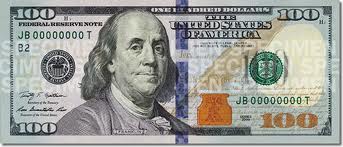
benjaminThe US is approaching the release date of its new $100 bills, but the Bureau of Engraving and Printing is facing an embarrassing problem: 30 million bills were incorrectly printed, and fixing them will cost taxpayers an estimated $3.79 million.

The new $100 bills were designed to reduce counterfeiting, and were initially scheduled to be released in 2010. But that summer, the Bureau of Engraving and Printing noticed that the bills were being produced with a blank sliver, due to a fold in the paper. The release date was therefore pushed back to 2011, and again pushed back to Oct. 2013.

But additional printing problems could once again delay the release of the “Benjamins”.

The new $100 bills are designed to contain a Liberty Bell that changes its color, 3-D images that move when the bill is tilted, and a hidden message on the collar of Benjamin Franklin, one of the Founding Fathers.  Two currency factories are responsible for printing all US bills.

But the Washington, D.C. factory produced “clearly unacceptable” versions of the $100 bills, according to a July memo that the New Yorker obtained from the bureau. Recent batches that came from the factory were “mashed”, which means they were produced with too much ink and the lines are not as crisp as they should be. The New Yorker compared it to a kid trying “to carefully color inside the lines – using watercolors and a fat paintbrush.”

Once these bills were delivered to the Federal Reserve, they were rejected. Officials have sent back about 30 million of them, and refuse to accept any more bills from the Washington, D.C. factory.

Instead, the factory in Fort Worth, Tx., is now expected to compensate for the defective currency. The currency release date is Oct. 8, and it remains unclear if the government will be able to obtain enough of the bills to get them into circulation. The blunder is also expensive: since it costs about 12.6 cents to produce each bill, making another 30 million costs about $3.78 million, the Atlantic estimates.  Additionally, the cost of disposal of the defective bills could be around $12,000.

“There are dire consequences here because BEP sells Federal Reserve notes to the Board to finance our entire operation,” BEP director Larry Felix wrote in an internal memo. “If the BEP does not meet the order, the BEP does not get paid.”

A spokesperson for the BEP told the Atlantic that the Federal Reserve is still planning to release the new currency on Oct. 8, despite “concerns during production validation.”

“We have confidence in our process and employees,” a BEP representative told the New York Daily News, reemphasizing that the agency does not plan to delay the release date a third time. – RT

Why Putin is winning the War of Images

Abby Martin, a familiar face on RT

Russian President Vladimir Putin has created an anti-CNN for Western audiences with the international satellite news network Russia Today. With its recipe of smart propaganda, sex appeal and unlimited cash, it is outperforming its peers worldwide.

Russia Today uses the source material America supplies to its rivals untiringly and with relish. Even Washington’s relatively minor peccadilloes don’t escape notice. For instance, the show also includes a story about Gabonese dictator Ali Bongo Ondimba, whom US President Barack Obama supports.

Many in the West are also interested in seeing critical coverage of the self-proclaimed top world power. Russia Today is already more successful than all other foreign broadcast stations available in major US cities, such as San Francisco, Chicago and New York. In Washington, 13 times as many people watch the Russian program as those that tune into Deutsche Welle, Germany’s public international broadcaster.

Two million Britons watch the Kremlin channel regularly. Its online presence is also more successful than those of all its competitors. What’s more, in June, Russia Today broke a YouTube record by being the first TV station to get a billion views of its videos.

The station was even more triumphant when it signed Larry King, a legend of American radio and TV journalism who began working for Russia Today this summer. “America’s best known TV interviewer is defecting to the Russians,” wrote the London-based Times in May.

King and his new colleagues have a simple assignment: They are to “break the monopoly of the Anglo-Saxon mass media,” President Vladimir Putin said during a studio visit a few weeks ago. The Russians’ recipe for success has three ingredients: sex appeal, which has been atypical for most news channel; a rigidly anti-American stance; and a never-ending flow of money from the Kremlin.

The Ministry of Media Defense

Since 2005, the Russian government has increased the channel’s annual budget more than tenfold, from $30 million (€22.6 million) to over $300 million. Russia Today’s budget covers the salaries of 2,500 employees and contractors worldwide, 100 in Washington alone. And the channel has no budget cuts to fear now that Putin has issued a decree forbidding his finance minister from taking any such steps.

The Moscow leadership views the funds going to the channel as money “well invested,” says Natalya Timakova, the press attaché to Prime Minister Dmitry Medvedev. “In addition, Russia Today is — and I hope the Germans will forgive me for this remark — significantly more modern than Deutsche Welle, for example, and it also has more money.”

The government has also spent a lot of money on the new broadcasting center in northeast Moscow, which Russia Today moved into in May. The station, citing confidentiality requirements, isn’t willing to quote an exact price tag. On the grounds of a former Soviet tea factory, the broadcaster is now creating programming in Arabic, English and Spanish. In 2009, it rebranded its English- and Spanish speaking divisions as simply “RT.” The evening news is currently focused on the euro crisis, social protests in Portugal and the NSA surveillance scandal.

Margarita Simonyan
Margarita Simonyan

Margarita Simonyan is the woman who shaped Russia Today into Russia’s most effective weapon in the battle for influencing the opinions of the global public. In her office on the eighth floor of its headquarters in Moscow, the editor-in-chief has Orthodox icons on her desk and a dozen flickering screens around it. Putin made Simonyan the head of the new station in 2005. At the time, she was only 25 and derided as an unknown reporter from the crowd of journalists that accompany the president at meetings.

Simonyan’s mission is to prevent Russia from ever losing a war of images.

CNN showed images of destroyed buildings, allegedly taken after a Russian bomb strike on the Georgian provincial city of Gori. According to Russia Today, however, they were actually shots of the South Ossetian capital of Tskhinvali after a Georgian attack. “There is no objectivity,” Simonyan says today, “only approximations of the truth by as many different voices as possible.”

Mistrust of the domestic media is also greater than ever in the United States. CNN, for example, is struggling to cope with a massive loss of viewers. – Der Spiegel

Egypt: Security forces move in

Army moves in
Army moves in

Security forces backed by bulldozers moved in on Wednesday on two huge protest camps set up in Cairo by supporters of Egypt’s ousted president Mohamed Morsi, launching a long-threatened crackdown that left dozens dead and injured.

The operation began shortly after dawn when security forces surrounded the sprawling Rabaa al-Adawiya camp in east Cairo and a similar one at Al-Nahda square, in the centre of the capital.

Witnesses and an AFP correspondent said police rained canisters of tear gas down onto tents before entering Rabaa al-Adawiya, sparking pandemonium among the thousands of protesters who set up the camp soon after Morsi was ousted by the army on 3 July.

Men in gas masks rushed to grab each canister and dunk them in containers of water, as the main stage near the mosque of the camp blared Islamic anthems and protesters chanted “Allahu Akbar” (God is greatest).

Clashes quickly erupted between protesters and security forces on one side of the camp, as automatic fire could be heard. It was not immediately clear who was doing the shooting.

Television footage showed injured people being carried to a makeshift medical centre as well as police dragging away protesters, who have defied numerous ultimatums to end their demonstrations.

Protest leaders wearing gas masks stood defiantly on a stage while crowds of people wearing face masks stood amid the swirling tear gas as bulldozers began dismantling the camp.

Egypt’s interior ministry mid-morning said security forces have “total control” over Al-Nahda Square, the smaller of the two camps.

“Police forces have managed to remove most of the tents in the square,” the ministry said.

A security official told AFP that dozens of Morsi supporters had been arrested with the help of residents of the area.

Television footage showed protesters who had been rounded up sitting in the ground handcuffed and surrounded by security forces.

Families, with their children, carrying plastic bags were seen being escorted out of the square by police.

Railway authorities announced that all trains had been grounded to prevent protesters from moving outside of Cairo and reassembling.

Morsi’s Muslim Brotherhood urged Egyptians to take to the streets in their thousands to denounce the “massacre”.

“This is not an attempt to disperse, but a bloody attempt to crush all voices of opposition to the military coup,” Brotherhood spokesperson Gehad al-Haddad said on Twitter.

The Rabaa al-Adawiya protest camp, where several Brotherhood leaders are staying, “is calling on Egyptians to take to the streets to stop the massacre,” Haddad said.

In a separate tweet, Haddad said at least 250 people were killed and over 5000 injured in the crackdown. There was no immediate independent confirmation of the tolls.

An AFP correspondent counted 17 bodies at a makeshift morgue at Rabaa al-Adawiya, adding that many appeared to have died from gunshot wounds.

Egypt’s interior ministry said two members of the security forces were killed in the operation.

The crackdown came just hours after the United States urged the military-backed interim government to allow Morsi supporters to protest freely.

State Department deputy spokesperson Marie Harf said Washington regarded freedom to protest as a “key part” of the democratic process but would be concerned by reports of violence.

The United States, which provides $1.5-billion in mostly military aid to Egypt every year, maintains close ties to the Egyptian military but says it favours a rapid return to elected civilian rule.

Morsi, Egypt’s first elected president, was overthrown by the military on 3 July with popular backing.

His supporters had said nothing short of his reinstatement would persuade them to disperse.

Clashes between pro- and anti-Morsi demonstrators and security forces have killed more than 250 people since the end of June.

On Monday, the judiciary extended Morsi’s detention for a further 15 days pending an investigation into his collaboration with Palestinian group Hamas.

The Muslim Brotherhood, banned in 1954 and repressed by successive governments, won both parliamentary and presidential elections in 2011 after the ouster of veteran strongman Hosni Mubarak.

Prosecutors have set an 25 August date for the trial of the Brotherhood Supreme Guide Mohammed Badie and his two deputies. – AFP