Outrage over picture with chair simulating a black woman

Dasha Zhukova sitting on a chair made to resemble a half-naked black woman

Russian billionaire Roman Abramovich’s partner has sparked an internet controversy after a picture was published of her sitting on a half-naked black woman.

The contentious picture was published online and shows Dasha Zhukova sitting on a chair made to resemble a half-naked black woman – on Martin Luther King Day.

Buro 24/7 used the offensive image to illustrate an unrelated interview about the former model’s new magazine, Garage. Miroslava Duma, the blog’s editor, also posted the insensitive photo on Instagram.

The pictures were quickly removed, but not before it sparked intense criticism and debate online.

Zhukova, staring at the camera, appears the complete opposite of the black woman she’s weighing down and has come under fire for the offensive image, along with the magazine. – independent.ie

The master of Zim’s destiny makes his reappearance

Scene from the film 'The Ambassador'
Scene from the film ‘The Ambassador’

Africa’s oldest leader, president Robert Mugabe from Zimbabwe, appeared in public again after he had not been seen for weeks

Mugabe, who turns 90 on February 21, spoke at the burial of his younger sister Bridget.

Belying recent rumours of ill health and even death, he spoke for an hour at a graveside in Zvimba, some 100km west of the capital Harare.

The old ruler who wiped out his political oppostion in a genocide in the 1980’s, is now the only survivor among six siblings. Bridget died in hospital on Saturday, aged 78.

“Zimbabwe’s land, its natural resources, belong to the people of Zimbabwe,” Mugabe eulogized.

“It is a relationship which is natural, God-given and which makes you owners of your wealth and therefore masters of your destiny,” he said.

The poverty-stricken people of the former Rhodesia is being ransacked by criminal mobs, aided by Mugabe, in the Marenge diamond fields, a scenario often seen in Africa and portrayed in the film The Ambassador (2011).

In the film, a Danish journalist uncovers chilling corruption linked to diplomatic title brokerage and blood diamonds in the CAR. Observers say it is similar to what is happening in Zimbabwe.

“Sure, we will need partners, but we need partners who do not become our masters,” Mugabe said at the funeral.

Mugabe’s health has been the subject of speculation in recent years, with some media suggesting he sought medical treatment in countries including Malaysia and Singapore.

Communist Chinese elite bank offshore

offshoreMore than a dozen family members of China’s top political and military leaders are making use of offshore companies based in the British Virgin Islands, leaked financial documents reveal.

The brother-in-law of China’s current president, Xi Jinping, as well as the son and son-in-law of former premier Wen Jiabao are among the political relations making use of the offshore havens, financial records show.

The documents also disclose the central role of major Western banks and accountancy firms, including PricewaterhouseCoopers, Credit Suisse and UBS in the offshore world, acting as middlemen in the establishing of companies.

The Hong Kong office of Credit Suisse, for example, established the BVI company Trend Gold Consultants for Wen Yunsong, the son of Wen Jiabao, during his father’s premiership — while PwC and UBS performed similar services for hundreds of other wealthy Chinese individuals.

The disclosure of China’s use of secretive financial structures is the latest revelation from “Offshore Secrets”, a two-year reporting effort led by the International Consortium of Investigative Journalists (ICIJ), which obtained more than 200 gigabytes of leaked financial data from two companies in the British Virgin Islands, and shared the information with the Guardian and other international news outlets.

In all, the ICIJ data reveals more than 21,000 clients from mainland China and Hong Kong have made use of offshore havens in the Caribbean, adding to mounting scrutiny of the wealth and power amassed by family members of the country’s inner circle.

As neither Chinese officials nor their families are required to issue public financial disclosures, citizens in the country and abroad have been left largely in the dark about the elite’s use of offshore structures which can facilitate the avoidance of tax, or moving of money overseas. Between $1tn and $4tn in untraced assets have left China since 2000, according to estimates.

Income inequality is a mounting issue in China, a consequence of the country’s rapid growth. A Beijing university study suggests that income at the richest 5th percentile are 34 times higher than those of the bottom 5th percentile.

China’s rapid economic growth is leading to a degree of internal tension within the nation, as the proceeds of the country’s newfound prosperity are not evenly divided: the country’s 100 richest men are collectively worth over $300bn, while an estimated 300m people in the country still live on less than $2 a day. The Chinese government has made efforts to crack down citizens’ movements aimed at promoting transparency or accountability among the country’s elite.

Source: The Guardian


Protest funded by Soros in Ukraine turns violent

kiev2Theprotests in Ukraine organized by USAID, National Endowment for Democracy (NED), Freedom House, George Soros’ Open Society Institute and a host of public-private NGOs have turned violent.

Intense street battles raged in the Ukrainian capital, Kiev, on Monday following protests over the weekend against newly enacted laws curtailing public assembly. The law bans and imposes strict penalties for the use of stages and tents in public spaces. It also outlaws helmets and balaclavas.

The fighting began on a side street near the Ukrainian Parliament, the Verkhovnaya Rada, near Independence Square on Sunday.

US warships deploy for Sochi Olympics

uswarshipsThe United States will deploy at least two warships into the Black Sea off the coast of Sochi, Russia, to respond to a potential terror attack during the upcoming Olympics, top officials said on Monday.

The positioning of the ships would also enable the rapid evacuation of Americans in the event of an attack, CNN reported. The State Department would take the lead if evacuations became necessary.

The ships will have helicopters that could fly Americans out of the country if needed. There are also aircraft on standby in Germany that could be at Sochi in about two hours if needed.

Concerns about terrorism at the Olympics have heightened after a video released online Sunday promised a “present” for tourists at the Olympics as revenge for Muslims killed around the world, according to CNN.

Source: Washington Times

Brazilian Apartheid

brazil2One of the leaders of Brazil’s flashmob movement that is sweeping across shopping centres, sparking violent clashes with police, is a soft-spoken 55-year-old piano teacher that has never organised a protest in his life.

Around 1,000 people are expected to turn up at São Paulo’s upmarket JK shopping centre on Saturday for a gathering – known as a ‘rolezinho’ – which he has organised over Facebook.

He was motivated by a crackdown on other flashmobs, which began last month as parties but have become more political. “I couldn’t bear to see the criminalisation of poor, black kids,” he says.

Similar protest-cum-rampages are planned in at least eight other states across Brazil this weekend, with more than 8,000 expected at one shopping centre in Rio de Janeiro. Popular among poor, largely black, Brazilians, the flashmobs have begun to snowball into a nationwide movement against racism and inequality, threatening the government with further violent mass protests just as the country prepares to host the football World Cup, academics say.

In June the biggest protests in 20 years spread across Brazil following complaints over a bus fare increase, bringing businesses in Latin America’s biggest economy to a standstill and prompting a plunge, albeit temporary, in President Dilma Rousseff’s popularity.

Rousseff called an emergency meeting, worried that the protests might spiral out of control, local media reported.

Many say the government has good reason to be worried, pointing to a similarity with the London riots of 2011.

São Paulo’s first major rolezinho took place at the beginning of last month, when about 6,000 teenagers occupied Shopping Itaquera in the city’s poor eastern suburbs.

Similar gatherings followed across the city but muggings and robberies prompted a tough response from the police. Last Saturday, military police used rubber bullets and tear gas to break up the crowds and were caught on camera beating teenagers with truncheons.

Messages of outrage spread quickly over social media in Brazil, which has the second biggest Facebook community in the world, turning the mass parties into a nationwide political movement.

At least four shopping centres across the city secured court orders to ban suspicious teenagers from entering, leading to accusations this week of racial segregation and even a “Brazilian apartheid”.

In spite of Brazil’s image as a harmonious melting pot of races, racial tensions run deep. The country still suffers from one of the most acute income divides. “Although Brazil has progressed in reducing poverty, we note that there’s still a great contrast between the situation of black Brazilians and the country’s rapid economic growth,” the UN concluded in a report last month on racism.

Income growth has inspired a sense of social ascension, leading to demands for greater equality, as well as allowing people to buy their first mobile phones, giving them access to social media.

The movement might also be the symptom of a disenchanted youth that is facing a slowing economy and a shrinking job market.

While Brazil’s unemployment rate remains at a record low of about 5 per cent, research by Ipea, a government agency, has shown many young people in poorer regions are dropping out of the workforce and are not going into higher education either.

Source: FT

Meet the new middle class

Flashmobs sweep Brazil

When a million people swarmed on to the streets of Brazil last June there was consensus that the protest was a phenomenon of the “new middle class” – squeezed by corruption and failing infrastructure. As the Thai protests continue, these too are labelled middle class: office workers staging flashmobs in their neat, pressed shirts.

But what does middle class mean in the developing world? About 3 billion people earn less than two dollars a day, but figures for the rest are hazy. Now, fresh research by the International Labour Organisation (ILO) economists shows in detail what’s been happening to the workforce of the global south during 25 years of globalisation: it is becoming more stratified – with the rapid growth of what they term “the developing middle class” – a group on between $4 and $13 a day. This group has grown from 600 million to 1.4 billion; if you include around 300 million on above $13 a day, that’s now 41% of the workforce, and on target to be over 50% by 2017. But in world terms they’re not really middle class at all. That $13 a day upper limit corresponds roughly to the poverty line in the US in 2005. So what’s going on?

The ILO researchers mined data from 61 household surveys across the world to come up with these figures. In the process they adopted a rough definition of the lifestyle of the sub-$13 group. The key markers were: families had access to savings and insurance, were likely to have a TV in the home and to live in smaller households (four people).

They would typically spend 2% of their income on entertainment – plus they would have better access to water, sanitation and electricity. These, then, are the “winners” from globalisation: an expanding group for whom global growth has meant a serious rise in real income, year after year, compared with the recent near stagnation of incomes for working and lower-middle-class families in parts of the developed world.

Source: The Guardian

Beijing watches sun rise… digitally

Watching sunrise on a screen

You know it’s bad when…The smog has become so thick in Beijing that the city’s natural light-starved masses have begun flocking to huge digital commercial television screens across the city to observe virtual sunrises.

Following this week’s practical shutdown of the city of “beyond index” levels of pollution, as The Mail Online reports, residents donned air masks and left their homes to watch the only place where the sun would hail over the horizon that morning…

It’s grim…

The futuristic screens installed in the Chinese capital usually advertise tourist destinations, but as the season’s first wave of extremely dangerous smog hit, ths happened…

The air took on an acrid odor, and many of the city’s commuters wore industrial strength face masks as they hurried to work.

‘I couldn’t see the tall buildings across the street this morning,’ said a traffic coordinator at a busy Beijing intersection who gave only his surname, Zhang. ‘The smog has gotten worse in the last two to three years. I often cough, and my nose is always irritated. But what can you do? I drink more water to help my body discharge the toxins.’

The density of PM2.5 was about 350 to 500 micrograms Thursday midmorning, though the air started to clear in the afternoon. It had reached as high as 671 at 4 a.m. at a monitoring post at the U.S. Embassy in Beijing.

That is about 26 times as high as the 25 micrograms considered safe by the World Health Organization, and was the highest reading since January 2013.

In the far northeastern city of Harbin, some monitoring sites reported PM 2.5 rates of up to 1,000micrograms in October, when the winter heating season kicked off.

Beijing reported 58 days of serious pollution last year, or one every six to seven days on average, Xinhua quoted Zhang Dawei, director of the Beijing Municipal Environmental Monitoring Center, as saying.

China has drawn up dozens of laws and guidelines to improve the environment but has struggled to enforce them in the face of powerful enterprises.

On Wednesday, China’s commercial capital, Shanghai, introduced emergency measures, allowing it to shut schools and order cars off the road in case of severe smog.

China tests hypersonic missile defense buster

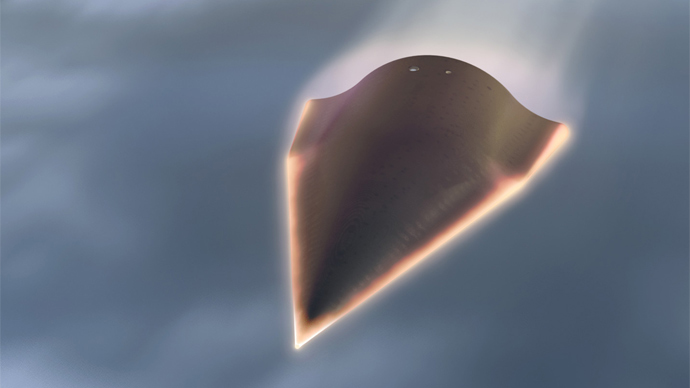
chinaglideChina has successfully tested its first hypersonic missile delivery vehicle capable of penetrating US missile defense system and delivering nuclear warheads with record breaking speeds, Pentagon officials have confirmed.

The new hypersonic glide vehicle (HGV), dubbed the WU-14 was allegedly spotted flying at record-breaking speeds during a flight test over China on January 9, an anonymous Pentagon official told the Washington Free Beacon.

The new weapon delivery system is reportedly designed to be launched as the final stage of China’s intercontinental ballistic missile, which would approach its target at a velocity of up to 10 times the speed of sound. Hypersonic speed range lies between Mach 5 and Mach 10, or 3,840 to 7,680 miles per hour.

A Pentagon spokesman confirmed the Chinese test launch but declined to provide details.

“We routinely monitor foreign defense activities and we are aware of this test,” Lt. Col. Jeffrey Pool, a Marine Corps spokesman, told the Washington Free Beacon.

“However, we don’t comment on our intelligence or assessments of foreign weapon systems,” Pool said in a statement. “We encourage greater transparency regarding their defense investments and objectives to avoid miscalculation,” he added.

Hypersonic vehicles, which are also being designed by the US, India and Russia, are developed for precise targeting, rapid delivery of weapons, and are being tested to outmaneuver hostile missiles and space defenses.

“A boost glide missile theoretically would be intended to counter existing mid-course missile defenses,” Mark Stokes, a former US Air Force officer told the Washington Free Beacon.

Strokes explained that China is developing two hypersonic flight vehicle programs – one believed to be of a post-boost vehicle designed to be deployed from a missile that pursues its target from near space, or some 62 miles from earth. Basing his hypothesis on emerging reports from China, Stokes believes that hypersonic glide vehicles could reach Mach 12 speeds of up to 9,127 miles per hour, potentially compromising a US missile defense.

“The beauty of the HGV is that it can perform hypersonic precision strikes while maintaining a relatively low altitude and flat trajectory, making it far less vulnerable to missile defenses,” Rick Fisher, an analyst at the International Assessment and Strategy Center, told the Washington Free Beacon.

“With the integration of strategic analysis and planning into technical research, China’s pursuit of hypersonic and high-precision weaponry promises to be faster and more focused than that associated with its previous [anti-satellite] and [ballistic missile defense] related research and programs,” Lora Saalman, a specialist on Chinese strategic systems with the Carnegie Endowment Saalman said in an email to the publication. “This recent test is a manifestation of this trend.”

The Chinese are “actively seeking global military power to challenge the United States, and it is not yet in any mood to talk, or engage in arms control, about it,” Fisher said.

In May, the Pentagon’s assessment of Chinese capabilities suggested that China built the world’s largest shockwave hypersonic wind tunnel capable of generating test flying conditions of up to Mach 9 speeds. – RT

Dozens wounded in Thai bomb attack

Suthep Thaugsuban
Suthep Thaugsuban

A bomb attack wounded dozens of people at an opposition protest march in Thailand’s capital on Friday, sending tensions soaring following weeks of mass rallies aimed at overthrowing the government.

“The bomb went off about 30m from popular opposition figure Suthep and then his bodyguards escorted him back to a rally stage,” spokesman Akanat Promphan told AFP news agency.

The kingdom has been periodically rocked by political bloodshed since former prime minister Thaksin Shinawatra was overthrown by royalist generals in a coup seven years ago.

His sister, Prime Minister Yingluck Shinawatra, has faced more than two months of street demonstrations aimed at forcing her government from office and installing an unelected “people’s council”.

The authorities and the demonstrators both blamed each other for the blast, which was apparently caused by a grenade-type device thrown from a nearby building.

The protesters have been demonstrating in Bangkok since Monday, blocking key intersections in what they are calling a shutdown of the city.

They say they will remain in place until the government resigns.

On Wednesday Ms Yingluck offered to discuss postponing the polls, but Mr Suthep boycotted the meeting.

On Thursday, the country’s anti-corruption commission said it was investigating Ms Yingluck in connection with a controversial government rice subsidy scheme.

The scheme guarantees Thai rice farmers – key supporters of Ms Yingluck’s government – a much higher price than on the global market, but critics say it is too expensive and vulnerable to corruption.

British war crimes presented to ICC

iccA devastating 250-page dossier, detailing allegations of beatings, electrocution, mock executions and sexual assault, has been presented to the International Criminal Court, and could result in some of Britain’s leading defence figures facing prosecution for “systematic” war crimes.

General Sir Peter Wall, the head of the British Army; former defence secretary Geoff Hoon; and former defence minister Adam Ingram are among those named in the report, entitled “The Responsibility of UK Officials for War Crimes Involving Systematic Detainee Abuse in Iraq from 2003-2008”.

The damning dossier draws on cases of more than 400 Iraqis, representing “thousands of allegations of mistreatment amounting to war crimes of torture or cruel, inhuman or degrading treatment”.

They range from “hooding” prisoners to burning, electric shocks, threats to kill and “cultural and religious humiliation”. Other forms of alleged abuse include sexual assault, mock executions, threats of rape, death, and torture.

The formal complaint to the ICC, lodged yesterday, is the cumulation of several years’ work by Public Interest Lawyers (PIL) and the European Centre for Constitutional and Human Rights (ECCHR). It calls for an investigation into the alleged war crimes, under Article 15 of the Rome Statute.

The dossier, seen by The Independent on Sunday, is the most detailed ever submitted to the ICC’s Office of the Prosecutor on war crimes allegedly committed by British forces in Iraq. The court has already acknowledged that there was little doubt that war crimes were committed.

In 2006, it concluded: “There was a reasonable basis to believe that crimes within the jurisdiction of the court had been committed, namely wilful killing and inhuman treatment.” At that time, prosecutors cited the low number of cases – fewer than 20 – as a reason for not mounting an investigation. But, since then, hundreds of other claims have come to light – prompting consideration of the complaint now. It is the start of a process which could result in British politicians and generals being put in the dock on war-crimes charges. Tony Blair meeting troops in Iraq in 2003 Tony Blair meets troops in Iraq in 2003. A dossier alleging “systematic” war crimes by British forces – sent to Iraq by the former Prime Minister – has been presented to the International Criminal Court (PA)

The sheer scale and seriousness of the allegations passes the “gravity” threshold to justify an investigation, according to the complaint. It continues “those who bear the greatest responsibility” for alleged war crimes “include individuals at the highest levels” of the British Army and political system. It concludes the evidence “justifies further investigation” into the criminal responsibility “of senior individuals within the UK military and government”. It adds British military commanders “knew or should have known” that forces under their control “were committing or about to commit war crimes”. And “civilian superiors knew or consciously disregarded information at their disposal, which clearly indicated that UK services personnel were committing war crimes in Iraq”.

The complaint argues that “the pattern of abusive treatment by UK services personnel in Iraq continued over almost six years of military operations”.

A number of top British officials face serious scrutiny, according to Phil Shiner of PIL. He said: “I think we easily meet the threshold for these issues to be looked at, I would be gobsmacked and bitterly disappointed if they don’t look at this.”

Only a handful of courts martial relating to the conduct of British forces in Iraq have been held to date. Just one has resulted in a conviction – Corporal Donald Payne was jailed for a year in 2007 for the inhuman treatment of Iraqi civilians. This one conviction aside, “Nobody has been found guilty of anything of any seriousness at all,” said Mr Shiner.

The complaint being considered by the ICC presents evidence of the “systematic use of brutal violence, that at times resulted in the death of detainees, while in the custody of UK Services Personnel”. And it claims “there is evidence of brutality combined with cruelty and forms of sadism, including sexual abuse, and sexual and religious humiliation”. It points to the widespread use of “hooding”, forcing people to remain in painful “stress positions”, sleep deprivation, noise bombardment and deprivation of food and water. These interrogation techniques were used by British soldiers in Northern Ireland before being banned in 1972. There are “clear patterns” of the banned techniques being used “in a variety of different UK facilities [in Iraq] … from 2003 to 2008,” says the complaint. And evidence “suggests that failures to follow-up on or ensure accountability for ending such practices became a cause of further abuse. The obvious conclusion is that such mistreatment was systematic.”

The report will be publicly released at the Law Society, London, on Tuesday. It comes as the ICC is under mounting pressure to demonstrate a willingness to act against war crimes committed by Western countries – and not solely focus on African nations. Last October, the ICC was criticised by the Ethiopian foreign minister, Tedros Adhanom, who accused it of being “a political instrument targeting Africa and Africans”.

Professor William Schabas, a renowned expert on human rights law, based at Middlesex University, said: “What this application does is throw down the challenge to the court to show there are no double standards.” He added: “There is definitely a case for an investigation by the ICC,” and claimed “there’s no doubt” that war crimes were perpetrated by British forces in Iraq. “People should be worried,” he added.

The complaint amounts to “a prima facie investigation mapped out for the prosecutor”, and is “supported by sophisticated legal argument which adheres to the requirements of the [ICC],” according to Professor Andrew Williams, a law expert at the University of Warwick and author of A Very British Killing: the Death of Baha Mousa. Geoff Hoon at the Basra base camp, Iraq in December 2004 Geoff Hoon at the Basra base camp, Iraq in December 2004. The former Defence Secretary has been named in a dossier alleging widespread abuse of Iraqi prisoners by British soldiers which could see some of Britain’s leading defence figures facing prosecution for “systematic” war crimes (Reuters)

In a statement, an MoD spokesperson said: “These matters are either under thorough investigation or have been dealt with … further action through the ICC is unnecessary when the issues and allegations are already known to the UK Government, action is in hand and the UK courts have already issued judgments.”

The spokesperson added: “We reject the suggestion the UK’s Armed Forces – who operate in line with domestic and international law – have systematically tortured detainees.”

Echoing this today, Foreign Secretary William Hague said there was no need for the ICC to investigate the allegations.

“These allegations are either under investigation already or have been dealt with already in a variety of ways, through the historic abuses system that has been established, through public inquiries, through the UK courts or the European courts,” Mr Hague told Sky News.

“There have been some cases of abuse that have been acknowledged and apologies and compensation have been paid appropriately. But the government has always been clear and the armed forces have been clear that they absolutely reject allegations of systematic abuses by the British armed forces.”

Wolfgang Kaleck, ECCHR secretary general, said: “With the current communication to the ICC we want to move forward the criminal prosecution against those political and military leaders in the UK who bear the most responsibility for systematic torture in Iraq.” He added: “The International Criminal Court in The Hague is the last resort for victims of torture and mistreatment to achieve justice. Double standards in international criminal justice must end. War crimes and other severe violations of human rights must be investigated and prosecuted, regardless of whether they are committed by the most powerful.”

General Sir Peter Wall, Geoff Hoon and Adam Ingram did not respond to requests for comment.

Allegations of torture

Testimonies of hundreds of Iraqis who say they were tortured by British soldiers are being considered by the International Criminal Court in The Hague. Here are a few of the accounts submitted (all names have been withheld).

A man who was beaten in front of his family said: “They made me sit in a kneeling position with my head pushed downwards and then they started to beat me. They beat me on my face, back and stomach.”

Another, who suffered more than 60 punches to his head, stated: “There were many soldiers pushing and throwing me… As each soldier caught me they would punch me.” He described how his son was also abused: “A soldier brought my eight-year-old son into the room. The officer started slapping my son round his face and shouting at him… I was on the floor in a terrible condition and couldn’t move.”

Another man who was hooded stated: “Sand kept coming into the hood. It was extremely uncomfortable and difficult to breathe… We were left to kneel in the sun for hours. If I moved position and bent my head forward at all, a soldier would come and kick me hard.”

A young detainee recalled: “The soldier put his boot on my chest and pulled my trousers down…. I was shouting and was curled up against the wall. Then the soldier pulled me by my legs away from the wall. He turned me over on my stomach. He started rubbing his penis on my back, while the other soldiers watched. Then I felt him ejaculate on my back. I was trying to move away but another soldier came and pressed his foot on my legs.”

Another man said: “Interrogators spent a lot of time insulting my sister and other family members. They threatened to rape my sister and force me to watch and said they would also arrest my old mother and father.”

And an individual held in solitary confinement said: “I was beaten regularly, and was not allowed to go to the toilet or to shower. The psychological suffering during this period is indescribable.”

Rights violations

March 2003 US and British forces invade Iraq.

September Baha Mousa dies in British Army custody in Basra. Inquiry finds death was caused by factors including lack of food and water and stress positions used by British troops.

April 2004 US forces launch assault on the city of Fallujah. It later emerges napalm and depleted uranium were used in the attack. Human rights abuses, including the sexual abuse, rape and killing of prisoners by US forces at Abu Ghraib prison are made public.

May In aftermath of the Battle of Danny Boy in Basra, British troops allegedly abused the human rights of a number of Iraqi nationals – allegations being examined by the Al-Sweady inquiry. British troops deny they murdered any prisoners after they were captured.

September 2007 Seventeen Iraqi civilians killed and 20 injured in Baghdad by troops from the private security firm Blackwater Security Consulting.

2013 Iraq experiences its deadliest year since 2008.

Source: The Independent

‘Obama has no sense of what he wants to do in the world’

obamaohSir Hew Strachan, an expert on the history of war, says that the US president’s strategic failures in Afghanistan and Syria have crippled America’s position in the world.

President Obama is “chronically incapable” of military strategy and falls far short of his predecessor George W. Bush, according to one of Britain’s most senior military advisors.

Sir Hew Strachan, an advisor to the Chief of the Defense Staff, told The Daily Beast that the United States and Britain were guilty of total strategic failure in Iraq and Afghanistan, and Obama’s attempts to intervene on behalf of the Syrian rebels “has left them in a far worse position than they were before.”

The extraordinary critique by a leading advisor to the United States’ closest military ally comes days after Obama was undermined by the former Defense Secretary Robert Gates, who questioned the President’s foreign policy decisions and claimed he was deeply suspicious of the military.

Strachan, a current member of the Chief of the Defense Staff’s Strategic Advisory Panel, cited the “crazy” handling of the Syrian crisis as the most egregious example of a fundamental collapse in military planning that began in the aftermath of 9/11. “If anything it’s gone backwards instead of forwards, Obama seems to be almost chronically incapable of doing this. Bush may have had totally fanciful political objectives in terms of trying to fight a global War on Terror, which was inherently astrategic, but at least he had a clear sense of what he wanted to do in the world. Obama has no sense of what he wants to do in the world,” he said.

Strachan’s book The Direction of War, which will be published next month, examines the failure of modern political leaders to use strategy to predict and account for the implications of military action. Oxford University’s Professor of the History of War says the lessons learned at the end of the 20th century proved to be damaging at the start of the next. “Using war did deliver. The wars were pretty short, the Falklands, First Gulf War, Kosovo, so people lulled themselves into an expectation that war was simply a continuation of policy and that it was successful. But it hasn’t been since 9/11,” he said.

Danish tourist gang-raped in New Delhi after asking the way

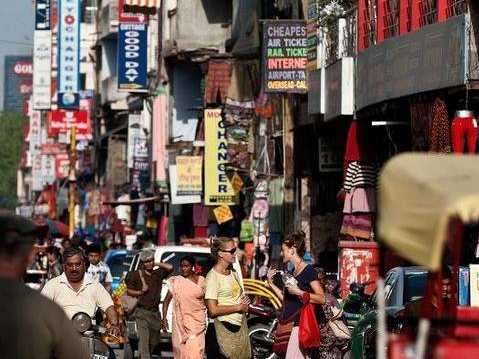
Western tourists in New Delhi

A Danish woman has alleged that she was gang-raped in the Indian capital of New Delhi – the latest high-profile case of sexual assault against women in the country.

Reports say the 51-year-old woman was in New Delhi for a week and had been visiting touristy sites in Agra and later the National Museum in the capital.

She had lost her way on Tuesday evening on the way to her hotel in Paharganj, a crowded locality in New Delhi where many foreigners stay in affordable lodgings. She was later accosted by a group of men who then assaulted her.

Police said the rapists were “vagabonds” and the tourist was assaulted and robbed of cash and valuables on her person. Her iPad, Euros were taken and she was also beaten. The police have registered a case of rape and robbery.

She had been taken to the Danish embassy in Delhi and she had expressed her wish to return home after a medical examination.

The Delhi police, according to news reports, have detained six suspects based on the complaint made by the woman.

The Danish woman left India on Wednesday morning, according to Delhi police.

Alarming assaults

Frequent news reports of rapes have given cause for alarm at the rate of violence against women in Indian metros.

In December 2012, the brutal gang-rape of a 23-year-old medical student in Delhi had angry citizens protesting across the streets for stringent rape laws and fast track courts to punish the perpetrators.

Political parties such as the Aam Aadmi Party have assured on public platforms to make safety for women a priority. – aljazeera.com

A digital highway for launching cyberattacks

cyberattacksThe National Security Agency has implanted software in nearly 100,000 computers around the world that allows the United States to conduct surveillance on those machines and can also create a digital highway for launching cyberattacks.

While most of the software is inserted by gaining access to computer networks, the N.S.A. has increasingly made use of a secret technology that enables it to enter and alter data in computers even if they are not connected to the Internet, according to N.S.A. documents, computer experts and American officials. The technology, which has been used by the agency since at least 2008, relies on a covert channel of radio waves that can be transmitted from tiny circuit boards and USB cards inserted surreptitiously into the computers. In some cases, they are sent to a briefcase-size relay station that intelligence agencies can set up miles away from the target.

The radio frequency technology has helped solve one of the biggest problems facing American intelligence agencies for years: getting into computers that adversaries, and some American partners, have tried to make impervious to spying or cyberattack. In most cases, the radio frequency hardware must be physically inserted by a spy, a manufacturer or an unwitting user.

The N.S.A. calls its efforts more an act of “active defense” against foreign cyberattacks than a tool to go on the offensive. But when Chinese attackers place similar software on the computer systems of American companies or government agencies, American officials have protested, often at the presidential level.

Among the most frequent targets of the N.S.A. and its Pentagon partner, United States Cyber Command, have been units of the Chinese Army, which the United States has accused of launching regular digital probes and attacks on American industrial and military targets, usually to steal secrets or intellectual property. But the program, code-named Quantum, has also been successful in inserting software into Russian military networks and systems used by the Mexican police and drug cartels, trade institutions inside the European Union, and sometime partners against terrorism like Saudi Arabia, India and Pakistan, according to officials and an N.S.A. map that indicates sites of what the agency calls “computer network exploitation.”

Source: NYT