Drone confiscated at clinic where Mandela lies

fchammanFC Hamman, a South African freelance film-maker, was escorted away by police along with the helicopter camera he was flying with his 21-year-old son Timothy outside the clinic where Mandela (94) has spent three weeks with a lung infection.

After nearly four hours of questioning by police, Hamman was released but the drone camera was confiscated.

“From a security point of view, they are concerned. They are inspecting our equipment to make sure it didn’t violate any security regulations,” Hamman told Reuters, adding police had not pressed any charges for the moment.

“We didn’t realise we were breaking any laws,” he said.

Hamman said he had intended to offer to media organisations the aerial shots of intense activity around the hospital, where crowds of jostling journalists have mingled with well-wishers paying tribute to South Africa’s former president.

“We were careful not to fly over the hospital,” he said.

The intense media scrutiny has angered some of Mandela’s family. Daughter Makaziwe on Thursday lambasted foreign media “vultures” for not respecting his privacy as he lay critically ill.

Hamman said he had already used the home-built flying camera in other film projects and had also assisted police with surveillance work in operations against suspected drug-dealers in the crime-plagued Johannesburg suburb of Eldorado Park.

“You can’t fly one of those things without a permit,” one police officer said at the hospital after Hamman was escorted away. Pretoria police declined to comment further.

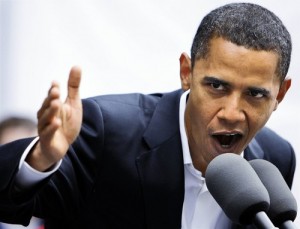
The incident came just hours before US President Barack Obama started an official visit to South Africa, which will include stops in Pretoria, Johannesburg and Cape Town.

Asked how he thought Obama’s huge security detail might react if he launched the flying “eye in the sky” in the vicinity of the president, Hamman chuckled: “That would be a mistake.” – Reuters

Obama Administration condemns Christian Copt protest in Egypt

coptsegyptObama fully supported protests to overthrow the relatively friendly Egyptian Government of Mubarak. U.S. support paved way for an Islamist takeover by the oppressive and violent Muslim Brotherhood.

Now those suffering the most under this brutal Islamist rule want to protest, and the Obama Administration is trying to prevent it.

As Egyptians of all factions prepare to demonstrate in mass against the Muslim Brotherhood and President Morsi’s rule on June 30, the latter has been trying to reduce their numbers, which some predict will be in the millions and eclipse the Tahrir protests that earlier ousted Mubarak. Among other influential Egyptians, Morsi recently called on Coptic Christian Pope Tawadros II to urge his flock, Egypt’s millions of Christians, not to join the June 30 protests.While that may be expected, more troubling is that the U.S. ambassador to Egypt is also trying to prevent Egyptians from protesting—including the Copts. The June 18th edition of Sadi al-Balad reports that lawyer Ramses Naggar, the Coptic Church’s legal counsel, said that during [Anne W.] Patterson’s June 17 meeting with Pope Tawadros, she “asked him to urge the Copts not to participate” in the demonstrations against Morsi and the Brotherhood. […]

So why is the Obama administration now asking Christians not to oppose their rulers–in this case, Islamists–who have daily proven themselves corrupt and worse, to the point that millions of Egyptians, most of them Muslims, are trying to oust them?

What’s worse is that the human rights abuses Egypt’s Coptic Christians have been suffering under Muslim Brotherhood rule are significantly worse than the human rights abuses that the average Egyptian suffered under Mubarak–making the Copts’ right to protest even more legitimate, and, if anything, more worthy of U.S support.

Among other things, under Morsi’s rule, the persecution of Copts has practically been legalized, as unprecedented numbers of Christians–men, women, and children–have been arrested, often receiving more than double the maximum prison sentence, under the accusation that they “blasphemed” Islam and/or its prophet. It was also under Morsi’s reign that another unprecedented scandal occurred: the St. Mark Cathedral–holiest site of Coptic Christianity and headquarters to the Pope Tawadros himself–was besieged in broad daylight by Islamic rioters. When security came, they too joined in the attack on the cathedral. And the targeting of Christian children–for abduction, ransom, rape, and/or forced conversion—has also reached unprecedented levels under Morsi.

Obama clashes with African host over gays

uganda_gayPresident Barack Obama on Thursday praised the Supreme Court’s ruling on same-sex marriage as a “victory for American democracy” but clashed with his African host over gay rights in a sign of how far the movement has to go internationally.

Obama said recognition of gay unions in the United States should cross state lines and that equal rights should be recognized universally. It was his first chance to expand on his thoughts about the ruling, which was issued Wednesday as he flew to Senegal, one of many African countries that outlaw homosexuality.

Senegalese President Macky Sall rebuffed Obama’s call for Africans to give gays equal rights under the law.

“We are still not ready to decriminalize homosexuality,” Sall said, while insisting that the country is “very tolerant” and needs more time to digest the issue without pressure. “This does not mean we are homophobic.”

Obama said gay rights didn’t come up in their private meeting at the presidential palace, a mansion that looks somewhat similar to the White House. But Obama said he wants to send a message to Africans that while he respects differing personal and religious views on the matter, it’s important to have nondiscrimination under the law.

“People should be treated equally, and that’s a principle that I think applies universally,” he said.

A report released Monday by Amnesty International says 38 African countries criminalize homosexuality. In four of those – Mauritania, northern Nigeria, southern Somalia and Sudan – the punishment is death. These laws appear to have broad public support. A June 4 Pew Research Center survey found at least nine of 10 respondents in Senegal, Kenya, Ghana, Uganda and Nigeria believe homosexuality should not be accepted by society.

“Senegal is one of the most stable democracies in Africa and one of the strongest partners that we have in the region,” Obama said. “It’s moving in the right direction with reforms to deepen democratic institutions.”

But such people-powered democratic transitions are not always the story of the African experience. Fighting and human rights abuses limited Obama’s options for stops in his first major tour of sub-Saharan Africa since he took office more than four years ago. Obama is avoiding his father’s homeland, Kenya, whose president has been charged with war crimes, and Nigeria, the country with the continent’s most dominant economy. Nigeria is enveloped in a bloody struggle and military crackdown. – AP


McDonald’s won’t open in Jewish settlement

mcdkosherThe Israeli branch of McDonald’s says it won’t open a restaurant in a Jewish settlement to protest Israel settlement policy.

Irina Shalmor, spokeswoman for McDonald’s Israel, said the owners of a planned mall in the Ariel settlement asked McDonald’s to open a branch there about six months ago. The chain refused because it is the policy of McDonald’s Israel’s owner to stay out of the occupied territories.

The decision was not coordinated with McDonald’s headquarters in the U.S., she said.

Israeli lawmakers have protested the decision, reported in local media Thursday. One says she’ll boycott the chain.

Tzahi Nehimias, co-owner of the mall, says Burger King and an Israeli burger chain both offered to open branches at the mall.

Obama to honour slaves in Senegal

Barack ObamaAmerica’s first black president Barack Obama will acknowledge the historic stain of slavery and honour Senegal’s democratic resilience in an unstable region Thursday, at the start of an African tour.

Obama stepped off Air Force One into the African night late Wednesday in Dakar to launch a three-nation trip designed to fulfil neglected expectations for his presidency on a continent where he has deep ancestral roots.

But his itinerary, which also takes in South Africa and Tanzania, threatens to be disrupted as life apparently ebbs from Nelson Mandela, the anti-apartheid icon who is gravely ill in a Pretoria hospital.

Should Mandela die before Obama lands in South Africa on Friday, aides may be forced to tear up plans to visit Johannesburg and Cape Town. As it stands, the ex-South African president’s plight is already overshadowing Obama’s trip.

On Thursday, Obama will begin his day with talks and a press conference with Senegal President Macky Sall. Then he will discuss the importance of the rule of law at Senegal’s Supreme Court.

A ‘full circle’ moment then beckons as Obama, the son of a Kenyan, and his wife Michelle, the descendent of slaves, will pay a visit to Goree Island, a memorial to Africans swept up in the Atlantic slave trade.

Obama will journey by ferry to the island’s Slave House museum, off the Senegal coast, which epitomises a dark period of American and African history resonating on both sides of the Atlantic to this day.

“There’s this link between Obama, an American originating from Africa through his father, and his wife, an African-American originating from Africa through her ancestors,” said House of Slaves curator Eloi Coly.

“I think with all these ingredients gathered together, this visit by the Obamas should be very special.”

White House spokesman Jay Carney said that the visit would be an important moment for Obama.

“A visit like this by an American President, any American President, is powerful,” he told reporters.

“I think that will be the case when President Obama visits and I’m sure particularly so, given that he is African American.”

US officials are keen to highlight democracy, in Muslim majority Senegal, on the first leg of a visit focusing on francophone west Africa, the tip of the continent in South Africa, and the democratic west in Tanzania.

Obama will also likely bring up the situation in neighbouring Mali, before a UN peacekeeping force starts operations in a country where Islamists and radicals have exploited a power vacuum.

The US president’s arrival in Africa came at a delicate time as the world prepared to say a farewell to Mandela.

Napilisi Mandela, an elder in Mandela’s clan, told AFP that the former South African president was on life support, and South African President Jacob Zuma called off a scheduled trip to Mozambique.

Obama and Mandela met in 2005, when the former South African president was in Washington, and Obama was a newly elected senator, and the two have spoken several times since by telephone.

But the long awaited prospect of a public appearance between the first black presidents of South Africa and the United States is now impossible.

Obama claims a spiritual connection to Africa, but a crush of international crises in his first term thwarted his hopes to travel extensively in the continent. He did manage a short trip to Ghana in 2009.

His tour is designed to highlight Africa’s emerging economic potential and growing middle class, as well as youth and health programs, and to emphasise US engagement in a region benefiting from a wave of Chinese investment.

“We are not too late,” said Carney, pointing out that although Obama had been kept away, Vice President Joe Biden visited Africa in the first term, and there were also wide ranging diplomatic efforts by the administration on the continent.

But there has been disappointment in Africa, after Obama’s 2008 election caused euphoria and an expectation that he would put Africa policy at the top of his agenda.

There is one glaring missing stop on Obama’s itinerary: Kenya.

Officials said that the indictment of Kenyan President Uhuru Kenyatta at the International Criminal Court in The Hague, over previous election violence, made it politically impossible for Obama to stop by on this tour. – AFP

US top court green lights gay marriage

gayokThe US Supreme Court on Wednesday struck down a central portion of a federal law that restricted the definition of marriage to opposite-sex couples in a major victory for the gay rights movement.

The ruling, on a 5-4 vote, means that legally married gay men and women are entitled to claim the same federal benefits that are available to opposite-sex married couples.

It sidestepped a broad ruling that would affect the whole country, however, by saying it could not decide a closely watched case on the constitutionality of a California law that restricts marriage to opposite-sex couples.

By finding that supporters of the ban on gay marriage did not have standing to defend the law, the court effectively gave the green light for at least some gay weddings to proceed in California because a federal judge’s original ruling that struck down the law, known as Proposition 8, will remain intact.

Justice Anthony Kennedy wrote in the majority opinion that the Defence of Marriage Act violated the US constitution’s guarantee of equal protection.

“The federal statute is invalid, for no legitimate purpose overcomes the purpose and effect to disparage and to injure those whom the state, by its marriage laws, sought to protect in personhood and dignity,” he wrote.

Justice Kennedy, often the court’s swing vote in close decisions, also said the law imposed “a stigma upon all who enter into same-sex marriages made lawful by the unquestioned authority of the states”.

Chief Justice John Roberts and Justice Antonin Scalia both wrote dissenting opinions.

In his dissent, Justice Roberts wrote that the court in the coming Proposition 8 case would not reach the issue of constitutionality of state laws that limited the definition of marriage.

By striking down section 3 of the law, the court clears the way to more than 1,100 federal benefits, rights and burdens linked to marriage status.

As a result of Wednesday’s ruling, Edith Windsor of New York, who was married to a woman and sued the government to get the federal estate tax deduction available to heterosexuals when their spouses die, will be able to claim a $363,000 tax refund. – Reuters

Australian minister apologises for premature announcement of Mandela’s death

Gary Gray
Gary Gray

An Australian politician has apologized to South Africa’s high commissioner for incorrectly announcing that Nelson Mandela had died.

Resources Minister Gary Gray issued a statement Thursday saying he was “deeply sorry” for wrongly telling guests at a Minerals Council of Australia dinner at Parliament House on Wednesday that the anti-apartheid leader was dead.

Gray said he had mistakenly shared what he “thought was reliable advice.”

Mandela is in critical condition at a hospital. The 94-year-old former president was admitted to the Pretoria hospital on June 8 to be treated for what the government said was a recurring lung infection.
Mandela was jailed for 27 years as a result of inciting violence to overthrow the government and was freed in 1990 and became South Africa’s first black president in 1994.

Also in Australia Kevin Rudd returned as prime minister of Australia on Thursday, three years after being replaced in the office by his then-deputy Julia Gillard.

Rudd challenged Gillard for leadership of the Labor Party on Wednesday and won a 57-45 vote among fellow Labor members of parliament.

In the Australian parliamentary system, the leader of the governing party assumes the position of prime minister and on Thursday morning, in Canberra, Rudd was sworn in for a second time.

Gillard resigned after the party vote on Wednesday night and announced she will leave politics.

A major factor in Gillard’s demise — and in Rudd’s Phoenix-like return — is the election Australia has to hold by the end of this year.

Under Gillard’s leadership, Labor was facing overwhelming defeat, according to opinion polls. But the same polls show a Rudd-led Labor Party would fare much better at the ballot box. – SAPA/AP/CNN

Obama plans to ‘highlight racial atrocities’ on African visit

Goree island
Goree island

The hopeful story President Barack Obama wants to tell about Africa is represented in the first stop of his weeklong trip to re-engage the continent, in a country where democracy recently overcame an impending electoral crisis.

During his visit to Senegal on Thursday, Obama also will reflect on the ties many African-Americans share with the continent as he takes a tour of Goree Island, Africa’s westernmost point. By some accounts, millions of Africans were shipped off into slavery across the Atlantic Ocean through the island’s “Door of No Return.”

It’s the first of two island visits Obama planned to highlight racial atrocities of the past. The second was scheduled for Sunday at South Africa’s Robben Island, where anti-apartheid leader Nelson Mandela was imprisoned for 18 years.

But Mandela’s condition could affect Obama’s plans. The former South African president is gravely ill, and Obama foreign policy adviser Ben Rhodes said it would be left to the Mandela family to decide whether he is up for a visit from Obama this weekend.

Mandela’s legacy hangs over the entire trip, with Senegal among many African countries that have benefited from his example of a peaceful transition to power. “So much of the democratic progress that we see across the continent I think can be tied in some way to the inspiration that Nelson Mandela set,” Rhodes said.

Obama’s focus in Senegal will be on the modern-day achievements of the former French colony after half a century of independence. He planned to meet with Senegalese President Macky Sall, who ousted an incumbent president who attempted to change the constitution to make it easier for him to be re-elected and pave the way for his son to succeed him. The power grab sparked protests, fueled by hip-hop music and social media, that led to Sall’s election.

But such people-powered democratic transitions are not always the story of the African experience. Fighting and human rights abuses limited Obama’s options for stops in his first major tour of sub-Saharan Africa since he took office more than four years ago. Obama is avoiding his father’s homeland, Kenya, whose president has been charged with war crimes, and Nigeria, the country with the continent’s most dominant economy. Nigeria is enveloped in an Islamist insurgency and military crackdown.

Obama’s itinerary in Senegal was designed to send a message, purposefully delivered in a French-speaking, Muslim-majority nation, to other Africans in countries that have not made the strides toward democracy that Senegal has. Obama plans to meet with civil society leaders at the Goree Institute and visit the Supreme Court to speak about the importance of an independent judiciary and the rule of law in Africa’s development.

“It’s not enough to have elections, it’s not enough to have democratically elected leaders,” Rhodes said. “You need to have independent judiciaries. You need to have confidence in the rule of law. You need to have efforts to combat corruption. Because, frankly, not only is that good for democracy and respect for human rights, but it’s critical to Africa’s economic growth, because where you have clear rules of the road and efforts to combat corruption, businesses will invest, and jobs will be created and growth will take off. And that’s what we want to see.” – AP

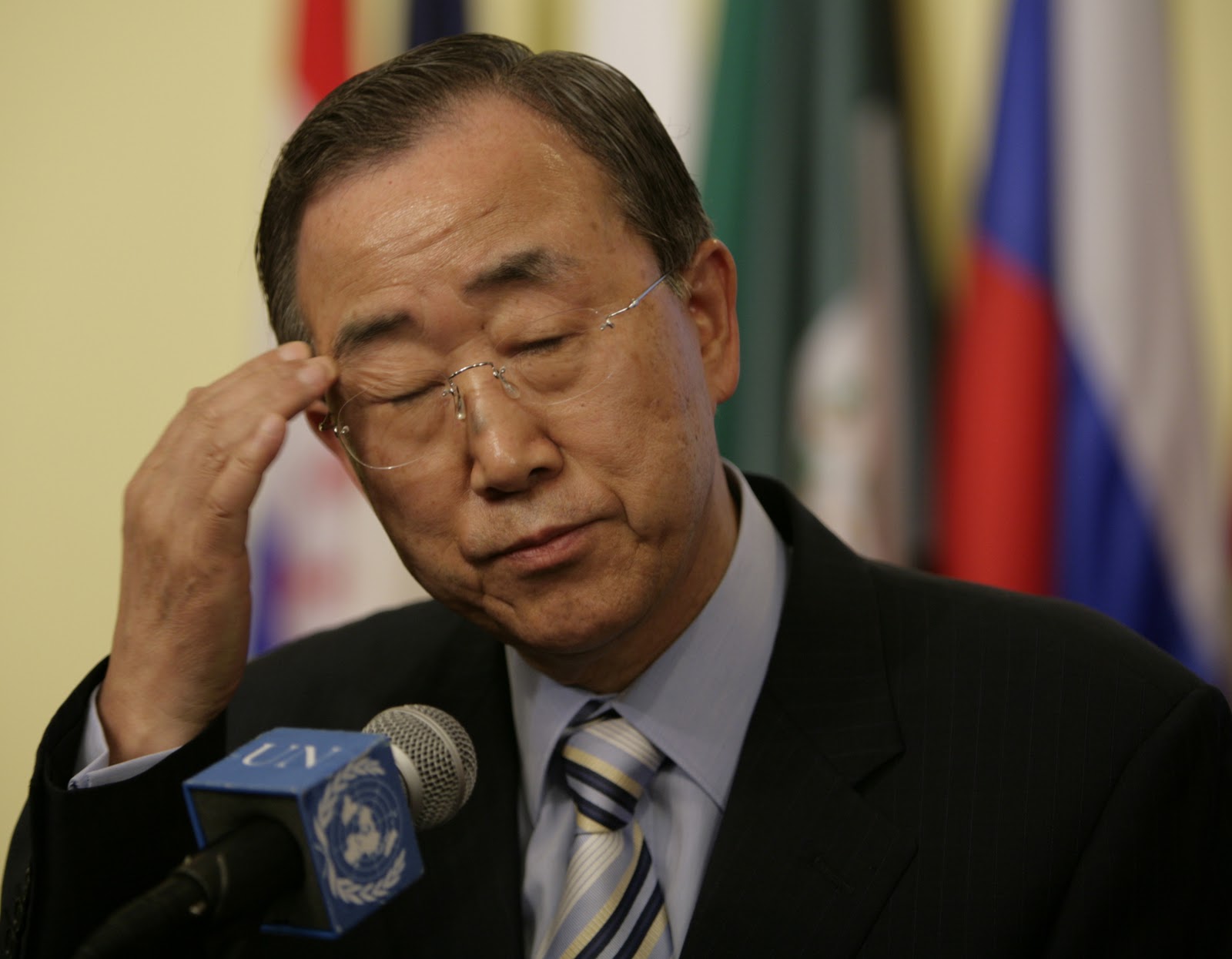
Ban Ki-moon says ‘whole world praying for Mandela’

Ban ki-moon
Ban ki-moon

UN leader Ban Ki-moon said Wednesday that the whole world is praying for Nelson Mandela as the legendary South African leader fights for his life.

Ban called Mandela “one of the giants of the 20th century” at a New York reception for the 50th anniversary of the Organization of African Unity which played a leading international role in fighting apartheid in South Africa.

“I know our thoughts and prayers are with Nelson Mandela, his family and loved ones, all South Africans and people across the world who have been inspired by his remarkable life and example,” Ban said.

“Let us all show similar conviction and sense of purpose today in working to improve well-being and opportunity for all Africans,” the UN secretary general added.

Mandela, 94, is on life support in hospital in Pretoria. – AFP

Senegalese go into hiding for Obama visit

africaobamaOrdinary Senegalese are drawing lessons from the past and leaving nothing to chance so that they avoid “foreseeable” embarrassing circumstances during President Barack Obama’s visit, which commences on June 26.

Enduring long hours in traffic jams while waiting for high profile visitors to pass through, being unable to hawk their wares freely in the streets and being virtually “held prisoner in one’s house” are some of the embarrassments they recall from the 1998 visit of former American president Bill Clinton.

Many businesses particularly in downtown Dakar and its peripheral districts have already started recording low sales due to this anticipation. “We’ve virtually been closed for a week now,” says Doudou Keita, a garment seller in Guelle Tapé, a few kilometres from the city centre.

Mbaye Ndiaye, an economist formerly employed by the Trade ministry, says the visit will cause losses of several million dollars, especially to the informal sector “who will take months to recover”.

“While the Americans are capable of making our country a better place, Obama is also capable of making our small businesses in Dakar poorer,” argues Ndeye Diop, a doughnut and coffee seller in a conversation with her colleague.

Assuredly, Ndeye’s colleague Bintou Diagne retorted in English with a native accent “Yessi, e can!” It was a play on Obama’s 2008 campaign slogan: ‘Yes we can.’

These “unforeseeable” embarrassments have led thousands of Dakar city dwellers whose neighbourhoods are being “bunkered” to return to their villages until Obama – nicknamed “the big cat” – goes away.

Barack (which means ‘shack’ in Wolof) “should have lodged in a shack to show solidarity with the majority shack dwellers here”, leading comedian “Kutia” insistently jokes on television about Obama, who he calls the “White House rent payer”.

Pickpockets and prostitutes

Since the announcement of the date of his arrival, the thousands of street beggars in Dakar have visibly disappeared and gone underground.

The same thing has happened to the noisy hawkers on the streets of the capital, most of whom were mistakenly picked up by police during a clean-up against pickpockets classified by security agents as “persons with the propensity to cause embarrassment”.

This category also includes both licensed and unlicensed prostitutes who made good profits during visits by less high profile statesmen whose delegations frantically sought out their services.

But for Obama’s visit, they are among those bearing the heaviest brunt of the tour, which has been extended from 48 to 72 hours beginning this Wednesday.

“No matter…some of us can still harvest from Obama’s field”, says Aisha Konaté, a sex worker with nearly two decades of experience and who boasts of having contacts capable of roping in “high profile” clients to her private abode

For a week now, the national television “RTS” has been clocking Obama’s upcoming visit with the Senegalese and American flags displayed on the top left corner of TV screens, and the inscription “D-Day 3 days to go,” or whichever days are pending.

The youthful face of Obama has for two weeks been very visible on a billboard on one of the tallest buildings along the Place de l’independence main square in Dakar.

And elsewhere, especially at the heavily secured Leopold Sedar Senghor International airport, several giant Senegelase and American flags are flapping high in the sky around photographs of the two heads of state. – africareview.com

Putin: Snowden never crossed Russian border, so no extradition

Putin slams US demands

Former NSA contractor Snowden remains in the transit zone of a Moscow airport. President Putin said that Snowden never crossed the Russian border and doesn’t fall under any extradition treaty. He called accusations against Russia “nonsense and rubbish.”

“It is true that Snowden has arrived to Moscow, and it really came as a surprise for us. He arrived as a transit passenger, and didn’t need a [Russian] visa, or any other documents. As a transit passenger he is entitled to buy a ticket and fly to wherever he wants,” Vladimir Putin said as he spoke to journalists in Finland.

Edward Snowden is still at the transit area of Moscow’s Sheremetyevo Airport, Putin stressed. He said that any accusations against Russia are “nonsense and rubbish,” as the former NSA contractor “has not crossed” the Russian border.

The President also pointed out that there is no extradition treaty between Russia and the US, which makes it impossible to extradite people like Snowden.

“We can only extradite any foreign citizens to such countries with which we have signed the appropriate international agreements on criminal extradition,” he explained.

Snowden “has not committed any crime” on Russian soil, Putin added. Russian security agencies “have never worked with and are not working with” the former CIA employee, he also stressed.

“Snowden is a free person. The sooner he chooses his final destination, the better it is for him and Russia,” Putin said.

He also expressed hope that the Snowden saga would not have any negative impact on Russian-American relations and that the US “will understand this.”

Putin also commented on the situation with WikiLeaks founder Julian Assange, who has been holed up in the Ecuadorian embassy in London to avoid extradition to Sweden, fearing that he would then be extradited to the US.

“Just like Snowden, he considers himself a rights advocate and fights for sharing information. Ask yourself: should or should not people like these be extradited to be later put to jail?” the President asked.

“In any case, I would like not to deal with such issues because it is like shearing a pig: there’s lots of squealing and little fleece,” he said.

Washington again requested that Moscow expel Snowden on Tuesday, urging Russia to build upon its bilateral law enforcement cooperation with the US.

Russia has “clear legal basis” to expel the NSA leaker, National Security Council spokeswoman Caitlin Hayden said in a statement. She added that Snowden would face espionage charges in the US, even without an extradition treaty.

The White House, along with Putin, doesn’t want the issue to negatively impact the nations’ bilateral relations, Hayden said. – RT

Australian Government shelves PRISM-like scheme

Mark Dreyfus
Mark Dreyfus

A controversial “data retention” scheme that would have required Australians’ internet and telephone activities to be stored for up to two years for law enforcement purposes has been shelved by the federal government after an inquiry that did not recommend the scheme go ahead.

The committee looking into the proposal – the most controversial among more than 40 others – as part of an inquiry into national security delivered its report on Monday.

After the report’s release, Attorney-General Mark Dreyfus said the government would not pursue data retention legislation “at this time”.

The government would now await further advice from the relevant agencies and a comprehensive consultation before proceeding further, he said. – Sydney Morning Herald

Anglo Irish Bank jokes about fleecing Irish government

Fitzgerald and Bowe
Fitzgerald and Bowe

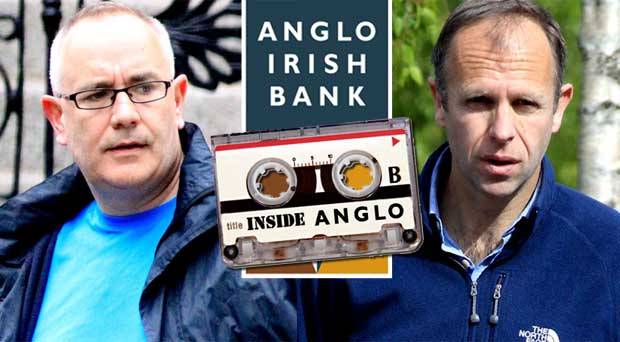
Executives at the Anglo Irish Bank were recorded joking about how they lied to Dublin about the bank’s financial future in 2008, convincing lawmakers to invest in the failing bank with figures “picked out of my arse” – with no plans to pay them back.

John Bowe, the head of capital markets for Anglo Irish, was recorded laughing as he explained to Peter Fitzgerald, the former head of banking, how Anglo Irish had fleeced the Irish government into providing billions of euro to keep the bank solvent.

The 2008 conversation was captured by the bank’s internal recording system and published by the Irish Independent. Ireland still has yet to fully recover from the financial crisis, despite attempts to bring the country back to normalcy by way of a drastic austerity program set in motion in the four years since.

In the September 2008 conversation caught on the tape, Bowe admits he knew the €7 billion he initially asked for would not be enough to spare the bank, which was within mere days of a complete meltdown. When asked about the origin of that figure, Bowe referred to then-Anglo Irish CEO David Drumm.

“Just as Drummer would say, ‘picked it out of my arse,’ you know,” he said. “I mean, look, what we did was we basically said: ‘What is the amount we can securitize over the next six months? And basically say to them: ‘Look our problem here is time, it’s not our ability to create the liquidity, the enemy is time here.’”

Both Bowe and Fitzgerald can be heard laughing through the discussion. The tapes’ release also confirms the long-held suspicion that Irish bankers knew the initial government investments were far too small.

“Yeah and that number is seven, but the reality is that actually we need more than that,” Bowe said. “But you know, the strategy here is you pull them in, you get them to write a big check and they have to keep – they have to support their money.”

Anglo Irish has since been renamed the Irish Bank Resolution Corporation, and is still in the process of being liquidated, as the austerity-hit country awaits a high-profile court case into the collapse of the bank.

Recent estimates indicate that, all told, Irish taxpayers will have supplied Anglo Irish Bank alone with €30 billion – a massive sum for the small island nation of just over 4.5 million people.

“If they (the Central Bank) saw the enormity of it up front, they might decide they have a choice. You know what I mean? They might say the cost to the taxpayer is too high,” Bowe went on. “If it doesn’t look too big at the outset – if it looks big enough to be important, but not too big that it kind of spoils everything, then, I think you have a chance.”

“So, so it’s bridged until we can pay you back. Which is never.”

Fitzgerald is heard saying, “Yeah. They’ve got skin in the game and that is the key.”

In statements to national broadcaster RTE, the two executives denied any wrongdoing and any “strategy or intention on the part of Anglo Irish Bank to mislead the authorities.” The two men did not deny the conversation in the excerpts of the statements that RTE read out, Reuters reports.

Bowe excused his comments as “off-the-cuff” when questioned by reporters over the weekend.
Irish opposition parties called for a new probe into the banking crisis, calling the conversation “shocking to the core.”

Government officials have previously blamed an inability to establish a parliamentary committee as the reason for Dublin’s failure to hold a public inquiry.

“Any suggestion that the taxpayer was lured into bailing out Anglo Irish Bank under a false impression about the state of the bank’s financial condition is deeply disturbing and has to be fully investigated by the authorities,” said Michael McGrath, finance spokesman of Fianna Fail (The Republican Party).

Ireland has yet to criminally prosecute a single banker who helped gamble the country into an economic tailspin. Pearse Doherty, a finance spokesman for the Irish party Sinn Fein, told the Financial Times the new revelations are a perfect opportunity to reverse that trend.

“They prove conclusively that an investigation is needed into the events surrounding the bank guarantee and subsequently that the people must be prosecuted for their roles in collapsing the Irish economy,” he said. – RT

Prince Charles warns of rising antisemitism

Prince Charles and Chief Rabbi Lord Sacks

Prince Charles has warned that Britain was suffering from an “apparent rise in antisemitism, along with other poisonous and debilitating forms of intolerance”, according to . He made the comments in a speech that praised the work of Lord Sacks, the outgoing chief rabbi, in promoting tolerance

Charles said: “Running throughout your time as chief rabbi has been that all-important principle of which this country has long been an exponent – the principle of tolerance.

“I sometimes fear not enough recognition is given to the role of the faith communities in the life of our country in promoting such a critical principle, and I join with you, in mounting anxiety, at the apparent rise in antisemitism, along with other poisonous and debilitating forms of intolerance.”

During his speech at the Grosvenor House hotel in central London, the prince said both he and Sacks had reached the official age of retirement, and joked: “I do hope yours is going to be a bit more realistic than mine.”

Recorded tributes from David Cameron and some of his predecessors in No 10 were played on a large screen at the tribute dinner. The archbishop of Canterbury, Justin Welby, praised his “phenomenal contribution” to public life.

In his speech Sacks was due to describe his 22 years as chief rabbi as the most exciting and fulfilling of his life. But he was also expected to issue a warning over the number of Jews who do not have a Jewish marriage, and the growth of so-called ultra-orthodoxy. – The Guardian