Russia banned adoptions by single people from countries where same-sex marriage is legal.
The new measure comes into law in the middle of a Winter Olympics which gay activists have already tried to derail. The IOC has responded by emphasizing a separation between politics and sports.
The decree, signed by Prime Minister Dmitry Medvedev and posted on the government’s website Thursday, also reiterates a ban on adoptions by same-sex couples who are in unions “recognized as marriages and registered in accordance with the law of a country where such marriages are permitted.”
The measure came as an amendment to a law the Kremlin put in place in July banning same-sex couples from adopting children. That followed by days another law against exposing minors to gay propaganda, or any actions or statements that condone nontraditional relationships.
The latest decree doesn’t affect U.S. citizens because Russia already banned all Americans—regardless of their sexuality or marital status—from adopting Russian children in late 2012. It would apply to single people in other countries, mainly in Europe, where gay marriage has been legalized.
A spokesman for the European Union declined to comment.
Some countries don’t permit gay individuals or couples to adopt, according to the U.S. State Department. And more than a dozen countries don’t allow single people to adopt, according to a 2009 report by the U.N. Department of Economic and Social Affairs.
In an interview ahead of the Sochi Games last month, Russian President Vladimir Putin said gay people were welcome to attend the Olympics so long as they “leave the children in peace.”
So far, there haven’t been any prominent expressions of support for gay rights by athletes competing in Sochi, who have been told by Olympic officials to keep their political views out of the competitions.
Mr. Putin has increasingly crusaded against Western influence and “genderless and infertile” Western tolerance.
Angela Merkel greets one of the ‘Wise Men’ at the Chancellery in Berlin
Despite a growing PC backlash against it, blackface is still hugely popular in Germany, where people insist they aren’t racist
With Karneval ready to kick off later this month, many in Germany are picking out their festive getups and preparing to drink as much Hefeweizen as possible.
It has a long history in this country of roughly 82 million, where Nazism is banned.
“It’s horrible that black people are being portrayed as clowns and funny-looking people,” says Tahir Della, spokesperson for the Initiative for Black People in Germany, an anti-racism group. “It’s degrading.”
Hougan Jean Claude is possessed by the Spirit Ogou. Ogou is the male warrior spirit who wields a machete during the ceremony. Ogou is known as a tough task master who regularly calls people out at ceremonies to demand that the become initiated into the Vodou religion.
Mockery, if not total degradation, is part of the history of Germany’s Karneval. Though the holiday itself goes back further, the tradition of wearing costumes developed during the 1800s in the western part the country. At the time, the Germans were under French rule, and they used Karneval as a chance to mock their foreign overlords.
In the modern era, the mockery has moved into other realms. It’s all supposed to be in good fun. One advertisement for a costume on Amazon features a white actor in blackface with cartoonish red lips, a minstrel-like smile, a spear in one hand and a bone in the other (the company did not immediately respond to a request for comment). Another costume on Karneval-Megastore, a site run by the German company Kultfaktor, features a man in blackface wearing a grass skirt with a bone through his nose.
The company later apologized, saying it had returned them to the manufacturer, and expressing “regret and dismay” that anyone would think these outfits were racist.
“Karneval is all about having fun,” says the Kultfaktor spokesperson. “Of course we play with clichés, but this fact also applies at Karneval to all categories of people. We also have costumes that take light-skinned people for a ride, and this may be overlooked.”
For light-skinned people, stereotypes about black people linger: That they’re lazy, stupid, brutish and subhuman.
In Germany today, many claim that minstrel shows were a uniquely American phenomenon with little or no history on the continent. But blackface is sometimes shunned in the U.S., though there are some glaring exceptions.
Europe has been slower to change. In Germany, chocolate-covered marshmallows are still often called Negerkuss, or “Negro kiss,” and some German-made candy was pulled from the shelves in Sweden just a few weeks ago, following customer complaints that its ads were racist.
Germany’s blackface problems go far beyond costumes or candy. German Chancellor Angela Merkel posed with children dressed in blackface last year for an official event.
Two years ago, a German theater chose to feature actors in blackface—a decision that sparked online backlash. At the time, some argued that there weren’t enough black actors in Germany.
So why is it still acceptable in Germany? Part of the problem is that racism here means Nazism, according to T. Vicky Germain, a filmmaker and activist in Berlin. If you try and explain why something’s racist, people will often give you an annoyed look and say they aren’t Nazis. “That’s a serious problem,” says Germain.
Just two months ago, nearly 7 million people tuned in to ZDF, a major, publicly funded German TV station, when the program presenter on Wetten, Dass…? (Wanna Bet That…?) dared the audience to come dressed as two characters in a well-known children’s book. For one of the characters, the presenter suggested audience members use “coal or shoe polish” to blacken their faces.
The studio audience complied, and so did the mayor of Augsburg, a city of in southern Germany. After the incident, the network refused to apologize, and the local newspaper argued that the incident could not be called racist because audience members were dressing up like a “bold, adventurous and sympathetic hero.”
As one Reddit user, whose name has since been deleted, writes: “I bet that about 99 percent of Germans could not tell you what a minstrel show or blackface is. [The children’s character] has a positive image here and this has nothing to do with a minstrel type black caricature at all.”
On social media, some were outraged, as the hashtag #blackface spread widely. But the practice is still so common—in costume ads and elsewhere—that it’s not likely to disappear anytime soon.
Started by French philosopher Jean-Paul Sartre in 1973 as a leftwing title, Liberation has been a mainstay on newsstands, especially in left-leaning anti-Catholic circles.
The militant journalists at France’s third-biggest and struggling national newspaper are reacting with fury at a surprise plan by the owners to try to turn around the struggling daily by transforming it into a “social network”.
The three main owners of Liberation, businessman Edouard de Rothschild (of the famed banking family), real estate developer Bruno Ledoux, and the Italian wealth management group Ersel, say they hope their “innovative” plan will turn around its fortunes.
The owners also want to convert the multi-million-euro building currently rented by the newsroom in central Paris into an all-day cultural centre featuring a cafe, TV studio and business area to help start-ups.
Outraged Liberation journalists vented their opposition to the plan on the cover of the weekend edition, which had the frontpage headline: “We are a newspaper, not a restaurant, not a social network, not a cultural space, not a TV studio, not a bar, not a start-up incubator.”
The staff voted Sunday not to repeat a 24-hour strike they staged Thursday upon learning of what the owners had in mind. Instead they vowed to fight against the “illegal” project in their newspaper’s pages.
But it has long trailed the more prestigious Le Monde and Le Figaro dailies, and, with a circulation of just 100,000, it has been a loss-making enterprise for shareholders.
In 2013, Liberation lost more than a million euros ($1.3 million) as sales plummeted 15 percent — the biggest slide among French newspapers.
“Our project is the only viable solution for Liberation,” Ledoux told AFP on Saturday.
He criticised what he said was a “symptomatic” reflex to reject innovation among the paper’s journalists, and warned: “If the staff refuse, Liberation won’t have a future. What’s at stake is its death.”
The paper’s staff, though, are sceptical of Ledoux’s claims, pointing out that he is the owner of the building rented by Liberation, and therefore in a position to make millions if he turfs the daily out after making it bankrupt.
“The newspaper is our weapon,” said one of its journalists who spoke on condition of anonymity. “We might also do an investigation into our shareholder Bruno Ledoux.”
Switzerland has voted 50.3 percent in favor of limiting annual migration from the EU, thus ending the policy of free movement within the bloc that was established in 2002.
Swiss voters narrowly decided that immigration quotas would be reintroduced, thereby overturning the free movement policy introduced in the European Union 12 years ago. Early results showed the country to be very divided in opinion over the ‘Stop mass immigration’ initiative.
‘Stop mass immigration’ was introduced by the nationalist Swiss People’s Party (SVP). Its goal is to introduce annual quotas on the number of foreign workers entering the country. The result will likely vex multinational companies based there; Roche, Novartis, UBS, and other industry giants frequently utilize foreign labor.
Before Sunday’s results were fully confirmed, it appeared that Swiss voters were completely divided over the issue, with early projections gauged from partial results and estimates showing a 50-50 split (with a three percent margin of error). Ten out of 26 cantons – state districts – and half-cantons had voted in favor of the initiative.
Public opinion institute Gfs.bern stated at first that the outcome seemed too close to call. However, it emerged by Sunday evening that more than half of Swiss cantons supported the move, according to Reuters.
Many in Switzerland – which is surrounded by the EU but is not a member – believe that rising immigration levels are putting pressure on infrastructure, rent prices, the social security system, and unemployment rates.
The SVP party has been campaigning for the amendment, saying that immigrants are destroying the nation’s Alpine identity and taking away skilled jobs.
“Many people feel this is challenging their identity, even if there isn’t any concrete economic impact on a personal level,” Georg Lutz, professor of political science at the University of Lausanne Georg, told Reuters.
“I don’t want to live like a sardine in a tin can,” independent politician Thomas Minder, who supports the initiative, told tabloid newspaper Blick.
According to the latest data, 23 percent of the country’s eight million inhabitants are foreigners – the second largest proportion in Europe after Luxembourg.
Many fear the initiative would have a negative impact on the economy, which relies on foreign workers for progress and a competitive edge.
Italians and Germans reportedly comprise the largest contingent of immigrants to Switzerland, most of whom seek work in IT, healthcare, and financial sectors.
Severin Schwan, Austrian CEO of Roche Pharmaceuticals, said about half of the employees at the research and development site in Basel, Switzerland are foreigners.
Hans Hess, head of Swissmem – a leader in electrical and mechanical engineering – believes that Switzerland’s economy is successful because of innovation, which requires a steady stream of qualified immigrants.
“Innovation is the driver of the Swiss economy. That’s why we need highly qualified workers inside Switzerland and from abroad,” Hess said.
Indeed, four in every ten new companies were founded by foreigners, according to Orell Fuessli Wirtschaftsinformationen AG. Those new companies also created 30,000 jobs in 2013.
Other than a skilled workforce, immigrants benefit the economy through consumer spending. Credit Suisse reported that about 25 percent of private consumption growth since 2008 was thanks to foreigners.
The constitutional amendment could potentially erode Switzerland’s relationship with the EU, which views the freedom of movement policy as a fundamental right. – RT.COM
The State Department’s top official for Europe apologized today after being caught making a crude and dismissive remark about the European Union, one of America’s top allies.
A leaked phone call posted on YouTube caught Assistant Secretary of State for European and Eurasian Affairs Victoria Nuland saying “f–k the EU” while speaking with U.S. ambassador to Ukraine Geoffrey Pyatt.
Nuland used the expletive while complaining that the European Union hasn’t done enough to get Ukraine to break an agreement with Russia and instead sign on to a trade agreement with Europe.
Dmitry Loskutov, an aid to Russian Deputy Prime Minister Dmitry Rogozin, tweeted, “Sort of controversial judgment from Assistant Secretary of State Victoria Nuland speaking about the EU.”
State Department spokeswoman Jen Psaki said today that Nuland has apologized for the remark.
Psaki would not say to whom Nuland apologized.
The four-minute conversation was about a Jan. 25 offer by Ukranian President Viktor Yanukovich to two opposition leaders, who want him to sign the EU deal, to become prime minister and deputy prime minister.
Nuland said she wanted one of the two leaders to join the government, but that another was too inexperienced and should stay outside officialdom.
Asked if Nuland’s expletives reflected a wider frustration within the State Department towards the EU, Psaki said she had a certain comfort level with expletives.
The cryptocurrency craze that started with Bitcoin is not over. The latest altcoin to enter the market, Auroracoin, wants to take the futurist trend back to its cryptoanarchist roots.
The altcoin was designed specifically for Iceland, and the creator plans to give every citizen of the Nordic country a digital handful of Auroracoins to kickstart their use.
Auroracoin is the brainchild of cryptocurrency enthusiast Baldur Friggjar Odinsson, and he’ll be the one distributing pre-mined coins to the entire population of Iceland at midnight on March 25 in a countrywide “airdrop.”
Each Icelandic citizen—all 330,000 of them—will receive 31.8 AUC through a digital transaction. Citizens all have a national ID number available through a public database, which will be used to verify their identity.
“So I intend to leverage this system so everyone has a chance to verify their ID and get their share of Auroracoins. For most, it will be as easy as logging onto Facebook,” Odinsson told me. “People will have (at least) a year to claim their coins.”
The meaning of this rune symbol is ‘cattle’, a vital aspect of the life of any agricultural community and an important factor in the economy of a group of peoples initially unacquainted with the use of money. The rune represents possessions won or earned and thus also material gain.
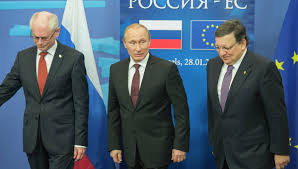
Moscow wants to establish a free-trade zone between the European Union and the Russian-led economic union of former Soviet States, Russian President Vladimir Putin said Tuesday.
“As a specific proposal, we have suggested that the EU leadership study the possibility of establishing a free-trade zone between the EU and the Eurasian Economic Union, which is currently being established by Russia, Belarus and Kazakhstan,” Putin told reporters on Tuesday after an EU-Russia summit.
“A lot of problems are yet to be discussed, and a lot of issues are to be addressed at an expert and technical level,” Putin said. “But I think that we should start thinking about it right now.”
Putin said the next EU-Russia summit would be held on June 3, on the eve of the G8 summit in the southern Russian city of Sochi.
Reportedly, a BBC executive sexually abused boys at his home in Amsterdam.
According to the Sunday Express, in the 1980s, the BBC executive reportedly –
1. Had a known British child abuser staying at his home.
2. Made child porn films at his home.
3. Had boys from British care homes brought to his home to be abused and filmed.
4. Played a key role in distributing the films.
The BBC executive is now retired.
The Sunday Express knows both the identity of the alleged abuser and his former address in Amsterdam.
A former child victim, shown a picture of the BBC executive, has “confirmed that this was one of the men who abused him at the flat in Amsterdam when he was a boy.”
The BBC executive “is said to have travelled back and forth between London and Amsterdam, playing a key role in the distribution of the videos throughout Britain and Europe.”
Meanwhile, Dutch prosecutors have recently confirmed that they are to investigate the former Dutch justice ministry secretary-general Joris Demmink for allegedly raping two boys in the 1990s.
Demmink reportedly raped the boys, aged between 12 and 15, while visiting Istanbul.
In 1998, Demmink was mentioned in connection with the Rolodex Affair, an investigation of an Amsterdam child abuse network. The investigation was shut down leading to accusations of a Dutroux-style cover-up.
Children were taken from UK care homes to Amsterdam to be abused and sometimes tortured and murdered.
A French mayor was fined 3 000 euros yesterday on charges of being an apologist for crimes against humanity for saying that “Hitler maybe didn’t kill enough of them” with regard to French Gypsies. Gilles Bourdouleix, a member of parliament and mayor of the western town of Cholet, made the remark in July 2013 during an argument with a group of Travellers, who set up camp in Cholet without authorization. Angered by his refusal to accommodate around 100 caravans for a short stay, some of the Travellers accused him of racism and reportedly performed Nazi salutes. Bourdouleix’s muttered response, invoking the more than 200,000 Roma or “Gypsies” killed in the Holocaust, was recorded by a local journalist. Being an apologist for crimes against humanity is a crime punishable by up to five years in prison and fine of 45,000 euros (61,538 dollars). Bourdouleix, who was forced to quit the centrist Union of Democrats and Independents (UDI) party over his remarks, was not in court for the hearing. His lawyer argued his client had not meant the remark to be heard by anyone else and that he had been provoked. The comment was seen as reflecting growing hostility in France toward both Travellers, who are French nationals, and Roma immigrants from Eastern Europe. The two groups are often confused. Some Travellers are of Roma origin but all have been living in France for generations. The Roma live mostly in Bulgaria and Romania. Around 20,000 Roma live in informal settlements in France.
According the the French magazine Le Point, the prosecutor had asked for a prison sentence of 6 months, as well as a fine of 6 000 euros. According to the judge who handed down the sentence, Bourdouleix “was clearly apologetic” and “exalted the crime committed” towards Gypsies during the Third Reich in expressing “the regret that not enough of them were killed.” – Le Point and various news agencies
Last summer, German Chancellor Angela Merkel promised her citizens a pact which would prohibit U.S. spying on German citizens. But since then, Washington has shown little interest in pursuing such a treaty. Now, officials in Germany fear the deal is dead.
Failed talks? Hardly. The negotiations “are continuing,” says Germany’s foreign intelligence service, the Bundesnachrichtendienst (BND). “We are still talking,” says the German government. In other words, nothing has yet been decided. The No-Spy deal is still alive.
But the statements coming out of Berlin and Pullach, where the BND is headquartered, reek of forced optimism. Nobody wants it to look as though efforts have been abandoned toward a deal which would see the U.S. agree to swear off spying operations in Germany.
Yet despite the assertions, most of those involved are slowly coming to the realization that a surveillance deal between Washington and Berlin isn’t likely to become reality. The U.S. government is still digging in its heels.
On Tuesday, the German daily Süddeutsche Zeitung quoted one source who is familiar with the talks as saying “we won’t get anything.” The paper also reported that the US is refusing to promise that it won’t monitor members of the German government and other politicians in the future.
People who are religious are healthier and take fewer sick days, new research suggests.
They are also less stressed and anxious at work, the researchers found.
Experts believe this could be because spirituality offers a ‘buffer against strains’ of modern life.
A psychologist at the Health and Safety Laboratory in Stockport found that the more religious a person is, the less likely they are to suffer from anxiety, depression or exhaustion.
Dr Roxane Gervais also discovered that employees who are religious feel their lives have more meaning than those who are not.
Dr Gervais surveyed workers in a bid to discover how happy they are in their home and working lives.
She found those who attend religious services feel more content within themselves and that they feel connected to a higher being.
Dr Gervais told The Telegraph: ‘As the pace of work and life accelerates, people long for meaning, and the younger generation in particular is looking for more than just a big pay cheque at the end of the month.
‘My research shows that religiosity in the workplace may act as a resource, making people more resilient to cope with the many challenges of working life.
‘Such personal beliefs could be very helpful not only for employees, but also for employers providing people with a buffer zone.’
Dr Gervais’ findings are to be presented at the Annual Conference of the British Psychological Society’s Division of Occupational Psychology’s in Brighton.
The research comes just after it was revealed that people who have a spiritual side have a ‘thicker’ section of brain tissue than those who do not.
The research, from Columbia University, also suggested that this thickening of the brain’s cortex could help to stave off depression.
The study authors believe this could suggest being religious changes the structure of the brain in a way which reduces depression risk. – dailymail.co.uk
The highest court in France has reinstated a ban on a show by controversial comic Dieudonne M’bala M’bala, just before it was due to open.
Interior Minister Manuel Valls appealed to the Council of State to intervene minutes after a judge in the city of Nantes overturned the ban.
The comic has seven convictions for anti-Semitic hate speech.
He has already arrived at the theatre in Nantes, where more than 5,000 people were due to see the show.
Police have deployed outside the venue as a precaution. The verdict was greeted with boos and chants of Dieudonne’s name by those who had gathered to see the show.
On his Facebook page, Dieudonne appealed to those gathered outside Nantes’ Zenith theatre to return peacefully to their homes, saying he had been denied permission to address them.
He said that on Friday he would post a new video on his YouTube channel.
The judge in Nantes had earlier said he did not regard the show, entitled The Wall, as having “an attack on human dignity as its main object”.
But the Council of State upheld the ban on Thursday’s performance, the first on a scheduled tour, despite a challenge by the comic’s lawyers saying his freedom of expression had been breached.
The council cited the risk to public order in its reinstatement of the ban.
The president of the World Jewish Congress, Ronald Lauder, had called on France to “confront this preacher of hate head on”.
The government can be satisfied that a man they regard as a dangerous anti-Semite has been kept from the public arena, the BBC’s Hugh Schofield reports from Paris.
Dieudonne’s supporters will say it is just more evidence of how he and his ideas are silenced by the system, he adds.
‘Peddlers of hate’
French media who have sent reporters to previous performances of the The Wall say it contained a string of derogatory references to Jews.
Speaking on Thursday from Brittany, Mr Valls said that “peddlers of hate stop at nothing and show boundless creativity”.
“Faced with this creativity of hate, should we do nothing? Certainly not. The status quo is not a solution,” he said.
The French government made a concerted effort to stop the tour after Dieudonne was recorded making remarks about Jewish journalist Patrick Cohen.
“When I hear him talking, I say to myself: Patrick Cohen, hmm… the gas chambers… what a shame,” Dieudonne was recorded as saying. – extract from bbc.co.uk
Support for sweeping curbs on immigration to the UK has reached record levels, a major study of public opinion shows, and the BBC now believes it was wrong to downplay the fear of being swamped.
Almost eight out of 10 Britons now believe that the number of new arrivals should be limited and nearly six in 10 want to see major reductions in the number allowed in.
The numbers advocating a large cut have swelled by more than 40 per cent since before the expansion of the European Union, according to the latest findings from the British Social Attitudes survey, which has been charting public opinion for more than 30 years.
Strikingly, it shows that even among those who believe that immigration has boosted Britain’s economy and enriched its culture, clear majorities now want to see it cut.
There is also a sharp divide along class lines, with an elite of highly paid and highly qualified people twice as likely as workers from middle and lower income families to view immigration in positive terms.
Significantly, attitudes have also hardened even among those from immigrant families themselves with less than half now convinced that it is good for the economy and a quarter doubting the cultural benefits.
The findings came as Vince Cable, the Business Secretary, underlined divisions with the Coalition over immigration insisting that the Government “certainly won’t achieve” its target of getting numbers below 100,000 before the General Election next year.
The Blair government had not spelt out the full impact because of a “fear of racism”.
Nick Robinson, the BBC’s political editor, who presents the programme, said at the weekend that the corporation had made a “terrible mistake” in downplaying public concerns over immigration.
The study of more than 3,000 people found that 77 per cent want immigration reduced, with only four per cent favouring an increase.
David Cameron has pledged to reduce net migration to the “tens of thousands” rather than hundreds of thousands . But figures published in November show it rose markedly ni the last year and now stands at 182,000.
The Treasury was convinced that the economic benefits would outweigh the disadvantages earlier.
“We didn’t spell out in words of one syllable what was happening, partly because of a fear of racism” a member said.
Source: The Telegraph
This website uses cookies to improve your experience. We'll assume you're ok with this, but you can opt-out if you wish. Cookie settingsACCEPT
Privacy & Cookies Policy
Privacy Overview
This website uses cookies to improve your experience while you navigate through the website. Out of these cookies, the cookies that are categorized as necessary are stored on your browser as they are essential for the working of basic functionalities of the website. We also use third-party cookies that help us analyze and understand how you use this website. These cookies will be stored in your browser only with your consent. You also have the option to opt-out of these cookies. But opting out of some of these cookies may have an effect on your browsing experience.
Necessary cookies are absolutely essential for the website to function properly. This category only includes cookies that ensures basic functionalities and security features of the website. These cookies do not store any personal information.
Any cookies that may not be particularly necessary for the website to function and is used specifically to collect user personal data via analytics, ads, other embedded contents are termed as non-necessary cookies. It is mandatory to procure user consent prior to running these cookies on your website.