Edward Snowden’s escape

Sheremetyevo Terminal

THEY sought him here and there and everywhere. But in the end, Edward Snowden slipped away unnoticed from Moscow’s Sheremetyevo airport in a cab.

The US fugitive walked out of the airport and took a taxi, his lawyer Anatoly Kucherena revealed to disappointed journalists who have haunted the international airport since Mr Snowden flew in from Hong Kong on June 23, wanting to catch him inside the terminal’s capsule hotel or the passenger lounges.

Rossiya 24 television aired a blurred photograph apparently showing Snowden from the back carrying a black rucksack as he is about to enter a grey saloon car, with a blonde-hair woman standing next to him.

He is shown talking to Mr Kucherena, with four other unidentified men nearby, one talking on a cell phone. The channel did not reveal who took the photograph.

WikiLeaks wrote on its Twitter feed that Mr Snowden left the airport “under the care of WikiLeaks’ Sarah Harrison,” one of the site’s employees who arrived with him from Hong Kong.

She appeared at his side at his only public appearance since landing, when he met rights activists inside the airport on July 12.

Asked in a live interview on Rossiya 24 whether Mr Snowden really caught an ordinary taxi, his lawyer said drily: “I understand that it was a taxi.”

Mr Kucherena refused to reveal Mr Snowden’s location for security reasons, saying only that he “may stay in a flat or a hotel.”

Mysteriously, Mr Kucherena seemed not to be involved in Mr Snowden’s initial stay outside the airport, saying that unnamed American friends living in Russia were taking care of him.

“Of course he has gained friends, including within Russia – American friends – who possibly at the start will be able to provide his security, for some time, let’s say,” Mr Kucherena told Rossiya 24 television.

“I did not get involved in this part, it’s not my competence. So in this case, I hope that all will be well.”

He also refused to comment on whether Mr Snowden would be staying in Moscow itself.

“Let’s not lift up that veil since Edward himself will decide that question,” he told Rossiya 24, adding that he planned to talk on the telephone to Mr Snowden’s father Lon and his US lawyer later that day to discuss his future.

Mr Snowden did not take long to pack after receiving a document certifying that he has temporary asylum in Russia, dated July 31, said Mr Kucherena, who has revealed that he had to buy Mr Snowden extra jeans and shirts while he was in the airport.

“He has few things, so we didn’t have to pack suitcases,” he told the television channel.

It remained unclear where Mr Snowden had spent more than a month, with the public areas of the airport thoroughly combed by journalists.

Mr Kucherena last week spoke to journalists after emerging from a meeting with Mr Snowden via a door in the arrivals zone of Terminal E marked “staff only.”

On Thursday, Mr Kucherena made clear that Mr Snowden was in an area for “problem” passengers who lacked documents, dismissing a question about whether he could have been spotted by waitresses in the airport.

“Have you ever seen a waiter in the transit zone? I never did,” he said.

“It’s the place where a person who flies in, if he doesn’t have a passport or doesn’t have a visa, say, or he has some problems with documents, he stays in that zone.”

However, he also half-confirmed reports that Mr Snowden had been staying in a capsule hotel that has full public access in the transit zone.

“There is a capsule hotel. Those people who stay in the (transit) zone, if they can’t fly out anywhere, they sit there and wait for their problem to be resolved.” – news.co.au

Australia’s immigration prisons

ausfullAustralia’s immigration and detention policies aren’t particularly humane. People caught arriving illegally on small boats are being held in dire conditions in offshore detention centres and some have put themselves on hunger strike or attempted suicide to protest against their treatment.

Many Australians who condemn asylum seekers however, agree with even harsher measures to keep dark-skinned people out. They feel no sympathy for example, for the 98 bodies that were found dumped in the water recently.

For whatever reason, the irony of a country made up almost entirely of boat people being fearful of boat people seems to have escaped those with a more conservative viewpoint, leading them to carry on politicising, and therefore dehumanising, the boat people. According to Greens Senator Sarah Hanson Young, that process has led to the asylum seekers being treated more “like animals” than human beings – the Australian government only concerned with finding the best place to crowbar them out of sight and out of mind.

According to Pamela Curr from Asylum Seeker Refugee Centre Australia, it’s a resentful fear that the asylum seekers will come along and, “take [Australian citizens’] jobs and houses”.

Since 2007, more than 33,000 of those people have arrived illegally in Australia by boat, including Hazaras from Afghanistan, Shias from Pakistan, Iranians, Iraqis, Kurds and now the Rohingyas, the stateless people from Burma. Up to 300 people a week arrive in Jakarta on one-way tickets, most likely with the intention to make the crossing to Australia and escape war, terror, oppression and marginalisation in their homelands.

People pay into the thousands – members on a recent Afghan-run boat recently paid up to $5,500 each – to be smuggled across the sea, perfectly aware that they’re risking death. Dead bodies are found on a weekly basis, reportedly after dying of starvation and dehydration en route to Australia.

The UN has now declared the Indian Ocean as one of the “deadliest stretches of water in the world” for people fleeing their country, and the Australian government reintroduced the policy of offshore detention to deal with asylum seekers last August, but the fear of being killed or persecuted in their homelands is obviously enough to override both of those risks.

Conveniently, the offshore detention centres are located on the Micronesian islands of Nauru and Manus, which allows the Australian government to dump the asylum seekers in the hands of the islands’ governments – institutions that barely have the right facilities to process their own refugee claims. Once they’re out of Australia, they’re essentially forgotten about. Because, by law, Australian immigration can detain someone for as long as they want, plenty of people have described the detention camps as a method of making an example out of anyone who illegally travels to the land down under.

Three hundred and seventy seven people have been sent to Nauru and over 200 to Manus after the decision was passed last year. According to Pamela – who was present at Parliament when the decisions were made – there was no “selection criteria”; these people were simply selected at random and “dumped in a prison-like environment with no judicial review and no access to the court”.

Nobody from the press is allowed to visit the islands, so there’s been little coverage of what life there is like. The reality is that the detention centres are near enough prisons, albeit ones situated on tropical islands. Pamela put me in touch with some detainees on the island via email – an exclusive access point to find out what people there are really going through. Hediye, an 18-year old asylum seeker currently being held on Manus, described to me how each living area is surrounded by fences, so “they can lock you up in your block”. The rooms are apparently tiny with no air conditioning, just a small fan, bunk beds, two windows and a screen door, leaving detainees completely exposed and making them feel like they’re constantly “on show”.

If you’re a single man and not lucky enough to be afforded the luxury of one of these rooms, you’ll be crammed into tents with up to 13 other people. Sounds great, huh? It gets better – because of the island’s location in the tropics, as well as the sweltering sun basically turning the tents into furnaces, the heat is complemented by torrential rainfall that floods the tents. Pamela told me a story of her friend on the island who had witnessed a man recovering from a suicide attempt in a medical tent that was “knee-deep with water”.

Aria, a 29-year-old Iranian refugee being held on Manus, described it as “a nightmare that we think is never going to end”. Aria left Iran because he wanted to play drums in a metal band – a genre that Iran classifies as “evil music” and therefore isn’t particularly supportive of – and thought that he might be able to follow his dreams in Australia. Instead, he fears that he and other detainees are losing their youth in detention by just “waiting, waiting, waiting” on the island.

Understandably, that extended period of waiting can lead to desperation, and suicide attempts are on the rise. On the 27th of February, a man tried to hang himself on Nauru. Pamela recounted to me how he was found just in time to save his life, transferred to a psychiatric hospital in Brisbane and, as soon as he was half-way back on his feet, the government “put him on a plane and sent him back – it’s really just ghastly”.

A drawing by 10-year-old Melika, who is currently being held in the Manus detention centre, sent to the author by Pamela Curr. The “BLL23” is Melika’s ID number. All people arriving by boat are registered with the first three letters of the name of the boat they came in on and a number, another method of dehumanising the detainees.

Conditions on the island also appear to be getting worse. Water shortages have begun, meaning people have had to go days without showers or functioning toilets, dropping the cherry on top of a cake made out of shit. And it’s not just the “seven days without water” that are an issue, Hadiye explained to me, but the fact that “the power goes out for at least eight hours a week”.

Protest letters from detainees on the islands directly address the Australian parliament, questioning whether their detention is fair justice and pleading for them to not “destroy our future or make us crazy” because they would “prefer to die instead of living in Nauru”. Hemat and Khadijeh, a young Kurdish couple who were trying to escape Iran before being caught and held on Manus, confirmed that: “It feels like we’re at the end of the world,” they told me. “We’re thinking this isn’t life; death is better than existing like this.”

A UN report on the conditions of Nauru Island declared how the ongoing delays and confusion in the processing of asylum seekers will have a “significant and detrimental impact” on their “mental and physical health”. A similar UN report on Manus island confirmed the inadequacies in the transfer, treatment and processing of asylum seekers, and declared how it is arbitrary detention, making it “inconsistent with the obligations of Australia and Papa New Guinea under international human rights law”.

New laws are currenly being pushed through Parliament, ones that seek to make sure refugees won’t have any work rights if they do make it to Australia. “It is a tough policy”, Australian Environmental Minster Tony Burke admits, but Australia doesn’t “want to see [the refugees] drowning”.

The new legislation means that any asylum seeker, including those who actually make it to the sandy shores of Oz, will be treated the same as those found offshore. As mentioned, they will have no work rights, limited accommodation and financial support and could be sent to one of the offshore detention centres at any point. Basically, the rights of the refugee will be completely undercut.

The Australian government released figures last year that highlighted how 90 percent of the cases processed found the asylum seekers to be genuine refugees, so why the prison-like detainment and not a better form of assistance? On top of those figures, the people keep coming in by sea, despite the fact the prospects for them in Australia are getting increasingly worse – so, the detention deterrent clearly isn’t working. Unfortunately, the priority of sealing the vote seems to to have put humanity and morality at the bottom of the pile for Australia’s competing politicians.

As Zohreh Yousefian, an Iranian refugee being held on Manus, told me, “My brother and I risked our lives in the hope of having freedom, safety, tranquillity and living in peace. Just remember, I’m a human like you, and I have my own rights in such a short life to live free.” Unfortunately for Zohreh and the hundreds of other refugees trying to make a better life for themselves in Australia, the government there are doing just about everything they can to make sure that will never be possible. – vice.com

Not white enough for Oz

Australian Prime Minister Kevin Rudd on Sunday said he made “absolutely no apology” for his hardline new policy on asylum-seekers under which they are sent to Papua New Guinea.

Rudd quickly moved to announce a radically reshaped immigration plan under which boatpeople could be resettled in PNG, sent home, or to a third country but not Australia. His new stance reinforces the notion that Australia wants to remain a white country.

Not white enough for Oz

Under the directive, those who pay people-smugglers to arrive on unauthorised boats will be sent to the poor Pacific nation for processing and resettled there even if found to be genuine refugees.

“On the question of asylum-seekers… we’ve had to adjust our policy over time and I make absolutely no apology whatsoever for our current policy settings because the world around us has changed,” Rudd told Channel Ten.

Rudd, who was last month reinstalled as prime minister by his Labour colleagues to help turn around dire polls in an election year, had previously softened some of the former conservative government’s policies.

The plan has worried the United Nations refugee agency which said on Friday that conditions at Papua New Guinea’s Manus Island facility currently failed to adequately protect refugees.

“UNHCR is troubled by the current absence of adequate protection standards and safeguards for asylum-seekers and refugees in Papua New Guinea,” it said in its first assessment of the policy.

Australia resumed sending asylum-seekers to Manus Island and the Pacific state of Nauru in 2012 in a bid to deter record numbers of migrants arriving by boat, hundreds of whom drowned en route.

Rudd has said the new PNG policy will take some time to deter asylum-seekers, but since he announced the change just over a week ago more than 1 300 have arrived on boats.

‘You will not be settled in Australia’

“It is the implementation of that policy direction over time, resolutely, which will yield results,” he told Network Ten’s Bolt Report.

“In the interim, people smugglers will test your resolve.”

Asylum-seekers are a sensitive issue in Australia, and one set to feature prominently in the election due this year.

Rudd said while people-smugglers, who make thousands of dollars bringing asylum-seekers to Australia, would test the government’s resolve “we are not for turning”.

“Our policy is very clear… you will not be settled in Australia,” Rudd said. AFP

Snowdenov soon?

snowdenov2NSA leaker Edward Snowden plans to settle in Russia and is ready to begin a court battle if the country’s migration service denies his asylum plea, Anatoly Kucherena, a Russian lawyer who assists the whistleblower, told RT.

“It’s hard for me to say what his actions would be in terms of a positive decision [on the asylum plea],” Kucherena said. “We must understand that security is the number one issue in his case. I think the process of adaptation will take some time. It’s an understandable process as he doesn’t know the Russian language, our customs, and our laws.”

“He’s planning to arrange his life here. He plans to get a job. And, I think, that all his further decisions will be made considering the situation he found himself in,” he added.

Kucherena expressed hope that the whistleblower’s plea will be granted, because the reasons which prompted Snowden ask for political asylum in Russia “deserve attention.”

“He fears for his health and his life. He’s afraid that if he’ll be handed to the US, torture can be used against him down to death penalty,” he said.

In case of a negative ruling on the plea, Kucherena said that Snowden has “an opportunity to go to court and appeal against the decision of the Federal Migration Service.”

“He intends to do so,” the attorney stressed. “During our meeting, our dialogues, and our consultations, he made detailed inquiries on those procedures. And I informed him of what possibilities he has according to Russian law.”

Snowden still remains holed up in the international transit zone of the Moscow’s Sheremetyevo airport. His asylum plea, which was filed on July 16, has not been yet formalized by migration officials.

“According to the existing practice, it may take five, seven, or eight days. I’m calling them on a daily basis. They tell me that they’re about to finish the formalization,” Kucherena said.

The NSA leaker will then be handed a paper confirming that his asylum application is being reviewed. Once this document is received, Snowden will be allowed to leave the airport where he has spent an entire month.

“There are no travel restrictions. Therefore, receiving the paper will give him an opportunity to leave the transit zone of the Sheremetyevo airport and choose a place of residence – rent a hotel or a flat. [He can] live in any place within the Russian federation,” Kucherena explained.

According to the lawyer, consideration of the plea will then take up to three months. If his request is approved, Snowden will receive a certificate which will “guarantee him the same rights and freedoms possessed by the citizens of the Russian Federation.”

“The temporary asylum is given on a one-year term. After it expires, the term can be prolonged for another year and this can be repeated an indefinite number of times afterwards,”
he said.

Snowden arrived in Moscow from Hong Kong on June 23 after revealing secret NSA government surveillance programs to the public.

The 30-year-old whistleblower is wanted in the US on charges of espionage and theft of government property.

Several Latin American states have offered him asylum, but the whistleblower believes it is unsafe for him to leave Russia following the July 2 incident in which the Bolivian president’s plane was grounded on suspicion that Snowden was aboard the craft. – RT

Russia allows Snowden ‘to leave airport’

Police outside Sheremetyevo international airport in Moscow

US intelligence leaker Edward Snowden was set Wednesday to leave the Moscow airport transit zone where he has been holed up for the last month after being provided with a document allowing him to officially enter Russia, reports said.

The state RIA Novosti news agency said the document confirms that his application for asylum in Russia is being considered and allows him to cross into Russia proper so long as border guards do not object, it said.

The news agency added that the document was initially given to the lawyer helping him, Anatoly Kucherena, who was now at Sheremetyevo airport and meeting Snowden in a secure zone.

A large crowd of media was already outside a door marked “staff only” on the lower floor of Terminal E at Sheremetyevo, with police and security guards keeping tight control, an AFP correspondent at the scene said.

The Interfax news agency said Snowden, who is wanted by the US on espionage charges for revealing a vast spying programme, could leave the airport in the “next hours”.

“The American is currently getting ready to leave. He is being provided with new clothes. The document will be given to him by Kucherena,” Interfax said.

RIA Novosti cited a source within the Russian border guards service as saying he would be allowed to leave the airport as soon as he presents the document.

He would not cross the border with regular passengers but through a special channel, the Interfax news agency reported.

The migration service declined to comment and there was no official confirmation that he was preparing to cross into Russian territory.

Snowden earlier this month applied for asylum in Russia, a process that could take up to three months.

Kucherena has said Snowden may even apply for Russian citizenship and is interested in looking for work in Russia.

Hosting Snowden risks further straining relations between Russia and the United States. But Russia has refused to hand Snowden over, saying it has no extradition treaty with Washington.

Snowden arrived in Moscow from Hong Kong on June 23.

The former contractor for the National Security Agency was checked-in to fly on to Cuba the next day but he never boarded the plane to Havana.

He ended up marooned at the Moscow airport after the United States revoked his passport.

With the help of Sarah Harrison, an employee of anti-secrecy group WikiLeaks, the 30-year-old applied for asylum in 27 countries but most of the nations denied him a safe haven under pressure from Washington.

Three countries in Latin America known for their anti-US stance –Nicaragua, Bolivia and Venezuela — have said they would be willing to give refuge to Snowden.

But there are doubts about whether the American will be able to travel on to Latin American after Bolivian President Evo Morales’s plane flying from Moscow earlier this month was forced to land in Vienna and searched amid suspicions Snowden was on board.

Breaking his silence for the first time since arriving from Hong Kong, Snowden on July 12 summoned several rights activists and Kremlin-friendly lawyers for a dramatic, closed-door meeting at Sheremetyevo airport.

He told them he would apply for asylum in Russia and asked them to petition President Vladimir Putin on his behalf.

On July 16, Snowden applied for temporary asylum with the help of Kucherena, a pro-Kremlin lawyer who participated in the airport meeting.

The Kremlin has sought to keep Snowden’s case at arm’s length but observers said the activists’ meeting at the state-controlled airport would have never been possible without government involvement. – AFP

Snowden’s hopes rise on asylum offers

Police outside Sheremetyevo international airport in Moscow

Hopes have risen that Edward Snowden may finally be able to leave Moscow, where he has been stranded in an airport for 14 days, after three Latin American countries offered the fugitive US intelligence leaker asylum.

Bolivia on Saturday became the third country to offer refuge to the former US National Security Agency (NSA) contractor, with President Evo Morales saying he was willing to take Snowden in “if he asks”.

The offer came not long after Venezuela’s leftist President Nicolas Maduro said he would grant the 30-year-old “humanitarian asylum” and Nicaraguan President Daniel Ortega said his country could offer a safe haven.

The flurry of offers arrived after a series of rejections from many of the 21 countries to which Snowden had applied to last week for refuge.

The WikiLeaks anti-secrecy website that has been supporting Snowden’s cause said he had recently applied to six additional countries that it refused to name.

But it was far from clear how exactly Snowden — hidden out of sight of reporters for the past two weeks — could reach another nation from the transit zone of Russia’s sprawling Sheremetyevo international airport.

He has been stripped of his passport by the US authorities and a refugee pass initially believed to have been offered to him by Ecuador has since been declared invalid.

“He has no passport and asylum can only be granted to a specific individual. I have grave doubts that this is now possible,” senior ruling party lawmaker Alexander Romanovich told Moscow Echo radio.

Sheremetyevo only handles commercial flights and Snowden cannot travel past passport control to another airport used by foreign dignitaries.

Even if he got on a commercial flight, the plane carrying him could be grounded — the fate suffered by the jet carrying Morales after several EU states denied it overflight rights over suspicions Snowden was onboard.

Analysts meanwhile said Moscow may be increasingly concerned about getting sucked into a diplomatic spat with Washington that it had never planned for and which it would rather avoid.

— Leftist Latin American leaders offer asylum —

Morales declared however that Bolivia has “no fear” of the United States and its European allies, and that he would be willing “to give asylum to the American, if he asks”.

The offer was echoed by Maduro, who visited Moscow at the start of the week for a gas summit during which he strongly hinted that Venezuela –long a diplomatic irritant for the United States — could welcome the opportunity to help Snowden out.

But he made his intentions absolutely clear in an address at an independence day event in Caracas.

“As head of state of the Bolivarian republic of Venezuela, I have decided to offer humanitarian asylum to the young Snowden … to protect this young man from the persecution launched by the most powerful empire in the world,” said Maduro said.

Nicaragua’s Daniel Ortega voiced a slightly more toned down message only minutes earlier.

“We are open, respectful of the right to asylum, and it is clear that if circumstances permit it, we would receive Snowden with pleasure and give him asylum here in Nicaragua,” Ortega said at a public event.

So far, only Nicaragua, of the three that have offered asylum, said it had received his formal request; that could mean a petition there is further along in the pipeline than elsewhere.

Ecuador had been seen as the American’s best hope when he arrived in Moscow from Hong Kong on June 23 after leaking secrets about the extent of the US data surveillance programme to the press.

But the leftist government in Quito has yet to consider his application.

— ‘Russia is not happy he is here’ —

Russian President Vladimir Putin has refused to extradite Snowden to the United States while still stressing that he would like to see him gone as soon as possible.

Analysts interpret the mixed message as a sign that Moscow feel like they are being drawn into a fracas with Washington at a time when it would rather avoid additional difficulties to the two sides’ strained ties.

“Russia is not happy that he is here. If it wanted to offer him asylum, this would have been done right away,” said Carnegie Moscow Centre analyst Maria Lipman.

She noted that Putin himself was a former KGB spy who cares deeply about the safety of state secrets.

Alexander Konovalov of the Institute of Strategic Assessments agreed that “there is nothing for us to gain from Snowden”.

Putin has denied ever questioning Snowden about the details of the US spy network and has even suggested that doing so was not worth the effort.

“Snowden’s asylum in Venezuela would be the best option,” said parliament’s foreign affairs committee chairman Alexei Pushkov.

“This country is in a sharp conflict with the United States,” Pushkov tweeted. “It will not get any worse.” – AFP

Austria not worried about passenger Snowden

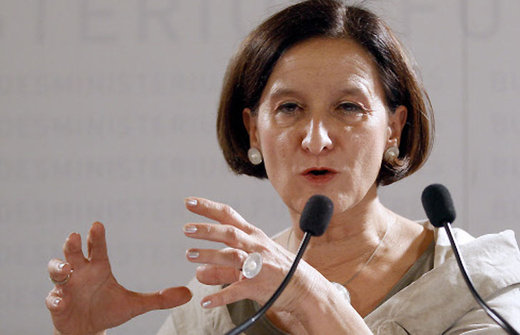
Mikl-Leitner
Mikl-Leitner

Austria allowed Bolivian President Evo Morales’ plane to land because it did not share other countries’ worries that former U.S. spy agency contractor Edward Snowden might be on board, Interior Minister Johanna Mikl-Leitner said on Wednesday.

France and Portugal abruptly canceled air permits for Morales’ plane en route from Moscow, forcing the unscheduled stopover in Vienna late on Tuesday.

An Austrian Foreign Ministry spokesman said rumours that Snowden was on the plane were untrue.

“Austria did not close its airspace and the plane could of course land although many other countries apparently feared that Snowden was on board too,” the minister told ORF radio. “Austria did not do that, which means there is no fear here.”

Wanted by Washington for espionage after divulging classified details of U.S. phone and Internet surveillance, Snowden apparently remains in the transit area of Moscow’s Sheremetyevo airport.

He applied for asylum in Austria – and several other countries – via the country’s Moscow embassy on Monday, which the government said was insufficient to grant him refuge.

Mikl-Leitner said it would be up to Austrian asylum authorities to decide what to do in the unlikely case that Snowden arrived there.

She defended Austria’s position that Snowden would have to apply in person for asylum, saying this was clearly spelled out in the law.

“This is in the hands of the authorities and independent courts. The important thing here is that this would be judged individually, as in every other case,” she said. – Reuters

Bolivian leader’s plane ‘skyjacked’ on Snowden fear

Evo Morales
Evo Morales

The plane carrying Bolivian President Evo Morales was forced to land in Austria after various European countries refused to let it cross their airspace because of suspicions that NSA leaker Edward Snowden was on board, Bolivian officials said Tuesday.

Officials in both Austria and Bolivia said that Snowden was not on the plane, which was taking Morales home from a summit in Russia, where he had suggested that his government would be willing to consider granting asylum to the American.

A furious Bolivian Foreign Minister David Choquehuanca said France and Portugal would have to explain why they canceled authorization for the plane, claiming that the decision had put the president’s life at risk.

“We don’t know who invented this lie” that Snowden was traveling with Morales, Choquehuanca said in La Paz. “We want to denounce to the international community this injustice with the plane of President Evo Morales.”

In a midnight press conference, Bolivian Vice President Alvaro Garcia said that not only France and Portugal, but also Italy and Spain were denying the plane permission to fly through their airspace.

He described Morales as being “kidnapped by imperialism” in Europe.

“The ambassador for Spain in Austria has just informed us that there is no authorization to fly over Spanish territory and that at 9 a.m. Wednesday they would be in contact with us again,” said Defense Minister Ruben Saavedra, adding that the Spanish government had put as a condition for passage the “revision of the presidential plane.”

Earlier, Choquehuanca said that Spain’s government allowed Morales’ plane to refuel in its territory before flying on to Vienna.

French government officials reached overnight said they could not confirm whether Morales’ plane was denied permission to fly over France. Officials at Portugal’s Foreign Ministry and National Civil Aviation Authority could not be reached to comment.

Austrian Foreign Ministry spokesman Alexander Schallenberg told The Associated Press that Snowden was not with Morales.

Leaks by Snowden, a former NSA systems analyst, have revealed the NSA’s sweeping data collection of U.S. phone records and some Internet traffic, though U.S. intelligence officials have said the programs are aimed at targeting foreigners and terrorist suspects mostly overseas.

He is believed to be in a Moscow airport transit area, seeking asylum from one of more than a dozen countries.

While Bolivia’s foreign minister had earlier said officials did not know who was behind the “lie” that Snowden was on Morales’ plane, the country’s defense minister later expressed no doubt.

“We want to declare very firmly that it was an American story that Edward Snowden was on this flight,” said Saavedra at the VIP terminal of Vienna’s airport. “This is a plot by the U.S. government to destroy president Morales’ image. We say this simply is a lie. And we will confirm this.”

Morales himself was present during the improvised press conference but chose not to speak to reporters. Morales will remain at the airport until his plane has been cleared for takeoff.

In Washington, the State Department would not comment directly when asked to speak to the matter and referred the AP to statements on Snowden made at the department’s daily briefing. Earlier Tuesday, department spokesman Patrick Ventrell would not discuss how the Obama administration might respond if Snowden left the Moscow airport. “We’re not there yet,” he said.

Snowden has applied for asylum in Venezuela, Bolivia and 18 other countries, according to WikiLeaks, a secret spilling website that has been advising him. Many European countries on the list — including Austria, Finland, Ireland, the Netherlands, Norway, Spain and Switzerland — said he would have to make his request on their soil.

One of Snowden’s best chances of finding refuge outside the United States may hinge on Venezuelan President Nicolas Maduro, who was also in Russia on Tuesday.

Maduro told Russian reporters that his country has not received an application for asylum from Snowden and dodged the question of whether he would take him with him when he left.

But Maduro also defended the former National Security Agency systems analyst.

“Who must protect Snowden? This is the question. This young man of 29 was brave enough to say that we need to protect the world from the American imperial elite, so who should protect him?” Maduro said in response to a question from journalists covering a ceremony to rename a Moscow street after Chavez. “All of mankind, people all over the world must protect him.”

Maduro was scheduled to spend Wednesday in neighboring Belarus before returning to Venezuela.

In Venezuela, Foreign Minister Elias Jaua said that changing the flight’s route without checking on how much fuel it had endangered Morales’ life.

“All the countries that have denied permission for the flight of our brother president, Evo Morales, must be held responsible for his life and his dignity as president.”

Another possible landing spot for Snowden is Ecuador, where Wikileaks founder and publisher Julian Assange has been seeking asylum.

“We are willing to analyze Mr. Snowden’s request for asylum and this position has not changed,” said Ecuadorean Foreign Minister Ricardo Patino on Tuesday. “What we have said is that we will be able to analyze the request when Mr. Snowden is in Ecuadorean territory or in an Ecuadorean mission.”

Patino added that two weeks ago a hidden microphone was found in Ecuador’s embassy in London, where Assange is holed up. “We want to find out with precision what the origin of the apparatus is.”

Snowden, who recently turned 30, withdrew a bid for asylum in Russia when he learned the terms Moscow had set out, according to Putin’s spokesman Dmitry Peskov. Putin said on Monday that Russia was ready to shelter Snowden as long as he stopped leaking U.S. secrets.

At the same time, Putin said he had no plans to turn over Snowden to the United States.

Rebuffed by Russia’s president, the Obama administration has recently toned down demands Snowden be expelled from the Moscow airport in a sign that the U.S. believes he is not worth scuttling diplomatic relations between the former Cold War enemies.

On Monday, WikiLeaks posted a statement attributed to Snowden on its website, in which he slams Obama for “using citizenship as a weapon.”

“Although I am convicted of nothing, (the United States) has unilaterally revoked my passport, leaving me a stateless person,” Snowden says in the statement. “Without any judicial order, the administration now seeks to stop me exercising a basic right. A right that belongs to everybody. The right to seek asylum.

“Their purpose is to frighten, not me, but those who would come after me.” – AP

Snowden asking 15 countries for asylum

edwardsnowden2Edward Snowden, the former National Security Agency contractor who leaked U.S. security secrets and is now a fugitive, met Monday morning with Russian diplomatic officials and handed them an appeal to 15 countries for political asylum, a Russian Foreign Ministry official told The Times.

“It was a desperate measure on his part after Ecuador disavowed his political protection credentials,” said the official, speaking on condition of anonymity. ”In the document Snowden reiterated once again that he is not a traitor and explained his actions only by a desire to open the world’s eyes on the flagrant violations by U.S. special services not only of American citizens but also citizens of European Union including their NATO allies.”

The official didn’t disclose the countries that were on the list. The meeting took place at Moscow’s Sheremetyevo International Airport, where Snowden has apparently holed up in a transit lounge since fleeing from Hong Kong while seeking a route to Ecuador or somewhere else that might grant him asylum.

Kirill Kabanov, a member of the Presidential Council on Human Rights, a Kremlin advisory body, said he believes that Russia is on the list.

“In the given circumstances, Russia has two workable options: Firstly is to provide Snowden with some refugee-status papers so that he could buy a ticket and leave for some other country, or secondly to grant him political asylum,” Kabanov said in an interview with The Times.

“Snowden’s actions were motivated by a desire to protect human rights and freedoms and now many rights activists in Russia are talking about him as a human rights advocate who deserves to be granted asylum, although this measure is fraught with some political inconveniences for Russia,”  he said. – latimes.com

No asylum for white family in US

A white South African family has lost their court bid for asylum in the US, the Sunday Times reports.

The family, a couple with two children originally from Durban, claimed they were in danger in South Africa because another family member had been racist and his victims wanted revenge.

“This is not about black versus white. It’s about them being specific targets of retribution from victims of another person’s racism,” the family’s lawyer Errol Horwitz told the newspaper.

He said the family’s paternal grandfather had allegedly abused his employees at a construction company in South Africa.

His daughter-in-law testified in US courts that, as a result of his alleged racism, her dog was poisoned, human faeces thrown at their home, she was threatened, and her daughter was the victim of an attempted kidnapping.

However, this week, a request for a new appeal hearing was turned down by three judges of the US Ninth Circuit Court of Appeals.

Previously the court had ruled that since the grandfather had retired, there would be no credible threat against the family.

The family has spent 15 years involved in various court actions to try and gain asylum.

Horwitz said the children were likely to gain US residency through other legal avenues.

However the parents were now “effectively undocumented migrants. The family is devastated by this decision.” – SAPA

Ecuador wants to take Assange to Sweden under its protection

Julian Assange in Ecuador embassy
Julian Assange speaks to the media from the Ecuadorian embassy in London

Ecuador has suggested that it take WikiLeaks founder Julian Assange to Sweden for questioning under its protection, in the latest move in the diplomatic spat between the two countries.

Assange took shelter in the Ecuadorian embassy in London in June, in an effort to avoid extradition to Sweden, where he is wanted for questioning in relation to allegations of rape and sexual assault.

Ecuador has granted the Australian asylum inside the embassy but Britain says it will not allow him to leave the building for the South American country.

Ecuadorian Foreign Minister Richard Patino said late Friday that he would discuss the proposal with his British counterpart William Hague on the sidelines of the UN General Assembly meeting in New York on Thursday.

Patino said the meeting would be aimed at “finding a diplomatic solution framed within international law to the case of the refugee Julian Assange.”

Assange says he fears that once extradited to Sweden he could be extradited to the United States. There he could face charges related to the release by WikiLeaks of US diplomatic cables, under which he could face the death penalty. – DPA