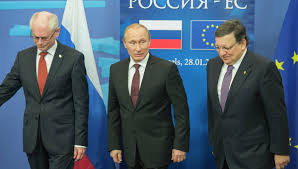
China backs Russia on Ukraine

russekrim

The Russian Foreign Minister Sergey Lavrov, justified the military incursion into Ukraine on Monday and said it was necessary in order to protect his country’s citizens living there. “This is a question of defending our citizens and compatriots, ensuring human rights, especially the right to life,” he said.

Panama was invaded in 1989 over the exact same pre-text by the US. US nationals were ‘in danger’ and the US military needed to protect them, analysts pionted out. Panama was considered in the US ‘sphere of influence’ which was the reason given by the Bush senior administration to invade a sovereign nation.

Earlier on Monday, as Russia sought to draw support from the international community, Mr Lavrov said that he had discussed Ukraine with his Chinese counterpart and that the two veto-wielding UN Security Council members had “broadly coinciding points of view” and would stay in close contact on the issue.

President Vladimir Putin has defended Russia’s actions, blaming “ultra-nationalist forces” for seizing power in Kiev. A Kremlin statement posted online said Putin told the German Chancellor, Angela Merkel, on Sunday that measures taken by Russia so far were “fully adequate” and in response to the unrelenting threat of violence” to “Russian citizens and the whole Russian-speaking population”.

Russia has told Ukrainian forces surrender its control of the strategic Crimean region by 3am on Tuesday or face military assault.

Relations with the US and Britain continued to plummet as the Russian Government continued to ignore calls from their leaders to leave the Ukrainian area.

It followed claims from the Ukrainian Defence Ministry that Russian fighter jets had “violated” the country’s airspace over the Black Sea overnight and that Russian forces were now in control of the port city of Sevastopol, where the Black Sea fleet is based.

The takeover of the ferry terminal on the eastern tip of Crimea by Russian troops has exacerbated fears that Moscow is planning to bring even more troops into the strategic Black Sea region. There was no immediate comment from the Russian Defence Ministry.

During a visit to Kiev today, the Foreign Secretary William Hague described the situation as “certainly the biggest crisis in Europe in the 21st century”, adding that there was “no justification” for the actions in Crimea, where Russia had “in effect taken control”.

Echoing US President Obama’s speech on Friday, the Foreign Secretary said Moscow should be in no doubt that it faced “significant costs” for its move into the Ukrainian region.

Yesterday, Ukraine’s country’s acting Prime Minister said that his country was “on the brink of disaster”, fanning fears that his position might be in danger too.

Emerging from a closed session of parliament in Kiev, Mr Yatsenyuk described President Putin’s decision to send in troops as a “declaration of war”, and said “there was no reason for the Russian Federation to invade Ukraine.

The Nato Secretary-General, Anders Fogh Rasmussen, called on Russia to “stop its military activities and its threats” after convening an emergency meeting. “What Russia is doing now in Ukraine violates the principles of the United Nations Charter,” he said. “It threatens peace and security in Europe.”

The G7 group of major industrialised nations condemned Russia’s intrusion into Ukraine on Sunday. It has also cancelled preparations for the G8 summit that was to include Russia, scheduled for Sochi in June, the White House confirmed.

The group said in a statement: “We, the leaders of Canada, France, Germany, Italy, Japan, the United Kingdom and the United States and the President of the European Council and President of the European Commission, join together today to condemn the Russian Federation’s clear violation of the sovereignty and territorial integrity of Ukraine.

“We have decided for the time being to suspend our participation in activities associated with the preparation of the scheduled G8 Summit in Sochi in June,” it added.

The G7 also urged Russia to hold talks with Ukraine directly to address any human rights or security concerns it has.

The group expressed its support for Ukraine’s bid to secure financial help from the International Monetary Fund and to make reforms to its economy.

Source: The Independent


Crimea cannot be denied right to hold self-determination referendum

Sevastopol airport
Sevastopol airport calm

The legitimacy of the Ukrainian parliament, the Verkhovna Rada decision, which removed President Viktor Yanukovych from office, is highly doubtful, the Russian State Duma International Affairs Committee Chairman Alexei Pushkov said. “As far as I understand, the process of Yanukovych’s deposing was rather confused and its legitimacy causes qualms,” Pushkov told reporters.

The opposition leaders who struck the deal with Yanukovych on February 21 on guarantee of EU representatives agreed that he would stay in office until the presidential election.

“It seems the sole purpose of the [February] 21 agreement guaranteed by the European Union was to remove Yanukovych from office. But that agreement said he would be the president until the elections were held. This is why Yanukovych says he remains the legitimate president of Ukraine,” the parliamentarian continued.

This is a formal agreement and no one has explained why “it was suddenly disavowed,” Pushkov said, describing the situation as a serious collision.

Crimea cannot be denied the right to hold a referendum on self-determination, head of the State Duma international affairs committee Alexei Pushkov told reporters on Friday.

“If Crimea holds a referendum, this will be an absolutely legislative and legally binding base for changing its status, if the majority of the population votes for this,” he said.

Pushkov said such a referendum would be a more legal form for changing Crimea’s status than “spontaneous Maidan” in Kiev.

“If we are told that the Maidan could be a source of power, well, this is the will of the people. But why then can’t the will of the people be the source of power and self-determination for Crimea. I think it cannot be denied this right,” the parliamentarian said.

On Thursday, the parliament of the Autonomous Republic of Crimea announced it would hold a referendum of the autonomy’s status and expansion of its powers.

The Russian and Ukrainian governments continue to maintain “working” contacts following the change of power in Kiev, Russian Deputy Prime Minister Arkady Dvorkovich said.

“These contacts continue at the working level,” he told Interfax after being asked whether negotiations could be held with the Ukrainian government any time soon.

Dvorkovich declined to comment on the prospects for holding official negotiations with the Ukrainian side.

Ukraine’s interior minister claims Russian forces have now taken control of two airports in Crimea.

Shortly afterwards a military airport near the port of Sevastopol was seized. There are no reports of any bloodshed or clashes near where the Russian Black Sea fleet has a base.

Ukraine’s Interior Minister Arsen Avakov has described the raid as an armed invasion in violation of international accords.

Source: Voice of Russia, TASS, Interfax

Governed by Kalashnikov-toting people in black masks

The Filchenkov
The Filchenkov

Missing Ukrainian President Viktor Yanukovych is in Sevastopol, at a Russian miltary base in Cossack Bay, UNIAN reported citing local media.

According to sources, the channel ATR, the ex-president fled to a ship of the Russian Federation’s Black Sea Fleet.

Sources say that Yanukovych could thus leave for Russia.

The Ukrainian president went into hiding over the weekend.

Yanukovych’s removal from power has been recognized the US and EU.

Russian PM Dmitry Medvedev said however that interim authorities in Kiev had conducted an “armed mutiny”.

On Sunday, Ukraine’s parliament reduced the official status of the Russian language by cancelling a law brought in by Mr Yanukovych.

Ukraine is facing bankruptcy and a promised loan from Russia is looking increasingly unlikely.

“Strictly speaking there is no one to talk to there. There are big doubts about the legitimacy of a whole series of organs of power that are now functioning there,” Mr Medvedev told Russian news agencies.

“If you consider Kalashnikov-toting people in black masks who are roaming Kiev to be the government, then it will be hard for us to work with that government,” Medvedev said.

Izvestia Kiev reported that out of Kubinka, four ships carrying special forces, are being relocated to Anapa. From there, in four hours, they will depart for Sevastopol at a speed of 10-15 knots, citing “Izvestia in Ukraine” as a source.  According to the source, the redeployment is “qualitative, not quantitative” and that the Ukraine is following these developments.

The large landing ship Nikolai Filchenkov is believed to be en route to the Crimean port of Sevastopol carrying 200 armed soldiers, sent from the nearby Black Sea town of Temryuk.

There will be an urgent NATO Defense Ministers meeting in Brussels on Wednesday, centered on Ukraine.

Russia tops Sochi 2014 medal count

Alexander Legkov
Alexander Legkov, gold medalist

Russian skiers have secured victory for Russia in the Olympic medal table by occupying all places on the podium in the 50km mass start race on the final day of the Games.

Aleksandr Legkov won the race with the result of 1:46:55.

His fellow team members, Maksim Vylegzhanin and Ilya Chernousov, took silver and bronze respectively, arriving at the finish just 0.1 second apart.

The triple medal win secures Russia’s leading position in the total medal count of the Sochi Olympics, since no other national team will be able to beat Russia’s result in the two remaining sport events on Sunday.

Russia’s result in Sochi is the best the country has ever had during the Winter Olympics. The country’s previous best gold haul was in 1994 in Norway’s Lillehammer, when the national team won 11 gold medals. The Sochi achievement also beats the record of the Soviet Union, which won a total of 29 medals in the Calgary Games of 1988.

With two gold medals for the host country in the final day of competitions in skiing and bobsleigh, Russia has 33 medals, including 13 gold, 11 silver and 9 bronze.

For now, Russia’s closest competitor in the gold race is Norway, which has 11 gold medals. In the total medal count the US team is just behind Russia, with 27 medals.

Source: RT

US media’s knee-jerk response to Putin leads to Berlin-Moscow axis

mercer_ilanaby Ilana Mercer

[followbutton username=’IlanaMercer’ count=’true’ lang=’en’ theme=’light’]

Like Ilana Mercer’s Facebook page

When it comes to President Vladimir Putin, who enjoys an approval rate of 65 percent among Russians, the motto of the menagerie of morons that is the American media is ignorance über alles.

The energetic and reflexive demonization of a Russian leader – unparalleled during communism – against the backdrop of the Sochi Olympic Games and the conflagration in the Ukraine, is the handiwork of a conga-line of cretins, stateside, whose bombast comports with the boorishness of their pronouncements.

The “Shangri-La of Socratic disinterest,” one wag’s delicious description of broadcaster Bill O’Reilly, is not delimited by ideology. Instead, “wanton Putin bashing,” as scholar of Russian history Stephen Cohen attests, is the order of the day at the New York Times, Washington Post, Wall Street Journal, The New Republic, CNN, Fox News, MSNBC, on and on.

As to “traditional journalistic standards”: In the service of their anti-Putin monomania, the U.S. Pussy Riot press and its approved phalanx of “experts” routinely omit “facts and context,” conflate “reporting with analysis,” and court conformity and unanimity at the cost of veracity and impartiality.

(Revered in the U.S., Pussy Riot is a punk rock Russian band of feminists, whose forté is breast-baring, defiling places of worship, punching the air while shrieking, “F–k you Putin,” and participating in public-orgy protests and other criminal acts.)

The “Shangri-La of Socratic disinterest,” fortunately, is not a feature of the nuanced and informed analysis available on the John Batchelor Show, where the scholarly host and his guest, professor Cohen, delve deeply into the region’s geopolitical dynamics.

Cohen, who tackled O’Reilly’s out-and-proud ignorance with aplomb, was slightly more flummoxed by that of MSNBC’s Andrea Mitchell. She blamed Putin for Ukraine having “spun into politician chaos.” To wit, Europe had offered Ukraine $800 million in aid. The Kremlin “outbid the West” to the tune of billions, but held back on the last installment because it wanted to see to which government Russian funds would ultimately be going. Although Putin has since released the remaining funds to Ukraine, Mitchell surmised that Putin had orchestrated recent events so as to compel Kiev to sell-out to the Kremlin.

Nonsense on stilts. If anything, Putin’s impetus would be to avert trouble in Ukraine during the Sochi Olympics. Add Putin to the list of people who do not control what unfolds in Kiev, belabors Cohen.

Into the Cannibal's Pot

Contrary to America’s Democracy Alinskyites – media, academia, members of the Stupid and Evil Parties, State Department floozy Victoria Nuland (taped plotting to “midwife a new, anti-Russian Ukrainian government”), John McMussolini – the Ukrainian People, not unlike the “American People,” are not one people. The country is riven – divided into Western and Eastern regions, respectively. The West has been seduced by EU membership; the East is culturally and historically enmeshed in Russia.

What we’re witnessing is a tale of two Ukraines.

As it stands, explains Cohen, Kiev has lost control over Western Ukraine. Moderate voices are being silenced. Armed provocateurs are inciting matters and undermining moderate leadership. Revolution is being fomented.

Ukraine is not a dictatorship, it is an anarchy.

As to the demands issued by Vice President Joe Biden that the democratically elected Ukrainian President Viktor Yanukovych withdraw forces from the Maidan, the site of the protests: “preposterous,” avers Cohen. The “occupation of government buildings in Kiev and in Western Ukraine, the hurling of firebombs at police and other violent assaults on law enforcement officers … all documented and even televised”: these would not be tolerated in any Western democracy.

Equally outrageous is the Obama administration’s improvised and impromptu demands that the same democratically elected president step down before elections are held next year. The rational solution to the chaos in Ukraine is to allow the parties to “chill out” and resolve to wait until the February elections, next year, whereupon a referendum question can be tagged to the ballot to help decide whether Ukraine should sign up with Europe or Russia. (Cohen advocates an either/or “democratic” decision; I say secession.)

Should cool heads fail to prevail in the negotiation of a political solution, the division of Ukraine is impending, with part of the country cleaving to Europe, the other to Russia.

The “struggle for Ukraine” is a chapter in a series of U.S.-orchestrated provocations, which began with the expansion of NATO (North Atlantic Treaty Organization) eastward to abut Russia’s borders – an expansion pursued by Clinton, Bush and Obama alike. It gathered momentum with the U.S.-backed attempts to incorporate Georgia and Ukraine into the North Atlantic alliance.

The next stage in goading the Russian Bear consisted in American-funded NGO political-action groups – many of them backed by George Soros – flooding Russia proper. (“Purple” in Iraq, Blue in Kuwait, Cotton in Uzbekistan, Grape in Moldova, “Orange” in the Ukraine, “Rose” in Georgia, “Tulip” in Kyrgizstan, “Cedar” in Lebanon, Jasmine in Tunisia, Green in Iran, still un-christened in Russia and Syria: Dig around and you’ll find American activists à la Alinsky behind these “color-coded,” plant-based revolutions, blessed and backed by Foggy Bottom.)

“A U.S.-NATO military outpost in Georgia and missile-defense installations near Russia” completed the provocation. “Whether this longstanding Washington-Brussels policy is wise or reckless, it – not Putin’s December financial offer to save Ukraine’s collapsing economy – is deceitful,” inveighs Cohen.

Also upon us is a second Cold War between the U.S. and Russia, which will see a close, bilateral collaboration between Berlin and Moscow – Putin and Angela Merkel enjoy a cozy and copacetic relationship and will likely work together to dominate Eurasia.

Having flouted America’s national interests and squandered Russian goodwill – the ignoramuses of the Beltway will have no place in this grand geopolitical realignment.

© 2014 by Ilana Mercer

[followbutton username=’IlanaMercer’ count=’true’ lang=’en’ theme=’light’]

Like Ilana Mercer’s Facebook page

Snipers fire at Russian media in Kiev

ruptlyRT’s camera crews have been fired upon by rioters as they tried to film the escalating violence on Kiev’s Independent Square. Armed protesters have taken control of Hotel Ukraine, trapping members of the RT crew inside.

“We were just shot at. It broke a window over here. We were standing centimeters away when a gunshot hit the room where we have our live position,” RT correspondent Aleksey Yaroshevsky said, pointing to the window that had been smashed by the gunfire. He said there were unidentified snipers firing from buildings all around Independence Square.

“There’s no truce at all,” Yaroshevsky added, describing how, a few hours earlier, he witnessed rioters pushing police back from the barricades amid weapons fire.The camera team of RT’s video agency Ruptly was shot at during filming. One of the bullets grazed the bulletproof vest of journalist Danil Asimov as he stood by the window on the 14th floor of a Kiev hotel.

Correspondent Egor Piskunov and his camera crew were also caught in the crossfire as they tried to film Independence Square from Hotel Ukraine.

“The cameraman tried to film what was happening on the other side of the hotel and he was fired at. Thankfully they missed. As soon as they [cameramen] realized there was a bullet they dropped down to the floor,” Piskunov told RT.

Armed rioters have taken control on Hotel Ukraine and are using it as a base to fire on Independence Square, reports Ruptly news agency. Piskunov and his team have barricaded themselves in their hotel room and covered the windows.

“There are live rounds being fired all around this building. Rioters are occupying the floors right now,” said Piskunov.

He confirmed that EU Foreign Ministers from Poland, France and Germany had quit the Ukrainian capital because of security concerns. They were scheduled to meet with Ukrainian President Victor Yanukovich and members of the opposition on Thursday to discuss a solution to the unrest.

US and EU are paying Ukrainian rioters and protesters

pcrBy Paul Craig Roberts.

A number of confirmations have come in from readers that Washington is fueling the violent protests in Ukraine with our taxpayer dollars. Washington has no money for food stamps or to prevent home foreclosures, but it has plenty of money with which to subvert Ukraine.

One reader wrote: “My wife, who is of Ukrainian nationality, has weekly contact to her parents and friends in Zhytomyr [NW Ukraine]. According to them, most protesters get an average payment of 200-300 grivna, corresponding to about 15-25 euro. As I additionally heard, one of the most active agencies and ‘payment outlets’ on EU side is the German ‘Konrad Adenauer Stiftung’, being closely connected to the CDU, i.e. Mrs. Merkel’s party.”

As I reported on February 12, “Washington Orchestrated Protests Are Destabilizing Ukraine,” Assistant Secretary of State Victoria Nuland, a rabid Russophobe and neoconservative warmonger, told the National Press Club last December that the US has “invested” $5 billion in organizing a network to achieve US goals in Ukraine in order to give “Ukraine the future it deserves.” Nuland is the Obama regime official who was caught red-handed naming the members of the Ukrainian government Washington intends to impose on the Ukrainian people once the paid protesters have unseated the current elected and independent government.

What Nuland means by Ukraine’s future under EU overlordship is for Ukraine to be looted like Latvia and Greece and to be used by Washington as a staging ground for US missile bases against Russia.

From the responses I received to my request for confirmations of the information sent to me from Moldova, there is enough evidence that Washington fomented the violent riots for western newspapers and TV channels to investigate. But they haven’t. As we know, the presstitutes are enablers of Washington’s crimes and duplicities. However, the US media has reported that the Ukrainian government is paying Ukrainians to rally in favor of the government.

As Karl Marx wrote, money turns everything into a commodity that is bought and sold. I wouldn’t be surprised if some protesters are working both sides of the street.

Of course, not all of the protesters are paid. There are plenty of gullible dupes in the streets who think they are protesting Ukraine government corruption. I have heard from several. There is little doubt that the Ukraine government is corrupt. What government isn’t? Government corruption is universal, but it is easy to go from the frying pan into the fire. Ukrainian protesters seem to think that they can escape corruption by joining the EU. Obviously, these gullible dupes are unfamiliar with the report on EU corruption issued February 3 by the EU Commissioner for Home Affairs. The report says that a business-political nexus of corruption affects all 28 EU member countries and costs the EU economies $162.2 billion per annum. Clearly, Ukrainians will not escape corruption by joining the EU. Indeed, the corruption will be worse.

I have no objection to Ukrainians protesting government corruption. Indeed, such gullible people could benefit from the lesson they would learn once their country is in the hands of corrupt Brussels and Washington. What I object to is the lack of awareness on the part of the protesters that by permitting themselves to be manipulated by Washington, they are pushing the world toward a dangerous war. I would be surprised if Russia is content to have US military and missile bases in Ukraine.

It was fools like Nuland playing the great game that gave us World War I. World War III would be the last war. Washington’s drive to exploit every opportunity to establish its hegemony over the world is driving us all to nuclear war. Like Nuland, a significant percentage of the population of western Ukraine are Russophobes. I know the case for Ukrainian dislike of Russia, but Ukrainian emotions fueled with Washington’s money should not direct the course of history. No historians will be left to document how gullible and witless Ukrainians set the world up for destruction.

Paul Craig Roberts was Assistant Secretary of the Treasury for Economic Policy and associate editor of the Wall Street Journal. He was columnist for Business Week, Scripps Howard News Service, and Creators Syndicate. He has had many university appointments. His internet columns have attracted a worldwide following. His latest book, HOW AMERICA WAS LOST, is now available. 

EU, US exploiting nationalism in Ukraine

EU exploiting nationalism to Russia
EU, US exploiting nationalism to fend off Russia in Ukraine

Ukraine’s opposition will march on parliament to pressure lawmakers struggling to end a deadly three-month political standoff, jeopardizing compromises that eased tensions over the past week.

Vitali Klitschko, a former boxing champion and EU man, and Arseniy Yatsenyuk, a lawmaker and former central banker, plan to lead thousands of demonstrators today on the first mass action outside their Independence Square compound since Jan. 19, when the last attempt to reach parliament erupted in clashes with police.

“If politicians don’t make a decision, we the people will,” Serhiy, a 23-year-old from the Lviv region near Poland, said inside the encampment, wearing camouflage and a bulletproof vest adorned with a paper “self defense” badge. “We’ve had enough. We’re fighters. We haven’t come here to listen to talks. If we decide to act, we’ll act.”

The standoff began Nov. 21, when Yanukovych pulled out of a free-trade deal with the EU, opting instead for President Vladimir Putin’s offer of $15 billion of aid and cheaper gas.

Russia, which stopped buying bonds from Ukraine’s cash-strapped government after Yanukovych’s Russian-born prime minister, Mykola Azarov, resigned on Jan. 28, said yesterday it will resume purchases, including $2 billion this week. Russian Finance Minister Anton Siluanov made the announcement just as Klitschko and Yatsenyuk were meeting with German Chancellor Angela Merkel in Berlin to seek financial and political backing to form a new government.

Source: Business Week

Russia bans adoptions from same-sex marriage countries

Putin
Putin

Russia banned adoptions by single people from countries where same-sex marriage is legal.

The new measure comes into law in the middle of a Winter Olympics which gay activists have already tried to derail. The IOC has responded by emphasizing a separation between politics and sports.

The decree, signed by Prime Minister Dmitry Medvedev and posted on the government’s website Thursday, also reiterates a ban on adoptions by same-sex couples who are in unions “recognized as marriages and registered in accordance with the law of a country where such marriages are permitted.”

The measure came as an amendment to a law the Kremlin put in place in July banning same-sex couples from adopting children. That followed by days another law against exposing minors to gay propaganda, or any actions or statements that condone nontraditional relationships.

The latest decree doesn’t affect U.S. citizens because Russia already banned all Americans—regardless of their sexuality or marital status—from adopting Russian children in late 2012. It would apply to single people in other countries, mainly in Europe, where gay marriage has been legalized.

A spokesman for the European Union declined to comment.

Some countries don’t permit gay individuals or couples to adopt, according to the U.S. State Department. And more than a dozen countries don’t allow single people to adopt, according to a 2009 report by the U.N. Department of Economic and Social Affairs.

In an interview ahead of the Sochi Games last month, Russian President Vladimir Putin said gay people were welcome to attend the Olympics so long as they “leave the children in peace.”

So far, there haven’t been any prominent expressions of support for gay rights by athletes competing in Sochi, who have been told by Olympic officials to keep their political views out of the competitions.

Mr. Putin has increasingly crusaded against Western influence and “genderless and infertile” Western tolerance.

‘F–k the EU’

nulandThe State Department’s top official for Europe apologized today after being caught making a crude and dismissive remark about the European Union, one of America’s top allies.

A leaked phone call posted on YouTube caught Assistant Secretary of State for European and Eurasian Affairs Victoria Nuland saying “f–k the EU” while speaking with U.S. ambassador to Ukraine Geoffrey Pyatt.

Nuland used the expletive while complaining that the European Union hasn’t done enough to get Ukraine to break an agreement with Russia and instead sign on to a trade agreement with Europe.

Dmitry Loskutov, an aid to Russian Deputy Prime Minister Dmitry Rogozin, tweeted, “Sort of controversial judgment from Assistant Secretary of State Victoria Nuland speaking about the EU.”

State Department spokeswoman Jen Psaki said today that Nuland has apologized for the remark.

Psaki would not say to whom Nuland apologized.

The four-minute conversation was about a Jan. 25 offer by Ukranian President Viktor Yanukovich to two opposition leaders, who want him to sign the EU deal, to become prime minister and deputy prime minister.

Nuland said she wanted one of the two leaders to join the government, but that another was too inexperienced and should stay outside officialdom.

Asked if Nuland’s expletives reflected a wider frustration within the State Department towards the EU, Psaki said she had a certain comfort level with expletives.

Russia proposes free-trade zone with EU

eurussiaMoscow wants to establish a free-trade zone between the European Union and the Russian-led economic union of former Soviet States, Russian President Vladimir Putin said Tuesday.

“As a specific proposal, we have suggested that the EU leadership study the possibility of establishing a free-trade zone between the EU and the Eurasian Economic Union, which is currently being established by Russia, Belarus and Kazakhstan,” Putin told reporters on Tuesday after an EU-Russia summit.

“A lot of problems are yet to be discussed, and a lot of issues are to be addressed at an expert and technical level,” Putin said. “But I think that we should start thinking about it right now.”

Putin said the next EU-Russia summit would be held on June 3, on the eve of the G8 summit in the southern Russian city of Sochi.

Source: RIA Novosti

US warships deploy for Sochi Olympics

uswarshipsThe United States will deploy at least two warships into the Black Sea off the coast of Sochi, Russia, to respond to a potential terror attack during the upcoming Olympics, top officials said on Monday.

The positioning of the ships would also enable the rapid evacuation of Americans in the event of an attack, CNN reported. The State Department would take the lead if evacuations became necessary.

The ships will have helicopters that could fly Americans out of the country if needed. There are also aircraft on standby in Germany that could be at Sochi in about two hours if needed.

Concerns about terrorism at the Olympics have heightened after a video released online Sunday promised a “present” for tourists at the Olympics as revenge for Muslims killed around the world, according to CNN.

Source: Washington Times

How Putin conquered South Africa

yellowcakeBy Marin Katusa via Casey Research.

In the global war for energy supremacy, Russia has won another victory over the United States.

This time, the battleground has been South Africa, where Russia’s state-owned nuclear power company, Rosatom, has just signed an agreement to build eight new reactors. Once all of them are operational, South Africa’s nuclear capacity will increase more than sixfold – from 1.8 gigawatts (GW) to 11.4 GW over the next 15 years.

This means that Russia will help develop the entirety of South Africa’s nuclear energy sector, including financing and training.

And just as importantly, South Africa will be using Russia’s nuclear fuel.

Rosatom has been busy signing these types of deals with other foreign countries as well—Finland, Turkey, Ukraine, even the United Kingdom—which guarantees that Russia will be able to keep a stranglehold on these countries’ nuclear industries.

The strategy is clear: Rosatom is aiming to become the world’s largest supplier of uranium in the coming years.

Remember what we said about the ongoing “Putinization” of Europe’s oil and gas; how Russia is planning to leverage its control over Europe’s energy to gain political and economic benefits?

The same thing is happening in uranium, except the stakes are even higher—because Putin is now looking to dominate the global nuclear market.

Russia and the former Soviet nations (colloquially called “the -stans”) already control nearly half of the world’s uranium supply:

Note that the United States only controls 3% of global uranium supply—and less than 15% of the enrichment capacity, despite the fact that it’s the largest consumer of uranium in the world.

While nuclear energy powers one out of every five homes in America, the US currently imports more than 90% of the uranium required for its nuclear reactors.

So what happens when one day Rosatom says “Nyet” to the American utilities? You can be sure that they’ll be scrambling to find any source of uranium they can get their hands on.

And they’ll pay far more than the current spot price of US$34.50/lb. You should know that the price of uranium accounts for just 3% of the total costs of a nuclear power plant, so whether the utilities pay $100 or even $200 per pound of yellowcake is irrelevant, as long as they can keep the reactors running and the lights on in America.

As the US and other countries scramble to get out from under Putin’s heavy thumb, for the right uranium producers outside of Russia’s sphere of influence, this will be a bonanza for the history books.

The case of platinum

platinumOver the last few years, the rare earth market has taught investors about the dangers (and rewards) of geographically concentrated metals.

One nation — China — produces 86 percent of the planet’s rare earths. This dominance caused a panic in the market when Chinese exports were disrupted by government policies aimed at keeping rare earths in the country for domestic use.

Fear of a massive supply disruption subsequently drove prices of the metals higher, also lifting share prices of producing and exploration companies to dizzying heights.

A similar story unfolded recently in the graphite market. The top three graphite-producing nations control some 88 percent of global output. Again, this monopoly has raised fears of a supply crunch.

Which metal is next?

New data released by the United States Geological Survey (USGS) last month provides some clues.

The USGS information shows the breakdown of global production for over 80 metals and other mineral commodities, revealing which markets are the most geographically concentrated — and thus the most primed for supply crises due to political, social or geological problems in the biggest producing nations.

Rare earths and associated elements like yttrium and niobium dominate the list, along with small-market commodities like bismuth, helium and mercury.

But the data reveals that several other metals — with larger global markets — are at risk because of their extremely restricted geographic output.

Like tungsten. China produces 85 percent of the world’s tungsten supply. That’s a market that produces 73,000 metric tonnes (MT) per year — comparable in size to the rare earth market, where production totals 110,000 MT yearly.

China produces 62,000 MT of tungsten a year. The next-largest producer, Russia, puts out just 3,500 MT. As with rare earths, what happens in China moves this market.

Recently, China has been making moves to cut its tungsten exports by imposing export taxes and implementing policies that favor value-added, in-country processing of tungsten ores.

Options for additional global tungsten supply are limited. Substantial reserves are found in both Russia and Kazakhstan — neither of which are seeing much development.

Canada is one of the few nations seeing some ramp up in tungsten output. Canada produced 2,000 MT in 2012. Producers like North American Tungsten (TSXV:NTC) have contributed much of this output.

With its substantial known reserves and past production, the United States could also be an alternative tungsten supplier. EMC Metals’ (TSXV:EMC) Springer Mine in Nevada and Galway Metals’ (TSXV:GWM) Victorio project in New Mexico are two of the most advanced projects in the US.

South Korea could also become a tungsten player, with Woulfe Mining (TSXV:WOF) trying to bring the historic Sangdong tungsten mine back into production. Woulfe attracted investor interest last year when IMC, a subsidiary of Warren Buffett’s firm, Berkshire Hathaway (NYSE:BRK.A), agreed to pay $35 million for a 25-percent stake in the project. Woulfe plans to start production at Sangdong — once the world’s biggest tungsten mine — by the fourth quarter of this year.

Other companies with tungsten projects on the move include: Almonty Industries (TSXV:AII), which has a past-producing tungsten mine in Western Spain; Blackheath Resources (TSXV:BHR), which is exploring for tungsten in Portugal; Happy Creek Minerals (TSXV:HPY), which has a tungsten-molybdenum property in British Columbia, Canada; Playfair Mining (TSXV:PLY), which is developing a portfolio of tungsten projects across Canada; Tungsten Mining (ASX:TGN), which has an advanced tungsten play in Western Australia; and Wolf Minerals (ASX:WLF), an emerging tungsten producer focused on the Hemerdon Ball tungsten and tin mine in Devon, England.

The new strategic metals

Tungsten is probably the most familiar of the at-risk metals. But a number of other names could soon become well known to investors.

The antimony market is another that swings with China. Chinese production accounts for 83 percent of the 180,000 MT of antimony produced globally each year.

Several new antimony projects are being evaluated in Canada, Turkey, Italy, Russia and Australia, among others. Production is being hampered, however, by the metal’s toxicity and environmental risks.

Strontium and wollastonite are two other less-known metals with potential supply problems.

China, Spain and Mexico produce 96 percent of the world’s 380,000-MT-per-year supply of strontium, a metal whose anchor use is in glass and ceramics. Iran is noted as one of the few nations that could increase strontium supply.

Wollastonite — used to manufacture plastics, rubber and paints — comes in near-entirety from China, India and Mexico.

A more familiar name making the at-risk list is vanadium. While top-producing nation China controls only 37 percent of global output, the top three countries — China, South Africa and Russia — together account for 97 percent of the market.

Vanadium may be particularly vulnerable to disruption given recent labor unrest in South Africa. The metal also has few substitutes in high-end aerospace alloy applications.

Largo Resources (TSXV:LGO) holds one of the nearest-term sources of alternate supply in its Maracas project in Brazil, now under construction. American Vanadium (TSXV:AVC) is in permitting with its Gibellini project in Nevada.

And PacificOre Mining (TSXV:PC), formerly Apella Resources, started pre-drilling last year on what the company states is one of the largest undeveloped vanadium deposits in the world: the Lac Dore vanadium-titanium project is near Chibougamau, Quebec.

Other vanadium explorers include Energizer Resources (TSX:EGZ), which is bringing forward a graphite and vanadium deposit in Madagascar, and West Melville Metals (TSXV:WMM), which is working to advance its Isortoq iron-titanium-vanadium project in Greenland.

A precious metal in peril

One of the most interesting findings is that platinum is an at-risk metal, with 72 percent of global platinum output coming from top producer South Africa, a place that — as noted above — is facing significant issues, including labor unrest, higher power costs and aging mines.

Potential new sources of platinum are rare, especially in investment-friendly jurisdictions. The other significant producing nations are Russia and Zimbabwe.

Canada produces 3.5 percent of the world’s platinum as by-product from nickel in Sudbury, Ontario. Companies like Prophecy Platinum (TSXV:NKL,OTCQX:PNIKF) are looking for similar nickel-platinum deposits.

One potential new source of by-product production could be Colossus Minerals’ (TSX:CSI,OTCQX:COLUF) Serra Pelada platinum-gold project in Brazil, currently under construction. Other companies looking to develop platinum properties include Nortec Minerals (TSXV:NVT), which has a polymetallic deposit that includes platinum in Finland, and Rockland Minerals (TSXV:RL), which has a copper-nickel-platinum-palladium asset in Quebec, Canada.

Platinum stands in stark contrast to gold, which took the honors from our survey as the least geographically concentrated metal on the planet. Top producer China put out just 14 percent of the world’s gold in 2012. The top three producers — China, Australia and the United States — managed just 31 percent of world production. – resourceinvestingnews.com