Egypt denies Israeli attack

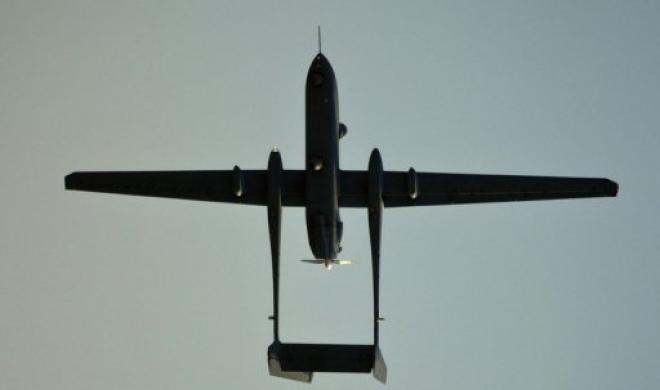
Israeli drone
Israeli drone

Egyptian Armed Forces Spokesperson Colonel Ahmad Ali categorically denied circulated reports of Israeli drone attacks behind the two blasts that hit the Egyptian city of Rafah Friday, killing at least five suspected terrorists.

“It is not true, either in form nor substance, that there were any attacks from the Israeli side inside Egyptian territory,” Ali told the state news agency (MENA).

“Likewise, the claim that there was coordination between the Egyptian and the Israeli side in this matter is a matter completely void of truth.

“The Egyptian border is a red line that could not be violated.” The Israeli government did not comment on the reports.

Several international news agencies have published reports about Israeli drone attack inside Sinai Peninsula Friday.

Earlier Colonel Ali released a statement saying that two explosions were heard at 4:15 pm in the area of Egra in Northern Sinai, adding that the area is currently being inspected to reveal the cause of the explosions.

Militants based mainly in North Sinai near the border with Israel have been launching attacks on Egyptian and Israeli targets over past years, but they have escalated their assaults since the ouster of former president Mohamed Morsi on July 3.

The Sinai Peninsula is largely demilitarized as part of the Israeli-Egyptian peace treaty of 1979 but Israel has approved troop reinforcements to combat the militants and smuggling by Palestinians into Gaza. – KUNA

Egypt outraged by likely US ambassador

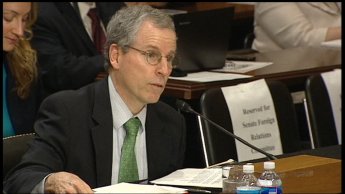
Robert Ford
Robert Ford

US media reports that Robert Ford, former top US envoy to Syria, will be Washington’s next ambassador to Egypt has sparked a vitriolic Twitter campaign over a Canadian conspiracy website’s claims that he once ran “death squads” in Iraq.

A little over two years ago, on July 8 2011, a convoy carrying the then US Ambassador to Syria Robert Ford made its way through army checkpoints to the besieged city of Hama, then the centre of protests against the rule of the Assad regime.

The surprise visit was seen as the first concrete sign of US support for the Syrian opposition. It sparked a furious response from the government.

The veteran US diplomat is now being showered with invective and diatribe on Twitter.

The latest social media campaign against Ford was sparked by media reports over the weekend that US Secretary of State John Kerry had recommended the former envoy to Syria as the next US ambassador to Egypt.

But a number of Egyptians on Twitter were having none of it.

Within hours, hashtags such as #NoToRobertFord in English and in Arabic, “We refuse the American ambassador to Egypt,” appeared on the microblogging site.

“The new sponsor of terrorism in Egypt,” tweeted one user, referring to the US career diplomat. Another warned, “Watch out Ford, if you come to Cairo .. You won’t be an ambassador .. You will b a target”.

The Twitter campaign followed the publication of a post on a Canadian conspiracy website, accusing Ford of running “death squads” in Iraq, where he was political counsellor to the US embassy in Baghdad between 2004 and 2006.

The website in question, run by the Centre for Research on Globalisation, is known among other things for its scepticism of the official explanation of the September 11 terrorist attacks.

The Egyptian daily, al-Masry al-Youm, reported the allegations, but could not establish their veracity.

The backlash could not come at a worse time for Washington. Anti-US sentiments are running high in the world’s most populous Arab nation and recipient of an annual $1.5 billion in US aid.

Muslim Brotherhood supporters accuse Washington of backing the Tamarod movement, which campaigned for democratically elected Egyptian president Mohamed Morsi’s ouster earlier this year.

On the other hand, Morsi’ opponents are convinced the US is supporting the Brotherhood, while current US Ambassador to Egypt Anne Patterson has turned into a reviled figure in the country.

In this milieu of mutual suspicions and rising tempers, Ford’s extensive diplomatic experience in the region has turned into a disadvantage instead of an asset.

A fluent Arabic speaker, Ford has also served in Bahrain and Algeria, leading some critics to draw parallels between the US diplomat and civil unrest in the countries he has been posted.

“When Robert Ford enters a country, he brings the shayatin (devils) in,” tweeted one user in Arabic, while another called the US envoy “the architect of fitna” – or upheaval.

Ford has been billed to take over the ambassadorship in Egypt after Patterson was nominated for a senior State Department post last week.

Patterson was appointed ambassador to Egypt in 2011, the year Ford was appointed top US envoy in Damascus. He was withdrawn from Syria in February 2012, after the security situation seriously deteriorated in the war-torn country.

While the New York Times cited unnamed US officials as saying Kerry had recommended Ford for the post, US State Department officials have not officially confirmed the report.

Ford’s appointment would require a recommendation by US President Barack Obama, followed by a Senate approval.

But for critics of the seasoned US diplomat, it’s never too early to express their opprobrium – on Twitter. – France24

Egypt deplores SA’s claim of Morsi legitimacy

egyptmorsisitEgypt’s Foreign Ministry expressed its extreme dissatisfaction with South Africa’s statement on the most recent events in Egypt.

South Africa’s Department of International Relations and Cooperation had declared its rejection for the latest events which caused former president Mohamed Morsi’s ouster and the constitution’s suspension.

These measures oppose the conventions and customs of the African Union, the department said.

South Africa’s continued claim of Morsi’s legitimacy insults millions of Egyptians’ will, the Egyptian Foreign Ministry said in a statement.

“It is sadly ironic that Egypt was among the first to defend the rights of South Africans in their fight against apartheid whereas South Africa’s current government takes a negative stance regarding the Egyptians’ attempt to rectify the course of their revolution.”

Thousands of supporters of ousted Egyptian President Mohammed Morsi have defied a new warning from the military-backed cabinet and are continuing their sit-ins in the capital, Cairo.

The country’s interim leaders have ordered police to end ongoing protests at two sites in the city.

But Mr Morsi’s Muslim Brotherhood said they had no option but to continue the month-long sit-ins.

The United States has again urged Egypt to respect freedom of assembly.

Pro-Morsi demonstrators want to see the Islamist leader reinstated. He was removed by the army on 3 July, after just one year in office.

They have defied previous threats of removal, despite clashes with security forces that have left dozens dead.

The Egyptian interior ministry says gradual steps will be taken to disperse the crowds.

“The continuation of the dangerous situation in Rabaa al-Adawiya and Nahda squares, and consequent terrorism and road blockages, are no longer acceptable given the threat to national security,” it said in a statement on Wednesday.

Police had been tasked to end the demonstrations “within the law and the constitution”, it added.

‘Attempt to terrorise’But Essam el-Erian, vice president of the Freedom and Justice Party, the Brotherhood’s political party, said the protesters would not be deterred by the latest threats.

“There are expectations of a massacre taking place in front of the eyes of the whole world,” he said.

“The free people in Egypt and the world must stand against this stupid cabinet mandate for the police to end the sit-in protests.”

The main protest sit-in is at a square near the Rabaa al-Adawiya mosque in the capital’s north-east, where clashes erupted on Saturday in which some 70 people were killed, and in Nahda Square near the main campus of Cairo University.

“Nothing will change,” Brotherhood spokesman Gehad el-Haddad told AFP news agency after the cabinet threat.

He dismissed the dispersal announcement as an “attempt to terrorise Egyptians” and said the decision to clear the camps had been taken by a “gang” that had no respect for the law.

Another Muslim Brotherhood member, Mohamed el-Beltagy, told Associated Press the army had forgotten “its main role in protecting the Egyptian borders and decided to kill its people”.

The government has not given details of when the clearance could happen.

US state department spokeswoman Marie Harf appealed for it to avoid violence.

“We have continued to urge the interim government officials and security forces to respect the right of peaceful assembly,” she said.

“That obviously includes sit-ins. So we’ve made that point publicly and privately, and we’ll continue to do so.”

Official visitorsMeanwhile, three top Muslim Brotherhood figures have been referred to court on charges of inciting violence.

Brotherhood leader Mohammed Badie, his deputy Khairat al-Shater and senior leader Rashad Bayoum face trial over allegations of inciting the killing of protesters outside of their headquarters last month.

An African Union delegation confirmed on Wednesday that it had met Mr Morsi, who has not been seen in public since being ousted.

He had received no official visitors until Tuesday, when he met EU foreign policy chief Catherine Ashton who said he was “well”.

The ousted leader has been formally remanded in custody at an undisclosed location, according to a judicial order.

He has been accused of the “premeditated murder of some prisoners, officers and soldiers” when he and several Muslim Brotherhood leaders were freed during a breakout at a Cairo prison in January 2011.

He is alleged to have plotted attacks on jails in the uprising that overthrew President Hosni Mubarak.

Mr Morsi is also accused of conspiring with the Palestinian militant group Hamas, which governs the Gaza Strip and has strong links with the Muslim Brotherhood.

He was overthrown by the military after mass rallies in which millions of Egyptians calling for his removal took to the streets. – Aswat Masriya/BBC

EU’s Ashton visits Morsi

EU's Ashton
EU’s Ashton

European Union foreign policy chief Catherine Ashton said on Tuesday she found that deposed Egyptian President Mohamed Morsi was well and had access to television and newspapers when she visited him.

Sources told AFP that Ashton had left Cairo in a military helicopter heading to the undisclosed location where Morsi is being held.

Ashton was speaking to journalists after meeting Morsi on Monday night. “I’ve tried to make sure that his family know he is well,” said Ashton.

Ashton, who is trying to mediate a resolution to Egypt’s political crisis, added: “I said I wouldn’t come unless I could see him (Morsi).” Asked about a media report that she had offered Morsi a “safe exit”, she replied: “I did nothing of the kind.”

Spokeswoman Maja Kocijancic said on her Twitter feed that Ashton and Morsi had an “in-depth discussion” lasting two hours.

Morsi is in army detention at an undisclosed location, facing charges of conspiring with Islamist group Hamas to carry out “hostile acts.”

Ashton was on her second visit to Egypt since widespread political unrest gripped the country following Morsi’s ouster on July 3. – Voice of Russia/dpa


Egypt embassy in SA: Country safe for travel

egypttourismEgypt’s embassy in Pretoria says it is safe to travel to the North African nation, despite political upheaval after the ousting of its president.

“We would like to assure our travellers that Egypt is still safe to travel to and to visit,” spokesperson Amina Hatem said in a statement on Monday.

“All normal aspects of life including Egypt Air’s operations and international travel are safeguarded by the people and the authorities and remain perfectly functional as always.”

The South African government earlier warned its citizens to be careful when travelling to the country.

The Egyptian military toppled former president Mohamed Morsi on Wednesday, reportedly with the support of leaders from many sectors of Egyptian society.

The constitution was suspended.

South Africa encouraged citizens to register online with Registration of South African citizens Abroad when travelling to Egypt.

“The South African embassy in Egypt remains open and is available at all times to assist South African citizens, should circumstances require,” international relations spokesperson Clayson Monyela said. – SAPA

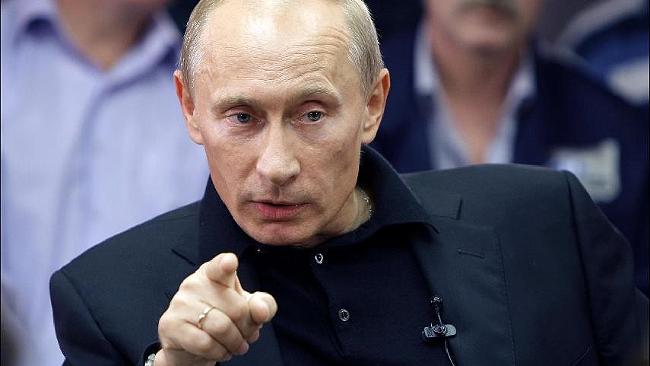
Putin: Egypt going the same way as Syria

Putin sees another Syria in the making

Russia’s President Vladimir Putin has said that Egypt risks slipping into civil war following the military overthrow of president Mohamed Morsi.

Dozens of people have been killed and more than 1 000 wounded in clashes between Morsi’s supporters, opponents and the military since the president’s exit.

“Syria is already in the grips of the civil war … and Egypt is moving in the same direction,” Putin told Russian state news agency RIA Novosti on Sunday during a visit to Kazakhstan’s capital Astana.

Meanwhile, Egypt’s transition has stumbled after the choice of Mohamed ElBaradei as interim prime minister was thrown into doubt by Islamist objections.

ElBaradei’s nomination had been confirmed by several sources and state media on Saturday, but just before midnight a presidential spokesperson told reporters that the prime minister had not in fact been chosen.

The abrupt U-turn came amid opposition to the appointment by the Nour Party, Egypt’s second Islamist force after Morsi’s Muslim Brotherhood movement, highlighting the challenge the military faces in finding consensus among liberals and conservatives on who should run the country.

Clashes between tens of thousands of pro- and anti-Morsi protesters swept the Arab world’s most populous nation on Friday and at least 35 people were killed and more than 1 000 wounded.

The violence, which saw rival factions fighting street battles in central Cairo and many others cities and towns, underlined the pressing need for a swift political solution seen as inclusive to all.

“We extend our hand to everyone, everyone is a part of this nation,” the spokesperson told reporters. “The Muslim Brotherhood has plenty of opportunities to run for all elections including the coming presidential elections or the ones to follow.”

Minutes after he spoke, state media reported that the public prosecutor ordered that four top Brotherhood leaders held this week be detained for a further 15 days on accusations that they incited violence against protesters.

The four included Saad el-Katatni, head of the group’s political wing, and Khairat El-Shater, its political strategist.

The Brotherhood has said it wants nothing to do with the military’s plans for a new interim government. It believes Morsi should be reinstated, and has pledged to keep protesting until he is.

The Nour Party, however, had agreed to the army-backed transition plan leading to new elections. Its withdrawal from the process would strip that plan of vital Islamist support.

And following the Nour rejection, the interim administration headed by Adli Mansour delayed naming the new prime minister.

On Sunday, people were still reeling from one of the bloodiest days in over two years of tumultuous upheaval since autocrat Hosni Mubarak, who ruled for 30 years, was toppled in a popular uprising that was part of the 2011 “Arab Spring”.

The Brotherhood called for another day of protest on Sunday.

Huge protests were staged on June 30 to pressure Morsi into resigning amid growing anger at economic stagnation and the perception among many that the Brotherhood was seeking to take control of every part of the state – a charge it fiercely denies.

Millions took to the streets to cheer his ouster on Wednesday, but for many Islamists it was a bitter reversal that raised fears of a return to the suppression they endured for decades under autocratic rulers.

The military said it had not carried out a coup, but merely enforced the will of the people. – Reuters

Sixteen protestors shot dead in Cairo: Islamists

Hundreds of thousands of protestors flood Cairo's Tahrir Square while a man waves an Egyptian flag from a rooftop last night
Hundreds of thousands of protestors flood Cairo’s Tahrir Square while a man waves an Egyptian flag from a rooftop last night

Sixteen Islamist activists were shot dead early on Monday during a protest outside a key Cairo army headquarters calling for ousted president Mohamed Morsi to be reinstated, his Muslim Brotherhood said.

“Sixteen people were killed and 100 others injured, many of them in serious condition,” the group’s spokesman Ahmed Aref told AFP.

Police barricades prevented journalists from accessing the area around the elite Republican Guards base.

Demonstrators told AFP that troops and police had fired tear gas canisters and bullets into the air to disperse the protesters.

“They wanted to disperse the protesters,” who were determined to stage an indefinite sit-in, the protester said.

Another protester, Mahmud al-Shilli confirmed that security forces fired into the air, adding that a group of men in civilian clothing had attacked the protesters.

“The Republican Guard fired tear gas but the thugs came from the side. We were the target,” Shilli told AFP.

Earlier, demonstrators told AFP by telephone that troops and police had fired tear gas canisters and live rounds in a bid to disperse them.

“I saw with my own eyes the people who they shot at,” one protester said, adding that several people had been injured.

On Friday at the same spot, four Islamists were shot dead by soldiers.

Supporters of Morsi’s Muslim Brotherhood have mobilised in large numbers in different parts of Cairo in recent days, vowing to defend Morsi, who was ousted by the military on Wednesday after mass protests calling for him to be removed from power.

Morsi was Egypt’s first freely elected president but lasted just a year in power. – AFP

Egypt militants bomb gas line to Jordan

gas_explosionMilitants in Egypt’s Sinai bombed a gas pipeline to Jordan on Sunday, witnesses said, amid a surge in attacks on police and soldiers after Islamist president Mohamed Morsi’s ouster.

Witnesses told AFP the blast took place near the the north Sinai town of El-Arish.

After an uprising overthrew president Hosni Mubarak in early 2011, militants in Sinai repeatedly bombed the pipeline, which also supplied Israel.

But such attacks had not been reported for almost a year. – AFP

Death toll in Egypt clashes mounts to 30

12 died in Alexandria violence

Medical officials say at least 12 people have been killed in clashes between supporters and opponents of the ousted president in the Mediterranean coastal city of Alexandria, bringing nationwide toll to 30.

Emergency services official Amr Salama says the 12 died when hundreds of Islamists descended on a rally by opponents of ousted President Mohammed Morsi in the city, opening fire with guns.

He says clashes erupted, and police joined on the side of the Morsi opponents.

Salama says he saw one man die when he went to the roof of a building, raised an Egyptian flag and shouted insults against Morsi. Morsi backers went to the roof and stabbed him and threw him off the building.

The state news agency MENA also confirmed 12 dead in the city. – AP

Muslim Brotherhood leader vows to reinstate Morsi in Egypt

Mohammed Badie
Mohammed Badie, leader of the Muslim Brotherhood

The head of Egypt’s Muslim Brotherhood Friday vowed that the group’s followers would hold open-ended protests to press for the reinstatement of ousted Islamist president Mohammed Morsi, as violence mounted in the country.

“All the measures taken (by the army) are invalid,” Mohammed Badie said at a massive Cairo rally. “The millions supporting Morsi will stay in the squares until the president of Egypt is reinstated.”

Badie, who is the spiritual leader of the Brotherhood to which Morsi belongs, denied media reports he had been arrested.

His influential deputy, Khayrat al-Shater, was arrested Friday in Cairo on charges of inciting violence against opponents, the official Middle East News Agency reported.

The army ousted Morsi on Wednesday following unprecedented protests by millions of Egyptians who demanded his resignation and early presidential elections. Several leading Islamists have since been detained.

The former president’s backers staged huge protests across Egypt, demanding his reinstatement.

“The situation is very clear. The democratic process in Egypt has been assassinated by a coup d’etat against the first democratically elected president,” Omar Ibrahim, a school teacher attending the pro-Morsi rally in the Cairo area of Nasr City, told dpa.

“But I can assure you that the Egyptian people will defend their revolution.”

Violence on Friday in the wake of Morsi’s overthrow left 17 people dead and 315 injured in Cairo and other areas, state television reported, citing the Health Ministry. There were no details on how and where the casualties occurred.

The broadcaster reported clashes between Morsi’s opponents and backers in Alexandria, Egypt’s second most populous city, the Nile Delta provinces of Damietta and Beheira, and the coastal city of Suez.

One person was reported killed and 66 injured in fighting between the two sides near the Nile-side TV building in Cairo near Tahrir Square, where Morsi’s opponents continued to celebrate his removal.

The army positioned tanks and armoured vehicles outside the building apparently to prevent potential attacks.

There were clashes in al-Arish, a city in the Sinai Peninsula near Israel. A police car was torched in the violence.

State television said the army had foiled an attempt by Morsi’s supporters to storm the city hall of the Suez Canal city of Ismailia. No casualties were reported.

Egypt’s top Muslim cleric, Ahmed al-Tayyeb, appealed for calm.

“I call on all Egyptians to avoid bloodshed. I entreat to God to put an end to this ugly sedition,” al-Tayyeb, head of the prestigious Sunni al-Azhar institution, said in a televised statement.

Earlier Friday, gunmen attacked army and police checkpoints in Sinai, killing one soldier and injuring three others, a security official said.

The attacks prompted Egyptian authorities to indefinitely close the Rafah border crossing with the Palestinian Gaza Strip. Troops deployed in Suez and South Sinai provinces were put on maximum alert following the assaults.

Interim President Adli Mansour, sworn in Thursday, has dissolved the Islamist-dominated Shura Council, which served as a temporary legislature.

Mansour appointed Refaat Shehata, outgoing intelligence service chief, as presidential advisor on security and named Mohamed Farid as new intelligence chief.

The African Union Peace and Security Council suspended Egypt on Friday from the 54-nation bloc, citing an unconstitutional power grab in the North African nation.

Cairo said it “deeply regretted” the bloc’s decision.

“We deeply regret this decision, which has been taken on the basis of unrealistic information,” Foreign Ministry spokesman Badr Abdel-Atti said.

Morsi became Egypt’s first democratically elected president last year after winning the polls with a narrow margin.

The opposition accused him of being keen on tightening the Muslim Brotherhood’s hold on power and becoming a dictator. – dpa

US funding for Egypt key to Israel-Egypt peace

egyptisraelIsrael’s peaceful relationship with its neighbors in Egypt comes at a high price: the deal obliges the US to provide massive amounts of unconditional military aid to Egypt.

And that’s where things get dicey. A military coup normally obliges the US to suspend military aid, which is why the US is avoiding calling this coup a “coup” in so many words, hoping to gloss over that fact.

But Egypt is a big deal, and a coup there is a little hard for the US to just write off as no big deal, which has Israeli officials fretting the prospect that the US might eventually be obliged to revoke aid to the new junta and “violating” the Egypt-Israel treaty in doing so.

Not that this means a serious risk of war, as both nations have been be getting billions from the US for decades and are both armed to the teeth. The US money buys Israel a lot of influence however, like the right under the treaty to dictate Egypt’s military policy in Sinai.

Israel is also expressing concern that jihadists will use the “power vacuum” to carry out attacks along the border, though Egypt has heavily deployed its military along the Gaza frontier, so this also seems unlikely.

In the end, the first impact the coup may have for Israel is weakening Hamas and strengthening Fatah, as Hamas had close ideological ties with President Morsi and was even in the process of ditching its long-standing alliance with Syria and Iran in favor of Egypt.

The Syrian government, which has long sought to portray its repression of the revolt against its rule as a crusade against Islamists, is relishing the Brotherhood’s humiliation in Egypt. Assad, in comments to be published in the state-run newspaper al-Thawra on Thursday, declared that “what is happening in Egypt is the fall of so-called political Islam.”

The president urged the country’s military to “return full authority” to “a democratically elected” government.

“Will the Brotherhood see the reality of events — and they rarely see any reality other than the visions in their own minds — and step down under the pressure of tens of millions of Egyptians? Or will the country be pushed into a civil war?” asked the announcer who read Wednesday afternoon’s news broadcast on state television, ahead of the daily digest of army victories against “terrorists” opposing the government.

Meanwhile, in rebel-held portions of Syria, people are starting to chafe at the behavior of the Islamist groups.

The execution on the streets last month of a 14-year-old boy for making a blasphemous comment and a rule issued this week by the city’s self-appointed Sharia court banning women from wearing makeup have stirred anger in the northern city of Aleppo. Citizens in the northeastern city of Raqqah have staged small-scale demonstrations against the Islamists who hold sway there.Some in Raqqah have watched with eager interest as the unrest unfolds in Cairo, said a resident who spoke via Skype on the condition that he not be identified because of the sensitivity of the subject. “The time will come when people realize that these groups don’t represent Islam, and they will kick them out,” he said.

Further afield, the recent mass demonstrations in Turkey, hailed as a model for emerging Arab democracies, were sparked by plans to chop down trees in a central Istanbul park but quickly grew into a wider expression of unease with Prime Minister Recep Tayyip Erdogan’s authoritarian style and his policies of Islamicization.

In Tunisia, the ruling Ennahda party, a Brotherhood affiliate, has held the middle ground between the radical Salafis who have threatened to use force to impose Islamic law and secularist activists, in another reflection of the splits opening up across the region that could shape a new round of turmoil.

“There is a fundamental divide in the Arab world over big issues such as the role of religion in government . . . and the identity of the state,” Hamid said. “It is a real, fundamental divide, and there is a lot at stake.” antiwar.com

Morsi’s support for intervention in Syria was the straw that broke the camel’s back

obamaegyptterrorThe protests in Egypt against president Mohammed Morsi were – according to the BBC – the largest in history.

The Irish Times reports:

Army concern about the way President Mohamed Morsi was governing Egypt reached tipping point when the head of state attended a rally packed with hardline fellow Islamists calling for holy war in Syria, military sources have said.

Mr Morsi himself called for foreign intervention in Syria against Mr Assad, leading to a veiled rebuke from the army, which issued an apparently bland but sharp-edged statement the next day stressing that its only role was guarding Egypt’s borders.

“The armed forces were very alarmed by the Syrian conference at a time the state was going through a major political crisis,” said one officer, whose comments reflected remarks made privately by other army staff. He was speaking on condition of anonymity because he was not permitted to talk to the media.

For the army, the Syria rally had crossed “a national security red line” by encouraging Egyptians to fight abroad, risking creating a new generation of jihadists, said Yasser El-Shimy, analyst with the International Crisis Group.

At the heart of the military’s concern is the history of militant Islam in Egypt, homeland of al-Qaeda leader Ayman al-Zawahri. The military source condemned recent remarks made by “retired terrorists” allied to Mr Morsi, who has deepened his ties with the once-armed group al-Gamaa al-Islamiya.

Obama had recently sent American troops to prop up Morsi, and the protesters were furious at the U.S. for backing Islamic radicals.

(The U.S. backed Egypt’s previous dictator, as well).

Support of Western intervention in Syria was also one of the main causes of the recent enormous protests in Turkey … which came close to toppling the Turkish leadership.

Indeed, the American government has been providing arms, money and logistical support to Al Qaeda in Syria, Libya, Mali, Bosnia and other countries – and related Muslim terrorists in Chechnya, Iran, and many other countries.  So moderate Arabs all over the Middle East and North Africa are becoming furious at U.S. interventionist policies.

Note:  The coup is a set-back for the U.S., because Egypt – unlike Iraq, Libya, Syria, and Iran – isn’t on the 20-year-old list of countries targeted for regime change. – Zero Hedge

US orders Americans to leave Egypt as anti-American sentiment soars

obamaegyptA U.S. official says the State Department is ordering nonessential U.S. diplomats and the families of all American Embassy personnel to leave Egypt after the Egyptian military removed Morsi and in anticipation of potential violence.

The official, speaking on condition of anonymity because the official wasn’t authorized to discuss it publicly, said the State Department had placed the U.S. Embassy in Cairo on “ordered departure” status for nonemergency staff and dependents all employees. That means that those covered by the order are required to leave the country. It was not immediately clear if an evacuation operation would be mounted or if those departing would use commercial airlines or passenger ships to leave.

When a coup is not a coup, and democracy not about elections

EgyptObamaThe Egyptian military’s overthrow of elected President Mohamed Morsi left United States President Barack Obama grappling with a difficult question of diplomacy and language in dealing with the Arab world’s most populous nation: was it a coup?

At stake as Obama and his aides wrestle with that question in the coming days is the $1.5-billion in aid the US sends to Cairo each year – almost all of it for the military – as well as the president’s views on how best to promote Arab democracy.

If the United States formally declares Morsi’s ousting a coup, US law mandates that most aid for its longtime ally must stop. And that could weaken the Egyptian military, one of the country’s most stable institutions with long-standing ties to US authorities.

Further complicating Obama’s calculus is the fact that millions of Egyptians rallied in favour of Morsi’s departure, and that the military announced a road map for return to civilian rule that was blessed by Egypt’s Muslim and Christian religious leaders.

But Morsi and his Muslim Brotherhood retain backing from a broad swath of Egyptian society, even as he alienated many of his countrymen.

Obama, after meeting top advisors at the White House, said in a statement that he was “deeply concerned” by the army’s actions and had directed the relevant US agencies to review the implications for US assistance to Egypt.

But he did not use the word “coup” and stopped well short of advocating for Morsi’s reinstatement, suggesting Washington might be willing to accept the military’s move as a way to end a political crisis in a nation of 83 million people struggling with severe economic difficulties.

Recent history suggests Obama might take his time on deciding the future of US aid to Egypt, and by extension, Washington’s relations with the country.

US law bars “any assistance to the government of any country whose duly elected head of government is deposed by military coup d’etat or decree”.

When Honduran President Manuel Zelaya was ousted in June 2009, Washington temporarily suspended aid, but did not cut about $30-million in assistance until more than two months later.

Even then, Secretary of State Hillary Clinton did not determine as a matter of law that a coup had taken place.

Eric Trager, an expert on Egyptian politics at the Washington Institute for Near East Policy, said Obama should not label Morsi’s ouster a coup, nor cut off US aid.

“The Obama administration should recognise that as undemocratic as a coup is, it was the result of the basic fact that President Morsi had completely lost control of the Egyptian state,” Trager said by telephone from Egypt.

“Democracy was not the primary thing at stake in Egypt these last few months,” but rather Morsi’s mismanagement and fears of collapse of the Egyptian state, he said.

In announcing Morsi had been deposed and the Egyptian constitution suspended, Egypt’s army commander promised a quick political transition. The military laid out plans for elections and a constitutional review.

The US chairman of the joint chiefs of staff, General Martin Dempsey, warned Egyptian military leaders of consequences if Morsi’s overthrow were viewed as a coup.

“At the end of the day it’s their country and they will find their way, but there will be consequences if it is badly handled,” Dempsey told CNN.

Obama also warned against further violence, indicating that Washington’s ultimate decision on aid to Egypt will depend on how Egypt’s armed forces handle the transition in coming weeks.

Morsi, in power for a year, was widely blamed for presiding over a steady decline in Egypt’s economy and for failing to form a broad-based government that included other groups that had joined in the 2011 revolution that overthrew President Hosni Mubarak.

US lawmakers also welcomed Morsi’s departure but called for a quick transition back to democratic rule – with a close look at the aid budget.

Democratic Senator Patrick Leahy, who heads the Senate subcommittee that oversees foreign aid, on Wednesday promised a review of the $1.3-billion in military aid and $250-million in economic aid sent to Cairo each year.

Washington has cut off aid following military coups several times before. In April 2012, the United States suspended at least $13-million of its $140-million in annual aid to Mali following a coup in the West African nation.

Programmes that did not go directly through government ministries were not affected.

Any Obama support for Egypt’s new government is unlikely to face opposition from Republicans in Congress, who had been sceptical of Morsi’s Islamist government.

“Morsi was an obstacle to the constitutional democracy most Egyptians wanted,” said Republican Representative Ed Royce, the chairman of the House of Representatives Foreign Affairs Committee.

Republicans also voiced strong support for Egypt’s military, whose close ties to Washington stretch back to the 1979 Israeli-Egypt peace accords.

“The Egyptian military has long been a key partner of the United States and a stabilising force in the region, and is perhaps the only trusted national institution in Egypt today,” said US Representative Eric Cantor, the No. 2 Republican in the House.

“Democracy is about more than elections,” he said. – Reuters