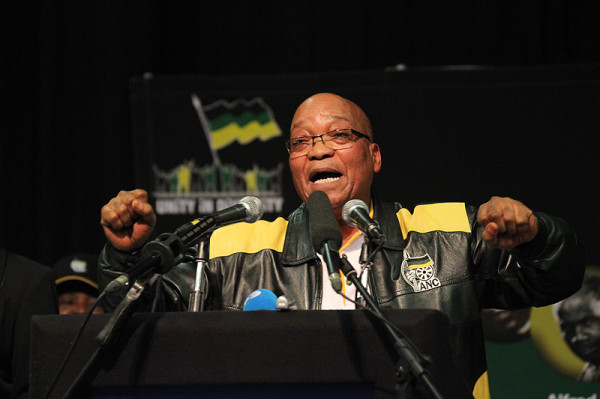
President Jacob Zuma axed three of his ministers in a Cabinet reshuffle on Tuesday.
Embattled Communication Minister Dina Pule, Human Settlements Minister Tokyo Sexwale and Co-operative Governance and Traditional Affairs Minister Richard Baloyi lost their jobs.
This is the fourth time Zuma has reshuffled his Cabinet since 2010.
Pule was replaced by Co-operative Governance Deputy Minister Yunus Carrim.
She has been embroiled in a battle with the Sunday Times about reports on allegations of corruption.
At a media briefing in April, she alleged that the Sunday Times was staging a smear and blackmail campaign against her.
In the newspaper’s reports, she was accused of giving tenders to a boyfriend, meddling in tender processes, and interfering in the appointment of officials to the boards of state-owned enterprises.
Zuma announced that Sexwale would be replaced by African National Congress MP Connie September.
Sexwale was said to be part of the ‘Forces of Change’ which resisted Zuma’s re-election as African National Congress president at the party’s elective conference in Mangaung last year.
Sexwale lost his bid for the position of ANC deputy president and his seat on the party’s national executive committee.
Baloyi, who has been an MP since 1999, was replaced by Co-operative Governance and Traditional Affairs Deputy Minister Lechesa Tsenoli.
Baloyi had been moved to co-operative governance from his position as public service and administration minister in Zuma’s 2011 reshuffle.
After just a year as transport minister, Ben Martins becomes the new energy minister, swapping porfolios with Dipuo Peters.
Zuma also announced the appointments of four new deputy ministers.
ANC MP John Jeffrey was appointed as deputy minister of justice, taking over from Andries Nel, who takes up the position of deputy minister of co-operative governance and traditional affairs.
Another ANC MP Michael Masutha was appointed deputy minister of science and technology, a position which was vacated last year with the appointment of Derek Hanekom as minister of science and technology.
Hanekom replaced Naledi Pandor, who was made home affairs minister, following the appointment of Nkosazana Dlamini-Zuma as African Union commission chairwoman.
MP Pamela Tshwete was appointed deputy minister of rural development, following Carrim’s appointment as communication minister.
Zuma said the new ministers and deputies would be sworn in on Wednesday. – Sapa
Ailing former president Nelson Mandela is still in a critical, but stable condition, the presidency said on Monday.
“We remind all South Africans to begin planning for Madiba’s birthday on 18 July,” President Jacob Zuma said in a statement.
“We must all be able to do something good for humanity on this day, in tribute to our former president.”
Zuma thanked everyone who had kept Mandela and his family in their thoughts and prayers.
The anti-apartheid icon was admitted to a Pretoria hospital on June 8 with a recurring lung infection.
When he was admitted to hospital, the presidency described his condition as serious, but stable.
However, on June 23, after Zuma and African National Congress deputy president Cyril Ramaphosa visited Mandela, the presidency announced that his condition had deteriorated.
“The condition of former president Nelson Mandela, who is still in hospital in Pretoria, has become critical,” spokesman Mac Maharaj said in a statement at the time.
He said Mandela’s doctors had told Zuma and Ramaphosa that his condition had become critical in the past 24 hours.
Zuma visited him again on Wednesday. In an official update on Thursday, the presidency said Mandela’s condition had improved, but remained critical, but stable.
After the visit, Zuma cancelled his trip to Mozambique, where he was due to attend a Southern African Development Community infrastructure investment conference.
A steady flow of family members had visited Mandela at the Medi-Clinic Heart Hospital, in Pretoria, since his admission. – Sapa
The ANC was unaware that the family of former statesman Nelson Mandela was unhappy about a publicised visit President Jacob Zuma made to Mandela’s house shortly after he was released from hospital in April, the party said in a statement on Sunday.
ANC spokesman Jackson Mthembu said comments made by Mandela’s ex-wife Winnie Madikizela-Mandela about the visit were regrettable.
“As the ANC we are in contact on a daily basis with the Mandela family and these issues that have been publicly aired by Winnie Madikizela-Mandela have not been raised in any of these occasions,” said Mthembu.
The AFP reported on Sunday that Madikizela-Mandela told Britain’s ITV News television that the visit by Zuma and other ANC delegates was insensitive.
“I honestly cannot put in words how hurt the family was. It was one of the most insensitive things for anyone to have done,” she was quoted as saying.
Zuma said at the time Mandela was “up and about”, a description that was clearly at odds with televised footage that showed the revered ex-leader frail and dazed, sitting frozen in an armchair, said the AFP.
Prior to the visit, Mandela had been out of the public eye for some time.
In excerpts published on the ITV website, Madikizela-Mandela added: “It compromised the family, compromised his dignity and it should have never been done.”
Mthembu said the visit was one of many that the ANC had made to Mandela to continue to show support to him and his family.
“We have to demonstrate [an] active interest in the life of [former] President Mandela who remains our leader and our icon,” said Mthembu.
He said the ANC would continue to pray for Madiba who was in a critical but stable condition at the Medi-Clinic Heart Hospital in Pretoria.
Mandela has been in hospital since June 8 and is being treated for a recurring lung infection. – Sapa
Former president Nelson Mandela was still in a critical condition in hospital on Wednesday afternoon, President Jacob Zuma said.
“As he remains in a critical condition in hospital we must keep him and the family in our thoughts and prayers every minute,” he said to groans of despair from the audience at the National Education, Health and Allied Workers’ Union (Nehawu) conference in Boksburg, east of Johannesburg.
Zuma led a song from the anti-apartheid struggle about Mandela and Oliver Tambo taking up arms.
He then sang “Awulethu’ Mshini Wami” with delegates joining him. After that he had a bite of cake on the stage and left. – Sapa
President Jacob Zuma opened the National Education, Health and Allied Workers’ Union (Nehawu) conference on Wednesday with a rousing rendition of a song about former president Nelson Mandela, who is gravely ill.
Loosely translated from isiZulu, he sang: “We are walking a long distance, so said Nelson Mandela to his supporters.”
Dipping his body into the song, as the red-clothed delegates harmonised and ululated, Zuma sang several refrains.
On Sunday, his office broke the news that Mandela was critically ill, after being in hospital with a recurring lung infection since June 8.
When he finished the song, Zuma began his prepared speech.
He was addressing the conference in his capacity as African National Congress president. – Sapa
Former president Nelson Mandela’s home in Houghton was quiet on Wednesday morning, with police cars occasionally patrolling the area as the former statesman remained in a critical condition in a Pretoria hospital.
At around 1.10am three cars and one van from the Johannesburg metro police came down 4th Street, and turned into the street where Mandela’s house is located.
The van at the back of the patrol switched on it’s hazard lights, reversed and parked in the street in front of the gate before flashing its headlights.
About eight officers got out of the vehicles and had a discussion in front of the gate for 10 minutes before they all got back into the cars and drove off slowly.
Police presence in the neighbourhood and patrolling increased on Tuesday night and Wednesday morning, compared to other nights.
The presidency announced on Sunday that Mandela’s health had deteriorated.
At 11.40pm on Wednesday a police van pulled up outside the main black gates of the house.
Two officers walked up and down the road to ensure no cars were parked in the streets in front of and on the side of the house. The other four officers went inside the gates and came out about half an hour later.
After midnight the officers all got back into the van and drove off.
Soon after this, another police car drove up and down the streets before leaving.
After 1.30am a Gauteng flying squad car drove past the house slowly before speeding away.
The house was dark with all curtains and blinds closed. Only the outside lights, in the yard and outside the house, were on.
Outside the main gates, people had put bouquets of flowers and more stones around one of the big trees. The stones were painted in the colours of the South African flag and had messages such as “Nelson Mandela we love you”, “Get well soon Tata” and “We love you Madiba” painted and written on them.
The flower beds around the yard were colourful with painted stones in each of them. One had small South African flags spread over the stones.
The stones bore messages including “God Bless Madiba”, “Thanx [sic] father” and “I love you Madiba” painted on them.
They had been left by well-wishers in the days since Mandela was hospitalised on June 8 for treatment of a recurring lung infection.
Police officers and security guards would take the cards and posters left by people inside.
A single broadcast vehicle was parked outside the house opposite the ailing statesman’s house.
On Tuesday, the presidency confirmed that Mandela remained in a critical condition.
“[Mandela’s] condition remains unchanged in hospital, and doctors continue to do their best to ensure his recovery, wellbeing, and comfort,” spokesman Mac Maharaj said in a statement.
On Sunday night, Maharaj said in a statement that the anti-apartheid icon and Nobel peace prize laureate’s condition had deteriorated and had become critical.
The presidency made the announcement after a visit by President Jacob Zuma and African National Congress deputy president Cyril Ramaphosa.
On Wednesday morning, it was quiet outside the Nelson Mandela Foundation a few streets from the former statesman’s house. Two cars were parked inside the premises. – Sapa
Former president Nelson Mandela remains in a critical condition in a Pretoria hospital, the presidency said on Tuesday.
“[Mandela’s] condition remains unchanged in hospital, and doctors continue to do their best to ensure his recovery, well-being and comfort,” spokesman Mac Maharaj said in a statement.
He said President Jacob Zuma thanked the public for their ongoing support and understanding.
Zuma said: “We must support him and support his family.
“We must demonstrate our love and appreciation for his leadership during the struggle for liberation and in our first few years of freedom and democracy by living out his legacy and promoting unity, non-racialism, non-sexism and prosperity in our country.”
Zuma also urged that Mandela and his family be shown sensitivity, dignity and privacy at this time.
The 94-year-old ailing icon was admitted to hospital on June 8 because of a recurring lung infection.
At the time, the presidency said Mandela was in a “serious but stable” condition.
However, on Sunday the presidency said his condition had become critical.
Mandela turns 95 on July 18.
Zuma said: “We must all be planning what to do next month in marking our 67 minutes of doing good for humanity as called upon by Madiba to do so, when he launched the International Mandela Day campaign.
“Let us make it the biggest Mandela Day ever on July 18, focusing on doing good all over the country.” – Sapa
South Africa has not fully reversed the damage done by the Natives Land Act, President Jacob Zuma said on Thursday.
“A great wrong was done, and now it is up to us to follow-up by doing a great right,” he said in a speech prepared for delivery at a commemoration of the centenary of the 1913 Land Act.
“We are now in charge of our own destiny. We have achieved a successful transition to democracy, but we have not yet fully reversed the dreadful pattern of poverty and landlessness — the havoc created by the Natives Land Act,” said Zuma.
“Correcting the consequences of this act is a critical cog in the wheel of state. It is a crucial component in the National Development Plan.”
The act dispossessed land from black and “native” South Africans.
Zuma said it marked the beginning of the socio-economic challenges the country now faced.
“The act was enforced for 78 years until it was repealed in 1991, and during these many years it did enormous damage, so much so that despite 22 intervening years, the legacy of the act stubbornly persists,” he said.
“We take our hats off to the black people of this country and to the Khoi and the San people, for not allowing the pain of the past to stand in the way of building the present and the future.
“The pain of being driven off one’s land is worse than anything one can imagine.”
Zuma said the government admitted that the land redistribution progress had been slow, and that the 2014 redistribution target would not be met.
Until now, only 6.7 million hectares of land had been transferred through redistribution and restitution.
“We call on all South Africans to commemorate this landmark, with a view to correcting the wrongs of the past and to reinforce reconciliation,” Zuma said.
“We urge the public to participate in the process of improving land redistribution and reform to reverse the impact of the 1913 act.” – Sapa
Expelled ANC Youth League president Julius Malema’s corruption case will continue in the Pietersburg Magistrate’s Court on Friday.
On Thursday, Malema told the court he feared that a delay in setting a trial date for his case could jeopardise the launch of his new political party.
“The sooner this case is finished, the better. I am in the process of forming a [political] party,” he said.
Malema blamed President Jacob Zuma for some of his troubles.
“It becomes impossible to convince people to join the party. President Zuma has done everything to make sure that I lost everything and block whoever is linked with Malema,” he told the court.
Malema is accused of making nearly R4 million from corrupt activities.
He is out on bail of R10,000 and faces charges of fraud, corruption, money-laundering, and racketeering.
His co-accused are his business associates Kagisho Dichabe, Lesiba Gwangwa, Helen Moreroa, and Makgetsi Manthata, who are out on bail of R40,000 each.
The State alleges Malema and the others misrepresented themselves to the Limpopo roads and transport department, leading to a R52m contract being awarded to On-Point Engineering.
According to court papers, Malema had business ties with Gwangwa, a director of On-Point Engineering. Malema’s Ratanang Family Trust was an indirect shareholder in On-Point.
The department paid the company R43m. According to the charge sheet, Malema substantially benefited from this payment, using it to buy a farm and a Mercedes-Benz. – Sapa
President Jacob Zuma has rejected the notion of South Africa lacking policy certainty and investor confidence.
“I think there is leadership in this country, very clear leadership. There is certainty on policy, there is certainty on economic policy. I would not accept the fact that there is no certainty,” he told the National Assembly on Wednesday.
Zuma was responding to a question by Democratic Alliance parliamentary leader Lindiwe Mazibuko.
She said labour unrest had contributed to a “break-down in investor confidence”, triggering warnings that South Africa’s platinum could decline by 60 percent in coming years.
She asked where Zuma stood on the issue of strike balloting, and argued that ANC MPs had undermined government’s efforts to improve the economy by removing a provision requiring a pre-strike vote from the Labour Relations Amendment Bill.
The president said labour strife at mines was a complex issue because of the emergence of rival trade unions, and it was vital that all roleplayers co-operate to resolve it.
“The difficulty has come in the manner in which the recent problems have emerged,” he said.
He praised Deputy President Kgalema Motlanthe for his mediation efforts between unions and mining companies.
“I think they are working very closely to agree on the matters that have to be addressed in terms of addressing the problems at the mining level,” he said.
Zuma said negative headlines were largely to blame on negative views expressed by the political opposition.
“Generally, people are saying we are doing very well. I have just come back from Japan. They are full of praises of South Africa… key investors. So it is not like a perception that is thrown around that investors are worried, not at all.”
He said the economy was well-balanced and aimed at dealing with the country’s specific challenges, including imbalances created by its apartheid past.
“Therefore, I confirm, the policies of the ruling party are absolutely correct, no-one could argue against them. Whoever argues against them does not understand the South African sentiment.” – Sapa
A DA councillor in the Eastern Cape has been suspended for circulating a racist email, The New Age reported on Monday.
Stanford Slabbert had reportedly sent an email saying President Jacob Zuma had more wives than brain cells.
The email also slammed the African National Congress for producing “dumb idiots who wait for handouts”, according to the report.
The email said Zuma had led a country where a quarter of schoolgirls were HIV-positive because South Africans had “spread the disease more than anyone else in the world”.
Gauteng province, or the PWV (Pretoria=Witwatersrand-Vereeniging
South Africa’s two main political parties are setting out their stalls for the 2014 election, with the country’s key province Gauteng shaping up to be a key battleground.
In recent days the African National Congress (ANC), in power for 19 years, and main opposition the Democratic Alliance (DA) have held town hall discussions and rallies in the region, which encompasses Johannesburg and Pretoria.
The country’s smallest and most populated province, it holds the seat of government and the economic heartland of Africa’s largest economy.
President Jacob Zuma, on the hunt for a second term in office, on Friday visited the suburb where Nelson Mandela used to live in the iconic Johannesburg township Soweto.
“Get well, Mandela, get well!” was a popular chant as he spoke to cheering students and schoolchildren, the day the global peace icon marked a week in hospital for a recurring lung infection.
Meanwhile DA leader Helen Zille was clear on her party’s target for parliamentary and presidential polls.
“The DA is marching towards victory in Gauteng next year,” she told a sea of supporters dressed in the party’s blue at a rally in Johannesburg on Saturday.
“South Africa stands or falls on Gauteng’s success because of its economic might. If South Africa is to succeed, Gauteng must succeed.”
This will be a key fight in upcoming polls, agreed political analyst Cherell Africa.
“Gauteng is a very strategic province. It is a very important province economically,” she told AFP.
“It is strategic in terms of if they want to damage the ANC,” said Africa, who heads the politics department at the University of the Western Cape.
The ANC won 2009 polls with 65.9 percent nationally, against the DA’s 16.7 percent.
But the opposition’s representation in Gauteng shot to over 33 percent in a municipal vote two years later.
Though the ANC still firmly controls the province, protests over poor electricity, water and sanitation services have increased.
A massive municipal mishap in the provincial capital Johannesburg provoked scandal as residents received erroneous utility bills amounting to thousands of rand (dollars, euros).
The DA, smelling blood, has thrown its weight and funds behind a mass civil society court battle against planned tolling on Gauteng’s main highway.
The party said it wanted to win another key province after taking the Western Cape — which includes Cape Town — in the previous elections.
Zuma has defended his track record, slamming critics such as the DA who point out sluggish economic growth and 25 percent unemployment as well as massive labour unrest in the mining sector during his four years in office.
“They’ve forgotten that this government is trying to fix problems that have been there for centuries,” he told students at the University of Johannesburg’s Soweto campus on Friday.
The ANC has drawn a lot of mileage from the DA’s image as a party for whites. Black DA supporters are “un-African”, the ANC has said.
Zuma launched a charm offensive in mixed-race communities in Gauteng, focusing on an anti-drug campaign.
Many commentators saw this as an attempt to lure them away from the DA, their likely voting choice.
Both parties promise a better future, but ironically the apartheid past is prominent in the debate.
Slogans in support of 94-year-old Mandela, the country’s first black president, are an open reminder of the ANC’s past as liberation movement.
It keeps referring to that history to appeal to voters.
But the DA has hit back with a campaign showing its own leaders’ role in fighting against the white-minority regime.
A big advertisement in Soweto recalls how Zille exposed the apartheid police killing of activist Steve Biko in 1977 when she was a young journalist.
But the DA stronghold the Western Cape is the only province where blacks are a minority.
Gauteng is majority black, and in a country where race-based politics is an important factor in votes, the party has a battle on its hands.
“I don’t see it will be likely the DA wins Gauteng,” said Africa.
“The trend has been that where people are dissatisfied with the ANC they tend to opt out of voting. It’s not that they would move to the DA.” – AFP
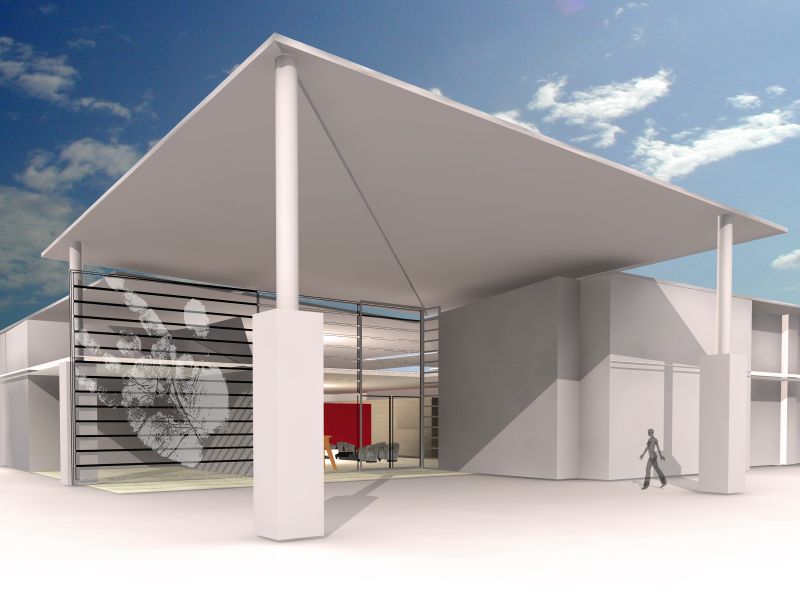
Artist's impression of the Nelson Mandela Centre of Memory
By Christopher Torchia, Associated Press
The desk is spotless and books neatly line the shelves in Nelson Mandela’s office at a Johannesburg-based foundation that carries his name, but the former South African president and anti-apartheid leader hasn’t worked there for years.
The meticulously preserved room is one of many tributes to the legacy of a former prisoner who became so revered for his efforts to reconcile a racially divided nation that many South Africans cannot bring themselves to speak openly about the possibility of his death. That reluctance is gradually eroding as the 94-year-old receives treatment for a recurring lung infection, spending a fourth day in a Pretoria hospital on Tuesday.
President Jacob Zuma called Mandela’s condition “very serious” but said he has stabilized, in an interview with state broadcaster SABC.
Prayers are pouring in for Mandela, adding to a mood of urgency about his deteriorating health that has been compounded by a series of hospital stays in recent months. The description of Mandela as “ravaged by time,” in a statement from a foundation led by retired archbishop Desmond Tutu and his wife, speaks to the fragile state of a man who is so mighty in stature.
Concerns about his health already had been heightened in recent weeks after a video broadcast on state television in April showed him silent and unresponsive, even when Zuma tried to hold his hand.
“He was a very fruitful fighter, but he’s only human,” said Thabiso Masemola, a 21-year-old student. “He’s reached a point in life where he needs to rest. Let him go, let him be. He’s finished his purpose in life.”
Such a view is gaining currency as South Africans become uneasy with the protracted decline of Mandela, who endured 27 years in prison during white minority rule and became the first black president in all-race elections in 1994. At the other end of the spectrum is a stubborn hope that this larger-than-life figure will somehow defy the inevitable.
The aversion to blunt talk of Mandela’s eventual demise stems partly from traditional respect for the living, but also from adulation in a country that put Mandela’s image on its banknotes and erected busts and statues in his likeness. The intensity of emotion among some South Africans is an indicator of the outpouring of feeling that will accompany Mandela’s passing, whenever it comes.
Mzinkosi Tantsi, a driver for a neighbor of Mandela in the Johannesburg neighborhood of Houghton, said it had been a “blessing” to shake the former president’s hand.
“I see him as my father,” said 12-year-old Kutlwano Hlabana, whose school group was visiting the Apartheid Museum, which documents the repressive system of racial segregation and the fight against it. The Johannesburg site invites visitors to experience a taste of apartheid’s arbitrariness by choosing between two entrances labeled “Whites” and “Non-Whites.”
For Johannesburg resident Mokgadi Mabuti, Mandela’s sacrifice and contribution to reconciliation amount to a psychological balm. She struggles with the idea of his departure even though South Africa, for all its inequality and other social problems, is relatively stable.
“I’m worried about what might happen when he’s dead. Most of the things that have happened in South Africa are because of him, so I’m not ready to let him go,” she said.
Mabuti would rather skirt the subject of Mandela’s eventual end, quoting a biblical passage about the impact of words.
“The tongue is very powerful. What you say with your tongue can speak into the future,” she said. “So it’s not good that they should speak of him as if he doesn’t exist anymore.”
Cashing in is on the minds of some in Qunu, the rural village in the Eastern Cape province where Mandela grew up. The Sowetan newspaper reported that a number of people were preparing to rent rooms in their homes on the assumption that there would be a big influx of visitors if he dies.
After his retirement from the presidency, Mandela regularly worked from an office in the recently refurbished building that houses the Nelson Mandela Centre of Memory, which promotes the former leader’s values.
The office, which is open by appointment, resembles the kind of hallowed memorial usually reserved for those no longer among the living.
There are framed photographs of Mandela in healthier times with his wife, Graca Machel, former U.N. chief Kofi Annan, fellow activist Walter Sisulu, who died a decade ago, and others. His volumes include the Quran, “A Briefer History of Time” by Stephen Hawking and a book about leadership. A boxing glove, cricket bat and a British police helmet are among the gifts on display.
Glass cases at the center show penned messages in books given to Mandela from people including Nadine Gordimer, a South African author and winner of the Nobel literature prize in 1991. She wrote that the anti-apartheid leader had read a smuggled copy of her then-banned novel, “Burger’s Daughter,” while held at the Robben Island prison.
“You most likely didn’t bring the book back with you when you returned to us, and lived magnificently, untiringly, leading the Struggle, so I thought I’d like to replace the ‘imprisoned’ copy,” Gordimer wrote.
Cornel West, an American civil rights activist, addressed his book, “Democracy Matters,” to: “Bro’ Nelson Mandela.”
In his autobiography, “Long Walk to Freedom,” Mandela summarized a life of struggle:
“I have walked that long road to freedom. I have tried not to falter; I have made missteps along the way. But I have discovered the secret that after climbing a great hill, one only finds that there are many more hills to climb.”
Now he is climbing the last hill.
—
Associated Press writer Wandoo Makurdi contributed to this report from Johannesburg.
South Africa President Jacob Zuma appeared on state television Tuesday to reassure an uneasy nation that Nelson Mandela, although in a serious condition, is receiving the best of care.
In a brief recorded interview Zuma reiterated that the anti-apartheid icon and father of modern South Africa was in a stable condition.
“We are all feeling it, that our president, the real father of democracy in South Africa is in the hospital,” Zuma, looking relaxed and clad in a sweater, told the South African Broadcasting Corporation.
Mandela was rushed to hospital in the early hours of Saturday, to receive treatment for a lung infection.
“Yesterday I met the team of doctors who are treating him. They gave me a very thorough briefing and really I was very confident that they know what they are doing and they’re doing a very good job,” Zuma said.
“Whilst it is very serious but he’s stabilised and we are all praying for him really to recuperate quickly.”
Although Mandela was only president for one five-year term, he bestrides South African politics.
In prison for 27 years for his beliefs, he became the undisputed face of the anti-apartheid movement.
“We need him to be with us and I’m sure that all the messages that have been pouring in to wish him a quick, speedy recovery, they are highly welcome,” Zuma said.
“But that also indicates the love of our people to him and we certainly join everyone to say he should recover quickly.”
“And I’m sure, knowing him as I do, he’s a good fighter and he’ll be with us very soon.”
Mandela’s latest hospitalisation, the fourth in seven months, has been met with a sense of resignation among many South Africans, who have come to terms with their icon’s mortality. – Sapa
This website uses cookies to improve your experience. We'll assume you're ok with this, but you can opt-out if you wish. Cookie settingsACCEPT
Privacy & Cookies Policy
Privacy Overview
This website uses cookies to improve your experience while you navigate through the website. Out of these cookies, the cookies that are categorized as necessary are stored on your browser as they are essential for the working of basic functionalities of the website. We also use third-party cookies that help us analyze and understand how you use this website. These cookies will be stored in your browser only with your consent. You also have the option to opt-out of these cookies. But opting out of some of these cookies may have an effect on your browsing experience.
Necessary cookies are absolutely essential for the website to function properly. This category only includes cookies that ensures basic functionalities and security features of the website. These cookies do not store any personal information.
Any cookies that may not be particularly necessary for the website to function and is used specifically to collect user personal data via analytics, ads, other embedded contents are termed as non-necessary cookies. It is mandatory to procure user consent prior to running these cookies on your website.