‘Criminals are being exposed by Snowden’

gchqlisteningInformation that NSA leaker Edward Snowden is exposing can lead to trials against those involved in war crimes in Afghanistan or Iraq or in money laundering and that is why “the West is so afraid,” investigative journalist Tony Gosling told RT.

The 29-year-old whistleblower – who was charged with espionage in the US for revealing secret surveillance programs – arrived in Moscow from Hong Kong on Sunday. Snowden is on his way to a third country via Russia.

Gosling says Snowden’s got his options rather limited. “The real impact of what he’s done here is only now starting to be realized. Not only is he exposing the criminality of the GCHQ – the signals intelligence part of the British intelligence services – and the NSA, but he is also showing that much of that intelligence contains information which may bring criminal prosecutions. For example, of war crimes, or criminal prosecutions against bankers, people who’ve been doing money laundering, such as Lord Green who was in charge of HSBC. There’s a vast amount of information there.

“There’s one thing I can tell you though, is that he won’t be coming to London. He doesn’t want to end up in the Tower of London like Julian Assange, fugitive, is at the moment. 

“Here in Britain, we have a very poor record. Although the government and many of our media talk about protecting whistleblowers, the fact of the matter is if you blow the whistle on anything really big and important, or, in fact, even some trivial things, you’ll be bullied and you’ll be taken out of your job. And there’s total hypocrisy. One of the reasons for this is the way our entire network of government is paid –tax-payers money that is paying for all this intelligence service stuff. 

“Sir Malcolm Rifkind, for example, who chairs the Intelligence and Security Committee, is supposed to oversee all this secret stuff. He is actually also employed by financial services firm that works for defense contractors. We are losing any kind of proper democratic oversight of these intelligence services. And that’s one of the things that Snowden has started to expose.

“If I were him, I’d actually be thinking about maybe not going to South America but looking at Iceland. It has got a couple of very useful institutions. IMMI, the Iceland’s Modern Media Institute, which has been set up by the parliament to protect whistleblowers and to make sure that Iceland is seen is a safe heaven. There’s also the AWP, the Associated Whistleblowing Press in Iceland. These are really great institutions which have started to emerge now in Europe as a resistance to the intelligence, really, I suppose the military-industrial complex and the financial cults in the European world, taking over so much of our public life, essentially – leaving our democracies in tatters.” 

Gosling thinks Moscow will probably be a transit point, because maybe it would be a little too explosive for him to stay in Moscow for too long.

“I think what’s happening now is that there’s a lack of faith in much of what our intelligence services are up to. When we’ve got no proper democratic oversight of them they are running of on their own.

“The money system as well is involved in it. This is why I point out that much of this intelligence will be to do with economic warfare. We’ve got many new types of warfare in the world – economic is just one of them. Another one is psychological warfare which is using media wars, attacking the reputations of individuals and countries around the world. So, those are the sorts of information that contained in these PRISM leaks that we are now starting to see. 

“There have been serious crimes over the last ten years – particularly since 9/11 when the war on terror started – in Afghanistan, Iraq, in places like Yemen, Pakistan where many people were murdered through the use of drones and hellfire missiles completely illegally by mainly three countries – Israel, the US and the UK. But this is what people don’t necessarily understand: there will be information that Edward Snowden has that can actually bring some of these people to trial. That’s why the West is so afraid. If Britain was serious about any kind of real justice, we would be able invite him to London and say, ‘Yes, you can tell all your secrets or stories to people here in Britain, you’ll be safe here.’”

Gosling says Snowden is actually exposing criminals “and the criminals are going for him now”. – RT


UK tapping EU’s data flows a catastrophe – Germany

Sabine Leuthesser-Scharrenberger

The German Justice Minister has called the British spy agency’s massive eavesdropping of international fiber-optic cables ‘a catastrophe’. Sabine Leuthesser-Scharrenberger insisted European institutions should seek clarification “straight away”.

The exposure by former US National Security Agency contractor Edward Snowden of the global eavesdropping capabilities of the British Government Communications Headquarters (GCHQ) have sent European capitals into a stupor.

Having revealed the NSA’s PRISM global surveillance program, Snowden told the UK’s Guardian newspaper information about Britain’s top secret Tempora surveillance project under which the UK’s GCHQ spying agency intercepts and stores for 30 days huge volumes of data, like emails, social network posts, phone calls and much more, culled from international fiber-optic cables.

The most vociferous reaction has come from Berlin where politicians have demanded a thorough investigation of the activities of the British intelligence-gathering community.

“If these accusations are correct, this would be a catastrophe,” German Justice Minister Sabine Leutheusser-Schnarrenberger said in an email to the Reuters. She compared the news with a “Hollywood nightmare” and called on to the European institutions “to seek straight away to clarify the situation.”

“The accusations make it sound as if George Orwell’s surveillance society has become reality in Great Britain,” Thomas Oppermann, the leader of the opposition Social Democrats in the Bundestag told Reuters. German politicians called the situation ‘unbearable’ and demanded the government “act against a total surveillance of German citizens”.

A report in Britain’s Guardian newspaper has exposed that UK’s GCHQ has been spying on European capitals for at least 18 months intercepting data from over 200 fiber-optic cables.

Begun in 2008, by 2010 the Tempora project made GCHQ a true intelligence superpower, “’the biggest internet access’ of any member of the Five Eyes electronic eavesdropping alliance, comprising the US, UK, Canada, Australia and New Zealand,” The Guardian’s report claims.

By the end of 2012 the GCHQ agency reportedly had enough computational capacity to process information from 46 fibre-optic cables at a time, which amounted to 600 million international phone calls and internet messages daily.

While it was reported earlier that NSA shared classified information obtained through its tapping of the world’s largest internet providers with GCHQ, it became known that these were tit for tat relations and GCHQ shared the info it obtained with the NSA, too. The Guardian believes that the 850,000 NSA employees and US private contractors, like Edward Snowden, had access to GCHQ databases.

“The UK has a huge dog in this fight,” Snowden confirmed to the Guardian. “They [GCHQ] are worse than the US,” he stressed. – RT

Looters dancing on Thatcher’s grave

Revellers in Brixton staged a street party to celebrate Margaret Thatcher’s death, culminating in arrests and an attack on a local charity shop.

Around 100 hundred people were out on the streets to celebrate the death of former the former prime minister, whose death from a stroke was announced on Monday.

A board at the famous Ritzy cinema in Windrush Square was hijacked by partygoers who swapped the letters to read ‘Margaret Thatcher’s Dead.’

Smashed glass was strewn on the street after the window of charity shop Barnardos was kicked in during ugly scenes.

Police officers trying to keep order were attacked, with extra numbers drafted in to stop revellers spilling out on to the roads and causing traffic delays.

Two women were arrested on suspicion of burglary and spent the night in cells after Barnardos was targeted during celebrations.

Reporter Ewan Palmer was at the scene. He said: “There was the notion that this morbid celebration has been planned in thousands of people’s heads for more than 30 years.

“Police stood by and watched as more and more people arrived with their drink and banners mocking her death. Shouts of ‘Maggie, Maggie, Maggie! dead, dead, dead!” rang around gleefully.

“Chalk was handed out so people could graffiti their own message on the ground and surrounding walls.

“There were even two guys playing double bass and acoustic guitar in the crowd for a singalong. At the start of the evening, the whole thing resembled a middle-class music festival more than a raucous demo.

“Almost inevitably after a few hours of people drinking in the streets, this escalated into scenes of unrest between people and riot police, resulting in arrests and even serious injury.”

The revellers downed alcohol and brandished placards reading “The bitch is dead” and ‘Rejoice Thatcher is dead.’ Many revellers appeared younger than the 23 years which have passed since Thatcher left office.

A Scotland Yard spokesman said: “Police dealt with a group of approximately 100 people in Brixton who caused low-level disorder including throwing missiles at officers.

“In order to protect the community and to ensure the highways remained clear, extra officers were deployed.

“Two women were arrested after being found inside a shop in Brixton. They remain in custody.” – IBT

US, UK: Historic strategy meeting

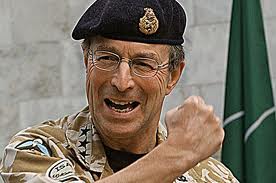
British Chief of Defence Staff Gen. Sir David Richards

In what is believed to be the first time since the 1940s, the entire British defense staff will be here March 25 to discuss long-range strategy and the impact of budget cuts with their U.S. counterparts, according to U.S. and British sources.

The meeting is reminiscent of the Combined Chiefs of Staff, when British and American military leaders joined forces during World War II. Both nations are undergoing significant budgetary reductions and will continue to rely on each other in future years for support. Understanding what capabilities will survive and won’t is essential to long-term strategic planning.

“The relationship military to military is very strong. We have common interest in how we meet the financial constraints placed on both nations, but also on issues like how we manage the drawdown in Afghanistan and also how we reconfigure post Afghanistan,” said Sir Gerald Howarth, a member of parliament and the ex-defense minister responsible for international security affairs from 2010 to 2012.

“We have a huge amount of strategic issues to discuss where we have a very large level of common interest,” he said.

A Defence Ministry spokesman characterized the meeting as private and declined further comment.

In the U.S., spokesmen for the Office of the Secretary of Defense and the Joint Chiefs of Staff did not respond to questions.

U.S. and British military leaders regularly discuss ongoing issues. What’s different about this series of meetings is they will focus not on immediate budget, program or operational issues, but the strategic future of the Anglo-American alliance, including deepening cooperation.

In addition to the U.S. Joint Chiefs, British attendees are expected to include Gen. Sir David Richards, chief of the Defence Staff; Gen. Sir Nicholas Houghton, vice chief of the Defence Staff, who will take over as chief when Richards retires later this year; Air Chief Marshal Sir Stephen Dalton, chief of the Air Staff; Adm. Sir George Zambellas, incoming Navy first sea lord; Gen. Sir Peter Wall, chief of the General Staff; and Air Chief Marshal Sir Stuart Peach, commander of Joint Forces Command, sources said.

The U.S. and U.K. regularly share the most sensitive military intelligence, technology and equipment, including submarine-launched nuclear ballistic missiles. Britain over the past decade in particular has shaped its capabilities to dovetail with U.S. forces.

The British are the leading developmental partner on the U.S.-led F-35 fighter program with Lockheed Martin and have in their inventory Boeing C-17 transports, Chinook and Apache helicopters and Lockheed C-130 cargo aircraft. In addition, the Royal Air Force is buying highly sensitive RC-135 Rivet Joint intelligence planes produced by L-3 Communications in the U.S., making London the only international customer for that program.

The meeting comes as the Pentagon faces $500 billion in spending cuts over the coming decade, which will force senior leaders to make difficult choices. The British delegation arrives with particular experience in that area, having faced even deeper budget cuts — in percentage terms — over the past several years, forcing major reforms to force structure, organization and acquisition programs in that time.

U.S. and British forces routinely train together and have fought side-by-side over the past decade in Afghanistan and Iraq. In Afghanistan, British Lt. Gen. Nick Carter serves as the deputy commander to U.S. Marine Gen. Joseph Dunford, commander of NATO forces.

“On the day-to-day business of military cooperation, the relationship between the U.S. [NATO] commander and the British second in command is another good example of working in partnership,” Howarth said.

The two militaries regularly participate in personnel exchanges. – Defence News

Uhuru Kenyatta, Britain’s nightmare

After four days of counting and recounting votes, Uhuru Kenyatta was declared the winner of Kenya’s presidential election. This is not what the British government had been hoping for.

The failed attempt by the UK to warn people off voting for Kenyatta has changed the former colonial power’s standing in Kenya, both with its leaders and its people. Bungled diplomacy and most of all hubris, have ruined a crucial friendship in Africa.

Western governments made clear their support for Kenyatta’s rival, Raila Odinga. If Kenyatta was to win the election, they would limit relations with Kenya to “essential contact only”.

Clearly, the British had relied on their usual haughty manner to impress the natives once more.

The ostensible reason is that Kenyatta is to stand trial at the International Criminal Court on charges of crimes against humanity. Robert Mugabe however, enjoys the benefits of Western aid after having confiscating white farmland and ethnically cleansed his country.

Kenyatta is accused of having planned the violence which followed Kenya’s disputed 2007 election. Dealing with an ICC indictee could be difficult, so foreign diplomats made it clear that Kenya risked being marginalised if it voted for Kenyatta.

So keeping contact with an ICC indictee to a minimum; was the piont that diplomats repeatedly stressed in the months running up to the election on March 4. Kenyatta’s rivals began telling of the disastrous economic impact this could have on Kenya. Former UN Secretary General Kofi Annan also weighed in, telling Kenyans that voting for an ICC suspect would complicate foreign relations.

But this tactic has backfired. Instead of scaring people into voting for Odinga, Kenyans have begun to question why they should listen to the West. This played into Kenyatta’s hands: he portrayed Odinga as a puppet of the West and the ICC case as an example of Western countries bullying Africans.

The UK has been a particular focus for Kenyatta’s attention. Any comments made by the British High Commissioner, Christian Turner, were seized upon as an example of modern colonialism. Kenyatta told how he would defend Kenya from such interference if he were elected president. Whilst votes were being counted, Christian Turner was once again drawn into the discussion, when Kenyatta’s Jubilee Coalition accused him of “shadowy, suspicious and rather animated involvement” in the election.

The bad feeling Kenyatta has shown towards the UK may partly be due to personal history. Uhuru Kenyatta’s father and Kenya’s first president, Jomo Kenyatta, was imprisoned during British rule. The current British government’s political and financial support of the ICC case involving Kenyatta does not help either, particularly now that the prosecution’s case is has weakened following the dropping of an unreliable key witness. But it is possible that much of it is down to simple opportunism. Kenyatta saw a way of using the ICC case to his advantage, turning Kenyans against foreigners who were “out to get Kenya”.

British diplomats failed be drawn into a debate, which was helping Kenyatta win the election.

Now that Kenyatta has been elected, the UK has a problem. Kenya is a hub for business and political interests in sub-Saharan Africa and is a close ally in security and counter-terrorism operations.

The importance of these ties is likely to override any desire to avoid contact with Kenyatta. Already the UK has started to backtrack. In a statement released by the Minister for Africa, Mark Simmonds, the UK reaffirmed its commitment to the “deep and historic partnership with Kenya”, although the statement avoided any mention of Kenyatta. The pre-election threats of very limited contact seem to have been forgotten, as the UK now tries to find a way of working closely with Kenya, but without much public contact with its president. However, it will take more than talk of deep and historic partnerships to mend the damage the UK has done.

Convincing Kenyatta that he still has something to gain from working with the UK will be difficult. – Source: Standpoint

Immigration UK’s ‘biggest challenge’

The British public views immigration as the biggest issue facing society, but UK citizens are basically tolerant to immigration, as long as new arrivals are in work and integrate into society, it was revealed in a poll reported in The Observer.

The poll found that one in three people believes tension between immigrants and UK citizens is a major cause of division, while over half those questioned believe it is one of the top three causes, a major new survey entitled ‘State of the Nation: Where is Bittersweet Britain Heading?’ found out, the British Sunday paper wrote.

Over the past two decades immigration has increased to historically high levels, with 100,000 more people entering than leaving the country every year since 1998.

Sunder Katwala, the director of British Future, the think tank which carried out the survey, said it showed that there was a national anxiety about immigration which politicians needed to address.

However, he pointed out that the results suggested that there was very little relation between the geographical distribution of immigrants and the levels of people’s concern. For example, immigration was regarded as a divisive issue by 19 per cent of people in the north-east of England and 20 per cent of people in Wales. In both areas a 2011 census showed that one in 20 people were born abroad. But in London, where one in three people are immigrants, the number of people who regarded immigration as divisive, still stood at 20 per cent.

“People are obviously very anxious about immigration. But I was struck by how much it was driven by a national rather than a local tension. And I don’t think anyone has any confidence in how it is managed as a system. Also there is concern around national cohesion, identity and ability to cope with the scale of change,” said Katwala.

Other issues considered the three essential traits of a Briton were respect for the law, freedom of speech of others, and an ability to speak English. These came out as the top criteria among all ages and social classes in the survey, which polled 2,515 people aged between 16 and 75. Treating women and men equally and respect for people of all ethnic backgrounds and faiths came fourth, fifth and sixth on the list respectively.

The release of the poll’s results coincides with an upcoming speech by Eric Pickles, the communities secretary, in which he hopes to aid efforts of integration into society. He is expected to stress that knowledge of English is vital to social mobility and for the economy as a whole.

The survey also found that three in four people think that the UK is in a housing crisis, an issue that has been on the political agenda of all parties for a number of years. Current Housing Minister Nick Boles is proposing that green field sites, currently protected by planning law, should be built upon in order to provide much needed new housing stock. All age groups surveyed said that owning your own property is better than renting.

When asked what made people proud to be British, the NHS came top, with 45 per cent of people saying it was the institution they were most proud of. The armed forces came second, with 40 per cent of people saying they made them feel proud to be British, while in light of the Olympics and the Paralympics, 38 per cent said ‘Team GB’.

When people were asked if being born in Britain was important to being British, two thirds said as long as someone has worked here for up to 15 years, they should be allowed access to the welfare state, regardless of where they were born.

Finally, roughly two thirds said they would rather be British than any other nationality in the world, while around 15 per cent said they would rather not be British and 20 per cent neither agreed nor disagreed.

Oxfam’s misguided messiah complex

Feeling good

The British charity Oxfam recently released an updated version of the Book of Lamentations. Something about how “the relentless focus on ongoing problems at the expense of a more nuanced portrait of [Africa], is obscuring the progress that is being made towards a more secure and prosperous future.”

That’s chief executive Barbara Stocking, as quoted by the BBC. Apparently the charity’s been doing some polling recently (in the UK), and coming up with interesting results. In one poll half of the respondents confessed that Africa conjured for them images of hunger, famine and poverty. In another poll, almost half of the 2,000 respondents thought Africa’s biggest challenge was hunger. Three out of four were suffering from ‘Africa-fatigue’ – that debilitating condition that afflicts well-meaning foreign philanthropists exposed to an endless stream of images of suffering and torment originating from the dark continent.

A distressed Oxfam has since gone ahead to launch its latest Africa campaign, in a desperate bid to shift the world’s attention from African Hunger, to African-Hunger-Backdropped-By-Stunning-African-Landscapes.

That’s, in a nutshell, the story. It left me a tad puzzled. A w-t-f puzzlement. As in: is Oxfam for real? Let’s even forget, for a moment, that Oxfam has probably done far more than any other organisation in propagating these images. Let’s focus on something else that struck me about the story: the way blame is being placed squarely on the shoulders of the Images.

Oxfam appears to be saying: Put All The Blame On The Images. Not the people hanging on stubbornly to those images in the face of alternative evidence. Am I alone in thinking Oxfam’s lamentations suggest a British public that is at the mercy of what they are fed. Helpless Brits who somehow cannot – despite all their efforts – rise beyond the bombardment of pity-evoking images of Africa,

One might as well rephrase Dame Stocking as follows: “Oh poor helpless people of Britain, all they’re being fed is harrowing, unhelpful images of Africa. We need to stop that. We need to feed them something different. We need to change their diet.”

In whose interest?

The whole set-up suggests that Britain is now guilty of the sort of intellectual laziness once associated (almost solely) with America (er, sorry). Clearly the surveys say far more about the British mind than they do about the African condition. Now we know, courtesy of Oxfam, that all along we’ve been depending on a bunch of wallet-opening puppets to deliver us from ourselves.

Now the puppets are growing weary, the strings fraying, the wallet-opening mechanisms aging. Now we have to refurbish the puppets, oil the creaking joints with a new, more positive type of ‘communication’. Landscapes, not Hunger!

A mindset that elevates what the British public thinks of Africa, over and above contemporary reality, and that suggests it is in Africa’s interest for that thinking to change, is not only faulty but dangerous as well.

To put it less mildly, who – apart from Oxfam, obviously – really cares, in 2013, what the British public thinks about a continent from which they fled in varying stages of undress? What’s that proverb about crying more than the bereaved? In the 21st century are people still allowed to be zombies gobbling up everything they’re fed by a collaboration of powerful media and NGOs?

I seriously doubt that it is in Africa’s interest for Brits to change their perception of Africa. Instead I think it is totally in Britain’s interests to change its perceptions of Africa. That problem, is Britain’s, and no one else’s. If the Brits insists on seeing Africa primarily through the lens of philanthropic intervention, good for them.

Let them stay thinking that way; let Oxfam, with its its Africa-emblazoned super-hero capes, stay convincing itself that it has a duty to alter global perceptions of Africa, while the Russians and Chinese – and diaspora Africans, who must have once assumed they’d left the continent for good – boldly head out to the continent to engage in potentially more useful ways.

Alternative images

Granted that those starving-children-and-dying-mothers images form a sizable part of African exports to the west. There may be little we can do about that, as long as we have a west obsessed with delivering Africa from itself. But what about the the tens of thousands of kwashiorkor-free, English-speaking, pocket-money-receiving African students who flock to the UK annually, to study (with a good number actually returning, to continue with the lives they left behind in Lagos and Nairobi and Accra and Freetown and Johannesburg etc).

How the British public fails to permit these alternative images to displace some of the “old stereotypes” (quoting Dame Stocking) should alarm many right-thinking people, and perhaps inspire an industry of academic theses on national delusions and epidemics of ostrich-in-sand-syndromes. If those flesh-and-blood representations of contemporary Africa somehow don’t succeed in serving as a useful counterbalance to the stereotypes, then nothing will.

“We want to make sure people have a really better balanced picture of what’s happening in Africa. Of course we have to show what the reality is in the situations in those countries. But we also need to show the other places where things are actually changing, where things are different,” Dame Stocking says.

I wish her and Oxfam the very best. Must be awful to have to take on that job of saving people from self-inflicted ignorance. In an age in which Google, Twitter and the news media lie at most fingertips, delivering, alongside stories of African suffering, narratives of determined recovery from tragedy and technology-driven change and emboldened youth and rising political awareness and growing intolerance for tyranny – is there still room for getting way with blaming with fixating on photos of begging bowls and the oxfamished children attached to them?

Stories also abound of the startling stupidities and failures of aid projects whose origins lie in a mentality belonging to a world that appears to have vanished. Misguided messiahs and their T-shirt donation and Shoe donation schemes, money-grabbing consultants, corrupt practices, high-profile-nil-value baby adoptions, etc etc.

It’s important that the Oxfams of this world do not allow themselves to get overly caught up in the myth of their impact. In the larger scheme of things, perhaps they’ve been over-estimating their messianic abilities. Consider this: In his posthumously published collection of essays pan-Africanist Tajudeen Abdul-Raheem says, of Nigeria’s 2006 debt relief deal: “What kind of success is debt relief that sees Nigeria paying back over three billion dollars to Britain alone, a figure more than the total aid budget of Britain in the same year?”

You could of course argue that that is oil-rich Nigeria, and choose instead to focus on the Rwandas and Malawis, where close to half the national budgets are donor-funded. And I could remind you of what the late Malawian president did with chunks of his country’s money. Or the mystery of the vanishing dollars in the Ugandan prime minister’s office.

I’m also somewhat surprised we’re still having this ‘African aid’ argument at the beginning of 2013, after the eloquent arguments of books like Dead Aid and The Fastest Billion. And after the Economist already publicly regretted its silliness.

Tolu Ogunlesi is black, lives in Lagos, Nigeria, where he works as Features Editor for NEXT, a daily newspaper. In 2009 he was awarded the Arts and Culture prize in the annual CNN Multichoice African Journalism Awards, as well as shortlisted for the inaugural PEN/Studzinski literary prize. He’s not part of Oxfam’s target market. Very few black poets press on the “donate now” button on the Oxfam website.

Max Keiser: The end of Britain

A serf in the days of King John, Max Keiser argues, was in many ways better off than some US voters in 2012.

“Because in the age of Robin Hood,” Keiser says, “at least the process of theft was transparent. The barons came to your house. They whacked you over the head then they took all your money.” Even if the poor didn’t exactly empathise with their oppressors, Keiser adds, they could at least comprehend their methods. “And the serfs,” he continues, “did enjoy a modicum of stability. They got something in return for their enslavement. A small plot of land. Shelter. A relationship with the lord of the manor.” In the modern age of “financial tyranny” orchestrated by what Keiser refers to as “the banksters” in charge of the major financial institutions in the US and Europe, he believes, “We have reverted to a more pernicious kind of neo-feudalism. The instruments of larceny have changed; that’s all.”

What better time, you might ask, to have the opportunity to vote in a presidential election? But the real forces which shape the destiny of his homeland, Keiser says, have long been impervious to democratic pressure.

“Barack Obama,” he maintains, “has been a huge disappointment. He reneged on every one of his campaign promises except one: he did buy his kids a dog. Of course he could be replaced in this election, but if that happens we will simply inherit a different version of the same thing, just as we have done in the US for the past 30 years. The guy in the White House,” he believes, “is really taking his orders from finance.”

You may never have heard the name Max Keiser, even though, once he begins to broadcast across China in the New Year, he will have confirmed his status as the most widely watched news commentator on the planet. Assisted by his producer, co-presenter and fiancée Stacy Herbert, Keiser, 52, mercilessly castigates rogue financiers and the politicians notionally required to oversee them, on programmes already transmitted by international networks including France 24, Al Jazeera and Iran’s Press TV. No channel in the United States will carry his broadcasts, which go well beyond the benign impudence of The Daily Show.

His most popular outlet is The Keiser Report, on Russia Today (RT), and its international viewing figures, as Keiser (not a man plagued by self-doubt) isn’t slow to point out, are huge. What has fascinated me, I tell him, when we meet in his London television studio, is that in Britain, in recent months, I’ve begun to hear his mischievously seditious RT show mentioned, with admiration, by taxi drivers, patrons in the Haringey Arms, and my window cleaner. This may not, I admit, constitute a statistically significant sample, but Keiser is clearly attracting people you wouldn’t necessarily expect to view a rolling news channel on a foreign network.

The presenter isn’t surprised. “There is a fury against this global banking fraud that is building every day,” he says. “People from all kinds of backgrounds, all over the world, have had enough.”

The Keiser Report, first aired in September 2009, is produced here three times a week. One episode, shown in September 2011, contained the interview with Roseanne Barr during which she famously observed that her solution to banking malpractice would be to “bring back the guillotine”.

While his sardonic, quick-fire delivery would allow him to shine in a debate at the Oxford Union or a Hampstead dinner party just as effectively as, say, David Dimbleby, Keiser’s utterings on the less laudable activities of Morgan Stanley, Goldman Sachs and other financial institutions also manage (unlike Dimbleby’s) to resonate with the kind of people who might fantasise about fire-bombing their local branch of NatWest. To illustrate a point, he will occasionally produce a plastic chicken, a stuffed rat, or a small explosive device. On one recent show, he advised David Cameron to, “Go back to Eton and get some of that back-stall shower pleasure.”

I tell Keiser how, the first time I saw him presenting the show with Stacy Herbert (his partner’s name, somewhat unfortunately, may be familiar from her appearance in 2002 red-top headlines concerning the “three in a bed sex sessions” whose pivot was Angus Deayton), I’d assumed his performance to be fuelled by amphetamines.

“I wave my arms,” he says. “I shout. Of course I do. Because this is a global insurrection. Against banker occupation.”

He folded balloon animals on one show.

“Well, you have to make an impression quickly. Most people first see The Keiser Report at an airport or hotel. RT has 450 million viewers. It goes into more hotel rooms than the BBC and it has more YouTube views. Everywhere I go, people stop me in the street. And remember I’m broadcasting about global financial corruption; not so long ago, everyone used to say, who could be interested in that?”

is histrionic style, combined with the forthright nature of his views (Keiser recently derided the Eurozone as an entity “which poses as this prestigious club, but is actually a leper colony where everyone is checking who still has the most fingers left”) have led some to dismiss him as a marginal, whacked-out conspiracy theorist.

This perception is some way removed from the truth. Raised in an affluent New York suburb, Keiser was a highly successful Wall Street stockbroker and the creator and former chief executive of HSX Holdings, a company which, using his own software system, allowed traders to deal in virtual securities. Put simply, this allowed you to gamble on the success – and, more disturbingly to the studios, on the failure – of a Hollywood film before its release. The practice was halted by the industry, but not before Keiser had sold his shares at the top of the market, adding to his already substantial fortune.

He founded the hedge fund Karmabanque, which has sought (with limited success) to profit from any decline in the equity value of companies criticised by environmental groups, such as Coca-Cola and McDonald’s. And in 2007, in an Al Jazeera film called Extraordinary Antics, he travelled to Milan to examine how CIA agent Robert Seldon Lady and others had illegally abducted then deported an Egyptian imam, Hassan Mustafa Osama Nasr, who later faced torture in Cairo. (In 2009 Lady, also known as “Mister Bob”, was sentenced to eight years in absentia by an Italian court, though the US refuses to extradite him to Italy.)

“I imagine,” I tell Keiser, “that some Americans, seeing your work carried by RT, Arabic and Iranian stations, view you as a modern-day Lord Haw-Haw.” (William Joyce, the Irish-American who broadcast Nazi propaganda to the UK during the Second World War, and was hanged in London in 1946.)

“Some might. But all around the world, working people love the show. We make The Keiser Report at Associated Press. That, as you know, is an American company. The people who feel challenged are the banksters. What I’m saying is that you can fight back: by fighting fire with fire.”

Keiser is among the most outspoken of a group of American commentators (Texas-based broadcaster Alex Jones being another) who argue that national sovereignty and democracy in the US and elsewhere have been eroded by the power of global corporations. Keiser maintains that the most effective form of resistance is through individual financial activism. “If the Karmabanque hasn’t worked,” Keiser says, “it’s because there isn’t yet a critical mass of people who are prepared to fight back, and who instead prefer to be victims.”

The presenter lived in France for a decade, toying with screenplays including one near-miss based on the life of Houdini, which would have starred his close friend Alec Baldwin. (He currently runs a highly successful crowdfunding site, piratemyfilm.com.) Keiser was based in Villefranche-sur-Mer, near Nice, when he met Herbert, who is eight years his junior, in 2003.

Herbert’s apparently subordinate role as co-presenter of The Keiser Report, in which her main task is to prompt, and then revel in her partner’s hyperbole, belies her acute instincts as a producer and editor. Before collaborating with Keiser, Herbert, the daughter of a NYPD officer who died in tragic circumstances when she was six, began her career working with Michael Phillips (who co-produced Taxi Driver and The Sting). She was later associate producer on the acclaimed but highly controversial animated 2005 series Popetown. A cartoon sitcom featuring the voices of Mackenzie Crook, Ruby Wax, Matt Lucas, Jerry Hall and Ben Miller, it was once described as Father Ted meets South Park. Originally commissioned for BBC Three, Popetown was dropped from its schedule after protests from the Catholic Church, though it is available on DVD.

Herbert and Keiser moved to London a year ago. “Because this is the world capital of banking fraud. Pretty much every financial scandal of the past 20 years has had its main component in London, because it has the least regulated banking environment. This is very important for the US, because America outsources its own fraud to London, just as it outsources its labour to China.” The JP Morgan and UBS traders who lost billions, he points out, were both London-based. “And Lehman Brothers went through the UK. As did AIG.” (The latter, a multinational insurance corporation, has been troubled by many controversies including its 2008 government bailout, subsequent executive bonus payments estimated at between $165m and $450m – some say more – and charges relating to accounting fraud, settled out of court in 2006.)

Tony Blair, Keiser adds, “was the first prime minister in this country’s history who knew that going into Downing Street would act more as a resumé builder than a way of serving the public. He has become fabulously wealthy with the contacts he made as prime minister.” Blair, he continues, “personifies the move, in the UK and the US, away from representational democracy and towards control by bankers. It is since New Labour that you have the rise of these incredible scandals: so you have HSBC involved in multimillion-dollar Mexican drug-laundering. [In July of this year, the bank publicly apologised for its “lapses”.] And Barclays involved in rigging Libor [the estimated interest rate for inter-bank loans].”

I tell Keiser I can feel many readers wondering exactly what relevance such activities might have to their lives. “Well, the policy of the banks has been to keep interest rates as low as possible, so as to fuel financial speculation, no matter how oppressive the effect of that would be. Low interest rates wipe out savers and devastate middle-class workers. The banksters have orchestrated this wealth transference of trillions, from the poor to the very wealthy. At the expense of everybody who isn’t at the top.”

In a recent televised discussion chaired by Andrew Neil, Keiser recalls, “We agreed that the country suffers from economic and financial illiteracy. Which makes it amazing that George Osborne has a programme whereby people will exchange their rights as workers for shares. Why is he proposing this, if not to exploit that knowledge gap? Shouldn’t the Chancellor be ashamed of himself?”

“But hang on – you’re not an anti-capitalist.”

“No. I am pro-capitalism and I am pro-free market. But what you have now is not capitalism. It is a state- controlled, command and control, centralised politburo. Both in Britain and the United States. The States is run by the Federal Reserve, an institution that answers only to itself and to a few large banks. It’s modelled on the Bank of England. Ben Franklin said that one of the main reasons America revolted was to get away from the Bank of England, the mother of all central banks; the most pernicious and insidious of all.”

“You said you were disappointed by Obama. What should he have done?”

“When Franklin D Roosevelt came into office, he started putting bankers in jail. The foremost reason that America got out of the Depression was not World War Two, or because of the Keynesian stimulus. It was because of the legislation introduced to regulate markets [many such clauses in FDR’s Emergency Banking Act of 1933 were dismantled under Clinton] and the banksters that Roosevelt sent to jail.”

“Don’t you think Obama came in with the best of intentions? Surely he’s not just another avaricious politician?”

“Barack Obama had to face up to people like Larry Summers [Clinton’s former Treasury Secretary, and director of the US National Economic Council until two years ago, Summers had a key role in lifting safeguards in the derivatives market, a move generally considered to have precipitated the 2007/8 crash]. There were others he failed to remove from office, who were guilty of orchestrating this economic collapse.”

“Are you accusing Obama of malicious complicity?”

“I think that Obama is, like many people, financially and economically illiterate. He is a lawyer. But in Wall Street there is no law.”

Is the implication that the situation will change if Obama is defeated? “It’s not difficult to envision what a Romney presidency would be like. He’s already made it clear that he believes Wall Street to be over-regulated, which of course is the opposite of the truth.”

Romney’s background, Keiser adds, is in private equity, “which is the crystallisation of the worst elements of capitalism”. (Private-equity firms tend to specialise in leveraged buyouts: a practice whose potential consequences have become familiar to many non-economists in Britain, not least to supporters of Manchester United since the club’s purchase by the Glazer family in 2005.) “So then you would have a pure cacistocracy: rule by the worst, the most ignorant, and the most corrupt.”

On Mitt Romney’s first day in office, Keiser adds, “I would imagine that, rather as Emperor Caligula appointed his horse to the senate, he will issue proclamations and edicts that will shock people. But if he does release the genie of even more deregulation, bankrupting the country, he would do so in the full knowledge of the crime he was committing. I believe that Obama was less consciously aware of the stupidity he was engaged in.”

ax Keiser grew up in Westchester County, a New York suburb so steeped in Ivy League privilege that Loudon Wainwright III wrote a song about it (“We were richer than most/ I don’t mean to boast/ But I swam in the country club pool”). It’s not hard to imagine his robust intelligence being applied in other fields, such as teaching or law. While his name may evoke images of some prosperous chancer in a James Bond film, he doesn’t come across as your average money man. So how did he wind up prospering on Wall Street?

“I’d been to New York University,” Keiser recalls, “where I studied theatre. That’s where I first met Alec Baldwin. I did a lot of radio, and stand-up comedy. I spent my time watching punk and rap bands at CBGB and Max’s Kansas City. My biggest fear in 1983 was that the party would end. I’d done various jobs.” These included working as a street magician on Broadway.

“Then I got a part-time job at Paine Webber, a brokerage firm on Wall Street, just to support myself. I remember walking in and seeing the brokers all looking up at the ticker tape on the wall. They were in very expensive suits and smoking cigars. I could see that, by this means, the party could continue. So I became a stockbroker. And the party not only continued, but intensified.”

“It must have been a bit of a culture shock.”

“Not so much as you might imagine, because stockbroking had sort of a punk aesthetic. It was a DIY revolution. I had no background in it whatsoever. But in the early 1980s suddenly there was the start of this bull market: a tsunami of cash was arriving every day on Wall Street. It required no talent whatsoever to make gobsmacking amounts of money. A rhesus monkey could have done it.”

“And socially?” “We took the party into the office. We’re making calls to customers during the day. At the same time we’re getting calls from hookers and drug dealers. I remember I woke up on a plane one day; k I was coming out of a blackout. I asked my buddy, who I’d started the outing with, who knows when, ‘Where are we going?’ He said, [the Caribbean island of] ‘St Thomas.’ I don’t remember a whole lot after that. Anyhow, we ended up back in the office. Then I heard my friend, shouting: ‘Shit… Oh my God, shit…’ I asked what happened. He said, ‘Max… when we were down there in St Thomas… did I buy a house?’ He had done, and he had absolutely no memory of it. After the crash in 1987 the party ended.”

“What were people taking: drink and cocaine?”

“Yes. There was cocaine on everyone’s desk, more or less. At that time you could take a shoeshine guy – and they did – and with the systems they had, which allowed swift calls, and using sales scripts, he could make hundreds of thousands of dollars in months.”

Of the many themes that Keiser returns to in his shows, one of the most interesting and incendiary is the relationship between big business and Congress. He has openly accused senior politicians of using investigations into financial malpractice as a way of acquiring market information so as to benefit themselves.

“Democracy is not well served by the current political configuration in America,” he maintains. “The entire political establishment is designed around enriching a minority of people who have access to both information and capital. Take the CIA. They have recently opened up their services to hedge funds. Hedge-fund managers can now hire CIA agents to do research on pharmaceutical companies, defence contractors, or oil contracts.”

I can imagine some of his compatriots regarding such talk, especially his accusations of endemic insider trading in Congress, as treasonable. “Treason is a strong word. My family arrived in America in the 1700s and was active in the constitutional process that led to the Declaration of Independence. I would answer that charge by saying, as they do down south, ‘That dog don’t hunt.’

“Nobody has a greater affinity for the founding principles of America than I do. But what the people with power are doing now is not remotely connected to the ideals of the founding fathers.”

Any talk about treason, Keiser argues, would be more suitably aimed in the direction of men such as his principal bête noir, Hank Paulson, a former CEO of Goldman Sachs who served as the US Treasury Secretary from 2006 to 2009. “There is a revolving door for Goldman Sachs guys into and out of US government. And they are working against the sovereign interest of the United States. What’s happening is that all these bankers in Europe are consolidating into one major bank that’s going to be running Europe, from Brussels. All of that debt will be re-priced in some new European-wide currency. And that bad debt will be joined with all the American bad debt, in some new global reserve bank. And every single step of the way guys like Hank Paulson – who really is a traitor – will put a gun to the head of the American people and say, either you accept this new banking deal or we are going to crash this market.”

Among Keiser’s fans, Paulson more than anybody has come to personify the culture of greed and flagrant conflict of interest that the broadcaster satirises.

“You don’t like Hank Paulson very much, do you?”

“The fact that that man is even breathing and walking… the last time I was on Al Jazeera live,” Keiser adds, “was when I declared a fatwa against Hank Paulson.”

“Fatwa defined in what way?”

“The word has certain resonances, after the Salman Rushdie affair. That’s not what I was saying. Under Bush and Obama, the office of president has acquired enormous power: to pretty much arrest anybody in the world. With no due process. No habeas corpus. If you have the ability to arrest a man on a mere suspicion, and detain them without reference to judge or jury, then that man’s name is Hank Paulson. Go after the really bad guys.”

Fear, Keiser believes, is what stops such opinions being transmitted in his homeland. “Look at these clowns who present shows. Like [arch-conservatives] Rush Limbaugh and Bill O’Reilly. These people are not Americans. They are the subversives. They are the ones tearing American society apart by belittling everything that, at its heart, could be construed as the lifeblood of democracy.

“Those guys,” Keiser adds, warming to his subject, “are shameless. They are despicable. My merely pointing out where crimes are being committed is not treason against the country. It is an act in support of reform to get the country back from the clutches of these foreign bankers.”

“So who would you like to see elected?” “The only politician that I like is [former independent presidential candidate] Ralph Nader. Because he talks about corporations. And corpocracy. He isn’t running. So I won’t be voting.”

Listening to Keiser, I tell him, I’m left with feelings of little else but imminent doom. He has few words of comfort. “The global derivatives market, which is a quadrillion or more in size, is a very complicated, highly unstable system which is becoming more unstable with every hour,” he says. “It is similar to the side of a mountain before the last snowflake arrives to trigger the avalanche. Or, like Mr Creosote [who explodes at the dinner table in the Monty Python film The Meaning of Life] is just waiting for that final after-dinner mint.”

Any hope of recovery, he argues, will come not through the ballot box but financial initiatives on the part of individuals; notably a mass campaign to ignore governmental advice to trust in bonds and paper money – investments in which, Keiser insists, confidence has rightly evaporated.

“People have to take action for themselves. That means buying not bonds or dollars or euros, but gold and silver. Gordon Brown sold Britain’s gold at the historic low of $250 an ounce. Gold is now $1,700 an ounce. My argument – I can categorically state – is winning the global propaganda war. China is aggressively buying gold. Russia is buying gold like a maniac. Iran has been buying as much as it can. All of these countries, where my show is popular, are buying gold and silver, and God bless them for it.”

Purchasing such commodities, he believes, will offer the owner true security and accelerate the demise of “the banksters”, who speculate only in notional wealth, and paper money.

renetic and controversial as he may be, Keiser has a decent record on prediction. He was in Reykjavik, issuing bleak warnings, months before Iceland’s catastrophic economic collapse. He was talking about Athens years ago, predicting civil unrest and what now appears to be an inevitable Greek default.

“I came to London,” he says, “because being here gives you a front-row seat on the imminent collapse of an entire city. I think that the Eurozone is over-rated as a disaster area. They are not yet in as bad shape as Britain. The UK pound,” he continues, “is about to collapse. And the collapse of the British economy will be one of the biggest in modern economic history. Of course you will take the American dollar and the euro down with you, for sure. But this place – London – is about to go belly up. It’s … how can I put this?” Keiser pauses. “If you see me walking the streets of your town,” he adds, “then you’re probably fucked.” – The Independent

Farm workers exploited in Britain

Exploited

There are strict rules in Britain covering the conditions for chickens and eggs marketed in the happy hen category by high street names – a Freedom Food chicken must be grabbed by both legs rather than just one when being caught, for example. But the conditions of the humans sent to catch them has had less attention.

Late on Monday a gangmaster company which provided teams of migrant workers to dozens of large chicken farms in a chain that supplies premium free range eggs to McDonald’s, Tesco, Asda and M&S, “Woodland” eggs to Sainsbury’s, and the Freedom Food and other brands to leading retailers had its licence revoked with immediate effect by the Gangmaster Licensing Authority (GLA).

The action followed a joint operation earlier this month by Kent police, the GLA and the Serious Organised Crime Agency to liberate more than 30 Lithuanian workers who are alleged to have been trafficked in to the UK. They are said to have then been kept in debt bondage, forced to work up to 17 hours a shift, bussed to farms the length of the country to catch hens through the night, sleeping for days at a time only in vans, in some weeks not paid at all, and, according to workers’ testimony, kept under control by Lithuanian enforcers with threats of violence and on occasions actual physical assault.

A 52-year-old man and a 50-year-old woman from the company, who cannot be named for legal reasons, were arrested in a dawn raid on a Grade II listed house in Kent on suspicion of human trafficking for the purposes of labour exploitation. They were later released on bail, whose terms included a ban on them contacting the workers, pending further inquiries. The gangmaster company is a member of Freedom Food, the welfare scheme licensed by the RSPCA. Six dogs, including some fighting breeds, which the migrants claim were used to intimidate them, were taken from a separate property into the care of a local branch of the RSPCA.

The migrants, who as EU nationals are legally entitled to work in the UK, were transferred to a reception centre by the UK Human Trafficking Centre where those who wanted it were given support by the Salvation Army.

The gangmaster business supplied workers to Noble Foods, one of the UK’s largest processors of eggs and chickens. Noble is currently promoting its happy eggs on primetime television with an advert that shows its hens leaping for joy to the Olympian soundtrack of Chariots of Fire.

The number of people being trafficked into the UK has been rising, according to a report published last week by the government’s Inter-departmental Ministerial Group. Nearly a thousand suspected victims of human trafficking were referred to the National Referral mechanism in 2011, compared to just over 700 the previous year. Trafficking for labour exploitation is a significant and growing category, accounting for nearly a quarter of all cases. Extreme exploitation in the supply chain of major fast food names and leading supermarkets remains a serious problem, according to the GLA. Austerity across Europe, and retailers squeezing costs to counter inflation in food, have created the conditions for it to thrive. The GLA head of operations for the south-east, Neil Court, said exploitation among Lithuanians and other eastern Europeans appeared to be increasing, and in other cases the authority has seen a rise in organised crime, including fraud, money laundering, tax evasion and violence associated with labour abuse. The GLA has, however, had its budget for enforcement and inspection slashed by nearly one-fifth by the coalition government.

Court said the allegations in the case involving the chicken catching gangs were “probably some of the worst I have come across in my time at the GLA”.

The workers said they had been charged a fee of around £350 for what they had been promised back in Lithuania were good jobs. £50 a week was then deducted from their wages each week, so they were debt bonded on arrival. They allege they would be told to bring food to last five days and were then bussed around the country from job to job, from Monday to Friday, sometimes being driven for five or six hours at a time between farms before working a night shift. They were put to work without training or safety equipment, having to learn on the job how to catch four chickens in each hand before crating them. Without face masks, they found the smell and dust in the sheds was often overwhelming. They described not even knowing where they were going, but trying to find out from the GPS system at the front of the minivan. They claim they were refused toilet stops on journeys and that in between jobs they were kept for hours in the vans at roadside parking places.

When they were brought back to their accommodation in Kent at weekends, they reported living 15 men to a small house in damp, squalid conditions. Mattresses on the floor were infested with bed bugs and fleas. They say they had £40 a week deducted from their wages for the privilege of being bitten as soon as the lights were out.

Those workers who wanted to open bank accounts or apply for national insurance numbers say they were told they couldn’t and were threatened with the sack if they complained. When they were paid, it was by cheque, so they were forced to cash their wages at a local branch of the Money Shop where the charges are £2.50 for registration, a £3.99 flat fee for each cheque plus a 7.99% service fee, meaning that they could lose another £12 from a £100 cheque.

The most serious allegations from the workers relate to the climate of fear and violence in which they say they were kept. They have described Lithuanian enforcers used by the gangmasters to keep them under control with physical and verbal abuse. They have reported workers being beaten, punched, given black eyes and broken ribs, and then beaten again if they complained. One recalled first meeting one of the enforcers a couple of days after arriving in the UK, when the enforcer is said to have kicked the door of their house in and shouted to them that no one was getting paid that week. Others have said that their wages were withheld on several occasions for random reasons: a dirty cup left in the kitchen, or the smell of alcohol on someone’s breath on a day off.

In revoking the company’s licence to operate with immediate effect, the GLA listed breaches of licence terms on an unprecedented scale. The gangmaster has the right of appeal.

At the gangmasters’ period property when the Guardian accompanied police on their raid, several luxury vehicles were parked in front of a green oak barn. A top-of-the-range motor home sat alongside two new Range Rovers. A decorative wooden shelter next to the gate was stocked with eggs for sale in free range and Freedom Food boxes with an “honesty box” in which passersby could post the money for them.

McDonald’s also declined to comment and referred us to Noble Foods. A Tesco spokesperson said: “As a founder member of the Ethical Trading Initiative, we are committed to decent working conditions on all the farms and factories in our supply chain. These allegations are clearly shocking. We will continue to work closely with the GLA, our suppliers and others to ensure good practice throughout the sector.” The other retailers also said that they took the allegations very seriously and were co-operating with the enforcement agencies.


Chaos and violence on the rise in UK

British police in Croydon, South London on August 8, 2011

Chaos and violence are on the rise in the UK a year after the PM declared a war on gang culture, a study revealed. Police aggression and a refusal to tackle the root causes of delinquency are reportedly the main issues hindering the initiative.

On Monday, the Center for Social Justice (CSJ) released a damning report titled ‘Time to Wake Up.’ The study criticized the steps taken by the UK’s coalition government over the last year to curb the problem of rising social unrest and delinquency.

The investigation roundly condemned the government’s heavy-handed approach as exacerbating the problem, citing a perception in the government of the riots as a “random one-off” that can be managed by an elevated police presence.

“They could not be more wrong. The alarming fact is that many streets across the country are besieged by anarchy and violence. There is no control in such neighborhoods,” the report said. It also notes an increase in violence among younger gang members, and in the number of women joining gangs.

In the wake of the mass rioting that swept the UK last summer, PM David Cameron launched an “all-out war on gang culture,” maintaining that gangs were at the root of the social unrest. The CSJ report cited statistics showing that “individuals who have links to gangs are believed to be responsible for 16 percent of London’s total drug supply, nearly a fifth of stabbings, half of all shootings and 14 percent of all rapes.”

The CSJ argued that the 10 million pounds the Home Office allotted last year to combating gang culture had been poorly distributed. Some organizations designated for funding did not receive money due to a lack of awareness, which the report describes as indicative of a “complete disconnect between what goes on at the policy level to what goes on on the ground.”

The CSJ said that aggressive policing could be one of the main drivers of the increase in gang crime over the past year.

“Negative, discriminatory and aggressive police behavior, if not perpetuating gang culture, actively hinders attempts to tackle it,” the study said, adding that according to a CSJ survey, 57.7 percent of respondents believed the police’s relationship with young people had not changed since the riots, while 13.5 percent said it had worsened.

The organization expressed particular concern with the police policy of targeting gang leaders. Referencing the arrest of over 200 ringleaders in London over the past year, CSJ said their removal had led to the creation of volatile power vacuums, potentially paving the way for chaotic power struggles between younger gang members.

The UK government’s attitude towards gang violence will only yield short-term results, the CSJ argued, adding that the underlying issues need to be addressed if there is to be any long-term resolution of the issue.

The study described the current strategy as ignoring the root causes of the violence, such as family breakdown and dysfunction, drug addiction and unemployment: “It takes years to work with gang nominal. Preventative work to discourage young people from joining gangs has ‘fallen off the radar.’

The growing gang culture in the UK hit the headlines last year when thousands of young people took part in riots across the country, looting shops and damaging property.

Mass riots in London were triggered by the police shooting of suspected criminal Mark Duggan, The circumstances surrounding the incident are highly controversial: Some claim Duggan was unarmed when he was gunned down by an officer. The government attributed the ensuing violence and social unrest to a degraded youth culture.

Scottish independence could end UK’s nuclear deterrent

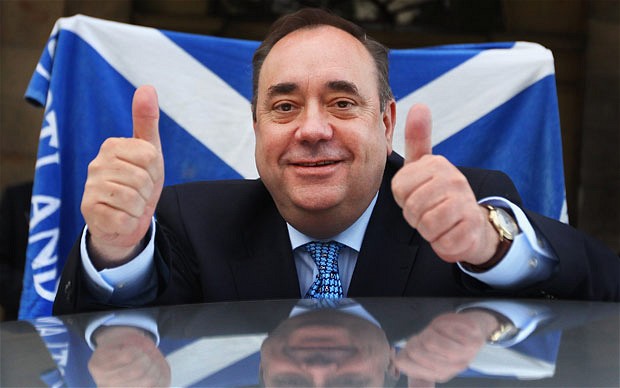
Alex Salmond

A unilateral nuclear disarmament could be forced on Britain if Scotland becomes independent in 2014, a government report says. Along with Scotland, the UK would lose the only naval base capable of hosting Trident nuclear-carrying submarines.

­In the new report, the Commons Scottish Affairs Committee warned that Edinburgh’s desire to remove Trident submarines from its shores could result in forced nuclear disarmament for the rest of the UK.

If dismantled, the Continuous at Sea Deterrent, which has at least one submarine constantly patrolling the UK’s shores, would cease to exist.

“Trident can be deactivated within a matter of days, and the warheads removed within 24 months. In the process, the UK would lose the ability to operate its nuclear deterrent, and effectively be forced into unilateral disarmament for an indeterminate period,” Committee chairman Ian Davidson said.

The committee stipulated that if Scotland removes the nuclear weapons, the construction of the necessary facilities in other parts of the UK could take 20 years.

One of the options still on the table is for Scotland to agree to lease the facilities to London and for the UK to operate the Trident submarines, something the Scottish National Party strongly opposes.

“A separate Scotland would be presented with a choice over Trident. It could honor the long-standing commitment of the SNP that there should be no nuclear weapons in Scotland and insist on the ‘speediest safe transition’ of Trident from Scotland,” Davidson says.

Finding other facilities in the UK is difficult as most are located in heavily populated areas where storing nuclear warheads is dangerous. Most areas are too shallow for the submarines to dock.

Scottish First Minister Alex Salmond said earlier that if London was not willing to build a new Trident base within the UK, it had only a few options left: either scrap the entire weapons system or move the missiles to a French or American base.

“They could decide on what would be a much better policy, which would be to decommission the weapons system,” Salmond told the BBC.

The Commons Scottish Affairs Committee suggests that both London and Edinburgh publish contingency plans ahead of the vote for removing the atomic fleet from Scotland’s shores, so that electorates can make an informed choice.

If the base stays, almost eight thousand people will remain employed at Faslane Naval Station, which houses the submarines, making it the country’s largest worksite.

Removing the submarines and placing them south of the border will cost an estimated £3.5 billion, an expense which is to be divided between taxpayers in Scotland and the rest of the UK.

In a statement following the report’s release, Philip Hammond, the UK defense secretary, said: “Our continuous submarine-based nuclear deterrent is the ultimate safeguard of our national security. We have made a clear commitment to maintain that deterrent and there is absolutely no question that the UK will unilaterally disarm. We are confident that the Scottish people will choose to remain part of the United Kingdom,” the Financial Times quotes him as saying.