Mandela in intensive care: Mac Maharaj

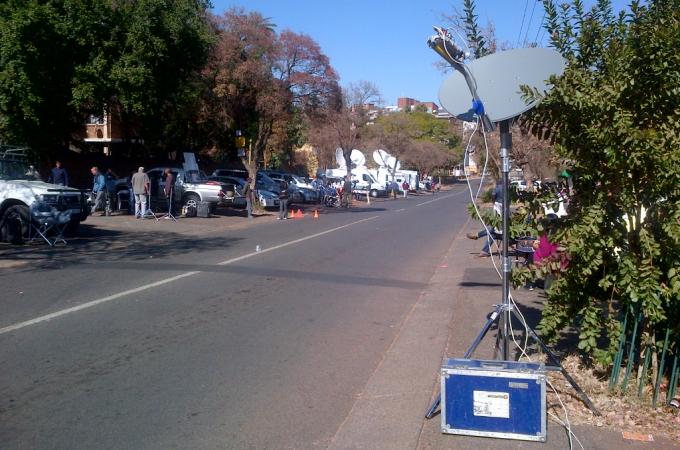
Journalists waiting for news during a previous Mandela hospitalisation

Former president Nelson Mandela is receiving intensive care at a Pretoria hospital, presidency spokesman Mac Maharaj said on Monday.

“Today the doctors are saying his condition is unchanged,” he told reporters from his office at the Union Buildings.

“He is under expert attention and they [doctors] are doing everything to keep him comfortable.”

Maharaj said a report in The Star suggesting the Mandela family had barred the ANC and government from visiting Madiba were unfortunate.

“There is no substance to that. It’s very unfortunate that one particular newspaper chose to run with that as a headline. I’ve read that report and it has no single source it attributes to, except three unnamed sources.

“There are restrictions which arise from the fact that Madiba is under intensive care. Those are medical restrictions to control movement of people [to exclude the] possibility of visitors bringing infection into the environment,” said Maharaj.

The Star newspaper reported that the Mandela family had taken charge of the 94-year-old Nobel Peace Prize winner’s hospital stay, banning everyone, including government leaders and senior party officials, from visiting him.

The African National Congress on Monday said it was unaware of this.

Maharaj said President Jacob Zuma was scheduled to visit Mandela in hospital, but did not say when.

“His [Zuma’s] focus now is to allow the medical team every opportunity to concentrate on their job. To allow the closest relatives to go there and be close to him. As head of state, president Zuma will visit at the appropriate time. We just want Madiba to get better.”

ANC MP and Mandela’s ex-wife, Winnie Madikizela-Mandela, had been at the hospital.

Maharaj said the 48 hours between Saturday to Monday, when there was no update on Mandela’s health, was caused by the lack of progress on the elder statesman’s health.

“You would not want a repetition of the same thing over and over. I know you want him to get better, but we can’t give you good news if it’s false. We can’t give you bad news when it’s not true.

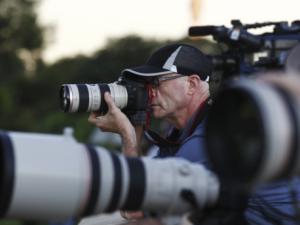
Local and international journalists spent the day outside the two entrances to the Pretoria hospital where Mandela was believed to be. Security guards had been posted at the entrances.

More than 10 broadcast vans were there. Some journalists had erected small tents and others had generators. Passers-by stopped to ask about Mandela. – Sapa

Malema’s farm bought on auction by an Afrikaner

Julius Malema posing with his ex-cabbage

Expelled ANC Youth League leader Julius Malema’s cabbage and tomato farm in Limpopo was on Monday auctioned for R2.5 million.

The uncontested bid was made by Calli Calitz from Wencor Holdings — an abattoir in Polokwane.

Bidding for the 140 hectare farm worth R4 million began at R800,000.

The only female bidder who seemed to have her money set on the Schuilkraal farm surrendered when the amount reached R1.5 million.

Fifteen other bidders took part in the auction.

Park Village Auctions advertised that the farmhouse had four bedrooms, a lounge-cum-dining room, an enclosed patio, kitchen with scullery, and a study nook.

A thatch rondawel was on the property, as was a swimming pool and garage workshop, among other features. There was also a partially completed second house on the property.

The farm was seized by the Asset Forfeiture Unit (AFU) in March as part of selling off Malema’s assets to settle his unpaid tax bill.

The AFU attached the farm as it believed the property had been bought with the proceeds of crime, after a R52 million tender had allegedly been awarded illegally to On-Point Engineering.

Malema’s Ratanang Family Trust had shares in the company.

The farm is registered under Gwama Properties, which is owned by Lesiba Gwangwa, the director of On-Point Engineering.

National Prosecuting Authority spokesman Medupe Simasiku said at the time that the property was allegedly acquired with the proceeds of fraud, corruption, theft, and money laundering.

Another of Malema’s properties was auctioned last month.

The half-built mansion in Sandown, Johannesburg, fetched R5.9 million on auction.

The proceeds of the sales would go towards paying Malema’s tax arrears, which now stood at around R7 million. The amount was originally R16 million. – Sapa

Government officials not barred from visiting Mandela: ANC

Former president Nelson Mandela’s family has denied barring government officials from visiting him in hospital, the ANC said on Monday.

“We have spoken to the family about this report and they deny that they issued such an instruction or spoke to the media on barring the ANC and government from visiting Madiba,” said spokesman Jackson Mthembu in a statement.

“What we know is that given the pressure associated with the admission of president Mandela, there are general restrictions that permit only relevant people to have access.”

The Star newspaper reported on Monday that the Mandela family had taken charge of the 94-year-old Nobel Peace Prize winner’s hospital stay, banning everyone — including government leaders and senior party officials — from visiting him.

Mthembu said: “We will continue as the ANC to pray for his recovery and call on all South Africans and the world to keep him and his family in their prayers… we appreciate the good work that is [being] done by his medical team.”

Mandela has spent two nights in hospital.

Earlier, the presidency said Mandela’s condition was “unchanged”.

“Former president Nelson Mandela remains in hospital, and his condition is unchanged. Madiba was admitted on Saturday, 8 June 2013, for treatment in a Pretoria hospital for a lung infection,” spokesman Mac Maharaj said.

Mandela has been in and out of hospital in the past few years. At the end of March and in April this year he spent nine days in hospital receiving treatment for recurring lung problems.

Messages of support continued to come in for the ailing icon.

North West premier Thandi Modise on Monday urged people to continue praying for Mandela.

“To many across the globe, in our country, and province, Tata Madiba is a unifier and a symbol of reconciliation,” Modise said in a statement.

“Though we know that he is not immortal, like all of us, we are inspired by his fighting spirit and wish his family all the strength for them to unite in love and continue to give him all the support he needs.”

The SA Democratic Teachers’ Union (Sadtu) also sent its best wishes to Mandela.

“Sadtu’s more than 260,000 members join millions in South Africa and the rest of the world in keeping our most revered icon Madiba and his family in our thoughts and prayers,” the union said in a statement. – Sapa

Mandela death parties? No, but I’ll feel safe in the Wimpy

by Dan Roodt

When Margaret Thatcher died, British leftists and her Labour Party enemies threw “death parties” in a distasteful display of Schadenfreude. Whether Mandela will die today or live to be a hundred is irrelevant to my argument, as the idea of his death has already provoked a number of reactions, including a tweet from BNP leader Nick Griffin:

“Saint on last legs it seems. Make sure to avoid BBC when the murdering old terrorist croaks. It’ll be nauseating.”

Griffin’s tweet caused outrage in British newspapers and on Twitter itself. It is not entirely in good taste, but by the standards set by Thatcher’s detractors with their “death parties” it seems to be in keeping with the Zeitgeist.

For a moment I wondered whether we, the victims of Mandela’s movement, should start organising death parties, in case he does “exchange the temporal for the eternal” as the Afrikaans saying goes. I suppose we could all come dressed in camo with plastic AK-47s.

Americans use the term “disconnect” when they mean “disparity”. It’s not really part of my vocabulary but it sounds right when I say there is a disconnect between the global image of “Saint Nelson Mandela” and the man. Here we have someone who wandered onto the world stage by mistake, almost like an extra, and got applauded for being the hero.

Worse, Mandela is one of the last dinosaurs of a bygone, socialist-revolutionary age. In the early 1960s when he engaged in a botched attempt at revolution, Fidel Castro, Mao Tse Tung and their African imitators were still seen as heroes. In May 1968, the rioting French students in Paris had heard of Mao but not Mandela, yet they could just as well have put his face on a few posters. In the 1980s when I lived in Paris the French Communist Party had a monopoly on the Free Mandela slogan in France, as if they had bought the franchise from the bunch of death-party-celebrating Labour and Anglican fanatics in London.

The Church of England must be the first church in history that had engaged in money laundering to further urban terrorism in South Africa. The radical cleric, Canon Collins, oversaw the whole operation from a back office at St. Paul’s Cathedral. If only the B.I.S. in Basle had been more proactive in curtailing money laundering, they could have spared the lives of many civilians who died in ANC terrorist incidents in South Africa.

Unlike Mao, who wrote some nice poetry and became famous for his Little Red Book of revolutionary maxims, I strongly suspect that Mandela never wrote anything. He was surrounded by a bunch of white or Indian communist advisers and handlers who wrote his speeches and who more or less told him what to do. His speech from the dock at the Rivonia trial was “edited” by author Nadine Gordimer and journalist Anthony Sampson. Gordimer also “edited” his voluminous autobiography, Long walk to freedom.

Nowadays the school history books in South Africa contain naked propaganda, just like in any erstwhile East-European totalitarian state. Our children studying those books for exams are led to believe that Mandela was imprisoned for his “opposition to apartheid”, whatever that might mean.

In reality, he had already engaged in a campaign of sabotage and terror, but was found out in time by the South African police. In a post 9/11 world, and if Mandela had planned anything against the USA, he would simply have been eliminated by American special forces like Osama Bin Laden, with Hillary Clinton cackling some Caesarian paraphrase.

Like all terrorists, Mandela had embraced the dubious moral principle of “the end justifies the means”. Even after his first failed attempt for which he had been jailed for life in SA after a fair trial, prosecuted not by an Afrikaner but by a South African jew, Percy Yutar, Mandela must have ordered or acquiesced in the terror campaign masterminded by the devious Joe Slovo from London.

If ever Saint Mandela sailed on a cloud to heaven as his global leftist and liberal admirers foresee, he could announce at the pearly gates: “My organisation never had an army worth mentioning, but we did place bombs in restaurants.” The infamous Wimpy bombing campaign of the 1980s killed and maimed a large number of civilians all over the country. But the ANC’s biggest “success” if one could call it that, was the so-called Church Street Bomb in Pretoria that exploded on 20 May 1983, killing 19 civilians and injuring more than 200,

The ANC’s terror campaign in the 1980s was no different to that waged by other extremist organisations all over the world. If Mandela had given the go-ahead for the Boston Marathon bombing on 15 April this year, would his reputation as “a man of peace” have been affected at all?

I daresay the world would have looked upon him somewhat differently if that had been the case. Why then is Mandela revered for having been a member of an extremist, crypto-communist “liberation movement” that bombed innocent people in the street, in Wimpy fast-food restaurants and that placed limpet mines on farm roads, killing not only white farmers but also their black workers?

Even if Mandela’s bloodthirsty teleology could have been justified by the end goal of “democracy” (belatedly replacing a communist class revolution in the early 1990s), it would still have been a vicious way of pursuing power. However, South Africa today is hardly a democracy. At best it is a violent, corrupt and crime-ridden oligarchy run by Mandela’s ex-terrorists.

Mandela’s legacy of terror against rural people, perhaps inspired by some Maoist creed, lives on today in the form of farm murders whereby our farmers are regularly attacked, tortured and killed in the cruelest ways imaginable. A local TV documentary on farm murders was appositely entitled “A bloody harvest”.

The mainstream media world-wide, particularly the BBC, may have cynically elevated Mandela to the holy status he has today, but the bloody harvest we are living through is as much his as the rest of the ANC with its shadowy characters who have successfully converted from perpetrators of random violence to looters of the public purse.

It is an intriguing question whether, for liberal journalists in the MSM, terror in the name of Islamic jihad may not be acceptable but in furthering black power it is. One type of terrorist bows to Mecca but the other thrusts his fist into the air shouting “amandla!” (power!”; therein lies all the difference, it seems.

Mandela and his cohort of self-styled revolutionaries have destabilised South Africa and we may be doomed to experience nihilistic violence forever in the form of bands of criminals or ethnic killers attacking us at random.

South Africa has a so-called model constitution. I do not care much for the constitution, for the ANC never respected the Geneva convention when it visited terror upon us. It seems as if their nameless war continues to this day, still without respecting the rules of civilised warfare. Of what use is the constitution if there is no real peace, no real safety?

Lately I have spent some time in Wimpy bars here in Johannesburg where they offer free wifi. They have been revamped, but still contain that 1960s American “diner” look that makes you think of Andy Warhol or Roy Lichtenstein.

Inside the Wimpy they have a large letter W in a corner sometimes, an upside down M. As in Mandela. It is comforting that the ubiquitous South African Wimpy bar will outlive Mandela, the smiling old terrorist. Only when his entire generation of crazed extremists will have died out, may we make some political progress in South Africa.

No-one can feel secure in this country. There is menace everywhere. But somehow when Mandela dies I will feel a little bit safer typing an email in the Wimpy.

Obama orders overseas target list for cyber-attacks

Barack Obama has ordered his senior national security and intelligence officials to draw up a list of potential overseas targets for US cyber-attacks, a top secret presidential directive obtained by the Guardian reveals.


The 18-page Presidential Policy Directive 20, issued in October last year but never published, states that what it calls Offensive Cyber Effects Operations (OCEO) “can offer unique and unconventional capabilities to advance US national objectives around the world with little or no warning to the adversary or target and with potential effects ranging from subtle to severely damaging”.


It says the government will “identify potential targets of national importance where OCEO can offer a favorable balance of effectiveness and risk as compared with other instruments of national power”.


The directive also contemplates the possible use of cyber actions inside the US, though it specifies that no such domestic operations can be conducted without the prior order of the president, except in cases of emergency. -The Guardian

Meet Edward Snowden, whistleblower behind the NSA surveillance revelations

The 29-year-old source behind the biggest intelligence leak in the NSA’s history explains his motives, his uncertain future and why he never intended on hiding in the shadows

The individual responsible for one of the most significant leaks in US political history is Edward Snowden, a 29-year-old former technical assistant for the CIA and current employee of the defence contractor Booz Allen Hamilton. Snowden has been working at the National Security Agency for the last four years as an employee of various outside contractors, including Booz Allen and Dell.

The Guardian, after several days of interviews, is revealing his identity at his request. From the moment he decided to disclose numerous top-secret documents to the public, he was determined not to opt for the protection of anonymity. “I have no intention of hiding who I am because I know I have done nothing wrong,” he said.

Snowden will go down in history as one of America’s most consequential whistleblowers, alongside Daniel Ellsberg and Bradley Manning. He is responsible for handing over material from one of the world’s most secretive organisations – the NSA.

In a note accompanying the first set of documents he provided, he wrote: “I understand that I will be made to suffer for my actions,” but “I will be satisfied if the federation of secret law, unequal pardon and irresistible executive powers that rule the world that I love are revealed even for an instant.”

Despite his determination to be publicly unveiled, he repeatedly insisted that he wants to avoid the media spotlight. “I don’t want public attention because I don’t want the story to be about me. I want it to be about what the US government is doing.”

He does not fear the consequences of going public, he said, only that doing so will distract attention from the issues raised by his disclosures. “I know the media likes to personalise political debates, and I know the government will demonise me.”

Despite these fears, he remained hopeful his outing will not divert attention from the substance of his disclosures. “I really want the focus to be on these documents and the debate which I hope this will trigger among citizens around the globe about what kind of world we want to live in.” He added: “My sole motive is to inform the public as to that which is done in their name and that which is done against them.”

He has had “a very comfortable life” that included a salary of roughly $200,000, a girlfriend with whom he shared a home in Hawaii, a stable career, and a family he loves. “I’m willing to sacrifice all of that because I can’t in good conscience allow the US government to destroy privacy, internet freedom and basic liberties for people around the world with this massive surveillance machine they’re secretly building.”

Three weeks ago, Snowden made final preparations that resulted in last week’s series of blockbuster news stories. At the NSA office in Hawaii where he was working, he copied the last set of documents he intended to disclose.

He then advised his NSA supervisor that he needed to be away from work for “a couple of weeks” in order to receive treatment for epilepsy, a condition he learned he suffers from after a series of seizures last year.

As he packed his bags, he told his girlfriend that he had to be away for a few weeks, though he said he was vague about the reason. “That is not an uncommon occurrence for someone who has spent the last decade working in the intelligence world.”

On May 20, he boarded a flight to Hong Kong, where he has remained ever since. He chose the city because “they have a spirited commitment to free speech and the right of political dissent”, and because he believed that it was one of the few places in the world that both could and would resist the dictates of the US government.

In the three weeks since he arrived, he has been ensconced in a hotel room. “I’ve left the room maybe a total of three times during my entire stay,” he said. It is a plush hotel and, what with eating meals in his room too, he has run up big bills.

He is deeply worried about being spied on. He lines the door of his hotel room with pillows to prevent eavesdropping. He puts a large red hood over his head and laptop when entering his passwords to prevent any hidden cameras from detecting them.

Though that may sound like paranoia to some, Snowden has good reason for such fears. He worked in the US intelligence world for almost a decade. He knows that the biggest and most secretive surveillance organisation in America, the NSA, along with the most powerful government on the planet, is looking for him.

As for his future, he is vague. He hoped the publicity the leaks have generated will offer him some protection, making it “harder for them to get dirty”.He views his best hope as the possibility of asylum, with Iceland – with its reputation of a champion of internet freedom – at the top of his list. He knows that may prove a wish unfulfilled.

But after the intense political controversy he has already created with just the first week’s haul of stories, “I feel satisfied that this was all worth it. I have no regrets.” – The Guardian

Water wars: ‘No Nile, no Egypt’

Egypt’s foreign minister, vowing not to give up “a single drop of water from the Nile”, said on Sunday he would go to Addis Ababa to discuss a giant dam that Ethiopia has begun building in defiance of Cairo’s objections.

Speaking to Egypt’s state news agency MENA two days after the Ethiopian government flatly rejected a request from Cairo to halt the project, Mohamed Kamel Amr said Egyptians view any obstacle to the river’s flow as a threat to national survival.

“No Nile – no Egypt,” he said, highlighting the pressure on the Egyptian government, whose popularity is wilting in the face of economic troubles, to prevent the hydro power plant cutting already stretched water supplies for its 84 million people.

Last week, Ethiopia summoned the Egyptian ambassador after politicians in Cairo were shown on television suggesting military action or supporting Ethiopian rebels – a mark of the threat felt in Cairo from the plan to dam the Blue Nile, the tributary that supplies the bulk of water downstream in Egypt.

“Egypt won’t give up on a single drop of water from the Nile or any part of what arrives into Egypt from this water in terms of quantity and quality,” Amr told MENA, noting that Egypt has little rain and is effectively desert without its great river.

Speaking at a news conference, he declined to detail the action Egypt might take next but noted Ethiopian assurances that Africa’s biggest hydro station would not cut water supplies.

“We have a plan for action, which will start soon,” Amr said. “We’ll talk to Ethiopia and we’ll see what comes of it.

“Ethiopia has said it will not harm Egypt, not even by a liter of water. We are looking at … this being implemented.”

Countries that share the Nile have long argued over the use of its waters, repeatedly raising fears that the disputes could eventually boil over into war. Egypt, struggling with a shortage of cash and bitter internal political divisions following a 2011 revolution, called on Ethiopia to stop work after engineers began diverting the course of the Blue Nile late last month.

In Addis Ababa, a government spokesman called that request a “non-starter” and dismissed threats from Cairo of “sabotage” and “destabilization”, saying attempts by Egypt under its previous military rulers to undermine Ethiopian leaders had failed.

The possible downstream effects of the $4.7-billion Grand Renaissance Dam, some 40 km (25 miles) from Ethiopia’s border with Sudan, have been disputed and full details are unclear.

While letting water through such dams – of which Egypt, Sudan and Ethiopia already have several – may not reduce its flow greatly, the filling of the reservoir behind any new dam means cutting the river’s flow for a time. Evaporation from reservoirs can also permanently reduce water flowing downstream.

Now 21 percent complete, the new dam on the Blue Nile will eventually have capacity of 6,000 megawatts and is central to Ethiopia’s plans to become Africa’s leading exporter of power.

Sudan, which borders Egypt and Ethiopia and also gets much of its water from the Nile, said it supported the project.

“The Grand Renaissance Dam brings many benefits and blessings for us,” Information Minister Ahmed Belal Osman told reporters in Khartoum.

He gave no details, but Sudanese officials have said the dam will enable Ethiopia to export power to Sudan, a country with frequent outages and one of its closest allies in Africa. – Reuters

Turkey: Police deploys tear gas on thousands

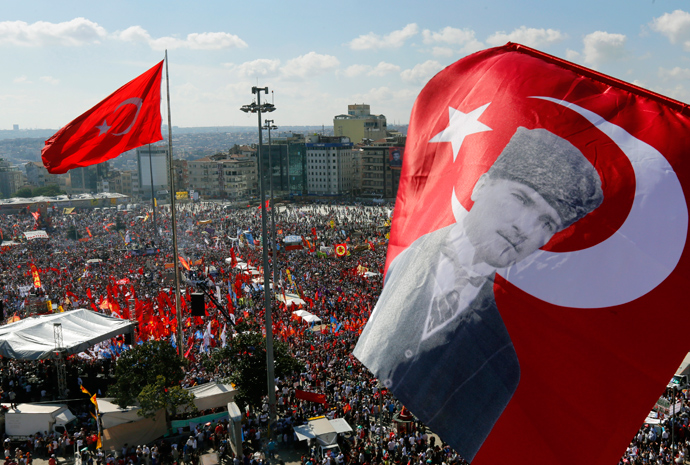
Turkish flag depicting Mustafa Kemal Ataturk as thousands gather in Istanbul's Taksim square June 9, 2013

Police again deployed tear gas and water cannons to quell more than thousands protesters that gathered in downtown Ankara. Just a few kilometers away, the Turkish PM was addressing his supporters after warning his patience with the demos “has a limit”.

At least two people were injured in fresh clashes in downtown Kizilay square in the Turkish capital, AFP reported.

Turkish Prime Minister Tayyip Erdogan, was meanwhile addressing supporters elsewhere in the city, calling on them to prepare for pro-government rallies next weekend in Istanbul and Ankara.

“On Saturday, are you ready for a big Ankara meeting? … The next day we will have the Istanbul meeting,” Erdogan said to cheering crowds in Ankara, as riot police moved in against protesters.

On Sunday, Erdogan held a string of pro-government rallies across the country.

Erdogan remained defiant over the ongoing protests, again calling the protesters “marauders” and urging the supporters of his Justice and Development Party (AKP) to “teach them a lesson” at the next local polls as he spoke in the southern Turkish city of Adana.

“Those now at Taksim, those who burn and destroy, those at various places across the country, I ask them, in the name of which freedom are you doing this?” Erdogan said in a speech at the Mediterranean Games in Mersin.

“There is an end to our patience,” Erdogan warned in Ankara airport, as the massive crowd of his supporters chanted slogans like “We are ready die for you, Tayyip!”

The Taksim protesters do not represent all the people of Turkey, the prime minister argued.

“Are the people only those at Gezi Park? Aren’t those who came to meet us at Istanbul airport people too? Those who are gathered now in Ankara; aren’t they people, too?” he exclaimed.

On Saturday night, a rally in the Turkish capital which started peacefully was also dispersed with tear gas and water cannons. According to witness reports on Twitter police were targeting and detaining “random” youths in the crowd. At least three arrests were reportedly made.

Authorities deployed over 4,000 riot police to quell the unrest, witnesses claim.

In Istanbul, a massive crowd packed the whole of Taksim Square was joined by the fans from rival football teams Fenerbahce, Besiktas and Galatasaray, AFP reports. Police kept away from the scene. In the city’s western Gazi neighborhood things did not go so peacefully as protesters hurled incendiary devices and taunted police, which resulted in fresh clashes.

Earlier, parliamentary Speaker Cemil Cicek said the mass protests that have been gripping the country are now “under control” and the process “is becoming normalized and increasingly in line with common sense.”

“We are ready to listen to all reasonable, legal and democratic demands,” he added.

At the same time, Istanbul’s mayor declared that Gezi Park would not be used as a venue to build a shopping mall, but the project to create a replica of Ottoman-era military barracks there would continue.

“We are definitely not thinking of building a shopping mall there, no hotel or residence either. It can be… a city museum or an exhibition center,” Istanbul mayor Kadir Topbas said as quoted by AFP. “The plan for the barracks was part of our election promises, the people gave us the authority to do it.”

The Turkish government dismissed press rumors of an early election on Saturday following the party meeting on the grounds it was unnecessary. Prime Minister Erdogan, who has been criticized by protesters for his overly authoritarian ruling style, returned to Turkey on Thursday night to a throng of supporters at Istanbul airport. A number of counter-demonstrations are said to be planned next week, as anti-government protests enter their 10th day.

Social upheaval began in Turkey last week when a demonstration against the demolition of a central park in Istanbul was brutally dispersed by police. In response, protesters occupied Istanbul’s Taksim Square and clashed with police repeatedly during the subsequent days. Many are calling for Prime Minister Erdogan’s resignation.

Storm clouds gather for Obama

The latest Quinnipiac University poll, published today, will send shivers through the White House, even though Washington is experiencing its first heat wave of the year. The Quinnipiac survey is the first major survey to show that the wave of recent scandals hitting the Obama administration are beginning to damage President Obama’s own standing with the American people. According to Quinnipiac, Barack Obama’s job approval rating now stands at just 45 percent, with less than half of voters viewing the president as “honest and trustworthy.”

President Barack Obama gets a negative 45 – 49 percent job approval rating, compared to 48 – 45 percent positive in a May 1 survey by the independent Quinnipiac (KWIN-uh-pe-ack) University, conducted before the IRS allegations surfaced.

The president’s biggest drop is among independent voters, who give him a negative 37 – 57 percent score, compared to a negative 42 – 48 percent May 1. He gets a negative 9 – 86 percent from Republicans and a positive 87 – 8 percent from Democrats, both virtually unchanged. Women approve 49 – 45 percent while men give a negative 40 – 54 percent score.

Americans are divided 49 – 47 percent on whether Obama is honest and trustworthy, down from 58 – 37 percent, the last time Quinnipiac University asked the question September 1, 2011.

The Quinnipiac study also shows deep-seated disillusionment with the federal government among American voters.

Only 3 percent of voters trust the federal government to do the right thing almost all the time, while 12 percent say they trust it most of the time; 47 percent say some of the time and 36 percent hardly ever. That compares to results of a Quinnipiac University poll in July 2010, four months before the Republican sweep that year on the back of anti-government sentiment, when 2 percent said almost always, 16 percent said most of the time; 50 percent said some of the time and 31 percent said hardly ever.

Of the three major scandals currently engulfing the presidency – the IRS targeting of conservative groups, the Obama administration’s response to the Benghazi terrorist attack, and the Justice Department’s seizure of phone records belonging to Associated Press journalists, the IRS issue is making the biggest impact with voters. According to Quinnipiac, 66 percent of Americans disapprove of the way in which the IRS is handling its job, and 76 percent support the appointment of a special prosecutor to investigate the IRS scandal. The Benghazi issue is also doing considerable damage to the Obama administration’s image, with 46 percent believing “the Obama administration deliberately misled the American people about the events surrounding the death of the American Ambassador to Libya.” Voters are generally less familiar with the AP story.

The Quinnipiac poll suggests trouble ahead for next year’s Congressional mid-term elections, where the Republicans will be seeking to consolidate and expand their control of the House of Representatives, and possibly retake the Senate. Significantly, among Independent voters, who are likely to decide many of the crucial House and Senate races in November 2014, 57 percent disapprove of Barack Obama’s job performance, and 56 percent do not believe that the president is “honest and trustworthy.” By a 45 percent to 35 percent margin, Independents believe that Republicans in Congress are doing a better job than President Obama on handling the economy, the number one issue for the American electorate. Among all voters, Barack Obama and Congressional Republicans are tied at 43 percent. Overall, 68 percent of Americans are “somewhat dissatisfied” or “very dissatisfied” with the direction the United States is taking, hardly a vote of confidence in Mr. Obama’s leadership. Expect even worse figures for the White House in the coming weeks, as the pressure intensifies on a scandal-hit presidency. – Nile Gardiner, The Telegraph

Trayvon Martin: America takes sides

That young black man Trayvon Martin was killed last year by white neighbourhood watch volunteer George Zimmerman is not in dispute. But as Zimmerman’s trial begins today it may be harder to establish what represents justice.

Frank Taaffe ponders how fast the gated community here in Sanford where he bought his house seven years ago went to pot once the economy went south. Other buyers went into foreclosure or rented their homes out to strangers. Burglaries went up. A heroin ring was cracked by the police a few doors down.

“I could see the ambience here eroding,” Mr Taaffe, 56, says. “I don’t want to say darker, but that too.” Until a few months ago, the only gap in the perimeter fence around the community – “the Retreat at Twin Lakes” – was here right behind his house. “The scum that used to come through here…” he says, gesturing to the sliver of grass separating him from next door. “This was the corridor of crime.”

Mr Taaffe doesn’t mean to be racist discussing the trial that starts today of his friend, George Zimmerman, accused of murdering Trayvon Martin last year here at Twin Lakes. Zimmerman is white Hispanic while Trayvon, just 17, was black.

“There are cases of African-Americans being castigated because of the colour of their skin, I do believe that,” he acknowledges. It’s just that he thinks he knows better than most what happened here that February night.

Others in Sanford might tell you something similar. No town wants to be called racist. “We have been portrayed as some kind of racially charged city but that’s not the case,” City Manager Norton Bonaparte notes over coffee at a recent Chamber of Commerce breakfast at Sanford Zoo. “This was a tragic interaction between two individuals.”

But that, of course, is a sparse version of the truth and even Mr Bonaparte knows it. The reason this trial will be besieged by media crews from around the world has everything to do with the perception, at least, of racial  stereotyping. It’s also why everything is being done to get ready for when the verdict comes in – to keep Sanford from blowing up all over again.

The worst might actually be over. What ignited the African-Americans nearly 18 months ago and sparked Trayvon support rallies everywhere was the police decision to release Mr Zimmerman without charge soon after taking him in. He had belonged to the Twin Lakes Neighbourhood Watch, had seen Trayvon outside a house (Mr Taaffe’s, in fact), figured he was “up to no good” and given chase. He didn’t know the boy was staying in the house of his father’s girlfriend at Twin Lakes and was merely returning from a corner shop.

Most outrageous to some was the notion that he had been freed under Florida’s “Stand Your Ground” law that says if you are facing possible lethal danger you are not obliged to try to flee and can act right there to save yourself. That means shooting your assailant if you have a permit to carry a weapon, which Mr Zimmerman did, without fear of prosecution. The African-American community saw a pattern.

“It was the straw that broke the camel’s back,” explains Francis Oliver, who runs the Goldsboro Historical Museum in a double-wide trailer in the worn down and mostly black Goldsboro section of Sanford. “They got the man who pulled the trigger, he admitted pulling the trigger and they had him in the police station. He tells them he stood his ground. You can’t stand your ground against a boy with a bag of Skittles and a bottle of iced tea.”

As Mr Bonaparte, who is black, puts it at the Chamber breakfast, the killing of Trayvon Martin highlighted what “has not been resolved in America even going back to the lynchings. A white man shot and killed a black person and nothing happened, again. That’s what struck a chord.” Locally, he adds, “it was the like the removal of a scab that showed that the healing that should have happened had not”.

But that early boil of outrage has been partially lanced. Mr Zimmerman, 28, turned himself in and eventually was charged with second-degree murder. The then chief of police, Bill Lee, was sacked by Mr Bonaparte. (Mr Lee was white and his replacement is black.) In the spring of this year, lawyers for Mr Zimmerman said they would not use a Stand Your Ground defence. To some it is enough that the wheels of justice are finally turning as they should.

“It’s in God’s hands now,” says Frederick Turner, a Goldsboro resident, “but I can’t say the community is happy because a young black man died for no reason”. He also echoed many in voicing dismay at the attempts by the defence to introduce evidence, including records from his mobile phone, that disparage Trayvon as wayward at least, even a wannabe gangster with an enthusiasm for marijuana and violence.

“All that stuff doesn’t have nothing to do with what happened to him in those seconds, minutes and hours.” Even if the judge in the case refuses to admit it, the publicity around these claims is unlikely to have escaped potential jurors.

Jury selection begins today. When it is over and the trial proper begins, the nub will be determining exactly what happened in those “seconds and minutes” between Mr Zimmernan spying the teenager outside Mr Taaffe’s house and shooting him from close range.

We know a bit – for example that he got out of his car and pursued the youngster on foot through the neighbourhood. It’s on the tapes of his call with the police dispatcher, who asked: “Are you following him?” “Yeah,” he replied. “OK, we don’t need you to do that,” said the dispatcher. “OK,” Zimmerman said. But he followed him anyway.

The difficulty is that no one else actually witnessed that final, fatal confrontation at a bend on Twin Trees Road, about a minute from Mr Taaffe’s house if you are running quickly. Some residents phoned the emergency services and screaming is heard on the tapes of those calls but experts do not agree which of the two men is doing the screaming. Do the lacerations that were on the back of Mr Zimmerman’s head support his claim that it was Trayvon who turned on him and that he fired in self-defence? Or was Trayvon indeed the sole victim?

“It’s called ‘prevent-defence’ – it’s a football term,” say Mr Taaffe, who expects to be called as a witness by both sides. “That’s what [Zimmerman] did. He cared for his neighbours and for his community. He wasn’t profiling anyone… He wasn’t chasing anybody. How could it be Trayvon screaming? If it was me, I would have gone into ‘prevent-defence’.”

Indeed, Mr Taaffe, who is in internet marketing, is about as exasperated now as the Travyon Martin supporters were when Mr Zimmerman was first allowed to walk free.

“This case has become so polarised and the other side just don’t want to take the cotton wool out of their ears. Where is the common sense? What happened to common sense?”

As for the verdict he is in no doubt. “George Zimmerman will walk out a free man,” he predicts. “But he will have to spend the rest of his life either in hiding or trying to justify his actions.” Such are the passions of this case. – The Independent

Mandela: The Waiting Game

No one knows for sure which hospital Nelson Mandela is in, but many journalists suspect it’s the Mediclinic Heart Hospital in Pretoria.

Mandela was taken to hospital for a recurring lung infection on Saturday.

The street outside the health facility is lined with reporters. We have done this many times before. Every time there is a Mandela health scare we park our satellite trucks outside the hospital. Cameras point at the entrance and we wait.

I honestly can’t tell you what we are expecting to see. After the third car goes in and out of the hospital there is nothing else to really talk about. All the cars have tinted windows so we can’t see who is inside. Inevitably, some people speculate it could be Mandela family members.

Then around 3.30pm Makaziwe Mandela, Ndileka Mandela (daughters of Mandela) and Tukwini Mandela (granddaughter) walk into the hospital.

It’s the second time on Sunday they have been here, even though there has been no official government statement on where Nelson Mandela is getting treatment.

Actual official updates from the government come every so often, and so far they haven’t been drastically different from the first one.

This time the presidency says “Nelson Mandela is serious but stable”.

People who live in the area seem fascinated by our presence. It’s mainly apartment buildings. Families are walking their dogs and children are playing on the street. We the journalists have invaded their usually quiet neighbourhood.

There is a lot of foreign media here, so different accents can be heard and different languages.

Some neighbours are curious, asking us questions about Mandela’s condition and whether we have seen him.

But some people are angry we are camping outside the hospital.

Motorists drive past calling us “vultures”, “unAfrican” and calling our behaviour “disgraceful”.

I wonder how many of these people will go home, turn on the TV or radio to find out how Madiba is doing?

The truth is, love him or hate him, people around the world want to know how he is doing.

So, the long line of media on the street in Pretoria won’t be going anywhere anytime soon….unless Tata Madiba is released and goes home. – Haru Mutasa is a South Africa-based correspondent for Al Jazeera English

Mandela: No news is good news

Media outside Pretoria hospital

Journalists who crowded around Mandela’s home in Houghton on Sunday remained anxious, waiting for news on the former statesman’s health.

Mandela was admitted to a Pretoria hospital at about 1.30am on Saturday morning. Mandela suffers from a recurring lung infection.

The last update on the former statesman’s health was issued by the presidency on Saturday morning.

Presidency spokesperson Mac Maharaj said Mandela was in a serious but stable condition in a Pretoria hospital. He said Mandela was receiving the best care possible and that the media was asked to respect the Mandela family’s privacy.

In an interview with eNCA, Maharaj said he was pleased at the way Mandela’s latest hospital stay was being handled by the public across the world. Maharaj said the world had expressed “concern” and that people were understandably anxious about Mandela’s health, but that “false stories” were not being spread.

“They are coming to terms with reality,” Maharaj said. He did not respond to further questions on Saturday evening.

He added that while Mandela had been a long-time sufferer of lung disease, his age would affect his recovery. Mandela will celebrate his 95th birthday on July 18 this year.

Meanwhile, family members have reportedly visited Mandela at a hospital. His daughter, Makaziwe Mandela, was seen leaving the hospital in Pretoria on Saturday afternoon.

His wife, Graca Machel, remains at his bedside.

Machel had been scheduled to speak at the “Nutrition for Growth: Beating Hunger through Business and Science” summit in London on Saturday.

She cancelled her attendance on Thursday, Maharaj said.

Maharaj said on Saturday doctors were doing everything they could to make Mandela “better and comfortable”.

“What I am told by doctors is that he is breathing on his own and I think that is a positive sign,” he said. “Madiba is a fighter and at his age, as long as he is fighting he will be fine,” Maharaj said. – M&G

Heritage site in derelict state: report

The Johannesburg Drill Hall, a 'national heritage site'

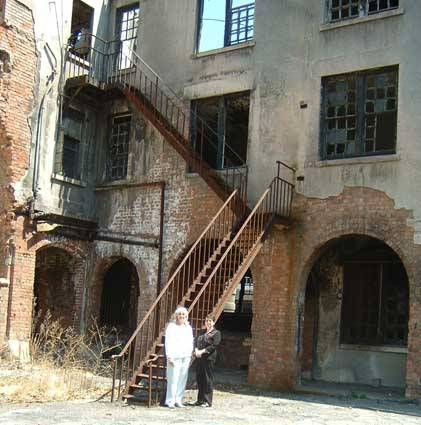
One of Johannesburg’s heritage sites, the Drill Hall, is in a derelict state despite getting a R10 million upgrade in 2004, The Times reported on Monday.

The Drill Hall was the venue of the 1956 preliminary hearings of the treason trial in which former president Nelson Mandela and Walter Sisulu were among the 156 accused.

The historic site is now a home for struggling artists.

In May, unpaid debt led to power cuts, but electricity was restored after discussions with City Power.

The SA National Defence Force vacated the premises in the 1990s, and over 350 homeless families moved in.

After a series of fires, which nearly destroyed the building, it was refurbished in 2004 by the City of Johannesburg.

The R10 million makeover was said to have been intended to promote art, culture, and social upliftment, according to the newspaper.

The new Drill Hall was to provide skills training and child-care facilities, and be a platform for emerging artists.

The Times said it recently visited the building which revealed a different state of affairs.

The entrance was draped in coloured plastic as part of an art exhibition, but the main courtyard, once the hall in which the treason trial hearings were held, was in disarray.

Five metre high concrete pillars, that bore aluminium plaques on which the names of the treason trialists were inscribed, had mostly been destroyed.

Fewer than 20 remained intact, but the pillars bearing the names of Mandela and Sisulu were not among them. – Sapa

Oscar has a new blonde

Claudia Viljoen

While Oscar Pistorius awaits his trial for the killing of his lover, Reeva Steenkamp, another attractive young blonde is constantly at his side.

But there’s no danger of athlete Claudia Viljoen stepping into tragic model Steenkamp’s shoes since her role with the Paralympic gold medallist is very different.

Her job as double amputee sprinter Pistorius’s training partner is to keep the Blade Runner focused on athletics and not on the case due to be heard in August.

Viljoen, 24, a former international 100m and 200m hurdler, is a regular visitor to the Pretoria home of Pistorius’s uncle Arnold, where a gym has been built in the pool house.

The pair train together on a treadmill, bicycle and weights equipment each day, but Viljoen, an old friend of 26-year-old Pistorius, has told friends she is reporting back regularly to his coach, Ampie Louw, on the Paralympian’s state of mind as he tries to rebuild his shattered life.

“Claudia trains with Oscar in the morning, often together with his uncle Arnold’s family,” said a source close to the Pistorius family.

Viljoen, who describes herself as “a 100m hurdler and sports scientist”, is engaged to business consultant James Heunis, 30. She was in South Africa’s preparation squad for the 2008 Beijing Olympics, but suddenly dropped out, apparently because of personal issues. Aside from her athletics, she works for her family’s plant hire business.

Her looks earned her a place in the Athletics South Africa 2011 calendar as Miss July, where she appeared in a carefully-posed shot wearing only briefs and a medal.

On Sunday, her father, Barend Viljoen, told The Mail on Sunday that the Pistorius family were closing ranks over Oscar.

He said: “They know what they are doing. They have brought in professional people to help. We would prefer to keep everything private.”

Steenkamp’s mother, June, recently said she was shocked to learn her daughter was in pain after she was shot the first time while in the bathroom during the Valentine’s Day tragedy.

Pistorius then fired two more bullets into the room, one of which killed her. Pistorius told the court at his bail hearing in April that he feared a burglar had broken into his apartment. He said he grabbed his gun from the table closest to Steenkamp’s side of the bed and began firing.

Arnold Pistorius said last week his nephew stayed inside most of the time, surrounded by pictures of Steenkamp. “He’s got photos in his room, he’s got photos all over the place. What can you say if the person you love the most dies and you were the instrument – it’s unthinkable.” – Mail on Sunday