Outside Agitators

Pat Buchanan

A Cairo court has convicted 43 men and women of using foreign funds to foment unrest inside Egypt in connection with the overthrow of President Hosni Mubarak.

Sixteen of those convicted were Americans. All but one, Robert Becker of the National Democratic Institute, had already departed. Becker fled this week rather than serve two years in an Egyptian prison.

And U.S. interventionists are in an uproar.

“Appalling and offensive,” said Sen. Pat Leahy of the verdicts.

“The 2011 revolution was supposed to end the repressive climate under Mubarak,” said The Wall Street Journal of our ally of 30 years whom Hillary Clinton called a family friend.

This “crackdown,” decries The Washington Post, was defended with “cheap nationalism and conspiracy theories.” As for Egypt’s proposed new law for regulating foreign-funded groups promoting democracy, it is “based on … repressive and xenophobic logic.”

Yet the questions raised by both the Cairo and Moscow crackdowns on U.S.-funded “democracy” groups cannot be so airily dismissed.

For these countries have more than a small point.

While U.S.-funded democracy promotion is portrayed as benign, the National Endowment for Democracy, the International Republican Institute, DNI, and Freedom House have been linked to revolutions that brought down regimes in Serbia, Ukraine, Georgia, Uzbekistan, and Kyrgyzstan, and nearly succeeded in Belarus.

People who pride themselves on bringing about revolutions should not whine when targeted regimes treat them like troublemakers.

And who directs these “pro-democracy” groups?

Before 2011, Freedom House was headed by ex-CIA Director Jim Woolsey, who says we are in “World War IV.” The IRI is chaired by John McCain, who pushed for U.S. intervention in the Russia-Georgia war and is clamoring for airstrikes on Syria.

The DNI chairman is ex-Secretary of State Madeleine Albright, who says: “We are the indispensable nation. We stand tall, and we see further than other countries into the future.”

Is it not understandable to patriots of the original “Don’t Tread on Me” republic that foreigners might resent paid U.S. agents operating inside their countries to alter the direction of their politics?

We have a right to advance our democratic values, we say.

But for the United States to push, for example, for freedom of speech, press, and assembly in the People’s Republic of China is to promote political action that must lead to the fall of Beijing’s single-party state. Do we not understand why that might be seen by the Chinese Communist Party of Xi Jinping as subversive?

In the Cold War Americans learned that not only was the Communist Party U.S.A. a wholly owned subsidiary of Joseph Stalin’s Comintern, but that party had deeply infiltrated the U.S. government and Hollywood. In the late ’40s and early ’50s, America was convulsed over communist penetration of our institutions.

Martin Luther King Jr. was wiretapped by J. Edgar Hoover at the direction of JFK and Attorney General Robert Kennedy because he refused to dump an adviser, Stanley Levison, who was a communist and thought to be a Soviet spy.

Were the Kennedys being “repressive and xenophobic”?

If we were apoplectic that Soviet-funded communists were seeking to influence our culture and politics, why ought not other countries, with cultures and institutions far different from our own, react even as we did?

In the stricter societies of the Islamic world, governments have enacted laws regarding alcohol, premarital sex, divorce, abortion, homosexuality, gay marriage, and religious conversions different from any such laws in the U.S.A.

In some of those countries, such activities can produce floggings, amputations, stonings, and beheadings. In many of these countries, children are indoctrinated in the Islamic faith in government-supported schools. Not here.

We may deplore this, but where do we get the right to intervene in the internal affairs of these countries if they do not threaten us?

And are we really consistent in our democracy promotion?

How many U.S.-funded agents of Freedom House, NED, IRI, and NDI are in Bahrain demanding elections that would permit the Shia majority to dump the king and oust our 5th Fleet from its Persian Gulf base?

How would we react if Riyadh funneled billions of petrodollars into organizations and agents to finance Wahhabi madrassas and assist local Muslim communities in the U.S.A. with their efforts to enact sharia law?

[…]

There is the arrogance of power, the End-of-History babble about democracy being the last, best hope of earth to which all nations should aspire—and if they don’t, give them a kick in that direction.

Once the most admired of nations, America is no longer so.

Why not? Because of our compulsive interventions, military and political, in the internal affairs of nations that are none of our business.

Defund the American Comintern, and bring the outside agitators home.

By

Swiss parliament stalls banking secrecy bill

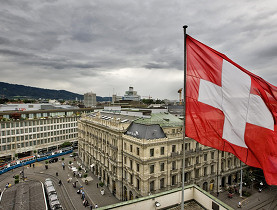
The legislation to disclose client names and data to resolve an ongoing tax-evasion spat between Switzerland and the US, was met with sharp critique by the lower house of parliament in Bern, who halted the vote.

The legislation, which has been dubbed by some Swiss media outlets as ‘American dictate’, is a strong demand by the US in a step for Switzerland to end their banking secrecy regime and bring transparency to their shady practices.

The accord, if enacted into law by Swiss parliament, aims to better track tax evasion in the alpine nation. Last week, Finance Minister Eveline Widmer-Schlumpt told reporters that her cabinet had approved the bill.

The Swiss news agency, ATS, reported 90 votes were in favor, and 100 opposed to debate the new law, which is expected to decided upon during the summer parliament session, which began on Monday and will come to a close on June 21.

Before voting, members from various political parties voiced concerns over the details of the deal to hand over sensitive data to Washington.

A committee, supported by elected members of the Swiss People’s Party, the Christian Democrats and the Ticino League, have until December 4th 2014 to collect 100,000 signatures to put the proposal to a national vote.

On Tuesday, the right-wing Swiss People’s Party launched a campaign to kill the bill and said the package was too ‘vague’ and could create trouble for Swiss bankers.

The bill is vague because Washington and Bern are keeping mum about the details and conditions of the deal, and plan to keep quiet until after the Parliament approves it. Once approved, Parliament will not be able to amend the accord. – RT

Turkish Autumn: ‘The exact opposite of Arab Spring’

Growing Islamism in the region is a driving force in the lifeblood of the Turkish protests, and even has the sympathy of the police, but the Turkish military is waiting in the wings, political expert Avigdor Eskin told RT.

RT: Erdogan vowed to resolve the crisis when he returns to the country. How do you think he’s going to do that?

Avigdor Eskin: Good evening, blessings from the holy city of Jerusalem. I happened to be a witness to the unrest in Turkey. I spent Sunday and Monday with the demonstrators in Istanbul this week and I can tell you if we were talking two years ago about the Arab Spring then now we are facing the Turkish Autumn. This is exactly the opposite process of what we were facing in Egypt and the region. We
see that this wave of Islamism is becoming a really heavy burden to the people and they don’t want to continue with that. This is what the Turkish people were saying.

RT: You say you were there amongst those people in the demonstration. What sort of people are they?

AE: I was not participating in any riots or demonstrations I was just an observer there to tell the truth and the truth is that the unrest was absolutely spontaneous. People even did not carry any slogans in English, people were not prepared, they just came spontaneously from all parts of Istanbul. It was not only Taksim Square, it was everywhere in the city. You could even see demonstrators on the way to the airport just marching in a very restrained and peaceful way, I must say. Now, unlike the unrest in Romania in 1989 which resulted in the revolution against Ceausescu and I remember Moscow in 1991 and 1993, the amount of people participating and the real determination to reach the goal in Turkey is much stronger than in any other place I saw in the world.

The events there are really very serious and Turkey is not going to be the same tomorrow as it was yesterday. It’s a different country already. Even if we are talking about certain parallels with Paris in 1968, the cultural atmosphere is very different because we are talking about people who are students, intellectuals, professionals, they are all there. There was no sign in any part of Istanbul that there was any even small gathering of the government or rolling Islamist Party supporters. It was just amazing that the street was covered by the protesters and the police were sympathetic to them, I saw it.

RT: Where is the military? We haven’t seen them at all.

AE: The military is waiting. As you know, many generals and former chiefs of staff of Turkey are in prison now. This is a very special situation where they are waiting for the developments because the Army will take control only if there are more serious disturbances. They are waiting, maybe, the prime minister and the president will start negotiating with the demonstrators. Maybe there will be some appeasing process, they are still waiting for something good to happen. But if instead of negotiating with his own people the prime minister keeps conveying his tough message or even stirring them up more, then you will see next week or in the week after something from the Army. Turkey, as you know, has a culture of a kind of military regime, democracy, military regime, these things happened to them in the past and nobody will be surprised when it happens again now. – RT

Turkey’s PM sees Twitter as problem

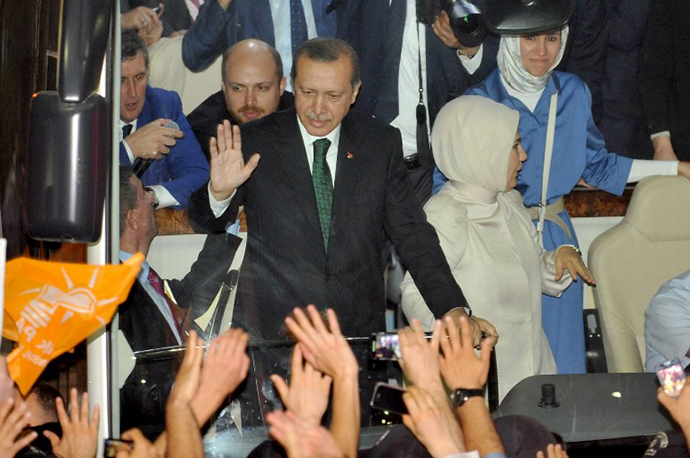
Turkey’s PM has vowed that development of Taksim Square will go ahead, despite ongoing protests. Tayyip Erdogan made the remark in Tunisia on his way back to Turkey. Erdogan is also under scrutiny, with opponents blasting him as authoritarian.

As the protests entered their seventh day, casualties have risen, with three people dead and more than 4,000 injured. What began as an environmental protest against the demolition of Taksim Gezi Park in Istanbul to build a mall has turned into Turkey’s biggest wave of anti-government protest in years.

“There is a problem called Twitter right now and you can find every kind of lie there. The thing that is called social media is the biggest trouble for society right now,” Erdogan said before leaving for North Africa. The Turkish prime minister also slammed the protests as undemocratic, and dismissed them as being organized by extremists.

In their list of demands issued to Erdogan, activists are calling for the firing of the chiefs responsible for the violent police crackdown, the release of protesters detained by police, and for a ban on the use of teargas. If these demands are fulfilled, protesters said they would end the riots.

The period of time after Erdogan returns Thursday from his three-day tour of North Africa is vital for Turkey, as public pressure may force the prime minister to reverse several of his own policies.

So far, Erdogan has only singled out scapegoats in the unrest, RT’s Irina Galushko reported from Istanbul.

He assailed the social networks used by demonstrators to organize protests and post updates; many demonstrators turned to Twitter and Facebook as a mobilization tool, as local media were largely silent during the initial stages of the protests.

However, Deputy Prime Minister Bulent Arinc, who is formally in charge while Erdogan is abroad, apologized on Tuesday for the police brutality against demonstrators. Turkish police have been roundly criticized for their widespread use of teargas and water cannons to disperse crowds of protesters.

Erdogan has been described as a man who rarely bows to opposition, and cannot handle criticism.

“He completely dislikes opposition to his ideas. He takes it as a personal offense. He’s used to having agreement from the country after having gained 50 percent of the votes. This time he didn’t assume the protest would be so big”, columnist and TV host Mutlu Tonbekci told RT.

Journalists Cengiz Candar told Reuters that “Erdogan takes things very personally and has developed a very authoritarian style.”

“Everybody here was being gassed, and people here were trying to resist and trying to keep this park, and he was telling that we are looters and there’s no project going on, and then he changed his mind, saying there’s of course a project and I will do what I want to do,” activist Nazan Ustundag said to RT.

“Our intelligence work is ongoing [to determine the foreign actors behind the protests],” Erdogan said on Monday. “It’s not possible to reveal their names. But we will have meetings with their bosses.”

Conservative Turkish newspaper Yeni Safak reported that foreign mercenaries were among the protesters, according to authorities: “750 to 1,000 people, agents, many of whom are foreign nationals, infiltrated the ranks of the demonstrators, and who are being paid by foreign intelligence.”

As clashes continue, some believe that Erdogan will go to great lengths to avoid embarrassment, as any sign of weakness could break up his party. “Erdogan cannot backtrack now. It would mean defeat,” car dealer Ali Aydin told Reuters. “Weakness would destroy the party.”

The prime minister may also be ill-equipped to dealing with the recent developments. “This is an unprecedented situation for Erdogan. Some people in [the ruling AKP party] think that his policies have to soften, but they remain loyal to party discipline and to Erdogan himself,” Reuters quoted a source close to the AKP as saying.

Many protesters believe that the prime minister has lost touched with reality, and is inflexible and unwilling to compromise.

Erdogan has alleged that hundreds of foreign agents are working to create unrest in the country. He maintains that these agents instigated the protests and are continuing to lurk among the crowds, encouraging dissent and turmoil.

Authorities have arrested some 15 foreign nationals across the country in connection with the protests, Today’s Zamaan newspaper quoted an unnamed governmental source as saying. Many were reportedly Iranian nationals, a country on Erdogan’s blacklist.

Despite the widespread protests, Erdogan remains a popular politician. He is known for his assertive leadership style, and his AK Party holds around two-thirds of the seats in parliament. But a key question remains: How will he handle the protests that are continuing to rock Turkey?

Erdogan is famous for his concrete human rights reforms, including granting rights to the country’s Kurdish minority, the opening of European Union entry talks, and a separation of the government and military. He has lately faced criticism for pressuring the media and for restrictions on alcohol sales.- RT

‘They can watch your ideas form as you type’

The National Security Agency and the FBI in the US are tapping directly into the central servers of nine leading U.S. Internet companies, extracting audio and video chats, photographs, e-mails, documents, and connection logs that enable analysts to track foreign targets, according to a top-secret document obtained by The Washington Post.

The program, code-named PRISM, has not been made public until now. It may be the first of its kind. The NSA prides itself on stealing secrets and breaking codes, and it is accustomed to corporate partnerships that help it divert data traffic or sidestep barriers. But there has never been a Google or Facebook before, and it is unlikely that there are richer troves of valuable intelligence than the ones in Silicon Valley.

Equally unusual is the way the NSA extracts what it wants, according to the document: “Collection directly from the servers of these U.S. Service Providers: Microsoft, Yahoo, Google, Facebook, PalTalk, AOL, Skype, YouTube, Apple.”

PRISM was launched from the ashes of President George W. Bush’s secret program of warrantless domestic surveillance in 2007, after news media disclosures, lawsuits and the Foreign Intelligence Surveillance Court forced the president to look for new authority.

Congress obliged with the Protect America Act in 2007 and the FISA Amendments Act of 2008, which immunized private companies that cooperated voluntarily with U.S. intelligence collection. PRISM recruited its first partner, Microsoft, and began six years of rapidly growing data collection beneath the surface of a roiling national debate on surveillance and privacy. Late last year, when critics in Congress sought changes in the FISA Amendments Act, the only lawmakers who knew about PRISM were bound by oaths of office to hold their tongues.

The court-approved program is focused on foreign communications traffic, which often flows through U.S. servers even when sent from one overseas location to another. Between 2004 and 2007, Bush administration lawyers persuaded federal FISA judges to issue surveillance orders in a fundamentally new form. Until then the government had to show probable cause that a particular “target” and “facility” were both connected to terrorism or espionage.

In four new orders, which remain classified, the court defined massive data sets as “facilities” and agreed to certify periodically that the government had reasonable procedures in place to minimize collection of “U.S. persons” data without a warrant.

In a statement issue late Thursday, Director of National Intelligence James R. Clapper said “information collected under this program is among the most important and valuable foreign intelligence information we collect, and is used to protect our nation from a wide variety of threats. The unauthorized disclosure of information about this important and entirely legal program is reprehensible and risks important protections for the security of Americans.”

Clapper added that there were numerous inaccuracies in reports about PRISM by The Post and the Guardian newspaper, but he did not specify any.

Jameel Jaffer, deputy legal director of the American Civil Liberties Union, said: “I would just push back on the idea that the court has signed off on it, so why worry? This is a court that meets in secret, allows only the government to appear before it, and publishes almost none of its opinions. It has never been an effective check on government.”

Several companies contacted by The Post said they had no knowledge of the program, did not allow direct government access to their servers and asserted that they responded only to targeted requests for information.

“We do not provide any government organization with direct access to Facebook servers,” said Joe Sullivan, chief security officer for Facebook. “When Facebook is asked for data or information about specific individuals, we carefully scrutinize any such request for compliance with all applicable laws, and provide information only to the extent required by law.”

“We have never heard of PRISM,” said Steve Dowling, a spokesman for Apple. “We do not provide any government agency with direct access to our servers, and any government agency requesting customer data must get a court order.”

It is possible that the conflict between the PRISM slides and the company spokesmen is the result of imprecision on the part of the NSA author. In another classified report obtained by The Post, the arrangement is described as allowing “collection managers [to send] content tasking instructions directly to equipment installed at company-controlled locations,” rather than directly to company servers.

Government officials and the document itself made clear that the NSA regarded the identities of its private partners as PRISM’s most sensitive secret, fearing that the companies would withdraw from the program if exposed. “98 percent of PRISM production is based on Yahoo, Google and Microsoft; we need to make sure we don’t harm these sources,” the briefing’s author wrote in his speaker’s notes.

An internal presentation of 41 briefing slides on PRISM, dated April 2013 and intended for senior analysts in the NSA’s Signals Intelligence Directorate, described the new tool as the most prolific contributor to the President’s Daily Brief, which cited PRISM data in 1,477 items last year. According to the slides and other supporting materials obtained by The Post, “NSA reporting increasingly relies on PRISM” as its leading source of raw material, accounting for nearly 1 in 7 intelligence reports.

That is a remarkable figure in an agency that measures annual intake in the trillions of communications. It is all the more striking because the NSA, whose lawful mission is foreign intelligence, is reaching deep inside the machinery of American companies that host hundreds of millions of American-held accounts on American soil.

The technology companies, whose cooperation is essential to PRISM operations, include most of the dominant global players of Silicon Valley, according to the document. They are listed on a roster that bears their logos in order of entry into the program: “Microsoft, Yahoo, Google, Facebook, PalTalk, AOL, Skype, YouTube, Apple.” PalTalk, although much smaller, has hosted traffic of substantial intelligence interest during the Arab Spring and in the ongoing Syrian civil war.

Dropbox, the cloud storage and synchronization service, is described as “coming soon.”

Sens. Ron Wyden (D-Ore.) and Mark Udall (D-Colo.), who had classified knowledge of the program as members of the Senate Intelligence Committee, were unable to speak of it when they warned in a Dec. 27, 2012, floor debate that the FISA Amendments Act had what both of them called a “back-door search loophole” for the content of innocent Americans who were swept up in a search for someone else.

“As it is written, there is nothing to prohibit the intelligence community from searching through a pile of communications, which may have been incidentally or accidentally been collected without a warrant, to deliberately search for the phone calls or e-mails of specific Americans,” Udall said.

Wyden repeatedly asked the NSA to estimate the number of Americans whose communications had been incidentally collected, and the agency’s director, Lt. Gen. Keith B. Alexander, insisted there was no way to find out. Eventually Inspector General I. Charles McCullough III wrote Wyden a letter stating that it would violate the privacy of Americans in NSA data banks to try to estimate their number.

Roots in the ’70s

PRISM is an heir, in one sense, to a history of intelligence alliances with as many as 100 trusted U.S. companies since the 1970s. The NSA calls these Special Source Operations, and PRISM falls under that rubric.

The Silicon Valley operation works alongside a parallel program, code-named BLARNEY, that gathers up “metadata” — technical information about communications traffic and network devices — as it streams past choke points along the backbone of the Internet. BLARNEY’s top-secret program summary, set down in the slides alongside a cartoon insignia of a shamrock and a leprechaun hat, describes it as “an ongoing collection program that leverages IC [intelligence community] and commercial partnerships to gain access and exploit foreign intelligence obtained from global networks.”

But the PRISM program appears to more nearly resemble the most controversial of the warrantless surveillance orders issued by President George W. Bush after the al-Qaeda attacks of Sept. 11, 2001. Its history, in which President Obama presided over exponential growth in a program that candidate Obama criticized, shows how fundamentally surveillance law and practice have shifted away from individual suspicion in favor of systematic, mass collection techniques.

The Obama administration points to ongoing safeguards in the form of “extensive procedures, specifically approved by the court, to ensure that only non-U.S. persons outside the U.S. are targeted, and that minimize the acquisition, retention and dissemination of incidentally acquired information about U.S. persons.”

And it is true that the PRISM program is not a dragnet, exactly. From inside a company’s data stream the NSA is capable of pulling out anything it likes, but under current rules the agency does not try to collect it all.

Analysts who use the system from a Web portal at Fort Meade, Md., key in “selectors,” or search terms, that are designed to produce at least 51 percent confidence in a target’s “foreignness.” That is not a very stringent test. Training materials obtained by The Post instruct new analysts to make quarterly reports of any accidental collection of U.S. content, but add that “it’s nothing to worry about.”

Even when the system works just as advertised, with no American singled out for targeting, the NSA routinely collects a great deal of American content. That is described as “incidental,” and it is inherent in contact chaining, one of the basic tools of the trade. To collect on a suspected spy or foreign terrorist means, at minimum, that everyone in the suspect’s inbox or outbox is swept in. Intelligence analysts are typically taught to chain through contacts two “hops” out from their target, which increases “incidental collection” exponentially. The same math explains the aphorism, from the John Guare play, that no one is more than “six degrees of separation” from any other person.

A ‘directive’

In exchange for immunity from lawsuits, companies such as Yahoo and AOL are obliged to accept a “directive” from the attorney general and the director of national intelligence to open their servers to the FBI’s Data Intercept Technology Unit, which handles liaison to U.S. companies from the NSA. In 2008, Congress gave the Justice Department authority for a secret order from the Foreign Surveillance Intelligence Court to compel a reluctant company “to comply.”

In practice, there is room for a company to maneuver, delay or resist. When a clandestine intelligence program meets a highly regulated industry, said a lawyer with experience in bridging the gaps, neither side wants to risk a public fight. The engineering problems are so immense, in systems of such complexity and frequent change, that the FBI and NSA would be hard pressed to build in back doors without active help from each company.

Apple demonstrated that resistance is possible when it held out for more than five years, for reasons unknown, after Microsoft became PRISM’s first corporate partner in May 2007. Twitter, which has cultivated a reputation for aggressive defense of its users’ privacy, is still conspicuous by its absence from the list of “private sector partners.”

Google, like the other companies, denied that it permitted direct government access to its servers.

“Google cares deeply about the security of our users’ data,” a company spokesman said. “We disclose user data to government in accordance with the law, and we review all such requests carefully. From time to time, people allege that we have created a government ‘back door’ into our systems, but Google does not have a ‘back door’ for the government to access private user data.”

Microsoft also provided a statement: “We provide customer data only when we receive a legally binding order or subpoena to do so, and never on a voluntary basis. In addition we only ever comply with orders for requests about specific accounts or identifiers. If the government has a broader voluntary national security program to gather customer data we don’t participate in it.”

Yahoo also issued a denial.

“Yahoo! takes users’ privacy very seriously,” the company said in a statement. “We do not provide the government with direct access to our servers, systems, or network.”

Like market researchers, but with far more privileged access, collection managers in the NSA’s Special Source Operations group, which oversees the PRISM program, are drawn to the wealth of information about their subjects in online accounts. For much the same reason, civil libertarians and some ordinary users may be troubled by the menu available to analysts who hold the required clearances to “task” the PRISM system.

There has been “continued exponential growth in tasking to Facebook and Skype,” according to the PRISM slides. With a few clicks and an affirmation that the subject is believed to be engaged in terrorism, espionage or nuclear proliferation, an analyst obtains full access to Facebook’s “extensive search and surveillance capabilities against the variety of online social networking services.”

According to a separate “User’s Guide for PRISM Skype Collection,” that service can be monitored for audio when one end of the call is a conventional telephone and for any combination of “audio, video, chat, and file transfers” when Skype users connect by computer alone. Google’s offerings include Gmail, voice and video chat, Google Drive files, photo libraries, and live surveillance of search terms.

Firsthand experience with these systems, and horror at their capabilities, is what drove a career intelligence officer to provide PowerPoint slides about PRISM and supporting materials to The Washington Post in order to expose what he believes to be a gross intrusion on privacy. “They quite literally can watch your ideas form as you type,” the officer said. – Washington Post

On the war path with Samantha Power

Trust Republicans to give battle over the wrong broad and for the wrong reasons.

Political posturing aside, Susan Rice, whom Barack Obama has appointed to be his national security adviser – despite or perhaps because of her role in developing the administration’s Benghazi fable – is likely less dangerous than Samantha Power, who will be sent to the United Nations in Rice’s place.

Rice, you’ll recall, was shoved out onto the Sunday shows – five days following the Sept. 11 attack on the mission in Libya last year – to tell tall tales about the genesis of that attack, and to saddle the blame for U.S. fatalities there on an anti-Islam filmmaker. (The man still languishes in jail.)

Formerly at the National Security Council, and acting as senior White House security adviser at the time, Power knows a thing or two about the Benghazi pickle. More to the point: In cahoots with Rice and Hillary Clinton – the woman who cracked the whip at Foggy Bottom – Power was responsible for Obama’s war on Libya, having “developed” a doctrine every bit as intellectually and morally bankrupt as the Bush Doctrine (which advocated waging war to ostensibly prevent it).

Writing in The Nation, a magazine of the ultra-left, Tom Hayden has illustrated just how dangerous is Power’s “Responsibility to Protect” doctrine. A former California state senator, Hayden is also a ’60s flower-power peacenik, whose progressive pedigree can be traced back to Abbie Hoffman, Jerry Rubin and Jane Fonda.

According to Hayden, Power is an “Irish internationalist”; a “humanitarian hawk” who “see[s] war as an instrument for achieving her liberal, even radical, values.” She “advocates American and NATO military intervention in humanitarian crises.” As she sees it, “The United States must … be prepared to risk the lives of its soldiers to stop the threat of genocide.”

Hip to Power’s hypocrisy, Hayden points out that “like U2′s Bono, another Irish human rights activist,” she “has been less preoccupied by the human rights abuses inflicted by the British during the 30-year war in the northern part of her own country.” Indeed, like her neoconservative philosophical clones, Power considers herself a redeemer of mankind – but not, mind you, of her own kind.

Power has still to scale the Senate Foreign Relations committee for confirmation. My guess is that the leggy fanatic will clear the hurdle by offering as confirmation quid pro quo a softer stance on, say, Israel. And voila, onward to Syria.

By far the more dangerous of the two Obama Amazons is Samantha Power. Susan Rice, in a sense, has been neutralized by scandal; she’s under scrutiny. And if you’re wondering what a U.S. ambassador at the U.N. could possibly do by way of taking the country to war, think of John Negroponte. He pushed for the Security Council resolution “that President Bush eventually cited in going to war in Iraq.”

If they play rough, Republicans will lap up the ladies’ foreign-policy antics, starting with the senior Republican senator from Arizona. John McCain recently crossed enemy lines to cavort with Syrian rebels, the type of chaps who lunch on enemy lungs. He, Lindsey Graham (another senior Republican senator) and their colleagues can’t wait to supply the noble savages of the world with rations.

The only time Republicans will shake fists and point fingers is over a war delayed, one that isn’t led by the U.S., or a war waged without the necessary conviction (read collateral damage).

In all, white progressives like Power derive an erotic rush from swooping down to save The Unknown Other, whether he likes it or not. The coolest place from which to keep this hot thrill going is the global geopolitical scene.

To expect someone like Power to care about her homies first is a lot like expecting Angelina Jolie to adopt a poor white baby (an Afrikaner living in a shantytown , for example). How unglamorous! There’s no chic value in that. In Jolie’s defense, it’s her money. It’s hers to do with as she pleases. In a public servant, however, Power’s proclivities amount to treason.

Order lIana Mercer’s brilliant polemical work, “Into the Cannibal’s Pot: Lessons for America from Post-Apartheid South Africa”

Edmund Burke certainly thought so. These sellouts of American interests would do well to ponder Burke’s wisdom:

“To be attached to the subdivision, to love the little platoon we belong to in society is the first principle (the germ as it were) of public affections. It is the first link in the series by which we proceed toward a love to our country and to mankind. The interest of that portion of social arrangement is a trust in the hands of all those who compose it; and as none but bad men would justify it in abuse, none but traitors would barter it away for their own personal advantage.”

Also read Ilana’s blog.

Soweto pupils to represent South Africa in France

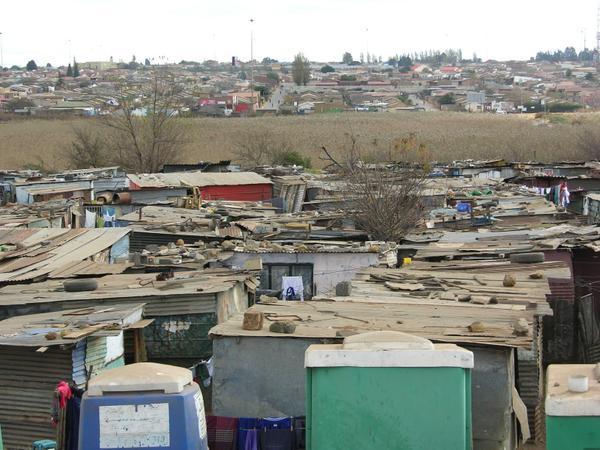
Scene in Soweto

Eight pupils from the Winnie Ngwekazi Primary School, in Soweto, will represent South Africa at a children’s parliament in France this week, it was announced on Thursday.

The eight 12-year-olds were being sent to the event by the arts and culture department and the Nelson Mandela Children’s Fund, they said in a statement.

Democracy required the participation of all citizens, including the youth, said Arts and Culture Minister Paul Mashatile.

“This programme gives them a valuable opportunity to raise their voices on key issues; to debate and discuss how better to improve aspects of freedom, democracy and liberty,” he said.

“They also get to share their experiences and aspirations for the future with other children from around the world.”

Moipone Buda-Ramatlo, of the Nelson Mandela Children’s Fund, said it was honoured to send the pupils to France.

“This is squarely in line with our key objectives… of facilitating child and youth participation in issues that affect them, and in shaping a society that is attentive to children, their rights, needs, abilities and aspirations”.

More than 500 children from various countries were expected to attend the parliament. – Sapa

20 years jail for black rapist of 12-year old

A man who raped a teenager has been sent to jail for 20 years by the Dundee Regional Court, KwaZulu-Natal police said on Thursday.

Keletso Innocent Ntuli attacked and raped the 12-year-old while she was heading home after New Year’s Day celebrations in Nquthu, near Ulundi, said police spokesperson Thulani Zwane.

He said the girl gather her clothes and ran home afterwards.

“She reported the matter to her mother, who in turn reported [it] to the Nquthu police,” he said.

Zwane said Ndlovu underwent mental observation before being sentenced on 4 June. – Sapa

Queers Against Israeli Apartheid ‘do not violate hate laws in Toronto’

The Toronto city council has no legal grounds to deny grant money to Pride over the gay festival’s refusal to ban the group Queers Against Israeli Apartheid, Toronto’s chief lawyer has told Mayor Rob Ford’s executive committee.

In a confidential and frank April report obtained by the Star, city solicitor Anna Kinastowski says she “cannot recommend” that council require Pride to ban the phrase “Israeli apartheid” as a condition of receiving taxpayer funds.

Kinastowski writes: “The term ‘Israeli Apartheid’ does not violate the city’s human rights policy, does not appear to violate the Ontario Human Rights Code, and does not appear to constitute ‘hate’ as the (Supreme) Court has interpreted it and would therefore appear to fall within the realm of potentially ‘offensive’ yet protected speech.”

The committee will again discuss Queers Against Israeli Apartheid (QuAIA) on Tuesday during a debate on the city’s anti-discrimination policy for grant recipients. Pride’s annual grant — about $124,000 last year — will be debated by council in June, only 10 days before the festival begins.

Pro-Israel councillors have repeatedly and unsuccessfully sought to find a way to tweak city rules in a way that might prevent the activist group from marching in the annual Pride parade. Councillor James Pasternak, who does not sit on the executive, has even floated the idea of offering Pride a “diversity bonus” for excluding QuAIA.

Citing a February Supreme Court decision, Kinastowski also warns against a 2012 suggestion from the executive to change the anti-discrimination policy to prohibit “anything which shows a lack of respect for all persons.”

Kinastowski, cautioning against imposing “an overbroad standard for ‘discrimination,’ ” says such a policy would be “unlikely to withstand a court challenge” on freedom-of-speech grounds.

“That’s what we know. I mean, it’s not a secret. Every single report that comes out says we don’t violate any hate laws or anything like that,” said QuAIA member Tony Souza. “We’re not breaking any laws, and we certainly don’t ‘hate’ anybody. We just want justice in Palestine.”

“I don’t think the question is a legal question — I think the question is one of morality and divisiveness,” said Avi Benlolo, chief executive of the pro-Israel Friends of Simon Wiesenthal Center for Holocaust Studies. “And if we want to live in a pluralistic society where we demonstrate respect for one another, then there’s just morality. . . . We’re just saying to the city we don’t think this is socially acceptable.” – Toronto Star

We’ll spy on you through your dishwasher

More and more personal and household devices are connecting to the internet, from your television to your car navigation systems to your light switches.

Gen. Petraeus former CIA chief mused about the emergence of an “Internet of Things” — that is, wired devices — at a summit for In-Q-Tel, the CIA’s venture capital firm. “‘Transformational’ is an overused word, but I do believe it properly applies to these technologies,” Petraeus enthused, “particularly to their effect on clandestine tradecraft.”

All those new online devices are a treasure trove of data if you’re a “person of interest” to the spy community. Once upon a time, spies had to place a bug in your chandelier to hear your conversation. With the rise of the “smart home,” you’d be sending tagged, geolocated data that a spy agency can intercept in real time when you use the lighting app on your phone to adjust your living room’s ambiance.

“Items of interest will be located, identified, monitored, and remotely controlled through technologies such as radio-frequency identification, sensor networks, tiny embedded servers, and energy harvesters — all connected to the next-generation internet using abundant, low-cost, and high-power computing,” Petraeus said, “the latter now going to cloud computing, in many areas greater and greater supercomputing, and, ultimately, heading to quantum computing.”

Petraeus allowed that these household spy devices “change our notions of secrecy” and prompt a rethink of “our notions of identity and secrecy.” All of which is true — if convenient for a CIA director.

The CIA has a lot of legal restrictions against spying on American citizens. But collecting ambient geolocation data from devices is a grayer area, especially after the 2008 carve-outs to the Foreign Intelligence Surveillance Act. Hardware manufacturers, it turns out, store a trove of geolocation data; and some legislators have grown alarmed at how easy it is for the government to track you through your phone or PlayStation.

That’s not the only data exploit intriguing Petraeus. He’s interested in creating new online identities for his undercover spies — and sweeping away the “digital footprints” of agents who suddenly need to vanish.

“Proud parents document the arrival and growth of their future CIA officer in all forms of social media that the world can access for decades to come,” Petraeus observed. “Moreover, we have to figure out how to create the digital footprint for new identities for some officers.”

It’s hard to argue with that. Online cache is not a spy’s friend. But Petraeus has an inadvertent pal in Facebook.

Why? With the arrival of Timeline, Facebook made it super-easy to backdate your online history. Barack Obama, for instance, hasn’t been on Facebook since his birth in 1961. Creating new identities for CIA non-official cover operatives has arguably never been easier. Thank Zuck, spies. Thank Zuck. – Wired

Judge Edith Jones in the firing line for race and crime remarks

Judge Edith Jones

Civil rights groups filed a complaint this week against a federal judge in Houston after she allegedly said during a lecture that some minorities are prone to violence.

Judge Edith Jones, who serves on the 5th U.S. Circuit Court of Appeals and was a Bush-era Supreme Court frontrunner, allegedly made the comment while speaking on the death penalty to The Federalist Society at the University of Pennsylvania in February.

The Federalist Society describes itself on its website as “a group of conservatives and libertarians interested in the current state of legal order.”

In her remarks, Jones also is alleged to have said race plays no role in the administration of the death penalty, but certain ethnic groups commit certain types of crimes more often than others.

Civil rights groups, including the J.L. Turner Legal Association, say Jones’ comments reveal a strong ethnic bias. They are pushing for an investigation that could lead to her removal from the bench.

The J.L. Turner Legal Association is an African-American bar association in Dallas. Its president, Mandy Price, told CNN that some attendees were shocked at what they heard and later complained.

“The reaction in the room when she made these remarks was one of shock, surprise, and offense,” according to one account that the legal association collected from some of the attendees.

The Federalist Society itself, however, called the allegations “frivolous accusations.”

ACLU: Blacks busted for marijuana at much higher rates than whites

According to the some of the accounts in the complaint, the judge said, “Racial groups like African- Americans and Hispanics are predisposed to crime.”

They are “‘prone to commit acts of violence,” she said, according to the complaint.

When challenges to her comments arose, she allegedly countered them by saying that “blacks and Hispanics” outnumber “Anglos” on death row.

Price says such comments reveal strong predispositions sitting judges should not harbor.

“We expect that they’re going to be fair, impartial, not that they have predetermined their case,” she said.

A representative from the court, which is headquartered in New Orleans, declined to comment to CNN, and said Jones also is “not making any comment regarding the matter.”

Jones was on President George W. Bush’s short list for the U.S. Supreme Court in 2005, though legal observers remarked at the time that her reputation has a staunch conservative — firmly upholding the death penalty and vocally critical of the Roe v. Wade decision, among other issues — hurt her odds.

“The decision for which Judge Jones is really best known is her opinion saying, ‘While I’m a lower court judge, I will apply Roe v. Wade, but I think it was wrongly decided and should be overruled,'” Supreme Court expert Tom Goldstein told CNN. “That really typifies her role as a lower court judge but signals what she would do if she became a Supreme Court justice.” – CNN.COM

Obama’s the sinner; Holder his ‘sin eater’

Big media have been willing, even eager, to pass the buck for Barack for the past five years. But the Fourth Estate rose as one on its proverbial hind legs when the president made the mistake of going after their own: members of the media.

For doing their jobs, Associated Press journalists were spied on and had their telephone records and other personal information seized by the head of Barack Obama’s Justice Department, Attorney General Eric Holder. For doing his job, Fox News Channel’s James Rosen was framed by the same department for the crime of conspiracy to leak classified materials.

IRS bloodhounds Douglas Shulman and Steven Miller, likely in charge of hounding conservative organizations unsympathetic to Obama, had practically taken up residence at the Big Dog’s House. Yet, curiously, conservatives have largely avoided linking Barack Hussein Obama to this and to the other scandals reverberating throughout his administration.

Republicans have eddied around the issue, merely describing the president’s stance with respect to the Rosen, AP, Benghazi and the Internal Revenue Service affairs as “disconnected,” “lacking focus.” An “absentee presidency,” surmised the conservative bloggers at Powrline. “The Spectator President,” pronounced Patrick Buchanan. Judge Andrew Napolitano’s brief was equally narrow. He avoided so much as hinting that Holder had likely been carrying out the wishes of his bosom buddy.

Although it’s hard to know what to make of it here, Republican rigor mortis is par for the course. Fortunately, for every mealymouthed Eric Cantor—the House majority leader is responsible for the “disconnected” description—there are progressives like Salon’s Joan Walsh, who, spittle flying, are tying the president to the infractions liberals consider unforgivable. “If you want to know how Obama feels about the AP and Rosen controversies,” reasoned Walsh, “compare his reactions to the three different ‘scandals’ the GOP has been working overtime to conflate … .”

“On Benghazi, Obama has been uncharacteristically defiant,” noted Walsh. He defended the women involved and accused the GOP of staging a “sideshow.” “By contrast, he quickly called the IRS targeting Tea Party groups for extra scrutiny ‘outrageous’ and ‘unacceptable.'” “On the AP and Rosen controversies” the president equivocated. He tried “to have it both ways,” observed Walsh.

To the news that the president’s former senior legal advisor (Eric Holder), as The Huffington Post reported, “personally signed off on the warrant that allowed the Justice Department to search Rosen’s personal email,” Obama has responded by holding Holder still closer to him—he praised the AG and charged him with probing his own malfeasance.

Concludes Ms. Walsh: “the DOJ’s media probes reflect administration policy.”

Obama’s feeble response to “the outcry over the AP and Fox scandals” Jonathan Turley has also taken as evidence “that these are Obama’s sins.” Writing in USA Today, professor Turley, a civil libertarian who is “neither a Republican nor conservative,” smarted over what he termed “the greatest attack on the free press in decades.” Turley goes well beyond other liberals in fingering Holder for supervising a “comprehensive erosion” of civil liberties, privacy rights, and press freedoms. Deftly drawn deductions have enabled this cool brain to elegantly connect the philosophical dots between The Boss and his underling’s pervasive and persistent assaults on due process.

“Holder is what we call a ‘sin eater’ inside the Beltway — high-ranking associates who shield presidents from responsibility for their actions,” posits the professor.

“Richard Nixon had H.R. Haldeman and John Ehrlichman. Ronald Reagan had Oliver North and Robert ‘Bud’ McFarlane. George W. Bush had the ultimate sin eater: Dick Cheney, who seemed to have an insatiable appetite for sins to eat.”

Alas, having reasoned that, “feigned ignorance” notwithstanding, Obama is the original sinner, and Holder his “sin eater,” Prof. Turley stopped short of calling for the impeachment of the president for his many “mortal sins.”

From the expansion of surveillance-state USA, to the leveling of Libya, to forcing individual Americans to purchase healthcare and religious organizations to fund birth control; to the crafting of a Kill List featuring his chosen targets for extrajudicial elimination, to running guns to Mexico’s goons, while gunning for America’s guns—Barack Hussein Obama’s philosophical fingerprints are all over his administration.

While pitting a favored voting bloc against the rest of us, Obama told militant Latinos: “We’re gonna punish our enemies and we’re gonna reward our friends who stand with us on issues that are important to us.”

The link between President Obama and the policies his minions have pursued seems patent enough. Obama is the philosophical felon, the fulcrum on which everything pivots.

Also visit Ilana’s blog.

Millions of illegal cigarettes seized at Warmbaths

Millions of illegal cigarettes were recovered from an LP Gas tanker in BelaBela (Warmbaths) after being inspected by police on 31 May 2013.

The cigarettes were concealed in hidden compartments within the tanker, which entered South Africa via the Groblersbrug border post between Botswana and South Africa.

Authorities from the South African Police Service recovered illegal Dullahs, Mega and Remington Gold cigarettes with a street value of R2,2 million. The cigarettes which were non-compliant with the Tobacco

Products Control Act and the Customs and Excise Act, appear to have been destined for the South African market. Upon further investigation, authorities confirmed that the tanker did not belong to LP Gas and that the driver had no supporting documentation for the vehicle or for the cigarettes. The trailer, together with the illegal cigarettes, was seized by SAPS and the driver was arrested.

The illegal trade in cigarettes continues to be of major concern to authorities, with estimates putting it at 30% of the total cigarette market in South Africa. A significant number of illegal cigarettes make their way into the country via the Zimbabwe and Botswana border posts every day, despite concerted efforts by authorities to curb the growing illegal trade.

According to Francois van der Merwe, Chairman of the Tobacco Institute of Southern Africa, SAPS are to be commended on their swift action leading to the seizure and arrest. ?The sale of these illegal cigarettes would have amounted to an almost R1.8 million revenue loss to government, due to non-declaration and non-payment of excise duties and VAT?.

TISA has been actively working towards a more collaborative approach in combating illicit trade not only in South Africa, but across the Southern African region. Memoranda of Understanding on an approach towards tackling the illegal cigarette trade have been concluded with all SACU countries as well as Mozambique. Because illicit trade occurs within countries and across borders, it is necessary to work together within a legitimate framework to curb the growing tide of illegal trading.

“Although significant progress has already been made to curb this growing tide, we believe that there should be increased resource allocation to enable greater law enforcement on the borders, and within the country where illicit trading is increasing as well as dedicated investigation teams. Furthermore, a co-ordinated approach involving SACU and SADC law enforcement authorities is needed to really eliminate the illicit trade in cigarettes. TISA remains committed to working with all the relevant parties in efforts to eradicate the illegal trade in tobacco products,” Van der Merwe concluded.

High Court to hear ANCYL liquidation case

The High Court in Johannesburg will hear a liquidation application against the ANC Youth League on Friday.

Phil Patlanski, a lawyer for Z2 Presentations CC, which brought the application, said on Thursday the matter was expected to be heard on Friday morning.

The close corporation trades as University Events Management (UEM).

The application came after the African National Congress Youth League failed to pay almost R15 million, including interest, to the contractor for its national congress in Mangaung in the Free State in 2008, when Julius Malema was elected leader.

The sheriff reportedly twice tried to seize youth league assets to pay off the debt, but there were no assets.

On Wednesday, in an answering affidavit filed at the court for the youth league, ANC secretary general Gwede Mantashe said it was a matter of record that the league’s affairs were “shambolic and chaotic”.

“The respondent at present has no disposable assets and its operations, which are currently limited to auditing its membership and restructuring the chaos, are being funded by the ANC,” Mantashe said.

In his affidavit Mantashe said the cost of collecting and administering the annual ANCYL membership fee of R12 exceeded that amount. He said the league was not a commercial business and did not operate for profit.

“The respondent, as set out in its constitution, is a voluntary association of persons with the object of pursuing and furthering the ideals of democracy, freedom, and peace through political processes.

“At present the only goodwill it has is of a political nature and not a commercial nature, and this cannot be sold for money,” Mantashe said.

He argued that the Companies Act would not apply to the ANCYL.

The ANC had made some payments to the contractor, but Mantashe said the party was a separate entity from the league,

The ANC had made the payments because its youth wing did not have the funds. However, the ANC had no obligation to take steps to pay the debt, he said.

UEM’s lawyers argue the Insolvency Act applies to the case. In their heads of argument the lawyers say the ANCYL’s affairs could be wound up in accordance with the act.

“The respondent has committed acts of insolvency and is unable to pay its debts as envisaged in section eight of the Insolvency Act,” they say.

A trustee needed to be appointed to establish where the ANCYL’s assets were, since it was an organisation with numerous members who paid annual fees, and it received donations.

Mantashe said appointing a liquidator or a trustee would not gain anything and only be a cost to creditors, as the ANCYL had no assets and no money in its bank account.

“Any investigation by a liquidator or trustee would be at the expense of creditors… As there is no business there is no suggestion of any hidden assets or profits which might be uncovered,” he said.

UEM’s lawyers said it was untenable that the league could be found to be “contracting with the world at large giving out the appearance of legitimacy” when it claimed it had no assets.

“A trustee will be able to investigate this and establish the correctness or falsity of the assertions made.”

They argued Mantashe was not authorised to speak on behalf of the ANCYL because he was not one of its office bearers. They would ask the court to dismiss Mantashe’s arguments in his answering affidavit.

Mantashe asked that the application be dismissed with costs. – Sapa