Corrie Sanders’s murderers in court

Corrie Sanders

Three black men accused of murdering former world heavyweight boxing champion Corrie Sanders appeared in the Brits Magistrate’s Court on Monday.

Paida Fish, 19, Samuel Mabena, 27, and Chris Moyo, 25, each face one count of murder and three charges of robbery with aggravating circumstances.

The matter was postponed to October 8 for further investigation. The men will remain in custody.

Mabena also appeared in court on Monday in connection with the murder of farmer Mauritz Oberholzer near Brits on September 5. This matter was postponed until Tuesday.

The three were arrested in the Oukasie informal settlement, near Brits, on Thursday after police received a tip off, police spokesman Brigadier Thulani Ngubane said last week.

At the address where the men were arrested, police recovered a cellphone, vehicle key, purse, handbag, and cash believed to have been stolen during the robbery in which Sanders was shot on September 22.

“Police then went to a second address and a third suspect was arrested,” Ngubane said.

The three men are Zimbabweans.

Sanders was at the Thatch Haven Country Lodge, in Brits, when armed robbers entered and began firing shots at random. Sanders was hit in the hand and stomach and died in the Kalafong hospital the next day.

Outside court members of the Oukasie SA National Civic Organisation protested.

“Our Constitution is failing us because criminals go free,” Michael Mhlongo said.

“They have taken our champion. We are sending our condolences to the Sanders family.”

He said the home affairs department had failed by letting foreigners into the country as they had no legal documents and therefore could not be traced if they committed crimes.

One man held up a poster which read: “They took Lucky Dube now it’s Corrie Sanders. Enough is enough with illegal foreigners. No bail.”

Sanders won the World Boxing Organisation’s heavyweight title in March 2003 by dropping Ukrainian Wladimir Klitsckho in the second round in Hanover, Germany. He retired five years later. – Sapa

60% of 10111 crimes ‘not registered’

Nearly 60 percent of the crimes reported to the police’s 10111 call centre do not get registered and are not investigated, The Star reported on Monday.

The SA Police Service’s (SAPS) performance claims could not be verified because of a lack of administrative control, according to Auditor General Terence Nombembe.

So-called “positive incident reports” to 10111 call centres had to be entered on the SAPS case administration system (CAS) to generate a docket with a case number. But 58 percent of positive incident reports were not linked to dockets on the CAS.

Nombembe’s findings are contained in the SAPS annual report for 2011/12 tabled in Parliament on Friday.

National Assembly police oversight committee acting chairwoman, ANC MP Annelize van Wyk said 58 percent was “a huge number” that could not easily be explained away.

DA spokeswoman on police, Dianne Kohler Barnard, said: “While citizens believe that their cases are being investigated by a SAPS that costs them R62.4 billion per annum, the criminals will no doubt be delighted to hear that the majority of their activities are never even looked at by our ailing SAPS.”

Nombembe gave SAPS an unqualified audit.

The department spent 98.9 percent of its budget in 2011/12, leaving R617 million unspent. This included R92 million for detective services. – Sapa

Bursary for whites only legal, court finds

The Supreme Court of Appeal ruled it was within someone’s right give bursaries to only white students, according to a report on Saturday.

The ruling came after Daphne de Villiers from Stellenbosch in her last will and testament determined that the trustees of the Jean Pierre de Villiers Trust, which she created, must allocate R250,000 yearly to white students at four universities for certain degrees, Beeld reported.

These were the universities of Stellenbosch, Pretoria, the Free State and Cape Town.

Five appeal court judges found on Friday that it would not help to apply in court for the bursary to go to pupils of another race as it was not the person’s last wishes.

De Villiers was warned before her death that this might be problematic but she was insistent, according to the report.

[ad 1]

After her death all four universities refused to become involved with the bursaries due to the racial connotation.

The administrators approached the court to remove the word ‘white’ on grounds of discrimination.

It was ruled that if white student could not benefit from the bursaries that the money should go to a charity as De Villiers stipulated. – Sapa

Marikana inquiry starts

Retired judge Ian Farlam

The judicial inquiry into the shooting at Lonmin’s Marikana mine will begin in Rustenburg in the North West on Monday.

The commission of inquiry would start with public hearings at 9am at the town’s civic centre.

On Monday, all parties involved would go to the area where 34 striking workers of the Lonmin Platinum mine in Marikana were shot dead by police on August 16.

The commission’s secretary said people would be allowed to point out places which they considered relevant to the inquiry. The descriptions of what happened at the site would be recorded.

Following the in loco inspection, formal sittings of the commission were expected to start at the civic centre on Wednesday.

In August, President Jacob Zuma announced a three-member judicial commission of inquiry to probe the mine violence.

[ad 1]

The commission, chaired by retired Judge Ian Farlam, has been mandated to determine the roles played by Lonmin, the police, the Association of Mineworkers and Construction Union, and the National Union of Mineworkers.

It will also determine the role played by the department of mineral resources or any other government department or agency, and the conduct of individuals and groupings in promoting a situation of conflict and confrontation which could have given rise to the shootings. – Sapa

Germ warfare anyone?

Forget Wouter Basson and Project Coast! The British Ministry of Defence turned large parts of their country into a giant laboratory to conduct a series of secret germ warfare tests on the public.

Cardiologist Dr Basson faces charges of unprofessional and unethical conduct. The charges relate to his conduct as a medical doctor, when he headed the country’s chemical and biological warfare research programme for the defence force in the 1980s and early 1990s.

A British government report released in 2002 however provides insight into the comprehensive official history of Britain’s biological weapons trials between 1940 and 1979. The 60-page report reveals information about more than 100 covert experiments.

It may even have involved spreading germs for pharmaceutical companies, says a South African expert.

One chapter of the report, ‘The Fluorescent Particle Trials’, reveals how between 1955 and 1963 planes flew from north-east England to the tip of Cornwall along the south and west coasts, dropping huge amounts of zinc cadmium sulphide on the population. The chemical drifted miles inland, its fluorescence allowing the spread to be monitored. In another trial using zinc cadmium sulphide, a generator was towed along a road near Frome in Somerset where it spewed the chemical for an hour.

While the Government has insisted the chemical is safe, cadmium is recognised as a cause of lung cancer and during the Second World War was considered by the Allies as a chemical weapon.

Many of these tests involved releasing potentially dangerous chemicals and micro-organisms over vast swaths of the population without the public being told.

Military personnel were briefed to tell any ‘inquisitive inquirer’ that the trials were part of “research projects into weather and air pollution”.

In another chapter, ‘Large Area Coverage Trials’, the MoD describes how between 1961 and 1968 more than a million people along the south coast of England, from Torquay to the New Forest, were exposed to bacteria including e.coli and bacillus globigii , which mimics anthrax. These releases came from a military ship, the Icewhale, anchored off the Dorset coast.

The report also reveals details of the DICE trials in south Dorset between 1971 and 1975. These involved US and UK military scientists spraying into the air massive quantities of serratia marcescens bacteria, with an anthrax simulant and phenol.

Similar bacteria were released in ‘The Sabotage Trials’ between 1952 and 1964. These were tests to determine the vulnerability of large government buildings and public transport to attack. In 1956 bacteria were released on the London Underground at lunchtime along the Northern Line between Colliers Wood and Tooting Broadway. The results show that the organism dispersed about 10 miles. Similar tests were conducted in tunnels running under government buildings in Whitehall.

Experiments conducted between 1964 and 1973 involved attaching germs to the threads of spiders’ webs in boxes to test how the germs would survive in different environments, across Britain. The report also gives details of more than a dozen smaller field trials between 1968 and 1977.

A spokeswoman for Porton Down, said: ‘Independent reports by eminent scientists have shown there was no danger to public health from these releases which were carried out to protect the public.

Asked whether such tests are still being carried out, she said: ‘It is not our policy to discuss ongoing research.’

Dispersion of compounds and other microorganisms were conducted in America too without informing the public. The official rationale for these trials was that they were done to learn about germ warfare. Areas included large cities like St. Louis, Corpus Christi, Winnipeg, and Fort Wayne.

In the English study, the following admission is included:

“Cadmium accumulates in the body, especially in the kidneys and to a much lesser extent in the liver. About 5% of cadmium is absorbed through the gut. When cadmium is absorbed through the lungs or the gut it becomes bound to albumen or to the cystine-rich protein, metallothionein. In the kidneys, the lysosomes of the proximal tubules degrade the metallothionein and so release the bound cadmium. Once there, the kidneys cannot make enough metallothionein and the free cadmium will damage them. The most sensitive indication of cadmium-induced renal damage is an increased urinary excretion of low molecular weight proteins, and particularly of beta-2-microglobulin, as there is a decrease in renal tubular absorption. There is uncertainty about the fate of ZnCdS when it is breathed deep into the lungs. It is known that cadmium ions can enter the cell surface fluid and pass into cells in the lung. Like other transition metals cadmium participates in oxidation and reduction reactions.”

In a  report from the National Academy of Sciences it states that “The U.S. Army released the chemical compound zinc cadmium sulfide from airplanes, rooftops, and moving vehicles in 33 urban and rural areas as part of a Cold War program to test the way biological weapons might disperse under different conditions.”

“Information on how zinc cadmium sulfide affects human health is sparse,…”

This statement was made 30 years or more after the tests were conducted.


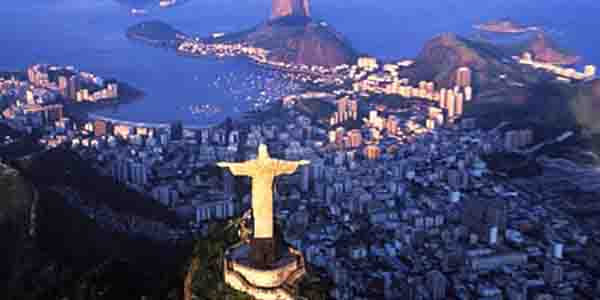
Brazil: black homicide a problem

BRASILIA, Brazil (AP) – Brazil’s government is launching a pilot program that aims to reduce violence among young blacks, who suffer a higher homicide rate than any other group.

Racial Equality Minister Luiza Bairros says the Live Youth program will kick off in the northeastern city of Maceio. It will expand education programs, create cultural spaces in violent communities and train people to work with at-risk youth.

The country’s Health Ministry says 53 percent of all murders in Brazil involve young male victims, with blacks making up 75 percent of those youth. Brazil claims the world’s second biggest population of African descent, only behind Nigeria.

Official figures show Brazil’s black population has made some advances. Their income has grown by 67 percent over the past decade, compared to 45 percent for income among whites.

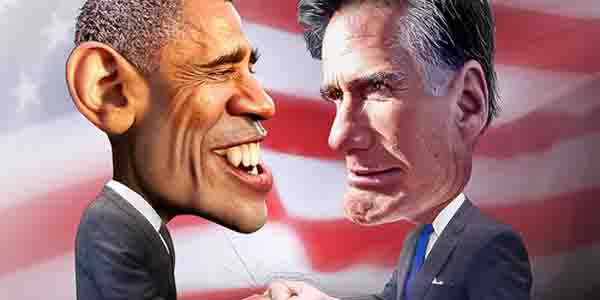
Obama has steady lead over Romney

Five weeks to Election Day, President Barack Obama is within reach of the 270 electoral votes needed to win a second term. Republican Mitt Romney’s path to victory is narrowing.

To overtake Obama, Romney would need to quickly gain the upper hand in nearly all of the nine states where he and Obama are competing the hardest.

Polls show the president with a steady lead in many of them as Romney looks to shift the dynamics of the race, starting with their first debate Wednesday night in Denver.

Obama headed to Las Vegas for an evening rally and planned to stay in Nevada as he prepared for the debate. Romney remained in Boston on Sunday, going through preparations of his own for Wednesday’s event.

Romney’s running mate Paul Ryan says there’s time for the Republican ticket to win. “In these kinds of races people focus near the end, and that’s what’s happening now,” he told “Fox News Sunday.”

A prominent Romney supporter, New Jersey Gov. Chris Christie said he expected Romney’s debate performance in Denver to shake up the campaign after a “tough couple of weeks.” Christie predicted Romney would do “extraordinarily well,” and that come Thursday morning, “this whole race is going to be turned upside down.”

But a top Obama adviser, David Plouffe, cast doubt on how much the debate would turn around the race.

“They expect to come out of this with the race fundamentally changed. Now, what does that mean?” asked Plouffe. “If it’s going to fundamentally change, that means in seven or 10 days from now you’ll see states like Ohio tied, the state of Iowa tied because that’s what really matters here. So they have set the bar quite high.”

If the election were held today, an Associated Press analysis shows Obama would win at least 271 electoral votes, with likely victories in crucial Ohio and Iowa along with 19 other states and the District of Columbia. Romney would win 23 states for a total of 206.

To oust the Democratic incumbent, Romney would need to take up-for-grabs Florida, Colorado, Nevada, North Carolina, New Hampshire and Virginia, which would put him at 267 votes, and upend Obama in either Ohio or Iowa.

U.S. presidents are elected not by national popular vote but in state-by-state contests. Each state gets one electoral vote for each of its representatives in the House and Senate. There are 538 votes in the Electoral College, and a candidate must have at least 270 to win. Except for Maine and Nebraska, states award all their electoral votes to the candidate who wins the state.

The AP analysis isn’t meant to be predictive. Rather, it is intended to provide a snapshot of a race that until recently has been stubbornly close in the small number of the most contested states.

It is based on a review of public and private polls, television advertising and numerous interviews with campaign and party officials as well as Republican and Democratic strategists in the competitive states and in Washington.

In the final weeks before the Nov. 6 vote, Obama is enjoying a burst of momentum and has benefited from growing optimism about the economy as well as a series of Romney stumbles. Most notably, a secret video surfaced recently showing the Republican nominee telling a group of wealthy donors that 47 percent of Americans pay no federal income taxes and consider themselves victims dependent on the government.

To be sure, much could change in the coming weeks, which will feature three presidential and one vice presidential debate. A host of unknowns, both foreign and domestic, could rock the campaign, knocking Obama off course and giving Romney a boost in the homestretch.

Barring that, Romney’s challenge is formidable.

Obama started the campaign with a slew of electoral vote-rich coastal states like New York and California already in his win column. From the outset, Romney faced fewer paths to cobbling together the state-by-state victories needed to reach the magic number.

It’s grown even narrower in recent weeks, as Romney has seen his standing slip in polls in Ohio, with 18 electoral votes, and Iowa, with six. That forced him to abandon plans to try to challenge Obama on traditionally Democratic turf so he could redouble his efforts in Ohio and Iowa, as well as Colorado, Florida, New Hampshire, North Carolina, Nevada and Virginia.

Romney is hoping that come Election Day, on-the-fence voters tip his way. But there are hurdles there, too.

Early voting is under way in dozens of states, and national and key state surveys show undecided voters feel more favorably toward Obama than Romney.

Ohio’s shifting landscape illustrates Romney’s troubles over the past few weeks. No Republican has won the presidency without taking Ohio.

[ad 1]

Republicans and Democrats agree that Obama’s solid lead in public and private polling in the state is for real. Over the past month, the president has benefited from an improving economic situation in the state; its 7.2 percent unemployment rate is below the 8.1 percent national average. Obama’s team also attributes his Ohio edge to the auto industry bailout and General Motors plant expansions in eastern Ohio.

Obama and his campaign have hammered Romney on his tax policies, arguing that the former Massachusetts governor favors the rich while the president is a defender of everyone else.

Underscoring his challenges, Romney also has been forced to spend millions of dollars a week defending himself in North Carolina, a Republican-leaning state that’s more conservative than most of the states that will decide the election.

Polls now show a competitive race there. Democrats boast of having registered 250,000 new voters in the state since April 2011. It’s an eye-popping total in a state that Obama won by just 14,000 votes four years ago. A flood of new voters, presumably a chunk of them Democrats, could help keep that state within Obama’s reach this year.

Romney now faces an extraordinarily tight path and few options but to bear down in the states where he is competing aggressively. Time, though, is running out.

Plouffe appeared on NBC’s “Meet the Press” and ABC’s “This Week.” Christie spoke on NBC, ABC and CBS’ “Face the Nation.” – AP

After win over Australia, Heyneke Meyer still cautious

Australia's Mike Harris, left, scores a try as Springbok Andries Bekker, center, attempts a tackle

Coach Heyneke Meyer says South Africa must become more clinical finishers if they hope to beat New Zealand in Soweto next weekend.

The Springboks and the All Blacks square up at the 90,000-capacity Soccer City stadium where late tries by flanker Richie McCaw and full-back Israel Dagg saw the visitors snatch a 29-22 victory two years ago.

South Africa will enter the final-round Rugby Championship clash with their confidence boosted by a five-try 31-8 victory over Australia at Loftus Versfeld stadium in Pretoria Saturday.

Right wing Bryan Habana scored three tries and full-back Zane Kirchner and flanker Francois Louw one each as a fired-up Springbok pack set the platform for a convincing first success against the Wallabies in six attempts.

But Meyer was not getting carried away after the Springboks ended a dismal run in which a lucky draw away to Argentina was followed by losses in Australia and New Zealand.

“We have high standards and should have scored three more tries against the Wallabies,” said the coach who transformed the Northern Bulls into southern hemisphere provincial juggernauts and also worked with the Leicester Tigers.

“It is great to come home and win and we have not beaten Australia for some time, but we have to start taking those opportunities,” he told a Loftus media conference.

“While we want to score tries again next week, we are aware of the challenge of playing the world champions. New Zealand are a very settled side and a number of players have been part of their defensive system for ages.

“They are the world champions and one of the reasons for that is their defence. It is going to be really difficult to create and score against them,” stressed Meyer.

“We will need to be more patient with ball in hand and more tactically astute. If we get scoring chances, we will need to make them count. We are hoping that all South Africans get behind us.”

There is cause for Springbok optimism as they could have beaten New Zealand in Dunedin this month instead of losing 21-11 had seven kicks at goals not been fluffed, and endless possession squandered through mindless field kicking.

That defeat led Meyer to drop long-time fly-half Morne Steyn and 20-year-old replacement Johan Goosen recovered from a couple of early missed penalty attempts in his first Test start to regularly bring the backline into play.

Centre Jaco Taute also did well on debut after Francois Steyn withdrew with an ankle injury and flank Francois Louw from English club Bath was the pick of a Springbok pack that impressed in the set piece and loose exchanges.

[ad 1]

Australia lost so many players to injury — centre Adam Ashley-Cooper was the most serious with concussion — that they ran out of replacements and played the last eight minutes a man short.

Full-back Berrick Barnes, centre Pat McCabe and prop Benn Robinson were other first half casualties and No 8 Radike Samo quit during the second half with wrist and shoulder problems.

“We are going to have to bring some players across from Australia which will be challenging because we have already delved so deep into our resources and there are a couple who will not have visas organised,” said coach Robbie Deans.

Australia face Argentina at the Estadio Gigante de Arroyito in Rosario eight hours after the Springboks and All Blacks come face to face in a potential Championship highlight. – AFP

South Africa losing investor confidence

A toxic mix of government stasis, creaking infrastructure and social unrest is prompting doubts about South Africa’s stability in a continent with too many economic scare stories.

It may, in the end, be events on a dusty patch of Highveld two hours’ drive from Johannesburg that end South Africa’s 18-year post-apartheid honeymoon.

In the weeks since dozens were killed in clashes between police and miners at Marikana, a wave of violent strikes has swept the South Africa, strangling vital mineral production and threatening fuel supplies.

Long pent-up anger at the slow pace of economic reform has come to the fore. More militant unions and political populists such Julius Malema are mining that rich seam of discord.

“Things are not rosy” said Mohammed Nalla, an economic analyst at Nedbank Capital in Johannesburg. “(The outlook) is deteriorating, we’ve got institutional decay and structural decay in the economy that is setting in.”

According to Nalla and others, the root of the problem is a lack of accountability at the top.

With no serious electoral rivals, the ruling ANC is accused of being too concerned with the accumulation of wealth and power.

Today ANC members are squarely focused on a December meeting that will select their next leader and, de facto, the next leader of the country.

Unpopular President Jacob Zuma faces a potential challenge from Deputy President Kgalema Motlanthe. Neither man is risking difficult decisions that could upset their power base.

That political drift is starting to eat away at investor confidence, and the timing could hardly be worse.

Just as the financial world seems ready to give Africa a shot at replicating the growth that transformed South East Asia and Latin America, some are wondering if Africa’s economic talisman is going to the dogs.

The cruel irony of the situation was underscored this week.

South Africa was welcomed into an elite group of bond issuing countries — opening the door to a whole new set of foreign investors — while at the same time having its bond rating cut.

Moody’s downgrade left South Africa, rated at Baa1 — around the level of peers Russia, Brazil and Thailand. But the diagnosis was bleak and a further ratings cut is likely.

Moody’s said South Africa’s twin fiscal and trade deficits were a serious worry, but the more immediate problem was a government that is unwilling and, increasingly, unable to tackling mounting economic problems.

If that sentiment takes root South Africa could be in serious trouble very quickly.

Thanks to the country’s mineral wealth and because of low returns to be had in the developed world, investors have been happy to seek out profits in more risky but growing markets such as South Africa.

As a result South African debt and the rand are still well liked by traders, helping keep the country’s already large trade deficit and tattered public finances under control.

“That momentum does not last forever, we know that these things come to end,” warned Nalla.

A significant slowdown in investment would be a double whammy for South Africa, which is highly dependent on both foreign inflows of capital and foreign imports.

A slowdown would increase the government’s cost of borrowing, squeezing public spending and at the same time weakening the rand, which would push up the price imported food and energy.

Already, over the last year, foreign inflows to the South African stock market have turned into modest outflows. Equities may yet prove to be the canary in the coalmine, but so far more crucial bond and currency investors seem willing to roll with the punches.

“We are not seeing the ‘Zimbabwe’ situation in South Africa. That is not what is happening. We are not seeing investors run away with their hands in the air,” said Peter Attard Montalto of Japanese investment bank Nomura.

[ad 1]

“What is happening is a slow grind of under-performance, (South Africa) not realising its full potential and that is a result of policy and the politics that are going on.”

South Africa may be saved, at least for now, by the few institutions that still work well, he added.

“The problem is, investors go to see the SARB (South African Reserve Bank), they go to see the National Treasury and these are amazing world-class institutions that are on a par with, or even better than, some developed markets.

“People don’t actually go and interact with the education ministry, the labour ministry — that’s where you see the real issues (and) at the provincial level, where the vast majority of provinces are highly inefficient, with large amounts of corruption.”

If political stasis allows that type of institutional decay to spread, South Africa could be in for a rough time ahead. – Sapa

Black driver responsible for train crash

Train driver error, failure of the track and non-compliance with procedures were the causes of a train accident in Mzimhlophe last year that left 857 passengers injured, a board of inquiry said on Friday.

Nineteen Metrorail black drivers face disciplinary hearings for offences ranging from speeding to not heeding danger signals.

“It was very clear to the board of inquiry that the driver was a high risk individual,” said board investigator Chris Dutton at a press briefing in Johannesburg. Dutton also took to task the implementation of disciplinary procedures at Metrorail.

He said section managers should have picked up on the issues with the driver’s performance.

The driver had previously been cited for speeding and other disciplinary infractions.

The report also slated Metrorail for its poor communication system and track maintenance as underlying causes of the accident.

Train operators do not have working radios and must rely on cellphones to communicate with stations.

The report also said the reason the two trains were on the same track, making the accident possible, was due to another track not being repaired after it had been washed away in a storm six month before.

The accident took place on May 2011 when a train from Johannesburg to Naledi collided with the rear of a stationary train on the same track.

The accident happened between Mzimhlophle and Phomoleng stations.

Metrorail boss, Mosenngwa Mofi has confirmed that the train driver involved has been fired. On 19 May 2011, a Metrorail train that was travelling from Mzimhlophe station, towards Phomolong station in Orlando, collided with a stationary Soweto Business Express train, injuring 857 people. No fatalities have been reported.

Mofi confirmed that disciplinary action was taken against the driver involved in the train accident, the process has been completed and the driver has been dismissed.

[ad 1]

Mofi said the driver, who was earlier put on a 12-month warning for speeding, was traveling at 87km/h in a 30 km/h zone when the accident occurred. He is also said to have skipped two signals at danger (passing a stop signal without authority to do so). “The safety of our passengers is not negotiable. We’ve agreed to take a zero tolerance approach against train drivers who pass signals at danger,” he said.

According to Mofi, a total of 19 train drivers are currently facing disciplinary hearings for offences ranging from speeding to passing warning signals. He said these acts are viewed in a serious light and swift action will be taken against those found guilty. Mofi said they will continue working with the Rail Safety Regulator in its ongoing investigation.

“Metrorail will not tolerate any deviation from the updated and strengthened safety procedures and will take stern action against any transgression by our employees. Our main mandate and commitment is to transport our passengers safely to and from their areas of work, school and recreation,” he said.

Last month, on the Mabopane route, two trains en route to Pretoria collided, leaving one dead and scores injured.

The Passenger Rail Agency of South Africa (PRASA) boss, Lucky Montana, said they were concerned about the two train accidents that happened two months in succession due to human error. “We view the accidents in a very serious light and we want to reaffirm to the public and commuters that our system is based on strict safety policies, rules and procedures.”. – SAPA/BUA

Another petrol shock ahead

October will see the highest single increase in the petrol price in SA and there is a possibility that it will go up again next month.

Chief economist at the Efficient Group Dawie Roodt said the increase was a record one, but warned that this was not the end of petrol price inflation.

As from midnight motorists will pay 93c a litre more for their petrol while diesel will increase by 69c/l.

The wholesale price of illuminating paraffin will also go up 73c/l.

Currently costing R11.04/l in Gauteng, petrol will cost R11.97 as from midnight. It will be R11.62/l at the coast.

The new price of diesel is R10.95/l, and of illuminating paraffin is R8.34/l.

Roodt said consumers were likely to see a second petrol price increase of about 20c next month, as we had not yet seen the full effect of a weaker rand on the petrol price.

He said the good news was that the price was likely to fall in November by about 20c, and the month after it could come down further, if other factors such as oil and the rand improved.

Roodt compared a change in petrol prices to throwing a pebble in a pond, which caused ripples through other sectors.

“At the moment food prices are going up because of all sorts of international factors because of the drought in the US,” said Roodt. He said food prices generally reacted sooner to other price changes, meaning they would go up quickly.

“The next couple of months are going to be tough, especially for the poorer consumers because they spend a greater percentage of their income on commodities,” he said.

[ad 1]

Food prices could increase in the next few months too.

The idea that some petrol stations would hold back their stock until the price increased was “ridiculous”, said the chairman of the SA Petroleum Retailers Association, MC Lamprecht.

“The loss of reputation and trust [that the petrol station would suffer] far outweighs any advantage they might gain,” he said.

Petrol stations are set to be inundated with customers today as people flock to fill up, and Lamprecht asked these consumers to be patient.

The increase was due to crude oil prices, international product prices, and the rand-dollar exchange rate, the Energy Department confirmed in a statement.

ConCourt rules on Boeremag escape

The Constitutional Court ruled on Friday that the man convicted of harbouring Boeremag escapees should be sentenced again by a lower court.

“The court upheld the appeal against the sentence of five years’ imprisonment and remitted the matter to the trial court for it to impose an appropriate sentence.”

Jaco Bogaards was originally sentenced to in effect three years in prison under the Protection of Constitutional Democracy Against Terrorist and Related Activities Act.

His wife Bess was given a suspended sentence, but her conviction and sentence were later set aside on appeal.

The Supreme Court of Appeal (SCA) set aside Bogaards’ sentence, but found him guilty of harbouring and concealing escaped prisoners.

It imposed the heavier sentence of five years in prison, under Section 115 (e) of the Correctional Services Act, which had been an alternate charge.

Bogaards believed it was against his fair trial rights not to tell him this might happen. The majority of Constitutional Court judges agreed with him.

Bogaards also sought to have his conviction set aside and challenged the validity of Herman van Rooyen and Rudolph Gouws’ detention warrant.

The Constitutional Court however dismissed Bogaard’s application to have his conviction set aside and found that the escapees were rightfully considered to be “prisoners” under the Correctional Services Act (CSA), and dismissed Bogaards’ appeal.

The matter dates back to 2002.

Van Rooyen and Gouws formed part of a group of 22 who appeared in the North Gauteng High Court in Pretoria on charges of murder, sabotage and terrorism in what became known as the “Boeremag trial”.

The court convicted 20 of them of high treason.

Five of them, including Van Rooyen and Gouws, were also convicted of attempting to murder then president Nelson Mandela and of killing a Soweto woman, who died as a result of a bomb they planted.

One of the original 22 accused died several years ago.

Another has been released after pleading guilty to a charge of terrorism and being sentenced to 12 years’ imprisonment.

On 3 May 2006, Gouws and Van Rooyen disappeared during the court’s lunch adjournment, and even Interpol was asked to help find them.

Police were aware that Bogaards knew them through a commando and searched his farm on 13 January.

They found a motorbike, and a tent containing clothes, food and sleeping bags hidden in a dry river bed. One policeman spoke to Van Rooyen, before he again disappeared.

The Bogaards couple was arrested on 20 January 2007. Van Rooyen and Gouws were arrested at a residential complex in Lyttelton, Centurion.

– SAPA

Zuma: More Africa seats at UN

UN - involved?

Africa needs to be better represented in the United Nations security council, President Jacob Zuma said on Friday.

“About 70% of the agenda of the UN security council is taken up by issues from the African continent,” Zuma said in a statement.

“The security council has to be expanded in both categories, with at least two seats for Africa in the permanent category and five in the non-permanent category.”

The presidency said on Friday Zuma had returned from New York, where he was attending the 67th session of the UN general assembly.

He was accompanied by International Relations Minister Maite Nkoana-Mashabane, Justice Minister Jeff Radebe and Defence Minister Nosiviwe Mapisa-Nqakula.

Zuma was appointed to serve in UN secretary general Ban ki Moon’s Education First initiative, which was launched on Wednesday.

While in the United States the president also attended meetings on the side-lines on the general assembly.

These included meetings on Somalia and the Sahel region.

[ad 1]

Zuma said: “The Somali leadership is expected to play a very critical role in developing a vision that will serve to rally Somali stakeholders and international partners in our efforts at post-transition development.”

South Africa was committed to working with Somalia to strengthen relations between the two countries, he said.

Zuma encouraged the international community to assist the people and government in the Sahel region in dealing with the challenges of drug trading, terrorism and the deteriorating humanitarian situation.

– SAPA

Blair could have stopped Iraq war

Tony Blair

Former British prime minister Tony Blair was the only person capable of turning George W Bush against the 2003 Iraq invasion, ex-United Nations chief Kofi Annan claimed in an interview published on Saturday.

Annan argued in an interview published in the Times newspaper that Blair could have changed Bush’s mind because of the special relationship between the two nations and the two leaders.

Annan said he often had contemplated what might have happened if “Blair had said ‘George, this is where we part company. You’re on your own’,” following the failure to secure a second UN resolution.

“I really think it could have stopped the war,” added the Nobel peace laureate.

Annan was UN secretary general at the time of the crisis.

A first Security Council resolution, which offered Iraq a final opportunity to comply with its disarmament obligations passed unanimously in November 2002.

But a second resolution proposed by the US, Britain, and Spain in 2003 that called for action to be taken against Saddam Hussain’s regime was withdrawn when it became clear it would be vetoed.

The US decided that the resolution was not needed before military action could lawfully take place, and the invasion commenced on March 20.

The invasion triggered eight years of sectarian conflict in Iraq, resulting in more than 100 000 civilian deaths.

Annan rejected suggestions that his resignation, or that of then US secretary of state Colin Powell, would have altered the course of history.

And he dismissed Archbishop Desmond Tutu’s call for Bush and Blair to be put on trial at the International Criminal Court. Both had been democratically elected, he said, and were only acting in their national interests.

[ad 1]

Annan was the UN Arab League envoy to Syria from February until August, but resigned after his peace plan failed to prevent further fighting between rebels and forces loyal to President Bashar Assad.

The diplomat told the Times that Assad had to go, arguing that the leader had lost all legitimacy.

Annan gave the interview to mark the launch of his memoirs: Interventions – a Life in War and Peace. – Sapa