Over 290 people were arrested in the Soweto area over the weekend for various crimes, Gauteng police said on Sunday.
“Police arrested 298 people in Soweto over the weekend,” Warrant Officer Kay Makhubela said.
“The people were arrested for various crimes ranging from business robbery, armed robbery, house robbery, murder and sexual offences. From those arrested 190 were arrested for minor crimes.”
One firearm was recovered.
Makhubela said the people were expected to appear in the Protea Magistrate’s Court and the Roodepoort Magistrate’s Court on Tuesday.
In a separate incident, police were looking for four people who held up a family in their home in Lenasia.
“The father was stabbed at the back of his head and died. The people fled with all the electric supplies. No arrests have been made and investigations continue.” – Sapa
City authorities in Zimbabwe’s second largest city of Bulawayo, are appealing to home owners to flush their toilets at a specific time, in order to unblock sewers after days of severe water rationing. The ‘big flush’ time has been set for 7:30 pm.
The Bulawayo City Council has asked its 1.5 million residents to flush their toilets simultaneously when water supplies are restored. City officials say ‘‘synchronized flushing’’ is needed to clear waste that would have accumulated in sanitary facilities – which will have been affected by days of water outages.
The hope is that if everyone flushes together there is less chance of sewer blockages and pipe bursts, officials claimed.
Simela Dube, the city’s director of engineering, said: “We need to flush our toilets at the same time to push all the waste that will be just under the surface, as residents would be using little water to flush toilets during water shedding hours.”
Bulawayo’s two main dams, supplying water to the city, have been drying up due to severe droughts in the southwestern part of Zimbabwe.
After expelling whites, Zimbabwe’s formerly first-world infrastructure has been crumbling. Agricultural production has also plummeted, leading to a shortage of foreign exchange and funds necessary for maintaining essential services.
Former world heavyweight boxing champion Corrie Sanders died in Kalafong Hospital on Sunday after being shot in a restaurant in Brits, North West police said.
The boxer was celebrating the birthday of his daughter when three armed men arrived in the restaurant and shot randomly on Saturday night, Brigadier Thulani Ngubane said.
Sanders, 46, was shot in the hand and stomach.
Ngubane said it appeared that gunmen went to the restaurant with the aim to rob it.
“They shot randomly and took a cellphone of the daughter who was turning 21 years and they also took a bag of another patron in the premises,” he said.
No arrests have been made but police were investigating a murder case.
The former boxer was celebrating his daughter’s 21st birthday when three armed black men arrived at the restaurant and started randomly shooting on Saturday night, Brigadier Thulani Ngubane said.
Sanders, 46, was shot in the hand and stomach.
Sanders, nicknamed ‘The Sniper’ in his fighting days, was one of South Africa’s most successful boxers on the global stage, winning the WBO title and holding his own against some of the most respected boxers in the world.
The heavyweight southpaw, trained by Harold Volbrecht, fought 46 times in his career, losing only four bouts.
He got off to a great start as a professional, making a name for himself when he won his first 23 fights on the trot in the early 1990’s before he was stopped in the second round by Nate Tubbs in his first defeat.
Sanders made his first real breakthrough in May 2000, and while he lost to Hasim Rahman in a seventh-round knockout, the South African had dropped the American as early as the first round, proving his ability in the heavyweight ranks.
“I’ve never been hit like that in my life,” said Rahman, who would go on to beat Lennox Lewis the following year for the WBC, IBO and IBF titles.
After considering retirement, and winning a couple more bouts, Sanders accepted a late invitation in March 2003, at the age of 37, to fight Wladimir Klitschko, and he stopped the Unkrainian in the second round to lift the WBO crown.
Having relinquished the title, after Lewis announced his retirement and Sanders struggled to find a worthy opponent, the South African, now the number one challenger for the WBC belt, went up against Klitschko’s older brother, Vitali, and held him off in a gutsy display for eight rounds before he was knocked out.
He retired in 2008, after going down to fellow South African Osborne Machimana in his last contest in the ring, and Sanders, a successful businessman, became a keen golfer after hanging up his gloves.
Julian Assange speaks to the media from the Ecuadorian embassy in London
Ecuador has suggested that it take WikiLeaks founder Julian Assange to Sweden for questioning under its protection, in the latest move in the diplomatic spat between the two countries.
Assange took shelter in the Ecuadorian embassy in London in June, in an effort to avoid extradition to Sweden, where he is wanted for questioning in relation to allegations of rape and sexual assault.
Ecuador has granted the Australian asylum inside the embassy but Britain says it will not allow him to leave the building for the South American country.
Ecuadorian Foreign Minister Richard Patino said late Friday that he would discuss the proposal with his British counterpart William Hague on the sidelines of the UN General Assembly meeting in New York on Thursday.
Patino said the meeting would be aimed at “finding a diplomatic solution framed within international law to the case of the refugee Julian Assange.”
Assange says he fears that once extradited to Sweden he could be extradited to the United States. There he could face charges related to the release by WikiLeaks of US diplomatic cables, under which he could face the death penalty. – DPA
An elderly couple miraculously survived 11 gunshots fired at them by robbers in the bedroom of their Pretoria home.
Magda and Niek Hugo, both 75, who live at and run a business on the premises of the Sun Eden Naturist Resort, were asleep in the early hours of Wednesday morning when armed attackers broke into their home, Beeld reported.
Marius Mok, spokesman for the neighbourhood watch in the area, said the Hugos were alerted to the break-in by their squawking parrot.
They locked themselves in their bedroom, but the attackers broke the door down and fired 11 times at the old couple, it was reported.
“We suspect there were more than two burglars, because nine shots were fired with a shotgun, and two were fired with 9 mm pistol,” Mok said.
Daniel Rheeder, Hugo’s son-in-law, said his mother-in-law was hit once in the right arm, and his father-in-law was shot in the hand.
Niek Hugo managed to grab his pistol and fire back at the intruders, who fled.
“They’re both in the Montana hospital, doing fine,” Rheeder said. – Sapa
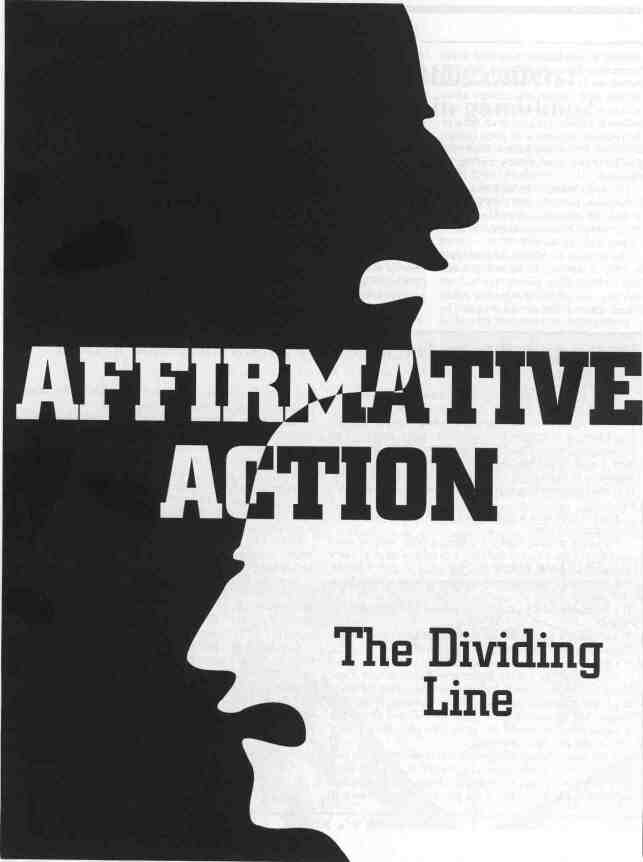
WASHINGTON — Last month the Obama administration threw its support behind the University of Texas’ use of race as a standard in its admissions policies, asking the Supreme Court not to interfere with the consideration of racial preferences in college admissions.
Abigail Fisher, who was denied admission to the Univerity of Texas in 2008 on the basis that she was white, has filed suit before the US Supreme Court in a bid to overturn affirmative action at the university level. In her submission before the court, she argues that the university has imposed a racial quota system that excluded her for the sake of admitting students of lesser ability. As a result, her civil and constitutional rights were violated.
Arguments in the case will start on October 10, not long before the US presidential election and are bound to attract national attention in America, as well as all other countries where affirmative action and racial quotas are being applied, such as South Africa.
According to a recent article in Forbes magazine, dozens of groups have weighed in as the Supreme Court prepares to hear oral arguments over the constitutionality of affirmative action.
Everyone from professors (one group calls itself the “Empirical Scholars,” another, the “Texas Association of Scholars”) to think tanks (the Cato Institute) to advocacy organizations (the NAACP) to universities (Brown University) to student groups (the National Black Law Students Association) to various state and local governments (California) and public officials (Senate Majority Leader Harry Reid) have submitted amicus briefs trying to influence the Court in what is likely to become one of the most controversial decisions of its upcoming term.
The present case seeks to overturn a previous ruling in Grutter v. Bollinger in 2003, which again opened the door wide for anti-white racial preference policies in America. In that case, Big Business also supported the argument for affirmative action. In a filing to the Court at the time, 65 corporations with more than a trillion dollars in annual revenues – including Intel, Merck, Boeing, and Coca-Cola – had underligned the importance of affirmative action in their “continued success in the global marketplace.”
The Court took notice of their concerns. The 5-4 majority upholding the University of Michigan Law School’s admissions policy emphasized these efforts to establish a diverse workforce to meet the challenges of a global economy in Grutter v. Bollinger, the key ruling stemming from the pair of lawsuits.
“What is more,” former Justice Sandra Day O’Connor wrote in Grutter at the time, “high-ranking officers and civilian leaders of the United States military” also looked for a “racially diverse officer corps.” O’Connor’s opinion elaborated on the military’s use of affirmative action to ensure “an officer corps that is both highly qualified and racially diverse.” As several retired military leaders with decades of experience had urged the Court, she applied this line of reasoning from the military setting to the nation’s public universities.
Abigail Fisher, who was denied admission to the University of Texas because of race preference
For Fisher v. University of Texas, the US Justice Department, in a court brief co-signed by several other government agencies, told the high court that a diverse college population was in the university’s — and the government’s — best interests. “The armed services and numerous federal agencies have concluded that well-qualified and diverse graduates are crucial to the fulfillment of their missions,” Solicitor General Donald B. Verrilli said.
The court brief was cosigned by lawyers from the departments of Defense, Education, Commerce, Labor and Health and Human Services.
The Supreme Court’s ruling on the University of Texas’ admission program will be its first ruling on affirmative action in higher education since 2003.
However, the same groups in the military and corporate America that supported race preference in 2003 have largely repeated their arguments in a new round of amicus briefs filed in response to Fisher.
“Fulfillment of the national security interest in officer corps diversity must not be imperiled by a sweeping ruling against race-conscious admissions,” argued the brief filed on behalf of General Anthony C. Zinni, Admiral Dennis C. Blair, General Wesley K. Clark, and dozens of other high-ranking former officials from all branches of the US armed forces.
Likewise, dozens of the nation’s largest companies – including Pfizer, Starbucks, and Wal-Mart to name a few – also echoed the arguments put forth nine years earlier by a similar list of corporations.
Texas admits most of its students because they rank among the top 10 percent in their high school classes. Fisher’s grades did not put her in that category. For other students, Texas officials say that race is considered among many factors, including academic record, personal essays, leadership potential, extracurricular activities, and honors and awards. The school says race is not used to set quotas, which the high court has previously rejected.
“Race is not considered on its own, and it is never determinative of an applicant’s admission by itself,” Verrilli said. “Rather, race is one of a number of contextual factors that provide a more complete understanding of the applicant’s record and experiences. That is a far cry from impermissible racial balancing.”
The Texas policy has been upheld by federal appeals courts, which said it was allowed under the high court’s decision in Grutter vs. Bollinger in 2003 that upheld racial considerations in university admissions at the University of Michigan Law School. But Fisher appealed to the current Supreme Court, which is considered to be more conservative than the one that ruled in 2003 and more likely to jettison that decision or at least limit when colleges may take account of race in admissions.
Before adopting race as part of its admission policy, Texas’ student body was 21 percent African-American and Hispanic. By 2007, the year before Fisher filed her lawsuit, African-Americans and Hispanics accounted for more than a quarter of the entering freshman class.
“Race is considered not on its own, but as a piece of information that provides valuable context in understanding an applicant’s achievements and his likely contributions to the university,” Verrilli said. “That individualized consideration is designed to work in conjunction with the Top 10 plan to enable the university to construct a class that is diverse in all ways valued by the institution.”
The case is Fisher v. University of Texas at Austin, 11-345.
The Blue Bulls broke their three-week losing streak with a clinical performance to trounce the Free State Cheetahs 34-30 in Pretoria on Saturday.
While the Bulls had underperformed in previous weeks, things seemed to click for the hosts as they dominated every aspect of play to shut the Cheetahs out.
The victory kept the Bulls in the running to secure a place in the playoffs, lifting them off the bottom rung of the Currie Cup ladder, while the Cheetahs dropped down to the bottom of the log.
Bulls flyhalf Louis Fouche opened the scoring with a penalty conversion in the fourth minute while Cheetahs winger Nico Scheepers returned the favour four minutes later.
The Pretoria side got over the whitewash in the 12th minute when eighthman Arno Botha pierced the Cheetahs’ defensive line.
The talented loose forward calmly offloaded to a speeding Sampie Mastriet, who scored in the corner, with Fouche missing the conversion kick.
Scheepers closed the gap once again with a successful shot at goal in the 17th minute to take the scores to 8-6.
Fouche then stepped up to the plate to slot over a monstrous attempt at goal from deep inside his own half.
He succeeded with two more penalty conversions to extend the Bulls’ lead to 11 points with eight minutes left in the opening period.
The Cheetahs then added another three points on the half-time whistle with Scheepers converting a penalty to reduce the home side’s advantage.
After the break, Fouche converted another penalty conversion to regain their 18-point lead.
The Cheetahs, however, refused to bow down as they hit back with two tries within the space of 10 minutes.
The visiting attack found a new spark as Cheetahs coach Naka Drotske sent Sias Ebersohn on to replace Tewis de Bruyn at flyhalf.
It was, however, exciting backline player Raymond Rhule who was rewarded in the 53rd minute for an all-round sterling performance on the night, with Scheepers converting.
Midway through the second half the Cheetahs once again found a gap in the Bulls’ defence with Scheepers scoring in the right hand corner and converting his own try.
The closing minutes were filled with drama with the Bulls defending a four-point lead.
The hosts, however, took the game out of the Cheetahs’ reach as replacement loose forward CJ Stander added his name to the try scoring sheet with four minutes remaining in the encounter.
The Free Staters had the last say of the match as prop Marcel van der Merwe scored the final try with a minute left on the clock.
Scorers: Bulls 34 (17): Tries: Sampie Mastriet, Franco Mostert, CJ Stander. Conversions: Louis Fouche (2). Penalties: Fouche (5).
Free State Cheetahs 30 (9): Tries: Raymond Rhule, Nico Scheepers, Marcel van der Merwe. Conversions: Scheepers (3). Penalties: Scheepers (3).- Sapa
Western Province produced a fine display of running rugby in their six-try 45-21 win over Griquas in their Currie Cup match at Newlands on Saturday afternoon.
The crowd of just under 10 000 rejoiced as the match produced seven tries, five of which were scored in the first half.
Both sides made several handling errors, and Province probably left another four tries out on the field.
Given the favourable underfoot conditions at the kick-off there was every prospect of the teams running the ball at every opportunity and that was very much the order of the day in the first half.
Province needed only three minutes at the start to take play up to the Griquas 22-metre line and came good when they ran in a tap-penalty for fullback Joe Pietersen to score. Flyhalf Demetri Catrakilis goaled the conversion from the touchline to give Province a 7-0 lead.
It took Griquas some time to wrest the initiative and when they did they cracked the Province midfield defence nine minutes later for flanker Marnus Schoeman to run in unchallenged from 25 metres out. Flyhalf Francois Brummer converted to level the score at 7-all.
In the next 20 minutes, Province took the match by the scruff of the neck and ran three in three unanswered tries to record a rare first-half bonus point. The three-try burst followed concerted Province pressure, both on defence and attack.
Wing Gerhard van den Heever and centre Marcel Brache scored after interceptions, and flanker Deon Fourie dotted down after a rolling maul.
Catrakilis was in splendid form with the boot, goaling all three tries from the touchline to crown the 21-point burst.
In between Van den Heever and Brache’s try Pietersen scored a long-range penalty, to help Province secure a commanding 31-7 lead at the break.
Neither team managed to strike a measure of rhythm in early second-half play, especially as the defence was considerably tighter on both sides.
Griquas held a territorial advantage and managed several sorties into the Province 22-metre area where they managed one particularly good scrum in the 53rd minute which resulted in a penalty try. Brummer converted to reduce the deficit 31-14.
Province managed to put the setback behind them and despite several substitutions their game started to flow again and their efforts were rewarded when the hardworking hooker Scarra Ntubeni snatched up the ball from broken play, ran in from 25 metres out and dotted down in the corner. Again Catrakilis converted splendidly (38-14).
This advance seemed to knock the stuffing out of the Griquas’ challenge and they were never in the game again. Instead Province kept probing away with strong ball-in-hand runs and grubber kicks through the opposition defence.
Most of their raids into the Griquas 22-metre area looked promising but only one try emerged, thanks to fine finishing by eighthman Jebb Sinclair.
Catrakilis added the conversion to round off Province’s scoring in the match.
Wing Rocco Jansen scored a converted try in the final minute of the match.
Scorers: Western Province: Tries: Joe Pietersen, Gerhard van den Heever, Marcel Brache, Deon Fourie, Scarra Ntubeni and Jebb Sinclair. Conversions: Demetri Catrakilis (6). Penalty: Pietersen.
OKLAHOMA CITY (AP) — Oklahoma voters will decide in November on a Republican-backed proposal to wipe out all affirmative action programs in state government, a move that many opponents say is designed only to stoke racial tensions and drive white, conservative voters to the polls.
The GOP-controlled Legislature voted in 2011 to send the proposal to a vote of the people over the objection of Democrats who argued there already was a prohibition on racial or gender quotas in state government and that such a change was unnecessary.
“I think as a state we need to take the lead in showing that we don’t look at the color of people’s skin; we look at their qualifications,” said state Sen. Rob Johnson, R-Kingfisher, who sponsored the proposal. “The only way we’re going to get past racism and get people not to see the color difference is to get our government to lead by example.”
The bill drew fierce opposition from Democrats during spirited debate in the Legislature and led to a formal reprimand of Republican state Rep. Sally Kern who, during debate in support of the bill, questioned whether there were disproportionately high numbers of blacks in prison because “they didn’t want to work hard in school.” Kern also said women don’t work as hard as men because they “tend to think a little bit more about their families.”
Kern later delivered a tearful apology on the House floor, and then voted for her own reprimand.
Democrats maintain placing such a hot button state question on the ballot is a political ploy to draw more conservative voters to the polls.
“(Republicans) have obviously had success in past election cycles where they’ve put some contentious issue on the ballot which generated excitement or fear from their base and created a big turnout from their side,” said Oklahoma Democratic Party Chairman Wallace Collins. “I think they’re trying to utilize that tactic to basically influence elections across the state.”
But Johnson disputes that claim.
“That’s absolutely ridiculous,” Johnson said. “It doesn’t have anything to do with elections or trying to get people out to vote. This issue isn’t a Republican versus Democrat kind of issue.
“I think this is something the people of Oklahoma should decide, and I think it’s important enough to put on the ballot.”
State officials say even if the proposal passes, it won’t have an impact on any state hiring or bidding practices, although it could lead to the elimination of some scholarships at public universities that target minority students and women.
An annual report on the demographic profile of state employees versus the general population still will be produced and the state’s Human Capital Management division will continue to recruit a diverse and inclusive workforce, said Shelly Reeves, a spokeswoman for Office of Management and Enterprise Services, the agency formerly known as the Office of State Finance.
“Whether the state question passes or not, we will not change those practices,” Reeves said.
But the proposal has riled many in Oklahoma’s minority community who contend that racism is alive and well in the state and that the ballot proposal only serves to enflame racial tension.
“If we’re living in a post-racial society, then why do minorities and women continue to be at the top of every bad list and at the bottom of every good list?” Lawrence Ware, a philosophy professor at Oklahoma State University and a pastor of Prospect Missionary Baptist Church, asked a mostly African-American audience during a forum last week at Langston University’s Oklahoma City campus. “If we are in a post-racial society, why is it African-Americans make up 13 percent of the U.S. population but over 40 percent of the prison population?
“No, we’re not living in a post-racial society. Just because there is a black face in a high place, it does not mean that we have overcome.”
Evidence suggests women and minorities in Oklahoma do face discrimination in employment, home ownership and education, according to a 2012 study by the Henderson Center for Social Justice at the University of California’s Berkeley Law.
According to the study, the African-American unemployment rate in Oklahoma was more than double that of white Oklahomans in 2010, and white women, and minority men and women all earn “substantially less” per year than white men. The poverty rates for blacks and Hispanics also is more than double the rate for whites, and minority children are more likely to attend low-performing schools, the study shows.
“There is ample evidence that disparity is still prevalent in the state of Oklahoma,” the study concludes. “While there are some promising trends in the public sector, it is clear that discrimination and disparity have not yet been fully remedied in housing, education, employment and other sectors.”
The study also cites research from other states that have enacted similar bans, including California, Washington, Nebraska and Michigan, that suggests “affirmative action bans limit the opportunities available to people of color and women.”
US Republican presidential candidate Mitt Romney waves to one of his sons and grandsons before addressing the US Hispanic Chamber of Commerce in Los Angeles on September 17, 2012.
Mitt Romney appeared on Univision Wednesday alongside Jorge Ramos and Maria Elena Salinas, but something was a little peculiar about his appearance — his skin tone. Looking back at the hundreds of photos logging his every moment on the campaign trail, the Republican presidential nominee is usually not so shockingly tan.
While his orangey-brown appearance on Univision could have been the result of bad lighting or a makeup mishap, left-wing blog the Democratic Underground concluded that Romney “dyed his face brown for his Univision interview.”
The claim is not completely out of the ballpark. After all, as Gawker points out, Romney did say “it would be helpful to be Latino,” in a video secretly recorded at a campaign fundraiser earlier this year.
Appearing at a campaign fundraiser in Atlanta, Georgia, before his Univision interview, Romney showed a bit more color, but nowhere near the amount of bronze as seen on stage at the 6:30 p.m. ET filming.
If Romney did indeed alter his skin tone, it was likely done in the past few days. Three days earlier, on Sunday, Sept. 16, Romney appeared much paler when he landed in Missouri.
[ad#ad-1]
And on Monday, Sept. 17, when Romney addressed Los Angeles’ Hispanic Chamber of Commerce, his face was a bit redder than usual.
With his bustling campaign schedule, Romney spending enough time outside to develop a natural tan of that color within the time frame is doubtful — making it even more possible that he somehow altered his skin tone as Democratic Underground suggests.
Though the intentions behind this plausible move are a mystery, some have ventured to make a guess, speculating that Romney’s “brownface” is an attempt to appeal to Latino voters — a voting bloc Romney desperately needs if he hopes to win the election.
Romney is currently trailing nearly 40 points behind Obama in Latino support.
To aid in his effort to lure Hispanic voters, the campaign released two new ads on Monday detailing Romney’s 5-point economic plan and criticizing Obama’s record. Romney also made a major push for Hispanic voters Monday, speaking at the U.S. Hispanic Chamber of Commerce in Los Angeles and granting interviews to Univision and Telemundo.
But that push could be partially undermined by another of the covert video clips, where Romney candidly discusses some of the problems encountered by his campaign, including trouble attracting female and Hispanic voters.
Romney jokes of his father, who was born in Mexico, “Had he been born of Mexican parents, I’d have a better shot of winning this.”
Later, Romney admits that Republicans are having a difficult time attracting Hispanic voters — and there could be severe repercussions for the party.
“We are having a much harder time with Hispanic voters, and if the Hispanic voting bloc becomes as committed to the Democrats as the African-American voting bloc has in the past, why, we’re in trouble as a party and, I think, as a nation,” Romney said.
Romney also told donors the campaign was using his wife, Ann, “sparingly … so that people don’t get tired of her.”
And he admits that the president remains popular with many voters, which makes attacking him difficult.
“But when you say, ‘Are you disappointed that his policies haven’t worked?’ they say yes,” Romney said. “And because they voted for him, they don’t want to be told that they were wrong, that he’s a bad guy, that he did bad things, that he’s corrupt. Those people that we have to get, they want to believe they did the right thing, but he just wasn’t up to the task.” – various sources
The University of Limpopo must explain why two men linked to the Friends of the Youth League (FYL) allegedly benefited from big contracts, the IFP Youth Brigade said on Friday.
“How is it possible that an institute of higher learning can be involved in such corrupt, nepotistic practices?” chairman Mkhuleko Hlengwa asked in a statement.
“The University of Limpopo must fully disclose the tender process it followed and the criteria it used in awarding these tenders.”
The Mail & Guardian reported that the university had confirmed that it awarded a R27.8 million tender in July last year for the conversion of a gymnasium into a laboratory to Collins Foromo.
Foromo was once a driver for expelled African National Congress Youth League president Julius Malema.
FYL spokesman Floyd Shivambu has rejected the allegation as a “cheap and lousy claim”.
Hlengwa called for the university council’s probe into the matter to investigate thoroughly and quickly.
“Our universities must not become pawns in the political arena, serving the self-interest of a few and in the process, sacrificing their political stance in exchange for partisanship.”
Questions have been raised about who funds the FYL, an organisation which was formed after Malema was expelled.
The M&G reported that Foromo said he was invited to all FYL rallies, but he denied contributing to the organisation.
The university also awarded Mandla Seopela, one of the founders of the FYL, a three-year lease for dining facilities on campus.
Seopela has been quoted as a spokesman for the FYL, and works as a speech-writer for Limpopo premier and Malema ally Cassel Mathale, according to the report.
The M&G alleged that the FYL was using the university to fund its activities.
Shivambu denied this.
“This cheap and lousy claim is made because of comrade Mandla Seopela’s open and unashamed association with struggles of economic freedom fighters, which he said on various occasions is due to the fact that the leadership of the ANC Youth League… was treated unfairly and should be supported.”
Foromo and Seopela “have a right to be economically active and involve themselves in legitimate economic activities”, Shivambu said.
He called on the M&G to provide proof that university money was being used to fund FYL programmes. – Sapa
An arrest warrant has been issued for expelled ANC Youth League leader Julius Malema and he is due to appear in a Pietersburg (ANC name: Polokwane) court next week.
“We were notified today that a warrant of arrest was issued for Mr Malema,” Malema’s lawyer Nicqui Galaktiou told Sapa.
“We don’t know which court and when it will happen, but we are engaging with authorities on that. It will be in Pietersburg.”
She said Malema had not yet been arrested.
“No, he hasn’t. My understanding is that he won’t be arrested.”
She said the charges against her client were unknown.
“We do not know what the charges are and we don’t have a copy of the warrant.”
The City Press reported earlier that Malema faced charges of money laundering, corruption and fraud relating to his Ratanang Family Trust and its share holding in On-Point Engineering, a company that allegedly made millions from Limpopo government tenders.
Earlier, authorities refused to comment or confirm the warrant.
The SA Revenue Service said it had nothing to do with the warrant.
“…We want to state categorically that any and all reports that SARS requested that a warrant be issued for Mr Malema’s arrest are completely untrue and without foundation,” it said in a statement.
“SARS is not involved in the criminal investigation into and prosecution of this matter.”
The Hawks said it did not issue warrants.
“The Hawks don’t issue warrants, so we don’t comment on that,” said Hawks spokesman McIntosh Polela.
Asked if the unit was planning to arrest Malema, he said: “Even if we were planning to arrest him, we won’t tell you.”
Police Minister Nathi Mthethwa’s spokesman, Zweli Mnisi, referred queries to provincial police.
Gauteng police spokesman, Brigadier Neville Malila, said he knew nothing about an arrest warrant for Malema.
Justice department spokesman Mthunzi Mhaga could not immediately be reached for comment.
Malema’s close colleague, suspended ANC Youth League spokesman Floyd Shivambu could not be reached for comment.
On Tuesday, Malema told reporters in Johannesburg if he was arrested, it would be done illegally.
“If we are illegally arrested tomorrow, we would have been arrested by [President] Jacob Zuma,” Malema said at the time.
He said he was willing and ready to go to jail, and was not intimidated.
“I have nothing to hide… I only have my convictions. Nothing will stop me from fighting for economic freedom, not even my death… We are unshaken.”
Malema said he had it “on good authority” that there were instructions “to get rid of some us…”
At the time, presidential spokesman Mac Maharaj said: “The presidency is aware that this person is prone to making wildly unsubstantiated and unwarranted claims and statements, and we do not wish to dignify them.” – Sapa
The giant US software company evaded $6,6 billion in taxes
Large multinational companies such as Microsoft and Hewlett Packard have used tax loopholes to avoid billions of dollars in income taxes over the last three years, according to a Senate committee report issued Thursday.
The report says multinationals dodge taxes by shifting profits to low-tax jurisdictions overseas and using loopholes to avoid taxes on repatriated income. The Senate Permanent Subcommittee on Investigations released the report ahead of a hearing Thursday at which representatives of Microsoft and Hewlett Packard were to testify.
The report says Microsoft used offshore tax avoidance strategies with subsidiaries in Puerto Rico, Ireland, Singapore and Bermuda to save at least 6.5 billion dollars in federal corporate income taxes.
Hewlett-Packard used a different tactic, according to the report. It created a series of occasional short-term internal loans with the apparent support of its auditor that allowed it to access offshore cash for domestic operations without paying taxes.
Senator Carl Levin, a Michigan Democrat and chairman of the Permanent Subcommittee on Investigations, didn’t accuse the companies of acting illegally.
“Major US corporations are increasingly earning their profits here but shipping them overseas to avoid paying the taxes they owe,” Levin said in a news release.
“At a time when we face such difficult budget choices, and when American families are facing a tax increase and cuts in critical programs from education to health care to food inspections to national defense, these offshore schemes are unacceptable.” – DPA
This website uses cookies to improve your experience. We'll assume you're ok with this, but you can opt-out if you wish. Cookie settingsACCEPT
Privacy & Cookies Policy
Privacy Overview
This website uses cookies to improve your experience while you navigate through the website. Out of these cookies, the cookies that are categorized as necessary are stored on your browser as they are essential for the working of basic functionalities of the website. We also use third-party cookies that help us analyze and understand how you use this website. These cookies will be stored in your browser only with your consent. You also have the option to opt-out of these cookies. But opting out of some of these cookies may have an effect on your browsing experience.
Necessary cookies are absolutely essential for the website to function properly. This category only includes cookies that ensures basic functionalities and security features of the website. These cookies do not store any personal information.
Any cookies that may not be particularly necessary for the website to function and is used specifically to collect user personal data via analytics, ads, other embedded contents are termed as non-necessary cookies. It is mandatory to procure user consent prior to running these cookies on your website.



 An elderly couple miraculously survived 11 gunshots fired at them by robbers in the bedroom of their Pretoria home.