Former member of Mandela government detained in Swaziland

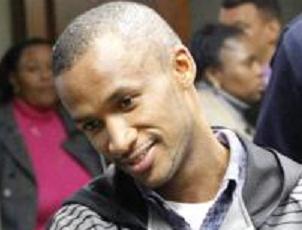
Jay Naidoo
Jay Naidoo

Former Cosatu general secretary and member of the Mandela government Jay Naidoo has been released from police custody in Swaziland, says the Swaziland Solidarity Network.

“Jay [Naidoo] was arrested at a roadblock on his way to Manzini,” said spokesperson Lucky Lukhule on Thursday

“He was briefly detained and released after questioning. He will continue to chair the panel of experts on Friday.”

He said Naidoo was part of an “international panel of experts”, which would hear from Swazi workers about how labour rights violations affect their lives.

The panel consists of Alec Muchadehama, a human rights lawyer and activist from Zimbabwe; Paul Verryn, of the Methodist Church; and Nomthetho Simelane, a former lecturer in political science at the University of Swaziland.

Lukhule said Vincent Ncongwane, former secretary general of the Swaziland United Democratic was arrested on Thursday morning, and was held at the regional police headquarters in Manzini.

He was later released and placed under house arrest. Lukhule said representatives of the International Trade Union Confederation were also questioned and followed from the airport to a hotel in Manzini.

The Congress of South African Trade Unions had demanded the immediate, unconditional release of all those arrested.

Spokesperson Patrick Craven called on the international trade union movement to launch a campaign for human rights and democracy in Swaziland. – Sapa

Bredasdorp rape accused pre-trial

Johannes Kana
Johannes Kana

The NPA says it rejected Johannes Kana’s guilty plea for the rape of slain teenager Anene Booysen because it would have implied a lesser sentence.

Western Cape National Prosecuting Authority (NPA) spokesperson Eric Ntabazalila said on Wednesday they asked Johannes Kana (21) to plead to Booysen’s rape and murder on Monday to limit the issues in dispute at a later stage. Kana pleaded guilty to the rape but not to the murder.

“In the case of Kana, his guilty plea did not correspond with the evidence available to the state,” Ntabazalila said. “In respect of the rape charge, he describes circumstances which only warrant a minimum sentence of 10 years imprisonment and not the circumstances as contained in the docket, which warrants a minimum sentence of life imprisonment.”

In Kana’s plea, he admitted to leaving a Bredasdorp pub with Booysen and later assaulting her by kicking her and hitting her with his fists. He then raped her.

Ntabazalila said Kana did not say where or how he raped the 17-year-old.

“[I]t is clear from the plea explanation offered in respect of the rape charge that he denies inflicting the extensive genital injuries on the deceased, which caused her intestines to protrude from her genital area and ultimately, caused her death … He therefore denies that he murdered her.”

The state alleges Kana unlawfully and deliberately sexually penetrated Booysen with his penis or with another object not known to the state, between February 1 and 2 this year, near Kleinbegin, Bredasdorp.

Kana then allegedly used his hand or another object to disembowel her, which resulted in her death at Tygerberg Hospital on Saturday, February 2.

Remaining murder charge
The matter would now go to trial and the state would use Kana’s admissions as evidence against him.

“This will shorten the trial because the focus of the trial will be on proving the exact circumstances of the rape and the remaining murder charge,” Ntabazalila said.

The case was postponed until July 9 for provincial public prosecutions director Rodney de Kock to decide whether the trial should be held in the regional court or the Western Cape High Court.

Two weeks ago the state dropped charges against Kana’s co-accused, 22-year-old Jonathan Davids. At the time, Ntabazalila said an investigation revealed there was insufficient evidence to secure a conviction.

“We understand the sense of shock and outrage that was induced by the incident. However, as the prosecution, we can only prosecute successfully on sufficient evidence,” he said.

Before she died, Booysen said from her hospital bed that five or six men were involved in the attack. She mentioned the name “Zwai”, which was both the nickname of Davids and another man said to live in Zwelitsha. – Sapa

Assad winning hearts and minds, NATO data shows

President  Assad
President Assad

After two years of civil war, support for the regime of Syrian President Bashar Assad was said to have sharply increased.

NATO has been studying data that told of a sharp rise in support for Assad. The data, compiled by Western-sponsored activists and organizations, showed that a majority of Syrians were alarmed by the Al Qaida takeover of the Sunni revolt and preferred to return to Assad, Middle East Newsline reported.

“The people are sick of the war and hate the jihadists more than Assad,” a Western source familiar with the data said. “Assad is winning the war mostly because the people are cooperating with him against the rebels.”

The data, relayed to NATO over the last month, asserted that 70 percent of Syrians support the Assad regime. Another 20 percent were deemed neutral and the remaining 10 percent expressed support for the rebels.

The sources said no formal polling was taken in Syria, racked by two years of civil war in which 90,000 people were reported killed. They said the data came from a range of activists and independent organizations that were working in Syria, particularly in relief efforts.

The data was relayed to NATO as the Western alliance has been divided over whether to intervene in Syria. Britain and France were said to have been preparing to send weapons to the rebels while the United States was focusing on protecting Syria’s southern neighbor Jordan.

A report to NATO said Syrians have undergone a change of heart over the last six months. The change was seen most in the majority Sunni community, which was long thought to have supported the revolt.

“The Sunnis have no love for Assad, but the great majority of the community is withdrawing from the revolt,” the source said. “What is left is the foreign fighters who are sponsored by Qatar and Saudi Arabia. They are
seen by the Sunnis as far worse than Assad.” – worldtribune.com

Zuma attends G20 in St Petersburg

G20russiaPresident Jacob Zuma has arrived in St Petersburg, Russian Federation for the G20 Leaders’ Summit.

A meeting of BRICS Leaders was scheduled, giving leaders an opportunity to reflect on the progress made with regards to the implementation of the eThekwini Declaration, notably receiving progress reports in respect of the New Development Bank and the Contingent Reserve Arrangement.

President Zuma is accompanied by the Minister of Finance, Mr. Pravin Gordhan, and the Minister of International Relations and Cooperation, Ms. Maite Nkoana-Mashabane.

The primary objectives of the G20 are to facilitate policy coordination in order to achieve global economic stability and promote long-term sustainable growth.

South Africa’s participation in the G20 is guided by national interests and the primacy of the African Agenda. South Africa therefore seeks to use its participation in multilateral fora such as the G20 to promote and strengthen the interests of the African continent and those of the Southern hemisphere. In this regard, the G20 presents meaningful opportunities for advancing much-needed global governance reforms and orienting the international development agenda.

G20 countries account for 85 percent of global economic output, 80 percent of global trade, and two-thirds of the world’s population.

It is envisaged that the G20 Summit will focus on a set of measures aimed at boosting sustainable, inclusive and balanced global growth, including the creation of decent jobs. During its tenure as G20 President, Russia has focused its work on the interconnected issues on the G20 agenda around three priorities, which are intended to promote:

* Growth through quality jobs and investment;

* Growth through trust and transparency; and

* Growth through effective regulation.

Unemployment and ongoing problems and vulnerabilities in the global economy were discussed by Brics leaders on the margins of the G20 summit in Russia on Thursday, the presidency said.

“[We] believe that major economies, including the G20, could do more to boost global demand and market confidence,” said President Jacob Zuma, who chairs Brics — which consists of the Brazil, Russia, India, China, and South Africa group of emerging economies.

The leaders reiterated the concerns they expressed at the Durban Brics summit in March about the unintended negative spill-overs of the unconventional monetary policies of certain developed economies.

“[We] recalled the urgent need to implement the 2010 International Monetary Fund quota and governance reform, as well as to complete the next general quota review by January 2014, as agreed at the G20 Seoul summit in order to ensure the fund’s credibility, legitimacy, and effectiveness,” said Zuma.

Brics looked forward to the ninth World Trade Organisation ministerial conference, to be held in December.

“[We] expect that it will be a stepping stone to the successful and balanced conclusion of the Doha Development Round,” Zuma said.

The leaders also congratulated Russia on successfully hosting the G20 summit, which started on Thursday and runs until Friday. – Sapa

Arabs will pay for full Syrian invasion

Kerry and Hagel, laughing
Kerry and Hagel, enjoying the moment

Secretary of State John Kerry said at Wednesday’s hearing that Arab counties have offered to pay for the entirety of unseating President Bashar al-Assad if the United States took the lead militarily.

“With respect to Arab countries offering to bear costs and to assess, the answer is profoundly yes,” Kerry said. “They have. That offer is on the table.”

Asked by Rep. Ileana Ros-Lehtinen (R-Fla.) about how much those countries would contribute, Kerry said they have offered to pay for all of a full invasion.

“In fact, some of them have said that if the United States is prepared to go do the whole thing the way we’ve done it previously in other places, they’ll carry that cost,” Kerry said. “That’s how dedicated they are at this. That’s not in the cards, and nobody’s talking about it, but they’re talking in serious ways about getting this done.

A possible US military operation in Syria would not result in a war with Russia, Kerry said at a meeting of the foreign affairs committee of the US House of Representatives.

“Foreign Minister [Sergei] Lavrov of Russia has made it clear – pretty much to paraphrase – Russia does not intend to fight a war over Syria,” Kerry said at the meeting on Wednesday when asked whether there was a potential danger of a military conflict with Russia.

“And I’ve had personal conversations with President [Vladimir] Putin and with the foreign minister that have indicated Syria doesn’t rise to that level of potential conflict. Their ships are kind of staying out of the way. They are not threatening that. And I don’t think that would be what would happen here,” he said.

General Martin Dempsey, chairman of the US Joint Chiefs of Staff, said the assessment of Russia’s possible response would be presented to Congress at closed hearings. – Washington Post, RIA Novosti

Jail for beer bottle rapist

cellphone3Jail was the only suitable punishment for a 20-year-old Indian man convicted of raping a young woman with a beer bottle, filming it on his cellphone and distributing it, a social worker has recommended.

“Although he is young and a first offender, his personal circumstances are outweighed by the serious nature of the crime… a term of imprisonment will give him an opportunity to reflect on the wrongfulness of his actions,” Nokukhanya Mdletshe said of Darren Mogany.

The pre-sentence report was handed in to Durban Regional Court magistrate Sharon Marks on Wednesday. Marks now has to determine Mogany’s fate.

Mogany, of Merebank, was arrested in February last year along with his brother-in-law, Adish Deonarain, charged with two counts of physical rape, one of rape with the beer bottle, possession, creation and distribution of child pornography and using children for or benefiting from child pornography.

On June 30, 2010, the complainant, then 17, bunked school and spent the day with Mogany, also 17, at his house, during which her drink was allegedly spiked.

Deonarain was acquitted of all charges.

The magistrate convicted Mogany on the charges relating to the video clip, saying it also corroborated the evidence about the beer bottle rape, but acquitted him on the other rape charges and the charge of benefiting from child pornography. Mogany had insisted he was innocent and has continued to do so.

Mdletshe said: “He acknowledges having consented (sic) sexual intercourse and video-taping the incident.”

He also said the girl had consented to the video being taken.

“He states they were both under the influence of alcohol and dagga.”

Marks said she had interviewed the victim – who was present in court on Wednesday – who said she believed her drinks were spiked.

“She had suffered tremendous emotional impact as her dignity was violated. She has been ashamed and withdrawn from enjoying a social life in her community as the video of the incident was circulating in the community.

Mogany left the Durban Magistrate’s Court after complaining he was sick, leading to a postponement of sentencing. To avoid having his photograph taken, Mogany left through a restricted area with the help of a black construction worker. – The Mercury


Generators whirring at Mandela house

Mandela's home in Houghton
Mandela’s home in Houghton

Ailing former president Nelson Mandela’s Houghton home was among those hit by a widespread power cut in Johannesburg.

The whirring of a generator could be heard from behind the high walls, while another large generator was belching out smoke in 11th Avenue, which runs parallel to the street where Mandela lives.

It was cordoned off with yellow tape and guarded by a lone City Power employee.

Mandela was discharged from the Medi-Clinic Heart Hospital in Pretoria on Sunday to recuperate at home following a lengthy stay after being admitted for treatment of a recurring lung infection on June 8.

His home has been reconfigured to ensure he receives the correct care, and some staff who had been at the hospital are also caring for him at home.

His condition was last described by the presidency as still critical and stable, but at times unstable.

Houghton was one of many suburbs on the West Rand and parts of northern Johannesburg experiencing power outages on Thursday morning.

On Wednesday, a few hundred City Power workers downed tools late in the afternoon.

They were unhappy about a new shift system the power distributor wanted to implement to improve service delivery.

On Thursday morning, City Power said it could take two or three days to restore power to all effected areas.

“We are currently experiencing power outages as a result of the strike. We have not been able to timeously attend to calls, resulting in a service backlog in these areas,” it said in a statement.

“We are doing our best to restore power in the affected areas with the assistance of contractors. Nevertheless, we expect that full restoration is likely to take two to three days.”

Residents in areas not effected by the power cuts could help the situation by limiting their electricity usage to help ease pressure on the grid.

City Power managing director Sicelo Xulu would cut his leave short in light of the labour and electricity problems.

News agency Agence France-Presse reported that a court order was issued on Thursday morning to compel strikers to return to work, but they had not yet reported for duty. – Sapa

KKK, NAACP shake hands in Wyo.

From the Casper Branch?

A burning cross and men in white pointed hoods. Since its “rebirth” in 1915, the Ku Klux Klan’s (KKK) strong sentiments against blacks, is part of American history. Formed in 1909, the National Association for the Advancement of Colored People (NAACP) has long been pitted against the KKK in a historic battle on the racial divide.

So when the leaders from branches of the NAACP and the KKK held face-to-face talks in Casper, Wyo., the significance of this watershed moment was at times tempered by its sheer weirdness.

Jimmy Simmons, the president of the NAACP’s Casper [sic] Branch, reached out to John Abarr, a “kleagle” or local head of the KKK, to discuss the proliferation of Klan pamphlets and a spate of violence against black men in the neighboring town of Gillette, Wyo. With a heavy security detail, the meeting was largely driven by questions directed at Abarr by members of the NAACP. Topics ranged from the events in Gillette to Abarr’s personal motivations for being a Klan member.

The Klan leader agreed that the recent beatings of black men in Gillette were hate crimes. He made it clear that he does not condone such acts. Abarr also touted a more moderate Klan chapter, saying that the movement is fractured. Apparently, Abarr’s own group underscores that the Klan is a neighborhood watch. They toss fliers onto people’s driveways. If that’s truly the case, then why does Abarr bother aligning himself with America’s largest white supremacist group?

“I like it because you wear robes, and get out and light crosses, and have secret handshakes,” he said. “I like being in the Klan I sort of like that people think I’m some sort of outlaw.”

The “sort-of outlaw” maintained that people perpetrating racially charged violence are “hoodlums,” and insisted on the image of a non-violent KKK.

“You’re really confusing me, because I don’t think you understand the seriousness of your group,” said the NAACP’s Mel Hamilton.

“I think what Mel is saying is that based on your history, based on the Klan’s history, it’s hard to shed the skin of your group not being violent, not being killers, murderers, terrorizers,” Simmons said.

At the end of the meeting, when Abarr was offered membership, he went for it. “I wouldn’t have a problem with joining the NAACP,” he said. Then he added a $20 donation to the $30 membership fee upon filling out an application.

“We’ll have to do this again sometime,” Abarr said. “Or maybe not. I don’t know. We’ll have to keep in contact for sure, though.”

Libya on the verge of total collapse

libyaviolenceA little under two years ago, Philip Hammond, the Defence Secretary, urged British businessmen to share in the reconstruction of Libya and exploit an anticipated boom in natural resources.

Yet now Libya has almost entirely stopped producing oil as the government has lost control of much of the country.

Mutineers have taken over oil ports on the Mediterranean and are seeking to sell crude oil on the black market.

As world attention focused on the coup in Egypt and the poison gas attack in Syria over the past two months, Libya has plunged into its worst political and economic crisis since the defeat of Gaddafi two years ago.

Government authority is disintegrating in all parts of the country putting in doubt claims by American, British and French politicians that Nato’s military action in Libya in 2011 was an outstanding example of a successful foreign military intervention which should be repeated in Syria.

Libya’s prized high-quality crude oil has plunged from 1.4 million barrels a day earlier this year to just 160,000 barrels a day.

Libyans are increasingly at the mercy of militias which act outside the law.

The international community has ignored the escalating violence. The foreign media, which once filled the hotels of Benghazi and Tripoli, have likewise paid little attention to the near collapse of the central government.

Foreigners have fled Benghazi since the American ambassador, Chris Stevens, was murdered in the US consulate by jihadi militiamen last September.

Anarchy has spread around the capital. The government called on the Supreme Security Committee, made up of former anti-Gaddafi militiamen nominally under the control of the interior ministry, to restore order.

Diplomats have come under attack in Tripoli with the EU ambassador’s convoy ambushed outside the Corinthia hotel on the waterfront. A bomb also wrecked the French embassy.

One of the many failings of the post-Gaddafi government is its inability to revive the moribund economy. Libya is wholly dependent on its oil and gas revenues and without these may not be able to pay its civil servants.

A member of the parliamentary energy committee, told Bloomberg that “the government is running on its reserves. If the situation doesn’t improve, it won’t be able to pay salaries by the end of the year”.

Social worker faces child porn charges

childpornA senior government social worker in the Free State has appeared in the Bloemfontein Regional Court on charges related to child pornography, the Volksblad reported on Wednesday.

The report said the man faced 10 charges of making, distributing, and being in possession of child pornography.

The man, 45, worked at a youth centre for children in conflict with the law.

The newspaper reported that the man would also face seven disciplinary charges at the department of social development in relation to the misuse of an official laptop computer and a cellphone, and child pornography.

The report said the man now worked at a regional office of the department where he had no direct contact with children.

Police confirmed that they seized a laptop computer, a memory stick, and two cellphones when he was arrested on Monday night.

He was released on bail of R1000 and the case was postponed to November 13. – Sapa

SA requested Facebook, Google user info

facebookThe South African government had over the past year submitted 14 requests to Facebook and three to Google to get information about certain users, according to a report.

Facebook did not grant any of the requests, and Google granted one request, after receiving a court order in a case involving defamation.

Following Google’s example, Facebook has just published its first half-year report on government requests.

According to the report, 71 countries around the world submitted about 25,600 requests during the first half of the year to Facebook to obtain IP addresses, profile information and names.

Locally, the Facebook requests were made by various law enforcement agencies such as the police, the Hawks and the Department of State Security, said the department’s spokesman, Brian Dube.

“Our department made two requests to Facebook centred around cyber security.”

According to Facebook and Google, the merits of each request are thoroughly considered before the information is released. – Sapa

Cars burn at Spring Day Music Explosion after song

bunduburnThe Spring Day Music Explosion started with a long list of some of the country’s top musicians.

The festival welcoming spring turned into a disaster when a fire broke out and a number of cars were destroyed.

Ten cars where confirmed by the emergency services to have burnt down at the Bundu Inn Music Explosion in Pretoria this weekend.

Tshwane emergency services spokesman Johan Pieterse could not say what caused the blaze.

“Since there are no witnesses we are unable to fully confirm.”

Twitter has been in a frenzy about the blaze.

Some tweets stated that DJ Tira played the song Umlilo (Fire) by Big Nuz which got the izikhothane (show-offs) to burn their cars.

While many South Africans go to bed on empty stomachs, members of a growing youth culture, izikhothane, are often seen tearing and throwing away R100 notes.

The group, which usually destroys expensive clothes to seal their standing in a trend, recently splashed the money on the streets of Braamfontein, Johannesburg.

There was pandemonium as people ran after the cars trying to catch the flying torn notes.

Des Motloutsi, one of the people who managed to catch a few pieces which he managed to put together with tape, said izikhothane sported expensive clothes and jewellery.

“I could not believe what was happening. Notes were flying all over and people were pushing each other while catching the money. Izikhothane were also spilling expensive liquor,” he said.

Some had already pieced together R500, while other pieces did not match.

“This morning, we took the money to the Reserve Bank but they told us that the serial numbers did not correspond. Some of the pieces that we picked up don’t match.”


ANC condemns arson attack on HQ

arsonancThe ANC have released a statement condeming what appears to be an attempt to burn down its headquarters, Chief Albert Luthuli House this evening around 18:00.
The party says a suspicious fire broke out at the reception of the building next to the main entrance.  The fire burned a reception coach and damaged glass.
ANC spokesperson Jackson Mthembu said senior ANC members were meeting on the 11th floor when they were alerted to the fire.
Mthembu said in a live interview with eNCA that a bottle of what “smells like chemicals” exploded in the foyer.
The attempt was foiled by the intervention by building security personnel who used fire extinguishers to put down flames that were almost reaching the ceiling of the reception area.
The ANC says they view this in serious light and say it appears as an act of attempting to destabilise the party through acts arson and sabotage. The party however, would not elaborate on who they felt was behind the suspected arson.
Mthembu says CCTV footage is being monitored and the police have taken over the parameters of Luthuli House with a view to investigate the source the fire and to ensure that there is no other pending threat to the building and people in the building.
Dog unit and ballistics experts are on the scene and officers will inspect the entire building.
No one has been reported injured. – eNCA

Cricket chief lashes out at ‘racist abuse’

Ahmed
Fawad Ahmed

Cricket Australia chief James Sutherland has lashed out at “racist comments” directed at Muslim Fawad Ahmed after the leg-spinner asked not to wear a kit displaying the logo of beer brand VB.

Pakistan-born Ahmed, who became an Australian citizen in July after his application was fast-tracked, did not have the logo on his shirt during his international debut in last week’s T20 matches against England.

It emerged Tuesday that he had “expressed discomfort with the conflict this created for him, due to his religious beliefs”.

Cricket Australia agreed with his request to wear an unbranded shirt, but this sparked critical comments on the Cricket Australia website and other social media.

“Legitimate reason RELIGION, no its not, it’s a game of cricket, not praying at a church,” said one reaction.

“It is driven by money and fans not by religious fanatics. Those who don’t like the Australian culture should leave, or keep misguided values to themselves.”

Sutherland said he was disgusted with such comments.

“Cricket Australia would like to express its extreme disappointment over racist comments towards Fawad Ahmed on social media… some of which are falsely attributed to former Australian cricketer Dean Jones,” he said in a statement late Tuesday.

“CA does not condone racism in any way, shape or form.

“CA is fully supportive of Fawad’s personal beliefs and he is a valued and popular member of the Australian cricket team and the wider cricket community.”

South African batsman Hashim Amla, also a Muslim, is another player in a similar situation and has been permitted not to wear the logo of Cricket South Africa sponsor Castle, a beer company, on his kit.

The sensitive issue also reared up in English football with striker Papiss Cisse pulling out of Newcastle United’s pre-season tour this year, saying he was not prepared to promote the club’s sponsors, money-lending company Wonga.

But the Senegal international has since donned a Newcastle shirt featuring the logo after talks with the club and Islamic teachers.

The rise of Ahmed, a former refugee who fled his home in the Pakistan border region near Afghanistan, where he said he was targeted by the Taliban, has seen him become a hero to some in Australia’s immigrant communities. – Sapa/AFP