About 900 people were arrested for various crimes in the North West over the last week, police said on Sunday.
Col Sabata Mokgwabone said nine people were arrested for murder, 19 for rape, 195 for assault, 10 for attempted murder, 44 for burglary, 41 for shoplifting, 54 for drug-related crimes and 70 for possession of suspected stolen goods.
Fifty-two undocumented people were also arrested .
The remainder of the arrests were for various other crimes.
Mokgwabone said police also managed to confiscate and recover seven cellphones, 12 knives, two stolen vehicles, 55 rounds of ammunition, 14 firearms and two magazines, counterfeit cigarettes and various drugs.
The arrested people would appear in different courts soon. – Sapa
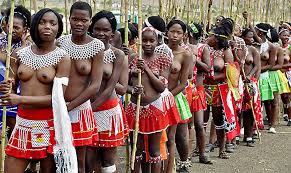
The Zulu Royal Household says it is saddened by the deaths of ten young women who were killed in a bus accident in KZN.
The bus came from a reed dance ceremony in Nongoma, when it overturned on the R66 outside Eshowe.
Nine passengers died at the scene of the crash and one more succumbed to her injuries last night.
Sixty-two others were injured in the accident.
Senior members of the royal house have visited the scene of the crash.
Investigations are underway into the cause of the accident.
Meanwhile the ANC Women’s League responded by saying they were saddened by the reports.
Deputy president of the ANCWL, Nosipho Dorothy Ntwanambi, said it was unfortunate that the incident occurred shortly after the end of Women’s Month.
“Without a doubt, young women represent a shining star upon whom the generations before them pin our hopes for the continued realisation of a South Africa that is better today than it ever was,” said Ntwanambi.
“It is for these young women who shall never see our tomorrow and many more in the country that the ANCWL steadfastly continues to organise women, young and old, and across all racial and cultural divides for total women’s emancipation.”
The African National Congress Women’s League extended its condolences to the families of the women.
Health MEC Sibongiseni Dhlomo confirmed that nine girls and one adult had died in the crash.
Earlier Netcare 911 officials said 62 others had been injured when the bus overturned, slid down the road and smashed into steel barriers.
“Paramedics… arrived at the scene and found that the barriers had pierced through the front of the bus,” said ER24 spokesman Chris Botha.
KZN Transport MEC Willies Mchunu has instigated a probe into the crash.
Former President Nelson Mandela has been discharged from his three-month admission at Pretoria’s Mediclinic hospital.
The 95-year-old returned to his Houghton home on Sunday morning, where he continues to receive intensive care.
In a statement by the Presidency, they confirmed that his condition remains “critical, and at times unstable.”
He was escourted to his home by medical staff after his long stay which began on June 8, to treat a recurring lung infection.
The international icon celebrated his 95th birthday in hospital on July 18, while the worlds’ media camped outside the medical complex.
Tributes for his recovery came in from around the world.
Well-wishers left poems, paintings, flags and floral bouquets outside the Pretoria hospital and his Houghton home.
In a statement this morning, the Presidency said: “We would like to wish him all the best as he continues his recovery at his Johannesburg home.”
“If there are other health conditions that will warrant another hospital admission, we would do so,” added Presidency spokesperson Mac Maharaj.
Maharaj added that his resident has been “reconfigured to all him to receive intensive care there.”
South Africans have been urged to keep praying for him, and to respect Madiba and his family’s private space.
Madiba’s grandson, Mandla, said his discharge was “particularly heartening because it flies in the face of those who have been busy spreading lies that he was in a ‘vegetative state’ and just waiting for his support machines to be switched off”.
He added these kind of people had been “in effect declaring him dead while he was fully alive”.
The Democratic Republic of the Congo military has warned that any aggressor would be met with force and added that it was untroubled by German and other mercenaries.
M23 rebels have issued a warning to the Congolese government that they would resume fighting to take control of the troubled east if the government does not start negotiations immediately.
Congolese troops backed by the UN Intervention Brigade including South African troops have taken up positions abandoned by M23 rebels in the hills overlooking the eastern town of Goma.
This happened after the rebels withdrew on Friday.
Meanwhile, Rwanda has denied accusations from the UN of helping the rebel group.
DRC military spokesperson Colonel Amuli Olivier said: “If Rwanda helps M23, Congo doesn’t care, because we know they have mercenaries from Germany, from Eritrea, from Uganda. The most important thing for Congo is to say whoever takes arms against Congo, will always face the full force of the army and the army’s objective is to secure Congolese borders and its civilians.”
The rebels have demanded the government to return to the negotiating table saying “if the Congolese government pushes on with the military option to the detriment of the Kampala talks, our armed forces reserve the right to re-take control (of Goma positions).”
Over the past week several peacekeepers have been injured in clashes among them, three South Africans.
M23’s political leader, Bertrand Bisimwa wrote a letter to South Africa earlier, asking them not to come and “kill their brothers”. He cautioned them that they are going to face similar treatment to the one they received when facing Seleka rebels in the Central African Republic (CAR) who killed 13 South African soldiers.
“If they (the South Africans) think they will go out into the hills and annihilate M23, they’re crazy,” Bisimwa said, adding: “If an army goes in, when it does not know the terrain or the politics is overconfident and is itself not combat equipped for these kind of operations, they’re going to be kicked. If South African special forces could not keep Seleka at bay – not nearly as coherent a target as M23 – how are they going to defeat M23, which are in their own back yard?”
South Africa is deploying more than 1000 troops in the DRC. Tons of weaponry, including helicopters, were flown in huge cargo planes from South Africa to Entebbe in Uganda, close to the Congolese border, where SA forces are expected to be based. The rebel group accuses Zuma of sending his troops to the DRC to protect his nephew Khulubuse’s oil interests.
South Africa may be badly underestimating the strength of the M23-rebels.
M23 rebels have grenade-launchers and a 37mm double barrelled aircraft defence cannon from the Congolese defence forces. A source inside the SA army admitted that there could be ‘loss of lives’ among the South Africans because the rebels know the terrain better.
The South African troops are part of a multilateral regional force, which includes the armies of Mozambique, Malawi and Tanzania, with the blessing of the UN Security Council which passed Resolution 2098 on March 28, 2013.
M23 claims the resolution transformed the UN peace keepers in a belligerent force, entrusted with offensive mission. The UN security council thus authorised an “intervention brigade” to allow “neutralisation of armed groups in the east of the DRC.” This decision was in sharp deviation of the UN’s historic peace mandate in the Congo, who in the past only had a mandate to ‘protect’ the area.
UN Security Council unanimously approved the creation of a brigade of more than 2,500 troops with a mandate to conduct “targeted offensive operations” against M23. The new UN force is to consist of three infantry battalions, an artillery company, a reconnaissance company and “special forces.”
It marked the first time that UN peacekeepers were given a mandate to conduct offensive operations, marking a dramatic change from the UN’s peace mandate in the past, which only allowed soldiers to shoot back when they were being shot at.
M23 says the UN is, in effect, coming to the “rescue of one of the most corrupt regimes in the world and will contribute to extending the reign of an army that is infamous for rampant rape and other atrocities that it wantonly and habitually inflicts on the Congolese population.”
The irony of Resolution 2098, is the UN Secretary General’s own words stating that corruption is the main cause of the failure of the DRC Government.
Sources say army officerstake advantage ofagriculturalandmineral wealth, and set uptaxes and roadblocks in the area. “The rationale forthe presence of soldiersis ostensibly to protect people from rebellions.Unless theyget rich onthe backs of the same people,they have nointerest instopping the war.”
Some observersevenarguethat a part ofthe army isin the hands ofTutsis.More than nine generals out of thirty are said to beTutsiCongolese. The M23, backed by Rwanda, want an independent state, Tutsiland.
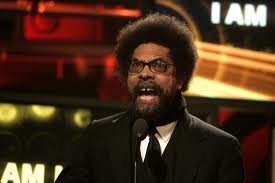
Professor Cornel West, the radio personality and scholar, on Friday lashed out at organizers of Wednesday’s 50th-anniversary commemoration of the March on Washington, saying that it offered scant celebration of Martin Luther King Jr. and his accomplishments, according to Mediaite.
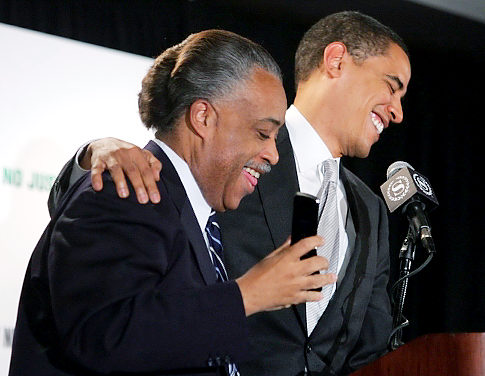
He said the event merely highlighted “the coronation of the bona fide house Negro of the Barack Obama plantation, our dear brother Al Sharpton.”
West lamented that black leadership has become “so sold-out” so as not to have the courage to be a “bull in the china shop,” break rank, and talk about “racism and poverty”.
This is not the first time West has referred to Sharpton as being “on the Obama plantation.” The radio host made the same claim in July when he felt Sharpton did not advocate hard enough for a Department of Justice “civil rights” prosecution against the recently-acquitted George Zimmerman.
Further, he said, the event was unremarkable because black leaders are too fearful to speak out against the nation’s first black president.
Early in the radio show “Smiley and West,” West said of the previous day’s commemoration of the 50th anniversary of Martin Luther King Jr.’s March on Washington, “We saw of course the coronation of the bonafide house negro of the Obama plantation, our dear brother Al Sharpton, supported by the Michael Dysons and others who’ve really prostituted themselves intellectually in a very ugly and vicious way”.
[Transcript]CORNEL WEST: Well, on the one hand as you can imagine, that was a beautiful thing. I was there in D.C. to see the magnificent expression of, like, faces and sparkling eyes of everyday people of all colors, hungry, thirsty for justice, hungry, thirsty for truth. Then you turn to so many of the major organizers and major speakers at the march – not too much truth. Not too much talk about justice. Mainly talking about voting rights, and every once in a while you see a vague reference to jobs.
Now, they had some wonderful speakers earlier in the day, but most of the country didn’t get a chance to hear them. But for the most part, there was, Brother Martin himself, I think, would’ve been turning over in his grave. He wants people to talk about Wall Street criminality, he wants people to talk about war crimes, or drones dropping bombs on innocent people. He wants people talking about the new Jim Crow and the privatization of education, and the various ways in which the well to do, the oligarchs and plutocrats are getting away with murder. You didn’t hear that whatsoever. You not only got a tame Martin Luther King Jr., but a real sense in which who he really was at the end of his life hardly surfaced at all.
And we saw of course the coronation of the bonafide house negro of the Obama plantation, our dear brother Al Sharpton supported by the Michael Dysons and others who’ve really prostituted themselves intellectually in a very ugly and vicious way.
Putin: US claims that Syria is responsible for chemical attack is utter nonsense
Russia dramatically escalated its denunciations of American threats to attack Syrian military targets on Saturday, with President Vladimir Putin saying it would have been “utter nonsense” for the Syrian government to use chemical weapons as the Obama administration alleges.
The Foreign Ministry said a U.S. attack would be a “gross violation” of international law.
Speaking out for the first time since an apparent chemical weapons attack near Damascus on Aug. 21, Putin called on President Obama to find a nonviolent way out of the crisis.
“I would like to address Obama as a Nobel Peace Prize laureate: Before using force in Syria, it would be good to think about future casualties,” Putin told Russian news agencies in Vladivostok during a tour of the country’s flood-stricken Far East.
“Russia is urging you to think twice before making a decision on an operation in Syria,” he said.
Putin said he was sure the attack was the work of rebels trying to provoke international — and especially American — involvement in the Syrian conflict. The government of Bashar al-Assad, he said, would have had no reason to use chemical weapons at a time when it had gained the upper hand in the fighting.
Doing so, he said, would have been “utter nonsense’’ – with the clear implication that that is how he would characterize the American allegations.
On top of that, he said, the Obama administration’s “claims that proof exists, but is classified and cannot be presented to anybody, are below criticism. This is plain disrespect for their partners.”
Putin’s comments were soon underlined by a stern statement from the Foreign Ministry. After U.S. Ambassador Michael McFaul had finished a meeting with Deputy Foreign Minister Sergei Ryabkov on Saturday, the ministry declared, “Russia has expressed its conviction that any forceful action against Syria that the U.S. could carry out in circumvention of the U.N. Security Council would be an act of aggression and a gross violation of international law.”
Putin said he was surprised by the vote in Britain’s Parliament on Thursday not to join a U.S. attack on Syrian military targets. “It shows that there are people guided by common sense there,” he said.
Obama arrives in St. Petersburg for the G20 meeting on Thursday and leaves on Friday. The purpose of the gathering is to discuss economic growth, but the White House acknowledges there will be plenty of conversation about Syria on the side. There are currently no plans for a one-on-one meeting between Putin and Obama, who earlier this month decided not to attend a Moscow summit with the Russian president.
On Friday, the head of the foreign affairs committee of the lower house of parliament, Alexei Pushkov, said the Nobel committee should strip Obama of his 2009 Peace Prize if he launches an attack on Syria. – Washington Post
A person pretending to be Deputy President Kgalema Motlanthe on social media has been trying to solicit bribes from members of the public, Motlanthe’s office confirmed on Friday.
“This impostor, on Facebook, asked someone to pay him in [United Kingdom] pounds to qualify for business and contracts,” Motlanthe’s spokesman Thabo Masebe said.
The fake Motlanthe asked his Facebook friend for an amount of 450 pounds (about R7200), which he found to be quite odd.
“This person then contacted us [presidency] to ask if this might be possible and we alerted him that he was dealing with someone who is posing as Deputy President Motlanthe,” Masebe said.
The matter was reported to Facebook but it was unclear how long it would take for the account to be closed.
Masebe said the account appeared to be a recent creation, which accumulated at least five thousand friends in about two weeks.
The Sowetan newspaper reported that Police ministry spokesman Zweli Mnisi said impersonating another person in any form was a crime. He also revealed that the state passed the National Cyber Security Policy Framework Act to address the matter. – Sapa
On Friday thousands of fast food workers went on strike for higher wages.
The strike has been touted by organizers as the industry’s largest in history. The workers are seeking wages of $15 an hour.
But despite demonstrations in 58 cities, the strikes appeared to do little to rattle the industry today.
Judging by dozens of tweets and photos about the event, most protesters were outside. This left customers free to order inside.
While restaurants in some places temporarily shut down because they had too few employees, many targeted restaurants operated under normal conditions, according to the Associated Press.
In New York, things appeared to business as usual. The AP wrote:
In New York, City Council Speaker Christine Quinn joined about 300 to 400 workers and supporters Thursday in a march before the group flooded into a McDonald’s near the Empire State Building. Shortly after the demonstration, however, the restaurant seemed to be operating normally, and a few customers said they hadn’t heard of the movement. The same was true at a McDonald’s a few blocks away.
The AP noted that since the organizers had made their plans public in an effort to get workers to participate in the strike, managers had time to adjust their staffing levels prior to today’s events.
Despite the relatively low impact of the strikes, a protesting worker interviewed by Business Insider said he wasn’t deterred.
“It’s something I’m doing for my coworkers and out of respect for myself,” Nick Williams, a 28-year-old McDonald’s worker from Indianapolis, said. “My voice will be heard no matter what.” – Business Insider
The momentum of the anti-fracking movement is growing as concerned communities across the globe feel the threat of natural gas development. On October 19, activists around the world will join together for the second annual Global Frackdown, an international day of action and an opportunity to, as one unified community, send a message to protect our resources. In anticipation of this year’s Frackdown, we can’t help but point to the recent victories of the anti-fracking movement in Argentina as an inspiring example of global resistance.
According to the U.S. Energy Information Agency’s June 2013 report, Argentina has the second greatest amount of shale gas resources in the world after China. The country’s potential for natural gas and oil development is disconcerting, but while some aspire for Argentina to become a global leader in shale gas, some communities are standing up to fight back. They have sought international support and strategy, mobilized their communities and targeted legislators to keep fracking out. Their efforts have paid off. More than six municipalities in Argentina have enacted local bans.
Chubut Province is one area formerly threatened by natural gas development. Chubut is located in Patagonia, the southern-most region of Argentina.
The President of Argentina, Cristina Fernández de Kirchner, together with Governor Martín Buzzi, inaugurated new shale exploration activities in Chubut in February. But after just a few months of activism and mobilization efforts, anti-fracking groups achieved a victory: A court in Argentina recently ordered Yacimientos Petrolíferos Fiscales (YPF) to halt fracking in “La Greta”, an exploratory well close to Río Mayo in the Chubut province.
Entre Ríos, a province in northeast Argentina, was also recently granted an injunction against fracking. Entre Ríos is located above one of the world’s largest aquifers, which supplies drinking water for the region.
Hugo Rivas, president of the Proyecto Sur Paraná, points to the community solidarity that was required to achieve this fracking victory: “In the movement to free Entre Ríos of fracking, social, professional, cultural and political sectors have participated and united in this action.”
These kinds of community-based and globally supported efforts are needed to combat the oil and gas industry. Indeed, they fuel the anti-fracking fire. Join us in this year’s Global Frackdown to send out a message as a unified, international community: the movement’s momentum is growing, it is strong, and together we will not allow fracking to destroy our water, air and communities.
Jaime Hamre is an intern for Food & Water Watch’s international program.
U.S. spy agencies have built an intelligence-gathering colossus since the attacks of Sept. 11, 2001, but remain unable to provide critical information to the president on a range of national security threats, according to the government’s top-secret budget.
The $52.6 billion “black budget” for fiscal 2013, obtained by The Washington Post from former intelligence contractor Edward Snowden, maps a bureaucratic and operational landscape that has never been subject to public scrutiny. Although the government has annually released its overall level of intelligence spending since 2007, it has not divulged how it uses the money or how it performs against the goals set by the president and Congress.
Tables detail spending requests for agencies, as well as personnel breakdowns by pay grade, language expertise, and years of service.
The 178-page budget summary for the National Intelligence Program details the successes, failures and objectives of the 16 spy agencies that make up the U.S. intelligence community, which has 107,035 employees.
The summary describes cutting-edge technologies, agent recruiting and ongoing operations. The Post is withholding some information after consultation with U.S. officials who expressed concerns about the risk to intelligence sources and methods. Sensitive details are so pervasive in the documents that The Post is publishing only summary tables and charts online.
“The United States has made a considerable investment in the Intelligence Community since the terror attacks of 9/11, a time which includes wars in Iraq and Afghanistan, the Arab Spring, the proliferation of weapons of mass destruction technology, and asymmetric threats in such areas as cyber-warfare,” Director of National Intelligence James R. Clapper Jr. wrote in response to inquiries from The Post.
“Our budgets are classified as they could provide insight for foreign intelligence services to discern our top national priorities, capabilities and sources and methods that allow us to obtain information to counter threats,” he said.
Among the notable revelations in the budget summary:
●Spending by the CIA has surged past that of every other spy agency, with $14.7 billion in requested funding for 2013. The figure vastly exceeds outside estimates and is nearly 50 percent above that of the National Security Agency, which conducts eavesdropping operations and has long been considered the behemoth of the community.
●The CIA and the NSA have begun aggressive new efforts to hack into foreign computer networks to steal information or sabotage enemy systems, embracing what the budget refers to as “offensive cyber operations.”
●Long before Snowden’s leaks, the U.S. intelligence community worried about “anomalous behavior” by employees and contractors with access to classified material. The NSA planned to ward off a “potential insider compromise of sensitive information” by re-investigating at least 4,000 people this year who hold high-level security clearances.
●U.S. intelligence officials take an active interest in friends as well as foes. Pakistan is described in detail as an “intractable target,” and counterintelligence operations “are strategically focused against [the] priority targets of China, Russia, Iran, Cuba and Israel.” The latter is a U.S. ally but has a history of espionage attempts against the United States. – Washington Post
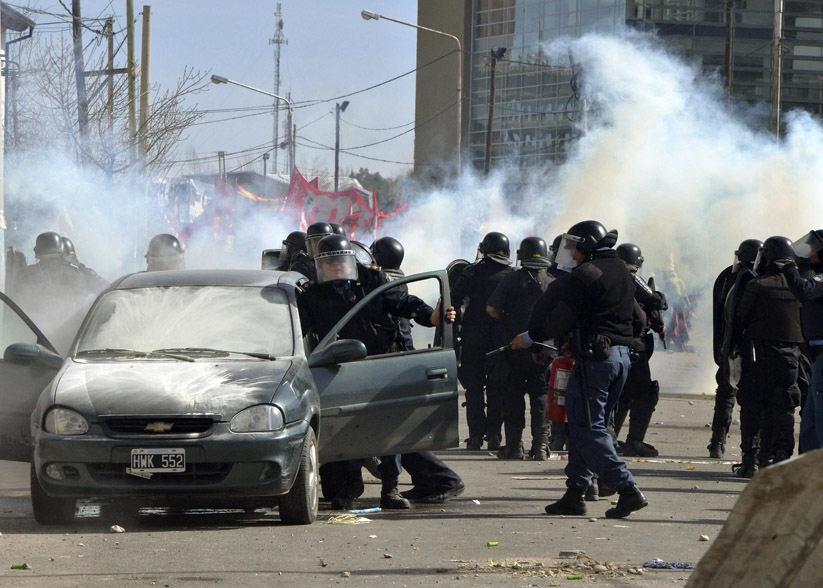
A show down is looming between management of the Water Sisulu University and students in the Eastern Cape as the 12 o’clock deadline to vacate the premises nears.
The university says the move to vacate the residences is for the safety of students but they have threatened to resist it on the grounds that management must address the workers’ demands.
Staff are on strike demanding a salary increase of 8% while the university is offering 4.25%.
Students’ spokesperson, Lusanda Thutha says they will resist any attempt to vacate them legally or otherwise. “We are not going anywhere. It cannot be good that we have been told through Facebook that we have to leave and vacate the premises because we know that we never applied through Facebook,” says Thutha.
She says that every decision that has to be taken about students has to involve the leadership of the students. Meanwhile, the university’s spokesperson Angela Church says that students have started to go home.
Church, has warned against resistance. “We issued the notice on Tuesday that they must vacate the residences. We did extend the deadline to Friday August 30. We need our students to vacate the residences for their own safety and security as the situation around the WSU campuses is very volatile. Some of our students have been injured in skirmishes with police and we cannot put them at risk any further,” she says.
“We will assess the situation after 5 o’clock on Friday,” Church added.
A Pretoria University philosophy lecturer has resigned after “a racist blog” she wrote was “exposed” by a fellow white academic known for his pro-regime leanings, The Times has reported.
Louise Mabille said the rape of babies was a “cultural phenomenon” among black South Africans.
In an article on feminism, Mabille said: “Naturally, it is much easier to endlessly complain about ‘Calvinism’ than to ask the question on why the rape of babies is a cultural phenomenon among black ethnic groups.”
A complaint from University of Johannesburg political science lecturer Piet Croucamp alerted Pretoria University management to Mabille’s post.
Croucamp said he had raised his concerns with the vice-chancellor after the philosophy department had refused to deal with it.
“They said she wrote in her personal capacity and that it fell within her right to freedom of speech. I told them it was hate speech, which limits one’s freedom of speech.”
Praag executive editor Dan Roodt described the article as “forthright and challenging”. It asked why Western feminists were so anti-West and in this country criticised only white men and patriarchy, and not black men.
“The notion that her piece could be hate speech is preposterous. If so then the speech of Deputy President Motlanthe at the National Men’s Rally was also ‘hate speech’.
“Motlanthe, according to the SABC, said ‘men must not use culture to perpetuate violence against women and children’. In passing, Mabille refers to the myth among some black South African men that raping children or babies would cure one of Aids, which the Rape Crisis Centre also refers to,” Roodt said.
Mabille and Motlanthe converged on the issue, that culture should not engender violence against women, especially girls and even babies, he said.
“We commissioned the piece as we are concerned about the horrific sexual violence in South Africa. We believe there should be a national debate . intellectual and analytical.”
Roodt said Praag was shocked at Mabille’s resignation.
“If it had anything to do with her article, it would be a sad day for intellectual debate, for freedom of expression and for academic freedom . Then we have become as benighted as the rapists and killers themselves.
“The issue of sadistic violence and the pathological attacks on women, children and the elderly will not go away in South Africa. We need to discuss it in a frank and open manner.
“Those who criticised Mabille are all Afrikaners. It saddens me to say this, but Afrikaners seem to make very good communists. The more our society sinks into a quagmire of ideology and prejudice, the more some Afrikaners, especially some academics, display an intolerance and a doctrinaire attitude reminiscent of Stalin’s Russia.
Mabille also said:
“[Something] that leftist feminists conveniently avoid is the real threats to women. We find that, for instance, a proper feminist criticism on Jacob Zuma and his crude patriarchal practices shines in its absence . I would have thought that it should be a priority to make mince-meat of a polygamist who has been accused of rape and in whose language a word for this crime hasn’t even been invented before the arrival of whites. That is not even to mention his charming habit of making babies with every woman that crosses his path.”
“Something that is especially revolting about modern feminism is the forced association with the Third World, socialism and crime. If there is a future in feminism then its supporters should rather position themselves to the right, and tackle real problems.”
“Let them ask how Women’s Day could be celebrated if a rural woman can get raped and set alight and that doesn’t lead to an eruption of rage in our country.”
“The world attacked [Russian President Vladimir] Putin for his withdrawal of explicit gay rights while there is a genocide of gay people in Zimbabwe and black lesbians in the townships are subjected to ‘corrective rape’.”
“There is also a big unwillingness to tackle Islam.”
This website uses cookies to improve your experience. We'll assume you're ok with this, but you can opt-out if you wish. Cookie settingsACCEPT
Privacy & Cookies Policy
Privacy Overview
This website uses cookies to improve your experience while you navigate through the website. Out of these cookies, the cookies that are categorized as necessary are stored on your browser as they are essential for the working of basic functionalities of the website. We also use third-party cookies that help us analyze and understand how you use this website. These cookies will be stored in your browser only with your consent. You also have the option to opt-out of these cookies. But opting out of some of these cookies may have an effect on your browsing experience.
Necessary cookies are absolutely essential for the website to function properly. This category only includes cookies that ensures basic functionalities and security features of the website. These cookies do not store any personal information.
Any cookies that may not be particularly necessary for the website to function and is used specifically to collect user personal data via analytics, ads, other embedded contents are termed as non-necessary cookies. It is mandatory to procure user consent prior to running these cookies on your website.


 About 900 people were arrested for various crimes in the North West over the last week, police said on Sunday.