A Methodist church in central Johannesburg has become home to more than 800 Zimbabweans who fled their country following the 2008 elections.
Reactions were mostly positive at the weekend when results showed a resounding victory for Zimbabwe president Robert Mugabe and his ZANU-PF.
Election officials confirmed on Saturday evening the landslide win for Mugabe which gave Africa’s oldest president five more years at the helm of a nation he has ruled for 33.
Mugabe’s rival, Movement for Democratic Change (MDC) leader and prime minister Morgan Tsvangirai, who has now lost to the president for the third election running, has disputed the election.
He said he will challenge the results in court with evidence of massive vote-rigging, irregularities and intimidation.
A Zimbabwean staying at the church, 69-year-old Mma Phiri, said she left the country 6 years ago and said she was confident Mugabe would stabilise the country.
Zimbabwe is struggling to recover from a decade of slump and hyperinflation that ended in 2009 when the Zimbabwean dollar was scrapped.
Mugabe campaigned on a platform of redistributing the country’s wealth by taking at least 51% shares in foreign-owned firms to hand them over to black Zimbabweans.
The economy had started to stabilise after Mugabe formed a unity government in 2009 with Tsvangirai to end a stand-off over another contested election, halting a decade of recession marked by hyper-inflation and chronic shortages of food and foreign currency.
Those hardships are still fresh in the minds of Zimbabweans, who endured long queues for everything from bread to fuel and cash and are wary of ZANU-PF’s poor track record on the economy.
“I am so happy because my country will become what it used to be in the 80s,” said Phiri. “MDC is only a matter of spreading rumours about Zimbabwe to the west,” said a Zimbabwean college graduate, Denis Sithole, who also stays at the church.
Mugabe, one of the grand old men of southern Africa’s liberation fight that ended white minority rule, is admired as a defiant nationalist by some Africans, though others share the West’s view of him as a ruthless despot who wrecked Zimbabwe.
He had defiantly ignored a request by Southern African Development Community in June to delay the election beyond July 31 to allow more time for steps to create a “conducive environment” for a free and fair vote. – SABC
The arms procurement commission has been adjourned until August 19 pending the resolving of the declassification of some documents.
The arms procurement commission, which began its public hearings in Pretoria on Monday morning, has been adjourned until August 19. Commission chair Judge Willie Seriti agreed to a request from lawyers of the defence department for the issue of the declassification of documents before the commission to be “dealt with”.
Additionally, Seriti hopes President Jacob Zuma will have given the commission direction on the appointment of a third commissioner by then. This follows the resignation of commissioner Judge Francis Legodi last week. Effectively, this means the commission cannot form a quorum because, when Zuma appointed the commission, he envisioned three commissioners hearing the evidence. Seriti and Judge Hendrick Mmolli Thekiso Musi are the two remaining commissioners.
Commission spokesperson William Baloyi said on Sunday that the commission has engaged the presidency on the legality of starting the proceedings with a two-member commission and is waiting for guidance on the matter from the presidency. Legodi has yet to be replaced, but Baloyi said this had no logistical impact regarding the work of the commission. “Logistically, everything is in place. We are ready to proceed,” he said.
Seriti said the issue of the declassification of documentation “has always been a nightmare”. Resolving that issue would prevent the commission having to ask members of the public to leave the venue “every 15 minutes” when classified information needed to be discussed, he said.
The commission was due to hear witnesses from the defence department this week. It was revealed at the commission on Monday that the department brought a court application asking for a postponement late on Sunday night. – Mail & Guardian
Four people have been arrested after residents of Matangari in Limpopo went on the rampage following the discovery of a woman’s body.
Police spokesperson Hangwani Mulaudzi says it’s alleged that the woman was killed for ritual purposes by a prominent local business woman.
He’s appealed to the community not to take the law into their own hands.
“Yesterday there was violence that erupted in the Matangari area where community members after having a session with us decided to take the law into their own hands following allegations that the lady has been killed for ritual purposes. As the police we are doing our best to make sure that the people behind the killing are brought to book at the same time we also want to appeal to people of Matangari, if there is anyone who have got information they can give to us. Four people have been arrested and we hope that such violence never occurs”.
Over 70% of South Africans surveyed as part of a recent report on the trafficking on human body parts believe that human body parts make muti more effective.
“Although this stems from generalised questions, it does indicate a deep-founded cultural belief that body parts make the medicine more effective and that it can solve any problem, from poverty to health issues,” said Simon Fellows, author of a report entitled Trafficking Body Parts in Mozambique and South Africa.
“Witchdoctors, usually through a third party, actively seek human body parts from live victims,” he said.
The research was conducted through 30 regional workshops attended by 413 people in Limpopo, Mpumalanga, KwaZulu-Natal and the Free State in South Africa, and Maputo, Nampula, Sofala, Tete, Delgado and Niassa in Mozambique.
The 139 people interviewed included members of human rights organisations, religious bodies, women’s movements, local authorities, police, municipal councils, community and traditional healer organisations.
Individuals surveyed included nurses, teachers, social workers, radio station presenters and even fishermen.
The interviews showed that those who approached witchdoctors for assistance sometimes had to part with more than just their money. Some were expected to sacrifice family members, even their wives and children.
Code of silence
In interviews with people who had experienced muti murders first hand, the research discovered that body parts of people killed in Mozambique were smuggled to religious leaders in South Africa who believe the muti will increase the size of their congregations.
“Muti murders are shrouded by a code of silence, where people are fearful of speaking out, allowing the practice to continue with little or no consequence for the perpetrators,” said Fellows.
He said in Mpumalanga seven cases had been confirmed, while in Limpopo only four cases of muti murder were confirmed.
There are well over 25 000 traditional healers in the country.- African Eye
Independent defence analyst , Helmoed-Romer Heitman says it is unlikely that the commission will uncover much. Heitman says those implicated in corruption would have taken measures by now to get rid of the evidence.
“It’s been so long that if anybody is half way clever they would have buried the evidence so deep that nobody is ever gonna dig it out. I think in that sense the commission is really on a sticky wicket. They’ll probably find nothing and that will either mean there was nothing or that it’s well hidden but whatever the case may be people will then accuse it of being just another cover-up,” says Heitman.
The Commission of Inquiry into the multi-billion rand arms deal begins with public hearings in Pretoria on Monday. The Arms Procurement Commission was set up by President Jacob Zuma in 2011. This followed calls from opposition parties to probe allegations of fraud and corruption in the weapons purchases of the 1990s.
Former President Thabo Mbeki, Planning Minister Trevor Manuel and former Ministers Mosiuoa Lekota, Ronnie Kasrils and Alec Erwin are scheduled to appear. The commission’s been hit by the resignation of one of its members, Judge Francis Legodi, and other officials. Cape Town Mayor Patricia de Lille is regarded as the initial whistleblower on the deal.
Swedish defence group Saab admitted that its erstwhile British partner BAE Systems had paid R24 million in the form of “bonuses and salaries” between 2003 and 2005 for the deal involving 26 JAS Gripen fighters.
The comments came after Sweden’s TV4 television channel said it had evidence Saab had promised to pay Fana Hlongwane, then advisor to the South African defence minister and also serving as a consultant to the Swedish firm, millions of euros in bonuses if Pretoria did not back out of the Gripen deal.
BAE Systems sold its stake in Saab for £152-million.
In 1999, deals were signed to buy 40 Italian Agusta helicopters; frigates and submarines from Germany; and from Britain, 52 Hawk trainer aircraft and Anglo-Swedish Gripen fighters. The British deal, strenuously promoted by the British prime minister Tony Blair and backed by the UK export credit agency, ECGD, was worth an impressive £1.6bn. It eventually emerged that BAE’s Hawks were twice the price of an Italian rival but the deal had been forced through regardless of cost by the South African defence minister Joe Modise.
Most of the bribe money went through BAE’s Red Diamond front company. BAE claimed to the UK government that the payments had no links to politicians, but this was false.
Fana Hlongwane, an adviser to the late defence minister Joe Modise, was a beneficiary. Hlongwane is also linked to Mbeki, some sources say. Another was the business partner of a notorious Berkshire-based arms dealer whose UK premises were raided. It was alleged that payments went to the ANC 1999 election campaign, via bank accounts in Saudi Arabia, Algeria and Mauritius
ANC official, Tony Yengeni, was jailed for taking a Mercedes from arms company EADS. Schabir Shaikh, brother of a senior arms procurement official, has been jailed for fifteen years for involvement in bribery.
Mbeki accused the British prime minister of double standards in singling out Africa over corruption, and insisted that no corruption had taken place in the deal he originally brokered.
BAE Systems is Europe’s biggest arms company. It has a massive presence in the US and sales all over the globe. It dominates the military scene in the UK.
Corrupt arms deals by BAE have now been alleged all round the world, virtually everywhere the company does business.
For more than 40 years the UK government has secretly tolerated, and sometimes actually practised, bribery. It has deliberately colluded with companies such as BAE and allowed them to continue corrupt practices. In 1965, during an economic crisis, Denis Healey launched an official arms sales department in Whitehall. Its remit was to pay bribes.
Healey himself was frank when he was interviewed recently by the Guardian: “Bribery has always played a role in the sale of weapons – I think almost no role in the sale we made to the Americans or the Germans or our western allies. But in the Middle East people couldn’t buy weapons unless you bribed them to do so, and that was particularly true in Saudi Arabia.”
An Eastern Cape sangoma initiate was asked to leave his work premises, apparently because he was wearing traditional beads and white paint on his face, the Daily Dispatch reported on Monday.
Zolile Jali, a general worker at Auto Tyres in Cambridge, claimed he was dismissed last Monday for wearing traditional beads, white head gear and white paint on his face, but this was denied by his employer.
“I took leave from work after I became very sick. I could not walk and I suffered numerous asthma attacks. My elders advised me that I was suffering because I was ignoring my calling as a sangoma,” said Jali. He soon recovered fully.
“Last Monday I reported back to work wearing my beads and my bosses dismissed me,” he said.
Auto Tyres branch manager Ivor Richter said Jali had not been fired, but given time off to sort out his image.
“The employee said he would not change his image without getting permission from his superiors and we said he must go and do that…
“We are a company that operates on strict guidelines when it comes to our employees. Customers have raised some concerns with regard to our employees’ dress code,” said Richter.
Jali has lodged a grievance with the Commission for Conciliation, Mediation and Arbitration (CCMA). – Sapa
Residents of Tlokwe, North West, should back the ANC in next year’s national elections, the SA Communist Party said on Sunday.
“The SACP calls upon all ANC members and SACP cadres, including Cosatu members to ensure that we mobilise the people of Tlokwe to vote for the ANC overwhelming [sic], so that we can rightly re-claim this municipality from the party of the baases and madams,” SACP general secretary Blade Nzimande said in a speech prepared for delivery.
He was speaking at the Ikageng Stadium in Potchefstroom ahead of the party’s 92nd birthday celebrations next month. The celebrations would be held in Tlokwe, the municipality which has its seat in the town.
Nzimande said they condemned those African National Congress members who had voted with the Democratic Alliance and other opposition parties to unseat ANC mayor Maphetle Maphetle.
He was replaced by DA councillor Annette Combrink in July, the second time since November. The North West ANC’s disciplinary committee expelled the councillors concerned, resulting in them losing their seats.
Nzimande said the ANC should fix the problems in the area.
“It is important that the ANC itself must act with speed to attend to whatever problems, including suspected corruption, against its own cadres. But, no matter what grievance any ANC cadre may have, this cannot be translated to the betrayal of the ANC,” he said. – Sapa
Julius Malema’s comments about Sars poses a serious threat to the tax-collecting agency’s integrity, it says.
In a statement released by Sars, it said: “On June 27 2013 counsel for [Sars] addressed a letter to Mr Julius Malema and his legal representative, cautioning Mr Malema to refrain from making false public statements about the state of his tax affairs and his engagements with Sars.
“In subsequent weeks, Mr Malema has not only refused to correct his lies, he has in fact repeated such allegations in various news interviews.”
During the Economic Freedom Fighters (EFF) national assembly last week, Malema said Sars must not allow itself to be used to settle political fights. He said his colleague Kenny Kunene and other EFF members had received notices from Sars stating they were under investigation. Sars had an obligation to rise above political divisions to ensure the public could trust it with their finances, he said. Malema said if Sars continued to allow itself to be used, the EFF would fight back.
Sars on Friday said it was because of Malema’s comments that it had decided to invoke section 67(5) of the Tax Administration Act which allowed it to disclose taxpayer information that would otherwise be confidential.
Malema’s history with Sars
In 2010, Sars contacted Malema when he failed to submit his tax returns for a number of years. It took Malema 18 months, after many attempts by Sars, to file his outstanding returns. “Ultimately he failed to regularise his tax affairs,” said Sars. Malema had still not registered the Ratanang Trust for tax purposes. Sars had to register it on his behalf. “Neither of these situations, his personal income tax affairs and that of the trust, was helpful in demonstrating his willingness to comply with his tax obligations,” the agency stated.
“Such situations do not only speak to the failure of Mr Malema to comply with his statutory obligations, but also the fact that it is not fair for Sars to treat one taxpayer different from another.” After eventually receiving the outstanding tax returns it became clear, through an analysis of the information, that Malema submitted inaccurate information to Sars for the tax years 2005 to 2011. The same applied to the information submitted about the trust.
“All indications were that Mr Malema was attempting to restructure his asset holdings without informing Sars.” Because of this Sars launched a financial investigation into his tax affairs. The financial investigation found that Malema had failed to register for tax in 2005, he under-declared and mis-declared income in the years 2005 to 2011 and was assessed for about R16-million. Malema also failed to submit the tax returns for the Ratanang Trust.
The investigation found that Malema, while engaging with Sars, was transferring assets he owned to third parties in a clear attempt to shift assets outside the reach of Sars, it said. Malema had made no attempt to pay any amount towards his tax debt. “Ultimately when Sars reached a conclusion of how much tax Mr Malema owed … and despite him having had, by his own account at least R4-million available at the time, he opted not to pay one cent towards his tax debt,” stated Sars.
Malema accepted that he owed Sars R16-million in tax, but he did not offer to convert any of his assets towards his tax debt and he never asked for any form of payment arrangement. “Mr Malema failed the procedural requirements to qualify for a settlement for tax debt through his own design, and not because ‘somebody decided’ so.
“Mr Malema must, as we all do, face the consequences of his actions. He had ample opportunity to utilise the various mechanisms provided for in law to state his case,” the agency stated.
Sars attached some of Malema’s properties to recoup the R16-million tax debt owed by the controversial leader. In May, his incomplete mansion in Sandton, Johannesburg, was sold on auction for R5.9-million. His farm in Limpopo fetched R2.5-million at an auction in June. Several of his household goods were also auctioned off earlier this year. – Sapa
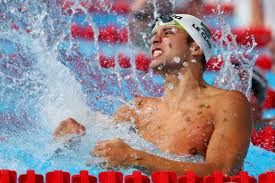
“After winning the 200m, people were saying that the time was not fast. So I just wanted to prove to everyone that I could win the 100 and do a fast time,” Le Clos said.
Le Clos, who had earlier in the competition won the 200m butterfly, was only fifth at the turn, but won in a time of 51.06, beating Hungarian Laszlo Cszeh by 0.39 seconds.
Poland’s Konrad Czerniak won the bronze In winning his second and South Africa’s fifth medal in the Palau Sant Jrodi in Barcelona, the 21-year-old broke his own South African record, which stood at 51.44.
Le Clos, who famously beat American superstar Michael Phelps in the 200m butterfly Olympic final last year and also won silver in the 100m, admitted that he had been nervous before the race.
“I was so worried last night, I did not get a lot of sleep in and I was really nervous this morning,” he said.
“But when I woke up half past three in the afternoon, I felt much more relaxed. The closer I got to the race, the more relaxed and confident I became and I thought that I really had a good chance of winning it.”
Le Clos said he was very happy that big names like Ryan Lochte were competing in the race. “The bigger the names, the bigger the hype is and it is good for the sport,” he said.
“Once the race starts, it makes no difference who is racing against me, I just want to win.”
He said winning the 100m felt different than winning the 200m. “This one is very special,” said Le Clos.
“Ryan Lochte came in and he really wanted to win. That gave the race extra flavour, I think it was one of the biggest races of the night.
“The crowd just would not keep quiet and I went: ‘Chad, don’t jump into the pool,’ and then I was getting nervous and I thought that it was time to get going.”
He said that when he came out, he still felt strong. “I am not even tired now, I feel like going again.” – Sapa
Lulu Xingwana said in Pretoria that the adoption of a new Bill, now before Cabinet, would help to fully emancipate South African women.
“Within the 100 years, a lot has been achieved to attain the total emancipation of South African women of all races,” she said in a speech prepared for delivery on Saturday at the launch of Women’s Month in Freedom Park, Pretoria.
“Challenges and gaps are still there and are being attended to.” South Africa is regarded as the rape capital of the world, but the minister ignored the scourge in her speech.
Women still faced injustices, however, including violence, poverty, unemployment, exploitation and human trafficking, she said.
“The injustices of today require us women to form a united front to continue with the struggle for the total emancipation of women.”
The Women Empowerment and Gender Equality Bill would provide a number of legislative tools to help achieve gender equality.
“We believe that the Bill will help us to monitor and evaluate and enforce all initiatives aimed at empowering women in South Africa,” she said.
The Bill sought to empower the department of women, children and people with disabilities to monitor, review and oversee the integration of gender equality principles into government and private programmes.
Xingwana said it strongly called for women to enjoy equal representation in decision-making positions, in the private sector and in all spheres of government.
The proposed legislation would aim to eliminate all forms of discrimination against women and girls, including those with disabilities. This included any practices that violated women’s rights to social, political, economic and cultural freedoms.
The Bill would also provide for the monitoring of legislation to address discrimination and violence against women, as well as access to services and economic emancipation.
“Cabinet’s approval of the Women Empowerment and Gender Equality Bill will be an important milestone for the struggle for gender equality in our country,” Xingwana said.
” … It is our responsibility, as society united, to uphold the rights of women and it will take all of us together to achieve this.” – Sapa
I have just read an interesting article by Matthew Contessini, claiming that Europeans are “more pro-white than Americans”. The piece is full of speculative insights that may not ultimately survive scrutiny, but does identify some elements undermining Western/European culture and others supporting it.
I think Anglo-Saxon culture is to some extent a victim of its own success. Many people learn English and Third Worlders especially are attracted to it as a source of power and economic prowess. British colonialism anglicised India and most of Africa. In order to maintain itself, the Empire must ultimately assume the complexion, literally and figuratively, of its inhabitants. The whole chicken tikka masala debate started by Robin Cook in 2001 is relevant here. According to Cook, the ethnic homogeneity that Britain enjoyed in the Victorian era is an illusion and “(t)he diversity of modern Britain expressed through devolution and multiculturalism is more consistent with the historical experience of our islands”.
South Africa, even more than Britain, is a country in search of its own identity. Will there be any whites left in this country in fifty years’ time? Whites are legislated against by government and attacked by black criminals. Yet English-speaking whites mostly see a solution in “better law enforcement”, “better education” and “making multiculturalism work”. Taking their cue from “chicken tikka masala Britain”, they wish to be part of a global Anglo-Saxon empire where “diversity” is celebrated. The same goes for those Afrikaners who live in mostly English-speaking areas of South Africa, some of whom send their children to English private schools (although this phenomenon is also declining).
On the other hand, Afrikaners who remain true to their language and traditions see separatism, the pursuit of a so-called “volkstaat” or ethnic state as the sole solution to the problems of white survival. Over the past two years or so, most Afrikaner organisations, sometimes meeting secretly, have endorsed the pursuit of self-determination as the only viable survival strategy.
It seems that, ultimately, having a universal culture beamed to the whole world via Hollywood and global corporations, becomes a handicap as it creates the impression that you are a master of your own destiny whereas in fact you are not. To some extent, English in South Africa has become a black language because all English institutions such as universities, state schools, media, etc., have been taken over by blacks. Despite twenty years of affirmative action, forced integration, and so on, there are still many Afrikaans state schools that are 95% white, to the frustration of the authorities. Ironically, liberal whites such as Helen Zille or Barbara Creecy, the provincial education minister of Gauteng, are more hostile to these schools than blacks and are trying their utmost to have them declared illegal.
One Christmas about 30 years ago we left Johannesburg on a bus trip to a safari park. All the other people in the bus were Afrikaners: big healthy white families in shorts. With their handful of surnames, and heavy Dutch faces utterly distinct from their African surroundings, they were a tribe.”
The “handful of surnames” he is referring to are the Dutch and French surnames that we have kept and that have been Afrikanerised over the centuries. We can tell immediately by surname if someone is “one of us” or not. As Kuper, who is generally not sympathetic to Afrikaners, admits, that makes us a “white tribe”.
On Thursday night I attended a poetry reading at my children’s high school. It breaks one’s heart to see all those talented, clever children emerging into adulthood, able to write, to compose, to think, to reason, but who have one handicap: they are white in a black world. What will become of them? Will they be overwhelmed with “diversity” and simply get assimilated, or will they survive as white Afrikaners, bearers of our language and culture?
I think Southern identity in the US has the same potential to unite at least some Americans around an ideal. Often defeat, as during the Civil War or our Anglo-Boer War, leads to loss of territory but can create a more enduring sense of identity even stronger and more valuable than territory which depends so much on demography and military power. I think as Western populations decline world-wide, we have to accept that we are going to lose vast tracts of land to others. The trick will be to keep our sense of who we are and where we come from. Teaching our children about European art history and philosophy is as important as teaching them our language and literature.
Not that territory is unimportant, but this is as much a struggle for identity as it is for anything else.
The most horrifying aspect of all is that American military might, created by a vast army of Western scientists and engineers, will ultimately fall into the hands of the imperial multiculturalists, a mixed-race America, who will use it to oppress and persecute whites globally. South Africa is a precedent for this, as the ANC is using the power of the formerly white state and its institutions, including its highly efficient revenue-gathering capability, to wage identity war against whites.
The future ownership of the US military-industrial complex is therefore of concern to us all. The sooner Europeans realise this too, the better.
Petrochemical giant Sasol has pulled the plug on a shady empowerment deal with union boss Simon Mofokeng and wife Maureen after Business Times exposed how they used fake documents to clinch contracts worth over R300-million.
But this still leaves questions unanswered, including how Sasol could have done business with Mofokeng’s company for 13 years before uncovering the deception.
Sasol confirmed this week it would report a case of fraud to the police, which means the Mofokengs are likely to face charges along with their financial director, Vusani Moyo.
Simon Mofokeng is the general secretary of Cosatu-affiliated Ceppwawu (Chemical, Energy, Paper, Printing, Wood and Allied Workers Union) – a serious conflict of interest, as Ceppwawu has a major presence at several of South Africa’s top listed companies, including Sasol.
Sasol, which is listed on the JSE and the New York stock exchange, said on Wednesday it had cancelled its coal-handling contract with Khotso Batho “with immediate effect” for issuing “fraudulent letters of good standing to Sasol”.
“Sasol is not immune to corruption, but in instances such as this, where acts of fraud are identified, we will act swiftly and decisively,” said Sasol CEO David Constable.
The scandal has also sparked a major overhaul of Sasol’s procurement processes to make it harder for contractors to get away with fraud. It also launched an internal probe into the role of Sasol staffers, including the likelihood that they had failed to act against Khotso Batho despite being given evidence of wrongdoing.
“Any member of staff found to have knowingly facilitated a corrupt or noncompliant relationship with this service provider will face disciplinary action,” said Constable.
Well-placed sources told Business Times previously that Mofokeng had enjoyed a close relationship with Sasol top brass, including former Sasol Mining MD Hermann Wenhold, who is now group safety manager.
Sasol declined to confirm whether Wenhold or other senior executives were under investigation.
A three-month investigation by Business Times previously exposed how Mofokeng used his influence as a union boss to extort special treatment for his company from Sasol, which renewed its contract twice even though it failed to comply with its procurement rules.
These included needing a tax clearance certificate and letters of good standing from the labour department proving Khotso Batho was up to date with payments to the government’s compensation fund.
Mofokeng earned a salary of R130 000 a month as a Khotso Batho executive while employed as a full-time Ceppwawu office bearer, even though the union does not ordinarily allow its salaried top brass to hold paid outside employment.
Business Times established that Khotso Batho owes the SA Revenue Service at least R22-million in unpaid taxes, has failed to produce audited financial statements in the last three years, and is up to a year behind in submitting its VAT, PAYE and UIF returns.
It has been in arrears with the compensation fund since 2001. – timeslive.co.za
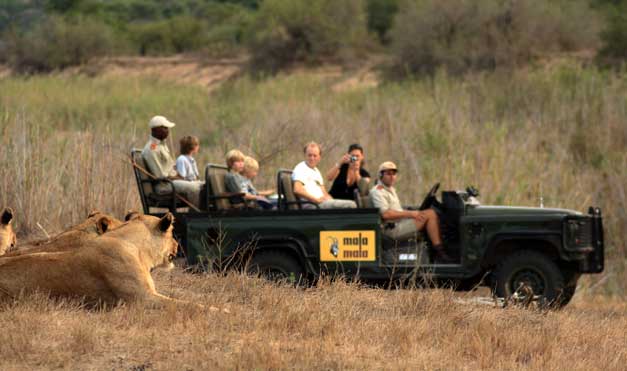
The government has offered to pay R1 billion to settle a land claim against the MalaMala game reserve in Mpumulanga, the Sunday Times reported.
“R1 billion for a single land claim is a lot of money,” chief land claims commissioner Nomfundo Gobodo told the newspaper.
The claimants, the Mhlanganisweni, are about 15,000 people in several villages about 5km from the Kruger National Park. The community believes R460 million is a fair price. They or their families were forcibly removed from the land during apartheid. The owner, Michael Rattray, however wanted R936m, and another R70m for improvements.
Last year, R1.6 billion was used to settle 549 claims across the country.
“I agree that paying market value is not sustainable. We have to look at what is just and equitable,” said Gobodo.
Rattray’s lawyer Patrick Falconer told the paper that “the owners and the minister (of land reform Gugile Nkwinti) are indeed in the same ballpark on the value of the land and improvements”. He declined to specify an amount. – Sapa
President Jacob Zuma on Sunday congratulated Robert Mugabe on his re-election as president of Zimbabwe.
Zuma described Wednesday’s elections as “harmonised” and called for peace in the neighbouring country, the international relations department said in a statement.
“President Zuma urges all political parties in Zimbabwe to accept the outcome of the elections as election observers reported it to be an expression of the will of the people.
” (He) also encourages the people of Zimbabwe to seize this opportunity to collectively contribute towards building their country driven by a common desire for peace, stability and prosperity.”
Zuma said South Africa was ready to continue its relations with Zimbabwe. – Sapa
The following are extracts from a speech by the then British foreign secretary, Robin Cook, to the Social Market Foundation in London during April 2001 in which he defines Britain as a multicultural country, with chicken tikka masala as its national dish. These extracts were published in The Guardian newspaper on 19 April 2011.
Tonight I want to celebrate Britishness. As Foreign Secretary I see every day the importance of our relations with foreign countries to the strength of our economy, to the security of our nation, to the safety of our people against organised crime, even to the health of our environment. A globalised world demands more foreign contacts than even Britain has experienced in the past.
I also know that we are likely to make our way more successfully in the world if we are secure in our British identity, and confident about its future. That security and confidence is important for the inner strength it gives us in our conduct of business with others. I want to argue the case why we can be confident about the strength and the future of British identity.
Sadly, it has become fashionable for some to argue that British identity is under siege, perhaps even in a state of terminal decline. The threat is said to come in three forms.
First, the arrival of immigrants who, allegedly, do not share our cultural values and who fail to support the England cricket team. Few dare to state this case explicitly, but it is the unmistakable subliminal message.
Second, our continued membership of the European Union, which is said to be absorbing member states into a country called Europe.
Third, the devolution of power to Scotland, Wales and Northern Ireland, which is seen as a step to the break-up of the UK.
This evening, I want to set out the reasons for being optimistic about the future of Britain and Britishness. Indeed, I want to go further and argue that in each of the areas where the pessimists identify a threat, we should instead see developments that will strengthen and renew British identity.
Multicultural Britain
The first element in the debate about the future of Britishness is the changing ethnic composition of the British people themselves. The British are not a race, but a gathering of countless different races and communities, the vast majority of which were not indigenous to these islands.
In the pre-industrial era, when transport and communications were often easier by sea than by land, Britain was unusually open to external influence; first through foreign invasion, then, after Britain achieved naval supremacy, through commerce and imperial expansion. It is not their purity that makes the British unique, but the sheer pluralism of their ancestry.
London was first established as the capital of a Celtic Britain by Romans from Italy. They were in turn driven out by Saxons and Angles from Germany. The great cathedrals of this land were built mostly by Norman Bishops, but the religion practised in them was secured by the succession of a Dutch Prince. Outside our Parliament, Richard the Lionheart proudly sits astride his steed. A symbol of British courage and defiance. Yet he spoke French much of his life and depended on the Jewish community of England to put up the ransom that freed him from prison.
The idea that Britain was a pure Anglo-Saxon society before the arrival of communities from the Caribbean, Asia and Africa is fantasy. But if this view of British identity is false to our past, it is false to our future too. The global era has produced population movements of a breadth and richness without parallel in history.
Todays London is a perfect hub of the globe. It is home to over 30 ethnic communities of at least 10,000 residents each. In this city tonight, over 300 languages will be spoken by families over their evening meal at home.
This pluralism is not a burden we must reluctantly accept. It is an immense asset that contributes to the cultural and economic vitality of our nation.
Legitimate immigration is the necessary and unavoidable result of economic success, which generates a demand for labour faster than can be met by the birth-rate of a modern developed country. Every country needs firm but fair immigration laws. There is no more evil business than trafficking in human beings and nothing corrodes social cohesion worse than a furtive underground of illegal migrants beyond legal protection against exploitation. But we must also create an open and inclusive society that welcomes incomers for their contribution to our growth and prosperity. Our measures to attract specialists in information technology is a good example.
Our cultural diversity is one of the reasons why Britain continues to be the preferred location for multinational companies setting up in Europe. The national airline of a major European country has recently relocated its booking operation to London precisely because of the linguistic variety of the staff whom it can recruit here.
And it isn’t just our economy that has been enriched by the arrival of new communities. Our lifestyles and cultural horizons have also been broadened in the process. This point is perhaps more readily understood by young Britons, who are more open to new influences and more likely to have been educated in a multi-ethnic environment. But it reaches into every aspect of our national life.
Chicken Tikka Massala is now a true British national dish, not only because it is the most popular, but because it is a perfect illustration of the way Britain absorbs and adapts external influences. Chicken Tikka is an Indian dish. The Massala sauce was added to satisfy the desire of British people to have their meat served in gravy.
Coming to terms with multiculturalism as a positive force for our economy and society will have significant implications for our understanding of Britishness.
The modern notion of national identity cannot be based on race and ethnicity, but must be based on shared ideals and aspirations. Some of the most successful countries in the modern world, such as the United States and Canada, are immigrant societies. Their experience shows how cultural diversity, allied to a shared concept of equal citizenship, can be a source of enormous strength. We should draw inspiration from their experience.
Britishness and European integration
To deny that Britain is European is to deny both our geography and our history. Our culture, our security, and our prosperity, are inseparable from the continent of Europe.
Underlying the anti-European case is the belief that there is an alternative future available to Britain. It used to be argued that the European Union is not Europe and that Britain could exist perfectly comfortably as one of a number of European countries maintaining a loose association with Brussels. But with the majority of non-EU states now clamouring for full membership, the changing geopolitics of Europe have consigned that argument to the past.
Some anti-Europeans now argue that Britain’s destiny lies outside Europe, as part of the English-speaking world and a member of NAFTA.
Yet Britain trades three times more with the rest of the EU than we do with NAFTA. The reason why over four thousand US companies have located here is because they want to export to Europe. If they only wanted to sell to NAFTA, they would have stayed at home.
Europe is where our domestic quality of life is most directly at stake, whether the issue is environmental standards, the fight against organised crime, policy on asylum or stability on the continent.
But it is not simply a question of economic and political realism that ties Britain to Europe, compelling as those arguments are. Britain is also a European country in the more profound sense of sharing European assumptions about how society should be organised. The last international survey of social attitudes put Britain squarely within the European mainstream on our approach to social justice and public services, such as health.
There are strong ties of kinship between Britain and North America. These are an immense asset to us in the modern world. The US and the UK are each others closest allies. But our value as an ally to our friends in Washington is in direct proportion to our influence with our partners in Europe.
I do not accept that to acknowledge our European identity diminishes our Britishness. Nor do I accept that membership of the European Union is a threat to our national identity.
None of our European partners, with their own proud national traditions, seem afflicted by this self-doubt and insecurity. The idea that the French, the Germans or the Spanish are attempting to erase their national identities by constructing a country called Europe is the mother of all Euromyths. On the contrary, our partners see their membership of a successful European Union as underwriting, not undermining, their assertion of national identity.
For France, Germany and Italy, the European Community was central to the renewal of their nations and the regeneration of their economies in the post-War period. To Spain, Portugal and Greece, joining the European Community was an affirmation of their freedom from fascism and a guarantee of a democratic future. To Austria and Finland, joining the European Community was a celebration of the end of the Cold War, which enabled them to make a free choice in their national orientation.
The same is true of the dozen new candidates for membership from the former communist bloc. All of them aspire to membership of the European Union because it will be an affirmation of their regained independence. None of them see it as a threat to their national identity.
Ireland joined at the same time as Britain. Its period of membership has transformed Ireland into a country with a dynamic economy and a cosmopolitan society. The result has been a new assertiveness of national identity, and confidence in their culture. We can see that for ourselves in Britain through the new affection for Irish music and dance, and the attachment to Irish pubs.
Britain has everything to gain from being a leading partner in a strong Europe. All we have to lose is the timidity which prevents us from embracing our European destiny and from recognising that it is a source of confidence in our nations future.
In the aftermath of Nice, it is clearer than ever that a strong Europe requires strong nations. With the accession of up to twelve new member states, the European Union is set to become even more diverse. In the next Inter-Governmental Conference, the challenge is to find the right balance between European and national decision-making and to enhance the EU’s legitimacy by harnessing the democratic traditions of its member states.
This is a debate that Britain can play a pivotal role in shaping. But we can only do so if we reject insular nationalism and the politics of fear by engaging fully and confidently in Europe.
Britishness and devolution
The last of the three perceived threats to Britishness is the new flexibility in our modern constitution.
The devolution of power to Scotland, Wales and Northern Ireland will stand the test of time as one of this Governments most radical and significant achievements. The creation of a Scottish Parliament and Welsh Assembly allows both nations to choose the policies that are right for them through their own democratic structures. In Northern Ireland, devolution was needed for a different reason – to enable the communities of a divided society to share power and to work together to build a common future. In all three cases, I am convinced that our reforms were essential.
Let us put to bed the scare stories about devolution leading to the Death of Britain. Devolution has been a success for Scotland and for Wales, but it has also been a success for Britain. The votes for devolution in the referendums were not votes for separation. They were votes to remain in the United Kingdom with a new constitutional settlement. By recognising the United Kingdoms diversity, devolution has guaranteed its future. It is striking that today opinion polls in Scotland show that support for separation from the rest of Britain is lower than at the time of the referendum four years ago.
Centuries of living together and working together have created enduring bonds between each of the constituent nations that make up Britain. Our future together in a single state is all the more secure if we each respect the distinctive identity that makes some of us Scottish and others Welsh or English. That mutual respect strengthens our common identity as British.
Our peoples already practise this subsidiarity of identity in their expressions of sporting loyalty. They watch Scotland, England, Wales or Northern Ireland at football. They cheer for the British team in the Olympics. And they support Europe at golf in the Ryder Cup. In context, each is a valid expression of our identity.
We should not fear the consequences of applying this principle in political life. In Scotland, the legal and educational systems are important expressions of Scottishness. At a British level, there is a strong attachment to institutions such as the National Health Service, the BBC and the armed forces. In Europe, we work with fourteen other nations to build the Single Market and to use our joint strength in trade negotiations. Action at one level does not invalidate our commitment to work at the other levels. On the contrary, they reinforce each other.
I get impatient when I see opinion polls that ask respondents whether they feel more Scottish or English than British, or more British than European, as if these choices were mutually exclusive. Identity is not a finite substance to be shared out between competing loyalties. It embraces numerous dimensions, each of which serves to amplify and reinforce the others.
Conclusion
In our thousand years of history, the homogeneity of British identity that some people assume to be the norm was confined to a relatively brief period. It lasted from the Victorian era of imperial expansion to the aftermath of the Second World War and depended on the unifying force of those two extraordinary experiences. The diversity of modern Britain expressed through devolution and multiculturalism is more consistent with the historical experience of our islands.
Far from making Britishness redundant, it makes the need for a shared framework of values and institutions all the more relevant. To act as a unifying force, that framework must be one that reflects the realities of contemporary Britain.
It is natural for every nation to be proud of its identity. We should be proud to be British. But we should be proud of the real Britain of the modern age.
Proud that the strength of the British character reflects the influences of the many different communities who have made their home here over the centuries. Proud that openness, mutual respect and generosity of spirit are essential British values.
We should be proud that those British values have made Britain a successful multi-ethnic society. We should welcome that pluralism as a unique asset for Britain in a modern world where our prosperity, our security and our influence depend on the health of our relations with other peoples around the globe.
Tolerance is important, but it is not enough. We should celebrate the enormous contribution of the many communities in Britain to strengthening our economy, to supporting our public services, and to enriching our culture and cuisine. And we should recognise that its diversity is part of the reason why Britain is a great place to live.
This website uses cookies to improve your experience. We'll assume you're ok with this, but you can opt-out if you wish. Cookie settingsACCEPT
Privacy & Cookies Policy
Privacy Overview
This website uses cookies to improve your experience while you navigate through the website. Out of these cookies, the cookies that are categorized as necessary are stored on your browser as they are essential for the working of basic functionalities of the website. We also use third-party cookies that help us analyze and understand how you use this website. These cookies will be stored in your browser only with your consent. You also have the option to opt-out of these cookies. But opting out of some of these cookies may have an effect on your browsing experience.
Necessary cookies are absolutely essential for the website to function properly. This category only includes cookies that ensures basic functionalities and security features of the website. These cookies do not store any personal information.
Any cookies that may not be particularly necessary for the website to function and is used specifically to collect user personal data via analytics, ads, other embedded contents are termed as non-necessary cookies. It is mandatory to procure user consent prior to running these cookies on your website.


 A Methodist church in central Johannesburg has become home to more than 800 Zimbabweans who fled their country following the 2008 elections.