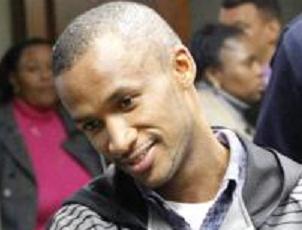
A pregnant woman and her colleague were raped and robbed at a guesthouse in Hazyview, Mpumalanga.
A Sapa correspondent reported that the 32-year-old, who is five months pregnant, and her 23-year-old co-worker, 23, from Pretoria, were attacked by two armed men at the Tatenda Guest House around 3am on Sunday.
“Two men broke through the security gate and gained entry to the room, after which time they raped the two ladies and took valuables including cellphones, jewellery and laptops,” guest house manager Christel Mathee said on Monday.
“I escorted the ladies to the hospital. They were very traumatised, the whole town is in shock.”
The Hazyview area has been plagued by violent crime in the past few years.
Last week, three masked men armed with a shotgun and two pistols reportedly attacked 108 pupils and 10 teachers from Laerskool Hennopspark in Centurion, Pretoria.
The children, who represented their school choir, stayed at the Aan de Vliet Resort and Guest House. Three teachers were robbed.
Mathee said visible policing in Hazyview had increased since the Aan de Vliet robbery.
Rudi van Niekerk, operations manager for a local security company, said residents and the police relied on informers such as farmers and workers on information regarding the Aan de Vliet robbery.
He said there seemed to be no link between the two incidents.
Police spokesman Colonel Leonard Hlathi said no arrests had been made, and that security around Hazyview has been beefed-up.
“We have more officers stationed in Hazyview, we have a new station commander and branch commander there and have implemented interventions,” he said. – Sapa
A 16-year-old high school pupil was stabbed to death during a fight with a fellow pupil at Kgothalang High School in Bekkersdal, Randfontein, Gauteng police said on Tuesday.
“It is alleged that the fight started in the classroom when the suspect threw an umbrella on the wall and its pieces ricocheted back and hit the victim,” Lt-Col Katlego Mogale said.
“An argument erupted leading to both scholars taking out knives and fighting.”
Mogale said the 16-year-old was stabbed several times and was declared dead on the scene on Monday afternoon.
The pupil who allegedly stabbed him fled the scene after the incident and was still at large.
A man who attacked and robbed farm dwellers in Mpumalanga was sentenced to 45 years in prison by the Nelspruit Regional Court on Monday.
A Sapa correspondent reported that Xolane Letsoalo, 27, from Ngodwana outside Mbombela, faced nine charges including theft, armed robbery, housebreaking, two of attempted murder, and possession of an unlicensed firearm and ammunition.
His co-accused, Freddy Nkosi, 27, faced one charge of possession of an unlicensed firearm and ammunition.
The two were arrested in November 2010 and pleaded not guilty to all charges.
Magistrate Andre Geldenhuys sentenced Letsoalo to 15 years on three counts of housebreaking and theft, 10 years on two counts of attempted murder, 10 years on two counts of armed robbery, two years on theft out of a motor vehicle and eight years on possession of an unlicensed firearm and ammunition.
Letsoalo would serve the sentences consecutively.
Geldenhuys sentenced Nkosi to eight years, and said he was lucky he was not charged for the other offences.
Letsoalo committed very serious offences, he said.
“A day after you committed the first robbery and stole a firearm, you went further to use the same firearm to commit another robbery.”
Letsoalo could have easily killed some of his victims.
“You fired shots at two women at a farm and injured one of them. You shot at her using her own firearm. You could have easily killed her.”
The two had shown no remorse during the trial, Geldenhuys said. – Sapa
While Miley Cyrus has a batch of critics, there is a group rallying behind her and praising her as a vital talent: rappers.
Pharrell produced several songs on Cyrus’ new album. She has been featured on the latest albums from Snoop Lion and will.i.am. Big Sean requested her as the star of his “Fire” music video. And to top it off, Kanye West invited her to appear on the remix to “Black Skinhead,” his anti-racism rant from his eerie and dark “Yeezus” album.
Cyrus’ album “Bangerz,” out Tuesday, features guest spots from Big Sean, Nelly, Future and French Montana. In an interview, Juicy J called the 20-year-old “a genius.” 50 Cent, who hasn’t yet worked with her, added that Cyrus “can be on anything hip-hop orientated because (she’s) rebellious.”
The idea of the former “Hannah Montana” star becoming a muse for rap stars seems odd to some, but Mike WiLL Made-It, who executive produced “Bangerz,” said the singer has struck a chord with rappers because she isn’t following in the footsteps of pop stars like Katy Perry but creating her own bold path.
“People like Kanye are fans of music, people like Pharrell are fans of all types of music. … It all boils down to her being very talented and not scared to do new things,” said the producer, whose new single, “23,” features Cyrus, Wiz Khalifa and Juicy J.
“Her voice is incredible. It’s one of a kind … no limitations,” added Mike WiLL Made-It, who is behind hits like Juicy J’s “Bandz a Make Her Dance” and Rihanna’s “Pour It Up.”
Others aren’t sure if talent is the reason behind it.
“Whether you’re a Miley fan or not, she is the girl of the moment,” said Cori Murray, entertainment director at Essence magazine. “Business is business. They’re in the music business; she’s the girl of the moment, so why not get on record with the girl of the moment? That’s as basic as it’s going to get.”
Cyrus, who will host and perform on NBC’s “Saturday Night Live” this week, has been the girl of the moment for months now. It started with her transformation from teen queen to twerk queen, rising with her edgy “We Can’t Stop” party-style music video. Of course, she hit new heights (or to some, new depths) with her eye-popping, sexually charged MTV Video Music Awards performance in August. It featured the scantily dressed singer twerking, gyrating on Robin Thicke and what’s become her signature move – sticking out her tongue.
The wild child antics – from being nude in the music video for her first No. 1 hit, “Wrecking Ball,” to her embrace of drug culture in a recent Rolling Stone interview – have made headlines. But her VMA performance and twerking with black female dancers caused another stir, with many questioning if Cyrus is wrongfully appropriating black culture as a path to success.
“That’s a very ignorant statement to say like, ‘Oh, she’s misrepresenting the black culture ’cause she’s twerking.’ If that’s the only thing that represents the black culture, that’s sad,” Mike WiLL Made-It said. “We got a whole bunch of (stuff) that represents the black culture.”
Murray, who said she and other editors at Essence discussed Cyrus after her VMA performance, echoed the producer’s thoughts.
“I think the black culture that she is influenced by, I think it’s black culture that has become popular culture. There is so much to (black culture) and we’re so complicated and she is just what mainstream America thinks about black culture,” she said.
But while the star is a product of hip-hop culture, “Bangerz” is far from a hip-hop album. The 13-track set has moments that are downbeat, others are up-tempo dance numbers and electronic. It also features Britney Spears and production and songwriting work from pop master Dr. Luke.
“Once they get over all the twerking … once they get past all of that and listen to the music, the music is actually great,” said Mike WiLL Made-It.
While Cyrus has her rap cheerleaders, not everyone has embraced her. When asked about Cyrus’ high profile rap collaborations, Ahmir “Questlove” Thompson jumped in with: “Or the idea of Miley using us as accessories? I don’t know.”
“I kind of felt same sort of way when Gwen Stefani went through her Asian phase as accessories. At the end of the day, it’s like, is that objectifying us? Hip-hop is already a one-dimensional view as far as us looking like caricatures,” the Roots leader said.
“Yeah, I’m all for collaborating, my life is based on collaborations, but I’m more concerned about what it’s based in. Is it genuine interest or is it like a benign curiosity about a culture? I don’t want her to just take that we’re just good for twerking and having big (butts).”
A woman appeared in the Meadowlands Magistrate’s Court in the north of Soweto, the black township, after cutting off her boyfriend’s penis, Gauteng police said on Monday.
The woman caught her boyfriend with another woman on Sunday and ordered them to strip naked, said Constable Sibusiso Chauke.
“It is alleged that the woman took out the knife and cut off her boyfriend’s penis,” said Chauke.
Chauke said the 21-year-old woman was arrested the same day.
“The woman failed to pay the R2500 bail money and was remanded in custody till October 23.” – Sapa
Former police chief and convicted criminal Jackie Selebi, who was released on medical parole in 2012 in a reportedly critically ill state, was photographed shopping in Pretoria, Beeld reported on Monday.
He was chauffeured in his luxury BMW 6-series to a shopping centre in Monument Park to buy the Sunday papers.
Selebi spoke to a few shoppers before he bought his newspaper.
He walked without any assistance, and, according to Beeld, seemed to be in good health.
When reporters phoned him a few hours later to enquire about his health, he said he felt a little better and he hoped his condition would improve further.
Selebi said his illness kept him at home and prevented him from driving.
The medical parole board on July 20 2012 decided that Selebi could be released because he was suffering from irreversible kidney failure, high blood pressure and diabetes.
His sudden decline into ill health surprised independent doctors, who said that kidney failure was normally a disease with slow progression.
At the time of his release on medical parole, Correctional Services Minister Sibusiso Ndebele said Selebi was being sent home because his department had limited capacity to provide care for terminally ill patients.
Selebi was sentenced to 15 years’ imprisonment on August 3, 2010 for taking bribes from convicted drug dealer Glenn Agliotti.
He collapsed at his house in December 2011 after his final appeal failed.
Selebi’s comfortable release from prison contrasts sharply with the case of white prisoner and former Conservative Party MP Clive Derby-Lewis who has done 20 years of his sentence already. Although Derby-Lewis has been officially recommended for both medical and ordinary parole, the minister of correctional services refuses to release him. – Sapa/praag
Man is not affected by events but by the view he takes of them. Epictetus
It is simply not a winning recipe anymore to use Reason as a tool to counter the irrationality inherent in modern discourses on race. It is as if the methods of the natural sciences – and positivism in the social sciences – have become all but redundant.
For example, the use of statistical analysis to prove that black-on-white crime is vastly more prevalent than white-on-black crime has proven to be ineffective when it comes to calling for even-handedness in academic debates, good faith in politics and legal justice for white individuals and their communities. Similarly, (most) white liberals and their black disciples have no problem acknowledging the scientific validity of IQ test scores when it suits their purposes. Yet when it does not, they deny its validity. This is completely irrational, for the litmus test of rationality demands that one cannot hold A and non-A simultaneously.
Even the utilisation of precise scientific measurements leading to empirically-valid facts are denied by (most) liberals. For example, the average male body has ten times more testosterone than the average female body. Testosterone plays a huge role in behaviour, as any expert in physiology and human behaviour would readily attest to. Meaning that it is simply false to believe that gender is a social construct, because the amount of testosterone in the human body hugely impacts average gender – ergo, role – behaviour.
The above-mentioned examples, and numerous others, proves that traditional forms of truth-validation do not hold sway anymore in the irrational universe of modern discourses on race. Meaning that we are, literally, back in the days of Galileo and the Inquisition… where even 100% proof of heliocentricity could not negate the dogma underpinning geocentricity.
It is therefore imperative that conservatives devise new forms of critique – hence, a new methodology – in order to regain their foothold in the narrative on/of race in the academic and public spheres.
In order to do so, it is necessary to isolate and examine the core rationale, the thesis, holding the (still dominant) liberal race-narrative together. Once this has been done, one only needs to define its antithesis and, if present, exploit the synthesis.
The two most salient characteristics of the liberal race narrative are individual agency and emotionality. The former flows (mostly) from the aestheticism of Nietzsche, Heidegger, Foucault and Derrida. The latter obviously flows from Freud.
Both the above-mentioned are, generally, present in academic discourses in the form of interpretivist theory. This theory is, in very basic terms, underpinned by epistemological assumptions that hold that the “truth” is in man. This is obviously the dialectical opposite (the antithesis) of the classic modernist view that the “truth” is out there somewhere. In short; man creates knowledge, s/he does not discover it… in the Cartesian sense.
These two theoretical perspectives were the main combatants in the so-called Paradigm Wars, as initiated by Thomas Kuhn – in lieu of his relativization of (a single) Truth. It suffices to say that a compromise, a synthesis, has been found after the fog of battle has cleared, namely, sociocultural theory. This theory, albeit a synthesis, is inherently antithetical (to the liberal race narrative) because it emphasises collective agency. Meaning that conservative thinkers would be well-advised to use it as a truth-validating method/ology to counter the emphasis on individual agency, as espoused by liberals. In short; sociocultural theory has the potential to become a marvellous instrument of/for exposing “untruths” in the irrational universe of liberal discourses on race.
To the trickier one, emotionality: what is the antithesis of emotionality? As mentioned in the introductory paragraphs of this column, cold hard scientific facts are unable to function as untruths in the wacky irrational universe inhabited by (most) white liberals. Could indifference be the antithesis of emotionality? This seems to be happening in the public sphere… where the normal white conservative citizenry is becoming increasingly immune to the incessant screams of “Racist, Hater, and Nazi baby-seal clubber!” by bleeding-heart white liberals.
It is as if indifference has become a potent weapon in the fight against the emotion-laden zealotry of the white liberal establishment in the public sphere. But now the question obviously is; how does one colloquialize indifference into solid academic theory with which to counter the still dominant left-wing narrative on race-related issues?
I can only think of one school of (Western) philosophy that was passionate about indifference (pun intended): Stoicism. Maybe therefore a re-evaluation of Stoicism could assist in developing the necessary theoretical foundations from which to utilise indifference as weapon – alongside sociocultual theory – with which to expose untruths in Cloud Cuckoo Land.
Stoicism was, after all, the moral backbone of the old British Empire… which, as we know, was very successful. So why not try a winning recipe…?
Convicted criminal and serial escapee Annanias Mathe nearly broke out of the Ebongweni C-Max prison, near Kokstad in KwaZulu-Natal, the Sunday Tribune reported.
According to the report, Mathe, who escaped from Johannesburg Central prison in January 2005 and Pretoria C-Max prison in 2006, used a hammer and chisel to break through the wall of his maximum security cell on the third floor. The report cited unnamed sources in the prison system.
He reportedly worked at night for over four months, creating a 30cm-wide hole and used toothpaste and clothing as makeshift plaster to conceal his work.
The break-out attempt was uncovered on Tuesday after a warder heard noises from Mathe’s cell.
Mathe was sentenced to 54 years in prison in 2009 for rape, attempted murder, fraud, and armed robbery.
Ebongweni C-Max houses 1440 inmates, cost R450 million to build, and has a spotless escape record, according to the report.
The correctional services department’s chief deputy commissioner James Smalberger could not be reached for comment.
According to Wikipedia, Annanias Mathe (sometimes reported as Ananias Mathe) is a notorious serial killer, serial rapist and armed robber from Mozambique who achieved further notoriety in 2006 by being the only person to have ever escaped from the maximum high-security C-Max Penitentiary in Pretoria, South Africa.
Mathe was initially arrested on 51 counts of murder, attempted murder, rape, hijacking and armed robbery in November 2006.
Whilst being detained in the A6 ward of C-Max Penitentiary which houses dangerous and hardened criminals,
Mathe managed to escape by smearing himself with petroleum jelly and sliding out of his cell window, measuring only 20 cm x 60 cm. This daring escape led the South African press to dub him ‘Houdini’.
Mathe had escaped from police custody before, previously in April 2005.
His latest escape prompted a nationwide manhunt, the events of which were closely monitored by local media. He was re-arrested on 4 December 2006 (about two weeks after his escape), when he hijacked a car in the affluent Johannesburg suburb of Craighall. Unknown to Mathe, the vehicle was fitted with a satellite tracking device, which led police and private security companies to Mathe after a chase which saw him being shot three times in the leg and buttocks.
Mathe was found guilty on 64 of 71 charges including rape, attempted rape, attempted murder, robbery and theft, and was sentenced to 54 years imprisonment with a minimum of 43 years. Six prison wardens linked to his latest escape were dismissed.
The trial of the man accused of raping and killing teenager Anene Booysen is expected to begin in the Swellendam Circuit Court on Monday.
Johannes Kana’s last court appearance was at the Western Cape High Court on September 7, where the trial was set down for four weeks. A total of 52 witnesses were expected to be called to testify.
Prosecutor Maria Marshall said she had provided Kana’s lawyer Pieter du Toit with further particulars and would deliver the last statements to him. She had drafted a set of admissions for the defence to consider.
Should the defence make certain admissions, the trial was likely to be shortened as fewer witnesses would have to be called.
Du Toit said there was a possibility of two trials-within-a-trial, one related to a statement Kana made and the other to a videotape of Kana pointing out scenes to police.
Kana remained in custody. The 21-year-old allegedly raped and disembowelled 17-year-old Booysen between the night of Friday, February 1 and morning of February 2 this year, near Kleinbegin, Bredasdorp.
She died at Tygerberg Hospital on the afternoon of February 2. – Sapa
There was still a place in the country where blacks were called bantus, delegates, and homelanders, the ANC’s KwaZulu-Natal leader Senzo Mchunu said in Durban on Sunday.
“It is the same people in the Western Cape who call us refugees,” he told a rally marking the start of the party’s 2014 election campaign.
“They are calling us bantus. They refer to us as representatives. [They are] referring to us as delegates, referring to us as homelanders, natives,” he told thousands of African National Congress supporters at Princess Magogo Stadium in KwaMashu.
He warned supporters of people trying to secure votes in the Lindelani area of neighbouring Ntuzuma. Mchunu did not name the Democratic Alliance or Zille. On Saturday, DA leader Helen Zille visited the area. She said she saw no reason why the DA could win control of the eThekwini municipality in 2016.
Mchunu urged supporters to not to resort to violence.
“There is no need for comrades to engage in violent activities, whether it comes from a comrade or a non-comrade.”
He received a rousing welcome when he arrived at the stadium and walked around greeting supporters. A sea of yellow T-shirts emblazoned with a photograph of President Jacob Zuma swayed to the rhythm of the music blaring across the venue.
Mchunu said: “Peace, political tolerance and delivery will be a part of our campaign to deepen democracy in our country.”
He urged the youth to be patient and grab every opportunity that came their way.
“In the near future we are going to succeed to create job opportunities.”
The party faithful were urged to make sure the ANC would be ruled by the “green, black, and gold”, the ruling party’s colours.
He said the party had delivered infrastructure, from houses to roads and water, and had freed the country from apartheid.
Officers from both the police and the eThekwini metro police kept watch outside the stadium while ANC marshals ensured order inside the venue.
Several buses and minibus taxis were used to ferry supporters to the event. The rally was the first led by Mchunu since he was elected premier of the province on September 26. His predecessor Zweli Mkhize resigned as premier of KwaZulu-Natal to become the party’s full-time treasurer general. – Sapa
A North West policeman has allegedly raped a woman in Sannieshof, police said on Friday.
Brigadier Thulani Ngubane said the detective constable allegedly raped the 29-year-old woman on Thursday.
The woman came was in Sannieshof to attend the court case of her boyfriend, who faced charges of housebreaking.
“It is alleged… the victim sent the investigating officer a text message that she wanted to speak to him in connection with the case,” he said.
“When she met with the… officer in Sannieshof, it is alleged that the officer misled her into believing he was going to assist her with the case of her Tanzanian boyfriend.”
Ngubane said the officer took the woman to his grandmother’s house and allegedly raped her three times.
“The official has not been arrested yet as he is still at large.”
It was also alleged that the officer asked the woman for money to assist her in the case.
Ngubane said the matter had been reported to the Independent Police Investigative Directorate.
“Once the member is arrested and charged he will be suspended immediately without pay, once all has been verified.”
North West police commissioner Lt-Gen Zukiswa Mbombo condemned the incident.
“We will never rest in our laurels as the police management in this province, until we clean all those hyenas who hide in the beautiful blue while they want to scavenge on innocent citizens and dent the good image of the police,” she said. – Sapa
A careful argument on language in education has been distorted to create a media hype, Free State University rector Jonathan Jansen said on Wednesday.
“It still amazes me how a careful argument about language inclusivity can be seriously distorted for maximum media hype,” Jansen said on his twitter account in reply to a report about a speech in September.
Afrikaans newspapers Beeld and the Die Volksblad published front page articles on Jansen’s opinion that exclusive white Afrikaans schools and universities held a danger for race relations in South Africa.
Jansen’s comments were made while delivering the Percy Baneshik Memorial Lecture of the English Academy of South Africa on September 18.
In his speech, Jansen said English and not Afrikaans could be the “taal van versoening” — language of reconciliation — for South Africa.
He said English could also be the one major solution for the crisis in education.
“Instruct every teacher and every child in English from the first day of school rather than add the burden of poor instruction in the mother-tongue in the foundation years to the trauma of transition to English later on.”
Jansen said for many parents English was already the language of choice in schools.
The reason for this was that indigenous languages were poorly taught.
He said learning in a mother tongue was no guarantee of improved learning gains in school.
The Kovsie rector said English could be the foundation for a common language. He said he understood that the symbolism of supporting indigenous languages had a political value beyond his pragmatic reasoning.
Language differences were of themselves not contentious, but the mobilisation of languages for political purposes constituted the problem.
For this reason Afrikaans-dominant white schools and universities represented a serious threat to race relations in South Africa, he said.
“You simply cannot prepare young people for dealing with the scars of our violent past without creating optimal opportunities in the educational environment for living and learning together.”
Jansen said English had levelled the playing fields in the historically Afrikaans universities for common engagement between students.
The Kovsie rector confirmed his opinion on English as a reconciliation language in a tweet on Wednesday.
“I also believe that there is no way in which young people across divisions can heal past rifts without a common language; that is English,” Jansen’s tweet read. – Sapa
Scene in Cameroon with Mount Cameroon in the background
by Anne Mireille Nzouankeu and Kristin Palitza
It happened a long time ago, two full decades, but Raissa Nana’s painful memories have remained fresh.
“My mother began to flatten my chest when I was 11. Every evening, she heated a stone in boiling water and pressed it on my breasts,” the 31-year-old remembered, her anger still written all over her face.
Dressed in a plain T-shirt that betrayed her flat chest, Nana recalled the physical abuse and humiliation she endured throughout puberty: “I cried out in pain, while my aunts were holding me down.”
By “ironing” her bust for years, the mother damaged Nana’s breast tissue irreparably.
The practice of “breast ironing,” in which mothers try to flatten their daughters’ developing breasts with heavy, heated objects is common in Cameroon as well as in many other West African countries, including Nigeria, Togo, Guinea, Chad and Ivory Coast.
Some women use stones or pestles to prevent breast growth, while others pound the tissue with heated plantain peels.
In nations where teenage pregnancy and rape are rife, trying to forcibly eliminate signs of puberty to protect their daughters seems worth the pain to many mothers.
A quarter of girls fall pregnant under the age of 15 in Cameroon, according to 2011 government statistics, while an estimated four per cent of women and girls are being raped.
“Mothers don’t want their daughters to get involved in early sexual activity, become pregnant and drop out of school,” explained Dr. Flavien Ndonko, technical adviser and anthropologist of aid organization German Society for International Cooperation (GIZ) in Cameroon.
In a society, where discussing sexuality with children is a taboo for cultural and religious reasons, mothers resort to methods that have serious implications on their daughters’ health and psyche, according to Ndonko.
“They don’t realize how traumatizing breast ironing is,” he said. “It’s a very, very painful practice.”
But behavioural patterns are hard to change and myths difficult to set straight.
Even today, Nana’s mother, 52-year-old Emilienne, continues to believe the “benefits” of breast ironing outweigh the physical and emotional suffering it causes.
“I myself underwent breasts ironing. I did it to my daughter because I wanted the best for her,” she told dpa.
In Cameroon, 12 per cent of women have had their breasts ironed, according to a new study, for which GIZ surveyed about 6,000 girls and women between the ages of 10 and 82.
Contrary to general assumptions, breast ironing is not an old tradition. “It’s a social issue that is much more prevalent in urban than in rural areas. It originates from modern problems around sexuality,” explained Ndonko.
The psychological trauma the practice induces is immense.
“Girls get to understand that it’s not normal to have breasts, which has a long-term impact on their body image and sexual life,” said Ndonko.
“More than half of the women we interviewed associate breasts with shame,” he added.
Although Cameroon’s ministry for family and women’s empowerment classified breast ironing as a “violation of women’s rights” in 2011, the government has not legislated against the practice.
Eighty per cent of the women surveyed by GIZ said their breasts were permanently deformed by breast ironing. Nine per cent said they had difficulty breastfeeding their babies.
“We have seen girls developing cysts, infections, deformation and dissymmetry of the breast and psychological illness,” explained Sarah Ako, spokesperson of women’s rights group National Network of Aunties, which works closely with GIZ in capital Yaounde.
More than 10,000 women across Cameroon have joined the network to fight for the rights of younger generations. They run educational campaigns in schools, churches and on national radio to mobilize against breast ironing.
The good news is that the campaign has shown success. The 12 per cent of women suffering today from breast ironing represents a halving of the number in 2006, when an initial GIZ survey found that one in four women were affected by the practice.
“That’s a positive trend. It’s encouraging, but we’ll only be happy when we have zero cases,” said Ndonko.
Nana is one of the women who want to help break the cycle. As part of the Aunties network, she consults young women on issues relating to their sexuality.
Nana says she certainly won’t flatten the breasts of her own daughter, who just turned 14: “I don’t think it’s a solution to prevent premature sexuality.” – dpa
This website uses cookies to improve your experience. We'll assume you're ok with this, but you can opt-out if you wish. Cookie settingsACCEPT
Privacy & Cookies Policy
Privacy Overview
This website uses cookies to improve your experience while you navigate through the website. Out of these cookies, the cookies that are categorized as necessary are stored on your browser as they are essential for the working of basic functionalities of the website. We also use third-party cookies that help us analyze and understand how you use this website. These cookies will be stored in your browser only with your consent. You also have the option to opt-out of these cookies. But opting out of some of these cookies may have an effect on your browsing experience.
Necessary cookies are absolutely essential for the website to function properly. This category only includes cookies that ensures basic functionalities and security features of the website. These cookies do not store any personal information.
Any cookies that may not be particularly necessary for the website to function and is used specifically to collect user personal data via analytics, ads, other embedded contents are termed as non-necessary cookies. It is mandatory to procure user consent prior to running these cookies on your website.


 A pregnant woman and her colleague were raped and robbed at a guesthouse in Hazyview, Mpumalanga.