Ndumiso Jaca with purple tie in flash car with false number plates
Suspended Pretoria metro police deputy chief Ndumiso Jaca is expected to appear in the Pretoria Magistrate’s Court on Tuesday on a number of charges.
Jaca has been charged with fraud, driving a vehicle with illegal number plates, and driving a vehicle with police lights.
He was charged in March 2012 following an Eyewitness News report alleging he was driving a BMW Z4 with false number plates and police lights. He was also allegedly seen on a Harley Davidson motorbike with the same number plates — Balty GP.
The Pretoria metro announced in January last year that Jaca’s three-month-long special leave, which began in October 2011, had been extended. – Sapa
Philippine police are filing charges against a 22-year-old waiter accused of raping a 15-year-old Norwegian tourist at the beach resort he works at.
Senior Inspector Ryan Retutar says the suspect struck up a conversation with the girl late last Friday while she was alone by a pool at the resort in northern Ilocos Norte province. He says the waiter started groping the girl and took her to the cafeteria and raped her.
The girl reported the assault to her parents, who contacted police Saturday.
Retutar said Tuesday that the suspect claimed the victim was his girlfriend, which she denied. – AP
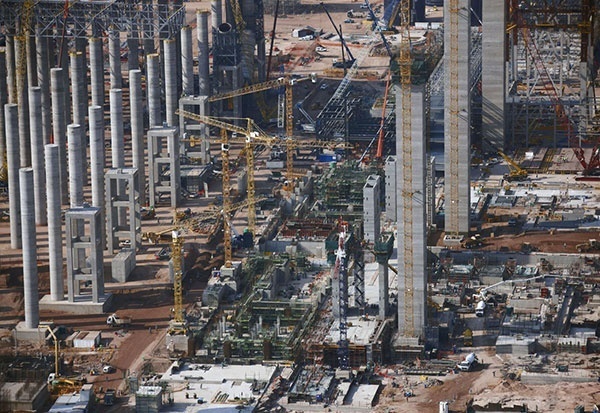
The Medupi power station will probably begin generating electricity six months later than scheduled, Eskom said on Monday.
“Eskom has confirmed that the December 2013 target date is unlikely to be met,” it said in a statement.
“A more realistic target for the first synchronisation of unit six to the grid is the second half of 2014.”
The state power utility blamed technical problems for the delay in having at least one of Medupi’s six 800MW units up and running by December.
“[We] earlier communicated that critical technical challenges need to be resolved in order for unit six to begin producing power. These technical challenges relate to the welding on the boilers, and the control and instrumentation systems for the units. In addition are the ongoing labour challenges.”
The “critical” issues on the boiler related to inadequate post-weld heat treatment, and the replacement of welds which were made using unqualified procedures.
This was not the first delay because of welding problems. Previously, faults in factory welds had been discovered.
In May, Public Enterprises Minister Malusi Gigaba said strong measures were taken against Hitachi for its sub-standard work on the Limpopo power station.
Construction at Medupi was delayed due to failures by Hitachi to deliver top quality boilers at the plant.
Earlier this year, Eskom chief executive Brian Dames was quoted as saying Eskom was considering cancelling two key contracts with Hitachi — in which the ANC’s investment arm Chancellor House had a 25 percent stake –and Alstom.
But later, the utility’s spokeswoman Hilary Joffe said there were no immediate plans to cancel the contracts, and that Hitachi was still in charge of building the boilers.
Joffe warned the country’s power supply would be tight until completion of its two power stations, Medupi and Kusile. Kusile, being built near Emalahleni, Mpumalanga, was expected to add 4800MW to the grid on completion in 2017.
Medupi would add another 4800MW. It was expected to be completed by 2015. It was initially scheduled to make its first contribution to the grid in 2013 and Kusile in 2014.
Unit six was expected to be the first of Medupi’s six units to deliver “first power”.
Eskom said on Monday that effective interventions had been put in place to address the problems, and the progress of repairs was being monitored.
Last month, Eskom, the contractors, and labour signed a new agreement to bring stability and improved productivity to Medupi’s construction.
“All of us on site are now focused on delivering the power station, on time, on budget, safely, and to the required quality standards,” Eskom finance director Paul O’Flaherty said.
Eskom said it had spoken to the global leadership of Hitachi and Alstom to resolve problems with the boiler and the control instrumentation contracts. It had also put resources in place to monitor the contractors.
On labour relations, it said processes had been developed to address grievances, and salary discrepancies were being addressed.
In January, Eskom temporarily closed the power station when contract workers went on strike. Construction was also interrupted in September when workers downed tools.
Workers belonging to the National Union of Metalworkers of SA had questioned the way their year-end bonuses were calculated, and complained that employees who lived in the area were paid less than workers who came in from Johannesburg.
Gigaba intervened in March and said the construction deadline would not change. He said strict penalties would be imposed on contractors should they fail to meet their obligations.
Democratic Alliance MP Natasha Michael on Monday said Gigaba should act.
“The latest delay forecasts a shortfall of power supply in 2014 of 700MW and comes at an expected 15 percent price increase, pushing the cost of the project from R91 billion to R105 billion, an additional R10 billion to taxpayers,” she said in a statement.
“The minister must now act on his word and make sure some heads roll and face the consequences of poor management at the project.”
She said not having power would negatively affect economic growth and job creation. – Sapa
The husband of WASP member Liv Shange will take court action if his Swedish wife and their three children are not allowed back into South Africa.
“I’m thinking that I will be exploring legal steps if she is not allowed to return to the country,” a worried Xolani Shange told Sapa on Monday in a telephone interview.
“The home affairs department had been giving her problems in the past. When she came to South Africa they put a stamp for a tourist inside her visa.”
That stamp had been the cause of many problems.
Liv Shange and her three children are currently visiting her parents in Sweden. They went there for the school holiday, and were meant to return on July 14 so the children could return to school the following day.
The Swedish-born woman is a member of the Democratic Socialist Movement and the Workers’ and Socialist Party (WASP), and got married to South African Xolani Shange in December 2004.
Xolani said that after their marriage she had some problems applying for South African citizenship because of her visa.
She had eventually obtained a temporary visa but did not renew it.
“The problem was she did not apply for permanent citizenship because of the visa… it had a tourist stamp on it,” he said.
Xolani said he had not been contacted by the home affairs department about his wife not being able to return to the country.
“I haven’t had any discussion with them. What I know is what has been said in the newspaper.”
He had, however, spoken to Liv recently.
“Yes I spoke to her. She is in the process of re-applying for the visa. Basically that information [that she is unable to get into the country] is coming from the department of home affairs who spoke to the journalists,” said Xolani.
“She never told me that someone told her that. What we know is that there’s been a challenge with her visa. The whole issue is that the home affairs must rectify that problem.”
He said when she approached the South African embassy in Sweden, she was told to re-apply for the visa because “they say she is a tourist in South Africa”.
She is in the process of applying for a new visa.
Liv has been at the forefront of organising striking mineworkers in the North West and Gauteng, according to a report by IOL.
On August 16, 34 striking miners were shot dead by police near the Lonmin Platinum mine. An inquiry into the matter is pending.
Last month, ANC secretary general Gwede Mantashe blamed the anarchy in the platinum mines on foreign nationals, and particularly singled out the Swedes and the Irish, reported the IOL website.
“What is happening in Marikana… I can give you what comes out of that information. Anarchy, anarchy, anarchy driven by people who are from far away, Sweden, Irish,” Mantashe was quoted as saying.
“They are a force behind the anarchy that is happening in the platinum industry.”
According to the Business Report, there was also an Irish connection at the WASP launch, in the form of Joe Higgins, a Socialist Party member of the Irish parliament, who had connections with South Africa and with the local union movement.
Liv told the newspaper she had a spousal visa in her passport which got lost when she was mugged in 2010.
Attempts to get the visa re-issued proved fruitless because “they couldn’t find my file”.
She suspected she might be a victim of political persecution, but believed the loss of the file could also be a matter of bureaucratic bungling.
Home affairs spokesman Ronnie Mamoepa declined to comment directly about Liv Shange, but gave a broad comment on the matter.
“The department of home affairs has a responsibility to ensure everybody that comes into the country does so legally and in full compliance with the Immigration Act,” he said.
“Should it be found that an individual is inside the country in contravention of the act, our home affairs inspectorate unit will be expected to enforce the provisions of the law.” – Sapa
The number of elderly people caught shoplifting in Japan’s capital city has outstripped that of teenagers for the first time since records began, a report said Monday.
A quarter of the people arrested on suspicion of the crime in Tokyo last year were at least 65 years old, figures showed, amid warnings of increasing isolation in the age group.
“Even though the total number of arrests for shoplifting has been declining, the ratio of elderly people are on the rise,” a Tokyo Metropolitan Police spokesman said.
“Our survey shows that elderly shoplifters tend to be lonely, having no one to talk to, and having no hobby to enjoy,” he said.
Statistics showed 3,321 people aged 65 or older were arrested for shoplifting, accounting for 24.5 percent of the total, while those aged 19 or younger made up 23.6 percent, with 3,195 individual arrests. Both figures are slightly down in absolute terms from 2011, the spokesman said.
It was the first time since comparable data had been collected that the elderly made up a higher proportion of suspected thieves, the Mainichi Shimbun newspaper reported.
Around a quarter of Japan’s 128 million population is aged 65 or older, and the country has a far-below replacement birthrate of an average 1.39 children for every woman.
There are regular reports of bodies lying unfound for weeks or even months after a single, elderly person has died alone. Commentators say the phenomenon is a result of the fraying of familial ties as Japan has modernised.
A government survey last week found 3.5 million elderly women and 1.4 million elderly men live alone. – AFP
Zimbabwe’s central bank chief warned Friday the country’s fragile economy could grind to a halt if the government rushes its planned seizure of majority stakes in foreign-owned banks.
“The implementation of indigenisation and economic empowerment regulations in the banking sector should be done in a manner that preserves confidence since any adverse developments in the banking sector could grind economic activity to a screeching halt,” Gideon Gono said.
He was speaking to business executives at the annual congress of the Confederation of Zimbabwe Industries in the eastern resort town of Nyanga.
Zimbabwe passed in 2007 a law that forces all foreign-owned companies to hand over a majority stake of 51 percent to locals.
The law has forced mining firms, including the country’s biggest platinum mine Zimplats, a subsidiary of South Africa’s Impala Platinum, to submit schedules on how they will surrender a majority share.
“We are gratified to note that some aspects of the indigenisation and economic empowerment regulations are receiving attention with a view to harmonize and fine-tune pertinent issues,” Gono said.
Indigenisation Minister Saviour Kasukuwere, in a government notice made public earlier this month, gave foreign banks and other companies one year to cede a 51 percent stake to locals, as required under current laws.
Mugabe’s partner in a coalition government, Prime Minister Morgan Tsvangirai dismissed the ultimatum on the banks as illegal and a threat to the ailing economy’s recovery prospects.
Britain’s Standard Chartered Bank and Barclays Bank are among the major foreign banks with operations in this former British colony. – AFP
The New York Times recently carried an article stating that Zimbabwe’s “land reform”, confiscating the land of white farmers, was a “success”. Now this report from the United Nations World Food Programme shows the true picture: a country where one in five people receives food hand-outs.
Famine has raised its head in Zimbabwe again, as the numbers of people depending on aid to avoid starvation soared by 60 percent from last year to 1.6 million, according to the United Nations World Food Programme (WFP).
The agency said that one in five of the country’s rural people were in need of famine relief. Grain production in the last year was 1 million tonnes, the worst since 2009, which at 800,000 tonnes was the worst year on record.
Zimbabwe had a reputation as “Africa’s breadbasket” until 2000 when President Robert Mugabe launched his violent seizures of white-owned farms, forcing 1,500 white farmers of their land and displacing a million farm workers and their families.
The International Monetary Fund and the World Bank have said that year marked the beginning of the collapse of one of Africa’s most successful economies.
The latest figures were released after a lengthy study by UN agencies, the Zimbabwe government and non-governmental organisations involved in agriculture.
Already, the report said, rural residents of the country were feeling the effects of the food shortages, a pattern marked by empty domestic granaries and farmers selling their cattle to raise money to buy food.
The report blamed erratic rainfall, low supplies of seed and fertilizer, and bad farming practices.
At the height of the last rainy season, farmers unions slammed a supply arrangement set-up by government officials. Political figures in Mugabe’s ZANU(PF) party snapped up cheap fertilizer and seed and sold large quantities of it at inflated prices while peasant farmers waited helplessly.
During the current winter wheat season, promises of cheap supplies from the government also came to nothing, resulting in the lowest wheat crop forecast yet of 5,000 tonnes.
The WFP said it would rely on “regionally procured cereals” to make up the country’s current shortfall.
Commentators have pointed out that the biggest regional producer is Zambia, where scores of white farmers moved and became large-scale producers again after being driven off their land in Zimbabwe in the last decade. – Sapa-DPA
During the Apartheid years, South Africa was seen as the world’s number 1 pariah state. Officially excluded from the family of nations, South Africa was subjected to harsh policies of academic, economic, sporting and other boycotts. Many, including poster-child for the BDS movement against Israel, Archbishop Desmond Tutu, have claimed that thanks to international policies of isolation and boycotts, the heinous Apartheid regime was brought to its knees and eventually ended.
Tutu and other proponents of the Boycott Divestment and Sanction campaign rationalize their attempts to isolate Israel by making odious comparisons between the Jewish State and Apartheid South Africa. As someone who grew up in South Africa, bore daily witness to the daily workings of the Apartheid machine and now lives in Israel, this campaign is racist and nefarious to say the least. While Israel is far from perfect and there are instances of individual racism, just as there are in any other country, Israel is FAR from being an Apartheid State. Words like Apartheid have become the stick by which to smack the proverbial horse. Naturally there are those who will deny that these accusations are anti-Semitic by crying Mazel Tov! Gefilte Fish! We love the Jewish people – we just hate Israel. While in some circles it has become decidedly politically incorrect to attack Jews, the Jewish brand or State has been declared open season for battle.
This brings me back to the accusation I have made in the title of this post. The South African Ministry of Trade and Industry have passed a ruling calling for goods imported from the West Bank to have their “made in Israel” labeling removed. “For now, there is no decision but people should know that South Africa recognises Israel inside the 1948 UN borders,” Macdonald Netshitenzhe, the trade ministry’s director for trade policies and legislations, said. “Now coming to the issue of Palestine and Israel, a product from Israel has to be manufactured or produced within the borders of 1948.Under the 1948 boundaries, territories occupied after 1967 such as the Gaza Strip are not included. Therefore for the goods or vegetables which are grown in the area where Israel invaded other Arab countries, South Africa says, you better say these products are grown in Palestine or Occupied Palestinian Territories,” Netshitenzhe added. (courtesy News24.com)
It seems that the country that famously defeated discriminatory policies after the first democratic elections in 1994 has done an about turn and is fast hurtling downhill back towards its racist past. This time, instead of discriminatory laws being passed based on race; South Africa is claiming its “moral high ground” to pass racist laws against the Jewish State. And yes, they are racist. By singling out one country for opprobrium and sanction because its identity is defined along ethnic-nationalist lines, that is APARTHEID. By resorting to ridiculous kangaroo courts such as the Russell Tribunal which placed the State of Israel on trial for “crimes against Apartheid” you are perpetrating anti-Semitism. By ignoring the human rights abuse and transgressions of some of the world’s greatest offenders, one of which is on your border (hello Robert Mugabe) or ignoring the plight of your own citizens and rather choosing to focus on Israel that is Apartheid.
We should not dismiss the actions of the South African government or pooh-pooh them with the excuse that South Africa means little in the grand Western political scheme of things. We need to take heed very carefully. The actions of this government who many see at the benchmark by which we measure racism are proving popular with many other countries, including Denmark who may follow suit.
Many forget who truly stands to lose when boycotting Israeli manufacturers. Apart from hurting importers of Israeli goods, boycotts will lead to the loss of jobs for many Palestinian workers in factories or on farms. While proponents of this action are motivated by ideology the end result can prove to be disastrous for those they intend to help. Peace in my belief will come from the ground up and not by sowing division.
To the South African government whose policies of quiet diplomacy and lack of action have meant that dictators like Robert Mugabe can continue to starve their people, or red-carpet treatment of Jean-Bertrande Aristide of Haiti, Bashir of the Sudan, Assad of Syria or the Foreign Minister of Iran and others makes its own statement, I ask when are you going to start labeling goods from these countries? South Africa, where once you could have played a vital role in the brokering of a lasting peace in the Middle East, you have lost all credibility.
This website uses cookies to improve your experience. We'll assume you're ok with this, but you can opt-out if you wish. Cookie settingsACCEPT
Privacy & Cookies Policy
Privacy Overview
This website uses cookies to improve your experience while you navigate through the website. Out of these cookies, the cookies that are categorized as necessary are stored on your browser as they are essential for the working of basic functionalities of the website. We also use third-party cookies that help us analyze and understand how you use this website. These cookies will be stored in your browser only with your consent. You also have the option to opt-out of these cookies. But opting out of some of these cookies may have an effect on your browsing experience.
Necessary cookies are absolutely essential for the website to function properly. This category only includes cookies that ensures basic functionalities and security features of the website. These cookies do not store any personal information.
Any cookies that may not be particularly necessary for the website to function and is used specifically to collect user personal data via analytics, ads, other embedded contents are termed as non-necessary cookies. It is mandatory to procure user consent prior to running these cookies on your website.