Armed gun rights activists rally at the Alamo

Gun rights activists assembling at the Alamo

by Christopher Sherman, AP

Several hundred gun rights activists armed with rifles and shotguns rallied Saturday outside of the Alamo in a demonstration that broke a longstanding tradition of not staging such events at the enduring symbol of Texas independence.

The “Come and Take It San Antonio!” rally was intended to draw attention to a right Texans already have – to carry long arms publicly so long as they don’t do it in a menacing manner. Organizers thought it necessary to offer a reminder after several open carry advocates were threatened with arrest at a Starbucks in the city two months ago. The problem remains that a local ordinance effectively limits the open carrying of firearms to police and security guards.

That ordinance was not enforced Saturday. San Antonio Police Chief William McManus mingled in the crowd that police estimated at about 300 to 400, but the larger police presence remained around the perimeter of the Alamo plaza.

“There are too many issues associated with trying to enforce every ordinance here today,” McManus said. He said his priority was that people be able to exercise their constitutional rights and that everyone remain safe. Volunteers walked through the crowd placing red plastic straws in rifle chambers, a visible assurance they were not holding a round.

Rally organizers said just holding their demonstration in front of police without incident was a victory.

“(The San Antonio Police Department) is no longer going to be messing with us,” said C.J. Grisham, president of Open Carry Texas, with the Alamo’s famed Spanish mission behind him.

Organizers had also hoped that seeing a large peaceful gathering of armed citizens in the downtown of the country’s seventh largest city would be a step toward making people comfortable with the sight. There were people of all ages in the crowd, including young children. Some waved flags that read “Come and Take It,” others dressed in period costumes, but most looked like anyone else one might encounter on the street, they just happened to be carrying rifles.

Men strolling through the streets with rifles isn’t an image to which Hilary Rand thinks people should have to grow accustomed.

Rand, a regional manager for Moms Demand Action for Gun Sense in America, was at a counter-demonstration about a half mile (800 meters) away. Amid hula-hoops and face painting, Rand called the gun rights rally “bullying” and said it may serve opponents’ interest as well.

“If anything, they’re just alerting the general public that this is something that needs to be changed,” she said. “Just because you can do something doesn’t mean that it’s OK and that you should. And if anything they’re helping to make that argument for us.” She said the threat of an accidental discharge was too great to justify gun rights advocates making their point.

For the tourists who just happened upon the rally – 2.5 million visit the Alamo annually – there was initial trepidation among some.

Mark Roberts, 63, of London, Ontario, was among a group of Canadian tourists caught off guard.

“We’re not used to seeing guns carried openly in Canada, so that was almost like a culture shock,” Roberts said, noting that it appeared well organized. It was more unnerving for his wife.

“I didn’t like it at all because you don’t know who you’re dealing with,” Julie Roberts said. “You don’t know who these people are.”

Another member of their group, Peter Hinch, declared it “fantastic,” but was dismissed by his friends as not your typical Canadian.

It didn’t give Don Norwood, 49, of Little Rock, Ark., any pause. Norwood, who was visiting the Alamo with his wife and daughter, hadn’t expected the demonstration, but gazing over the crowd, he said, “it’s healthy, that’s what America’s about.”

The rally proceeded peacefully without incident.

Lee Spencer White, president of the Alamo Defenders’ Descendants Association, said her group considers the Alamo its family cemetery and as hallowed ground should remain free of demonstrations, which historically have been held on the adjacent plaza.

From 1905 to 2011, the Daughters of the Republic of Texas were the Alamo’s custodians. But in 2011, lawmakers gave the state’s General Land office control of the monument where Col. William Travis and 200 Texas defenders famously died in a siege with the Mexican army in 1836. It was Land Commissioner Jerry Patterson who approved the rally here.

“I respect the opinions of folks who say this is not the right place,” Patterson said to the crowd on Saturday. “But I submit to you there’s one standard we should apply to gatherings here at this sacred cradle of Texas liberty and that is whether our activity and our purpose would be supported by those men who gave it all.”

Patterson, who is running for lieutenant governor, asked attendees to not block the path to the mission and to leave their rifles and signs outside when entering the chapel.

The Mandela myth to be introduced to US schools

The Weinsteins
The Weinsteins

The Weinstein Company (TWC), backers of the film Mandela: Long Walk to Freedom, and the Nelson Mandela Foundation are to join forces to introduce Nelson Mandela and the story of South Africa’s transition to democracy to a millions of high school students across America.

Announcing the partnership on Monday, TWC and the foundation said they would be working with the largest school districts and education organisations in the US, including Teach for America, New York City Public Schools, Los Angeles Unified School District and Miami Dade Public Schools, to enable US high school students study the life lessons inherent in Mandela’s story.

The announcement comes ahead of the release of Mandela: Long Walk to Freedom, the long-awaited big-screen dramatisation of Nelson Mandela’s autobiography.

“Nelson Mandela is not just a symbol of hope and peace the world over; his very success is emblematic of what can be achieved through education,” the film’s producer, Anant Singh, said in a statement.

The US schools programme, the first of its kind, will be supplemented with clips from the film, exclusive primary source materials courtesy of the Nelson Mandela Foundation, and an introduction by former US president George W Bush, the first president to invite Mandela to the White House.

Share My Lesson, a free digital resource for teachers with over 347 000 subscribers, will also play a key role in the distribution of the Mandela curriculum, which is available for download at www.mandelafilm.com and www.sharemylesson.com/mandela.

“There are no words to describe how meaningful it is to us to know that, thousands of miles away, schoolchildren are learning the history of our country and the father of our democracy,” said Sello Hatang, CEO of the Nelson Mandela Foundation.

“It is an honour to be a part of this project and to provide US students with access to resources and materials from our archives and work that enable the continuation of a living legacy and learning. We are certain that this is exactly the kind of project Madiba had in mind when he said ‘the future belongs to our youth’.”

Mandela: Long Walk to Freedom will open in South African cinemas on 28 November and in movie houses across the US on 29 November. France will be the first European country to release the film, on 18 December. – SAinfo Reporter

The new Silk Route

arabicChina’s likely sale of sophisticated missiles to Turkey over the objections of its NATO allies might have angered Washington and other capitals, but it should not have been a surprise.

Even as the U.S. has spent billions of dollars and lost hundreds of lives in Iraq and Afghanistan, Beijing has been quietly upping its presence in the Middle East.

Militarily, the U.S. – which maintains a permanent aircraft carrier presence near the Gulf as well as dozens of other warships and major bases in Turkey, Qatar and the United Arab Emirates – is by far the dominant regional power.

China has tended to follow Russia’s lead on the Middle East, sometimes appearing sidelined on issues such as Syria.

Beijing’s economic, political and diplomatic clout, however, is growing fast. China’s Ministry of Commerce said last month China-Arab nation trade now reaches $222 billion a year, 12 times its 2002 level. That would outstrip U.S.-Mideast trade, valued at $193 billion in 2011.

Militarily too, China’s footprint is rising. As well as maintaining a three-ship antipiracy task force in the Indian Ocean and occasionally sending ships to the Mediterranean, Beijing has deployed UN peacekeepers to Lebanon.

Turkey’s choice of a $3.4 billion deal to acquire the Chinese FD-2000 missile defence system rather than rival U.S. or European systems may be a sign of things to come.

“It is a wake-up call,” said Christina Lin, a former U.S. official and now fellow at the School for Advanced International Studies who last year briefed the Pentagon’s Joint Chiefs on the issue. “China is looking to get a lot more involved in the Middle East and is being increasingly accepted there.”

China’s interests in the region, she said, ranged from energy and investment to countering the spread of jihadist militancy, a major worry for Beijing in its Muslim provinces.

The firm that makes the missile system, China Precision Machinery Import and Export Corp (CPMIEC) is under US sanctions for violations of the Iran, North Korea and Syria Nonproliferation Act. While Turkish officials said the deal was not yet officially finalised, it was likely to go through.

U.S. and other NATO officials complain it may not be compatible with other NATO systems and may increase the risk of cyber attack or other interference across the alliance. The Chinese Foreign Ministry said Western states were overeacting to what was essentially simply a commercial decision.

Mixing commerce and geopolitics, experts say, is at the heart of Beijing’s approach. Chinese officials have become regular visitors to most Mideast states while a range of regional leaders including Turkey’s Tayyip Erdogan, Israel’s Benjamin Netanyahu, Palestinian leader Mahmoud Abbas and Jordan’s King Abdullah have all visited China.

The aftermath of the “Arab Spring” and Washington’s abandonment of longtime proxies such as Egypt’s Hosni Mubarak, some analysts say, has left some governments keen to find alternative allies. Even longtime U.S. partners feel the draw.

“I personally have close friendly relations with various Chinese leaders, current and former,” Jordan’s Abdullah told Chinese media last month. “We are interested in building on this relationship… because China plays a vital role in promoting world peace and stability and has an influential role in regional issues.”

Beijing has long been a major supplier of small arms to the region – the Stockholm International Peace Research Institute this month reported 2006-10 sales to Egypt, Jordan, Lebanon and Qatar. Still, the Turkish deal is seen as a major breakthrough for its advanced weapon sales.

China’s soaring energy needs are seen as a major motivator, coming just as the U.S. gets closer to energy independence and budget constraints and public reluctance hit its military presence.

The International Energy Agency expects China’s Mideast oil imports to grow from 2.9 million barrels per day in 2011 to 6.7 million in 2035, a projected 54 percent of total Chinese oil imports.

Already, Chinese national oil companies are amongst the biggest players in Iraq and Iran and Beijing is both Saudi Arabia’s largest trading partner and the biggest single purchaser of Iran’s crude.

That purchasing power has effectively allowed China and other Asian powers to determine how successful U.S. and European sanctions on Iran over its nuclear program can be.

In the long run, some analysts suggest Beijing’s oil needs could actually bring it closer to the West, particularly on Iran. The Stockholm International Peace Research Institute says Chinese defence sales to Tehran have already notably fallen.

“If Washington (were to) substantially reduce its military presence in the region, oil security concerns might compel Beijing to play a larger role in defusing the primary threat to the free flow of oil – the closure of the Strait of Hormuz,” former CIA energy analyst Erica Downs told a congressional probe into Chinese trade practices earlier this year.

“NEW SILK ROUTE”

China’s regional ambitions, however, go well beyond defence deals and oil. While some 75 percent of U.S.-Mideast trade remains energy-related, China has deliberately diversified and says more than half its regional trade is now non-energy.

Last month, China hosted a five-day China-Arab States Expo in Its north-west Ningxia Hui Autonomous region.

“Though the trade growth is fast, there is still room for improvement,” Zhu Weilie, director for the Centre for China-Arab States Co-Operation Forum Studies told Xinhua. “The two sides should enhance mutual trust to improve communications in political, economic and cultural fields.”

Infrastructure projects have been a major focus. Port operator Cosco owns part of Egypt’s Port Said container terminal. Rail ventures include Medina to Mecca in Saudi Arabia, Mediterranean to Red Sea in Israel and Ankara to Istanbul in Turkey.

In the longer term, there is also talk of linking Turkey and Central Asia to China by rail, providing Chinese goods access to Europe through what some analysts call “a new Silk Route”.

Ultimately, Chinese investment may prompt the kind of backlash already seen in Africa. Its attempts to befriend everybody may also prove unsustainable – its stance on Syria has already irritated some Gulf states and prompted an angry protest at its embassy in Libya.

For now, however, it remains broadly welcomed. In July, a Pew Centre survey showed China viewed more positively than the U.S. in every Mideast state except Israel.

“If you talk to diplomats in the Gulf, they are very impressed,” former U.S. official Lin said. “Chinese ambassadors in the region tend to speak very good, classical Arabic while the Americans still expect everyone to talk in English.” – Reuters

‘Racist’ police dogs only bite Latinos and Africans

lapolicedogsPolice officers in Los Angeles have long faced accusations of institutional racism, but now it appears their dogs may be unjustly discriminatory, too.

A new report focusing on the Canine Special Detail of the LA Sherriff’s Department (LASD) has uncovered a vast increase in the number of minority individuals bitten by police dogs since 2004.

And in the first six months of this year, every single victim of a bite by a LASD dog was African-American or Latino.The data was published in a new report by the Police Assessment Resource Centre (Parc), a Los Angeles-based non-profit organisation, devoted to “advancing effective and accountable policing”.

According to Parc records, the number of Latino individuals bitten by LASD canines went up 30 per cent between 2004 and 2012, from 30 to 39 bites. The number of African-Americans bitten increased by 33 per cent over the same period.

Meanwhile, police dog bites caused injuries at a much higher rate than alternative deterrents such as batons, tear gas and even guns. “Large swathes of LASD’s jurisdiction, encompassing generally affluent areas with smaller minority populations, had few [canine] deployments or bites,” the Parc report states.

“Crime rates are lower in these areas, but the stark disparity leads us to wonder why canine deployments seem to occur disproportionately in less affluent areas with larger minority populations.” During the period covered in the report, the largely black or Latino areas of Century, City of Industry, Compton, Lakewood and South LA/Lennox suffered more dog bites than all of LASD’s other 21 districts combined.

A recent investigation by the US Department of Justice also found that in areas policed by the LASD, “African Americans, and to a lesser extent Latinos, are more likely to be stopped and/or searched than whites, even when controlling for factors other than race, such as crime rates.”

The authors of the Parc report recommended that the LASD work on improving its canine-deployment policies, and keep track of the enforcement activities of individual dogs and their handlers. In 2004, a Pennsylvania police dog named Dolpho was suspended from duty, after the German Shepherd displayed a propensity for biting black children.

During the 1980s, some Los Angeles police officers would allegedly refer to black youths as “dog biscuits”.

According to ThinkProgress, Bruce Chase, the officer in charge of the LASD canine unit, said his department intends to reduce the ratio of bites to arrests, a measurement used to gauge the effectiveness of the unit. – The Independent

Carnegie Mellon introduces app NSA can’t break

carnegiemellonCarnegie Mellon University software researchers say they have written a smartphone messaging app with security that not even the National Security Agency can break, yet is easy to use.

“Even the NSA cannot break this, we believe. This is a lot safer than any security system out there,” said Adrian Perrig, a former technical director of Carnegie Mellon’s CyLab and a professor at ETH (Eidgenössische Technische Hochschule) in Zurich, who oversaw the project.

The app — called SafeSlinger — is available free on the iTunes App Store for Apple and Google Play Store for Android smartphones. Within a few months, the developers plan to have a similar security app available for email, using Google’s Gmail, Perrig said.

With government snooping on personal data in the name of preventing terrorist attacks and the NSA obtaining personal data from Google, Microsoft, Apple and other technology companies, consumer outrage has increased without a way to fight back.

“That’s precisely what SafeSlinger will do,” Perrig said — provide an easy way to securely exchange messages for free without the need to trust an external party.

Michael W. Farb, a research programmer at Carnegie Mellon CyLab, said, “The most important feature is that SafeSlinger provides secure messaging and file transfer without trusting the phone company or any device other than my own smartphone.” Farb worked on the Android version of SafeSlinger.

The software was introduced at last week’s MobiCom 2013 Conference for Mobile Computing and Networking in Miami after six years of development, funded with $500,000 in research money from the National Science Foundation and Cylab, Perrig said.

“With SafeSlinger, users can gain control over their exchanged information through end-to-end encryption, preventing intermediate servers or service providers from reading their messages or other personal information that is exchanged,” Perrig said.

Other applications such as the popular PGP (Pretty Good Privacy) are available but difficult to use securely. Blackberry was popular among business and other users who needed its security protections, but its data was observed by the government, Perrig said.

A three-minute video is available on YouTube that explains how SafeSlinger works.

The setup between users takes several minutes, when they exchange contact information and answer security questions generated by the app that help it generate encryption and authorization credentials. Then it works like a regular messaging app.

The app developers spent two years debugging the program, and it’s been subjected to three security reviews. In addition, they are publishing the source code for SafeSlinger so it can be reviewed and improved by others.- triblive.com

Debt ceiling crisis: Collapse will be worse than Great Depression

depressionYou can forget about any default in the debt ceiling crisis.  Former Assistant Treasury Secretary Dr. Paul Craig Roberts says, “The debt ceiling will be raised.  No government wants to lose its power or lose its ability to borrow.  So, if they don’t raise the debt ceiling, it is just a way of Washington committing hari-kari.  It simply removes the United States as a super power.”  

Dr. Roberts goes on to say, “If they don’t make a deal, one of two things will happen. . . . The Federal Reserve, on its own authority, lends the Treasury the money. . . . The other alternative, Obama . . . can simply declare a national emergency and raise the debt ceiling on his own initiative.  He could govern as a dictator.”

What would happen if the U.S. did default?  Dr. Roberts says, “The danger of default is the rest of the world dumps dollars.  If they dump dollars, the Fed loses control, the whole system blows up.  The banks fail.  The bond market collapses.  The stock market won’t go down 1,500 points; it would be cut in half. ”

No matter what happens, there is still an enormous and growing debt. 

Dr. Roberts contends, “The situation is unsustainable.”  It will blow up at some point, and Dr. Roberts predicts, “It will be worse than the Great Depression because in the Great Depression, prices fell along with employment.  Now, prices will be rising and employment would be falling. . . . Gold and silver prices will explode in dollar terms.”  – usawatchdog.com

Argentinian farmland fetch high prices

Argentine agri exports looking good

Twenty percent of GDP in Argentina is agriculture-related, making it an important country for agriculture production due its high yields.

Argentina is the world’s largest exporter of sunflower oil, a leading exporter of soybean oil and among the top five exporters of soybeans and corn. More than a third of Argentina’s exports are in agri products, which earned them $25 billion in 2010/2011.

Export oportunities is a key driver for agricultural production for 1014/2015, particulary for grains, rice and sugar. However a key risk is the county’s rising food inflation, which could force the government to try and stem exports as has been done to beef exports in the past.

The government is taking positive steps to change grain seed laws to increase the biofuel blending limit, which could increase production in the medium term.

It could help foster a good relationship with the farmers and capitalize on its strong production potential.

Beef consumption is expected to decline as consumers switch to poultry. It has unintended consequences.

Farmers will build stocks on the back of high prices and Argentina could return to being one of the world’s largest beef exporters over the medium term.

The long-term soybean forecasts should be revised as the government passes new seed laws to encourage farmers to use genetically modified GM seeds.

Only 35% use it now and that could change to 80% shortly. It would cut production costs while allowing farmers to earn more revenue from their output.

It could mean that Argentina could surpass Brazil and become the world’s second largest soybean exporter. At the moment they are in third place.

A continued rebound in corn is expected as Buenos Aires Grains Exchange already saw a 4% area increase in corn planted for the 2011 season. Argentina is the world’s second largest corn exporter.

US soldier killed because he was white

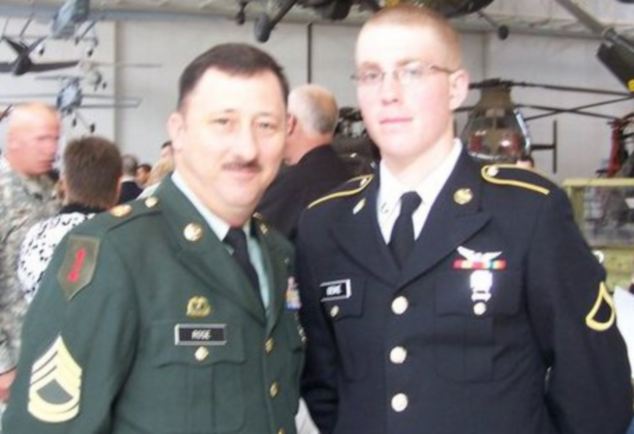
Tevin Geike, right
Tevin Geike, right

A Joint Base Lewis-McChord soldier was in Washington, US, stabbed to death in a parking lot because he was white.

20-year-old Tevin Geike was walking with two other white soldiers along Pacific Highway SW when a group of black men drove by and shouted a racial comment toward the soldiers, the Lakewood Police Department said.

“One of the soldiers yelled back something about the suspects treating combat soldiers with disrespect,” Lt. Chris Lawler said.

The car turned around and the men confronted the soldiers, according to reports. As the verbal confrontation ensued, the driver of the vehicle realized the men were actually combat veterans and called his friends off. While the men headed back to their vehicle, one of the suspects appeared to have bumped into Geike, witnesses say.

The soldiers saw Geike fall to the ground as the car sped away. He was bleeding profusely from stab wounds and died at the scene.

“We came down here, and he was already dead in my brother’s arms,” said Glenn Zimmerman, a friend of Geike.

Friends say there was a party at the Biltmore Motel that evening, and Geike was gathering with family and friends after being discharged from the military. Zimmerman said Geike’s contract was up, and he was celebrating serving his country.

“I don’t understand how someone can do this – that man, he almost gave his life for people to enjoy the freedoms they have and he was just stabbed for no (expletive) reason,” he continued.

The initial remark that started the encounter seemed derogatory in nature, said Lakewood police Lt. Chris Lawler. He said it was too early to say that race was the motivating factor, but investigators were exploring whether the killing should be classified as a hate crime.

“We are certainly considering it, for sure,” Lawler said.

Police are searching for a midnight blue BMW-type sedan or VW Jetta-type car with four doors, tinted windows and stock rims, and low profile tires.

All five suspects are black men in their 20s, police say. The main suspect is believed to be in his early 20s, about 6’1″, medium build, and was wearing a blue zip-up hoodie. The driver was described as having short cropped hair, and wearing a blue and white horizontal striped shirt.

Detectives were in the area Saturday looking for businesses or others who might have video from around the time of the stabbing. Lawler said the person who stabbed the soldier should come forward and show remorse now.

“He’s going to get caught,” Lawler said. “Nobody’s going to give up until we catch up.”

Geike, of Summerville, SC, entered the Army in October 2010 and reported to Fort Jackson, SC, for basic training. According to unit records, Spc. Geike was a member of the 7th Infantry Division, arrived at JBLM in April 2011, and had been in the Army 35 months.

Police however later said the stabbing death of a white Army soldier allegedly at the hands of a group of African American comrades was not a hate crime – despite witnesses claiming they called him a ‘cracker’ during the confrontation.

A group of five black men – called Tevin a ‘cracker’, a racist term for a white person.

Police have all but ruled out hate crime charges after interviewing the alleged attackers.

Lakewood police officers said they no longer believed the killing to be a hate crime following the arrests and speaking to everyone they believed were involved.

All the suspects are from Joint Base Lewis-McChord and served in the same combat infantry unit as Tevin.

The accused are Jeremiah Hill, 23 – the alleged murderer – Cedarium Johnson, 21; and Ajoni Runnion-Bareford, 21. Two others are still being sought.

‘There’s a derogatory term they use for white people, and it’s cracker, and I heard that phrase repeated numerous times which is why I thought race had something to do with it.’ The witness added that the black men were ‘looking for trouble. They were looking for somebody to attack’.

Tevin’s mother Jennifer Rose fought back the tears as she said that she had got a text from her son just hours before his death saying he was going to get a tattoo to celebrate his military graduation.

She said: ‘Tevin trusted everybody until they gave him a reason not to trust them. He was really kind-hearted and he would give you the shirt off your back.

‘He absolutely loved being in the military and was looking forward to graduating. He wanted to be an oil rigger.’

Mrs Rose, 39, added, that there was ‘no way’ that Tevin would have said anything racist to provoke his killer.

She said: ‘I have a hard time with that (the racism) because we have some really good friends who are black and we consider them family. It may have been racial from their side but not my son’.

The attack has sparked an outpouring of emotion on Facebook with Tevin’s step-father Dean Rose writing: ‘I love you son and the world is not as good without you in it. You will be missed. RIP son’.

Tevin’s younger brother Jarod wrote: ‘I want to cry but can’t all the tears are gone…feels like a nightmare just want it to end….trying to stay strong is hard when it comes to a family member especially a brother getting murdered.

During his service Tevin has been awarded the National Defense Service Medal, Global War on Terrorism Service Medal, Army Service Ribbon and Aviation Badge.

China warns US as Republicans vow to stand and fight

China, the biggest foreign creditor of the United States, has waded into the American budget crisis, warning Congress that it must resolve the political impasse over the debt ceiling without further delay.

The Chinese Vice Foreign Minister, Zhu Guangyao, told America’s deadlocked politicians on Monday that “the clock is ticking” and called on them to approve an extension of the national borrowing limit before the federal government is projected to run out of cash on 17 October.

uschina“We ask that the United States earnestly takes steps to resolve in a timely way the political issues around the debt ceiling and prevent a US debt default to ensure the safety of Chinese investments in the United States,”  Mr Zhu told reporters in Beijing. “This is the United States’ responsibility,” he added.

The American government entered its seventh day of shutdown on Monday, following the failure of Congress to approve the national budget a week ago. And there was little sign of progress on the still more crucial issue of the fast-approaching “debt ceiling”  deadline. Yet rather than indicating  a willingness to negotiate, the Republican Speaker of the House of Representatives, John Boehner, stated on Sunday that it was “time for us to stand and fight” over the budget. He added that a default was “the path we’re on”. American stock markets opened down in response to the belligerent comments yesterday, with the S&P 500 Index of leading shares shedding 0.5 per cent.

In September 2008 China eclipsed Japan to become the biggest single foreign creditor of the US federal government. The US administration estimates that the China government holds at least $1.3 trillion of its bonds. The total could be higher because Beijing is known to hold American debt through intermediaries. And, in total, the Beijing authorities have $3.5trn of dollar-denominated assets, which would also be hit hard in the event of a default.

These vast foreign exchange holdings are a by-product of China’s closed financial system and persistent current account surplus, which means that most foreign currency that enters the country accumulates with the central bank. The central bank then invests the money in normally “safe” dollar assets. The vast dollar reserves are also a legacy of China’s policy in recent decades of artificially holding down the value of its currency, the renminbi, in order to boost the overseas sales of its politically influential export industry.

However, economists have criticised the popular idea that China could exert political or economic leverage over Washington by threatening to sell its dollar investments, since such a drastic shift would ultimately serve to undermine the paper value of Beijing’s own vast investment portfolio. Nevertheless, China’s creditor position and its status as the world’s second largest economy gives its voice some authority in Washington and Mr Zhu made it clear that private representations had already been made. “The US is clearly aware of China’s concerns about the financial stalemate and China’s request for the US to ensure the safety of Chinese investments,” he said yesterday.

Since the global financial crisis, which led to a sharp depreciation in the value of the dollar against the renminbi, the authorities in Beijing have been concerned about the fact that so much of their national reserves are held in the form of the American currency. China has been promoting the idea of a new reserve currency to replace the greenback, with some analysts suggesting that the renminbi could one day take its place.

Mr Zhu stressed that it was vital, not only for China but the wider global economy, for America to resolve its budget impasse. “Safeguarding the debt is of vital importance to the economy of the US and the world,” he said. Referring to a similar deadlock in 2011, which led to a downgrade of the US AAA credit rating by the Standard & Poor’s agency, Mr Zhu said: “We hope the United States fully understands the lessons of history.”

The concerns over the stability of the dollar come at a time of geo-political flux. Barack Obama has sought to “pivot” his foreign policy to Asia to counter China’s growing military influence. But the shutdown has forced the US President to cancel his visit to Asia this week to attend a summit. – The Independent

Obama okays military aid to countries with child soldiers

childsoldierAmid the hoopla of the government shutdown, the White House quietly passed a bill Monday that overrides a law banning military aid to countries that use child soldiers.

The Child Soldiers Prevention Act of 2008 prohibits the U.S. government from providing military assistance to countries that directly use, or support the use of, child soldiers. Built into the law is an option allowing the U.S. president to override the ban if he/she deems it necessary.

On Monday, President Obama issued complete waivers to Yemen, Chad, and South Sudan, opening up those countries to U.S. military aid despite their known use of child soldiers, declaring in a written memorandum it is “in the national interest of the United States” to override the ban.

Obama also granted partial waivers to the Democratic Republic of the Congo and Somalia to allow “International Military Education and Training” and “nonlethal” defense for both countries and “provision of assistance under the Peacekeeping Operations authority for logistical support and troop stipends” in Somalia. According to Think Progress writer Hayes Brown, these waivers open the door for military aid for ongoing “peacekeeping” operations in both these countries.

“Obama is becoming an expert at waiving human rights laws,” writes Ken Hanly in Digital Journal. “He waived part of a law last month that banned the US from supplying lethal aid to terrorist groups so he could send aid to Syrian rebels. In the case of Egypt, Obama has refused to call the coup by the armed forces a coup and by doing so does not run afoul of a law that would ban aid to a country where there had been a military coup.”

“Human rights are to be promoted but only insofar as they do not conflict with US national interest as understood by the president,” he added.

Meanwhile, the U.S. government has come under criticism for filling its own military ranks with hundreds of thousands of teenagers, including 17-year-olds who can enlist with parental consent. – wakeupfromyourslumber.com

The two missiles that ended a confrontation in Syria

TridentA well informed diplomatic source told a Lebanese newspaper that “the US war on Syria had started and ended the moment those two ballistic missiles were fired, leaving inconsistent information, as Israel denied and Russia confirmed, until an Israeli statement was issued indicating they were fired in the context of an Israeli-US joint drill and fell in the sea, and that they were not related to the Syrian crisis.”

The source further told the Lebanese daily As-Safir that “the US forces fired these two rockets from a NATO base in Spain, and were instantly detected by the Russian radars and confronted by the Russian defense systems, so one of them exploded in the airspace and the second one diverted towards the sea.”

In this context, the source pointed out that “the statement issued by the Russian Defense Ministry, which stated the detection of two ballistic missiles fired towards the Middle East, intended to neglect two points: the first was the location from which the two rockets were fired, and the second was their downing. Why? Because the moment the full military operation was launched, Head of the Russian Intelligence Service contacted the US intelligence and informed it that “hitting Damascus means hitting Moscow, and we have removed the term “downed the two missiles” from the statement to preserve the bilateral relations and to avoid escalation. Therefore, you must immediately reconsider your policies, approaches and intentions on the Syrian crisis, as you must be certain that you cannot eliminate our presence in the Mediterranean.”

“This unannounced direct confrontation between Moscow and Washington increased the Obama Administration’s confusion and certainty that the Russian side was ready to move until the end with the Syrian cause, and that the US did not have a way out of its impasse except through a Russian initiative which would save America’s face…” he added.

From this point, the diplomatic source clarified that “in order to avoid further US confusion, and after Israel denied knowing anything about the rocket firing in its first statement, which is the truth, Washington demanded Tel Aviv to adopt the rocket firing to save its face in front of the International Community, especially since these two rockets were the beginning of the US aggression on Syria and the announcement of the beginning of military operations, after which US President Barack Obama was supposed to go to the G20 Summit in Russia to negotiate the destiny of Syrian President Bashr Al-Assad. However, he went to find a way out of the impasse he’s in.”

The source further indicated that “after the US-Russia rocket confrontation, Moscow intended to increase its number of military experts in Russia, and added to its military units and destroyers to enhance its military presence in the Mediterranean. It also set a time for announcing about its initiative on stopping the aggression on Syria after the G20 Summit, after drawing a side scene on the sidelines of the summit which was followed by two successive visits for Iranian Foreign Minister, Hussein Amir Abdul Lahyan, and Syrian Foreign Minister, Walid Al-Moallem, in which a way out was agreed on with the Russian side, and it included a Syrian announcement on approving the Russian initiative regarding putting Syrian chemical weapons under international supervision and preparing Syria for joining the non-proliferation treaty.

Finally, the source pointed out that “One of the first results of the US-Russian military confrontation was the British House of Commons’ rejection to participate in a war on Syria. This was followed by European stances, most significantly, the German stance announced by Chancellor Angela Merkel.” – almanar.com

Second-in-command of US’s nuclear arsenal suspended

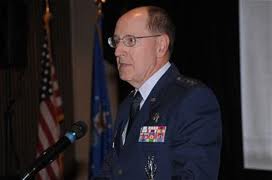
Gen. Kehler
Gen. Kehler

The No. 2 officer at the military command in charge of all U.S. nuclear war-fighting forces has been suspended and is under investigation by the Naval Criminal Investigation Command for issues related to gambling, officials said Saturday.

The highly unusual action against a high-ranking officer at U.S. Strategic Command was made more than three weeks ago but not publicly announced.

Air Force Gen. Robert Kehler, the commander of Strategic Command, suspended the deputy commander, Navy Vice Adm. Tim Giardina, from his duties on Sept. 3.

He is still assigned to the command but is prohibited from performing duties related to nuclear weapons and other issues requiring a security clearance, she said.

Kehler has recommended to Defense Secretary Chuck Hagel that Giardina be reassigned, Kunze said. Giardina has been the deputy commander of Strategic Command since December 2011. He is a career submarine officer and prior to starting his assignment there was the deputy commander and chief of staff at U.S. Pacific Fleet.

Strategic Command oversees the military’s nuclear fighter units, including the Navy’s nuclear-armed submarines and the Air Force’s nuclear bombers and nuclear land-based missiles. It is based at Omaha, Neb.

Kunze said Strategic Command did not announce the Sept. 3 suspension because Giardina remains under investigation and action on Kehler’s recommendation that Giardina be reassigned is pending. The suspension was first reported by the Omaha World-Herald.

The spokeswoman said a law enforcement agency, which she would not identify, began an investigation of Giardina on June 16. Kehler became aware of this on July 16, and the following day he asked the Naval Criminal Investigation Service to begin a probe. – Daily Mail

Confederate battle flag rises to honour soldiers

confederateHundreds gathered Saturday in freshly cleared woods along Interstate 95 to celebrate the raising of a Confederate battle flag, an event that stirred strong opposition from those who view the flag as a symbol of division.

Those who attended the raising of the 15-by-15-foot flag from the Army of Northern Virginia said the ceremony was not intended to offend, but to honor the South’s war dead in the Civil War.

“The reason why we’re here is to honor the soldier,” said James Thompson, 50, a North Carolinian now living in Richmond. “We don’t see it as a slavery issue.”

Like many who attended, Thompson said his ancestors fought for the South. A Civil War re-enactor, he wore a slouch hat and a rough wool uniform and carried an Enfield rifle.

Since a heritage group, the Virginia Flaggers, announced earlier this summer that a flag would rise along the heavily traveled interstate, many residents of Richmond about 10 miles north up the highway have protested, saying the banner is a symbol of slavery and bigotry. The opponents gathered nearly 25,000 signatures for on an online protest petition, and have encouraged residents of the former capital of the Confederacy to display American flags outside their homes and to flood social media with images of the stars and stripes. An American flag approximately 60 feet wide was unfurled at a construction site in downtown Richmond about noon Saturday.

Brian Cannon, a Richmond attorney who was among the organizers of a social media protest over the I-95 flag, said the city already has many memorials to the Confederate cause. He cited statues honoring Southern military leaders such as Robert E. Lee and Thomas “Stonewall” Jackson, along Monument Avenue, one of the most coveted addresses in the city.

“Their flag is out of context,” he said. “It’s a symbol of divisiveness and for many it’s hateful.”

The Confederate flag-raising was held in a circular section of woods that had been cleared recently, with branches and limbs pushed to the side. The private land was donated for the purpose of permanently flying the flag near a highway where it can be viewed by tens of thousands of people daily. From the highway, the bright red and blue flag can be seen through a thin canopy of trees.

No protesters could be seen at the ceremony, although a large number of police vehicles were at the scene. The location of the ceremony was withheld until late Friday.

Folding chairs were assembled in the dirt before a podium where a prayer was said, a historian spoke and speakers offered fiery oratory about what they said were efforts to silence their history. A rendition of “Dixie” was sung and a bagpiper played “Amazing Grace.” Small Confederate flags were handed out and water was distributed in bottles with the name “Dixie Pride.”

Susan Hathaway, a member of the Virginia flaggers, told the crowd Confederate symbols are being snuffed out and they have a duty to responded when the South’s “honor is attacked.”

“As sons and daughters of the South, we have inherited a birthright. Ours is a proud heritage,” she said. “We are descendants of Confederates, we are friends of Confederates. … The flag that is being raised today will be a living, breathing memorial to our Confederate dead.”

Thomas Morris, a re-enactor from Crewe, said he couldn’t understand objections to the memorial.

“We wouldn’t make comments like that if they were trying to memorialize their heritage,” said Morris, 59. He said a 16-year-old ancestor serving under Jackson was killed in Culpeper in what he called “the war of Northern aggression.”

As the flag was unfurled and hoisted up a pole said to be 50 feet, it was greeted by hoots and hollers and more than a few rebel yells. A volley of rifle fire sounded as the flag fluttered lightly in the wind.

One-hundred-fifty years after the Civil War, the Confederate flag still evokes strong emotions in the South.

Lexington, rich in Civil War history, banned the flag on city light poles after some residents complained about the display. In 1999, the NAACP launched an economic boycott of South Carolina over the Confederate flags that flew atop the Statehouse dome and in the chambers of the House and Senate. A compromise in 2000 moved the flag to a monument outside the Statehouse.

Flaggers in Virginia

Earlier this year, a Confederate battle flag that hung inside the old North Carolina State Capitol to mark the sesquicentennial of the Civil War was taken down after civil rights leaders raised concerns. – Washington Post

US maps behaviour with surveillance

spyingThe New York Times reported on Saturday that the National Security Agency, the main US government surveillance organisation, had since 2010 used data it gathered to map some Americans’ “social connections that can identify their associates, their locations at certain times, their traveling companions and other personal information”.

In the latest revelation of the activities of the NSA, which have prompted concern about previously unknown intrusion into Americans’ privacy in the name of protecting against terrorist and other foreign attacks, the newspaper quoted documents provided by Edward Snowden, the former NSA contractor who fled to Russia earlier this year.

It said the documents showed that “the spy agency began allowing the analysis of phone call and email logs in November 2010 to examine Americans’ networks of associations for foreign intelligence purposes after NSA officials lifted restrictions on the practice”.

The policy shift was intended to help the agency “discover and track” connections between intelligence targets overseas and people in the United States, according to an NSA memorandum from January 2011, the Times said.

It said the NSA was authorised to conduct “large-scale graph analysis on very large sets of communications metadata without having to check foreignness” of every email address, phone number or other identifier, the document said. Because of concerns about infringing on the privacy of American citizens, the computer analysis of such data had previously been permitted only for foreigners.

The agency could augment the communications data with material from public, commercial and other sources, including bank codes, insurance information, Facebook profiles, passenger manifests, voter registration rolls and GPS location information, as well as property records and unspecified tax data, according to the documents, the paper said.

It said NSA officials declined to say how many Americans had been affected and said the documents did not describe the result of the scrutiny, which it said “links phone numbers and emails in a ‘contact chain’ tied directly or indirectly to a person or organisation overseas that is of foreign intelligence interest”.

Earlier this week, leaders of the US Senate Intelligence Committee said they were working on legislation that would tighten oversight of federal electronic eavesdropping programmes. Support for such changes has been growing since Snowden leaked information in June that the government collects far more internet and telephone data than previously known.

The Times said that an NSA spokesperson, asked about the analyses of Americans’ data, said, “All data queries must include a foreign intelligence justification, period.” It quoted her as saying: “All of NSA’s work has a foreign intelligence purpose.”

She said the policy change disclosed in the latest revelations was based on a 1979 Supreme Court ruling that Americans could have no expectation of privacy about what numbers they had called.

The Times quoted her as saying that, based on that ruling, the Justice Department and the Pentagon decided that it was permissible to create contact chains using Americans’ “metadata,” which includes the timing, location and other details of calls and emails, but not their content. The agency is not required to seek warrants for the analyses from the Foreign Intelligence Surveillance Court.

NSA officials declined to identify which phone and email databases were used to create the social network diagrams, and the documents provided by Snowden do not specify them, the paper said.

It said the NSA did say that the large database of Americans’ domestic phone call records, which was revealed by Snowden in June and caused alarm in Washington, was excluded.

The Times said that while concerns in the United States since Snowden’s revelations had largely focused on the scope of the agency’s collection of the private data of Americans and the potential for abuse, the new documents provided a rare window into what the agency actually did with the information it gathers. – Reuters