US intelligence intercepts ‘point to big Al-Qaeda attack’

Al Qaeda fighters in Somalia

The unusual US decision to close its diplomatic missions en masse in the Middle East Sunday was prompted by intercepts of high-ranking Al-Qaeda operatives signaling a major attack, US lawmakers said Sunday.

Lawmakers briefed on the intelligence called the threat reporting among the most serious they’ve seen in recent years, reminiscent of the intelligence chatter that preceded the September 11, 2001, attacks.

“There is a significant threat stream and we’re reacting to it,” General Martin Dempsey, the chairman of the Joint Chiefs of Staff, said in an interview with ABC.

Dempsey said the specific locations and targets were not known but “the intent is to attack Western, not just US interests.”

At least 25 US embassies and consular offices were ordered closed Sunday, most of them in the Middle East and North Africa, in response to the threat.

Representative Dutch Ruppersberger, the ranking Democrat on the House Intelligence Committee, told ABC’s “This Week” that Al-Qaeda’s “operatives are in place.”

He said the United States knows this “because we’ve received information that high level people from Al-Qaeda in the Arabian Peninsula are talking about a major attack and these are people in the high level.”

ABC News cited an unnamed US official as saying there was concern that Al-Qaeda might deploy suicide attackers with surgically implanted bombs to evade security.

The chairman of the House Homeland Security Committee, Michael McCaul, said the United States was in a high state of alert, calling it “probably one of the most specific and credible threats I’ve seen, perhaps, since 9/11.”

He said an attack appeared to be “imminent,” possibly timed to coincide with the last night of Ramadan, the Muslim holy month.

The suspected plot comes against the backdrop of a series of recent prison breaks in Iraq, Libya and Pakistan in which thousands of inmates have escaped, he said, creating additional risks.

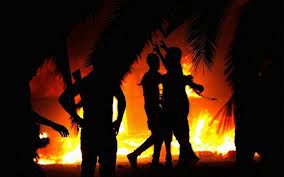
US sensitivity to embassy security also has been heightened by the Al-Qaeda attack on the US mission in Benghazi, Libya, last September 11 that claimed the life of the US ambassador and three other Americans.

It also dovetailed an intensifying US debate over electronic surveillance by the National Security Agency following bombshell leaks by fugitive former intelligence contractor Edward Snowden.

The NSA’s congressional supporters were quick to point to the role of electronic intercepts in obtaining the latest intelligence, while dismissing suggestions it also served to divert attention from the agency’s role in scooping up Americans’ phone and Internet data.

“If we did not have these programs, then we simply wouldn’t be able to listen in on the bad guys,” said Saxby Chambliss, the ranking Republican on the Senate Intelligence Committee.

However, he pointed out that the latest threat warnings did not stem from controversial domestic electronic surveillance programs, but from NSA’s monitoring operations outside the United States.

“And that’s where all the planning is taking place, we think that’s where the activities is planned for,” he said on NBC’s “Meet the Press.”

Representative Peter King, a Republican member of the House Intelligence Committee, said the intelligence was specific “as to how enormous it was going to be, and also there’s certain dates were given.”

“And, you know, the assumption is that it’s probably most likely to happen in the Middle East at or about one of the embassies, but there’s no guarantee of that at all,” he said on ABC.

“It could basically be in Europe, it could be in the United States, it could be a series of combined attacks,” he said.

Chambliss likened the stream of information to the intelligence chatter that preceded the 9/11 attacks in New York and Washington.

“What we have heard is some specifics on what’s intended to be done and some individuals who are making plans such as we saw before 9/11,” he said.

“Whether they’re going to be suicide deaths that are used or whether they’re planning on vehicle-born bombs being carried into an area, we don’t know,” he said. – AFP
Obama hiding Benghazi survivors, changing their names


Ambassador Stevens
Ambassador Stevens

Rep. Trey Gowdy (R-SC) was on with Greta Van Susteren of Fox News on Thursday to discuss the Obama scandals.

This came after Jake Tapper at CNN broke the news that there were “dozens” of CIA operatives on the ground in Benghazi on 9-11 when the consulate came under attack and the agency is going to great lengths to make sure whatever it was doing, remains a secret.

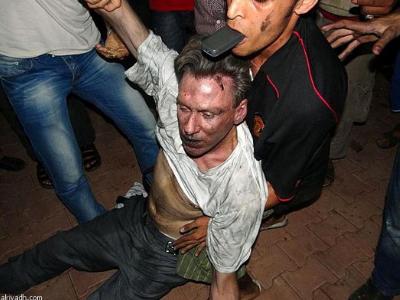
Gowdy told Greta the Obama Administration is hiding the survivors, dispersing them around the country, AND changing their names.

“Including changing names, creating aliases. Stop and think what things are most calculated to get at the truth? Talk to people with first-hand knowledge. What creates the appearance and perhaps the reality of a cover-up? Not letting us talk with people who have the most amount of information, dispersing them around the country and changing their names.”

And, at the same time Obama is hiding the survivors around the country he’s calling Benghazi a ‘phony’ scandal.

The U.S. special mission in Benghazi was used to coordinate arms shipments and other aid to the so-called rebels fighting in Libya and later in Syria.

The scandal has garnered media attention since Sen. Rand Paul asked outgoing Secretary of State Hillary Clinton about the claims that involve Stinger missiles during hearings over the Benghazi affair.

Clinton claimed she did not know whether the U.S. special mission was involved in gun-running.

Security sources have reconfirmed the use of the Benghazi mission in aiding al-Qaida and other Islamic terrorist groups.

The slain U.S. ambassador, Christopher Stevens, played a central role in recruiting jihadists to fight Bashar al-Assad’s regime in Syria, according to Egyptian security officials.

In November, Middle Eastern security sources further described both the U.S. mission and nearby CIA annex in Benghazi as the main intelligence and planning center for U.S. aid to al-Qaida that was being coordinated with Turkey, Saudi Arabia and Qatar.

Among the tasks performed inside the building was collaborating with certain countries on the recruitment of fighters – including jihadists – to target Assad’s regime, the security officials said. – gatewaypundit.com/WND

US shuts down embassies in Middle East

US Embassy Kabul
US Embassy Kabul

The United States will temporarily shut down its embassies and consulates around the world Sunday — including those in Iraq, Afghanistan and Egypt — as a precautionary measure over terror-related concerns, State Department officials said.

State Department spokeswoman Marie Harf did not say how long the international installations would stay closed — only that the decision was taken “out of an abundance of caution and care for our employees and others who may be visiting.” Officials would not describe the nature of the threat.


Sunday is a normal workday in many Arab and Middle Eastern countries, meaning that is where the closures will have an impact. Embassies in Europe and Latin America would be shuttered that day anyway.


“We have instructed all U.S. embassies and consulates that would have normally been open on Sunday to suspend operations, specifically on August 4,” a senior State Department official said Thursday night. “It is possible we may have additional days of closing as well.”


Other U.S. officials said the threat was specifically in the Muslim world.


The issue of security abroad has been prominent since the attack on the U.S. compound in Benghazi, Libya, and a string of demonstrations on other U.S. embassies in the Middle East and North Africa.


On Thursday, measures to beef up security at U.S. embassies were passed out of the Senate Foreign Relations Committee. The bill is in response to the Sept. 11, 2012 attack on the diplomatic post in Benghazi, Libya, where Ambassador Chris Stevens and three other Americans were killed.


The Senate bill creates a training center for diplomatic security personnel.


Separately, the House Foreign Affairs Committee authorized full security funding for diplomatic missions — despite recommending a nine percent cut overall for State Department operations.

The House and Senate have already approved spending bills that cover embassy security. But their budgets differ markedly in other areas. – foxnews.com

CIA was ‘running arms smuggling team in Benghazi’

Arming the enemy
Arming the enemy

The CIA has been subjecting operatives to monthly polygraph tests in an attempt to suppress details of a US arms smuggling operation in Benghazi that was ongoing when its ambassador was killed by a mob in the city last year, according to reports.

Up to 35 CIA operatives were working in the city during the attack last September on the US consulate that resulted in the death of Ambassador Chris Stevens and three other Americans, according to CNN.

The circumstances of the attack are a subject of deep division in the US with some Congressional leaders pressing for a wide-ranging investigation into suspicions that the government has withheld details of its activities in the Libyan city.

The television network said that a CIA team was working in an annex near the consulate on a project to supply missiles from Libyan armouries to Syrian rebels.

Sources said that more Americans were hurt in the assault spearheaded by suspected Islamic radicals than had been previously reported. CIA chiefs were actively working to ensure the real nature of its operations in the city did not get out.

So only the losses suffered by the State Department in the city had been reported to Congress.

“Since January, some CIA operatives involved in the agency’s missions in Libya, have been subjected to frequent, even monthly polygraph examinations, according to a source with deep inside knowledge of the agency’s workings,” CNN reported.

Frank Wolf, a US congressman who represents the district that contains CIA headquarters in Langley, Virginia, is one of 150 members of Congress for a new investigation into the failures in Benghazi.

“I think it is a form of a cover-up, and I think it’s an attempt to push it under the rug, and I think the American people are feeling the same way,” he said. “We should have the people who were on the scene come in, testify under oath, do it publicly, and lay it out. And there really isn’t any national security issue involved with regards to that.”

A CIA spokesman said it had been open about its activities in Benghazi.

“The CIA has worked closely with its oversight committees to provide them with an extraordinary amount of information related to the attack on US facilities in Benghazi,” a CIA statement said. “CIA employees are always free to speak to Congress if they want,” the statement continued. “The CIA enabled all officers involved in Benghazi the opportunity to meet with Congress. We are not aware of any CIA employee who has experienced retaliation, including any non-routine security procedures, or who has been prevented from sharing a concern with Congress about the Benghazi incident.”- The Telegraph

What is a journalist?

journalistThe Senate Judiciary Committee, looking to provide protections for journalists and their sources, ran into a roadblock Thursday when lawmakers couldn’t agree on the definition of “journalist.”

Under the legislation, journalists wouldn’t have to comply with subpoenas or court orders forcing them to reveal sources or confidential information unless a judge first determines there’s reason to think that a crime has occurred and government officials have exhausted all other alternatives.

It’s the third time Congress has considered a “shield law” for journalists. Similar bills have failed despite bipartisan support.

“I’m hoping the third time’s a charm,” said Sen. Patrick Leahy, D-Vt., the committee’s chairman.

The bill defines a journalist as a person who has a “primary intent to investigate events and procure material” in order to inform the public by regularly gathering information through interviews and observations. The person also must intend to report on the news at the start of obtaining any protected information and must plan to publish that news.

But senators disagreed on how to define journalists, since some thought the bill’s definition wasn’t specific enough.

Sen. Amy Klobuchar, D-Minn., wondered whether it could be used to provide protections to employees of WikiLeaks, an organization that allows anonymous sources to leak information to the public.

“I’m concerned this would provide special privilege to those who are not reporters at all,” Klobuchar said.

Sen. Dianne Feinstein, D-Calif., suggested that the definition comprise only journalists who make salaries, saying it should be applied just to “real reporters.” The sponsor of the bill, Sen. Charles Schumer, D-N.Y., was against that idea, since there are bloggers and others in the Internet age who don’t necessarily receive salaries.

“The world has changed. We’re very careful in this bill to distinguish journalists from those who shouldn’t be protected, WikiLeaks and all those, and we’ve ensured that,” Schumer said. “But there are people who write and do real journalism, in different ways than we’re used to. They should not be excluded from this bill.”

The Standing Committee of Correspondents, a group of reporters that issues congressional press passes, requires that reporters be full time and paid in order to receive passes.

The reconsideration of a shield law comes on the heels of media controversies that came to light in May. The Justice Department had seized the phone records of 20 Associated Press reporters over two months without giving them prior notice and had traced the phone calls and emails of a Fox News reporter.

The bill also would require the Justice Department to notify any reporters it chose to monitor. It allows Justice officials to delay that notice by 45 days and permits them to ask for an extension of another 45 days.

Most states have their own shield laws for journalists, but those laws don’t apply in federal court. That means any monitoring of reporters by the federal government would be covered only under a federal shield law.

The committee will continue debating the bill when it reconvenes in September, and Schumer said he hoped it would head to the Senate floor by the end of the year. – McClatchy Washington Bureau

Read more here: http://www.mcclatchydc.com/2013/08/01/198338/senators-spar-over-definition.html#storylink=cpy

Queen’s speech on ‘World War Three’ revealed

Queen Elizabeth II and Ronald Reagan

British officials drew up a speech for Queen Elizabeth to deliver to the nation in the event of a nuclear war, newly released archives showed on Thursday.

In the speech, the monarch was to urge Britons to remain united and resolute in the face of the “madness of war.” Relations between the Soviet Union and the West had become tense.

Written by government officials, the hypothetical speech was part of a secret exercise designed to prepare Britain for the threat of a possible World War Three, but was never broadcast 30 years ago.

It starts by referring to the queen’s traditional Christmas address to the nation.

“The horrors of war could not have seemed more remote as my family and I shared our Christmas joy with the growing family of the Commonwealth,” she was to have said.

“Now, this madness of war is once more spreading through the world and our brave country must again prepare itself to survive against great odds.”

The queen’s speech was imagined to be broadcast in the spring of 1983 against the backdrop of worsening U.S.-Soviet relations, during a year in which then U.S. President Ronald Reagan described the Soviet Union as an “evil empire”.

The queen was to have continued: “I have never forgotten the sorrow and the pride I felt as my sister and I huddled around the nursery wireless set listening to my father’s (King George VI’s) inspiring words on that fateful day in 1939 (at the start of the World War Two).

“Not for a single moment did I imagine that this solemn and awful duty would one day fall to me.”

Citing the close bond of family life as the greatest defence against the unknown, the speech also mentioned the queen’s second son Prince Andrew, who was serving in the Royal Navy at the time.

“If families remain united and resolute, giving shelter to those living alone and unprotected, our country’s will to survive cannot be broken,” she was to have said.

The papers were released by the National Archives as part of a 30-year rule that sees official records from the Prime Minister’s office and Cabinet Office released to the public. – Reuters

Edward Snowden’s escape

Sheremetyevo Terminal

THEY sought him here and there and everywhere. But in the end, Edward Snowden slipped away unnoticed from Moscow’s Sheremetyevo airport in a cab.

The US fugitive walked out of the airport and took a taxi, his lawyer Anatoly Kucherena revealed to disappointed journalists who have haunted the international airport since Mr Snowden flew in from Hong Kong on June 23, wanting to catch him inside the terminal’s capsule hotel or the passenger lounges.

Rossiya 24 television aired a blurred photograph apparently showing Snowden from the back carrying a black rucksack as he is about to enter a grey saloon car, with a blonde-hair woman standing next to him.

He is shown talking to Mr Kucherena, with four other unidentified men nearby, one talking on a cell phone. The channel did not reveal who took the photograph.

WikiLeaks wrote on its Twitter feed that Mr Snowden left the airport “under the care of WikiLeaks’ Sarah Harrison,” one of the site’s employees who arrived with him from Hong Kong.

She appeared at his side at his only public appearance since landing, when he met rights activists inside the airport on July 12.

Asked in a live interview on Rossiya 24 whether Mr Snowden really caught an ordinary taxi, his lawyer said drily: “I understand that it was a taxi.”

Mr Kucherena refused to reveal Mr Snowden’s location for security reasons, saying only that he “may stay in a flat or a hotel.”

Mysteriously, Mr Kucherena seemed not to be involved in Mr Snowden’s initial stay outside the airport, saying that unnamed American friends living in Russia were taking care of him.

“Of course he has gained friends, including within Russia – American friends – who possibly at the start will be able to provide his security, for some time, let’s say,” Mr Kucherena told Rossiya 24 television.

“I did not get involved in this part, it’s not my competence. So in this case, I hope that all will be well.”

He also refused to comment on whether Mr Snowden would be staying in Moscow itself.

“Let’s not lift up that veil since Edward himself will decide that question,” he told Rossiya 24, adding that he planned to talk on the telephone to Mr Snowden’s father Lon and his US lawyer later that day to discuss his future.

Mr Snowden did not take long to pack after receiving a document certifying that he has temporary asylum in Russia, dated July 31, said Mr Kucherena, who has revealed that he had to buy Mr Snowden extra jeans and shirts while he was in the airport.

“He has few things, so we didn’t have to pack suitcases,” he told the television channel.

It remained unclear where Mr Snowden had spent more than a month, with the public areas of the airport thoroughly combed by journalists.

Mr Kucherena last week spoke to journalists after emerging from a meeting with Mr Snowden via a door in the arrivals zone of Terminal E marked “staff only.”

On Thursday, Mr Kucherena made clear that Mr Snowden was in an area for “problem” passengers who lacked documents, dismissing a question about whether he could have been spotted by waitresses in the airport.

“Have you ever seen a waiter in the transit zone? I never did,” he said.

“It’s the place where a person who flies in, if he doesn’t have a passport or doesn’t have a visa, say, or he has some problems with documents, he stays in that zone.”

However, he also half-confirmed reports that Mr Snowden had been staying in a capsule hotel that has full public access in the transit zone.

“There is a capsule hotel. Those people who stay in the (transit) zone, if they can’t fly out anywhere, they sit there and wait for their problem to be resolved.” – news.co.au

Snowden granted asylum in Russia for a year

Snowden leaving the airport
Snowden leaving the airport [Twitter]

NSA whistleblower Edward Snowden has been granted temporary asylum in Russia and is allowed to enter the country’s territory, a source close to the matter told Itar-Tass.

The whistleblower has been granted temporary political asylum in Russia, Snowden’s legal representative Anatoly Kucherena said, with his words later confirmed by Russia’s Federal Migration service.

“I have just handed over to him papers from the Russian Immigration Service. They are what he needs to leave the transit zone,” he added.

Kucherena showed a photocopy of the document to the press. According to it, Snowden is free to stay in Russia until at least July 31, 2014. His asylum status may be extended annually upon request.

With his newly-awarded legal status in Russia, Snowden cannot be handed over to the US authorities, even if Washington files an official request. He can now be transported to the United States only if he agrees to go voluntarily.

Snowden departed at around 15.30 Moscow time (11.30 GMT), airport sources said. His departure came some 30 minutes before his new refugee status was officially announced.

His present location has not been made public nor will it be disclosed, Kucherena said.

Since June 23, the former CIA employee, Edward Snowden, has been staying in Moscow’s Sheremetyevo International Airport, where he came from Hong Kong as a transit passenger. In the middle of July he requested for a temporary political asylum in Russia.

Snowden is accused of revealing details about the U.S. surveillance services. He was charged with unauthorized communication of national defense information and providing U.S. classified intelligence to an unauthorized person under the 1917 Espionage Act. Moreover, he is accused of government property theft. Snowden will face up to 10 years in prison under every article. RT/Itar-Tass

Pentagon awards contracts to Al-Qaeda in Afghanistan

Operation Enduring FreedomeSupporters of the Taliban and al-Qaeda in Afghanistan have been getting U.S. military contracts, and American officials are citing “due process rights” as a reason not to cancel the agreements, according to an independent agency monitoring spending.

The U.S. Army Suspension and Debarment Office has declined to act in 43 such cases, John Sopko, the Special Inspector General for Afghanistan Reconstruction, said today in a letter accompanying a quarterly report to Congress.

“I am deeply troubled that the U.S. military can pursue, attack, and even kill terrorists and their supporters, but that some in the U.S. government believe we cannot prevent these same people from receiving a government contract,” Sopko said.

The 236-page report and Sopko’s summary provide one of the watchdog agency’s most critical appraisals of U.S. performance in helping to build a stable Afghanistan as the Pentagon prepares to withdraw combat troops by the end of next year.

“There appears to be a growing gap between the policy objectives of Washington and the reality of achieving them in Afghanistan, especially when the government must hire and oversee contractors to perform its mission,” said Sopko, whose post was mandated by Congress.

The Pentagon is scheduled to deliver its own Afghanistan status report to Congress today. Its appraisal, which is months late, will outline progress from October 2012 through March and concerns that deal with handing over security operations to the Afghan military.

Sopko said the Army “appears to believe that suspension or debarment of these individuals and companies would be a violation of their due-process rights if based on classified information” or on Commerce Department reports.

Regarding the 43 cases of contractors with militant connections, Sopko said the Army should “enforce the rule of common sense” in its suspension and debarment program.

“They may be enemies of the United States but that is not enough to keep them from getting government contracts,” according to the agency’s report. – Bloomberg


Oprah’s latest race baiting venture

In this weekend’s issue, Parade features a very personal conversation with Forest Whitaker, Oprah Winfrey, and director Lee Daniels (Precious) about their new movie and the questions it raises about race in America.

The trio
The trio

The “powerful chronicle” of one black man’s years of service in the White House during the most tumultuous period in the nation’s civil rights history, Lee Daniels’ The Butler (in theaters Aug. 16) was a “labor of love” for the trio.

Whitaker, 52, plays Cecil Gaines, whose experiences attending presidents from Eisenhower through Reagan are loosely based on those of Eugene Allen, a White House butler who died in 2010.

Winfrey, 59, in her first dramatic role since 1998’s Beloved, plays Gaines’s wife, Gloria, who battles a drinking problem and watches her husband clash with their activist son.

The film revisits major events—the Freedom Rides, the lunch counter sit-ins, the Kennedy and Martin Luther King Jr. assassinations—through their impact on the Gaines family.

On using the N-word, Lee Daniels calls it a word he used quite a bit, until Oprah sat him down and talked to him about its power.

Winfrey says she feels strongly about it. “I always think of the millions of people who heard that as their last word as they were hanging from a tree.” – Parade

The Hillary Conspiracy

hillaryNBC, CNN Hillary Clinton movies shed a lot of light on Democratic donors.

Recent news that NBC, which is owned by the Comcast corporation, will produce a four-hour miniseries on the career of former senator, First Lady, and Secretary of State Hillary Rodham Clinton has thrown new light on the communication giant’s long record of support for Democratic politicians and candidates.

David Cohen, Comcast’s executive vice president, raised more than $1.4 million for President Obama’s reelection effort. He also hosted a fundraiser for the president at his Philadelphia home.

The fundraiser reportedly brought in at least $120,000 for the campaign. Comcast employees chipped in another $135,000 to reelect the president, according to the Center for Responsive Politics.

They also have donated $124,000 to Clinton’s prior senatorial and presidential runs.

The announcement of the movie sparked criticism from some who say any film is likely to be friendly to Clinton, who is widely expected to run for president in 2016.

“I expect [NBC’s biopic] to cast her as a heroic, pioneering figure,” said Tim Graham, director of media analysis at the Media Research Center.

NBC and its cable arm MSNBC have been criticized for leftward political leanings for some time. Shareholders of Comcast, the cable giant that owns NBC, pressed the company on its political slant at a May shareholder meeting.

MSNBC personalities, including the controversial Rev. Al Sharpton, have enjoyed high levels of access to President Barack Obama and several former members of the president’s administration have joined the network as paid contributors.

NBC is not the only media company working on a Clinton biopic, however. CNN announced on Monday that it will produce its own documentary. Another film on Clinton, produced by the Arlook Group and Temple Hill Entertainment, is also in the works. – Washington Free Beacon

First gay divorce in Colorado

gaydivorceColorado’s first recognized same-sex divorce is final.

Supporters of Colorado’s new civil unions law say the court ruling sets a precedent for gay couples married in other states who want to legally terminate their relationships here without uprooting their lives.

Juli Yim and Lorelei Jones wed in Massachusetts in 2009, where same-sex marriage is legal.

Yim tells the Fort Collins Coloradoan the relationship went sour and she found a new partner in Colorado.

Colorado is one of several states that treat gay and straight couples the same in almost every respect through civil unions or domestic partnerships. Gay couples are not allowed to marry in Colorado but can get divorced there under state statute. – myfoxdc.com

US Immigration tracked African with ‘chip in his anus’

trackingchipA Nigerian, Jacob Ajomale, who alleged that he was maltreated by the United States’ Immigration and Customs Enforcement, ICE, officers, by forcefully inserting a tracking device (chip) in his body through his anus, has petitioned the United Nations Council on Human Rights over alleged inhuman treatment meted to him.

Ajomale through his lawyer, Mr Femi Falana, SAN, claimed that the chip was inserted in him in December 2010.

Falana in the petition to the UN, is urging the world body to direct the United States to remove the tracking device from Ajomale’s body with immediate effect.

Besides, Ajomale has also sued United Airlines and the Nigerian Minister of Internal Affairs before a Federal High Court sitting in Lagos, demanding $100 million and N100 million damages for the violation of his fundamental rights to dignity of human person and right to mental and physical health as guaranteed by Sections 35 and 41 of the Constitution and Articles 6 and 12 of the African Charter on Human and Peoples’ Rights (Ratification and Enforcement) Act.

His arrest

Ajomale had averred in an affidavit that he has been living in the United States since April 12, 1997 with a visiting visa and became a permanent resident in February 2008, and never had any criminal record all through the period.

According to him, on January 22, 2009, he travelled to Nigeria for his father’s burial and on his way back, he was arrested on February 5, 2009 by one officer, Derrick, at the BWI Airport in Baltimore, Maryland, kept in a cold room for nine hours, where he was tortured in order to make an incriminating statement of using falsified passport in 2001.

He was subsequently arraigned, tried, convicted and sentenced to six months imprisonment at the DC jail and Rivers Correction Centre, all in North Carolina.

Second arrest

According to Ajomale, he was released back to the community on August 11, 2009 at 7pm, after being cleared by Immigration and Customs Enforcement, ICE, but surprisingly, he was arrested again by the same officer, Derrick, on August 15, 2009 on the ground that his release from detention was a mistake.

He said: “While in detention at Worchester Detention Centre Snow Hill, Maryland, an ICE officer, William Malone told me I could be released but it was going to cost me money. I told my lawyer about it who reported to senior ICE officers. Investigation was carried out and Officer Michelle Rawlings interrogated me and promised to get back to me, which she never did. Afterwards I became the target of all the officers.

“I was hospitalised on July 12, 2010 at Atlantic hospital for sinusitis and body weakness, but was discharged without adequate treatment. I was maltreated by three officers, who flung me on an empty steel bed, and I put in a grievance report concerning the issue. In August, 2010, I was moved to Frederick Detention Centre, Maryland, and the same aggression continued against my person. I felt some vibration on my bed and reported to the authorities but no action was taken.” – Vanguard

Mugabe’s ban on Western poll observers

A younger Mugabe on the election poster

President Robert Mugabe on Thursday reiterated the Zimbabwe government’s position to bar Western observers from general elections set for Wednesday, insisting that only officials from friendly nations would be allowed to monitor the polls.

The veteran Zimbabwean leader said the United States, United Kingdom and other Western countries would never be invited to observe elections in Zimbabwe until they remove economic sanctions against top Harare officials.

“Our position is very clear. We will never allow the Americans and the British to come and observe our elections as long as their sanctions continue to burden our people,” he told supporters during a campaign rally in Chinhoyi farming town, about 100km northwest of Harare.

Zimbabwe has since 2002 refused to allow Western observers to witness the country’s general elections, accusing them of bias in favour of the opposition.

The Zimbabwe government however, said it has no problems welcoming election observers from the United Nations, Asia, the Southern African Development Community, the African Union and the BRICS group of countries comprising Brazil, Russia, India, China and South Africa.

Mugabe also said Thursday that the US and UK had no moral ground to lecture Zimbabwe on democracy when their own histories are tainted with cases of human rights abuses.

The US said earlier this week that it was concerned about the conditions prevailing in Zimbabwe ahead of general elections set for July 31.

A State Department spokesperson said Washington was wary about lack of transparency in electoral preparations and continued partisan behaviour by security organs, particularly the army and police. – APA