Gun sales soar

Owners of guns have been stocking up because they are concerned about a potential tightening of regulations on assault weapons in the president’s second term.

In October the number of background checks on people applying to buy guns, an indicator of future sales, increased by 18.4 per cent.

There was a similar jump when President Obama was first elected in 2008. A total of 12.7 million background checks were carried out that year, up from 11.2 million the year before, and the number has been rising since then.

Shares in weapons manufacturers like Smith & Wesson and Sturm, Ruger also surged after Mr Obama’s re-election.

During the election campaign Mr Obama mostly steered clear of discussing gun control, but in a presidential debate on Oct 16 he gave his clearest statement yet on the issue.

He said: “What I’m trying to do is to get a broader conversation about how do we reduce the violence generally. Part of it is seeing if we can get an assault weapons ban reintroduced.”

President Bill Clinton introduced had restrictions limiting the use of semi-automatic weapons in 1994, but the ban expired in 2004. Under the Clinton-era ban magazines with more than 10 rounds, and weapons with threaded barrels, pistol grips and bayonets were prohibited.

Mr Obama would still have to get any new restrictions past Republicans in Congress, but gun owners say they fear a limiting of their right to bear arms which is enshrined in the Second Amendment to the Constitution.

Mel Bernstein, owner of Dragonman Arms in Colorado Springs, told KOAA-TV that sales of semi-automatic weapons had boomed in recent days.

He said: “We’re going from normally six to eight guns a day, to 25. I stocked up, I got a stockpile of these AK-47s, we’re selling these like hot cakes. Luckily I had an idea of what was going on because it happened with Clinton.”

Mr Bernstein said he normally orders up to 7,000 rounds a week from distributors but could now only get hold of 3,000 because of demand.

John Kielbasa, owner of Fernwood Firearms in Hankins, New York, told CNN: “Sales are up. I had a guy waiting here first thing in the morning (the day after the election.) He came in, bought two AK-47s. It’s going to be good for me for business.” – The Telegraph

Deep South states reject black president

Before Election Day, there was widespread suspicion that enough white voters would balk at voting for an African-American candidate for president that the polls would be proved wrong.

It didn’t turn out that way.

Barack Obama won a convincing popular and electoral victory Tuesday. According to exit polls, the Illinois senator did better with white voters than the past two Democratic nominees, Massachusetts Sen. John Kerry and Vice President Al Gore, did in the 2004 and 2000 elections.

However, while Obama was improving on Kerry’s performance in most states — including such critical battlegrounds as Pennsylvania, Ohio, Michigan, Indiana and North Carolina — he did worse than Kerry among white voters in a handful of states — especially Alabama, Mississippi and Louisiana.

In Louisiana, Obama’s support among white voters was 10 percentage points below what Kerry received. That was the sharpest decline in white support for the Democratic ticket from 2004 to 2008 recorded in any state.

In other words, white voters in a select group of Deep South states proved especially resistant to Obama’s appeal, said David Bositis, an analyst at the Joint Center for Political and Economic Studies in Washington, who looked at the racial patterns in the 2008 exit polls. The exit polls, as in the past, were conducted by Edison/Mitofsky for a consortium of news agencies

“They are moving contrary to the rest of the country,” said Bositis, who said Obama’s race — and the historic pattern of racially polarized voting in these states — seemed the most obvious reason. How else, he said, to explain how Kerry, a quintessential East Coast liberal, did better than Obama with white voters in those states on his way to losing the presidency, than Obama did on his way to winning it?

Nationally, Obama won 43 percent of the white vote: 46 percent of white women and 41 percent of white men. He ran 12 percentage points behind Republican John McCain with white voters.

That’s the same percentage gap by which Gore trailed George W. Bush in the virtual dead-heat election of 2000, but it’s five points smaller than the Democrats’ deficit four years ago.

Obama built his margin by increasing the turnout and percentage of the African-American vote and dramatically improving the party’s performance with Hispanic voters. Obama also did especially well with younger and more-educated voters.

But according to demographer William Frey of the Brookings Institution in Washington, none of that diminishes how important it was for Obama to shave some points off the usual Republican advantage with white voters. And, Frey said, Obama’s big gains were among white men — usually the toughest constituency for Democrats — where he narrowed the Democratic deficit by nine percentage points.

“A lot of Obama’s demographic gains were among Hispanics, young people, the college-educated, but there is also this big chunk of white men who are almost always very reliably Republican,” Frey said. “To some degree they went to him this time — not because of any transformational change, but because of the economy.”

Charles Gallagher, a sociologist at La Salle University in Philadelphia who has studied white racial attitudes, seconded Frey’s assessment.

“What did it take for white America to want to vote for a black man? If there had not been this collapse of the economy, there would have been no Barack Obama mandate,” Gallagher said. “Class trumped race.”

White support in N.O.

Except perhaps, Frey said, in the Deep South states where Obama fared so poorly. Those states, Frey said, remain the most culturally Southern and demographically unchanged.

Frey said that 57 percent of all eligible voters in Louisiana and 60 percent in Alabama are Southern-born white people. In North Carolina, the percentage is only a little more than half, and in Virginia, Georgia and Florida, it’s well below half.

Obama won North Carolina with 35 percent of the white vote. He won Virginia with 39 percent of the white vote. And he won Florida with 42 percent of the white vote. He lost Georgia with 23 percent of the white vote.

Meanwhile, in every state with a large enough black population to create an adequate sample for exit polling, Obama’s black support was above 90 percent, often in the high 90s. In Alabama and Mississippi, Obama won 98 percent of the black vote; in Louisiana, he won 94 percent.

In Orleans Parish, according to a precinct analysis by University of New Orleans political scientist Edward Chervenak, white voters behaved very differently than white voters in the rest of the state.

According to the national exit polls, Obama won 14 percent of the white vote in Louisiana — 10 percentage points less than Kerry won in 2004 — and a lower percentage than in any state except Alabama, where Obama carried 10 percent of the white vote, and Mississippi, where he won 11 percent.

But Chervenak found that even though Kerry lost the whitest precincts in Orleans Parish in 2004 by three percentage points, Obama won those same precincts by a sliver of a percent.

Chervenak said the outcome comported with his own yard-sign observations.

Even in predominantly white neighborhoods, he said, “I saw far more Obama signs than McCain signs.”

Lower appeal elsewhere

Outside New Orleans, the white vote in Louisiana took on very different contours.

“Once you get above I-12, voters are just culturally conservative Christians who just have a natural affinity for the Republican Party,” Chervenak said. And, he said, “certainly race is a consideration. The fact is that a liberal African-American candidate is just not attractive to a large number of white voters in Louisiana.”

And unlike the results in many states, younger white voters in Louisiana, Mississippi and Alabama were hardly more likely to vote for Obama than older white voters.

By contrast, in North Carolina, Obama won 35 percent of the white vote overall, but 56 percent of white voters age 18 to 29. Similarly, in Indiana, he won 45 percent of the white vote and 57 percent of younger white voters.

Steve Suitts, vice president of the Atlanta-based Southern Education Foundation, said Tuesday’s results reveal again “how distinct the South is from the nation as a whole in racial voting.”

“We’re just maybe a few generations behind the rest of the country in understanding what (the Rev. Martin Luther) King told us about it’s not the color of your skin, but the content of your character,” said Suitts, who supported Obama.

Jonathan Tilove can be reached at jtilove@timespicayune.com or 202.383.7827.

America’s racial divide grows

In 2008, minority voters turned out in record numbers, propelling Barack Obama to the White House. Similar results fueled his second-term victory on Tuesday. A 2-percentage-point increase in nonwhite votes—to 28 percent—sealed Obama’s reelection, and data seem to indicate minority influence at the polls has grown stronger in the past four years.

Obama managed to win again, despite securing only 39 percent of white voters–who still represent the nation’s largest voting bloc at 72 percent.

Poll after poll indicated the issue atop all voters mind this election season was the still-weak economy, a color-blind issue affecting nearly everyone.

However, analysis of voter data shows that the racial divide that dominated much of the race in 2008 is getting wider. Obama failed to capture the majority of the white vote in many of the nation’s states–even the ones that traditionally bleed blue–and endured a 4-point drop among white votes over 2008.

Based on racial exit-poll data available from select states, Obama would have definitively lost 12 states to Republican nominee Mitt Romney if only white voters mattered. Add another three possible toss-up states and that’s a full 242 possible electoral votes that Obama would not have.

Using the link, toggle between the reality of the 2012 vote and a projected electoral map that uses white-only voter preferences. You can also clearly see what Obama gained and lost using white-only votes from 2008 to 2012. Hint: It’s a lot. – National Journal

Obama re-election greeted with racial unrest

A protest at the University of Mississippi against the re-election of President Barack Obama grew into crowd of about 400 people with shouted racial slurs as rumors of a riot spread on social media. Two people were arrested on minor charges.

The university said in a statement Wednesday that the gathering at the student union began late Tuesday night with about 30 to 40 students, but grew within 20 minutes as word spread. Some students chanted political slogans while others used derogatory racial statements and profanity, the statement said.

The incident comes just after the 50th anniversary of violent rioting that greeted the forced integration of Ole Miss with the enrollment of its first black student, James Meredith.

Ole Miss Chancellor Dan Jones promised an investigation and said “all of us are ashamed of the few students who have negatively affected the reputations of each of us and of our university.”

On Wednesday night, about 700 people held up candles and called for racial harmony outside the administrative building at the university in Oxford, countering Tuesday’s protest over Obama’s re-election.

Police were initially alerted to Tuesday’s uproar by people who saw Twitter posts about it. The students were told to leave, but about 100 came back later. One person was charged with public intoxication and another with failure to comply with police orders. There were no reports of injuries or property damage.

Rumors about the situation were fueled on Twitter after the university’s student journalists posted a video referring to the gathering as “riots.” The student newspaper posted a video of the crowd, but much of what the students said in it is unintelligible other than the “Hotty Toddy” cheer, which is common at football games and other school gatherings.

One picture that spread rapidly on social media shows people burning an Obama campaign sign, but the university hasn’t confirmed that the picture was taken on campus. The chancellor said some photos shared on social media showed things that were not seen by police on campus, but the reports of uncivil language and racial slurs appeared to be accurate.

Some students and teachers used social media to condemn the conflict.

Ellen Meacham, an Ole Miss journalism instructor, posted on Facebook that “anyone who calls that a riot has never read or heard anything about 1962.”

She was referring to when Meredith became the first black student to enroll at the university on Oct. 1, 1962. Federal authorities deployed more than 3,000 soldiers and more than 500 law enforcement officers to Oxford during the integration. An angry mob started an uprising that killed two white men. More than 200 people were injured. Ole Miss sponsored lectures and other events this year to commemorate the 50th anniversary.

“Now, 50 years later, about 2 percent of the overall student body goes out to protest when their guy doesn’t win the presidency and a portion of that small percentage displays the ugly strain that still infects too many in our student body,” Meacham wrote.

In a state with a 37 percent African-American population, Ole Miss now has a black enrollment of about 16.6 percent. The current student body president, Kim Dandridge, is the fourth black person elected to the post.

Jones said the campus was back to normal Wednesday.

The university was planning an event for Wednesday evening called the “We are One Mississippi Candlelight Walk” to condemn the protest, according to Thomas J. “Sparky” Reardon, vice chancellor for student affairs. – AP

An independent Puerto Rico? No thanks!

For many voters this Election Day, it’s not a matter of who will be the next president that’s a pressing issue: in Puerto Rico, people are hitting the polls to decide if the US territory should petition Congress for statehood.

The Atlantic Ocean island of Puerto Rico is home to around 4 million people, but some say their relationship with the United States isn’t what it should be, even more than a century into a longstanding relationship. Currently, the US Commonwealth of Puerto Rico is subject to American jurisdiction and sovereignty, as well the rule of whatever president is elected by the rest of the country — voters on the island, however, can’t have a say in that contest.

Pending the results of a vote on Election Day, though, that could change. Puerto Ricans going to the polls on November 6 aren’t opting for a president, but rather whether or not they should ask to join the union as the fifty-first state. This year, voters are being asked to weigh in on a two-part referendum that has them answering if they want to change their relationship with the US, and to what.

When Puerto Ricans go to the polls this year, they have the option of answering if they want to stop being a commonwealth of the US and, if so, what would they prefer: statehood, independence or sovereign free association.

This is the fourth time voters in Puerto Rico have been asked such a question in just 45 years, but the outcome this election season might bring a surprise: as of this week, a poll conducted by Asisa Research Group suspects that 47.9 percent of voters will want statehood, as opposed to independence or sovereignty.

In the past, a majority of voters have always agreed to stay subject to US laws without the representation allowed in the 50 other united states. Some say citizens might be more obliged to vote differently this year, though, as the benefits from becoming a state could save the island from some of the worst crimes it’s experienced in ages. In 2011, Puerto Rico reported 1,117 killings on an island barely 3,000 square miles, and currently they’re seeing unemployment at above 13 percent — double what some counties in the mainland have in terms of jobless rates.

Should Puerto Ricans vote for statehood, the island will be allowed roughly $20 billion in additional federal funding from Washington, as well as representation in Congress that could help bring in even more money down the road. In an environment where that sort of investment could easily turn things around, some say it’s a no-brainer.

“Puerto Rico has to be a state. There is no other option,” 25-year-old Jerome Lefebre tells the Associated Press on his way to the polls on Tuesday. “We’re doing OK, but we could do better. We would receive more benefits, a lot more financial help.”

Fernando Martin, the executive president of the Puerto Rican Independence Party (PIP), tells BBC that right now things are fair for fellow residents nestled roughly 1,000 miles off the mainland. “In our case, the government of another country makes decisions every day without the participation of Puerto Ricans,” he notes.

Under American rule without equal representation, some say they have been practically colonized by American leaders who limit what say residents have on their own. That stripping of culture and heritage is evident in many, like another man interviewed by the AP: 42-year-old Ramon Lopez de Azua.

“Puerto Rico’s problem is not its political status,” he said. “I think that the United States is the best country in the world, but I am Puerto Rican first.”

“We don’t want to continue being a colony. We want the full rights that we’re entitled to as American citizens,” Thomas Rivera Schatz, president of the territory’s local Senate, adds to the Chicago Tribune. “Because we’re a colony, we have the misfortune of being first (in line) for federal cuts and last in line for handouts.”

Others, however, have come to the consensus that statehood could be all too inevitable.

“I believe the country should become a 51st State because the US has influenced our country completely and we are 100% Americanised,” one young woman tells the BBC.

On Election Day, voters in Puerto Rico will elect a governor, but no president. The Asisa Research Group has Gov. Luis Fortuño as the likely opponent this year over challenger Sen. Alejandro Garcia Padilla.

Fernando Martin, the executive president of the Puerto Rican Independence Party (PIP), tells BBC that right now things are fair for fellow residents nestled roughly 1,000 miles off the mainland. “In our case, the government of another country makes decisions every day without the participation of Puerto Ricans,” he notes.

Under American rule without equal representation, some say they have been practically colonized by American leaders who limit what say residents have on their own. That stripping of culture and heritage is evident in many, like another man interviewed by the AP: 42-year-old Ramon Lopez de Azua.

“Puerto Rico’s problem is not its political status,” he said. “I think that the United States is the best country in the world, but I am Puerto Rican first.”

“We don’t want to continue being a colony. We want the full rights that we’re entitled to as American citizens,” Thomas Rivera Schatz, president of the territory’s local Senate, adds to the Chicago Tribune. “Because we’re a colony, we have the misfortune of being first (in line) for federal cuts and last in line for handouts.”

Others, however, have come to the consensus that statehood could be all too inevitable.

“I believe the country should become a 51st State because the US has influenced our country completely and we are 100% Americanised,” one young woman tells the BBC.

On Election Day, voters in Puerto Rico will elect a governor, but no president. The Asisa Research Group has Gov. Luis Fortuño as the likely opponent this year over challenger Sen. Alejandro Garcia Padilla. – RT

Obama, pot win in Colorado, Washington

Colorado and Washington became the first US states to legalise the possession and sale of marijuana for recreational use on Tuesday in defiance of federal law.

Amendment 64 supporters were ecstatic at their gathering in Denver Tuesday night when news came down.

“Marijuana prohibition has failed in Colorado and it has failed in all sorts of other places,” Amendment 64 advocacy director Betty Aldworth told CBS4. “I’m so proud and so honored to have worked with this team of people and to live in a state where people recognize marijuana prohibition is a failure and we can do better.”

The amendment allows adults over 21 to possess as much as an ounce of pot. It also allows people to grow as many as six pot plants in secure, private areas.

Supporters believe legalization will generate tens of millions of dollars in tax revenue for Colorado.

The approval of the amendment puts Colorado in defiance of federal drug law.

“It’s still against federal law,” Gov. John Hickenlooper told CBS News anchor Scott Pelley about an hour later. “I’m not sure we can make it as legal as the voters would like us to do. But clearly the will of the voters spoke.”

Hickenlooper, who opposed the measure, said it’s “not immediately apparent” how the amendment will hold up against the national law.

Jeff Dorschner, spokesman for the U.S. Attorney’s office released a statement after the measure’s passage, saying the “Department of Justice’s enforcement of the Controlled Substances Act remains unchanged.”

“In enacting the Controlled Substances Act, Congress determined that marijuana is a Schedule I controlled substance. We are reviewing the ballot initiative and have no additional comment at this time,” Dorschner said.

State voters rejected recreational pot in 2006, but Aldworth said this measure comes at a time when voters have a different mindset, thanks in part to the burgeoning medical marijuana industry in several areas of the state.

“Amendment 64 is quite different from Amendment 44 in 2006 in that it envisions the regulated model for marijuana sales whereas Amendment 44 only decriminalized for adult use,” she said. “What we know is that Colorado voters have accepted the idea that we can regulate marijuana like alcohol successfully and we can make a safer, healthier and more just Colorado by doing so.”

The measure had the backing of the NAACP, the ACLU and the state public defender’s office, but most major state leaders came out in opposition.

Roger Sherman, the No on 64 campaign director, released a statement just after 9 p.m. on Election Day conceding the race:

“We knew all along this was an uphill battle against a well-funded national movement. We appreciate the efforts of Governor John Hickenlooper, former Governors Bill Owens and Bill Ritter, Attorney General John Suthers, Mayors Michael Hancock and Steve Hogan and countless other sheriffs, county commissioners, district attorneys and local elected officials who joined with the business community and citizens of Colorado to oppose this ill-conceived amendment.

“We can only hope that our concerns and fears about amending the Constitution to make Colorado the first state to legalize the recreational use of marijuana do not come true.”

The states of Oregon and Washington also had pot legalization amendments on the ballot, and at least one of those states — Washington — also approved their measure.

Colorado is already one of 17 states that allow marijuana use by people with certain medical conditions.

Max Keiser: The end of Britain

A serf in the days of King John, Max Keiser argues, was in many ways better off than some US voters in 2012.

“Because in the age of Robin Hood,” Keiser says, “at least the process of theft was transparent. The barons came to your house. They whacked you over the head then they took all your money.” Even if the poor didn’t exactly empathise with their oppressors, Keiser adds, they could at least comprehend their methods. “And the serfs,” he continues, “did enjoy a modicum of stability. They got something in return for their enslavement. A small plot of land. Shelter. A relationship with the lord of the manor.” In the modern age of “financial tyranny” orchestrated by what Keiser refers to as “the banksters” in charge of the major financial institutions in the US and Europe, he believes, “We have reverted to a more pernicious kind of neo-feudalism. The instruments of larceny have changed; that’s all.”

What better time, you might ask, to have the opportunity to vote in a presidential election? But the real forces which shape the destiny of his homeland, Keiser says, have long been impervious to democratic pressure.

“Barack Obama,” he maintains, “has been a huge disappointment. He reneged on every one of his campaign promises except one: he did buy his kids a dog. Of course he could be replaced in this election, but if that happens we will simply inherit a different version of the same thing, just as we have done in the US for the past 30 years. The guy in the White House,” he believes, “is really taking his orders from finance.”

You may never have heard the name Max Keiser, even though, once he begins to broadcast across China in the New Year, he will have confirmed his status as the most widely watched news commentator on the planet. Assisted by his producer, co-presenter and fiancée Stacy Herbert, Keiser, 52, mercilessly castigates rogue financiers and the politicians notionally required to oversee them, on programmes already transmitted by international networks including France 24, Al Jazeera and Iran’s Press TV. No channel in the United States will carry his broadcasts, which go well beyond the benign impudence of The Daily Show.

His most popular outlet is The Keiser Report, on Russia Today (RT), and its international viewing figures, as Keiser (not a man plagued by self-doubt) isn’t slow to point out, are huge. What has fascinated me, I tell him, when we meet in his London television studio, is that in Britain, in recent months, I’ve begun to hear his mischievously seditious RT show mentioned, with admiration, by taxi drivers, patrons in the Haringey Arms, and my window cleaner. This may not, I admit, constitute a statistically significant sample, but Keiser is clearly attracting people you wouldn’t necessarily expect to view a rolling news channel on a foreign network.

The presenter isn’t surprised. “There is a fury against this global banking fraud that is building every day,” he says. “People from all kinds of backgrounds, all over the world, have had enough.”

The Keiser Report, first aired in September 2009, is produced here three times a week. One episode, shown in September 2011, contained the interview with Roseanne Barr during which she famously observed that her solution to banking malpractice would be to “bring back the guillotine”.

While his sardonic, quick-fire delivery would allow him to shine in a debate at the Oxford Union or a Hampstead dinner party just as effectively as, say, David Dimbleby, Keiser’s utterings on the less laudable activities of Morgan Stanley, Goldman Sachs and other financial institutions also manage (unlike Dimbleby’s) to resonate with the kind of people who might fantasise about fire-bombing their local branch of NatWest. To illustrate a point, he will occasionally produce a plastic chicken, a stuffed rat, or a small explosive device. On one recent show, he advised David Cameron to, “Go back to Eton and get some of that back-stall shower pleasure.”

I tell Keiser how, the first time I saw him presenting the show with Stacy Herbert (his partner’s name, somewhat unfortunately, may be familiar from her appearance in 2002 red-top headlines concerning the “three in a bed sex sessions” whose pivot was Angus Deayton), I’d assumed his performance to be fuelled by amphetamines.

“I wave my arms,” he says. “I shout. Of course I do. Because this is a global insurrection. Against banker occupation.”

He folded balloon animals on one show.

“Well, you have to make an impression quickly. Most people first see The Keiser Report at an airport or hotel. RT has 450 million viewers. It goes into more hotel rooms than the BBC and it has more YouTube views. Everywhere I go, people stop me in the street. And remember I’m broadcasting about global financial corruption; not so long ago, everyone used to say, who could be interested in that?”

is histrionic style, combined with the forthright nature of his views (Keiser recently derided the Eurozone as an entity “which poses as this prestigious club, but is actually a leper colony where everyone is checking who still has the most fingers left”) have led some to dismiss him as a marginal, whacked-out conspiracy theorist.

This perception is some way removed from the truth. Raised in an affluent New York suburb, Keiser was a highly successful Wall Street stockbroker and the creator and former chief executive of HSX Holdings, a company which, using his own software system, allowed traders to deal in virtual securities. Put simply, this allowed you to gamble on the success – and, more disturbingly to the studios, on the failure – of a Hollywood film before its release. The practice was halted by the industry, but not before Keiser had sold his shares at the top of the market, adding to his already substantial fortune.

He founded the hedge fund Karmabanque, which has sought (with limited success) to profit from any decline in the equity value of companies criticised by environmental groups, such as Coca-Cola and McDonald’s. And in 2007, in an Al Jazeera film called Extraordinary Antics, he travelled to Milan to examine how CIA agent Robert Seldon Lady and others had illegally abducted then deported an Egyptian imam, Hassan Mustafa Osama Nasr, who later faced torture in Cairo. (In 2009 Lady, also known as “Mister Bob”, was sentenced to eight years in absentia by an Italian court, though the US refuses to extradite him to Italy.)

“I imagine,” I tell Keiser, “that some Americans, seeing your work carried by RT, Arabic and Iranian stations, view you as a modern-day Lord Haw-Haw.” (William Joyce, the Irish-American who broadcast Nazi propaganda to the UK during the Second World War, and was hanged in London in 1946.)

“Some might. But all around the world, working people love the show. We make The Keiser Report at Associated Press. That, as you know, is an American company. The people who feel challenged are the banksters. What I’m saying is that you can fight back: by fighting fire with fire.”

Keiser is among the most outspoken of a group of American commentators (Texas-based broadcaster Alex Jones being another) who argue that national sovereignty and democracy in the US and elsewhere have been eroded by the power of global corporations. Keiser maintains that the most effective form of resistance is through individual financial activism. “If the Karmabanque hasn’t worked,” Keiser says, “it’s because there isn’t yet a critical mass of people who are prepared to fight back, and who instead prefer to be victims.”

The presenter lived in France for a decade, toying with screenplays including one near-miss based on the life of Houdini, which would have starred his close friend Alec Baldwin. (He currently runs a highly successful crowdfunding site, piratemyfilm.com.) Keiser was based in Villefranche-sur-Mer, near Nice, when he met Herbert, who is eight years his junior, in 2003.

Herbert’s apparently subordinate role as co-presenter of The Keiser Report, in which her main task is to prompt, and then revel in her partner’s hyperbole, belies her acute instincts as a producer and editor. Before collaborating with Keiser, Herbert, the daughter of a NYPD officer who died in tragic circumstances when she was six, began her career working with Michael Phillips (who co-produced Taxi Driver and The Sting). She was later associate producer on the acclaimed but highly controversial animated 2005 series Popetown. A cartoon sitcom featuring the voices of Mackenzie Crook, Ruby Wax, Matt Lucas, Jerry Hall and Ben Miller, it was once described as Father Ted meets South Park. Originally commissioned for BBC Three, Popetown was dropped from its schedule after protests from the Catholic Church, though it is available on DVD.

Herbert and Keiser moved to London a year ago. “Because this is the world capital of banking fraud. Pretty much every financial scandal of the past 20 years has had its main component in London, because it has the least regulated banking environment. This is very important for the US, because America outsources its own fraud to London, just as it outsources its labour to China.” The JP Morgan and UBS traders who lost billions, he points out, were both London-based. “And Lehman Brothers went through the UK. As did AIG.” (The latter, a multinational insurance corporation, has been troubled by many controversies including its 2008 government bailout, subsequent executive bonus payments estimated at between $165m and $450m – some say more – and charges relating to accounting fraud, settled out of court in 2006.)

Tony Blair, Keiser adds, “was the first prime minister in this country’s history who knew that going into Downing Street would act more as a resumé builder than a way of serving the public. He has become fabulously wealthy with the contacts he made as prime minister.” Blair, he continues, “personifies the move, in the UK and the US, away from representational democracy and towards control by bankers. It is since New Labour that you have the rise of these incredible scandals: so you have HSBC involved in multimillion-dollar Mexican drug-laundering. [In July of this year, the bank publicly apologised for its “lapses”.] And Barclays involved in rigging Libor [the estimated interest rate for inter-bank loans].”

I tell Keiser I can feel many readers wondering exactly what relevance such activities might have to their lives. “Well, the policy of the banks has been to keep interest rates as low as possible, so as to fuel financial speculation, no matter how oppressive the effect of that would be. Low interest rates wipe out savers and devastate middle-class workers. The banksters have orchestrated this wealth transference of trillions, from the poor to the very wealthy. At the expense of everybody who isn’t at the top.”

In a recent televised discussion chaired by Andrew Neil, Keiser recalls, “We agreed that the country suffers from economic and financial illiteracy. Which makes it amazing that George Osborne has a programme whereby people will exchange their rights as workers for shares. Why is he proposing this, if not to exploit that knowledge gap? Shouldn’t the Chancellor be ashamed of himself?”

“But hang on – you’re not an anti-capitalist.”

“No. I am pro-capitalism and I am pro-free market. But what you have now is not capitalism. It is a state- controlled, command and control, centralised politburo. Both in Britain and the United States. The States is run by the Federal Reserve, an institution that answers only to itself and to a few large banks. It’s modelled on the Bank of England. Ben Franklin said that one of the main reasons America revolted was to get away from the Bank of England, the mother of all central banks; the most pernicious and insidious of all.”

“You said you were disappointed by Obama. What should he have done?”

“When Franklin D Roosevelt came into office, he started putting bankers in jail. The foremost reason that America got out of the Depression was not World War Two, or because of the Keynesian stimulus. It was because of the legislation introduced to regulate markets [many such clauses in FDR’s Emergency Banking Act of 1933 were dismantled under Clinton] and the banksters that Roosevelt sent to jail.”

“Don’t you think Obama came in with the best of intentions? Surely he’s not just another avaricious politician?”

“Barack Obama had to face up to people like Larry Summers [Clinton’s former Treasury Secretary, and director of the US National Economic Council until two years ago, Summers had a key role in lifting safeguards in the derivatives market, a move generally considered to have precipitated the 2007/8 crash]. There were others he failed to remove from office, who were guilty of orchestrating this economic collapse.”

“Are you accusing Obama of malicious complicity?”

“I think that Obama is, like many people, financially and economically illiterate. He is a lawyer. But in Wall Street there is no law.”

Is the implication that the situation will change if Obama is defeated? “It’s not difficult to envision what a Romney presidency would be like. He’s already made it clear that he believes Wall Street to be over-regulated, which of course is the opposite of the truth.”

Romney’s background, Keiser adds, is in private equity, “which is the crystallisation of the worst elements of capitalism”. (Private-equity firms tend to specialise in leveraged buyouts: a practice whose potential consequences have become familiar to many non-economists in Britain, not least to supporters of Manchester United since the club’s purchase by the Glazer family in 2005.) “So then you would have a pure cacistocracy: rule by the worst, the most ignorant, and the most corrupt.”

On Mitt Romney’s first day in office, Keiser adds, “I would imagine that, rather as Emperor Caligula appointed his horse to the senate, he will issue proclamations and edicts that will shock people. But if he does release the genie of even more deregulation, bankrupting the country, he would do so in the full knowledge of the crime he was committing. I believe that Obama was less consciously aware of the stupidity he was engaged in.”

ax Keiser grew up in Westchester County, a New York suburb so steeped in Ivy League privilege that Loudon Wainwright III wrote a song about it (“We were richer than most/ I don’t mean to boast/ But I swam in the country club pool”). It’s not hard to imagine his robust intelligence being applied in other fields, such as teaching or law. While his name may evoke images of some prosperous chancer in a James Bond film, he doesn’t come across as your average money man. So how did he wind up prospering on Wall Street?

“I’d been to New York University,” Keiser recalls, “where I studied theatre. That’s where I first met Alec Baldwin. I did a lot of radio, and stand-up comedy. I spent my time watching punk and rap bands at CBGB and Max’s Kansas City. My biggest fear in 1983 was that the party would end. I’d done various jobs.” These included working as a street magician on Broadway.

“Then I got a part-time job at Paine Webber, a brokerage firm on Wall Street, just to support myself. I remember walking in and seeing the brokers all looking up at the ticker tape on the wall. They were in very expensive suits and smoking cigars. I could see that, by this means, the party could continue. So I became a stockbroker. And the party not only continued, but intensified.”

“It must have been a bit of a culture shock.”

“Not so much as you might imagine, because stockbroking had sort of a punk aesthetic. It was a DIY revolution. I had no background in it whatsoever. But in the early 1980s suddenly there was the start of this bull market: a tsunami of cash was arriving every day on Wall Street. It required no talent whatsoever to make gobsmacking amounts of money. A rhesus monkey could have done it.”

“And socially?” “We took the party into the office. We’re making calls to customers during the day. At the same time we’re getting calls from hookers and drug dealers. I remember I woke up on a plane one day; k I was coming out of a blackout. I asked my buddy, who I’d started the outing with, who knows when, ‘Where are we going?’ He said, [the Caribbean island of] ‘St Thomas.’ I don’t remember a whole lot after that. Anyhow, we ended up back in the office. Then I heard my friend, shouting: ‘Shit… Oh my God, shit…’ I asked what happened. He said, ‘Max… when we were down there in St Thomas… did I buy a house?’ He had done, and he had absolutely no memory of it. After the crash in 1987 the party ended.”

“What were people taking: drink and cocaine?”

“Yes. There was cocaine on everyone’s desk, more or less. At that time you could take a shoeshine guy – and they did – and with the systems they had, which allowed swift calls, and using sales scripts, he could make hundreds of thousands of dollars in months.”

Of the many themes that Keiser returns to in his shows, one of the most interesting and incendiary is the relationship between big business and Congress. He has openly accused senior politicians of using investigations into financial malpractice as a way of acquiring market information so as to benefit themselves.

“Democracy is not well served by the current political configuration in America,” he maintains. “The entire political establishment is designed around enriching a minority of people who have access to both information and capital. Take the CIA. They have recently opened up their services to hedge funds. Hedge-fund managers can now hire CIA agents to do research on pharmaceutical companies, defence contractors, or oil contracts.”

I can imagine some of his compatriots regarding such talk, especially his accusations of endemic insider trading in Congress, as treasonable. “Treason is a strong word. My family arrived in America in the 1700s and was active in the constitutional process that led to the Declaration of Independence. I would answer that charge by saying, as they do down south, ‘That dog don’t hunt.’

“Nobody has a greater affinity for the founding principles of America than I do. But what the people with power are doing now is not remotely connected to the ideals of the founding fathers.”

Any talk about treason, Keiser argues, would be more suitably aimed in the direction of men such as his principal bête noir, Hank Paulson, a former CEO of Goldman Sachs who served as the US Treasury Secretary from 2006 to 2009. “There is a revolving door for Goldman Sachs guys into and out of US government. And they are working against the sovereign interest of the United States. What’s happening is that all these bankers in Europe are consolidating into one major bank that’s going to be running Europe, from Brussels. All of that debt will be re-priced in some new European-wide currency. And that bad debt will be joined with all the American bad debt, in some new global reserve bank. And every single step of the way guys like Hank Paulson – who really is a traitor – will put a gun to the head of the American people and say, either you accept this new banking deal or we are going to crash this market.”

Among Keiser’s fans, Paulson more than anybody has come to personify the culture of greed and flagrant conflict of interest that the broadcaster satirises.

“You don’t like Hank Paulson very much, do you?”

“The fact that that man is even breathing and walking… the last time I was on Al Jazeera live,” Keiser adds, “was when I declared a fatwa against Hank Paulson.”

“Fatwa defined in what way?”

“The word has certain resonances, after the Salman Rushdie affair. That’s not what I was saying. Under Bush and Obama, the office of president has acquired enormous power: to pretty much arrest anybody in the world. With no due process. No habeas corpus. If you have the ability to arrest a man on a mere suspicion, and detain them without reference to judge or jury, then that man’s name is Hank Paulson. Go after the really bad guys.”

Fear, Keiser believes, is what stops such opinions being transmitted in his homeland. “Look at these clowns who present shows. Like [arch-conservatives] Rush Limbaugh and Bill O’Reilly. These people are not Americans. They are the subversives. They are the ones tearing American society apart by belittling everything that, at its heart, could be construed as the lifeblood of democracy.

“Those guys,” Keiser adds, warming to his subject, “are shameless. They are despicable. My merely pointing out where crimes are being committed is not treason against the country. It is an act in support of reform to get the country back from the clutches of these foreign bankers.”

“So who would you like to see elected?” “The only politician that I like is [former independent presidential candidate] Ralph Nader. Because he talks about corporations. And corpocracy. He isn’t running. So I won’t be voting.”

Listening to Keiser, I tell him, I’m left with feelings of little else but imminent doom. He has few words of comfort. “The global derivatives market, which is a quadrillion or more in size, is a very complicated, highly unstable system which is becoming more unstable with every hour,” he says. “It is similar to the side of a mountain before the last snowflake arrives to trigger the avalanche. Or, like Mr Creosote [who explodes at the dinner table in the Monty Python film The Meaning of Life] is just waiting for that final after-dinner mint.”

Any hope of recovery, he argues, will come not through the ballot box but financial initiatives on the part of individuals; notably a mass campaign to ignore governmental advice to trust in bonds and paper money – investments in which, Keiser insists, confidence has rightly evaporated.

“People have to take action for themselves. That means buying not bonds or dollars or euros, but gold and silver. Gordon Brown sold Britain’s gold at the historic low of $250 an ounce. Gold is now $1,700 an ounce. My argument – I can categorically state – is winning the global propaganda war. China is aggressively buying gold. Russia is buying gold like a maniac. Iran has been buying as much as it can. All of these countries, where my show is popular, are buying gold and silver, and God bless them for it.”

Purchasing such commodities, he believes, will offer the owner true security and accelerate the demise of “the banksters”, who speculate only in notional wealth, and paper money.

renetic and controversial as he may be, Keiser has a decent record on prediction. He was in Reykjavik, issuing bleak warnings, months before Iceland’s catastrophic economic collapse. He was talking about Athens years ago, predicting civil unrest and what now appears to be an inevitable Greek default.

“I came to London,” he says, “because being here gives you a front-row seat on the imminent collapse of an entire city. I think that the Eurozone is over-rated as a disaster area. They are not yet in as bad shape as Britain. The UK pound,” he continues, “is about to collapse. And the collapse of the British economy will be one of the biggest in modern economic history. Of course you will take the American dollar and the euro down with you, for sure. But this place – London – is about to go belly up. It’s … how can I put this?” Keiser pauses. “If you see me walking the streets of your town,” he adds, “then you’re probably fucked.” – The Independent

Obama inches ahead

US President Barack Obama and Republican challenger Mitt Romney remain just about tied in the race for the White House with razor-thin margins in four key swing states, according to a Reuters/Ipsos daily tracking poll.

Ferrell pulls out all the stops to get voters behind Obama Ferrell pulls out all the stops to get voters behind Obama
Courts might have the last say Courts might have the last say

A day before the election, the men are neck and neck in Ohio, Florida, Virginia and Colorado, the poll showed.

Nationally, the electorate is divided. Of likely voters polled, 47% said they would back Obama, 46% Romney.

The results fall within the polls’ credibility interval, a tool used to account for statistical variation in internet-based polls.

The two men have been locked in a tight race for weeks. Both were doing final campaign swings at the weekend, trying to sway a small group of voters still undecided and to encourage their supporters to go to the polls.

A handful of states that traditionally swing between voting for Republican and Democratic presidential candidates will determine who wins the White House. All of them are close.

In one of the biggest prizes of the election, Ohio, Obama has a very slight lead over Romney, 46% to 45%, among likely voters, the poll showed.

In Florida, another big prize, they are tied at 47%.

In Virginia, Obama leads Romney 48% to 45% among likely voters. In Colorado, Romney leads Obama 47% to 45%.

“It’s really going to come down to the wire,” said Ipsos pollster Julia Clark, adding that Obama still had a better likelihood of winning the 270 state electoral votes needed to secure victory.

But, with the data tight in the swing states, she added: “I don’t think we can count any of them as in the bag yet.

“The electoral map does favour Obama – it’s just that it’s so on a razor’s edge.”

The precision of the Reuters/Ipsos online polls is measured using a credibility interval, which in the case of the national poll is plus or minus 3.4 percentage points for likely voters.

OBAMA

OBAMA CAMPAIGN LOWS

His first TV debate performance was timid, distracted and hollow and could cost him the election.

Saying in one interview that “you can’t change Washington from the inside”. Critics pointed out that if he couldn’t change it from the inside, there was little point in his being the president.

The administration has changed its story about the fatal attacks on the US consulate in Benghazi, giving the impression of a cover-up, even if one hasn’t been proved.

OBAMA CAMPAIGN HIGHS

A sure-footed performance before, and after, Hurricane Sandy – he was accompanied at one stage by Chris Christie, the Romney-supporting governor of New Jersey – reminded the nation that Obama is the man in charge.

Obama won, albeit narrowly, the second and third TV debates, showing his foreign policy experience in the latter and getting Romney to agree with him much of the time.

The president picked up the predictable celebrity endorsements but was also boosted by the thumbs-up from retired General Colin Powell and Michael Bloomberg, the Republican mayor of New York.

ROMNEY

ROMNEY CAMPAIGN LOWS

His secretly recorded comments that 47% of Americans possessed a “victim” mentality and would automatically vote for Obama.

Just before visiting London for the Olympics opening ceremony, Romney questioned the city’s readiness for the Games, prompting a public dressing-down by London mayor Boris Johnson.

Giving Clint Eastwood a prime speaking slot at the Republican convention without vetting what he was going to say. The star addressed an imaginary Obama, to widespread bemusement.

ROMNEY CAMPAIGN HIGHS

In the first TV debate, in Denver on October 3, Romney went from a near also-ran to a genuine contender. Confident, forceful and succinct, he at last seemed to be presidential material.

Picking staunch fiscal conservative and Minnesota congressman Paul Ryan as his running mate in August played well with Republican core voters who doubted Romney was a true believer.

His heartfelt testimony about his long and loving marriage, and faith in God, helped humanise an often robotic candidate. – Sunday Telegraph

Obama puts security in Africa first

Michelle holding the carrot

Four years ago Africa greeted Barack Obama’s election with rapture, predicting America’s first black president would smother the continent with attention. But instead of warm hand-holding, Africa got hard-headed, security-first policies.

Africa’s response to Obama’s election in November 2008 was nothing short of ecstatic. A Nigerian foreign minister wept, Nelson Mandela hailed it as proof that people should “dare to dream,” and Kenya declared a national holiday.

The fawning was quickly reciprocated, with Obama visiting Ghana just five months after his inauguration.

“I have the blood of Africa within me,” he emotively told the Ghanaian parliament and rapt television viewers across the continent. Africa, the new president declared, was now “a fundamental part of our interconnected world.”

But as America’s Great Recession deepened, wars in Iraq and Afghanistan trundled on and the Arab Spring exploded, sub-Saharan Africa found itself in a familiar spot; on the back-burner.

“There was an expectation that he was going to be the US President for Africa,” said long-time South African diplomat Thomas Wheeler, now of the South African Institute of International Affairs. “It was just an unrealistic expectation.”

“The fact that he had an African father did not mean that he was going to devote a lot more time to Africa.”

Symbolically, Obama’s visit to Ghana was to be his only trip to the region. Equally symbolically, it took until June this year for his White House to come up with a nine-page “US strategy toward sub-Saharan Africa”.

Yet the continent was far from ignored.

Air Force One has been conspicuous in its absence, but the US Air Force and other branches of the US security services have not.

Quietly, US policy toward Africa has started to look a lot more hard-headed and a lot more like policy toward the rest of the world.

“Obama to my mind is more engaged in Africa, but the nature of how the United States is engaging has changed. It is mostly security related,” said Jason Warner, a Harvard-based expert on African security.

According to Warner, Obama has helped “normalise” Africa policy. “There is no other region in the world that the US engages on simply humanitarian grounds.”

Since Obama took office it has been widely reported that the administration has expanded a network of air bases across Africa, training its might on al Qaeda affiliated militants and other groups.

Clandestine bases in Burkina Faso, Mauritania and Uganda are said to have been used variously to spy on al Qaeda in the Islamic Maghreb and track elements of the Lord’s Resistance Army, led by Joseph Kony.

Unconfirmed US drone strikes are reported with some frequency in Somalia.

According to the London-based Bureau of Investigative Journalism, between 58 and 170 people have been killed in 10 to 23 strikes on Somalia, although some took place during George W. Bush’s administration.

“The nature of what he is doing is definitely more covert. But you do get these glimpses every few months that the US is really deeply embedded in Africa,” said Warner.

A year ago Obama deployed 100 US special forces to help Ugandan troops scour thick African jungles of the Central African Republic for Kony – an indicted war criminal – backed up by surveillance planes.

The linchpin for this newly securitised policy toward Africa is the United States Africa Command, or Africom, which operates as a nerve centre for US military operations and military-to-military contacts in the region.

The command became operational barely one month before Obama was elected and now boasts 2,000 designated staff. By one count that is more Africa staff than the foreign aid department USAID.

But much like Obama’s security policy in Africa, Africom has remained largely low-key. It is based in Stuttgart, Germany, rather than in the region, in part to allay accusations of neo-colonial ambitions.

Officials are keen to talk up military training programmes and not so willing to discuss covert operations.

That lack of bombast has been welcomed by many on the continent.

According to Chidi Odinkalu, head of Nigeria’s National Human Rights Commission and a respected activist, Obama’s policy toward one crisis – Nigeria’s Boko Haram Islamist insurgency – has struck a balance.

“It would’ve been easy to overreach… and take Nigeria into the realm of the global war on terror. But I think the US has recognised the particularities of the situation.”

Still, there is little doubt that Obama has missed an opportunity to create goodwill through more high-profile appearances in African capitals, but according to John Campbell, a former US ambassador to Nigeria, the impact of the loss is limited.

“I don’t doubt that for many people on the street it is somehow or other disappointing,” he said. “But you keep looking for concrete examples of where it has damaged relations, and I don’t really see any.”

Regardless of the perceived neglect, Obama’s power to grasp the African imagination remains undimmed, according to Nigerian rights activist Odinkalu.

“I think the success of the Obama presidency goes beyond whatever he’s done for Africa.” – Sapa/AFP

The other side of Sandy

Haiti was hit hardest

Jamaica, Cuba and the Bahamas took direct hits as Sandy approached them as a Category 1 and 2 storm.

Hurricane Sandy’s toll in the Caribbean amounts to at least 69 dead, thousands homeless and few funds available to rebuild. Yet, the Caribbean carnage remains largely behind the scenes as media spotlight focuses on the US.

Sandy took the lives of 52 people in Haiti, 11 in Cuba, two in the Bahamas, two in the Dominican Republic, one in Jamaica and one in Puerto Rico.

In light of the difficulty to rebuild in some of the impoverished areas of the Caribbean, especially Haiti, the United Nations will be appealing for emergency aid.

“Haiti is trying to get its house in order, but each time disaster strikes, the progress is interrupted,” head of the UN’s office for the co-ordination of humanitarian affairs Johan Peleman told The Guardian. “This country is exposed to devastating consequences by each storm. With every burst of rain, entire mountains are washed away.”

The majority of deaths and the most extensive damage fell upon Haiti, already devastated by the 2010 earthquake. The storm passed to the west of the country, but dumped more than 20 inches (51cm) of rain in 24 hours, causing rivers to overflow.

The damage is especially significant there because the country already had about 400,000 homeless since the deadly earthquake. Now 200,000 more had been added to the list because of Sandy.

During the storm nearly 17,800 people had to move to 131 temporary shelters.

Haitian Ministry of Agriculture official Jean Debalio Jean-Jacques announced that Hurricane Sandy destroyed 70 per cent of the crops in southern Haiti and caused widespread deaths of livestock.

“We are facing a major crisis,” stated Prime Minister Laurent Lamothe.

On top of all that, Haiti was also emerging from the aftermath of Tropical Strom Isaac, which hit the country in August, and a cholera epidemic that killed thousands and afflicted more than half a million people.

The Haitian government fears that the post-Sandy devastation may increase the number of cholera cases. Eighty-six new cases of cholera have already been reported in the last month and more are expected. The cholera outbreak began in October 2010 and many of the victims were from refugee camps established to host those who lost their houses in the quake.

Sandy reached Jamaica last Wednesday as a Category 1 storm, killing one person, leaving dozens of families homeless and causing at least $16.5 million in damage, according to the country’s Prime Minister Portia Simpson Miller.

“Even before the hurricane we faced serious economic challenges. This has been made worse by the passage of Hurricane Sandy,” Simpson Miller said.

The storm then hit Cuba early Thursday as a Category 2 hurricane, killing 11 in Santiago and Guantanamo provinces, causing 5,000 buildings to at least partially collapse and 30,000 others to lose their roofs. In addition, Sandy damaged essential crops including banana, coffee, bean and sugar.

Public buildings such as schools and hospitals were also damaged.

Then as the storm turned to the Bahamas, it killed two people, toppled power poles and flooded streets.

In Puerto Rico the storm killed one person on Friday and forced 100 families to evacuate from their homes to seek shelter elsewhere.

In the Dominican Republic more than 18,100 people had to be evacuated as the storm destroyed bridges and isolated at least 130 communities. Flooding and heavy rains had damaged about 3,500 homes.

Difficulty repairing damage

Former secretary general of the Association of Caribbean States Norman Girvan strongly believes that other parties should pitch in to make the reconstruction possible.

“We should look at the Caribbean, because the hurricane has had an impact on Jamaica and Cuba and Haiti. One would like to see some form of Caricom [Caribbean Community] response to the severe infrastructural damage and human damage done in these countries, which unfortunately does not attract as much media attention as that in the US,” he told The Guardian.

It will be very difficult for Haiti to rebuild on its own.

“We’ll have famine in the coming days,” Kechner Toussaint, mayor of Abricots, a hard-hit community on Haiti’s Southwestern tip, told BET. “It’s an agricultural disaster.”

Also, John Chaloner at the charity Plan International told The Independent that in recent months there had been “demonstrations sparked by rising food prices”.

Faced with food shortages and a wider cholera outbreak, Haiti is at risk of not only failing to restore itself, but falling deeper into destruction and even civil unrest unless help arrives. – RT

There will never be real debate in America

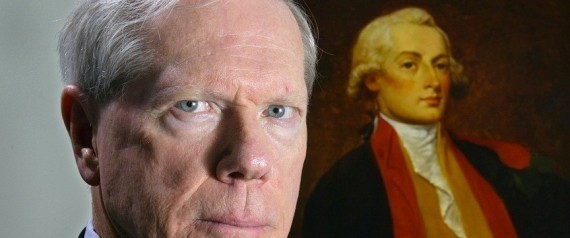
Paul Craig Roberts

God help them if Obama and Romney ever had to participate in a real debate about a real issue at the Oxford Union. They would be massacred.

The “debates” revealed that not only the candidates but also the entire country is completely tuned out to every real problem and dangerous development. For example, you would never know that US citizens can now be imprisoned and executed without due process. All that is required to terminate the liberty and life of an American citizen by his own government is an unaccountable decision somewhere in the executive branch.

No doubt that Americans, if they think of this at all, believe that it will only happen to terrorists who deserve it. But as no evidence or due process is required, how would we know that it only happens to terrorists? Can we really trust a government that has started wars in 7 countries on the basis of falsehoods? If the US government will lie about Iraqi weapons of mass destruction in order to invade a country, why won’t it lie about who is a terrorist?

America needs a debate about how we can be made more safe by removing the Constitutional protection of due process. If the power of government is not limited by the Constitution, are we ruled by Caesar? The Founding Fathers did not think we could trust a caesar with our safety. What has changed that we can now trust a caesar?

If we are under such a terrorist threat that the Constitution has to be suspended or replaced by unaccountable executive action, how come all the alleged terrorist cases are sting operations organized by the FBI? In eleven years there has not been a single case in which the “terrorist” had the initiative!

In the eleven years since 9/11, acts of domestic terrorism have been miniscule if they even exist. What justifies the enormous and expensive Department of Homeland Security? Why does Homeland Security have military-equipped Special Response Teamswith armored vehicles? Who are the targets of these militarized units? If eleven years of US government murder, maiming, and displacement of millions of Muslims hasn’t provoked massive acts of domestic terrorism, why is Homeland Security creating a domestic armed force of its own? Why are there no congressional hearings and no public discussion? How can a government whose budget is deep in the red afford a second military force with no defined and Constitutionally legal purpose?

What is Homeland Security’s motivation in creating a Homeland Youth? Is the new FEMA Corps a disguise for a more sinister purpose, a Hitler Youth as Internet sites suggest?  Are the massive ammunition purchases by Homeland Security related to the raising of a nationwide corps of 18- to 24-year-olds? How can so much be going on in front of our eyes with no questions asked?

Why did not Romney ask Obama why he is working to overturn the federal court’s ruling that US citizens cannot be subject to indefinite detention in violation of the US Constitution? Is it because Romney and his neoconservative advisers agree with Obama and his advisers? If so, then why is one tyrant better than another?

Why has the US constructed a network of detainment camps, for which it is hiring “internment specialists”?

Why does the US Army now have a policy for “establishing civilian inmate labor programs and civilian prison camps on Army installations”?

Here is Rachel Maddow’s report on how Obama criticizes the neoconservative Bush/Cheney regime for violations of the US Constitution and US statutory law and then proposes the same thing himself.

How did the presidential debates avoid the fact of Predator Drones flying over us here in the domestic United States of America? What is the purpose of this? Why are the smallest police forces in the most remote of locations being equipped with armored cars? I have seen them. In small lilly-white communities north of Atlanta, Georgia, communities of sub-million dollar MacMansions have militarized police with armored cars and automatic weapons. SWAT teams in full military gear are everywhere. What is it all about? These small semi-rural areas will never see a terrorist or experience a hostage situation. Yet, they are all armed to the teeth. They are so heavily armed that they could be sent into combat against the Third Reich or the Red Army.

Any such questions run afoul of the assumption of America’s moral perfection. No such debate will ever happen. But if “it is the economy, stupid,” why is there no economic debate?

Last month the Federal Reserve announced QE3. If QE1 and QE2 did not work, why does anyone, including the Federal Reserve chairman, think that QE3 will work?

Yet, the utterly irrational financial markets, which haven’t a clue about anything, were overjoyed at QE3. This can only be because what rules the equity market is propaganda, spin, and disinformation, not facts. The vaunted stock market is incapable of making any correct decision. The decisions are made by the fools in the market operating on a short-run basis. The only safe path to take is to run with the lemmings. This strategy insures that a portfolio manager is always in the middle of his peers and, therefore, he doesn’t lose clients.

How wonderful it would have been for Obama and Romney to have confronted in a real debate how QE3, designed to help insolvent “banks too big to fail,” can help households operating, with two earners, on real incomes of 45 years ago, which is where the current real median household income stands.

How does saving a bank, designated as “too big to fail,” help the family whose jobs or main job has been exported to China or India in order to maximize corporate profits, executive performance bonuses and shareholders’ capital gains?

Obviously the working population of the US has been sacrificed to the profits of the mega-rich.

An appropriate debate question is: Why has the livelihood of working Americans been sacrificed to the profits of the mega-rich?

No such question will ever be asked in a “presidential debate.”

In the 21st century, US citizens became nonentities. They are brutalized by the police whose incomes their taxes pay. They, for protesting some injustice or for no cause at all, are beaten, arrested, tasered and even murdered. The police, paid by the public, beat up paralyzed people in wheel chairs, frame those who call them for help against criminals, taser grandmothers and small children, and shoot down in cold blood unarmed citizens who have done nothing except lose control of themselves, either through alcohol, drugs, or rage.

Brainwashed Americans pay large taxes at every level of government for protection against gratuitous violence, but what their taxes support is gratuitous violence against themselves. Every American, except for the small number of mega-rich who control Washington, can be arrested and dispossessed, both liberty and property, on the basis of nothing but an allegation of a member of the executive branch who might want the accused’s wife, girlfriend, property, or to settle a score, or to exterminate a rival, or to score against a high school, college, or business rival.

In America today, law serves the powerful, not justice. In effect, there is no law, and there is no justice. Only unaccountable power.

What is the point of a vote when the outcome is the same? Both candidates represent the interests of Israel, not the interests of the US. Both candidates represent the interests of the military/security complex, agribusiness, the offshoring corporations, the suppression of unions and workers, the total demise of civil liberty and the US Constitution, which is in the way of unbridled executive power .

In the US today, the power of money rules. Nothing else is in the equation. Why vote to lend your support to the continuation of your own exploitation? Every time Americans vote it is a vote for their own obliteration. Paul Craig Roberts

Hate crime hoax

Sharmeka Moffitt

Two days after multiple law enforcement agencies began an investigation into the attack and burning of a Winnsboro woman at Civitan Park, authorities now believe the wounds were self-inflicted.

According to Winnsboro Police Chief Lester Thomas, evidenced gathered at the scene of the incident shows 20-year-old Sharmeka Moffitt’s initial claims that she was attacked and set on fire turned out to be false claims made up by Moffitt.

“This is a case in which the investigators had to pursue the facts that were presented,” Thomas said. “It’s been a very disturbing case for everyone involved.”

On Sunday, officers responded to a 911 call around 8 p.m. near the walking trail at Civitan Park to find Moffitt with burns covering her body. It was less than a minute from the time the call from Moffitt came into the 911 center that officers from the Winnsboro Police Department and the Franklin Parish Sheriff’s Office were on the scene at the park located on Hwy. 15.

Moffitt could not identify the race of her attackers, but said three men wearing “T-shirt hoodies” doused her in a flammable liquid and set her on fire at the park. The responding officers found no suspects or vehicles at the park where the attack allegedly occurred.

Moffitt was taken to Franklin Medical Center in Winnsboro and then transported to LSU Medical Center in Shreveport, where it was determined she had burns on over 60 percent of her body.

State Police arrived by helicopter with its crime lab team to gather evidence shortly after Moffitt was taken for medical assistance. Law enforcement officials gathered evidence from the scene all night, finishing its scaling of the crime scene by Monday morning.

After analyzing the evidence at the State Police Crime Lab, it was discovered Moffitt’s fingerprints were on the cigarette lighter and the lighter fluid recovered near the wooded area around the crime scene.

“There is more physical evidence along those lines that back this up,” Thomas said.

At a news conference held at LSU Medical Center on Monday evening, Moffitt’s mother, Edna Moffitt said her daughter was in critical condition with third-degree burns on her arms and other areas and would undergo surgery Tuesday.

False rumors regarding the incident were spread on various social media outlets Sunday night just hours after the incident took place. On many of the Twitter and Facebook posts, users speculated the attack was a hate crime and Moffitt was attacked for wearing a President Obama t-shirt when she was “raped and burned alive”.

Moffitt’s mother and Thomas confirmed Monday that the Obama T-shirt rumor was false and there was no evidence of sexual assault.

A racial slur and the letters, KKK, that were written in toothpaste on Moffitt’s vehicle were linked to female DNA, authorities said.

“All of the evidence is pointing back to the victim inflicting this upon herself,” Thomas said. “No evidence has shown any other person was involved.”

Thomas said that no matter the outcome of these types of tragic events, it’s always a heavy burden on law enforcement and the victim’s family.

“My heart truly goes out to the Moffitt family, who are more than just members of our community, they are my friends,” Thomas said. “I hope we can come together as a community and pray for their wellbeing and a quick recovery of Sharmeka.”

Candlelight vigils for Moffitt were held Monday night around Winnsboro before the facts of the case were revealed.

Franklin Parish Sheriff Kevin Cobb said the unity shown by the community on the heels of the incident was inspiring.

“I want to thank the community, who under these stressful times they allowed law enforcement to do their job to seek information, collect evidence and follow the facts,” Cobb said. “Although I think what she did was wrong and had major consequences not only for her, but throughout our community and our country. There’s something wrong here, and we need to help individuals like this. In the same way our community came to support her as a victim, I still hope the community will support her emotional and physical recovery.”

While Thomas and Cobb said no charges have been filed against Moffitt at this time, the case evidence will be turned over to the 5th Judicial District Attorney’s Office for review.

Thomas and Cobb said the collaborative efforts by their departments with the State Police and FBI helped in solving the case in a timely manner. – The Franklik Sun

A fracking health scare

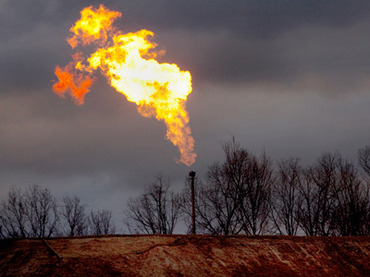
US residents living near gas fracking sites frequently develop health problems as chemicals used in the gas extraction have been tracked in water and air surrounding the sites, a new report has found.

­The Marcellus Shale natural gas field, which stretches across several eastern states, is the biggest and cheapest natural gas field in the US and could contain “almost half of the current proven natural gas reserves in the US,” a Standard & Poor’s report said this week.

But the fracking report, titled “Gas Patch Roulette: How Shale Gas Development Risks Public Health in Pennsylvania,” details health impacts faced by residents near Marcellus Shale. The report, conducted by Earthworks’ Oil & Gas Accountability Project, shows that negative health impacts are not isolated incidents. Close to 70 percent of those living near a fracking site reported an increase in throat irritation and 80 percent suffered from sinus problems after drilling began.

Residents were found to have health complications resulting from Earthworks’ Oil & Gas Accountability Projec due to their proximity to fracking sites, shortly after gas development began. The closer a resident lived to a fracking site, the worse their health became. Half of all survey participants living near such a development site reported they had no problems before drilling began, but suffered from allergies, asthma, arthritis, cancer, high blood pressure, and heart, kidney, pulmonary and thyroid conditions.

Of survey participants, 81 percent also reported experiencing bad odors from the chemicals used in gas and oil development. Some of these chemicals include ammonia, chlorine, gas, propane, ozone, diesel, sulfur and kerosene.

“The clear association between gas development and public health impacts revealed by this research demands that states stop ignoring the problem and start developing the standards necessary to protect the public,” said President of Subra Company, Wilma Subra.

But people haven’t proven to be the only victims of fracking. The report described that 22 out of 108 interviewed residents had pets or livestock that showed health complications after gas development began, including hair loss and seizures.

The Earthworks’ Oil & Gas Accountability Projec has been struggling to properly oversee shale oil and gas development due to a lack of staff, resources, data and a high number of legal loopholes.

“For too long, the oil and gas industry and state regulators have dismissed community members’ health complaints as ‘false’ or ‘anecdotal,’” said project author Nadia Steinzor in a press release published by Earthworks. “With this research, they cannot credibly ignore communities any longer.”

Fed bomber? Not my son!

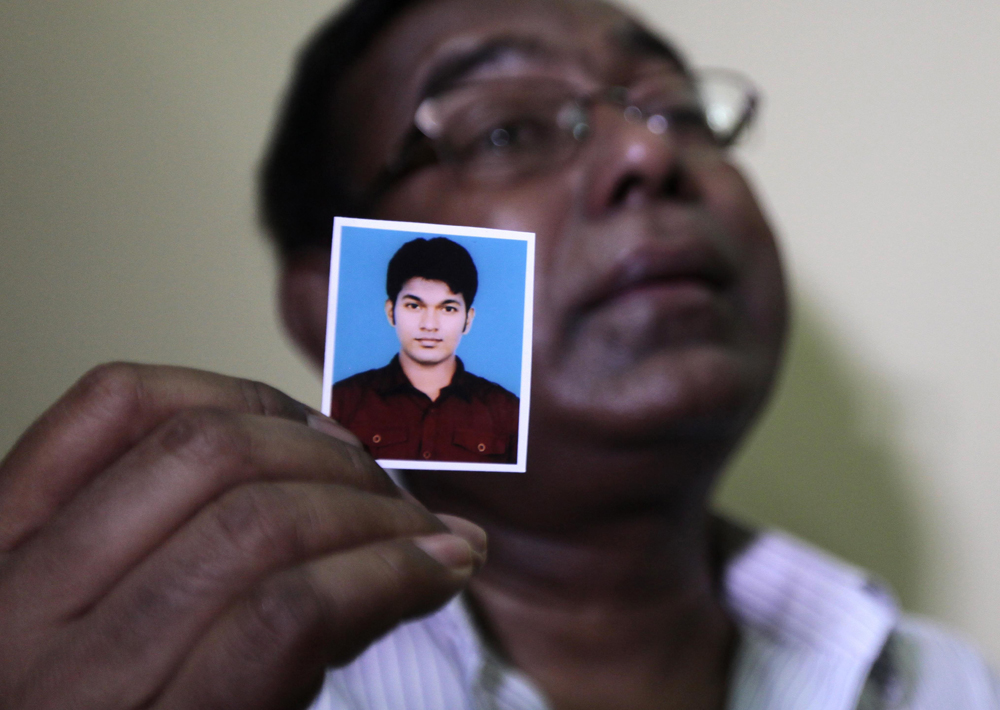
The father of a Bangladeshi man accused of attempting to blow up the New York Federal Reserve Bank yesterday said his son was the victim of a “racist conspiracy”.

Quazi Mohammad Rezwanul Ahsan Nafis, 21, was arrested on Wednesday and faces charges of attempting to use a weapon of mass destruction and attempting to provide material support to al-Qaeda.

“This is nothing but a conspiracy. There is still a racist conspiracy there,” his father Quazi Mohammad Ahsanullah told reporters in the Bangladeshi capital of Dhaka.

“The intelligence of the US is playing with a mere boy whom we sent for higher study. The allegation against my son is not true at all. He could not even drive a car. How was he caught with a van?”

Nafis appeared in a Brooklyn court on Wednesday. The criminal complaint against him said he had entered the US in January and that he had said he was in contact with members of al-Qaeda overseas.

The complaint said he had travelled by van with a man to a New York warehouse where Nafis assembled what he thought was a 450kg bomb.

The man he believed to be an accomplice was, in fact, an undercover agent working for the FBI and the explosives were not in working condition.

He was arrested later in a hotel near the bank.

Nafis had been a business student at North South University, a prestigious private institution in Bangladesh, before leaving to study computer science in the US.

His father, a senior vice-president of a private bank, said Nafis was religious but not a fanatic. He told reporters he had asked the government for help “so that our son will not fall victim to an arranged story”.

“He fell into a trap,” he said.