Edward Snowden joins Twitter

Fugitive US intelligence contractor Edward Snowden has opened an account on the social network website Twitter.

His opening tweet was: “Can you hear me now?”

In his profile, Mr Snowden says he “used to work for the government. Now I work for the public”. He quickly gathered thousands of followers.

So far, Mr Snowden, who is wanted in the US for leaking secrets, only follows one other Twitter user – the US National Security Agency (NSA).

He is believed to be living in Moscow where he is sheltering from US prosecutors.

In his second tweet – a reply to US astrophysicist Neil deGrasse Tyson – Mr Snowden joked: “Now we’ve got water on Mars! Do you think they check passports at the border? Asking for a friend.”

And in another tweet he said: “Hero, traitor – I’m just a citizen with a voice.”

The @Snowden account was verified by Twitter and within nine hours of joining, Mr Snowden had accumulated more than 710,000 followers.

Source: BBC

Democratic revolutions have sown violence, social disaster says Putin

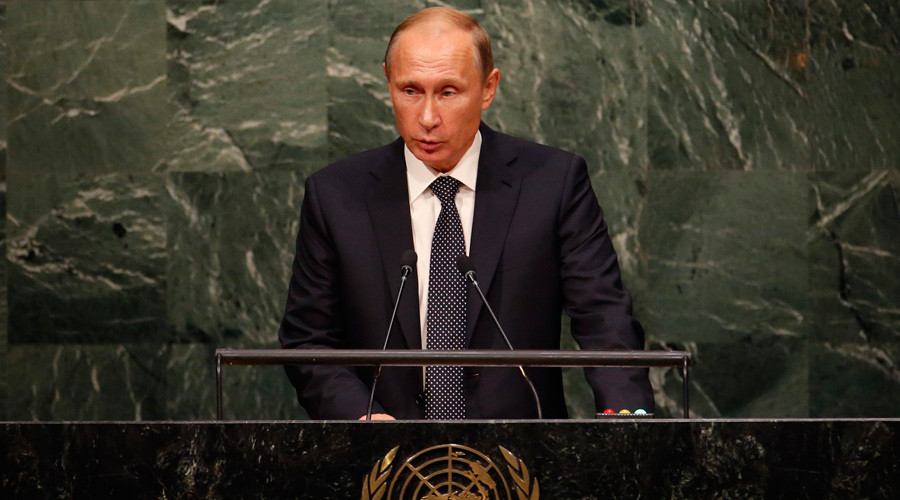
The export of the so-called democratic revolutions continues, as the international community fails to learn from mistakes, which have already been made, Russian President Vladimir Putin said addressing the UNGA.

He cited the example of the revolutions in the Middle East, when people wished for change, “but how did that turn out?”

He said that instead of triumph of democracy “we have violence and social disaster,” where no one cares about human rights, including the right to life.

Actions carried out without a UN mandate could destroy the system of international relations, Putin said in his address.

“Russia is ready to work on the basis of broad consensus on the further development of the United Nations with all partners. But we believe that attempts to undermine the authority and legitimacy of the United Nations are extremely dangerous. This can lead to the collapse of the entire architecture of international relations,” Putin said.

In this case there would be no other rules left “but the rule of force,” he warned. The world would be dominated by “selfishness rather than collective work” and characterized by “dictate rather than equality.”

Putin said that the power vacuums in the Middle East and North Africa regions have led to the emergence of extremists. The Islamic State militants (IS, formerly ISIS/ISIL), who gained foothold in Iraq and Syria, are now seeking to dominate in the whole Islamic world, he said. Some of them have defected from the ‘moderate’ opposition in Syria, who has been supported by some Western states, he stressed.

ISIS trains militants from many nations, including Europe, and Russia is not an exception, he said. Putin urged to cooperate with the Syrian government forces fighting terrorists on the ground.

“We think it is an enormous mistake to refuse to cooperate with the Syrian government and its armed forces who are valiantly fighting terrorism face to face,” he said.

“We should finally acknowledge that no one but President Assad’s armed forces and [Kurdish] militia are truly fighting Islamic State and other terrorist organizations in Syria,” he added.

Source: RT

Overwhelming majority vote for Palestinian flag at UN HQ

UN General Assembly has passed a Palestinian resolution to allow its flag fly in front of the United Nations headquarters in New York, angering Israel and giving hope to Palestinians seeking to gain full UN membership.

The resolution stated that flags of non-member observer states like Palestine “shall be raised at [UN] Headquarters [in New York] and United Nations Offices following the flags of the member states.”

The vote was passed with 119 votes out of 193 in favor. Among the European countries that voted ‘yes’ were France, Russia, Sweden, Italy, Spain, Ireland, Slovenia, Luxembourg, Belgium, Malta and Poland.

The majority of EU member states were among the 45 countries that chose to abstain. A total of eight countries voted against the idea, including the US and Israel.

Palestinian Prime Minister Rami Hamdallah told reporters that he strongly believes this marks another step towards recognition of Palestinian statehood.

“It’s a step to the recognition of Palestine as a full member state of the United Nations,” Hamdallah said in Paris.

Currently, the UN has only one other non-member observer state – the Vatican. The Holy See did not demonstrate any excitement when the idea was first brought up last month, however, and rejected the Palestinians’ original proposal to introduce the resolution as a joint effort, asking the Vatican to co-sponsor the document.

The Vatican still remained unsure on Wednesday whether it will be flying its flag next to Palestine’s.

Source: RT

Thousands of Palestinian buildings to be demolished in West Bank

Palestinians have little chance of obtaining a construction permit in the West Bank, while Israel keeps issuing new demolition orders for Palestinian buildings faster than it can bulldoze them, says a new report from the local United Nations mission.

“Official data released by the Israeli authorities indicate that over 11,000 demolition orders – affecting an estimated 13,000 Palestinian-owned structures, including homes – are currently ‘outstanding’ in Area C of the West Bank,” begins a report, titled “Under Threat,” published by the United Nations Office for the Coordination of Humanitarian Affairs occupied Palestinian territory (OCHA-oPt).

While Israel has destroyed over 2,800 buildings since it began issuing demolition orders in 1988, most of them have never been carried out, remaining a Sword of Damocles hanging over the heads Palestinian residents.

“Structures built without permits are regularly served with demolition orders. While only a minority of the orders issued are executed, these orders do not expire and leave affected households in a state of chronic uncertainty and threat,” say the authors. “Where the orders have been implemented, they have resulted in displacement and disruption of livelihoods, the entrenchment of poverty and increased aid dependency.”

A shockingly low percentage of Palestinian applications for permits is ever approved. Israeli Civil Administration data reveals that Palestinians submitted 2,020 requests for building permits in Area C between 2010 and 2014 and only 33 of them (1.5 percent) were approved.

Palestinians have been demanding full recognition as a sovereign state from the UN and the international community for years now.

Recently, a number of international organizations have intensified their criticism of Israel’s stepped up demolition activities in the West Bank.

Source: RT

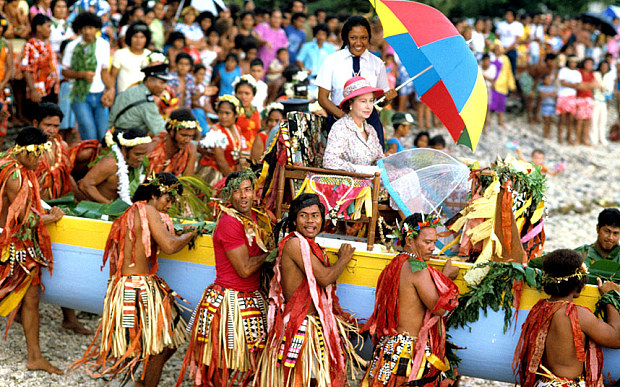
Many Commonwealth countries want to dump the Queen

Barbados has announced it wants to replace the Queen with a ceremonial president in 2016. Other Commonwealth countries are considering a similar constitutional change

Barbados is getting rid of the Queen. For some reason, the prime minister, Freundel Stuart, feels that the country’s head of state should not be a foreign white woman who has the job because of a history of conquest, who is also head of state for 15 other countries, including most of their near neighbours, and who last visited Barbados in 1989.

Stuart promises to present a bill to remove her in time for next year’s 50th anniversary of Barbadian independence. If he does so, it is expected to pass.

To some extent it is easy to see why Britain keeps the Queen. She is British, after all. But what about Elizabeth II’s other queendoms? Might they be tempted to follow Barbados? Most Commonwealth countries have not kept the British monarch as head of state, and even those that have kept warm feelings may cool when Charles takes over.

The list of candidates is: Antigua and Barbuda, Australia, the Bahamas, Belize, Canada, Grenada, Jamaica, New Zealand, Papua New Guinea, St Christopher and Nevis, St Lucia, St Vincent and the Grenadines, the Solomon Islands and Tuvalu.

Among these, Jamaica could well be first to go republican, and should have beaten Barbados to it. The prime minster, Portia Simpson-Miller, vowed to do so before Jamaica’s own 50th anniversary of independence in 2012. The fact that she still hasn’t may be a sign that this kind of constitutional change is often more popular than practical.

In Canada, a poll in 2014 showed that, if there were to be a change in the constitution, the majority would prefer “a Canadian-born person chosen by Canadians” as head of state, although no such change looks imminent. Australia nearly embraced republicanism in a referendum in 1999, but 54.9% of those who voted chose otherwise.

But despite talk of crumbling and chilly palaces and of Queen Elizabeth also slipping down several “rich lists”, Britain’s monarchy will be wealthier than ever when she becomes its longest serving royal on the throne — 63 years — on Sept. 9.

A Reuters analysis of royal assets shows that the British monarchy has had a bumper few decades by benefiting from a rise in house and land prices.

According to a Reuters estimate based on the monarchy’s interests in its key investment vehicle, royal estates and its trove of treasures, the British monarchy has nominal assets worth about 22.8 billion pounds ($34.8 billion).

That would not get the British monarchy a spot in the top 10 global rich list headed by Bill Gates. But it would place the family in the top 20 globally, broadly comparable to the fortunes Forbes has estimated are controlled by Michael Bloomberg or Facebook founder Mark Zuckerberg.

The Royal Collection, the monarchy’s centuries-old store of treasures, is valued at 10 billion pounds by Brand Finance, a consultancy which said it put the monarchy’s overall tangible assets at 20 billion pounds.

Both Reuters and Brand Finance’s estimates exclude the unknown value of splendid royal residences such as Buckingham Palace, Windsor and Balmoral.

Source: Guardian/Reuters

Israel bans journalists voicing opinions on air

The Israeli parliament has passed a law banning journalists working for the country’s public broadcast authority from expressing their opinions on air.

The law, passed early Thursday in the middle of the night, drew criticism from journalists, who accused the government of trying to stifle dissent.

The law says broadcasts should “avoid one-sidedness, prejudice, expressing personal opinions, giving grades and affixing labels.”

The Israel Press Council urged parliament to cancel the law, saying it violates free speech.

Cabinet Minister Ofir Akunis said the law only applies to newscasts. He told Channel 2 TV that some journalists critical of the government “aren’t being professional and are doing it for political reasons.”

It remains unclear how the law will be enforced.

Source: AP

DRC bans Belgian film on rape

The Democratic Republic of Congo on Wednesday banned a documentary film about a doctor who treats war rape victims, leading the filmmakers to say the government was trying to silence debate about sexual violence.

Media Minister Lambert Mende gave no reason for the decision to ban The Man who Mends Women (L’Homme Qui Repare Les Femmes), which is about Congolese gynecologist Denis Mukwege, the founder of Panzi Hospital in the eastern city of Bukavu.

Sexual violence by militias and the army is a defining atrocity of a conflict in eastern Congo that has lasted two decades, and the hospital has treated thousands of rape victims.

Several high-level perpetrators have recently been convicted.

Human rights groups have accused the army of using rape as a weapon, but military leaders objected to the film as slanderous, said Thierry Michel, the film’s Belgian co-producer.

“The banning of the scheduled screening of this film is a way of gagging (Mukwege) … and (the voice) of the victims of these wars and tragedies that the country has lived through for 20 years,” Michel said in the statement.

The film, co-financed by Belgium’s foreign affairs ministry and the International Organisation of La Francophonie, was scheduled to be screened in the capital, Kinshasa, next week and Bukavu the following week.

Mukwege won the Sakharov Prize, Europe’s top human rights award, last October and was tipped for last year’s Nobel Peace Prize.

Source: AFP

Mali riverboat capsizes

At least 18 people died when a pirogue carrying passengers on the River Niger in central Mali capsized on Wednesday, said a spokesperson for the country’s department of homeland security and emergency preparedness.

There were four missing and 70 survivors from the accident that took place around 05:00 in the rural community of Deboye in Mopti region’s Bangou locality, spokesperson Sounkolo Togola told Reuters.

A security source said overcrowding was a likely cause.

Boats on Africa’s lakes and rivers are often stacked with people and trade goods, and poor maintenance and overcrowding are a frequent cause of accidents.

Source: Reuters

New Ebola death in Sierra Leone

A woman who died last week in northern Sierra Leone tested positive for Ebola, the National Ebola Response Centre (NERC) said Monday, in a setback for the country’s bid to gain Ebola-free status.
Related Stories

There had been celebratory scenes last week when the country’s last known Ebola patient was released from hospital in the central city of Makeni after being cured of the virus, raising hopes the west African nation may finally have beaten the devastating epidemic.

Sources contacted by AFP confirmed that the woman was in her mid-60s and lived in Sella Kafta village in Kambia District.

A swab taken after her death Friday confirmed she had contracted Ebola.

She had not travelled to either Liberia or Guinea, two other countries also blindsided by the worst outbreak of Ebola in history, which has killed some 11,300 people since first emerging in December 2013 in Guinea.

Sydney’s private schools have become white ghettos

Some of Sydney’s most prestigious private schools have become Anglo-Australian ghettos as the education of high school students across the city is increasingly segregated along ethnic lines.

Students with a language background other than English made up 52 per cent of all enrolments in Sydney’s public high schools in 2011 while the share in independent schools was just 22 per cent, research by the University of Technology Sydney’s Dr Christina Ho has found. The proportion in Catholic schools was 37 per cent. “Schools are becoming more segregated in terms of both class and ethnicity,” Dr Ho said. “More and more students are going to schools that do not represent the range of people in their neighbourhood, but rather a select group.”

The segregation trend was very pronounced on Sydney’s lower North Shore, home to some of Australia’s highest fee private schools. Ho identified 11 private high schools in the area where the proportion of students from language backgrounds other than English was at or below 20 per cent. Queenwood School for Girls in Mosman had the lowest share (2 per cent) followed by St Ignatius College Riverview in Lane Cove (5 per cent) and Monte Sant’ Angelo Mercy College in North Sydney (6 per cent).

However, in two selective public high schools in the area – North Sydney Boys and North Sydney Girls – the proportion of students from a language background other than English was above 90 per cent. At the nearby comprehensive public schools Chatswood High and Willoughby Girls High the proportion was 76 per cent and 57 per cent respectively. “You can walk between some of these schools in a few minutes and yet one is like a white bubble and the other is like a non-white bubble,” Dr Ho told the Herald. “Its astounding that this can be happening in the same suburb like say, North Sydney.”

Dr Ho raised concerns about the lack of cultural diversity in north shore private schools because they play such an important role in educating the children of Australia’s cultural and political elite, and are sites where powerful networks are forged. “The fact that there are so few students from language backgrounds other than English raises questions about the ethnic exclusivity of these networks, with ramifications for the composition of Australia’s future political, cultural and economic leaders,” she wrote in an article titled ‘People like us’: School choice, multiculturalism and segregation in Sydney published in The Australian Review of Public Affairs. The Prime Minister, Tony Abbott, and several members of the Federal cabinet including Treasurer Joe Hockey and Agriculture Minister Barnaby Joyce attended private schools identified in the research.

Dr Ho’s research, which used data published on the MySchool website, also revealed a significant difference in the ethnic make-up of private and public schools in the Burwood-Strathfield region. Public high schools in that area had an average of 80 per cent of students with a language background other than English while private schools had about half that figure at 42 per cent. Dr Ho said government policies to promote school “choice” had been the main factor driving ethnic segregation.

“In a multicultural society like Australia, it is unnatural and unhealthy for our schools to be so ethnically divided,” says Dr Ho. “In private schools that are overwhelmingly Anglo-dominated, students are not being given sufficient opportunity to develop the cross-cultural awareness and skills that can only be developed through everyday encounters and friendships with people from other backgrounds.”

Dr Ho also said the very high proportion of non-Anglo students in selective high schools “raised questions” about whether they were being shunned by Anglo-Australian families.

Source: Sydney Morning Herald

China shares take a dive

Alarm bells rang across world markets on Monday as a near 9 percent dive in China shares and a sharp drop in the dollar and major commodities panicked investors.

European stocks were more than 5 percent in the red and Wall Street was braced for similar losses after Asian shares slumped to 3-year lows as a three month-long rout in Chinese equities threatened to get out of hand.

Oil plunged another 4 percent, while safe-haven government U.S. an German bonds and the yen and the euro rallied as widespread fears of a China-led global economic slowdown and currency war kicked in.

“It is a China driven macro panic,” said Didier Duret, chief investment officer at ABN Amro. “Volatility will persist until we see better data there or strong policy action through forceful monetary easing.”

With serious doubts also now emerging about the likelihood of a U.S. interest rate rise this year, the dollar slid against other major currencies.

The near 9 percent slump in Chinese stocks was their worst performance since the depths of the global financial crisis in 2007 and wiped out what was left of the 2015 gains, which in June has been more than 50 percent.

With the latest slide rooted in disappointment that Beijing did not announce expected policy support over the weekend, all index futures contracts slumped by their 10 percent daily limit, pointing to more bad days ahead.

Source: Reuters

South Korea talks tough after landmine incident

South Korean President Park Geun-hye talked tough on Monday, demanding that North Korea apologise over a recent landmine incident, even as the bitter rivals held marathon negotiations in a bid to defuse tensions that have brought the peninsula to the brink of armed conflict.

Park said anti-North propaganda broadcasts would continue unless Pyongyang took responsibility for landmine explosions early this month that wounded two South Korean soldiers in the Demilitarised Zone (DMZ) separating the two countries.

North Korea denies it laid the mines.

The incident has escalated into a crisis that saw both sides exchange artillery fire on Thursday and ramp up their military readiness. The United Nations, the United States and the North’s lone major ally, China, have all called for calm.

“We need a clear apology and measures to prevent a recurrence of these provocations and tense situations,” Park told a meeting with her top aides, according to a statement released by her office. “Otherwise, this government will take appropriate steps and continue loudspeaker broadcasts.”

Seoul and Washington were reviewing the possibility of bringing in “strategic” US military assets, South Korean Defence Ministry spokesperson Kim Min-seok said, without elaborating.

Source: Reuters

Thai police identify Bangkok bomb attackers on CCTV

An explosion close to Erawan shrine in Bangkok, Thailand, killed at least 21 people including seven foreigners.

The tally of foreign tourists killed by the blast now stands at seven, Thai police spokesman Prawut Thavornsiri has told AFP.

According to his office, two Chinese citizens from the mainland, two people from Hong Kong, two Malaysians and a Singaporean have been confirmed among a death toll of 21 at this stage.

Five Thais have been confirmed killed, while the other nine victims have not yet been identified. Investigators have been having trouble establishing the exact number of dead as victims were torn apart so horrendously that they are still trying to match body parts.

The wounded come from Thailand, China, Japan, Hong Kong, Indonesia, Malaysia, Maldives, Oman, the Philippines and Singapore.

The revised list of nationalities reflects the popularity of the shrine with visitors from across East Asia and particularly Chinese communities.

The head of Thailand’s junta now says a suspect has been identified from CCTV footage. The blast is believed to have been the work of an anti-government group based in Thailand’s north-east, where the anti-coup Red Shirt movement is based, according to AFP.

No group has claimed responsibility for the blast on Monday evening, which left scores wounded, and officials in Thailand have yet to blame any group.

Thailand’s three southernmost provinces are home to a long-running Muslim separatist insurgency. Since 2004, more than 6,500 people, most of them civilians, have been killed in violence in the region.

The army has ruled Thailand since May 2014, when it ousted the elected government after months of anti-government protests.

Source: The Telegraph

Lavrov calls Saudi diplomat imbecile

Russia’s Foreign Minister Sergei Lavrov prompted a wave of social media buzz this week after being filmed swearing under his breath during a press conference in Moscow with his Saudi counterpart.

Lavrov and Foreign Minister Adel al-Jubier met Tuesday to discuss how to resolve the worsening Syrian civil war, and the fate of President Bashar al-Assad.

The two men disagreed how to deal with the embattled president, as Russia believes Assad, an ally of President Vladimir Putin, should be involved in a coalition against the Islamic State, but Saudi Arabia wants him removed from power.

While the Saudi top diplomat spoke, Lavrov was seen shaking his head, adjusting his glasses, and muttering to himself, “[expletive] imbeciles,” according to translators.

Lavrov said the two top diplomats agreed on steps to help the Syrian government and opposition groups discuss the future of the country.

Russian and Iranian officials are persuading Saudi Arabia and the United States to realize that fighting terrorism in the region is more important than ousting Assad, The New York Times reported this week.

Jubeir insisted after his meeting with Lavrov that “there is no place for Assad in the future of Syria.”

According to United Nations estimates, the Syrian civil war has killed over 200,000 people since it began over four years ago.

The former U.S. Ambassador to Russia Michael McFaul tweeted Wednesday: “Really? And he used to accuse me of undiplomatic language.”

Source: UPI