Israel launches racially segregated buses

From Monday Palestinians travelling to day jobs into central Israel from the West Bank will be urged to board special buses at a checkpoint instead of the regular services used by Israelis.

The scheme was drawn up by the Israeli transport ministry after residents in two Jewish settlements complained that Palestinians travellers on the Trans-Samaria road – also known as Highway 5 – between the West Bank and Tel Aviv were a potential threat.

There were also reports of overcrowding and fights between Israeli and Palestinian passengers.

The transport ministry insisted the move was “designed to improve the service for Palestinians entering Israel”.

But some human rights groups called it “blatant racism” that resembled South African-style apartheid.

“They are institutionalising segregated services for Jews and non-Jews,” said Ofra Yeshua-Lyth, an activist with Women For Civil Disobedience, an Israeli-Palestinian campaign group. “Many people don’t class the Israeli situation as apartheid because for a long time, Israel refrained from the characteristics of petty apartheid, like separate roads, cafés and buses. This bus situation is a step in the direction of petty apartheid because people are being segregated in their daily activities.”

Avner Ovadia, a transport ministry spokesperson, said there was no official ban on Palestinian workers travelling on public buses.

“Furthermore, the transport ministry is not authorised to stop any passenger travelling on these bus routes,” he said.

But drivers with the Afikim bus company, which operates the Trans-Samaria route, said Palestinians attempting to use the regular services would be pointed towards a different bus.

“We are not allowed to refuse service and we will not order anyone to get off the bus, but from what we were told … there will be checks at

the checkpoint, and Palestinians will be asked to board their own buses,” one driver told Ynet, an Israeli news website.

Flyers in Arabic advertising the new service have been distributed at bus stops near Palestinian villages in the West Bank.

Yirsael Maidad, a spokesman for the Jewish Settlers Council, said Israelis felt justified in refusing to share buses with Palestinians because of Israel’s experience with suicide bombers.

“Since we ride buses with Arabs every day in Israel, it’s not a racist thing but for some strange reason, Arabs blow themselves up in buses and Israelis find that very unnerving,” he said. “If you were to ask some bright young radical, he would say forcing Arabs to ride Israeli uses would be a form of colonialism. Having their own buses should be very much welcomed as part of a state-building process.”

Campaigners say troops began ordering Palestinians with Israeli work permits off buses after settlers made complaints last November.

After witnessing one such incident, Ms Yeshua-Lyth lodged a report with Makhsom Watch, an Israeli group that monitors check point incidents. She described how soldiers herded around 30 Palestinian workers from a bus travelling from Tel Aviv to the West Bank.

“The soldier/officer roars: “Udrub!” (Move!) And then: “Sit on your butts! On your butts!,” she wrote. “They are then marched to the terminal fence and made to stand along it in a line, then to sit on the cold ground and wait.”

When the men asked why they had been taken from the bus, they were told “You’re not allowed to be on Highway 5” and “You’re not allowed to use public transportation at all”.

Palestinians say they have been forced to walk several miles to their homes or use expensive taxi services since the policy of removing them from buses began. An estimated 29,000 Palestinians travel to jobs in Israel every day, according to official figures. – http://www.telegraph.co.uk

US Internet providers to stop file-sharing

Starting this week, Internet Service Providers will start throttling connection speeds for customers alleged to be pirating copyright-protected materials.

Months after a controversial “six-strike” program was slated to be rolled out by the biggest ISPs in the United States, the Copyright Alert System (CAS) confirmed on Monday that the initiative has gone live.

The program, critiqued by Internet freedom activists and privacy advocates alike, will let ISPs take six steps of escalating severity in handling incidents where customers are believed to be illegally sharing material. Through the “graduate response” approach, suspected copyright criminals could be issued a series of warnings for illegally downloading protected content.

With the first strike caught by the CAS, a customer could be issued a warning. As strikes increase, however, “mitigation measures,” connection speed throttling and termination of service are all possible options.

“Practically speaking, this means our content partners will begin sending notices of alleged P2P [peer-to-peer] copyright infringement to ISPs, and the ISPs will begin forwarding those notices in the form of Copyright Alerts to consumers,” Jill Lesser of the Center for Copyright Information rights in a blog post on Monday.

“Consumers whose accounts have been used to share copyrighted content over P2P networks illegally (or without authority) will receive Alerts that are meant to educate rather than punish, and direct them to legal alternatives. And for those consumers who believe they received Alerts in error, an easy to use process will be in place for them to seek independent review of the Alerts they received,” she adds — neglecting to mention that the appeals process costs customers $35 a pop.

Previously, Time Warner, Verizon, AT&T, Comcast, Cablevision Systems and other ISPs have signed onto the program, which was last scheduled to start in July 2012. Gigi Sohn, president of digital rights group Public Knowledge, told Wired last year that originally ISPs hoped to roll out the program earlier, but major protests against other restrictive Web policies, including attempts to pass certain legislation, left them to wait until the dust settled.

“SOPA and PIPA definitely had an impact. There was some concern, if they moved ahead too quickly, public opinion would be so raw, this would be caught in the whirlwind of bad PR,” Sohn told Wired.

The Electronic Frontier Foundation notes that the official CSI six-strikes website lets users learn more about the history of copyright, but does so by re-directing them to a page managed by the Copyright Alliance — the same group that advocated heavily for last year’s failed Stop Online Piracy Act, or SOPA.

When the six-strikes program was first introduced, the White House issued an official statement saying it should “have a significant impact on reducing online piracy.” – RT

Britain’s colonial shame

David Cameron’s ancestors were among the wealthy families who received generous reparation payments that would be worth millions of pounds in today’s money

The true scale of Britain’s involvement in the slave trade has been laid bare in documents revealing how the country’s wealthiest families received the modern equivalent of billions of pounds in compensation after slavery was abolished.

The previously unseen records show exactly who received what in payouts from the Government when slave ownership was abolished by Britain – much to the potential embarrassment of their descendants. Dr Nick Draper from University College London, who has studied the compensation papers, says as many as one-fifth of wealthy Victorian Britons derived all or part of their fortunes from the slave economy.

As a result, there are now wealthy families all around the UK still indirectly enjoying the proceeds of slavery where it has been passed on to them. Dr Draper said: “There was a feeding frenzy around the compensation.” A John Austin, for instance, owned 415 slaves, and got compensation of £20,511, a sum worth nearly £17m today. And there were many who received far more.

Academics from UCL, led by Dr Draper, spent three years drawing together 46,000 records of compensation given to British slave-owners into an internet database to be launched for public use on Wednesday. But he emphasised that the claims set to be unveiled were not just from rich families but included many “very ordinary men and women” and covered the entire spectrum of society.

Dr Draper added that the database’s findings may have implications for the “reparations debate”. Barbados is currently leading the way in calling for reparations from former colonial powers for the injustices suffered by slaves and their families.

Among those revealed to have benefited from slavery are ancestors of the Prime Minister, David Cameron, former minister Douglas Hogg, authors Graham Greene and George Orwell, poet Elizabeth Barrett Browning, and the new chairman of the Arts Council, Peter Bazalgette. Other prominent names which feature in the records include scions of one of the nation’s oldest banking families, the Barings, and the second Earl of Harewood, Henry Lascelles, an ancestor of the Queen’s cousin. Some families used the money to invest in the railways and other aspects of the industrial revolution; others bought or maintained their country houses, and some used the money for philanthropy. George Orwell’s great-grandfather, Charles Blair, received £4,442, equal to £3m today, for the 218 slaves he owned.

The British government paid out £20m to compensate some 3,000 families that owned slaves for the loss of their “property” when slave-ownership was abolished in Britain’s colonies in 1833. This figure represented a staggering 40 per cent of the Treasury’s annual spending budget and, in today’s terms, calculated as wage values, equates to around £16.5bn.

A total of £10m went to slave-owning families in the Caribbean and Africa, while the other half went to absentee owners living in Britain. The biggest single payout went to James Blair (no relation to Orwell), an MP who had homes in Marylebone, central London, and Scotland. He was awarded £83,530, the equivalent of £65m today, for 1,598 slaves he owned on the plantation he had inherited in British Guyana.

But this amount was dwarfed by the amount paid to John Gladstone, the father of 19th-century prime minister William Gladstone. He received £106,769 (modern equivalent £83m) for the 2,508 slaves he owned across nine plantations. His son, who served as prime minister four times during his 60-year career, was heavily involved in his father’s claim.

Mr Cameron, too, is revealed to have slave owners in his family background on his father’s side. The compensation records show that General Sir James Duff, an army officer and MP for Banffshire in Scotland during the late 1700s, was Mr Cameron’s first cousin six times removed. Sir James, who was the son of one of Mr Cameron’s great-grand-uncle’s, the second Earl of Fife, was awarded £4,101, equal to more than £3m today, to compensate him for the 202 slaves he forfeited on the Grange Sugar Estate in Jamaica.

Another illustrious political family that it appears still carries the name of a major slave owner is the Hogg dynasty, which includes the former cabinet minister Douglas Hogg. They are the descendants of Charles McGarel, a merchant who made a fortune from slave ownership. Between 1835 and 1837 he received £129,464, about £101m in today’s terms, for the 2,489 slaves he owned. McGarel later went on to bring his younger brother-in-law Quintin Hogg into his hugely successful sugar firm, which still used indentured labour on plantations in British Guyana established under slavery. And it was Quintin’s descendants that continued to keep the family name in the limelight, with both his son, Douglas McGarel Hogg, and his grandson, Quintin McGarel Hogg, becoming Lord Chancellor.

Dr Draper said: “Seeing the names of the slave-owners repeated in 20th‑century family naming practices is a very stark reminder about where those families saw their origins being from. In this case I’m thinking about the Hogg family. To have two Lord Chancellors in Britain in the 20th century bearing the name of a slave-owner from British Guyana, who went penniless to British Guyana, came back a very wealthy man and contributed to the formation of this political dynasty, which incorporated his name into their children in recognition – it seems to me to be an illuminating story and a potent example.”

Mr Hogg refused to comment yesterday, saying he “didn’t know anything about it”. Mr Cameron declined to comment after a request was made to the No 10 press office.

Another demonstration of the extent to which slavery links stretch into modern Britain is Evelyn Bazalgette, the uncle of one of the giants of Victorian engineering, Sir Joseph Bazalgette and ancestor of Arts Council boss Sir Peter Bazalgette. He was paid £7,352 (£5.7m in today’s money) for 420 slaves from two estates in Jamaica. Sir Peter said yesterday: “It had always been rumoured that his father had some interests in the Caribbean and I suspect Evelyn inherited that. So I heard rumours but this confirms it, and guess it’s the sort of thing wealthy people on the make did in the 1800s. He could have put his money elsewhere but regrettably he put it in the Caribbean.”

The TV chef Ainsley Harriott, who had slave-owners in his family on his grandfather’s side, said yesterday he was shocked by the amount paid out by the government to the slave-owners. “You would think the government would have given at least some money to the freed slaves who need to find homes and start new lives,” he said. “It seems a bit barbaric. It’s like the rich protecting the rich.”

The database is available from Wednesday at: ucl.ac.uk/lbs.

Cruel trade

Slavery on an industrial scale was a major source of the wealth of the British empire, being the exploitation upon which the West Indies sugar trade and cotton crop in North America was based. Those who made money from it were not only the slave-owners, but also the investors in those who transported Africans to enslavement. In the century to 1810, British ships carried about three million to a life of forced labour.

Campaigning against slavery began in the late 18th century as revulsion against the trade spread. This led, first, to the abolition of the trade in slaves, which came into law in 1808, and then, some 26 years later, to the Act of Parliament that would emancipate slaves. This legislation made provision for the staggering levels of compensation for slave-owners, but gave the former slaves not a penny in reparation.

More than that, it said that only children under six would be immediately free; the rest being regarded as “apprentices” who would, in exchange for free board and lodging, have to work for their “owners” 40 and a half hours for nothing until 1840. Several large disturbances meant that the deadline was brought forward and so, in 1838, 700,000 slaves in the West Indies, 40,000 in South Africa and 20,000 in Mauritius were finally liberated. – The Independent

London’s white flight

More than 600,000 white British Londoners have left the capital in a decade.

Census figures show that between 2001 and 2011 the level of ‘white flight’ reached 620,000.

It is the equivalent of a city the size of Glasgow – made up entirely of white Britons – moving out of the capital.

White Britons are now a minority in the country’s capital with 620,000 leaving in a decade

The figures, reported by the BBC yesterday, mean that for the first time, white Britons are now in a minority in the country’s largest city.

At the same time, the census shows, some rural areas have seen a rise in the proportion of people who describe their ethnicity as ‘white British’.

Some 3.7million Londoners classified themselves as white British in 2011 – down from 4.3million in 2001 – despite the city’s population increasing by nearly one million over the decade to 8.2million.

Sir Andrew Green of MigrationWatch thinks that the BBC should have addressed such a serious issue less trivially

White Britons now make up 45 per cent of the population, compared with 58 per cent in 2001.

London’s population has been boosted by immigrants. Three million foreign-born people now live in the capital.

Five London boroughs saw the proportion of white Britons fall by more than a quarter. The largest decline was in Newham, East London, where the decrease was 37.5 per cent.

In Barking and Dagenham, on the East London/Essex border, 80 per cent of residents were white British in 2001 but by 2011 the proportion was 49 per cent.

There were also big falls in Redbridge, Harrow, Brent, Enfield, Ealing and Waltham Forest. The BBC website was criticised by readers for its depiction of the change as a ‘story of success’ in which many white Britons had moved out to live by the sea or in the countryside.

Sir Andrew Green, chairman of the MigrationWatch think-tank, said: ‘The BBC make a very serious mistake in addressing an issue of such importance to the British public in such a trivial and superficial manner.

‘It’s surely obvious that the main reason for white flight is because people are not willing to live in an environment which has changed beyond recognition and against their own wishes.’

Ralph Baldwin, a Tory councillor in Barking and Dagenham, said: ‘I think people left for a variety of reasons.

‘If you look back to the early 2000s many people were able to retire to Clacton-on-Sea and they saw their friends going and followed.

‘But people also watched all this demographic change going on between 2000 and 2010 and they thought, “We don’t know where we are living any more”.

‘One day they are in a place that they think is Essex and then they are living in another place.
‘It has never been an issue of race. It’s about the inability of people to affect change. The world was changing around them and they couldn’t do anything about it.’

Behind white Britons, the largest ethnic group in London is now Asians – including those born here and those arriving from overseas – who make up 18 per cent of the population.

Black Londoners – including Africans, black Britons and those from the Caribbean – make up 13 per cent.

The census shows the proportion of white Britons in South Derbyshire went up by 13.7 per cent over the decade.

Other rural boroughs that saw big increases included North Kesteven and West Lindsey in Lincolnshire, Uttlesford in Essex, East Northamptonshire, East Cambridgeshire, Mid Suffolk, South Norfolk, Mid Devon and Forest Heath in Suffolk.

The census shows the population of England and Wales was swollen by nearly four million immigrants in a decade of sweeping social change.

In 2011 there were 7.5million people who were born abroad living here, of whom more than half had arrived since 2001. – Daily Mail

Human intelligence is slowly declining

Would you be surprised to hear that the human race is slowly becoming dumber, and dumber? Despite our advancements over the last tens or even hundreds of years, some ‘experts’ believe that humans are losing cognitive capabilities and becoming more emotionally unstable. One Stanford University researcher and geneticist, Dr. Gerald Crabtree, believes that our intellectual decline as a race has much to do with adverse genetic mutations. But there is more to it than that.

According to Crabtree, our cognitive and emotional capabilities are fueled and determined by the combined effort of thousands of genes. If a mutation occurred in any of of these genes, which is quite likely, then intelligence or emotional stability can be negatively impacted.

“I would wager that if an average citizen from Athens of 1000 BC were to appear suddenly among us, he or she would be among the brightest and most intellectually alive of our colleagues and companions, with a good memory, a broad range of ideas, and a clear-sighted view of important issues. Furthermore, I would guess that he or she would be among the most emotionally stable of our friends and colleagues,” the geneticist began his article in the scientific journal Trends in Genetics.

Further, the geneticist explains that people with specific adverse genetic mutations are more likely than ever to survive and live amongst the ‘strong.’ Darwin’s theory of ‘survival of the fittest’ is less applicable in today’s society, therefore those with better genes will not necessarily dominate in society as they would have in the past.While this hypothesis does have some merit: are genes really the primary reason for the overall cognitive decline of the human race? If humans really are lacking in intelligence more than before, it’s important to recognize other possible causes. Let’s take a look at how our food system plays a role in all of this.

It’s sad, but true; our food system today is contributing to lower intelligence across the board.

Researchers from Harvard have found that a substance rampant in the nation’s water supply, fluoride,  is lowering IQ and dumbing down the population. The researchers, who had their findings published in the prominent journal Environmental Health Perspectives, a federal government medical journal stemming from the U.S National Institute of Environmental Health Sciences, concluded that ”our results support the possibility of adverse effects of fluoride exposures on children’s neurodevelopment”.

“In this study we found a significant dose-response relation between fluoride level in serum and children’s IQ…This is the 24th study that has found this association”.

One attorney, Paul Beeber, NYSCOF President, weighs in on the research by saying:

“It’s senseless to keep subjecting our children to this ongoing fluoridation experiment to satisfy the political agenda of special-interest groups. Even if fluoridation reduced cavities, is tooth health more important than brain health? It’s time to put politics aside and stop artificial fluoridation

One study published in the Proceedings of the National Academy of Sciences found that pesticides, which are rampant among the food supply, are creating lasting changes in overall brain structure — changes that have been linked to lower intelligence levels and decreased cognitive function. Specifically, the researchers found that a pesticide known as chlorpyrifos (CPF) has been linked to ”significant abnormalities”. Further, the negative impact was found to occur even at low levels of exposure.

Lead researcher Virginia Rauh, a professor at the Mailman School of Public Health, summarized the findings:

“Toxic exposure during this critical period can have far-reaching effects on brain development and behavioral functioning.”

Following 14,000 children, British researchers uncovered the connection between processed foods and reduced IQ. After recording the children’s’ diets and analyzing questionnaires submitting by the parents, the researchers found that if children were consuming a processed diet at age 3, IQ decline could begin over the next five years. The study found that by age 8, the children had suffered the IQ decline. On the contrary, children who ate a nutrient-rich diet including fruit and vegetables were found to increase their IQ over the 3 year period. The foods considered nutrient-rich by the researchers were most likely conventional fruits and vegetables.

Interestingly, one particular ingredient ubiquitous in processed foods and sugary beverages across the globe -high fructose corn syrup – has been tied to reduced IQ. The UCLA researchers coming to these findings found that HFCS may be damaging the brain functions of consumers worldwide, sabotaging learning and memory. In fact, the official release goes as far to say that high-fructose corn syrup can make you ‘stupid’.

Gene mutations may have something to do with our ongoing decline in intelligence, but let’s stop to think for a moment what we’re doing to ourselves to make this decline even more prominent.- http://naturalsociety.com

Drones, Kill Lists and Machiavelli

Desmond Tutu

I am deeply, deeply disturbed at the suggestion in “A Court to Vet Kill Lists” that possible judicial review of President Obama’s decisions to approve the targeted killing of suspected terrorists might be limited to the killings of American citizens.

Do the United States and its people really want to tell those of us who live in the rest of the world that our lives are not of the same value as yours? That President Obama can sign off on a decision to kill us with less worry about judicial scrutiny than if the target is an American? Would your Supreme Court really want to tell humankind that we, like the slave Dred Scott in the 19th century, are not as human as you are? I cannot believe it.

I used to say of apartheid that it dehumanized its perpetrators as much as, if not more than, its victims. Your response as a society to Osama bin Laden and his followers threatens to undermine your moral standards and your humanity.

DESMOND M. TUTU
Aboard MV Explorer, near Hong Kong Feb. 11, 2013

The writer, winner of the 1984 Nobel Peace Prize, is archbishop emeritus of Cape Town.

Iceland wants to ban pornography

The government is considering introducing internet filters, such as those used to block China off form the worldwide web, in order to stop Icelanders downloading or viewing pornography on the internet.

The unprecedented censorship is justified by fears about damaging effects of the internet on children and women.

Ogmundur Jonasson, Iceland’s interior minister, is drafting legislation to stop the access of online pornographic images and videos by young people through computers, games consoles and smartphones.

“We have to be able to discuss a ban on violent pornography, which we all agree has a very harmful effects on young people and can have a clear link to incidences of violent crime,” he said.

Methods under consideration include blocking access to pornographic website addresses and making it illegal to use Icelandic credit cards to access pay-per-view pornography.

A law forbidding the printing and distribution of pornography is already in force in Iceland but it has yet to be updated to cover the internet.

The proposals are expected to become law this year despite a general election in April.

“There is a strong consensus building in Iceland. We have so many experts from educationalists to the police and those who work with children behind this, that this has become much broader than party politics,” Halla Gunnarsdottir, a political adviser to Mr Jonasson told the Daily Mail.

“At the moment, we are looking at the best technical ways to achieve this. But surely if we can send a man to the moon, we must be able to tackle porn on the internet.”

The proposed control over online access, that mirrors attempt in dictatorships such as China to restrict the internet, is justified as a defence of vulnerable women and children.

“Iceland is taking a very progressive approach that no other democratic country has tried,” said Professor Gail Dines, an expert on pornography and speaker at a recent conference at Reykjavik University. “It is looking a pornography from a new position – from the perspective of the harm it does to the women who appear in it and as a violation of their civil rights.”

Middle East headed for water crisis

The Middle East is headed towards a water shortage crisis, as NASA satellites show that reserves the size of the Dead Sea have been depleted in just seven years, largely due to well-drilling.

Newly-obtained results show that 144 cubic kilometres of freshwater – a volume nearly equivalent to that of the Dead Sea or Lake Tahoe – had been removed from the ground in the area that encompasses Turkey, Iran, Iraq and Syria between 2003 and 2009.

“That’s enough water to meet the needs of tens of millions to more than a hundred million people in the region each year, depending on regional water use standards and availability,” said Jay Famiglietti, the UC Irvine professor who led the team who made the findings, which are due to be published on Friday in Water Resources Reasearch magazine.

While 40 percent of the decline is in the soil and surface water, the decrease in groundwater, caused by human actions, is responsible for 90 cubic kilometers of the shortfall.

“Satellite data shows an alarming rate of decrease in total water storage in the Tigris and Euphrates river basins, which currently have the second fastest rate of groundwater storage loss on Earth, after India,” said Famiglietti.

The study was made possible by the US space agency’s Gravity Recovery and Climate Experiment (GRACE) satellites. The two identical vessels measure miniscule changes in the planet’s gravity through the variations in distance between them as they circle the Earth, their positions influenced by the varying mass of the water reserves.

The research team said the depletion was caused by poor water management, combined with unfavorable climate conditions.

Iraqi women carry non-potable water back home through a sand storm in the outskirts of Basra. (Reuters / Yannis Behrakis)

A devastating 2007 drought in the area not only caused depletions of surface water, which have still not been compensated, but also forced Iraqi authorities to order the drilling of more than 1,000 water wells. The actual number of wells drilled is likely to be much higher, as official statistics in the region are often patchy.

“That decline in stream flow put a lot of pressure on northern Iraq,” said Kate Voss, another study author. “Both the UN and anecdotal reports from area residents note that once stream flow declined, this northern region of Iraq had to switch to groundwater.”

At the time, the country was at the height of a deadly sectarian conflict.

“In an already fragile social, economic and political environment, this did not help the situation,” said Voss.

Iraqi children scramble for water at a collection point, overseen by British troops from the Black Watch and the Desert Rats, in Basra in southern Iraq. (Reuters / STR)

Last year’s authoritative Global Water Security report, produced by US intelligence agencies, marked the Middle East, naturally the driest region in the world alongside North Africa, as the area most vulnerable to water shortages, saying the situation was exacerbated by a lack of legal agreements and political instability.

“They just do not have that much water to begin with, and they’re in a part of the world that will be experiencing less rainfall with climate change,” Famiglietti said. “Those dry areas are getting dryer. Demand for freshwater continues to rise, and the region does not coordinate its water management because of different interpretations of international laws.”

Turkey, whose territory houses the headwaters of the region’s two major rivers, Tigris and Euphrates, enjoys a strained relationship with Syria and Iraq, the countries further downstream, and has systematically diverted water for its irrigation, which is frequently inefficient (throughout the Middle East).

Meanwhile, the World Bank predicts that water demand in the region will rise by 60 percent by 2045.

Groundwater has made up the shortage so far but it is being extracted at much faster rates than it is replaced.

“Groundwater is like your savings account,” said Matt Rodell, another study author. “It’s okay to draw it down when you need it, but if it’s not replenished, eventually it will be gone.”

Falklands will be under Argentina’s control ‘soon’

Hector Timerman

The Falkland Islands will be under Argentina’s control within 20 years, the country’s foreign minister told British press, claiming that the UK “has never missed an opportunity to miss an opportunity to find a solution” to the issue.

Speaking to reporters from The Guardian and The Independent, Hector Timerman stressed that “not one single country in the world” supports Britain’s claims to right of rule in the Falkands, to which he referred by their Spanish name, the Malvinas.

“I don’t think it will take another 20 years,” he said, talking about re-gaining Argentine control over the islands. “I think that the world is going through a process of understanding more and more that this is a colonial issue, an issue of colonialism, and that the people living there were transferred to the islands.”

In the interview, the Argentine foreign minister ruled out military action to resolve the issue, accusing the British government of militarizing the South Atlantic region in a grab for oil and natural resources.

“Wherever there is a smell of oil, big powers start to look around and they find a reason to stay there. I think probably oil will complicate the peaceful solution that is asked for by the United Nations. I think in history that Britain has had a tendency to stay in places where there are natural resources belonging to other people.”

Timerman expressed his willingness to discuss the issue with British Foreign Secretary William Hague, who refused to meet his Argentine counterpart in London. The Foreign Office insists that such a meeting will not take place without Falklands Islands representatives present.

Meanwhile Timerman underlined that “according to the United Nations, there are only two parties to the conflict – the United Kingdom and the Republic of Argentina,” and that by insisting on the introduction of a third party, that being the Falkland Islanders, London is ignoring more than 40 UN resolutions calling on the two countries to negotiate.

“I think the fanatics are not in Buenos Aires, [but] maybe in the United Kingdom because they are 14,000 kilometers away from the islands. And I think they are using the people living in the islands for political [reasons] and to have access to oil and natural resources which belong to the Argentine people,” the top Argentine diplomat said, as quoted by The Guardian. – RT

Africa doesn’t need mediocre white coaches

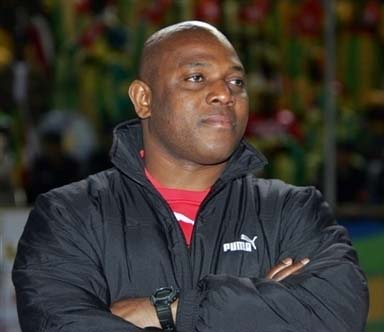
Stephen Keshi

Nigeria soccer coach Stephen Keshi has spoken out against the appointment of “mediocre” European coaches by African teams, ahead of his side’s tie with Mali

“I am never against white coaches in Africa,” said Keshi. “I am happy to work with a quality, experienced white coach, who is better than me, so that I can learn from him.

“But what I don’t accept is when you bring in a mediocre ‘carpentry’ coach from Europe, and tell me that he’s better than me. I won’t accept that. Meanwhile we have quality African former players, who can do the same thing, but you don’t give them the opportunity because they’re just black dudes. I don’t like that,” said Keshi, who has previously coached Mali and Togo.

Keshi qualified Togo for the 2006 World Cup, but was replaced before the finals by German Otto Pfister, who lost all three games.

Should Nigeria and James Kwesi Appiah’s Ghana prevail in Wednesday’s semifinals, the final will be the first to be contested by two African coaches since 1998, when Jomo Sono’s Bafana lost to Mahmoud El-Gohary’s Egypt. It’s been even longer since two sub-Saharan coaches squared off for the continental trophy.

Keshi will have great insight into Frenchman Patrice Carteron’s Malian side, having coached most of the players. “We need to realise that Mali is a footballing nation. They have great talent – I was there. Whatever they are doing, they should be doing it, because of the calibre of the players. Wednesday’s game will be as tough as the game against Côte d’Ivoire.”

‘Emotional fuel’
He said the civil war raging in Mali would provide emotional fuel for the Eagles.”It’s a shame what is going on in Mali, it’s a great country with wonderful people. It’s a place I love. But what is going on in the country is not something we should be proud of. The players are thinking about that, that’s where their force is coming from.”

The former Super Eagles captain also claimed he was indifferent to public criticism in Nigeria. “It doesn’t really matter what people think about what Stephen Keshi is doing. You can’t force someone to love you.”

Keshi, who has been his job since 2011, said this promising Nigerian side needed time to mature. “The progress is coming gradually. It’s a team in the making. But to build a very good team, you need three years. We just have to be patient to see the team grow. Some of us don’t have patience.”

But he also said he was open to offers beyond these finals. “If God grants me the tournament, the next day I could join another country. I’m a professional. It’s the same with Jose Mourinho, if he gets a call from a rich team, he goes. I’m here for now, but we’ll see if there’s anyone out there who wants me.”

The rise of the machine

Early in his first term Barack Obama joked that he would “keep an eye on the robots in case they try anything”. He should have known resistance is futile. During Mr Obama’s presidency, IBM’s Watson has proved computers can outfox the most agile minds, drones have become America’s weapon of choice, the driverless car is now a reality and the word “app” has been detached from its origin. No longer the realm of science fiction, the rise of robots now poses the central economic dilemma of the Obama era.

With each month, the US economy becomes steadily more automated. In January the US economy added just 4,000 manufacturing jobs, and the net increase since July is zero. Yet last month, manufacturing activity rose by its fastest rate since April, according to the Institute for Supply Management. The difference boils down to robots, which pose an increasingly nagging paradox: the more there are, the better for overall growth (since they boost productivity); yet the worse things become for the middle class. US median income has fallen in each of the last five years.

Things cannot continue as they are. Yet change is speeding up. Manufacturing employment is shrinking around the world. Among other countries, China is moving even faster towards industrial robotics, an area in which German and Japanese manufacturers dominate. Last year Foxconn, the Shenzhen-based assembler for Apple, Nokia and others, said it was buying 1m robots in the next three years to substitute for workers performing repetitive manual tasks. At the other end of the spectrum, a restaurant in Harbin, northern China, last year became the first to be entirely waited on by robots. Last month, China opened the world’s first museum of 3D printing.

The potential is huge. But in the developed world, the distribution of the benefits is unsustainable. The bulk of US jobs growth since mid-2009 has been in low-skilled areas, such as food preparation and domestic aides. In the second place is jobs growth in high-end services. Middle income jobs have cratered. According to the National Employment Law Project, low wage jobs (that pay between $7.69 and $13.83 an hour) formed 22 per cent of job losses in the recession but 58 per cent of recovery jobs since then – a mirror image of the picture for middle income jobs ($13.84 to $21.18).

Unsurprisingly, people are reverting to borrowing to stay in the game. Last week, Hero Wallet, a financial advisory firm, showed that one in four US workers were dipping into their retirement funds to meet current spending needs – in spite of the penalties that accrue. This usually involves taking out loans against their retirement accounts. The median income is almost 9 per cent lower today than when Mr Obama took office. It is unclear what he can do to prevent it from falling further, even if the US returns to a higher rate of economic growth.

The effects of technology are only just beginning to be felt in education and healthcare – the two most labour-intensive areas of the US economy that both suffer from productivity stagnation. Online education is beginning to spread. The mid-level private universities do not know what is about to hit them.

Even in healthcare, which reliably added jobs when every other sector was shedding them, technology is starting to look labour-saving.

But the spread of the robots will leave a large and growing chunk of the US labour force in the lurch. In their excellent primer, Race Against The Machine , Erik Brynjolfsson and Andrew McAfee point out that in the contest between changing technology and education, the former is winning. Too few Americans are prepared. Some, such as Mr Cowen, fear many never will be. He believes the federal government should pay a basic guaranteed income to all Americans – a despairing view that accepts there will be permanent losers.

Mr Obama is more optimistic. In his first term, he set a target that the US should graduate every American by 2020. Even if that were possible, it may not be a panacea. Incomes for those with only a college degree have also stagnated since 2000 (and fallen for men). Yet a healthy economy cannot for long be upheld by a minority of its workforce.

At some point, policy makers will be forced to grapple with what is intuitively obvious – that sustained growth is inconsistent with declining middle class incomes. In their book, Brynjolfsson and McAfee cite a meeting between Henry Ford and Walter Reuther, the union leader. Pointing at his new robots, Mr Ford says, “How will you get union dues from them?” Mr Reuther replied: “How will you get them to buy your cars?” – FT

Israel ignores UN human rights review

Israel has boycotted the UN human rights forum over fears of scrutiny of its treatment of residents of the occupied territories. Israel is now the first state in history to win a deferment of the periodical review of its human rights record.

Tel Aviv has refused to send a delegation on Tuesday to the United Nations Human Rights Council in Geneva for the Universal Periodic Review procedure where UN member states have their human rights record evaluated every four years.

Israel’s cooperation with the council stopped last March after the UN set up a committee to inspect the effects of the Israeli settlements on Palestinians.

Israel which earlier accused the United Nations of anti-Israel bias reiterated its stance, recalling that the council has passed more resolutions against Israel than all other countries combined.

“After a series of votes and statements and incidents we have decided to suspend our working relations with that body,” Yigal Palmor, Israeli foreign ministry spokesman, told the Financial Times. “I can confirm that there is no change in that policy.”

“There have been more resolutions condemning Israel than the rest of the world put together,” an Israeli government official said on Tuesday. “It’s not a fair game – it’s not even a game.”

Following the Israeli decision, the council has decided to postpone its review until no later than November.

The Council president has also called on the body to adopt a draft response to an unprecedented move by Israel.

Egypt’s representative meanwhile has warned that a “soft” approach would create a dangerous precedent and leave “a wide-open door for more cases of non-cooperation,” the AFP quoted.

Activist groups lash out against Israel’s disregard for international law.

“By not participating in its own review, Israel is setting a dangerous precedent,” Eilis Ni Chaithnia, an advocacy officer with al-Haq, a human rights organisation based in Ramallah has told the FT. “This is the first time any country has made a determined effort not to attend.”

Others thought that the council’s decision to delay gives Tel Aviv the opportunity to make amends. Eight Israeli human rights organizations issued a statement saying, “Israel now has a golden opportunity to reverse its decision not to participate,” adding “it is legitimate for Israel to express criticism of the work of the Council and its recommendations, but Israel should do so through engagement with the Universal Periodic Review, as it has done in previous sessions,” JTA quotes.

The investigation into Israel’s Human Rights record began in 2007, but last year the UN started to pay particular attention to Israel’s activities in the West Bank.

The probe at the time prompted an angry response from the country’s leader.

“This is a hypocritical council with an automatic majority against Israel,” Prime Minister Benjamin Netanyahu said.

Senior Israeli officials announced last month that Israel does not intend to cancel plans to accelerate settlement construction.

Netanyahu himself said in an interview with Israeli Channel 2 last month that the disputed area “is not occupied territory” and that he “does not care” what the UN thinks about it.

Around 500,000 Israelis and 2.4 million Palestinians live in the West Bank and in East Jerusalem, areas that, along with Gaza, the Palestinians want for a future state.

The United Nations regards all Israeli settlements in the West Bank as illegal. Tel Aviv last attended the human rights review in 2008. Israel is not a member of the Council, which is comprised of 47 UN member states. – RT

Sierra Leone rebels helped by Charles Taylor ‘to kill, rape and mutilate thousands’

Charles Taylor during his trial at The Hague

Sierra Leone rebels depended on Charles Taylor’s logistics to kill, rape and mutilate thousands during the west African nation’s savage civil war, prosecutors said Wednesday at the end of the Liberian ex-president’s appeal.

The Revolutionary United Front “relied on Taylor’s logistical assistance”, Nicholas Koumjian told the west African nation’s UN-backed special court, where the former warlord is appealing a 50-year prison sentence.

“Without this support, thousands would not have been killed, would not have been amputated, would not have been taken as sex slaves,” he told the second and final day of the appeals hearing at the court’s headquarters in Leidschendam just outside The Hague.

Dressed in a grey suit, white shirt and dark tie, with rimless round glasses perched on his nose, Taylor frowned often as he listened intently to the prosecution’s arguments.

The former strongman who was given an opportunity to address judges at the end of the hearing and told the Special Court for Sierra Leone (SCSL) that he was “very appreciative of the handling of the proceedings so far”.

“I have the belief that the right thing will be done with the grace of Almighty God,” said Taylor, who once famously compared himself to Jesus.

The SCSL in April last year convicted Taylor, 64, of aiding and abetting the RUF and its allies who waged a terror campaign during a civil war that claimed 120,000 lives between 1991 and 2001.

His sentence in May for “some of the most heinous crimes in human history” was widely welcomed around the world and was the first handed down by an international court against a former head of state since the Nazi trials at Nuremberg in 1946.

As neighbouring Liberia’s president from 1997 to 2003, Taylor gave rebels guns and ammunition in their fight against Freetown during the conflict, know for its mutilations, drugged child soldiers and sex slaves, trial judges found.

In return, Taylor was paid in “blood diamonds” mined by slave labour in areas kept under the countrol of ruthless Sierra Leonean rebels.

Taylor’s defence again argued on Wednesday that there was no evidence linking him to crimes committed by Sierra Leone’s brutal rebel forces, nor did he provide logistics, guns and ammunition.

“There was no support from Charles Taylor,” said one of his lawyers, Christopher Gosnell.

The defence has argued that trial judges made legal mistakes in their findings against Taylor and are asking appeals judges to reverse the conviction and quash the sentence.

Prosecutors argued Taylor’s sentence was too light and asked, on appeal, for 80 years, with Koumjian telling judges: “Charles Taylor knew about these crimes.”

“He knew what was happening and how the RUF operated.”

Taylor’s trial, which ended in March 2011, saw a number of high-profile witnesses testify including British supermodel Naomi Campbell, who told the court she received a gift of “dirty diamonds”, said to be from the flamboyant Taylor.

Appeals judges are expected to have a decision by September at the earliest, with the Liberian ex-president remaining behind bars at the UN’s detention unit in The Hague until appeals proceedings are finalised.

If his appeal fails, Taylor will serve his sentence in a British jail.

Dotcom launches Mega

Kim Dotcom

Megaupload founder Kim Dotcom is upbeat about the investigation against his now-defunct file-storage site, his possible extradition to the US, the future of Internet freedoms.

The United States government says that Dotcom, a German millionaire formerly known as Kim Schmitz, masterminded a vast criminal conspiracy by operating the file-storage site Megaupload. Dotcom, on the other hand, begs to differ. One year after the high-profile raid of his home and the shut-down and seizure of one of the most popular sites on the Web, Dotcom hosted a launch party for his latest endeavor, simply called Mega.

Dotcom says president Obama and the Obama administration for colluding with movie companies in order to orchestrate this giant arrest in New Zealand.

The driving force, of course, is Chris Dodd, the chairman of the MPAA [Motion Picture Association of America]. And he was senator for a long time and he is — according to [US Vice President] Joe Biden — Joe Biden’s best friend. And the state attorney that is in charge of this case has been Joe Biden’s personal counsel, Neil MacBride, and [he] also worked as an anti-piracy manager for the BSA, the Business Software Association, which is basically like the MPAA but for software companies.

“The fundraisers in Hollywood had to have some sort of Plan B, an alternative for SOPA [the Stop Online Piracy Act], because the president certainly was aware — and his team at the White House was aware — that if they don’t have anything to give at those fundraisers, to those guys in Hollywood who are eager to have more control over the Internet, they wouldn’t have probably raised too much. And Hollywood is a very important contributor to Obama’s campaign. Not just with money, but also with media support. They control a lot of media: celebrity endorsements and all that,” says Dotcom.

“So I’m sure the election plays an important role. The relationships of the people that are in charge of this case play an important role and, of course, we have facts that we want to present at our extradition hearing that will show some more detail about this and that this is not just some conspiracy theory but that this actually happened.”

The US Justice Department wants to extradite the German citizen living in New Zealand operating a business in Hong Kong.

“It is a very interesting question because the extradition law, the extradition treaty in New Zealand, doesn’t really allow extradition for copyright. So what they did, they threw some extra charges on top and one of them is racketeering, where they basically say we are a mafia organization and we set up our Internet business to basically be an organized crime network that was set up and structured the way it was just to do criminal copyright infringement. And anyone who has every used Megaupload and has any idea about how that website worked knows immediately that it was total nonsense. But they needed to chop that on in order to have even a chance for extradition. But in our opinion, you see, all of that was secondary. The primary goal was to take down Megaupload and destroy it completely. That was their mission and that’s why the whole thing in Hong Kong, for example, they called it Operation Takedown. And I think everything that’s happening now, they are trying on the fly to doctor it around, and found a way to find a case. They probably came here and thought, “We will find something; that these guys have done something wrong.” In the indictment, if you actually read that, it’s more like a press release. There’s nothing in there that has any merits.”

Dotcom says his case is a crucial case for Internet freedom. “I think more and more people realize that and the government is quite exposed here because they really went in with completely prosecutorial abuse and overreach and ignoring due process, ignoring our rights, spying on us, illegal search warrants, illegal restraining orders, illegal spying. The whole picture, when you look at it, shows that this was an urgent mission, done on a rush. “Take them down, I want them to go.” And it was a political decision to do that. And the execution was extremely poor, and the case is extremely poor, because that is something they thought that they could worry about later. It was all about the takedown: ‘Let’s send a strong message to Hollywood that we are on their side.’”

The new program, Mega, is fully encrypted, but do people need more encryption on the Internet?

Says Dotcom: “I think it’s important for the Internet that there is more encryption. Because what I have learned since I got dragged into this case is a lot about privacy abuses, about the government spying on people. You know, the US government invests a lot of money in spy clouds: massive data centers with hundreds of thousands of hard drives storing data. And what they are storing is basically any communication that traverses through US networks. And what that means they are not spying on individuals based on a warrant anymore. They just spy on everybody, permanently, all the time. And what that means for you and for anybody is that if you are ever a target of any kind of investigation, or someone has a political agenda against you, or a prosecutor doesn’t like you, or the police wants to interpret something in a way to get you in trouble — they can use all that data, go through it with a comb and find things even though we think we have nothing to hide and have done nothing wrong. They will find something that they can nail you with and that’s why it’s wrong to have these kinds of privacy abuses, and I decided to create a solution that overtime will encrypt more and more of the internet. So we start with files, we will then move to emails, and then move to Voice-Over-IP communication. And our API [Application Programming Interface] is available to any third-party developer to also create their own tools. And my goal is, within the next five years, I want to encrypt half of the Internet. Just reestablish a balance between a person — an individual — and the state. Because right now, we are living very close to this vision of George Orwell and I think it’s not the right way. It’s the wrong path that the government is on, thinking that they can spy on everybody.”

After Megaupload was shut down by the FBI last year, hacktivists with the movement Anonymous retaliated, so to speak. In response, they went and took down the websites for the FBI, the Motion Picture Association of America, the Department of Justice, the Recording Industry Association of America.

Dotcom laughs. “t’s a kind of virtual protest, you know? I think it’s not a good idea to shut down websites. I’ve been a hacker myself. I understand why they are doing it and how they are doing it, but I think there are better ways to protest. Where you organize yourself in a group and do petitions and actually email congressmen, email your local politicians, let them know about what you don’t like. Organize your movement rather than attacking. I had a sense of understanding for them because everyone had stored so much data on Megaupload, and then all of a sudden a site like that disappears and billions of files are taken offline, the majority of them perfectly legitimate. You need to understand one thing: 50 percent of all files that were ever uploaded to Megaupload have not even been downloaded once. That clearly shows the non-infringing use. People just wanted to store their stuff on our site. And of course they were outraged when that disappeared and the government said, ‘We don’t give a care and we don’t give a damn about you people. We don’t care that you have your personal documents there because we have our agenda and we are going to take over the Internet.’ And you know the White House was supporting SOPA, and only when the masses came together — and Aaron Swartz: he stopped SOPA. With his efforts, he stopped SOPA. And he became a target. A political target, okay? And that’s why all these things happened to him. There is no reasonable cause behind going after a young genius like that in the fashion they did. It’s political. Because the White House wanted SOPA. They promised it to Hollywood and they failed and they couldn’t go ahead because the White House was afraid if they keep pushing hard and they keep pushing it forward, that the people who oppose it are not going to vote for Obama in the reelection campaign. So it’s all a game to them really and we are all the little puppets that they think they can kick around. So we need to organize. There needs to be a movement that identifies these things and fights that. Not with shutting down websites but with real protests. Going out on the streets, writing to politicians and especially, most importantly, don’t vote for the guys that are against Internet freedom. Anyone who voted for SOPA, you should have a close look at that guy. Do I want to give him my vote next time around? Because that’s the only language politicians understand is your vote. And if you can bring all these votes together, somehow pooled for Internet freedom, you will see all these efforts disappear. Because at the end of the day, they represent the public. Politicians represent the public. And when they have enough pressure they can’t move forward. And SOPA was the best example for that.”