Israeli forces shot dead an American man who opened fire in a seaside hotel packed with tourists on Friday, killing one person.
The Friday incident at the lobby of Leonardo Club Hotel took place after an Israeli armed guard tried to intervene in an intense argument between the American and a hotel employee.
The US tourist then grabbed the guard’s gun and fired several shots, killing the hotel staffer.
The shooter has been described as “in his twenties” and part of an Israeli-American exchange program that is regularly sponsored by various pro-Israeli organizations across the US.
No other deaths or injuries have yet been reported, although some hotel guests and employees were reported to be suffering from psychological distress, requiring hospitalization.
Reports indicate that the shooter barricaded himself in the hotel’s kitchen after killing the employee and was shot dead by the police forces following what has been described as failed negotiations for his surrender.
The man barricaded himself in the hotel kitchen, shooting back at law enforcement officers. He was shot dead by members of a military counter-terrorism squad, a military source said.
An Israeli hotel guest, Aviram Sela, said he tried to wrestle the gunman to the ground before he started shooting, as terrified tourists dived for cover behind a sofa in the hotel lobby.
“We saw him beating the guard and grab his weapon and the magazine,” Sela told Israeli television, adding that the gunman then took aim at a member of his family.
Israeli Defense Minister Ehud Barak told Army Radio the incident “appears to be an internal dispute”.
Eilat, on the border with Egypt and Jordan, has been a target of militant attacks in the past, and has come under rocket fire from Egypt’s Sinai in the past several months. The city is currently crowded with both foreign tourists and Israelis on a seven-day Jewish religious holiday.
Turkey’s parliament has authorized cross-border military operations into Syria. The move follows a cross-border mortar-shelling into Turkey which Damascus has apologized for.
The Turkish parliament voted 320-129 in favor of the bill, though the government was quick to eliminate the perception they country preparing for a unilateral military assault.
Turkish Prime Minister Recep Tayyip Erdogan said Turkey “does not want to “start a war” with Syria while speaking at a press conference on Thursday evening .
“All we want in this region is peace and security. We have no intention of starting war. We are aware of the outcome, consequences, of war in Iraq and Afghanistan…we see the same in Syria,” Al Jazeera cites him as saying. But Errdogan warned the country was capable of defending itself against threats after he claimed that new shells coming from Syria had landed on Turkish soil on Thursday.
“An accident can be called ‘an accident’ once, twice, three times, but four, five six times,” Errdogan continued.
His statements regarding the bills follow those made by Deputy Prime Minister Besir Atalay following the vote on Thursday.
“The bill is not for war… It has deterrent qualities,” he said.
Atlay stressed that Turkey’s priority was to act in conjunction with “international institutions” on Syria. He further said the Syrian government “has admitted what it did and apologized. The deputy premier added that Syria had given its assurances “such an incident would not be repeated.”
Following an exchange of fire at the Syrian-Turkish border, the US and NATO have condemned Syria and pledged to support Turkey. The White House has called for more pressure to be exerted on Damascus.
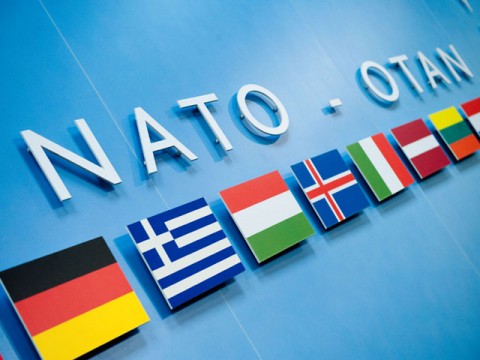
NATO’s North Atlantic Council has convened tonight for an urgent meeting upon the request of Turkey, to discuss the shelling of the town of Akcakale.
“The most recent shelling on 3 October 2012, which caused the death of five Turkish citizens and injured many, constitutes a cause of greatest concern for, and is strongly condemned by, all Allies,” NATO said in a statement.
“In the spirit of indivisibility of security and solidarity deriving from the Washington Treaty, the Alliance continues to stand by Turkey and demands the immediate cessation of such aggressive acts against an Ally, and urges the Syrian regime to put an end to flagrant violations of international law.”
According to officials the meeting has been held under article 4 of NATO’s code, concerning consultations when a member state feels territorial integrity is under threat.
Syria’s UN envoy said on Thursday that “Syrian authorities confirmed that they are seriously investigating the source of the [attack] that lead to the death of Turkish citizens.”
Ambassador Bashar Ja’afari read out a letter which had been delivered to the UN Security Council expressing Syria’s “deepest condolences” to the families of the victims which killed five civilians in southeast Turkey.
He called for both sides to act “wisely” and “rationally”, saying that “undisciplined, armed terrorists” operating on the countries’ shared border posed a threat not only to Syria, but the greater region. He further claimed the long Turkish-Syrian border had been used as a conduit for terrorists to smuggle arms into Syria.
Ja’afari insinuated the Turkish response to the incident had been disproportionate, however, saying that Turkey had shelled southern Syria for nearly 12 hours straight following Wednesday’s attack.
A document posted online by an al-Qaeda affiliated group called the al-Nusra Front claimed responsibilty for the multiple bombings.
US Secretary of State Hillary Clinton in contrast was quick to condemn Syria for Wedensday’s mortar attack in Turkey. “We are outraged that the Syrians have been shooting across the border. We are very regretful about the loss of life that has occurred on the Turkish side. We are working with our Turkish friends.”
After the Turkish parliament approved military operations against Syria, thousands of anti-war protesters took to the streets of the biggest Turkish city, Istanbul. About 5,000 people joined an anti-war rally that finally turned into an anti-government demonstration against Turkey’s ruling Justice and Development Party, headed by Prime Minister Recep Tayyip Erdogan.
Anti-war protests near the parliament in the capital, Ankara, turned violent, with protesters clashing with police who tried to prevent demonstrators from moving around the capital.
After a heated debate an urgent parliamentary session has opted to apply the new law.
Originally the bill targeted militants of the Kurdistan Workers Party (PKK) fighting for independent Kurd state for the last three decades. The Kurds have bases in northern Iraq, de-facto not controlled by the government in Baghdad. The Turkish military has conducted a number of air and ground assaults on Kurdish positions in Iraq, most of them considered successful.
Two million kilometers of foreign purchased land in developing countries is either idle or used for Western biofuel production, according to a British charity. Oxfam’s report estimates an area the size of London is sold every six days.
The report states that between 2000 and 2010, 60% of investment in agricultural land by foreign traders occurred in developing countries with hunger problems.
Yet two thirds of those investors plan to export everything they produce. While 60% of deals are to produce crops that can be used for biofuels. Land can also be left idle, as speculators wait for its value to increase.
Oxfam estimates that this land could have fed 1 billion people.
According to the International Land Coalition, an NGO based in Italy, 106 million hectares of land in developing countries has been acquired by foreign investors in a period between 2000-2010, with some disastrous results.
30% of all land in Liberia has been handed out in large scale concessions in the last 5 years, while up to 63% of all available land in Cambodia has been passed on to private companies.
Farmers forced out
Oxfam emphasizes that much of the land sold off was already being used for small scale and subsistence farming or other types of natural resource use.
The report dismissed claims by the World Bank that most of the sold land remains idle, waiting to be developed. In fact most agricultural land deals target quality farm land, particularly land that is irrigated and offers good access to markets.
A 2010 study by the Independent Evaluation Group (IEG) – the official monitoring and evaluation body of the World Bank – supported Oxfam’s findings.
It found that 30% of World Bank projects involved involuntary resettlement. The study estimated that 1 million people are involuntarily resettled in projects financed by the World Bank.
In some cases people were violently evicted from their land without consultation or compensation.
Barbara Stocking, Oxfam’s chief executive, told British newspaper the Guardian that, “The rush for land is out of control and some of the world’s poorest people are suffering hunger, violence and greater poverty as a result. The World Bank is in a unique position to help stop land grabs becoming one of the biggest scandals of the century.”
Oxfam has urged the World Bank to freeze its investments in large scale land acquisitions in poor nations.
In the last decade the World Bank has tripled its support for land projects to $6-$8 billion a year, but it does not provide data on how much of this goes to land acquisition or any connection between lending and conflict in a country.
Oxfam wants the World Bank to make sure that information about land deals is publicly accessible, that communities are informed in advance and have the right to agree to or refuse to participate in projects.
Stocking said that the UK, as one of the banks largest shareholders and next year’s president of the G8, should try and get these land deals frozen.
“The UK should also show leadership in reversing flawed biofuels targets, which are a main driver for land and are diverting food into fuel. It can also play a crucial role as president of the G8 next year by putting food and hunger at the heart of the agenda,” Stocking said.
But in a statement released to the Guardian, the international Finance Corporation (IFC), the World Bank’s private lending arm, defended its past transactions.
“IFC does not finance land acquisitions for speculative purposes. We invest in productive agricultural and forestry enterprises that can be land intensive to help provide the food and fiber the world needs.”
The International Criminal Court’s first convict, Congolese warlord Thomas Lubanga, on Wednesday appealed his 14-year sentence for using children in his rebel army, his lawyers said.
Former militia commander Lubanga, 51, was sentenced in July for his part in a war in the eastern Democratic Republic of Congo, where aid groups say 60,000 people have been killed in conflicts since 1999.
“The defence gives notice of appeal and asks for an acquittal,” Lubanga’s lawyers said in a document filed with The Hague-based court.
He was convicted in March of war crimes in the central African country, specifically for enlisting and using child soldiers in 2002-03, in what was the ICC’s first verdict since starting work a decade ago.
Lubanga, who has been detained in The Hague since 2006, is the founder of the Union of Congolese Patriots (UPC) and commander of its military wing the Patriotic Forces for the Liberation of Congo (FPLC).
He has pleaded not guilty to two counts of war crimes.
The ICC, the world’s only independent permanent tribunal to try genocide, war crimes and crimes against humanity has issued four arrest warrants for crimes in DR Congo since starting work in 2003.
Two militia leaders, Germain Katanga, 34 and Mathieu Ngudjolo Chui, 41, who fought against Lubanga, are currently facing trial on similar charges.
Former UPC leader Bosco Ntaganda, a Lubanga ally, is yet to be arrested to face the ICC on war crimes charges.
The ICC is investigating seven cases, all based in Africa. – AFP
Forget Wouter Basson and Project Coast! The British Ministry of Defence turned large parts of their country into a giant laboratory to conduct a series of secret germ warfare tests on the public.
Cardiologist Dr Basson faces charges of unprofessional and unethical conduct. The charges relate to his conduct as a medical doctor, when he headed the country’s chemical and biological warfare research programme for the defence force in the 1980s and early 1990s.
A British government report released in 2002 however provides insight into the comprehensive official history of Britain’s biological weapons trials between 1940 and 1979. The 60-page report reveals information about more than 100 covert experiments.
It may even have involved spreading germs for pharmaceutical companies, says a South African expert.
One chapter of the report, ‘The Fluorescent Particle Trials’, reveals how between 1955 and 1963 planes flew from north-east England to the tip of Cornwall along the south and west coasts, dropping huge amounts of zinc cadmium sulphide on the population. The chemical drifted miles inland, its fluorescence allowing the spread to be monitored. In another trial using zinc cadmium sulphide, a generator was towed along a road near Frome in Somerset where it spewed the chemical for an hour.
While the Government has insisted the chemical is safe, cadmium is recognised as a cause of lung cancer and during the Second World War was considered by the Allies as a chemical weapon.
Many of these tests involved releasing potentially dangerous chemicals and micro-organisms over vast swaths of the population without the public being told.
Military personnel were briefed to tell any ‘inquisitive inquirer’ that the trials were part of “research projects into weather and air pollution”.
In another chapter, ‘Large Area Coverage Trials’, the MoD describes how between 1961 and 1968 more than a million people along the south coast of England, from Torquay to the New Forest, were exposed to bacteria including e.coli and bacillus globigii , which mimics anthrax. These releases came from a military ship, the Icewhale, anchored off the Dorset coast.
The report also reveals details of the DICE trials in south Dorset between 1971 and 1975. These involved US and UK military scientists spraying into the air massive quantities of serratia marcescens bacteria, with an anthrax simulant and phenol.
Similar bacteria were released in ‘The Sabotage Trials’ between 1952 and 1964. These were tests to determine the vulnerability of large government buildings and public transport to attack. In 1956 bacteria were released on the London Underground at lunchtime along the Northern Line between Colliers Wood and Tooting Broadway. The results show that the organism dispersed about 10 miles. Similar tests were conducted in tunnels running under government buildings in Whitehall.
Experiments conducted between 1964 and 1973 involved attaching germs to the threads of spiders’ webs in boxes to test how the germs would survive in different environments, across Britain. The report also gives details of more than a dozen smaller field trials between 1968 and 1977.
A spokeswoman for Porton Down, said: ‘Independent reports by eminent scientists have shown there was no danger to public health from these releases which were carried out to protect the public.
Asked whether such tests are still being carried out, she said: ‘It is not our policy to discuss ongoing research.’
Dispersion of compounds and other microorganisms were conducted in America too without informing the public. The official rationale for these trials was that they were done to learn about germ warfare. Areas included large cities like St. Louis, Corpus Christi, Winnipeg, and Fort Wayne.
In the English study, the following admission is included:
“Cadmium accumulates in the body, especially in the kidneys and to a much lesser extent in the liver. About 5% of cadmium is absorbed through the gut. When cadmium is absorbed through the lungs or the gut it becomes bound to albumen or to the cystine-rich protein, metallothionein. In the kidneys, the lysosomes of the proximal tubules degrade the metallothionein and so release the bound cadmium. Once there, the kidneys cannot make enough metallothionein and the free cadmium will damage them. The most sensitive indication of cadmium-induced renal damage is an increased urinary excretion of low molecular weight proteins, and particularly of beta-2-microglobulin, as there is a decrease in renal tubular absorption. There is uncertainty about the fate of ZnCdS when it is breathed deep into the lungs. It is known that cadmium ions can enter the cell surface fluid and pass into cells in the lung. Like other transition metals cadmium participates in oxidation and reduction reactions.”
In a report from the National Academy of Sciences it states that “The U.S. Army released the chemical compound zinc cadmium sulfide from airplanes, rooftops, and moving vehicles in 33 urban and rural areas as part of a Cold War program to test the way biological weapons might disperse under different conditions.”
“Information on how zinc cadmium sulfide affects human health is sparse,…”
This statement was made 30 years or more after the tests were conducted.
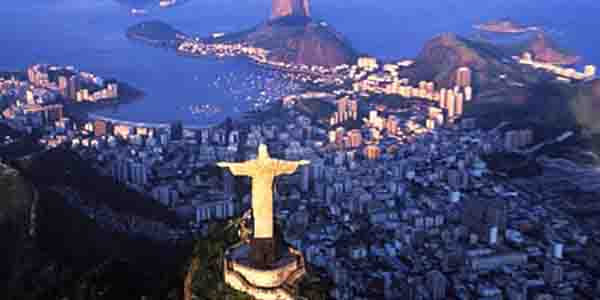
BRASILIA, Brazil (AP) – Brazil’s government is launching a pilot program that aims to reduce violence among young blacks, who suffer a higher homicide rate than any other group.
Racial Equality Minister Luiza Bairros says the Live Youth program will kick off in the northeastern city of Maceio. It will expand education programs, create cultural spaces in violent communities and train people to work with at-risk youth.
The country’s Health Ministry says 53 percent of all murders in Brazil involve young male victims, with blacks making up 75 percent of those youth. Brazil claims the world’s second biggest population of African descent, only behind Nigeria.
Official figures show Brazil’s black population has made some advances. Their income has grown by 67 percent over the past decade, compared to 45 percent for income among whites.
Former British prime minister Tony Blair was the only person capable of turning George W Bush against the 2003 Iraq invasion, ex-United Nations chief Kofi Annan claimed in an interview published on Saturday.
Annan argued in an interview published in the Times newspaper that Blair could have changed Bush’s mind because of the special relationship between the two nations and the two leaders.
Annan said he often had contemplated what might have happened if “Blair had said ‘George, this is where we part company. You’re on your own’,” following the failure to secure a second UN resolution.
“I really think it could have stopped the war,” added the Nobel peace laureate.
Annan was UN secretary general at the time of the crisis.
A first Security Council resolution, which offered Iraq a final opportunity to comply with its disarmament obligations passed unanimously in November 2002.
But a second resolution proposed by the US, Britain, and Spain in 2003 that called for action to be taken against Saddam Hussain’s regime was withdrawn when it became clear it would be vetoed.
The US decided that the resolution was not needed before military action could lawfully take place, and the invasion commenced on March 20.
The invasion triggered eight years of sectarian conflict in Iraq, resulting in more than 100 000 civilian deaths.
Annan rejected suggestions that his resignation, or that of then US secretary of state Colin Powell, would have altered the course of history.
And he dismissed Archbishop Desmond Tutu’s call for Bush and Blair to be put on trial at the International Criminal Court. Both had been democratically elected, he said, and were only acting in their national interests.
[ad 1]
Annan was the UN Arab League envoy to Syria from February until August, but resigned after his peace plan failed to prevent further fighting between rebels and forces loyal to President Bashar Assad.
The diplomat told the Times that Assad had to go, arguing that the leader had lost all legitimacy.
Annan gave the interview to mark the launch of his memoirs: Interventions – a Life in War and Peace. – Sapa
Israeli Prime Minister Benjamin Netanyahu demanded Thursday that the international community impose a red line on Iran to prevent it from enriching enough uranium for a nuclear bomb.
“The hour is late, very late,” Netanyahu said, alleging Iran was already 70% of the way through the process of enriching enough uranium to fuel a bomb, and must be prevented from reaching the 90% level.
The Israeli leader even used the world stage at the UN to present a cardboard diagram of a bomb with different levels on it, drawing a thick red line across it with a marker pen for dramatic effect.
“Faced with a clear red line Iran will back down,” he said, insisting in a address to the United Nations General Assembly that imposing an ultimatum on Tehran would not provoke war but help prevent it.
Israel has warned that it could launch military action against Iran in order to prevent it reaching a certain nuclear threshold, and has urged the international community to force Tehran to abandon its atomic quest.
Iran denies it is building a nuclear weapon and has dismissed the Israeli threat.
US President Barack Obama vowed in his address to the United Nations on Tuesday that he would prevent Iran from getting the bomb but his administration has repeatedly rejected imposing a red line on Tehran.
With relations between Netanyahu and Obama already viewed as frosty, US Defence Secretary Leon Panetta earlier this month highlighted the policy split further when he rejected Israel’s “red lines” outright.
“The fact is, look, presidents of the United States, prime ministers of Israel or any other country – leaders of these countries don’t have, you know, a bunch of little red lines that determine their decisions,” Panetta said.
“What they have are facts that are presented to them about what a country is up to, and then they weigh what kind of action is needed to be taken in order to deal with that situation,” he told Foreign Policy magazine.
“I mean, that’s the real world. Red lines are kind of political arguments that are used to try to put people in a corner.”
The Iranian government, reacting to Israeli Prime Minister Benjamin Netanyahu at the United Nations, demanded that Jerusalem open its own nuclear installations to inspection before telling Tehran do so.
Using the U.N.’s “right of reply,” Iran’s deputy U.N. ambassador, Eshagh al Habib, told the General Assembly the Israeli prime minister “has admitted to the possession of nuclear weapons which has been repeatedly stated by the 120 members of the Non-Aligned Movement ‘poses a serious and continuing threat to the security of states in the region.
“Instead of making baseless allegations,” he said, “this regime has ignored repeated calls by the international community to accede promptly and without any conditions to the Non-Proliferation Treaty as a non-nuclear weapons party and place all its nuclear-related facilities under the International Atomic Energy Agency verification system. … The international community should continue to exert the utmost pressure on this regime.”
The Iranians have long claimed to be sponsoring a movement to free the Middle East of any atomic weapons.
Israel, its conventional forces vastly outnumbered by neighboring Arabs, has long seen its nuclear stockpile as an equalizer should a new war erupt in the region.
Published reports claim Jerusalem has manufactured more than 200 low-yield nuclear warheads that have been stockpiled in a desert facility in the Negev.
The nuclear facility, near the hamlet of Dimona, has had sporadic visits by U.N. inspectors, but nothing unusual has ever been uncovered.
Late Iraqi President Saddam Hussein tried unsuccessfully to rocket bomb the Dimona facility in the 1991 Gulf War.
Today, the Dimona base is protected by the Israeli Iron Dome anti-missile system.
A group of Israeli diplomats sat stone-faced throughout the Iranian rebuttal, deciding not to challenge it.
The U.S.-U.N. mission did not attend the late-night General Assembly session. – AFP/WND
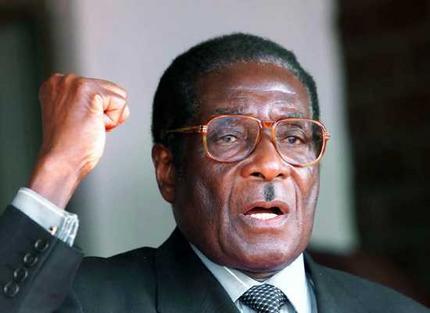
Zimbabwe’s main opposition the Movement for Democratic Change (MDC) on Thursday said President Robert Mugabe’s planned timetable for a constitutional referendum and elections was not realistic.
In a High Court filing seen on Thursday, Mugabe proposed a referendum for the first week of November and presidential and legislative polls for March next year.
“The dates being proposed are clearly not feasible,” MDC spokesman Douglas Mwonzora told AFP.
“The date for the election, especially, is unilateral, unrealistic and has no scientific or legal basis.”
Mugabe’s ruling ZANU-PF party has objected to many aspects of the long-delayed draft constitution that was only finished in July and would rein in presidential powers.
Mwonzora added his party was more concerned about conditions under which the vote takes place rather than the date. “For us to meet those dates, ZANU-PF has to change drastically.”
“We want elections to be held in conditions which allow the secrecy of the vote and the security of both the vote and the voter,” said Mwonzora.
Opposition MDC party members were on the receiving end of the violence that characterised the 2008 elections. – AFP
Furniture firm IKEA has removed a photograph from its Russian website of people in colourful ski masks like those worn by punk band Pussy Riot, three of whose members were jailed after staging a protest against Vladimir Putin in a church.
The picture, which showed four people in the masks sitting on IKEA furniture, had been posted on a section of the site which displays photographs of customers posing at stores.
A notice on the website confirmed the image had been removed and said: “IKEA is a commercial organisation that conducts its activity outside of politics and religion.”
“We cannot allow our advertising project to be used as a platform for campaigning of any kind,” it added.
Pussy Riot’s band members were convicted of hooliganism motivated by religious hatred after belting out a song criticising Putin, then prime minister and now president, in Moscow’s Christ the Saviour Cathedral in February. They were handed two-year jail terms.
The brightly coloured balaclava masks they wore during the protest have become the band’s trademark.
The Russian Orthodox Church head has called the cathedral protest part of a campaign aimed at curbing the resurgence of Russia’s main faith.
Russia has dismissed the criticism from abroad, which the Foreign Ministry said pointed to a “clash of civilisations”. Putin has said the state is obliged to protect the feelings of the faithful.
A representative of IKEA in Russia confirmed on Sunday the notice had replaced a photograph of people wearing ski masks and declined to comment further immediately, asking for a written request which would be answered on Monday.
IKEA has invested about 2.5 billion euros ($3.25 billion) in Russia since 2000, building stores that anchor malls on the outskirts of big cities. When it posted record profits for the fiscal 2010/11 year in December, the company said some of its biggest sales gains were in Russia.
In 2009 IKEA had threatened to halt further expansion in the country, citing corruption and red tape, but last November it said it was looking to at least double its three-store footprint in Moscow and refurbish its 14 MEGA malls.
A Moscow court is to begin hearing an appeal against the convictions and sentences in the Pussy Riot trial on Oct. 1.
City authorities in Zimbabwe’s second largest city of Bulawayo, are appealing to home owners to flush their toilets at a specific time, in order to unblock sewers after days of severe water rationing. The ‘big flush’ time has been set for 7:30 pm.
The Bulawayo City Council has asked its 1.5 million residents to flush their toilets simultaneously when water supplies are restored. City officials say ‘‘synchronized flushing’’ is needed to clear waste that would have accumulated in sanitary facilities – which will have been affected by days of water outages.
The hope is that if everyone flushes together there is less chance of sewer blockages and pipe bursts, officials claimed.
Simela Dube, the city’s director of engineering, said: “We need to flush our toilets at the same time to push all the waste that will be just under the surface, as residents would be using little water to flush toilets during water shedding hours.”
Bulawayo’s two main dams, supplying water to the city, have been drying up due to severe droughts in the southwestern part of Zimbabwe.
After expelling whites, Zimbabwe’s formerly first-world infrastructure has been crumbling. Agricultural production has also plummeted, leading to a shortage of foreign exchange and funds necessary for maintaining essential services.
The Church of England Newspaper reports that the former Bishop of Harare, Dr. Nolbert Kunonga, has urged Zimbabwe strongman Robert Mugabe to expel the few remaining white farmers from their lands, telling a gathering of ZANU (PF) supporters that “Whites like other aliens should not be allowed to own land and other properties in the country as they are strangers.”
In an account of his sermon printed in The Zimbabwean, Dr. Kunonga said that he too had been engaged in a campaign of expropriating white-owned properties. “I took 3800 church properties in the region since their title deeds were in my name. There was no way the properties could remain under charge of the church controlled by whites and their black puppets. Bishops such as Julius Makoni, Chad Gandiwa and others are MDC-T and furthered western interests,” he said.
The controversial bishop, who was excommunicated by the Church of the Province of Central Africa after he quit the church to form his own Anglican Church of Zimbabwe, has waged a violent campaign of repression with the support of the security services against Anglicans who are loyal to the Bishop of Harare.
In 2011 the Archbishops of Canterbury, Central Africa, Southern Africa and Tanzania, along with local Anglican bishops, met with President Mugabe asking him to reassert the rule of law in Zimbabwe, and protect persecuted Anglicans from the depredations of Dr. Kunonga. The former bishop has been banned from travel to the U.S., the E.U. and the U.K. due to his complicity with the crimes of the Mugabe regime.
A long time supporter of the Zimbabwean president, Dr. Kunonga has campaigned against the opposition MDC party and its leader Morgan Tsvangirai. He told the gathering at the Dimbe Primary School near Marondera in Mashonaland East that MDC-T and “its western puppet, Morgan Tsvangirai, are agents of doom fighting to reverse the land reform programme and hand back land to the former colonial white masters.”
[ad 1]
“Tsvangirai is a white man masked in black skin. He is like the Biblical Pharaoh who enjoyed the suffering and economic deprivation of his own people. On the other hand, Mugabe is the Biblical Daniel sent to suffer for the cause of his people,” said Dr. Kunonga.
The former bishop added that those who drive out white farmers, MDC supporters and foreigners from their lands “will enter the kingdom of God.”
“As Christians; we must gear ourselves for a bloody war against white interests,” he said.
President Robert Mugabe’s ZANU-PF party has strengthened the militarisation of Zimbabwe ahead of next year’s general election with the opening of a National Military College.
Observers pointed out that Mugabe’s latest move sends a strong signal that the military complex will dictate the outcome at the ballot box. The long-serving Zimbabwean president is expected to triumph for the third time over rival Morgan Tsvangirai of the Movement for Democratic Change, after beating him in 2002 and 2008.
Last weekend Mugabe officially opened the college, built by China at a cost of $98 million. It is being described as a “think tank” on security issues. He said it will aslo be used as a bulwark against Western countries, preventing their “regime change” agenda.
The college will exclusively train personnel with a rank of colonel or captain or above, as well as equivalent high ranks in state security, the police and prisons.
In terms of the loan agreement, the loan by China will be paid off over 13 years by means of diamonds to be extracted by Chinese companies from the Marange diamond fields.
Anjin, the Chinese diamond company in Marange, was involved in an argument earlier this year with the Minister of Finance, Tendai Biti, because the Chinese had failed to pay “a single cent” in taxes.
The construction of the college indicates the sustained militarisation of Zimbabwean society, but also the domination of Chinese interests in the country.
Afghan officials investigating the wreckage for clues as to the bombing
A female bomber killed 12 people in Kabul on Tuesday in the deadliest single attack over an anti-Islam US film that again sparked furious protests across the Muslim world.
The Kabul bombing brings to more than 30 the number of people who have been killed in a violent backlash over a YouTube trailer for the film, “Innocence of Muslims”, believed to have been produced by a small group of extremist Christians, which depicts the Prophet Mohammed as a thuggish womanizer.
Another potentially explosive publication is also due to hit news stands in France Wednesday after the satirical weekly Charlie Hebdo confirmed that its next edition contains several cartoons which feature caricatures of the Prophet Mohammed.
The editor of the weekly, originally a cartoonist who uses the name Charb, said the images would “shock those who will want to be shocked”.
In Afghanistan, Hezb-i-Islami, the second largest insurgent group after the Taliban who have been fighting US-led troops and the government for 10 years, claimed the attack and said it was to avenge the “insult” of the film.
“The bombing was in retaliation for the insult to our Prophet,” spokesman Zubair Sidiqi told AFP in a telephone call from an undisclosed location.
Security officials said nine foreigners including South Africans were among those killed on a major highway leading to Kabul airport when the bomber blew up her station wagon alongside a minivan carrying foreign workers.
Taliban fighters last week stormed a British-run airfield, killing two US Marines and destroying six US fighter jets in another act of vengeance.
A week of angry violent protests outside US embassies and other American symbols in at least 20 countries have left some 19 people dead, including the American ambassador to Libya and three other US diplomats in Benghazi.
In Lebanon, the head of Shiite Muslim movement Hezbollah, which is blacklisted in the United States as a terrorist organisation, made a rare public appearance to warn of “very dangerous” repercussions if the entire film is released.
Tens of thousands of demonstrators poured into the streets of southern Beirut to denounce the film at the request of Nasrallah, who has called for a week of protests over the film, describing it as the “worst attack ever on Islam”.
“The US must understand that releasing the entire film will have dangerous, very dangerous, repercussions around the world,” he told the rally.
Al-Qaeda’s franchise in North Africa urged Muslims to storm US embassies and kill American envoys in Muslim countries to protest the film, monitoring group IntelCenter said.
The film-maker Nakoula Basseley Nakoula, a 55-year-old Egyptian Copt and fraudster who was sentenced to 21 months in prison in the United States in June 2010, has not been seen since Saturday when he was questioned.
The risks now facing those involved in the production of the film were underlined when a Salafist cleric in Egypt called Monday for the deaths of all those involved in its making.
Before dawn on Monday, officers from the Los Angeles County sheriff’s department escorted four members of Nakoula’s family to join him in hiding.
Meanwhile Egypt’s public prosecutor has ordered that seven US-based Egyptian Copts be tried over their role in the film, accusing them of “insulting the Islamic religion, insulting the Prophet (Mohammed) and inciting sectarian strife”.
In Pakistan, two protesters died after demonstrating against the film in the northwest, close to the Afghan border, and outside the US consulate in Karachi.
Police used tear gas to disperse a crowd of more than 2,000 protesters trying to reach the US consulate in the city of Peshawar, chanting anti-US slogans and burning the Stars and Stripes flag.
In Indian Kashmir hundreds of Muslims clashed with security forces and burnt a police vehicle.
Afghanistan, Bangladesh and Pakistan blocked access to YouTube, following the video-sharing website’s failure to take down the anti-Islam film. Saudi Arabia and Russia may also follow suit.
Google, which owns YouTube, has also barred access to the film in Egypt, India, Indonesia, Libya and Malaysia.
Violent demonstrations have spread this week after police on Friday battled to defend US missions from mobs in Egypt, Lebanon, Sudan, Tunisia and Yemen.
In east Jerusalen hundreds of Palestinians clashed with Israeli border police, hurling stones and firebombs at a checkpoint.
In Europe calls surfaced Tuesday on social networks for Muslims in France to defy an official ban and hold fresh protests over the anti-Islam film.
The messages on Twitter and other sites called for demonstrations to be held Saturday in Paris, Marseille and other major cities, a week after police in the capital arrested 150 people for taking part in a rowdy protest near the US embassy.
The United States has deployed counter-terror Marine units to Libya to protect its embassy in Tripoli and stationed two destroyers off the North African coast.
On September 11, its consulate in the eastern Libyan city of Benghazi came under sustained attack, killing four Americans, including ambassador Chris Stevens. – AFP
This website uses cookies to improve your experience. We'll assume you're ok with this, but you can opt-out if you wish. Cookie settingsACCEPT
Privacy & Cookies Policy
Privacy Overview
This website uses cookies to improve your experience while you navigate through the website. Out of these cookies, the cookies that are categorized as necessary are stored on your browser as they are essential for the working of basic functionalities of the website. We also use third-party cookies that help us analyze and understand how you use this website. These cookies will be stored in your browser only with your consent. You also have the option to opt-out of these cookies. But opting out of some of these cookies may have an effect on your browsing experience.
Necessary cookies are absolutely essential for the website to function properly. This category only includes cookies that ensures basic functionalities and security features of the website. These cookies do not store any personal information.
Any cookies that may not be particularly necessary for the website to function and is used specifically to collect user personal data via analytics, ads, other embedded contents are termed as non-necessary cookies. It is mandatory to procure user consent prior to running these cookies on your website.


 Israeli forces shot dead an American man who opened fire in a seaside hotel packed with tourists on Friday, killing one person.