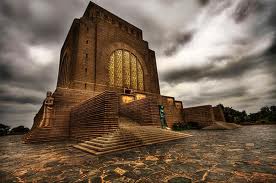
The Voortrekker Monument won a prestigious gold award for overall performance at the China Outbound Travel and Tourism Market, the Pretoria municipality said on Wednesday.
Strategic Executive Director, Nomasonto Ndlovu said in a statement the City of Pretoria were concluding its exhibition at Indaba 2013.
“What a fantastic way to end our participation at Indaba 2013. This is such good news and will give our tourism industry a tremendous boost.”
According to the statement Sonja Lombard, Managing Director of the Voortrekker Monument, said the main reason for winning the award was the 45% increase in Chinese visitors to this landmark.
“More significant is that 50% of all Chinese visiting South Africa visited the Voortrekker Monument,” Lombard was quoted as saying.
Ndlovu said in keeping with government’s decision to promote South Africa as a heritage and cultural hotspot, the City of Pretoria exhibited its wide array of attractions at Indaba 2013.
“The Voortrekker Monument, which receives more than 200 000 visitors per year, was built to commemorate the centenary of the Great Trek. It received its new status as a Grade 1 National Heritage Site last year.”
The building was designed to commemorate the bravery and persistence of the Afrikaner pioneers who left the British-controlled Cape Colony during the Great Trek between 1835 and 1854 in search of freedom further north.
“The monument also serves as an ideal venue for classical music and choral performances. The Hall of Heroes can accommodate up to 600 people, and its fantastic acoustics enhance the music coming from its digital Allen organ,” Ndlovu said.
She added that this is the ninth consecutive year that the city has showcased Pretoria’s tourism offerings at Indaba.
The fantasy world of “Pretville,” a Grease-style film musical in the Afrikaans language, celebrates 1950s Americana, the thrill of first love and foot-tapping classics that evoke innocence and discovery.
Scene from Pretville
HARTBEESPOORT, South Africa (AP) — Do you remember your first kiss? If you have a few years under your belt, maybe you stole it in the back of the movie theater, the projector whirring in the darkness. Or rather, back of the “bioscope,” a word for the cinema in South Africa in the old days.
The fantasy world of “Pretville,” a Grease-style film musical in the Afrikaans language, celebrates 1950s Americana, the thrill of first love and foot-tapping classics that evoke innocence and discovery.
It is also an affirmation of an Afrikaner identity that spent years in the doghouse after 1994 elections and the end of apartheid, the system of white minority rule imposed by Afrikaner nationalists in 1948. And while most of the actors are white, two who are not play authority figures, lampooning the now-discarded racial order.
The musical, its creators stress, is joyful escapism, not a whitewashing of South Africa’s tortured history of race relations. As co-producer Paul Kruger noted, “pret” means “fun” in Afrikaans. The movie indulges in rock ‘n’ roll, vintage cars, greasers in sneakers, pin curl hairstyles and swing dresses, lots of pastel pink and blue, and double thick strawberry milkshakes with extra cream.
“I think we’ve been excluded in that whole journey during the ’50s in South Africa,” Kruger said. He added with understatement: “We were busy with too many other things, too many other politics kept us busy.”
The plot is about a farm boy and a town slicker who vie for a beauty’s affection, with assorted side-sagas and a generous sprinkling of flamboyant characters: an aging crooner called Eddie Elektriek who courts an old flame, a candy storeowner with an eye for the guys, a hairdresser-cum-mayor with a goatee and a pompadour, a stutterer in horn-rimmed glasses and a pregnancy that fuels fevered gossip.
The feel-good film borrows from Buddy Holly, Jerry Lee Lewis and West Side Story. But it’s a whole lotta shakin’ with an Afrikaner stamp. For example, the song “Is Jy Myne” (Are You Mine) is loosely based on “My Boy Lollipop,” and “Skud, Skop en Hop” (Shake, Rattle and Roll) echoes “Great Balls of Fire.”
“It’s taking something old, putting something new,” composer Machiel Roets said of pairing Afrikaans with vintage vibes. “Voila! A new recipe.”
Afrikaans, the Dutch-based language of the descendants of European settlers, is spoken as a first language by 13.5 percent of South Africa’s 51 million people, according to the 2011 census. Pretville has a strong fan base and English subtitles but it isn’t a cross-over hit. The movie’s promoters say it’s part of a larger revival in the last few years of music and movies in Afrikaans, a language once tarred by its association with apartheid.
The film set, which resembles small-town Main Street, is a popular tourist attraction for Afrikaans-speaking crowds that ogle the Hammerstein radio, Nash Metropolitan car, Handy Hannah hair dryer and other props, many bought on eBay and shipped from the United States.
Annelie Engelbrecht, who was celebrating her 49th birthday there, and her husband, Pierre, traveled 700 kilometers (435 miles) from their home near South Africa’s Kruger game reserve to soak up the movie’s aura. The set lies near a mountain range west of the capital, Pretoria. A sign at the entrance announces the production house: “Hartiwood Studios,” a play on the nearby town of Hartbeespoort, and Hollywood.
“We used to go to the films and kiss at the back of the movies. It was really like that in the olden days,” Engelbrecht said. She thought the racial mixing in the movie was “tongue in cheek” because it was unthinkable under apartheid in the 1950s.
“Blacks and whites wouldn’t have danced together, I can promise you that,” Engelbrecht said. “That is just the new South Africa.”
Actor Terence Bridgett, the campy mayor who sashays around a hair salon, is of mixed heritage. His two assistants, Dyna and Dot, are “The Supremes” of Pretville. Entertainer Emo Adams, who has a Malay background and released an album titled “Tall, Dark & Afrikaans,” plays the police chief, breaking up a fight between the love-struck suitors and tossing them in jail.
In a classic send-up, Adams delivers “Elvis the Pelvis” dance moves in the olive-green uniform of the 1950s South African police. Security forces at that time harshly enforced a growing body of law that enshrined a system of white domination and racial segregation. Blacks lacked political rights, the right to move freely, the right to live where they wanted. They couldn’t, of course, visit “bioscopes” for whites.
In 1976, the South African government tried to force the teaching of Afrikaans on schools in black townships, triggering massive protests and a bloody crackdown that ultimately invigorated opposition to white rule.
After apartheid, Afrikaans became one of 11 official languages in the multi-ethnic country. R.W. Johnson, author of “South Africa’s Brave New World,” wrote that many Afrikaners felt so guilty about the past that they were reluctant to assert their culture, “in much the same way that after 1945 many Germans became uncomfortable with any assertion of German national identity.”
Lizelle de Klerk, a Pretville actor, remembers shunning her cultural background and helping craft plays in university about “how we hate being Afrikaans,” but now she believes Afrikaners can proudly tell their own stories, whether they are about race or not.
De Klerk dreams of performing on London’s West End, but also wants to contribute to South African expression in the years ahead. She is reading a book about the 1990s Truth and Reconciliation Commission, which opened a nation’s story-telling floodgates by hearing testimony about apartheid-era cruelty.
“South Africa finally had a new narrative that they could draw from to make stories, because finally you had black peoples’ stories, colored peoples’ stories. You heard offenders’ stories. You heard ‘people that were victims’ stories,” de Klerk said. “So it’s a whole new dynamic. But I think we’re moving, slowly moving, forward. And it’s great.” – AP
Papyyrus.com is an exciting new e-book library offering 12 000 recent ebooks in four languages to its members. By signing up for the Papyyrus newsletter, we are offering you this interesting and topical e-book in PDF format by French “new philosopher” Pascal Bruckner.
Fascism, communism, genocide, slavery, racism, imperialism–the West has no shortage of reasons for guilt. And, indeed, since the Holocaust and the end of World War II, Europeans in particular have been consumed by remorse. But Pascal Bruckner argues that guilt has now gone too far. It has become a pathology, and even an obstacle to fighting today’s atrocities. Bruckner, one of France’s leading writers and public intellectuals, argues that obsessive guilt has obscured important realities. The West has no monopoly on evil, and has destroyed monsters as well as created them–leading in the abolition of slavery, renouncing colonialism, building peaceful and prosperous communities, and establishing rules and institutions that are models for the world. The West should be proud–and ready to defend itself and its values. In this, Europeans should learn from Americans, who still have sufficient self-esteem to act decisively in a world of chaos and violence. Lamenting the vice of anti-Americanism that grips so many European intellectuals, Bruckner urges a renewed transatlantic alliance, and advises Americans not to let recent foreign-policy misadventures sap their own confidence. This is a searing, provocative, and psychologically penetrating account of the crude thought and bad politics that arise from excessive bad conscience.
Pascal Bruckner is the award-winning author of many books of fiction and nonfiction, including the novel Bitter Moon, which was made into a film by Roman Polanski. Bruckner’s nonfiction books include Perpetual Euphoria and The Paradox of Love (both Princeton).
The Tyranny of Guilt: An Essay on Western Masochism
by Pascal Bruckner
Originally published in French by Grasset & Fasquelle
English translation published by Princeton University Press
As soon as you press the send buttion, the page will show a download link with the title of the book. Simply click on it to start downloading.
Enjoy the read!
If you have any problems, contact us at info[at]praag.org.
President Vladimir Putin has signed a decree granting Russian citizenship to French film star and tax exile Gerard Depardieu, who is renouncing his French citizenship to search for an easier tax climate outside of his native country.
The Academy Award-nominated Depardieu is a regular in Moscow. The actor made headlines across the world when he announced in late December that “Putin has already sent me a passport!” The statement was a joke, but it soon became reality.
The day after the announcement, Putin told a press conference that the French bon vivant was a welcome guest in Russia: “If Gerard Depardieu really wants to have Russian residence permit or a Russian passport, we can consider the issue resolved positively.”
Putin also said that he has long had “kind, friendly, personal relations” with the leading light of French cinema.
On the morning of January 3, the Kremlin released a statement announcing that “Vladimir Putin has signed a decree granting Russian citizenship to France’s Gerard Depardieu.”
The 64-year-old actor said he was renouncing his French citizenship over the “insulting” accusations of tax evasion he faced after announcing plans to move to Belgium. “I don’t ask for approval, but I could at least be respected!” Depardieu wrote in an open letter to Prime Minister Jean-Marc Ayrault.
“All those who have left France have not been insulted as I have been,” Depardieu said, referring to French Prime Minster Jean Marc Ayrault’s comment that the actor was “pathetic”for deciding to leave his native country.
Last week, Depardieu confirmed he would stay in Belgium despite the fact that a French court struck down the proposed 75 percent income tax rate for the country’s wealthiest. The French government agreed to axe the notorious measure after it “failed to recognize equality before public burdens.”
Depardieu earlier mentioned three countries ready to offer him residence: Belgium, where he recently bought a house; Montenegro, where he has friends and some businesses; and Russia, which has a flat 13 percent income tax rate and could become a tax haven for the actor. – RT
The Soviet Union 50 years ago allowed publication of Alexander Solzhenitsyn’s landmark account of life in the Stalin prison camps “One Day in the Life of Ivan Denisovich”, shocking readers by revealing a hitherto hidden horror.
In November 1962, Soviet leader Nikita Khrushchev was looking for a powerful symbol that could help his risky campaign to expunge Stalin’s lasting impact on political and cultural life. He found it in a story by the then unknown author Solzhenitsyn.
The year before, Khrushchev had publicly denounced the late dictator’s crimes and ordered that his body be moved out of the Lenin mausoleum on Red Square. But he wanted to deliver another strong blow to critical conservatives in the Communist Party.
After a long hesitation, Khrushchev approved publication of the text, a story that was a one-day snapshot of a wrongfully-accused man’s life behind prison camp walls somewhere in the wind-swept plains of the vast country.
“One Day in the Life of Ivan Denisovich” was published on November 18, 1962 in Novy Mir, a prestigious literary monthly. The impact of this story, the first account of prison camps printed in the Soviet Union, was enormous.
“For us, Solzhenitsyn was like a comet that fell from the sky. This story was a huge event,” said literary critic Benedikt Sarnov.
The public fought over the magazine issue, thousands of readers wrote to the author and the editor, wanting to share their own stories, including former prisoners and relatives of people who had been deported or executed.
Solzhenitsyn wrote the story in 1959, drawing from his own experience of eight years in labour camps and prison after police intercepted his letter to a friend which criticised Stalin. He spent a large part of his sentence in the Ekibastuz camp in modern-day Kazakhstan.
“My father died in prison when I was five,” said Arseny Roginsky, a former dissident who now heads the Memorial rights group.
“What struck me in ‘Ivan Denisovich’ was that it talked about things that even my father’s friends talked about, including the ones that spent time in the camps.”
The story quickly rocketed Solzhenitsyn to international fame and was translated into many languages.
Khrushchev succeeded in his plan, and signs of a thaw were seen both domestically and from abroad, signalling a break from the Stalin era.
The thaw, however, was not a lasting one, and Khrushchev began to lean more towards the conservatives in just a few months. He declared the topic of prison camps “dangerous for society”, saying that Stalin’s mistakes should be pointed out along with his successes.
Publication of other prison camp accounts, such as Varlam Shalamov’s “Kolyma Tales” and Eugenia Ginzburg’s autobiography “Journey into the Whirlwind”, did not see the light until the perestroika period.
“If Khrushchev hadn’t attacked Stalin at precisely that moment, my story would have never been published,” Solzhenitsyn, who died in 2008, later wrote.
Khrushchev however could not predict that by enforcing his position against the Stalinists with the help of the story’s young author, he helped Solzhenitsyn to go on and write the Gulag Archipelago, the encyclopaedic narrative about repression under Lenin and Stalin.
“When One Day in the Life of Ivan Denisovich first appeared, I was inundated with thousands of letters and testimonies,” Solzhenitsyn said in one interview.
“I began correspondence with the most interesting authors. I understood that fate was sending me exactly what I needed: material for writing Archipelago,” he added.
Once Khrushchev was succeeded by Leonid Brezhnev in 1964, things changed drastically for Solzhenitsyn. “One Day” disappeared from libraries. Books were destroyed. In magazines, pages with the story were torn out, and the title and author’s name was blackened out in the table of contents.
Until the end of the Soviet era, the story, along with other works by Solzhenitsyn, could only be circulated via the dissident practice of samizdat, or self-publishing by hand or typewriter.
During the presidency of Boris Yeltsin in post-Soviet Russia, it became part of the official required school reading program, where it remains today. – AFP
A British comedian, Frankie Boyle is suing the Mirror newspaper for libel, over an article which labelled him racist.
He is complaining about a story published on 19 July 2011, saying he was in talks for a new Channel 4 show.
The first sentence read: “RACIST comedian Frankie Boyle could soon be returning to TV despite upsetting thousands of viewers”.
The Mirror said it will defend itself “on the basis of truth and fair comment”.
The trial, which is taking place at the High Court in London, is expected to last a week.
Boyle’s lawyer told the court that the newspaper had also defamed his client, by asserting he had been “forced to quit” the BBC comedy show Mock The Week.
His barrister, David Sherborne, said that to call someone “racist” was “obviously defamatory”.
Mr Sherborne said Boyle’s humour was “deliberately challenging”.
Controversial humour
He said the comic did not object to being criticised but did object to being described as racist.
“Saying ‘vile’ or ‘offensive’, or his material is ‘vile’ or ‘offensive’, is one thing,” Mr Sherborne told the jury.
“He realises that that goes with the territory, so to speak. But accusing him of being a racist is an entirely different matter.”
Mr Sherborne added: “You can call him ‘offensive’, you can call him ‘tasteless’. That’s fine. But he is not racist.”
The Glasgow-born comedian’s humour has often proved controversial with audiences.
Last year, broadcasting watchdog Ofcom upheld more than 500 complaints about his Channel 4 show Tramadol nights, during which he joked about Katie Price’s disabled son, Harvey.
Ofcom ruled that the joke appeared to “target and mock the mental and physical disabilities” of the then eight year-old.
In 2008, the BBC apologised when Boyle made a joke about Palestine on the Radio 4 comedy show Political Animal.
Break from Twitter
A year after that, BBC Two’s Mock The Week was criticised by the BBC Trust over comments Boyle made on the show about swimmer Rebecca Adlington’s appearance.
As yet, The Mirror has not removed the article about Boyle from its website.
A paragraph added to the top of the story reads: “Frankie Boyle is taking legal proceedings against us for the description of him as a ‘racist comedian’. He claims it is untrue and defamatory. We are defending this claim on the basis of truth and fair comment.
“We are also defending his claim that we libelled him by suggesting that ‘he was forced to quit Mock the Week’ in 2009.”
Boyle’s lawyer said any suggestion his client was forced to leave the show was “completely untrue”.
Boyle has taken a temporary respite from Twitter. “I’m afraid I must disappear from Twitter for a while. See you on the other side of this thing.” – BBC
First reviews of Harry Potter author JK Rowling’s novel for adults on Thursday praised its Dickensian scope and social message, but warned the gritty, even obscene tale was a far cry from Hogwarts.
Shortly before the release of the hotly awaited “The Casual Vacancy”, several reviewers said they were taken aback to read grimy scenes of sex and drugs, but added the author’s most vivid writing was on the familiar ground of adolescence.
“I had just read a passage written by the world’s favourite children’s author in which a teenager is raped by her mother’s heroin dealer, a man who may well be the father of the girl’s own three-year-old stepbrother, although it’s hard to know for sure when the mum concerned is a prostitute,” wrote Allison Pearson in the Daily Telegraph.
She added that the novel, a story of poverty and politics in an English village — of which a million copies have been pre-ordered — was “sometimes funny, often startlingly well observed, and full of cruelty and despair”.
But the Mirror tabloid labelled it “Harry Potter and the Goblet of Filth”, warning the author famed for her stories of young wizards was “sure to face stern criticism for featuring the C-word and F-word hundreds of times”.
Set in the picturesque fictional village of Pagford in southwest England, the black comedy deals with the fight to fill a slot on the parish council after the incumbent’s sudden death, and hinges on the fate of a squalid housing estate.
Kept closely under wraps until publication, it hits bookshops on Thursday and is expected to be Britain’s top-selling fiction title this year.
In the Independent, Boyd Tonkin called it a “song of freedom” after Rowling’s seven children’s books, which made her the world’s first billionaire author.
While decrying the novel’s “clunkily satirical set-pieces”, he said it “picks up passion, verve and even magic” when dealing with its teenage characters.
“All the social and hormonal turbulence that the later Potter volumes had to veil in the euphemisms of fantasy appear in plain sight here,” he wrote. “The novel builds into a vividly melodramatic climax with these kids at its heart.”
But the Guardian’s reviewer Theo Tait labelled the edgier scenes “superficial excitements”, saying the novel created a sense of “slight anti-climax” despite its “richly peopled, densely imagined world”.
And writing in The Times, Erica Wagner said the book was founded on “the idea of the novel as a force for social good” but could be “a tiny bit dull”.
For the Telegraph’s reviewer, however, a top concern was the risk of the book falling into the wrong hands.
“In the coming days, along with thousands of parents around the world,” she wrote, “I will have to do something that offends our best instincts: I will try to stop my children reading a book.” – AFP
Van Gogh's 'Starry Night' in the Museum of Modern Art in New York, however
The operation began moments after the Van Gogh Museum in Amsterdam closed Sunday evening. Men removed alarm tags from behind some of Vincent Van Gogh’s greatest masterpieces, including “Sunflowers,” “Irises” and the famously crooked “Bedroom,” and quickly pulled the paintings down from the museum’s walls.
Fortunately, they were not thieves carrying out an epic heist, but curators preparing the works for transport to a temporary location across town where they will be on display for the next seven months while the museum is closed for renovations.
In all, 75 pieces – the cream of the biggest collection of Vincent Van Gogh’s work – are moving to The Hermitage, an Amsterdam dependency of the Russian state museum.
Watching the lifeblood of his museum disappear, Director Axel Ruger said he wasn’t nervous about the possibility the paintings could be damaged or stolen before they return next year.
“We do this all the time” when individual paintings go on loan to another museum, he said. But never on this scale, he conceded.
“I cannot really say much about the (security) measures that are being taken, because you will understand that we need to keep those confidential in order to safeguard the security of the transport,” he said.
Standing near a blank space on the wall where Van Gogh’s final work, the 1890 painting “Wheatfield with Crows,” had hung just minutes earlier, Curator Leo Jansen described in brief the treatment the paintings would undergo.
After being loaded onto felt-covered trolleys, they would be taken to a workshop to be wrapped in protective insulation and packed into hard-shell carrying cases called “turtles” that are resistant to both physical shocks and temperature changes.
The cases have been assigned code numbers rather than bearing the paintings’ individual names.
About an hour later, the first shipment was loaded onto a yellow van and then driven away under police escort. The route each shipment followed was kept secret until the last moment.
The operation continued like clockwork through Sunday night and into the day Monday in order to get the paintings on display again as soon as possible: the Van Gogh Museum is Amsterdam’s most popular, attracting 1.6 million visitors in 2011 – eclipsing both the Rembrandt-rich Rijksmuseum and the Anne Frank House museum.
[ad 1]
The exhibit at The Hermitage opens Saturday and runs through mid-April, with the Van Gogh Museum to reopen on April 25, 2013.
The closure of the Van Gogh Museum was timed in part to coincide with the reopening next door of the lesser-known Stedelijk, or city museum, which houses works by Dutch Modernists Piet Mondriaan and Gerrit Rietveld, as well as Pablo Picasso, Marcel Duchamp, Henri Matisse and many others.
Dubbed “the bathtub” by local press, the most notable new feature of the renovated Stedelijk is a white roof with an overhang that stretches so far from the side of the building it looks like it might simply break off.
Architects say it is structurally sound, made possible thanks to a stronger-than-steel composite material. – AP
A writer who argued in an essay that Norway deserved mass-killer Anders Breivik has been forced to step down from a prestigious role with top French publishers Gallimard.
Richard Millet remains a Gallimard employee, the company stressed Friday, but he will no longer sit on its committee of readers, which helps select books for publication and shapes the output of established writers.
Millet will continue to look after the writers he handled for the publishers, Gallimard said.
It remains to be seen how many of them will want to continue to be associated with him following an outcry over a publication branded “fascist” by a group of 120 writers this week.
Antoine Gallimard, chief executive of the publisher, had written to Millet to express his shock at the end of August, soon after the pamphlet “In Literary Praise of Anders Breivik” was published.
On Monday, Gallimard wrote to the writer once more to remind him that “as a member of the committee of readers, he represents the (publishing) house.”
Millet’s position had been made untenable and he duly announced his resignation from the reading committee late on Thursday.
The writer insists he does not approve of Breivik’s crimes but wrote approvingly of the Norwegian’s 1,500-page online manifesto which outlines his hatred for social democracy, immigration and multiculturalism.
[ad 1]
“Breivik is without doubt what Norway deserves,” Millet wrote, arguing that the killer was as much a child of a broken family as he was the product of an ideological-racial divide caused by immigration from outside Europe.
A prolific novelist and essayist, Millet has been the editor of two winners of France’s literary prize, the Goncourt — Jonathan Littel (2006) and last year’s winner Alexis Jenni.
Despite a traditional reluctance in France’s literary world to do anything which could be seen as restricting the freedom of speech, several Gallimard writers had urged the publisher to distance itself from Millet.
In an article for Le Monde this week, to which 120 writers put their names, novelist Annie Ernaux desribed the essay as a “fascist pamphlet that is a disgrace to literature.”
Breivik was sentenced last month to the maximum 21 years in prison for killing 77 people in a bomb attack and shooting rampage last year. – AFP
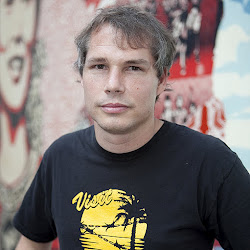
Acclaimed street artist Shepard Fairey has been sentenced to two years’ probation and asked to pay a $25,000 fine after being found guilty of criminal contempt in a case involving his now iconic “HOPE” image adopted by Barack Obama’s 2008 campaign.
Fairey, 42, pleaded guilty back in February to one count of criminal contempt for destroying documents, manufacturing evidence and other misconduct, the Los Angeles Times reports. The artist had been in trouble with the Associated Press over the alleged misuse of a photograph taken of Mr. Obama by an AP staffer in 2006, only to admit after the fact that he attempted to present himself as innocent by fabricating elements in his case.
While Fairey initially received accolades for his “Hope” image used during President Obama’s first run for the White House, the AP insisted that the artist was guilty of copyright infringement, a claim he contested by saying the image was protected under fair-use laws. In return, Fairey turned around and filed a suit against the AP, but not before publically admitting in October 2009 that he lied about the photograph he used for his source, nearly one year after Fairey’s image helped elect President Obama.
“In an attempt to conceal my mistake, I submitted false images and deleted other images,” Mr. Fairey said at the time. “I sincerely apologize for my lapse in judgment, and I take full responsibility for my actions, which were mine alone.”
The prosecution in the case had argued to US Magistrate Judge Frank Maas that Fairey had “both an ideological and financial motive” to falsify his claims, calling his behavior actions that “cannot be dismissed as remotely impulsive or the product of a moment of bad judgment.”
“This was not a mere failure to preserve documents,” the prosecution claimed. “This was the intentional destruction of evidence and the intentional manufacture of false evidence. The defendant knew exactly what he was doing when he created the fake documents and sought to destroy the deleted documents.”
“In order to cover up the fact that the assertion in his complaint was untrue, Fairey created multiple false and fraudulent documents that attempted to show he had used the photograph of then-Senator Obama with George Clooney in it as his reference,” the Justice Department said. “Fairey also attempted to delete multiple electronically stored documents demonstrating that he had, in fact, used the tightly cropped image of then-Senator Obama as the reference. The false and fraudulent documents were produced to the AP during discovery, and the documents that Fairey attempted to delete were not initially produced to the AP.”
After the artist came clean, the AP released a statement from their general counsel, Srinandan R. Kasi, addressing Fairey’s admitted fabrication: “The A.P. intends to vigorously pursue its countersuit alleging that Fairey willfully infringed The AP’s copyright in the close-up photo of then-Senator Obama by using it without permission to create the Hope and Progress posters and related products, including T-shirts and sweatshirts that have led to substantial revenue.”
Now with the case settled in court, the AP says they hope the worst of the matter is over.
“After spending a great amount of time, energy and legal effort, all of us at The Associated Press are glad this matter is finally behind us,” AP President and CEO Gary Pruitt says in a statement released this week. “We hope this case will serve as a clear reminder to all of the importance of fair compensation for those who gather and produce original news content.”
Fairey had previously settled a civil case with the AP over the case, the agency reports, paying them $1.6 million in damages. – RT
Nadine Gordimer, Nobel laureate for literature in 1991
Nobel literature prize winner Nadine Gordimer poured scorn on South Africa’s education system on Tuesday as “a wreck” over the failure to deliver textbooks to thousands of public schools.
The scandal has caused a national furore after leaving more than 5,000 rural schools without textbooks for more than six months of the academic year in a damning measure of South Africa’s schooling 18 years into democracy.
“Our education system is a wreck. It’s a shamble. I can’t believe that three-quarters of the year have gone by and so many of our schools, especially in the rural areas, have been without textbooks,” said Gordimer, 88, on SAFM public radio news.
“It is the (education) minister’s responsibility to see that the books are ordered in time and delivered. How can you teach people to read if there are no books to read from?”
President Jacob Zuma is facing increasing calls to fire Education Minister Angie Motshekga. On Monday, he said he was waiting for a final report from a team he appointed to investigate the debacle.
The education department was found to have violated students’ rights to education after being taken to court and was ordered to remedy the situation.
But a probe revealed that 22 percent of schools in the northern Limpopo region were still without learning materials earlier this month despite a scramble by authorities to get the missing books to schools.
The criticism by Gordimer, who had several works banned by the apartheid regime, comes after peace laureate Desmond Tutu said democratic icon Nelson Mandela would be reduced to tears if he knew the poor state of public schools.
Education is South Africa’s single biggest budget item, but schools are hobbled by poor management and low standards. – SAPA
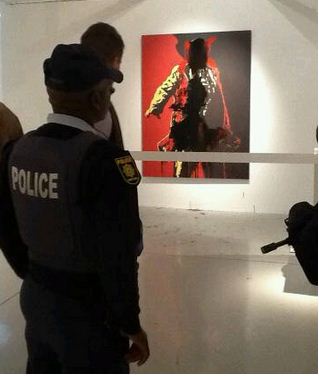
The ANC vowed on Thursday to go to court to get a painting of President Jacob Zuma with his genitals hanging out removed from a Johannesburg gallery.
“The African National Congress is extremely disturbed and outraged by the distasteful and indecent manner in which Brett Murray and the Goodman Gallery in Johannesburg is displaying the person of comrade President Jacob Zuma,” ANC spokesman Jackson Mthembu said in a statement.
“We have this morning [Thursday] instructed our lawyers to approach our courts to compel [them] to remove the portrait from display as well as from their website and destroy all printed promotional material.”
The 1.85m-high acrylic on canvas painting titled “The Spear” is part of Murray’s “Hail to the Thief II” exhibition at the gallery.
It is part of a body of satirical work which is a sequel to his 2010 exhibition “Hail to the Thief”.
A biography of Murray handed out by the gallery shows how Murray’s work continues his forthright attacks on abuses of power.
His bronzes, etchings, paintings and silk-screens formed part of a “vitriolic and succinct censure of bad governance”.
They were Murray’s attempts to humorously expose the paucity of morals and greed within the ruling elite, according to the biography.
The painting of Zuma, and a few other pieces, have already been sold.
The ANC said the painting violated Zuma’s right to dignity.
It said the image and the dignity of the president as president of the ANC, president of the country, and as a human being had been dented by “this so-called piece of art”.
Staff at the Goodman Gallery said on Thursday that the exhibition, which opened on May 10, had been well received, with positive comments in the guest book.
“Hilariously sad and true,” wrote one person. Other comments were “brilliant”, “very cool” and “amazing”.
The gallery said it would make an official comment in response to the ANC’s threat of court action, but had not done so by Thursday evening.
The ANC also bemoaned the use of the party’s logo.
Part of Murray’s work was a poster of the ANC’s emblem with “for sale” printed on top of it and then “sold” stamped across it.
“The vulgar portrait and the dismembering of the ANC logo… is an abuse of freedom of artistic expression and an acute violation of our constitution, apart from being defamatory,” said Mthembu.
Murray also took struggle posters and adapted them to read: “Amandla, we demand Chivas, BMWs and bribes”; “Now you have touched the women you have struck a rock, you have dislodged a boulder; you will be president”; and “Tell my people that I love them and that they must continue the struggle for Chivas Regal, Mercs and Kick-backs”.
The exhibition runs until June 16.
Murray is Cape Town-based artist whose work is to be found in a number of South African and international galleries. – Sapa
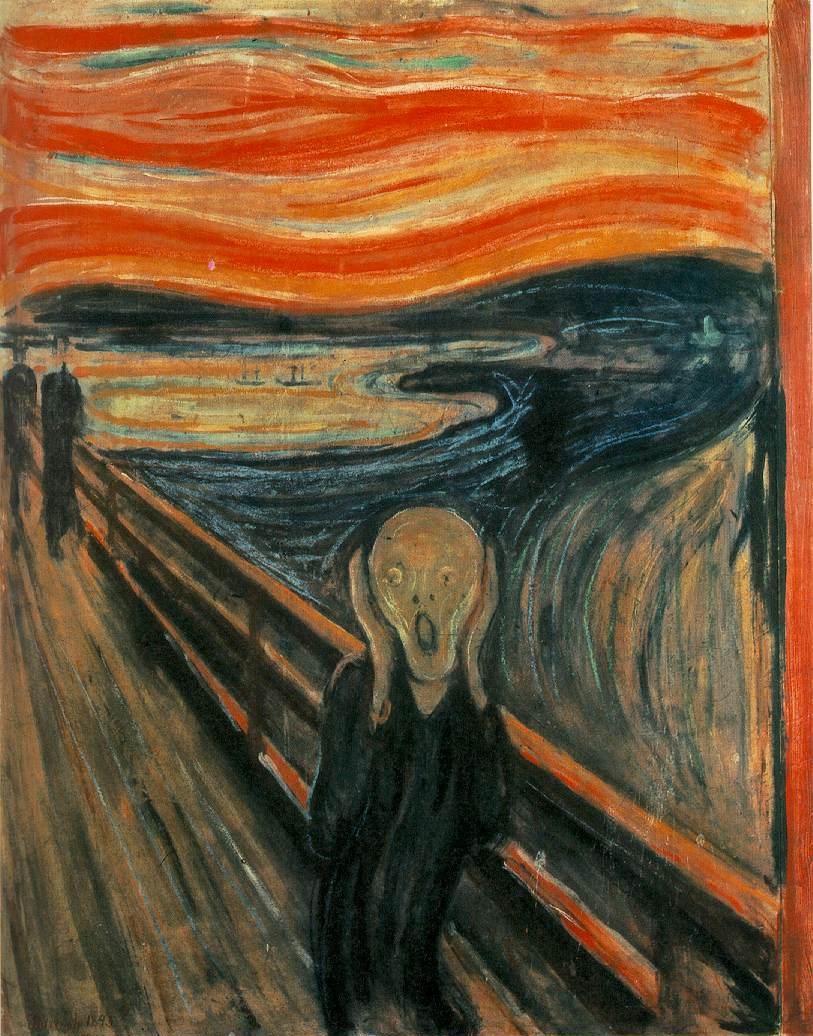
One of the most iconic images in art history – Edvard Munch’s “The Scream” – has become the most expensive artwork ever sold at auction.
The 1895 piece – a modern symbol of human anxiety – was sold at Sotheby’s in New York City on Wednesday for a record $119.9 million (?91.3 million). The price includes the buyer’s premium.
The image of a man holding his head and screaming under a streaked, blood-red sky is one of four versions by the Norwegian expressionist painter. The piece auctioned at Sotheby’s is the only one left in private hands. The buyer’s name was not disclosed.
The previous record for an artwork sold at auction was $106.5 million (?81.11 million) for Picasso’s “Nude, Green Leaves, and Bust,” sold by Christie’s in 2010. – AP
This website uses cookies to improve your experience. We'll assume you're ok with this, but you can opt-out if you wish. Cookie settingsACCEPT
Privacy & Cookies Policy
Privacy Overview
This website uses cookies to improve your experience while you navigate through the website. Out of these cookies, the cookies that are categorized as necessary are stored on your browser as they are essential for the working of basic functionalities of the website. We also use third-party cookies that help us analyze and understand how you use this website. These cookies will be stored in your browser only with your consent. You also have the option to opt-out of these cookies. But opting out of some of these cookies may have an effect on your browsing experience.
Necessary cookies are absolutely essential for the website to function properly. This category only includes cookies that ensures basic functionalities and security features of the website. These cookies do not store any personal information.
Any cookies that may not be particularly necessary for the website to function and is used specifically to collect user personal data via analytics, ads, other embedded contents are termed as non-necessary cookies. It is mandatory to procure user consent prior to running these cookies on your website.