Germany rejects allegations of police racism

Steffen Seibert, spokesman for Chancellor Angela Merkel

Germany’s government Friday rejected charges that its police were racist that arose from an inquiry into authorities’ decade-long failure to uncover a neo-Nazi cell accused of shooting dead nine immigrants.

“The federal police do not behave in racist fashion and have not done so in the past,” said Jens Teschke, a spokesman for Interior Minister Hans-Peter Friedrich. “We strongly reject this allegation.”

He spoke one day after an official inquiry concluded that the failure to find the cell accused in the slayings of one Greek and eight Turks was because of incompetence in the police and intelligence services.

Chancellor Angela Merkel’s spokesman, Steffen Seibert, welcomed the findings, saying, “The results will be thoroughly analysed, in particular the measures for reform that were proposed.”

The inquiry found the police trapped themselves in a false theory that a Turkish gang had formed in Germany to kill compatriots.

One member of the 11-member commission of inquiry, Social Democratic legislator Eva Hoegl, upset police unions by telling the media the disarray resulted from “structures of suspicion and prejudice in the police that often have a racist stamp.”

However, the example she gave was not connected to the botched inquiry into the National Socialist Underground (NSU) but claims last year that a small, specialized force that patrols trains and airports tends to ask black people to show their identity more than whites.

The force, the Federal Police, denied prejudice.

“We heard the allegations against the Federal Police …. with utter astonishment,” Teschke said. “The Federal Police had nothing to do with [the NSU inquiry].”

The inquiry chairman, Sebastian Edathy, earlier also denied the police were fundamentally racist, saying, “I don’t believe we have institutional racism, but I do believe that in everyday work, the police need to question their own stereotypes.”

Beate Zschaepe
Beate Zschaepe

Edathy, an opposition Social Democrat, said remedies included hiring more ethnic minorities to change the mentality of the police.

The inquiry into the killings from 2000 to 2007 ran parallel to a trial in Munich at which Beate Zschaepe, 38, is charged as an accomplice to the slayings. She is the only survivor of the three-member NSU. Two men died in a murder-suicide in 2011 that brought the gang to light. – dpa

Expert casts doubt on Syria chemical weapons footage

syria2As videos of an alleged chemical attack in Syria were shown to the world, some experts cast doubt on their authenticity.

Stephen Johnson is an expert in weapons and chemical explosives at Cranfield Forensic Institute. He said there were inconsistency among the patients’ symptoms.

“There are, within some of the videos, examples which seem a little hyper-real, and almost as if they’ve been set up. Which is not to say that they are fake but it does cause some concern. Some of the people with foaming, the foam seems to be too white, too pure, and not consistent with the sort of internal injury you might expect to see, which you’d expect to be bloodier or yellower,” Johnson said.

Johnson said that although much of the video showed injuries consistent with trauma to the nervous system, it was too early to conclude that it was from chemical weapons.

“At this stage everyone wants a ‘yes-no’ answer to chemical attack. But it is too early to draw a conclusion just from these videos,” he added.

Syrian anti-government activists claim regime forces targeted eastern suburbs of Damascus with a toxic gas.

France and Britain have called for UN inspectors, who are already in the country, to be allowed immediate access to the site. – euronews.com

US bugged UN HQ

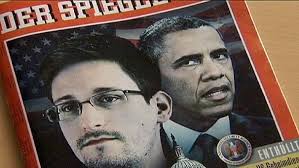
usspsyingThe U.S. National Security Agency has bugged the United Nations’ New York headquarters, Germany’s Der Spiegel weekly said on Sunday in a report on U.S. spying that could further strain relations between Washington and its allies.

Citing secret U.S. documents obtained by fugitive former intelligence contractor Edward Snowden, Der Spiegel said the files showed how the United States systematically spied on other states and institutions.

Der Spiegel said the European Union and the U.N.’s Vienna-based nuclear watchdog, the International Atomic Energy Agency (IAEA), were among those targeted by U.S. intelligence agents.

In the summer of 2012, NSA experts succeeded in getting into the U.N. video conferencing system and cracking its coding system, according one of the documents cited by Der Spiegel.

“The data traffic gives us internal video teleconferences of the United Nations (yay!),” Der Spiegel quoted one document as saying, adding that within three weeks the number of decoded communications rose to 458 from 12.

Internal files also show the NSA spied on the EU legation in New York after it moved to new rooms in autumn 2012. Among the documents copied by Snowden from NSA computers are plans of the EU mission, its IT infrastructure and servers.

According to the documents, the NSA runs a bugging program in more than 80 embassies and consulates worldwide called “Special Collection Service”. “The surveillance is intensive and well organized and has little or nothing to do with warding off terrorists,” wrote Der Spiegel.

OPEN LETTER

Snowden’s leaks have embarrassed the United States by exposing the global extent of its surveillance programs. Washington has said its spies operate within the law and that the leaks have damaged national security.

A week ago Britain, a staunch U.S. ally in the intelligence field, detained the partner of a Brazil-based journalist working for London’s Guardian newspaper who has led coverage of Snowden’s leaks. British police said documents seized from David Miranda were “highly sensitive” and could put lives at risk if disclosed.

The Guardian last week destroyed computer equipment containing Snowden files after it was threatened with possible legal action by senior British government advisers.

In an open letter to British Prime Minister David Cameron published on Sunday, editors of leading Nordic newspapers said Miranda’s detention and moves against the Guardian were “undermining the position of the free press throughout the world”.

“(We are) deeply concerned that a stout defender of democracy and free debate such as the United Kingdom uses anti-terror legislation in order to legalize what amounts to harassment of both the paper and individuals associated with it,” said the letter from Sweden’s Dagens Nyheter, Finland’s Helsingin Sanomat, Denmark’s Politiken and Norway’s Aftenposten.

Earlier this month, U.S. President Barack Obama announced plans to limit U.S. government surveillance programs, saying the United States could and should be more transparent.

The issue has also become a hot topic in Germany before an election next month. Some reports have suggested that German intelligence agents have cooperated with U.S. spies.

There could be a voter backlash if it emerges that Chancellor Angela Merkel, tipped to win a third term, knew more about such cooperation than she has so far acknowledged. – Reuters

Bob threatens US, British firms

robertmugabeZimbabwean President Robert Mugabe on Sunday threatened “tit-for-tat” actions against Western countries that have imposed sanctions on his rule, suggesting US and British firms could be targeted.

“They should not continue to harass us,” said the 89-year-old veteran leader whose re-election last month drew Western doubts over the credibility of the polls.

“We have British and American companies here and we are treating them well. There will come a time when we will lose our patience.”

The United States and European Union imposed sanctions including travel bans and asset freezes on Mugabe and members of his inner circle and several companies following 2002 elections which western observers said were rigged.

“They have companies here and we have not imposed controls or sanctions against them but time will come when we will say tit-for-tat. You hit me, I hit you. You impose this on me, I impose this on you,” Mugabe said.

“Our attitude is not going to continue as it was in the past — passive. We have had enough and enough is enough.”

Mugabe won an extension to his 33-year rule in general elections on 31 July, which were slammed as “a farce” by his rival Morgan Tsvangirai and prompted serious concerns from Western nations.

Local observers said the elections were fraught with irregularities but observers from the African Union and the regional Southern African Development Community (SADC) bloc were less critical.

Mugabe was sworn in last week after the constitutional court declared the elections “free, fair and credible”.

He has vowed to forge ahead with his controversial equity drive to force foreign companies to cede majority shares to local investors.

So far mining companies including Zimplats, a subsidiary of the South African-based Impala Platinum, and Anglo American Corporation’s Unki mines have been forced to sell their majority stake to locals.

Companies in the retail sector are set to follow.

The EU earlier this year retained an asset freeze and travel ban on Mugabe but eased most of its decade-old restrictions on Zimbabwe.

The majority of those on the US sanctions list still remain, including a travel ban and asset freeze on individuals and entities with links to Mugabe.

Mugabe was addressing mourners at the burial of Mike Karakadzai, a retired air commodore and hero of the 1970s liberation war, who died aged 56 on Tuesday.

In his first public speech since Thursday’s swearing-in, he targeted Tsvangirai, his former partner in a shaky powersharing government, as “an ignoramus” and “a lone stray locust”.

This was in reaction to Tsvangirai’s attempt to seek a court’s help to overturn the polls and his calls to rid the security forces of officers allied to Mugabe and his Zanu-PF party.

“I hope our people will never repeat the same mistake and choose an ignoramus when you have bright children who went to university. I wonder what you admire in him,” he said.

On security reforms that were meant to precede the polls, he also hit out at Tsvangirai.

“What sector reform can you a lone stray locust implement? When has the frog aspired to be the crocodile?” he said.

“You are better off with an ignorant person who is conscious of his ignorance. It becomes a problem when you assume your ignorance is wisdom and lead people into trouble.”

The vote ended the pair’s regionally brokered compromise government forced by chaotic 2008 polls.

This time round the electoral commission declared Mugabe the winner with 61 percent of the vote, against 34 percent for Tsvangirai. – AFP

German parliamentary report on neo-Nazi cell expected today

Beate Zschaepe
Beate Zschaepe

Germany’s decade-long failure to uncover a neo-Nazi cell blamed in the killings of immigrants was the fault of incompetence in the police and intelligence services, a commission of inquiry was expected to report Thursday.

Eight Turkish shopkeepers, a Greek man and a policewoman were shot to death in attacks in multiple cities from 2000 to 2007, but police only connected the crimes to the self-styled National Socialist Underground (NSU) four years after the last slaying.

The commission, made up of members of parliament, is to publish its findings after a year and a half of hearings and is to recommend reforms.

Sebastian Edathy, an opposition Social Democrat who chaired the inquiry, said the committee determined that the most horrifying suspicion, that detectives or secret agents might have protected the gang of two men and one woman, was unfounded.

“We did not find any evidence whatsoever that the authorities knew who was behind the crimes or looked the other way or even deliberately helped the perpetrators,” Edathy said. “We followed up every clue.”

Instead, the committee was expected to attribute the failure to across-the-board incompetence by about three dozen squabbling investigative agencies.

“This was a failure by the authorities without historical parallel,” Edathy said.

“November 4, 2011, when the trio was discovered was to us what September 11, 2001, was to the Americans,” he said. “It was the day we realized that our complete security architecture in Germany was not attuned to things like far-right terrorism.”

Germany monitors the wider neo-Nazi movement, which numbers about 5,000, and pays insiders to be informers but overlooked the cell.

The 1,000-page report was expected to conclude that police and agents failed to follow up clues, such as sightings of the neo-Nazis; worked under false assumptions because of institutional racism; and refused to share data with one another because of turf wars.

A parliamentary debate on the report was scheduled September 2.

The two accused gunmen died in a killing-cum-suicide before they could be caught. A judicial finding of their responsibility in the crimes was expected at the end of the current trial of Beate Zschape, the female survivor of the trio. She is charged as an accomplice to murder. – dpa

Fighting on the streets in Germany over refugees

Members of the Pro Deutschland group at a similar protest a year ago

German police kept angry rival protesters apart Wednesday during a third day of demonstrations in suburban Berlin over a new shelter for asylum seekers.

The conflict on the streets over a recent upsurge in refugee arrivals has spilled into violence this week. However Germany’s government rejected a call to summon state leaders for crisis talks about how to handle a recent upsurge in arrivals.

On Tuesday evening, the far-right National Democratic Party (NPD) demonstrated near the newly opened shelter, a four-storey former school in a housing estate built in Hellersdorf, east of Berlin.

Leftist counter-demonstrators then blocked a tramline nearby. During a melee between them and police, one officer’s cheekbone was broken by a hurled bottle. City police said they made 25 arrests.

Pro Deutschland, an anti-Islam group that has previously demonstrated against mosques, held a protest about 1 kilometre from the site, but there was no violence. Police fielded 300 officers.

With a general election on September 22, mainstream parties are wary of the deep divisions on the issue of refugees. Far rightists want to expel foreigners, whereas many liberals favour friendly immigration laws.

Most refugees in Germany enter without documents and apply for asylum after arrival. There has been a sharp rise this year in arrivals because of the conflicts in Syria and Afghanistan.

Wolfgang Bosbach, a conservative in Chancellor Angela Merkel’s Christian Democratic Union, urged local, state and national leaders to hold crisis talks, warning that extremists would exploit the issue.

“The government is aware that the increase in the numbers of refugees is posing a major challenge for the states and the regions,” an Interior Ministry spokesman said. “We are working closely together with them and therefore see no need for a crisis meeting.”

He said 5,000 approved refugees from the Syrian conflict would begin arriving at the end of August or early September under a relief plan. Nearly 12,000 other Syrians had reached Germany and applied for

asylum.

“We take the concerns of people about the refugee situation seriously,” he said.

The 200-bed overflow hostel at Hellersdorf has been set up in a low-income area of the capital where divisions run deep. Hellersdorf is an area of apartment blocks built by the communist authorities.

In the 23 years since reunification, attacks on foreigners have been especially common in the former communist east, where unemployment is high and populists accuse immigrants of taking away jobs.

Germany allocates asylum seekers to hostels across the country while their applications are processed. They are not allowed to work.

On Monday, the first 42 residents arrived at the shabby overflow hostel at Hellersdorf. A pro-refugee Berlin group said six people moved out again in fear for their safety. – dpa

More than 600 migrants land in Italy

An earlier boatload of migrants rescued by the Italian Coast Guard

More than 600 migrants from Eritrea, Pakistan, Syria and other countries have landed on Italian shores on three boats, coast guards said Tuesday.

The coast guard rescued 336 people aboard a boat near Porto Empedocle in Sicily and escorted them ashore, where most of them fled from police.

The migrants said they were all from Eritrea.

Dramatic video images shot from a border guard vessel showed the migrants including women and children being helped off a heavily overcrowded boat at night.

A second boat with 233 people aboard was also spotted by a navy vessel and taken to the tiny island of Lampedusa, Italy’s southernmost point and a major arrival point for migrant boats from Libya and Tunisia.

A third boat with 67 people aboard arrived in a small port near Syracuse in southeast Sicily. The migrants said they were all from Pakistan and Syria.

“I want to be a human like everybody. In Syria, everything is destroyed,” one of the migrants told news channel SkyTG24. Another said the journey had “lasted 10 days and we ran out of water”.

Local coast guard official Luca Sanciglio said: “We were told about the impending landing by a fisherman who spotted them. The boat was not stable so we had to ferry them to the shore.”

“We have a duty to rescue everyone 24 hours a day and that includes immigrants,” he said.

“After so many days and nights of suffering, they just want water and someone to welcome them,” he added.

Most of the thousands of economic migrants and refugees who have landed in Italy in recent months have landed in Libya from other parts of Africa.

Some 350 migrants — many of them from Egypt and Syria — arrived on four boats in Sicily on Monday.

Calmer weather conditions and growing unrest in north Africa have led to a surge in migrant arrivals in recent weeks.

Italy’s interior ministry said 24,277 migrants landed in Italy in the 12-month period between August 1, 2012, and August 10, 2013. – AFP

Gays try to claim friendly Russian kiss

kissrussiaA Russian gold medalist from the Moscow World Athletics Championships on Tuesday said she was insulted by Anglo-Saxon media claims that she had kissed a fellow female athlete on the lips in defiance of Russia’s new law against gay “propaganda”.

The incident highlighted certain Anglo-Saxon cultural attitudes. In Russia it is common for friends to kiss each other on the lips. In France even heterosexual male family members or friends may kiss.

Ksenia Ryzhova and Yulia Gushchina, members of Russia’s victorious 4×400 women’s relay team that provided one of the great moments of the championships, kissed each other on the podium after receiving their gold medals.

Some activists saw the kiss as a brazen show of defiance in support of gays and lesbians and against President Vladimir Putin after the championships were shadowed throughout by controversy over the law.

But Ryzhova on Tuesday insisted that she was married and made clear she was none too happy that people suspected that she and Gushchina might be more than just good friends.

“Yesterday, I was telephoned 20 times by various publications and instead of congratulating me they decided to insult me with these questions,” she fumed, quoted by the ITAR-TASS news agency.

“Myself and Yulia are both married and we are not having any kind of relationship,” she added, saying the two were very good friends after having trained together for eight years.

“It was a storm of emotions (after winning). And if at that moment we touched lips… I don’t know in whose fantasy this all gets thought up.

“This insults not just us but our trainers,” she added. – France24

Britain faces furore over Snowden-linked detention

Glenn Greenwald
Glenn Greenwald

British authorities faced increasing pressure Monday to explain why they used anti-terror laws to detain the partner of a journalist who worked with US intelligence leaker Edward Snowden.

David Miranda — the Brazilian partner of Glenn Greenwald, an American journalist with Britain’s Guardian newspaper — was held for almost nine hours on Sunday as he passed through London’s Heathrow Airport on his way to Rio de Janeiro from Berlin.

A furious Greenwald said British authorities had “zero suspicion” that Miranda was involved in terrorism and instead spent hours questioning him about the Guardian’s reporting on the activities of the US National Security Agency, which has enraged Washington.

“This was obviously designed to send a message of intimidation to those of us working journalistically on reporting on the NSA and its British counterpart, the GCHQ (Government Communications Headquarters),” Greenwald wrote in the Guardian.

“They completely abused their own terrorism law for reasons having nothing whatsoever to do with terrorism.”

Miranda, 28, often assists Greenwald with his work, the Guardian said.

He is not an employee of the newspaper but it paid for his flights. He stayed in Berlin with Laura Poitras, a US filmmaker who has been working with the Guardian.

Miranda said he had been questioned by six agents at Heathrow who confiscated his electronic equipment.

“The minute I stepped out of the plane they took me away to a small room with four chairs and a machine for taking fingerprints,” he told the Guardian.

“They asked questions about my entire life, about everything. They took my computer, video game, mobile phone, my memory card.”

A spokesman for Prime Minister David Cameron said the British government takes “all necessary steps to protect the public from individuals who pose a threat to national security”.

“But it is for the police to decide when it is necessary and proportionate to use these powers,” the spokesman said.

London’s Metropolitan Police on Monday insisted their actions were “reviewed throughout to ensure the examination was both necessary and proportionate” and that its use of anti-terror powers was “legally and procedurally sound”.

The force also dismissed reports that Miranda was denied legal representation and said that a solicitor was present.

But authorities were under increasing pressure to explain why Miranda was held, with Brazil expressing “grave concern” that one of its citizens had apparently been “held incommunicado”.

Britain’s opposition Labour party called for an urgent investigation into whether anti-terror laws had been misused.

“Any suggestion that terror powers are being misused must be investigated and clarified urgently,” said Yvette Cooper, Labour’s home affairs spokeswoman.

Brazil’s foreign ministry said its embassy in London had contacted British officials prior to Miranda’s release and that Brazil would also be seeking an explanation.

“This measure is without justification since it involves an individual against whom there are no charges that can justify the use of that legislation,” the ministry said in a statement.

— ‘Revenge tactics’ —

Greenwald, a well-known journalist in the United States, analysed and published information on documents released by former US security contractor Snowden revealing huge electronic surveillance operations by the NSA.

The United States denied it asked Britain to detain Miranda.

“There was a heads-up that was provided by the British government, so this is something we had an indication was likely to occur,” White House deputy spokesman Josh Earnest told reporters.

“But it’s not something that we requested, and it’s something that was done specifically by the British law enforcement officials.”

Snowden was granted asylum in Russia after spending five weeks in limbo at a Moscow airport attempting to avoid extradition to the United States, where he is wanted on espionage charges.

Arriving to meet Miranda at Rio’s airport, meanwhile, Greenwald said he was now even more determined to continue reporting on the intelligence leaks — with a new focus on Britain.

“Now I will be more radical in my reporting,” he warned. “This was a clear attempt at intimidation.”

Rights group Amnesty International said Miranda was “clearly a victim of unwarranted revenge tactics”, while Reporters Without Borders said it was “outraged” by his detention. – AFP

Saudi will bankroll Egypt after crackdown sees Western aid withdrawn

Minister al-Faisal
Saudi Foreign Minister al-Faisal

Saudi Foreign Minister Prince Saud al-Faisal on Monday pledged to fill any financial gaps left by Western countries withdrawing aid from Egypt over its crackdown on Muslim Brotherhood protesters that has left hundreds dead since last week.

“To those who had declared they are stopping aid to Egypt or are waving such a threat, the Arab and Muslim nations are wealthy with their people and resources and will not shy away from offering a helping hand to Egypt,” he told state news agency SPA.

Meanwhile, Egypt’s public prosecutor ordered on Monday the detention of deposed President Mohamed Morsi for 15 days pending an investigation into allegations he participated in “violent acts”, state news agency MENA said.

On Thursday, Egyptian judicial authorities extended Mursi’s detention period for 30 days in a separate case.

Morsi, who was overthrown by the army on July 3, is being held at an undisclosed location on allegations of murder and spying. The new case centres on protests that took place in front of the presidential palace last December, MENA said. – Reuters

Norwegian ‘spy’ dies in Congo prison

Tjostolv Moland, left

Tjostolv Moland, one of two Norwegian citizens imprisoned in the Congo since 2009 on murder charges, has died in prison. He was 32.

The cause of death wasn’t immediately clear, attorney Hans Marius Graasvold said.

British-Norwegian citizen Joshua French, who was imprisoned alongside Moland, is upset but in good health, Graasvold said.

The two former Norwegian soldiers were sentenced to death in Congo in the murder of their driver, Abedi Kasongo, and attempted murder of a witness.

The tragedy that has now occurred shows us it is extremely important that Joshua French returns home soon

The court in the northeastern city of Kinsangani also convicted them of spying for Norway because they were carrying military ID cards at the time.

They have denied the charges and the Norwegian government has denied that the men were spies.

Moland, who grew up in Vegardshei in southern Norway, worked for the Norwegian military until 2007.

After that, he and French went on to work for private security companies in Africa, according to Norwegian daily Aftenposten.

Among other things, they helped companies keep their ships secure off Somalia’s coast.

Graasvold said the two were in Congo in 2009 to do research for a potential start-up of an event company that would arrange extreme tourism holidays.

They had hired Kasongo as their driver after their motorbike broke down while travelling through the rainforest in eastern Congo.

They have consistently denied the charges against them, saying they are innocent and were ambushed by gunmen.

The British charity organisation Reprieve, which has assisted French’s legal team, has sharply criticised the conviction of the two, pointing out there was no physical evidence against the men and that two people were paid to testify against them.

Graasvold said he was last in contact with Moland about a week ago and wasn’t notified he had any health problems then. Previously, during his time in prison Moland has been ill with malaria and other diseases.

Norwegian Foreign Minister Espen Barth Eide said Moland was found dead in his cell Sunday morning and that members of his family in Norway have been informed.

“More than anything, our thoughts now are with them in this very difficult situation,” Eide said, adding the government has been concerned about French and Moland’s situation for a long time.

Norwegian authorities have tried to have the two transferred to serve their sentences in Norway and have also worked closely with Britain to put pressure on the Congolese officials to pardon the two.

Eide on Sunday said Congolese representatives haven’t responded to formal communications from him, British Foreign Secretary William Hague or Norwegian Prime Minister Jens Stoltenberg.

Graasvold said the two men’s families have earlier criticised Norwegian authorities for being passive in the case.

He said it was now even more important to make sure French is released.

“The tragedy that has now occurred shows us it is extremely important that Joshua French returns home soon,” he said. – Sapa

Is ‘Paki Bashir’ actually racist Paki basher?

fringeJeff Mirza, who was born in Pakistan but brought up in Essex, was questioned over the use of the term in his act “Meet Abu Hamsta and Paki Bashir” at the Edinburgh Fringe Festival in Britain.

The complaint came from another man of Pakistani background, who claimed he was upset by a poster for the show, which attempts to “reclaim” the use of the racially offensive term.

Mr Mirza, 49, was dressed in character as a butcher, called Paki Bashir, when he was questioned at the police station on the Royal Mile in Edinburgh. He was warned that he could be arrested and charged if he continued to use the poster, although he is continuing to do so.

Mr Mirza said: “How on earth can I be accused of racism against my own community?”

His act centres on jokes about Pakistan and the wider Islamic world. His main character, Bashir, tells the audience he loves his family, “otherwise of his workforce” and says of Pakistan: “We also have a thriving gay community and they are also known as clerics.”

Other characters include Hamsta, a Saudi said to be al Qaeda’s ambassador of the arts in Luton. There is also Jameela, a woman in a burka, who tells how she was widowed when her first husband blew himself up as a suicide bomber at the third attempt.

Mr Mirza was questioned after a man took a leaflet which he was handing out on the High Street in Edinburgh and went to a police station. “I followed him into the station and … told him my daughter at the age of four had been racially abused and for many years after I had been angry when I heard that word.

“But a few years ago I realised that I am a Paki and I should be proud of that. Pakistan means Land of the Pure and what’s wrong with that?

“I have been called Paki so many times that the only thing for me was to turn it around and make people laugh with me. Black people use the N word as a sort of reclaiming it in songs and on TV and I have never seen any of them arrested.”

A police spokesman said: “Police have a certain amount of room to give guidance and in this case it has been decided that there will be no further action.” – The Telegraph

1 274 ‘racist incidents’ in Scottish schools

Children in a Scottish school

There have been almost 1,300 racist incidents in Scottish schools in the past two years, according to figures obtained by the Liberal Democrats.

The party submitted Freedom of Information (FOI) requests to local councils and received responses from three-quarters of them.

The findings, for 2011 and 2012, showed 730 racist incidents reported in primary schools and 544 in secondaries.

The Scottish government said racism in schools would not be tolerated.

There were a total of 1,274 racist incidents reported at schools in 2011 and 2012.

Of these, 667 were recorded in 2011, with the number falling to 607 in 2012.

‘Reality check’

The figures showed Edinburgh City Council recorded 279 racist incidents in primary schools over the two years, with a further 114 incidents in secondary schools in the capital.

Scotland’s largest council, Glasgow City Council, was among the local authorities which did not provide the information requested.

Scottish Lib Dem education spokesman Liam McArthur said the statistics showed Scotland still had “a long way to go” in tackling racism.

He called on ministers to look again at how youngsters were taught about racism and prejudice.

He added: “We all want to see a fairer society where everyone has the chance to get on in life regardless of their racial or ethnic background.

“Over the past five years we have made real progress in tackling racism but the fact that progress seems to have stalled is a concern.

“I do not doubt the commitment of ministers and teachers to battling racism, but these new figures show that we have a long way to go.”

He said the figures should act as a “reality check ” and addressing these issues should start with education.

“There is a real case for looking again at how we talk to children and young people about racism and teach them that prejudice – in whatever form – is simply not acceptable,” Mr McArthur said.

A Scottish government spokeswoman said: “Racist behaviour or bullying is not acceptable and will not be tolerated in any Scottish schools.

“We expect councils and schools to tackle racist behaviour where it does occur.

“Under Curriculum for Excellence pupils will learn about different cultures and beliefs and materials to support teachers in this area are available from Education Scotland.” – BBC

UK police checking new information on Lady Di’s death

Princess Diana
Princess Diana

British police say they are examining newly received information relating to the deaths of Princess Diana and Dodi Fayed, and that officers are assessing the information’s “relevance and credibility.”

Scotland Yard declined to provide details about the information, only saying Saturday in a statement that the assessment will be carried out by officers from its specialist crime and operations unit.

The force stressed that it was not reopening the investigation into the 1997 deaths of Diana and Fayed, who were killed in a car crash in Paris.

In 2008, a British jury ruled that Diana, the Princess of Wales, and her companion, Fayed, were unlawfully killed due to reckless speed and drinking by their driver, and by the reckless pursuit of paparazzi chasing them. – AP