Washington braces for death of Nelson Mandela

Officials in Washington and around the world are bracing for the death of longtime civil rights leader and former South African President Nelson Mandela, who is hospitalized again in serious condition for a lung condition. His aides have asked for prayers.

“It looks bad,” said one U.S. official who added: “Washington is keeping a close eye on the former leader and civil rights hero.”

Expectations are that President Obama and possibly former Presidents Jimmy Carter, Bill Clinton and George W. Bush would attend a funeral. No travel plans have been made, however.

Mandela, in prison for 27 years before being freed and eventually winning the presidency, has been in a Pretoria hospital since Saturday, his fourth hospital trip for lung ailments. On Saturday, a government spokesman said Mandela’s condition had “deteriorated.” On Monday, President Jacob Zuma said “his condition is unchanged.”

News reports noted that comments from South African officials have been suggesting that Mandela is near death. Jackson Mthembu, spokesman for the African National Congress, told Sky News that the party was “prepared for the worst.” Even Mandela’s estranged wife Winnie visited him.

Back in March, there was another health scare for Mandela, but he recovered. He contracted tuberculosis while he was in jail for fighting apartheid. He was freed in 1990 and was elected president four years later. He helped to heal the years of segregation.

Obama is planning a trip to Africa in early July with stops in South Africa. Michelle Obama visited Mandela two years ago. On Tuesday, White House spokesman Jay Carney said the president wished Mandela a “speedy recovery.” – The Examiner

American senator delivers speech in Spanish

Sen. Tim Kaine

Sen. Tim Kaine, a Virginia Democrat, delivered a speech on the Senate floor in Spanish on Tuesday as he made his push for the chamber to pass his immigration bill.

Mr. Kaine said he would deliver his remarks in Spanish but said he would put an English translation into the Congressional Record.

The move highlighted the growing power of Spanish-language speakers in the U.S. Mr. Kaine, whose Spanish is outstanding after spending time as a Catholic missionary in Honduras, has used the language in his outreach to Hispanic voters.

Speaking Spanish in floor speeches is rare, but not unprecedented.

To use another language on the floor requires unanimous consent of the other senators, which Mr. Kaine sought and was granted. – Washington Times

China could become US nightmare

Most Americans assume that the U.S. military is so vastly superior to everyone else that no other nation would ever dream of fighting a full-scale war against us.  Unfortunately, that assumption is dead wrong.  In recent years, the once mammoth technological gap between the U.S. military and the Chinese military has been closing at a frightening pace.  China has been accomplishing this by brazenly stealing our technology and hacking into our computer systems.  The Pentagon and the Obama administration know all about this, but they don’t do anything about it.  Perhaps the fact that China owns about a trillion dollars of our national debt has something to do with that.  In any event, today China has the largest military in the world and the second largest military budget in the world.  They have stolen plans for our most advanced jets, helicopters, ships and missile systems.  It is estimated that stealing our technology has saved China about 25 years of research and development.  In addition, China is rapidly developing a new generation of strategic weapons that could potentially enable it to actually win a future war against the United States.  At one time such a notion would have been unthinkable, but as you will see below, the next war with China could go very badly for the United States.

The Washington Post is reporting on a confidential report that was prepared for the Pentagon, and what this report says about the extent of Chinese cyber espionage is absolutely startling.  Will China know ALL of our secrets at some point?  The following is a brief excerpt from the Washington Post article about the theft of our military technology by China.  It turns out that Chinese hackers have gotten their hands on plans for almost all of the new cutting edge weapons systems that we have been developing…

Some of the weapons form the backbone of the Pentagon’s regional missile defense for Asia, Europe and the Persian Gulf. The designs included those for the advanced Patriot missile system, known as PAC-3; an Army system for shooting down ballistic missiles, known as the Terminal High Altitude Area Defense, or THAAD; and the Navy’s Aegis ballistic-missile defense system.

Also identified in the report are vital combat aircraft and ships, including the F/A-18 fighter jet, the V-22 Osprey, the Black Hawk helicopter and the Navy’s new Littoral Combat Ship, which is designed to patrol waters close to shore.

Also on the list is the most expensive weapons system ever built — the F-35 Joint Strike Fighter, which is on track to cost about $1.4 trillion.

One military expert that the Washington Post showed the report to was absolutely stunned…

“That’s staggering,” said Mark Stokes, executive director of the Project 2049 Institute, a think tank that focuses on Asia security issues. “These are all very critical weapons systems, critical to our national security. When I hear this in totality, it’s breathtaking.”

The experts said the cybertheft creates three major problems. First, access to advanced U.S. designs gives China an immediate operational edge that could be exploited in a conflict. Second, it accelerates China’s acquisition of advanced military technology and saves billions in development costs. And third, the U.S. designs can be used to benefit China’s own defense industry. There are long-standing suspicions that China’s theft of designs for the F-35 fighter allowed Beijing to develop its version much faster.

But it isn’t just hackers that the U.S. military needs to be concerned about.

The truth is that the Chinese are stealing secrets from us any way that they can.

For example, the Chinese use attractive young women to seduce our defense contractors.  In fact, as the Washington Times recently reported, one 59-year-old American man was recently charged with passing very sensitive secrets to a 27-year-old Chinese “honeypot” that he was seeing…

A U.S. defense contractor who works in intelligence at the military’s Pacific Command in Hawaii has been charged with passing classified national security information to a 27-year-old Chinese woman he was dating.

Benjamin Pierce Bishop, 59, is accused of sending the woman an email in May with information on Pacom’s war plans, nuclear weapons and U.S. relations with international partners, according to the complaint filed in U.S. District Court in Honolulu and unsealed Monday.

The complaint goes on to allege that Mr. Bishop told the woman over the telephone in September about the deployment of U.S. nuclear weapons and about the ability of the U.S. to detect other nations’ short- and medium-range ballistic missiles.

Another way that China is gaining a strategic advantage over the U.S. is by getting the U.S. military to become increasingly dependent upon them.  According to Forbes, now the U.S. military is even leasing a Chinese satellite for communications purposes…

American dependence on China grows by the day. The latest news is that the United States has been reduced to leasing a Chinese satellite to handle communications with U.S. military bases in Africa. Surprising, isn’t it? The nation that launched the world’s first communications satellite (I remember it well – it was called Telstar) has so lost its manufacturing mojo that it has to rely on its most formidable military adversary to provide the hardware for some of its most sensitive communications. This at a time when underlying unemployment rates among U.S. manufacturing workers remain at near-depression levels.

Isn’t that crazy?

And a recent Senate report discovered that many of our most advanced weapons systems are absolutely riddled with counterfeit Chinese parts…

A recent Senate report, titled Inquiry Into Counterfeit Electronic Parts In The Department Of Defense Supply Chain, “uncovered overwhelming evidence of large numbers of counterfeit parts making their way into critical defense systems.”

The investigation found 1,800 cases of counterfeit electronic parts involving over one million suspect parts in 2009-10 alone, thereby exposing “a defense supply chain that relies on hundreds of unveiled independent distributors to supply electronic parts for some of our most sensitive systems.”

The report concluded, among other things, that China is the “dominant source” of counterfeit products that enter the DoD supply chain, that the Chinese government does little to stop it and that the DoD doesn’t know the “scope and impact” of these parts on critical defense systems.

Who in the world would be stupid enough to allow one of their greatest strategic enemies to supply large numbers of parts for key weapons systems?

Apparently we are that stupid.

Things are particularly bad when it comes to semiconductors…

Senator John McCain commented: “We can’t tolerate the risk of a ballistic missile interceptor failing to hit its target, a helicopter pilot unable to fire his missiles, or any other mission failure because of a counterfeit part.” Calling the issue “a ticking time bomb,” Brian Toohey, president of the Semiconductor Industry Association, commented: “The catastrophic failure risk inherently found in counterfeit semiconductors places our citizens and military personnel in unreasonable peril.”

It would be bad enough if we just had to worry about counterfeit parts failing.  But what if China has a way to shut some of those parts down in the event of a conflict?  What if some of those parts contain “Trojan Horse” computer chips or malware?

That may sound crazy, but unfortunately Trojan Horse chips can be extremely difficult to detect.  The following is from a recent Forbes article…

As the Defense Science Board pointed out, Trojan Horse circuitry is almost impossible to detect even with the most rigorous analysis. This is particularly so if a saboteur can accomplish matching subversions in both software and relevant hardware.

And as I mentioned above, China is rapidly developing a vast array of new strategic weapons which may enable it to actually win the next war with the United States.

For example, China has been developing a new generation of inter-continental and submarine-launched nuclear missiles.

The submarine-launched missiles are of particular concern…

The Ju Lang-2 intercontinental missile is the second generation of Chinese submarine-launched ballistic missiles.

It’s a closely held secret, and details are sketchy. If it lives up to what public military intelligence says it is, it’s a huge get for China, especially with their new sub fleet.

The missile is believed to have a range of 8,000 km, and can carry conventional or nuclear warheads.

Do you remember a few years ago when a Chinese sub fired a missile from just off the west coast of the United States?

We didn’t know that the sub was there.  If that missile had been fired at Los Angeles it would have been destroyed long before we could have ever responded.

And don’t think that a first strike by either China or Russia is inconceivable.  As I have written about previously, the U.S. strategic nuclear arsenal has already been reduced by about 95 percent, and Obama seems absolutely determined to whittle it down even more.  In fact, there has been talk that the Obama administration ultimately wants to reduce our arsenal down to just 300 warheads.  If Russia or China knows exactly where those warheads are, it would be very easy to take them out in less than 10 minutes with a submarine-based first strike.

And China has also reportedly been developing very sophisticated EMP weapons.  The following is from a WND report…

In 2011, it was first revealed that China was developing EMP weapons to be used against U.S. aircraft carriers in any future conflict, especially over Taiwan, according to a 2005 National Ground Intelligence Center study.

That center study said the Chinese were developing a family, or “assassin’s mace” of EMP and high-powered microwave, or HPM, weapons to be used by a technologically inferior force such as China’s, against U.S. military forces.

The once secret but now declassified study pointed out that the Chinese could detonate an EMP weapon some 30 to 40 kilometers over Taiwan or – by inference – a U.S. carrier strike group – and destroy the electronics capability on which U.S. network-centric strategy depends.

But an EMP weapon does not have to be a high-altitude weapon that affects a large area.  Smaller scale EMP weapons could take out a wave of fighter jets or a carrier fleet.

In a future conflict with China, we could see U.S. planes falling out of the sky or great naval vessels sitting dead in the water after being hit with EMP blasts.

But isn’t China our friend?

That is what most Americans and most American politicians seem to believe.  They seem to think that China is our “buddy” and “trading partner” and that we will never have a military conflict with China.

But that is NOT how the Chinese see things.

The Chinese regard the United States as their greatest strategic threat and as an enemy that needs to be vanquished.

That is why they are constantly spying on us, hacking into our computers and stealing our technology.

That is why they are feverishly building up their military and preparing for a future war with America.

So what do you think?

Do you believe that war with China is in our future? – http://endoftheamericandream.com

US, UK: Historic strategy meeting

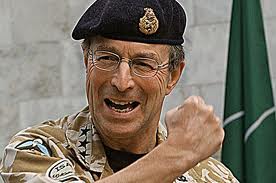
British Chief of Defence Staff Gen. Sir David Richards

In what is believed to be the first time since the 1940s, the entire British defense staff will be here March 25 to discuss long-range strategy and the impact of budget cuts with their U.S. counterparts, according to U.S. and British sources.

The meeting is reminiscent of the Combined Chiefs of Staff, when British and American military leaders joined forces during World War II. Both nations are undergoing significant budgetary reductions and will continue to rely on each other in future years for support. Understanding what capabilities will survive and won’t is essential to long-term strategic planning.

“The relationship military to military is very strong. We have common interest in how we meet the financial constraints placed on both nations, but also on issues like how we manage the drawdown in Afghanistan and also how we reconfigure post Afghanistan,” said Sir Gerald Howarth, a member of parliament and the ex-defense minister responsible for international security affairs from 2010 to 2012.

“We have a huge amount of strategic issues to discuss where we have a very large level of common interest,” he said.

A Defence Ministry spokesman characterized the meeting as private and declined further comment.

In the U.S., spokesmen for the Office of the Secretary of Defense and the Joint Chiefs of Staff did not respond to questions.

U.S. and British military leaders regularly discuss ongoing issues. What’s different about this series of meetings is they will focus not on immediate budget, program or operational issues, but the strategic future of the Anglo-American alliance, including deepening cooperation.

In addition to the U.S. Joint Chiefs, British attendees are expected to include Gen. Sir David Richards, chief of the Defence Staff; Gen. Sir Nicholas Houghton, vice chief of the Defence Staff, who will take over as chief when Richards retires later this year; Air Chief Marshal Sir Stephen Dalton, chief of the Air Staff; Adm. Sir George Zambellas, incoming Navy first sea lord; Gen. Sir Peter Wall, chief of the General Staff; and Air Chief Marshal Sir Stuart Peach, commander of Joint Forces Command, sources said.

The U.S. and U.K. regularly share the most sensitive military intelligence, technology and equipment, including submarine-launched nuclear ballistic missiles. Britain over the past decade in particular has shaped its capabilities to dovetail with U.S. forces.

The British are the leading developmental partner on the U.S.-led F-35 fighter program with Lockheed Martin and have in their inventory Boeing C-17 transports, Chinook and Apache helicopters and Lockheed C-130 cargo aircraft. In addition, the Royal Air Force is buying highly sensitive RC-135 Rivet Joint intelligence planes produced by L-3 Communications in the U.S., making London the only international customer for that program.

The meeting comes as the Pentagon faces $500 billion in spending cuts over the coming decade, which will force senior leaders to make difficult choices. The British delegation arrives with particular experience in that area, having faced even deeper budget cuts — in percentage terms — over the past several years, forcing major reforms to force structure, organization and acquisition programs in that time.

U.S. and British forces routinely train together and have fought side-by-side over the past decade in Afghanistan and Iraq. In Afghanistan, British Lt. Gen. Nick Carter serves as the deputy commander to U.S. Marine Gen. Joseph Dunford, commander of NATO forces.

“On the day-to-day business of military cooperation, the relationship between the U.S. [NATO] commander and the British second in command is another good example of working in partnership,” Howarth said.

The two militaries regularly participate in personnel exchanges. – Defence News

US Internet providers to stop file-sharing

Starting this week, Internet Service Providers will start throttling connection speeds for customers alleged to be pirating copyright-protected materials.

Months after a controversial “six-strike” program was slated to be rolled out by the biggest ISPs in the United States, the Copyright Alert System (CAS) confirmed on Monday that the initiative has gone live.

The program, critiqued by Internet freedom activists and privacy advocates alike, will let ISPs take six steps of escalating severity in handling incidents where customers are believed to be illegally sharing material. Through the “graduate response” approach, suspected copyright criminals could be issued a series of warnings for illegally downloading protected content.

With the first strike caught by the CAS, a customer could be issued a warning. As strikes increase, however, “mitigation measures,” connection speed throttling and termination of service are all possible options.

“Practically speaking, this means our content partners will begin sending notices of alleged P2P [peer-to-peer] copyright infringement to ISPs, and the ISPs will begin forwarding those notices in the form of Copyright Alerts to consumers,” Jill Lesser of the Center for Copyright Information rights in a blog post on Monday.

“Consumers whose accounts have been used to share copyrighted content over P2P networks illegally (or without authority) will receive Alerts that are meant to educate rather than punish, and direct them to legal alternatives. And for those consumers who believe they received Alerts in error, an easy to use process will be in place for them to seek independent review of the Alerts they received,” she adds — neglecting to mention that the appeals process costs customers $35 a pop.

Previously, Time Warner, Verizon, AT&T, Comcast, Cablevision Systems and other ISPs have signed onto the program, which was last scheduled to start in July 2012. Gigi Sohn, president of digital rights group Public Knowledge, told Wired last year that originally ISPs hoped to roll out the program earlier, but major protests against other restrictive Web policies, including attempts to pass certain legislation, left them to wait until the dust settled.

“SOPA and PIPA definitely had an impact. There was some concern, if they moved ahead too quickly, public opinion would be so raw, this would be caught in the whirlwind of bad PR,” Sohn told Wired.

The Electronic Frontier Foundation notes that the official CSI six-strikes website lets users learn more about the history of copyright, but does so by re-directing them to a page managed by the Copyright Alliance — the same group that advocated heavily for last year’s failed Stop Online Piracy Act, or SOPA.

When the six-strikes program was first introduced, the White House issued an official statement saying it should “have a significant impact on reducing online piracy.” – RT

Incarceration rate for African-Americans 6 times national average

The incarceration rate for African-Americans is so high that young black men without a high school diploma are more likely to go to jail than to find a job, thereby causing the breakup of families and instilling further poverty upon them.

“Prison has become the new poverty trap,” Bruce Western, a Harvard sociologist, told the New York Times. “It has become a routine event for poor African-American men and their families, creating an enduring disadvantage at the very bottom of American society.”

While few would argue against locking up murderers and rapists, many social scientists have begun to discuss the problem of imprisoning too many people – especially when those people face long sentences for nonviolent crimes. The US has the highest incarceration rate in the world, locking up about 500 people for every 100,000 residents, according to the Bureau of Justice Statistics.

The incarceration rate for African-Americans is about 3,074 per 100,000 residents, which is more than six times as high as the national average. Black men in their 20s and early 30s without a high school diploma are particularly vulnerable: with an incarceration rate of 40 percent, they are more likely to end up behind bars than in the workforce, Pew Charitable Trusts reports.

“The collateral costs of locking up 2.3 million people are piling higher and higher,” said Adam Gelb, director of the Public Safety Performance Project of the Pew Center on the States. “Corrections is the second fastest growing state budget category, and state leaders from both parties are now finding that there are research –based strategies for low-risk offenders that can reduce crime at far less cost than prison.”

But while the cost of keeping prisoners might be high for government, the cost is even higher for African-Americans – especially to poverty-stricken families who lose a relative to the penal system. The Times interviewed parents Carl Harris and Charlene Hamilton, whose daughters grew up without a father. Mr. Harris, a crack dealer who received a 20-year prison sentence at the age of 24, was forced to abandon his family when he was locked up.

Unable to help out with the accumulating bills that come with raising children, Hamilton and her daughters ended up homeless on several occasions. Struggling to pay the rent and cover the costs of food, Hamilton also fought to pay for the out-of-state visits to see her daughters’ father.

“Basically, I was locked up with him,” she told the Times. “My mind was locked up. My life was locked up. Our daughters grew up without a father.”

And the couple’s story is not unique: 25 percent of African-Americans who grew up in the past three decades have had at least one parent locked up during their childhood, according to Project Muse. Police have more meticulously cracked down on crime and courts have imposed harsher sentences since 1980, causing the number of Americans – especially blacks – in state and federal prisons to quintuple.

And some believe that certain crimes shouldn’t merit sentences as harsh as the US imposes. Police never caught Mr. Harris dealing drugs, but arrested him for assaulting two people at a crack den. The man is now facing a 20-year sentence for charges including assault, in which he “broke someone’s arm and cut another one in the leg”, as well as a charge of ‘armed burglary’ at the crack den.

“The cops knew I was selling but couldn’t prove it, so they made up the burglary charge instead,” Mr. Harris told the Times.

The high incarceration rate of African-Americans has a detrimental effect on the black community. Epidemiologists have linked high incarceration rates to an increase in sexually transmitted diseases and teenage pregnancy, since the majority of those incarcerated are men, leaving a prevalence of females and greater occurrences of unprotected sex.

“A man will have three mistresses, and they’ll each put up with it because there are no other men around,” Hamilton said. Epidemiologists believe the AIDS rate among African-Americans would be lower if the incarceration rate dropped. 

A high incarceration rate also affects children growing up without parents, brothers or sisters. Children are more likely to grow up impoverished, uneducated and emotionally strained. They are also more likely to become aggressive or depressed and could eventually end up in prison themselves.

“Education, income, housing, health – incarceration affects everyone and everything in the nation’s low-income neighborhoods,” Megan Comfort, a sociologist at RTI International, told the Times.

Since the incarceration rate is highest for African-Americans, it makes it more difficult for blacks to rise out of poverty, receive higher levels of education, and escape a life of crime. Young African-Americans are more often imprisoned than employed.

“The social deprivation and draining of capital from these communities may well be the greatest contribution our state makes to income inequality,” Dr. Donald Braman, a George Washington University Law School anthropologist, told the Times. “There is no social institution I can think of that comes close to matching it.”

While mass incarceration might temporarily reduce crime, in the long run, more Americans end up impoverished and more likely to commit a crime themselves. – RT

Native American confronts ‘anti-illegal immigration’

A Native American man criticized protesters at an Arizona rally against illegal immigration, calling them the real “illegals” for invading his country and killing Native Americans when Europeans first settled on US soil.

“You’re all f*cking illegal. You’re all illegal,” the Native American man yelled at the protesters, who had gathered in Tucson, Arizona to demonstrate their opposition to illegal immigration by Central and South Americans. “We didn’t invite none of you here. We’re the only native Americans here.”

Some have applauded the man for pointing out the protesters’ hypocrisy, who at one point immigrated to the US themselves or are descendants of immigrants. The Native American man, who was pushing his baby through town in a stroller, staged his own protest when he came across the rally.

“Get on with your bogus arguments. We’re the only legal ones here,” he yelled.

One protester was caught standing near the angry Native American and became the target of his criticism. The man was carrying a small American flag and a sign that read, “We should have put that sign up when you sons-of-bitches came.”

Pointing towards the American flag held by the protester, the Native American said that it “represents blood spilled by Native Americans, protecting this land from the invaders.”

“You don’t want to hear the God damn truth!” he yelled. “Get on, bitch! All the Native Americans you killed, you plant your houses here. That’s the truth.”

With Arizona’s proximity to the Mexican border, it has long been a hub for anti-immigration protests and initiatives. The state passed the “Support Our Law Enforcement and Safe Neighborhoods Act” in 2010, which is a strict anti-illegal immigration measure that has stimulated significant controversy. The law made it a misdemeanor crime for an “alien” to be in the state of Arizona without carrying registration documents. It also allows law enforcement officers to stop any individual that they suspect of being an illegal immigrant, thereby promoting racial profiling. It also imposes heavy penalties on those involved in sheltering or hiring unregistered aliens.

The law’s controversial provisions were blocked by the US Department of Justice, but the Supreme Court in 2012 ruled to uphold the “show me your papers” provision allowing law enforcement to stop anyone who looks like an illegal immigrant.

But the Native American man who staged his own protest at the rally considers it hypocritical for Americans to criticize others for immigrating into the US when everyone but Native Americans at one point did so themselves.

“That’s what [the American] flag stands for – all the Native Americans you killed to plant your houses here,” he said. “That’s the truth.” – RT

Belgium on high alert ahead of anti-Muslim film’s release

Belgium has heightened its terror alert level ahead of the release of another highly provocative film exploring Islam, reportedly made in cooperation with the notorious Koran-burning US pastor Terry Jones.

­The film’s creator is Pakistan national Imran Firasat, a former Muslim who now lives in Spain. Firasat said he aims to expose the truth of the life of the Prophet Muhammad with ‘The Innocent Prophet: Life of Muhammad from the Point of View of an Ex-Muslim.’

“If we want to know the truth of Islam, we must go deep into the life of Muhammad to find out whether he was a genuine profit sent by God or was he simply a child molester, assassin and a self-proclaimed prophet,” he said in the film’s trailer.

Firasat also hailed pastor Terry Jones as his inspiration. Jones wrote on his website, “It is our hope and desire that we can present a picture of Muhammad that has possibly not been revealed in the past, that will help people in the Western world, and even Muslims, to better understand this person called Muhammad, his life and teachings.”

Jones is infamous for his incendiary anti-Islam speeches, and for staging a ‘Koran-burning day’ on the 10th anniversary of 9/11.

­’The Innocent Prophet’ is expected to be a highly provocative film; Belgian police have raised the country’s ‘terrorism alarm’ level from 2 to 3, the second-highest, ahead of the film’s online release on December 14.

The Belgian Interior Ministry said it was increasing the level to ‘serious threat’ as a precautionary measure, Flanders News reported.

Police units in areas with large numbers of Middle Eastern and North African immigrants are reportedly on alert. Technical divisions of the Belgian police force have also been ordered to closely monitor Islamist websites and mass text messages.

­In response to Belgium’s heightened terror allert, Firasat said he might postpone the release of the film so it could be previewed by authorities to ensure “there is nothing in this movie which doesn’t fall under the right of freedom of expression and that my movie will not cause any kind of loss to humanity.”

“The necessary modification will be also made if requested by the authorities,” he wrote on trailer’s YouTube page. Still, Firasat insisted he is not afraid of “Islamic violence,” and that postponing the release is a token of respect “towards Europe, which is my family.”

Earlier this year, riots broke out in Belgium after the notorious American-made video ‘Innocence of Muslims’ went viral on the web, sparking violent anti-US protests throughout the Arab world.

China surpasses US as trading partner

In just five years, China surpassed the US as leading a trading partner in the world. With 124 countries considering China their largest trading partner and only 76 having that relationship with the US, the Asian country’s influence is on the rise.

In 2006, the US was the larger trading partner for 127 countries, while China dominated among 70. In 2011, the numbers reversed, with China dominating trade among 124 countries and the US being the top trade partner for only 76, the Associated Press reported. Some US allies even consider China their top trading partner, including Australia and South Korea.

The AP findings demonstrate China’s rapid ascent as a trade partner. As a result of its international relationships, the world’s most populous country is becoming more politically influential – and its rise won’t be ending anytime soon. China’s world output is forecasted to grow up to 8 percent a year over the next decade – a rate that surpasses all Western levels.

Trade with China was on average 12.4 percent of GDP for other countries – a rate that is higher than trade with the US has been in the past 30 years. Trade with China was only 3 percent of a country’s GDP in 2002, which demonstrates the surge that occurred in the last decade.

With rising trade influence, China is likely to also generate jobs, raise living standards and gain political power.

“The United States is a tiger with no power. Nobody can deny that China is the one now rising,” said Shin Cheol-soo, a South Korean businessman at the ENA Industry Co.

While the US is still the world’s largest importer and exports more expensive and high-quality products, China is a bigger market for 77 countries, which is an increase of 20 countries since the year 2000. The US exports innovative products in the automobile industry, aerospace, medicine, computers, finance and pharmaceuticals, but China’s low labor costs make it a success in products that can be produced cheaply.

At the current rate of trading, China will surpass the US and become the largest trader by the end of this year.

“The center of gravity of the world economy has moved to the east,” Mauricio Cardenas, the finance minister of Colombia, told AP. “I would say that there is nothing comparable in the last 50 years.”

While the recession hit US businesses hard, some began to thrive in China. Shin, the businessman at ENA Industry Co. who sold auto parts, moved his struggling business from the US to China. And across the world, people have begun to recognize the importance of China in the future world economy. Parents are increasingly encouraging their children to learn Mandarin in school.

“Mothers who send their kids here believe our children’s generation is the China generation. In the future, without learning Chinese, one won’t be able to get a job,” said Nancy Ching, who opened a Chinese-language school in South Korea.

China is also starting to look into markets that were so far dominated by the US. Rather than exporting products, the Chinese hope to soon sell services and investments, including construction and engineering. By building roads, dams, highways, and other structures in developing countries, China is now rivaling the US and Europe in areas it never touched before.

“When we see the people from America, they say ‘We want to assist Kenya’. But I don’t see it. China comes and I see one thing: the road,” said Joseph Makori, a professional driver in Kenya, where Chinese companies are increasingly winning government contracts to do construction.

China’s trade is reaching beyond just economic partnerships with countries in need of cheap products. The world’s most populous country is becoming an influential power in a range of aspects. While China is set to surpass the US and become the largest trader by the end of 2012, it may not be long before the countries will compete politically. – RT

Me.ga suspended

Controlling the net, Blaise Louemba

Kim Dotcom, the founder of MegaUpload, has accused Washington of a “witch hunt” after the government of Gabon announced the suspension of his new site, which was due to be launched in January.

­Last week, Dotcom unveiled plans to re-launch his file-sharing site in January 2013, using the Gabonese domain me.ga, with the message “this button will change the world.“

But the authorities of the African state thought otherwise.

“I have instructed my departments… to immediately suspend the site www.me.ga,” announced Communication Minister Blaise Louembe, saying, “Gabon cannot serve as a platform or screen for committing acts aimed at violating copyrights, nor be used by unscrupulous people.”

Minister Louembe said the domain name was originally registered to someone in France who then transferred it to Dotcom.

Furthermore, Gabon’s communications ministry alleges that the website was set up to redirect traffic to another site hosted in France, which would provide access to shared files.

Dotcom immediately replied to the move by blaming Washington. “Don’t worry. We have an alternative domain. This just demonstrates the bad faith witch hunt the US government is on,” he tweeted.

The 38-year-old German national is free on bail in New Zealand ahead of an extradition hearing to the US in March.

The FBI and US Justice Department allege MegaUpload made  $175 million in profits by offering pirated copies of movies, TV shows and other content, resulting in over  $500 million damages to the industry.

Washington wants him on money laundering, racketeering, fraud and online copyright theft charges, and seeks a 20-year jail sentence.

Dotcom insists he is innocent and free to start a new file-sharing venture which will incorporate state-of-the-art encryption methods resulting in user-only knowledge of the uploaded material. – RT

Obama puts security in Africa first

Michelle holding the carrot

Four years ago Africa greeted Barack Obama’s election with rapture, predicting America’s first black president would smother the continent with attention. But instead of warm hand-holding, Africa got hard-headed, security-first policies.

Africa’s response to Obama’s election in November 2008 was nothing short of ecstatic. A Nigerian foreign minister wept, Nelson Mandela hailed it as proof that people should “dare to dream,” and Kenya declared a national holiday.

The fawning was quickly reciprocated, with Obama visiting Ghana just five months after his inauguration.

“I have the blood of Africa within me,” he emotively told the Ghanaian parliament and rapt television viewers across the continent. Africa, the new president declared, was now “a fundamental part of our interconnected world.”

But as America’s Great Recession deepened, wars in Iraq and Afghanistan trundled on and the Arab Spring exploded, sub-Saharan Africa found itself in a familiar spot; on the back-burner.

“There was an expectation that he was going to be the US President for Africa,” said long-time South African diplomat Thomas Wheeler, now of the South African Institute of International Affairs. “It was just an unrealistic expectation.”

“The fact that he had an African father did not mean that he was going to devote a lot more time to Africa.”

Symbolically, Obama’s visit to Ghana was to be his only trip to the region. Equally symbolically, it took until June this year for his White House to come up with a nine-page “US strategy toward sub-Saharan Africa”.

Yet the continent was far from ignored.

Air Force One has been conspicuous in its absence, but the US Air Force and other branches of the US security services have not.

Quietly, US policy toward Africa has started to look a lot more hard-headed and a lot more like policy toward the rest of the world.

“Obama to my mind is more engaged in Africa, but the nature of how the United States is engaging has changed. It is mostly security related,” said Jason Warner, a Harvard-based expert on African security.

According to Warner, Obama has helped “normalise” Africa policy. “There is no other region in the world that the US engages on simply humanitarian grounds.”

Since Obama took office it has been widely reported that the administration has expanded a network of air bases across Africa, training its might on al Qaeda affiliated militants and other groups.

Clandestine bases in Burkina Faso, Mauritania and Uganda are said to have been used variously to spy on al Qaeda in the Islamic Maghreb and track elements of the Lord’s Resistance Army, led by Joseph Kony.

Unconfirmed US drone strikes are reported with some frequency in Somalia.

According to the London-based Bureau of Investigative Journalism, between 58 and 170 people have been killed in 10 to 23 strikes on Somalia, although some took place during George W. Bush’s administration.

“The nature of what he is doing is definitely more covert. But you do get these glimpses every few months that the US is really deeply embedded in Africa,” said Warner.

A year ago Obama deployed 100 US special forces to help Ugandan troops scour thick African jungles of the Central African Republic for Kony – an indicted war criminal – backed up by surveillance planes.

The linchpin for this newly securitised policy toward Africa is the United States Africa Command, or Africom, which operates as a nerve centre for US military operations and military-to-military contacts in the region.

The command became operational barely one month before Obama was elected and now boasts 2,000 designated staff. By one count that is more Africa staff than the foreign aid department USAID.

But much like Obama’s security policy in Africa, Africom has remained largely low-key. It is based in Stuttgart, Germany, rather than in the region, in part to allay accusations of neo-colonial ambitions.

Officials are keen to talk up military training programmes and not so willing to discuss covert operations.

That lack of bombast has been welcomed by many on the continent.

According to Chidi Odinkalu, head of Nigeria’s National Human Rights Commission and a respected activist, Obama’s policy toward one crisis – Nigeria’s Boko Haram Islamist insurgency – has struck a balance.

“It would’ve been easy to overreach… and take Nigeria into the realm of the global war on terror. But I think the US has recognised the particularities of the situation.”

Still, there is little doubt that Obama has missed an opportunity to create goodwill through more high-profile appearances in African capitals, but according to John Campbell, a former US ambassador to Nigeria, the impact of the loss is limited.

“I don’t doubt that for many people on the street it is somehow or other disappointing,” he said. “But you keep looking for concrete examples of where it has damaged relations, and I don’t really see any.”

Regardless of the perceived neglect, Obama’s power to grasp the African imagination remains undimmed, according to Nigerian rights activist Odinkalu.

“I think the success of the Obama presidency goes beyond whatever he’s done for Africa.” – Sapa/AFP

The other side of Sandy

Haiti was hit hardest

Jamaica, Cuba and the Bahamas took direct hits as Sandy approached them as a Category 1 and 2 storm.

Hurricane Sandy’s toll in the Caribbean amounts to at least 69 dead, thousands homeless and few funds available to rebuild. Yet, the Caribbean carnage remains largely behind the scenes as media spotlight focuses on the US.

Sandy took the lives of 52 people in Haiti, 11 in Cuba, two in the Bahamas, two in the Dominican Republic, one in Jamaica and one in Puerto Rico.

In light of the difficulty to rebuild in some of the impoverished areas of the Caribbean, especially Haiti, the United Nations will be appealing for emergency aid.

“Haiti is trying to get its house in order, but each time disaster strikes, the progress is interrupted,” head of the UN’s office for the co-ordination of humanitarian affairs Johan Peleman told The Guardian. “This country is exposed to devastating consequences by each storm. With every burst of rain, entire mountains are washed away.”

The majority of deaths and the most extensive damage fell upon Haiti, already devastated by the 2010 earthquake. The storm passed to the west of the country, but dumped more than 20 inches (51cm) of rain in 24 hours, causing rivers to overflow.

The damage is especially significant there because the country already had about 400,000 homeless since the deadly earthquake. Now 200,000 more had been added to the list because of Sandy.

During the storm nearly 17,800 people had to move to 131 temporary shelters.

Haitian Ministry of Agriculture official Jean Debalio Jean-Jacques announced that Hurricane Sandy destroyed 70 per cent of the crops in southern Haiti and caused widespread deaths of livestock.

“We are facing a major crisis,” stated Prime Minister Laurent Lamothe.

On top of all that, Haiti was also emerging from the aftermath of Tropical Strom Isaac, which hit the country in August, and a cholera epidemic that killed thousands and afflicted more than half a million people.

The Haitian government fears that the post-Sandy devastation may increase the number of cholera cases. Eighty-six new cases of cholera have already been reported in the last month and more are expected. The cholera outbreak began in October 2010 and many of the victims were from refugee camps established to host those who lost their houses in the quake.

Sandy reached Jamaica last Wednesday as a Category 1 storm, killing one person, leaving dozens of families homeless and causing at least $16.5 million in damage, according to the country’s Prime Minister Portia Simpson Miller.

“Even before the hurricane we faced serious economic challenges. This has been made worse by the passage of Hurricane Sandy,” Simpson Miller said.

The storm then hit Cuba early Thursday as a Category 2 hurricane, killing 11 in Santiago and Guantanamo provinces, causing 5,000 buildings to at least partially collapse and 30,000 others to lose their roofs. In addition, Sandy damaged essential crops including banana, coffee, bean and sugar.

Public buildings such as schools and hospitals were also damaged.

Then as the storm turned to the Bahamas, it killed two people, toppled power poles and flooded streets.

In Puerto Rico the storm killed one person on Friday and forced 100 families to evacuate from their homes to seek shelter elsewhere.

In the Dominican Republic more than 18,100 people had to be evacuated as the storm destroyed bridges and isolated at least 130 communities. Flooding and heavy rains had damaged about 3,500 homes.

Difficulty repairing damage

Former secretary general of the Association of Caribbean States Norman Girvan strongly believes that other parties should pitch in to make the reconstruction possible.

“We should look at the Caribbean, because the hurricane has had an impact on Jamaica and Cuba and Haiti. One would like to see some form of Caricom [Caribbean Community] response to the severe infrastructural damage and human damage done in these countries, which unfortunately does not attract as much media attention as that in the US,” he told The Guardian.

It will be very difficult for Haiti to rebuild on its own.

“We’ll have famine in the coming days,” Kechner Toussaint, mayor of Abricots, a hard-hit community on Haiti’s Southwestern tip, told BET. “It’s an agricultural disaster.”

Also, John Chaloner at the charity Plan International told The Independent that in recent months there had been “demonstrations sparked by rising food prices”.

Faced with food shortages and a wider cholera outbreak, Haiti is at risk of not only failing to restore itself, but falling deeper into destruction and even civil unrest unless help arrives. – RT

What happened to race-neutral admissions?

The Supremes

Nine years after the Supreme Court said colleges and universities can use race in their quest for diverse student bodies, the justices have put this divisive social issue back on their agenda in the middle of a presidential election campaign.

Nine years is a blink of the eye on a court where justices can look back two centuries for legal precedents. But with an ascendant conservative majority, the high court in arguments Wednesday will weigh whether to limit or even rule out taking race into account in college admissions.

The justices will be looking at the University of Texas program that is used to help fill the last quarter or so of its incoming freshman classes. Race is one of many factors considered by admissions officers. The rest of the roughly 7,100 freshman spots automatically go to Texans who graduated in the top 8 percent of their high school classes.

A white Texan, Abigail Fisher, sued the university after she was denied a spot in 2008.

The simplest explanation for why affirmative action is back on the court’s calendar so soon after its 2003 decision in Grutter v. Bollinger is that the author of that opinion, Sandra Day O’Connor, has retired. Her successor, Justice Samuel Alito, has been highly skeptical of any use of racial preference.

Justice Anthony Kennedy, a dissenter in the 2003 decision, probably holds the deciding vote, and he, too, has never voted in favor of racial preference.

As a result, said Supreme Court lawyer Thomas Goldstein, “No matter what the court does, it is quite likely that the UT program is going to be in big trouble.”

The challenge to the Texas plan has gained traction in part because the university has produced significant diversity by automatically offering about three-quarters of its spots to graduates in the top 10 percent of their Texas high schools, under a 1990s state law signed by then-Gov. George W. Bush. The admissions program has been changed so that now only the top 8 percent gain automatic admission.

More than eight in ten African-American and Latino students who enrolled at the flagship campus in Austin last year were automatically admitted, according to university statistics. Both sides acknowledge that the use of race is present.

In all, black and Hispanic students made up more than a quarter of the incoming freshmen class. White students constituted less than half the entering class when students with Asian backgrounds and other minorites were added in.

“For decades, the defense of racial preferences was, `We’d love to find a way to get diversity without using race, but it’s just not possible. There’s just no other way.’ And Texas found another way,” said Richard Kahlenburg, a senior fellow at the Century Foundation and prominent advocate of class-based affirmative action.

The university says the extra measure of diversity it gets from the slots outside automatic admission is crucial because too many of its classrooms have only token minority representation, at best. At the same time, Texas argues that race is one of many factors considered and that it “is impossible to tell whether an applicant’s race was a tipping factor.”

The Obama administration, 57 of the Fortune 100 companies and large numbers of public and private colleges that could be affected by the outcome are backing the Texas program. Among the benefits of affirmative action, the administration argues, is that it creates a pipeline for a diverse officer corps that it called “essential to the military’s operational readiness.” In 2003, the court cited the importance of a similar message from military leaders.

But lawyers for Fisher, of Sugar Land, Texas, said the race-blind method under which the university automatically admits most of its students has been successful. They say Fisher, who has since graduated from Louisiana State University, was excluded because of her race, and they point to a handful of African-American and Latino students who were admitted with lower scores than hers.

“If any state action should respect racial equality, it is university admission,” Fisher’s lawyers said in their written submission to the court.

The university says that a fuller picture of the process shows that white students with lower scores also were admitted, while many more minority students with higher scores than Fisher also were not offered admission.

The case also raises several contentious side issues, including whether affirmative-action programs hurt the very people they are supposed to be helping. A new book by law professor Richard Sander and journalist Stuart Taylor argues that “large preferences often place students in environments where they can neither learn nor compete effectively, even though these same students would thrive had they gone to less competitive but still quite good schools.”

Their book, “Mismatch,” says these students are set up to fail, getting lower grades and dropping out more often than white students with similar backgrounds.

Taylor and Sander, a law professor at the University of California at Los Angeles, point to statistics in California to support their argument. After voters changed the state constitution to outlaw racial preferences, UCLA saw significant declines in enrollment by black and Hispanic students.

But the number of African-American and Latino graduates was unchanged for the five classes after the ban when compared to the five years before the change in state law, they said.

The dozens of legal briefs in the Texas case also highlight a debate over whether racial preference programs actually limit the number of students from Asian backgrounds, who are disproportionately represented in student bodies relative to their share of the population.

The university says Asian-American enrollment has increased under the policy that is being challenged. The numbers would be even higher if Texas stopped factoring in race, Fisher and others say. – AP

Ex-defense Chief Says Attack On Iran Would Be Disastrous

Robert Gates

Painting a picture of internal political dysfunction in a dangerous world, former Defense Secretary Robert Gates warned Wednesday night that a U.S. or Israeli attack on Iran would have disastrous consequences.

Neither the United States nor Israel is capable of wiping out Iran’s nuclear capability, he said, and “such an attack would make a nuclear-armed Iran inevitable. They would just bury the program deeper and make it more covert.”

Iran could respond by disrupting world oil traffic and launching a wave of terrorism across the region, Gates said.

“The results of an American or Israeli military strike on Iran could, in my view, prove catastrophic, haunting us for generations in that part of the world.”

First in this season’s Norfolk Forum speaker series, Gates spoke to an audience of nearly 2,000 in Chrysler Hall.

United Nations sanctions aimed at discouraging Iran’s nuclear ambitions are starting to have an impact on the Iranian economy, he said, and “that’s our best chance going forward, to ratchet up the economic pressure and diplomatic isolation to the point where the Iranian leadership concludes that it actually hurts Iranian security and, above all, the security of the regime itself, to continue to pursue nuclear weapons.”

And while Israeli anxiety over Iran’s intentions is understandable, he added, America should make it clear to Israel’s leaders that “they do not have a blank check to take action that could do grave harm to American vital interests.”

Meanwhile, Gates warned, the United States is paralyzed by partisan gridlock that threatens the nation with financial insolvency.

The combination of across-the-board spending cuts and tax increases set to take effect in January, put in motion by Congress’ inability to agree on how to reduce the ballooning national debt, would do grave damage to the military and virtually every other essential government operation and could throw the country into a new recession, he said.

The central problem, Gates said, is that both major parties have been captured by their ideological extremes.

“The moderate center, the foundation of our political system, is not holding.

“Too many of our politicians seem more concerned with winning elections and scoring ideological points than saving the country.”

Gates ran the Pentagon from 2006 to 2011 under Presidents George W. Bush and Barack Obama. He was the first defense secretary to serve under presidents of both parties.

He was also the only career CIA officer in history to rise from entry-level employee to director of the agency. He was director from 1991 to 1993.

The Kansas native now holds the honorary post of chancellor at the College of William and Mary. A 1965 graduate of the college, he is the first alumnus in the modern era to become chancellor.