Snowden reporter Greenwald quits Guardian

Greenwald facing the press

Glenn Greenwald, the journalist who broke so many of the stories about government surveillance leaked by former National Security Agency contractor Edward Snowden, has been a nightmare for the Obama administration.

Now he’s leaving the Guardian, the British newspaper where he published those articles, to pursue what he calls a “once-in-a-career dream journalistic opportunity.”

News of Greenwald’s departure was broken by the website BuzzFeed. The journalist, who is also a lawyer, says he’s not ready to provide specifics. “Because this news leaked before we were prepared to announce it, I’m not yet able to provide any details of this momentous new venture, but it will be unveiled very shortly,” he said in a statement.

But whatever the particulars, it’s probably safe to anticipate that his new news operation will specialize in hard-edged, investigative reporting fueled by a liberal agenda.

In an interview with BuzzFeed, Greenwald indicated he didn’t plan to be playing small ball. He said his new organization would be “a very well-funded… very substantial new media outlet.” He won’t say where the money is coming from until the official announcement.

And he will clearly be the man, building the operation from scratch. “My role, aside from reporting and writing for it, is to create the entire journalism unit from the ground up by recruiting the journalists and editors who share the same journalistic ethos and shaping the whole thing — but especially the political journalism part — in the image of the journalism I respect most,” he said.

Greenwald, who lives in Rio de Janeiro, says he’ll continue to do so. But while some of the staff will be based there as well, he says the news outlet’s main outposts would be in New York City, Washington, D.C. and San Francisco.

The Snowden correspondent’s new gig will be funded by eBay founder Pierre Omidyar, Reuters reported, citing “people familiar with the matter.”

Greenwald, known for his crusading liberal approach, had nothing but good things to say about the Guardian. The two seemed a perfect fit, since the British news outlet is also known for its activist, left-leaning approach.

“My partnership with the Guardian has been extremely fruitful and fulfilling: I have high regard for the editors and journalists with whom I worked and am incredibly proud of what we achieved,” Greenwald said.

Right back atya, the Guardian responded. “Glenn Greenwald is a remarkable journalist and it has been fantastic working with him,” spokeswoman Jennifer Lindenauer said. “Our work together over the last year has demonstrated the crucial role that responsible investigative journalism can play in holding those in power to account. We are of course disappointed by Glenn’s decision to move on, but can appreciate the attraction of the new role he has been offered. We wish him all the best.”

Greenwald, who began his journalism career with the pioneering online magazine Salon, has had an enormous impact on the political climate in the United States. His stunning disclosures of massive government collection of email and phone data of ordinary Americans with absolutely no connection to terrorism shook lawmakers and ordinary citizens alike.

At first the conventional wisdom in Washington was that this was no huge deal. Much of the initial outrage focused on leaker Snowden rather than the stunning information he had leaked.

But that soon changed as new details continued to emerge. In July, the House came close to passing a measure to block the NSA’s wholesale collection of telephone records. Before Snowden and Greenwald, such a close vote, or even a vote at all, would have been unimaginable.

In September, four senators introduced legislation to rein in the NSA. And even staunch defenders of the snooping like Sen. Dianne Feinstein, D-Calif., chairman of the Senate Intelligence Committee, say that reforms are in order.

Greenwald is aggressive, passionate and fearless. It will be fascinating to watch his new venture take shape. – USAToday

‘Osama bin Laden story is one big lie’

Seymore Hersh
Seymour Hersh

Seymour Hersh has got some extreme ideas on how to fix journalism – close down the news bureaus of NBC and ABC, sack 90% of editors in publishing and get back to the fundamental job of journalists which, he says, is to be an outsider.

It doesn’t take much to fire up Hersh, the investigative journalist who has been the nemesis of US presidents since the 1960s and who was once described by the Republican party as “the closest thing American journalism has to a terrorist”.

He is angry about the timidity of journalists in America, their failure to challenge the White House and be an unpopular messenger of truth.

Don’t even get him started on the New York Times which, he says, spends “so much more time carrying water for Obama than I ever thought they would” – or the death of Osama bin Laden. “Nothing’s been done about that story, it’s one big lie, not one word of it is true,” he says of the dramatic US Navy Seals raid in 2011.

Hersh is writing a book about national security and has devoted a chapter to the bin Laden killing. He says a recent report put out by an “independent” Pakistani commission about life in the Abottabad compound in which Bin Laden was holed up would not stand up to scrutiny. “The Pakistanis put out a report, don’t get me going on it. Let’s put it this way, it was done with considerable American input. It’s a bullshit report,” he says hinting of revelations to come in his book.

The Obama administration lies systematically, he claims, yet none of the leviathans of American media, the TV networks or big print titles, challenge him.

“It’s pathetic, they are more than obsequious, they are afraid to pick on this guy [Obama],” he declares in an interview with the Guardian.

He is certain that NSA whistleblower Edward Snowden “changed the whole nature of the debate” about surveillance. Hersh says he and other journalists had written about surveillance, but Snowden was significant because he provided documentary evidence – although he is sceptical about whether the revelations will change the US government’s policy.

“Duncan Campbell [the British investigative journalist who broke the Zircon cover-up story], James Bamford [US journalist] and Julian Assange and me and the New Yorker, we’ve all written the notion there’s constant surveillance, but he [Snowden] produced a document and that changed the whole nature of the debate, it’s real now,” Hersh says.

“Editors love documents. Chicken-shit editors who wouldn’t touch stories like that, they love documents, so he changed the whole ball game,” he adds, before qualifying his remarks.

“But I don’t know if it’s going to mean anything in the long [run] because the polls I see in America – the president can still say to voters ‘al-Qaida, al-Qaida’ and the public will vote two to one for this kind of surveillance, which is so idiotic,” he says.

The 76-year-old Hersh is on full throttle, a whirlwind of amazing stories of how journalism used to be; how he exposed the My Lai massacre in Vietnam, how he got the Abu Ghraib pictures of American soldiers brutalising Iraqi prisoners, and what he thinks of Edward Snowden.

He was hired by the New York Times to follow up the Watergate scandal and ended up hounding Nixon over Cambodia. Almost 30 years later, Hersh made global headlines all over again with his exposure of the abuse of Iraqi prisoners at Abu Ghraib.

For students of journalism his message is put the miles and the hours in. He knew about Abu Ghraib five months before he could write about it, having been tipped off by a senior Iraqi army officer who risked his own life by coming out of Baghdad to Damascus to tell him how prisoners had been writing to their families asking them to come and kill them because they had been “despoiled”.

“I went five months looking for a document, because without a document, there’s nothing there, it doesn’t go anywhere.”

Hersh is adamant that Obama is worse than Bush.

“Do you think Obama’s been judged by any rational standards? Has Guantanamo closed? Is a war over? Is anyone paying any attention to Iraq? Is he seriously talking about going into Syria? We are not doing so well in the 80 wars we are in right now, what the hell does he want to go into another one for. What’s going on [with journalists]?” he asks.

“Like killing people, how does [Obama] get away with the drone programme, why aren’t we doing more? How does he justify it? What’s the intelligence? Why don’t we find out how good or bad this policy is? Why do newspapers constantly cite the two or three groups that monitor drone killings. Why don’t we do our own work?

“Our job is to find out ourselves.”

Asked what the solution is for the sorry state of journalism, Hersh says: “I’ll tell you the solution, get rid of 90% of the editors that now exist.”

Hersh is currently on a break from reporting, working on a book which undoubtedly will make for uncomfortable reading for both Bush and Obama.

“The republic’s in trouble, we lie about everything, lying has become the staple.” And he implores journalists to do something about it. – The Guardian

Belgium investigates suspected cyber spying by foreign state

belgacom_tvBelgium said on Monday it was investigating suspected foreign state espionage against its main telecoms company, which is the top carrier of voice traffic in Africa and the Middle East, and a newspaper pointed the finger at the United States.

Federal prosecutors said in a statement that the former state telecoms monopoly Belgacom had filed a complaint in July about the hacking of several servers and computers.

“The inquiry has shown that the hacking was only possible by an intruder with significant financial and logistic means,” they said.

“This fact, combined with the technical complexity of the hacking and the scale on which it occurred, points towards international state-sponsored cyber espionage.” The prosecutors declined to say which foreign state they suspected.

Documents leaked by the former U.S. intelligence contractor Edward Snowden have revealed a vast National Security Agency (NSA) electronic surveillance program that has tracked enormous quantities of both Americans’ and foreigners’ email and telephone data.

This has mostly been done by agreement with telecommunications or internet providers or foreign government intelligence agencies.

However, the Brazilian television network Globo this month alleged that the NSA had tapped into the computer systems of companies including Google Inc. and the Brazilian state oil firm Petroleo Brasileiro, as well as France’s Foreign Ministry and the Belgian-based international banking cooperative SWIFT, which handles international financial transactions.

The Belgian daily De Standaard said the NSA had been monitoring international telephone traffic through Belgacom for two years. It said the hackers had been primarily interested in Belgacom’s subsidiary BICS, a wholesale provider of international phone lines and biggest voice carrier in Africa and the Middle East.

The government of Belgium, which has a majority stake in Belgacom, condemned the intrusion and the violation of a public company.

Prosecutors said the intruder had used malicious software and advanced encryption techniques with the aim of gathering strategic information, and had not sabotaged Belgacom’s data or sought to cause direct economic damage.

Belgacom itself said it had carried out work over the weekend to improve security and remove an unknown virus from its internal systems, adding that at the moment there was no indication of any impact on customers or their data. It said it had filed a complaint against an unknown third party.

Globo’s revelations were based on leaked U.S. documents provided by Guardian journalist Glenn Greenwald, who has worked with Snowden to expose the extent of U.S. spying.

James Clapper, the U.S. Director of National Intelligence, responded last week by saying U.S. agencies did collect information about economic and financial matters, which was used to combat terrorist financing and predict problems that could lead to financial crises or disrupt financial markets.

“What we do not do,” Clapper said in a statement, “is use our foreign intelligence capabilities to steal the trade secrets of foreign companies on behalf of – or give intelligence we collect to – U.S. companies to enhance their international competitiveness or increase their bottom line.” – Reuters

Brazil to break free from US-centric internet

brazilBrazil plans to divorce itself from the US-centric Internet over Washington’s widespread online spying.

This is a move that many experts fear will be a potentially dangerous first step toward politically fracturing a global network built with minimal interference by governments.

President Dilma Rousseff has ordered a series of measures aimed at greater Brazilian online independence and security following revelations that the US National Security Agency intercepted her communications, hacked into the state-owned Petrobras oil company’s network and spied on Brazilians who entrusted their personal data to US tech companies such as Facebook and Google.

Internet security and policy experts say her government’s reaction to information leaked by former NSA contractor Edward Snowden is understandable, but warn it could set the Internet on a course of Balkanization.

“The global backlash is only beginning and will get far more severe in coming months,” said Sascha Meinrath, director of the Open Technology Institute at the Washington-based New America Foundation think tank.

“This notion of national privacy sovereignty is going to be an increasingly salient issue around the globe.”

While Brazil isn’t proposing to bar its citizens from US-based Web services, it wants their data to be stored locally as the nation assumes greater control over Brazilians’ Internet use to protect them from NSA snooping.
Brazil intends to increase its independent Internet connections with other countries.

The danger of mandating that kind of geographic isolation, Meinrath said, is that it could render inoperable popular software applications and services and endanger the Internet’s open, interconnected structure.

The effort by Latin America’s biggest economy to digitally isolate itself from US spying not only could be costly and difficult, it could encourage repressive governments to seek greater technical control over the Internet to crush free expression at home, experts say.

In December, countries advocating greater “cyber-sovereignty” pushed for such control at an International Telecommunications Union meeting in Dubai, with Western democracies led by the United States and the European Union in opposition.

US digital security expert Bruce Schneier says that while Brazil’s response is a rational reaction to NSA spying, it is likely to embolden “some of the worst countries out there to seek more control over their citizens’ Internet. That’s Russia, China, Iran and Syria. That’s Tunisia. That’s Egypt.”

Rousseff says she intends to push for new international rules on privacy and security in hardware and software during the UN General Assembly meeting later this month.

Among Snowden revelations: the NSA has created backdoors in software and Web-based services.

Brazil is now pushing more aggressively than any other nation to end US commercial hegemony on the Internet. More than 80 percent of online search, for example, is controlled by US-based companies.

Most of Brazil’s global Internet traffic passes through the United States, so Rousseff’s government plans to lay underwater fibre optic cable directly to Europe and also link to all South American nations to create what it hopes will be a network free of US eavesdropping.

More communications integrity protection is expected when Telebras, the state-run telecom company, works with partners to oversee the launch in 2016 of Brazil’s first communications satellite, for military and public Internet traffic.

Brazil’s military currently relies on a satellite run by Embratel, which Mexican billionaire Carlos Slim controls.

Rousseff is urging Brazil’s Congress to compel Facebook, Google and other US companies to store all data generated by Brazilians on servers physically located inside Brazil in order to shield it from the NSA.

If that happens, and other nations follow suit, Silicon Valley’s bottom line could be hit by lost business and higher operating costs: Brazilians are among the most voracious consumers of social media, ranking No. 3 on Facebook and No. 2 on Twitter and YouTube. An August study

by a respected U.S. technology policy nonprofit estimated the fallout from the NSA spying scandal could cost the U.S. cloud computing industry, which stores data remotely to give users easy access from any device, as much as $35 billion by 2016 in lost business.

Brazil also plans to build more Internet exchange points, places where vast amounts of data are relayed, in order to route Brazilians’ traffic away from potential interception.

And its postal service plans by next year to create an encrypted email service that could serve as an alternative to Gmail and Yahoo!, which according to Snowden-leaked documents are among US tech giants that have collaborated closely with the NSA.

“Brazil intends to increase its independent Internet connections with other countries,” Rousseff’s office said.

It cited a “common understanding” between Brazil and the European Union on data privacy, and said “negotiations are underway in South America for the deployment of land connections between all nations.”

It said Brazil plans to boost investment in home-grown technology and buy only software and hardware that meet government data privacy specifications.

While the plans’ technical details are pending, experts say they will be costly for Brazil and ultimately can be circumvented. Just as people in China and Iran defeat government censors with tools such as “proxy servers,” so could Brazilians bypass their government’s controls.

International spies, not just from the United States, also will adjust, experts said. Laying cable to Europe won’t make Brazil safer, they say. The NSA has reportedly tapped into undersea telecoms cables for decades.

Meinrath and others argue that what’s needed instead are strong international laws that hold nations accountable for guaranteeing online privacy.

“There’s nothing viable that Brazil can really do to protect its citizenry without changing what the US is doing,” he said.

Matthew Green, a Johns Hopkins computer security expert, said Brazil won’t protect itself from intrusion by isolating itself digitally.

It will also be discouraging technological innovation, he said, by encouraging the entire nation to use a state-sponsored encrypted email service.

“It’s sort of like a Soviet socialism of computing,” he said, adding that the US “free-for-all model works better.”
-Sapa

Snowden reveals US ‘Black budget’

blackbudgetU.S. spy agencies have built an intelligence-gathering colossus since the attacks of Sept. 11, 2001, but remain unable to provide critical information to the president on a range of national security threats, according to the government’s top-secret budget.

The $52.6 billion “black budget” for fiscal 2013, obtained by The Washington Post from former ­intelligence contractor Edward Snowden, maps a bureaucratic and operational landscape that has never been subject to public scrutiny. Although the government has annually released its overall level of intelligence spending since 2007, it has not divulged how it uses the money or how it performs against the goals set by the president and Congress.

Tables detail spending requests for agencies, as well as personnel breakdowns by pay grade, language expertise, and years of service.

The 178-page budget summary for the National Intelligence Program details the successes, failures and objectives of the 16 spy agencies that make up the U.S. intelligence community, which has 107,035 employees.

The summary describes cutting-edge technologies, agent recruiting and ongoing operations. The Post is withholding some information after consultation with U.S. officials who expressed concerns about the risk to intelligence sources and methods. Sensitive details are so pervasive in the documents that The Post is publishing only summary tables and charts online.

“The United States has made a considerable investment in the Intelligence Community since the terror attacks of 9/11, a time which includes wars in Iraq and Afghanistan, the Arab Spring, the proliferation of weapons of mass destruction technology, and asymmetric threats in such areas as cyber-warfare,” Director of National Intelligence James R. Clapper Jr. wrote in response to inquiries from The Post.

“Our budgets are classified as they could provide insight for foreign intelligence services to discern our top national priorities, capabilities and sources and methods that allow us to obtain information to counter threats,” he said.

Among the notable revelations in the budget summary:

●Spending by the CIA has surged past that of every other spy agency, with $14.7 billion in requested funding for 2013. The figure vastly exceeds outside estimates and is nearly 50 percent above that of the National Security Agency, which conducts eavesdropping operations and has long been considered the behemoth of the community.

●The CIA and the NSA have begun aggressive new efforts to hack into foreign computer networks to steal information or sabotage enemy systems, embracing what the budget refers to as “offensive cyber operations.”

●Long before Snowden’s leaks, the U.S. intelligence community worried about “anomalous behavior” by employees and contractors with access to classified material. The NSA planned to ward off a “potential insider compromise of sensitive information” by re-investigating at least 4,000 people this year who hold high-level security clearances.

●U.S. intelligence officials take an active interest in friends as well as foes. Pakistan is described in detail as an “intractable target,” and counterintelligence operations “are strategically focused against [the] priority targets of China, Russia, Iran, Cuba and Israel.” The latter is a U.S. ally but has a history of espionage attempts against the United States. – Washington Post

US bugged UN HQ

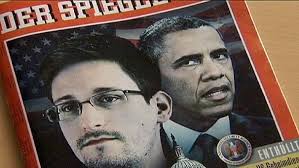
usspsyingThe U.S. National Security Agency has bugged the United Nations’ New York headquarters, Germany’s Der Spiegel weekly said on Sunday in a report on U.S. spying that could further strain relations between Washington and its allies.

Citing secret U.S. documents obtained by fugitive former intelligence contractor Edward Snowden, Der Spiegel said the files showed how the United States systematically spied on other states and institutions.

Der Spiegel said the European Union and the U.N.’s Vienna-based nuclear watchdog, the International Atomic Energy Agency (IAEA), were among those targeted by U.S. intelligence agents.

In the summer of 2012, NSA experts succeeded in getting into the U.N. video conferencing system and cracking its coding system, according one of the documents cited by Der Spiegel.

“The data traffic gives us internal video teleconferences of the United Nations (yay!),” Der Spiegel quoted one document as saying, adding that within three weeks the number of decoded communications rose to 458 from 12.

Internal files also show the NSA spied on the EU legation in New York after it moved to new rooms in autumn 2012. Among the documents copied by Snowden from NSA computers are plans of the EU mission, its IT infrastructure and servers.

According to the documents, the NSA runs a bugging program in more than 80 embassies and consulates worldwide called “Special Collection Service”. “The surveillance is intensive and well organized and has little or nothing to do with warding off terrorists,” wrote Der Spiegel.

OPEN LETTER

Snowden’s leaks have embarrassed the United States by exposing the global extent of its surveillance programs. Washington has said its spies operate within the law and that the leaks have damaged national security.

A week ago Britain, a staunch U.S. ally in the intelligence field, detained the partner of a Brazil-based journalist working for London’s Guardian newspaper who has led coverage of Snowden’s leaks. British police said documents seized from David Miranda were “highly sensitive” and could put lives at risk if disclosed.

The Guardian last week destroyed computer equipment containing Snowden files after it was threatened with possible legal action by senior British government advisers.

In an open letter to British Prime Minister David Cameron published on Sunday, editors of leading Nordic newspapers said Miranda’s detention and moves against the Guardian were “undermining the position of the free press throughout the world”.

“(We are) deeply concerned that a stout defender of democracy and free debate such as the United Kingdom uses anti-terror legislation in order to legalize what amounts to harassment of both the paper and individuals associated with it,” said the letter from Sweden’s Dagens Nyheter, Finland’s Helsingin Sanomat, Denmark’s Politiken and Norway’s Aftenposten.

Earlier this month, U.S. President Barack Obama announced plans to limit U.S. government surveillance programs, saying the United States could and should be more transparent.

The issue has also become a hot topic in Germany before an election next month. Some reports have suggested that German intelligence agents have cooperated with U.S. spies.

There could be a voter backlash if it emerges that Chancellor Angela Merkel, tipped to win a third term, knew more about such cooperation than she has so far acknowledged. – Reuters

Journalism under threat

Alan Rusbridger
Alan Rusbridger

By Alan Rusbridger
Guardian Editor

On Sunday morning David Miranda, the partner of Guardian columnist Glenn Greenwald, was detained as he was passing through Heathrow airport on his way back to Rio de Janeiro, where the couple live. Greenwald is the reporter who has broken most of the stories about state surveillance based on the leaks from the former NSA contractor Edward Snowden. Greenwald’s work has undoubtedly been troublesome and embarrassing for western governments. But, as the debate in America and Europe has shown, there is considerable public interest in what his stories have revealed about the right balance between security, civil liberties, freedom of speech and privacy. He has raised acutely disturbing questions about the oversight of intelligence; about the use of closed courts; about the cosy and secret relationship between government and vast corporations; and about the extent to which millions of citizens now routinely have their communications intercepted, collected, analysed and stored.

In this work he is regularly helped by David Miranda. Miranda is not a journalist, but he still plays a valuable role in helping his partner do his journalistic work. Greenwald has his plate full reading and analysing the Snowden material, writing, and handling media and social media requests from around the world. He can certainly use this back-up. That work is immensely complicated by the certainty that it would be highly unadvisable for Greenwald (or any other journalist) to regard any electronic means of communication as safe. The Guardian’s work on the Snowden story has involved many individuals taking a huge number of flights in order to have face-to-face meetings. Not good for the environment, but increasingly the only way to operate. Soon we will be back to pen and paper.

Miranda was held for nine hours under schedule 7 of the UK’s terror laws, which give enormous discretion to stop, search and question people who have no connection with “terror”, as ordinarily understood. Suspects have no right to legal representation and may have their property confiscated for up to seven days. Under this measure – uniquely crafted for ports and airport transit areas – there are none of the checks and balances that apply once someone is in Britain proper. There is no need to arrest or charge anyone and there is no protection for journalists or their material. A transit lounge in Heathrow is a dangerous place to be.

Miranda’s professional status – much hand-wringing about whether or not he’s a proper “journalist – is largely irrelevant in these circumstances. Increasingly, the question about who deserves protection should be less “is this a journalist?” than “is the publication of this material in the public interest?”

The detention of Miranda has rightly caused international dismay because it feeds into a perception that the US and UK governments – while claiming to welcome the debate around state surveillance started by Snowden – are also intent on stemming the tide of leaks and on pursuing the whistleblower with a vengeance. That perception is right. Here follows a little background on the considerable obstacles being placed in the way of informing the public about what the intelligence agencies, governments and corporations are up to.

A little over two months ago I was contacted by a very senior government official claiming to represent the views of the prime minister. There followed two meetings in which he demanded the return or destruction of all the material we were working on. The tone was steely, if cordial, but there was an implicit threat that others within government and Whitehall favoured a far more draconian approach.

The mood toughened just over a month ago, when I received a phone call from the centre of government telling me: “You’ve had your fun. Now we want the stuff back.” There followed further meetings with shadowy Whitehall figures. The demand was the same: hand the Snowden material back or destroy it. I explained that we could not research and report on this subject if we complied with this request. The man from Whitehall looked mystified. “You’ve had your debate. There’s no need to write any more.”

During one of these meetings I asked directly whether the government would move to close down the Guardian’s reporting through a legal route – by going to court to force the surrender of the material on which we were working. The official confirmed that, in the absence of handover or destruction, this was indeed the government’s intention. Prior restraint, near impossible in the US, was now explicitly and imminently on the table in the UK. But my experience over WikiLeaks – the thumb drive and the first amendment – had already prepared me for this moment. I explained to the man from Whitehall about the nature of international collaborations and the way in which, these days, media organisations could take advantage of the most permissive legal environments. Bluntly, we did not have to do our reporting from London. Already most of the NSA stories were being reported and edited out of New York. And had it occurred to him that Greenwald lived in Brazil?

The man was unmoved. And so one of the more bizarre moments in the Guardian’s long history occurred – with two GCHQ security experts overseeing the destruction of hard drives in the Guardian’s basement just to make sure there was nothing in the mangled bits of metal which could possibly be of any interest to passing Chinese agents. “We can call off the black helicopters,” joked one as we swept up the remains of a MacBook Pro.

Whitehall was satisfied, but it felt like a peculiarly pointless piece of symbolism that understood nothing about the digital age. We will continue to do patient, painstaking reporting on the Snowden documents, we just won’t do it in London. The seizure of Miranda’s laptop, phones, hard drives and camera will similarly have no effect on Greenwald’s work.

The state that is building such a formidable apparatus of surveillance will do its best to prevent journalists from reporting on it. Most journalists can see that. But I wonder how many have truly understood the absolute threat to journalism implicit in the idea of total surveillance, when or if it comes – and, increasingly, it looks like “when”.

We are not there yet, but it may not be long before it will be impossible for journalists to have confidential sources. Most reporting – indeed, most human life in 2013 – leaves too much of a digital fingerprint. Those colleagues who denigrate Snowden or say reporters should trust the state to know best (many of them in the UK, oddly, on the right) may one day have a cruel awakening. One day it will be their reporting, their cause, under attack. But at least reporters now know to stay away from Heathrow transit lounges.

Obama cancels meeting with Putin over Snowden

Putin, Obama
Putin, Obama

US President Barack Obama has canceled a meeting with President Vladimir Putin in Moscow which was scheduled for September. The move comes after Russia’s recent decision to grant temporary asylum to NSA leaker Edward Snowden.

The US decision is seemingly a diplomatic snub to Russia amid heightened tensions between the two countries over recent issues listed by the White House as “missile defense and arms control, trade and commercial relations, global security issues, and human rights and civil society in the last 12 months.”

“Russia’s disappointing decision to grant Edward Snowden temporary asylum was also a factor that we considered in assessing the current state of our bilateral relationship,” Washington said in a statement.

Citing lack of progress on this and other agenda items, the White House said the president deemed it more “constructive” to postpone the summit.

Instead of visiting Putin in Moscow, Obama will add a stop in Sweden to his early September travel itinerary.

Moreover, the US president will not be meeting alone his Russian counterpart while he stops over in St. Petersburg for the G20 summit, diplomats said.

Russia responded by saying it is “disappointed” by the move, with Putin’s aide Yury Ushakov adding that the situation showed the US “is still not ready to build relations with Russia on an equal footing.” It is “clear” that the decision is related to Snowden, he said, reminding that the US for its part has repeatedly refused Russia’s past extradition requests.

The cancelation comes just after President Obama expressed his “disappointment” on Snowden’s asylum – and talked of Moscow slipping into “Cold War” mode despite his calls for negotiations.

“There have been times where they slip back into Cold-War thinking and a Cold-War mentality,” Obama told to Tonight Show host Jay Leno Tuesday night. “And what I consistently say to them, and what I say to President Putin, is that’s the past and we’ve got to think about the future, and there’s no reason why we shouldn’t be able to cooperate.”

Edward Snowden, whose US passport has been revoked, was granted one year’s temporary asylum in Russia last Thursday, finally leaving the confines of the Moscow airport where he had been holed up since June 23. His new residence permit allows the former CIA employee to work and freely travel all across Russia.

The former CIA employee is wanted in the US on espionage charges after revealing secret NSA surveillance programs to the public.

Among other issues, Russia and the US have considerable differences over the situation in Syria, with the US government determined to see President Bashar Assad ousted from his position. The House and Senate Intelligence Committees gave a green light to arm Syrian rebels at the end of July.

Obama has also voiced antipathy towards Russian legislation against gay rights activism, saying on the Tonight Show that he has “no patience for countries that try to treat gays and lesbians and transgendered persons in ways that intimidate them or are harmful to them.”

The last time the two leaders met was in June at the G8 Summit in Ireland.

The G20 summit will be held on September 5-6, with the US deeming it sensible to still attend, as the annual gathering brings together the world’s largest economies. Obama said that it makes sense for the US to have high-level representation at the event. – RT

Snowden has found a place to stay in Russia

Edward Snowden
Edward Snowden

The Russian lawyer for Edward Snowden says the National Security Agency leaker has determined where he will live, but is still figuring out what he will do during his stay in Russia.

Russia granted Snowden temporary asylum on Thursday, allowing him to leave the Moscow airport where he had been holed up for almost six weeks. He can now remain in Russia for at least a year as he evades charges of espionage in the United States.

His lawyer, Anatoly Kucherena, told Russian news agencies on Friday that Snowden “is in a safe place,” but the location will remain secret out of concerns for his security. Kucherena says as soon as Snowden decides what he will do in Russia, he will announce his decision himself. – AP

What is a journalist?

journalistThe Senate Judiciary Committee, looking to provide protections for journalists and their sources, ran into a roadblock Thursday when lawmakers couldn’t agree on the definition of “journalist.”

Under the legislation, journalists wouldn’t have to comply with subpoenas or court orders forcing them to reveal sources or confidential information unless a judge first determines there’s reason to think that a crime has occurred and government officials have exhausted all other alternatives.

It’s the third time Congress has considered a “shield law” for journalists. Similar bills have failed despite bipartisan support.

“I’m hoping the third time’s a charm,” said Sen. Patrick Leahy, D-Vt., the committee’s chairman.

The bill defines a journalist as a person who has a “primary intent to investigate events and procure material” in order to inform the public by regularly gathering information through interviews and observations. The person also must intend to report on the news at the start of obtaining any protected information and must plan to publish that news.

But senators disagreed on how to define journalists, since some thought the bill’s definition wasn’t specific enough.

Sen. Amy Klobuchar, D-Minn., wondered whether it could be used to provide protections to employees of WikiLeaks, an organization that allows anonymous sources to leak information to the public.

“I’m concerned this would provide special privilege to those who are not reporters at all,” Klobuchar said.

Sen. Dianne Feinstein, D-Calif., suggested that the definition comprise only journalists who make salaries, saying it should be applied just to “real reporters.” The sponsor of the bill, Sen. Charles Schumer, D-N.Y., was against that idea, since there are bloggers and others in the Internet age who don’t necessarily receive salaries.

“The world has changed. We’re very careful in this bill to distinguish journalists from those who shouldn’t be protected, WikiLeaks and all those, and we’ve ensured that,” Schumer said. “But there are people who write and do real journalism, in different ways than we’re used to. They should not be excluded from this bill.”

The Standing Committee of Correspondents, a group of reporters that issues congressional press passes, requires that reporters be full time and paid in order to receive passes.

The reconsideration of a shield law comes on the heels of media controversies that came to light in May. The Justice Department had seized the phone records of 20 Associated Press reporters over two months without giving them prior notice and had traced the phone calls and emails of a Fox News reporter.

The bill also would require the Justice Department to notify any reporters it chose to monitor. It allows Justice officials to delay that notice by 45 days and permits them to ask for an extension of another 45 days.

Most states have their own shield laws for journalists, but those laws don’t apply in federal court. That means any monitoring of reporters by the federal government would be covered only under a federal shield law.

The committee will continue debating the bill when it reconvenes in September, and Schumer said he hoped it would head to the Senate floor by the end of the year. – McClatchy Washington Bureau

Read more here: http://www.mcclatchydc.com/2013/08/01/198338/senators-spar-over-definition.html#storylink=cpy

Edward Snowden’s escape

Sheremetyevo Terminal

THEY sought him here and there and everywhere. But in the end, Edward Snowden slipped away unnoticed from Moscow’s Sheremetyevo airport in a cab.

The US fugitive walked out of the airport and took a taxi, his lawyer Anatoly Kucherena revealed to disappointed journalists who have haunted the international airport since Mr Snowden flew in from Hong Kong on June 23, wanting to catch him inside the terminal’s capsule hotel or the passenger lounges.

Rossiya 24 television aired a blurred photograph apparently showing Snowden from the back carrying a black rucksack as he is about to enter a grey saloon car, with a blonde-hair woman standing next to him.

He is shown talking to Mr Kucherena, with four other unidentified men nearby, one talking on a cell phone. The channel did not reveal who took the photograph.

WikiLeaks wrote on its Twitter feed that Mr Snowden left the airport “under the care of WikiLeaks’ Sarah Harrison,” one of the site’s employees who arrived with him from Hong Kong.

She appeared at his side at his only public appearance since landing, when he met rights activists inside the airport on July 12.

Asked in a live interview on Rossiya 24 whether Mr Snowden really caught an ordinary taxi, his lawyer said drily: “I understand that it was a taxi.”

Mr Kucherena refused to reveal Mr Snowden’s location for security reasons, saying only that he “may stay in a flat or a hotel.”

Mysteriously, Mr Kucherena seemed not to be involved in Mr Snowden’s initial stay outside the airport, saying that unnamed American friends living in Russia were taking care of him.

“Of course he has gained friends, including within Russia – American friends – who possibly at the start will be able to provide his security, for some time, let’s say,” Mr Kucherena told Rossiya 24 television.

“I did not get involved in this part, it’s not my competence. So in this case, I hope that all will be well.”

He also refused to comment on whether Mr Snowden would be staying in Moscow itself.

“Let’s not lift up that veil since Edward himself will decide that question,” he told Rossiya 24, adding that he planned to talk on the telephone to Mr Snowden’s father Lon and his US lawyer later that day to discuss his future.

Mr Snowden did not take long to pack after receiving a document certifying that he has temporary asylum in Russia, dated July 31, said Mr Kucherena, who has revealed that he had to buy Mr Snowden extra jeans and shirts while he was in the airport.

“He has few things, so we didn’t have to pack suitcases,” he told the television channel.

It remained unclear where Mr Snowden had spent more than a month, with the public areas of the airport thoroughly combed by journalists.

Mr Kucherena last week spoke to journalists after emerging from a meeting with Mr Snowden via a door in the arrivals zone of Terminal E marked “staff only.”

On Thursday, Mr Kucherena made clear that Mr Snowden was in an area for “problem” passengers who lacked documents, dismissing a question about whether he could have been spotted by waitresses in the airport.

“Have you ever seen a waiter in the transit zone? I never did,” he said.

“It’s the place where a person who flies in, if he doesn’t have a passport or doesn’t have a visa, say, or he has some problems with documents, he stays in that zone.”

However, he also half-confirmed reports that Mr Snowden had been staying in a capsule hotel that has full public access in the transit zone.

“There is a capsule hotel. Those people who stay in the (transit) zone, if they can’t fly out anywhere, they sit there and wait for their problem to be resolved.” – news.co.au

Brazil opens investigation into US spying

us-nsa-spying-germanyThe Brazilian government began an investigation Monday into whether telecommunications firms operating in the country cooperated with the U.S. as part of a spying program that has collected data on billions of telephone and email conversations.

Anatel, the government agency that regulates the telecom sector in Brazil, said it’s working with federal police and other government agencies on the investigation.

The O Globo newspaper reported this weekend that information released by the National Security Agency leaker Edward Snowden showed Brazil is the top target in Latin America for the NSA’s massive intelligence-gathering effort aimed at monitoring communications around the world.

Brazil isn’t alone in its concern; London-based advocacy group Privacy International filed lawsuit on Monday over alleged spying of internet and phone users in Britain. Earlier, official in Germany, France, Hong Kong and other nations lodged complaints.

Brazilian President Dilma Rousseff the nation would raise the issue at the 193-country U.N. International Telecommunications Union and also at the U.N. Commission on Human Rights since the “fundamentals” of human rights include “freedom of expression and the right to privacy.”

“If there was any involvement of other countries, of other businesses that aren’t Brazilian, then it’s certainly a violation of our sovereignty, without a doubt, just like it’s a violation of human rights,” Rousseff said. “Now, we have to look at things without pre-judgment, we have to investigate.”

Brazilian regulator Anatel said in its statement that “it’s worth clarifying that the confidentiality of data and telephone communications is a right guaranteed by the constitution, by our laws and by Anatel’s regulations. Its violation is punishable in civil, criminal and administrative realms.”

The O Globo article said the NSA collected the data through an undefined association between U.S. and Brazilian telecommunications companies. It said it could not verify which Brazilian companies were involved or if they were aware their links were being used to collect the data.

On Monday, O Globo reported that the U.S. had a significant data center in Brasilia for the collection of intercepted global satellite communications until at least 2002, based upon the Snowden document it’s seen. The documents didn’t indicate if that still exists.

Communications Minister Paulo Bernardo told reporters in Brasilia that he “has no doubt whatsoever” Brazilian citizens and institutions were spied upon.

“Even the European Parliament was monitored – you think that we weren’t?” he said. “We have to verify the circumstances in which this occurred, the exact way and when.”

Bernardo met Monday afternoon with U.S. Ambassador Thomas Shannon.

“He denied that there is such monitoring here in Brazil, he said that there never was a data center and that there is no agreement with Brazilian companies to collect data in Brazilian territory,” Bernardo said afterward, according to the state-run Agencia Brasil news agency.

The O Globo article printed Sunday said that “Brazil, with extensive digitalized public and private networks operated by large telecommunications and internet companies, appears to stand out on maps of the U.S. agency as a priority target for telephony and data traffic, alongside nations such as China, Russia and Pakistan.”

The report did not describe the sort of data collected, but the U.S. programs appear to gather what is called metadata: logs of message times, addresses and other information rather than the content of the messages.

U.S. journalist Glenn Greenwald, who lives in Rio de Janeiro and originally broke the Snowden story in the Britain-based Guardian newspaper, where he writes a regularly blog, co-authored the Sunday report in O Globo.

In an interview with the Globo TV network, Greenwald said the Snowden documents show that the U.S. was using Brazil as a “bridge” to gather data on better-protected states where it cannot gain direct access, but whose traffic may pass through Brazil.

“We don’t have access to China’s system, but we have access to Brazil’s system,” Greenwald said, speaking Portuguese. “So, we collect the traffic in Brazil not because we want to know what one Brazilian is saying to another Brazilian, but because we want to know what someone in China is saying to somebody in Iran, for example.”

Brazil’s Foreign Minister Antonio Patriota expressed “deep concern” about the monitoring of Brazil and demanded explanations from U.S. diplomats. On Monday, he said the conversations with the Americans were “encouraging” but that “we need to deepen the discussions.”

Patriota reiterated that Brazil was looking at how to take measures at the United Nations “that would guarantee not just privacy, but also the respect and the citizenship of states when it comes to the use of information technology and cyber security.”

In Washington, the U.S. State Department declined to comment on the alleged intelligence activity.

“As a matter of policy, we have been clear that the United States does gather foreign intelligence of the type gathered by all nations. I can tell you that we have spoken with Brazilian officials regarding these allegations,” said State Department spokeswoman Jen Psaki. “We plan to continue our dialogue with the Brazilians through normal diplomatic channels. But those are conversations that, of course, we would keep private.” – AP

Germany prepares charges against US and British intelligence

spyinggermanyGermany is preparing to bring charges against US and British intelligence amid fresh allegations that the services spied far more extensively than thought on German phone and internet traffic and bugged European Union offices in America.

A report alleging a major and continuous US National Security Agency spying operation in Germany was published by Der Spiegel magazine yesterday, prompting outrage from Berlin MPs still reeling from reports about extensive British surveillance in their country.

The German Justice Minister, Sabine Leutheusser-Schnarrenburger, demanded an immediate explanation and said the behaviour of the intelligence services was “reminiscent of the actions against enemies during the Cold War”. “It defies belief that our friends in the US see the Europeans as their enemies,” she said.

The leak, which Der Spiegel said came from fugitive ex-CIA analyst Edward Snowden, claimed that the NSA tapped into half a billion German phone calls, emails and SMS messages each month. Reports last week revealed extensive tapping of German phone and internet traffic by British intelligence under its so-called Tempora programme. The information was said to be shared with the NSA.

A spokesman for the Federal Prosecutor said the office was preparing to bring charges against “persons unknown” in relation to the reports.

There was also widespread and mounting anger at official European Union level yesterday following disclosures that the NSA had spied on EU computer networks at its offices in New York and Washington and that it had also bugged the premises. Martin Schulz, head of the European Parliament, demanded “full clarification” from the US and said that if the disclosures proved true they would have a severe impact on US-EU ties.

It also emerged that the UK Government had invited German MPs and justice officials to attend a video conference at British Embassy in Berlin today during which the issue of spying would be addressed.

Der Spiegel said the NSA’s German phone and internet surveillance operation was the biggest in the EU. On 7 January 2013 it tapped into some 60 million German phone calls in a single day.

The magazine said that Canada, Australia, Britain and New Zealand were exempt from NSA surveillance but Germany was regarded as a country open for “spy attacks”. – Belfast Telegraph

White House wants Snowden extradited from Russia to America

Edward Snowden
Edward Snowden

The U.S. assumes National Security Agency leaker Edward Snowden remains in Russia, and officials are working with Moscow in hopes he will be expelled and returned to America to face criminal charges, President Barack Obama’s spokesman said Monday. He declared that a decision by Hong Kong not to detain Snowden has “unquestionably” hurt relations between the United States and China.

Snowden left Hong Kong, where he has been in hiding, and flew to Moscow but then apparently did not board a plane bound for Cuba as had been expected. His whereabouts were a mystery. The founder of the WikiLeaks secret-spilling organization, Julian Assange, said he wouldn’t go into details about where Snowden was but said he was safe.

Snowden has applied for asylum in Ecuador, Iceland and possibly other countries, Assange said.

At the White House, spokesman Jay Carney said the U.S. was expecting the Russians “to look at the options available to them to expel Mr. Snowden back to the United States to face justice for the crimes with which he is charged.”

“The Chinese have emphasized the importance of building mutual trust,” he added. “And we think that they have dealt that effort a serious setback. If we cannot count on them to honor their legal extradition obligations, then there is a problem. And that is a point we are making to them very directly.”

Snowden has given highly classified documents to The Guardian and The Washington Post newspapers disclosing U.S. surveillance programs that collect vast amounts of phone records and online data in the name of foreign intelligence, often sweeping up information on American citizens. He also told the South China Morning Post that “the NSA does all kinds of things like hack Chinese cellphone companies to steal all of your SMS data.”

Snowden still has perhaps more than 200 sensitive documents, Sen. Dianne Feinstein, chairwoman of the Senate Intelligence Committee, said over the weekend.

He had been in hiding in Hong Kong, a former British colony with a degree of autonomy from mainland China. The United States formally sought Snowden’s extradition but was rebuffed by Hong Kong officials who said the U.S. request did not fully comply with their laws. The Justice Department rejected that claim, saying its request met all of the requirements of the extradition treaty between the U.S. and Hong Kong.

Said Carney: “We are just not buying that this was a technical decision by a Hong Kong immigration official. This was a deliberate choice by the government to release a fugitive despite a valid arrest warrant, and that decision unquestionably has a negative impact on the U.S.-China relationship.”

The dual lines of diplomacy — harsh with China, hopeful with the Russians — came just days after Obama met separately with leaders of both countries in an effort to close gaps on some of the major disputes facing them.

Snowden arrived in Moscow on Sunday, but his whereabouts were thrown into question Monday when a plane took off from Moscow for Cuba with an empty seat booked in his name. The U.S. has revoked his passport.

In Washington, U.S. Secretary of State John Kerry said it would be “deeply troubling” if Russia or Hong Kong had adequate notice about Snowden’s plans to flee to a country that would grant him asylum and still allowed him leave.

“We don’t know, specifically, where he may head, or what his intended destination may be,” Kerry said, responding to a question during a news conference in New Delhi where he was discussing bilateral issues between the U.S. and India.

U.S. officials pointed to improved cooperation with the Russians in the aftermath of the Boston Marathon bombing and to assistance the U.S. has given Russia on law enforcement cases.

“We continue to hope that the Russians will do the right thing,” Kerry told NBC News. “We think it’s very important in terms of our relationship. We think it’s very important in terms of rule of law. These are important standards. We have returned seven criminals that they requested for extradition from the United States over the last two years. So we really hope that the right choice will be made here.”

“We don’t know, specifically, where he may head, or what his intended destination may be,” Kerry said during a news conference in New Delhi.

Carney said the U.S. was in touch through diplomatic and law enforcement channels with countries through which Snowden might travel or where he might end up.

“The U.S. is advising these governments that Mr. Snowden is wanted on felony charges and as such should not be allowed to proceed in any further international travel, other than is necessary to return him here to the United States,” Carney said.

An Aeroflot representative who wouldn’t give her name told The Associated Press that Snowden wasn’t on flight SU150 to Havana, which was filled with journalists trying to track him down.

In Moscow, security around the aircraft was heavy prior to boarding and guards tried to prevent the scrum of photographers and cameramen from taking pictures of the plane, heightening the speculation that Snowden might have been secretly escorted on board.

After spending a night in Moscow’s Sheremetyevo Airport, Snowden had been expected to fly to Cuba and Venezuela en route to possible asylum in Ecuador.

Some analysts said it was likely that the Russians were questioning Snowden, interested in what he knew about U.S. electronic espionage against Moscow.

“If Russian special services hadn’t shown interest in Snowden, they would have been utterly unprofessional,” Igor Korotchenko, a former colonel in Russia’s top military command turned security analyst, said on state Rossiya 24 television.

The White House’s tough response to Hong Kong’s decision to let Snowden leave came just two weeks after Obama met with Chinese President Xi Jinping for two days of personal diplomacy in a desert retreat in California.

Carney said that after the U.S. sought Snowden’s extradition from Hong Kong, authorities there requested additional information from the U.S.

“The U.S. had been in communication with Hong Kong about these inquiries and we were in the process of responding to the request when we learned that Hong Kong authorities had allowed the fugitive to leave Hong Kong,” Carney said.

Ecuador’s foreign minister, Ricardo Patino, said his government had received an asylum request, adding Monday that the decision “has to do with freedom of expression and with the security of citizens around the world.”

Ecuador has rejected some previous U.S. efforts at cooperation and has been helping Assange avoid prosecution by allowing him to stay at its embassy in London.

But Assange’s comments that Snowden had applied in multiple places opened other possibilities of where he might try to go.

WikiLeaks has said it is providing legal help to Snowden at his request and that he was being escorted by diplomats and legal advisers from the group.

Icelandic officials have confirmed receiving an informal request for asylum conveyed by WikiLeaks, which has strong links to the tiny North Atlantic nation. But authorities there have insisted that Snowden must be on Icelandic soil before making a formal request. – AP