TAU SA sees risk of famine due to ‘communist-style land reform’

Louis Meintjes of TAU SA (left)

TAU SA called on the Minister of Agriculture, Tina Joemat-Pettersen, to express her opinion on her colleague of Rural Development and Land Reform’s ideological process which will deprive white landowners of their rightful property.

TAU SA`s president, Mr. Louis Meintjes calls minister Nkwinti plans “constructive deprivation of white landowners, if not plain legalized land grabbing”.

In a letter to Minister Joemat-Petterson Mr Meintjes asked her if her colleague’s policy also is government policy, and whether she, who is also in essence the minister who has a direct interest in food security, can condone the ideological approach which has the potential of “totally destroying commercial agriculture”.

Meanwhile, Minister Nkwinti was informed in a separate letter that until he and his department display the common decency to respond to correspondence, TAU SA was not prepared to participate in the NAREG process or any of his ministerial work sessions, and that TAU SA did not regard those actions as meeting the requirements applicable to a public consultation process as it does not comply with administrative requirements.

Mr. Meintjes called on Minister Joemat-Petterson to ensure that the plans and proposals for Land Reform would not give such rights to farm workers that it would jeopardise food security, because in terms of the proposals farmers would eventually have no authority to make any decisions on their own farms without the consent of their employees.

“Those proposals effectively puts Government in charge of all agricultural properties. This is a communist approach and TAU SA will have no choice but to encourage farmers to put measures in place within the shortest time possible to ensure that they will be able to continue with their operations without labour,” said Mr Meintjes.

“Should these proposals be contained in legislation it will influence the total economy negatively, and we foresee famine in South Africa,” Meintjies concluded

Nkwinti backs down on land reform

Nkwinti
Nkwinti

Farm productivity is considered by Rural Development and Land Reform Minister Gugile Nkwinti to be more important than ensuring 30% of agricultural land is black-owned by 2014, Beeld reported on Tuesday.

Speaking at the launch of the Land Bank’s annual report on Monday, Nkwinti reportedly said his main goal was ensuring 100% productivity on land transferred in the reform programme.

Nkwinti said that for government, the issue was not about the pursuit of targets, and he had not determined any target that 30% of the land should be in black hands by next year, the newspaper reported.

“It was a sentimental statement at that time. No one explained it to me and I am also not pursuing it.”

It was important to ensure that farms already transferred were productive, because this would help feed the country’s people and provide jobs.

For this reason, his department had spent about 25% of its budget on the recapitalisation of land.

He reportedly denied that the land reform programme had failed because not enough land had been transferred.

“We are moving from a quantitative approach to a qualitative one.”

Nkwinti said of the 79,000 land claims lodged so far, only about 6,000 claimants had indicated they would prefer land.

The rest stated that they would rather have the money as compensation. – Sapa

Survey shows support for Malema’s policies among black youth

Julius Malema
Julius Malema

The EFF’s policies of land reform and elimination of national borders within southern Africa will boost youth support for the party, according to a survey released on Tuesday.

Thirty-eight percent of respondents believed Economic Freedom Fighters’ leader Julius Malema would gain support because of its policies, according to research conducted by Pondering Panda.

Twenty-nine percent believed he would lose support and 18 percent believed his support base would not change. Fifteen percent did not have an opinion on the matter.

The cellphone survey was conducted among 2339 people aged between 18 and 34. However, 49 percent of respondents did not support the EFF’s land reform policy, while 37 percent did.

According to the survey, 42 percent of young blacks approved of land reform. Support for the policy was also strongest in the Free State, with 56 percent of respondents approving it.

On the elimination of borders, 32 percent approved, while 54 percent disapproved.

“Although opposition to the EFF’s land and border reform policies still significantly outweighs support for them, what this survey shows us is that they are far from marginal ideas,” Pondering Panda spokeswoman Shirley Wakefield said.

“Young South Africans want change, and other parties should look carefully at the alternatives they will be offering them.”

ANC accuses Zanu-PF of destabilising Limpopo

Malema wearing Mugabe

ANC secretary-general Gwede Mantashe has accused Zimbabwe’s Zanu-PF of using Julius Malema’s party to destabilise the ANC in Limpopo.

Mantashe also accused Malema’s Economic Freedom Fighters (EFF) of distorting the Freedom Charter.

He was addressing political journalists and their editors during an ANC monthly political briefing in Joburg on Monday.

Mantashe said the EFF’s call for grabbing land without compensation and the nationalisation of mines had been influenced by Zanu-PF.

He said the EFF had adopted Zanu-PF’s policy despite the fact that Robert Mugabe’s party had destroyed the Zimbabwean economy.

“The EFF has the influence of Zanu-PF. There have been active engagements between its leaders and with Zanu-PF. Zanu-PF is using them to destabilise the ANC in Limpopo.

“Zanu-PF destroyed the economy of their country. In 1980, the value of the Zim dollar was R1.50 and today it has no value. It is a massive destruction of the economy. I do not want South Africa’s economy to collapse,” Mantashe said.

He also lambasted Malema for allegedly distorting the ANC policy on land, saying the Freedom Charter never advocated nationalisation of mines and land grabs without compensation.

“The Freedom Charter never wanted to take land by force. The charter states that the land is owned by all those who work it. We never propagated the nationalisation of mines. It is not what the Freedom Charter is saying,” Mantashe said.

He said the ANC would not encourage a Zimbabwean-style land grab but would rather allocate farming land to people who had a passion for farming.

“We are not going to give people farms who will in future just use these farms as places for weekend braais. We are going to give land to peasants who are going to use the farms to succeed,” he said.

Mantashe said his party was looking forward to the establishment of its proposed task team to be set up by President Jacob Zuma. One of its priorities would be to stabilise the mining industry. – The Star

Former SA ambassador examines the land question

Paulo MndlovuJustice Piitso says the question of the ownership of the economy is the nerve centre of the struggles of the people

A revolution will remain incomplete without the resolution of the fundamental question of land ownership.

Next week the people of Zimbabwe will have an opportunity to exercise their democratic right to elect the government of their choice when they will be going to the polls.

This will be the most historic elections paving way for the end of the power sharing unity government between the ZANU -PF under President Robert Mugabe and the MDC under Prime Minister Morgan Tsvangirai.

This complex transitional arrangement is unfolding under the auspices of the watchful eye of the international community. The recent past elections were marred by allegations of state sponsored violence and intimidation of voters that made it difficult for a conducive environment of a free and fair elections.

It will therefore be in the best interest of the people of Zimbabwe that the forthcoming elections take place within the enabling framework of a free and fair environment. The people of Zimbabwe, Southern African region, the continent and the world need peace and stability.

The elections are taking place against the background of protracted forms of struggles between the government of Zimbabwe and the former colonial power Britain, over the historic land ownership question.

The political tensions escalated when the government under the leadership of ZANU-PF, embarked on a programme of seizure of land from the hands of the few white into the hands of the vast majority of the black people of Zimbabwe.

The state led radical programme for seizure of land from the white Zimbabwean community, sparked a fierce reaction that prompted the international community to impose sanctions against the government under the leadership of President Mugabe.

The imposition of the economic sanctions by the international community was a confirmation that colonial societies are ordered by imperialism. The reason why we say the Zimbabwean revolution fiddled with the nervous system of the forces of imperialism and colonialism.

It is from this context that revolutionaries openly debate on the important question of the complexities of the post colonial transitional periods, and how they affect the struggles of our people in the former colonies and semi colonies.

Equally we need to appreciate this as a metamorphosis of how the post colonial contradictions manifest themselves in the arena of the struggles of our people, against imperialism and neo colonial domination.

In the year 1980 Zimbabwe was declared an independent state after decades of protracted forms of struggles for national liberation against British colonial domination and the racist South African apartheid regime.

The declaration of the independence of the former colonial state of Rhodesia, was a historic breakthrough in the struggles of our people for the liberation of the Southern African region.

The declaration of the independence of the former colonial state of Rhodesia was a product of a negotiated transitional political arrangement. The transitional negotiations culminated into the former colonial master Britain and the liberation movement of Zimbabwe signing the historic Lancaster Agreement.

At the heart of the watershed agreement was the unwavering commitment by the British colonial government to assist in ensuring equitable transfer of land back to the overwhelming majority of the people of Zimbabwe. It was agreed that the process should be completed within the first decade of the transitional period.

Historical records prove that the British colonial government rescinded by not expediting the process of the transfer of land as agreed at the Lancaster house. This is the fundamental problem that has aggravated the present socio economic crisis.

The Zimbabwean land ownership question is a living testimony of how complex post colonial transitional period can be in the context of the history of the struggles of our people in the former colonies and semi colonies. It also relates to the nature and the character of the struggles, between the oppressor and the oppressed nations, post colonial transitional period.

At the core of these struggles is the fundamental question of how do we involve the oppressed people in the former colonies and semi colonies into the mainstreams of our economy. The primary issue remains to be how do we resolve the fundamental question of the ownership of the economy.

The scientific historical realities have proven that the question of the ownership of the economy is the nerve centre of the struggles of our people. The basic reason why it has become the most contentious issue after every war of the independence of our people.

The pertinent question is how do we understand the interrelationship between the primary and secondary contradictions. The mistakes we must avoid is to elevate secondary contradictions at the expense of primary contradictions.

Imperialism is trying to confuse our people by elevating the superficial issues of human rights at the expense of the fundamental question of the ownership patterns of the economy.

We must therefore refuse the attempts by imperialism to reduce the role of the people in the former colonies and semi colonies into being praise singers of national anthems and hoisting of National flags.

The most fundamental question is how do we take forward the common struggles of our people to create a new world social order. Our immediate task is to implore our collective responsibility to resolve the contradictions of poverty, disease and underdevelopment inflicting the poor people of the world.

We therefore have to ask ourselves the most important question as to what are the lessons and experiences we have learned out of the contradictions of the Zimbabwean post colonial transition.

We have to ask ourselves the most important question as what is the role and influence of the phenomenon of imperialism and colonialism during the transitional period of the post colonial nation states.

The essence of any revolutionary phase is about generations of mankind making sacrifices. The people of Zimbabwe have made sacrifices during the struggles for liberation against British colonial rule, and they are still making sacrifices today as they continue with the struggles for the socio economic transformation of their country.

The struggles of the people of Zimbabwe are still consistence with the values, culture and traditions of the progressive movement of the world. Its posture is still anti colonial in form and content.

The only task confronting the collective leadership of the ZANU-PF is how to polish their understanding of the scientific revolutionary concept of the role of an individual in the making of history.

The collective leadership of the ZANU-PF will go into the annals of history, having been the first generations of the people of the former colonies and semi colonies to have fiddled with the nervous system of the forces of imperialism and colonialism.

Phatse Justice Piitso is the former Ambassador to the republic of Cuba and the former provincial secretary of the SACP.


Police bungle another farm attack case

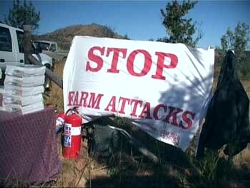
stopfarmattacksAfriForum is considering legal action against a police investigator after a case was thrown out of court and a farm attacker was freed due to gross negligence by the police.

The victims of the attack, Mr Noël McSeveney, and his wife, Alta, were attacked by two men in June 2013 on their farm just outside of Malelane, Mpumalanga. Mr McSeveney was wounded in the attack, and in his efforts to protect himself and his wife, he killed one attacker and wounded the other.

According to Nantes Kelder, Head of the Investigative Unit at AfriForum, the case against the accused took place in absentia. The investigating officer allegedly failed to present a medical report to the court to confirm that the accused was still in hospital, receiving treatment. As a result, the case was thrown out.

The Investigative Unit of AfriForum also made a report available earlier this year on mistakes made by the police during their investigations of farm attacks. “The blatant negligence of the police means that an attacker is now free and the victims have to live in fear. The investigator should be held responsible,” said Kelder.

AfriForum will take on the case on behalf of Mr McSeveney. Kelder added that the incidence of farm attacks and violent crimes is unacceptably high. One would think that such cases would be handled with great care, in order to ensure that justice is served.

A warrant for the arrest of the accused has been issued, but AfriForum has heard that he could not be traced.

EFF warned on land grab

Tina warns EFF on land grab

Government is ready to act if Julius Malema and his organisation, the Economic Freedom Fighters (EFF), act on threats to seize farms, Beeld reported on Friday.

State must take over ‘all land’, says EFF State must take over ‘all land’, says EFF

Agriculture Minister Tina Joemat-Pettersson told the newspaper that if Malema and EFF supporters occupied farms or agricultural land, action would be taken.

“There is no way we will allow people to sow discord in our farming communties for party-political gains,” she was quoted as saying.

She was reacting to the EFF’s founding manifesto, released on Thursday, in which the organisation said that all land should be transferred, without compensation, to the state.

Joemat-Pettersson told Beeld that it was a misperception that all commercial farmers were white. Violence and farm murders had already traumatised rural communities. Anyone who encouraged illegal action on farms would face the full might of the law, she said.

She warned farmers not to take the law into their own hands and gave assurances that Cabinet members of the security cluster would do whatever it took to stabilise the situation.

All land should be transferred to state ownership, according to the Economic Freedom Fighters’ founding manifesto.

“The state should, through its legislative capacity, transfer all land to the state, which will administer and use land for sustainable development purposes,” the EFF said in its manifesto.

“This transfer should happen without compensation, and should apply to all South Africans, black and white.”

Once the land was under state control, those currently using land or intending to use it would have to apply for a “land-use licence”.

The licence would only be granted once an application was filled out stating what the land would be used for, the EFF said.

The licence would be valid for 25 years and could be renewed based on whether the land was being used as planned.

“The state should, within this context, hold the right to withdraw the licence and reallocate the land for public purposes.”

The EFF said expropriation without compensation was one of its seven non-negotiable “cardinal pillars”.

During the launch of the “protest movement” earlier this month, its leader Julius Malema said the EFF had a plan that included the non-negotiable principles of land expropriation and nationalisation of mines, both without compensation.

“[The EFF is] the people’s organisation, inspired by people’s suffering on the ground,” Malema said at the time.

It would embrace an “anti-capitalist and anti-imperialist ideology”, and aspired to non-racialism and non-sexism. While white capitalist monopoly was an enemy of the EFF, “no one is going to be driven into the sea”.

“You are going to be forced to share.”

At a rally later that day in Sebokeng, Malema told residents that once the EFF became the ruling party it would take the land.

“We are going to take this government and once we take it, we are not going to negotiate, we are going to take our land.

“We are going to take it because it’s our land.”

He also said “those who want land must be given land”.

In its manifesto the EFF said “no one should be allowed to own land forever”.

“[This is]… because those who have money can, over time, buy huge plots of land and use them for counter-developmental private purposes, such as using land as game farms.

“A maximum of 30 years can then be placed on all land leases applied for by private corporations and individuals, with the state retaining the right to expropriate in instances where the land is not used for the purpose applied for.”

The EFF is holding a conference in Soweto on Friday and Saturday to work out its policies and manifesto. – Sapa

Tau SA calls for credible land audit

safarmA credible land audit should take place before the land claims process is reopened, farmers’ union Tau SA said.


Ownership figures released in the much-awaited land audit in February were not reliable, union president Louis Meintjies said in a statement.


“Utmost dissatisfaction was expressed about the uncertainty of the land audit, especially with regard to state-owned land, during TAU SA’s general council meeting in Pretoria.


“The process was not transparent and therefore no value could be attached to the audit.”


Meintjies claimed the figures, released by Rural Development and Land Reform Minister Gugile Nkwinti, contradicted those he announced previously.


“According to Nkwinti’s latest figures, the state owns less land than what was previously estimated.”


He said it seemed that agricultural land was being registered in the country on an almost weekly basis.


Tau SA launched its own land audit initiative several years ago, but this was halted because the state apparently refused to fund it.


Nkwinti announced in February that about 26 million hectares belonged to the state and 96m hectares were privately owned.


A break down of which nationalities and races owned the private land was still outstanding.


“There is an institutional challenge which will be resolved very soon,” Nkwinti told MPs at the time.


Tau SA’s general council recommended that a comprehensive land audit take place before the land claims process reopened.


Nkwinti recently announced an indefinite postponement of the reopening of the land claims process.


According to the draft Restitution of Land Rights Amendment Bill, published in May, the new land claims deadline would be December 31, 2018. The previous deadline was December 31, 1998.


The land claim process is aimed at providing compensation to those forcibly removed from their land by the colonial and apartheid governments between 1913 and 1994. – Sapa

Planting the seeds of poverty

Kevin_Kingby Kevin King

[followbutton username=’djkevking’ count=’true’ lang=’en’ theme=’light’]

We have a serious crisis in this country. With many millions of South Africans affected by poverty and unemployment, many millions more are expected to be affected. With high food prices already knocking the pockets of every South African, we can expect astronomical prices in the coming years and a scarcity of basic food stuffs.  “A scarcity in basic food stuffs? You must be joking!” That’s what I’d say 10 years ago, but no longer. From an agricultural giant and leading world exporter, we have quickly found ourselves in the realm of net importer status. All because the ruling party got it wrong.

After our transition to democracy, the ANC decided that land redistribution was the way to go.  And like planting seeds, they drew up their policies and passed a number of bills. These plans were meant to redistribute white farmers’ land to black farmers and to communities which were previously the ‘rightful owners’. Today, many years down the line, these seeds have grown to such an extent that a disaster looms for all. Let me illustrate the ruling party’s end produce.

Decline in commercial farmers, skills lost in 1994 there were some 120 000 commercial farmers but today a mere 37 000 remain. Yes, many of the previously 120 000 commercial farmers were white and transformation needed to take place, but with a sum total of 37 000 commercial farmers today, how many successful, black, commercial farmers have we produced and how many successful, white, commercial farmers has our country lost?

Farming has become “SA’s most dangerous job”. The threat of being the next farm murder victim (almost 4 000 farmers since 1994) and the threat of land grabs have resulted in many successful, white, farmers packing their bags and heading for greener pastures. And many of these farmers have indeed found greener pastures abroad and in other African countries. Congo, Malawi, Uganda, Tanzania and Mozambique are some of the governments who have invited them to farm in their countries on land earmarked for farming.

Other countries such as Gabon, Guinea and Ghana are also in talks. The starving continent of Africa has a huge demand for agriculture, job creation and filling empty stomachs. What better place for these farmers to apply their knowledge and skills. Further up north, Georgia has invited this group of endangered species to attempt to revive their agricultural industry by providing land and equipment. Quoting the Georgian government spokesperson, “South African farmers are some of the best farmers in the world.  They have good experience and we would like to see such farms in Georgia.  There is a lot of potential here.”

Regarding Georgian farmers who generally struggle to earn a decent living, “They want to set up joint ventures with South African farmers because they think they could raise the profitability and productivity of their farms,” he said. “They are more than delighted to have South African farmers and South African expertise on their farms.”

Meanwhile our government has opposing, often moronic, views to the rest of Africa. The Agriculture Minister, Tina Joemat-Pettersson, last week said the following regarding the departure of commercial farmers from South Africa, “This will not be a threat to food security in South Africa; instead, this will enhance food security in the continent.” This a real irony considering that other countries are trying to do the same thing but by attracting our farmers to their farm lands.  It gets more idiotic when she says, “South Africa has skills it can share with other South Africans and with the rest of the continent.”

To an educated mind it would appear that skills are departing with the departing farmers and these skills are to be applied in other African countries indefinitely. Back at home, along with the loss of these farmers and their skills and experience, the former workers of these farms have lost their jobs. From around 1.6 million tax-paying farm workers (mainly black) which were employed in 1994, to around 300 000 in just 16 years.

I challenge anyone to provide me with intelligent reasons on how losing 83 000 commercial farmers and losing over a million jobs are to the advantage of our country and our people.

Demise of profitable, food producing farms According to the ANC itself last year, 90% of redistributed farms do not produce excess food. Farms which once produced hundreds of thousands of tons of produce and employed hundreds of workers now lie idle and are a mere shell of what they used to be.  The remaining few black farmers are but a handful and use the land for subsistence farming.

Mismanagement, corruption and the lack of sufficient skills and experience has had catastrophic effects on many farms.  To mention one of a thousand examples of farms which are now liquidated/idle/non-producing:

  • The Zebediela Citrus Estate (Limpopo) – Once described in the Readers’ Digest, “400 million oranges are harvested each year from the groves of Zebediela, the world’s biggest citrus estate. The output is sufficient to provide one orange for every eight people on earth.”  This magnificent farm went from riches to ruins in just a few years after being taken over by the state.

Yet the talk/threat of land grabs/redistribution continues.

To avoid looking like a second Zimbabwe and forcibly removing white farmers off their land, the government has now come up with cunning plan to grab land without having to remove the white farmers by force. This plan is called the “Land Tenure Security Bill”. If signed off by the ANC government it will amongst other things, give farm workers the right to keep livestock on the farms where they work, which will be allowed to graze “indiscriminately” on the property.

The bill will also give workers the right to plant their own crops and build homes for themselves and close relatives, from which they may never be removed.   Andy Tladi, a black sunflower farmer, says he is leaving to the DRC this year as the bill “gives farm workers a ‘blank cheque’ to do whatever they want to do on land that doesn’t belong to them.  The bill is going to worsen the situation for farmers. You are actually going to see workers putting up villages on farms. If you allow 10 people to build houses on a farm, in about 20 years you could have up to 30 families. So how does the farmer continue to grow and invest under those circumstances? I am a black farmer and I won’t be able to handle that.  A lot of farmers will fly out of the country.”

The high likelihood of failure for black farmers is a reality. Without the necessary skills and experience, even a successful farm which has been acquired through redistribution most often fails. Then when a rare success does happen, more often than not, there is a lack of backing from government which leads to failure or inability to grow.  Steven Mohale, a leading black, tomato farmer in Limpopo, has been battling for years to get government assistance in order to grow his business. But it seems the only help he received was from private banks and white farmers.

To quote an article about Steven in Farmers Weekly, “I’m very disappointed in the way the government treats farmers. It’s high time government stopped insulting farmers. We spend a lot of time with white farmers in this area and almost all are very helpful. People who accuse farmers of bad things are talking nonsense. South Africans need to realise the sector is responsible for feeding the nation and creating employment – and so farmers deserve respect. But government’s attitude doesn’t help.”

In conclusion, it is clearly obvious to someone with a little bit of intelligence that we are heading for disaster. In fact we are already looking at a disaster if you look at how the majority has suffered in the last decade or so in terms of poverty, unemployment and starvation. Billions of taxpayers’ rands have been pumped into redistribution projects and this money has literally been flushed down the toilet, not to mention the millions stolen by corrupt, ANC linked officials. Now billions more has to be spent of which another 90% will be wasted. With calls for 100% nationalisation by Julius Malema, we could be in for even more serious trouble. At this moment I do not see much hope for agriculture in our country and in turn not much hope for the economy and our people.

[followbutton username=’djkevking’ count=’true’ lang=’en’ theme=’light’]

Pieter Mulder says protectorates Botswana, Lesotho and Swaziland should be included in percentage black land

An old map from 1922 showing British South Africa and the protectorates

During a debate on the 1913 Land Act today, Dr. Pieter Mulder of the Freedom Front Plus said that the former British protectorates Botswana, Lesotho and Swaziland should be included when calculating the percentage of black-owned land in South Africa. All three territories formed part of British South Africa in 1913 and were also administered by South Africa.

Dr. Mulder said: “In the thoughts of many, the surface of these areas was included in the land of 1913. The one gets a 40% – 60% land distribution and even a 50 – 50 depending of how it is calculated. Until after the 1936 Act, there were attempts to incorporate these protectorates into South Africa.”

Here follows the full text of his speech:

“I have two problems with a debate such as this one:

“My first problem is that when we talk about history, all the facts, and not only the facts that suite us, should be placed on the table.

 “The core of the objection against the 1913 Act is that it had divided the land between black and white and that only 13% of the land was given to black people. This is a valid criticism about injustices of the past. But it is based upon today’s facts and not based upon the facts of 1913.

 “All the maps of 1913 indicate that the Union of South Africa was part of British South Africa. British South Africa in 1913 consisted of South Africa and the three former protectorates, today known as Botswana, Lesotho and Swaziland. In 1913 there was no question that these protectorates would one day become independent states. Botswana was until 1965 still managed from Mahikeng in South Africa. It was generally accepted that the protectorates would in the long run be incorporated into South Africa. That is why the South Africa Act of 1909, which was approved by the British parliament, provided for the incorporation of these three areas into South Africa at a later stage.

 “In the thoughts of many, the surface of these areas was included in the land of 1913. The one gets a 40% – 60% land distribution and even a 50 – 50 depending of how it is calculated. Until after the 1936 Act, there were attempts to incorporate these protectorates into South Africa.

 “I do not see it as my responsibility to try and defend 1913. What I do believe, is that it would only be reasonable, if in our criticism, we to try and understand all the arguments and thoughts of 1913.

 “Why did this incorporation not succeed?

 “Because there also other views. The chiefs of these protectorates seriously objected to the British in London against incorporation. Eventually they succeeded and in 1966 and 68 these areas became independent, which created the current set of facts.

 “My second problem: It is not wrong to hold debates on the past. But such a debate is only sensible if something could be learnt from it from the future.

 “The past cannot be changed through a lot of talking. That is why the FF Plus does not believe in a better past but in a better future. Little has been said about what we have learnt from the past and how we can succeed with land reform in 2013 without causing famine. Nothing has been said about how food will be provided for 52 million South Africans, of whom 70%  will shortly be living in urban areas and this, while we only have 13% of good agricultural land. Little has been said about how we could better utilise the thousands of hectares of communal land.

 “It is the future and this debate which we should be having now if we want to make South Africa a better place for all.”

Government wants to stop redistributed land being used as collateral

San people
San people

Government is working on a plan that would help prevent redistributed land being used as collateral by banks, Land Reform Minister Gugile Nkwinti said.

“We know that when people are in trouble, they go to the bank and use it [their land] as collateral, and the land is taken away,” he said at a televised The New Age breakfast briefing.

“We don’t want them to lose their land for a second time.”

Nkwinti was referring to the Khoi-San people and their descendants, whose land was dispossessed after the 1913 Natives Land Act, and who are now benefiting from land restitution and financial compensation.

Nkwinti noted that the Khoi-San people had lost land even before 1913. – SAPA

Land redistribution was not only about owning land, but also about production and sustaining it.

He said government wanted every household to be treated like a basic production unit.

ANC govt. failed to redistribute land: Economic Freedom Fighters

EFFGovernment has failed to redistribute land to previously disadvantaged groups, the so-called Economic Freedom Fighters (EFF) said on Wednesday.

“[The] government of South Africa has failed to use almost 20 years of democratic dispensation to address and redress the land question,” said spokesman Floyd Shivambu.

“Our people remain in squatter camps, informal settlements, and non-arable rural communities with no forms of subsistence because they do not have access to land.”

Wednesday marked 100 years since the promulgation of the Natives Land Act of 1913 which dispossessed indigenous Africans of land.

Shivambu said government had to pay particular attention to the country’s food economy.

“Food production, packaging, transportation, marketing, advertising, retail, and trade should constitute one of South Africa’s biggest economic sectors,” Shivambu said.

South Africa needed to provide subsidies for small-scale farmers and open packaging and retail opportunities.

“The crisis faced by small-scale black chicken farmers in South Africa leads to a situation wherein they only contribute less than 30 million chickens of the one billion produced in South Africa annually.”

Shivambu said government should develop structural support mechanisms for small-scale chicken farmers to enter the formal retail market.

Furthermore, government should legislate that all food bought for hospitals, schools, and prisons be sourced from small food producers.

With interventions in the agricultural sector, South Africa could develop a food economy exceeding that of its Brics grouping partner, Brazil.

“This will add to [the] creation of sustainable jobs, not the kind of short-term jobs created through infrastructure development.”

The food economy would “save” South Africa’s social ills because it was not heavily affected by changes in global markets, as food demand was “essential and constant”.

He said the EFF would demand expropriation of land without compensation. – Sapa

Zille joins ANC and Malema chorus in calling for ‘land reform’

Helen Zille
Helen Zille

The legacy of the 1913 Land Act was still with South Africa and so it is the duty of the state to implement effective redress through land restitution, Western Cape premier Helen Zille said on Monday.

“This will never remove or fully compensate for the pain suffered but it is a major step towards the restoration of dignity,” Zille said in a speech prepared for delivery in Cape Town.

“Effective delivery enables our society to own our future and it creates opportunities for active citizens to create the future of their design.”

Zille was speaking at the commemoration of the Natives Land Act of 1913.

She said it was critical to fulfil the redress and reconciliation mandates and that redress enabled society to honour the good in the past and acknowledge the bad.

There would be challenges in implementing land restitution and it required a balancing of different interests.

“There is no one-size-fits-all solution and each case has to processed in its own context,” Zille said.

She said whenever laws and policies were introduced in the past there had always been people who were willing to stand up and raise their voices and the 1913 Land Act compelled a generation of anti-apartheid activists.

History had shown that “evil triggers a backlash from good”, she said.

“Wherever injustice and oppression have reared their ugly heads, they have inspired resistance and protest to challenge it.

“The reason for this backlash from good against evil is not just because principles and values like freedom and justice are violated, but because human lives are deeply affected.”

Speaking at the same event, Cape Town mayor Patricia De Lille said the city was playing its part in ensuring redress and reconciliation took place to ensure land reform happened.

“In the value chain of restitution, the City of Cape Town plays its part to ensure that the Land Claims Commission is in a position to conduct its social function with those waiting for justice,” she said in a speech prepared for delivery.

“And most significantly, land restitution is featured as an objective in our strategic blueprint for the city, the Integrated Development Plan (IDP), unlike other cities.”

She said her career had been focused on fighting to address the “imbalances of history” but that it was also a personal fight for her as she remembered how her grandmother was forced to move because of the Group Areas Act.

“Our mission is to ensure that everyone has a stake in Cape Town.

“It’s why we are working hard to build a caring and inclusive city. And to build that future, we must ensure that we face up to our history, as painful as it is,” De Lille said. – Sapa

TAU SA concerned about trade union threats of ‘land transfer’ in South Africa

Bennie van Zyl

TAU SA is highly upset about trade unions’ proposed public actions to expedite land transfer. “The country is still licking its wounds from the labor unrest in the mining industry, which led to the Rand experiencing near-record lows. Now there are threats of labor unrest in the agricultural sector,” said TAU SA’s General Manager, Mr Bennie Van Zyl. “It seems if the unions have the support of Pres Jacob Zuma, who stated in his reply to its budget debate that land has to be transferred faster from those who need to give land to those who want to have land. This creates a supportive climate for unions’ radical demands and sends a message that the country’s farmers must not expect any sympathy or assistance if the industrial action would turn violent. In addition, it is time that the Government sets an example by transferring the millions of hectares of unused land in its possession to those who say they need land,” said Mr Van Zyl.

“There is a political agenda behind the proposed actions of Numsa and Fawu. Numsa has nothing to do with the agricultural sector because it is the metal workers’ union. However, his president Cedric Gina is revolutionary outspoken in his unfounded, untested and untrue allegations about alleged ‘land transgressions, theft and violent land expropriations’ that would have occurred in the past “

Mr. Van Zyl notes that the unions concerned have section 25 of the Constitution in their sights. “The government needs to state urgently and in unambiguous terms where it stands in terms of the Constitution, and whether it is considering changing it in order to allow expropriation without compensation. Government will have to show whether it is willing to respect and uphold the Constitution, and whether it is going to give in to pressure from the unions,” said Mr Van Zyl.

Meanwhile, TAU SA urged farmers to intensify their security measures in the light of the impending industrial action by trade unions and to be intolerant against any act of insurrection or vandalism that would be a threat to life or property resulting from this action. “We as law-abiding citizens also have rights, and we also have the right to protect those rights,” said Mr Van Zyl.