Ron Paul: US ‘likely hiding truth’ on downed Malaysian Flight MH17

Former Congressman Ron Paul said the US knows ‘more than it is telling’ about the Malaysian aircraft that crashed in eastern Ukraine last month, killing 298 people on board and seriously damaging US-Russian relations in the process.

In an effort to inject some balance of opinion, not to mention pure sanity, into the ongoing debate over what happened to Malaysian Flight MH17, Ron Paul is convinced the US government is withholding information on the catastrophe.

“The US government has grown strangely quiet on the accusation that it was Russia or her allies that brought down the Malaysian airliner with a Buk anti-aircraft missile,” Paul said on his news website on Thursday.

Ron Paul to Obama: Let’s just leave Ukraine alone!

Paul’s comments are in sharp contrast to the echo chamber of one-sided opinion inside Western mainstream media, which has almost unanimously blamed anti-Kiev militia for bringing down the commercial airline. Incredibly, in many cases Washington had nothing to show as evidence to incriminate pro-Russian rebels aside from tenuous references to social media.

“We’ve seen that there were heavy weapons moved from Russia to Ukraine, that they have moved into the hands of separatist leaders,” said White House spokesman Josh Earnest. “And according to social media reports, those weapons include the SA-11 [Buk missile] system.”

In another instance, State Department spokeswoman Marie Harf told reporters “the Russians intend to deliver heavier and more powerful rocket launchers to the separatist forces in Ukraine, and have evidence that Russia is firing artillery from within Russia to attack Ukrainian military positions.” When veteran AP reporter Matthew Lee asked for proof, he was to be disappointed.

“I can’t get into the sources and methods behind it,” Harf responded. “I can’t tell you what the information is based on.” Lee said the allegations made by the State Department on Ukraine have fallen far short of “definitive proof.”

Just days after US intelligence officials admitted they had no conclusive evidence to prove Russia was behind the downing of the airliner, Kiev published satellite images as ‘proof’ it didn’t deploy anti-aircraft batteries around the MH17 crash site. However, these images have altered time-stamps and are from the days after the MH17 tragedy, the Russian Defense Ministry revealed, fully discrediting the Ukrainian claims.

In yet another inexplicable occurrence, Russian military detected a Ukrainian SU-25 fighter jet approaching the MH17 Boeing on the day of the catastrophe. No acceptable explanation has ever been given by Kiev as to why this fighter aircraft was so close to the doomed passenger jet moments before it was brought down.

“[We] would like to get an explanation as to why the military jet was flying along a civil aviation corridor at almost the same time and at the same level as a passenger plane,” Russian Lieutenant-General Andrey Kartopolov demanded days after the crash.

Paul has slammed the Obama administration, despite its arsenal of surveillance technologies at its disposal, for its failure to provide a single grain of evidence to solve the mystery of the Malaysian airliner.

“It’s hard to believe that the US, with all of its spy satellites available for monitoring everything in Ukraine, that precise proof of who did what and when is not available,” the two-time presidential candidate said.

“Too bad we can’t count on our government to just tell us the truth and show us the evidence,” Paul added. “I’m convinced that it knows a lot more than it’s telling us.”


Although no sufficient evidence has been presented to prove that the anti-Kiev militia was responsible for the downing of the international flight, such an inconvenient oversight has not stopped the United States and Europe from slapping economic sanctions and travel bans against Russia.

Moscow hit back, saying it would place a ban on agricultural imports from the United States and the European Union. Russia’s tit-for-tat ban will certainly be felt, as food and agricultural imports from the US amounted to $1.3 billion last year, according to the US Department of Agriculture. In 2013, meanwhile, the EU’s agricultural exports to Russia totaled 11.8 billion euros ($15.8 billion).

After the crash, Ron Paul was one of a few voices calling for calm as US officials were pointing fingers without a shred of evidence to support their claims. Paul has not been afraid to say the painfully obvious things the US media, for any number of reasons, cannot find the courage to articulate.

“They will not report that the crisis in Ukraine started late last year, when EU and US-supported protesters plotted the overthrow of the elected Ukrainian president, Viktor Yanukovych,” Paul said. “Without US-sponsored ‘regime change,’ it is unlikely that hundreds would have been killed in the unrest that followed. Nor would the Malaysian Airlines crash have happened.”

Paul also found it outrageous that Western media, parroting the government line, has reported that the Malaysian flight must have been downed by “Russian-backed separatists,” because the BUK missile that reportedly brought down the aircraft was Russian made.

“They will not report that the Ukrainian government also uses the exact same Russian-made weapons,” he emphasized. – RT.COM

Russia, Egypt discuss Gaza

Russian President Vladimir Putin is due to meet with his Egyptian counterpart, Abdel Fattah Sisi, in the Russian resort city of Sochi to discuss a wide range of political and economic issues, including the ongoing Gaza conflict, Egypt’s food deliveries to Russia and Russian military exports to Egypt, according to the Kremlin.

“The discussion will address urgent matters, linked to the development of Russian-Egyptian relations in various spheres,” a Kremlin official said.

The leaders are expected to study in great depth a wide range of bilateral economic issues, such as the creation of a free trade zone between Egypt and the Russia-led Customs Union, which also includes Belarus and Kazakhstan.

“The last year’s trade turnover was roughly at $3 billion. In the first half of this year, [this figure] almost doubled [some $2.5 billion],” the Kremlin said.

Following its embargo on agricultural products from the United States and the European Union, Russia has been looking for alternatives, and Egypt said it was willing to boost its fruits and vegetables exports. In return, Russia could profit from Egypt’s high demand for wheat.

Moscow and Cairo are also discussing deliveries of Russia’s high-tech military products, including 24 Mikoyan MiG-29 fighter jets, as well as its Kornet anti-tank missile systems, attack helicopters Kamov Ka-25, Mil Mi-28 and Mi-25.

Russia and Egypt, which is brokering an end to the ongoing Gaza armed conflict, have been keeping in touch on the situation in this highly volatile region, with the Russian president praising Cairo’s efforts toward a long-term armistice between the Israeli and the Palestinians.

Last week, President Putin in a phone conversation with Abdel Sisi lauded Egypt for mediating negotiations between the warring parties. Both leaders agreed to “encourage a nationwide dialogue, aimed at settling contentious issues through political means,” according to the Kremlin.

Source: RIA Novosti

Russia to deport McDonald’s hamburger

burgercrushThe area round the first ever McDonalds in Moscow in Pushkinskaya square saw today an extraordinary promo-campaign against “all the unhealthy stuff that came from the West”, Russian media as well as restaurant search engine Tillypad XL report.

Leaders of the movement “All the truth about food” are set to improvise later the symbolic deportation of the giant hamburger, universally seen as the basic junk food token.

“We are going to put forward our own bill that would set limits to the possible number of unhealthy fast food eateries in Russia, citing a high proportion of saturated fats in their menus, which proves harmful for human health,” says Maxim Raksha, the campaign coordinator.

He admits that one of the reasons for the event is the US-imposed sanctions on Russia. ‘I’ve been following the standoff between Russia and the West, and we’ve come to believe now is the right moment to say no to everything harmful that comes from them.”

The beef is “washed” in ammonium hydroxide and used in the filling of the burger. Before this process the food is deemed unfit for human consumption.

According to the chef and hamburger enthusiast, Jamie Oliver, who has undertaken a war against the fast food industry, “Basically, we’re taking a product that would be sold in the cheapest way for dogs, and after this process, is being given to human beings.”

Besides the low quality of the meat, the ammonium hydroxide is harmful to health. Oliver famously coined this the “the pink slime process.”

Source: Voice of Russia

Netanyahu Moscow visit falls flat: Israeli media

Israeli Prime Minister Benjamin Netanyahu’s visit to Moscow to push Russia into taking a harder line on Iranian nuclear negotiations has fallen flat, Israel’s media said on Thursday.

Premier Netanyahu and President Putin

Netanyahu flew to Moscow Wednesday in what was seen as a last-minute bid to influence an emerging nuclear deal with Iran strongly opposed by the Jewish state and being discussed by world powers and Iranian diplomats in Geneva.

Right-leaning Maariv newspaper said Russian President Vladimir Putin’s comments after meeting Netanyahu at best gave little away, and suggested the Israeli premier’s visit had left no lasting impression.

“When the two men gave their joint press conference (Wednesday), it appeared Putin’s statement had been given to journalists in advance, and he only changed certain passages afterwards to make them more palatable to Netanyahu,” it said.

Speaking as the talks got under way in Geneva between Iran and world powers, Putin only said he hoped that “in the nearest future a mutually acceptable solution is found” to end the crisis.

Top-selling Yediot Aharonot said Netanyahu’s visit to Moscow was an unnecessary “put-down” to the United States after tension with Israel over a possible Iran deal.

“Every reader knows Putin supports and will continue to support the ayatollahs’ regime in Iran,” Yediot said.

“If there’s the slightest chance of persuading world powers to take a harsher line on Iran, Israel should engage in discreet dialogue (with the US), instead of bickering publicly with Washington,” it said.

And left-leaning daily Haaretz suggested Netanyahu’s visit was futile, pointing out Russia was traditionally much more closely aligned with the Islamic republic than with other world powers.

“Russia, which built Iran’s first nuclear power plant and remains on better terms with Tehran than Western powers, has expressed less suspicion than them about Iran’s nuclear work,” it said.

Netanyahu insisted on the need for a “real” solution to the Iranian nuclear crisis, after his talks with Putin.

“We would all like a diplomatic solution, but it needs to be a real solution,” said Netanyahu, adding that this would involve Iran halting nuclear work in the same way that Syria was allowing its chemical weapons arsenal to be destroyed.

Iran would have to halt uranium enrichment, stop work on centrifuges, have enriched uranium material taken out from Iran and dismantle the Arak heavy water reactor, he said.

“We think it is possible to get a better agreement but that requires determination,” Netanyahu warned.

Israel, the region’s sole if undeclared nuclear-armed state, has not ruled out the use of force against the Iranian atomic drive.

Tehran says its nuclear programme is purely for peaceful purposes. – AFP

Russian students humiliate black paedophile

russia-black-shaving-head
‘David Smith’ gets a haircut

A 20-year-old black student from Johannesburg studying at the Shukhov State Technological University, in Belgorod was made fun of by a group of Russian students because he requested sex with a minor.

In an initiation-style video posted online was mostly in Russian and minimal broken English.

The student, called David Smith, although he later says his name is Bonga, is made a fool by four anti-LGBT activists, who had lured him by pretending to be a 15-year-old boy available for sex.

The legal age of consent in Russia is 16.

The Russian group calls themselves “Occupy Pedophilia,” and basically lure young gay men into meeting a member of their group, ostensibly by pretending to be gay themselves.  They then kidnap their victim and make fun of them, including “forcing them to drink urine” on film, according to a gay website.

The film is then published on Russian social media sites.

In Bongo’s case, they barge in, forcing him to do a fake tribal dance, then shaving his head and force feeding him a watermelon. . “Black, white, black white”, says one of the anti-LGBT activists, as he compared the colour of his palm against the colour of the back of his hand.

President Vladimir Putin’s new law where police can detain suspected homosexuals for up to two weeks is not popular with paedophiles. It has been reported that Russian MPs will discuss a bill early next week that could see homosexual couples lose custody of their children.

The soccer governing body has been battered by international gay lobbies for picking Russia and Qatar as hosts for the 2018 and 2022 tournaments. Both countries are known for their anti-gay laws.

Johan Cronje claims 1500m medal

Johan Cronje
Johan Cronje

A perfectly timed surge at the finish helped Johan Cronje claim bronze and the first ever medal for South Africa in the men’s 1,500 metre event at the IAAF World Championships in Moscow on Sunday.

Cronje, the national record-holder in the 1,500m, clocked 3 minutes 36.83 seconds just behind Kenyan Asbel Kiprop who won in 3.36.28, and American Matthew Centrowitz in second with 3:36.78.

Not only was it the first time a South African featured in the top eight of the event at the world championships, it was also the only medal the South African team claimed at the Moscow games.

After the race, Cronje said had not expected to be up on the podium.

“I believed in myself – but I wouldn’t have put money on myself”, said Cronje.

Cronje found himself boxed in during the race, and fancied with a better approach he could have grabbed silver.

“I’m a bit disappointed I was a few split-seconds from second.

“I think if I wasn’t boxed in I could have snatched that one, but I had a terrible tactical race,” said the Bloemfontein speedster who had initially expected a fast race.

Asbel Kiprop took control of the race from the gun, pulling the field through 400m, and Cronje found himself boxed in on the kerb initially in fifth, then dropping back to eighth with 300m to go.

“I couldn’t go fast as everyone was on my right and I had Centrowitz ahead.

“It was only the last 60 I had to go past as that’s when it opened up [on the inside].”

Cronje said he thought the tactics in the final would be different from his previous expectations.

“I realised that everyone was in there as individuals, the Kenyans weren’t going to run as a team, so they were watching each other and would also have Centrowtiz on their mind, so perhaps they would forget a guy like myself or Brannen from Canada,” said Cronje.

“Before the race I knew it could be slow: I had to be upfront and I had to be wide, and everything I knew I didn’t do.

After 900m Cronje said he had to break free from the group.

“It was stupid I was swearing at myself [for being boxed in], saying Johan this is your only opportunity, use it.

“I was sitting, sitting — looking right — [I] couldn’t get a gap and saw Centrowitz and knew he was a fast finisher, so I would stick with him.

“When he moved out and around, I saw the guys inside were looking outside ­- so I waited.

“As soon as you look outside your body moves out and I waited for that 20 centimetres to open up and I moved through on the inside,” added Cronje who is a semi-professional athlete, who is an investment specialist in his day job.

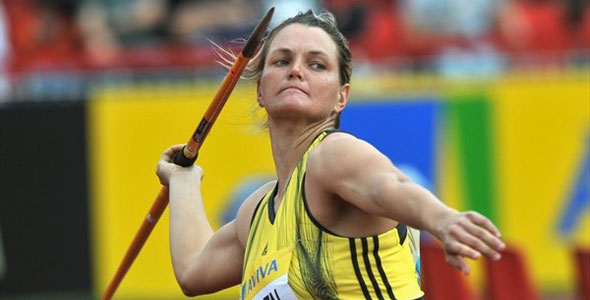
In the women’s javelin, once again Sunette Viljoen, the defending javelin bronze medalist from Daegu, threw her best distance with her opening trial.

Viljoen threw 63.58 metres, which was good enough for a sixth place overall after failing to improve on her first attempt.

It was a performance far below her season best of 64.51m set with the first throw of the qualification round, and her personal best of 69.35m set in New York in May of last year.

A visibly distressed Viljoen walked through the post-race zone without sharing any thoughts.

South Africa’s sole medal placed them 33rd and last on the medal table, compared to a ninth place in Berlin and 17th in Daegu. – Sapa

Light at end of tunnel for SA athletes

Sunette Viljoen
Sunette Viljoen

They may not return with an abundance of medals, but the 26 South African athletes competing in the IAAF World Championships in Moscow, starting Saturday, may well provide some light and inspiration to counter the months of boardroom battles which threatened to disrupt their participation.

In the absence of Caster Semenya, who failed to qualify for the women’s 800m event, US-based student Anaso Jobodwana could grab the South African limelight.

The 100m and 200m sprinter was a surprise finalist in the 200m at the London Olympics, and with Yohan Blake, injured, and both Tyson Gay and Asafa Powell banned for doping, Jobodwana hoped to take it a stage further.

“The main thing is to improve on my times. All I am interested in is getting a personal best in both of my events,” Jobodwana said in Moscow on Thursday.

“Then, at the right times, everything else will happen.”

Given the limited field of 200m contenders, a case could be made for Jobodwana to skip the 100m event — where his best of 10.10 seconds would most likely not be good enough to make the final — in order to focus on the 200m.

“I was told that I needed to run the semi-final in London as though it was the final,” said the 20-year-old.

“I wish I had been more prepared for that, because running the semi took a lot out of me.”

Either way, he could become South Africa’s most successful sprinter in the 200m and, as one of the youngest on the team, he could provide the inspiration for others to make their mark.

Javelin thrower Sunette Viljoen was the best of the medal hopes with her 69.35m throw in New York last year.

After coming second to Barbora Spotakova’s 69.55 at the London Olympics, she had yet to show the same form this year but Viljoen was certainly capable adding to her championship glory.

The same was true of Olympic and World silver medal long jumper Khotso Mokoena. The senior team member had failed to hit form over the past two seasons, and sat a lowly tenth on the ranking lists, but sixth best for the current year.

Zarck Visser joined Mokoena and could benefit from his experience, but the SA champion had not expanded on the potential shown by his 8.29m qualifying leap in Stellenbosch.

Similarly Lynique Prinsloo, should make the women’s long jump final, but would need to be back to her 6.81m best which secured her the SA title.

If Jobodwana, Visser and Prinsloo were the best of the young pretenders, then Mokoena, hammer thrower Chris Harmse, 41-year-old marathoner Hendrick Ramaala and 400m hurdler LJ van Zyl were the old guard.

Van Zyl would be competing in his fifth world championship, with his best showing in 2011 when he won the bronze medal in Daegu.

Having failed to break 49 seconds since then, the 28 year-old knew he had to hold his pace to the line.

“Its going to take a 48.50-something to be sure of a final (spot),” said Van Zyl.

He could be handing the mantle, as the leading South African hurdler, to Cornel Fredericks, who clocked 48.78 in the South African championships in April and was fifth on debut in Daegu. – Sapa

Edward Snowden’s escape

Sheremetyevo Terminal

THEY sought him here and there and everywhere. But in the end, Edward Snowden slipped away unnoticed from Moscow’s Sheremetyevo airport in a cab.

The US fugitive walked out of the airport and took a taxi, his lawyer Anatoly Kucherena revealed to disappointed journalists who have haunted the international airport since Mr Snowden flew in from Hong Kong on June 23, wanting to catch him inside the terminal’s capsule hotel or the passenger lounges.

Rossiya 24 television aired a blurred photograph apparently showing Snowden from the back carrying a black rucksack as he is about to enter a grey saloon car, with a blonde-hair woman standing next to him.

He is shown talking to Mr Kucherena, with four other unidentified men nearby, one talking on a cell phone. The channel did not reveal who took the photograph.

WikiLeaks wrote on its Twitter feed that Mr Snowden left the airport “under the care of WikiLeaks’ Sarah Harrison,” one of the site’s employees who arrived with him from Hong Kong.

She appeared at his side at his only public appearance since landing, when he met rights activists inside the airport on July 12.

Asked in a live interview on Rossiya 24 whether Mr Snowden really caught an ordinary taxi, his lawyer said drily: “I understand that it was a taxi.”

Mr Kucherena refused to reveal Mr Snowden’s location for security reasons, saying only that he “may stay in a flat or a hotel.”

Mysteriously, Mr Kucherena seemed not to be involved in Mr Snowden’s initial stay outside the airport, saying that unnamed American friends living in Russia were taking care of him.

“Of course he has gained friends, including within Russia – American friends – who possibly at the start will be able to provide his security, for some time, let’s say,” Mr Kucherena told Rossiya 24 television.

“I did not get involved in this part, it’s not my competence. So in this case, I hope that all will be well.”

He also refused to comment on whether Mr Snowden would be staying in Moscow itself.

“Let’s not lift up that veil since Edward himself will decide that question,” he told Rossiya 24, adding that he planned to talk on the telephone to Mr Snowden’s father Lon and his US lawyer later that day to discuss his future.

Mr Snowden did not take long to pack after receiving a document certifying that he has temporary asylum in Russia, dated July 31, said Mr Kucherena, who has revealed that he had to buy Mr Snowden extra jeans and shirts while he was in the airport.

“He has few things, so we didn’t have to pack suitcases,” he told the television channel.

It remained unclear where Mr Snowden had spent more than a month, with the public areas of the airport thoroughly combed by journalists.

Mr Kucherena last week spoke to journalists after emerging from a meeting with Mr Snowden via a door in the arrivals zone of Terminal E marked “staff only.”

On Thursday, Mr Kucherena made clear that Mr Snowden was in an area for “problem” passengers who lacked documents, dismissing a question about whether he could have been spotted by waitresses in the airport.

“Have you ever seen a waiter in the transit zone? I never did,” he said.

“It’s the place where a person who flies in, if he doesn’t have a passport or doesn’t have a visa, say, or he has some problems with documents, he stays in that zone.”

However, he also half-confirmed reports that Mr Snowden had been staying in a capsule hotel that has full public access in the transit zone.

“There is a capsule hotel. Those people who stay in the (transit) zone, if they can’t fly out anywhere, they sit there and wait for their problem to be resolved.” – news.co.au

Snowden granted asylum in Russia for a year

Snowden leaving the airport
Snowden leaving the airport [Twitter]

NSA whistleblower Edward Snowden has been granted temporary asylum in Russia and is allowed to enter the country’s territory, a source close to the matter told Itar-Tass.

The whistleblower has been granted temporary political asylum in Russia, Snowden’s legal representative Anatoly Kucherena said, with his words later confirmed by Russia’s Federal Migration service.

“I have just handed over to him papers from the Russian Immigration Service. They are what he needs to leave the transit zone,” he added.

Kucherena showed a photocopy of the document to the press. According to it, Snowden is free to stay in Russia until at least July 31, 2014. His asylum status may be extended annually upon request.

With his newly-awarded legal status in Russia, Snowden cannot be handed over to the US authorities, even if Washington files an official request. He can now be transported to the United States only if he agrees to go voluntarily.

Snowden departed at around 15.30 Moscow time (11.30 GMT), airport sources said. His departure came some 30 minutes before his new refugee status was officially announced.

His present location has not been made public nor will it be disclosed, Kucherena said.

Since June 23, the former CIA employee, Edward Snowden, has been staying in Moscow’s Sheremetyevo International Airport, where he came from Hong Kong as a transit passenger. In the middle of July he requested for a temporary political asylum in Russia.

Snowden is accused of revealing details about the U.S. surveillance services. He was charged with unauthorized communication of national defense information and providing U.S. classified intelligence to an unauthorized person under the 1917 Espionage Act. Moreover, he is accused of government property theft. Snowden will face up to 10 years in prison under every article. RT/Itar-Tass

Snowdenov soon?

snowdenov2NSA leaker Edward Snowden plans to settle in Russia and is ready to begin a court battle if the country’s migration service denies his asylum plea, Anatoly Kucherena, a Russian lawyer who assists the whistleblower, told RT.

“It’s hard for me to say what his actions would be in terms of a positive decision [on the asylum plea],” Kucherena said. “We must understand that security is the number one issue in his case. I think the process of adaptation will take some time. It’s an understandable process as he doesn’t know the Russian language, our customs, and our laws.”

“He’s planning to arrange his life here. He plans to get a job. And, I think, that all his further decisions will be made considering the situation he found himself in,” he added.

Kucherena expressed hope that the whistleblower’s plea will be granted, because the reasons which prompted Snowden ask for political asylum in Russia “deserve attention.”

“He fears for his health and his life. He’s afraid that if he’ll be handed to the US, torture can be used against him down to death penalty,” he said.

In case of a negative ruling on the plea, Kucherena said that Snowden has “an opportunity to go to court and appeal against the decision of the Federal Migration Service.”

“He intends to do so,” the attorney stressed. “During our meeting, our dialogues, and our consultations, he made detailed inquiries on those procedures. And I informed him of what possibilities he has according to Russian law.”

Snowden still remains holed up in the international transit zone of the Moscow’s Sheremetyevo airport. His asylum plea, which was filed on July 16, has not been yet formalized by migration officials.

“According to the existing practice, it may take five, seven, or eight days. I’m calling them on a daily basis. They tell me that they’re about to finish the formalization,” Kucherena said.

The NSA leaker will then be handed a paper confirming that his asylum application is being reviewed. Once this document is received, Snowden will be allowed to leave the airport where he has spent an entire month.

“There are no travel restrictions. Therefore, receiving the paper will give him an opportunity to leave the transit zone of the Sheremetyevo airport and choose a place of residence – rent a hotel or a flat. [He can] live in any place within the Russian federation,” Kucherena explained.

According to the lawyer, consideration of the plea will then take up to three months. If his request is approved, Snowden will receive a certificate which will “guarantee him the same rights and freedoms possessed by the citizens of the Russian Federation.”

“The temporary asylum is given on a one-year term. After it expires, the term can be prolonged for another year and this can be repeated an indefinite number of times afterwards,”
he said.

Snowden arrived in Moscow from Hong Kong on June 23 after revealing secret NSA government surveillance programs to the public.

The 30-year-old whistleblower is wanted in the US on charges of espionage and theft of government property.

Several Latin American states have offered him asylum, but the whistleblower believes it is unsafe for him to leave Russia following the July 2 incident in which the Bolivian president’s plane was grounded on suspicion that Snowden was aboard the craft. – RT

Moscow fire kills 13 migrant workers

Twelve people died Tuesday when a night time fire tore through a two-story Moscow market warehouse that was being used by migrant workers from a former Soviet republic as a temporary residence.

“Twelve people died. They were migrant workers. We are trying to confirm which (ex-Soviet) republic they came from,” a Moscow emergencies ministry spokesman told AFP.

Unconfirmed news reports said the migrants came from the impoverished Central Asian nation of Tajikistan. Numerous Moscow markets employ cheap labourers from the region without giving them proper housing conditions or pay.

The blaze erupted early Tuesday at a market on the southern outskirts of the city called Kachalovsky. Officials said it took two hours to put out.

Emergency workers described squalid living conditions in which the workers slept on hard cots that were stacked on top of each other in rows of four without any direct access to the outside.

The workers “lived in a metal annex that was equipped with a space heater”, an unnamed law enforcement official told the Interfax news agency.

“They slept in frighteningly tight conditions, on hard bunk cots that were then stacked on top of each other,” he said.

Another official said the workers probably left the space heater on all night to stay warm during the frigid Moscow spring. Overnight temperatures plunged below freezing and much of central Russia has been hit by snow.

“The fire could have started from the electric space heater. It was probable left on all night because the structure was turned into living quarters,” an unnamed investigator told ITAR-TASS.

Police said they have opened a criminal investigation but have not yet pressed any charges against the market owners.

Russia’s migration service estimates that there are 700,000 Tajiks living officially in the country — a tenth of their home country’s population of just under seven million.

Tajikistan was wrecked by a brutal civil war in the early 1990s and then experienced nearly two decades of ethnic tensions and endemic drugs trafficking that hampered sustainable growth.

Its economy remains in tatters and some analysts estimate that up to half of Tajikistan’s young male population is currently trying to make a living in Moscow and other major Russian cities.

The predominant majority of the migrants who arrive in Moscow do so without acquiring the official city worker permits that the Russian capital has required since Soviet times.

Their employment is therefore never officially reported to the authorities and many end up living in Moscow apartment block basements or makeshift residences.

Seven migrants were killed in January 2009 when a fire swept through an underground Moscow garage they were building and had also used as a temporary living shelter.

Another seven died in May 2011 when a fire engulfed an old abandoned building in central Moscow.

The presence of Central Asian nationals and workers from the predominantly Muslim Caucasus region has also stirred racial tensions in the Russian capital and resulted in repeated deadly attacks.

President-elect Vladimir Putin had vowed to reinforce migration controls while serving as prime minister for the past four years and won a strong following from Russian nationalists while heading the Kremlin in 2000-2008.