Looming threat of a race war against South Africa’s whites

Laura and Roelof du Plessis

The horror started just before midnight on Wednesday this week.

After listening to the latest television news about the health of Nelson Mandela, a South African family living not far from the former President’s hospital unit turned in for the night.

But Roelof and Laura du Plessis, a married couple with four children who live on a heavily fortified farm outside Pretoria, did not have a peaceful night’s rest.

In fact they were about to become the latest victims of what white pressure groups in this troubled nation say is nothing less than a savage war against them.

Hearing noises outside their home, Mr du Plessis, 46, got out of bed and ran outside.

To his horror, he found his 19-year-old son being held with a gun to his head by a gang of five armed black attackers.

Father and son were ordered to lie on the ground. The invaders did not ask for money or the keys to the expensive vehicles in the drive. They were there only to terrorise and kill.

Hearing voices outside, Laura, 44, came out of her bedroom to investigate — and her torch illuminated an awful scene as the gang pointed guns at her husband.

Her son managed to get up and sprint off into the darkness when the men were confused by the flashlight. But Du Plessis was not so lucky.

The intruders opened fire at once, shooting him six times through the throat, lungs and abdomen.

As he writhed on the ground in agony, the men ran off into the night leaving empty bullet cartridges littering the yard.

In the darkness, Laura attempted heart massage on her husband, who could still talk despite his appalling injuries, but to no avail.

When I arrived at the farm on Thursday and was invited in by Mrs du Plessis, I found her with blood still caked under her fingernails after she’d cradled her dying husband.

‘He was shot through the lungs and I was doing CPR,’ she told me, between huge sobs. ‘He said “please go and fetch the car and take me to hospital”. But he was too badly hurt and he died in my arms.’

In the morning, when white friends from neighbouring farms followed the trail of the raiders, they discovered the men had carefully cut through fences and skirted areas with security patrols — suggesting how closely they had planned their route of attack.

‘It is definitely coming down to a race thing,’ Laura du Plessis told me as she was comforted by her family. ‘They hate white people. We have never had a fight with any black people. I always stop and give others a lift. We employ black people.

‘My husband fought for me. I am grateful that he wasn’t tied up and forced to watch me being raped before he was killed. He was an amazing man. He was my life.’

A friend of the family, who asked not to be named, told me he was certain that the killings are part of a sinister, systematic bid to drive white people — and, in particular, farmers — out of South Africa.

‘If this was happening in any other country, the military would be deployed to protect us,’ said the friend. ‘There are gangs moving around the country targeting white people.’

Of course the violence and privations South Africa’s blacks faced under apartheid were just as unforgiveable. Certainly, there would have been more bloodletting after the white government fell in the Nineties were it not for Mandela’s message of reconciliation.

But now, as he nears death, fears are growing that a wave of violence will be unleashed against the white population.

The statistics — and the savagery of the killings — appear to support claims by these residents that white people, and farmers in particular, are being targeted by black criminals.

Little wonder that what unfolded on the Du Plessis homestead has sent tremors of fear through the three-million-strong white community.

Last month alone there were 25 murders of white landowners, and more than 100 attacks, while Afrikaner protest groups claim that more than 4,000 have been killed since Mandela came to power — twice as many as the number of policemen who have died.

It is not just the death toll, but the extreme violence that is often brought to bear, that causes the greatest fear in the white community.

Documented cases of farm killings make for gruesome reading, with children murdered along with their parents, one family suffocated with plastic bags and countless brutal rapes of elderly women and young children.

These horrors have prompted Genocide Watch — a respected American organisation which monitors violence around the world — to claim that the murders of ‘Afrikaner farmers and other whites is organised by racist communists determined to drive whites out of South Africa, nationalise farms and mines, and bring on all the horrors of a communist state’.

Indeed, a disturbing number of whites are terrified that Mandela’s passing will lead to an outpouring of violence from black South Africans, no longer contained by the sheer power of the great man’s presence, which endures today even though he stood down as president in 1999.

For its part, the ruling ANC party dismisses claims that such murders are part of any sinister agenda, pointing out that South Africans of all colours suffer violent crime, and that wealthy whites are simply more likely to be targeted.

Perhaps. But white nerves have not been soothed by the disturbing behaviour of Jacob Zuma, the ANC’s leader and the country’s third black president since Mandela.

There has been an increase in murders of white farmers in a country where there are already 60 murders each day

At a centenary gathering of the African National Congress last year, Zuma was filmed singing a so-called ‘struggle song’ called Kill The Boer (the old name for much of the white Afrikaner population).

As fellow senior ANC members clapped along, Zuma sang: ‘We are going to shoot them, they are going to run, Shoot the Boer, shoot them, they are going to run, Shoot the Boer, we are going to hit them, they are going to run, the Cabinet will shoot them, with the machine-gun, the Cabinet will shoot them, with the machine-gun . . .’

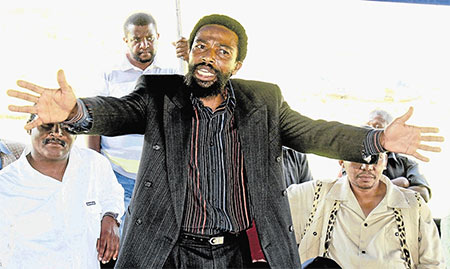
Alongside him was a notorious character called Julius ‘Juju’ Malema, a former leader of the ANC youth league, who is now Zuma’s bitter enemy and is reportedly planning to launch a new political party after Mandela’s death.

A bogeyman to white South Africans, Malema is popular among young blacks, and has also been an enthusiastic singer of Kill The Boer and another song called Bring Me My Machine-Gun.

Polls this week showed a huge surge in support among young black South Africans for his policies, which he says will ignore reconciliation, and fight for social justice in an ‘onslaught against [the] white male monopoly’.

With chilling echoes of neighbouring Zimbabwe, where dictator Robert Mugabe launched a murderous campaign to drive white farmers off the land in 2000, Malema wants all white-owned land to be seized without compensation, along with nationalisation of the country’s lucrative mines.

Ominously, Malema, 32, who wears a trademark beret and has a fondness for Rolex watches, this month promised his new party will take the land from white people without recompense and give it to blacks.

‘We need the land that was taken from our people, and we are not going to pay for it,’ he said. ‘We need a party that will say those who were victims of apartheid stand to benefit unashamedly, and those who perpetuated apartheid must show remorse and behave in a manner that says they regret their conduct.’

Enthusiastically backed by Winnie Mandela, Nelson’s second wife — who is still hugely popular in South Africa despite her suspected role in several murders — Malema is a charismatic figure who once threw a BBC correspondent out of a press conference for asking about his wealthy lifestyle.

His words have done nothing to allay the fears of white communities, some of which have taken extreme measures to protect themselves.

This week I visited Kleinfontein in Pretoria, a white-only community of 1,000 men, women and children who live behind high fences, with a gatehouse manned by men in military fatigues, who also carry out regular patrols of the grounds to prevent black intruders entering.

Anyone without an appointment with an official resident is refused entry. If they are black, they will not get in at all.

Inside, there is a shopping mall, while the town has its own water supply and sewage system. All manual work is carried out by white residents.

There is a rugby pitch, opulent homes overlooking miles of open countryside where antelope and zebra roam, and a hospital for the elderly residents.

Most crucially of all, in a country with 60 murders a day, there is no armed robbery, murder or rape in Kleinfontein. ‘An old lady can draw money here without any fear,’ says Marisa Haasbroek, a resident, mother of two teenage girls, and my guide for the morning.

‘It’s safe, quiet and peaceful. It’s not racist — it is about protecting our Afrikaner cultural identity.’

Like all the residents, she is descended from the first Afrikaners, the Dutch settlers who came to South Africa and were driven into the African interior on the famous Great Trek during the war with the British from 1899 to 1902.

Kleinfontein has been in existence since Mandela’s first presidency in 1994 — but its existence remained largely unknown until reports last year that black police officers had been barred from entry to the property.

To get round race laws, Kleinfontein insists its criteria for entry are not based on skin colour. It claims to exist to protect distinct Afrikaans-speaking people and culture, and that English-speaking white people are also banned, so the community is non-racist.

The Afrikaners, of course, were those who devised and presided over apartheid, a gruesome social experiment that did so much to divide the nation and subjugate the black population.

With Mandela on a life support machine, the founders of this community in the so-called ‘Rainbow Nation’ were this week being inundated with requests by other whites to join them.

‘I think there will be trouble,’ Anna, an elderly lady tending her garden inside the all-white compound, tells me.

‘There may be tribal warfare first between the black races. Then they might turn on us.’

Standing near a sign written in Afrikaans stating ‘ons is hier om te bly’ (we are here to stay), Marike, another resident, was convinced that there is a sinister plot to kill all whites.

‘You don’t attack farms and rape 80-year-old women with broken bottles and kill their husbands for a mobile phone,’ Marike says. ‘People say it’s not genocide — but it is.’ – Daily Mail

De Klerk cuts short European visit, prays for Mandela

FW de Klerk
FW de Klerk

Former president FW de Klerk has cut short his Europe trip because of former president Nelson’s Mandela’s ill-health, De Klerk’s foundation said on its website on Saturday.

“Mr FW de Klerk and his wife Elita have decided to suspend their current working visit and holiday in Europe because of Mr Mandela’s medical condition,” it said.

“They will arrive back in Cape Town tomorrow. Their thoughts are with the Mandela family during this difficult time and they join in the prayers for an improvement in Mr Mandela’s health.”

There was no further information on whether De Klerk would be visiting Mandela.

It has been three weeks since Mandela was admitted to the Medi-Clinic Heart Hospital in Pretoria.

On Saturday, President Jacob Zuma said his condition was still critical but stable.

“We’re hoping that it [Mandela’s health] is going to improve,” Zuma said at a press briefing on Saturday.

“I think with all the prayers and good wishes that are being made, certainly it would do something.” – Sapa

Mandela’s condition improves: South African presidency

Nelson Mandela
Nelson Mandela

Former president Nelson Mandela’s condition has improved, the presidency said on Thursday.

“President Jacob Zuma visited former president Nelson Mandela in hospital in Pretoria today, 27 June, and was informed by the medical team that Madiba’s condition has improved during the course of the night.

“He remains critical, but is now stable.”

Zuma added: “I cancelled my visit to Mozambique today so that I can see him and confer with the doctors. He is much better today than he was when I saw him last night.

“The medical team continues to do a sterling job. We must pray for Tata’s health and wish him well. We must also continue with our work and daily activities while Madiba remains hospitalised.”

The presidency’s update contrasted with remarks by Mandela’s eldest daughter that her father did not look well and that the family was living in uncertainty.

“Yes. Tata’s [father] situation is critical. I’m not going to lie. He does not look good,” Makaziwe Mandela said.

She told SABC television she last visited Mandela on Wednesday.

“I can reiterate that Tata is very critical, that anything is imminent, but I want to emphasise again that it is only God who knows when the time to go is.” – Sapa

‘Luxury vehicles with blue lights’ arrive at Mandela hospital

The throng outside the Medi-clinic Heart Hospital in Pretoria

A convoy of four luxury vehicles fitted with blue lights arrived at the Pretoria hospital on Thursday where former president Nelson Mandela remains critically ill.

Three BMWs and a Mercedes-Benz Vito minivan passed through a security checkpoint at one of the hospital’s entrances. It could not immediately be confirmed whether President Jacob Zuma was in one of the cars.

The convoy arrived not long after Mandela’s relatives left the hospital.

The family members broke their usual visit routine and collected flowers well-wishers had placed outside the Medi-Clinic Heart Hospital.

Ndileka Mandela, a granddaughter of the anti-apartheid icon, said he was in a critical, but stable condition.

Another grandchild, Zoleka Mandela, said it had been a tough time for the family.

“He’s stable, and we’d like to thank everyone for their support,” Zoleka Mandela said.

Ndileka Mandela said the public exposure had not been easy for the family to deal with.

“They’re [the family] anxious; he’s critical but stable. Lots of comfort from the messages of support. It’s harder going through this in the public eye.” – Sapa

Tight security at Mandela hospital

Medi-Clinic Heart Hospital in Pretoria

Nine police officers were manning the entrance of the Pretoria hospital where critically-ill former president was being treated on Thursday.

The officers were screening all vehicles entering the hospital through the Park Street entrance at 6am.

Another police contingent was manning the other entrance on Celliers Street.

Despite the biting cold, local and international media started regrouping outside the hospital after 5am.

A dozen candles burnt through the night next to the Celliers Street entrance.

The candles were placed next to a miniature art gallery established by well-wishers on the security wall of the Medi-Clinic Heart hospital in Arcadia, east of Pretoria.

Numerous passers-by momentarily stopped on Thursday morning, observing the various presents brought for Madiba.

Multicoloured balloons, flowers, pictures and paintings of Madiba, hundreds of get-well-soon cards, flags and banners totally eclipsed the Medi-Clinic signboard at the Celliers Street entrance.

Some of the messages read: “No one knows the time, including Jesus and the angels, only God knows. No one will take you from us except our heavenly father. From Lynel Dlamini”

A message printed in a large frame read: “From the bottom of our hearts, we as Northern Sudanese love you and pray for you. We pray for our hero, our man Madiba to be out of this sickness with all power render[ed] from Allah the Almighty.”

Another well-wisher wrote: “Tata Madiba. You are in my prayers. A father to our country. One we will always look up to. Sending you all my love and well wishes from Cape Town. Love you always. From Charne Snyders”.

Others wrote: “Madiba you are my hero. Will pray forever for you. From Judia Tivane Holm [from] Mozambique”.

“Madiba be well. Long live freedom. Long live Justice. Long live hope. From Shabana Azmi [and] Sandeep Chachna [from] India

“I will always love you Tata. From Johanisa Ruiters. From Noupoort, Northern Cape.”

Before 3am, most journalists had left and only a handful were milling around near the hospital.

Numerous tents, generators, broadcasting cameras on tripods and broadcast vans had become a permanent feature on the street’s sidewalk since Madiba was admitted for a recurring lung infection on June 8.

Tshwane metro police officers were parked near the large fleet of media cars, which occupied all the parking spots near the entrance.

The metro police barricaded Celliers Street, allowing media vehicles and cars of residents of the street.

On Wednesday, President Jacob Zuma left the hospital at 10.15pm in a black BMW. He was escorted by a number of official cars with blue flashing police lights, which waited for him a street away from the hospital’s Park street entrance.

Zuma was followed by Defence Minister Nosiviwe Mapisa-Nqakula in a black Lexus.

Shortly after Zuma’s visit, the presidency said that Zuma had cancelled his visit to Mozambique on Thursday.

“President Zuma has decided to cancel his visit to Maputo, Mozambique tomorrow June 27, where he was due to attend an SA Development Community Summit regional infrastructure investment conference,” spokesman Mac Maharaj said in a statement. – Sapa

Mandela remains critical: Zuma

Existing statue of Nelson Mandela on Sandton Square

Former president Nelson Mandela’s condition remains critical, President Jacob Zuma said on Monday.

“Mandela remains in a critical condition in hospital and doctors are doing everything possible to ensure his well-being and comfort,” Zuma said in Johannesburg.

Zuma and deputy ANC president Cyril Ramaphosa visited Mandela at the Medi-Clinic Heart Hospital in Pretoria on Sunday night.

“… I was told by the doctors, that Madiba’s health had changed in the past 24 hours and he was now critical,” Zuma said.

“They were doing everything… to make him feel comfortable.”

Mandela was asleep when Zuma visited.

“It was late when we got to the hospital and he was already asleep. We were there, looked at him, and we saw him,” he said.

“We had a discussion with the doctors and his [Mandela’s] wife, Graca Machel… and then we left.”

Zuma said he was not in a position to give further details.

Answering questions from reporters, Zuma said Mandela’s condition would not affect United States President Barack Obama’s planned visit to South Africa.

“If there was such a visit… and somebody fell sick, I don’t think we would stop the visit… So we [are] not going to stop because Madiba is sick,” Zuma said.

“So Obama is coming… ,” Zuma said.

Obama was due to arrive in South Africa on Friday.

In reply to another question about Mandela’s condition, Zuma reiterated: “I am not a doctor… when a person is critical, he is critical… I am not in a position to say how critical… .”

Mandela, 94, was admitted to hospital on June 8 for treatment of a recurring lung infection.

The briefing by Zuma was initially scheduled as an off-the-record editors’ briefing on the economy and youth, but evolved into a fully fledged press conference. – Sapa

Xhosa king attacks Zuma, praises Mandela

Abathembu King Buyelekhaya Zwelibanzi Dalindyebo

Abathembu King Buyelekhaya Zwelibanzi Dalindyebo has described the ANC and President Jacob Zuma as “corrupt hooligans” in Qunu in the Eastern Cape, The Times reported on Monday.

At a prayer service for former president Nelson Mandela, Dalindyebo reportedly said the African National Congress had distorted the anti-apartheid icon’s legacy and behaved arrogantly.

“Zuma’s leadership is distorting Madiba’s leadership, it’s distorting the ANC’s leadership.”

ANC spokesman Jackson Mthembu told the newspaper the king’s remarks were “unfortunate”.

“He can’t insult a head of state and then demand to be respected in turn.”

Mthembu said the king should allow his “subjects” to decide for themselves who they would vote for in elections.

Dalindyebo said if the party remained in power for another 10 years, South Africans’ freedom would be compromised.

He said: “I will stop smoking dagga the day Zuma stops being corrupt”. – Sapa

65% of black youth unemployed – Zuma

President Jacob Zuma

South Africa has changed for the better since 1976, President Jacob Zuma said on Sunday.

“We have come a long way since 1976. South Africa has changed considerably, for the better. We thank the youth for their sterling contribution to both freedom and the reconstruction of their country,” he said at a Youth Day celebration in Newcastle, KwaZulu-Natal, according to a copy of his speech.

Zuma said the government had prioritised youth development because the 2011 Census indicated South Africa was a youthful country.

“[The census] told us that for the next 20 years, South Africa will have over 14 million young people between the ages of 15 and 29. The number will peak in 2021, reaching 15.1 million.”

Quality education was needed. The percentage of completed higher qualifications like certificates, diplomas, degrees and post-graduate qualifications increased from 7.1 percent in 1996 to 12.1 percent in 2011.

The percentage of those who had completed secondary or higher education increased from 23.4 percent in 1996 to 40.5 percent in 2011.

“This figure shows improvement, but it is still far from what we want for our country,” the president said.

Sixty-five percent of the black youth was unemployed.

“Our education and development programmes are designed to correct these challenges.”

Zuma urged young people to help in the fight against crime, drug abuse, xenophobia and other social ills.

“Thus our special message to the youth of the republic today, is that you must become an integral part of the struggle against all these cancers that are painfully eating our society,” he said.

“We must fight the scourge with the same vigour that we fought apartheid, and the zest that is displayed in our successful fight against HIV and Aids today.” – Sapa

Mandela ‘responding to treatment’: Zuma

The Medi-Clinic Heart Hospital in Pretoria

Former president Nelson Mandela is responding well to the treatment he is receiving, President Jacob Zuma told MPs on Wednesday.

“Madiba is responding better to treatment from this morning,” he said, opening debate in the National Assembly on the presidency’s budget vote.

Zuma said government appreciated the messages of support for Mandela that were coming in from all over the world.

“It is a pleasure to share Madiba with the global community.”

He urged South Africans to continue to keep Mandela and his medical team in their thoughts and prayers.

Mandela has been receiving treatment for a recurring lung infection in a Pretoria hospital since Saturday. – Sapa

Mandela vigil continues

Nelson Mandela's houe in Houghton, Johannesburg

There was little activity outside former president Nelson Mandela’s house in Houghton in northern Johannesburg on Wednesday as the ailing icon entered his fifth day in hospital.

A small contingent of media has been stationed outside his home since the news of his admission to a Pretoria hospital on Saturday.

A police officer patrolled the street in front of the residence on Wednesday morning.

At around 9.45am a black Mercedes-Benz with dark tinted windows entered the black gates to the house. A while later two cars were seen leaving.

As people drove past the house they slowed down to take a look at all the cars and the media contingent.

A woman got out of her car to read the stones with well wishes left for the former statesman outside the house.

On Saturday, the presidency announced that Mandela had been admitted to hospital in the early hours of the morning and was in a “serious but stable” condition.

His condition has remained unchanged since then.

The presidency said on Tuesday that the doctors treating Mandela had given President Jacob Zuma a thorough briefing on Monday night.

“President Zuma has full confidence in the medical team, and is satisfied that they are doing their best to make Madiba better,” spokesman Mac Maharaj said in a statement.

Mandela was still in a “serious but stable” condition.

More than 10 outside broadcast vehicles were parked close to one of the entrances at the hospital on Wednesday where Mandela was believed to be admitted.

Security remained tight at the facility, with six police officers manning each entrance. All cars entering the facility were searched.

Family members have been seen arriving at the hospital over the past two days.

On Tuesday, Mandela’s ex-wife, African National Congress MP Winnie Madikizela-Mandela, left the hospital before 6pm.

She and her daughter Zindzi were driven off in a black Audi, escorted by a white Mercedes Benz. Both cars had flashing blue police lights.

Mandela’s two other daughters, Makaziwe and Zenani, who is South Africa’s ambassador to Argentina, were also seen at the hospital on Tuesday.

His wife Graca Machel has reportedly been at his bed-side since his admission.

This is the third time this year the Nobel Peace Prize laureate has been hospitalised.

At the end of March and in April, he spent nine days in hospital receiving treatment for recurring lung problems.

Earlier in March, he was admitted to a Pretoria hospital for a scheduled check-up and was discharged the following day. – Sapa

CAR welcomes SA’s involvement

South Africa’s foreign policy regarding the embattled Central African Republic (CAR) remains unchanged, President Jacob Zuma said on Sunday.

A meeting clarified a number of issues, Zuma said after hosting a top-level CAR delegation, led by Prime Minister Nicolas Tiangaye at the Mahlamba Ndlopfu presidential residence in Pretoria.


“We received the prime minister of the CAR as an envoy from the president currently leading that country. Michel Djotodia (Seleka’s rebel leader) had indicated that he would want to send a delegation to come and see me,” said Zuma.


“We are very happy with the message brought by Tiangaye. We have had a very good discussion with the prime minister. We think it (the Pretoria meeting) has helped to clarify certain things and also to deal with the relations between the two countries.”


Zuma said South Africa recognised the CAR’s transitional government, based on the January 2013 agreement signed in Libreville, Gabon.


Part of the transitional road map endorsed by the regional Economic Community of Central African States bloc was the formation of a national transitional council. That council subsequently elected Djotodia as interim president of the country.


“Once the forces that were fighting President Bozize took over, the leader said the constitution was suspended, as well as Parliament and the judiciary. That is the government we said we are not going to recognise, with everybody else,” Zuma said.


“There was a regional meeting which changed the status of the (Djotodia) authority. We did not say there was anyone who could not be elected to the transitional authority. The Libreville agreement, which is legal, is what is operating now.”


Bozize appointed Tiangaye, a widely respected lawyer and human rights activist, prime minister in January following the Libreville ceasefire agreement.


He kept his job when the Seleka rebels made the final push for Bangui, forcing Francois Bozize into exile at the end of March.


Tiangaye is part of the transitional government meant to prepare for elections within 18 months.


On Sunday, Tiangaye said his trip sought to cement bilateral relations between South Africa and his country. Speaking in French, Tiangaye offered condolences for the deaths of 13 South African soldiers on March 23.


“The message I brought is a message of calm and peace. We would like to take that unfortunate incident as a page of history that we will now turn to open a new one,” he said through a translator.


Tiangaye said it was regrettable there had been “a personalised relationship” between South Africa and Bozize.


“We regret that the past relations with the former president (Bozize) were more personalised, and we are now aiming at improving these relations to be more at a state level,” he said.


“It was not the fault of President Zuma or the government of South Africa. It was because President Bozize was hiding the nature of the relationship between the two countries.”


He said his visit to Pretoria, with a senior delegation from the strife-torn country, would mark the beginning of a new phase in the relationship.

“We are convinced we have now entered a new chapter and that the relationship will be more transparent to both countries. This is the message that I transmitted to President Zuma and the people of South Africa on behalf of the people of the CAR,” he said. – SAPA

Zuma victory is in the bag

President Jacob Zuma’s supporters should focus on life after Mangaung because his victory at the ANC national conference was “sealed”, Cosatu president S’dumo Dlamini boldly claimed in Durban on Sunday.

“It is obvious that Zuma will win at Mangaung. This victory is now sealed. But some people are already plotting to make his life a living hell after Mangaung. And if you lower your guard, those people will be ahead of you.”

Dlamini said Cosatu had taken a decision to support Zuma as president, Kgalema Motlanthe as deputy president and Gwede Mantashe as secretary-general.

He admitted that Cosatu leaders had been asked to engage Motlanthe so that he should not contest against Zuma, but said “that matter may have to resolve itself politically”.

Addressing the provincial shop stewards’ council, Dlamini said members of the ANC and Cosatu should be “combat-ready” to defend Zuma and Cosatu unions after Mangaung.

“We are faced with a serious problem where we are under attack from all quarters… We understand that the battle ahead will be tough. The ANC needs to be on its toes.”

Dlamini said the attack on Cosatu affiliates such as the National Union of Mineworkers was part of a bigger plot by some organisations and individuals who wanted to destroy the ANC. “They realise that the ANC keeps on winning the elections, but they want to take over, so now they are trying to destroy the ANC by destroying Cosatu first.”

Dlamini applauded the ANC members who blocked DA leader Helen Zille’s visit to Nkandla.

He said some organisations like the Friends of the Youth League had exploited some genuine demands by the workers for their own gains.

Themba Mthembu, the provincial secretary of the SACP, agreed, saying there was an “antimajoritarian offensive” being waged by parties like the DA against the ANC-led government.

“This hate campaign seeks to undermine the majority rule and the privileges that should be reaped by the majority party.”

Also speaking at the gathering, Senzo Mkhize, a member of the provincial executive committee of the ANC, was also confident Zuma would win at Mangaung, saying that he would be the one delivering the January 8 statement next year. “We will come back from Mangaung with a Zuma moment.”

Mkhize was at pains to explain that the province was not backing Zuma because he was a Zulu.

He said there had been many achievements under the Zuma-led ANC and government and that these included improving relations with alliance partners and providing clear leadership on the issue of HIV/Aids.

At the weekend, the eThekwini region also nominated ANC leader Cyril Ramaphosa with regional chairman Sibongiseni Dhlomo, saying the ANC was spoilt for choice as it had many capable leaders who could fill the post.

Dhlomo said, however, the region would be willing to be “influenced” on its list of preferred candidates.

This is an indication that the pro-Zuma supporters can still back Motlanthe for re-election as deputy president, only if he does not contest the position of president.

The region also nominated Zweli Mkhize for the position of treasurer-general, Mantashe for secretary-general, Jessie Duarte for deputy secretary-general and Baleka Mbete for national chairwoman.

Meanwhile, the provincial nominations conference of the ANC Youth League could not decide on its preferred leaders at a meeting on Saturday after a quorum could not be reached. – Daily News

South Africa turns to hydropower

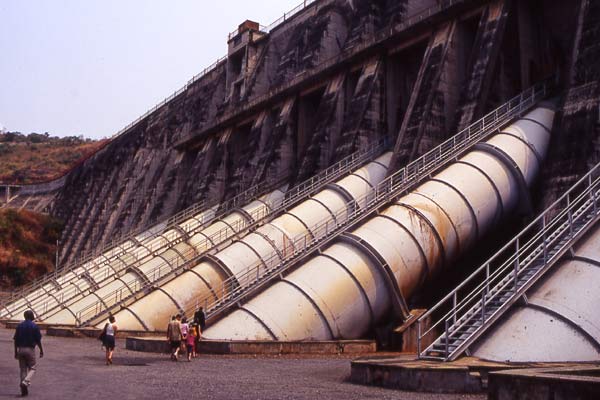
Cabinet announced yesterday it had approved a treaty between SA and the Democratic Republic of the Congo for the development of the Grand Inga hydroelectric project.

The project to exploit the Congo River for hydropower of 40,000 MW — nearly the size of SA’s current installed capacity — would be developed in phases. The additional source of electricity would be a welcome relief for SA, which is struggling to keep up with increasing demand.

Cabinet spokesman Jimmy Manyi said the purpose of the treaty was to develop an enabling framework linking Congo and SA into the Grand Inga projects, and to allow the countries to jointly explore economic feasibility for the project.

“The project will form part of SA’s government strategy to promote renewable energy in the region, contribute to a reduction of carbon emissions, ensure security of supply and to develop energy infrastructure on the continent and the Southern African Development Community region in particular,” Mr Manyi said.

The treaty could thrust Eskom into a central role in the project. Eskom yesterday declined to comment on Grand Inga, but the power utility has been contemplating its role in regional power projects.

In a speech in Pretoria on Friday, Eskom CE Brian Dames said there was potential for SA to source power from other countries in the region.

Mr Dames said the problem with big projects in the region was that none of them were bankable unless Eskom, which is Africa’s largest power utility, bought the power.

“We see ourselves in the role of buying the power,” he said.

“If opportunities arise to work in partnership with other players to be on the investment side of some of the projects, we would look at those. We are already working with independent power producers in the region ,” he said.

SA, through the integrated resource plan for electricity (IRP2010), has committed itself to a huge rollout of clean power in the period up to 2030, Mr Dames said.

“We have done a modelling exercise on the IRP2010, making certain assumptions about the role of Eskom and of independent power producers. We have found that as it stands, the plan would be extremely difficult to finance, and the cost of implementing it in its entirety out to 2030 might not be affordable for SA,” said Mr Dames.

The cost of the renewable energy, and the nuclear plans, might simply be too steep. SA was committed to reducing its carbon emissions and Eskom supported that.

He said SA was keen to leverage hydro in the north and gas fields in the east and west, as well as the extensive land which the region has available for solar generation.

Why Zuma dropped Zapiro charges

President Jacob Zuma withdrew his claim for damages against cartoonist “Zapiro” to avoid setting a legal precedent, the presidency said on Sunday.

“The president… would like to avoid setting a legal precedent that may have the effect of limiting the public exercise of free speech, with the unforeseen consequences this may have on our media, public commentators and citizens,” his spokesman Mac Maharaj said in a statement on Sunday.

He said Zuma had decided to withdraw his claim, made in December 2008, against Jonathan “Zapiro” Shapiro and Avusa Media, the publishers of The Sunday Times, and the newspaper’s editor at the time Mondli Makhanya “after careful consideration and consultation with his legal team”.

He had also decided to make a contribution to their costs.

“It is the president’s view that a legal battle against individuals and institutions will be an unnecessary diversion,” said Maharaj.

Zuma would rather encourage the people he was taking action against to become partners in efforts to address the problems facing the country, and to get South Africans to reach out to each other across historical divides to forge a common nationhood, “putting the country first.”

Zuma had sought R5 million in damages for defamation and impairment of his personal dignity over the publication of Zapiro’s Lady Justice rape cartoon in September 2008.

He reduced his claim from R4 million to R100,000 last week, media lawyer Dario Milo said at the time. Zuma dropped his claim that the cartoon harmed his dignity, but maintained that it had harmed his reputation. He had still wanted an unconditional apology.

The matter was to have been heard by the High Court in Johannesburg on Monday.

The cartoon depicted Zuma loosening his trousers while Lady Justice was held down by since expelled African National Congress Youth League president Julius Malema, Congress of SA Trade Unions general secretary Zwelinzima Vavi, SA Communist Party general secretary Blade Nzimande and ANC secretary general Gwede Mantashe, all saying: “Go for it, boss.”

Zuma was acquitted of a rape charge in 2006

“The newspaper and the cartoonist wanted to perpetrate an image of the president as a sexual deviant, despite a court of law rejecting the allegations against him and clearing his name,” said Maharaj.

The representation was “hurtful and defamatory”, as the respondents had admitted in papers submitted to the High Court in Johannesburg, he said.

“This candid admission, whilst sought to be justified on other grounds, at least reflects an appreciation of the hurt and harm that such depiction brought about.”

Maharaj said Zuma’s decision to withdraw the matter was informed by three major considerations.

“Whereas the president believes that in an open and democratic society, a fine and sensitive balance needs to be maintained between the exercise of civil rights such as freedom of speech, and the dignity and privacy of others, that balance should be struck in favour of constitutional freedoms,” he said.

It was for this reason he wanted to avoid setting a legal precedent.

Maharaj said Zuma also wanted to encourage South Africans to solve problems caused by racist attitudes by removing the racial imprint on the way the country’s society was organised and structured, and through continuous political action and open dialogue across racial and cultural divides.

Matters relating to dignity and the public standing of individuals could not be mediated exclusively through the courts, he said.

“Essentially, what lies at the heart of the Sunday Times’ publication of the cartoon was a set of deeply ingrained prejudices regarding not only the president, but which extend to views about African males and sexual mores.

“While the courts exist in part to protect citizens against racial and cultural prejudice and bigotry, those scourges will not be eradicated from our body politic through litigation alone.”

Zuma’s decision was also rooted in his attempts to find a way out of the difficulties the country and its people were facing because of the global economic meltdown and its accompanying frustrations, and his call on all South Africans to work together to find lasting solutions. – Sapa